Search results
Search for "oxides" in Full Text gives 467 result(s) in Beilstein Journal of Nanotechnology. Showing first 200.
Porous N- and S-doped carbon–carbon composite electrodes by soft-templating for redox flow batteries
Beilstein J. Nanotechnol. 2019, 10, 1131–1139, doi:10.3762/bjnano.10.113
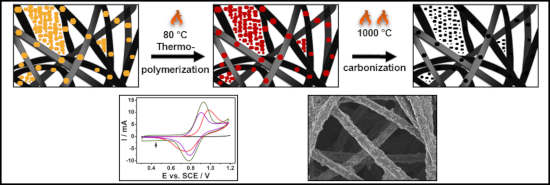
- of the commercial felts (400 °C, up to 30 h) [7]. Also acid treatment [8], electrochemical activation [9], catalytic decoration with metal oxides [10][11], as well as methods to increase the surface area of the felts [12][13] have been reported as possible ways to obtain enhanced activity. Several



Synthesis and characterization of quaternary La(Sr)S–TaS2 misfit-layered nanotubes
Beilstein J. Nanotechnol. 2019, 10, 1112–1124, doi:10.3762/bjnano.10.111
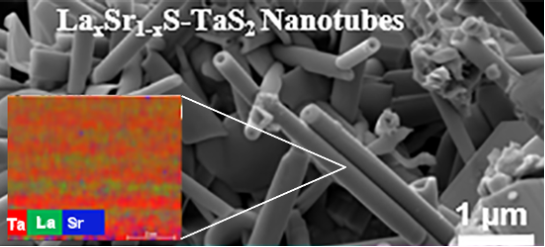
- , and consequently, the lattice strain. It also appears that beyond an Sr content of ≈60 atom %, the MLC lattice becomes unstable and new modes >680 cm−1 appear, which is typical for metal oxides. DFT calculations of the pristine LaS–TaS2 and the SrxLa1−xS–TaS2 MLC bulk alloys were undertaken. Overall


Glucose-derived carbon materials with tailored properties as electrocatalysts for the oxygen reduction reaction
Beilstein J. Nanotechnol. 2019, 10, 1089–1102, doi:10.3762/bjnano.10.109
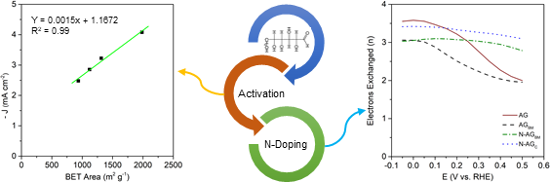
- electrocatalyst used for the reaction. The most commonly used electrocatalyst to supply faster kinetics and a four-electron pathway are platinum-based materials [3][4], which are costly and may assume up to 50% of the total cost of a fuel cell [5]. Transition metals [6][7], metal oxides [8][9] and carbon


Scavenging of reactive oxygen species by phenolic compound-modified maghemite nanoparticles
Beilstein J. Nanotechnol. 2019, 10, 1073–1088, doi:10.3762/bjnano.10.108
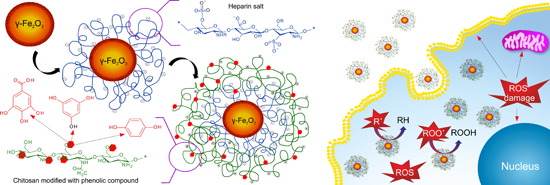
- assays indicated the necessity of using additional methods for the examination of the antioxidant properties. γ-Fe2O3 nanoparticles The advantages of iron oxides in biomedical applications include biocompatibility, excellent magnetic properties, and the possibility to modify the surface with reactive





Direct growth of few-layer graphene on AlN-based resonators for high-sensitivity gravimetric biosensors
Beilstein J. Nanotechnol. 2019, 10, 975–984, doi:10.3762/bjnano.10.98
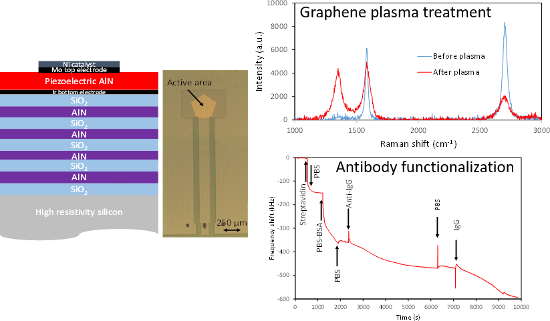
- , the samples were heated to 650 °C at a rate of 50 °C/min, during which the Ni film was cleaned from oxides and impurities. Afterwards, acetylene was fed into the chamber while adjusting the C2H2/Ar mixture to keep the pressure constant at 12 mTorr. The samples were exposed to this ambient for 5 min



The systemic effect of PEG-nGO-induced oxidative stress in vivo in a rodent model
Beilstein J. Nanotechnol. 2019, 10, 901–911, doi:10.3762/bjnano.10.91
- made in the synthesis of graphene oxide nanoparticles and their use in medicine, so there is an urgent need to look at the safety and efficacy of these particles in vivo. It has been observed that engineered nanomaterials, e.g., from metals or metal oxides, have the potential to induce toxicity by


Comparing a porphyrin- and a coumarin-based dye adsorbed on NiO(001)
Beilstein J. Nanotechnol. 2019, 10, 874–881, doi:10.3762/bjnano.10.88
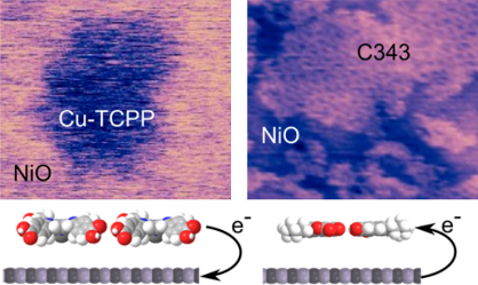
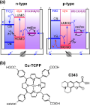
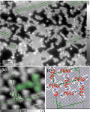
- , Switzerland 10.3762/bjnano.10.88 Abstract Properties of metal oxides, such as optical absorption, can be influenced through the sensitization with molecular species that absorb visible light. Molecular/solid interfaces of this kind are particularly suited for the development and design of emerging hybrid
- semiconductor TiO2 has become one of the most extensively studied metal oxides, especially in the context of scanning probe microscopy (SPM) [1]. The working principle of an n-type DSSC, which is shown in Figure 1a, relies on the functionalization of TiO2 surfaces with dye molecules enabling the absorption of



Synthesis of MnO2–CuO–Fe2O3/CNTs catalysts: low-temperature SCR activity and formation mechanism
Beilstein J. Nanotechnol. 2019, 10, 848–855, doi:10.3762/bjnano.10.85
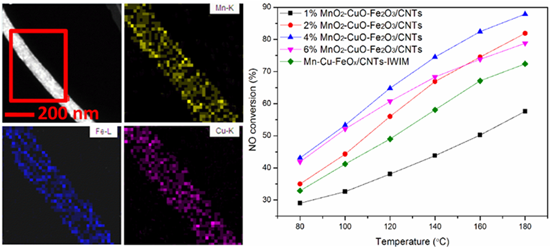
- activity; Introduction Nitrogen oxides, NOx (x = 1, 2), contribute to acid rain, photochemical smog, greenhouse effect and ozone depletion [1][2][3]. The selective catalytic reduction of NO with NH3 (SCR), as a commercialized NOx abatement technology, has received a great deal of attention [4][5]. However
- , only a weak peak of MnO2 (PDF#53-0633) can be observed when the loading was greater than or equal to 4%, whereas no diffraction peaks of metal oxides could be found, suggesting the formation of amorphous metal oxide phases. Amorphous catalytic materials are conducive to SCR activity [19], which is also
- , also verifying the generation of metal oxide catalysts on the CNT surface. The EDX spectrum (Figure 3d) shows signals of Mn, Cu, Fe, O and C. Clear lattice fringes of the metal oxides cannot be observed in the HRTEM images, indicating the generation of amorphous materials, which is consistent with the




Periodic Co/Nb pseudo spin valve for cryogenic memory
Beilstein J. Nanotechnol. 2019, 10, 833–839, doi:10.3762/bjnano.10.83
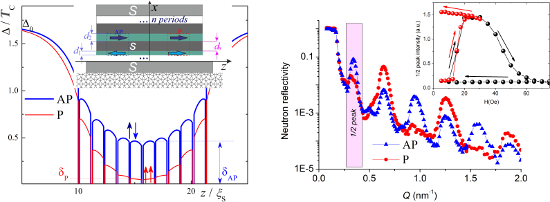
- sapphire (Al2O3) substrate. Before the deposition the substrates were etched by an argon ion beam inside the chamber. The targets Nb(99.99%) and Co(99.99%) were presputtered to remove metallic oxides and contamination absorbed on the surfaces. Additionally, immediately before deposition of the next layer


Tungsten disulfide-based nanocomposites for photothermal therapy
Beilstein J. Nanotechnol. 2019, 10, 811–822, doi:10.3762/bjnano.10.81
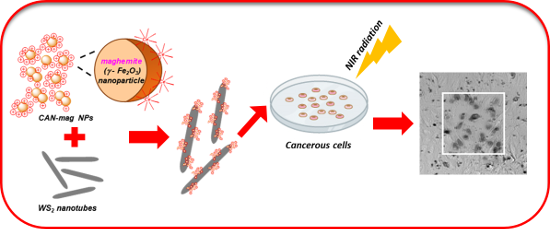
- latter group, nanostructures of metals [38], metal oxides (including iron oxides) [39], and metal chalcogenides [40][41] were studied. Tungsten oxides [42] and molybdenum oxides [43] were studied, as well as their disulfides. The disulfides were tested mainly in the forms of nanosheets [44], nanoflakes
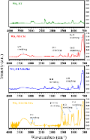
- cm−1 is characteristic of iron oxides, and represents the stretching vibration of Fe–O bond [53][54]. The peaks at 1640 cm−1 and 3400 cm−1 originate from interlayer water: the former is assigned H–O–H bending vibrations, and the latter to O–H stretching vibrations [53][54]. The peak at around 820 cm






Trapping polysulfide on two-dimensional molybdenum disulfide for Li–S batteries through phase selection with optimized binding
Beilstein J. Nanotechnol. 2019, 10, 774–780, doi:10.3762/bjnano.10.77
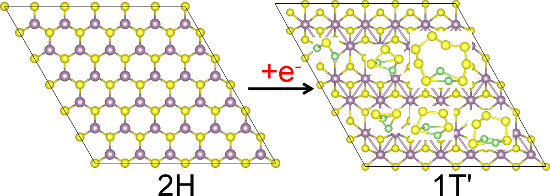
- specific capacity. Nanoflower MoS2/reduced graphene oxides composites exhibited a high specific capacity (1225 mAh/g) and an excellent cycling performance (680 mAh/g) after 250 cycles [19]. MoS2 nanoparticles have been used as a starting material for the synthesis of Li–S battery cathodes, since Li2S and


On the transformation of “zincone”-like into porous ZnO thin films from sub-saturated plasma enhanced atomic layer deposition
Beilstein J. Nanotechnol. 2019, 10, 746–759, doi:10.3762/bjnano.10.74
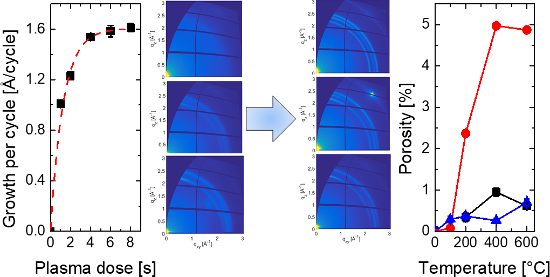
- oxides in photocatalysis [30][33] and as electrodes for lithium-ion batteries [12][18], or for protective and passivating layers [28][32][35]. In this contribution, an alternative method was adopted for the formation of Zn-alkoxide layers. While ALD is known to deliver pure dense ZnO, applied in many
- , the chemical composition of the Zn-alkoxide layers was controlled. In the literature, a C-content up to 7% was shown for oxides [41], sufficient to define these layers as Zn alkoxide or “zincone”-like. The effect of the combination of plasma exposure time and post-deposition calcination temperature on
- the formation of porosity was investigated with ellipsometric porosimetry (EP), already shown suitable for the determination of porosity in hybrid and polymer-derived oxides [12][18][29][42][43]. In the literature, few contributions investigate the transformation of zinc-based alkoxides into porous


The effect of translation on the binding energy for transition-metal porphyrines adsorbed on Ag(111) surface
Beilstein J. Nanotechnol. 2019, 10, 706–717, doi:10.3762/bjnano.10.70
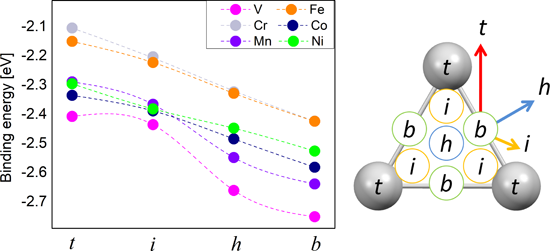
- oxides, to molecules adsorbed at surfaces and in porous media. In particular the vdW-DF-cx functional can reliably describe both the molecular adhesion on silver and the Ag bulk structure [56]. A correct geometric model for both molecule and metallic slab represents a major advantage in the study of


![[Graphic 1]](/bjnano/content/inline/2190-4286-10-70-i1.svg?max-width=637&scale=1.18182) , for all systems and relative molecule–surface positions. Right: symm...
, for all systems and relative molecule–surface positions. Right: symm...


![[Graphic 7]](/bjnano/content/inline/2190-4286-10-70-i7.svg?max-width=637&scale=1.18182) for selected TMPP systems (M = V, Mn, Co; red: positive values, blue: negative value...
for selected TMPP systems (M = V, Mn, Co; red: positive values, blue: negative value...
A porous 3D-RGO@MWCNT hybrid material as Li–S battery cathode
Beilstein J. Nanotechnol. 2019, 10, 514–521, doi:10.3762/bjnano.10.52
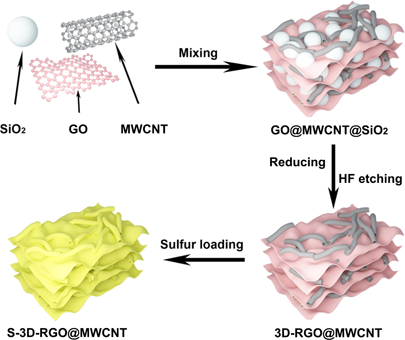
- sulfur loading is essential for the practical implementation of Li–S batteries [5][6][7]. To overcome the above-mentioned challenges in Li–S batteries, many strategies have been proposed [8][9][10][11][12]. For example, metal oxides, such as TiO2, ZnO, MnO2, and SiO2, were reported to provide active
- sites for strong S–metal bonding that have been reported to suppress the shuttle effect in polysulfides [13][14][15][16]. Moreover, designing metal oxides into various unique morphologies, e.g., hollow structures, can also provide a physical (or structural) confinement for sulfur [17]. Metal-oxide
- sulfur loading [24][25]. Since sulfur is the major active ingredient in the Li–S cathode, adding more non-sulfur components, such as metal oxides, in the cathode will result in a lower specific capacity. Therefore, the present study will focus on the development of a pure carbon material for the Li–S



Widening of the electroactivity potential range by composite formation – capacitive properties of TiO2/BiVO4/PEDOT:PSS electrodes in contact with an aqueous electrolyte
Beilstein J. Nanotechnol. 2019, 10, 483–493, doi:10.3762/bjnano.10.49
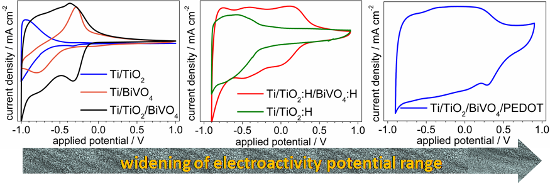
- charged and discharged over a wide potential range. Both electrical double-layer capacitance and faradaic reactions can contribute to the final capacitance of an electrode. Many different materials have been tested as electrode materials for supercapacitors, such as metal oxides [6][7][8], carbon




Nanocomposite–parylene C thin films with high dielectric constant and low losses for future organic electronic devices
Beilstein J. Nanotechnol. 2019, 10, 428–441, doi:10.3762/bjnano.10.42
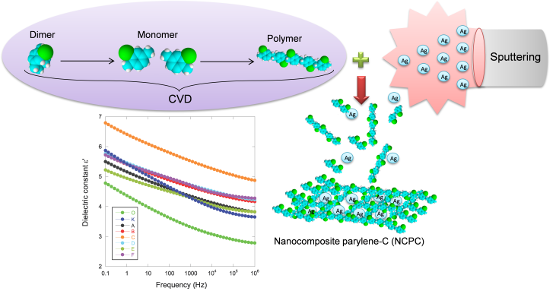
- increase the X-ray incidence angle to 1.0° in order to probe all the film thickness and highlight the Ag oxides crystalline peaks (see Figure 3 right). The broadness of these peaks indicates that the average nanocrystallite size is small (≤5 nm), as could be expected taking into account that silver is
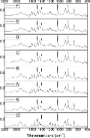
- shown. Asterisks indicate the peaks of Ag oxides. Si peaks coming from the substrate are also highlighted. Roughness (Ra) as a function of the thickness. The red curve is the trend for pure parylene C films obtained in [65]. FTIR spectra of pure parylene C (samples O and K) and NCPCs (samples A to F). a




Advanced scanning probe lithography using anatase-to-rutile transition to create localized TiO2 nanorods
Beilstein J. Nanotechnol. 2019, 10, 412–418, doi:10.3762/bjnano.10.40
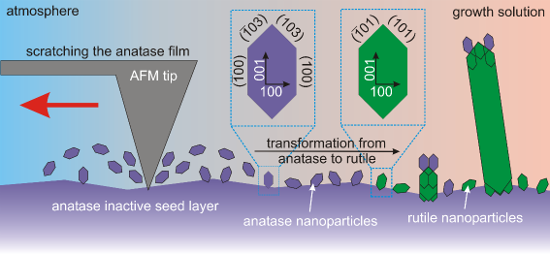
- nanostructures. Keywords: hydrothermal crystal growth; lithography; nanostructures; seed crystals; surface processes; oxides; Introduction Rutile TiO2 is a chemically stable semiconductor with a band gap of 3.1 eV [1]. Dependent on the kind of nanostructure and doping, it has outstanding electronic and


Sub-wavelength waveguide properties of 1D and surface-functionalized SnO2 nanostructures of various morphologies
Beilstein J. Nanotechnol. 2019, 10, 379–388, doi:10.3762/bjnano.10.37
- light during the medical process. Among metal oxides, SnO2 NWs, an n-type direct wide-band semiconductor (Eg = 3.6 eV at 300 K), was proved to be excellent sub-wavelength waveguide [3][4][5][6][7][12]. The high refractive index (n = 2.1) of SnO2 allows NWs with an optimal size range (100 to 500 nm) to
- nanoparticles [18] have been reported in our previous studies. We have also deciphered strong correlations of various defects in SnO2 NSs for chemical gas sensing [13] and wettability properties [19]. The growth of metal oxides with controllable dimensions is an important area for technological applications. In
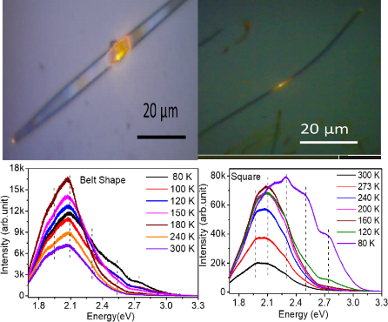
- , which matches closely with our experimental results. Optical properties Waveguide nature SnO2 NBs have been shown to be very good sub-wavelength waveguides among the metal oxides [6][12]. Figure 6 and Figure 7 depict optical images of the single SnO2 NWs demonstrating their waveguide behaviour. Similar


One-step nonhydrolytic sol–gel synthesis of mesoporous TiO2 phosphonate hybrid materials
Beilstein J. Nanotechnol. 2019, 10, 356–362, doi:10.3762/bjnano.10.35
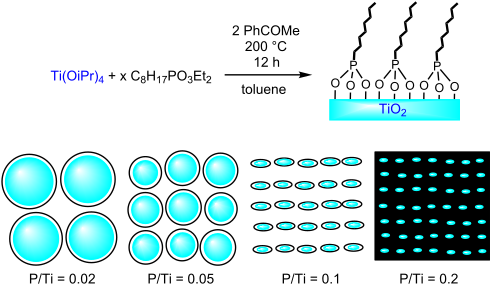
- hybrids are obtained in two steps, by surface modification of a porous metal oxide support [17][18][19]. Nonhydrolytic (or nonaqueous) sol–gel (NHSG) chemistry has provided simple and powerful routes to synthesize oxides or mixed oxides with different morphologies (e.g., nanoparticles) or textures (e.g
- with 1,3,5-trihydroxybenzene [32]. The reaction of alkoxides in acetophenone (used as a solvent and an oxygen donor) has already been described for the synthesis of TiO2 [33] and BaTiO3 [34] nanoparticles, but it has never been used to prepare mesoporous oxides or hybrid materials. In the present work


A Ni(OH)2 nanopetals network for high-performance supercapacitors synthesized by immersing Ni nanofoam in water
Beilstein J. Nanotechnol. 2019, 10, 281–293, doi:10.3762/bjnano.10.27
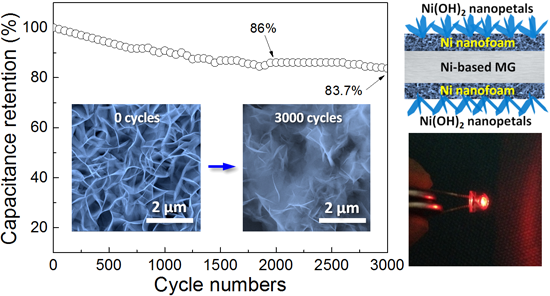
- between active materials and electrolyte, for which transition metal oxides/hydroxides with multiple valence are used as electrode materials [8][9]. EDLCs hold a high power density and long cycling stability, but their practical application is limited by the low energy density. In comparison, pseudo
- -capacitors possess a higher energy density and are regarded as promising candidates for energy storage systems [10]. Among the various transition metal oxides/hydroxides, Ni(OH)2 is an ideal candidate for pseudo-capacitors due to its unique features such as high theoretical capacity and outstanding redox
- mainly consists of Ti4+ and Zr4+ oxides. On the other hand, Figure 4d and Figure 4e reveal the Ni 2p3/2 and O 1s peaks obtained from the as-spun alloy and as-dealloyed alloy before and after immersion in deionized water. The O 1s region analyzed by using a Gaussian fitting method (Figure 4e) shows three




Thermal control of the defunctionalization of supported Au25(glutathione)18 catalysts for benzyl alcohol oxidation
Beilstein J. Nanotechnol. 2019, 10, 228–237, doi:10.3762/bjnano.10.21
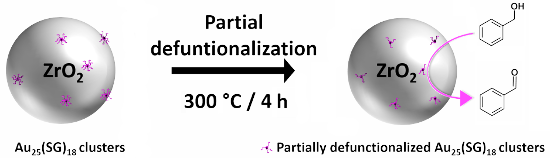
- nanoparticles (GNPs), GNPs have been of great interest in chemistry, dispersed on metal oxides and in CO oxidation reaction [1]. Today, GNPs of diameter less than 10 nm are known to be a remarkable, heterogeneous catalyst, capable of catalyzing a wide range of reactions including hydrocarbon combustion [2




Nanoporous water oxidation electrodes with a low loading of laser-deposited Ru/C exhibit enhanced corrosion stability
Beilstein J. Nanotechnol. 2019, 10, 157–167, doi:10.3762/bjnano.10.15
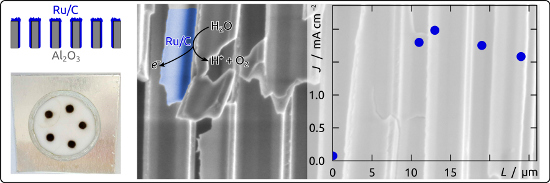
- limited by its significant dissolution (corrosion) at high anodic potential over the whole pH range (Figure 2) [10][11][12]. One strategy to address this limitation has involved mixing metallic Ru (or its oxides) with other solids (such as Ir [13][14][15][16][17][18], Ta [19], or Pt [20], TiO2 [21], Ni
- to never exceed +1.0 V applied potential. On the cathodic scan, only one reductive peak is present near 0.0 V, corresponding to the reduction of surface oxides to metallic Ru [68]. The absence of surface oxidization current during the first CV cycle (blue curve in Figure 9a) indicates that the




Wet chemistry route for the decoration of carbon nanotubes with iron oxide nanoparticles for gas sensing
Beilstein J. Nanotechnol. 2019, 10, 105–118, doi:10.3762/bjnano.10.10
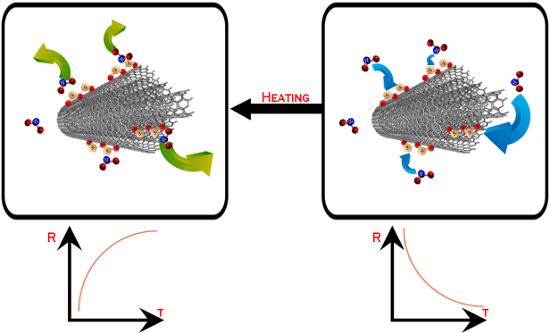
- into more reactive species that, in turn, interact with CNTs. In addition, such nanoparticles shift the Fermi level of CNTs, adsorb target molecules, and help in mediating the charge transfer between adsorbates and CNTs [6][10]. Several metal oxides have been reported as useful for decorating CNTs and
- improving their interaction with gas molecules. Sensitivity and selectivity can be tailored by selecting the type of metal oxide employed, the size of nanoparticles and the decoration density or loading [6][10][11]. Metal oxides have been extensively investigated for sensing a wide range of gases [12][13




Zn/F-doped tin oxide nanoparticles synthesized by laser pyrolysis: structural and optical properties
Beilstein J. Nanotechnol. 2019, 10, 9–21, doi:10.3762/bjnano.10.2
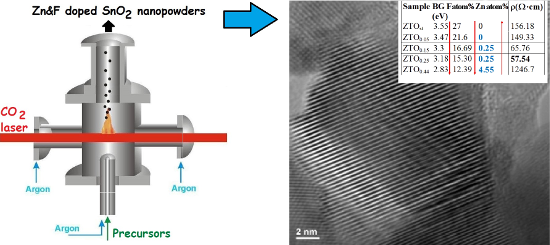
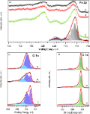
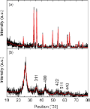
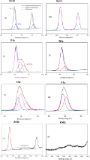
- dopant concentration). Keywords: laser pyrolysis; nanoparticles; optical bandgap; Zn/F-doped SnO2; Introduction Recently, there has been growing interest in the field of transparent conducting oxides and wide bandgap oxide nanocrystalline materials such as tin oxide (SnO2). It is generally agreed that
- reduced bandgap of tin oxide nanoparticles by introduction of defects to the crystal lattice is ≈0.7 eV [4]. Generally, the doping of these semiconducting oxides with specific cations or anions is performed in order to increase their electrical conductivity while maintaining a high optical transparency in
- precursors to oxides (SnO2 and ZnO, in fact Zn-doped SnO2), CO2 and H2O in the laser pyrolysis reaction zone. Due to the much higher reactivity of metals, the metal oxides are formed with priority, and the unoxidized alkyl radicals from the precursors will undergo a complex process involving reactions such



A novel polyhedral oligomeric silsesquioxane-modified layered double hydroxide: preparation, characterization and properties
Beilstein J. Nanotechnol. 2018, 9, 3053–3068, doi:10.3762/bjnano.9.284
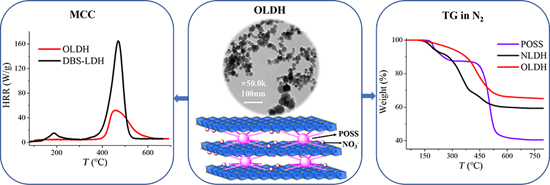
- structure of LDH layers was completely destroyed by dehydroxylation, resulting in the formation of random stacking of mixed oxides containing Mg and Al [34]. The surface after degradation in air seems not as rough and coarse as that after degradation in N2, which might be caused by the different gas release
- reacts with the metal oxides to form a continuous and compact condensed phase. This mixed carbonized protecting layer provides a good barrier to the transfer of heat and mass, preventing the inner layer against further decomposition and accelerating the formation of char. Evidence in favor of this