Search results
Search for "semiconductor" in Full Text gives 647 result(s) in Beilstein Journal of Nanotechnology. Showing first 200.
Templating effect of single-layer graphene supported by an insulating substrate on the molecular orientation of lead phthalocyanine
Beilstein J. Nanotechnol. 2020, 11, 814–820, doi:10.3762/bjnano.11.66
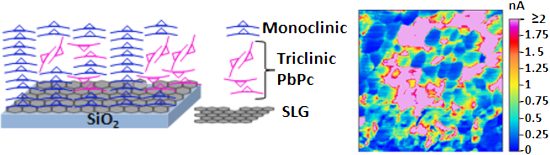
- transport in semiconductor devices [7]. Pristine substrate surfaces of HOPG and Si themselves can induce orientation control over the growth of MPc structures without the aid of additional templating layers. In our earlier work, we have observed that orientation and molecular packing of nonplanar PbPc


Epitaxial growth and superconducting properties of thin-film PdFe/VN and VN/PdFe bilayers on MgO(001) substrates
Beilstein J. Nanotechnol. 2020, 11, 807–813, doi:10.3762/bjnano.11.65
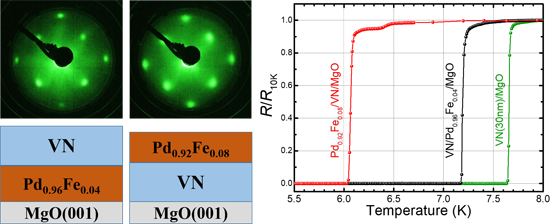
- to semiconductor electronics for supercomputing applications [3][4][5]. Merging it with magnetism [6][7][8] has given a birth to superconducting spintronics [9][10]. The latter concept was implemented in the US Cryogenic Computing Complexity (C3) Program [11][12][13] with the goal “to demonstrate a


Effect of Ag loading position on the photocatalytic performance of TiO2 nanocolumn arrays
Beilstein J. Nanotechnol. 2020, 11, 717–728, doi:10.3762/bjnano.11.59
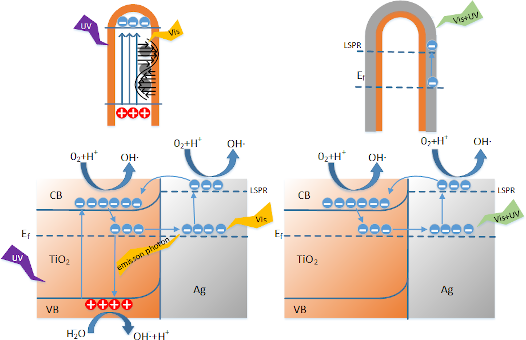
- Technology, Ministry of Education, Research Institute of Laser Engineering, Beijing University of Technology, No. 100 Pingle Park, Chaoyang District, Beijing 100124, People’s Republic of China 10.3762/bjnano.11.59 Abstract Plasmonic metal/semiconductor composites have attracted great attention for efficient
- theoretical optimal structure of the plasma metal–semiconductor heterojunction. Having this background in mind, we decided to prepare a TiO2 nanocolumn (TNC) structure by using AAO in combination with ALD, in which Ag particles could be selectively supported separately outside and inside the nanocolumns. Most
- indirect bandgap semiconductor, since the grains are small and the energy levels are discrete: In Equation 1, h is Plank’s constant (6.626 × 10⁻³⁴ J s), ν is the frequency of light, and Eg represents the bandgap energy. For the calculation of Eg by the Tauc plot absorbance the value of the absorption (Abs


Structural optical and electrical properties of a transparent conductive ITO/Al–Ag/ITO multilayer contact
Beilstein J. Nanotechnol. 2020, 11, 695–702, doi:10.3762/bjnano.11.57
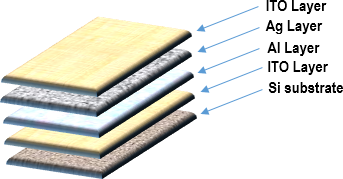
- annealing on the Si substrate obtained using energy-dispersive X-ray spectroscopy (EDXS) are displayed in Table 1. A reduction of the oxygen content was observed after annealing. The content of metal and semiconductor materials accordingly increases. Si as substrate material shows the highest content. The


Effect of substitutional defects on resonant tunneling diodes based on armchair graphene and boron nitride nanoribbons lateral heterojunctions
Beilstein J. Nanotechnol. 2020, 11, 688–694, doi:10.3762/bjnano.11.56
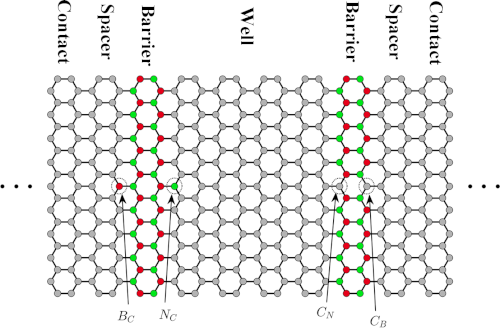
- rather high transmission probabilities. Electrons with other energies have an extremely small chance of passing through. This causes RTDs to exhibit NDR in their current–voltage characteristic. Conventionally, RTDs are made by vertical stacking of bulk semiconductor materials with different bandgap



A novel dry-blending method to reduce the coefficient of thermal expansion of polymer templates for OTFT electrodes
Beilstein J. Nanotechnol. 2020, 11, 671–677, doi:10.3762/bjnano.11.53
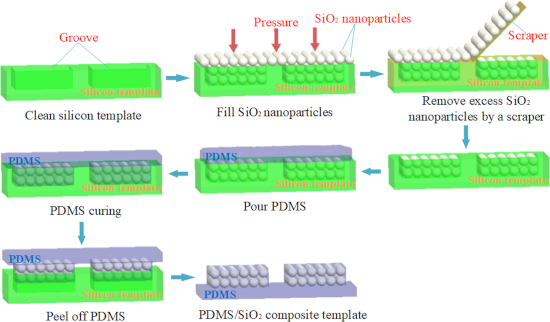
- silver target of 60 × 5 mm in size and purity of 99.99% as the OTFT electrode material was purchased from ZHNOGNUO New Material Co., Ltd., (Beijing, China). Pentacene as the semiconductor layer was used as purchased from Sigma-Aldrich and dissolved to a concentration of 5% in 1,2-dichlorobenzene


Exfoliation in a low boiling point solvent and electrochemical applications of MoO3
Beilstein J. Nanotechnol. 2020, 11, 662–670, doi:10.3762/bjnano.11.52
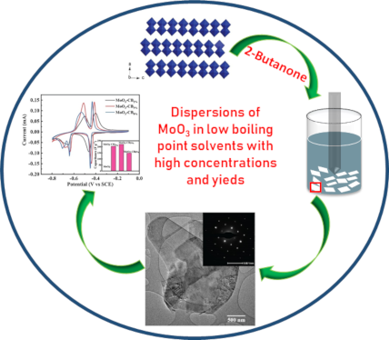
- bronze (HxMoO3) was formed after exposure to UV radiation, making MoO3 quasi-metallic rather than semiconducting [13][14]. Thus, it is of highest priority to produce MoO3 dispersions of high concentrations and yields while maintaining the semiconductor properties of MoO3. In an attempt to address the



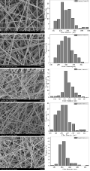
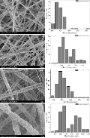
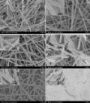
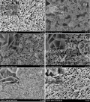
Preparation, characterization and photocatalytic performance of heterostructured CuO–ZnO-loaded composite nanofiber membranes
Beilstein J. Nanotechnol. 2020, 11, 631–650, doi:10.3762/bjnano.11.50
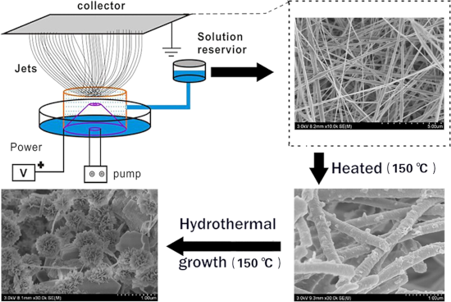
- Wei Fang Liang Yu Lan Xu National Engineering Laboratory for Modern Silk, College of Textile and Engineering, Soochow University, 199 Ren-ai Road, Suzhou 215123, China 10.3762/bjnano.11.50 Abstract Inorganic semiconductor oxides loaded on composite nanofibers (CNFs) have been widely applied in
- three times, and the degradation rate remained above 90%. Keywords: electrospinning; composite nanofibers; heterostructured CuO–ZnO; hydrothermal synthesis; photocatalysis; semiconductor oxide; Introduction Water remediation is one of the main scientific research subjects regarding environmental
- oxidize species adsorbed on the semiconductor material. However, the high degree of recombination of charge carriers is disadvantage [6]. The coupling of two different semiconductors can yield an efficient charge separation, leading to a vector transmission of photogenerated electrons and holes from one











Luminescent gold nanoclusters for bioimaging applications
Beilstein J. Nanotechnol. 2020, 11, 533–546, doi:10.3762/bjnano.11.42
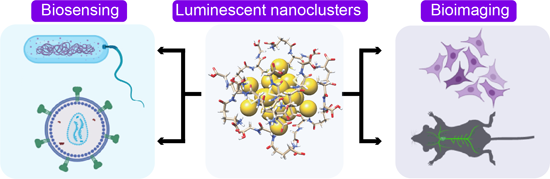
- , semiconductor quantum dots suffer from toxicity and are susceptible to oxidation. In this context, atomically precise gold nanoclusters protected by thiol monolayers have emerged as a new class of luminescent nanomaterials. Low toxicity, bioavailability, photostability as well as tunable size, composition, and
- [18][19]. Luminescent nanomaterials including semiconductor quantum dots, carbon dots, metal-doped nanoparticles, noble-metal nanoparticles, and organic–inorganic hybrid nanoparticles, have been studied for their ultrabright photoluminescence (PL) [20][21][22][23]. Semiconductor quantum dots (SCQDs


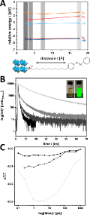
Interfacial charge transfer processes in 2D and 3D semiconducting hybrid perovskites: azobenzene as photoswitchable ligand
Beilstein J. Nanotechnol. 2020, 11, 466–479, doi:10.3762/bjnano.11.38
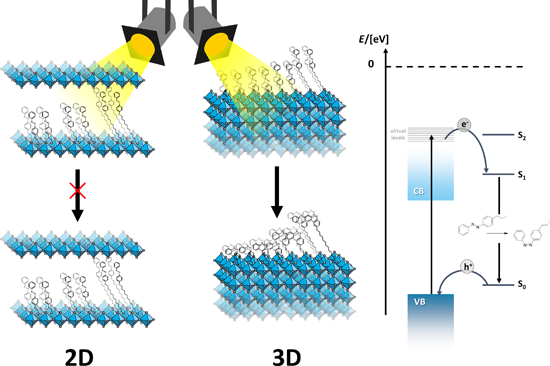
- of studies on semiconductor particles ligands or capping agents are used that bind to the surface of the particles covering them with an electrically insulating shell. Since the transport of charge carriers and/or energy across interfaces is desirable for a variety of applications, the use of π
- ligands are influenced by the presence of a semiconductor and vice versa. Here ammonium-modified azobenzene compounds were selected as prototypes for molecular switches and organic–inorganic hybrid perovskites as semiconductor materials. The class of ammonium–lead–halide phases as prototypes is peculiar
- synthesis of 2D and 3D hybrid perovskite phases. The energy transfer mechanisms are influenced by the length of the molecular spacer moiety, which determines the distance between the π system and the semiconductor surfaces. We find huge differences in the photoswitching behaviour between the free, surface




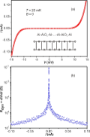
High dynamic resistance elements based on a Josephson junction array
Beilstein J. Nanotechnol. 2020, 11, 417–420, doi:10.3762/bjnano.11.32
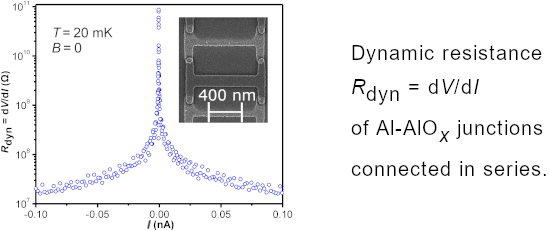
- is compared to values of ≈100 MW for conventional semiconductor complementary metal–oxide-semiconductor (CMOS) technology. In addition to heat dissipation, another issue is the speed of processing. It has been shown that the operational frequency of superconducting logic can be at least 100 times

Synthesis and enhanced photocatalytic performance of 0D/2D CuO/tourmaline composite photocatalysts
Beilstein J. Nanotechnol. 2020, 11, 407–416, doi:10.3762/bjnano.11.31
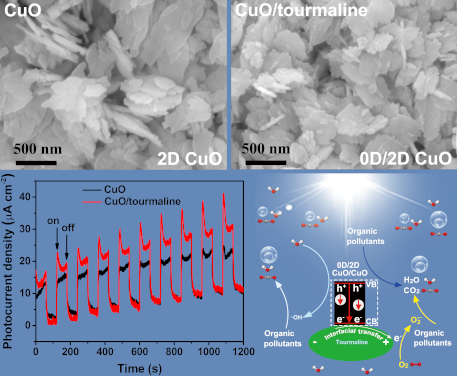
- tourmaline-based functional composite photocatalysts for the treatment of organic contaminants in water. Keywords: 0D/2D CuO; organic contaminants; photocatalytic activity; photoinduced charge separation; tourmaline; Introduction Developing a novel semiconductor with excellent photoreactive activity toward
- -type CuO semiconductor is ≈1.2 eV [6]. The application of CuO covers the fields of photocatalytic degradation of organic contaminants [7], photocatalytic reduction of CO2 [8][9], photocatalytic splitting of water [10], etc. Nanoscale CuO has been widely studied owing to its increased surface defects


DFT calculations of the structure and stability of copper clusters on MoS2
Beilstein J. Nanotechnol. 2020, 11, 391–406, doi:10.3762/bjnano.11.30
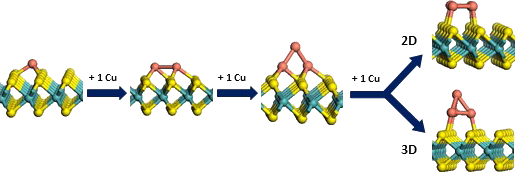
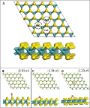
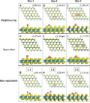
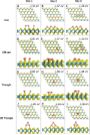
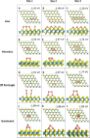
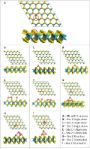
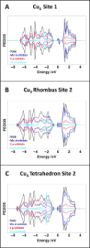
- applications. These materials are also interesting as supports for low-dimensional metals for catalysis, while recent work has shown increased interest in using 2D materials in the electronics industry as a Cu diffusion barrier in semiconductor device interconnects. The interaction between different metal
- of adsorbed copper can be seen for all configurations. Conclusion The adsorption of metal species on semiconducting supports such as 2D monolayers of MoS2 is a subject of significant interest in a range of applications, particularly in catalysis and, more recently, in semiconductor nanodevices where

Formation of nanoripples on ZnO flat substrates and nanorods by gas cluster ion bombardment
Beilstein J. Nanotechnol. 2020, 11, 383–390, doi:10.3762/bjnano.11.29
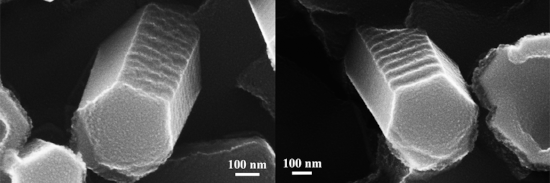
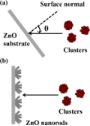
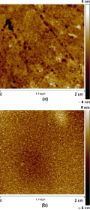
- of semiconductor quantum dots [2]. Arrays of metallic nanoparticles or nanowires aligned on dielectric surfaces with nanoripples are ideal for research on plasmonics [3]. Ag nanoparticle arrays created on rippled silicon surfaces have demonstrated excellent sensing of molecules through surface



Implementation of data-cube pump–probe KPFM on organic solar cells
Beilstein J. Nanotechnol. 2020, 11, 323–337, doi:10.3762/bjnano.11.24
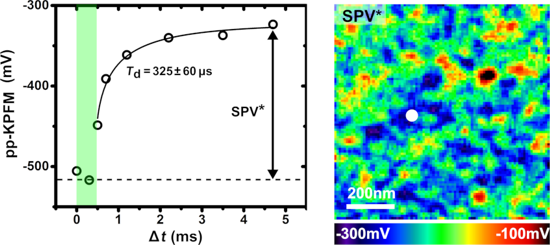
- approximation, this effect can be understood by assuming that there are no permanent charges in the “dark” (i.e., unilluminated) state of the organic layer considered as an undoped semiconductor. In “real” samples trapped carriers and electrostatic dipoles at the donor–acceptor interfaces contribute to the





Using gold nanoparticles to detect single-nucleotide polymorphisms: toward liquid biopsy
Beilstein J. Nanotechnol. 2020, 11, 263–284, doi:10.3762/bjnano.11.20
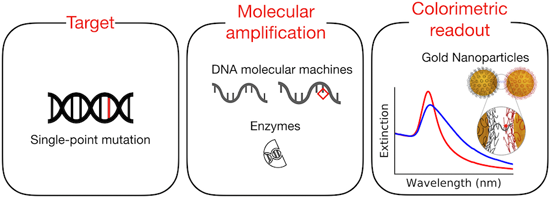
- the use of emergent nanomaterials. Over the last decade, a number of novel and optically active nanomaterials involving semiconductor or metal nanocrystals enabled the development of sensing devices with rather simple transduction mechanisms [3]. For example, the aggregation-induced color change of a
- times larger than their physical diameters) [59], and the lack of photobleaching (unlike organic fluorescent dyes and semiconductor nanocrystals) are additional parameters making plasmonic nanocrystals attractive materials for biosensing. Importantly, the position of the plasmon band and its bandwidth
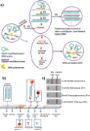
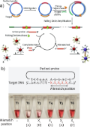
- the distance between metallic and semiconductor components by a DNA machine (Figure 11). Their system consisted of a CdS film, a composite of AuNPs (5 nm) and hairpin DNA, a primer, and polymerase and NEase. In the presence of AuNPs–hairpin DNA, the luminescence of CdS was quenched (Figure 11A). The




Nonequilibrium Kondo effect in a graphene-coupled quantum dot in the presence of a magnetic field
Beilstein J. Nanotechnol. 2020, 11, 225–239, doi:10.3762/bjnano.11.17
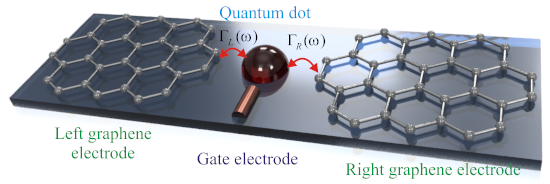
- , we measure all quantities in units of the energy cutoff D. We assume D ≈ 7 eV, which is an acceptable value for graphene samples [40][56][57][58]. We consider a lateral QD formed by lithographically-realized metallic gate electrodes placed near the QD, similar to a QD created in a semiconductor


Size effects of graphene nanoplatelets on the properties of high-density polyethylene nanocomposites: morphological, thermal, electrical, and mechanical characterization
Beilstein J. Nanotechnol. 2020, 11, 167–179, doi:10.3762/bjnano.11.14
- ], irradiated [46], metal–semiconductor couples [42][47], etc.) can be thermally characterized to determine thermophysical properties, such as the thermal diffusivity and thermal effusivity. At lower frequencies, the measurements are subject to 3D effects and necessitate a change in the laser beam shape. At low



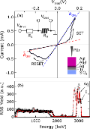
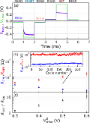
Nanosecond resistive switching in Ag/AgI/PtIr nanojunctions
Beilstein J. Nanotechnol. 2020, 11, 92–100, doi:10.3762/bjnano.11.9
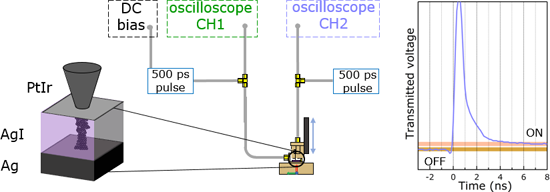
- ; nanosecond operation; resistive switching; silver iodide (AgI); Introduction The half a century long increase of the computational capacity of von Neumann architectures built on ever-shrinking complementary metal-oxide semiconductor (CMOS)-based hardware units is facing its technological, economical and



Simple synthesis of nanosheets of rGO and nitrogenated rGO
Beilstein J. Nanotechnol. 2020, 11, 68–75, doi:10.3762/bjnano.11.7
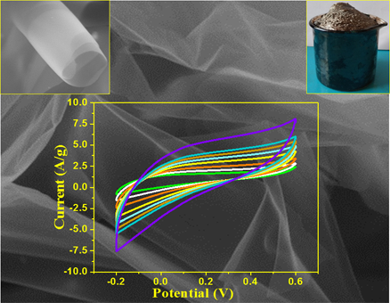
- ) are chemically modified forms of graphene, which are extensively studied in the field of science and engineering. Reduced graphene oxide has attracted significant interest due to its similarities to pristine graphene. It behaves like a semimetal or a semiconductor and is therefore used in a variety of


Influence of the epitaxial composition on N-face GaN KOH etch kinetics determined by ICP-OES
Beilstein J. Nanotechnol. 2020, 11, 41–50, doi:10.3762/bjnano.11.4
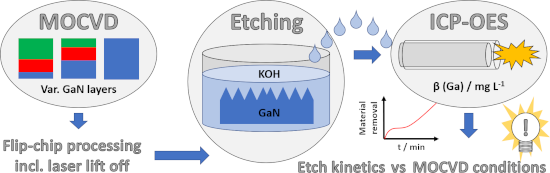
- ) has become the basis of modern energy-efficient lighting technology over the last 30 years [1]. Especially the binary III–V semiconductor gallium nitride (GaN) is very useful for consumer lighting application. The high band gap energy of 3.4 eV at room temperature permits the production of blue and


Synthesis and acetone sensing properties of ZnFe2O4/rGO gas sensors
Beilstein J. Nanotechnol. 2019, 10, 2516–2526, doi:10.3762/bjnano.10.242
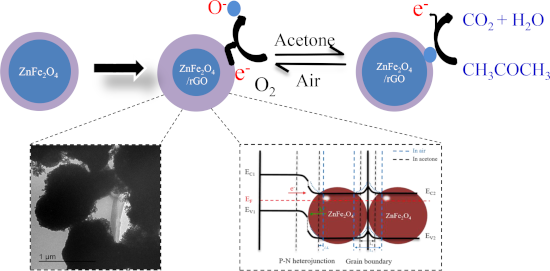
- similar to the results of several previously reported works [45][46][47]. Acetone sensing mechanism The most accepted explanation of the acetone sensing mechanism of ZnFe2O4, which is an n-type semiconductor, is described as a reaction at the gas–solid interface. When the ZnFe2O4 gas sensor is placed in
- Fermi energy levels equalize when two semiconducting systems are in contact via the transfer of carriers. Consequently, heterojunctions and regions of electron depletion will be formed at the interface between rGO, which is a p-type semiconductor, and ZnFe2O4, an n-type semiconductor. In addition, there




Formation of metal/semiconductor Cu–Si composite nanostructures
Beilstein J. Nanotechnol. 2019, 10, 2497–2504, doi:10.3762/bjnano.10.240
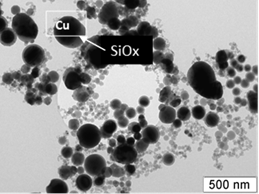
- improvement of the thermal stability of the core and, under the condition of a hermetic coating, reliably protects its surface from redox reactions [3]. Janus-like metal/semiconductor nanoparticles are promising as effective radio-absorbing media and are the basis for creating the elemental basis for
- approach to modelling the formation of metal/semiconductor core–shell nanoparticles was described in [18]. There, a core–shell particle was obtained by spraying the outer shell on an already formed core. The molecular dynamics calculation of such a procedure showed the possibility of the formation of Cu–Si
- liquid alloy and 2) core–shell and Janus-like nanoparticles made of liquid silicon and copper droplets. We have presented new data on the formation of metal/semiconductor nanoclusters, such as the transition of particles from a core–shell structure to a Janus-like structure starting from the liquid state


Mobility of charge carriers in self-assembled monolayers
Beilstein J. Nanotechnol. 2019, 10, 2449–2458, doi:10.3762/bjnano.10.235
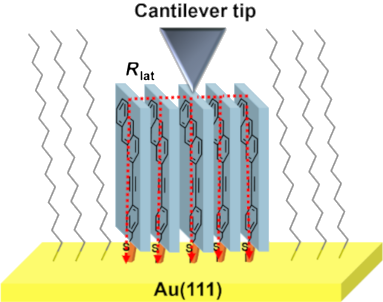
- the determination of mobilities in macroscopic samples. Keywords: conducting atomic force microscopy; lateral charge transport; nanografting; organic semiconductor; self-assembled monolayer; Introduction Charge transport in organic semiconductors plays a central role in the field of molecular
- the conductivity of the SAM simultaneously. In course of this project, the relationship between island size and conductivity could be fully confirmed, and the lateral charge transport and carrier mobility of the semiconductor molecules were determined from the dependence of conductivity on the island
- size. In the present study, we used PAT protected with a thioester group to fabricate OSC-based SAMs. Anthracene is one of the best-studied organic semiconductor molecules, and numerous studies on charge-transport within single-crystals made from this compound have been reported [31]. A high mobility


Coating of upconversion nanoparticles with silica nanoshells of 5–250 nm thickness
Beilstein J. Nanotechnol. 2019, 10, 2410–2421, doi:10.3762/bjnano.10.231
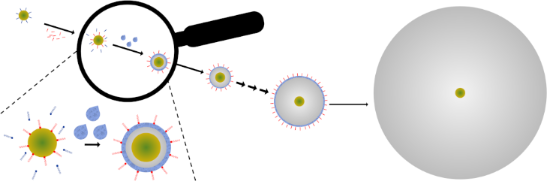
- the UCL emission spectra. This stepwise shell growth can most likely be also utilized for the coating of other NPs with similar hydrophobic surface chemistries of the initial particles such as iron oxide NPs or semiconductor NPs. Further applications can include the covalent attachment of biomolecules