Search results
Search for "Si(100)" in Full Text gives 83 result(s) in Beilstein Journal of Nanotechnology.
Quantitative estimation of nanoparticle/substrate adhesion by atomic force microscopy
Beilstein J. Nanotechnol. 2026, 17, 1–14, doi:10.3762/bjnano.17.1

- adhesion forces. Experimental Synthesis of Cu nanoparticles Before deposition, single-crystalline Si(100) wafer substrates, with a thickness of around 500 µm and covered by a native oxide, were cleaned in an ultrasonic bath for 10 min with ethanol, followed by rinsing with isopropanol. Then, the substrates
- /substrate interface [43] might be possible reasons. In addition, since Si(100) substrates are naturally covered by a thin native SiO2 layer under ambient conditions and may form a mixed SiOxNy surface after N2 plasma cleaning, local modification of this oxide or oxynitride layer by NP impact, such as



Electron beam-based direct writing of nanostructures using a palladium β-ketoesterate complex
Beilstein J. Nanotechnol. 2025, 16, 530–539, doi:10.3762/bjnano.16.41
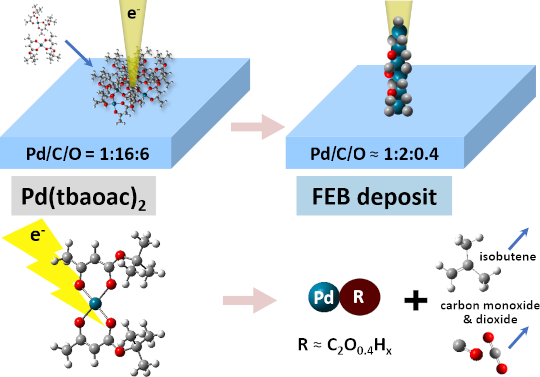
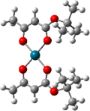
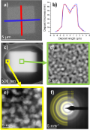
- following the method outlined by Butrymowicz and colleagues [42]. FEBID was performed using a Hitachi S3600 scanning electron microscope (SEM), which features a high-vacuum chamber and a tungsten filament electron source. Native-oxide Si(100) was employed as a substrate, which was thoroughly cleaned with
- duration. A 20 keV electron beam was used with a probe current of 0.7 nA, as measured on a Faraday cup using a Keithley picoamperemeter. This corresponds to a current of 0.5 nA on the native-oxide Si(100) substrate, with the remaining 0.2 nA attributed to BSEs and SEs emitted from the substrate. The
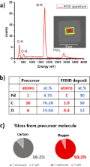
- these k-ratios, Stratagem then recalculates the composition for a thin film (multi)layered structure. The native-oxide Si(100) substrate was accounted for by including a 1 nm thick SiO2 layer of density 2.65 g·cm−3 between the Si substrate and the deposit for the thin film correction. This way, the


N2+-implantation-induced tailoring of structural, morphological, optical, and electrical characteristics of sputtered molybdenum thin films
Beilstein J. Nanotechnol. 2025, 16, 495–509, doi:10.3762/bjnano.16.38
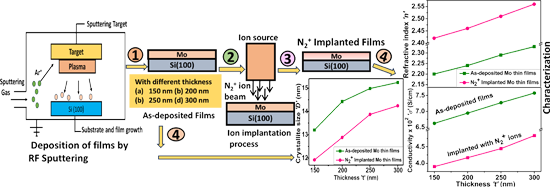
- remarkable thermal stability, high melting point, and chemical inertness. In the present study, Mo thin films of different thicknesses (150, 200, 250, and 300 nm) have been deposited on Si(100) substrates via radio frequency sputtering in an argon atmosphere at room temperature. Some of these films have been
- for various applications in photovoltaics, sensors, optoelectronics, and electronic devices. In the present work, Mo thin films with varying thickness of 150, 200, 250, and 300 nm were deposited on Si(100) substrates using radio frequency (RF) sputtering in an argon environment at ambient temperature
- this study, molybdenum thin films of varying thickness were deposited at room temperature on Si(100) substrates via RF sputtering using a pure 2″ diameter Mo target (99.99% purity) in Ar gas atmosphere with a flow rate of 10 sccm. The plasma was obtained by setting the RF power to 100 W, while careful


Performance optimization of a microwave-coupled plasma-based ultralow-energy ECR ion source for silicon nanostructuring
Beilstein J. Nanotechnol. 2025, 16, 484–494, doi:10.3762/bjnano.16.37

- power, and extraction grid voltage is documented for different ion energies. Additionally, the manuscript establishes the relationship between ion beam current and ion energy. Irradiation of p-type single crystal Si(100) surfaces at off-normal angles (60° and 72.5°) with 450 eV Ar ions results in the


Impact of adsorbate–substrate interaction on nanostructured thin films growth during low-pressure condensation
Beilstein J. Nanotechnol. 2025, 16, 473–483, doi:10.3762/bjnano.16.36

- were observed for Si/Si(100) [13], as well as during Ge deposition on Si [14]. Additionally, elongated metallic islands were detected during the deposition of Cu on Pd(110) [15] and Ag on Cu(110) [16]. Small separated adsorbate islands of Al and Cu condensates were obtained on glass substrates [17][18


Precursor sticking coefficient determination from indented deposits fabricated by electron beam induced deposition
Beilstein J. Nanotechnol. 2025, 16, 35–43, doi:10.3762/bjnano.16.4

- itself once the first closed layer is formed. In another series of surface-science-oriented works, the sticking coefficient has been studied for small organic molecules, such as allyl methyl ether on Si(100) [17], trimethylamine on Si(001) [18], tetrahydrofuran on Si(001) [19], and benzene on Pt(111) [20


The role of a tantalum interlayer in enhancing the properties of Fe3O4 thin films
Beilstein J. Nanotechnol. 2024, 15, 1253–1259, doi:10.3762/bjnano.15.101

- promising applications. High-quality Fe3O4 thin films are a must to achieve the goals. In this report, Fe3O4 films on different substrates (SiO2/Si(100), MgO(100), and MgO/Ta/SiO2/Si(100)) were fabricated at room temperature with radio-frequency (RF) sputtering and annealed at 450 °C for 2 h. The
- morphological, structural, and magnetic properties of the deposited samples were characterized with atomic force microscopy, X-ray diffractometry, and vibrating sample magnetometry. The polycrystalline Fe3O4 film grown on MgO/Ta/SiO2/Si(100) presented very interesting morphology and structure characteristics
- films on three different types of substrates, namely an amorphous SiO2/Si(100) substrate, a single crystal MgO(100) substrate, and a buffer layer consisting of MgO/Ta/SiO2/Si(100). The properties of Fe3O4 thin films were analyzed using atomic force microscopy (AFM), X-ray diffractometry (XRD), and


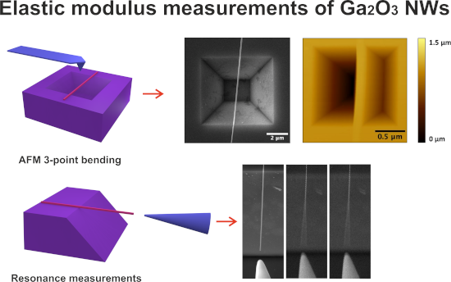
Elastic modulus of β-Ga2O3 nanowires measured by resonance and three-point bending techniques
Beilstein J. Nanotechnol. 2024, 15, 704–712, doi:10.3762/bjnano.15.58
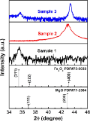
- -Ga2O3 NW synthesis methods and detailed post-examination of their mechanical properties before considering their application in future nanoscale devices. Results For structural analysis of the as-grown NW arrays on Si(100)/SiO2 substrates, X-ray diffraction (XRD) measurements were conducted. The marked
- pressure chemical vapour transport in a horizontal quartz tube reactor (18 mm inner diameter) according to the method reported in [2]. The process involved loading a ceramic boat with 0.15 g of Ga2O3 powder (99.99%, Alfa Aesar) at the centre of the quartz tube. Oxidised silicon wafers SiO2/Si (100) coated


Directed growth of quinacridone chains on the vicinal Ag(35 1 1) surface
Beilstein J. Nanotechnol. 2024, 15, 556–568, doi:10.3762/bjnano.15.48
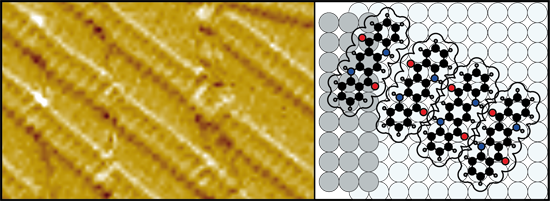
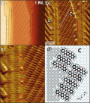
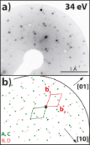
- same time, the surface also exhibits flat areas with wide terraces of up to 300 Å in width. This can also be seen in the STM image. A similar type of step width distribution was also found for various other surfaces, for example, Cu(11n) [33] with n = 5, 9, 17, and Si(100) as well as Si(111) [34


Controllable physicochemical properties of WOx thin films grown under glancing angle
Beilstein J. Nanotechnol. 2024, 15, 350–359, doi:10.3762/bjnano.15.31
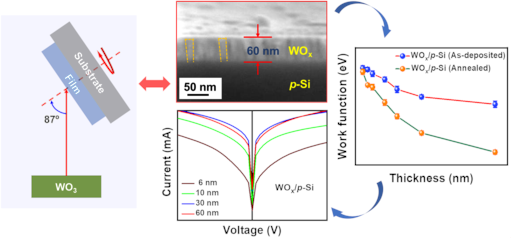
- thin films were deposited on ultrasonically cleaned p-Si (100) and soda lime glass substrates of 1 × 1 cm2 dimension using a rf magnetron sputtering setup (Excel Instruments). Trichloroethylene, propanol, acetone, and DI water were used to carry out ultrasonication of the substrates for removing


Determining by Raman spectroscopy the average thickness and N-layer-specific surface coverages of MoS2 thin films with domains much smaller than the laser spot size
Beilstein J. Nanotechnol. 2024, 15, 279–296, doi:10.3762/bjnano.15.26
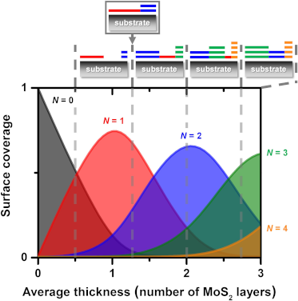
- range of A and B excitons [35]. All Raman spectra reported in this paper were recorded on different samples deposited on SiO2/Si(100) substrate. Hence, the second parameter essential to define is the SiO2 thickness. Indeed, the multiple reflection interferences that occur in the air/MoS2/SiO2/Si
- reference, which is a bare Si(111) wafer with only native oxide. In the following, A(Si111) stands for the integrated intensity of the Si(111) 521 cm−1 mode. This reference is preferred to the Si(100) substrate with 90 ± 6 nm SiO2 to avoid the effects of the SiO2 thickness variations and crystal orientation
- . For comparison with other setups or references, the polarization ratio of our setup and the relative values measured on Si(100) with native oxide and 90 nm SiO2 are given in Supporting Information File 1. As noted by several authors and predicted by the optical interference model, the normalized


Properties of tin oxide films grown by atomic layer deposition from tin tetraiodide and ozone
Beilstein J. Nanotechnol. 2023, 14, 1085–1092, doi:10.3762/bjnano.14.89
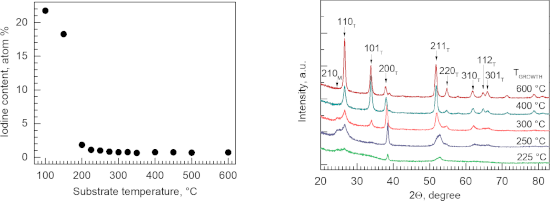
- Kristjan Kalam Peeter Ritslaid Tanel Kaambre Aile Tamm Kaupo Kukli Institute of Physics, University of Tartu, W. Ostwaldi 1, 50411 Tartu, Estonia 10.3762/bjnano.14.89 Abstract Polycrystalline SnO2 thin films were grown by atomic layer deposition (ALD) on SiO2/Si(100) substrates from SnI4 and O3
- , the cycle times for SnO2 were kept at 5-2-5-5 s, respectively, for the following sequence: metal precursor pulse, N2 purge pulse, O3 pulse, and N2 purge pulse. The films were grown on Si(100) cleansed and etched prior to the growth. An X-ray fluorescence spectrometer Rigaku ZSX 400 with the program


Silver-based SERS substrates fabricated using a 3D printed microfluidic device
Beilstein J. Nanotechnol. 2023, 14, 793–803, doi:10.3762/bjnano.14.65
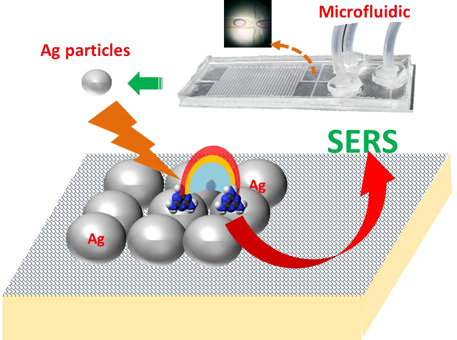
- centrifuged at 12,000 rpm for 5 min to separate the Ag NPs solution and remove the oil phase. Finally, the Ag NPs suspension was stored in a dark vial at room temperature for further experiments. Fabrication of porous silicon (PS) substrate A p-type Si(100) wafer with a resistivity of 0.01–0.09 Ω·cm was used



High–low Kelvin probe force spectroscopy for measuring the interface state density
Beilstein J. Nanotechnol. 2023, 14, 175–189, doi:10.3762/bjnano.14.18
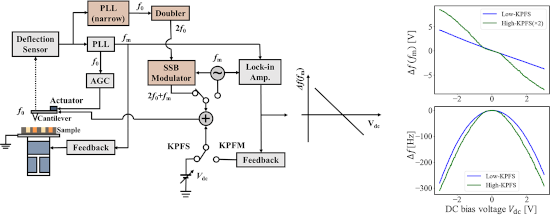
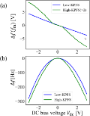
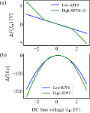
- metal-oxide semiconductor capacitors on Si(100) substrates, the lifetimes τn and τp as functions of the sum of the surface potential and the Fermi potential with respect to the midgap have been experimentally investigated [24]. As a result, for Si semiconductors with a low carrier density (small Fermi



Enhanced electronic transport properties of Te roll-like nanostructures
Beilstein J. Nanotechnol. 2022, 13, 1284–1291, doi:10.3762/bjnano.13.106
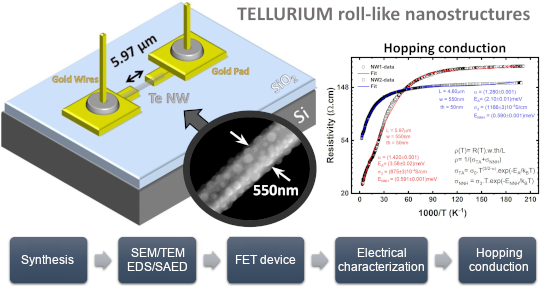
- writing optical lithography on 1 × 1 cm2 degenerate Si(100) substrates covered by a 300 nm thick high-quality SiO2 layer. A Cr(10 nm)/Au(100 nm) bilayer was thermally evaporated on the sample to produce good ohmic contacts (see Supporting Information File 1). This procedure follows the methodology




Role of titanium and organic precursors in molecular layer deposition of “titanicone” hybrid materials
Beilstein J. Nanotechnol. 2022, 13, 1240–1255, doi:10.3762/bjnano.13.103
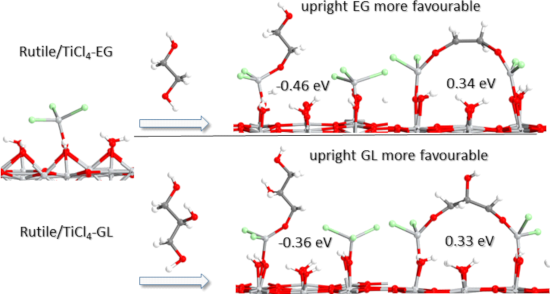
- and GL to deposit titanicone films [33]. In ref [30] titanicone films were deposited using TiCl4 as metal source and EG or GL as organic precursors. TiCl4–EG films and TiCl4–GL films were deposited on Si(100) wafers. XRR analysis found a growth per cycle (GPC) of ≈4.6 Å/cycle for TiCl4–EG films at 90
- SiO2 membrane [27] and ≈4.6 Å/cycle at 90 °C in Si(100) wafers [30]. We note the relatively low temperature of the titanicone deposition in refs. [27][30] which may prevent the double reaction with EG. For the TiCl3–GL model, the distance between Ti and O in the Ti–O–CH2CH2OHCH2–O fragment (GL in the


Influence of water contamination on the sputtering of silicon with low-energy argon ions investigated by molecular dynamics simulations
Beilstein J. Nanotechnol. 2022, 13, 986–1003, doi:10.3762/bjnano.13.86
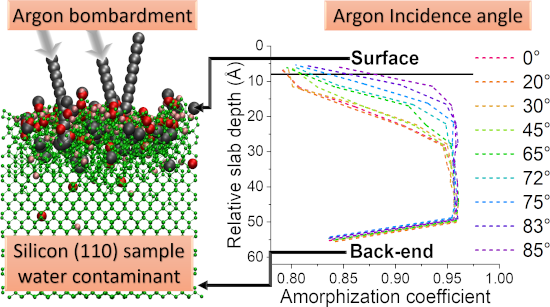
- using the Stillinger–Weber potential to obtain the dimers formed on the Si(100) surface [21][54], with a time step of 0.1 fs for 1 ns. Some snapshots of the dimers on the surface can be found in the Figure 2. The equilibration was pursued with the ReaxFF potential for another 500 ps in the same
- the NVE ensemble in order to avoid any impact of a thermostat on the collision cascade. Once properly equilibrated, the simulation of argon bombardment of pristine Si(100) was run for 50 ps, which was enough for the modelling of energy dissipation and sputtering, and then thermalized to 300 K. The
- normal. These angles were selected to cover a good sample in the 0–85° range, including angles of specific interest, such as 72° and 83° which represent a channelling angle for Si(100) [56] and a grazing incidence angle, respectively, frequently used in TEM lamellae preparation [57]. A visualization of a




Influence of magnetic domain walls on all-optical magnetic toggle switching in a ferrimagnetic GdFe film
Beilstein J. Nanotechnol. 2022, 13, 74–81, doi:10.3762/bjnano.13.5
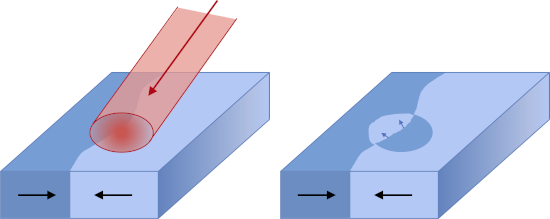
- thickness, deposited at room temperature using magnetron sputtering (base pressure <10−8 mbar) from elemental targets. The Ar sputter pressure was kept constant at 3.5 × 10⁻³ mbar during the deposition process. The film was prepared with 5 nm Pt as a seed layer on a Si(100) substrate with a 100 nm thick
- (100 nm)/Si(100). Magnetic properties were characterized by superconducting quantum interference device vibrating sample magnetometry, which confirmed an out-of-plane easy axis of magnetization with rectangular hysteresis loops and a coercivity of about 5 mT at room temperature, see Supporting


Morphology-driven gas sensing by fabricated fractals: A review
Beilstein J. Nanotechnol. 2021, 12, 1187–1208, doi:10.3762/bjnano.12.88
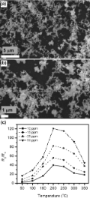
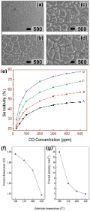
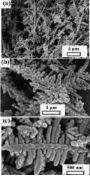
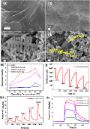
- study, Kante et al. prepared SnO2 films with fractal morphology by an electrochemical method with a subsequent oxidation process [68]. Both groups tested the films for CO gas sensing at different temperatures. Figure 8a–d shows the SEM images of SnO2 thin films on a Si(100) substrate obtained by Chen
- Elsevier. This content is not subject to CC BY 4.0. Density and dimension of SnO2 fractal films. (a–d) SEM images and (e) CO gas sensing behavior of SnO2 thin films prepared on Si(100) substrate at different temperatures (A: 300 °C, B: 350 °C, C: 400 °C, D: 450 °C). (f, g) Influence of the temperature on D










A Au/CuNiCoS4/p-Si photodiode: electrical and morphological characterization
Beilstein J. Nanotechnol. 2021, 12, 984–994, doi:10.3762/bjnano.12.74
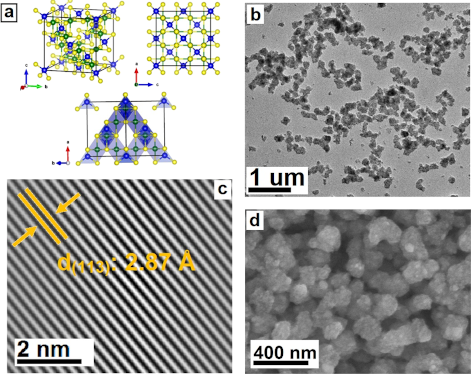
- the Al/CuNiCoS4/p-Si device A p-type Si(100) wafer was used as substrate and as semiconductor material for the Au/CuNiCoS4/p-Si photodiode. First, the wafer was cut to 2 cm2 pieces, and acetone and propanol were used to clean the pieces in an ultrasonic cleaner. Then, the pieces were immersed in HF

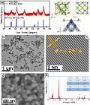


The role of convolutional neural networks in scanning probe microscopy: a review
Beilstein J. Nanotechnol. 2021, 12, 878–901, doi:10.3762/bjnano.12.66
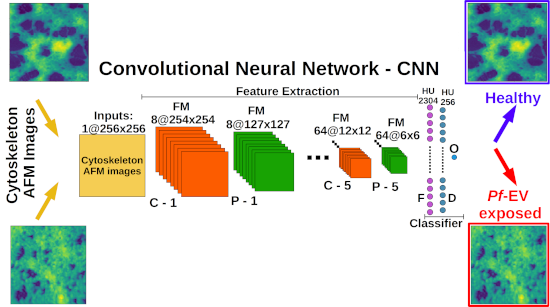


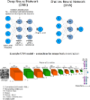


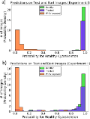

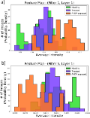


Atomic layer deposited films of Al2O3 on fluorine-doped tin oxide electrodes: stability and barrier properties
Beilstein J. Nanotechnol. 2021, 12, 24–34, doi:10.3762/bjnano.12.2
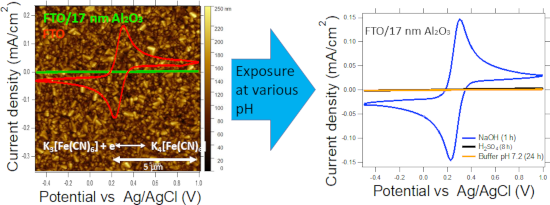
- , and water and dried in a stream of argon. Si(100) wafers with a 300 nm thick thermal oxide layer (Silicon Quest International, USA) were treated successively with acetone/ethanol/water. Al2O3 films were grown by using an ALD system R200 (Picosun, Finland) in the thermal mode with varying numbers of


Adsorption and self-assembly of porphyrins on ultrathin CoO films on Ir(100)
Beilstein J. Nanotechnol. 2020, 11, 1516–1524, doi:10.3762/bjnano.11.134
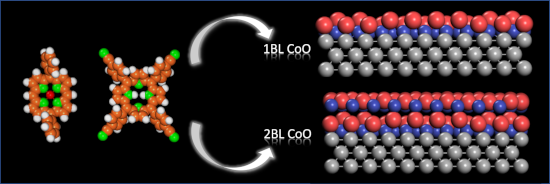
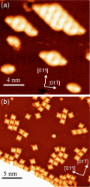
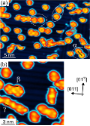
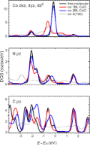
- perpendicular to the surface has previously been observed for variety of molecules [37][38][39]. Many metal phthalocyanines have been shown to rotate on metal surfaces [40][41][42][43], but notably also a modified Co phthalocyanine on Si(100) [44]. Molecules sometimes come close enough to each other or can be

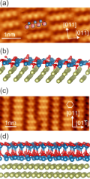



Wafer-level integration of self-aligned high aspect ratio silicon 3D structures using the MACE method with Au, Pd, Pt, Cu, and Ir
Beilstein J. Nanotechnol. 2020, 11, 1439–1449, doi:10.3762/bjnano.11.128
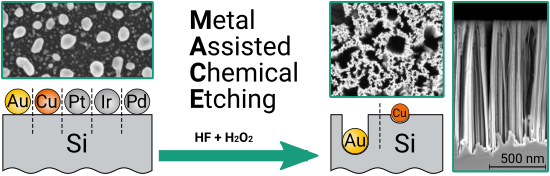
- wafer-level preparation, the iridium film was deposited by atomic layer deposition on rectangular Si(100) samples, using Ir(acac)3 and oxygen. Details are described by Genevée et al. [31]. The process was carried out with 45 and 90 cycles. One ALD cycle consists of pulsing Ir(acac)3 for 6 s, followed by


Atomic defect classification of the H–Si(100) surface through multi-mode scanning probe microscopy
Beilstein J. Nanotechnol. 2020, 11, 1346–1360, doi:10.3762/bjnano.11.119
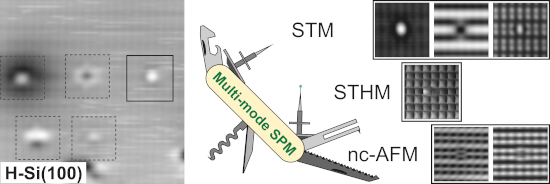
- available via a single imaging mode. We demonstrate this through the characterization and classification of several commonly found defects of the hydrogen-terminated silicon (100)-2 × 1 surface (H–Si(100)-2 × 1) by using six unique imaging modes. The H–Si surface was chosen as it provides a promising
- dimers are formed, which run parallel along the surface. The study of Si(100) surface defects was one of the first applications of scanning probe microscopy [14]. The three observed species were identified as a missing silicon dimer, a pair of missing silicon dimers, and a missing pair of Si atoms on the
- electronic and structural behaviour of the Si(100) surface [18]. The addition of hydrogen to surface silicon atoms saturates all available bonds [19] and three surface reconstructions are commonly observed. The 2 × 1 phase – frequently used in hydrogen lithography, and can be prepared in situ resulting in