


Search results
Search for "SiC" in Full Text gives 69 result(s) in Beilstein Journal of Nanotechnology.
Advancing nanolithography: a comprehensive review of materials for local anodic oxidation with AFM
Beilstein J. Nanotechnol. 2026, 17, 275–291, doi:10.3762/bjnano.17.19
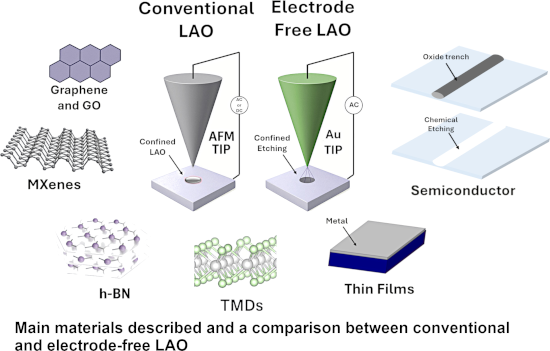
- ][31], gallium arsenide (GaAs) [32][33] and silicon carbide (SiC) [34], meaning that SPL has still the potential to revolutionize nanolithography. In the context of 2D materials, LAO facilitates the fabrication of intricate structures such as nanoribbons and transistors, granting proper operation of
- grown oxide. Specifically, on Si, LAO-derived oxide exhibits a density of 2.05 g·cm−3, lower than the 2.27 g·cm−3 density of thermally oxidized silicon [43]. In the case of Si surfaces the chemical reaction leading to SiO2 formation is: In the case of SiC, carbon atoms are eliminated in the form of
- stress and trapped charges hinder further ion transport. Together, these effects progressively slow oxidation and ultimately halt growth [48]. This explains why local oxidation experiments on Si report maximum features below 10 nm, while oxide features grown on SiC (with different stoichiometry and


Reduced graphene oxide paper electrode for lithium-ion cells – towards optimized thermal reduction
Beilstein J. Nanotechnol. 2026, 17, 24–37, doi:10.3762/bjnano.17.3
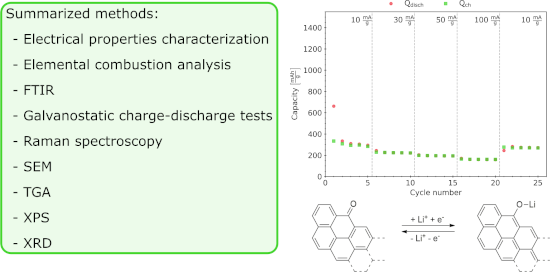
- , Poland AGH University of Krakow, al. Adama Mickiewicza 30, 30-059, Krakow, Poland Warsaw University of Technology, Faculty of Chemical and Process Engineering, ul. Waryńskiego 1, 00-645, Warsaw, Poland Warsaw University of Technology, Faculty of Chemistry, ul. Noakowskiego 3, 00-664, Warsaw, Poland SiC



The cement of the tube-dwelling polychaete Sabellaria alveolata: a complex composite adhesive material
Beilstein J. Nanotechnol. 2025, 16, 1998–2014, doi:10.3762/bjnano.16.138
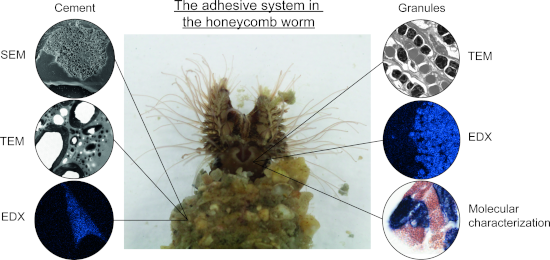
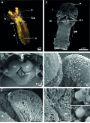
- ). After curing for 1 h at 80 °C, a transverse section of the mounted tubes was finely ground with SiC grit 800 abrasive suspensions on a high-flatness cast-iron lapping plate. The sections were then polished in three steps on textile cloths soaked with diamond suspensions of 6, 3, and 1 µm, respectively



Influence of laser beam profile on morphology and optical properties of silicon nanoparticles formed by laser ablation in liquid
Beilstein J. Nanotechnol. 2025, 16, 1533–1544, doi:10.3762/bjnano.16.108
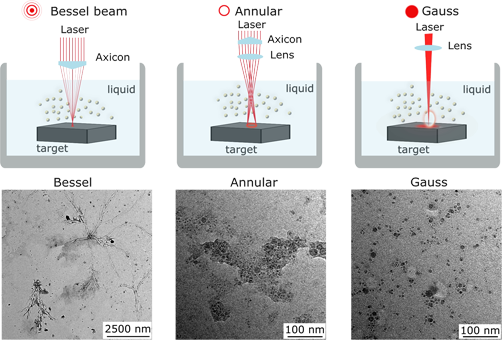
- distances (0.25 nm) in agreement with the reflections from the (111) planes of cubic 3C-SiC [40]. The formation of silicon carbide during laser ablation of silicon in ethanol has been observed in our previous work [10] and can be explained by chemical reactions of the ejected silicon species with products
- (210) planes of Si or the (110) planes of hexagonal SiC. The observations support the assumption that cubic crystal structures are more probable and stable than the hexagonal ones. More details of the HRTEM analysis can be found in the Supporting Information File 1, Figure S1, and Tables S1 and S2
- beams with interplanar spacings, which can be attributed to the planes of cubic Si, cubic SiC, and silicon oxide phases. Raman spectra of Si samples obtained using laser beams with Gaussian, Bessel, and annular profiles. Optical properties of the Si NPs prepared by laser ablation of a Si target in


Laser processing in liquids: insights into nanocolloid generation and thin film integration for energy, photonic, and sensing applications
Beilstein J. Nanotechnol. 2025, 16, 1428–1498, doi:10.3762/bjnano.16.104
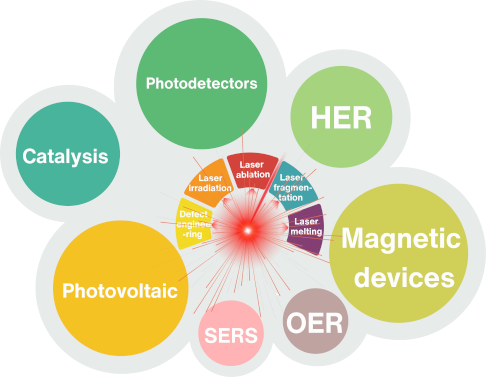
- better after spin coating than drop casting [110]. A functionalization study on SiC nanocrystals was made. SiC–polyvinyl alcohol (PVA) polymeric nanocomposites were manufactured by adding silicon carbide NPs prepared by PLAL to PVA and thin films of the composites were prepared by spin coating on glass






Piezoelectricity of hexagonal boron nitrides improves bone tissue generation as tested on osteoblasts
Beilstein J. Nanotechnol. 2025, 16, 1068–1081, doi:10.3762/bjnano.16.78
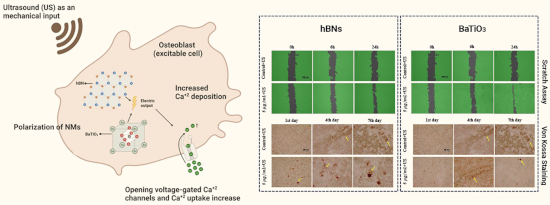
- was synthesized using boric acid (Sigma-Aldrich, Germany) and ammonia as the boron and nitrogen sources. Specifically, 1 gram of boric acid was mixed with 5 mL of 25% aqueous ammonia solution (Sigma-Aldrich, Germany) to create a suspension, which was then poured onto a silicon carbide (SiC) plate
- SiC surface and stored at room temperature. The synthesized hBN and commercial BaTiO3 nanoparticles (Sigma-Aldrich, Germany) were characterized using several analytical techniques. Transmission electron microscopy (TEM, JEOL ARM 200 CF, 200 keV) was employed to examine morphology and particle size by


Effect of radiation-induced vacancy saturation on the first-order phase transformation in nanoparticles: insights from a model
Beilstein J. Nanotechnol. 2024, 15, 1453–1472, doi:10.3762/bjnano.15.117

- comparison, in SiC, the energy of silicon vacancy migration is nearly 2.4 eV, and the energy of carbon vacancy migration is about 3.6 eV [42][43][44]. We focus on vacancy migration energies at the end of the paper and detail the findings. The surface energies σα and σβ of an iron-like nanoparticle are


A biomimetic approach towards a universal slippery liquid infused surface coating
Beilstein J. Nanotechnol. 2024, 15, 1376–1389, doi:10.3762/bjnano.15.111
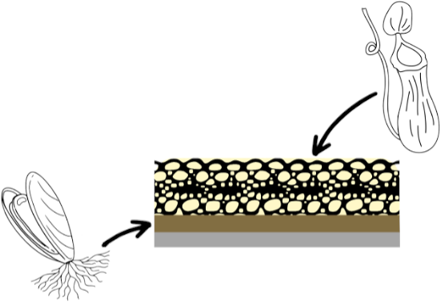
- with dichloromethane, acetone, and ethanol. 316 SS was purchased from McMaster-Carr (Elmhurst, IL) and ground up to grit 3000 with SiC emery paper and cut by hand into 1 × 1 cm2 chips. The cut SS substrates were rinsed in DI water and ethanol followed by sonication in a 1:1 mixture of chloroform and




Local work function on graphene nanoribbons
Beilstein J. Nanotechnol. 2024, 15, 1125–1131, doi:10.3762/bjnano.15.91
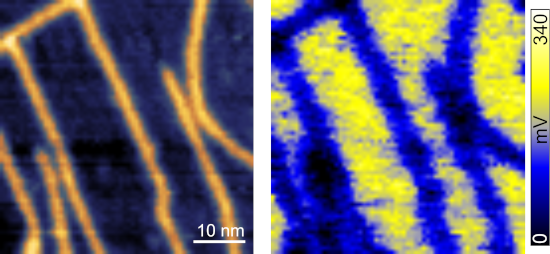
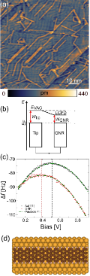
- with respect to the Dirac point, the center of the Dirac cones [2]. The location of the Fermi level is a measure of the work function with respect to a different energy reference, the vacuum energy. This position can be tuned by gating [3] or by doping, for example, n-doping for graphene on SiC [4][5

![[Graphic 1]](/bjnano/content/inline/2190-4286-15-91-i4.svg?max-width=637&scale=1.18182)
Unveiling the nature of atomic defects in graphene on a metal surface
Beilstein J. Nanotechnol. 2024, 15, 416–425, doi:10.3762/bjnano.15.37
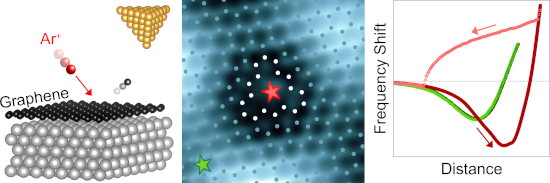
- on Pt(111) [14], and SiC() [16]. These resonances were interpreted as a collective excitation of the graphene π orbitals near the void [54], which depends on the coupling of the C atoms to the substrate surface. Therefore, the graphene–surface hybridization plays an important role in the occurrence
- previously for graphene on SiC(0001), where intact graphene was lifted from the surface after forming a Au tip–graphene bond and retracting the tip [63]. Hysteresis loops in Δf and I were then likewise observed. In the findings presented here, intact graphene does not exhibit hysteretic behavior, although
- one may expect a similar Au–C bond as proposed for graphene on SiC(0001). Most likely, the graphene–Ir(111) coupling is stronger than the graphene–SiC(0001) interaction and, thereby, prevents an identifiable lifting of graphene from the metal surface. The dangling bonds of the defect, however, can


TEM sample preparation of lithographically patterned permalloy nanostructures on silicon nitride membranes
Beilstein J. Nanotechnol. 2024, 15, 1–12, doi:10.3762/bjnano.15.1
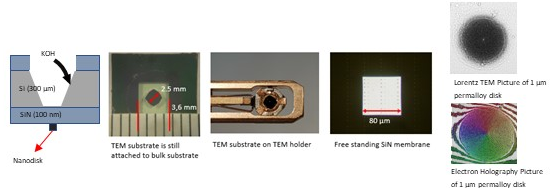
- development is to use a different membrane, for example SiC (lattice constant a = 0.435 nm), since it can grow as a single-crystalline layer and ensure epitaxial sample growth on top of it, for example, the growth of NbN (a = 0.439 nm) with a lattice mismatch of 1%. Epitaxial growth of Py films on single
- -crystal SiC membranes is also feasible. Py epitaxial films were obtained on single-crystal MgO substrates [36] that have a lattice constant of 0.42 nm. It was demonstrated that the epitaxial SiC layer can serve as an excellent mask material for KOH etching of Si [37]. However, etching to a crystalline


ZnO-decorated SiC@C hybrids with strong electromagnetic absorption
Beilstein J. Nanotechnol. 2023, 14, 565–573, doi:10.3762/bjnano.14.47
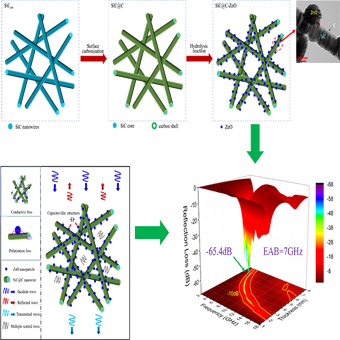
- of SiC nanomaterials through surface carbonization of SiC nanowires and hydrolysis. SiC@C-ZnO composites were synthesized with different dosages of ZnNO3·6H2O. Composition, microstructure, and electromagnetic properties of the composites were characterized and analyzed. Results from TEM and XRD show
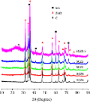
- that crystalline ZnO particles adhere to the surface of amorphous carbon, and the ZnO content increases as a function of a dosage of ZnNO3·6H2O. The as-prepared SiC@C-ZnO hybrids exhibit effective electromagnetic absorption, which is related to a synergy effect of different dielectric loss processes
- mm). The excellent properties of the materials suggest great prospect as electromagnetic absorbers. Keywords: carbon; dielectric; electromagnetic absorption; SiC nanowires; ZnO; Introduction With increasing functionality of electronic devices, the widening of the working frequency bands, and the


Electrostatic pull-in application in flexible devices: A review
Beilstein J. Nanotechnol. 2022, 13, 390–403, doi:10.3762/bjnano.13.32
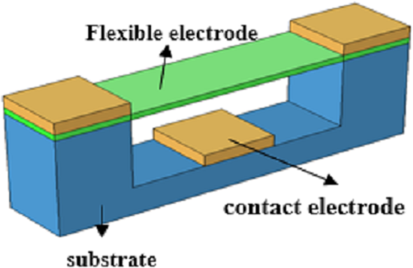
- . Electrode materials include diamond, SiC, Si, and Ge. Table 3 summarizes nanowire materials commonly used for NEM switches. The research on NWs-NEM switches can be classified into two types, namely manufacturing techniques and in situ techniques. In the former, the switches are first processed by top-down
- et al. [8] made a CuO NWs switch, 3 µm long, 80 nm in diameter, and 120 nm in the gap, with a pull-in voltage of 12.5 V. Feng et al. [40] prepared SiC nanowire NEM switches using bottom-up techniques. The pull-in voltage ranges from one to several volts and the response time is below microseconds


Fabrication of nano/microstructures for SERS substrates using an electrochemical method
Beilstein J. Nanotechnol. 2020, 11, 1568–1576, doi:10.3762/bjnano.11.139
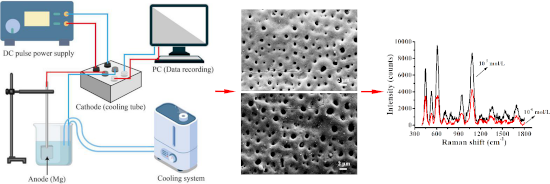
- quantification of extremely small amounts of protein. Experimental As-cast Mg ingots were sliced into rectangular coupons (15 × 15 × 4 mm3) for anodic oxidation treatment. Prior to the treatment, all specimens were ground using SiC paper up to 1200 grit, and then degreased with ethanol and deionized water in


Nonadiabatic superconductivity in a Li-intercalated hexagonal boron nitride bilayer
Beilstein J. Nanotechnol. 2020, 11, 1178–1189, doi:10.3762/bjnano.11.102
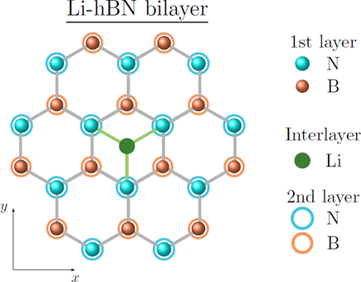
- ][17][18][19], Ru [20][21], Pt [22][23], SiC [24][25][26], and SiO2 [27][28][29]. Unfortunately, the obtained experimental data showed that the incompatible crystalline structure of the above materials leads to significant suppression of the carrier mobility of graphene [13][30]. It is now assumed that


![[Graphic 34]](/bjnano/content/inline/2190-4286-11-102-i54.svg?max-width=637&scale=1.18182) for Li-hBN. The results were obta...
for Li-hBN. The results were obta...
Scanning tunneling microscopy and spectroscopy of rubrene on clean and graphene-covered metal surfaces
Beilstein J. Nanotechnol. 2020, 11, 1157–1167, doi:10.3762/bjnano.11.100
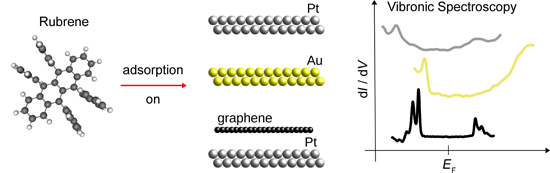
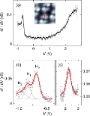
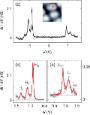
- indicated by the comparison of the superstructure in Figure 6 with the one obtained for a thicker C42H28 film on graphene-covered SiC(0001) [45]. In the latter work a smaller unit cell was reported with individual C42H28 molecules appearing uniformly in STM images. It is likely that the difference to the
- superstructure depicted in Figure 6 results from an efficiently decoupled molecule residing on top of a molecular film deposited on nearly free graphene on SiC(0001). Similar to observations on Pt(111), C42H28 molecules on graphene appear with two or three lobes in STM images, which are labeled α and β in Figure



Hexagonal boron nitride: a review of the emerging material platform for single-photon sources and the spin–photon interface
Beilstein J. Nanotechnol. 2020, 11, 740–769, doi:10.3762/bjnano.11.61
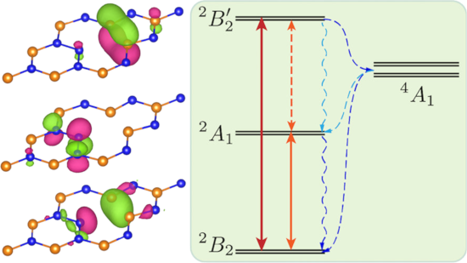
- divacancy (DV) in silicon carbide (SiC) [18][19][20], the silicon monovacancy in SiC [21][22][23], the carbon antisite vacancy pair in SiC [24][25], the silicon vacancy and nitrogen (N) atom on an adjacent carbon site in SiC [26][27][28], and rare-earth impurities in complex oxides [29]. While the NV center
- sections of this paper, while we remind the readers of recent reviews on the other materials or emerging point defects in diamond [10][31][42][59][60][61] and SiC [7][11][62]. In this review, the material of focus is h-BN. The current progress indicates h-BN is distinguishing itself with great potential as
- et al. [5] took the first step in this direction, showing how basic considerations of host properties (e.g., nuclear spin isotopes, bandgap, and spin–orbit coupling) can guide the identification of quantum point defects analogous to the diamond NV center, elevating SiC as such a host, with now many




Deterministic placement of ultra-bright near-infrared color centers in arrays of silicon carbide micropillars
Beilstein J. Nanotechnol. 2019, 10, 2383–2395, doi:10.3762/bjnano.10.229
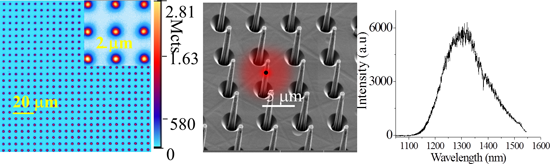
- enhancement of the optical emission between 850 and 1400 nm of an ensemble of silicon mono-vacancies (VSi), silicon and carbon divacancies (VCVSi), and nitrogen vacancies (NCVSi) in an n-type 4H-SiC array of micropillars. The micropillars have a length of ca. 4.5 μm and a diameter of ca. 740 nm, and were
- ; Introduction Silicon carbide (SiC) is an established material for many electronic devices and has also been considered for photonics applications recently. After the improvement of the purity of the material and the isolation of point defects (primarily vacancies), SiC has been considered to host physical
- systems for quantum devices such as single-photon sources and spin–photon interfaces for quantum interconnects [1][2][3]. Points defects or color centers in SiC are considered as alternative candidates for quantum applications such as solid-state quantum bits [4][5], spin–photon interfaces [6], single


Nitrogen-vacancy centers in diamond for nanoscale magnetic resonance imaging applications
Beilstein J. Nanotechnol. 2019, 10, 2128–2151, doi:10.3762/bjnano.10.207
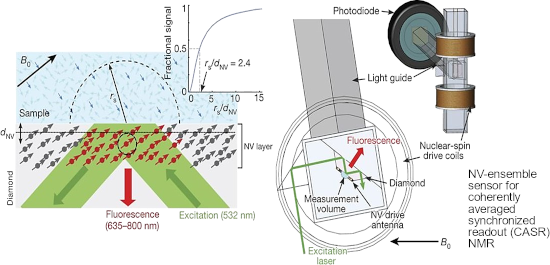
- thermal (dissipation) damage to the biological sample. For a given minimal and microwave probe power, NV photon emission was enhanced by the optical collection design of the magnetometer, achieved through increasing the NV concentration and by using SiC as a substrate to aid in heat transfer. After


High-temperature resistive gas sensors based on ZnO/SiC nanocomposites
Beilstein J. Nanotechnol. 2019, 10, 1537–1547, doi:10.3762/bjnano.10.151
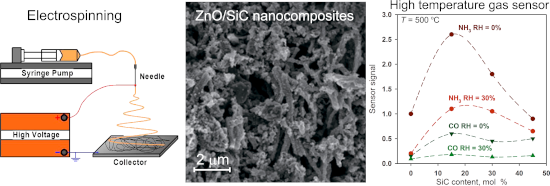
- dispersed silicon carbide (SiC). In this work, ZnO and SiC nanofibers were synthesized by electrospinning of polymer solutions followed by heat treatment, which is necessary for polymer removal and crystallization of semiconductor materials. ZnO/SiC nanocomposites (15–45 mol % SiC) were obtained by mixing
- °C. The ZnO/SiC nanocomposites were characterized by a higher concentration of chemisorbed oxygen, higher activation energy of conductivity, and higher sensor response towards CO and NH3 as compared with ZnO nanofibers. The obtained experimental results were interpreted in terms of the formation of
- an n–n heterojunction at the ZnO/SiC interface. Keywords: electrospinning; high temperature gas sensor; n–n heterojunction; ZnO/SiC nanocomposite; Introduction The risk of air pollution is growing due to the development of new technologies in the chemical, metallurgical and food industries, the use



Choosing a substrate for the ion irradiation of two-dimensional materials
Beilstein J. Nanotechnol. 2019, 10, 531–539, doi:10.3762/bjnano.10.54
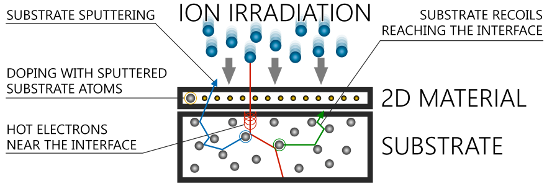
- defect formation mechanisms. The estimations include Monte Carlo simulations for He, Ar, Xe, C, N and Si ions, performed in the incident ion energy range from 100 eV to 250 MeV. Cu, SiO2, SiC and Al2O3 substrates were analyzed. The considered substrate-related defect formation mechanisms are sputtering
- taking the substrate effects into account. The analysis was performed for the most common ions used for monolayer irradiation: He, Ar, Xe, C, N and Si; the chosen substrates include Cu, SiO2, SiC and Al2O3. Copper is a widely available metal and is traditionally used as a substrate in 2D material science
- . For the uniformity of the study, a classical semiconducting material SiC was added as another commonly used substrate. Al2O3 is also an insulator that is becoming a more interesting material to support monolayers given that is has a small effect on their properties; besides, comparing it to SiO2 is
Improving control of carbide-derived carbon microstructure by immobilization of a transition-metal catalyst within the shell of carbide/carbon core–shell structures
Beilstein J. Nanotechnol. 2019, 10, 419–427, doi:10.3762/bjnano.10.41
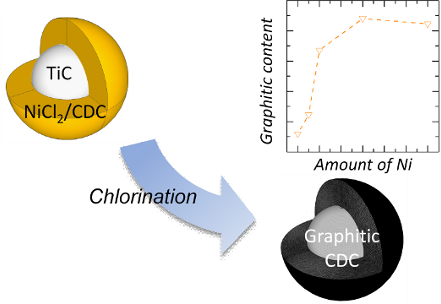
- were employed to produce carbon combining porosity and graphitic structure [17][18][19]. Among them, the carbide-derived carbon (CDC) is a promising route. CDC can be synthesized through the selective extraction of metals or metalloid atoms from metal carbides (MexC, e.g., TiC, SiC, VC, and Mo2C) by


Sputtering of silicon nanopowders by an argon cluster ion beam
Beilstein J. Nanotechnol. 2019, 10, 135–143, doi:10.3762/bjnano.10.13
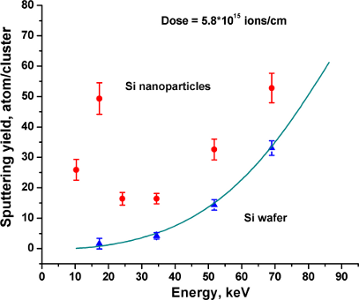
- surface morphology, with preferable erosion of hills as compared with valleys [6], which also results in the smoothing of the surface [7]. Sputtering by an argon cluster beam has been studied for many pure metals (Cu, Ag, Au, W, Pt, Ni) and their alloys, semiconductors (Si and SiC), and insulators (SiO2




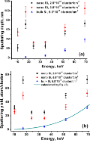

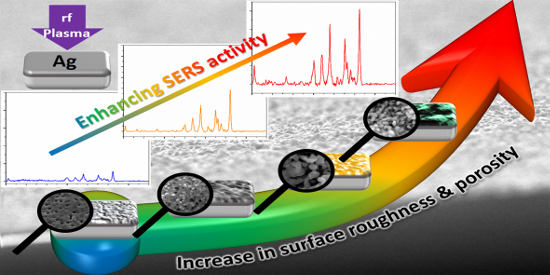
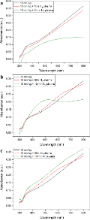
Controlling surface morphology and sensitivity of granular and porous silver films for surface-enhanced Raman scattering, SERS
Beilstein J. Nanotechnol. 2018, 9, 2813–2831, doi:10.3762/bjnano.9.263
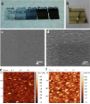
- silver films were characterized using atomic force microscopy (AFM) in contact mode on a CP-II AFM (Bruker-Veeco) with SiC cantilevers to determine the topography and surface roughness (root mean square roughness, Rq). Scanning electron microscopy (SEM) of the silver films was performed on a Philips XL






Two-dimensional semiconductors pave the way towards dopant-based quantum computing
Beilstein J. Nanotechnol. 2018, 9, 2668–2673, doi:10.3762/bjnano.9.249
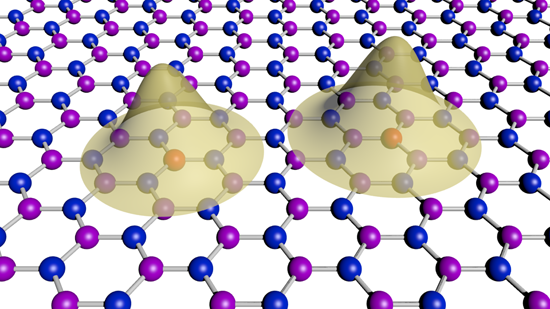
- analysed materials. The range of values for masses and gaps available in the literature and summarised in Table 1 are shown by the extended symbols next to the corresponding material composition. Effective masses and band-gap energies of selected 2D materials. ZnS, CdS, CdSe and SiC have a direct band gap


![[Graphic 7]](/bjnano/content/inline/2190-4286-9-249-i7.svg?max-width=637&scale=1.18182) and energy for one electron bound to a donor pair
and energy for one electron bound to a donor pair ![[Graphic 8]](/bjnano/content/inline/2190-4286-9-249-i8.svg?max-width=637&scale=1.18182) as a function of R. For R = 2a*, ...
as a function of R. For R = 2a*, ...




