


Search results
Search for "TMSOTf" in Full Text gives 117 result(s) in Beilstein Journal of Organic Chemistry.
Advances in Zr-mediated radical transformations and applications to total synthesis
- Hiroshige Ogawa and
- Hugh Nakamura
Beilstein J. Org. Chem. 2026, 22, 71–87, doi:10.3762/bjoc.22.3
- % yield. No epimerization at the β-position was observed, and 57 was obtained as a single product. Subsequent removal of the silyl protecting group under PivOH buffer/TBAF conditions, followed by PPTS treatment, enabled spiroketal formation. Finally, epimerization at C38 with TMSOTf completed the total

Graphical Abstract

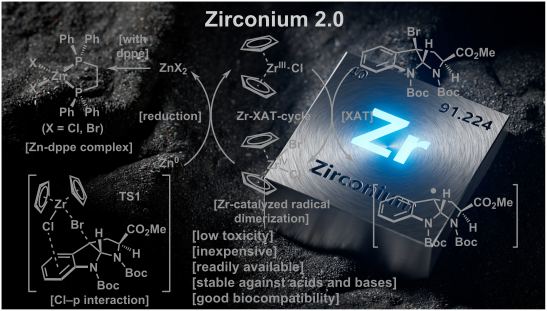
Figure 1: Historical background of zirconium and its physical properties. Image depicted in the background of ...

Scheme 1: Zr-mediated radical cyclization.
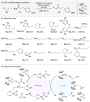
Scheme 2: Ni/Zr-mediated one-pot ketone synthesis.

Scheme 3: Zirconocene-catalyzed alkylative dimerization of 2-methylene-1,3-dithiane.

Scheme 4: Zirconium complexes as a photoredox catalyst.
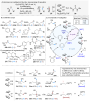
Scheme 5: Zr-catalyzed reductive ring opening of epoxides.

Scheme 6: Zr-catalyzed reductive ring opening of oxetanes. a10 mol % of Cp2Zr(OTf)2·THF was used. bPhCF3 was ...
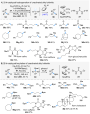
Scheme 7: Zr-catalyzed halogen atom transfer of alkyl chlorides.
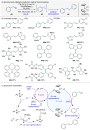
Scheme 8: Zr-catalyzed radical homo coupling of alkyl chlorides.

Scheme 9: Zr-catalyzed fluorine atom transfer.

Scheme 10: Zr-catalyzed C–O bond cleavage. aYield without the use of P(OEt)3.
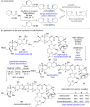
Scheme 11: Application to the total synthesis of halichondrins.
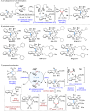
Scheme 12: Zr-catalyzed C3 dimerization of 3-bromotryptophan derivatives. aCp2ZrCl2 was used.

Scheme 13: Mechanistic studies.
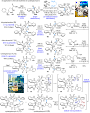
Scheme 14: Application to the total synthesis of cyctetryptomycins. A photo of compound 61b was taken by the a...
Chemoenzymatic synthesis of the cardenolide rhodexin A and its aglycone sarmentogenin
- Fuzhen Song,
- Mengmeng Zheng,
- Dongkai Wang,
- Xudong Qu and
- Qianghui Zhou
Beilstein J. Org. Chem. 2025, 21, 2637–2644, doi:10.3762/bjoc.21.204
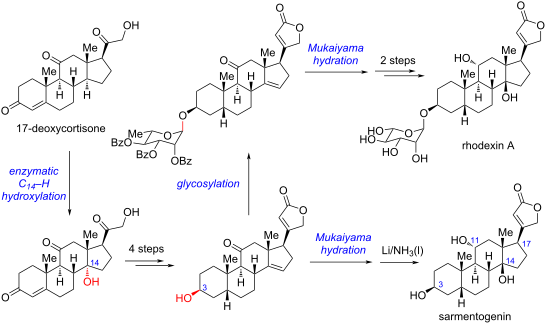
- glycosylation. To our delight, as shown in Scheme 3B, with TMSOTf as the promoter, the glycosylation between 11 and 14 proceeded smoothly in a stereospecific manner, delivering the key intermediate 15 in 98% yield. Subsequently, treating 15 under Mn(acac)2-catalyzed Mukaiyama hydration conditions yielded the

Graphical Abstract

Figure 1: Representative CGs with promising biological activities.

Scheme 1: Retrosynthetic analysis of rhodexin A and sarmentogenin.
Scheme 2: Chemoenzymatic synthesis of sarmentogenin (2).

Scheme 3: Synthesis of rhodexin A.
Ni-promoted reductive cyclization cascade enables a total synthesis of (+)-aglacin B
- Si-Chen Yao,
- Jing-Si Cao,
- Jian Xiao,
- Ya-Wen Wang and
- Yu Peng
Beilstein J. Org. Chem. 2025, 21, 2548–2552, doi:10.3762/bjoc.21.197
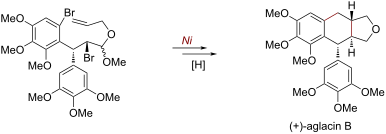
- followed by reaction with CH(OMe)3 afforded acetal 17, which was then subjected to a CH2Cl2 solution of TMSOTf and iPr2NEt. A mixture of enol methyl ethers 18 were thus produced by an elimination reaction. Eventually, a site-selective bromination of the double bond over the electron-rich benzene rings with

Graphical Abstract

Figure 1: The structures of aglacins A, B, C, and E.

Scheme 1: Retrosynthetic analysis of (+)-aglacin B (2).

Scheme 2: Synthesis of cyclization precursor 5.

Scheme 3: Synthesis of (+)-aglacin B (2).
Transformation of the cyclohexane ring to the cyclopentane fragment of biologically active compounds
- Natalya Akhmetdinova,
- Ilgiz Biktagirov and
- Liliya Kh. Faizullina
Beilstein J. Org. Chem. 2025, 21, 2416–2446, doi:10.3762/bjoc.21.185
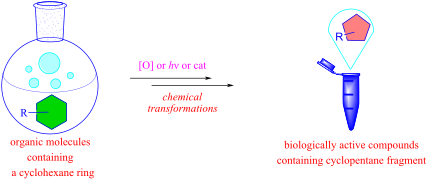
- reagent 118 using trifluoromethanesulfonic acid (TfOH) or TMSOTf as Lewis acids. The authors suggested that the reaction proceeded via the formation of an intermediate 119 followed by reaction with an alcohol nucleophile and a 1,2-carbon migration to produce a cyclopentane derivative 120 with a yield of
- of α,β-epoxy ketone 197 using Lewis acids (Sc(OTf)3, TMSOTf, SnCl4, Yb(OTf)3, BF3·Et2O, BF3·CH3CO2H, BF3·THF, BF3·Bu2O) as a catalyst and different solvents (DCE, DCM, THF, CHCl3) has been described in [88]. By varying the temperature, solvent, and catalyst, optimal conditions were found for time
- hydroxyketone 207 using the Diels–Alder reaction and the ring contraction reaction of epoxyketone 208. After treatment with TMSOTf in dichloromethane at −78 °C, epoxyketone 208 was subjected to selective cleavage of the epoxide, followed by а 1,2-shift of the carbonyl group and the formation of the ring

Graphical Abstract

Scheme 1: Ozonolysis–cyclization sequence in the synthesis of echinopine A (3).

Scheme 2: Ozonolysis–cyclization sequence in the synthesis of taiwaniaquinoids 7–12.

Figure 1: Iridoid skeleton.

Scheme 3: Ozonolysis–cyclization sequence in the synthesis of compounds 17a,b, 18 and 19 with iridoid topolog...

Scheme 4: Oxidation–aldol condensation sequence in the synthesis of compounds 21 and 23 with iridoid topology....

Scheme 5: Oxidation–aldol condensation sequence in the synthesis of compounds 29 and 30 with iridoid topology....

Scheme 6: Method for ring contraction in the absence of a double bond in a six-membered ring of triterpenoids....

Scheme 7: Oxidation–Dieckmann cyclization sequence in the synthesis of a new nortriterpenoid 39.

Scheme 8: Oxidation–Dieckmann cyclization sequence in the synthesis of 18,19-di-nor-cholesterol (40).

Scheme 9: Oxidation–cyclization sequence in the synthesis of 3-ethyl-substituted betulinic acid derivatives 49...

Scheme 10: Benzilic acid-type rearrangement in the synthesis of 4β-acetoxyprobotryane-9β,15α-diol (52).

Scheme 11: Benzilic acid-type rearrangement in the synthesis of (−)-taiwaniaquinone H (11).

Scheme 12: Benzilic acid-type rearrangement in the synthesis of dactylicapnosines A (63) and B (64).

Scheme 13: Aza-benzilic acid-type rearrangement in the synthesis of (+)-stephadiamine (71).

Scheme 14: α-Ketol rearrangement in the synthesis of saffloneoside (73).

Scheme 15: Conversion of (−)-preaustinoid A (80) to (−)-preaustinoid B (81) via α-ketol rearrangement.

Scheme 16: α-Ketol rearrangement in the synthesis of 2,8-oxymethano-bridged diquinane 90.

Scheme 17: Oxidative ring contraction during the synthesis of (+)-cuparene (91) and (+)-tochuinylacetate (92).

Scheme 18: Semipinacol rearrangement in the synthesis of diterpenoids 97–100.

Scheme 19: Co-catalyzed homoallyl-type rearrangement in the syntheses of meroterpenes 106–109.

Scheme 20: Ring contraction reaction promoted by TTN·3H2O and HTIB in the synthesis of indanes.

Scheme 21: Rearrangement involving a hypervalent iodine compound in the synthesis of derivative 120.

Scheme 22: Wolff rearrangement in the synthesis of taiwaniaquinones A (7), F (8), taiwaniaquinols B (10), D (1...

Scheme 23: Wolff rearrangement in the synthesis of cheloviolene C (128), seconorrisolide B (129), and seconorr...

Scheme 24: Wolff rearrangement in the synthesis of (−)-pavidolide B (134).

Scheme 25: Wolff rearrangement in the synthesis of presilphiperfolan-8-ol (141).

Scheme 26: Photochemical rearrangement in the synthesis of cyclopentane derivatives 147a,b.

Scheme 27: Synthesis of cyclopentane derivatives 147a and 151.

Scheme 28: Photochemical rearrangement in the synthesis of cyclopentane derivative 153.

Scheme 29: Photochemical rearrangement in the synthesis of tricyclic ketones 155, 156.

Scheme 30: Photochemical rearrangement in the synthesis of cis/trans salts 160.

Figure 2: Scope of the photoinduced carboborative ring contraction of steroids. Reaction conditions: steroid ...

Scheme 31: Photoinduced carboborative ring contraction in the synthesis of artalbic acid (180).

Scheme 32: Synthetic versatility of the photoinduced carboborative ring contraction.

Scheme 33: Methods of disclosure of epoxide 189.

Scheme 34: Methods of disclosure of epoxide 190.

Scheme 35: Rearrangement of α,β-epoxy ketone 197.

Scheme 36: Acid-induced rearrangement in the synthesis of perhydrindane ketones 202 and 205.

Scheme 37: Rearrangement of epoxyketone 208 in the synthesis of huperzine Q (206).

Scheme 38: Rearrangement of epoxide 212 under the action of Grignard reagent.

Scheme 39: Semipinacol rearrangement of epoxide 220 in the synthesis of (−)-citrinadin A (217) and (+)-citrina...

Scheme 40: Semipinacol rearrangement of epoxide 225 in the synthesis of hamigeran G (223).

Scheme 41: Semipinacol rearrangement of epoxide 231 in the synthesis of (−)-spirochensilide A (228).

Scheme 42: Wagner–Meerwein rearrangement in the synthesis of compound 234 with iridoid topology.

Scheme 43: Wagner–Meerwein rearrangement in the synthesis of compound 238 with iridoid topology.

Scheme 44: Wagner–Meerwein rearrangement in the synthesis of compound 241 with iridoid topology.

Scheme 45: Wagner–Meerwein rearrangement in the synthesis of lupane derivatives 245, 246, 248, and 249.

Scheme 46: Wagner–Meerwein rearrangement in the synthesis of weisaconitine D (252) and cardiopetaline (255).

Scheme 47: Wagner–Meerwein rearrangement in the synthesis of cardiopetaline (255).
Recent advances in Norrish–Yang cyclization and dicarbonyl photoredox reactions for natural product synthesis
- Peng-Xi Luo,
- Jin-Xuan Yang,
- Shao-Min Fu and
- Bo Liu
Beilstein J. Org. Chem. 2025, 21, 2315–2333, doi:10.3762/bjoc.21.177
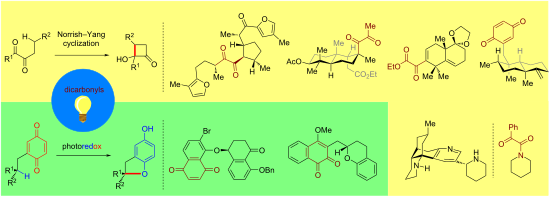
- EG3 (99) via TMSOTf/Et3N-mediated β-elimination of methanol followed by desilylation. Finally, stereoselective epoxidation and reductive opening of the oxirane ring enabled the total synthesis of preussomerin EG2 (98) from preussomerin EG1 (97) in 88% yield over two steps. In this synthesis, the

Graphical Abstract

Scheme 1: a) The mechanism of Norrish type II reaction and Norrish–Yang cyclization; b) The mechanism of the ...

Scheme 2: Total synthesis of (+)-cyclobutastellettolide B.

Scheme 3: Norrish–Yang cyclization and 1,2-methyl migration.

Scheme 4: Synthetic study toward phainanoids.

Scheme 5: a) Mitsunobu reaction of the C9 ketal; b) Norrish–Yang cyclization of the saturated C5–C6; c) calcu...

Scheme 6: Total synthesis of avarane-type meroterpenoids.

Scheme 7: Total synthesis of gracilisoid A.
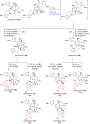
Scheme 8: Divergent total synthesis of gracilisoids B–I.

Scheme 9: Mechanism of the late-stage biomimetic photooxidation.

Scheme 10: Asymmetric total synthesis of lycoplatyrine A.

Scheme 11: Photoreaction of pyrrolidine-derived phenyl keto amide.

Scheme 12: Photoredox reactions of naphthoquinones.

Scheme 13: Synthetic study toward γ-rubromycin.

Scheme 14: Substituent-dependent conformational preferences.

Scheme 15: Total synthesis of preussomerins EG1, EG2, and EG3.
The application of desymmetric enantioselective reduction of cyclic 1,3-dicarbonyl compounds in the total synthesis of terpenoid and alkaloid natural products
- Dong-Xing Tan and
- Fu-She Han
Beilstein J. Org. Chem. 2025, 21, 2085–2102, doi:10.3762/bjoc.21.164
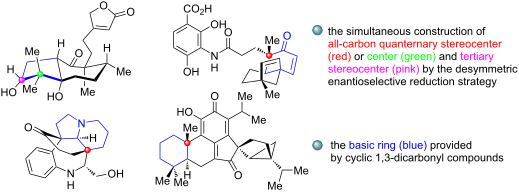
- hydroxyketone 86 in 60% yield with 92% ee and 8.4:1 dr. A secondary hydroxy-directed Grignard reagent addition of 86 followed by selective protection, generated alcohol ester 87. After one recrystallization, the ee value of 87 could be increased to 99%. Subsequently, TMSOTf-promoted transacetalation and in situ

Graphical Abstract

Figure 1: Several representative terpenoid and alkaloid natural products synthesized by applying desymmetric ...
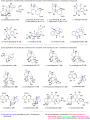
Figure 2: Selected terpenoid and alkaloid natural products synthesized by applying desymmetric enantioselecti...

Scheme 1: The total synthesis of (+)-aplysiasecosterol A (6) by Li [14].

Scheme 2: The total synthesis of (−)-cyrneine A by Han [31].

Scheme 3: The total syntheses of three cyrneine diterpenoids by Han [31,32].

Scheme 4: The total synthesis of (−)-hamigeran B and (−)-4-bromohamigeran B by Han [51].

Scheme 5: The total synthesis of (+)-randainin D by Baudoin [53].
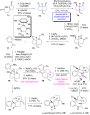
Scheme 6: The total synthesis of (−)-hunterine A and (−)-aspidospermidine by Stoltz [58].

Scheme 7: The total synthesis of (+)-toxicodenane A by Han [65,66].
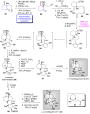
Scheme 8: The formal total synthesis of (−)-conidiogeone B and total synthesis of (−)-conidiogeone F by Lee a...

Scheme 9: The total syntheses of four conidiogenones natural products by Lee and Han [72].

Scheme 10: The total synthesis of (−)-platensilin by Lou and Xu [82].

Scheme 11: The total synthesis of (−)-platencin and (−)-platensimycin by Lou and Xu [82].

Scheme 12: The total synthesis of (+)-isochamaecydin and (+)-chamaecydin by Han [86].
Bioinspired total syntheses of natural products: a personal adventure
- Zhengyi Qin,
- Yuting Yang,
- Nuran Yan,
- Xinyu Liang,
- Zhiyu Zhang,
- Yaxuan Duan,
- Huilin Li and
- Xuegong She
Beilstein J. Org. Chem. 2025, 21, 2048–2061, doi:10.3762/bjoc.21.160
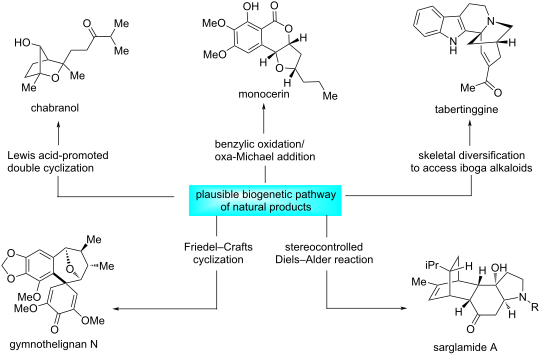
- reduction of ketone using SmI2 and propionaldehyde provided 15 diastereoselectively. Friedel–Crafts cyclization using trimethyl orthoformate and TMSOTf provided the cyclic acetal moiety to be oxidized with PDC, delivering the isocoumarin skeleton in 16. Chemoselective removal of the ester with the lactone

Graphical Abstract

Figure 1: Representative natural products with biomimetic total synthesis.

Scheme 1: Bioinspired total synthesis of chabranol (2010).

Scheme 2: Proposed biosynthetic pathway of monocerin-family natural products.

Scheme 3: Bioinspired total synthesis of monocerin-family molecules (2013).
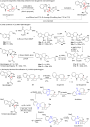
Scheme 4: Bioinspired skeletal diversification of (12-MeO-)tabertinggine (2016).

Scheme 5: Structures and our proposed biosynthetic pathway of gymnothelignans.

Scheme 6: Bioinspired total synthesis of gymnothelignans (2014–2025).
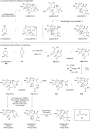
Scheme 7: Bioinspired total synthesis of sarglamides (2025).
Approaches to stereoselective 1,1'-glycosylation
- Daniele Zucchetta and
- Alla Zamyatina
Beilstein J. Org. Chem. 2025, 21, 1700–1718, doi:10.3762/bjoc.21.133
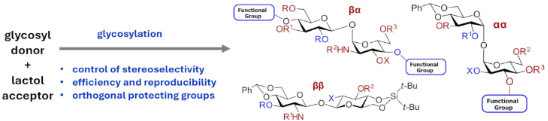
- configuration has been explained by the formation of a picolinium adduct, resulting from the trapping of the acidic by-product TMSOTf by the pyridine moiety of the picoloyl group during glycosylation [69]. The resulting intermediate, a picolinium-stabilized TMS-glycoside, exhibits high configurational stability
- and K. pneumoniae [74][75]. The application of variably protected 3-azido-3-deoxy-glucose-derived donor 72 and lactol acceptor 73, both allegedly armed due to the presence of multiple electron-donating bulky substituents, did not lead to product formation in the TMSOTf-promoted glycosylation reaction
- reduced reaction temperatures (−20 to −60 °C), N-phenyl trifluoroacetimidate (PTFA) donors are sufficiently stable to be used in glycosylation reactions at 0 °C or ambient temperature, while remaining reactive enough to glycosylate conformationally hindered nucleophiles in the presence of catalytic TMSOTf

Graphical Abstract

Scheme 1: Application of chloride-, bromide-, and trichloroacetimidate donors in 1,1'-coupling reactions towa...

Scheme 2: Application of trichloroacetimidates as donors in 1,1'-β,α coupling reactions and the use of 1,2-or...

Scheme 3: The β-anomeric configuration in the lactol acceptors can be trapped and fixed within the five-membe...

Scheme 4: Diarylborinic acid-promoted β,α-1,1' glycosylation.

Scheme 5: The anomeric configuration in the lactol acceptor can be trapped in the form of a TMS-glycoside.

Scheme 6: The anomeric configuration in the lactol acceptor can be trapped in form of a 1-O-TMS-glycoside tha...

Scheme 7: Influence of remote protecting groups on the stereoselectivity and efficiency of 1,1'-β,α bond form...

Scheme 8: Synthesis of non-symmetrically fully orthogonally protected β,α-1,1' diglucosamines.

Scheme 9: Synthesis of non-symmetric β,β-1,1'-linked disaccharides.

Scheme 10: Synthesis of non-symmetric, fully orthogonally protected β,β-1,1'-diglucosamines.

Scheme 11: Synthesis of α,α-1,1'-disaccharides.

Scheme 12: Synthesis of α,α-1,1'-thiodisacchrides.

Scheme 13: Synthesis of partially desymmetrized α,α-1,1'-linked disaccharides.

Scheme 14: Synthesis of non-symmetric orthogonally protected α,α-1,1'-linked disaccharides involving an aminos...
Structural analysis of stereoselective galactose pyruvylation toward the synthesis of bacterial capsular polysaccharides
- Tsun-Yi Chiang,
- Mei-Huei Lin,
- Chun-Wei Chang,
- Jinq-Chyi Lee and
- Cheng-Chung Wang
Beilstein J. Org. Chem. 2025, 21, 1671–1677, doi:10.3762/bjoc.21.131

- β-selectivity due to the neighboring group effect [41][48][49][50]. Subsequently, treatment with triethylsilane (Et₃SiH) and trimethylsilyl trifluoromethanesulfonate (TMSOTf) led to the opening of the benzylidene ring and removal of the TMS group, yielding compound 14, which can serve as an acceptor

Graphical Abstract
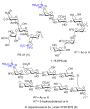
Figure 1: Pyruvylated galactose on bacterial polysaccharides PS A1 (1), 1.15 EPS (2) and Rhizobium leguminosa...
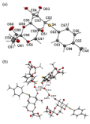
Figure 2: (a) Oak Ridge Thermal Ellipsoid Plot view of the X-ray crystal structure of pyruvylated galactose 6...

Scheme 1: Synthesis of trisaccharide precursor 14.
Chemical synthesis of glycan motifs from the antitumor agent PI-88 through an orthogonal one-pot glycosylation strategy
- Shaokang Yang,
- Xingchun Sun,
- Hanyingzi Fan and
- Guozhi Xiao
Beilstein J. Org. Chem. 2025, 21, 1587–1594, doi:10.3762/bjoc.21.122

- in mannosyl PVB 8 (1.0 equiv) in the presence of TMSOTf as catalyst proceeded smoothly at 0 °C to room temperature, affording the α-Man-(1→3)-Man PVB disaccharide. The further coupling of the above PVB disaccharide with the poorly reactive 2-OH in mannoside 9 (0.9 equiv) under activation with NIS and
- TMSOTf at 0 °C to room temperature, successfully furnished the desired α-Man-(1→3)-α-Man-(1→3)-α-Man trisaccharide 10 in 87% yield in a one pot manner. Removal of TBDPS group in 10 with 70% HF·pyridine and subsequent phosphitylation of the resulting free alcohol with phosphoramidite 11 provided the
- Cbz groups) failed to efficiently produce trisaccharide 1. The synthesis of monophosphorylated tetrasaccharide 2 was next investigated (Scheme 2B). TMSOTf was used to activate Man PTFAI 5 (1.1 equiv) in the presence of mannosyl ABz 7 (1.0 equiv) at 0 °C to room temperature, readily producing the α-Man

Graphical Abstract

Scheme 1: (A) Glycan structures of PI-88 and (B) retrosynthetic analysis of PI-88 glycan motifs 1–4.
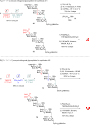
Scheme 2: One-pot synthesis of glycans 1 and 2.
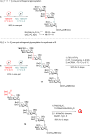
Scheme 3: One-pot synthesis of glycan 3.

Scheme 4: One-pot synthesis of glycan 4.
The effect of neighbouring group participation and possible long range remote group participation in O-glycosylation
- Rituparna Das and
- Balaram Mukhopadhyay
Beilstein J. Org. Chem. 2025, 21, 369–406, doi:10.3762/bjoc.21.27
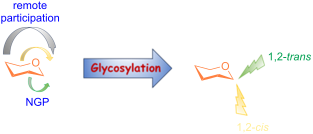

Graphical Abstract

Scheme 1: Continuum in the mechanistic pathway of glycosylation [32] reactions ranging between SN2 and SN1.

Scheme 2: Formation of 1,2-trans glycosides by neighbouring group participation with acyl protection in C-2 p...

Scheme 3: Solvent-free activation [92] of disarmed per-acetylated (15) and per-benzoylated (18) glycosyl donors.

Scheme 4: Synthesis of donor 2-(2,2,2-trichloroethoxy)glucopyrano-[2,1-d]-2-oxazoline 22 [94] and regioselective ...

Scheme 5: The use of levulinoyl protection for an orthogonal glycosylation reaction.

Figure 1: The derivatives 32–36 of the pivaloyl group.

Scheme 6: Benzyl and cyanopivalolyl ester-protected hexarhamnoside derivative 37 and its global deprotection ...

Scheme 7: Orthogonal chloroacetyl group deprotection in oligosaccharide synthesis [113].

Figure 2: The derivatives of the chloroacetyl group: CAMB protection (41) [123], CAEB protection (42) [124], POMB prote...

Scheme 8: Use of the (2-nitrophenyl)acetyl protecting group [126] as the neighbouring group protecting group at th...

Scheme 9: Neighbouring group participation protocol by the BnPAc protecting group [128] in the C-2 position.

Scheme 10: Glycosylation reaction with O-PhCar (54) and O-Poc (55) donors showing high β-selectivity [133].

Scheme 11: Neighbouring group participation rendered by an N-benzylcarbamoyl (BnCar) group [137] at the C-2 positio...

Scheme 12: Stereoselectivity obtained from glycosylation [138] with 2-O-(o-trifluoromethylbenzenesulfonyl)-protecte...

Scheme 13: (a) Plausible mechanistic pathway for glycosylation with C-2 DMTM protection [139] and (b) example of a ...

Scheme 14: Glycosylation reactions employing MOM 78, BOM 81, and NAPOM 83-protected thioglycoside donors. Reag...

Scheme 15: Plausible mechanistic pathway for alkoxymethyl-protected glycosyl donors. Path A. Expected product ...

Scheme 16: Plausible mechanistic pathway for alkoxymethyl-protected glycosyl donors [147].

Scheme 17: A. Formation of α-glycosides and B formation of β-glycosides by using chiral auxiliary neighbouring...

Scheme 18: Bimodal participation of 2-O-(o-tosylamido)benzyl (TAB) protecting group to form both α and β-isome...

Scheme 19: (a) 1,2-trans-Directing nature using C-2 cyanomethyl protection and (b) the effect of acceptors and...

Scheme 20: 1,3-Remote assistance by C-3-ester protection for gluco- and galactopyranosides to form 1,2-cis gly...

Scheme 21: 1,6-Remote assistance by C-6-ester protection for gluco- and galactopyranosides to form 1,2-cis gly...

Scheme 22: 1,4-Remote assistance by C-4-ester protection for galactopyranosides to form 1,2-cis glycosidic pro...

Scheme 23: Different products obtained on activation of axial 3-O and equatorial 3-O ester protected glycoside...

Scheme 24: The role of 3-O-protection on the stereochemistry of the produced glycoside [191].

Scheme 25: The role of 4-O-protection on the stereochemistry of the produced glycosides.

Scheme 26: Formation and subsequent stability of the bicyclic oxocarbenium intermediate formed due to remote p...

Scheme 27: The role a C-6 p-nitrobenzoyl group on the stereochemistry of the glycosylated product [196].

Scheme 28: Difference in stereoselectivity obtained in glycosylation reactions by replacing non-participating ...

Scheme 29: The role of electron-withdrawing and electron-donating substituents on the C-4 acetyl group in glyc...

Scheme 30: Effect of the introduction of a methyl group in the C-4 position on the glycosylation with more rea...

Figure 3: Remote group participation effect exhibited by the 2,2-dimethyl-2-(o-nitrophenyl)acetyl (DMNPA) pro...
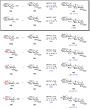
Scheme 31: The different stereoselectivities obtained by Pic and Pico donors on being activated by DMTST.

Figure 4: Hydrogen bond-mediated aglycon delivery (HAD) in glycosylation reactions for 1,2-cis 198a and 1,2-t...

Scheme 32: The role of different acceptor with 6-O-Pic-protected glycosyl donors.

Scheme 33: The role of the remote C-3 protection on various 4,6-O-benzylidene-protected mannosyl donors affect...

Scheme 34: The dual contribution of the DTBS group in glycosylation reactions [246,247].
Recent advances in organocatalytic atroposelective reactions
- Henrich Szabados and
- Radovan Šebesta
Beilstein J. Org. Chem. 2025, 21, 55–121, doi:10.3762/bjoc.21.6
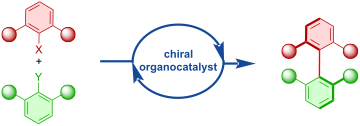

Graphical Abstract

Scheme 1: Formation of axially chiral styrenes 3 via iminium activation.

Scheme 2: Synthesis of axially chiral 2-arylquinolines 6.

Scheme 3: Atroposelective intramolecular (4 + 2) annulation leading to aryl-substituted indolines.

Scheme 4: Atroposelective formation of biaryl via twofold aldol condensation.

Scheme 5: Strategy towards diastereodivergent formation of axially chiral oligonaphthylenes.

Scheme 6: Atroposelective formation of chiral biaryls based on a Michael/Henry domino reaction.

Scheme 7: Organocatalytic Michael/aldol cascade followed by oxidative aromatization.

Scheme 8: Atroposelective formation of C(sp2)–C(sp3) axially chiral compounds.

Scheme 9: NHC-catalyzed synthesis of axially chiral styrenes 26.

Scheme 10: NHC-catalyzed synthesis of biaxial chiral pyranones.

Scheme 11: Formation of bridged biaryls with eight-membered lactones.

Scheme 12: The NHC-catalyzed (3 + 2) annulation of urazoles 37 and ynals 36.

Scheme 13: NHC-catalyzed synthesis of axially chiral 4‑aryl α‑carbolines 41.

Scheme 14: NHC-catalyzed construction of N–N-axially chiral pyrroles and indoles.

Scheme 15: NHC-catalyzed oxidative Michael–aldol cascade.

Scheme 16: NHC-catalyzed (4 + 2) annulation for the synthesis of benzothiophene-fused biaryls.
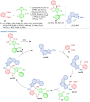
Scheme 17: NHC-catalyzed desymmetrization of N-aryl maleimides.

Scheme 18: NHC-catalyzed deracemization of biaryl hydroxy aldehydes 55a–k into axially chiral benzonitriles 56a...

Scheme 19: NHC-catalyzed desymmetrization of 2-aryloxyisophthalaldehydes.

Scheme 20: NHC-catalyzed DKR of 2-arylbenzaldehydes 62.

Scheme 21: Atroposelective biaryl amination.

Scheme 22: CPA-catalyzed atroposelective amination of 2-anilinonaphthalenes.

Scheme 23: Atroposelective DKR of naphthylindoles.

Scheme 24: CPA-catalyzed kinetic resolution of binaphthylamines.

Scheme 25: Atroposelective amination of aromatic amines with diazodicarboxylates.

Scheme 26: Atroposelective Friedländer heteroannulation.

Scheme 27: CPA-catalyzed formation of axially chiral 4-arylquinolines.

Scheme 28: CPA-catalyzed Friedländer reaction of arylketones with cyclohexanones.

Scheme 29: CPA-catalyzed atroposelective Povarov reaction.

Scheme 30: Atroposelective CPA-catalyzed Povarov reaction.

Scheme 31: Paal–Knorr formation of axially chiral N-pyrrolylindoles and N-pyrrolylpyrroles.

Scheme 32: Atroposelective Paal–Knorr reaction leading to N-pyrrolylpyrroles.

Scheme 33: Atroposelective Pictet–Spengler reaction of N-arylindoles with aldehydes.

Scheme 34: Atroposelective Pictet–Spengler reaction leading to tetrahydroisoquinolin-8-ylanilines.

Scheme 35: Atroposelective formation of arylindoles.

Scheme 36: CPA-catalyzed arylation of naphthoquinones with indolizines.

Scheme 37: Atroposelective reaction of o-naphthoquinones.

Scheme 38: CPA-catalyzed formation of axially chiral arylquinones.

Scheme 39: CPA-catalyzed axially chiral N-arylquinones.

Scheme 40: Atroposelective additions of bisindoles to isatin-based 3-indolylmethanols.

Scheme 41: CPA-catalyzed synthesis of axially chiral arylindolylindolinones.

Scheme 42: CPA-catalyzed reaction between bisindoles and ninhydrin-derived 3-indoylmethanols.

Scheme 43: Atroposelective reaction of bisindoles and isatin-derived imines.

Scheme 44: CPA-catalyzed formation of axially chiral bisindoles.

Scheme 45: Atroposelective reaction of 2-naphthols with alkynylhydroxyisoindolinones.

Scheme 46: CPA-catalyzed reaction of indolylnaphthols with propargylic alcohols.

Scheme 47: Atroposelective formation of indolylpyrroloindoles.

Scheme 48: Atroposelective reaction of indolylnaphthalenes with alkynylnaphthols.

Scheme 49: CPA-catalyzed addition of naphthols to alkynyl-2-naphthols and 2-naphthylamines.

Scheme 50: CPA-catalyzed formation of axially chiral aryl-alkene-indoles.

Scheme 51: CPA-catalyzed formation of axially chiral styrenes.

Scheme 52: Atroposelective formation of alkenylindoles.

Scheme 53: Atroposelective formation of axially chiral arylquinolines.

Scheme 54: Atroposelective (3 + 2) cycloaddition of alkynylindoles with azonaphthalenes.

Scheme 55: CPA-catalyzed formation of axially chiral 3-(1H-benzo[d]imidazol-2-yl)quinolines.

Scheme 56: Atroposelective cyclization of 3-(arylethynyl)-1H-indoles.

Scheme 57: Atroposelective three-component heteroannulation.

Scheme 58: CPA-catalyzed formation of arylbenzimidazols.

Scheme 59: CPA-catalyzed reaction of N-naphthylglycine esters with nitrosobenzenes.

Scheme 60: CPA-catalyzed formation of axially chiral N-arylbenzimidazoles.

Scheme 61: CPA-catalyzed formation of axially chiral arylbenzoindoles.

Scheme 62: CPA-catalyzed formation of pyrrolylnaphthalenes.

Scheme 63: CPA-catalyzed addition of naphthols and indoles to nitronaphthalenes.

Scheme 64: Atroposelective reaction of heterobiaryl aldehydes and aminobenzamides.

Scheme 65: Atroposelective cyclization forming N-arylquinolones.

Scheme 66: Atroposelective formation of 9H-carbazol-9-ylnaphthalenes and 1H-indol-1-ylnaphthalene.

Scheme 67: CPA-catalyzed formation of pyrazolylnaphthalenes.

Scheme 68: Atroposelective addition of diazodicarboxamides to azaborinephenols.

Scheme 69: Catalytic formation of axially chiral arylpyrroles.

Scheme 70: Atroposelective coupling of 1-azonaphthalenes with 2-naphthols.

Scheme 71: CPA-catalyzed formation of axially chiral oxindole-based styrenes.

Scheme 72: Atroposelective electrophilic bromination of aminonaphthoquinones.

Scheme 73: Atroposelective bromination of dienes.

Scheme 74: CPA-catalyzed formation of axially chiral 5-arylpyrimidines.

Scheme 75: Atroposelective hydrolysis of biaryloxazepines.

Scheme 76: Atroposelective opening of dinaphthosiloles.

Scheme 77: Atroposelective reduction of naphthylenals.

Scheme 78: Atroposelective allylic substitution with 2-naphthols.

Scheme 79: Atroposelective allylic alkylation with phosphinamides.

Scheme 80: Atroposelective allylic substitution with aminopyrroles.

Scheme 81: Atroposelective allylic substitution with aromatic sulfinamides.

Scheme 82: Atroposelective sulfonylation of naphthylynones.

Scheme 83: Squaramide-catalyzed reaction of alkynyl-2-naphthols with 5H-oxazolones.

Scheme 84: Formation of axially chiral styrenes via sulfonylative opening of cyclopropanols.

Scheme 85: Atroposelective organo-photocatalyzed sulfonylation of alkynyl-2-naphthols.

Scheme 86: Thiourea-catalyzed atroposelective cyclization of alkynylnaphthols.

Scheme 87: Squaramide-catalyzed formation of axially chiral naphthylisothiazoles.

Scheme 88: Atroposelective iodo-cyclization catalyzed by squaramide C69.

Scheme 89: Squaramide-catalyzed formation of axially chiral oligoarenes.

Scheme 90: Atroposelective ring-opening of cyclic N-sulfonylamides.

Scheme 91: Thiourea-catalyzed kinetic resolution of naphthylpyrroles.

Scheme 92: Atroposelective ring-opening of arylindole lactams.

Scheme 93: Atroposelective reaction of 1-naphthyl-2-tetralones and diarylphosphine oxides.

Scheme 94: Atroposelective reaction of iminoquinones with indoles.

Scheme 95: Kinetic resolution of binaphthylalcohols.

Scheme 96: DKR of hydroxynaphthylamides.

Scheme 97: Atroposelective N-alkylation with phase-transfer catalyst C75.

Scheme 98: Atroposelective allylic substitution via kinetic resolution of biarylsulfonamides.

Scheme 99: Atroposelective bromo-functionalization of alkynylarenes.
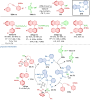
Scheme 100: Sulfenylation-induced atroposelective cyclization.

Scheme 101: Atroposelective O-sulfonylation of isochromenone-indoles.

Scheme 102: NHC-catalyzed atroposelective N-acylation of anilines.

Scheme 103: Peptide-catalyzed atroposelective ring-opening of lactones.

Scheme 104: Peptide-catalyzed coupling of 2-naphthols with quinones.

Scheme 105: Atroposelective nucleophilic aromatic substitution of fluoroarenes.
Recent advances in transition-metal-free arylation reactions involving hypervalent iodine salts
- Ritu Mamgain,
- Kokila Sakthivel and
- Fateh V. Singh
Beilstein J. Org. Chem. 2024, 20, 2891–2920, doi:10.3762/bjoc.20.243

- trifluoromethanesulfonate (TMSOTf). This synthesis was conducted in a mixture of 2,2,2-trifluoroethanol (TFE) and dichloromethane [78]. The synthesized naproxen-containing diaryliodonium salt 67 was further used to modify the aromatic ring of naproxen methyl ester 68 (Scheme 27). Various functionalization reactions which

Graphical Abstract

Figure 1: Various structures of iodonium salts.

Scheme 1: Αrylation of α-fluoroacetoacetamides 5 to α-aryl-α-fluoroacetoacetamides 7 and α-fluoroacetamides 8...
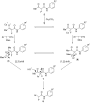
Scheme 2: Proposed mechanism for the arylation of α-fluoroacetoacetamides 5 to α-aryl-α-fluoroacetoacetamides ...

Scheme 3: α-Arylation of α-nitro- and α-cyano derivatives of α-fluoroacetamides 9 employing unsymmetrical DAI...

Scheme 4: Synthesis of α,α-difluoroketones 13 by reacting α,α-difluoro-β-keto acid esters 11 with aryl(TMP)io...

Scheme 5: Coupling reaction of arynes generated by iodonium salts 6 and arynophiles 14 for the synthesis of t...

Scheme 6: Metal-free arylation of quinoxalines 17 and quinoxalinones 19 with DAISs 16.

Scheme 7: Transition-metal-free, C–C cross-coupling of 2-naphthols 21 to 1-arylnapthalen-2-ols 22 employing d...

Scheme 8: Arylation of vinyl pinacol boronates 23 to trans-arylvinylboronates 24 in presence of hypervalent i...

Scheme 9: Light-induced selective arylation at C2 of quinoline N-oxides 25 and pyridine N-oxides 28 in the pr...

Scheme 10: Plaussible mechanism for the light-induced selective arylation of N-heterobiaryls.

Scheme 11: Photoinduced arylation of heterocycles 31 with the help of diaryliodonium salts 16 activated throug...

Scheme 12: Arylation of MBH acetates 33 with DIPEA and DAIRs 16.

Scheme 13: Aryl sulfonylation of MBH acetates 33 with DABSO and diphenyliodonium triflates 16.

Scheme 14: Synthesis of oxindoles 37 from N-arylacrylamides 36 and diaryliodonium salts 26.

Scheme 15: Mechanically induced N-arylation of amines 38 using diaryliodonium salts 16.

Scheme 16: o-Fluorinated diaryliodonium salts 40-mediated diarylation of amines 38.

Scheme 17: Proposed mechanism for the diarylation of amines 38 using o-fluorinated diaryliodonium salts 40.

Scheme 18: Ring-opening difunctionalization of aliphatic cyclic amines 41.

Scheme 19: N-Arylation of amino acid esters 44 using hypervalent iodonium salts 45.

Scheme 20: Regioselective N-arylation of triazole derivatives 47 by hypervalent iodonium salts 48.

Scheme 21: Regioselective N-arylation of tetrazole derivatives 50 by hypervalent iodonium salt 51.

Scheme 22: Selective arylation at nitrogen and oxygen of pyridin-2-ones 53 by iodonium salts 16 depending on t...

Scheme 23: N-Arylation using oxygen-bridged acyclic diaryliodonium salt 56.

Scheme 24: The successive C(sp2)–C(sp2)/O–C(sp2) bond formation of naphthols 58.

Scheme 25: Synthesis of diarylethers 62 via in situ generation of hypervalent iodine salts.

Scheme 26: O-Arylated galactosides 64 by reacting protected galactosides 63 with hypervalent iodine salts 16 i...

Scheme 27: Esterification of naproxen methyl ester 65 via formation and reaction of naproxen-containing diaryl...

Scheme 28: Etherification and esterification products 72 through gemfibrozil methyl ester-derived diaryliodoni...

Scheme 29: Synthesis of iodine containing meta-substituted biaryl ethers 74 by reacting phenols 61 and cyclic ...

Scheme 30: Plausible mechanism for the synthesis of meta-functionalized biaryl ethers 74.

Scheme 31: Intramolecular aryl migration of trifluoromethane sulfonate-substituted diaryliodonium salts 75.

Scheme 32: Synthesis of diaryl ethers 80 via site-selective aryl migration.

Scheme 33: Synthesis of O-arylated N-alkoxybenzamides 83 using aryl(trimethoxyphenyl)iodonium salts 82.

Scheme 34: Synthesis of aryl sulfides 85 from thiols 84 using diaryliodonium salts 16 in basic conditions.

Scheme 35: Base-promoted synthesis of diarylsulfoxides 87 via arylation of general sulfinates 86.

Scheme 36: Plausible mechanism for the arylation of sulfinates 86 via sulfenates A to give diaryl sulfoxides 87...

Scheme 37: S-Arylation reactions of aryl or heterocyclic thiols 88.

Scheme 38: Site-selective S-arylation reactions of cysteine thiol groups in 91 and 94 in the presence of diary...

Scheme 39: The selective S-arylation of sulfenamides 97 using diphenyliodonium salts 98.

Scheme 40: Plausible mechanism for the synthesis of sulfilimines 99.

Scheme 41: Synthesis of S-arylxanthates 102 by reacting DAIS 101 with potassium alkyl xanthates 100.

Figure 2: Structured of the 8-membered and 4-membered heterotetramer I and II.

Scheme 42: S-Arylation by diaryliodonium cations 103 using KSCN (104) as a sulfur source.

Scheme 43: S-Arylation of phosphorothioate diesters 107 through the utilization of diaryliodonium salts 108.

Scheme 44: Transfer of the aryl group from the hypervalent iodonium salt 108 to phosphorothioate diester 107.

Scheme 45: Synthesis of diarylselenides 118 via diarylation of selenocyanate 115.

Scheme 46: Light-promoted arylation of tertiary phosphines 119 to quaternary phosphonium salts 121 using diary...

Scheme 47: Arylation of aminophosphorus substrate 122 to synthesize phosphine oxides 123 using aryl(mesityl)io...

Scheme 48: Reaction of diphenyliodonium triflate (16) with DMSO (124) via thia-Sommelet–Hauser rearrangement.

Scheme 49: Synthesis of biaryl compounds 132 by reacting diaryliodonium salts 131 with arylhydroxylamines 130 ...

Scheme 50: Synthesis of substituted indazoles 134 and 135 from N-hydroxyindazoles 133.
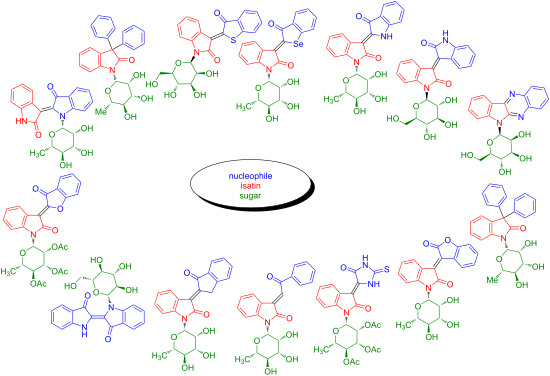
N-Glycosides of indigo, indirubin, and isoindigo: blue, red, and yellow sugars and their cancerostatic activity
- Peter Langer
Beilstein J. Org. Chem. 2024, 20, 2840–2869, doi:10.3762/bjoc.20.240
- tumors PRCL PC3M and RXF 631L) with IC50 values of about 2.8 mg mL−1 and IC70 values of >3 mg mL−1. In 2005, our group developed a synthesis of indigo-N-glycosides (Scheme 3) [19]. The TMSOTf-mediated reaction of readily available N-benzylindigo (1b) with tri-O-pivaloyl-α-ʟ-rhamnosyl trichloroacetimidate

Graphical Abstract

Scheme 1: Structures of indigo (1a), indirubin (2a) and isoindigo (3a).

Scheme 2: Structures of akashins A–C.
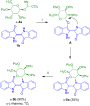
Scheme 3: Synthesis of 5b. Reagents and conditions: i) TMSOTf, 4 Å MS, CH2Cl2, −20 °C, 1.5 h, then 20 °C, 8–1...
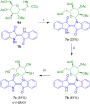
Scheme 4: Synthesis of 7c. Reagents and conditions: i) TMSOTf, 4 Å MS, CH2Cl2, −18 °C, 3 h; then: TMSOTf, 4 Å...

Scheme 5: Synthesis of 1d. Reagents and conditions: i) chloroacetic acid, Na2CO3, reflux, 6 h; ii) Ac2O, NaOA...

Scheme 6: Synthesis of 10e. Reagents and conditions: i) p-TsOH·H2O, acetonitrile, MeOH, 1 d; ii) NIS, PPh3, D...

Scheme 7: Synthesis of akashins A–C. Reagents and conditions: i) TMSOTf, 4 Å MS, CH2Cl2, −18 to 20 °C, 15 h; ...
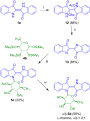
Scheme 8: Synthesis of 5d. Reagents and conditions: i) KMnO4, AcOH, high-power-stirring (12.000 rot/min), 20 ...

Scheme 9: Possible mechanism of the formation of 5c.

Scheme 10: Synthesis of 7d. Reagents and conditions: i) 1) CH2Cl2, 2) Me3SiI, 20 °C, 30 min, 3) 0 °C, 30 min, ...

Scheme 11: Synthesis of α-15b. Reagents and conditions: i) 1) CH2Cl2, 2) Me3SiI, 20 °C, 30 min, 3) 0 °C, 30 mi...

Scheme 12: Synthesis of isatin-N-glycosides 16a–f. Reagents and conditions: i) PhNH2, EtOH, 20 °C, 12 h; ii) Ac...
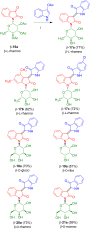
Scheme 13: Synthesis of 17–21. Reagents and conditions: i) Na2CO3, MeOH, 20 °C, 4 h.

Scheme 14: Synthesis of indirubin-N-glycosides α-17a and α-17b.

Scheme 15: Synthesis of β-17f. Reagents and conditions: i) 1) Na2CO3, MeOH, 20 °C, 4 h, 2) Ac2O/pyridine 1:1, ...

Scheme 16: Synthesis of β-24a. Reagents and conditions: i) n-PrOH, H2O, formic acid (buffer, 100 mM), 2 h, 65 ...

Scheme 17: Synthesis of isatin-N-glycosides 23b–g and 24b–g.

Scheme 18: Synthesis of β-29a,b. Reagents and conditions: i) EtOH, 20 °C, 12 h; ii) DDQ, dioxane, 20 °C, 12 h;...

Scheme 19: Synthesis of β-31a. Reagents and conditions: i) Na2SO3, dioxane, H2O, 110 °C, 2 d; ii) piperidine, ...

Scheme 20: Synthesis of 33a–d. Reagents and conditions: i) Ac2O, AcOH, NaOAc, 80 °C, 1 h; ii) 1) NaOMe, anhydr...

Scheme 21: Indirubins 34 and 35.

Scheme 22: Synthesis of 36f. Reagents and conditions: i) NaOH, H2O, 20 °C, 5 h; ii) HCl, NaNO2, H2O, −14 °C; i...

Scheme 23: Synthesis of 38a–h. Reagents and conditions: i) 1) 0.1 equiv NaOMe, MeOH, 20 °C, 15–20 min, 2) HOAc...

Scheme 24: Synthesis of 40a–h. Reagents and conditions: i) method A: EtOH/THF, cat. KOt-Bu, 20 °C, 3–4.5 h; me...

Scheme 25: Synthesis of 41a–d. Reagents and conditions: i) Ac2O, AcOH, NaOAc, 80 °C, 1 h.

Scheme 26: Synthesis of 41e. Reagents and conditions: i) AcOH, NaOAc, 110 °C, 24 h.

Scheme 27: Synthesis of E-β-43a–e and E-β-44a,b. Reagents and conditions: i) 1) NEt3, EtOH, 20 °C, 12 h, 2) DM...

Scheme 28: Synthesis of E-43f. Reagents and conditions: i) Na2CO3, MeOH, 20 °C, 6–24 h.

Scheme 29: Synthesis of 46a–m. Reagents and conditions: i) NEt3 (1 equiv), EtOH, 20 °C, 6–10 h; ii) MsCl, NEt3...

Scheme 30: Synthesis of 48a–d. Reagents and conditions: i) AcOH/Ac2O, NaOAc, 60 °C, 3–4 h.

Scheme 31: Synthesis of 48e. Reagents and conditions: i) NaOAc, AcOH, 110 °C, 24 h.
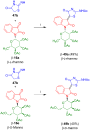
Scheme 32: Synthesis of β-49a,b. Reagents and conditions: i) AcOH/Ac2O, NaOAc, 60 °C, 3–4 h.

Scheme 33: Synthesis of β-54a,b. Reagents and conditions: i) 1) NaH, DMF, 0 °C, 15 min, 2) β-51a,b, 20 °C, 3 h...

Scheme 34: Synthesis of 54c–l. The yields refer to the yields of the first and second condensation step for ea...

Scheme 35: Synthesis of 57a–c and 58a–d. Reagents and conditions: i) HCl (conc.), AcOH, reflux, 24 h; ii) 1) B...

Scheme 36: Synthesis of 59a–e and 60a–e. Reagents and conditions: i) P(NEt2)3 (1.1 equiv), CH2Cl2, −78 °C to 2...

Scheme 37: Synthesis of 61a–d and 62a–d. Reagents and conditions: i) P(NEt2)3 (1.1 equiv), CH2Cl2, −78 °C to 2...

Scheme 38: Synthesis of β-64a–e and α-64a. Reagents and conditions: i) AcOH, Ac2O, NaOAc, 90 °C, 6 h.

Scheme 39: Synthesis of β-72a. Reagents and conditions: i) 66, EtOH, 20 °C, 12 h; ii) DDQ, dioxane, 20 °C, 12 ...

Scheme 40: Synthesis of β-72b.

Scheme 41: Synthesis of β-74a–c. Reagents and conditions: i) AcOH, Ac2O, NaOAc, 130 °C, 2 d.

Scheme 42: Synthesis of β-77. Reagents and conditions: i) 1) NEt3, EtOH, 20 °C, 12 h, 2) DMAP, NEt3, MsCl, 0 °...

Scheme 43: Synthesis of β-81a–f and β-80g. Reagents and conditions: i) AcOH, 80 °C, 1–3 h; ii) benzene, PTSA, ...

Scheme 44: Synthesis of 84a. Reagents and conditions: i) benzene, AlCl3, 20 °C, 10 min; ii) MeOH, NaOMe, 12 h,...

Scheme 45: Synthesis of 84b–l. The yields refer to the yields of the condensation and the deprotection step fo...
A facile three-component route to powerful 5-aryldeazaalloxazine photocatalysts
- Ivana Weisheitelová,
- Radek Cibulka,
- Marek Sikorski and
- Tetiana Pavlovska
Beilstein J. Org. Chem. 2024, 20, 1831–1838, doi:10.3762/bjoc.20.161
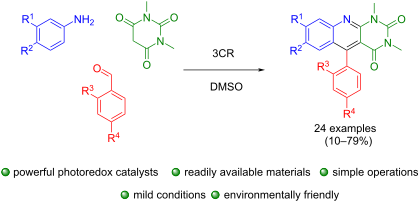
- was significantly enhanced when refluxing in DMF with a catalytic amount of AlCl3 compared to the reaction in clear DMF (Table 1, entries 7–9). Other Lewis acids were not as effective, except for a combination of DMSO/TMSOTf (Table 1, entry 4). The application of AcOH/PPA for the synthesis of 5

Graphical Abstract

Figure 1: (A) The general structures of isoalloxazine (flavin, Fl), alloxazine (All), 5-deazaisoalloxazine (5...
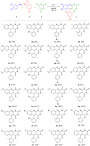
Scheme 1: Three-component condensation of anilines, aldehydes and N,N-dimethylbarbituric acid. aReaction was ...

Figure 2: UV–vis absorption spectra of 5-arydeazaalloxazines 2f, 2j and 2n in DMF (l = 1 cm, c = 2.50 × 10⁻⁵ ...

Scheme 2: Control experiments related to bulky substituted aldehydes.
Syntheses and medicinal chemistry of spiro heterocyclic steroids
- Laura L. Romero-Hernández,
- Ana Isabel Ahuja-Casarín,
- Penélope Merino-Montiel,
- Sara Montiel-Smith,
- José Luis Vega-Báez and
- Jesús Sandoval-Ramírez
Beilstein J. Org. Chem. 2024, 20, 1713–1745, doi:10.3762/bjoc.20.152
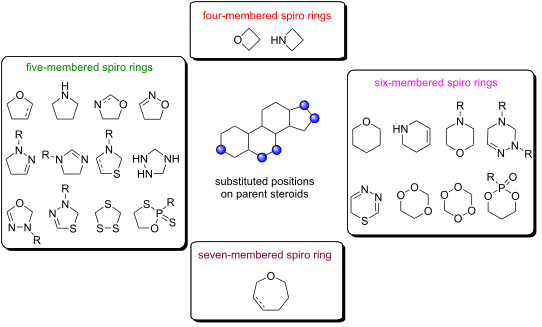

Graphical Abstract

Figure 1: Steroidal spiro heterocycles with remarkable pharmacological activity.

Scheme 1: Synthesis of the spirooxetanone 2. a) t-BuOK, THF, rt, 16%.

Scheme 2: Synthesis of the 17-spirooxetane derivative 7. a) HC≡C(CH2)2CH2OTBDPS, n-BuLi, THF, BF3·Et2O, −78 °...

Scheme 3: Pd-catalyzed carbonylation of steroidal alkynols to produce α-methylene-β-lactones at C-3 and C-17 ...

Scheme 4: Catalyst-free protocol to obtain functionalized spiro-lactones by an intramolecular C–H insertion. ...

Scheme 5: One-pot procedure from dienamides to spiro-β-lactams. a) 1. Ac2O, DMAP, Et3N, CH2Cl2, 2. malononitr...

Scheme 6: Spiro-γ-lactone 20 afforded from 7α-alkanamidoestrone derivative 17. a) HC≡CCH2OTHP, n-BuLi, THF, –...

Scheme 7: Synthesis of the 17-spiro-γ-lactone 23, a key intermediate to obtain spironolactone. a) Ethyl propi...

Scheme 8: Synthetic pathway to obtain 17-spirodihydrofuran-3(2H)-ones from 17-oxosteroids. a) 1-Methoxypropa-...

Scheme 9: One-pot procedure to obtain 17-spiro-2H-furan-3-one compounds. a) NaH, diethyl oxalate, benzene, rt...

Scheme 10: Synthesis of 17-spiro-2H-furan-3-one derivatives. a) RCH=NOH, N-chlorosuccinimide/CHCl3, 99%; b) H2...

Scheme 11: Intramolecular condensation of a γ-acetoxy-β-ketoester to synthesize spirofuranone 37. a) (CH3CN)2P...

Scheme 12: Synthesis of spiro 2,5-dihydrofuran derivatives. a) Allyl bromide, DMF, NaH, 0 °C to rt, 93%; b) G-...

Scheme 13: First reported synthesis of C-16 dispiropyrrolidine derivatives. a) Sarcosine, isatin, MeOH, reflux...

Scheme 14: Cycloadducts 47 with antiproliferative activity against human cancer cell lines. a) 1,4-Dioxane–MeO...

Scheme 15: Spiropyrrolidine compounds generated from (E)-16-arylidene steroids and different ylides. a) Acenap...

Scheme 16: 3-Spiropyrrolidines 52a–c obtained from ketones 50a–c. a) p-Toluenesulfonyl hydrazide, MeOH, rt; b)...

Scheme 17: 16-Spiropyrazolines from 16-methylene-13α-estrone derivatives. a) AgOAc, toluene, rt, 78–81%.

Scheme 18: 6-Spiroimidazolines 57 synthesized by a one-pot multicomponent reaction. a) R3-NC, T3P®, DMSO, 70 °...

Scheme 19: Synthesis of spiro-1,3-oxazolines 60, tested as progesterone receptor antagonist agents. a) CF3COCF3...

Scheme 20: Synthesis of spiro-1,3-oxazolidin-2-ones 63 and 66a,b. a) RNH2, EtOH, 70 °C, 70–90%; b) (CCl3O)2CO,...

Scheme 21: Formation of spiro 1,3-oxazolidin-2-one and spiro 2-substituted amino-4,5-dihydro-1,3-oxazoles from ...

Scheme 22: Synthesis of diastereomeric spiroisoxazolines 74 and 75. a) Ar-C(Cl)=N-OH, DIPEA, toluene, rt, 74 (...

Scheme 23: Spiro 1,3-thiazolidine derivatives 77–79 obtained from 2α-bromo-5α-cholestan-3-one 76. a) 2-aminoet...

Scheme 24: Method for the preparation of derivative 83. a) Benzaldehyde, MeOH, reflux, 77%; b) thioglycolic ac...

Scheme 25: Synthesis of spiro 1,3-thiazolidin-4-one derivatives from steroidal ketones. a) Aniline, EtOH, refl...

Scheme 26: Synthesis of spiro N-aryl-1,3-thiazolidin-4-one derivatives 91 and 92. a) Sulfanilamide, DMF, reflu...

Scheme 27: 1,2,4-Trithiolane dimers 94a–e selectively obtained from carbonyl derivatives. a) LR, CH2Cl2, reflu...

Scheme 28: Spiro 1,2,4-triazolidin-3-ones synthesized from semicarbazones. a) H2O2, CHCl3, 0 °C, 82–85%.

Scheme 29: Steroidal spiro-1,3,4-oxadiazoline 99 obtained in two steps from cholest-5-en-3-one (97). a) NH2NHC...

Scheme 30: Synthesis of spiro-1,3,4-thiadiazoline 101 by cyclization and diacetylation of thiosemicarbazone 100...

Scheme 31: Mono- and bis(1,3,4-thiadiazolines) obtained from estrane and androstane derivatives. a) H2NCSNHNH2...

Scheme 32: Different reaction conditions to synthesize spiro-1,3,2-oxathiaphospholanes 108 and 109.

Scheme 33: Spiro-δ-lactones derived from ADT and epi-ADT as inhibitors of 17β-HSDs. a) CH≡C(CH2)2OTHP, n-BuLi,...

Scheme 34: Spiro-δ-lactams 123a,b obtained in a five-step reaction sequence. a) (R)-(+)-tert-butylsulfinamide,...

Scheme 35: Steroid-coumarin conjugates as fluorescent DHT analogues to study 17-oxidoreductases for androgen m...

Scheme 36: 17-Spiro estradiolmorpholinones 130 bearing two types of molecular diversity. a) ʟ- or ᴅ-amino acid...

Scheme 37: Steroidal spiromorpholinones as inhibitors of enzyme 17β-HSD3. a) Methyl ester of ʟ- or ᴅ-leucine, ...

Scheme 38: Steroidal spiro-morpholin-3-ones achieved by N-alkylation or N-acylation of amino diols 141, follow...

Scheme 39: Straightforward method to synthesize a spiromorpholinone derivative from estrone. a) BnBr, K2CO3, CH...

Scheme 40: Pyrazolo[4,3-e][1,2,4]-triazine derivatives 152–154. a) 4-Aminoantipyrine, EtOH/DMF, reflux, 82%; b...

Scheme 41: One-pot procedure to synthesize spiro-1,3,4-thiadiazine derivatives. a) NH2NHCSCONHR, H2SO4, dioxan...

Scheme 42: 1,2,4-Trioxanes with antimalarial activity. a) 1. O2, methylene blue, CH3CN, 500 W tungsten halogen...

Scheme 43: Tetraoxanes 167 and 168 synthesized from ketones 163, 165 and 166. a) NaOH, iPrOH/H2O, 80 °C, 93%; ...

Scheme 44: 1,2,4,5-Tetraoxanes bearing a steroidal moiety and a cycloalkane. a) 30% H2O2/CH2Cl2/CH3CN, HCl, rt...

Scheme 45: Spiro-1,3,2-dioxaphosphorinanes obtained from estrone derivatives. a) KBH4, MeOH, THF or CH2Cl2; b)...

Scheme 46: Synthesis of steroidal spiro-ε-lactone 183. a) 1. Jones reagent, acetone, 0 °C to rt, 2. ClCOCOCl, ...

Scheme 47: Synthesis of spiro-2,3,4,7-tetrahydrooxepines 185 and 187 derived from mestranol and lynestrenol (38...
Domino reactions of chromones with activated carbonyl compounds
- Peter Langer
Beilstein J. Org. Chem. 2024, 20, 1256–1269, doi:10.3762/bjoc.20.108
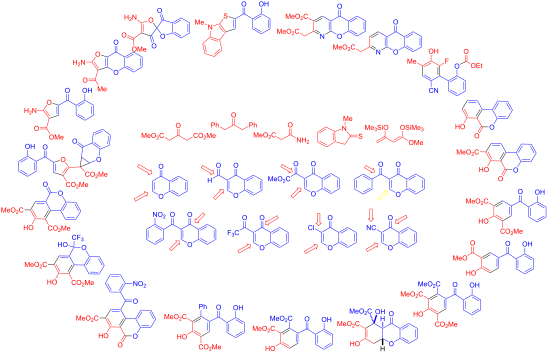
- chromones requires the action of trimethylsilyl trifluoromethanesulfonate (TMSOTf) which is a relatively expensive reagent. In future studies, especially the chemistry of 3-methoxalyl- and 3-nitrochromones should be further explored. In case of the methoxalyl derivatives, so far not many synthetic

Graphical Abstract

Scheme 1: Structures of carbonyl compounds 1, 2, 3, and 4, dianion 7, phosphorane 8 and synthesis of 1,3-bis(...

Scheme 2: Structures of chromones with different substituents located at carbon C-3 and atom numbering scheme...

Scheme 3: Synthesis of 17. Conditions: i, DBU (1.3 equiv), THF, 20 °C, 12 h.
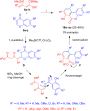
Scheme 4: Synthesis of 18a–ac. Conditions: i, 1) 9a–j, Me3SiOTf (1.3 equiv), 20 °C, 1 h; 2) 6a–h (1.3 equiv),...

Scheme 5: Synthesis of 19a–d. Conditions: i, DBU (1.3 equiv), THF, 20 °C, 12 h.

Scheme 6: Synthesis of 20a–ag. Conditions: i, 1) 10a–i, Me3SiOTf (0.3 equiv), 20 °C, 10 min; 2) 6a–h (1.3 equ...

Scheme 7: Synthesis of 21a–g. Conditions: i, DBU (1.3 equiv), dioxane, 20 °C, 12 h.

Scheme 8: Synthesis of 22a,b. Conditions: i, DBU (1.3 equiv), dioxane, 20 °C, 12 h.

Scheme 9: Synthesis of 23a–j. Conditions: i, 1) 11a–c, Me3SiOTf (0.3 equiv), 20 °C, 1 h; 2) 6a–h (1.3 equiv),...

Scheme 10: Synthesis of 24a–w. Conditions: i, 1) 13a–c, Me3SiOTf (0.3 equiv), 20 °C, 1 h; 2) 6a–r (1.3 equiv),...

Scheme 11: Synthesis of 25a–f. Conditions: i, DBU (1.3 equiv), dioxane, 20 °C, 12 h.

Scheme 12: Synthesis of 26a–e. Conditions: i, DBU (1.3 equiv), dioxane, 20 °C, 12 h.
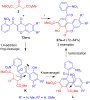
Scheme 13: Synthesis of 27a–c. Conditions: i, DBU (1.3 equiv), dioxane, 20 °C, 12 h.

Scheme 14: Synthesis of 28a–c. Conditions: i, DBU (1.3 equiv), dioxane, 20 °C, 12 h.

Scheme 15: Synthesis of 29a–n and 30. Conditions: i, DBU (1.3 equiv), dioxane, 20 °C, 12 h; ii, 1) KOH, MeOH; ...

Scheme 16: Synthesis of 32a,b. Conditions: i, 1) 31, Me3SiOTf (2.0 equiv), 20 °C, 1 h; 2) 6a,b (3.0 equiv), CH2...
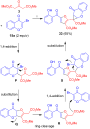
Scheme 17: Synthesis of 33. Conditions: i, DBU (1.3 equiv), THF, 20 °C, 12 h.

Scheme 18: Synthesis of 35a–x. Conditions: i, DBU (1.3 equiv), 1,4-dioxane, 20 °C, 12 h.
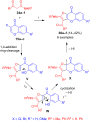
Scheme 19: Synthesis of 36a–f. Conditions: i, 1) DBU (1.3 equiv), 1,4-dioxane, 20 °C, 12 h; 2) I2 (2 equiv), D...

Scheme 20: Synthesis of 37a,b. Conditions: i, 1) DBU (1.3 equiv), 1,4-dioxane, 20 °C, 12 h; 2) I2 (2 equiv), D...

Scheme 21: Synthesis of 39a–i. Conditions: i, method A: DBU (1.3 equiv), 1,4-dioxane, 20 °C; method B: K2CO3 (...

Scheme 22: Synthesis of 40. Conditions: i, piperidine, MeOH, CHCl3, reflux, 3 h.

Scheme 23: Synthesis of 41a–am. Conditions: i, Me3SiOTf, CH2Cl2, 20 °C, 12 h, then: HCl (10%); ii, NEt3, EtOH ...
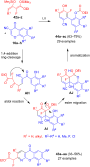
Scheme 24: Synthesis of 43a–aa and 44a–ac. Conditions: i, Me3SiOTf, CH2Cl2, 20 °C, 12 h, then: HCl (10%); ii, ...
Synthesis of 1,4-azaphosphinine nucleosides and evaluation as inhibitors of human cytidine deaminase and APOBEC3A
- Maksim V. Kvach,
- Stefan Harjes,
- Harikrishnan M. Kurup,
- Geoffrey B. Jameson,
- Elena Harjes and
- Vyacheslav V. Filichev
Beilstein J. Org. Chem. 2024, 20, 1088–1098, doi:10.3762/bjoc.20.96
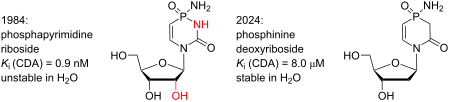
- , t-BuOK), with Hoffer’s chlorosugar (13) in the presence or absence of Lewis acid (TMSOTf, SnCl4) did not result in formation of a reasonable amount of appropriate nucleoside (Scheme 2). Nucleobase 12 could not be converted to the corresponding silylated derivative by using HMDS, TMSCl or a
- , providing a linear nucleoside 17 as a mixture of two anomers, which were successfully separated on a silica gel column. Finally, cyclisation of a linear nucleoside was accomplished in the presence of a catalytic amount of the Lewis acid TMSOTf in 64% yield. Unfortunately, cyclisation was accompanied by
- ) H2, Pd/C, CH2Cl2, rt, 3 h; b) chloroacetyl chloride, Et3N, 0 °C, overnight, 38% yield; iii) 10, HMDS, DCE, 90 °C, 24 h, 32% yield; iv) TMSOTf, ACN, 40 °C, 2.5 h, 64% yield. i) H2, 5% Pd/CaCO3/3% Pb, Et3N, CH2Cl2, rt, 1.5 h, 34% and 21% yield for α- and β-anomer of 18, respectively; ii) H2, 10% Pd/C

Graphical Abstract

Figure 1: A) Deamination of cytosine, dC and C as individual nucleosides or as part of a polynucleotide chain...

Scheme 1: i) Boc2O, DMAP, THF, rt, overnight; ii) aq 5 M NaOH, rt, 3 h, 89% yield over two steps; iii) 3, azo...

Scheme 2: i) NaN3, n-Bu4NHSO4, NaHCO3/CHCl3 (1:1), rt, 20 min, 88% yield; ii) a) H2, Pd/C, CH2Cl2, rt, 3 h; b...

Scheme 3: i) H2, 5% Pd/CaCO3/3% Pb, Et3N, CH2Cl2, rt, 1.5 h, 34% and 21% yield for α- and β-anomer of 18, res...

Figure 2: V0 of A3A mimic-catalysed deamination of 5'-dTTTTCAT in the absence (no inhibitor) and presence of ...
Optimizations of lipid II synthesis: an essential glycolipid precursor in bacterial cell wall synthesis and a validated antibiotic target
- Milandip Karak,
- Cian R. Cloonan,
- Brad R. Baker,
- Rachel V. K. Cochrane and
- Stephen A. Cochrane
Beilstein J. Org. Chem. 2024, 20, 220–227, doi:10.3762/bjoc.20.22
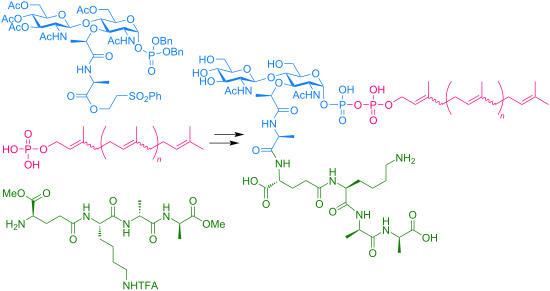
- reaction (Table 1, entries 6, 8, and 9). A slight improvement in the yield of 3a was observed when switching from TMSOTf to TfOH as the activator (Table 1, entry 5 vs entry 10). However, substituting TMSOTf with BF3·OEt2 did not yield any target product 3a (Table 1, entry 3 vs entry 12). In our

Graphical Abstract

Figure 1: Structure of lipid II, with variable positions shown in red and antimicrobial-binding motifs highli...

Figure 2: List of i) glycosyl donors and ii) glycosyl acceptors used in this study.

Scheme 1: Synthesis of disaccharide pentapeptide core 7.

Scheme 2: Synthesis of lipid II (11) and its analogues 8–10.
N-Sulfenylsuccinimide/phthalimide: an alternative sulfenylating reagent in organic transformations
- Fatemeh Doraghi,
- Seyedeh Pegah Aledavoud,
- Mehdi Ghanbarlou,
- Bagher Larijani and
- Mohammad Mahdavi
Beilstein J. Org. Chem. 2023, 19, 1471–1502, doi:10.3762/bjoc.19.106
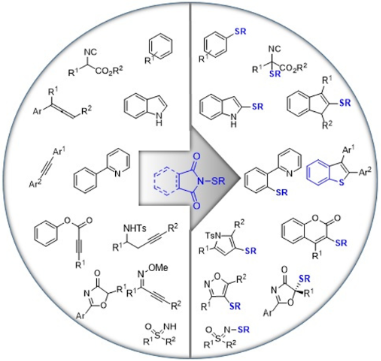
- , and TMSOTf resulted in good chemical yields. In the transformation, the selectivity of the endo or exo cyclization depended on the atom number of the chain between alkene and arene, leading to the formation of 6-, 7-, or 8-membered rings. In addition to N-(thio)phthalimides, benzenesulfenyl chloride
- sulfide molecules 137 (Scheme 58) [90]. The Lewis basicity nature of PhSePh as a catalyst and the presence of Lewis acid TMSOTf improved the chemical yields. It is interesting to note that the reaction carried out at a lower temperature because of the high reactivity of allene 136. When the reaction was
- cyclization transformation involving activation of the electrophilic sulfur reagent by PhSePh with the assistance of TMSOTf to form transition state I. Intermediate II formed through capturing of sulfonium by selenium. Then, II reacted with 136 to give regioselective cyclic thiiranium ion III. Nucleophilic

Graphical Abstract

Scheme 1: Sulfur-containing bioactive molecules.

Scheme 2: Scandium-catalyzed synthesis of thiosulfonates.

Scheme 3: Palladium-catalyzed aryl(alkyl)thiolation of unactivated arenes.

Scheme 4: Catalytic cycle for Pd-catalyzed aryl(alkyl)thiolation of unactivated arenes.

Scheme 5: Iron- or boron-catalyzed C–H arylthiation of substituted phenols.

Scheme 6: Iron-catalyzed azidoalkylthiation of alkenes.

Scheme 7: Plausible mechanism for iron-catalyzed azidoalkylthiation of alkenes.

Scheme 8: BF3·Et2O‑mediated electrophilic cyclization of aryl alkynoates.

Scheme 9: Tentative mechanism for BF3·Et2O‑mediated electrophilic cyclization of aryl alkynoates.

Scheme 10: Construction of 6-substituted benzo[b]thiophenes.

Scheme 11: Plausible mechanism for construction of 6-substituted benzo[b]thiophenes.

Scheme 12: AlCl3‑catalyzed cyclization of N‑arylpropynamides with N‑sulfanylsuccinimides.

Scheme 13: Synthetic utility of AlCl3‑catalyzed cyclization of N‑arylpropynamides with N‑sulfanylsuccinimides.

Scheme 14: Sulfenoamination of alkenes with sulfonamides and N-sulfanylsuccinimides.

Scheme 15: Lewis acid/Brønsted acid controlled Pd-catalyzed functionalization of aryl C(sp2)–H bonds.

Scheme 16: Possible mechanism for Lewis acid/Brønsted acid controlled Pd-catalyzed functionalization of aryl C...

Scheme 17: FeCl3-catalyzed carbosulfenylation of unactivated alkenes.

Scheme 18: Copper-catalyzed electrophilic thiolation of organozinc halides.

Scheme 19: h-BN@Copper(II) nanomaterial catalyzed cross-coupling reaction of sulfoximines and N‑(arylthio)succ...

Scheme 20: AlCl3‑mediated cyclization and sulfenylation of 2‑alkyn-1-one O‑methyloximes.

Scheme 21: Lewis acid-promoted 2-substituted cyclopropane 1,1-dicarboxylates with sulfonamides and N-(arylthio...

Scheme 22: Lewis acid-mediated cyclization of β,γ-unsaturated oximes and hydrazones with N-(arylthio/seleno)su...

Scheme 23: Credible pathway for Lewis acid-mediated cyclization of β,γ-unsaturated oximes with N-(arylthio)suc...

Scheme 24: Synthesis of 4-chalcogenyl pyrazoles via chalcogenation/cyclization of α,β-alkynic hydrazones.

Scheme 25: Controllable synthesis of 3-thiolated pyrroles and pyrrolines.

Scheme 26: Possible mechanism for controllable synthesis of 3-thiolated pyrroles and pyrrolines.

Scheme 27: Co-catalyzed C2-sulfenylation and C2,C3-disulfenylation of indole derivatives.

Scheme 28: Plausible catalytic cycle for Co-catalyzed C2-sulfenylation and C2,C3-disulfenylation of indoles.

Scheme 29: C–H thioarylation of electron-rich arenes by iron(III) triflimide catalysis.

Scheme 30: Difunctionalization of alkynyl bromides with thiosulfonates and N-arylthio succinimides.·

Scheme 31: Suggested mechanism for difunctionalization of alkynyl bromides with thiosulfonates and N-arylthio ...

Scheme 32: Synthesis of thioesters, acyl disulfides, ketones, and amides by N-thiohydroxy succinimide esters.

Scheme 33: Proposed mechanism for metal-catalyzed selective acylation and acylthiolation.

Scheme 34: AlCl3-catalyzed synthesis of 3,4-bisthiolated pyrroles.

Scheme 35: α-Sulfenylation of aldehydes and ketones.

Scheme 36: Acid-catalyzed sulfetherification of unsaturated alcohols.

Scheme 37: Enantioselective sulfenylation of β-keto phosphonates.

Scheme 38: Organocatalyzed sulfenylation of 3‑substituted oxindoles.

Scheme 39: Sulfenylation and chlorination of β-ketoesters.

Scheme 40: Intramolecular sulfenoamination of olefins.

Scheme 41: Plausible mechanism for intramolecular sulfenoamination of olefins.

Scheme 42: α-Sulfenylation of 5H-oxazol-4-ones.

Scheme 43: Metal-free C–H sulfenylation of electron-rich arenes.

Scheme 44: TFA-promoted C–H sulfenylation indoles.
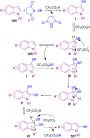
Scheme 45: Proposed mechanism for TFA-promoted C–H sulfenylation indoles.

Scheme 46: Organocatalyzed sulfenylation and selenenylation of 3-pyrrolyloxindoles.

Scheme 47: Organocatalyzed sulfenylation of S-based nucleophiles.

Scheme 48: Conjugate Lewis base Brønsted acid-catalyzed sulfenylation of N-heterocycles.

Scheme 49: Mechanism for activation of N-sulfanylsuccinimide by conjugate Lewis base Brønsted acid catalyst.

Scheme 50: Sulfenylation of deconjugated butyrolactams.

Scheme 51: Intramolecular sulfenofunctionalization of alkenes with phenols.

Scheme 52: Organocatalytic 1,3-difunctionalizations of Morita–Baylis–Hillman carbonates.

Scheme 53: Organocatalytic sulfenylation of β‑naphthols.

Scheme 54: Acid-promoted oxychalcogenation of o‑vinylanilides with N‑(arylthio/arylseleno)succinimides.

Scheme 55: Lewis base/Brønsted acid dual-catalytic C–H sulfenylation of aryls.

Scheme 56: Lewis base-catalyzed sulfenoamidation of alkenes.

Scheme 57: Cyclization of allylic amide using a Brønsted acid and tetrabutylammonium chloride.

Scheme 58: Catalytic electrophilic thiocarbocyclization of allenes with N-thiosuccinimides.

Scheme 59: Suggested mechanism for electrophilic thiocarbocyclization of allenes with N-thiosuccinimides.

Scheme 60: Chiral chalcogenide-catalyzed enantioselective hydrothiolation of alkenes.

Scheme 61: Proposed mechanism for chalcogenide-catalyzed enantioselective hydrothiolation of alkenes.

Scheme 62: Organocatalytic sulfenylation for synthesis a diheteroatom-bearing tetrasubstituted carbon centre.

Scheme 63: Thiolative cyclization of yne-ynamides.

Scheme 64: Synthesis of alkynyl and acyl disulfides from reaction of thiols with N-alkynylthio phthalimides.

Scheme 65: Oxysulfenylation of alkenes with 1-(arylthio)pyrrolidine-2,5-diones and alcohols.

Scheme 66: Arylthiolation of arylamines with (arylthio)-pyrrolidine-2,5-diones.

Scheme 67: Catalyst-free isothiocyanatoalkylthiation of styrenes.

Scheme 68: Sulfenylation of (E)-β-chlorovinyl ketones toward 3,4-dimercaptofurans.

Scheme 69: HCl-promoted intermolecular 1, 2-thiofunctionalization of aromatic alkenes.

Scheme 70: Possible mechanism for HCl-promoted 1,2-thiofunctionalization of aromatic alkenes.

Scheme 71: Coupling reaction of diazo compounds with N-sulfenylsuccinimides.

Scheme 72: Multicomponent reactions of disulfides with isocyanides and other nucleophiles.

Scheme 73: α-Sulfenylation and β-sulfenylation of α,β-unsaturated carbonyl compounds.
Synthesis of ether lipids: natural compounds and analogues
- Marco Antônio G. B. Gomes,
- Alicia Bauduin,
- Chloé Le Roux,
- Romain Fouinneteau,
- Wilfried Berthe,
- Mathieu Berchel,
- Hélène Couthon and
- Paul-Alain Jaffrès
Beilstein J. Org. Chem. 2023, 19, 1299–1369, doi:10.3762/bjoc.19.96
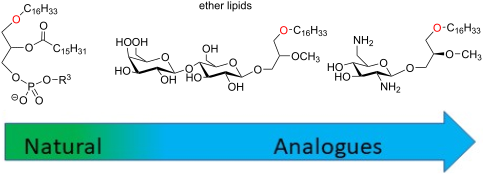

Graphical Abstract

Figure 1: Chemical structure of some natural ether lipids (ELs).

Figure 2: Synthesis of lyso-PAF and PAF from 1-O-alkylglycerol [64].

Figure 3: Synthesis of lyso-PAF from 1,3-benzylideneglycerol 3.1 [69].
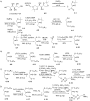
Figure 4: A) Synthesis of the two enantiomers of octadecylglycerol (4.6 and 4.10) from ᴅ-mannitol (4.1); B) s...

Figure 5: Four-step synthesis of PAF 5.6 from (S)-glycidol [73].

Figure 6: Synthesis of 1-O-alkylglycerol A) from solketal, B) from ᴅ- or ʟ-tartaric acid and the intermediate ...

Figure 7: Synthesis of EL building blocks starting from substituted glycidol 7.1a–c [82].

Figure 8: Synthesis of PAF 8.5 by using phosphoramidite 8.2 [86].

Figure 9: Synthesis of oleyl-PAF 9.7 from ʟ-serine [88].

Figure 10: Synthesis of racemic analogues of lyso-PAF 10.8 and PAF 10.9 featuring a phenyl group between the g...

Figure 11: Synthesis of racemic deoxy-lyso-PAF 11.7 and deoxy-PAF 11.8 [91].

Figure 12: Synthesis of racemic thio-PAF 12.8 [93].

Figure 13: Racemic synthesis of 13.6 to illustrate the modification of the glycerol backbone by adding a methy...

Figure 14: Racemic synthesis of 14.5 as an illustration of the introduction of methyl substituents on the glyc...

Figure 15: Synthesis of functionalized sn-2-acyl chains of PC-EL; A) Steglich esterification or acylation reac...

Figure 16: Synthesis of racemic mc-PAF (16.3), a carbamate analogue of PAF [102].

Figure 17: A) Synthesis of (R)-17.2 and (S)-17.6 starting from (S)-solketal (17.1); B) synthesis of N3-PAF (17...

Figure 18: Modification of the phosphocholine polar head to produce PAF analogues [81].

Figure 19: Racemic PAF analogues 19.3 and 19.5 characterized by the absence of the phosphate group [107].

Figure 20: Synthesis of PIP3-PAF (20.7) [108].

Figure 21: Large-scale synthesis of C18-edelfosine (21.8) [116].

Figure 22: Synthesis of C16-edelfosine (22.10) starting from isopropylidene-ʟ-glyceric acid methyl ester (22.1...

Figure 23: Phosphocholine moiety installation by the use of chlorophosphite 23.2 as key reagent [119].

Figure 24: Synthesis of rac-1-alkyl-2-O-methylglycerol (AMG) [120].

Figure 25: Synthesis of stereocontrolled 1-alkyl-2-O-methyl glycerol 25.9 (AMG) from dimethyl ᴅ-tartrate [81].

Figure 26: A) Racemic synthesis of thioether 26.4 [129,130], B) structure of sulfone analogue 26.5 [129].

Figure 27: Stereocontrolled synthesis of C18-edelfosine thioether analogue 27.8 [118].

Figure 28: Synthesis of thioether 28.4 that include a thiophosphate function [134].

Figure 29: Synthesis of ammonium thioether 29.4 and 29.6 [135].

Figure 30: Synthesis of the N-methylamino analogue of edelfosine 30.6 (BN52211) [138].

Figure 31: Synthesis of 1-desoxy analogues of edelfosine; A) with a saturated alkyl chain; B) synthesis of the...

Figure 32: Stereocontrolled synthesis of edelfosine analogue (S)-32.8 featuring a C18:1 lipid chain [142].

Figure 33: Synthesis of edelfosine analogues with modulation of the lipid chain; A) illustration with the synt...

Figure 34: Synthesis of phospholipid featuring a carbamate function to link the lipid chain to the glycerol un...

Figure 35: Synthesis of sesquiterpene conjugates of phospho glycero ether lipids [148].

Figure 36: Racemic synthesis of methyl-substituted glycerol analogues 36.7 and 36.10: A) synthesis of diether ...

Figure 37: Racemic synthesis of ilmofosine (37.6) [155,156].

Figure 38: A) Stereoselective synthesis of 38.5 via a stereoselective hydroboration reaction; B) synthesis of ...

Figure 39: Racemic synthesis of SRI62-834 (39.6) featuring a spiro-tetrahydrofurane heterocycle in position 2 ...

Figure 40: Racemic synthesis of edelfosine analogue 40.5 featuring an imidazole moiety in sn-2 position [160].

Figure 41: Racemic synthesis of fluorine-functionalized EL: A) Synthesis of 41.6 and B) synthesis of 41.8 [161-163].

Figure 42: A) Synthesis of the β-keto-ester 42.6 that also features a decyl linker between the phosphate and t...

Figure 43: Synthesis of phosphonate-based ether lipids; A) edelfosine phosphonate analogue 43.7 and B) thioeth...

Figure 44: Enantioselective synthesis of phosphonates 44.3 and 44.4 [171].

Figure 45: Racemic synthesis of phosphinate-based ether lipid 45.10 [172].

Figure 46: Racemic synthesis of edelfosine arsonium analogue 46.5 [173].

Figure 47: Synthesis of edelfosine dimethylammonium analogue 47.2 [118].

Figure 48: Synthesis of rac-C18-edelfosine methylammonium analogue 48.4 [176].

Figure 49: A) Synthesis of edelfosine N-methylpyrrolidinium analogue 49.2 or N-methylmorpholinium analogue 49.3...

Figure 50: A) Synthesis of edelfosine’s analogue 50.4 with a PE polar group; B) illustration of a pyridinium d...

Figure 51: A) Synthesis of 51.4 featuring a thiazolium cationic moiety; B) synthesis of thiazolium-based EL 51...

Figure 52: Synthesis of cationic ether lipids 52.3, 52.4 and 52.6 [135,183].

Figure 53: Synthesis of cationic carbamate ether lipid 53.5 [184].

Figure 54: Synthesis of cationic sulfonamide 54.5 [185].

Figure 55: Chemical structure of ONO-6240 (55.1) and SRI-63-119 (55.2).

Figure 56: Synthesis of non-ionic ether lipids 56.2–56.9 [188].

Figure 57: Synthesis of ether lipid conjugated to foscarnet 57.6 [189].

Figure 58: A) Synthesis of ether lipid conjugated to arabinofuranosylcytosine; B) synthesis of AZT conjugated ...

Figure 59: Synthesis of quercetin conjugate to edelfosine [191].

Figure 60: Synthesis of 60.8 (Glc-PAF) [194].

Figure 61: A) Synthesis of amino ether lipid 61.7 functionalized with a rhamnose unit and its amide analogue 6...

Figure 62: A) Synthesis of glucose ether lipid 62.4; B) structure of ether lipid 62.5 possessing a maltose uni...

Figure 63: A) Synthesis of glucuronic methyl ester 63.8; B) structure of cellobiose 63.9 and maltose 63.10 ana...

Figure 64: A) Synthesis of maltosyl glycerolipid 64.7; B) structure of lactose analogue 64.8 prepared followin...

Figure 65: A) Asymmetric synthesis of the aglycone moiety starting from allyl 4-methoxyphenyl ether; B) glycos...

Figure 66: A) Synthesis of ohmline possessing a lactose moiety. B) Structure of other glyco glycero lipids pre...

Figure 67: A) Synthesis of lactose-glycerol ether lipid 67.5; B) analogues possessing a maltose (67.6) or meli...

Figure 68: Synthesis of digalactosyl EL 68.6, A) by using trityl, benzyl and acetyl protecting groups, B) by u...

Figure 69: A) Synthesis of α-ohmline; B) structure of disaccharide ether lipids prepared by using similar meth...

Figure 70: Synthesis of lactose ether lipid 70.3 and its analogue 70.6 featuring a carbamate function as linke...

Figure 71: Synthesis of rhamnopyranoside diether 71.4 [196].

Figure 72: Synthesis of 1-O-hexadecyl-2-O-methyl-3-S-(α-ᴅ-1'-thioglucopyranosyl)-sn-glycerol (72.5) [225].

Figure 73: A) Preparation of lipid intermediate 73.4; B) synthesis of 2-desoxy-C-glycoside 73.10 [226].

Figure 74: Synthesis of galactose-pyridinium salt 74.3 [228].

Figure 75: Synthesis of myo-inositol derivative Ino-C2-PAF (75.10) [230].

Figure 76: A) Synthesis of myo-inositol phosphate building block 76.7; B) synthesis of myo-inositolphosphate d...

Figure 77: A) Synthesis of phosphatidyl-3-desoxy-inositol 77.4; B) synthesis of phosphono-3-desoxyinositol 77.9...

Figure 78: A) Structure of diether phosphatidyl-myo-inositol-3,4-diphosphate 78.1; B) synthesis of phosphatidy...

Figure 79: A) Synthesis of diether-phosphatidyl derivative 79.4 featuring a hydroxymethyl group in place of a ...

Figure 80: Synthesis of Glc-amine-PAF [78].

Figure 81: Synthesis of glucosamine ether lipid 81.4 and its analogues functionalized in position 3 of the ami...

Figure 82: Synthesis of fully deprotected aminoglucoside ether lipid 82.5 [246].

Figure 83: Synthesis of C-aminoglycoside 83.12 using Ramberg–Bäcklund rearrangement as a key step [250].

Figure 84: A) List of the most important glyco lipids and amino glyco lipids included in the study of Arthur a...

Figure 85: Synthesis of mannosamine ether lipid 85.6 [254].
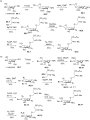
Figure 86: A) Synthesis of glucosamine ether lipids with a non-natural ʟ-glucosamine moiety; B) synthesis of e...

Figure 87: A) Structure of the most efficient anticancer agents 87.1–87.4 featuring a diamino glyco ether lipi...

Figure 88: A) Synthesis of diamino glyco ether lipid 87.4; B) synthesis of bis-glycosylated ether lipid 88.10 [256]....

Figure 89: Synthesis of triamino ether lipid 89.4 [260].

Figure 90: Synthesis of chlorambucil conjugate 90.7 [261].

Figure 91: Three main methods for the preparation of glycerol ether lipid 91.3; A) from solketal and via a tri...

Figure 92: Four different methods for the installation of the phosphocholine polar head group; A) method using...

Figure 93: Illustration of two methods for the installation of saccharides or aminosaccharides; A) O-glycosyla...
Enolates ambushed – asymmetric tandem conjugate addition and subsequent enolate trapping with conventional and less traditional electrophiles
- Péter Kisszékelyi and
- Radovan Šebesta
Beilstein J. Org. Chem. 2023, 19, 593–634, doi:10.3762/bjoc.19.44
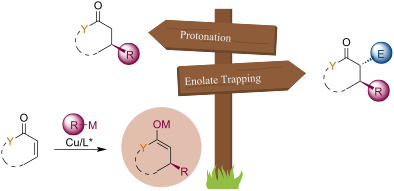
- TMSOTf) promoted trapping gave the aldol adducts 4 in good to excellent diastereoselectivity (up to a single diastereomer), but the yields were relatively low (25–44%). To overcome this limitation, the authors used TMSOTf to prepare and isolate the corresponding silyl enol ethers, which were later
- unsaturated amides, the trapping worked also with alkenylheterocycles 103. Interestingly, the corresponding aza-enolates could be generated by two sets of experimental conditions where ACA was promoted either by BF3·OEt2 or TMSOTf (Scheme 27A). Based on the recent Harutyunyan discovery of ACA to unsaturated

Graphical Abstract

Scheme 1: General scheme depicting tandem reactions based on an asymmetric conjugate addition followed by an ...

Scheme 2: Cu-catalyzed tandem conjugate addition of R2Zn/aldol reaction with chiral acetals.

Scheme 3: Cu-catalyzed asymmetric desymmetrization of cyclopentene-1,3-diones using a tandem conjugate additi...

Scheme 4: Stereocontrolled assembly of dialkylzincs, cyclic enones, and sulfinylimines utilizing a Cu-catalyz...

Scheme 5: Cu-catalyzed tandem conjugate addition/Mannich reaction (A). Access to chiral isoindolinones and tr...

Scheme 6: Cu-catalyzed tandem conjugate addition/nitro-Mannich reaction (A) with syn–anti or syn–syn selectiv...

Figure 1: Various chiral ligands utilized for the tandem conjugate addition/Michael reaction sequences.
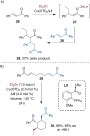
Scheme 7: Cu-catalyzed tandem conjugate addition/Michael reaction: side-product formation with chalcone (A) a...

Scheme 8: Zn enolate trapping using allyl iodides (A), Stork–Jung vinylsilane reagents (B), and allyl bromide...

Scheme 9: Cu-catalyzed tandem conjugate addition/acylation through Li R2Zn enolate (A). A four-component coup...

Scheme 10: Selected examples for the Cu-catalyzed tandem conjugate addition/trifluoromethylthiolation sequence....

Scheme 11: Zn enolates trapped by vinyloxiranes: synthesis of allylic alcohols.

Scheme 12: Stereoselective cyclopropanation of Mg enolates formed by ACA of Grignard reagents to chlorocrotona...

Scheme 13: Domino aldol reactions of Mg enolates formed from coumarin and chromone.

Scheme 14: Oxidative coupling of ACA-produced Mg enolates.

Scheme 15: Tandem ACA of Grignard reagents to enones and Mannich reaction.

Scheme 16: Diastereodivergent Mannich reaction of Mg enolates with differently N-protected imines.

Scheme 17: Tandem Grignard–ACA–Mannich using Taddol-based phosphine-phosphite ligands.

Scheme 18: Tandem reaction of Mg enolates with aminomethylating reagents.

Scheme 19: Tandem reaction composed of Grignard ACA to alkynyl enones.

Scheme 20: Rh/Cu-catalyzed tandem reaction of diazo enoates leading to cyclobutanes.

Scheme 21: Tandem Grignard-ACA of cyclopentenones and alkylation of enolates.

Scheme 22: Tandem ACA of Grignard reagents followed by enolate trapping reaction with onium compounds.

Scheme 23: Mg enolates generated from unsaturated lactones in reaction with activated alkenes.

Scheme 24: Lewis acid mediated ACA to amides and SN2 cyclization of a Br-appended enolate.

Scheme 25: Trapping reactions of aza-enolates with Michael acceptors.

Scheme 26: Si enolates generated by TMSOTf-mediated ACA of Grignard reagents and enolate trapping reaction wit...

Scheme 27: Trapping reactions of enolates generated from alkenyl heterocycles (A) and carboxylic acids (B) wit...

Scheme 28: Reactions of heterocyclic Mg enolates with onium compounds.

Scheme 29: Synthetic transformations of cycloheptatrienyl and benzodithiolyl substituents.

Scheme 30: Aminomethylation of Al enolates generated by ACA of trialkylaluminum reagents.

Scheme 31: Trapping reactions of enolates with activated alkenes.

Scheme 32: Alkynylation of racemic aluminum or magnesium enolates.

Scheme 33: Trapping reactions of Zr enolates generated by Cu-ACA of organozirconium reagents.

Scheme 34: Chloromethylation of Zr enolates using the Vilsmeier–Haack reagent.

Scheme 35: Tandem conjugate borylation with subsequent protonation or enolate trapping by an electrophile.

Scheme 36: Tandem conjugate borylation/aldol reaction of cyclohexenones.

Scheme 37: Selected examples for the tandem asymmetric borylation/intramolecular aldol reaction; synthesis of ...

Scheme 38: Cu-catalyzed tandem methylborylation of α,β-unsaturated phosphine oxide in the presence of (R,Sp)-J...

Scheme 39: Cu-catalyzed tandem transannular conjugated borylation/aldol cyclization of macrocycles containing ...

Scheme 40: Stereoselective tandem conjugate borylation/Mannich cyclization: selected examples (A) and a multi-...

Scheme 41: Some examples of Cu-catalyzed asymmetric tandem borylation/aldol cyclization (A). Application to di...

Scheme 42: Atropisomeric P,N-ligands used in tandem conjugate borylation/aldol cyclization sequence.

Scheme 43: Selected examples for the enantioselective Cu-catalyzed borylation/intramolecular Michael addition ...

Scheme 44: Selected examples for the preparation of enantioenriched spiroindanes using a Cu-catalyzed tandem c...
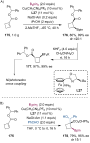
Scheme 45: Enantioselective conjugate borylation of cyclobutene-1-carboxylic acid diphenylmethyl ester 175 wit...

Scheme 46: Cu-catalyzed enantioselective tandem conjugate silylation of α,β-unsaturated ketones with subsequen...

Scheme 47: Cu-catalyzed enantioselective tandem conjugate silylation of α,β-unsaturated ketones with subsequen...
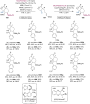
Scheme 48: Cu-catalyzed tandem conjugate silylation/aldol condensation. The diastereoselectivity is controlled...

Scheme 49: Chiral Ru-catalyzed three-component coupling reaction.

Scheme 50: Rh-Phebox complex-catalyzed reductive cyclization and subsequent reaction with Michael acceptors th...

Scheme 51: Rh-catalyzed tandem asymmetric conjugate alkynylation/aldol reaction (A) and subsequent spiro-cycli...

Scheme 52: Rh-bod complex-catalyzed tandem asymmetric conjugate arylation/intramolecular aldol addition (A). S...

Scheme 53: Co-catalyzed C–H-bond activation/asymmetric conjugate addition/aldol reaction.

Scheme 54: (Diisopinocampheyl)borane-promoted 1,4-hydroboration of α,β-unsaturated morpholine carboxamides and...

Figure 2: Some examples of total syntheses that have been recently reviewed.

Scheme 55: Stereoselective synthesis of antimalarial prodrug (+)-artemisinin utilizing a tandem conjugate addi...

Scheme 56: Amphilectane and serrulatane diterpenoids: preparation of chiral starting material via asymmetric t...

Scheme 57: Various asymmetric syntheses of pleuromutilin and related compounds based on a tandem conjugate add...
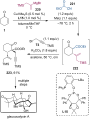
Scheme 58: Total synthesis of glaucocalyxin A utilizing a tandem conjugate addition/acylation reaction sequenc...
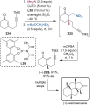
Scheme 59: Installation of the exocyclic double bond using a tandem conjugate addition/aminomethylation sequen...
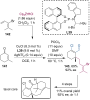
Scheme 60: Synthesis of the taxol core using a tandem conjugate addition/enolate trapping sequence with Vilsme...
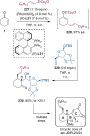
Scheme 61: Synthesis of the tricyclic core of 12-epi-JBIR-23/24 utilizing a Rh-catalyzed asymmetric conjugate ...
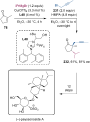
Scheme 62: Total synthesis of (−)-peyssonoside A utilizing a Cu-catalyzed enantioselective tandem conjugate ad...
Catalytic aza-Nazarov cyclization reactions to access α-methylene-γ-lactam heterocycles
- Bilge Banu Yagci,
- Selin Ezgi Donmez,
- Onur Şahin and
- Yunus Emre Türkmen
Beilstein J. Org. Chem. 2023, 19, 66–77, doi:10.3762/bjoc.19.6

- using acyl chloride 6b with an isobutyl side chain is its low volatility in contrast to the highly volatile compound 6a. The aza-Nazarov product 7b was isolated in 61% yield with 20 mol % of AgOTf at 80 °C (Table 1, entry 5). The use of TMSOTf as a Si-based Lewis acid catalyst with 20 mol % loading

Graphical Abstract

Scheme 1: Examples of aza-Nazarov reactions.

Scheme 2: Aza-Nazarov cyclization on gram scale.

Scheme 3: Scope of the aza-Nazarov cyclization with acyclic imines. aThe syntheses of aza-Nazarov products 19b...

Figure 1: X-ray crystal structure of compound 19l.

Scheme 4: Proposed mechanism for the formation of diastereomers 19 and 22.

Scheme 5: Preparation of acyl chloride 23.

Scheme 6: Aza-Nazarov reaction tested using β-TMS-substituted acyl chloride 23.

Scheme 7: Hydrolysis of N-acyliminium intermediates.

Scheme 8: (a) Two possible pathways for the formation of 7 and (b) investigation of the reaction between imin...

Scheme 9: (a) Preparation of acyl chlorides 6ba and 6bb in diastereomerically pure forms, (b) aza-Nazarov cyc...
Combining the best of both worlds: radical-based divergent total synthesis
- Kyriaki Gennaiou,
- Antonios Kelesidis,
- Maria Kourgiantaki and
- Alexandros L. Zografos
Beilstein J. Org. Chem. 2023, 19, 1–26, doi:10.3762/bjoc.19.1
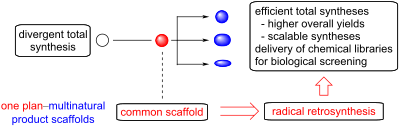
- produce aporphine natural products, while the use of PIDA or PIFA in the presence of BF3·OEt or TMSOTf in wet CH3CN allows to diverge the synthesis to morphinandienone natural products (e.g., 181, Scheme 15). The flow reaction was performed in a reaction coil at room temperature. Two reaction loops were

Graphical Abstract
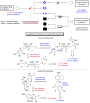
Scheme 1: The power of radical retrosynthesis and the tactic of divergent total synthesis.

Figure 1: Evolution of radical chemistry for organic synthesis.

Scheme 2: Divergent total synthesis of α-pyrone-diterpenoids (Baran).

Scheme 3: Divergent synthesis of pyrone diterpenoids by merged chemoenzymatic and radical synthesis (part I, ...

Scheme 4: Divergent synthesis of pyrone diterpenoids by merged chemoenzymatic and radical synthesis (part II,...

Scheme 5: Divergent synthesis of drimane-type hydroquinone meroterpenoids (Li).

Scheme 6: Divergent synthesis of natural products isolated from Dysidea avara (Lu).

Scheme 7: Divergent synthesis of kaurene-type terpenoids (Lei).

Scheme 8: Divergent synthesis of 6-oxabicyclo[3.2.1]octane meroterpenoids (Lou).

Scheme 9: Divergent synthesis of crinipellins by radical-mediated Dowd–Backwith rearrangement (Xie and Ding).

Scheme 10: Divergent total synthesis of Galbulimima alkaloids (Shenvi).
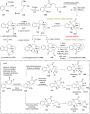
Scheme 11: Divergent synthesis of eburnane alkaloids (Qin).

Scheme 12: Divergent synthesis of Aspidosperma alkaloids (Boger).

Scheme 13: Photoredox based synthesis of (−)-FR901483 (160) and (+)-TAN1251C (162, Gaunt).
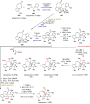
Scheme 14: Divergent synthesis of bipolamines (Maimone).

Scheme 15: Flow chemistry divergency between aporphine and morphinandione alkaloids (Felpin).
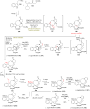
Scheme 16: Divergent synthesis of pyrroloazocine natural products (Echavarren).

Scheme 17: Using TEMPO to stabilize radicals for the divergent synthesis of pyrroloindoline natural products (...

Scheme 18: Radical pathway for preparation of lignans (Zhu).

Scheme 19: Divergent synthesis of DBCOD lignans (Lumb).
Total synthesis of grayanane natural products
- Nicolas Fay,
- Rémi Blieck,
- Cyrille Kouklovsky and
- Aurélien de la Torre
Beilstein J. Org. Chem. 2022, 18, 1707–1719, doi:10.3762/bjoc.18.181
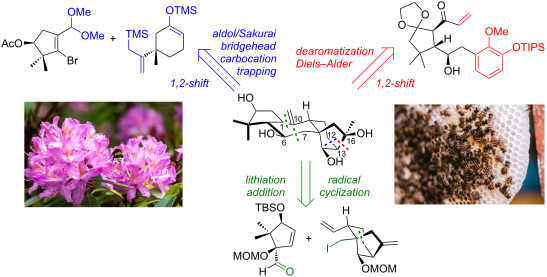
- optimization showed that chiral squaramide 47 developed by Jacobsen’s group significantly accelerated the Mukaiyama reaction compared to TMSOTf or TiCl4 thanks to chiral hydrogen bond-donor effect [35]. After Sakurai cyclization promoted by EtAlCl2, the desired product 48 was obtained with the required

Graphical Abstract

Figure 1: General structure of grayanane natural products.

Scheme 1: Grayanane biosynthesis.
Scheme 2: Matsumoto’s relay approach.

Scheme 3: Shirahama’s total synthesis of (–)-grayanotoxin III.

Scheme 4: Newhouse’s syntheses of fragments 25 and 29.

Scheme 5: Newhouse’s total synthesis of principinol D.

Scheme 6: Ding’s total synthesis of rhodomolleins XX and XXII.

Scheme 7: First key step of Luo’s strategy.

Scheme 8: Luo’s total synthesis of grayanotoxin III.

Scheme 9: Synthesis of principinol E and rhodomollein XX.

Scheme 10: William’s synthetic effort towards pierisformaside C.

Scheme 11: Hong’s synthetic effort towards rhodojaponin III.

Scheme 12: Recent strategies for grayanane synthesis.



