


Search results
Search for "aromatic compounds" in Full Text gives 159 result(s) in Beilstein Journal of Organic Chemistry.
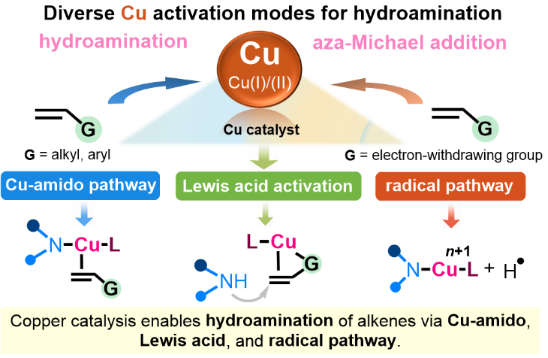
Recent advances in copper-catalyzed direct hydroamination of alkenes with (hetero)aromatic amines
- Hyejeong Lee and
- Yunmi Lee
Beilstein J. Org. Chem. 2026, 22, 925–947, doi:10.3762/bjoc.22.73
- ; hydroamination; N-heterocycles; Introduction Nitrogen-containing aromatic compounds, particularly aromatic amines and aza-heterocycles, are indispensable structural motifs in pharmaceuticals, agrochemicals, natural products, and advanced functional materials [1][2][3][4]. Their unique electronic characteristics

Graphical Abstract

Scheme 1: Mechanistic pathways in copper-catalyzed hydroamination.

Scheme 2: Synthesis of copper–amido complexes.

Scheme 3: Cu–amido catalysts studied for the aza-Michael addition of aniline to electron-deficient olefins.
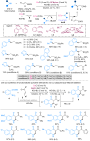
Scheme 4: Copper-catalyzed aza-Michael addition of (hetero)aromatic amines to α,β-unsaturated alkenes.

Scheme 5: Copper-catalyzed 1,6-conjugate addition of aza-heterocycles to sulfonyl dienes.

Scheme 6: Cu-catalyzed aza-Michael addition of arylamines to allylic sulfones.

Scheme 7: Cyclic(alkyl)(amino)carbene-copper-catalyzed aza-Michael addition.

Scheme 8: Aza-Michael addition enabled by Lewis acidic copper catalyst. a20 mol % bpy, 50 mol % Na2CO3.

Scheme 9: One-pot cyclization via aza-Michael addition enabled by Lewis acidic copper catalyst.

Scheme 10: Lewis acidic Cu-catalyzed tandem reaction via aza-Michael addition.

Scheme 11: Copper nanomaterials-catalyzed aza-Michael addition via Lewis acid activation and radical pathways.

Scheme 12: Copper–amido-mediated hydroamination of aniline with vinylarenes.

Scheme 13: Copper-catalyzed anti-Markovnikov hydroamination of (hetero)aromatic N–H with vinylarenes.

Scheme 14: Hydroamination of oxa- and azabenzonorbornadienes with pyrazoles.
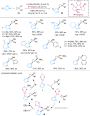
Scheme 15: Copper-catalyzed enantioselective hydroamination of cyclopropenes with pyrazoles.

Scheme 16: Copper/Brønsted acid system for hydroamination of strained alkenes.

Scheme 17: Hydroamination of allenes enabled by Lewis acidic copper catalyst.

Scheme 18: Enantioselective intramolecular hydroamination through aminocupration followed by radical processes....
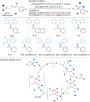
Scheme 19: Visible-light-induced copper-catalyzed hydroamination of styrenes.

Scheme 20: Lewis acid-catalyzed radical hydroamination of styrenes with isatins.
Arene activation via π-bond localization: concepts and opportunities
- Paul Meiners,
- Julian J. Melder and
- Tobias Morack
Beilstein J. Org. Chem. 2026, 22, 257–273, doi:10.3762/bjoc.22.19
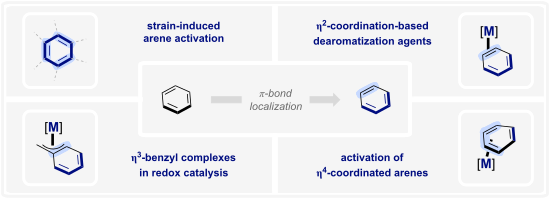
- highlighted. Collectively, these concepts create a roadmap for the development of new strategies that harness π-bond localization to expand the synthetic utility of aromatic compounds. Keywords: arene activation; arene functionalization; dearomatization; metal–arene π-complexes; strained molecules
- behavior of aromatic compounds, finally establishing the concept of aromaticity. This behavior manifests itself in numerous illustrative criteria, such as bond-length equalization, enhanced stability, and distinct magnetic and spectroscopic properties, none of which are entirely free of ambiguity [3
- ]. Today, aromatic compounds are essential in both academic and industrial chemical applications (Figure 1B) [9][10]. Their ubiquity is the result of a decades-spanning effort devoted to leveraging aromatic stability in the development of methods that functionalize the periphery of arenes without

Graphical Abstract

Figure 1: Aromatic molecules as the foundation of modern molecular chemistry.

Figure 2: Arenes as springboards to three-dimensional chemical space and strategies toward arene activation v...

Figure 3: Structure and synthetic utilization of strained arenes; NICS: nucleus independent chemical shifts [26-28].

Figure 4: Bonding and reactivity of η2-coordinated aromatic systems [44,46].

Figure 5: Illustrative selection of η2-coordinating dearomatization agents; MeIm: N-methylimidazole, NHE: nor...

Figure 6: Preparation, lability and most stable linkage isomers of pentaammineosmium(II) complexes.

Scheme 1: Heteroatom-directed reactions of η2-arene complexes [45,50].

Figure 7: Latent functionality through transient metal binding.
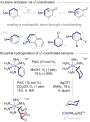
Figure 8: Selective hydrogenation of η2-coordinated benzene to cyclohexene under ambient conditions [53,54].

Scheme 2: Synthesis and utilization of enantioenrichted Mo(η2-arene) complexes in enantioselective synthesis [55]....

Scheme 3: Synthesis of trisubstituted cyclohexenes from phenyl sulfones enabled by tungsten-mediated dearomat...

Scheme 4: Diels–Alder reactions of η2-arene complexes with alkenes and alkynes; NMM: N-methylmaleimide [64,65].

Scheme 5: Binding characteristics and pioneering examples of isolable η3-benzyl complexes.

Figure 9: Divergent functionalization of benzyl electrophiles leveraging η3-benzyl complexes toward benzylic ...

Scheme 6: p-Selective allylation of benzyl chlorides with allylstannanes and subsequent synthetic expansion o...

Figure 10: Strategies for para- and ortho-selective arene functionalization/dearomatization via η3-benzyl comp...

Scheme 7: Substrate-dependent ortho- and para-selective dearomatization of naphthyl chlorides and leveraging ...

Figure 11: η4-Arene coordination as an underexplored but promising pathway for arene activation [96,98-100].
Total synthesis of natural products based on hydrogenation of aromatic rings
- Haoxiang Wu and
- Xiangbing Qi
Beilstein J. Org. Chem. 2026, 22, 88–122, doi:10.3762/bjoc.22.4
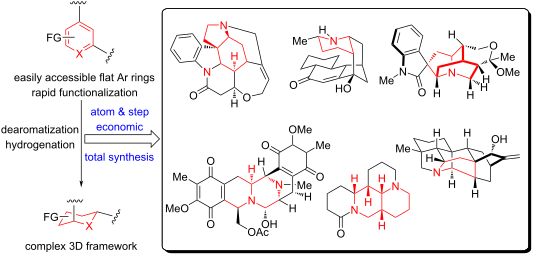
- complex natural products [16][17]. Arenes and heteroarenes have long been readily accessible, as many can be obtained through industrial synthesis or microbial fermentation. The diverse reactivity of aromatic compounds has made them indispensable starting materials in synthetic and medicinal chemistry [18
- limitation requires the design of catalysts that achieve precise electronic complementarity, enabling selective activation across a broad spectrum of aromatic compounds (Scheme 2) [32]. From the standpoint of scalable synthesis, catalyst cost is a major bottleneck in aromatic hydrogenation. Most state-of-the

Graphical Abstract

Scheme 1: The association between dearomatization and natural product synthesis.

Scheme 2: Key challenges in hydrogenation of aromatic rings.
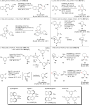
Scheme 3: Hydrogenation of heterocyclic aromatic rings.
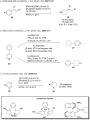
Scheme 4: Hydrogenation of the carbocyclic aromatic rings.
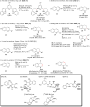
Scheme 5: Hydrogenation of the heterocycle part in bicyclic aromatic rings.
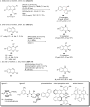
Scheme 6: Hydrogenation of the heterocycle part in bicyclic aromatic rings.
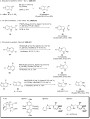
Scheme 7: Hydrogenation of benzofuran, indole, and their analogues.
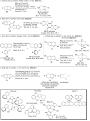
Scheme 8: Hydrogenation of benzofuran, indole, and their analogues.

Scheme 9: Total synthesis of (±)-keramaphidin B by Baldwin and co-workers.

Scheme 10: Total synthesis of (±)-LSD by Vollhardt and co-workers.

Scheme 11: Total synthesis of (±)-dihydrolysergic acid by Boger and co-workers.

Scheme 12: Total synthesis of (±)-lysergic acid by Smith and co-workers.

Scheme 13: Hydrogenation of (−)-tabersonine to (−)-decahydrotabersonine by Catherine Dacquet and co-workers.

Scheme 14: Total synthesis of (±)-nominine by Natsume and co-workers.
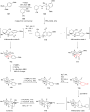
Scheme 15: Total synthesis of (+)-nominine by Gin and co-workers.

Scheme 16: Total synthesis of (±)-lemonomycinone and (±)-renieramycin by Magnus.

Scheme 17: Total synthesis of GB13 by Sarpong and co-workers.

Scheme 18: Total synthesis of GB13 by Shenvi and co-workers.

Scheme 19: Total synthesis of (±)-corynoxine and (±)-corynoxine B by Xia and co-workers.
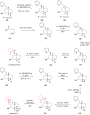
Scheme 20: Total synthesis of (+)-serratezomine E and the putative structure of huperzine N by Bonjoch and co-...

Scheme 21: Total synthesis of (±)-serralongamine A and the revised structure of huperzine N and N-epi-huperzin...

Scheme 22: Early attempts to indenopiperidine core.

Scheme 23: Homogeneous hydrogenation and completion of the synthesis.
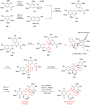
Scheme 24: Total synthesis of jorunnamycin A and jorumycin by Stoltz and co-workers.

Scheme 25: Early attempt towards (−)-finerenone by Aggarwal and co-workers.

Scheme 26: Enantioselective synthesis towards (−)-finerenone.

Scheme 27: Total synthesis of (+)-N-methylaspidospermidine by Smith, Grigolo and co-workers.

Scheme 28: Dearomatization approach towards matrine-type alkaloids.

Scheme 29: Asymmetric total synthesis to (−)-senepodine F via an asymmetric hydrogenation of pyridine.

Scheme 30: Selective hydrogenation of indole derivatives and application.
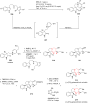
Scheme 31: Synthetic approaches to the oxindole alkaloids by Qi and co-workers.

Scheme 32: Total synthesis of annotinolide B by Smith and co-workers.
Visible-light-driven NHC and organophotoredox dual catalysis for the synthesis of carbonyl compounds
- Vasudevan Dhayalan
Beilstein J. Org. Chem. 2025, 21, 2584–2603, doi:10.3762/bjoc.21.200
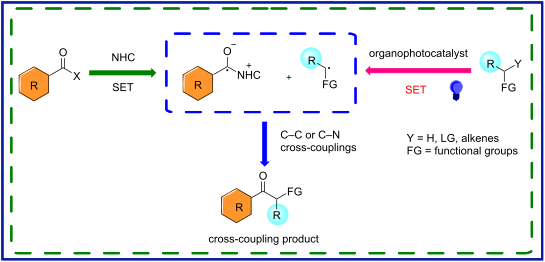
- cycloalkanone scaffolds with potential applications in pharmaceutical and materials sciences (Scheme 12) [62]. Sumida, Ohmiya, and co-workers recently developed an NHC-and organic photoredox-catalyzed meta-selective Friedel–Crafts type acylation of electron-rich aromatic compounds 31. The described catalytic

Graphical Abstract
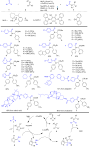
Scheme 1: NHC-catalyzed umpolung strategy for the metal-free synthesis of amide via dual catalysis.
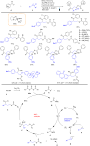
Scheme 2: Visible-light promoted cooperative NHC/photoredox catalyzed ring-opening of aryl cyclopropanes.
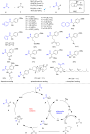
Scheme 3: NHC-catalyzed benzylic C–H acylation by dual catalysis.
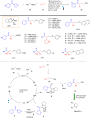
Scheme 4: NHC/photoredox-catalyzed three-component coupling reaction for the preparation of γ-aryloxy ketones....
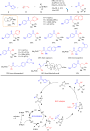
Scheme 5: NHC-catalyzed silyl radical generation from silylboronate via dual catalysis.
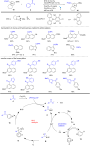
Scheme 6: NHC-catalyzed C–H acylation of arenes and heteroarenes through photocatalysis.

Scheme 7: NHC-catalyzed iminoacylation of alkenes via photoredox dual organocatalysis.
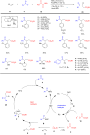
Scheme 8: NHC/photoredox catalyzed direct synthesis of β-arylketoesters.
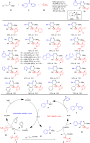
Scheme 9: Visible-light-driven NHC/photoredox catalyzed borylacylation of alkenes.

Scheme 10: NHC-catalyzed oxidative functionalization of cinnamaldehyde.
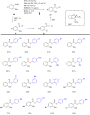
Scheme 11: NHC/photocatalyzed oxidative Smiles rearrangement.

Scheme 12: NHC-catalyzed synthesis of cyclohexanones through photocatalyzed annulation.
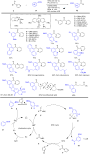
Scheme 13: Dual organocatalyzed meta-selective acylation of electron-rich arenes and heteroarenes using blue L...

Scheme 14: Asymmetric synthesis of fused pyrrolidinones via organophotoredox/N‑heterocyclic carbene dual catal...
C2 to C6 biobased carbonyl platforms for fine chemistry
- Jingjing Jiang,
- Muhammad Noman Haider Tariq,
- Florence Popowycz,
- Yanlong Gu and
- Yves Queneau
Beilstein J. Org. Chem. 2025, 21, 2103–2172, doi:10.3762/bjoc.21.165
- dedicated to the conversion of biomass-derived platform molecules [10][11]. Recent studies have also highlighted the potential of biobased aromatic compounds as sustainable alternatives to their fossil-derived counterparts [12][13][14][15]. Developing biobased solvents [16][17] and platform chemicals from

Graphical Abstract

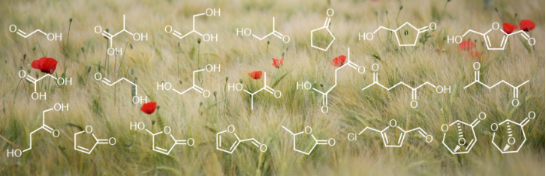
Figure 1: C2–C6 biobased carbonyl building blocks.

Scheme 1: Proposed (2 + 2) route to glycolaldehyde and glycolic acid from erythritol by Cu/AC catalyst (AC = ...

Scheme 2: Reductive amination of GCA.

Scheme 3: N-Formylation of secondary amines by reaction with GCA.

Scheme 4: Synthesis and conversion of hydroxy acetals to cyclic acetals.

Scheme 5: Synthesis of 3-(indol-3-yl)-2,3-dihydrofurans via three-component reaction of glycolaldehyde, indol...

Scheme 6: BiCl3-catalyzed synthesis of benzo[a]carbazoles from 2-arylindoles and α-bromoacetaldehyde ethylene...

Scheme 7: Cu/NCNSs-based conversion of glycerol to glycolic acid and other short biobased acids.

Scheme 8: E. coli-based biotransformation of C1 source molecules (CH4, CO2 and CO) towards C2 glycolic acid.

Scheme 9: N-Formylation of amines with C2 (a) or C3 (b) biomass-based feedstocks.

Scheme 10: Methods for the formation of propanoic acid (PA) from lactic acid (LA).

Scheme 11: Co-polymerization of biobased lactic acid and glycolic acid via a bicatalytic process.

Scheme 12: Oxidation of α-hydroxy acids by tetrachloroaurate(III) in acetic acid–sodium acetate buffer medium.

Figure 2: Selective catalytic pathways for the conversion of lactic acid (LA).

Scheme 13: Synthesis of 1,3-PDO via cross-aldol reaction between formaldehyde and acetaldehyde to 3-hydroxypro...

Scheme 14: Hydrothermal conversion of 1,3-dihydroxy-2-propane and 2,3-dihydroxypropanal to methylglyoxal.

Scheme 15: FLS-catalyzed formose reaction to synthesize GA and DHA.

Scheme 16: GCA and DHA oxidation products of glycerol and isomerization of GCA to DHA under flow conditions us...

Scheme 17: Acid-catalyzed reactions of DHA with alcohols.

Scheme 18: Synthesis of dihydroxyacetone phosphate from dihydroxyacetone.

Scheme 19: Bifunctional acid–base catalyst DHA conversion into lactic acid via pyruvaldehyde or fructose forma...

Scheme 20: Catalytic one-pot synthesis of GA and co-synthesis of formamides and formates from DHA.

Scheme 21: (a) Synthesis of furan derivatives and (b) synthesis of thiophene derivative by cascade [3 + 2] ann...

Scheme 22: Brønsted acidic ionic liquid catalyzed synthesis of benzo[a]carbazole from renewable acetol and 2-p...

Scheme 23: Asymmetric hydrogenation of α-hydroxy ketones to 1,2-diols.

Scheme 24: Synthesis of novel 6-(substituted benzylidene)-2-methylthiazolo [2,3-b]oxazol-5(6H)-one from 1-hydr...

Scheme 25: ʟ-Proline-catalyzed synthesis of anti-diols from hydroxyacetone and aldehydes.

Scheme 26: C–C-bond-formation reactions of a biomass-based feedstock aromatic aldehyde (C5) and hydroxyacetone...

Scheme 27: Ethanol upgrading to C4 bulk chemicals via the thiamine (VB1)-catalyzed acetoin condensation.

Scheme 28: One-pot sequential chemoenzymatic synthesis of 2-aminobutane-1,4-diol and 1,2,4-butanetriol via 1,4...

Scheme 29: Synthesis of 1,4-dihydroxybutan-2-one by microbial transformation.

Scheme 30: Conversion of polyols by [neocuproine)Pd(OAc)]2(OTf)2] to α-hydroxy ketones.

Scheme 31: Chemoselective oxidation of alcohols with chiral palladium-based catalyst 2.

Scheme 32: Electrochemical transformation of furfural to 5-hydroxy-2(5H)-furanone (HFO).

Scheme 33: Selective hydrodeoxygenation of HFO and oxidation to γ-butyrolactone (GBL).

Scheme 34: Photosensitized oxygenation of furan towards HFO via ozonide intermediates.

Scheme 35: Conversion of furfural to HFO and MAN by using mesoporous carbon nitride (SGCN) as photocatalyst.

Scheme 36: Synthesis of HFO from furan derivatives.

Scheme 37: Photooxidation of furfural to 5-hydroxy-2(5H)-furanone (HFO).

Scheme 38: Synthesis of Friedel–Crafts indole adduct from HFO.

Scheme 39: Conversion of HFO to α,γ-substituted chiral γ-lactones.

Scheme 40: Tautomeric transformation of HFO to formylacrylic acid.

Scheme 41: Hydrolysis of HFO to succinic acid in aqueous solution.

Scheme 42: Substitution and condensation reactions of 5-hydroxy-2(5H)-furanone (HFO).

Scheme 43: (a) Conversion of HFO towards valuable C4 chemicals and (b) anodic oxidation of 5-hydroxy-2(5H)-fur...

Figure 3: Conversion of HFO towards other natural and synthetic substances.

Scheme 44: Conversion of furfural to maleic anhydride (reaction a: VOx/Al2O3; reaction b: VPO).

Scheme 45: Conversion of furfural into succinic acid.

Scheme 46: Electro‑, photo‑, and biocatalysis for one-pot selective conversions of furfural into C4 chemicals.

Scheme 47: Production route of furfural from hemicellulose.

Scheme 48: Mechanism for xylose dehydration to furfural through a choline xyloside intermediate.

Scheme 49: Conversion of furfural to furfuryl alcohol and its derivatives.

Scheme 50: Conversion of furfural to furfuryl alcohol and 3-(2-furyl)acrolein.

Scheme 51: The aerobic oxidative condensation of biomass-derived furfural and linear alcohols.

Scheme 52: The single-step synthesis of 2-pentanone from furfural.

Scheme 53: Electrocatalytic coupling reaction of furfural and levulinic acid.

Scheme 54: Conversion of furfural to m-xylylenediamine.

Scheme 55: Conversion of furfural to tetrahydrofuran-derived amines.

Scheme 56: Formation of trans-4,5-diamino-cyclopent-2-enones from furfural.

Scheme 57: Production of pyrrole and proline from furfural.

Scheme 58: Synthesis of 1‑(trifluoromethyl)-8-oxabicyclo[3.2.1]oct-3-en-2-ones from furfural.

Scheme 59: Conversion of furfural to furfural-derived diacids.

Scheme 60: A telescope protocol derived from furfural and glycerol.

Scheme 61: A tandem cyclization of furfural and 5,5-dimethyl-1,3-cyclohexanedione.

Scheme 62: A Ugi four-component reaction to construct furfural-based polyamides.

Scheme 63: One-pot synthesis of γ-acyloxy-Cy7 from furfural.

Scheme 64: Dimerization–Piancatelli sequence toward humins precursors from furfural.

Scheme 65: Conversion of furfural to CPN.

Scheme 66: Synthesis of jet fuels range cycloalkanes from CPN and lignin-derived vanillin.

Scheme 67: Solar-energy-driven synthesis of high-density biofuels from CPN.

Scheme 68: Reductive amination of CPN to cyclopentylamine.

Scheme 69: Asymmetric hydrogenation of C=O bonds of exocyclic α,β-unsaturated cyclopentanones.

Scheme 70: Preparation of levulinic acid via the C5 route (route a) or C6 route (routes b1 and b2).

Scheme 71: Mechanism of the rehydration of HMF to levulinic acid and formic acid.

Scheme 72: Important levulinic acid-derived chemicals.

Scheme 73: Direct conversion of levulinic acid to pentanoic acid.

Scheme 74: Catalytic aerobic oxidation of levulinic acid to citramalic acid.

Scheme 75: Conversion of levulinic acid to 1,4-pentanediol (a) see ref. [236]; b) see ref. [237]; c) see ref. [238]; d) see r...

Scheme 76: Selective production of 2-butanol through hydrogenolysis of levulinic acid.

Scheme 77: General reaction pathways proposed for the formation of 5MPs from levulinic acid.

Scheme 78: Selective reductive amination of levulinic acid to N-substituted pyrroles.

Scheme 79: Reductive amination of levulinic acid to chiral pyrrolidinone.

Scheme 80: Reductive amination of levulinic acid to non-natural chiral γ-amino acid.

Scheme 81: Nitrogen-containing chemicals derived from levulinic acid.

Scheme 82: Preparation of GVL from levulinic acid by dehydration and hydrogenation.

Scheme 83: Ruthenium-catalyzed levulinic acid to chiral γ-valerolactone.

Scheme 84: Catalytic asymmetric hydrogenation of levulinic acid to chiral GVL.

Scheme 85: Three steps synthesis of ε-caprolactam from GVL.

Scheme 86: Multistep synthesis of nylon 6,6 from GVL.

Scheme 87: Preparation of MeGVL by α-alkylation of GVL.

Scheme 88: Ring-opening polymerization of five-membered lactones.

Scheme 89: Synthesis of GVL-based ionic liquids.

Scheme 90: Preparation of butene isomers from GVL under Lewis acid conditions.

Scheme 91: Construction of C5–C12 fuels from GVL over nano-HZSM-5 catalysts.

Scheme 92: Preparation of alkyl valerate from GVL via ring opening/reduction/esterification sequence.

Scheme 93: Construction of 4-acyloxypentanoic acids from GVL.

Scheme 94: Synthesis of 1,4-pentanediol (PDO) from GVL.

Scheme 95: Construction of novel cyclic hemiketal platforms via self-Claisen condensation of GVL.

Scheme 96: Copper-catalyzed lactamization of GVL.

Figure 4: Main scaffolds obtained from HMF.

Scheme 97: Biginelli reactions towards HMF-containing dihydropyrimidinones.

Scheme 98: Hantzsch dihydropyridine synthesis involving HMF.

Scheme 99: The Kabachnik–Fields reaction involving HMF.

Scheme 100: Construction of oxazolidinone from HMF.

Scheme 101: Construction of rhodamine-furan hybrids from HMF.

Scheme 102: A Groebke–Blackburn–Bienaymé reaction involving HMF.

Scheme 103: HMF-containing benzodiazepines by [4 + 2 + 1] cycloadditions.

Scheme 104: Synthesis of fluorinated analogues of α-aryl ketones.

Scheme 105: Synthesis of HMF derived disubstituted γ-butyrolactone.

Scheme 106: Functionalized aromatics from furfural and HMF.

Scheme 107: Diels–Alder adducts from HMF or furfural with N-methylmaleimide.

Scheme 108: Pathway of the one-pot conversion of HMF into phthalic anhydride.

Scheme 109: Photocatalyzed preparation of humins (L-H) from HMF mixed with spoiled HMF residues (LMW-H) and fur...

Scheme 110: Asymmetric dipolar cycloadditions on HMF.

Scheme 111: Dipolar cycloadditions of HMF based nitrones to 3,4- and 3,5-substituted isoxazolidines.

Scheme 112: Production of δ-lactone-fused cyclopenten-2-ones from HMF.

Scheme 113: Aza-Piancatelli access to aza-spirocycles from HMF-derived intermediates.

Scheme 114: Cross-condensation of furfural, acetone and HMF into C13, C14 and C15 products.

Scheme 115: Base-catalyzed aldol condensation/dehydration sequences from HMF.

Scheme 116: Condensation of HMF and active methylene nitrile.

Scheme 117: MBH reactions involving HMF.

Scheme 118: Synthesis of HMF-derived ionic liquids.

Scheme 119: Reductive amination/enzymatic acylation sequence towards HMF-based surfactants.

Scheme 120: The formation of 5-chloromethylfurfural (CMF).

Scheme 121: Conversion of CMF to HMF, levulinic acid, and alkyl levulinates.

Scheme 122: Conversion of CMF to CMFCC and FDCC.

Scheme 123: Conversion of CMF to BHMF.

Scheme 124: Conversion of CMF to DMF.

Scheme 125: CMF chlorine atom substitutions toward HMF ethers and esters.

Scheme 126: Introduction of carbon nucleophiles in CMF.

Scheme 127: NHC-catalyzed remote enantioselective Mannich-type reactions of CMF.

Scheme 128: Conversion of CMF to promising biomass-derived dyes.

Scheme 129: Radical transformation of CMF with styrenes.

Scheme 130: Synthesis of natural herbicide δ-aminolevulinic acid from CMF.

Scheme 131: Four step synthesis of the drug ranitidine from CMF.

Scheme 132: Pd/CO2 cooperative catalysis for the production of HHD and HXD.

Scheme 133: Different ruthenium (Ru) catalysts for the ring-opening of 5-HMF to HHD.

Scheme 134: Proposed pathways for preparing HXD from HMF.

Scheme 135: MCP formation and uses.

Scheme 136: Cu(I)-catalyzed highly selective oxidation of HHD to 2,5-dioxohexanal.

Scheme 137: Synthesis of N‑substituted 3‑hydroxypyridinium salts from 2,5-dioxohexanal.

Scheme 138: Ru catalyzed hydrogenations of HHD to 1,2,5-hexanetriol (a) see ref. [396]; b) see ref. [397]).

Scheme 139: Aviation fuel range quadricyclanes produced by HXD.

Scheme 140: Synthesis of HDGK from HXD and glycerol as a chain extender.

Scheme 141: Synthesis of serinol pyrrole from HXD and serinol.

Scheme 142: Synthesis of pyrroles from HXD and nitroarenes.

Scheme 143: Two-step production of PX from cellulose via HXD.

Scheme 144: Preparation of HCPN from HMF via hydrogenation and ring rearrangement.

Scheme 145: Suggested pathways from HMF to HCPN.

Scheme 146: α-Alkylation of HCPN with ethylene gas.

Scheme 147: Synthesis of 3-(hydroxymethyl)cyclopentylamine from HMF via reductive amination of HCPN.

Scheme 148: Production of LGO and Cyrene® from biomass.

Scheme 149: Synthesis of HBO from LGO and other applications.

Scheme 150: Construction of m-Cyrene® homopolymer.

Scheme 151: Conversion of Cyrene® to THFDM and 1,6-hexanediol.

Scheme 152: RAFT co-polymerization of LGO and butadienes.

Scheme 153: Polycondensation of HO-LGOL and diols with dimethyl adipate.

Scheme 154: Self-condensation of Cyrene® and Claisen–Schmidt reactions.

Scheme 155: Synthesis of 5-amino-2-(hydroxymethyl)tetrahydropyran from Cyrene®.
Chiral phosphoric acid-catalyzed asymmetric synthesis of helically chiral, planarly chiral and inherently chiral molecules
- Wei Liu and
- Xiaoyu Yang
Beilstein J. Org. Chem. 2025, 21, 1864–1889, doi:10.3762/bjoc.21.145
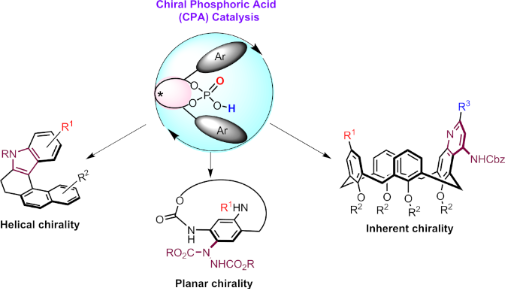
- reaction mechanisms and applications of the chiral products for selected examples. Review Helical chirality Helicenes are a group of rigid polycyclic aromatic compounds composed of ortho-fused aromatic (hetero)cyclic rings, with their helically twisted conformation enforced by steric hindrance between

Graphical Abstract

Figure 1: General structure of CPAs and selected CPAs with various chiral scaffolds.
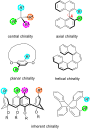
Figure 2: Representative elements of molecular chirality.

Scheme 1: CPA-catalyzed asymmetric synthesis of azahelicenes via Fischer indole synthesis.
Scheme 2: CPA-catalyzed asymmetric synthesis of azahelicenes via sequential Povarov reaction and oxidative ar...

Scheme 3: CPA-catalyzed asymmetric synthesis of azahelicenes via sequential Povarov reaction involving 3-viny...
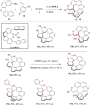
Scheme 4: CPA-catalyzed asymmetric synthesis of heterohelicenes via sequential Povarov reaction involving 2-v...

Scheme 5: Diverse enantioselective synthesis of hetero[7]helicenes via a CPA-catalyzed double annulation stra...

Scheme 6: CPA-catalyzed asymmetric synthesis of indolohelicenoids through enantioselective cycloaddition and ...

Scheme 7: Kinetic resolution of helical polycyclic phenols via CPA-catalyzed enantioselective aminative dearo...

Scheme 8: Kinetic resolution of azahelicenes via CPA-catalyzed transfer hydrogenation.

Scheme 9: Asymmetric synthesis of planarly chiral macrocycles via CPA-catalyzed electrophilic aromatic aminat...

Scheme 10: Enantioselective synthesis of planarly chiral macrocycles via CPA-catalyzed macrocyclization.

Scheme 11: (Dynamic) kinetic resolution of planarly chiral paracyclophanes via CPA-catalyzed asymmetric reduct...

Scheme 12: Kinetic resolution of macrocyclic paracyclophanes through CPA/Bi-catalyzed asymmetric allylation.

Scheme 13: Enantioselective synthesis of planarly chiral macrocycles via CPA-catalyzed coupling of carboxylic ...
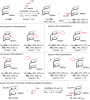
Scheme 14: Kinetic resolution of substituted amido[2.2]paracyclophanes via CPA-catalyzed asymmetric electrophi...
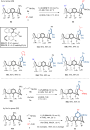
Scheme 15: Enantioselective synthesis of inherently chiral calix[4]arenes via sequential CPA-catalyzed Povarov...

Scheme 16: Asymmetric synthesis of inherently chiral calix[4]arenes via CPA-catalyzed aminative desymmetrizati...

Scheme 17: Asymmetric synthesis of chiral heterocalix[4]arenes via CPA-catalyzed intramolecular SNAr reaction.
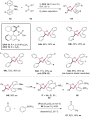
Scheme 18: Enantioselective synthesis of inherently chiral DDDs via CPA-catalyzed cyclocondensation.
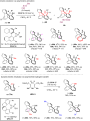
Scheme 19: Asymmetric synthesis of saddle-shaped inherently chiral 9,10-dihydrotribenzoazocines via CPA-cataly...

Scheme 20: Enantioselective synthesis of inherently chiral saddle-shaped dibenzo[b,f][1,5]diazocines via CPA-c...
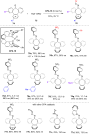
Scheme 21: Enantioselective synthesis of inherent chiral 7-membered tribenzocycloheptene oximes via CPA-cataly...
Continuous-flow-enabled intensification in nitration processes: a review of technological developments and practical applications over the past decade
- Feng Zhou,
- Chuansong Duanmu,
- Yanxing Li,
- Jin Li,
- Haiqing Xu,
- Pan Wang and
- Kai Zhu
Beilstein J. Org. Chem. 2025, 21, 1678–1699, doi:10.3762/bjoc.21.132
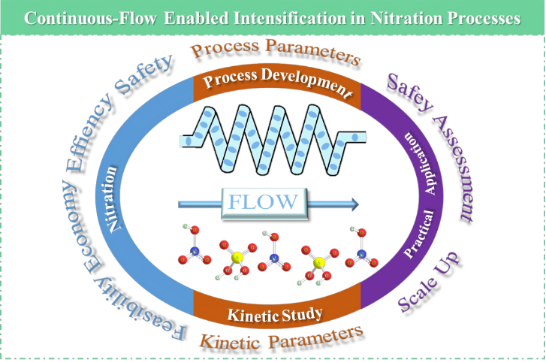
- development of continuous-flow nitration processes, offering researchers a consolidated reference for process optimization and system design. Applications of flow chemistry in nitration reactions have predominantly focused on aromatic compounds (89% in Table S1 in Supporting Information File 1, vs 11% for

Graphical Abstract

Figure 1: Three key dimensions of a complete nitration process.

Figure 2: A typical continuous-flow nitration reaction system.

Figure 3: Corrosion characteristics of common wetted materials used in continuous-flow nitration system. Note...

Figure 4: Analysis of the literature on continuous-flow nitration reaction over the past decade.

Scheme 1: Model reaction for the homogeneous nitration by nitric acid/mixed acid.

Figure 5: Safety assessment criteria for nitration reactions. Notes: apressure-independent; bno hazards arisi...
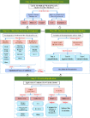
Figure 6: Guide for the investigation of continuous-flow nitration processes.
Recent advances in oxidative radical difunctionalization of N-arylacrylamides enabled by carbon radical reagents
- Jiangfei Chen,
- Yi-Lin Qu,
- Ming Yuan,
- Xiang-Mei Wu,
- Heng-Pei Jiang,
- Ying Fu and
- Shengrong Guo
Beilstein J. Org. Chem. 2025, 21, 1207–1271, doi:10.3762/bjoc.21.98
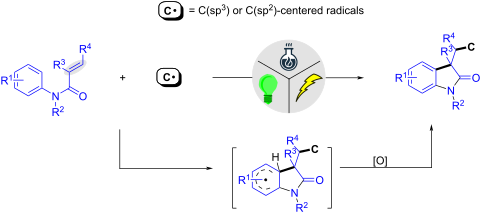

Graphical Abstract

Scheme 1: DTBP-mediated oxidative alkylarylation of activated alkenes.

Scheme 2: Iron-catalyzed oxidative 1,2-alkylarylation.

Scheme 3: Possible mechanism for the iron-catalyzed oxidative 1,2-alkylation of activated alkenes.

Scheme 4: A metal-free strategy for synthesizing 3,3-disubstituted oxindoles.

Scheme 5: Iminoxyl radical-promoted cascade oxyalkylation/alkylarylation of alkenes.

Scheme 6: Proposed mechanism for the iminoxyl radical-promoted cascade oxyalkylation/alkylarylation of alkene...

Scheme 7: Bicyclization of 1,n-enynes with alkyl nitriles.

Scheme 8: Possible reaction mechanism for the bicyclization of 1,n-enynes with alkyl nitriles.

Scheme 9: Radical cyclization of N-arylacrylamides with isocyanides.

Scheme 10: Plausible mechanism for the radical cyclization of N-arylacrylamides with isocyanides.

Scheme 11: Electrochemical dehydrogenative cyclization of 1,3-dicarbonyl compounds.

Scheme 12: Plausible mechanism for the dehydrogenative cyclization of 1,3-dicarbonyl compounds.

Scheme 13: Photocatalyzed cyclization of N-arylacrylamide and N,N-dimethylaniline.

Scheme 14: Proposed mechanism for the photocatalyzed cyclization of N-arylacrylamides and N,N-dimethylanilines....

Scheme 15: Electrochemical monofluoroalkylation cyclization of N-arylacrylamides with dimethyl 2-fluoromalonat...
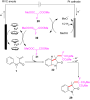
Scheme 16: Proposed mechanism for the electrochemical radical cyclization of N-arylacrylamides with dimethyl 2...

Scheme 17: Photoelectrocatalytic carbocyclization of unactivated alkenes using simple malonates.

Scheme 18: Plausible mechanism for the photoelectrocatalytic carbocyclization of unactivated alkenes with simp...

Scheme 19: Bromide-catalyzed electrochemical trifluoromethylation/cyclization of N-arylacrylamides.

Scheme 20: Proposed mechanism for the electrochemical trifluoromethylation/cyclization of N-arylacrylamides.

Scheme 21: Visible light-mediated trifluoromethylarylation of N-arylacrylamides.

Scheme 22: Plausible reaction mechanism for the visible light-mediated trifluoromethylarylation of N-arylacryl...

Scheme 23: Electrochemical difluoroethylation cyclization of N-arylacrylamides with sodium difluoroethylsulfin...

Scheme 24: Electrochemical difluoroethylation cyclization of N-methyacryloyl-N-alkylbenzamides with sodium dif...

Scheme 25: Photoredox-catalyzed radical aryldifluoromethylation of N-arylacrylamides with S-(difluoromethyl)su...

Scheme 26: Proposed mechanism for the photoredox-catalyzed radical aryldifluoromethylation of N-arylacrylamide...

Scheme 27: Visible-light-induced domino difluoroalkylation/cyclization of N-cyanamide alkenes.

Scheme 28: Proposed mechanism of photoredox-catalyzed radical domino difluoroalkylation/cyclization of N-cyana...

Scheme 29: Palladium-catalyzed oxidative difunctionalization of alkenes.

Scheme 30: Two possible mechanisms of palladium-catalyzed oxidative difunctionalization.

Scheme 31: Silver-catalyzed oxidative 1,2-alkyletherification of unactivated alkenes with α-bromoalkylcarbonyl...

Scheme 32: Photochemical radical cascade cyclization of dienes.

Scheme 33: Proposed mechanism for the photochemical radical cascade 6-endo cyclization of dienes with α-carbon...

Scheme 34: Photocatalyzed radical coupling/cyclization of N-arylacrylamides and.

Scheme 35: Photocatalyzed radical-type couplings/cyclization of N-arylacrylamides with sulfoxonium ylides.

Scheme 36: Possible mechanism of visible-light-induced radical-type couplings/cyclization of N-arylacrylamides...
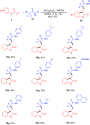
Scheme 37: Visible-light-promoted difluoroalkylated oxindoles systhesis via EDA complexes.

Scheme 38: Possible mechanism for the visible-light-promoted radical cyclization of N-arylacrylamides with bro...

Scheme 39: A dicumyl peroxide-initiated radical cascade reaction of N-arylacrylamide with DCM.

Scheme 40: Possible mechanism of radical cyclization of N-arylacrylamides with DCM.

Scheme 41: An AIBN-mediated radical cascade reaction of N-arylacrylamides with perfluoroalkyl iodides.

Scheme 42: Possible mechanism for the reaction with perfluoroalkyl iodides.

Scheme 43: Photoinduced palladium-catalyzed radical annulation of N-arylacrylamides with alkyl halides.

Scheme 44: Radical alkylation/cyclization of N-Alkyl-N-methacryloylbenzamides with alkyl halides.

Scheme 45: Possible mechanism for the alkylation/cyclization with unactivated alkyl chlorides.
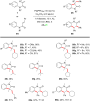
Scheme 46: Visible-light-driven palladium-catalyzed radical cascade cyclization of N-arylacrylamides with unac...

Scheme 47: NHC-catalyzed radical cascade cyclization of N-arylacrylamides with alkyl bromides.

Scheme 48: Possible mechanism of NHC-catalyzed radical cascade cyclization.

Scheme 49: Electrochemically mediated radical cyclization reaction of N-arylacrylamides with freon-type methan...

Scheme 50: Proposed mechanistic pathway of electrochemically induced radical cyclization reaction.

Scheme 51: Redox-neutral photoinduced radical cascade cylization of N-arylacrylamides with unactivated alkyl c...
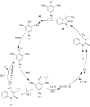
Scheme 52: Proposed mechanistic hypothesis of redox-neutral radical cascade cyclization.

Scheme 53: Thiol-mediated photochemical radical cascade cylization of N-arylacrylamides with aryl halides.

Scheme 54: Proposed possible mechanism of thiol-mediated photochemical radical cascade cyclization.

Scheme 55: Visible-light-induced radical cascade bromocyclization of N-arylacrylamides with NBS.

Scheme 56: Possible mechanism of visible-light-induced radical cascade cyclization.

Scheme 57: Decarboxylation/radical C–H functionalization by visible-light photoredox catalysis.

Scheme 58: Plausible mechanism of visible-light photoredox-catalyzed radical cascade cyclization.

Scheme 59: Visible-light-promoted tandem radical cyclization of N-arylacrylamides with N-(acyloxy)phthalimides....

Scheme 60: Plausible mechanism for the tandem radical cyclization reaction.

Scheme 61: Visible-light-induced aerobic radical cascade alkylation/cyclization of N-arylacrylamides with alde...

Scheme 62: Plausible mechanism for the aerobic radical alkylarylation of electron-deficient amides.

Scheme 63: Oxidative decarbonylative [3 + 2]/[5 + 2] annulation of N-arylacrylamide with vinyl acids.

Scheme 64: Plausible mechanism for the decarboxylative (3 + 2)/(5 + 2) annulation between N-arylacrylamides an...

Scheme 65: Rhenium-catalyzed alkylarylation of alkenes with PhI(O2CR)2.

Scheme 66: Plausible mechanism for the rhenium-catalyzed decarboxylative annulation of N-arylacrylamides with ...

Scheme 67: Visible-light-induced one-pot tandem reaction of N-arylacrylamides.

Scheme 68: Plausible mechanism for the visible-light-initiated tandem synthesis of difluoromethylated oxindole...

Scheme 69: Copper-catalyzed redox-neutral cyanoalkylarylation of activated alkenes with cyclobutanone oxime es...

Scheme 70: Plausible mechanism for the copper-catalyzed cyanoalkylarylation of activated alkenes.

Scheme 71: Photoinduced alkyl/aryl radical cascade for the synthesis of quaternary CF3-attached oxindoles.

Scheme 72: Plausible photoinduced electron-transfer (PET) mechanism.

Scheme 73: Photoinduced cerium-mediated decarboxylative alkylation cascade cyclization.

Scheme 74: Plausible reaction mechanism for the decarboxylative radical-cascade alkylation/cyclization.

Scheme 75: Metal-free oxidative tandem coupling of activated alkenes.

Scheme 76: Control experiments and possible mechanism for 1,2-carbonylarylation of alkenes with carbonyl C(sp2...

Scheme 77: Silver-catalyzed acyl-arylation of activated alkenes with α-oxocarboxylic acids.

Scheme 78: Proposed mechanism for the decarboxylative acylarylation of acrylamides.

Scheme 79: Visible-light-mediated tandem acylarylation of olefines with carboxylic acids.

Scheme 80: Proposed mechanism for the radical cascade cyclization with acyl radical via visible-light photored...

Scheme 81: Erythrosine B-catalyzed visible-light photoredox arylation-cyclization of N-arylacrylamides with ar...

Scheme 82: Electrochemical cobalt-catalyzed radical cyclization of N-arylacrylamides with arylhydrazines or po...

Scheme 83: Proposed mechanism of radical cascade cyclization via electrochemical cobalt catalysis.

Scheme 84: Copper-catalyzed oxidative tandem carbamoylation/cyclization of N-arylacrylamides with hydrazinecar...

Scheme 85: Proposed reaction mechanism for the radical cascade cyclization by copper catalysis.

Scheme 86: Visible-light-driven radical cascade cyclization reaction of N-arylacrylamides with α-keto acids.

Scheme 87: Proposed mechanism of visible-light-driven cascade cyclization reaction.

Scheme 88: Peroxide-induced radical carbonylation of N-(2-methylallyl)benzamides with methyl formate.

Scheme 89: Proposed cyclization mechanism of peroxide-induced radical carbonylation with N-(2-methylallyl)benz...

Scheme 90: Persulfate promoted carbamoylation of N-arylacrylamides and N-arylcinnamamides.

Scheme 91: Proposed mechanism for the persulfate promoted radical cascade cyclization reaction of N-arylacryla...
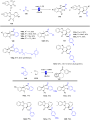
Scheme 92: Photocatalyzed carboacylation with N-arylpropiolamides/N-alkyl acrylamides.

Scheme 93: Plausible mechanism for the photoinduced carboacylation of N-arylpropiolamides/N-alkyl acrylamides.

Scheme 94: Electrochemical Fe-catalyzed radical cyclization with N-arylacrylamides.

Scheme 95: Plausible mechanism for the electrochemical Fe-catalysed radical cyclization of N-phenylacrylamide.

Scheme 96: Substrate scope of the selective functionalization of various α-ketoalkylsilyl peroxides with metha...

Scheme 97: Proposed reaction mechanism for the Fe-catalyzed reaction of alkylsilyl peroxides with methacrylami...

Scheme 98: EDA-complex mediated C(sp2)–C(sp3) cross-coupling of TTs and N-methyl-N-phenylmethacrylamides.

Scheme 99: Proposed mechanism for the synthesis of oxindoles via EDA complex.
Recent advances in the electrochemical synthesis of organophosphorus compounds
- Babak Kaboudin,
- Milad Behroozi,
- Sepideh Sadighi and
- Fatemeh Asgharzadeh
Beilstein J. Org. Chem. 2025, 21, 770–797, doi:10.3762/bjoc.21.61
- reaction proceeded with electrophilic iodination of aromatic compounds followed by a nucleophilic reaction of the formed phosphorothioate intermediate to give corresponding S-heteroaryl phosphorothioates in good to excellent yields (Scheme 29). In 2023, Liu et al. [70] reported an interesting
- occurrence of this rearrangement. Electrochemical Se–P bond formation In another study, Gu et al. [71] reported electrochemical P–Se bond formation of the reaction of elemental Se with diethyl phosphonate and aromatic compounds. In this method, potassium iodide acts as a key additive. The reaction is carried
- , followed by the iodination reaction of aromatic compounds (Scheme 31). In the next step, elemental selenium was inserted into the aryl iodide bond to form the aryl iodoselenide intermediate for forming the P–Se bond. Other electrochemical reactions of organophosphorus Li et al. [72] reported an

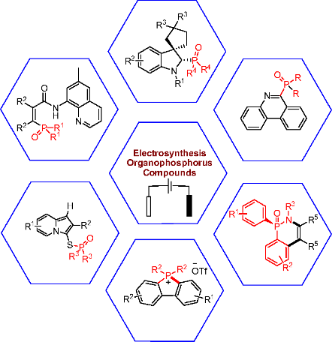
Graphical Abstract

Scheme 1: Electrosynthesis of phenanthridine phosphine oxides.

Scheme 2: Electrosynthesis of 1-aminoalkylphosphine oxides.

Scheme 3: Various electrochemical C–P coupling reactions.

Scheme 4: Electrochemical C–P coupling reaction of indolines.

Scheme 5: Electrochemical C–P coupling reaction of ferrocene.

Scheme 6: Electrochemical C–P coupling reaction of acridines with phosphites.

Scheme 7: Electrochemical C–P coupling reaction of alkenes.

Scheme 8: Electrochemical C–P coupling reaction of arenes in a flow system.

Scheme 9: Electrochemical C–P coupling reaction of heteroarenes.

Scheme 10: Electrochemical C–P coupling reaction of thiazoles.

Scheme 11: Electrochemical C–P coupling reaction of indole derivatives.

Scheme 12: Electrosynthesis of 1-amino phosphonates.

Scheme 13: Electrochemical C–P coupling reaction of aryl and vinyl bromides.

Scheme 14: Electrochemical C–P coupling reaction of phenylpyridine with dialkyl phosphonates in the presence o...

Scheme 15: Electrochemical P–C bond formation of amides.

Scheme 16: Electrochemical synthesis of α-hydroxy phosphine oxides.

Scheme 17: Electrochemical synthesis of π-conjugated phosphonium salts.

Scheme 18: Electrochemical phosphorylation of indoles.

Scheme 19: Electrochemical synthesis of phosphorylated propargyl alcohols.

Scheme 20: Electrochemical synthesis of phosphoramidates.

Scheme 21: Electrochemical reaction of carbazole with diphenylphosphine.

Scheme 22: Electrochemical P–N coupling of carbazole with phosphine oxides.

Scheme 23: Electrochemical P–N coupling of indoles with a trialkyl phosphite.

Scheme 24: Electrochemical synthesis of iminophosphoranes.

Scheme 25: Electrochemical P–O coupling of phenols with dialkyl phosphonate.

Scheme 26: Electrochemical P–O coupling of alcohols with diphenylphosphine.

Scheme 27: Electrochemical P–S coupling of thiols with dialkylphosphines.

Scheme 28: Electrochemical thiophosphorylation of indolizines.

Scheme 29: Electrosynthesis of S-heteroaryl phosphorothioates.

Scheme 30: Electrochemical phosphorylation reactions.

Scheme 31: Electrochemical P–Se formation.

Scheme 32: Electrochemical selenation/halogenation of alkynyl phosphonates.

Scheme 33: Electrochemical enantioselective aryl C–H bond activation.
Facile one-pot reduction of β-nitrostyrenes to phenethylamines using sodium borohydride and copper(II) chloride
- Laura D’Andrea and
- Simon Jademyr
Beilstein J. Org. Chem. 2025, 21, 39–46, doi:10.3762/bjoc.21.4
- aromatic compounds. Experimental NMR spectra were recorded on Bruker Avance 400 MHz or Bruker Avance III HD 600 MHz spectrometers. Residual solvent peaks (CDCl3, D2O, CD3OD, (CD3)2SO) were used as internal standard (7.26, 4.79, 3.31, and 2.50 ppm for 1H, and 77.16, 49, and 39.52 ppm for 13C, respectively

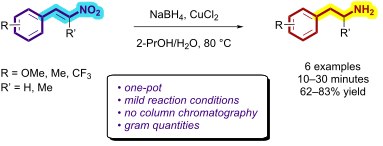
Graphical Abstract

Scheme 1: Brief comparison between the main traditional synthetic routes for the preparation of substituted p...

Figure 1: The β-nitrostyrene analogues used in this work.

Scheme 2: Additional products obtained via this method: nitrobenzene and methyl benzoate are reduced in excel...

Figure 2: Numerous masses (m/z) were detected by ESI-MS at T = 0 upon mixing all the reagents to produce 1b.

Figure 3: Structures of proposed adducts. Their masses, 254.2 and 242.2, respectively, were found at T = 0 by...

Scheme 3: Proposed mechanism for the formation of the hydroxylamine side product b. N-Phenethylhydroxylamine (...
Efficient synthesis of fluorinated triphenylenes with enhanced arene–perfluoroarene interactions in columnar mesophases
- Yang Chen,
- Jiao He,
- Hang Lin,
- Hai-Feng Wang,
- Ping Hu,
- Bi-Qin Wang,
- Ke-Qing Zhao and
- Bertrand Donnio
Beilstein J. Org. Chem. 2024, 20, 3263–3273, doi:10.3762/bjoc.20.270
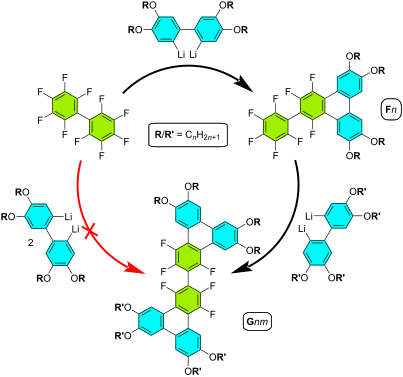
- new, structurally-related series of π-conjugated aromatic compounds (Figure 1) based on a simple triphenylene core and evaluating the mesomorphic and optical properties. Specifically 1,2,4-trifluoro-6,7,10,11-tetraalkoxy-3-(perfluorophenyl)triphenylenes (Fn, Figure 1), bearing a terminal fluoroarene

Graphical Abstract

Figure 1: Fluorotriphenylene derivatives and their nonfluorinated homologs obtained by SNFAr from 2,2'-dilith...

Scheme 1: Synthesis, yields, and nomenclature of 1,2,4-trifluoro-6,7,10,11-tetraalkoxy-3-(perfluorophenyl)tri...

Figure 2: Single crystal structure of 1,2,4-trifluoro-3-(perfluorophenyl)triphenylene (F) viewed along the ma...

Figure 3: POM textures, observed between crossed polarizers of Janus and dimer, F6, F12, G66, and G48, respec...

Figure 4: Comparative bar graph summarizing the thermal behavior of Fn, BTP6, and PHn derivatives (2nd heatin...
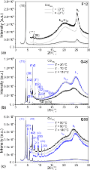
Figure 5: Representative S/WAXS patterns of Fn and Gnm compounds.

Figure 6: Absorption (a) and emission (b) spectra of F6 and G66, measured in different solvents at a concentr...

Figure 7: DFT calculated frontier molecular orbitals and optimized molecular structures for F1 and G11.
Transition-metal-free decarbonylation–oxidation of 3-arylbenzofuran-2(3H)-ones: access to 2-hydroxybenzophenones
- Bhaskar B. Dhotare,
- Seema V. Kanojia,
- Chahna K. Sakhiya,
- Amey Wadawale and
- Dibakar Goswami
Beilstein J. Org. Chem. 2024, 20, 2655–2667, doi:10.3762/bjoc.20.223
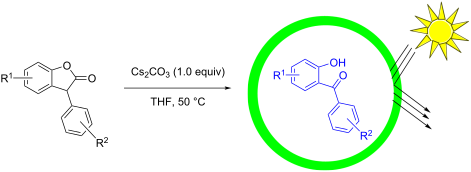
- reported over the years (Figure 2) [2]. Conventionally, benzophenones are synthesized by Friedel–Crafts acylation of benzoyl halides and aromatic compounds. However, the regioselectivity of Friedel–Crafts benzoylation at the desired position is difficult to control [9]. On the other hand, 2

Graphical Abstract

Figure 1: Some 2-hydroxybenzophenone derivatives with varied activities.

Figure 2: Decarbonylation–oxidation of lactones.
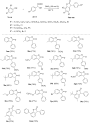
Scheme 1: Synthesis of 3-arylbenzofuran-2(3H)-ones.
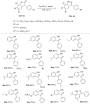
Scheme 2: Synthesis of 2-hydroxybenzophenones.

Figure 3: The ORTEP view of the compounds 4ja, 4fb, and 4ma.

Scheme 3: Gram-scale experiment.

Scheme 4: Control experiments.

Figure 4: Partial 1H NMR spectra of the aliquots (taken at different time intervals) from the reaction mixtur...

Figure 5: Plausible mechanism for the transition-metal-free decarbonylation–oxidation.

Figure 6: UV–vis absorption spectra of selected synthesized compounds 4aa, 4cb, 4eb, and 4fb from 225–500 nm.
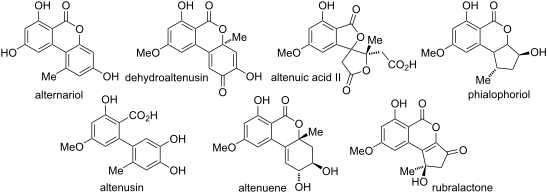
Natural resorcylic lactones derived from alternariol
- Joachim Podlech
Beilstein J. Org. Chem. 2024, 20, 2171–2207, doi:10.3762/bjoc.20.187

Graphical Abstract
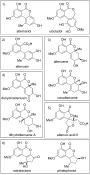
Figure 1: Examples of compounds covered in this review categorized in six sub-classes (see text).
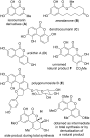
Figure 2: Examples of compounds not covered in this review.

Figure 3: Wrongly assigned and thus obsolete structures (details will be discussed in the respective chapters...

Figure 4: Alternariol with the correct IUPAC numbering and an occasionally used numbering based on the biphen...

Figure 5: Alternariol O-methyl ethers.

Figure 6: Alternariol O-glycosides.

Figure 7: Alternariol O-acetates and O-sulfates.

Figure 8: 2-Hydroxy- and 4-hydroxy-substituted alternariol and its O-methyl ethers.

Figure 9: Chloro- and amino-substituted alternariol and its O-methyl ethers.
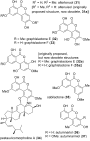
Figure 10: Presumed alternariol derivatives with non-canonical substitution pattern.

Figure 11: Alternariol derivatives with the 1-methyl group hydroxylated.
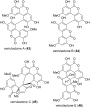
Figure 12: Verrulactones: pseudo-dimeric derivatives of altertenuol and related compounds.

Figure 13: Biaryls formed by reductive lactone opening and/or by decarboxylation.

Figure 14: Altenuene and its diastereomers.

Figure 15: 9-O-Demethylated altenuene diastereomers.

Figure 16: Acetylated and methylated altenuene diastereomers.

Figure 17: Altenuene diastereomers modified with lactic acid, pyruvic acid, or acetone.

Figure 18: Neoaltenuene and related compounds.

Figure 19: Dehydroaltenusin and its derivatives.

Scheme 1: Equilibrium of dehydroaltenusin in polar solvents [278].

Figure 20: Further quinoid derivatives.

Figure 21: Dehydroaltenuenes.

Figure 22: Complex aggregates containing dehydroaltenuene substructures and related compounds.

Figure 23: Dihydroaltenuenes.

Figure 24: Altenuic acids and related compounds.

Figure 25: Cyclopentane- and cyclopentene-fused derivatives.

Figure 26: Cyclopentenone-fused derivatives.

Figure 27: Spiro-fused derivatives and a related ring-opened derivative.

Figure 28: Lactones-fused and lactone-substituted derivatives.

Scheme 2: Biosynthesis of alternariol [324].

Scheme 3: Biosynthesis of alternariol and its immediate successors with the genes involved in the respective ...

Scheme 4: Presumed formation of altenuene and its diastereomers and of botrallin.

Scheme 5: Presumed formation of altenuic acids and related compounds.

Scheme 6: A selection of plausible biosynthetic paths to cyclopenta-fused metabolites. (No stereochemistry is...

Scheme 7: Biomimetic synthesis of alternariol (1) by Harris and Hay [66].

Scheme 8: Total synthesis of alternariol (1) by Subba Rao et al. using a Diels–Alder approach [34].

Scheme 9: Total synthesis of alternariol (1) using a Suzuki strategy by Koch and Podlech [62], improved by Kim et...

Scheme 10: Total synthesis of alternariol (1) using an intramolecular biaryl coupling by Abe et al. [63].

Scheme 11: Total synthesis of altenuene (54) and isoaltenuene (55) by Podlech et al. [249].

Scheme 12: Total synthesis of neoaltenuene (69) by Podlech et al. [35].

Scheme 13: Total synthesis of TMC-264 (79) by Tatsuta et al. [185].

Scheme 14: Total synthesis of cephalosol (99) by Koert et al. [304].
Synthesis and characterization of 1,2,3,4-naphthalene and anthracene diimides
- Adam D. Bass,
- Daniela Castellanos,
- Xavier A. Calicdan and
- Dennis D. Cao
Beilstein J. Org. Chem. 2024, 20, 1767–1772, doi:10.3762/bjoc.20.155
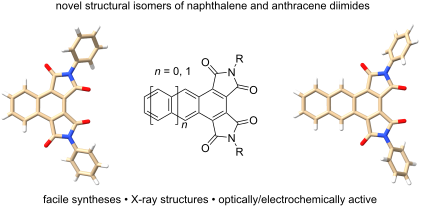
- described isomers and expand the toolbox of electron-deficient aromatic compounds available to organic materials chemists. Keywords: electron acceptors; organic materials; polycyclic aromatic hydrocarbons; Introduction Aromatic diimides are ubiquitous molecular scaffolds that have served as the basis for

Graphical Abstract

Figure 1: a) Structures of previously reported naphthalene and anthracene diimide isomers. b) The novel 1,2,3...

Scheme 1: a) Synthesis of the 1,2,3,4-naphthalene and -anthracene diimides. Conditions: i) CsF/Pd2(dba)3/MeCN...

Figure 2: Superstructures for a) 7-Ph and b) 8-Ph as determined by X-ray crystallography. Representative C=O·...

Figure 3: a) Absorption and b) emission spectra of the compounds dissolved in CH2Cl2.

Figure 4: Cyclic voltammograms of the compounds collected on ca. 1 mM solutions of the analyte in CH2Cl2 with...

Figure 5: Structural formula of 9, the diaza-analog of compound 8-Hex that was reported previously [2].
Competing electrophilic substitution and oxidative polymerization of arylamines with selenium dioxide
- Vishnu Selladurai and
- Selvakumar Karuthapandi
Beilstein J. Org. Chem. 2024, 20, 1221–1235, doi:10.3762/bjoc.20.105
- interest [12][13]. The various approaches used for selenation of aromatic compounds include directed lithiation [14][15], copper-catalyzed selenation [16][17][18], and aromatic nucleophilic substitution reactions [19][20][21][22]. Electrophilic selenium reagents (e.g., phenylselenenyl bromide) have often
- , regioselective aromatic electrophilic substitution is often difficult. Various synthetic strategies have evolved to address such problems and expand the scope of SeO2 beyond the oxidizing capability. Ren et al. adopted potassium-iodide-mediated catalytic selenation of aromatic compounds using SeO2 (Scheme 1) [33
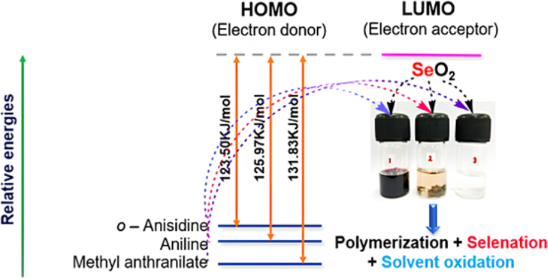
- . Computationally optimized structure of aniline (a), o-anisidine (b), and methyl anthranilate (c), with atom labels indicated. Reported synthetic methods for the selenation of aromatic compounds. Reaction of selenium dioxide with aniline. Reaction of selenium dioxide with o-anisidine. Reaction of methyl

Graphical Abstract

Scheme 1: Reported synthetic methods for the selenation of aromatic compounds.

Scheme 2: Reaction of selenium dioxide with aniline.

Scheme 3: Reaction of selenium dioxide with o-anisidine.

Scheme 4: Reaction of methyl anthranilate with SeO2.

Scheme 5: Reaction mechanism for the formation of diaryl monoselenides.

Scheme 6: Reaction mechanism for the formation of oxamides.

Scheme 7: Reaction mechanism for the formation of quinone 10.

Figure 1: Molecular structure of 3. Thermal ellipsoids drawn at 50% probability. Selected bond lengths (Å): O...

Figure 2: Molecular structure of 9. Thermal ellipsoids drawn at 50% probability. Selected bond lengths (Å): O...

Figure 3: Molecular structure of 13. Thermal ellipsoids drawn at 50% probability. Selected bond lengths (Å): ...

Figure 4: Molecular structure of 10. Thermal ellipsoids drawn at 50% probability. Selected bond lengths (Å) a...

Figure 5: Molecular structure of 11. Thermal ellipsoids drawn at 50% probability. Selected bond angles (°): C...

Figure 6: Molecular structure of 12. Thermal ellipsoids drawn at 50% probability. Selected bond angles (°): C...

Figure 7: Relative energy levels of arylamines and SeO2.

Figure 8: Computationally optimized structure of aniline (a), o-anisidine (b), and methyl anthranilate (c), w...

Scheme 8: Resonance structures for the delocalization of the nitrogen lone pair into the π-system.
Manganese-catalyzed C–C and C–N bond formation with alcohols via borrowing hydrogen or hydrogen auto-transfer
- Mohd Farhan Ansari,
- Atul Kumar Maurya,
- Abhishek Kumar and
- Saravanakumar Elangovan
Beilstein J. Org. Chem. 2024, 20, 1111–1166, doi:10.3762/bjoc.20.98
- industries [83][84][85]. Various manganese catalysts have been reported (Figure 4) for the C-alkylation of heterocyclic compounds with several alcohols, including indoles and quinolines. In 2017, Kirchner’s group established a new method for the aminomethylation of aromatic compounds with secondary amines

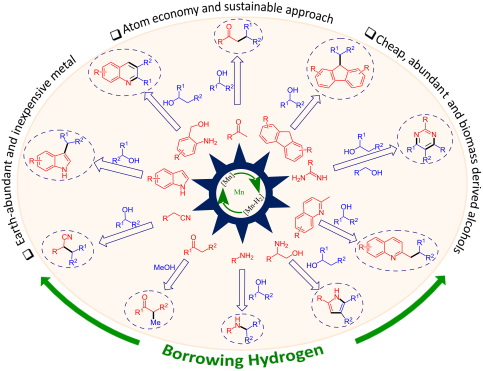
Graphical Abstract

Scheme 1: General scheme of the borrowing hydrogen (BH) or hydrogen auto-transfer (HA) methodology.

Scheme 2: General scheme for C–N bond formation. A) Traditional cross-couplings with alkyl or aryl halides. B...

Figure 1: Manganese pre-catalysts used for the N-alkylation of amines with alcohols.

Scheme 3: Manganese(I)-pincer complex Mn1 used for the N-alkylation of amines with alcohols and methanol.

Scheme 4: N-Methylation of amines with methanol using Mn2.

Scheme 5: C–N-Bond formation with amines and methanol using PN3P-Mn complex Mn3 reported by Sortais et al. [36]. a...

Scheme 6: Base-assisted synthesis of amines and imines with Mn4. Reaction assisted by A) t-BuOK and B) t-BuON...

Scheme 7: Coupling of alcohols and hydrazine via the HB approach reported by Milstein et al. [38]. aReaction time...

Scheme 8: Proposed mechanism for the coupling of alcohols and hydrazine catalyzed by Mn5.

Scheme 9: Phosphine-free manganese catalyst for N-alkylation of amines with alcohols reported by Balaraman an...

Scheme 10: N-Alkylation of sulfonamides with alcohols.

Scheme 11: Mn–NHC catalyst Mn6 applied for the N-alkylation of amines with alcohols. a3 mol % of Mn6 were used....

Scheme 12: N-Alkylation of amines with primary and secondary alcohols. a80 °C, b100 °C.

Scheme 13: Manganese(III)-porphyrin catalyst for synthesis of tertiary amines.

Scheme 14: Proposed mechanism for the alcohol dehydrogenation with Mn(III)-porphyrin complex Mn7.

Scheme 15: N-Methylation of nitroarenes with methanol using catalyst Mn3.
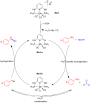
Scheme 16: Mechanism of manganese-catalyzed methylation of nitroarenes using Mn3 as the catalyst.

Scheme 17: Bidentate manganese complex Mn8 applied for the N-alkylation of primary anilines with alcohols. aOn...

Scheme 18: N-Alkylation of amines with alcohols in the presence of manganese salts and triphenylphosphine as t...

Scheme 19: N-Alkylation of diazo compounds with alcohols using catalyst Mn9.

Scheme 20: Proposed mechanism for the amination of alcohols with diazo compounds catalyzed by catalyst Mn9.

Scheme 21: Mn1 complex-catalyzed synthesis of polyethyleneimine from ethylene glycol and ethylenediamine.

Scheme 22: Bis-triazolylidene-manganese complex Mn10 for the N-alkylation of amines with alcohols.

Figure 2: Manganese complexes applied for C-alkylation reactions of ketones with alcohols.

Scheme 23: General scheme for the C–C bond formation with alcohols and ketones.

Scheme 24: Mn1 complex-catalyzed α-alkylation of ketones with primary alcohols.
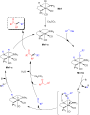
Scheme 25: Mechanism for the Mn1-catalyzed alkylation of ketones with alcohols.

Scheme 26: Phosphine-free in situ-generated manganese catalyst for the α-alkylation of ketones with primary al...
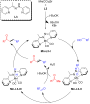
Scheme 27: Plausible mechanism for the Mn-catalyzed α-alkylation of ketones with alcohols.

Scheme 28: α-Alkylation of esters, ketones, and amides using alcohols catalyzed by Mn11.

Scheme 29: Mono- and dialkylation of methylene ketones with primary alcohols using the Mn(acac)2/1,10-phenanth...

Scheme 30: Methylation of ketones with methanol and deuterated methanol.

Scheme 31: Methylation of ketones and esters with methanol. a50 mol % of t-BuOK were used, bCD3OD was used ins...
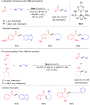
Scheme 32: Alkylation of ketones and secondary alcohols with primary alcohols using Mn4.

Scheme 33: Bidentate manganese-NHC complex Mn6 applied for the synthesis of alkylated ketones using alcohols.

Scheme 34: Mn1-catalyzed synthesis of substituted cycloalkanes by coupling diols and secondary alcohols or ket...
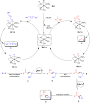
Scheme 35: Proposed mechanism for the synthesis of cycloalkanes via BH method.

Scheme 36: Synthesis of various cycloalkanes from methyl ketones and diols catalyze by Mn13. aReaction time wa...

Scheme 37: N,N-Amine–manganese complex (Mn13)-catalyzed alkylation of ketones with alcohols.

Scheme 38: Naphthyridine‑N‑oxide manganese complex Mn14 applied for the alkylation of ketones with alcohols. a...
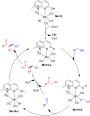
Scheme 39: Proposed mechanism of the naphthyridine‑N‑oxide manganese complex (Mn14)-catalyzed alkylation of ke...

Scheme 40: α-Methylation of ketones and indoles with methanol using Mn15.

Scheme 41: α-Alkylation of ketones with primary alcohols using Mn16. aNMR yield.

Figure 3: Manganese complexes used for coupling of secondary and primary alcohols.
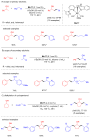
Scheme 42: Alkylation of secondary alcohols with primary alcohols catalyzed by phosphine-free catalyst Mn17. a...

Scheme 43: PNN-Manganese complex Mn18 for the alkylation of secondary alcohols with primary alcohols.
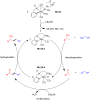
Scheme 44: Mechanism for the Mn-pincer catalyzed C-alkylation of secondary alcohols with primary alcohols.

Scheme 45: Upgrading of ethanol with methanol for isobutanol production.

Scheme 46: Mn-Pincer catalyst Mn19 applied for the β-methylation of alcohols with methanol. a2.0 mol % of Mn19...

Scheme 47: Functionalized ketones from primary and secondary alcohols catalyzed by Mn20. aMn20 (5 mol %), NaOH...
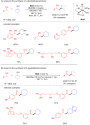
Scheme 48: Synthesis of γ-disubstituted alcohols and β-disubstituted ketones through Mn9-catalyzed coupling of...
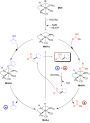
Scheme 49: Proposed mechanism for the Mn9-catalyzed synthesis of γ-disubstituted alcohols and β-disubstituted ...

Scheme 50: Dehydrogenative coupling of ethylene glycol and primary alcohols catalyzed by Mn4.

Scheme 51: Mn18-cataylzed C-alkylation of unactivated esters and amides with alcohols.

Scheme 52: Alkylation of amides and esters using Mn21.

Scheme 53: α-Alkylation of nitriles with primary alcohols using in situ-generated manganese catalyst.

Scheme 54: Proposed mechanism for the α-alkylation of nitriles with primary alcohols.

Scheme 55: Mn9-catalyzed α-alkylation of nitriles with primary alcohols. a1,4-Dioxane was used as solvent, 24 ...

Figure 4: Manganese complexes used for alkylation of heterocyclic compounds.

Scheme 56: Aminomethylation of aromatic compounds with secondary amines and methanol catalyzed by Mn22.
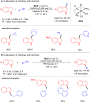
Scheme 57: Regioselective alkylation of indolines with alcohols catalyzed by Mn9. aMn9 (4 mol %), 48 h.

Scheme 58: Proposed mechanism for the C- and N-alkylation of indolines with alcohols.

Scheme 59: C-Alkylation of methyl N-heteroarenes with primary alcohols catalyzed by Mn1. aTime was 60 h.

Scheme 60: C-Alkylation of oxindoles with secondary alcohols.
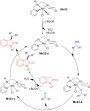
Scheme 61: Plausible mechanism for the Mn23-catalyzed C-alkylation of oxindoles with secondary alcohols.

Scheme 62: Synthesis of C-3-alkylated products by coupling alcohols with indoles and aminoalcohols.

Scheme 63: C3-Alkylation of indoles using Mn1.

Scheme 64: C-Methylation of indoles with Mn15 and methanol.

Scheme 65: α-Alkylation of 2-oxindoles with primary and secondary alcohols catalyzed by Mn25. aReaction carrie...

Scheme 66: Dehydrogenative alkylation of indolines with Mn1. aMn1 (5.0 mol %) was used.

Scheme 67: Synthesis of bis(indolyl)methane derivatives from indoles and alcohols catalyzed by Mn26. aMn26 (5....

Scheme 68: One-pot synthesis of pyrimidines via BH.

Scheme 69: Synthesis of pyrroles from alcohols and aminoalcohols using Mn4.

Scheme 70: Synthesis of pyrroles via multicomponent reaction catalyzed by Mn12.

Scheme 71: Friedländer quinoline synthesis using an in situ-generated phosphine-free manganese catalyst.

Scheme 72: Quinoline synthesis using bis-N-heterocyclic carbene-manganese catalyst Mn6.

Scheme 73: Quinoline synthesis using manganese(III)-porphyrin catalyst Mn7.

Scheme 74: Manganese-catalyzed tetrahydroquinoline synthesis via borrowing BH.

Scheme 75: Proposed mechanism for the manganese-catalyzed tetrahydroquinoline synthesis.

Scheme 76: Synthesis of C3-alkylated indoles using Mn24.

Scheme 77: Synthesis of C-3-alkylated indoles using Mn1.

Scheme 78: C–C Bond formation by coupling of alcohols and ylides.

Scheme 79: C-Alkylation of fluorene with alcohols catalyzed by Mn24.
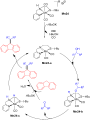
Scheme 80: Proposed mechanism for the C-alkylation of fluorene with alcohols catalyzed by Mn24.

Scheme 81: α-Alkylation of sulfones using Mn-PNN catalyst Mn28.
Ortho-ester-substituted diaryliodonium salts enabled regioselective arylocyclization of naphthols toward 3,4-benzocoumarins
- Ke Jiang,
- Cheng Pan,
- Limin Wang,
- Hao-Yang Wang and
- Jianwei Han
Beilstein J. Org. Chem. 2024, 20, 841–851, doi:10.3762/bjoc.20.76
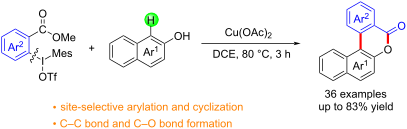
- this approach. Arylation reactions of aromatic compounds and reaction patterns of ortho-functionalized diaryliodonium salts. Mechanism study. Standard conditions: 1 (0.3 mmol, 1 equiv), 2 (0.33 mmol, 1.1 equiv), Cu(OAc)2 (10 mol %), DCE (2 mL), 80 °C, 3 hours. TEMPO = 2,2,6,6-tetramethylpiperidine-1

Graphical Abstract

Scheme 1: Arylation reactions of aromatic compounds and reaction patterns of ortho-functionalized diaryliodon...

Scheme 2: Mechanism study. Standard conditions: 1 (0.3 mmol, 1 equiv), 2 (0.33 mmol, 1.1 equiv), Cu(OAc)2 (10...
Discovery and biosynthesis of bacterial drimane-type sesquiterpenoids from Streptomyces clavuligerus
- Dongxu Zhang,
- Wenyu Du,
- Xingming Pan,
- Xiaoxu Lin,
- Fang-Ru Li,
- Qingling Wang,
- Qian Yang,
- Hui-Min Xu and
- Liao-Bin Dong
Beilstein J. Org. Chem. 2024, 20, 815–822, doi:10.3762/bjoc.20.73
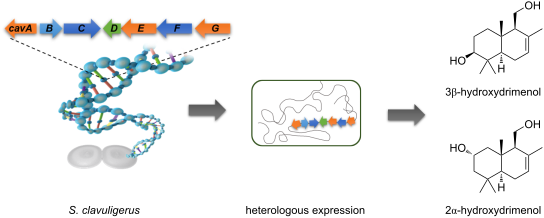
- biocatalysts, capable of catalyzing a wide range of reactions and processing a variety of substrates [35][36]. They effectively recognize different structural types, including aromatic compounds, polyketides, terpenes, peptides, and carbohydrates [37][38][39][40]. To investigate the substrate spectrum of CavA

Graphical Abstract

Figure 1: (a) Representative bioactive drimane-type sesquiterpenoids (DMTs). (b) Reported biosynthetic pathwa...

Figure 2: Chemical structures and HPLC analysis. (a) Chemical structures of isolated sesquiterpenes 2–4 from ...

Figure 3: Biosynthesis of drimenol congeners. (a) The cav BGC. (b) Proposed biosynthetic pathway for drimenol...

Figure 4: Substrate scope of CavA. (a) The chemical structures of eight natural products that were used for f...
Synthesis of π-conjugated polycyclic compounds by late-stage extrusion of chalcogen fragments
- Aissam Okba,
- Pablo Simón Marqués,
- Kyohei Matsuo,
- Naoki Aratani,
- Hiroko Yamada,
- Gwénaël Rapenne and
- Claire Kammerer
Beilstein J. Org. Chem. 2024, 20, 287–305, doi:10.3762/bjoc.20.30
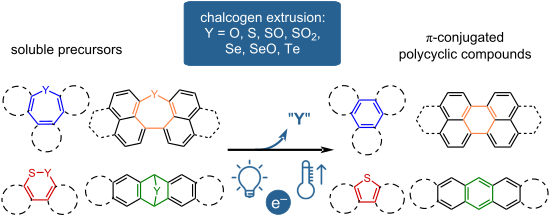
- this situation. Acenes are a class of aromatic compounds composed of linearly fused benzene rings, which can be regarded as the narrowest graphene nanoribbons. They are highly promising p-type organic semiconductors, but suffer from insolubility and instability leading to dimerization and/or
- , and this reactivity pattern was exploited as early as in the 1950s to generate in a controlled way polycyclic aromatic compounds from isolable heteropine precursors. By way of example, the phenanthrene derivative 2 was obtained by heating the dibenzo[b,f]thiepine precursor 1 in the presence of copper
- absence of thermal solid-state reorganization [62]. This work thus unequivocally revealed the potential of thiepines and thiepine S-oxides as direct soluble precursors of polycyclic aromatic compounds with dual stimuli-responsiveness, thus opening the way to solution-based processing for the fabrication

Graphical Abstract

Scheme 1: “Precursor approach” for the synthesis of π-conjugated polycyclic compounds, with the thermally- or...

Scheme 2: Valence isomerization of chalcogen heteropines and subsequent cheletropic extrusion in the case of ...

Scheme 3: Early example of phenanthrene synthesis via a chemically-induced S-extrusion (and concomitant decar...

Scheme 4: Top: Conversion of dinaphthothiepine bisimides 3a,b and their sulfoxide analogues 4a,b into PBIs 6a,...

Figure 1: Top view (a) and side view (b) of the X-ray crystal structure of thiepine 3b showing its bent confo...

Scheme 5: Modular synthetic route towards dinaphthothiepines 3a–f and the corresponding S-oxides 4a–d, incorp...

Scheme 6: Top: Conversion of dithienobenzothiepine monomeric units into dithienonaphthalenes, upon S-extrusio...

Scheme 7: Synthesis of S-doped extended triphenylene derivative 22 from 3-bromothiophene (17) with the therma...
Scheme 8: Top: Synthesis of thermally-stable O-doped HBC 26a. Bottom: Synthesis of S- and Se-based soluble pr...

Scheme 9: Synthesis of dinaphthooxepine bisimide 33 and conversion into PBI 6f by O-extrusion triggered by el...

Figure 2: Cyclic voltammogram of dinaphthooxepine 33, evidencing the irreversibility of the reduction process...

Scheme 10: Top: Early example of 6-membered ring contraction with concomitant S-extrusion leading to dinaphtho...

Scheme 11: Examples of S-extrusion from annelated 1,2-dithiins under photoactivation (top) or thermal activati...

Scheme 12: Synthesis of dibenzo[1,4]dithiapentalene upon photoextrusion of SO2 [78].

Scheme 13: Extrusion of SO in naphthotrithiin-2-oxides for the synthesis of 2,5-dihydrothiophene 1-oxides [79].

Scheme 14: SO-extrusion as a key step in the synthesis of fullerenes (C60 and C70) encapsulating H2 molecules [80,82]....

Scheme 15: Synthesis of diepoxytetracene precursor 56 and its on-surface conversion into tetracene upon O-extr...

Scheme 16: Soluble precursors of hexacene, decacene and dodecacene incorporating 1,4-epoxides in their hydroca...

Scheme 17: Synthesis of tetraepoxide 59 as soluble precursor of decacene [85].

Figure 3: Constant-height STM measurement of decacene on Au(111) using a CO-functionalized tip (sample voltag...
Biphenylene-containing polycyclic conjugated compounds
- Cagatay Dengiz
Beilstein J. Org. Chem. 2023, 19, 1895–1911, doi:10.3762/bjoc.19.141
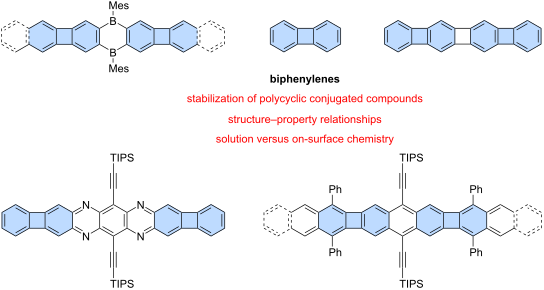
- for use in cutting-edge technologies. In particular, acenes, a subgroup of polycyclic aromatic compounds, are sought-after synthetic targets due to their remarkable optoelectronic properties which stem from their π-conjugation and planar structure. Despite all these promising characteristics, acenes
- ; biphenylene; [N]phenylenes; polycyclic aromatic compounds; Introduction Acenes represent an important category of carbon-rich polycyclic aromatic hydrocarbons (PAHs) characterized by the presence of linearly fused benzene rings [1][2]. Investigating the electronic properties of acenes is essential for
- review thus far have predominantly involved solution chemistry. However, recent reports have demonstrated the feasibility of producing biphenylene-containing polycyclic aromatic compounds through on-surface chemistry techniques. One of the initial examples was documented by Fasel and Meunier in 2017 [51

Graphical Abstract
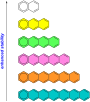
Figure 1: The correlation between stability and Clar's rule in acenes.

Scheme 1: General synthetic strategies to access the biphenylene core 1.

Figure 2: [N]Phenylenes 7–12 with different topologies.

Scheme 2: Synthesis of POAs 15a and 15b via reactions of BBD 13 and bis(cyanomethyl) compounds 14a and 14b.

Scheme 3: Synthesis of benzo[b]biphenylene (18).

Scheme 4: Synthesis of benzobiphenylene 18 and POA 21.

Scheme 5: Synthesis of symmetric POAs 25a and 25b.

Scheme 6: Synthesis of POA 29 via palladium-catalyzed annulation/aromatization reaction.

Scheme 7: Synthesis of bisphenylene-containing structures 34a–c.

Scheme 8: Synthesis of curved PAH 38 via Pd-catalyzed annulation and Ir-catalyzed cycloaddition reactions.

Scheme 9: Synthesis of [3]naphthylenes.

Scheme 10: Sequential Pd-catalyzed annulation reactions.

Scheme 11: Synthesis of biphenylene-containing unsymmetrical azaacenes 54a–c.

Scheme 12: Synthesis of biphenylene containing symmetrical azaacenes 58a,b.

Scheme 13: Synthesis of azaacene analogues 62–64.

Scheme 14: Synthesis of POA-type structure 69.

Scheme 15: Synthesis of boron-doped POA 73.

Scheme 16: Synthesis of “v”- and “z”-shaped B-POAs 77 and 78.

Scheme 17: Synthesis of boron-doped extended POA 84.

Scheme 18: Ag(111) surface-catalyzed synthesis of POA 87.

Scheme 19: Au(100) and Au(111) surface-catalyzed synthesis of POA 91.

Scheme 20: Au(111) on-surface synthesis of POA 87.
N-Boc-α-diazo glutarimide as efficient reagent for assembling N-heterocycle-glutarimide diads via Rh(II)-catalyzed N–H insertion reaction
- Grigory Kantin,
- Pavel Golubev,
- Alexander Sapegin,
- Alexander Bunev and
- Dmitry Dar’in
Beilstein J. Org. Chem. 2023, 19, 1841–1848, doi:10.3762/bjoc.19.136
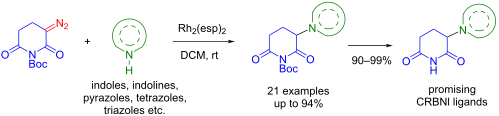
- varying characteristics were selected as substrates for the studied insertion reaction, encompassing both aromatic and non-aromatic compounds differing in the number and arrangement of nitrogen atoms (Scheme 3). Notably, several of these heterocycles, including tetrahydroquinoline, 1,2,4-triazole, and

Graphical Abstract

Figure 1: Glutarimide-based immunomodulatory drugs (IMiDs) and CRBN ligands.

Scheme 1: Main literature approaches towards α-hetaryl glutarimides 1 (routes A and B) and new “diazo” method...

Scheme 2: Preparation of diazo reagent 5.

Scheme 3: Scope of NH insertion reaction of N-Boc-α-diazo glutarimide and various N-heterocycles. aIsolated y...

Figure 2: Examples of α-carbonyl NH-heterocycles for which N–H insertion products could not be obtained.

Scheme 4: Examples of N-deprotection of α-modified glutarimides 1.

Scheme 5: Preparation of NH2-containing derivative 10 via reduction of 6n.
Quinoxaline derivatives as attractive electron-transporting materials
- Zeeshan Abid,
- Liaqat Ali,
- Sughra Gulzar,
- Faiza Wahad,
- Raja Shahid Ashraf and
- Christian B. Nielsen
Beilstein J. Org. Chem. 2023, 19, 1694–1712, doi:10.3762/bjoc.19.124
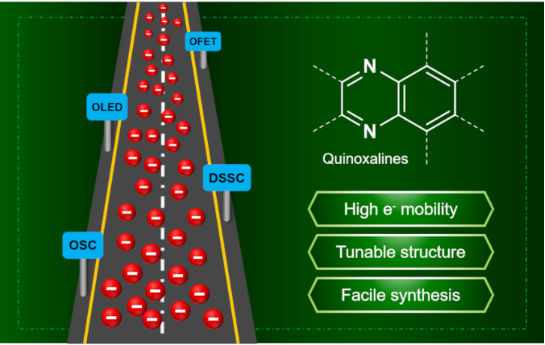
- )aromatic compounds (Qx53) with a chalcogenodiazolo[3,4-b]pyrazine scaffold. These compounds exhibited narrow bandgaps (from 1.25 to 1.44 eV) and demonstrated n-type organic semiconductor properties [56]. Jin and co-workers focused on improving the charge-transfer characteristics of a semiconducting

Graphical Abstract

Figure 1: Structures of some of the most versatile Qx scaffolds; dashed lines indicate the substitution sites...
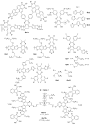
Figure 2: Qx-derived polymer acceptors.
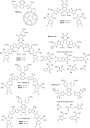
Figure 3: Qx-derived small molecule NFAs.

Figure 4: Qx-derived small molecule NFAs.

Figure 5: Dyes and sensitizers based on Qx auxiliary acceptors or bridging units.

Figure 6: Qx-derived n-type transistor materials.

Figure 7: Qx-derived ETM and TADF emitters.

Figure 8: Qx-derived chromophores.
First synthesis of acylated nitrocyclopropanes
- Kento Iwai,
- Rikiya Kamidate,
- Khimiya Wada,
- Haruyasu Asahara and
- Nagatoshi Nishiwaki
Beilstein J. Org. Chem. 2023, 19, 892–900, doi:10.3762/bjoc.19.67
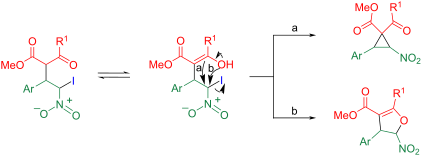
- example, when esters 1a are subjected to Lewis acid-induced denitration, highly electron-deficient enones (reaction b) [4] are obtained. The latter compounds are highly reactive and undergo reaction with, e.g., mercaptoacetaldehyde affording thiophenes (reaction c) [5] or with activated (hetero)aromatic
- compounds to give diarylated (oxoalkyl)malonates [6]. In the reaction using tin(II) chloride as the Lewis acid, the ring opening and nucleophilic attack of the nitro group occur, to produce functionalized isoxazolines (reaction d) [7]. In contrast, denitration under basic conditions generates highly

Graphical Abstract

Scheme 1: Versatile reactivities of cyclopropanes 1a.

Scheme 2: Preparative methods for cyclopropanedicarboxylates 1a.

Scheme 3: Bromination of ethyl acetoacetate (3c) and reaction with nitrostyrene 2a.

Scheme 4: Reaction of 4b with (diacetoxyiodo)benzene (top); structural determination of product 9 (bottom).

Figure 1: Monitoring the cyclization reaction using 4e by 1H NMR.

Scheme 5: A plausible mechanism for formation of cyclopropane 1 and dihydrofuran 8.

Scheme 6: Tin(II)-mediated ring expansion of nitrocyclopropane 1e.
Transition-metal-catalyzed C–H bond activation as a sustainable strategy for the synthesis of fluorinated molecules: an overview
- Louis Monsigny,
- Floriane Doche and
- Tatiana Besset
Beilstein J. Org. Chem. 2023, 19, 448–473, doi:10.3762/bjoc.19.35
- electron-withdrawing groups were functionalized and the expected products were isolated in moderate to high yields (4a–f, 58–91%). Palladium catalysis: Several works have been reported for the palladium-catalyzed trifluoromethylthiolation reaction of various aromatic compounds 5 by C–H bond activation and
- derivatives using AgSCF3 (Scheme 11) [124]. This methodology allowed the functionalization of several aromatic compounds bearing a pyridine or a pyrimidine as a directing group (20 examples, up to 65% yield). The reaction proceeded smoothly with substrates bearing an electron-donating group (25b,c), halogen
- from 5-methoxy-8-aminoquinoline, the functionalization of (hetero)aromatic compounds was achieved using 20 mol % of Pd(CH3CN)4Cl2 in the presence of TolSO2SeCF3 as the fluorinating source (14 examples, Scheme 17) [139]. Of note, when the reaction was carried out on derivatives bearing substituents at

Graphical Abstract

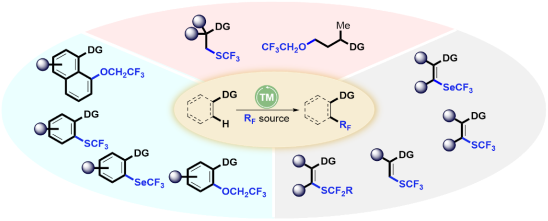
Scheme 1: Transition-metal-catalyzed C–XRF bond formation by C–H bond activation: an overview.

Scheme 2: Cu(OAc)2-promoted mono- and ditrifluoromethylthiolation of benzamide derivatives derived from 8-ami...

Scheme 3: Trifluoromethylthiolation of azacalix[1]arene[3]pyridines using copper salts and a nucleophilic SCF3...

Scheme 4: Working hypothesis for the palladium-catalyzed C–H trifluoromethylthiolation reaction.
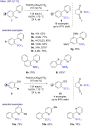
Scheme 5: Trifluoromethylthiolation of 2-arylpyridine derivatives and analogs by means of palladium-catalyzed...

Scheme 6: C(sp2)–SCF3 bond formation by Pd-catalyzed C–H bond activation using AgSCF3 and Selectfluor® as rep...

Scheme 7: Palladium-catalyzed ortho-trifluoromethylthiolation of 2-arylpyridine derivatives reported by the g...
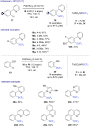
Scheme 8: Palladium-catalyzed ortho-trifluoromethylthiolation of 2-arylpyridine and analogs reported by Anbar...

Scheme 9: Mono- and ditrifluoromethylthiolation of benzamide derivatives derived from 8-aminoquinoline using ...

Scheme 10: Regioselective Cp*Rh(III)-catalyzed directed trifluoromethylthiolation reported by the group of Li [123]...

Scheme 11: Cp*Co(III)-catalyzed ortho-trifluoromethylthiolation of 2-phenylpyridine and 2-phenylpyrimidine der...

Scheme 12: Cp*Co(III)-catalyzed ortho-trifluoromethylthiolation of 2-phenylpyridine and 6-phenylpurine derivat...

Scheme 13: Diastereoselective trifluoromethylthiolation of acrylamide derivatives derived from 8-aminoquinolin...

Scheme 14: C(sp3)–SCF3 bond formation on aliphatic amide derivatives derived from 8-aminoquinoline by palladiu...

Scheme 15: Regio- and diastereoselective difluoromethylthiolation of acrylamides under palladium catalysis rep...

Scheme 16: Palladium-catalyzed (ethoxycarbonyl)difluoromethylthiolation reaction of 2-(hetero)aryl and 2-(α-ar...

Scheme 17: Pd(II)-catalyzed trifluoromethylselenolation of benzamides derived from 5-methoxy-8-aminoquinoline ...

Scheme 18: Pd(II)-catalyzed trifluoromethylselenolation of acrylamide derivatives derived from 5-methoxy-8-ami...

Scheme 19: Transition-metal-catalyzed dehydrogenative 2,2,2-trifluoroethoxylation of (hetero)aromatic derivati...

Scheme 20: Pd(II)-catalyzed ortho-2,2,2-trifluoroethoxylation of N-sulfonylbenzamides reported by the group of...

Scheme 21: Pd(II)-catalyzed selective 2,2,2-trifluoroethoxylation and other fluoroalkoxylations of naphthalene...
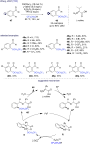
Scheme 22: Pd(II)-catalyzed selective ortho-2,2,2-trifluoroethoxylation of benzaldehyde derivatives by means o...

Scheme 23: Pd(II)-catalyzed selective ortho-2,2,2-trifluoroethoxylation (and other fluoroalkoxylations) of ben...

Scheme 24: Pd(II)-catalyzed selective 2,2,2-trifluoroethoxylation of aliphatic amides using a bidentate direct...
Friedel–Crafts acylation of benzene derivatives in tunable aryl alkyl ionic liquids (TAAILs)
- Swantje Lerch,
- Stefan Fritsch and
- Thomas Strassner
Beilstein J. Org. Chem. 2023, 19, 212–216, doi:10.3762/bjoc.19.20
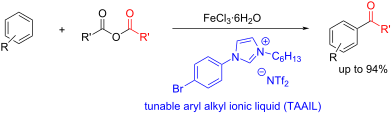
- acylation; homogeneous catalysis; ionic liquids; iron catalysis; TAAILs; Introduction The Friedel–Crafts acylation is one of the oldest metal-catalyzed reactions in organic chemistry [1] and allows for the synthesis of a broad range of diverse compounds [2][3][4][5]. Starting from electron-rich aromatic
- compounds, acylation is possible by an organic acid chloride/acid anhydride and a Lewis acid [6][7]. In the course of the development of ionic liquids (ILs) as a reaction medium for chemical reactions [8][9], the Friedel–Crafts reaction was also examined [10][11][12][13][14][15][16]. First protocols were

Graphical Abstract

Scheme 1: Synthesis of TAAILs. i) 1 equiv glyoxal, 2.1 equiv formaldehyde, 2 equiv NH4Cl, MeOH, 65 °C, ii) 1....

Scheme 2: Model reaction for the Friedel–Crafts acylation.

Figure 1: Time-dependent analysis of the reaction using varying amounts of anhydride. Reaction conditions: 1 ...

Scheme 3: Scope of the Friedel–Crafts acylation. Reaction conditions: 1 mmol benzene derivative, 2 equiv anhy...



