Search results
Search for "oxidation" in Full Text gives 1466 result(s) in Beilstein Journal of Organic Chemistry. Showing first 200.
Construction of CF2 moieties in FDA-approved drugs (2016–2025): industrial routes, mechanisms, and scale-up considerations
Beilstein J. Org. Chem. 2026, 22, 1122–1150, doi:10.3762/bjoc.22.91
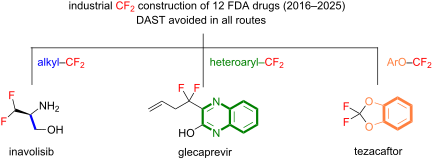
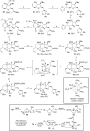
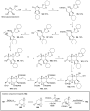
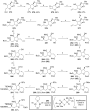
- temperature of −65 °C, and the iodomethyl pivalate tends to form gel-like spheres under low-temperature magnetic stirring, which is detrimental to scale-up operations. Route d utilizes 82 and 80 to form 83 via a six-membered ring transition state, followed by Fleming–Tamao oxidation [42] to convert 83 into
- of powdered indium, followed by condensation with ethyl glyoxylate to give 102 [49]. Subsequent oxidation and ring closure afford the aryl–CF2 intermediate 104 which was then converted to 105 in four steps with 74% yield. Next, intermediate 105 underwent ring-closing metathesis (RCM) to form the
- ClCF2COONa (130) as a difluorocarbene precursor to perform the difluoromethylation of the phenolic hydroxy group of compound 129 under basic, high-temperature conditions. This step proceeds via a difluorocarbene-mediated O–CF2 bond-formation mechanism, affording 131. Subsequent oxidation of the aldehyde






Rhodopyran, a carboxylated hexahydrocyclopenta[b]pyran from Rhodococcus
Beilstein J. Org. Chem. 2026, 22, 1107–1113, doi:10.3762/bjoc.22.89
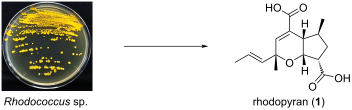
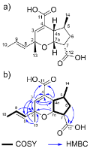
- -cyclopenta[b]pyran-6-one core bearing a hydroxy group and an allyl side chain [19]. In contrast, rhodopyran (1) is a carboxylated hexahydrocyclopenta[b]pyran bearing two carboxyl groups and a 1-propenyl substituent, and therefore differs markedly from the diospentenols in carbon number, oxidation state, and
- derived from acetyl-CoA/malonyl-CoA-based metabolism. Partial reduction, dehydration, and oxidation of such an intermediate could generate an unsaturated hydroxy- or oxo-acyl precursor suitable for intramolecular ring formation. The cyclopentane ring may be formed through an intramolecular aldol- or
- considered. Rhodococcus is known for broad oxidative and biodegradative capabilities, and endogenous fatty-acid β-oxidation or ω-oxidation intermediates could, in principle, enter a partially dedicated biosynthetic route. Such a scenario is not mutually exclusive with a polyketide- or fatty-acyl-derived


Synthesis of novel 1,2,4-oxadiazole-isoxazoline hybrids and their in silico potential with adenosine receptors
Beilstein J. Org. Chem. 2026, 22, 1033–1047, doi:10.3762/bjoc.22.82
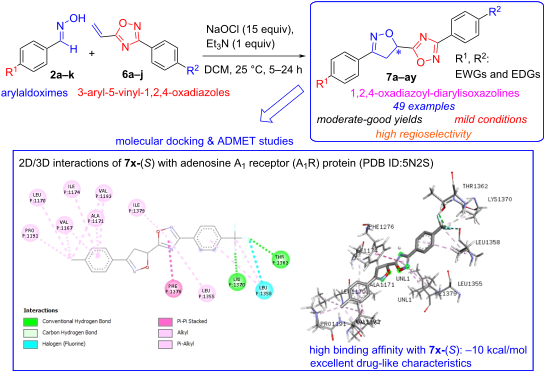
- generation of nitrile oxides from aldoximes. In contrast to single-component oxidants such as NCS, oxone–NaCl, or chloramine-T, the Et3N/NaOCl system enables a stepwise and controlled formation of the reactive dipole via initial oxidation to the hydroxyimoyl chloride followed by rapid base-promoted
- -oxidation and undesired chlorination that may occur with NCS or oxone-based systems. Compared with chloramine-T, which often requires elevated temperatures or longer reaction times, Et3N/NaOCl proceeds efficiently under milder conditions and displays improved tolerance toward sensitive or electron-rich


Synthesis of sterically shielded piperidine nitroxides via acid-catalyzed heterocyclization of β-aminoketone derivatives with ketones
Beilstein J. Org. Chem. 2026, 22, 948–954, doi:10.3762/bjoc.22.74
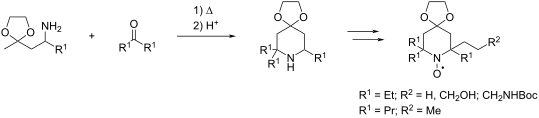
- use as catalysts for alcohol oxidation [8], electrode active materials in energy storage devices (batteries) [9], as well as antioxidants and superoxide dismutase (SOD) mimetics [10]. Their sterically shielded analogs, such as 2,2,6,6-tetraethylpiperidine-1-oxyl (TEEPO), were initially developed for
- ], followed by oxidation in the tungstate/hydrogen peroxide system [29]. It should be noted that no case of heterocyclization has ever been described where the resulting piperidine cycle contained three substituents at the 2- and 6-positions of the heterocycle. Subsequent treatment of these nitrones with
- alkynyl- or allylmagnesium halides gave 2-alkynyl or 2-allyl-substituted nitroxides. Finally, carbon–carbon multiple bonds were removed via Pd-catalyzed hydrogenation and the nitroxide group was recovered by mild oxidation. This approach was used to prepare both symmetric 2,2,6,6-tetraethyl- and 2,2,6,6


Recent advances in copper-catalyzed direct hydroamination of alkenes with (hetero)aromatic amines
Beilstein J. Org. Chem. 2026, 22, 925–947, doi:10.3762/bjoc.22.73
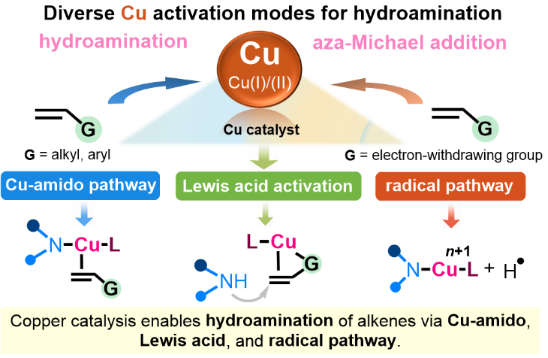
- methodology is demonstrated via a one-pot sequence consisting of copper-catalyzed aza-Michael addition followed by base-mediated cyclization and acid-promoted aerobic oxidation to afford quinolinone derivatives (Scheme 4) [38][39]. In this sequence, 2-aminobenzoate derivatives 4 reacted with α,β-unsaturated
- carbonyl compounds 5 to form the β-amino ketone intermediates, which subsequently underwent base-mediated intramolecular cyclization using KOt-Bu and air oxidation of the resulting 2,3-dihydro-4(1H)-quinolinone intermediates 7 in the presence of HCl to yield functionalized quinolin-4(1H)-one derivatives 6
- functionality generated a hemiaminal intermediate, which underwent Cu(I)-assisted air oxidation to produce the corresponding amide intermediate 27. Subsequent intramolecular aza-Michael addition of the pyridinyl nitrogen to the activated α,β-unsaturated ester led to cyclization, ultimately furnishing the







Site-specific labelling of native peptides and proteins: chemical and enzymatic strategies
Beilstein J. Org. Chem. 2026, 22, 857–881, doi:10.3762/bjoc.22.67
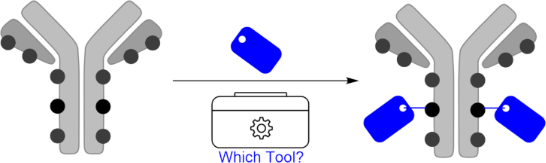
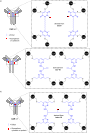
- -like linkages (≈9 M−1 s−1; Scheme 1d) [10], whereas 2-formylphenylboronic acid 3 (FPBA) generates thiazolidino boronate with noticeably improved kinetics (103 M−1 s−1; Scheme 1e) [11][12]. Aldehydes can be introduced at protein N-termini through several strategies: oxidation of serine or threonine with
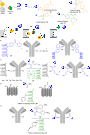
- splicing to generate a C-terminal thioester from recombinantly expressed proteins [20][21][22]. One distinctive feature of the C-terminal carboxylate is its lower oxidation potential compared to the side chains of aspartate or glutamate, making it more amenable to selective redox-based modifications. This
- oxidation state of phosphorous, diethynylphosphonites 12 also utilize conjugate addition to provide a versatile three-point conjugation platform [37]. Related technologies have been adapted to link multiple disulfide residues simultaneously. Using bis-dibromopyridazinediones bis-9 [38] or bis/tetra








The trans-influence in gold chemistry from a catalytic perspective
Beilstein J. Org. Chem. 2026, 22, 838–856, doi:10.3762/bjoc.22.66
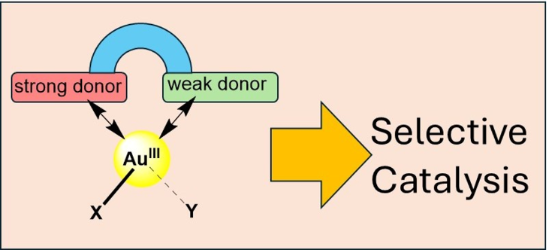
- . This effect is probably more dominant in gold chemistry than in most other transition-metal complexes; it can on occasions appear even more important than the formal oxidation state and d-electron count. Tilset and co-workers have recently summarised the importance of the trans-influence in C^N


Unsymmetrical sulfoxides with sterically hindered catechol fragment: synthesis, structure, electrochemical properties, and antiradical activity
Beilstein J. Org. Chem. 2026, 22, 828–837, doi:10.3762/bjoc.22.65
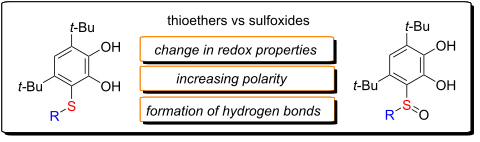
- 10.3762/bjoc.22.65 Abstract New unsymmetrical sulfoxides containing a redox-active sterically hindered catechol fragment and a nonpolar hydrocarbon substituent at the sulfoxide group were synthesized via the oxidation of the corresponding catechol thioethers with hydrogen peroxide. The yield of the
- compounds. The electrochemical behavior of sulfoxides was studied in comparison with that of the parent catechol thioethers. The redox transition corresponding to catechol fragment oxidation is shifted to the anodic region relative to the initial thioethers, which is attributed to the more electron
- ]. We have previously shown that hybrid molecules based on sterically hindered catechol thioethers, bearing various polar and hydrocarbon groups, exhibit pronounced chelating [15][16], antiradical, and cryoprotective activity [17][18][19][20]. The ability of the sulfur atom to exist in various oxidation


Total synthesis of the capsular polysaccharide repeating unit towards the development of a glycoconjugate vaccine against Klebsiella pneumoniae ST512
Beilstein J. Org. Chem. 2026, 22, 821–827, doi:10.3762/bjoc.22.64
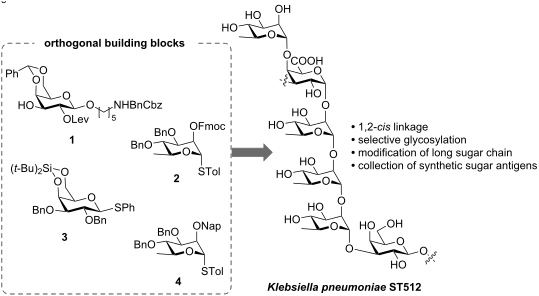
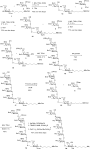
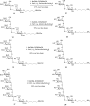
- deprotection was achieved by removing the Fmoc and Lev protecting groups with sodium methoxide, followed by 2,2,6,6-tetramethyl-1-piperidinyl-1-oxyl (TEMPO)/bis(acetoxy)iodobenzene (BAIB)-mediated oxidation of the C6-primary alcohol [35]. Final hydrogenolysis furnished the target hexasaccharide repeating unit


Halogenated azobenzene acrylates: from efficient solution photoswitching to stable solid-state photochromic materials
Beilstein J. Org. Chem. 2026, 22, 782–794, doi:10.3762/bjoc.22.60
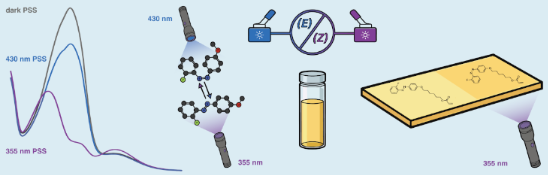
- of appended halogens. One reduction and one oxidation processes were found within the available potential window of DCE. Both electrochemical redox processes are irreversible regardless the scan rate, indicating chemical instability of the generated oxidized/reduced forms in the used system. The
- reverse reduction of the chemically modified oxidized form was recorded as a broad peak at significant undervoltage, especially for derivatives 1a–b and 1d–e. The electrochemical data suggest that the first oxidation and the first reduction processes are associated with different parts of the molecule
- corresponding radical anion [27]. In contrast, possible reduction of an aliphatic ester substituent, such as our acrylate pendant, generally requires more negative potentials [28]. On the other hand, the first oxidation observed at ca. +1.47 V is most likely associated with the alkoxy donor fragment, in


Preparation of 3-(alkylamino)imidazo[1,2-a]pyridine-2-carbaldehydes via Kornblum oxidation and unexpected ring-opening reactions of the corresponding alcohols under oxidative conditions
Beilstein J. Org. Chem. 2026, 22, 763–770, doi:10.3762/bjoc.22.58
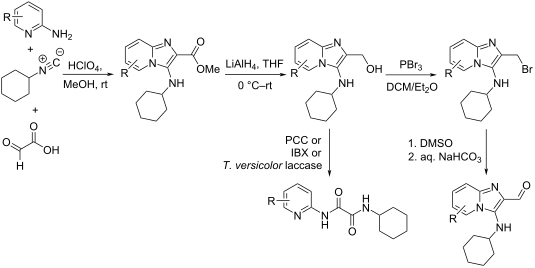
- oxidation conditions, reaction in the presence of DMSO and NaHCO3 under conventional or microwave heating to ≈100 °C, were applied to the bromides derived from these alcohols by treatment with PBr3, resulting in the desired aldehydes which successfully underwent reductive amination reactions with 2
- -chloroaniline. Alternative oxidation conditions such as PCC, IBX or T. versicolor laccase applied to the alcohols led only to oxidative ring-opening to give oxalamide derivatives, with no aldehyde being isolated. Keywords: 3-aminoimidazo[1,2-a]pyridine-2-carbaldehydes; Groebke–Blackburn–Bienaymé reaction
- ; Kornblum oxidation; oxidative ring-opening; reductive amination; Introduction Imidazo[1,2-a]pyridines display a wide range of different biological activities, and this scaffold has come to be regarded as being biologically privileged [1]. Compounds containing the imidazo[1,2-a]pyridine core have been


Synthesis and biological evaluation of new brassinosteroid analogs with C-22 benzoate function
Beilstein J. Org. Chem. 2026, 22, 753–762, doi:10.3762/bjoc.22.57
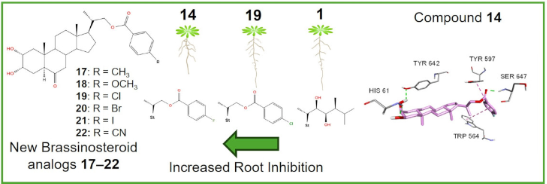
- , conjugation and oxidation via dynamic interaction with different phytohormones and on homeostasis mechanisms [52]. Consequently, exogenous application of a growth regulator initiates not only the process leading to a phenotypic response but also all those associated to its own regulation. Thus, only a


Rongalite addition to dienones: diastereoselectivity in cyclic sulfone synthesis; stereochemical rationalization and prospects as a general conjugate nucleophile
Beilstein J. Org. Chem. 2026, 22, 742–752, doi:10.3762/bjoc.22.56

- molecules are desirable, particularly in the light of the general need for more sustainable chemical synthesis. Recently, there has been significant progress in the use of SO2 equivalents and bulk inorganic high oxidation state sulfur compounds for the direct incorporation of sulfones [2][3]. Despite these
- advances, use of a low-valent sulfur nucleophile for initial installation of the sulfur atom followed by oxidation remains a widespread method, even though it is far from ideal environmentally and also in terms of functional group tolerance [4]. RongaliteTM is a low-cost commodity chemical that has been
- sulfide oxidation. In that early work, the stereochemical analysis was dependent on conformational analysis and comparison of coupling constants in the 1H NMR spectra. Experiments discussed in our inital report confirmed that the reaction proceeded under kinetic control [21]. Closer examination of the




Synthesis of heterocycles based on azomethine ylides from α-amino acids (or amines) and carbonyl compounds
Beilstein J. Org. Chem. 2026, 22, 705–741, doi:10.3762/bjoc.22.55
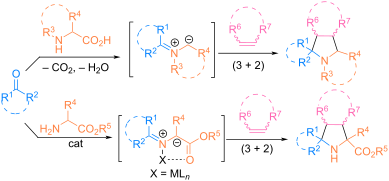
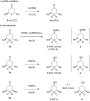
- using benzyl alcohols as aldehyde precursors to prepare fused heterocycles [84]. The authors note that the iridium-catalyzed oxidation of benzyl alcohol 108 to the corresponding aldehyde initially occurs. This is followed by condensation of the aldehyde with proline (103) and subsequent decarboxylation


Synthesis of depressin, cryptomeridiol and 4-epi-cryptomeridiol enabled by a terpenoid chiral pool-producing platform
Beilstein J. Org. Chem. 2026, 22, 683–690, doi:10.3762/bjoc.22.53
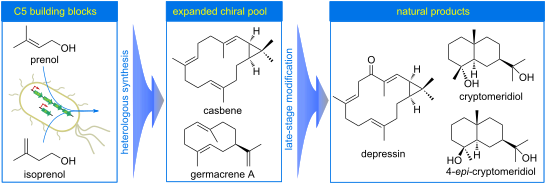
- compounds 1, 2, and 3 is depicted in Scheme 1 [40][41][42]. We envisioned that by selective oxidation at C5, compound 1 could be directly obtained from casbene (4). The macrocyclic casbane-type skeleton could be produced by an engineered heterologous host harboring both casbene synthase (CS) and an
- pool’ strategy, the stage was set forth for the late-stage modification of the corresponding terpene skeletons for the synthesis of the targeted natural products (Scheme 2) [55]. Formally, a selective oxidation of the allylic C5 position would give 1 directly (Scheme 2a). Considering the limited
- reports on direct modifications of the casbene skeleton, we thus commenced our synthesis with probing the reactivity of 4 by screening a series of conditions for allylic oxidation (Table S2 in Supporting Information File 1). However, most of the conditions tested did not give satisfactory results, as


Photoorganocatalytic trifluoromethylation of (het)arenes in green conditions
Beilstein J. Org. Chem. 2026, 22, 662–671, doi:10.3762/bjoc.22.50
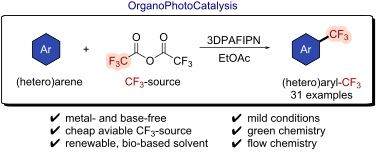
- conditions. Since the photocatalyst can function as both an oxidizing and a reducing agent, we examined the literature data to evaluate the possible reaction pathway. Based on the experimentally determined oxidation and reduction potentials of the excited state of 3DPAFIPN (E1/2(PC·+/PC*) = −1.38 V, E1/2 (PC
- */PC·−) = 1.09 V) [33], together with the reduction potential of TFAA (Ered = −1.2 V) [34] and the oxidation potential of TMB (Ered = 1.43 V) [35], it can be concluded that in our reaction the photocatalyst acts primarily as an electron donor. Accordingly, for the pair of TFAA and TMB, reduction of
- TFAA is thermodynamically favorable (ΔE = 0.18 V), whereas the oxidation of TMB is disfavored (ΔE = −0.34 V). We next assessed the theoretical feasibility of the proposed mechanism by means of DFT and TDDFT calculations. The results revealed that the reduction of TFAA, followed by the generation of the


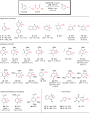


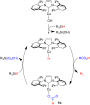
Hydrogen production from formic acid catalyzed by NHC–Cu complexes
Beilstein J. Org. Chem. 2026, 22, 620–627, doi:10.3762/bjoc.22.48
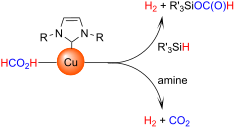
- such as Co [35][36], Ni [37][38], Al [39][40], and Mn [41][42][43] have been released. In this scenario, copper systems remain widely unexplored and, generally, have displayed low activity, regardless of the oxidation state of the Cu precursor and of the presence/absence of additives [44][45][46][47



Computational prediction of C–H hydricities and their use in predicting the regioselectivity of electron-rich C–H functionalisation reactions
Beilstein J. Org. Chem. 2026, 22, 603–610, doi:10.3762/bjoc.22.46
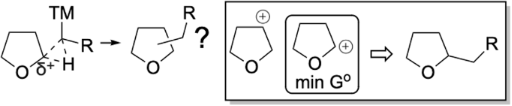
- that must be used when applying simple measures of selectivity prediction in a complex setting.” Compound 4 Vermeulen et al. [41] reported the Fe(DPD)-catalysed oxidation of (+)-artemisinin (compound 4). Similarly to nitrene insertion into cycloheximide (compound 2), the reactive site does not


![[Graphic 6]](/bjoc/content/inline/1860-5397-22-46-i8.svg?max-width=637&scale=1.18182)


Regioselective approach to 5-arylsulfonylisoxazoles and their antimicrobial activity
Beilstein J. Org. Chem. 2026, 22, 592–602, doi:10.3762/bjoc.22.45
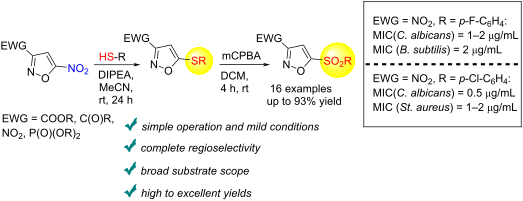
- nucleophilic aromatic substitution with thiophenols followed by oxidation with m-chloroperbenzoic acid (mCPBA). The scope of the reactions was explored, demonstrating high yields across a variety of functional groups and substituents. Optimized conditions enabled selective oxidation of thioaryl groups to
- as promising antimicrobial agents and provide new insights into their mechanism of action. Keywords: antimicrobial activity; aromatic nucleophilic substitution; isoxazoles; oxidation; sulfonylisoxazoles; Introduction The isoxazole ring represents an important building block for the synthesis of
- common method for the synthesis of substituted isoxazoles is based on the 1,3-dipolar cycloaddition of nitrile oxide with alkynes or alkenes followed by oxidation of the resulting isoxazoline product in the latter case [18][19][20][21][22]. This approach, in three variations, is also applicable to obtain


Melifoliox B, a novel phloroglucin derivative isolated from Melicope barbigera (Rutaceae) and synthesis of new oxidation products from melifoliones A and B
Beilstein J. Org. Chem. 2026, 22, 535–546, doi:10.3762/bjoc.22.39
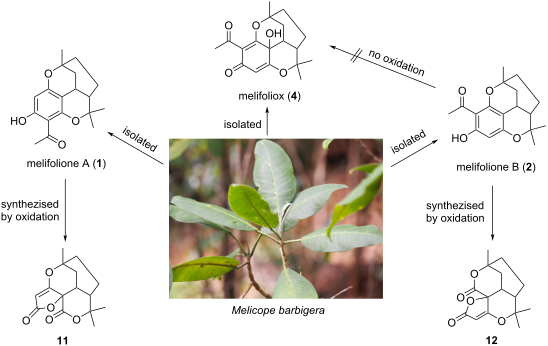
- to new acetophenones and 2H-chromenes, the dichlormethane extract from leaves of Melicope barbigera A. Gray (Rutaceae) afforded a mixture of the isomeric melifoliones A (1) and B (2) as well as an oxidation product of 2, whose structure was elucidated as the para-quinol 4. For an independent
- benzoxocin derivatives 6 and 7. Oxidation of melifoliones 1 and 2 under a great variety of oxidants and conditions failed to give 3 and 4. Iodine-containing oxidants yielded the products 8, 9, and 10. Combined oxidation with hydrogen peroxide and ferricyanide in alkaline solution resulted in an unexpected
- been described in the literature. Keywords: Melicope barbigera; Melifoliones A and B; new heterocyclic ring systems; new natural compounds; para-quinols; phenol oxidation; Introduction The genus Melicope is a member of the Rutaceae (Citrus family) and contains more than 200 species distributed in the



Modern synthetic pathways towards eribulin and its subunits
Beilstein J. Org. Chem. 2026, 22, 495–526, doi:10.3762/bjoc.22.37
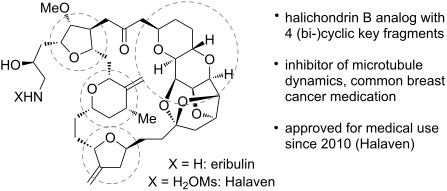
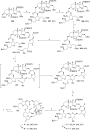
- used as a starting material and was protected as acetonide within the first step to enable the reduction of both acid moieties towards 14 (Scheme 2). Bn-protection, followed by oxidation and olefination yielded sulfone 15, which was vinylated leading to 16 as a single diastereomer. Further Grubbs
- and addition of vinylmagnesium bromide, 21 was received and dihydroxylated towards 22 in 5:1 dr. The second path towards 27 commenced with the assembly of 23 from 14 via Bn-protection, following oxidation and Horner–Wadsworth–Emmons (HWE) reaction (Scheme 3). Stereospecific vinylation with a Gilman
- -oxidation (Scheme 4, above). For the assembly of 33, only the hydrolysis of previously reported 32 [75] with Me3SnOH and thioesterification using EtSH and DCC were necessary (Scheme 4, below). Both fragments (31 and 33) were fused together via NHK coupling to furnish 34 in 86% yield. The addition of SrCO3








Synthesis and uranyl(VI) extraction performance of a calix[4]pyrrole–tetrahydroxamic acid receptor
Beilstein J. Org. Chem. 2026, 22, 486–494, doi:10.3762/bjoc.22.36
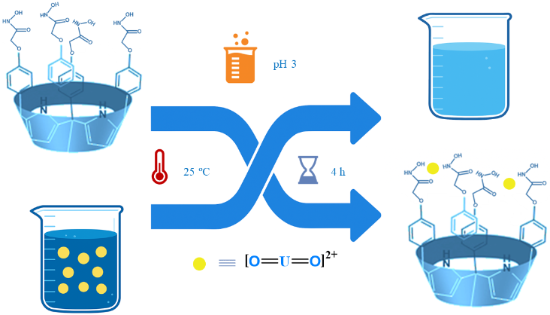
- aqueous solution, hexavalent uranium, the most dominant oxidation state, exists predominantly as the linear uranyl ion UO22+. In this ion, two oxo ligands occupy axial positions while the equatorial plane accommodates four to six donor atoms [74][75]. Complexes of UO22+ often adopt either a pseudoplanar


Cone p-aminocalix[4]arenes enriched with ‘clickable’ alkyne or azide functionalities
Beilstein J. Org. Chem. 2026, 22, 399–415, doi:10.3762/bjoc.22.28
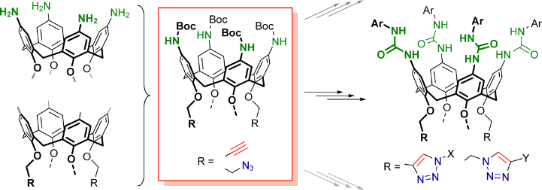
- formation of side products, due to acid-promoted cleavage and undesired transformations of the TBS-protected propargyl groups and/or due to unwanted oxidation/nitration of the calixarene core [93]. Indeed, nitration of calixarene 6 has been reported to furnish the desired wide-rim exhaustively nitrated
- closed vessel to prevent the product oxidation. At the work-up step sodium hydroxide was replaced with potassium hydroxide which provided better water solubility of inorganic salts for their extractive removal. As a result, tetraamine 18 having four TBS-protected propargyl groups at the narrow rim was






Electrosynthetic access to unsymmetrical oxaza[8]helicenes with high chiral stability and strong circularly polarized luminescence (CPL)
Beilstein J. Org. Chem. 2026, 22, 372–382, doi:10.3762/bjoc.22.25
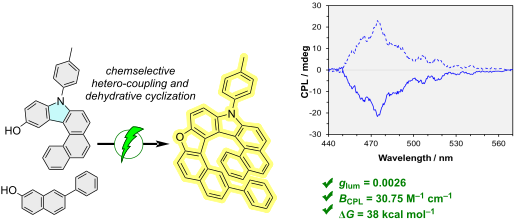
- hetero[8]helicene (Scheme 1C). This strategy delivers the target scaffold in only three steps from commercially available substrates and exploits the differential oxidation potentials of the two partners to enforce chemoselective cross-annulation. To the best of our knowledge, this represents the
- electrochemical arenol activations reported by Waldvogel and co-workers [46]. Subsequent intramolecular dehydrative cyclization furnishes the desired oxaza[8]helicenes 5. The oxidation-potential gap between 3 and 4 and the reactivity of Int-I thus provides a handle to control chemo- and regioselectivity
- that integrate synthetic accessibility with superior chiral stability and chiroptical performance. Conclusion In summary, we have established an electrosynthetic strategy to access a novel class of unsymmetrical oxaza[8]helicenes by exploiting the differential oxidation potentials of appropriately




Synthesis of tricyclic fused pyrrolidine nitroxides from 2-alkynylpyrrolidine-1-oxyls
Beilstein J. Org. Chem. 2026, 22, 344–351, doi:10.3762/bjoc.22.22

- metalation of trimethylsilylacetylene or benzyl propargyl ether with ethylmagnesium bromide. After quenching, removal of the MOP protecting group, and oxidation by atmospheric oxygen the nitroxides 2d and 2e were isolated in 64% and 66% yields, respectively. Terminal alkynes can be converted into
- group, respectively. The elemental analyses data and high-resolution mass spectra (HRMS) of 6a,b were in agreement with the assigned structure. Oxidation of propargyl alcohols is another way to α,β-acetylenic carbonyl compounds [31]. Mild oxidation of propargyl alcohol 2c with activated manganese