Search results
Search for "selective" in Full Text gives 1583 result(s) in Beilstein Journal of Organic Chemistry. Showing first 200.
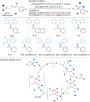
Electrochemical reduction of unsaturated carbon–carbon bonds via 3d transition-metal catalysis
Beilstein J. Org. Chem. 2026, 22, 955–981, doi:10.3762/bjoc.22.75
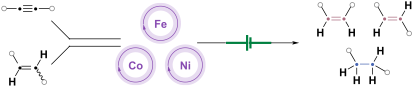
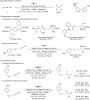
- , controllable reaction manifolds that are inaccessible under thermochemical conditions. These developments position 3d metal electrocatalysis as a versatile and programmable platform for selective hydrogenation and isotopic labeling under mild, sustainable conditions. Keywords: electrochemical reduction
- conventionally achieved by exposing substrates to molecular hydrogen in the presence of homogeneous transition-metal catalysts or supported catalysts, thereby affording the corresponding alkanes. In sharp contrast, when selective reduction of alkynes is required, the use of Lindlar’s catalyst provides a
- provide effective approaches for promoting selective alkene hydrogenation. Electrochemical and 3d transition-metal catalysis Owing to the straightforwardness of the reductive chemical transformation, a plethora of synthetic approaches has been utilized, with recent efforts increasingly converging on 3d








Recent advances in copper-catalyzed direct hydroamination of alkenes with (hetero)aromatic amines
Beilstein J. Org. Chem. 2026, 22, 925–947, doi:10.3762/bjoc.22.73
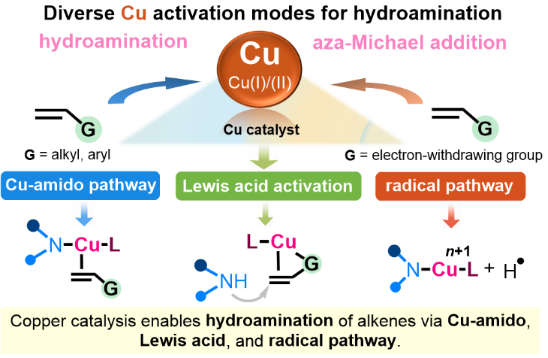
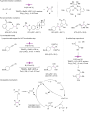
- , tunable basicity, and directional hydrogen-bonding capabilities enable precise modulation of molecular recognition, biological activity, and physicochemical properties. Consequently, the efficient and selective construction of carbon–nitrogen (C–N) bonds embedded within aromatic nitrogen frameworks
- selective hydroamination chemistry. Review Copper-catalyzed aza-Michael addition Early studies on copper–amido complexes by Gunnoe The aza-Michael addition of (hetero)aromatic amines to electron-deficient olefins provides a straightforward and atom-economical route to β-amino carbonyl, β-amino sulfone, and
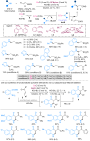
- in good to excellent yields. Expanding beyond the classical 1,4-conjugate addition, Lee et al. reported the highly regio- and (E)-selective copper-catalyzed aza-1,6-conjugate addition of aza-heterocycles and arylamines to sulfonyl-1,3-dienes 8 (Scheme 5) [40]. The combination of the sterically







Diastereodivergent electrophilic trapping of α-boryl lithium derivatives
Beilstein J. Org. Chem. 2026, 22, 882–887, doi:10.3762/bjoc.22.68
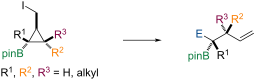
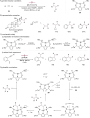
- their stereoselective reactions remains challenging. Here, we examine the diastereoselective generation and trapping of α-boryl lithium species formed by ring opening of substituted iodomethylcyclopropanes. After lithium–iodine exchange and selective C–C bond cleavage, these intermediates react with a
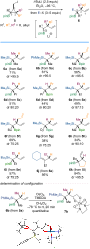
- derivative 1 to afford product 4 as single diastereomers. Specifically, iodide 2 was subjected to tert-butyllithium (t-BuLi) in diethyl ether at −95 °C, efficiently generating cyclopropylmethyllithium 3 via lithium–iodine exchange. Subsequent selective C–C bond cleavage of 3, proceeding exclusively through
- : cyclopropane 5i possessing a chloride as a leaving group underwent highly selective cyclization to deliver the stereodefined borylated cyclopentane 6k in high 84% yield as a single diastereomer. The relative configuration of 6k was unambiguously established by X-ray crystallographic analysis of an osmylated




Site-specific labelling of native peptides and proteins: chemical and enzymatic strategies
Beilstein J. Org. Chem. 2026, 22, 857–881, doi:10.3762/bjoc.22.67
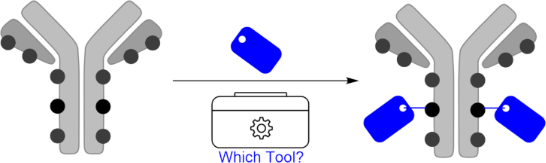
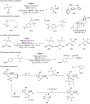
- sampling. Their translational power is evident from the success of biotherapeutics: antibody–drug conjugates (ADCs), in which cytotoxic payloads covalently linked to targeting antibodies, are at the forefront of cancer therapy, delivering tumour-selective killing for improved patient outcomes; Neulasta, an
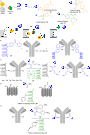
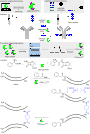
- While numerous native-sequence protein-modification tools exist with many being site-specific, few can fulfil all the aforementioned criteria simultaneously. Cysteine modification is among the most effective strategies due to the high reactivity of the thiolate, enabling selective chemical
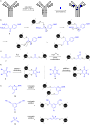
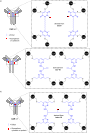
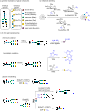
- sodium periodate (Scheme 2a) [13], selective modification of glutamate using Rapoport’s salt (4) which has generated modified trastuzumab in moderate yield (67%; Scheme 2b) [14], or pyridoxal phosphate (PLP, 5)-mediated carbonyl formation at residues such as serine, threonine, glycine, alanine, or








The trans-influence in gold chemistry from a catalytic perspective
Beilstein J. Org. Chem. 2026, 22, 838–856, doi:10.3762/bjoc.22.66
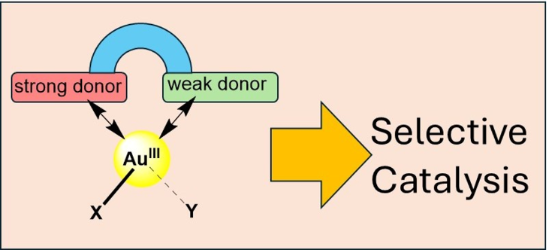
- why CO insertion into the Au–aryl bond was not observed [60]. Bidentate Au(III) hydride complexes The selective protolytic cleavage of an Au–C bond in C^N^C complexes with a strong acid [61], or the displacement of pyridine in C^C^N hydrides by H−, leads to hydride complexes supported by bidentate C^N


Unsymmetrical sulfoxides with sterically hindered catechol fragment: synthesis, structure, electrochemical properties, and antiradical activity
Beilstein J. Org. Chem. 2026, 22, 828–837, doi:10.3762/bjoc.22.65
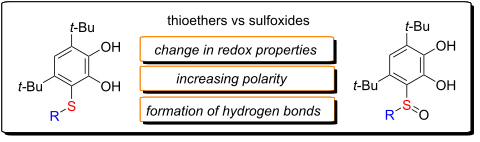
- , the oxidation of catechols is facilitated under alkaline conditions. Therefore, the oxidation of thioethers 1–7 was carried out in the presence of acetic acid (Scheme 1). This approach proved successful for the selective oxidation of the thioether group, and no products arising from oxidation of the


Total synthesis of the capsular polysaccharide repeating unit towards the development of a glycoconjugate vaccine against Klebsiella pneumoniae ST512
Beilstein J. Org. Chem. 2026, 22, 821–827, doi:10.3762/bjoc.22.64
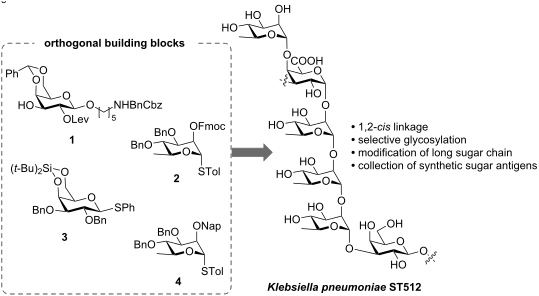
- . The total synthesis commenced with the preparation of the orthogonally protected monosaccharide building blocks 1–4 (Scheme 1). Galactoside 1 was synthesized starting from the β-selective glycosylation of thioglycoside 5 [30] with aminopentyl linker 6. This reaction was promoted by N-iodosuccinimide
- linkages and the selective manipulation of long oligosaccharide chains, were successfully overcome using orthogonally protected building blocks. The resulting conjugation-ready oligosaccharides bearing aminopentyl linkers provide direct access to glycan microarray screening and in vivo immunological


Synthesis and structural elucidation of a novel bis-spirooxindole from isatin and ethylenediamine
Beilstein J. Org. Chem. 2026, 22, 813–820, doi:10.3762/bjoc.22.63
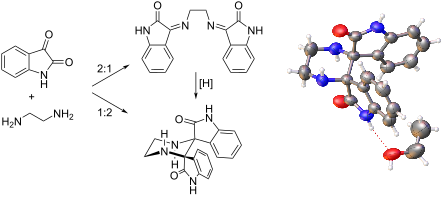
- condensed bis-spirooxindole framework. Conclusion The condensation of isatin with ethylenediamine is strongly governed by stoichiometry, allowing selective access either to a diiminoisatin 24 or to the unexpected pentacyclic bis-spirooxindole 25 (Scheme 4) which was unambiguously identified by comprehensive


Synthetic study of vic-bromination of diarylacetylenes, easy purification and separation
Beilstein J. Org. Chem. 2026, 22, 795–802, doi:10.3762/bjoc.22.61
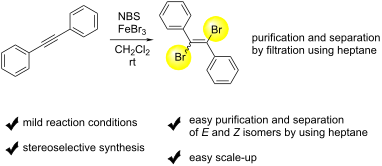
- -osaka, Osaka 577-0056, Japan 10.3762/bjoc.22.61 Abstract E-Selective bromination for diphenylacetylene was established by using the combination of NBS and FeBr3 in CH2Cl2. In addition, easy purification and separation from the crude product were found. When the crude product was treated with heptane
- reported studies suggest that it is surprisingly difficult to obtain the E isomer selectively (Scheme 1). For selected examples, Espenson and co-workers reported in 1999 that E-selective bromination of diphenylacetylene took place by using H2O2, NaBr, and AcOH in the presence of MTO (methyltrioxorhenium
- -diphenylethylenes (Scheme 1c) [5]. Previous studies reported the selective synthesis of (E)-1,2-dibromo-1,2-diphenylethylene and related compounds, but Br2 or expensive reagent, which was difficult to handle, was often used [6][7][8][9][10][11][12][13][14][15]. Based on these research backgrounds, we have also been



Design, synthesis, and biological evaluation of FXR/ASK1 dual-target modulators
Beilstein J. Org. Chem. 2026, 22, 771–781, doi:10.3762/bjoc.22.59
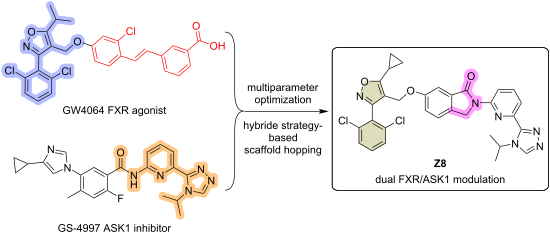
- of the minimal pharmacophores of the selective FXR agonist GW4064 and the selective ASK1 inhibitor selonsertib (GS-4997) [35][36][37]. Published structure–activity relationship (SAR) studies have identified the isoxazole moiety and terminal carboxylic acid of GW4064 [38], along with the 4


Rongalite addition to dienones: diastereoselectivity in cyclic sulfone synthesis; stereochemical rationalization and prospects as a general conjugate nucleophile
Beilstein J. Org. Chem. 2026, 22, 742–752, doi:10.3762/bjoc.22.56

- -toluenesulfinate to dibenzalacetone (Scheme 5). Diadducts 25 and 27 were isolated as inseparable 3:2 and 4:3 mixtures of diastereomers, respectively. From these experiments, we observed the following: 1) double conjugate addition of methanesulfinate occurs readily, such that selective preparation of monoadduct 24




Synthesis of heterocycles based on azomethine ylides from α-amino acids (or amines) and carbonyl compounds
Beilstein J. Org. Chem. 2026, 22, 705–741, doi:10.3762/bjoc.22.55
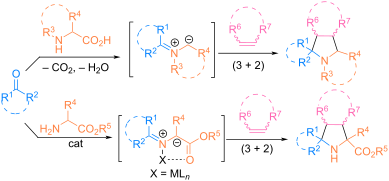
- silver-catalyzed asymmetric double 1,3-dipolar cycloaddition reaction was developed that provides highly substituted, enantioenriched pyrrolizidines 9 containing up to six stereocenters (Scheme 8). It is assumed that the endo-selective (3 + 2) cycloaddition of the azomethine ylide obtained from
- sulfone, cinnamic, croton, and methacrylic aldehydes, and β-nitrostyrene as dipolarophiles. Depending on the dipolarophile used, pyrrolizidines 11 were obtained with an enantiomeric excess of up to 94% and yields of up to 92%. In 2009, Wang and co-workers reported the catalytic endo-selective


Synthesis of depressin, cryptomeridiol and 4-epi-cryptomeridiol enabled by a terpenoid chiral pool-producing platform
Beilstein J. Org. Chem. 2026, 22, 683–690, doi:10.3762/bjoc.22.53
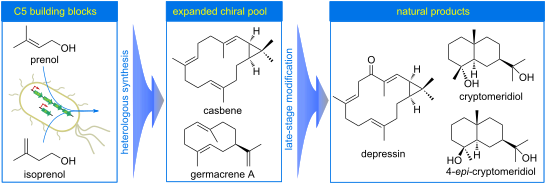
- hydroxy group allowed the synthesis of compound 1 from 4 in nine steps. Selective acid-mediated 5,10-transannular cyclization of 5 followed by hydration reaction furnished both products 2 and 3 in two steps. Keywords: chemoenzymatic synthesis; chiral pool; isopentenol utilization pathway; terpene
- compounds 1, 2, and 3 is depicted in Scheme 1 [40][41][42]. We envisioned that by selective oxidation at C5, compound 1 could be directly obtained from casbene (4). The macrocyclic casbane-type skeleton could be produced by an engineered heterologous host harboring both casbene synthase (CS) and an
- 3, respectively, in a more efficient and selective way by protein engineering, we thought that germacrene A (5), whose terpene cyclases are widely found in different organisms [52], could serve as a precursor for synthesis of both 2 and 3 via a transannular cyclization process [37][53][54]. A


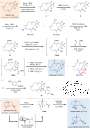
Advantages of PROTACs in achieving selective degradation of homologous protein families
Beilstein J. Org. Chem. 2026, 22, 628–661, doi:10.3762/bjoc.22.49
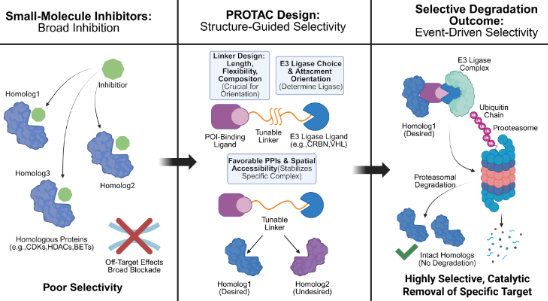
- extensively in this review. For instance, selective degraders of CDK isoforms are advancing through early-phase trials [33], with molecules like BSJ-03-123 and others showing promise in hematologic malignancies by exploiting the subtle structural differences among the highly homologous CDK family members to
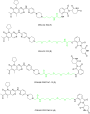
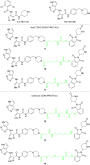
- ability to target the degradation of CDK6, and proteomics results also show that compound 2 has no degradation effect on CDK4. In 2020, Benowitz and co-workers carried out a project to explore the impact of different E3 ligands on the selective degradation of CDK4/6 [57]. In their research, they designed
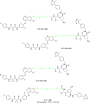
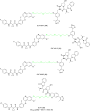
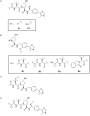
- PROTACs for the selective degradation of CDK6 [60]. They also constructed a PROTAC-CP 10 (6) containing a triazole-containing linker to connect palbociclib and pomalidomide. Compound 6, a selective CDK6 degrader, showed good selectivity in U251 cells (DC50(CDK6) = 2.1 nM; DC50(CDK4) > 100 nM) and the









Hydrogen production from formic acid catalyzed by NHC–Cu complexes
Beilstein J. Org. Chem. 2026, 22, 620–627, doi:10.3762/bjoc.22.48
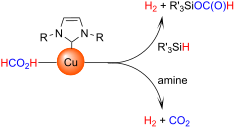
- ][29] and Rh [30][31] have shown to allow the selective transformation of formic acid into H2 and CO2 with high turnover frequencies (TOFs). In most cases, addition of a base (either amines or formate salts) is required to obtain high catalytic activity. Efficient systems based on inexpensive metals



Towards the targeted protein degradation of CK2: design and synthesis of CAM4066-based PROTACs
Beilstein J. Org. Chem. 2026, 22, 611–619, doi:10.3762/bjoc.22.47
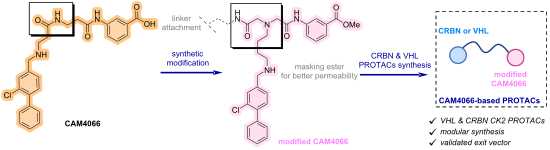
- adjacent to the ATP-binding site of CK2α [5][6]. Fragment-based ligand discovery subsequently enabled the development of CAM4066, a selective inhibitor that simultaneously engages the αD and ATP sites. CAM4066 validated the αD region as a tractable and selective binding pocket for CK2 kinase inhibition
- potent and selective PROTAC targeting CK2 might be valuable in the evaluation of specific degradation of CK2 as a therapeutic approach. Herein, we report the design and synthesis of a series of CK2-targeting PROTACs. CAM4066 was selected as the warhead to enable CK2-specific target engagement. We
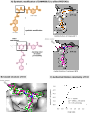
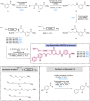
- geometry, and E3 ligase selection. Conclusion In summary, we have developed a modular synthetic platform for the construction of CK2-targeting degraders 23–26, 28, and 29 based on the selective bivalent inhibitor CAM4066. Structure-guided design enabled identification of a solvent-accessible exit vector

Regioselective approach to 5-arylsulfonylisoxazoles and their antimicrobial activity
Beilstein J. Org. Chem. 2026, 22, 592–602, doi:10.3762/bjoc.22.45
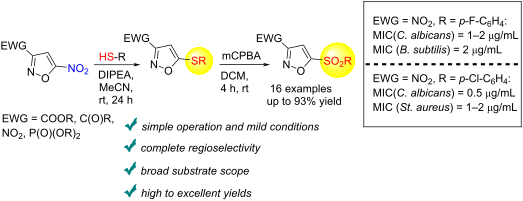
- nucleophilic aromatic substitution with thiophenols followed by oxidation with m-chloroperbenzoic acid (mCPBA). The scope of the reactions was explored, demonstrating high yields across a variety of functional groups and substituents. Optimized conditions enabled selective oxidation of thioaryl groups to


Design and synthesis of an erdafitinib-based selective FGFR2 degrader
Beilstein J. Org. Chem. 2026, 22, 583–591, doi:10.3762/bjoc.22.44
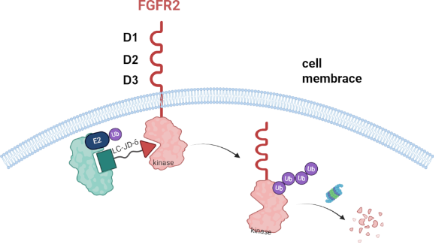
- -selective degrader, and for the first time confirmed its ability to degrade the membrane-bound form of FGFR2. This work provides an innovative targeted protein degradation strategy for the treatment of FGFR2-driven tumors and holds significant potential for clinical application. Keywords: CRBN; erdafitinib
- ; FGFR2; selective degrader; Introduction Fibroblast growth factor receptors (FGFR) are a family of single-pass transmembrane receptor tyrosine kinases (RTKs) localized on the cell surface that bind to fibroblast growth factors [1][2][3]. Dimerization and autophosphorylation of FGFRs are induced by their
- cholangiocarcinoma [16][17][18]. Accordingly, research into therapeutics targeting FGFR2 has emerged as a major focus. To treat FGFR2-driven tumors, current research primarily focuses on two distinct classes of inhibitors, namely FGFR pan-inhibitors and FGFR2-selective inhibitors. Among these in Figure 1



Continuous-flow carbonyl hydrogenation under subatmospheric to atmospheric hydrogen pressure enabled by robust heterogeneous Pt–Fe catalysts
Beilstein J. Org. Chem. 2026, 22, 575–582, doi:10.3762/bjoc.22.43
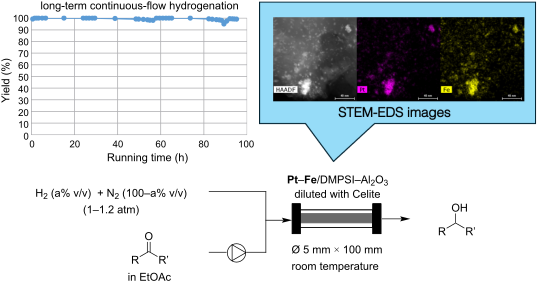
- often suffers from insufficient reactivity and conversion, even under harsh reaction conditions, such as high temperature and pressurized hydrogen, or when employing advanced technologies [8][9][11][12]. The selective hydrogenation of carbonyl moieties often needs to overcome the problem of
- overreduction of other functionalities like aromatic systems, and requires additives to suppress this unwanted side-reaction [6][10]. We have developed heterogeneous bimetallic nanoparticle catalysts for the selective hydrogenation of quinizarin to leucoquinizarin under continuous-flow conditions [30]. During
- our mechanistic study, we unexpectedly discovered that Pt–Fe bimetallic nanoparticles immobilized on a composite support of dimethylpolysilane (DMPSi) and alumina (Pt‒Fe/DMPSi–Al2O3) exhibited extraordinary catalytic performance for the selective hydrogenation of ketones under continuous-flow and


Molecular tweezer–peptide conjugates disrupt the protein–protein interaction between survivin and histone H3 essential in mitosis
Beilstein J. Org. Chem. 2026, 22, 557–567, doi:10.3762/bjoc.22.41
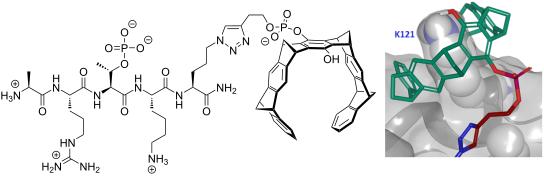
- attached phosph(on)ate anions as powerful new hosts for the amino acids lysine and arginine. In the recent past, we demonstrated that the affinity and selectivity of our lysine-selective molecular tweezers could be improved by attaching natural peptide recognition elements. This could be documented in
- various projects with tailored peptide tweezer conjugates: For example, the self-complementary ELTLGEFL sequence of the nuclear export signal in survivin was coupled to tweezers which rendered them selective for this important interface (NMR evidence, 1:1 stoichiometry, K/A mutants) and prevented the
- selective for accessible lysine residues was covalently connected to the histone H3 peptide at various distances to add the released lysine inclusion energy (Kd ≈ 10 µM) and reach nanomolar affinity. Azidopeptides were conjugated to butynyl tweezers by click chemistry and subjected to competitive




Modern synthetic pathways towards eribulin and its subunits
Beilstein J. Org. Chem. 2026, 22, 495–526, doi:10.3762/bjoc.22.37
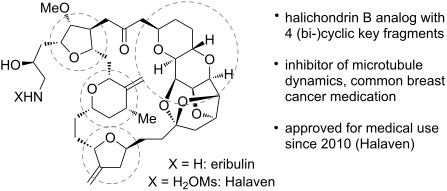
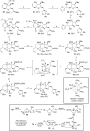
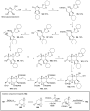
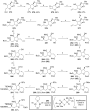
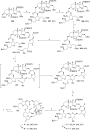
- , Nicolaou and co-workers merged both building blocks within a Ni(II)/Cr(II)-catalyzed NHK reaction using chiral ligand 206 (Scheme 23) [95]. Upon treatment with DBU, 3-methylenetetrahydrofuran 201 was obtained in 56% yield over two steps. PMB-deprotection, iodination and selective reduction of the ester
- allylation, 280 was isolated as a single diastereomer upon recrystallization. The dihydroxylation, oxidative cleavage and reduction with NaBH4 afforded diol 281, whose primary alcohol unit was protected enabling the selective oxidation towards ketone 283. Olefination with 293 (Nysted reagent) and








Synthesis and uranyl(VI) extraction performance of a calix[4]pyrrole–tetrahydroxamic acid receptor
Beilstein J. Org. Chem. 2026, 22, 486–494, doi:10.3762/bjoc.22.36
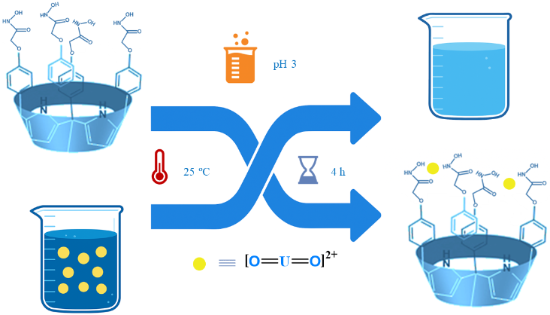
- selective remediation strategies. Supramolecular materials, with their pre-organized structures, offer a promising route for uranium removal. Phenoxycalix[4]pyrroles (PCP) are well-known supramolecular scaffolds capable of selective metal binding, making them attractive candidates for designing uranium


Recent advances in the stereoselective synthesis of distal biaxially chiral molecules
Beilstein J. Org. Chem. 2026, 22, 461–479, doi:10.3762/bjoc.22.34
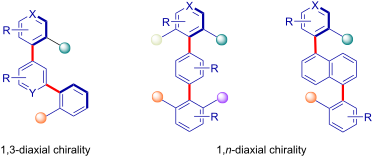
- biaxial terphenyl atropisomers with chlorinated and brominated variants to achieve high diastereo- and enantioselectivity. The process takes place via a two-step kinetic resolution. In 2021, Shi and co-workers reported a highly trans-selective synthesis of axially chiral styrenes 76 containing a
- hydrocarbons. Catalytic synthesis of biaxial triphenylene block-transfer isomers. A Pd(II)-catalyzed trans-selective C–H alkenylation strategy through thioether-directed olefination. Synthesis of N-arylphthalimides from prochiral maleimides and NHC-activated dienolides. Ni-catalyzed synthesis of triaxially


Structural reassignment of compound 968, an allosteric glutaminase inhibitor
Beilstein J. Org. Chem. 2026, 22, 455–460, doi:10.3762/bjoc.22.33
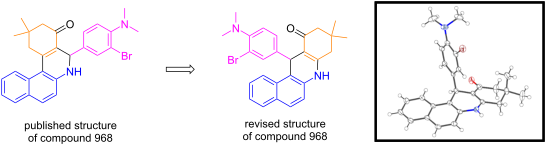
- reaction with 2-naphthol as the dinucleophile is also known [32]. In all cases, the regiochemistry of cyclization is selective and no isomeric products are formed. Conclusion In this report, we confirm the finding by Martinez [28] and Kozlov [29][30] that the three-component reaction originally claimed to


Synthesis and stereochemical analysis of dynamic planar chiral oxa[7]orthocyclophene
Beilstein J. Org. Chem. 2026, 22, 436–442, doi:10.3762/bjoc.22.30

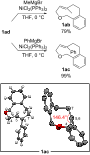
- -substituted oxacyclophene 1ad We planned to construct the nine-membered cyclic ether skeleton of 1ad in the final step by an intramolecular Williamson etherification of haloalcohol 2 (Scheme 1). The iodine-substituted Z-alkene moiety of 2 was planned to be introduced through a trans-selective hydroiodination