


Search results
Search for "substituent effects" in Full Text gives 63 result(s) in Beilstein Journal of Organic Chemistry.
Synthesis of novel 1,2,4-oxadiazole-isoxazoline hybrids and their in silico potential with adenosine receptors
Beilstein J. Org. Chem. 2026, 22, 1033–1047, doi:10.3762/bjoc.22.82
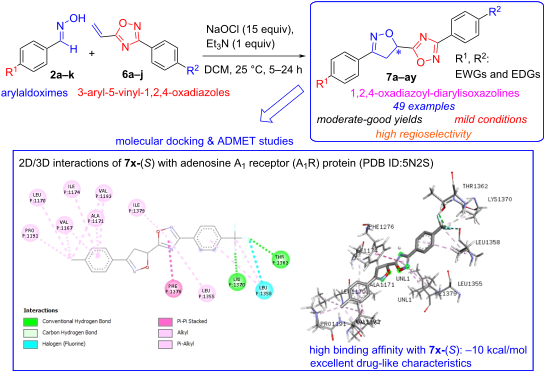
- –97%) and fully characterized by IR, NMR, and HRMS analyses. The reactions exhibited high regioselectivity, exclusively affording 5-isoxazoline derivatives, while substituent effects played a decisive role in modulating reaction efficiency. In silico studies revealed that all hybrids 7a–ay display
- tool. These reactions are generally governed by HOMO–LUMO orbital interactions between the dipole and dipolarophile. While substituent effects on the nitrile oxide dipole are minimal, monosubstituted alkenes typically yield 5-substituted isoxazolines with high regioselectivity due to steric and


The trans-influence in gold chemistry from a catalytic perspective
Beilstein J. Org. Chem. 2026, 22, 838–856, doi:10.3762/bjoc.22.66
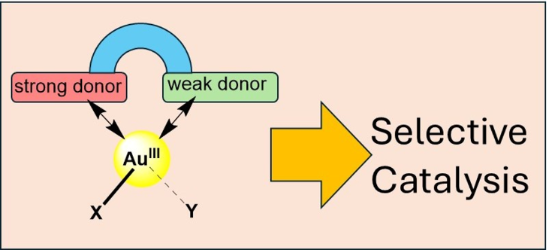
- ], crystallographically determined bond distances, for example Au–N distances, which are quite sensitive to trans-influences but are rather “soft”, are subject to unsystematic crystal packing, conformational and substituent effects which are of a similar order of magnitude to the trans-influence that the correlation is


Harnessing light energy with molecules
Beilstein J. Org. Chem. 2026, 22, 680–682, doi:10.3762/bjoc.22.52

- study of substituent effects in a large selection of N-acetylated phenylazopyrazole photoswitches. Pittelkow, Antonov, and co-workers [17] present a study on tautomerism and switching in 7-hydroxy-8-(azophenyl)quinoline and similar π-expanded azobenzene compounds. The photoisomerization quantum yield is
Arene activation via π-bond localization: concepts and opportunities
Beilstein J. Org. Chem. 2026, 22, 257–273, doi:10.3762/bjoc.22.19
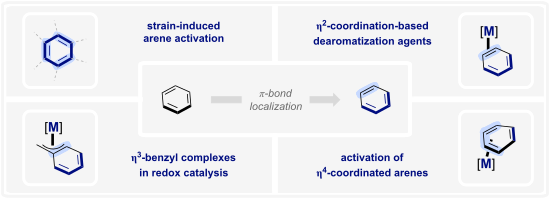
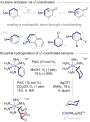
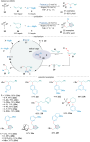
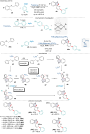
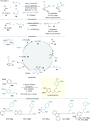
- hydrogenation of the aromatic core of highly substituted benzocyclobutenes using simple Pd/C under ambient conditions [38]. The pronounced substituent effects on the hydrogenation rate highlight the key role of small-ring strain in this generally challenging transformation. Complementary to these strictly




An Fe(II)-catalyzed synthesis of spiro[indoline-3,2'-pyrrolidine] derivatives
Beilstein J. Org. Chem. 2025, 21, 2383–2388, doi:10.3762/bjoc.21.183
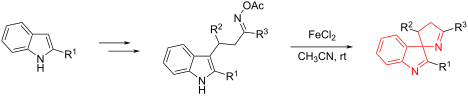
- = 1:10). Scaling up the reaction to a 4 mmol scale led to a decrease in yield to 55%. Under these conditions, we explored the substrate scope of the reaction (Scheme 3). In general, substituent effects were minimal, and most spirocyclic products were obtained in good to high yields. Nevertheless




Recent advances in Norrish–Yang cyclization and dicarbonyl photoredox reactions for natural product synthesis
Beilstein J. Org. Chem. 2025, 21, 2315–2333, doi:10.3762/bjoc.21.177
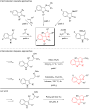
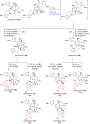
- spiroacetal core using multi-functionalized 1,2-naphthoquinone substrates [51]. This study focused on substituent effects of methoxy groups at different positions (C5–C8) on the naphthoquinone chromophore (Scheme 13b). Key findings revealed that substrates bearing methoxy groups at C5, C6, or C8 (108a, 108b
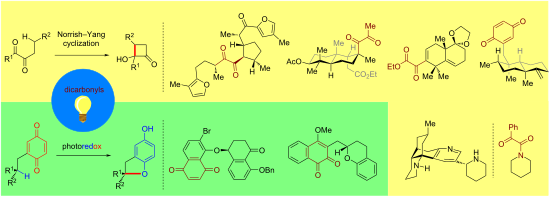
- , substituent effects, and steric hindrance. Meanwhile, for multi-functional group substrates, the presence of potential competitive hydrogen transfer sites tends to lead to the formation of non-target cyclized products, further reducing the reaction specificity. Dicarbonyls are excellent substrates for Norrish




Insoluble methylene-bridged glycoluril dimers as sequestrants for dyes
Beilstein J. Org. Chem. 2025, 21, 2302–2314, doi:10.3762/bjoc.21.176
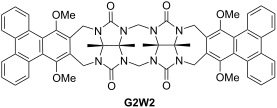
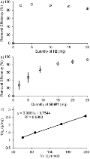
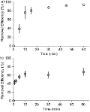
- of dyes (Figure 2). We also studied the previously reported host H2 [39], which is an isomer of G2W4, to potentially uncover any substituent effects (OH or OMe). For this study, we used the five dyes shown in Figure 2 (three cationic and two neutral) and employed a batch-mode experimental design



Pd-catalyzed dehydrogenative arylation of arylhydrazines to access non-symmetric azobenzenes, including tetra-ortho derivatives
Beilstein J. Org. Chem. 2025, 21, 2234–2242, doi:10.3762/bjoc.21.170
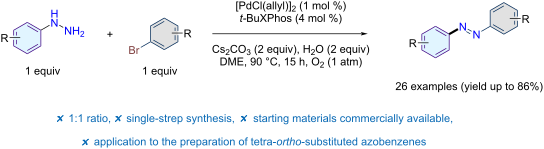
- the scope of arylhydrazines to assess their compatibility under the optimized reaction conditions (Scheme 2). While some arylhydrazines are commercially available, it was observed that their hydrochloride salts were ineffective, even with the addition of excess base. Examining the substituent effects


Photoswitches beyond azobenzene: a beginner’s guide
Beilstein J. Org. Chem. 2025, 21, 1808–1853, doi:10.3762/bjoc.21.143
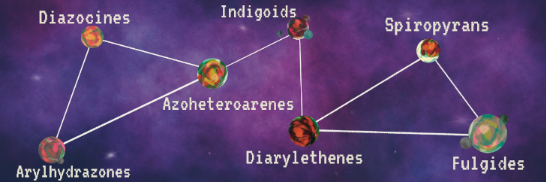
- ) single bond N–N. The hydrazone pathway in protic solvents could be ruled out in cases when the energy of the s-cis-hydrazone was superior to the energy of the other two transition states. For further substituent effects on azoheteroarenes, we refer the readers to the following reports by Venkataramani




Recent advances in amidyl radical-mediated photocatalytic direct intermolecular hydrogen atom transfer
Beilstein J. Org. Chem. 2025, 21, 1306–1323, doi:10.3762/bjoc.21.100
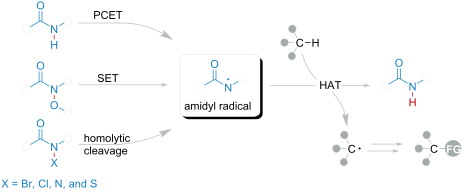
- principles. (a) BDE of C–H. (b) Direct functionalization of C–H catalyzed by transition-metal. (c) Direct functionalization of C–H via HAT process. (a) Amidyl radical-enabled hydrogen atom transfer. (b) Substituent effects to amidyl radical properties. (c) This review: generation of amidyl radical and






Substituent effects in N-acetylated phenylazopyrazole photoswitches
Beilstein J. Org. Chem. 2025, 21, 830–838, doi:10.3762/bjoc.21.66

- discovered that simple acylation of the pyrazole moiety leads to increased quantum yields of isomerization, long Z-isomer life-times, good spectral separation, and high photostability. Keywords: azobenzenes; azopyrazoles; photochromism; photoswitches; substituent effects; Introduction Organic photoswitches
- , we were interested to study the photoswitching properties of eleven novel N-acetylated analogous NAc-PAPs and the influence of substituent effects. Furthermore, we compared their photochromism with a set of 22 known N-methylated (NMe-) and unfunctionalized (NH-) PAPs in moderate to good yields (66–85


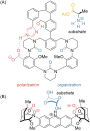
Beyond symmetric self-assembly and effective molarity: unlocking functional enzyme mimics with robust organic cages
Beilstein J. Org. Chem. 2025, 21, 421–443, doi:10.3762/bjoc.21.30
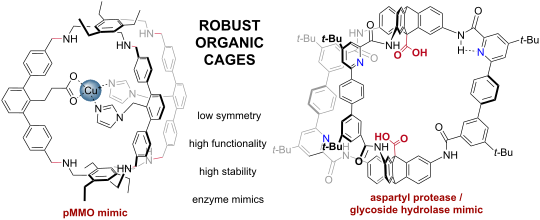
- ], which in many cases is the only way to understand pure substituent effects (e.g., on catalysis). To enable the validation of this process, experimentalists must collect data relevant to benchmarking computations: binding constants, kinetic barriers, crystal structures. In turn, this process will be




Tunable full-color dual-state (solution and solid) emission of push–pull molecules containing the 1-pyrindane moiety
Beilstein J. Org. Chem. 2024, 20, 3016–3025, doi:10.3762/bjoc.20.251

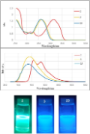
- even more pronounced for compound 1i than for 1c due to presence of the stronger electron-donating group. Then, the substituent effects on the spectral properties of stilbazoles 1a–i were studied in two different solvents: nonpolar toluene (Table 2) and highly polar DMSO (Table 3). The absorption


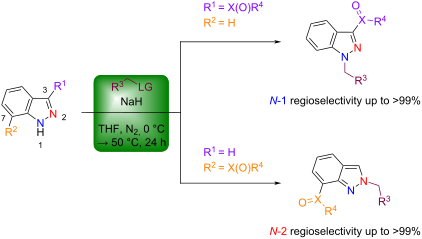
Regioselective alkylation of a versatile indazole: Electrophile scope and mechanistic insights from density functional theory calculations
Beilstein J. Org. Chem. 2024, 20, 1940–1954, doi:10.3762/bjoc.20.170
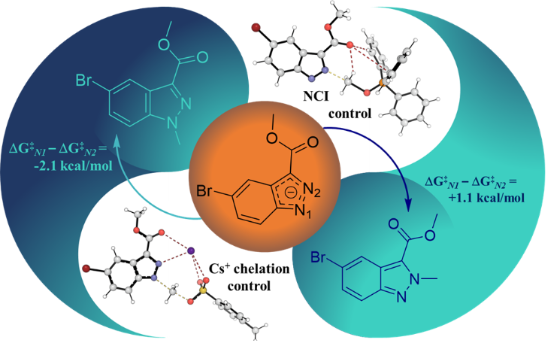
- employed as nucleophiles in chemical transformations, and a mixture of both N1- and N2-alkylated products is formed, depending on the reaction conditions, with little selectivity in regards to substituent effects [27][28][29][30][31][32][33]. Considering the importance of indazoles as a widely used


Kinetically stabilized 1,3-diarylisobenzofurans and the possibility of preparing large, persistent isoacenofurans with unusually small HOMO–LUMO gaps
Beilstein J. Org. Chem. 2024, 20, 1099–1110, doi:10.3762/bjoc.20.97
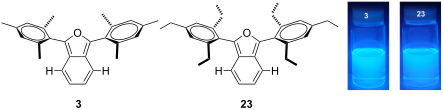
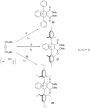
- . We previously studied substituent effects in acenes and reported that several substituents promote photooxidative resistance in pentacenes [5] and larger acenes including heptacene [6] and nonacene [7]. One or more substituents that promote photooxidative resistance by quenching singlet oxygen could






Palladium-catalyzed three-component radical-polar crossover carboamination of 1,3-dienes or allenes with diazo esters and amines
Beilstein J. Org. Chem. 2024, 20, 661–671, doi:10.3762/bjoc.20.59
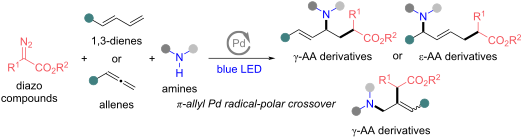
- case of 1,3-cyclohexadiene 2e, the amine was expected to attack the π-allyl palladium from the exo side. Considering that substituent effects might affect the regioselectivity in this MCR, we further investigated the 1,4-/1,2-addition selectivity with 1-phenyl-substituted 1,3-dienes 2f–i. Interestingly



Ligand effects, solvent cooperation, and large kinetic solvent deuterium isotope effects in gold(I)-catalyzed intramolecular alkene hydroamination
Beilstein J. Org. Chem. 2024, 20, 479–496, doi:10.3762/bjoc.20.43
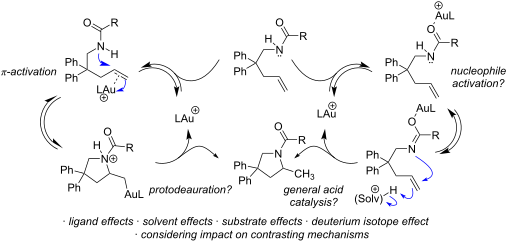
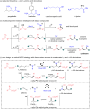
- undertaking a 1H NMR spectroscopic kinetic survey of solvent, ligand, and substituent effects on the general reaction 1 → 3 (with a variety of N-protecting groups), to supplement known qualitative observations. We found that, (1) electron-withdrawing phosphines accelerate hydroamination, (2) reactions are
- insignificant to significant. The reaction demonstrates features of being driven by both Lewis acidity of gold and proton transfer, instead of being localized to one of the two regimes. Furthermore, substituent effects (more reactive with more Lewis basic substrates) hint at gold carbonyl interactions being





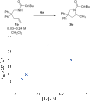


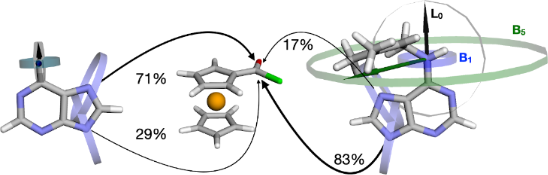
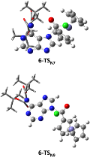
Ferrocenoyl-adenines: substituent effects on regioselective acylation
Beilstein J. Org. Chem. 2022, 18, 1270–1277, doi:10.3762/bjoc.18.133



Electrochemical and spectroscopic properties of twisted dibenzo[g,p]chrysene derivatives
Beilstein J. Org. Chem. 2022, 18, 963–971, doi:10.3762/bjoc.18.96
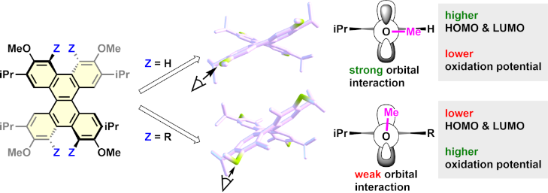
- -2), the Eox1 is lower by only 0.15 V than that of DBC. It has also been reported that the oxidation potential of MeO-DBC-3, in which the MeO groups are attached at both X and Y, is 0.06 V higher than that for MeO-DBC-1. These remarkable substituent effects are an interesting and important finding


Morita–Baylis–Hillman reaction of 3-formyl-9H-pyrido[3,4-b]indoles and fluorescence studies of the products
Beilstein J. Org. Chem. 2022, 18, 926–934, doi:10.3762/bjoc.18.92
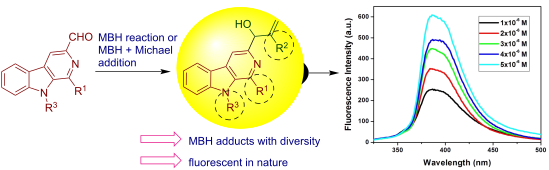
- exhibit excellent fluorescence characteristics. Different parameters like contact time, concentration, solvent effects and substituent effects were examined for obtaining the optimal results. It was observed that the MBH derivatives exhibited excellent fluorescence characteristics at a concentration of 5


Iron-catalyzed domino coupling reactions of π-systems
Beilstein J. Org. Chem. 2021, 17, 2848–2893, doi:10.3762/bjoc.17.196
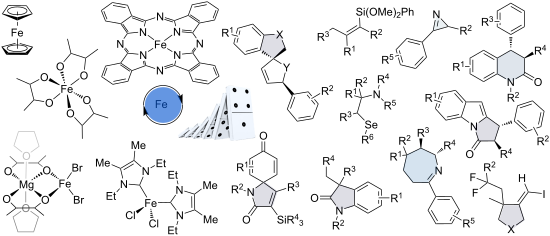
- reaction begins with a radical addition to the acrylamide 60 followed by subsequent radical cyclization with the aryl ring. A few substituent effects were noted, namely ortho-substituents on the aryl ring were detrimental to the reaction. Moreover, terminal alkenes preformed poorer than their 1,1





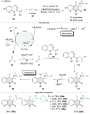
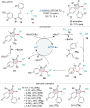


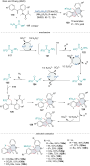

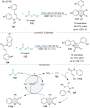


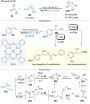

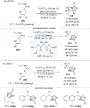


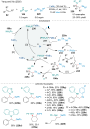
Regioselective N-alkylation of the 1H-indazole scaffold; ring substituent and N-alkylating reagent effects on regioisomeric distribution
Beilstein J. Org. Chem. 2021, 17, 1939–1951, doi:10.3762/bjoc.17.127
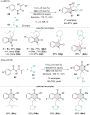
- . C-3 substituted indazole derivatives (12–24) employed to investigate C-3 substituent effects on indazole N-alkylation regioselectivity. Synthetic approaches to N-1 substituted indazole derivatives [12][13][14]. N-Alkylation of indazole 9 under Mitsunobu conditions shows a strong preference (ratio N
- , solvent, and temperature.a Indazole C-3 substituent effects. Effect of NaH and THF on N-1 regioselectivity.a Effect of indazole benzenoid ring substituents on N-1:N-2 regioselectivity.a Effect of 15-crown-5 on the regioselective N-alkylation of indazole 9, in the presence of NaH in THF.a Alkylating


Synthesis of (Z)-3-[amino(phenyl)methylidene]-1,3-dihydro-2H-indol-2-ones using an Eschenmoser coupling reaction
Beilstein J. Org. Chem. 2021, 17, 527–539, doi:10.3762/bjoc.17.47
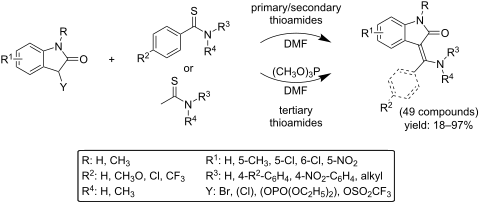
- carbanion nucleophilicity and these two effects are opposing. The influence of the substituent effects, as quantified using Hammett’s substituent constants [35], on the yields can be represented graphically (Figure 2). Reaction of 1a–e with secondary thiobenzamides 3a–i Secondary thiobenzamides 3a–i also


Styryl-based new organic chromophores bearing free amino and azomethine groups: synthesis, photophysical, NLO, and thermal properties
Beilstein J. Org. Chem. 2020, 16, 2282–2296, doi:10.3762/bjoc.16.189
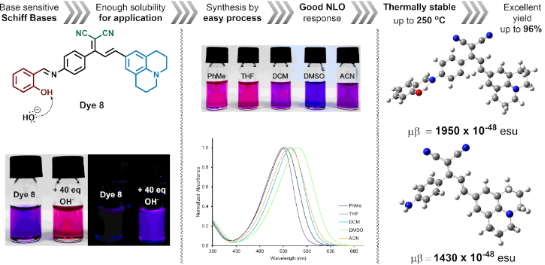
- for 3 in DCM was 0.01 and that of 8 in PhMe was 0.11. Substituent effects The prepared Schiff bases exhibited greater red shifts than the styryl counterparts (3–7) in both, absorption and emission spectra. For instance, in DCM, dye 8 showed absorption and emission maxima at 546 and 636 nm, whereas the


Reactions of 3-aryl-1-(trifluoromethyl)prop-2-yn-1-iminium salts with 1,3-dienes and styrenes
Beilstein J. Org. Chem. 2020, 16, 2064–2072, doi:10.3762/bjoc.16.173
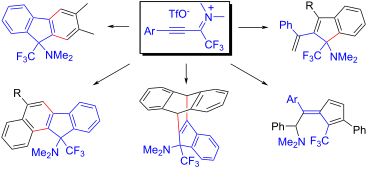
- characteristics of the C‒F bond [6][7] are the basis for the electronic and steric properties of the CF3 group, such as a strong electron-withdrawing (−I) effect, the accumulation of negative charge density in a relatively small volume and the low polarizability of the fluoro atoms. These and other substituent
- effects can modulate the conformational, physicochemical and electronic properties of a molecule. Two major strategies exist to introduce a CF3 group into a target molecule: formation of a carbon‒ or heteroatom‒CF3 bond [8][9] and the use of preformed CF3-substituted building blocks. During our studies on





