


Search results
Search for "terpenoid" in Full Text gives 60 result(s) in Beilstein Journal of Organic Chemistry.
Synthesis of depressin, cryptomeridiol and 4-epi-cryptomeridiol enabled by a terpenoid chiral pool-producing platform
Beilstein J. Org. Chem. 2026, 22, 683–690, doi:10.3762/bjoc.22.53
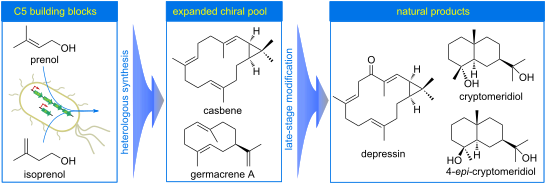
- of different plants with broad biological activity. Most of the syntheses focused on the transformation of chiral pool substrates into their trans-6/6-fused ring system. We herein report the synthesis of compounds 1–3 by taking advantage of an expanded chiral pool strategy, in which the terpenoid
- cyclases; Introduction Terpenoids are one of the most important family of natural products that have been found to be produced in all domains of life. Although containing only carbon, hydrogen and oxygen atoms in most cases, over 100,000 terpenoid structures containing diverse skeletons and rich oxidative
- modifications have been reported [1][2][3]. Furthermore, the broad biological functions of terpenoids have made them to be widely applied as pharmaceuticals, flavors, and agrochemicals and so forth. In this context, terpenoid natural products have attracted lasting attention in the field of synthetic chemistry


Ring contraction and ring expansion reactions in terpenoid biosynthesis and their application to total synthesis
Beilstein J. Org. Chem. 2026, 22, 289–343, doi:10.3762/bjoc.22.21
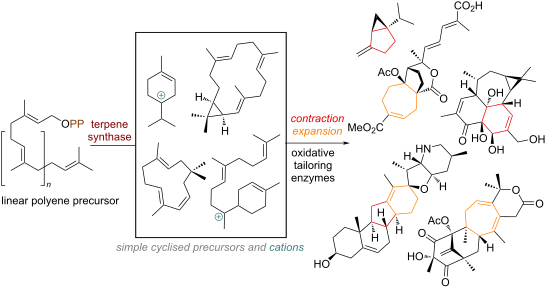
- . This review aims to explore intriguing examples of such ring-size alterations in all aspects of terpenoid synthesis. The current state-of-the-art regarding proposed biosynthetic pathways for terpenoids with unusual carbon skeleta, occurring either during initial cyclisation or subsequent oxidative
- editing; terpenoids; total synthesis; Introduction The vast richness of structural diversity in terpenoid natural products has fascinated organic chemists for more than a century now [1][2][3][4][5]. With more sophisticated techniques for isolation and characterisation emerging over the decades
- terpenoid modification in nature are depicted. Terpene synthase enzymes are centrally important for determining the carbon skeleton and thus family the terpenoid belongs to. These cyclisation enzymes are divided into Class I (active site cleft contains multiple Mg2+-binding motifs which are responsible for






The application of desymmetric enantioselective reduction of cyclic 1,3-dicarbonyl compounds in the total synthesis of terpenoid and alkaloid natural products
Beilstein J. Org. Chem. 2025, 21, 2085–2102, doi:10.3762/bjoc.21.164
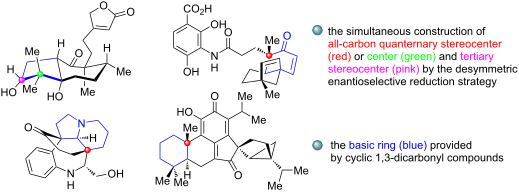
- synthesis of complex terpenoid and alkaloid natural products by strategically applying desymmetric enantioselective reduction. Advance before 2016 in this area has been overviewed in an elegant review article. Since then, a series of more challenging terpenoid and alkaloid natural products have been
- synthesized utilizing a desymmetric enantioselective reduction strategy of cyclic 1,3-dicarbonyl compounds as a key transformation. This review will summarize the application of this strategy in the total synthesis of terpenoid and alkaloid natural products from the year 2016 to 2025. We first focus on the
- shortage of natural product sources. Nevertheless, the asymmetric total synthesis of terpenoid and alkaloid natural products presents significant challenges due to their complex and diverse ring systems and the presence of multiple stereocenters, including all-carbon quaternary stereocenters. Consequently







Bioinspired total syntheses of natural products: a personal adventure
Beilstein J. Org. Chem. 2025, 21, 2048–2061, doi:10.3762/bjoc.21.160
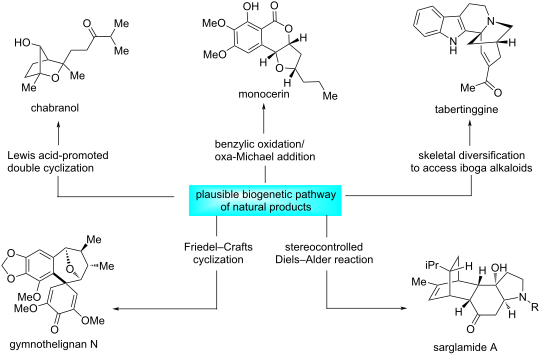
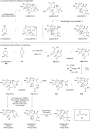
- synthesis of natural products. Review Synthesis of chabranol In 2009, Duh and co-workers investigated the ingredients of Formosan soft corals Sinularia capillosa Tixier-Durivault and Nephthea chabroli Audouin, collected from west pacific Dongsha Atoll and Siaoliouciou Island, providing two terpenoid natural




Allostreptopyrroles A–E, β-alkylpyrrole derivatives from an actinomycete Allostreptomyces sp. RD068384
Beilstein J. Org. Chem. 2024, 20, 1981–1987, doi:10.3762/bjoc.20.174
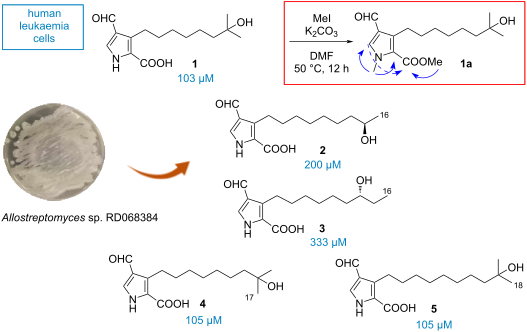
- 2-nitro congeners, nitropyrrolins [14] and heronapyrroles [15], bearing a farnesyl chain at the C4 position. Pyrroloterpenes are proposed to be of mixed biogenesis, elaborated from an aromatic pyrrole moiety and a terpenoid chain [15]. Prodigiosin, a major metabolite of Serratia, is another example


Enhancing structural diversity of terpenoids by multisubstrate terpene synthases
Beilstein J. Org. Chem. 2024, 20, 959–972, doi:10.3762/bjoc.20.86
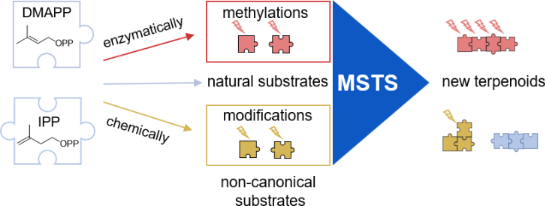
- multisubstrate terpene synthases (MSTSs) and highlight their potential applications. Keywords: noncanonical terpene; substrate promiscuity; synthetic biology; terpene synthase; terpenoid; Introduction Terpenoids constitute the largest class of natural products with more than 80000 known structures [1] and a
- reviewed [11][12]. In addition to the capability to generate multiple products using a single substrate, a growing number of TSs called multisubstrate terpene synthases (MSTSs) are capable of utilizing prenyl precursors with different chain lengths or configurations to synthesize diverse terpenoid products
- different subcellular compartments may facilitate the generation of multiple terpenoids in plants. Recently, in addition to linear terpenoid-producing TSs, MSTSs that form cyclic terpenoids have been discovered in plants, further increasing our understanding of chemodiversity and biosynthesis of plant


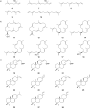




Confirmation of the stereochemistry of spiroviolene
Beilstein J. Org. Chem. 2024, 20, 852–858, doi:10.3762/bjoc.20.77
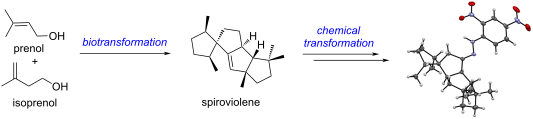
- would be potentially applied as fragrances, pharmaceuticals etc. Until now, more than 80,000 terpenoid structures have been reported, which are found in all domains of life [1][2][3]. Despite their remarkable chemodiversity, the biosynthetic logic of terpenes is straightforward [4]. All terpenes are


Discovery and biosynthesis of bacterial drimane-type sesquiterpenoids from Streptomyces clavuligerus
Beilstein J. Org. Chem. 2024, 20, 815–822, doi:10.3762/bjoc.20.73
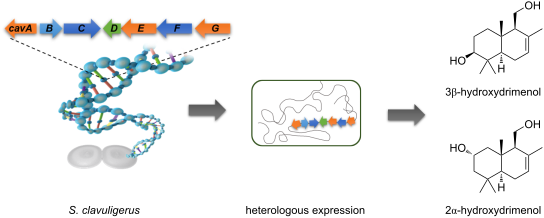
- analogs. This discovery not only broadens the known chemical diversity of DMTs from bacteria, but also provides new insights into DMT biosynthesis in bacteria. Keywords: bacterial terpenoid; cytochrome P450s; drimane-type sesquiterpenoid; Streptomyces clavuligerus; terpenoid biosynthesis; Introduction


Production of non-natural 5-methylorsellinate-derived meroterpenoids in Aspergillus oryzae
Beilstein J. Org. Chem. 2024, 20, 638–644, doi:10.3762/bjoc.20.56
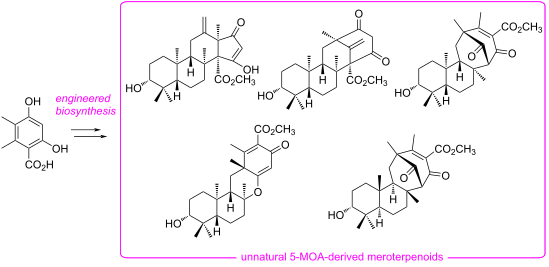
- , demonstrating the effectiveness of our approach in the generation of structural analogues of meroterpenoids. Keywords: biosynthesis; meroterpenoids; natural products; pathway engineering; terpene cyclases; Introduction Meroterpenoids are a class of natural products partially biosynthesized from a terpenoid
- pathway; their non-terpenoid portions can be polyketides, indole, or shikimate-derived compounds [1][2][3]. Their hybrid nature significantly contributes to their structural diversity and wide range of biological activities. Although meroterpenoids are found ubiquitously in nature, as both primary and
- a general understanding of their biosynthesis [7][8]. Polyketide–terpenoid hybrids are among the largest families of meroterpenoids. Orsellinic acid, an aromatic polyketide, and its analogues have been commonly identified as polyketide components in fungal meroterpenoids. Notably, 3,5



Recent developments in the engineered biosynthesis of fungal meroterpenoids
Beilstein J. Org. Chem. 2024, 20, 578–588, doi:10.3762/bjoc.20.50
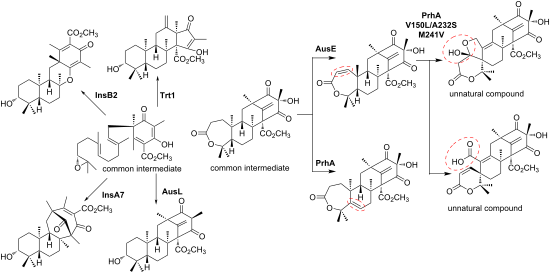
- members exhibit beneficial biological activities. This mini-review highlights recent advances in the engineered biosynthesis of meroterpenoid compounds with C15 and C20 terpenoid moieties, with the reconstruction of fungal meroterpenoid biosynthetic pathways in heterologous expression hosts and the
- structures, and are partially derived from terpenoids [1]. Many fungal meroterpenoids are composed of polyketide and terpenoid moieties. Examples of fungal meroterpenoids include mycophenolic acid (Figure 1, 1), which shows immunosuppressive activity and cell differentiation-inducing activity by inhibiting
- of acyl-CoA: cholesterol acyltransferase [4]. In this mini-review, we focus on the fungal meroterpenoids biosynthesis, especially terpenonid cyclizations and post-cyclization modifications, which mostly contribute to the skeletal diversity. Several terpenoid cyclases and αKG-dependent dioxygenases






Sulfur-containing spiroketals from Breynia disticha and evaluations of their anti-inflammatory effect
Beilstein J. Org. Chem. 2023, 19, 1604–1614, doi:10.3762/bjoc.19.117
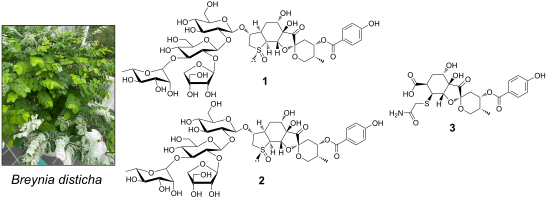
- spiroketals (1 and 2) with a tetrasaccharide moiety. For terpenoid glycosides, the 1H NMR spectrum becomes more complex as the number of sugar residues and their lengths increase, which complicates 2D NMR analysis. In such cases, commonly used TOCSY measurements can be supplemented by H2BC and HSQC-TOCSY



Unraveling the role of prenyl side-chain interactions in stabilizing the secondary carbocation in the biosynthesis of variexenol B
Beilstein J. Org. Chem. 2023, 19, 1503–1510, doi:10.3762/bjoc.19.107
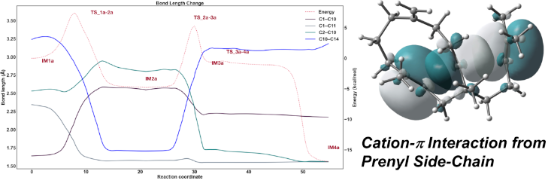
- 180,000 terpenoid compounds have been reported to date [1][2][3][4]. One of the most intriguing point is that all diversified structures are synthesized from common starting materials, isoprenoids. Reactions that generate complex cyclic structures and multiple stereocenters from linear achiral precursors


Functions of enzyme domains in 2-methylisoborneol biosynthesis and enzymatic synthesis of non-natural analogs
Beilstein J. Org. Chem. 2023, 19, 1452–1459, doi:10.3762/bjoc.19.104
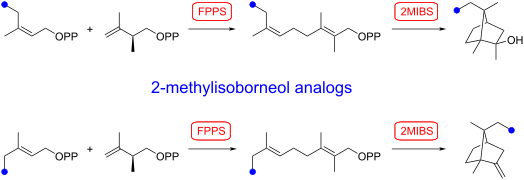
- in Table 1 and gas chromatograms are shown in Supporting Information File 1, Figures S2 and S3. After identification of the successful substrate-enzyme combinations, a preparative scale incubation of DA-4 and IA-1 with FPPS and 2MIBS resulted in the production of a terpenoid hydrocarbon that was


Strategies to access the [5-8] bicyclic core encountered in the sesquiterpene, diterpene and sesterterpene series
Beilstein J. Org. Chem. 2023, 19, 245–281, doi:10.3762/bjoc.19.23
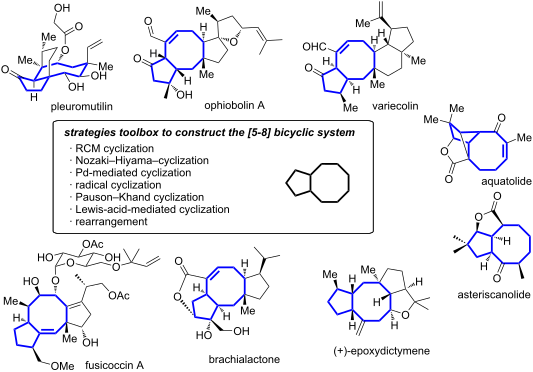
- access the cyclooctane unit of the pleuromutilin scaffold [76]. In this very recent paper, the authors implemented adequately chosen tactics allowing the completion of the 15-step and 16-step synthesis of mutilin and pleuromutilin (1), respectively. To access the terpenoid core, the synthetic pathway was
- the radical approach in the formation of the eight-membered ring of pleuromutilin (1), the chemistry was scarcely extended to other terpenoid molecules. Only ophiobolin synthetic strategy was implemented with an 8-endo/5-exo radical cascade cyclization by Maimone’s group [77]. Inspired by the cyclase


1,4-Dithianes: attractive C2-building blocks for the synthesis of complex molecular architectures
Beilstein J. Org. Chem. 2023, 19, 115–132, doi:10.3762/bjoc.19.12
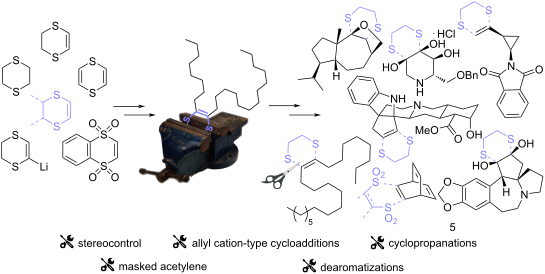
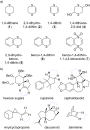
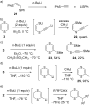
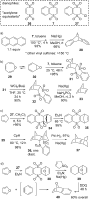
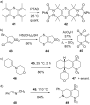
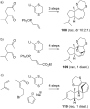
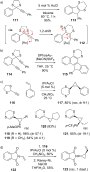
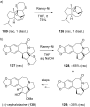
- allowed the assembly of complex terpenoid frameworks. Examples from our research group include various daucanoid and kauranoid terpene scaffolds such as 108, 109, and 110, which can be assembled from dihydrodithiin 3 as a building block in just a few synthetic operations with good to excellent control of
- of dithiin-fused allyl alcohols and similar non-cyclic sulfur-substituted allyl alcohols. Applications of dihydrodithiins in the rapid assembly of polycyclic terpenoid scaffolds [108][109]. Dihydrodithiin-mediated allyl cation and vinyl carbene cycloadditions via a gold(I)-catalyzed 1,2-sulfur










Combining the best of both worlds: radical-based divergent total synthesis
Beilstein J. Org. Chem. 2023, 19, 1–26, doi:10.3762/bjoc.19.1
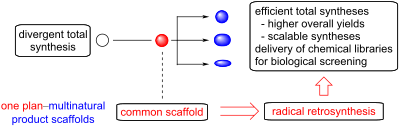
- –2022. Review Radical-based divergent synthesis Commonly, the most successful divergent plans apply where the natural molecular complexity is rich. Not surprisingly, most of the divergent total syntheses carried out thus far are performed on terpenoid and alkaloid targets, utilizing common synthetic








Synthetic study toward the diterpenoid aberrarone
Beilstein J. Org. Chem. 2022, 18, 1625–1628, doi:10.3762/bjoc.18.173
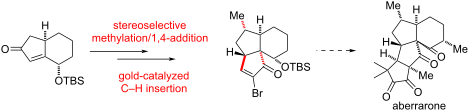
- products have found myriad use in new drug development, exemplified by ET-743 and eribulin [1]. Back in 1990s, Rodriguez and co-workers isolated a rich array of terpenoid natural products from the Caribbean sea whip, Pseudopterogorgia elisabethae with unprecedented carbon skeleton, most of which showed


Efficient production of clerodane and ent-kaurane diterpenes through truncated artificial pathways in Escherichia coli
Beilstein J. Org. Chem. 2022, 18, 881–888, doi:10.3762/bjoc.18.89
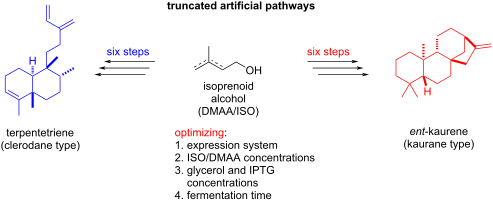
- complexity [12]. Additionally, chemical transformations from commercial natural products are also tedious and currently limited to a few diterpene skeletons [8]. Engineering microbes via synthetic biology provides new opportunities to produce terpenoid carbon skeletons. All terpenoids are derived from the


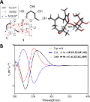
Terpenoids from Glechoma hederacea var. longituba and their biological activities
Beilstein J. Org. Chem. 2022, 18, 555–566, doi:10.3762/bjoc.18.58
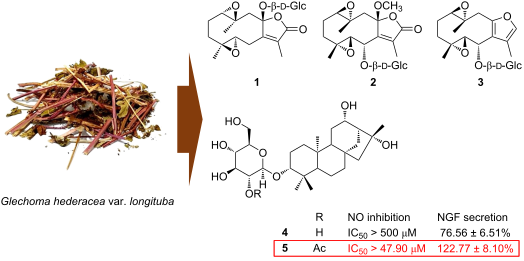
- ) cell line. Keywords: antineuroinflammation; cytotoxicity; Glechoma hederacea var. longituba; neurotrophic effect; terpenoid; Introduction Glechoma hederacea var. longituba is a perennial plant in the family Labiatae. It is commonly known as ‘ground ivy’ and ‘gill over the ground’ and is widely




Sustainable manganese catalysis for late-stage C–H functionalization of bioactive structural motifs
Beilstein J. Org. Chem. 2021, 17, 1733–1751, doi:10.3762/bjoc.17.122

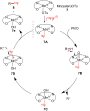
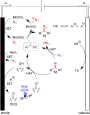
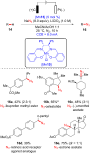
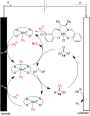
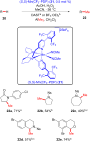
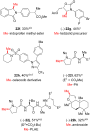
- process facilitated the fluorination of sclareolide (1) and complex steroid 3. Sclareolide (1) is a naturally available terpenoid with antifungal and anticancer activities [23]. Under the optimized reaction conditions, sclareolide (1) is fluorinated at the C2 and C3 positions in 42% (see 2a) and 16% yield
- fluorine activation (see 22i–j), and the oxygen-containing natural terpenoid ambroxide was methylated at the methylene position next to the O atom on the tetrahydrofuran ring (see 22k). This manganese-catalyzed late-stage approach enables the direct methylation of unactivated C–H bonds with excellent site








A comprehensive review of flow chemistry techniques tailored to the flavours and fragrances industries
Beilstein J. Org. Chem. 2021, 17, 1181–1312, doi:10.3762/bjoc.17.90


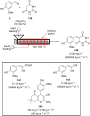


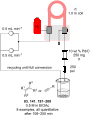


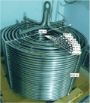

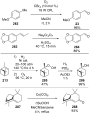



Recent advances in palladium-catalysed asymmetric 1,4–additions of arylboronic acids to conjugated enones and chromones
Beilstein J. Org. Chem. 2021, 17, 1048–1085, doi:10.3762/bjoc.17.84
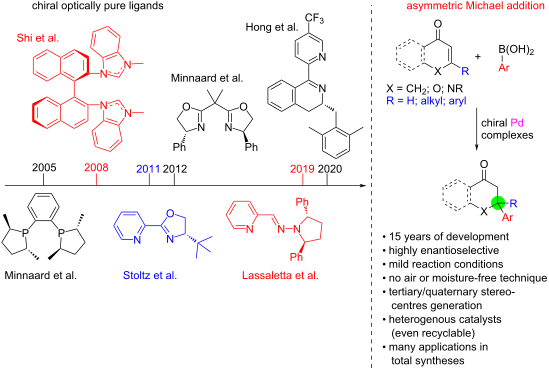
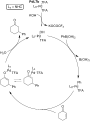
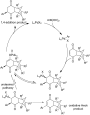
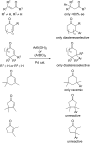
- of natural molecules was reported by Li et al. in 2014. They presented the synthesis of terpenoid precursors ((+)-taiwaniaquinone H and (+)-dichroanone) [10] starting from 3-methyl-2-cyclohexenone using the L9/Pd(TFA)2 catalytic system. The precursors were prepared in good yields (42–98%) with high







Antibacterial scalarane from Doriprismatica stellata nudibranchs (Gastropoda, Nudibranchia), egg ribbons, and their dietary sponge Spongia cf. agaricina (Demospongiae, Dictyoceratida)
Beilstein J. Org. Chem. 2020, 16, 1596–1605, doi:10.3762/bjoc.16.132
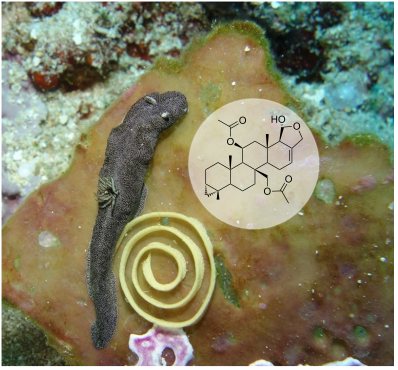
- were shown to share and cover various core functions of sponge metabolism by functionally equivalent symbionts, analogous enzymes, or biosynthetic pathways [16][79][80]. Another Spongia species, S. officinalis, was shown to harbour bacteria with terpenoid cyclases/protein prenyltransferases responsible
- for a wide chemodiversity of terpenoid natural products [14][81]. Besides, the marine fungi Penicillium spp. and Aspergillus spp. are often associated with sponge hosts and were found to produce various terpenoids as well [15][82][83]. Hence, if sponges are not the origin of these metabolites, it is




Understanding the role of active site residues in CotB2 catalysis using a cluster model
Beilstein J. Org. Chem. 2020, 16, 50–59, doi:10.3762/bjoc.16.7
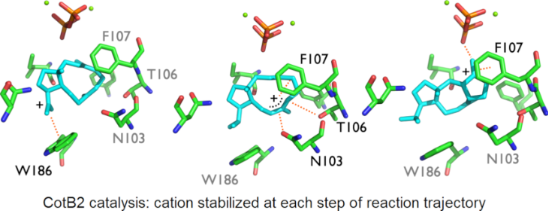
- different cellular compartments [1][2]. More specifically, the enigmatic class of terpene cyclases is responsible for converting linear aliphatic oligoprenyl diphosphates into various chemically complex macrocyclic products. The resulting terpene scaffolds and their functionalized terpenoid analogues


Terpenes
Beilstein J. Org. Chem. 2019, 15, 2966–2967, doi:10.3762/bjoc.15.292
- pheromones, but also have a long standing history as fragrances used by humans. The oxidised derivatives may be of high interest because of their bioactivity, with some of the most important drugs used in medical applications being of terpenoid origin. Two of the most fanous examples include the diterpenoid



