


Search results
Search for "CO" in Full Text gives 1872 result(s) in Beilstein Journal of Organic Chemistry. Showing first 200.
Synthesis of diaryl phosphates using phytic acid as a phosphorus source
Beilstein J. Org. Chem. 2026, 22, 213–223, doi:10.3762/bjoc.22.15
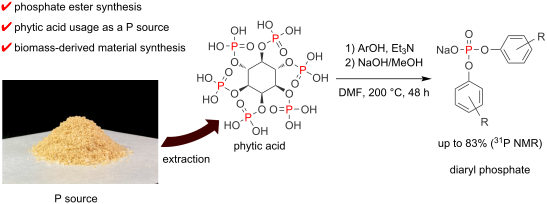
- Research, Saga University, 152-1 Shonan-cho, Karatsu, Saga 847-0021, Japan Nippon Concrete Industries Co., Ltd., 4-6-14 Shibaura, Minato-ku, Tokyo 108-8560, Japan 10.3762/bjoc.22.15 Abstract Phytic acid is a phosphorus-rich molecule, which is produced by plants using water-soluble phosphates absorbed from
- overnight. The next day, the suspension was centrifuged (2000g, 10 min), and the supernatant was removed. The remaining pellets were resuspended in an appropriate amount of methanol, and the suspension was filtered via vacuum filtration using ADVANTEC No. 2 filter paper (ADVANTEC TOYO Co. Ltd., Tokyo, Japan
- ). The residue was washed with methanol and dried under vacuum overnight. Finally, 2.52 g of the crude sodium phytate was obtained as a white solid. Purification of extracted phytic acid Well-conditioned DOWEX 50W × 2 100–200 mesh (H) cation exchange resin (Dow Chemical Co., Midland, MI, USA) (60 mL) was




Screwing the helical chirality through terminal peri-functionalization
Beilstein J. Org. Chem. 2026, 22, 205–212, doi:10.3762/bjoc.22.14
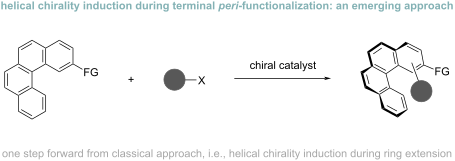
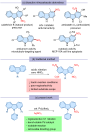
- through a catalytic kinetic resolution (KR) process was developed by Liu and co-workers [32]. The authors screened a range of organocatalysts, i.e., Takemoto’s thiourea catalyst, (S,S)-1,2-cyclohexanediamine-derived thioureas, cinchona alkaloid-derived thiourea, and squaramides to achieve the desired
- helical chiral entities was reported by Wang and co-workers. They reported an organocatalyzed asymmetric synthesis of phosphorus-containing chiral helicenes enabled by dynamic kinetic resolution using copper and peptide-mimetic phosphonium salts, i.e. amino acid-derived phosphonium iodide and bromide as


Streptoquinolines A and B, new antibacterial meroterpenoids produced by Streptomyces sp. TMPU-A0679
Beilstein J. Org. Chem. 2026, 22, 185–191, doi:10.3762/bjoc.22.12
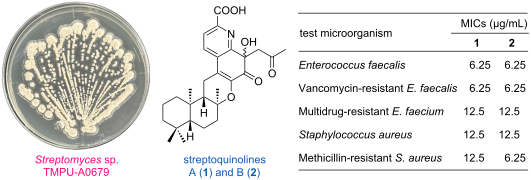
- Kyokuto Pharmaceutical Co. (Tokyo, Japan). All other chemicals used in this study were of special grade. General experimental procedures HRESIMS spectra were recorded using a mass spectrometer (Xevo G2-XS QTof, Waters Co., Milford, MA, USA). NMR spectra were acquired on a spectrometer (JNM-AL-400; JEOL
- crude materials containing 1 and 2 (23.5 mg). These materials were finally purified by preparative HPLC: column, Develosil C30-UG (Nomura Chemical Co., Ltd., Aichi, Japan), i.d. 10 × 250 mm; mobile phase, 55% MeCN aq. isocratic; detection, UV at 210 nm; flow rate, 3.0 mL /min. Under these conditions


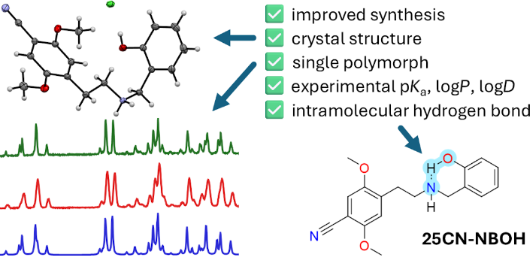
Improved synthesis and physicochemical characterization of the selective serotonin 2A receptor agonist 25CN-NBOH
Beilstein J. Org. Chem. 2026, 22, 175–184, doi:10.3762/bjoc.22.11
- through a 0.45 µm PVDF filter (Ø = 4 mm, Phenomenex) with the first 400 µL being discarded. Samples were diluted with ultrapure water before measurement by a UV spectrophotometry at 241 nm using 10 mm micro quartz cuvettes (Hellma GmbH & Co. KG, Müllheim, Germany) and a Cary 60 UV–vis spectrophotometer


A new synthesis of Tyrian purple (6,6’-dibromoindigo) and its corresponding sulfonate salts
Beilstein J. Org. Chem. 2026, 22, 167–174, doi:10.3762/bjoc.22.10
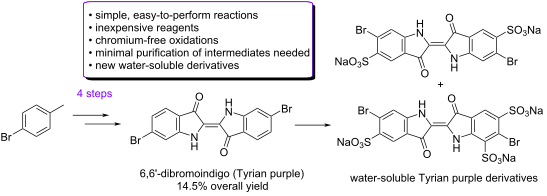
- ) and concentrated sulfuric acid (Scheme 7A). The trisulfonated 6,6’-dibromo-5,5’,7-indigotrisulfonic acid trisodium salt (10) was produced by heating 1 in oleum (20% free SO3), as shown in Scheme 7B. Although monosulfonation of indigo was reported by Sullivan and co-workers, an analogous reaction was
- and co-workers reported a 10% yield over 5 steps from p-toluidine, Wolk and Frimer reported a 25% yield over 5 steps from p-dibromobenzene, while Voß and Gerlach reported a yield of 61% over 3 steps from 1,4-dibromo-2-nitrobenzene, although specialized techniques were required [8][33][34]. We believe


Circumventing Mukaiyama oxidation: selective S–O bond formation via sulfenamide–alcohol coupling
Beilstein J. Org. Chem. 2026, 22, 158–166, doi:10.3762/bjoc.22.9
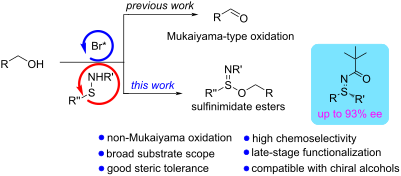
- preparation of sulfinimidate esters remain scarce. For instance, Degennaro and Luisi reported a direct amination strategy using N,N’-disubstituted sulfenamides in alcoholic solvents; however, this method suffered from limited substrate scope [13]. Subsequently, Malacria and co-workers reported an oxidative
- previously disclosed a PIDA-mediated oxidative strategy for alcohol incorporation via activation of the S–NH bond (Scheme 1a) [14]. More recently, Wu and co-workers advanced the field by developing a dynamic kinetic resolution protocol for the enantioselective synthesis of sulfinimidate esters from racemic


Design and synthesis of an axially chiral platinum(II) complex and its CPL properties in PMMA matrix
Beilstein J. Org. Chem. 2026, 22, 143–150, doi:10.3762/bjoc.22.7
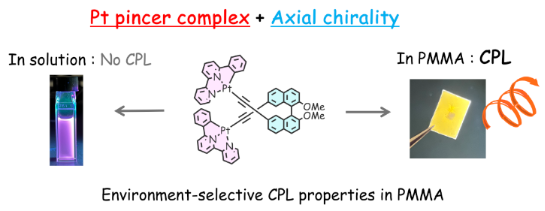
- aim to explore the development of materials exhibiting circularly polarized luminescence (CPL). However, most reported chiral pincer-type platinum(II) complexes utilize point chirality as the chiral element. For instance, Zhong and co-workers reported a chiral platinum(II) complex bearing a leucine
- -derived pendant group, which exhibited aggregation-enhanced red phosphorescence and CPL properties in the solid states [20], while Yam and co-workers also reported pincer-type platinum(II) complexes containing chiral amine moieties, and investigated their aggregation behavior and chiroptical properties


Symmetrical D–π–A–π–D indanone dyes: a new design for nonlinear optics and cyanide detection
Beilstein J. Org. Chem. 2026, 22, 131–142, doi:10.3762/bjoc.22.6
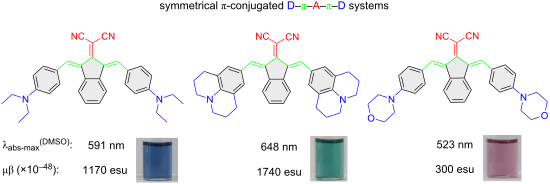
- proposed mechanism was investigated in more detail by DFT studies. It is given in the next section. In order to examine the sensitivity of the dyes to anions in aqueous media, firstly, the best ratio with DMSO as a co-solvent for aqueous medium was determined. For this purpose, absorption spectra were


Total synthesis of natural products based on hydrogenation of aromatic rings
Beilstein J. Org. Chem. 2026, 22, 88–122, doi:10.3762/bjoc.22.4
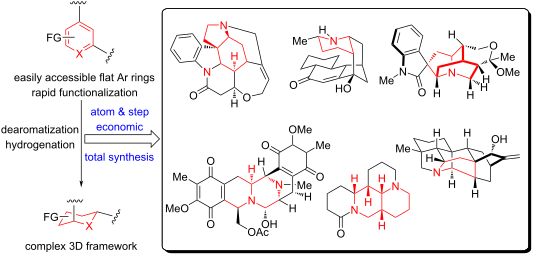
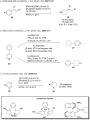
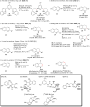
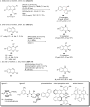
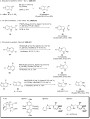
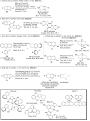
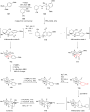
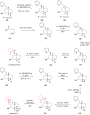
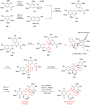
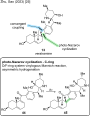
- in the presence of metal catalysts including Pd or Ir and different ligands. In 2021 and 2022, Wang and co-workers reported two impressive hydroboration–hydrogenation reactions catalyzed by FLP (triarylphenylborane) that reduced pyridine compounds 11 or 15 to dihydropyridine compounds 12 or chiral
- piperidine 17 (Scheme 3) [43][44]. Mechanistic studies demonstrated that the nitrogen atoms present in both pyridine and piperidine complexed with the triarylborane, cleaving the H–H bond and reducing the pyridine. In 2022, Xiao and co-workers reported a study on the conversion of isolated pyridinium salts
- be noted that in the presence of water, the reaction would undergo transamination with the pyridinium nitrogen moiety while inducing chirality on the ring. Hydrogenation of carbocyclic aromatic rings: In 2021, Andersson and co-workers reported a rhodium-catalyst precursor capable of operating in both










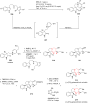

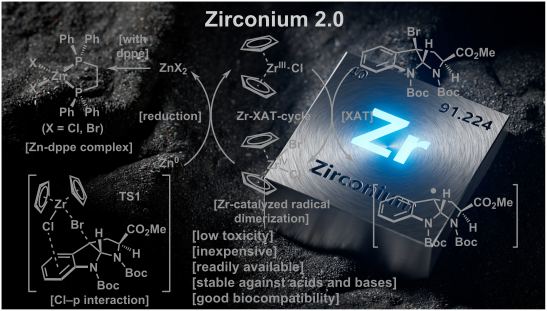
Advances in Zr-mediated radical transformations and applications to total synthesis
Beilstein J. Org. Chem. 2026, 22, 71–87, doi:10.3762/bjoc.22.3
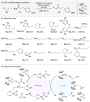
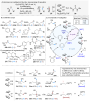
- photoredox catalyst, homolytic C–O bond cleavage occurred, generating alkyl radicals 50. These radicals abstracted a hydrogen atom from γ-terpinene, affording the corresponding alkanes. In this reaction, oxo-bridged dimeric zirconocene was employed. This catalytic system was first reported by Romero and co








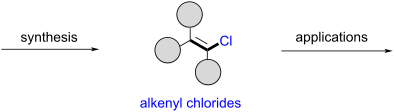
Synthesis and applications of alkenyl chlorides (vinyl chlorides): a review
Beilstein J. Org. Chem. 2026, 22, 1–63, doi:10.3762/bjoc.22.1
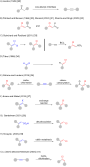
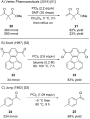
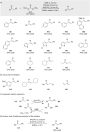
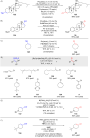
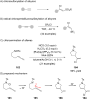
- Synthesis of Acetylenes” [29] which discusses the preparation of alkenyl chlorides via ketone chlorination using PCl5 (Figure 3A). The synthesis of β-chlorovinyl ketones was later reviewed by Poland and Benson in 1966 (Figure 3B) [30]. More recently, Morandi and co-workers summarized transition-metal
- -catalyzed C–halogen bond formation (Figure 3E) [36]. Exchange reactions were reviewed by Evano and Nitelet in 2018 (Figure 3F) [37]. In 2020, Gandelman and co-workers provided an overview of decarboxylative chlorination reactions of carboxylic acids (Figure 3G) [38]. Hoveyda’s 2023 review highlights
- co-workers published a mini-review in 2013, written in Chinese, summarizing advances in the synthesis of vinyl chlorides [43]. As illustrated by the summary of existing reviews (Figure 3), the synthesis of alkenyl chlorides encompasses a wide range of mechanistically distinct strategies. An overview























Tandem hydrothiocyanation/cyclization of CF3-iminopropargyl alcohols with NaSCN in the presence of AcOH
Beilstein J. Org. Chem. 2025, 21, 2694–2702, doi:10.3762/bjoc.21.207
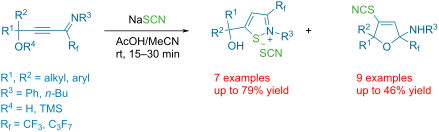
- ionic liquid- [16] or lactic acid-catalyzed [17] reactions of alkynoates, KSCN and water under ultrasound conditions as well as by the reactions of alkynoates, KSCN and water using deep eutectic solvents [18]. Reddy and co-workers [19] proposed an approach to thiocyano enones through the
- ). Increasing the quantity of acetic acid in the reaction mixture improved the product yields, especially for 2,5-dihydrofuran 3a (Table 1, entries 10 and 11). The best yield (76%) of 2a was obtained using acetic acid as co-solvent in a 3:1 (v/v) mixture of MeCN and AcOH (Table 1, entry 12); in this way a total



Recent advancements in the synthesis of Veratrum alkaloids
Beilstein J. Org. Chem. 2025, 21, 2657–2693, doi:10.3762/bjoc.21.206
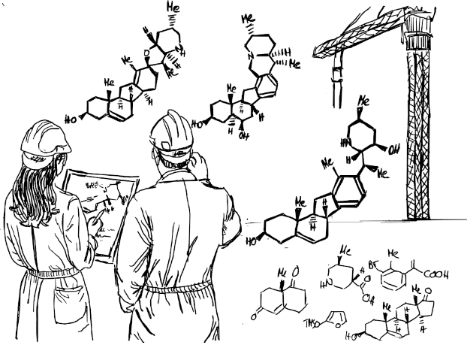
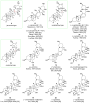
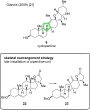
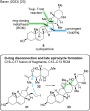
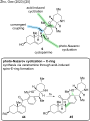
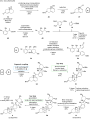
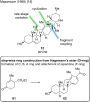
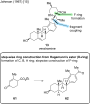
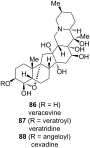
- cevanine-type Veratrum alkaloid to be successfully synthesized in the laboratory is (−)-verticine (15) (sometimes also called peimine). In 1977, Kutney and co-workers reported its semisynthesis from hecogenin acetate (91) in 30 steps [20][46]. It was only until four decades later that chemical methods
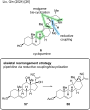
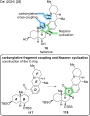
- -Methylenegermine The total synthesis of (±)-4-methylenegermine (17) was reported by Stork and co-workers in 2017 [22]. It represents an unnatural derivative of germine (20) with an additional methylene unit at C4 that was introduced to increase the stability of synthetic intermediates by avoiding the base
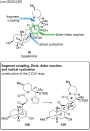
- overall yield of 2.0% from 100 [22]. A plan for the conversion of 105 to (±)-(20) was to follow Barton’s conditions for decarboxylative hydroxylation [48]. However, due to lack of material at the late stage, these steps could not be realized. The total synthesis of 20 was later disclosed by Luo and co
















Chemoenzymatic synthesis of the cardenolide rhodexin A and its aglycone sarmentogenin
Beilstein J. Org. Chem. 2025, 21, 2637–2644, doi:10.3762/bjoc.21.204
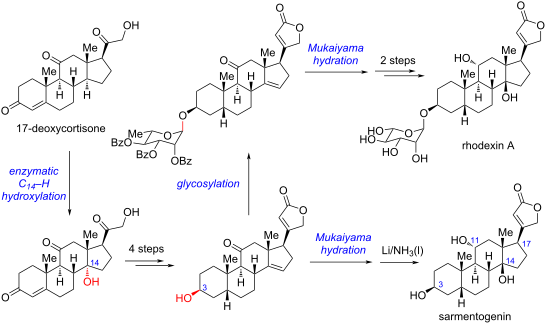
- -catalyzed anaerobic conditions [30], 11 was transformed into the C14 hydroxylated intermediate 12 as epimeric mixture in 42% yield and dr = 1:5, among which the undesired 14α-hydroxy epimer was the major component. Interestingly, the use of Co(acac)2 or Mn(acac)2 as the catalyst [31][32] instead of Fe(acac
- -carbonyl reduction by dissolved lithium metal in liquid NH3 solution, and the C11 α-hydroxylated intermediate 13 was obtained as a single diastereoisomer in 54% yield. Lastly, as expected, a Co(acac)2-catalyzed Mukaiyama hydration of 13 afforded the desired natural product sarmentogenin (2) in 69% yield



Visible-light-driven NHC and organophotoredox dual catalysis for the synthesis of carbonyl compounds
Beilstein J. Org. Chem. 2025, 21, 2584–2603, doi:10.3762/bjoc.21.200
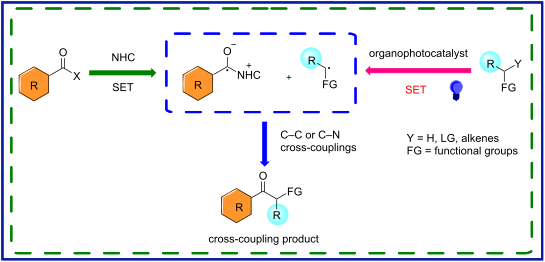
- chemistry and active pharmaceutical ingredients [38][39][40]. Over the years, the groups of Hopkinson, Wang, Dong, Marzo, and co-workers published a comprehensive review detailing the synthetic approaches and mechanistic insights of visible light-promoted dual photocatalysis that combined N-heterocyclic
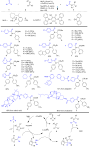
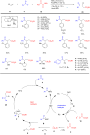
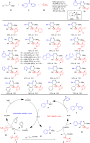
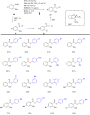
- , and advanced optical and energy materials. Review Visible-light-driven NHC/4CzIPN-catalyzed reactions Recently, Shu and co-workers developed a direct and innovative preparation of highly functionalized aryl amide derivatives 3 from aryl aldehydes 1 and substituted imines 2 under mild conditions in the
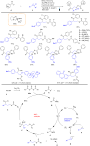
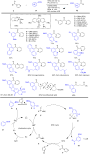
- by the removal of the PMP protecting group using 2 equivalents of CAN and pyridine, affording 2,3-dihydrofurans 12a in 58% (Scheme 4) [54]. In 2022, Sumida, Ohmiya, and co-workers developed a dual NHC/4CzIPN-organocatalyzed, versatile, light-driven silyl radical generation strategy from substituted





Recent advances in total synthesis of illisimonin A
Beilstein J. Org. Chem. 2025, 21, 2571–2583, doi:10.3762/bjoc.21.199
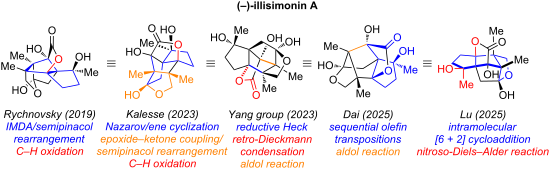
- ][23][24][25]. In 2017, Yu and co-workers isolated a new Illicium sesquiterpene, namely illisimonin A, from the fruits of Illicium simonsii [26]. Unlike other Illicium sesquiterpenes, illisimonin A features an unprecedented bridged tricyclo[5.2.1.01,5]decane carbon framework that incorporates a highly
- neuroprotective effects against oxygen-glucose deprivation-induced cell injury in SH-SY5Y cells, suggesting its potential as a lead compound for the treatment of neurodegenerative diseases. The possible biosynthetic pathway of illisimonin A was also proposed by Yu and co-workers, as illustrated in Scheme 1. The
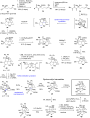
- Rychnovsky [28], Kalesse [29], Yang [30], Dai [31] and Lu [32] have achieved the total synthesis of this molecule. Notable, Rychnovsky and co-workers revised the absolute configuration of (−)-illisimonin A to 1S,4S,5S,6S,7R,9R,10R. This review summarizes the reported synthetic routes toward illisimonin A






Total syntheses of highly oxidative Ryania diterpenoids facilitated by innovations in synthetic strategies
Beilstein J. Org. Chem. 2025, 21, 2553–2570, doi:10.3762/bjoc.21.198
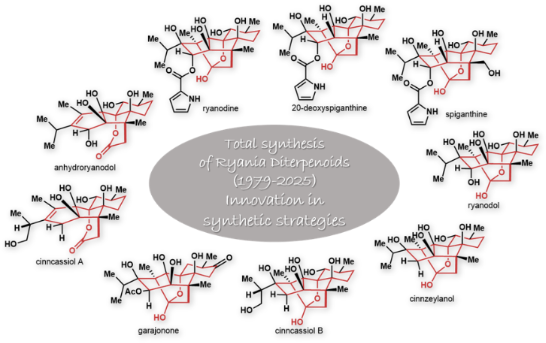
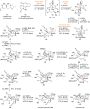
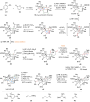
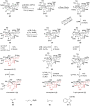
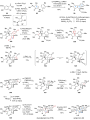
- were ultimately elucidated in 1968 by Wiesner and co-workers using a combination of chemical degradation and X-ray crystallography [14]. Notably, in 2016, Inoue’s group at the University of Tokyo reconciled discrepancies through comparative analysis of experimental and natural product data, confirming
- adduct was subjected to AgOTf-catalyzed lactonization to successfully construct the D ring of target molecular framework. Next, a 1,4-addition reaction introduced a vinyl group to compound 68, affording compound 70. A Pauson–Khand cyclization of 70 under [RhCl(CO)2]2/CO conditions smoothly furnished the
- ). The synthesis commenced with the preparation of key cyclization precursor 98 via Barbier coupling and Babler–Dauben oxidative rearrangement. A pivotal palladium-catalyzed Heck/carbonylative cyclization then efficiently furnished the ABC tricyclic core 99. Notably, adding N-formylsaccharin under a CO







Ni-promoted reductive cyclization cascade enables a total synthesis of (+)-aglacin B
Beilstein J. Org. Chem. 2025, 21, 2548–2552, doi:10.3762/bjoc.21.197
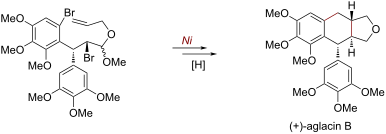
- aryltetralin[2,3-c]furan skeleton embedded in this natural product. Keywords: aryltetralin; conjugate addition; cyclolignan; nickel; reductive coupling; Introduction Proksch and co-workers isolated aglacins A, B, C, and E (1–4, Figure 1) from the methanolic extract of stem bark of Aglaia cordata Hiern from
- the tropical rain forests of the Kalimantan region (Indonesia) [1][2]. These cyclic ether natural products belong to the typical aryltetralin lignans, which have already attracted broad attention from the synthetic community [3][4][5]. Zhu and co-workers disclosed a concise synthesis of (±)-aglacins B


Rapid access to the core of malayamycin A by intramolecular dipolar cycloaddition
Beilstein J. Org. Chem. 2025, 21, 2542–2547, doi:10.3762/bjoc.21.196
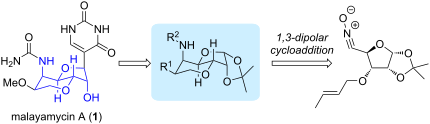
- metabolites and exhibit intriguing bioactivities (2–4, Figure 1). These antifungal nucleoside agents have been received great attention from the scientific community and several elegant syntheses have been disclosed [9][10][11][12][13][14][15]. Specifically, Hanessian and co-workers reported the first total
- stereochemistry of substituents, as well as the heterocyclic anomeric unit. Uncertainty regarding the mode of action, along with inadequate synthetic approaches toward a lead compound, remains elusive. The well-established synthetic route reported by Hanessian and co-workers began with ᴅ-ribonolactone which bears
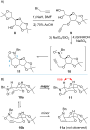
- details). The following reductive cleavage of the N–O bond was carried out by Mo(CO)6 in refluxing CH3CN [39]. Subsequent oxidation of the resulting secondary alcohol with Dess–Martin periodinane (DMP) [40] afforded methyl ketone 20 in 53% yield for 2 steps. Moreover, the minor isomer 19b also underwent




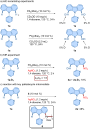
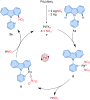
Palladium-catalyzed regioselective C1-selective nitration of carbazoles
Beilstein J. Org. Chem. 2025, 21, 2479–2488, doi:10.3762/bjoc.21.190
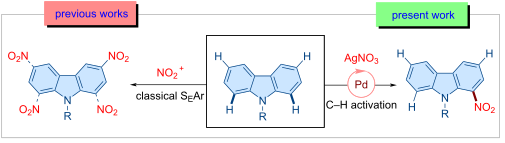
- reagent resulted in complete loss of reactivity (Table 1, entry 12). Further, extending the reaction time had no significant effect on the yield (Table 1, entry 13). Finally, our investigation using various 3d transition metal catalysts such as Ni(OAc)2, Cu(OAc)2, and Co(OAc)2 in place of Pd₂(dba)3 did
- NiCl2/NaBH4 in methanol at room temperature, affording the corresponding amine 4 in 93% yield. To align with green chemistry principles, we employed a recently reported mechanochemical protocol by Ito and co-workers for the reduction of nitro compounds to amines [72]. Using this solvent-free method


Ex-situ generation of gaseous nitriles in two-chamber glassware for facile haloacetimidate synthesis
Beilstein J. Org. Chem. 2025, 21, 2465–2469, doi:10.3762/bjoc.21.188
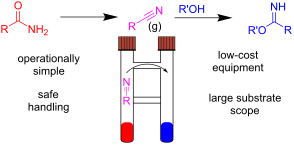
- point = −64 °C). To minimize the setup needed and handling we decided to utilize the two-chamber reaction vessels introduced by Skrydstrup and co-workers [19], which were originally designed for use with carbon monoxide reactions [20] and are now commercially available under the tradename COware (Figure


The intramolecular stabilizing effects of O-benzoyl substituents as a driving force of the acid-promoted pyranoside-into-furanoside rearrangement
Beilstein J. Org. Chem. 2025, 21, 2456–2464, doi:10.3762/bjoc.21.187
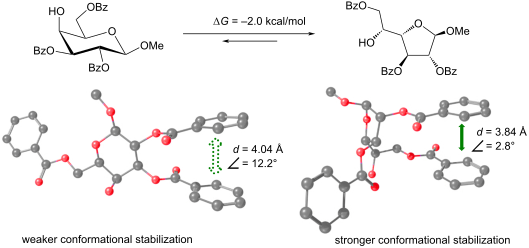
- oriented to have the torsions Hn–Cn–On–CO at 0°. For the benzoate group at O-6 three possible rotamers [40] around the C5–C6 bond were analyzed: trans-gauche (tg), gauche-gauche (gg) and gauche-trans (gt) (Figure 4A). This was done by choosing the initial ω angle (O5–C5–C6–O6) as 180°, −60° or +60




Catalytic enantioselective synthesis of selenium-containing atropisomers via C–Se bond formations
Beilstein J. Org. Chem. 2025, 21, 2447–2455, doi:10.3762/bjoc.21.186
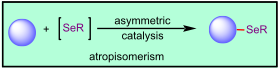
- functionalization remains a significant challenge. In 2024, You and co-workers reported a breakthrough in the enantioselective direct C–H selenylation of 1-arylisoquinolines and 2-(phenylselenyl)isoindoline-1,3-diones under rhodium catalysis to afford axially chiral diaryl selenides [18]. In this protocol, AgPF6
- formation proceeded through an SN2-type nucleophilic substitution mechanism (Scheme 1). In 2025, Li and co-workers reported a highly efficient rhodium-catalyzed enantioselective C–H selenylation reaction of 1-arylisoquinolines with diselenides, employing 3,5-(CF3)2C6H3CO₂Ag and AgSbF6 as additives [19
- or cationic species. In 2019, Qin and co-workers reported a methodology enabling the difunctionalization of alkynes through selenosulfonylation of a VQM intermediate under mild reaction conditions [20]. This racemic transformation proceeds without the need for any catalyst or additive, and the




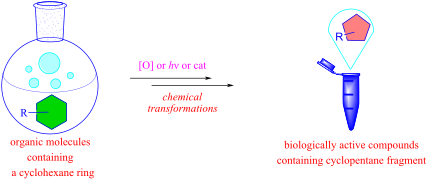
Transformation of the cyclohexane ring to the cyclopentane fragment of biologically active compounds
Beilstein J. Org. Chem. 2025, 21, 2416–2446, doi:10.3762/bjoc.21.185
- ) (Scheme 11). The technique of regioselective oxidative contraction of a six-membered ring was described in the work by Luo, Zhang and co-workers [43] during their synthesis of the natural alkaloids, dactylicapnosines A (63) and B (64), which contain a 9,10-seco-7-dehydroaporphinoid skeleton with an
- -quinone 66 through a Co-mediated benzilic acid rearrangement to give cyclopentanone 69 with a 68% yield. The target products 63 and 64 were obtained in 14 and 16 steps with a total yield of 12% and 5%, respectively, from compound 65 (Scheme 12). The presented improved method opens up the possibility of
- with 52% yield (Scheme 14). The authors [47] provided convincing evidence that the acyloin ring contraction is stereospecific, by replacing the benzil ᴅ-glucose in compound 76 at the C5 atom with an achiral prenyl group. In [49], Zhang and co-workers carried out the first enantioselective synthesis of


Synthetic study toward vibralactone
Beilstein J. Org. Chem. 2025, 21, 2376–2382, doi:10.3762/bjoc.21.182

- moiety have been isolated and demonstrate potent bioactivities [7] (Figure 1). For example, lactacystin (1) which was isolated by Ōmura and co-workers [8][9], is a potent and selective proteasome inhibitor; its active form is the synthetic precursor omuralide (2) [10][11]. Similarly, salinosporamide (3
- ), a marine natural product isolated by Fenical and co-workers [12], also acts as a proteasome inhibitor and displays more potent in vitro cytotoxicity than omuralide (2). Anisatin (4), which contains a characteristic spiro β-lactone has been identified as a noncompetitive antagonist of GABA-gated ion
- channels [13]. Tetrahydrolipstatin (5) is a potent pancreatic lipase inhibitor and has been developed into an antiobesity drug marketed under the generic name Orlistat. Vibralactone (6), which was isolated by Liu and co-workers from Basidiomycete Boreostereum vibrans, features a fused β-lactone with a





