Search for "antiviral" in Full Text gives 300 result(s) in Beilstein Journal of Organic Chemistry. Showing first 200.
Beilstein J. Org. Chem. 2024, 20, 1839–1879, doi:10.3762/bjoc.20.162
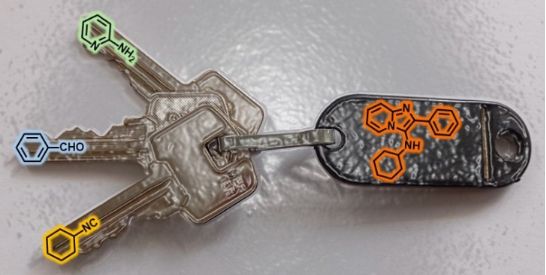
Graphical Abstract
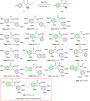
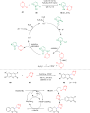
Scheme 1: Mechanism of the GBB reaction.
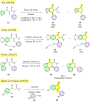
Scheme 2: Comparison of the performance of Sc(OTf)3 with some RE(OTf)3 in a model GBB reaction. Conditions: a...
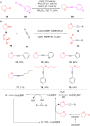
Scheme 3: Comparison of the performance of various Brønsted acid catalysts in the synthesis of GBB adduct 6. ...
Scheme 4: Synthesis of Brønsted acidic ionic liquid catalyst 7. Conditions: a) neat, 60 °C, 24 h; b) TfOH, DC...
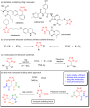
Scheme 5: Aryliodonium derivatives as organic catalysts in the GBB reaction. In the box the proposed binding ...
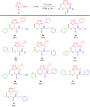
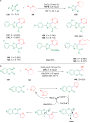
Scheme 6: DNA-encoded GBB reaction in micelles made of amphiphilic polymer 13. Conditions: a) 13 (50 equiv), ...
Scheme 7: GBB reaction catalyzed by cyclodextrin derivative 14. Conditions: a) 14 (1 mol %), water, 100 °C, 4...
Scheme 8: Proposed mode of activation of CALB. a) activation of the substrates; b) activation of the imine; c...
Scheme 9: One-pot GBB reaction–Suzuki coupling with a bifunctional hybrid biocatalyst. Conditions: a) Pd(0)-C...
Scheme 10: GBB reaction employing 5-HMF (23) as carbonyl component. Conditions: a) TFA (20 mol %), EtOH, 60 °C...
Scheme 11: GBB reaction with β-C-glucopyranosyl aldehyde 26. Conditions: a) InCl3 (20 mol %), MeOH, 70 °C, 2–3...
Scheme 12: GBB reaction with diacetylated 5-formyldeoxyuridine 29, followed by deacetylation of GBB adduct 30....
Scheme 13: GBB reaction with glycal aldehydes 32. Conditions: a) HFIP, 25 °C, 2–4 h.
Scheme 14: Vilsmeier–Haack formylation of 6-β-acetoxyvouacapane (34) and subsequent GBB reaction. Conditions: ...
Scheme 15: GBB reaction of 4-formlyl-PCP 37. Conditions: a) HOAc or HClO4, MeOH/DCM (2:3), rt, 3 d.
Scheme 16: GBB reaction with HexT-aldehyde 39. Conditions: a) 39 (20 nmol) and amidine (20 μmol), MeOH, rt, 6 ...
Scheme 17: GBB reaction of 2,4-diaminopirimidine 41. Conditions: a) Sc(OTf)3 (20 mol %), MeCN, 120 °C (MW), 1 ...
Scheme 18: Synthesis of N-edited guanine derivatives from 3,6-diamine-1,2,4-triazin-5-one 44. Conditions: a) S...
Scheme 19: Synthesis of 2-aminoimidazoles 49 by a Mannich-3CR followed by a one-pot intramolecular oxidative a...
Scheme 20: On DNA Suzuki–Miyaura reaction followed by GBB reaction. Conditions: a) CsOH, sSPhos-Pd-G2; b) AcOH...
Scheme 21: One-pot cascade synthesis of 5-iminoimidazoles. Conditions: a) Na2SO4, DMF, 220 °C (MW).
Scheme 22: GBB reaction of 5-amino-1H-imidazole-4-carbonile 57. Conditions: a) HClO4 (5 mol %), MeOH, rt, 24 h....
Scheme 23: One-pot cascade synthesis of indole-imidazo[1,2,a]pyridine hybrids. In blue the structural motif in...
Scheme 24: One-pot cascade synthesis of fused polycyclic indoles 67 or 69 from indole-3-carbaldehyde. Conditio...
Scheme 25: One-pot cascade synthesis of linked- and bridged polycyclic indoles from indole-2-carbaldehyde (70)...
Scheme 26: One-pot cascade synthesis of pentacyclic dihydroisoquinolines (X = N or CH). In blue the structural...
Scheme 27: One-pot stepwise synthesis of imidazopyridine-fused benzodiazepines 85. Conditions: a) p-TsOH (20 m...
Scheme 28: One-pot stepwise synthesis of benzoxazepinium-fused imidazothiazoles 89. Conditions: a) Yb(OTf)3 (2...
Scheme 29: One-pot stepwise synthesis of fused imidazo[4,5,b]pyridines 95. Conditions: a) HClO4, MeOH, rt, ove...
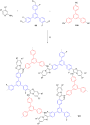
Scheme 30: Synthesis of heterocyclic polymers via the GBB reaction. Conditions: a) p-TsOH, EtOH, 70 °C, 24 h.
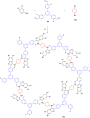
Scheme 31: One-pot multicomponent reaction towards the synthesis of covalent organic frameworks via the GBB re...
Scheme 32: One-pot multicomponent reaction towards the synthesis of covalent organic frameworks via the GBB re...
Scheme 33: GBB-like multicomponent reaction towards the synthesis of benzothiazolpyrroles (X = S) and benzoxaz...
Scheme 34: GBB-like multicomponent reaction towards the formation of imidazo[1,2,a]pyridines. Conditions: a) I2...
Scheme 35: Post-functionalization of GBB products via Ugi reaction. Conditions a) HClO4, DMF, rt, 24 h; b) MeO...
Scheme 36: Post-functionalization of GBB products via Click reaction. Conditions: a) solvent-free, 150 °C, 24 ...
Scheme 37: Post-functionalization of GBB products via cascade alkyne–allene isomerization–intramolecular nucle...
Scheme 38: Post-functionalization of GBB products via metal-catalyzed intramolecular N-arylation. In red and b...
Scheme 39: Post-functionalization of GBB products via isocyanide insertion (X = N or CH). Conditions: a) HClO4...
Scheme 40: Post-functionalization of GBB products via intramolecular nucleophilic addition to nitriles. Condit...
Scheme 41: Post-functionalization of GBB products via Pictet–Spengler cyclization. Conditions: a) 4 N HCl/diox...
Scheme 42: Post-functionalization of GBB products via O-alkylation. Conditions: a) TFA (20 mol %), EtOH, 120 °...
Scheme 43: Post-functionalization of GBB products via macrocyclization (X = -CH2CH2O-, -CH2-, -(CH2)4-). Condi...
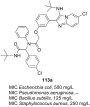
Figure 1: Antibacterial activity of GBB-Ugi adducts 113 on both Gram-negative and Gram-positive strains.
Scheme 44: GBB multicomponent reaction using trimethoprim as the precursor. Conditions: a) Yb(OTf)3 or Y(OTf)3...
Figure 2: Antibacterial activity of GBB adducts 152 against MRSA and VRE; NA = not available.
Figure 3: Antibacterial activity of GBB adduct 153 against Leishmania amazonensis promastigotes and amastigot...
Figure 4: Antiviral and anticancer evaluation of the GBB adducts 154a and 154b. In vitro antiproliferative ac...
Figure 5: Anticancer activity of the GBB-furoxan hybrids 145b, 145c and 145d determined through antiprolifera...
Scheme 45: Synthesis and anticancer activity of the GBB-gossypol conjugates. Conditions: a) Sc(OTf)3 (10 mol %...
Figure 6: Anticancer activity of polyheterocycles 133a and 136a against human neuroblastoma. Clonogenic assay...
Figure 7: Development of GBB-adducts 158a and 158b as PD-L1 antagonists. HTRF assays were carried out against...
Figure 8: Development of imidazo[1,2-a]pyridines and imidazo[1,2-a]pyrazines as TDP1 inhibitors. The SMM meth...
Figure 9: GBB adducts 164a–c as anticancer through in vitro HDACs inhibition assays. Additional cytotoxic ass...
Figure 10: GBB adducts 165, 166a and 166b as anti-inflammatory agents through HDAC6 inhibition; NA = not avail...
Scheme 46: GBB reaction of triphenylamine 167. Conditions: a) NH4Cl (10 mol %), MeOH, 80 °C (MW), 1 h.
Scheme 47: 1) Modified GBB-3CR. Conditions: a) TMSCN (1.0 equiv), Sc(OTf)3 (0.2 equiv), MeOH, 140 °C (MW), 20 ...
Scheme 48: GBB reaction to assemble imidazo-fused heterocycle dimers 172. Conditions: a) Sc(OTf)3 (20 mol %), ...
Figure 11: Model compounds 173 and 174, used to study the acid/base-triggered reversible fluorescence response...
Beilstein J. Org. Chem. 2024, 20, 1652–1670, doi:10.3762/bjoc.20.147
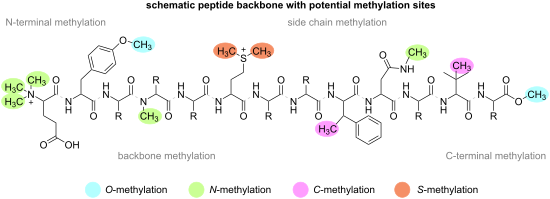
Graphical Abstract
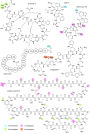
Figure 1: Schematic representation of the different acceptor regions for the methylation of RiPPs discussed i...
Figure 2: Schematic overview of different methylation strategies for amino acids and peptides. There are seve...
Figure 3: Biological methylation. A) Methyl donors from biological systems. The transferred methyl group is h...
Figure 4: Chemical structures of RiPPs with diverse O-, N-, C-, and S-methylations. Amino acids of lassomycin...
Figure 5: The three-dimensional structures of the conventional O-MTs OlvSA (model structure calculated by Col...
Figure 6: Reaction scheme of the PAMT´s catalysis, leading to the enzymatic conversion of aspartate to aspart...
Figure 7: Structural organisation of the OphMA homodimer. A) Schematic representation. The MT domain is colou...
Figure 8: Overview of the protein architectures and core peptide compositions of borosin N-MTs as defined by ...
Figure 9: Radical SAM C-methyltransferases. A) The different rSAM MT classes containing different functional ...
Figure 10: The three-dimensional structures of the rSAM C-MTs TsrM with bound cobalamin and [4Fe-4S] cluster (...
Beilstein J. Org. Chem. 2024, 20, 1635–1651, doi:10.3762/bjoc.20.146
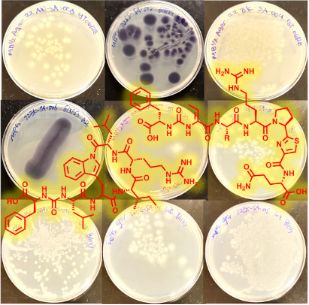
Graphical Abstract
Figure 1: Oceanic distribution and marine holobiont sources of Microbulbifer strains described in the literat...
Figure 2: The chemical structure of agarose with the key β-1,4 linkage denoted.
Figure 3: The chemical structure of the biopolymer alginate.
Figure 4: The chemical structure of chitin.
Figure 5: Chemical structures of sulfated polysaccharides κ-, ι-, and λ-carrageenans.
Figure 6: Chemical structures of 4HBA (1) and parabens (2–14) isolated from Microbulbifer strains, and synthe...
Figure 7: Chemical structures of nucleosides 18–20 isolated from Microbulbifer strains.
Figure 8: Chemical structures of alkaloids 21–24 isolated from Microbulbifer strains.
Figure 9: Chemical structures of (2Z,4E)-3-methyl-2,4-decadienoic acid (25) and 4-BP (26) natural products is...
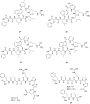
Figure 10: Chemical structures of bulbiferamides 27–30 and pseudobulbiferamides 31–35.
Figure 11: Proposed NRPS assembly lines for the biosynthesis of (A) bulbiferamide A (27) and (B) pseudobulbife...
Figure 12: Chemical structures of 2-heptyl-1H-quinolin-4-one (36, HHQ), 2-heptyl-1-hydroxyquinolin-4-one (37, ...
Beilstein J. Org. Chem. 2024, 20, 1623–1634, doi:10.3762/bjoc.20.145
Graphical Abstract
Figure 1: General synthesis of triazinephosphonate compounds.
Scheme 1: Synthesis of diethyl phenylphosphonates 2, 4 and 6.
Scheme 2: Synthesis of (4-hydroxyphenyl)methylphosphonate 7 starting from [4-(benzyloxy)phenyl]methanol (8).
Scheme 3: Synthesis of diethyl [hydroxy(4-hydroxyphenyl)methyl]phosphonate (11) and tetraethyl [(4-hydroxyphe...
Scheme 4: Synthesis of diethyl phenylphosphonates 16 and 14.
Scheme 5: Synthesis of 4-aminophenyltriazinephosphonate derivatives TP1–TP3.
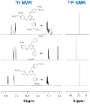
Figure 2: Partial view of 1H and 31P NMR spectra of 4-aminophenyltriazinephosphonate derivatives TP1–TP3.
Scheme 6: Synthesis of (4-hydroxyphenyl)triazinephosphonate derivatives TP4–TP6.
Figure 3: Partial view of 1H and 31P NMR spectra of (4-hydroxyphenyl)triazinephosphonate derivatives TP4–TP6.
Scheme 7: Attempted synthesis of triazinephosphonate TP7.
Figure 4: Preparation of the new doped membranes.
Figure 5: Comparison of in-plane proton conductivity vs RH of Nafion doped membranes, at 60 °C.
Beilstein J. Org. Chem. 2024, 20, 1453–1461, doi:10.3762/bjoc.20.128
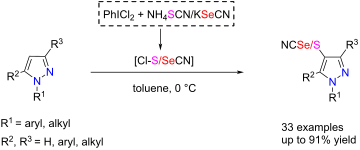
Graphical Abstract
Figure 1: Representative pyrazoles with pharmacological activities and S/Se-containing pharmaceutical molecul...
Scheme 1: Approaches for thio/selenocyanation of the pyrazole skeleton.
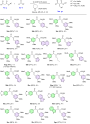
Scheme 2: PhICl2/NH4SCN-mediated thiocyanation of pyrazoles. Reaction conditions: under N2 atmosphere, a mixt...
Scheme 3: PhICl2/KSeCN-mediated selenocyanation of pyrazoles. Reaction conditions: under N2 atmosphere, a mix...
Scheme 4: Gram-scale synthesis of compounds 2a and 3a and their derivatization.
Scheme 5: Plausible reaction mechanism.
Beilstein J. Org. Chem. 2024, 20, 1189–1197, doi:10.3762/bjoc.20.101
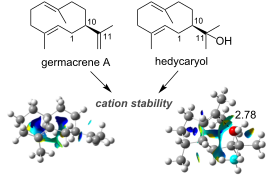
Graphical Abstract
Scheme 1: Biosynthesis of (A) germacrene A and (B) hedycaryol from FPP. Here the abbreviations represent, FPP...
Figure 1: 6-6 and 5-7 bicyclic carbocations formed by protonation and cyclization of germacrene A and hedycar...
Figure 2: Bar plot for the relative free energies of germacrene A and hedycaryol carbocations relative to car...
Figure 3: NCI plot for A (left) and B (right). Blue corresponds to repulsive and yellow represents slightly a...
Figure 4: NCI plots for F and H hedycaryol cations. The C+···OH distances (Å) are shown in black.
Figure 5: Correlation plot relating between the stability of hedycaryols (ΔΔEe) and C+···OH bond distances.
Beilstein J. Org. Chem. 2024, 20, 1167–1178, doi:10.3762/bjoc.20.99
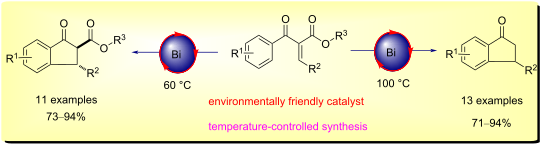
Graphical Abstract
Figure 1: Examples of different compounds containing the indanone moiety.
Figure 2: Synthesis of unsaturated β-ketoesters (Knoevenagel derivatives). aIsolated yield after purification...
Figure 3: Synthesis of 3-aryl-2-ethoxycarbonyl-1-indanones mediated by bismuth triflate. aIsolated yield afte...
Scheme 1: Previous methods describing decarboxylation reactions of indanones and xanthenones.
Figure 4: Controlled decarboxylation directed by bismuth triflate at 100 °C. Synthesis of 3-aryl-1-indanones. ...
Figure 5: Impact of indanone derivatives on cell viability of tumor cells. Cell viability was determined by M...
Beilstein J. Org. Chem. 2024, 20, 1029–1036, doi:10.3762/bjoc.20.91
Graphical Abstract
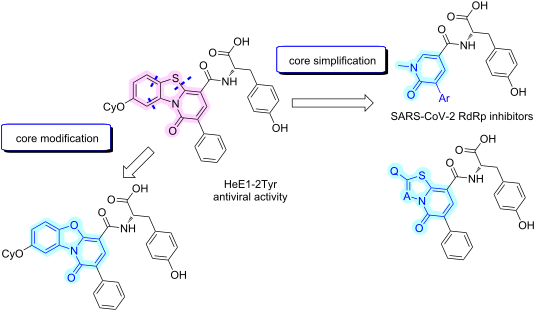
Figure 1: Structure of HeE1-2Tyr (1) and of the derivatives synthesized in this work.
Scheme 1: Synthetic pathway to benzoxazole analogue 2 of HeE1-2Tyr (1). Reagents and conditions: a) TMSN3, Tf...
Scheme 2: Synthetic pathway to pyridone derivatives 3a–c of HeE1-2Tyr (1). Reagents and conditions: a) MeI, K2...
Scheme 3: Synthetic pathway to thiazolopyridone derivatives 4a,b of HeE1-2Tyr (1). Reagents and conditions: a...
Figure 2: Analysis of inhibitory activity against SARS-CoV-2 RdRp using primer extension assay. A) Gel-based ...
Beilstein J. Org. Chem. 2024, 20, 950–958, doi:10.3762/bjoc.20.85
Graphical Abstract
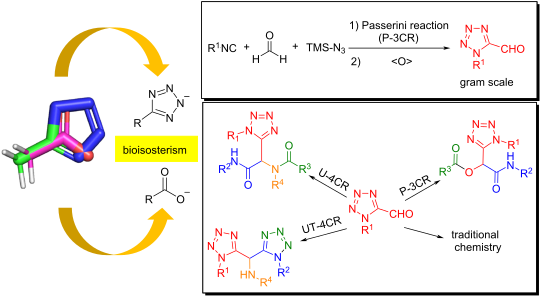
Figure 1: Tetrazole drugs, current assembly strategies, and novel building block strategy.
Scheme 1: Synthesis of tetrazole building blocks. Isolated yields.
Scheme 2: Substrate scope of Passerini products 3. Isolated yields.
Scheme 3: Substrate scope of Ugi products 4 and 5. Isolated yields.
Scheme 4: Synthesis of tetrazole building block 6. Isolated yield.
Beilstein J. Org. Chem. 2024, 20, 898–911, doi:10.3762/bjoc.20.80
Graphical Abstract
Figure 1: Uracil derivatives in drugs.
Figure 2: Present work as compared to previous studies [25,57-59].
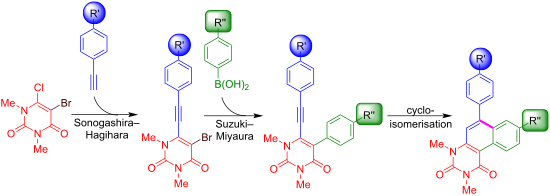
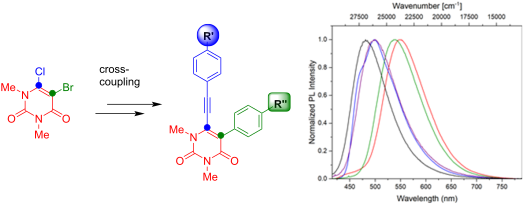
Scheme 1: Synthesis of 1,3-dimethly-5-[2-(aryl)ethynyl]-6-[2-(aryl)ethynyl]uracils 4 and 1,3-dimethyl-5-aryl-...
Scheme 2: Synthesis of 5-bromo-1,3-dimethyl-6-[2-(aryl)ethynyl]uracils 3a–j. Reaction conditions: 2 (1.0 equi...
Scheme 3: Structure of the starting material 2 with its possible mesomeric structures.
Scheme 4: Synthesis of 1,3-dimethyl-5-[2-(aryl)ethynyl]-6-[2-(aryl)ethynyl]uracils 4a–h. Reaction conditions: ...
Scheme 5: Synthesis of 1,3-dimethyl-5-aryl-6-[2-(aryl)ethynyl]uracils 5a–t. Reaction conditions: 3 (1 equiv),...
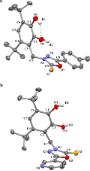
Figure 3: ORTEP diagram of 5a front view (a) and side view (b). a) Interactions of the molecules within and b...
Figure 4: UV–vis absorption (left) and emission (right, λex = 400 nm) spectra of 1,3-dimethyl-5-phenyl-6-[2-(...
Beilstein J. Org. Chem. 2024, 20, 753–766, doi:10.3762/bjoc.20.69
Graphical Abstract
Figure 1: Schematic diagram of methods to activate silent genes in actinomycetes as presented in this review....
Figure 2: Structures of secondary metabolites obtained from actinomycetes using artificial methods.
Figure 3: Structures of secondary metabolites obtained from actinomycetes by adjusting culture conditions.
Figure 4: Structures of secondary metabolites obtained by high-temperature culture of actinomycetes.
Figure 5: Structures of secondary metabolites obtained by co-culture of actinomycetes with other microorganis...
Beilstein J. Org. Chem. 2024, 20, 675–683, doi:10.3762/bjoc.20.61
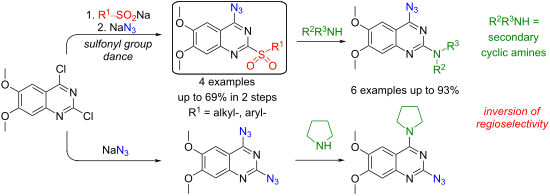
Graphical Abstract
Scheme 1: Approaches for quinazoline modifications at the C2 and C4 positions.
Scheme 2: Attempts toward sulfonyl group dance using 2,4-dichloroquinazolines 1a‒c.
Scheme 3: Synthesis of 2-chloro-6,7-dimethoxy-4-sulfonylquinazoline derivatives 8.
Scheme 4: Alternative synthesis pathway for 2-chloro-6,7-dimethoxy-4-sulfonylquinazoline derivatives 8.
Scheme 5: Sulfonyl group dance using 2-chloro-6,7-dimethoxy-4-sulfonylquinazolines 8.
Scheme 6: One-pot synthesis of 4-azido-6,7-dimethoxy-2-sulfonylquinazolines 12. The crystallographic informat...
Scheme 7: Synthesis of 2-azido-4-sulfonyl-6,7-dimethoxyquinazolines 15.
Scheme 8: Synthesis of 6,7-dimethoxyquinazoline derivatives 16, 17a and 18.
Scheme 9: Synthesis of 2-amino-4-azido-6,7-dimethoxyquinazolines 17.
Scheme 10: Synthesis of terazosin and prazosin hydrochlorides 19a and 19b.
Scheme 11: Modifications of derivatives 17.
Beilstein J. Org. Chem. 2024, 20, 628–637, doi:10.3762/bjoc.20.55
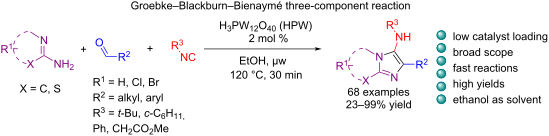
Graphical Abstract
Figure 1: Selected examples of commercial drugs containing the imidazo[1,2-a]pyridine core [13].
Figure 2: Examples of application of HPW as catalyst in the synthesis of heterocyclic compounds through multi...
Scheme 1: a) Reported phosphomolybdic acid-catalyzed synthesis of imidazo[1,2-a]pyridines via GBB-3CR. b) Att...
Scheme 2: Substrate scope of the HPW-catalyzed GBB reactions using a range of aromatic/heteroaromatic aldehyd...
Scheme 3: Substrate scope of the HPW-catalyzed GBB reaction using aliphatic aldehydes. Reaction conditions: 2...
Scheme 4: Unsuccessful substrates for the HPW-catalyzed GBB-3CR for the synthesis of imidazo[1,2-a]pyridines.
Scheme 5: 10-Fold scale-up of the HPW-catalyzed GBB reaction (5.0 mmol) between 2-aminopyridine (1a), 4-nitro...
Scheme 6: Plausible reaction mechanism for the HPW-catalyzed GBB reaction.
Beilstein J. Org. Chem. 2024, 20, 597–606, doi:10.3762/bjoc.20.52
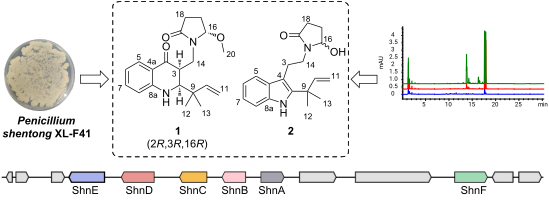
Graphical Abstract
Figure 1: HPLC analysis of small-scale fermentation with different media. More details of media, XISR I and X...
Figure 2: Chemical structures of compounds 1–12.
Figure 3: Key 2D NMR correlations of compounds 1–3.
Figure 4: Experimental and calculated ECD spectra at the CAM-B3LYP/6-311G(d,p) level of theory for compound 1....
Figure 5: Biosynthetic exploration of compounds 1 and 2. A: The schematic presents the biosynthetic gene clus...
Beilstein J. Org. Chem. 2024, 20, 379–426, doi:10.3762/bjoc.20.36
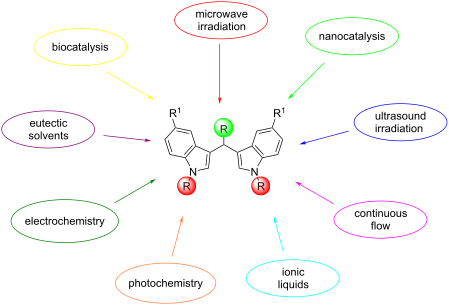
Graphical Abstract
Scheme 1: Examples of BIMs used for their medicinal properties.
Scheme 2: Mechanisms for the synthesis of BIMs using protic or Lewis acids as catalysts.
Scheme 3: Synthesis of bis(indolyl)methanes using DBDMH.
Scheme 4: Competition experiments and synthesis of bis(indolyl)methanes using DBDMH.
Scheme 5: Proposed mechanism for formation of BIM of using DBDMH.
Scheme 6: Synthesis of bis(indolyl)methanes using I2.
Scheme 7: General reaction mechanism upon halogen bonding.
Scheme 8: Synthesis of bis(indolyl)methanes using I2, introduced by Ji.
Scheme 9: Synthesis of bis(indolyl)methanes using Br2 in CH3CN.
Scheme 10: Βidentate halogen-bond donors.
Scheme 11: Synthesis of bis(indolyl)methanes using bidentate halogen-bond donor 26.
Scheme 12: Proposed reaction mechanism.
Scheme 13: Synthesis of bis(indolyl)methanes using iodoalkyne as catalyst.
Scheme 14: Proposed reaction mechanism.
Scheme 15: Optimized reaction conditions used by Ramshini.
Scheme 16: Activation of the carbonyl group by HPA/TPI-Fe3O4.
Scheme 17: Synthesis of BIMs in the presence of nanoAg-Pt/SiO2-doped silicate.
Scheme 18: Mechanism of action proposed by Khalafi-Nezhad et al.
Scheme 19: Activation of the carbonyl group by the Cu–isatin Schiff base complex.
Scheme 20: Optimum reaction conditions published by Jain.
Scheme 21: Organocatalytic protocol utilizing nanoparticles introduced by Bankar.
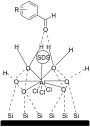
Scheme 22: Activation of the carbonyl group by the AlCl3·6H2O-SDS-SiO2 complex.
Scheme 23: Optimal reaction conditions for the aforementioned nano-Fe3O4 based catalysts.
Scheme 24: Nanocatalytic protocol proposed by Kaur et al.
Scheme 25: Microwave approach introduced by Yuan.
Scheme 26: Microwave approach introduced by Zahran et al.
Scheme 27: Microwave irradiation protocol introduced by Bindu.
Scheme 28: Silica-supported microwave irradiation protocol.
Scheme 29: Proposed mechanism for formation of BIM by Nongkhlaw.
Scheme 30: Microwave-assisted synthesis of BIMs catalyzed by succinic acid.
Scheme 31: Proposed mechanism of action of MMO-4.
Scheme 32: Catalytic approach introduced by Muhammadpoor-Baltork et al.
Scheme 33: Reaction conditions used by Xiao-Ming.
Scheme 34: Ultrasonic irradiation-based protocol published by Saeednia.
Scheme 35: Pyruvic acid-mediated synthesis of BIMs proposed by Thopate.
Scheme 36: Synthesis of BIMs using [bmim]BF4 or [bmim]PF6 ionic liquids.
Scheme 37: Synthesis of BIMs utilizing In(OTf)3 in octylmethylimidazolium hexafluorophosphate as ionic liquid.
Scheme 38: FeCl3·6H2O-catalyzed synthesis of BIMs with use of ionic liquid.
Scheme 39: Synthesis of BIMs utilizing the [hmim]HSO4/EtOH catalytic system.
Scheme 40: Synthesis of BIMs utilizing acidic ionic liquid immobilized on silica gel (ILIS-SO2Cl).
Scheme 41: The [bmim][MeSO4]-catalyzed reaction of indole with various aldehydes.
Scheme 42: The role of [bmim][MeSO4] in catalyzing the reaction of indole with aldehydes.
Scheme 43: Synthesis of BIMs utilizing FeCl3-based ionic liquid ([BTBAC]Cl-FeCl3) as catalyst.
Scheme 44: Synthesis of BIMs using [Msim]Cl at room temperature.
Scheme 45: [Et3NH][H2PO4]-catalyzed synthesis of bis(indolyl)methanes.
Scheme 46: PILs-catalyzed synthesis of bis(indolyl)methanes.
Scheme 47: FSILs-mediated synthesis of bis(indolyl)methanes.
Scheme 48: Possible “release and catch” catalytic process.
Scheme 49: Synthesis of bis(indolyl)methanes by [DABCO-H][HSO4].
Scheme 50: Synthesis of bis(indolyl)methanes by [(THA)(SO4)].
Scheme 51: Synthesis of BBSI-Cl and BBSI-HSO4.
Scheme 52: Synthesis of BIMs in the presence of BBSI-Cl and BBSI-HSO4.
Scheme 53: Chemoselectivity of the present method.
Scheme 54: Synthesis of BIMs catalyzed by chitosan-supported ionic liquid.
Scheme 55: Proposed mechanism of action of CSIL.
Scheme 56: Optimization of the reaction in DESs.
Scheme 57: Synthesis of BIMs using ChCl/SnCl2 as DES.
Scheme 58: Synthesis of BIMs derivatives in presence of DES.
Scheme 59: BIMs synthesis in choline chloride/urea (CC/U).
Scheme 60: Flow chemistry-based synthesis of BIMs by Ley.
Scheme 61: Flow chemistry-based synthesis of BIMs proposed by Nam et al.
Scheme 62: Amino-catalyzed reaction of indole with propionaldehyde.
Scheme 63: Aminocatalytic synthesis of BIMs.
Scheme 64: Proposed mechanism for the aminocatalytic synthesis of BIMs.
Scheme 65: Enzymatic reaction of indole with aldehydes.
Scheme 66: Proposed mechanism for the synthesis of BIMs catalyzed by TLIM.
Scheme 67: Proposed reaction mechanism by Badsara.
Scheme 68: Mechanism proposed by D’Auria.
Scheme 69: Photoinduced thiourea catalysis.
Scheme 70: Proposed mechanism of photoacid activation.
Scheme 71: Proposed mechanism of action for CF3SO2Na.
Scheme 72: Proposed mechanism for the synthesis of BIMs by Mandawad.
Scheme 73: Proposed mechanism for the (a) acid generation and (b) synthesis of BIMs.
Scheme 74: a) Reaction conditions employed by Khaksar and b) activation of the carbonyl group by HFIP.
Scheme 75: Activation of the carbonyl group by the PPy@CH2Br through the formation of a halogen bond.
Scheme 76: Reaction conditions utilized by Mhaldar et al.
Scheme 77: a) Reaction conditions employed by López and b) activation of the carbonyl group by thiourea.
Scheme 78: Infrared irradiation approach introduced by Luna-Mora and his research group.
Scheme 79: Synthesis of BIMs with the use of the Fe–Zn BMOF.
Beilstein J. Org. Chem. 2024, 20, 336–345, doi:10.3762/bjoc.20.34
Graphical Abstract
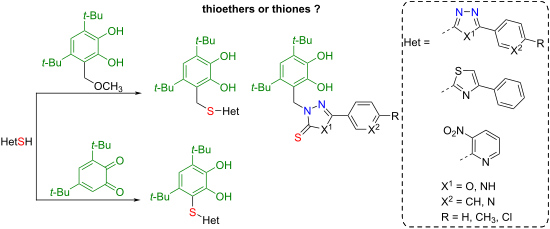
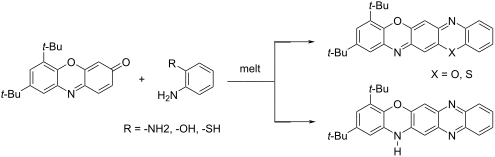
Scheme 1: Synthesis of 6,8-di-tert-butyl-N-aryl-3H-phenoxazin-3-imines 3 [6] and 6,8-di-tert-butyl-2-(arylamino)...
Figure 1: DFT-calculated molecular geometry (B3LYP/6-311++G(d,p) level) and distribution of electronic densit...
Scheme 2: 6,8-Di-tert-butyl-2-(arylamino)-3H-phenoxazin-3-ones 4 prepared by the one-pot reaction between 6,8...
Figure 2: Molecular structure of 6,8-di-tert-butyl-2-(o-nitrophenylamino)-3H-phenoxazin-3-one (4f). a) Select...
Figure 3: UV–vis spectra of 6,8-di-tert-butyl-2-(arylamino)-3H-phenoxazin-3-ones 4a–h (toluene, c = 2⋅10−5 M, ...
Scheme 3: Synthesis of 14H-quinoxaline[2,3-b]phenoxazines 5 and 6.
Scheme 4: Relative stability of the tautomers 7 and 7a,b of quinoxaline[2,3-b]phenoxazine calculated at the D...
Scheme 5: Preparation of quinoxaline[2,3-b]phenoxazine (7) from 2-amino-3H-phenoxazin-3-one (8) [10] and 2-ethoxy...
Figure 4: Molecular structure of ethyl 2,4-di-tert-butyl-14H-quinoxalino[2,3-b]phenoxazine-10-carboxylate (5c...
Scheme 6: Triphenodioxazine and oxazinophenothiazine derivatives 10 via condensation of 3H-phenoxazin-3-one 1...
Figure 5: a) UV–vis (solid lines) and fluorescence emission (λex = 365 nm, dashed) spectra of compounds 5a–c ...
Figure 6: UV–vis (solid lines) and fluorescence emission (dashed, λex = 365 nm) spectra of compounds 6a,b in ...
Figure 7: UV–vis, fluorescence emission (λex = 500 nm), and fluorescence excitation (λobs = 590 nm) spectra o...
Beilstein J. Org. Chem. 2024, 20, 280–286, doi:10.3762/bjoc.20.29
Graphical Abstract
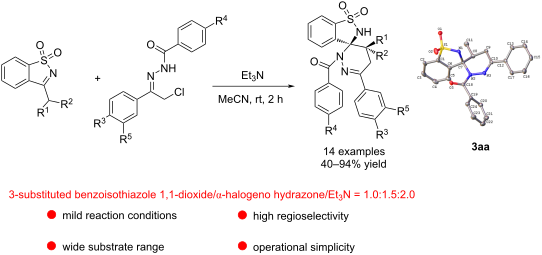
Scheme 1: Comparision of previous work with this work.
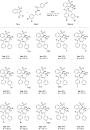
Scheme 2: The effects of substituent groups on the [4 + 2] annulation reaction. Reaction conditions: 1 (1.0 m...
Scheme 3: Gram-scale synthesis of 3aa.
Scheme 4: The transformation of 3aa.
Scheme 5: The reaction mechanism of the reaction from 3aa to 4aa.
Beilstein J. Org. Chem. 2023, 19, 1677–1693, doi:10.3762/bjoc.19.123
Graphical Abstract
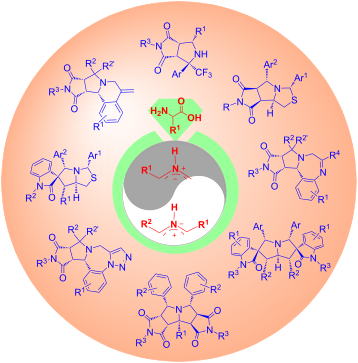
Figure 1: Classification of AMYs.
Scheme 1: Aminoester- and amino acid-based AMYs for single and double [3+2] cycloadditions.
Scheme 2: Formation of semi-stabilized AMYs B1 from pyrrolidines.
Scheme 3: Cyclic amine-based AMYs A3 and B1 for [3 + 2] cycloadditions.
Scheme 4: Proposed double cycloaddition reactions involving semi-stabilized AMYs.
Scheme 5: [3 + 2] Cycloaddition for the synthesis of trifluoromethylated pyrrolidines 9.
Figure 2: Biologically interesting pyrrolizidines.
Scheme 6: Double cycloadditions with glycine for the synthesis of products 10 (dr > 9:1).
Scheme 7: Double cycloadditions with α-substituted amino acids leading to products 11 (≈8.5:1 dr).
Scheme 8: Stereochemistry for the formation of products 10 or 11.
Scheme 9: One-pot and stepwise double cycloadditions. Conditions: i) MeCN (0.02 M), 90 °C, 6 h; ii) then AcOH...
Figure 3: Biologically interesting spirooxindole-pyrrolizidines.
Scheme 10: Double cycloadditions for the synthesis of bis[spirooxindole-pyrrolizidine]s.
Scheme 11: Mechanism for the diastereoselective synthesis of bis[spirooxindole-pyrrolizidine]s.
Scheme 12: Stepwise synthesis of triazolobenzodiazepine 21a.
Scheme 13: One-pot synthesis of triazolobenzodiazepines.
Figure 4: Bioactive triazolobenzodiazepine derivatives.
Scheme 14: One-pot synthesis of tetrahydropyrroloquinazolines.
Scheme 15: One-pot synthesis of tetrahydropyrrolobenzodiazepines.
Figure 5: Bioactive pyrroloquinazolines and pyrrolobenzodiazepines.
Scheme 16: Stepwise synthesis of pyrrolo[2,1-a]isoquinolines.
Figure 6: Bioactive pyrrolo[2,1-a]isoquinolines and hexahydropyrrolo[2,1-a]isoquinolines.
Figure 7: Bioactive tetrahydropyrrolothiazoles.
Scheme 17: Pseudo-four-component reaction for the synthesis of tetrahydropyrrolothiazoles 29 and 30 (>4:1 dr).
Scheme 18: One-pot two-step synthesis of spirooxindole-pyrrolothiazoles 31 (>4:1 dr).
Beilstein J. Org. Chem. 2023, 19, 1299–1369, doi:10.3762/bjoc.19.96
Graphical Abstract
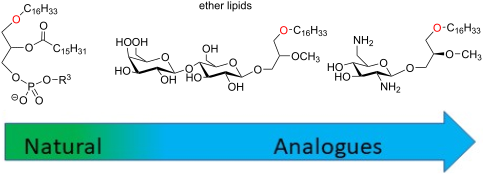
Figure 1: Chemical structure of some natural ether lipids (ELs).
Figure 2: Synthesis of lyso-PAF and PAF from 1-O-alkylglycerol [64].
Figure 3: Synthesis of lyso-PAF from 1,3-benzylideneglycerol 3.1 [69].
Figure 4: A) Synthesis of the two enantiomers of octadecylglycerol (4.6 and 4.10) from ᴅ-mannitol (4.1); B) s...
Figure 5: Four-step synthesis of PAF 5.6 from (S)-glycidol [73].
Figure 6: Synthesis of 1-O-alkylglycerol A) from solketal, B) from ᴅ- or ʟ-tartaric acid and the intermediate ...
Figure 7: Synthesis of EL building blocks starting from substituted glycidol 7.1a–c [82].
Figure 8: Synthesis of PAF 8.5 by using phosphoramidite 8.2 [86].
Figure 9: Synthesis of oleyl-PAF 9.7 from ʟ-serine [88].
Figure 10: Synthesis of racemic analogues of lyso-PAF 10.8 and PAF 10.9 featuring a phenyl group between the g...
Figure 11: Synthesis of racemic deoxy-lyso-PAF 11.7 and deoxy-PAF 11.8 [91].
Figure 12: Synthesis of racemic thio-PAF 12.8 [93].
Figure 13: Racemic synthesis of 13.6 to illustrate the modification of the glycerol backbone by adding a methy...
Figure 14: Racemic synthesis of 14.5 as an illustration of the introduction of methyl substituents on the glyc...
Figure 15: Synthesis of functionalized sn-2-acyl chains of PC-EL; A) Steglich esterification or acylation reac...
Figure 16: Synthesis of racemic mc-PAF (16.3), a carbamate analogue of PAF [102].
Figure 17: A) Synthesis of (R)-17.2 and (S)-17.6 starting from (S)-solketal (17.1); B) synthesis of N3-PAF (17...
Figure 18: Modification of the phosphocholine polar head to produce PAF analogues [81].
Figure 19: Racemic PAF analogues 19.3 and 19.5 characterized by the absence of the phosphate group [107].
Figure 20: Synthesis of PIP3-PAF (20.7) [108].
Figure 21: Large-scale synthesis of C18-edelfosine (21.8) [116].
Figure 22: Synthesis of C16-edelfosine (22.10) starting from isopropylidene-ʟ-glyceric acid methyl ester (22.1...
Figure 23: Phosphocholine moiety installation by the use of chlorophosphite 23.2 as key reagent [119].
Figure 24: Synthesis of rac-1-alkyl-2-O-methylglycerol (AMG) [120].
Figure 25: Synthesis of stereocontrolled 1-alkyl-2-O-methyl glycerol 25.9 (AMG) from dimethyl ᴅ-tartrate [81].
Figure 26: A) Racemic synthesis of thioether 26.4 [129,130], B) structure of sulfone analogue 26.5 [129].
Figure 27: Stereocontrolled synthesis of C18-edelfosine thioether analogue 27.8 [118].
Figure 28: Synthesis of thioether 28.4 that include a thiophosphate function [134].
Figure 29: Synthesis of ammonium thioether 29.4 and 29.6 [135].
Figure 30: Synthesis of the N-methylamino analogue of edelfosine 30.6 (BN52211) [138].
Figure 31: Synthesis of 1-desoxy analogues of edelfosine; A) with a saturated alkyl chain; B) synthesis of the...
Figure 32: Stereocontrolled synthesis of edelfosine analogue (S)-32.8 featuring a C18:1 lipid chain [142].
Figure 33: Synthesis of edelfosine analogues with modulation of the lipid chain; A) illustration with the synt...
Figure 34: Synthesis of phospholipid featuring a carbamate function to link the lipid chain to the glycerol un...
Figure 35: Synthesis of sesquiterpene conjugates of phospho glycero ether lipids [148].
Figure 36: Racemic synthesis of methyl-substituted glycerol analogues 36.7 and 36.10: A) synthesis of diether ...
Figure 37: Racemic synthesis of ilmofosine (37.6) [155,156].
Figure 38: A) Stereoselective synthesis of 38.5 via a stereoselective hydroboration reaction; B) synthesis of ...
Figure 39: Racemic synthesis of SRI62-834 (39.6) featuring a spiro-tetrahydrofurane heterocycle in position 2 ...
Figure 40: Racemic synthesis of edelfosine analogue 40.5 featuring an imidazole moiety in sn-2 position [160].
Figure 41: Racemic synthesis of fluorine-functionalized EL: A) Synthesis of 41.6 and B) synthesis of 41.8 [161-163].
Figure 42: A) Synthesis of the β-keto-ester 42.6 that also features a decyl linker between the phosphate and t...
Figure 43: Synthesis of phosphonate-based ether lipids; A) edelfosine phosphonate analogue 43.7 and B) thioeth...
Figure 44: Enantioselective synthesis of phosphonates 44.3 and 44.4 [171].
Figure 45: Racemic synthesis of phosphinate-based ether lipid 45.10 [172].
Figure 46: Racemic synthesis of edelfosine arsonium analogue 46.5 [173].
Figure 47: Synthesis of edelfosine dimethylammonium analogue 47.2 [118].
Figure 48: Synthesis of rac-C18-edelfosine methylammonium analogue 48.4 [176].
Figure 49: A) Synthesis of edelfosine N-methylpyrrolidinium analogue 49.2 or N-methylmorpholinium analogue 49.3...
Figure 50: A) Synthesis of edelfosine’s analogue 50.4 with a PE polar group; B) illustration of a pyridinium d...
Figure 51: A) Synthesis of 51.4 featuring a thiazolium cationic moiety; B) synthesis of thiazolium-based EL 51...
Figure 52: Synthesis of cationic ether lipids 52.3, 52.4 and 52.6 [135,183].
Figure 53: Synthesis of cationic carbamate ether lipid 53.5 [184].
Figure 54: Synthesis of cationic sulfonamide 54.5 [185].
Figure 55: Chemical structure of ONO-6240 (55.1) and SRI-63-119 (55.2).
Figure 56: Synthesis of non-ionic ether lipids 56.2–56.9 [188].
Figure 57: Synthesis of ether lipid conjugated to foscarnet 57.6 [189].
Figure 58: A) Synthesis of ether lipid conjugated to arabinofuranosylcytosine; B) synthesis of AZT conjugated ...
Figure 59: Synthesis of quercetin conjugate to edelfosine [191].
Figure 60: Synthesis of 60.8 (Glc-PAF) [194].
Figure 61: A) Synthesis of amino ether lipid 61.7 functionalized with a rhamnose unit and its amide analogue 6...
Figure 62: A) Synthesis of glucose ether lipid 62.4; B) structure of ether lipid 62.5 possessing a maltose uni...
Figure 63: A) Synthesis of glucuronic methyl ester 63.8; B) structure of cellobiose 63.9 and maltose 63.10 ana...
Figure 64: A) Synthesis of maltosyl glycerolipid 64.7; B) structure of lactose analogue 64.8 prepared followin...
Figure 65: A) Asymmetric synthesis of the aglycone moiety starting from allyl 4-methoxyphenyl ether; B) glycos...
Figure 66: A) Synthesis of ohmline possessing a lactose moiety. B) Structure of other glyco glycero lipids pre...
Figure 67: A) Synthesis of lactose-glycerol ether lipid 67.5; B) analogues possessing a maltose (67.6) or meli...
Figure 68: Synthesis of digalactosyl EL 68.6, A) by using trityl, benzyl and acetyl protecting groups, B) by u...
Figure 69: A) Synthesis of α-ohmline; B) structure of disaccharide ether lipids prepared by using similar meth...
Figure 70: Synthesis of lactose ether lipid 70.3 and its analogue 70.6 featuring a carbamate function as linke...
Figure 71: Synthesis of rhamnopyranoside diether 71.4 [196].
Figure 72: Synthesis of 1-O-hexadecyl-2-O-methyl-3-S-(α-ᴅ-1'-thioglucopyranosyl)-sn-glycerol (72.5) [225].
Figure 73: A) Preparation of lipid intermediate 73.4; B) synthesis of 2-desoxy-C-glycoside 73.10 [226].
Figure 74: Synthesis of galactose-pyridinium salt 74.3 [228].
Figure 75: Synthesis of myo-inositol derivative Ino-C2-PAF (75.10) [230].
Figure 76: A) Synthesis of myo-inositol phosphate building block 76.7; B) synthesis of myo-inositolphosphate d...
Figure 77: A) Synthesis of phosphatidyl-3-desoxy-inositol 77.4; B) synthesis of phosphono-3-desoxyinositol 77.9...
Figure 78: A) Structure of diether phosphatidyl-myo-inositol-3,4-diphosphate 78.1; B) synthesis of phosphatidy...
Figure 79: A) Synthesis of diether-phosphatidyl derivative 79.4 featuring a hydroxymethyl group in place of a ...
Figure 80: Synthesis of Glc-amine-PAF [78].
Figure 81: Synthesis of glucosamine ether lipid 81.4 and its analogues functionalized in position 3 of the ami...
Figure 82: Synthesis of fully deprotected aminoglucoside ether lipid 82.5 [246].
Figure 83: Synthesis of C-aminoglycoside 83.12 using Ramberg–Bäcklund rearrangement as a key step [250].
Figure 84: A) List of the most important glyco lipids and amino glyco lipids included in the study of Arthur a...
Figure 85: Synthesis of mannosamine ether lipid 85.6 [254].
Figure 86: A) Synthesis of glucosamine ether lipids with a non-natural ʟ-glucosamine moiety; B) synthesis of e...
Figure 87: A) Structure of the most efficient anticancer agents 87.1–87.4 featuring a diamino glyco ether lipi...
Figure 88: A) Synthesis of diamino glyco ether lipid 87.4; B) synthesis of bis-glycosylated ether lipid 88.10 [256]....
Figure 89: Synthesis of triamino ether lipid 89.4 [260].
Figure 90: Synthesis of chlorambucil conjugate 90.7 [261].
Figure 91: Three main methods for the preparation of glycerol ether lipid 91.3; A) from solketal and via a tri...
Figure 92: Four different methods for the installation of the phosphocholine polar head group; A) method using...
Figure 93: Illustration of two methods for the installation of saccharides or aminosaccharides; A) O-glycosyla...
Beilstein J. Org. Chem. 2023, 19, 1259–1288, doi:10.3762/bjoc.19.94
Graphical Abstract
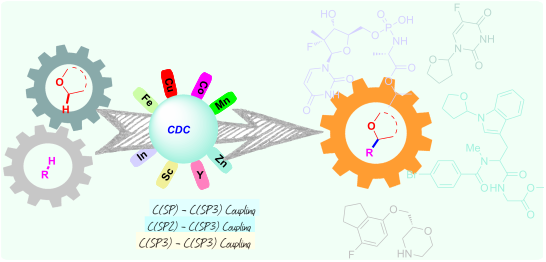
Scheme 1: Research progress of coupling reactions and active compounds containing α-C(sp3)-functionalized eth...
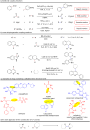
Scheme 2: Transition-metal-catalyzed CDC pathways.
Scheme 3: CDC of active methylene compounds in the α-C(sp3) position of ethers.
Scheme 4: InCl3/Cu(OTf)2/NHPI co-catalyzed CDC reaction.
Scheme 5: CDC of cyclic benzyl ethers with aldehydes.
Scheme 6: Cu-catalyzed CDC of (a) unactivated C(sp3)–H ethers with simple ketones and (b) double C(sp3)−H fun...
Scheme 7: Cu-catalyzed CDC of C(sp3)–H/C(sp3)–H bonds.
Scheme 8: Cu-catalyzed synthesis of chiral 2-substituted tetrahydropyrans.
Scheme 9: CDC of thiazole with cyclic ethers.
Scheme 10: Cu(I)-catalyzed oxidative alkenylation of simple ethers.
Scheme 11: Cross-dehydrogenation coupling of isochroman C(sp3)–H bonds with anisole C(sp2)–H bonds.
Scheme 12: Pd(OAc)2/Cu(OTf)2-catalyzed arylation of α-C(sp3)–H bonds of ethers.
Scheme 13: Cu-catalyzed C(sp3)–H/C(sp2)–H activation strategies to construct C(sp3)–C(sp2) bonds.
Scheme 14: Cu(I)-catalyzed C(sp2)–H alkylation.
Scheme 15: Cu-catalyzed C(sp3)–H/C(sp)–H activation to construct C(sp3)–C(sp) bonds (H2BIP: 2,6-bis(benzimidaz...
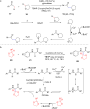
Scheme 16: Fe-catalyzed CDC reaction pathways.
Scheme 17: Fe2(CO)9-catalyzed functionalization of C–H bonds.
Scheme 18: Ligand-promoted Fe-catalyzed CDC reaction of N-methylaniline with ethers.
Scheme 19: Fe-catalyzed CDC of C(sp3)–H/C(sp3)–H bonds.
Scheme 20: Fe-catalyzed hydroalkylation of α,β-unsaturated ketones with ethers.
Scheme 21: Solvent-free Fe(NO3)3-catalyzed CDC of C(sp3)–H/C(sp2)–H bonds.
Scheme 22: Alkylation of disulfide compounds to afford tetrasubstituted alkenes.
Scheme 23: Fe-catalyzed formation of 1,1-bis-indolylmethane derivatives.
Scheme 24: Alkylation of coumarins and flavonoids.
Scheme 25: Direct CDC α-arylation of azoles with ethers.
Scheme 26: CDC of terminal alkynes with C(sp3)–H bonds adjacent to oxygen, sulfur or nitrogen atoms.
Scheme 27: Alkylation of terminal alkynes.
Scheme 28: Co-catalyzed functionalization of glycine esters.
Scheme 29: Co-catalyzed construction of C(sp2)–C(sp3) bonds.
Scheme 30: Co-catalyzed CDC of imidazo[1,2-a]pyridines with isochroman.
Scheme 31: Co-catalyzed C–H alkylation of (benz)oxazoles with ethers.
Scheme 32: Cobalt-catalyzed CDC between unactivated C(sp2)–H and C(sp3)–H bonds.
Scheme 33: MnO2-catalyzed CDC of the inactive C(sp3)-H.
Scheme 34: Oxidative cross-coupling of ethers with enamides.
Scheme 35: Ni(II)-catalyzed CDC of indoles with 1,4-dioxane.
Scheme 36: Chemo- and regioselective ortho- or para-alkylation of pyridines.
Scheme 37: Asymmetric CDC of 3,6-dihydro-2H-pyrans with aldehydes.
Scheme 38: CDC of heterocyclic aromatics with ethers.
Scheme 39: Indium-catalyzed alkylation of DHPs with 1,3-dicarbonyl compounds.
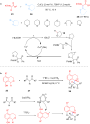
Scheme 40: Rare earth-metal-catalyzed CDC reaction.
Scheme 41: Visible-light-driven CDC of cycloalkanes with benzazoles.
Scheme 42: Photoinduced alkylation of quinoline with cyclic ethers.
Scheme 43: Photocatalyzed CDC reactions between α-C(sp3)–H bonds of ethers and C(sp2)–H bonds of aromatics.
Beilstein J. Org. Chem. 2023, 19, 1216–1224, doi:10.3762/bjoc.19.89
Graphical Abstract
Scheme 1: Synthesis of benzo[f]chromeno[2,3-h]quinoxalinoporphyrins 3–16.
Figure 1: Plausible mechanism for the formation of copper(II) benzo[f]chromeno[2,3-h]quinoxalinoporphyrins.
Scheme 2: Sequential synthesis of copper(II) benzo[f]chromeno[2,3-h]quinoxalinoporphyrin 3.
Figure 2: Electronic absorption spectra of copper(II) benzo[f]chromeno[2,3-h]quinoxalinoporphyrins 3–8 in CHCl...
Figure 3: Electronic absorption spectra of free-base benzo[f]chromeno[2,3-h]quinoxalinoporphyrins 9–13 in CHCl...
Figure 4: Electronic absorption spectra of zinc(II) benzo[f]chromeno[2,3-h]quinoxalinoporphyrins 14–16 in CHCl...
Figure 5: (a) Emission spectra of free-base benzo[f]chromeno[2,3-h]quinoxalinoporphyrins 9–13 and (b) emissio...
Beilstein J. Org. Chem. 2023, 19, 1155–1160, doi:10.3762/bjoc.19.83
Graphical Abstract
Figure 1: Biologically active 4-arylpyrazolo[3,4-b]pyridin-6-ones.
Scheme 1: Methods for the synthesis of 4-arylpyrazolo[3,4-b]pyridin-6-ones.
Scheme 2: One-pot synthesis of 4-arylpyrazolo[3,4-b]pyridin-6-ones 4a–i, 9a, and 10a.
Figure 2: Normalized absorption and fluorescence spectra of solutions of compounds 4a–i, 9a, and 10a in EtOH.
Beilstein J. Org. Chem. 2023, 19, 1055–1145, doi:10.3762/bjoc.19.81
Graphical Abstract
Figure 1: Oxidative and reductive activations of organic compounds harvesting photoredox catalysis.
Figure 2: General catalytic cycles of radical ion conPET (left) and radical ion e-PRC (right).
Figure 3: “Beginner’s guide”: comparison between advantages, capacities, and prospectives of conPET and PEC.
Figure 4: A) conPET reductive dehalogenation of aryl halides with PDI. B) Reductive C–H arylation with pyrrol...
Figure 5: A) Chromoselective mono- and disubstitution or polybrominated pyrimidines with pyrroles. B) Sequent...
Figure 6: A) Synthesis of pyrrolo[1,2-a]quinolines. B) Synthesis of ullazines.
Figure 7: A) Reductive phosphorylation of aryl halides via conPET. B) Selected examples from the substrate sc...
Figure 8: A) Reductive dehalogenation of aryl halides via conPET and selected examples from the substrate sco...
Figure 9: A) Reductive C–H arylation of aryl halides via conPET (top) and selected examples from the substrat...
Figure 10: A) Reductive hydrodehalogenation of aryl halides with Mes-Acr-BF4. B) Selected examples from the su...
Figure 11: A) Reductive hydrodechlorination of aryl chlorides with 4-DPAIPN. B) Proposed formation of CO2•−. C...
Figure 12: A) Reductive conPET borylation with 3CzEPAIPN (top) and selected examples from the substrate scope ...
Figure 13: Scale-up of conPET phosphorylation with 3CzEPAIPN.
Figure 14: A) Borylation of 1d. B) Characteristics and structure of PC1 with green and red parts showing the l...
Figure 15: A) Reductive C–H arylation scope with polysulfide conPET (top) and selected examples from the subst...
Figure 16: Scale-up of A) C–H arylation and B) dehaloborylation with polysulfide photocatalysis in continuous-...
Figure 17: A) Formation of [Ir1]0 and [Ir2]0 upon PET between [Ir1]+ and Et3N. B) Mechanism of multi-photon ta...
Figure 18: A) Reductive hydrodehalogenation of aryl halides via multi-photon tandem photocatalysis. B) Selecte...
Figure 19: A) Carbonylative amidation of aryl halides in continuous flow. B) Selected examples from the substr...
Figure 20: A) General scheme for reductive (RQ) and oxidative quenching (OQ) protocols using [FeIII(btz)3](PF6)...
Figure 21: A) Carbonylative amidation of alkyl iodides with [IrIII(ppy)2(dtbbpy)]PF6. B) Selected examples fro...
Figure 22: A) Carboxylative C–N bond cleavage in cyclic amines. B) Selected examples from the substrate scope....
Figure 23: A) Formal reduction of alkenes to alkanes via transfer hydrogenation. B) Selected examples from the...
Figure 24: A) Birch-type reduction of benzenes with PMP-BPI. B) Selected examples from the substrate scope (sc...
Figure 25: Proposed mechanism of the OH− mediated conPET Birch-type reduction of benzene via generation of sol...
Figure 26: Reductive detosylation of N-tosylated amides with Mes-Acr-BF4. B) Selected examples from the substr...
Figure 27: A) Reductive detosylation of N-tosyl amides by dual PRC. B) Selected examples from the substrate sc...
Figure 28: A) Mechanism of the dual PRC based on PET between [Cu(dap)2]+ and DCA. B) Mechanism of the dual PRC...
Figure 29: A) N–O bond cleavage in Weinreb amides with anthracene. B) N–O bond cleavage in Weinreb amides rely...
Figure 30: A) Pentafluorosulfanylation and fluoride elimination. B) Mechanism of the pentafluorosulfanylation ...
Figure 31: A) α-Alkoxypentafluorosulfanylation (top) and selected examples from the substrate scope (bottom). ...
Figure 32: A) Oxidative amination of arenes with azoles catalyzed by N-Ph PTZ. B) Selected examples from the s...
Figure 33: A) C(sp3)–H bond activation by HAT via chloride oxidation by *N-Ph PTZ•+. B) Proposed mechanism for...
Figure 34: A) Recycling e-PRC C–H azolation of electron-rich arenes with pyrazoles using Mes-Acr+ as a photoca...
Figure 35: A) Radical ion e-PRC direct oxidation of unactivated arenes using TAC+ as an electro-activated phot...
Figure 36: A) Radical ion e-PRC direct oxidation of unactivated arenes using TPA as an electro-activated photo...
Figure 37: Proposed mechanism (top) and mode of preassembly (bottom).
Figure 38: A) Possible preassemblies of reactive (left) vs unreactive (right) arenes. B) Calculated spin densi...
Figure 39: A) Recycling e-PRC C(sp2 )–H acetoxylation of arenes using DDQ as a photocatalyst. B) Proposed cata...
Figure 40: Gram scale hydroxylation of benzene in a recirculated flow setup.
Figure 41: A) Radical ion e-PRC vicinal diamination of alkylarenes using TAC+ as an electro-activated photocat...
Figure 42: A) Sequential oxygenation of multiple adjacent C–H bonds under radical ion e-PRC using TAC+ as an e...
Figure 43: A) Enantioselective recycling e-PRC cyanation of benzylic C–H bonds using ADQS as photocatalyst. B)...
Figure 44: Proposed tandem mechanism by Xu and co-workers.
Figure 45: A) Enantioselective recycling e-PRC decarboxylative cyanation using Cu(acac)2, Ce(OTf)3 and a box l...
Figure 46: A) Enantioselective recycling e-PRC benzylic cyanation using Cu(MeCN)4BF4, box ligand and anthraqui...
Figure 47: A) Radical ion e-PRC acetoxyhydroxylation of aryl olefins using TAC+ as an electro-activated photoc...
Figure 48: Selected examples from the substrate scope.
Figure 49: Photoelectrochemical acetoxyhydroxylation in a recirculated flow setup.
Figure 50: A) Radical ion e-PRC aminooxygenation of aryl olefins using TAC+ as an electro-activated photocatal...
Figure 51: A) Recycling e-PRC C–H alkylation of heteroarenes with organic trifluoroborates using Mes-Acr+ as p...
Figure 52: A) Recycling e-PRC decarboxylative C–H alkylation of heteroarenes using CeCl3·7H2O as catalyst. B) ...
Figure 53: A) Recycling e-PRC decarboxylative C–H alkylation of heteroarenes using Fe(NH4)2(SO4)2·6H2O as cata...
Figure 54: A) Recycling e-PRC C–H alkylation of heteroarenes with alkyl oxalates and 4CzIPN as photocatalyst. ...
Figure 55: A) Recycling e-PRC decarboxylative C–H carbamoylation of heteroarenes using 4CzIPN as photocatalyst...
Figure 56: A) Photoelectrochemical HAT-mediated hydrocarbon activation via the chlorine radical. B) Proposed m...
Figure 57: A) Selected examples from the substrate scope. B) Gram and decagram scale semi-continuous flow PEC ...
Figure 58: A) Photoelectrochemical HAT-mediated dehydrogenative coupling of benzothiazoles with aliphatic C–H ...
Figure 59: A) Photoelectrochemical HAT activation of ethers using electro-activated TAC+ as photocatalyst. B) ...
Figure 60: Selected examples from the substrate scope.
Figure 61: A) Photoelectrochemical HAT-mediated synthesis of alkylated benzimidazo-fused isoquinolinones using...
Figure 62: A) Decoupled photoelectrochemical cerium-catalyzed oxydichlorination of alkynes using CeCl3 as cata...
Figure 63: Proposed decoupled photoelectrochemical mechanism.
Figure 64: A) Decoupled photoelectrochemical ring-opening bromination of tertiary cycloalkanols using MgBr2 as...
Figure 65: A) Recycling e-PRC ring-opening functionalization of cycloalkanols using CeCl3 as catalyst. B) Prop...
Figure 66: Selected examples from the substrate scope of the PEC ring-opening functionalization.
Figure 67: A) Radical ion e-PRC reduction of chloro- and bromoarenes using DCA as catalyst and various accepto...
Figure 68: A) Screening of different phthalimide derivatives as catalyst for the e-PRC reduction of aryl halid...
Figure 69: Screening of different organic catalysts for the e-PRC reduction of trialkylanilium salts.
Figure 70: A) e-PRC reduction of phosphonated phenols and anilinium salts. B) Selected examples from the subst...
Figure 71: A) ConPET and e-PRC reduction of 4-bromobenzonitrile using a naphthalene diimide (NDI) precatalyst ...
Figure 72: A) Radical ion e-PRC reduction of phosphinated aliphatic alcohols with n-BuO-NpMI as catalyst. B) C...
Figure 73: Selected examples from the substrate scope.
Figure 74: A) Recycling e-PRC reductive dimerization of benzylic chlorides using a [Cu2] catalyst. B) Proposed...
Figure 75: A) Decoupled photoelectrochemical C–H alkylation of heteroarenes through deamination of Katritzky s...
Figure 76: Proposed mechanism by Chen and co-workers.
Beilstein J. Org. Chem. 2023, 19, 1047–1054, doi:10.3762/bjoc.19.80
Graphical Abstract
Figure 1: Examples of natural and synthetic bioactive 1,3-thiazine and imidazothiazolotriazine derivatives wi...
Scheme 1: Base-induced transformations and rearrangements of functionalized imidazo[4,5-e]thiazolo[3,2-b]-1,2...
Scheme 2: Alkaline hydrolysis of esters 1a,b. aDetermined by 1H NMR spectroscopy; bisolated yields.
Scheme 3: Synthesis of potassium imidazo[4,5-e][1,3]thiazino[2,3-c][1,2,4]triazine-7-carboxylates.
Scheme 4: Plausible rearrangement mechanism of imidazo[4,5-e]thiazolo[2,3-c][1,2,4]triazine 1d into imidazo[4...
Figure 2: 1H NMR spectra of the starting compound 1d (a) and the reaction mixture after 1.5 (b) and 4 (c) hou...
Scheme 5: Synthetic approaches to imidazo[4,5-e][1,3]thiazino[2,3-c][1,2,4]triazines 3a–d,j.
Scheme 6: Synthesis of imidazo[4,5-e][1,3]thiazino[2,3-c][1,2,4]triazine-7-carboxylic acids 5a–j.
Scheme 7: Synthesis of imidazo[4,5-e][1,3]thiazino[2,3-c][1,2,4]triazine-7-carboxylic acids 5k,m.
Scheme 8: Plausible path for the formation of products 9.
Figure 3: 1H NMR spectra of compounds 4a and 5a in DMSO-d6 in the region of 4.3–9.0 ppm.
Figure 4: 13C NMR GATED spectra of compounds 4a and 5a in DMSO-d6 in the region of 156.0–168.0 ppm.
Figure 5: General view of 5a in the crystal in thermal ellipsoid representation (p = 80%).
Beilstein J. Org. Chem. 2023, 19, 928–955, doi:10.3762/bjoc.19.71
Graphical Abstract
Figure 1: Various pyrrole containing molecules.
Scheme 1: Various synthestic protocols for the synthesis of pyrroles.
Figure 2: A tree-diagram showing various conventional and green protocols for Clauson-Kaas pyrrole synthesis.
Scheme 2: A general reaction of Clauson–Kaas pyrrole synthesis and proposed mechanism.
Scheme 3: AcOH-catalyzed synthesis of pyrroles 5 and 7.
Scheme 4: Synthesis of N-substituted pyrroles 9.
Scheme 5: P2O5-catalyzed synthesis of N-substituted pyrroles 11.
Scheme 6: p-Chloropyridine hydrochloride-catalyzed synthesis of pyrroles 13.
Scheme 7: TfOH-catalyzed synthesis of N-sulfonylpyrroles 15, N-sulfonylindole 16, N-sulfonylcarbazole 17.
Scheme 8: Scandium triflate-catalyzed synthesis of N-substituted pyrroles 19.
Scheme 9: MgI2 etherate-catalyzed synthesis and proposed mechanism of N-arylpyrrole derivatives 21.
Scheme 10: Nicotinamide catalyzed synthesis of pyrroles 23.
Scheme 11: ZrOCl2∙8H2O catalyzed synthesis and proposed mechanism of pyrrole derivatives 25.
Scheme 12: AcONa catalyzed synthesis of N-substituted pyrroles 27.
Scheme 13: Squaric acid-catalyzed synthesis and proposed mechanism of N-substituted pyrroles 29.
Figure 3: Reusability of catalyst γ-Fe2O3@SiO2-Sb-IL in six cycles.
Scheme 14: Magnetic nanoparticle-supported antimony catalyst used in the synthesis of N-substituted pyrroles 31...
Scheme 15: Iron(III) chloride-catalyzed synthesis of N-substituted pyrroles 33.
Scheme 16: Copper-catalyzed Clauson–Kaas synthesis and mechanism of pyrroles 35.
Scheme 17: β-CD-SO3H-catalyzed synthesis and proposed mechanism of pyrroles 37.
Figure 4: Recyclability of β-cyclodextrin-SO3H.
Scheme 18: Solvent-free and catalyst-free synthesis and plausible mechanism of N-substituted pyrroles 39.
Scheme 19: Nano-sulfated TiO2-catalyzed synthesis of N-substituted pyrroles 41.
Figure 5: Plausible mechanism for the formation of N-substituted pyrroles catalyzed by nano-sulfated TiO2 cat...
Scheme 20: Copper nitrate-catalyzed Clauson–Kaas synthesis and mechanism of N-substituted pyrroles 43.
Scheme 21: Synthesis of N-substituted pyrroles 45 by using Co catalyst Co/NGr-C@SiO2-L.
Scheme 22: Zinc-catalyzed synthesis of N-arylpyrroles 47.
Scheme 23: Silica sulfuric acid-catalyzed synthesis of pyrrole derivatives 49.
Scheme 24: Bismuth nitrate-catalyzed synthesis of pyrroles 51.
Scheme 25: L-(+)-tartaric acid-choline chloride-catalyzed Clauson–Kaas synthesis and plausible mechanism of py...
Scheme 26: Microwave-assisted synthesis of N-substituted pyrroles 55 in AcOH or water.
Scheme 27: Synthesis of pyrrole derivatives 57 using a nano-organocatalyst.
Figure 6: Nano-ferric supported glutathione organocatalyst.
Scheme 28: Microwave-assisted synthesis of N-substituted pyrroles 59 in water.
Scheme 29: Iodine-catalyzed synthesis and proposed mechanism of pyrroles 61.
Scheme 30: H3PW12O40/SiO2-catalyzed synthesis of N-substituted pyrroles 63.
Scheme 31: Fe3O4@-γ-Fe2O3-SO3H-catalyzed synthesis of pyrroles 65.
Scheme 32: Mn(NO3)2·4H2O-catalyzed synthesis and proposed mechanism of pyrroles 67.
Scheme 33: p-TsOH∙H2O-catalyzed (method 1) and MW-assisted (method 2) synthesis of N-sulfonylpyrroles 69.
Scheme 34: ([hmim][HSO4]-catalyzed Clauson–Kaas synthesis of pyrroles 71.
Scheme 35: Synthesis of N-substituted pyrroles 73 using K-10 montmorillonite catalyst.
Scheme 36: CeCl3∙7H2O-catalyzed Clauson–Kaas synthesis of pyrroles 75.
Scheme 37: Synthesis of N-substituted pyrroles 77 using Bi(NO3)3∙5H2O.
Scheme 38: Oxone-catalyzed synthesis and proposed mechanism of N-substituted pyrroles 79.