


Search results
Search for "chiral" in Full Text gives 1074 result(s) in Beilstein Journal of Organic Chemistry. Showing first 200.
Circumventing Mukaiyama oxidation: selective S–O bond formation via sulfenamide–alcohol coupling
Beilstein J. Org. Chem. 2026, 22, 158–166, doi:10.3762/bjoc.22.9
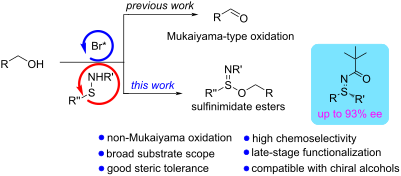
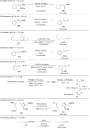
- RU58841. Moreover, chiral alcohols such as ʟ-menthol are well tolerated, affording diastereomeric sulfinimidate esters that can undergo stereospecific Grignard substitutions to furnish enantioenriched sulfilimines with up to 93% ee. These results demonstrate the potential of sulfinimidate esters as
- PIDA-mediated oxidative esterification of sulfenamides, rely on stoichiometric hypervalent iodine reagents and have not demonstrated broadly efficient reactivity with sterically demanding or chiral alcohols such as ʟ-menthol, where only modest conversion was observed in our hands. Motivated by these
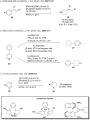
- , we anticipated that an NBS/NaHCO3-based protocol would provide a more practical and chiral-alcohol-compatible alternative to our previous PIDA system. A conceptual comparison between our previous PIDA-mediated protocol and the present NBS/NaHCO3-mediated protocol is summarized in Scheme 1. However


Asymmetric Mannich reaction of aromatic imines with malonates in the presence of multifunctional catalysts
Beilstein J. Org. Chem. 2026, 22, 151–157, doi:10.3762/bjoc.22.8
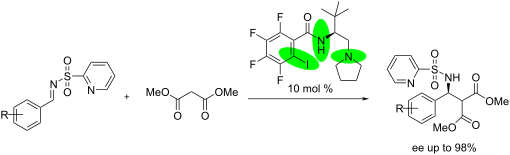
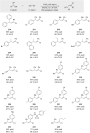
- compounds, and catalyst J as a trifluoroacetylated chiral tertiary amine, which lacks iodine. The reaction of imine 1 with dimethyl malonate was selected for the investigation as a model reaction. Based on our previous experience the catalyst screening was carried out in toluene in the presence of 10 mol
- ]. Although basic conditions caused partial racemization during the protection or deprotection step, the Boc-protected amine was obtained in low enantiomeric purity. Chiral HPLC analysis and comparison with an authentic sample revealed the S-configuration of the Mannich adduct [29]. Absolute configurations of
- . Although the activation mechanism was not proved unambiguously, it is assumed that steric effects of the chiral fragment together with a network of noncovalent interactions, including halogen and hydrogen bonds, are responsible for the high enantioselectivity of the reaction. Further developments of the


Design and synthesis of an axially chiral platinum(II) complex and its CPL properties in PMMA matrix
Beilstein J. Org. Chem. 2026, 22, 143–150, doi:10.3762/bjoc.22.7
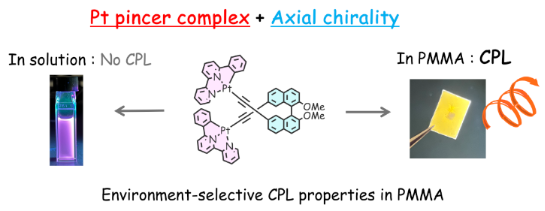
- chiral platinum(II) complex was synthesized via Sonogashira coupling and subsequent coordination of a pincer ligand to a precursor. The complex exhibited a broad absorption band ranging from 250 to 550 nm in the UV–vis spectrum, with TD-DFT calculations indicating mixed ligand-to-ligand charge transfer
- increased to 4%. CD spectra showed distinct Cotton effects in the MLCT region, and CPL signals were observed only in the PMMA matrices, with a dissymmetry factor |glum| = 0.4 × 10⁻³. These results demonstrate that axial chirality of the binaphthyl moiety governs the three-dimensional chiral arrangement of
- two platinum(II) chromophore units, leading to the chiroptical properties in the MLCT region through exciton coupling under restricted molecular motion. Keywords: axial chirality; chiral chemistry; circularly polarized luminescence (CPL); phosphorescence; platinum(II) complex; Introduction


Highly electrophilic, gem- and spiro-activated trichloromethylnitrocyclopropanes: synthesis and structure
Beilstein J. Org. Chem. 2026, 22, 123–130, doi:10.3762/bjoc.22.5
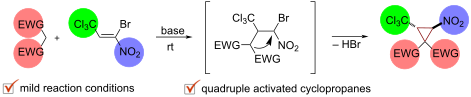
- obtained as a racemic diastereomeric pair 1SR,2RS. Centrosymmetric crystals 9a and 9b are diastereomers and crystallize as a true racemate. The configuration of the chiral atoms C1 and C2 in the molecules is the same as in molecules 2, and the difference is the configuration of atom C3. In crystal 9a, the


Total synthesis of natural products based on hydrogenation of aromatic rings
Beilstein J. Org. Chem. 2026, 22, 88–122, doi:10.3762/bjoc.22.4
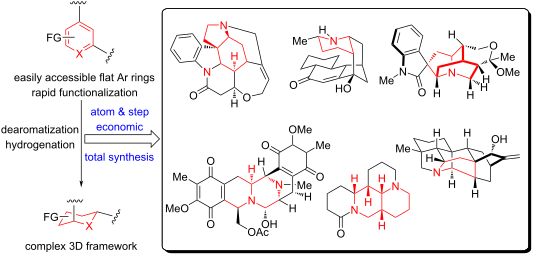
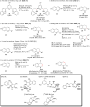
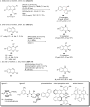
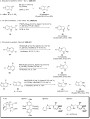
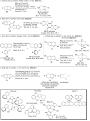
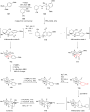
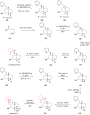
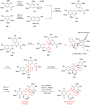
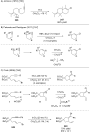
- in the presence of metal catalysts including Pd or Ir and different ligands. In 2021 and 2022, Wang and co-workers reported two impressive hydroboration–hydrogenation reactions catalyzed by FLP (triarylphenylborane) that reduced pyridine compounds 11 or 15 to dihydropyridine compounds 12 or chiral
- 18, 20 to piperidine compounds using [CpRhCl2]2 as a metal catalyst and formic acid as a hydrogen source (Scheme 3) [45]. Different with other previous studies, this method allows for substituents at the 3-position of pyridine, enabling the rapid preparation of chiral piperidine compounds. It should
- limitations in terms of substrate scope, stereoselectivity, and scalability, leaving ample room for innovation in catalyst design and mechanistic understanding. Fan and co-workers have long been dedicated to the asymmetric catalysis of chiral diamine ruthenium complexes. In 2020, they reported the efficient











Advances in Zr-mediated radical transformations and applications to total synthesis
Beilstein J. Org. Chem. 2026, 22, 71–87, doi:10.3762/bjoc.22.3
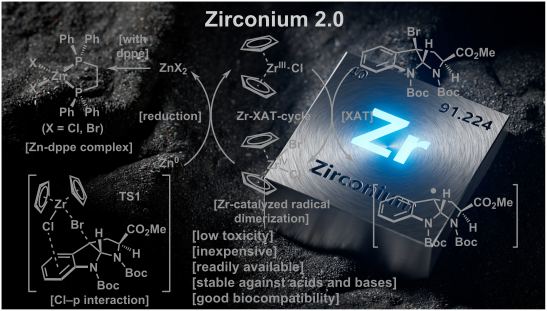
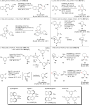
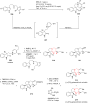
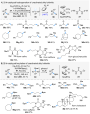
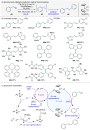
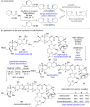
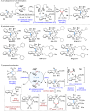
- issue, the authors first examined a model system. When β-alkoxythioesters (S)-52 were coupled with chiral alkyl iodides (S)-53 and (R)-53 under the developed conditions, the desired β-alkoxy ketones 54 were obtained in good yields without epimerization, affording optically pure products. These results








Synthesis and applications of alkenyl chlorides (vinyl chlorides): a review
Beilstein J. Org. Chem. 2026, 22, 1–63, doi:10.3762/bjoc.22.1
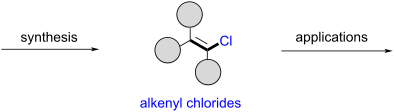
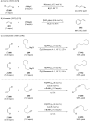
- , catalyzed by a chiral copper complex generated in situ from CuTC and phosphoramidite ligand 361, furnished the corresponding enantioenriched alkenyl chlorides in high yield and with exclusive formation of the Z-isomer. A decade later, Fañanás-Mastral and co-workers demonstrated that alkenylcopper species





















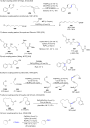


Total synthesis of asperdinones B, C, D, E and terezine D
Beilstein J. Org. Chem. 2025, 21, 2730–2738, doi:10.3762/bjoc.21.210
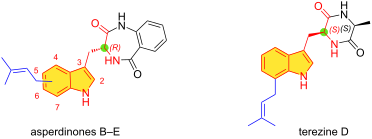
- starting chiral synthon (chiron), and to regioselectively install a prenyl group at different sites on the indole moiety (Figure 2, approach A, A–C) [23][24]. This would formally mimic the post-translational biosynthetic pathway wherein a prenyl group would be inserted at C4–C7 selectively via the prenyl


Competitive cyclization of ethyl trifluoroacetoacetate and methyl ketones with 1,3-diamino-2-propanol into hydrogenated oxazolo- and pyrimido-condensed pyridones
Beilstein J. Org. Chem. 2025, 21, 2716–2729, doi:10.3762/bjoc.21.209
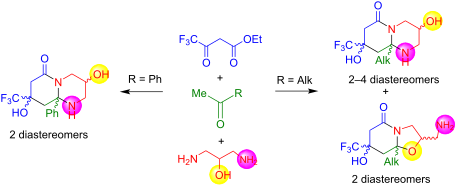
- methyl ketones increases the regioselectivity in the synthesis of octahydropyrido[1,2-a]pyrimidinones. The cyclization with acetophenone is characterized by the regiospecific generation of these bicycles. The presence of three chiral centers in the synthesized bicycles, depending on the alkyl substituent
- increase in the regioselectivity of octahydropyrido[1,2-a]pyrimidinones formation. In contrast, the cyclization with acetophenone occurs regiospecifically, yielding only octahydropyrido[1,2-a]pyrimidinones. The presence of three chiral centers in the synthesized bicycles leads to the formation of


Recent advancements in the synthesis of Veratrum alkaloids
Beilstein J. Org. Chem. 2025, 21, 2657–2693, doi:10.3762/bjoc.21.206
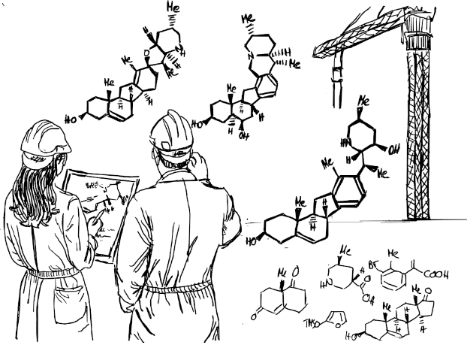
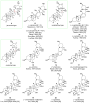
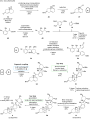
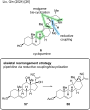
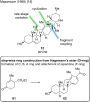
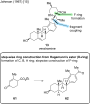
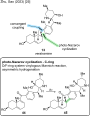
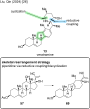
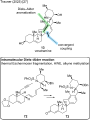
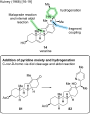
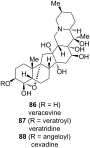
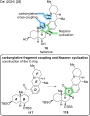
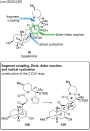
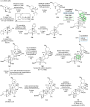
- enantiomeric excess of 92%. This asymmetric hydrogenation included a novel iridium catalyst featuring a chiral SpiroBAP (spiro bidentate aminophosphorane) ligand, which has been developed previously by this group and was now successfully applied in this synthesis [36]. A silver-catalyzed, enantioselective
- Seyferth–Gilbert homologation with the Ohira–Bestmann reagent to conclude the synthesis of piperidine fragment 116 constituting the later F-ring. The two chiral fragments were conjoined by alkylation of piperidinone 116 with propargyl bromide 112 to provide triyne
















Visible-light-driven NHC and organophotoredox dual catalysis for the synthesis of carbonyl compounds
Beilstein J. Org. Chem. 2025, 21, 2584–2603, doi:10.3762/bjoc.21.200
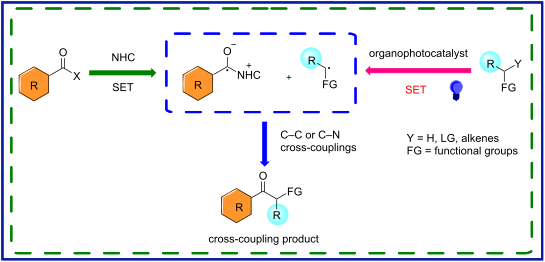
- ][2][3][4][5][6]. Recently developed photocatalysis affords sustainable, regioselective green methods for producing a wide range of functionalized carbonyl compounds and their related bioactive chiral intermediates under mild conditions, employing dual organic photoredox catalysis [7][8][9][10][11
- transformations. Previous reports displayed various research groups successfully designed and prepared a variety of triazolium-based NHCs, eventually leading to the development of chiral NHC scaffolds by Knight and Leeper [17], followed by the remarkable contributions of Bode [18], Rovis [19], Glorius [20
- , Michael additions, cycloadditions, domino reactions, cascade annulations, Diels–Alder reactions, and Michael–Stetter reactions, to name a few [31][32][33][34][35]. Notably, previous reports have demonstrated that the utility of chiral N-heterocyclic carbene (NHC) catalysts permits contracting asymmetric C





Total syntheses of highly oxidative Ryania diterpenoids facilitated by innovations in synthetic strategies
Beilstein J. Org. Chem. 2025, 21, 2553–2570, doi:10.3762/bjoc.21.198
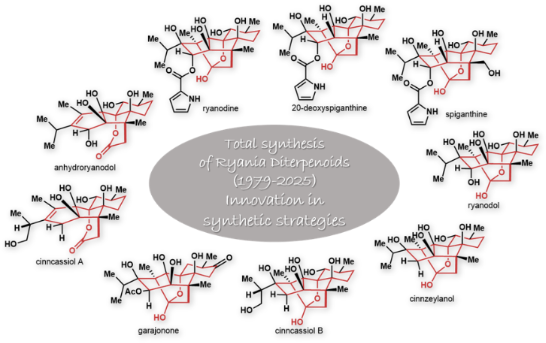
- series of structurally simple and readily accessible precursor compounds [2]. Based on this philosophy, chemists have developed a variety of classical synthetic strategies to address target molecules with diverse structural features. For instance, “divergent synthesis” employs a universal chiral advanced
- of the non-naturally produced ryanodol (4) and its dehydrated derivative, anhydroryanodol (10) [30] (Scheme 2). Given the highly complex fused-ring system and the stereochemical challenges posed by multiple chiral centers, the author utilized the Diels–Alder reaction, a prominent representative of
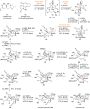
- pericyclic reactions [31][32][33][34][35][36][37][38][39][40][41][42][43][44], to control the formation of the crucial C5 chiral center precisely. Subsequent oxidative cleavage of the carbon–carbon double bond introduced in the Diels–Alder reaction, followed by an intramolecular aldol reaction, efficiently







Ni-promoted reductive cyclization cascade enables a total synthesis of (+)-aglacin B
Beilstein J. Org. Chem. 2025, 21, 2548–2552, doi:10.3762/bjoc.21.197
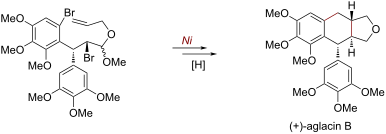
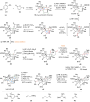
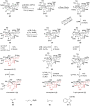
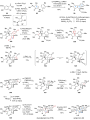
- Abstract The total synthesis of bioactive (+)-aglacin B was achieved. The key steps include an asymmetric conjugate addition reaction induced by a chiral auxiliary and a nickel-promoted reductive tandem cyclization of the elaborated β-bromo acetal, which led to the efficient construction of the
- diastereocontrol for 12 (dr = 20:1), and could easily proceed on a scale of ten grams (Supporting Information File 1). For the reduction of the chiral auxiliary in 12, NaBH4 in THF/H2O proved to be the optimal conditions, giving the primary alcohol 6 in 80% yield. Subsequently, oxidation of this alcohol by IBX
- single crystals, and a corresponding X-ray diffraction analysis (inset in Scheme 3, selected H atoms have been omitted for clarity, and Table S3, Supporting Information File 1) unambiguously confirmed its precise structure with three continuous chiral centers. Conclusion In summary, the total synthesis


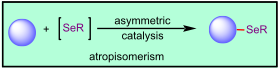
Catalytic enantioselective synthesis of selenium-containing atropisomers via C–Se bond formations
Beilstein J. Org. Chem. 2025, 21, 2447–2455, doi:10.3762/bjoc.21.186
- Qi-Sen Gao Zheng-Wei Wei Zhi-Min Chen State Key Laboratory of Synergistic Chem-Bio Synthesis, School of Chemistry and Chemical Engineering, Shanghai Key Laboratory for Molecular Engineering of Chiral Drugs, Shanghai Jiao Tong University, Shanghai 200240, P. R. China 10.3762/bjoc.21.186 Abstract
- . Keywords: asymmetric catalysis; atropisomer; chiral selenium-containing compound; C–Se bond formation; Introduction Selenium is an essential trace element for human body [1]. It plays an important role in metabolism. In 1817, the Swedish chemist Berzelius found that red residual mud was attached to the
- many applications in industry, but also plays an important role in many fields, such as electronics [3], agriculture [4], environmental protection [5] and cosmetics [6]. Chiral organic selenium-containing compounds also have important applications in organic synthesis and biomedicine [7][8]. These




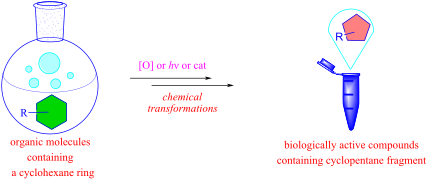
Transformation of the cyclohexane ring to the cyclopentane fragment of biologically active compounds
Beilstein J. Org. Chem. 2025, 21, 2416–2446, doi:10.3762/bjoc.21.185
- -dihydronaphthalenes. Silva et al. have also developed an effective method for the stereoselective oxidation of tetralone derivatives using chiral hypervalent iodine reagents [61][62]. Hypervalent iodine compounds are widely used in organic synthesis as selective oxidants and enantiomerically pure reagents. In terms
- of reactivity, they are environmentally sustainable alternatives to heavy metals. The advantage of hypervalent catalytic systems based on iodine lies in their reusability [63]. The oxidative contraction of the tetralone cycle 117 depended on the stoichiometric amounts of iodine(III)-based chiral
- challenging [6-5-5-7]-tetracyclic ring system embedded within a fully functionalized cyclopentane, as well as seven contiguous stereogenic centers. In 2017, (−)-pavidolide B (134) was prepared in 13 steps from the known chiral alcohol 135, which in turn was synthesized from commercially available (+)-carvone


An Fe(II)-catalyzed synthesis of spiro[indoline-3,2'-pyrrolidine] derivatives
Beilstein J. Org. Chem. 2025, 21, 2383–2388, doi:10.3762/bjoc.21.183
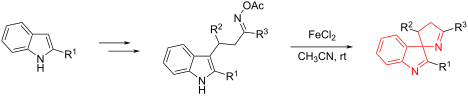
- yield substituted spiropyrrolidines (Scheme 1, path b) [9]. Additionally, an organocatalytic, enantioselective Michael addition/cyclization sequence of 3-aminooxindole Schiff bases with terminal vinyl ketones, catalyzed by a cinchona-derived base, has been reported to afford chiral spiroindolylpyrroles
- under heating furnished chiral spiroindolylpyrroles in excellent yields and enantioselectivity (Scheme 1, path d) [11]. Moreover, a copper-catalyzed reaction of oxindole-derived alkenes with acetophenone O-acetyl oxime has also been employed to construct the spiroindolylpyrrole scaffold (Scheme 1, path




Conformational effects on iodide binding: a comparative study of flexible and rigid carbazole macrocyclic analogs
Beilstein J. Org. Chem. 2025, 21, 2369–2375, doi:10.3762/bjoc.21.181
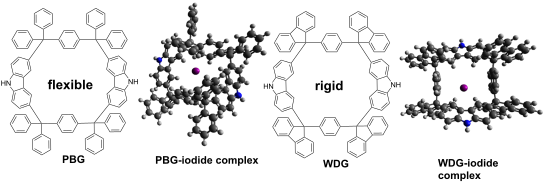
- selective recognition. Balancing binding affinity and selectivity through precise conformational engineering remains a critical challenge [11]. Previous studies, such as those by Tian et al. [12], demonstrated selective binding in chiral assemblies via crown ether chain-length modulation. The dynamic



Rotaxanes with integrated photoswitches: design principles, functional behavior, and emerging applications
Beilstein J. Org. Chem. 2025, 21, 2345–2366, doi:10.3762/bjoc.21.179

- biomembrane-compatible rotaxanes are promising for designing artificial ion transporters to address channelopathies. Song and co-workers developed a system in which the azobenzene in the axle is encapsulated within a chiral β-cyclodextrin, affording a self-locked [1]rotaxane [15]. The intramolecular host
- –guest interaction induces a chiral signal, while the azobenzene chromophore imparts photoswitching properties to the molecule. Furthermore, solvent-mediated hydrogen-bonding interactions tailored within the inner cyclodextrin cavity, combined with photocontrolled isomerization of the azo moiety, enable
- dual orthogonal manipulation of the rotaxane’s conformational regulation and chiroptical switching properties. Thus, this system functions as a phototriggered chiral on–off switch in polar aprotic solvents. These types of rotaxanes hold promise for developing simple information storage materials and


Comparative analysis of complanadine A total syntheses
Beilstein J. Org. Chem. 2025, 21, 2334–2344, doi:10.3762/bjoc.21.178
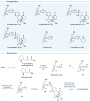
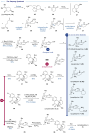
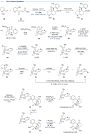
- approaches. Overall, their synthesis highlights the impact of enabling transition metal catalysis on natural product total synthesis. The Siegel synthesis starts with chiral pool molecule (+)-pulegone (14), which encodes the first stereocenter of the entire sequence. (+)-Pulegone was converted to compound 15
- with MeI in presence of benzyltrimethylammonium fluoride (BTAF). At this stage, to prepare optically active natural product, the racemic mixture of 51 was separated using chiral HPLC to afford (+)-51 and (−)-51, which were used to prepare both enantiomers of complanadine A for biological evaluations


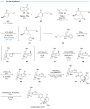

Recent advances in Norrish–Yang cyclization and dicarbonyl photoredox reactions for natural product synthesis
Beilstein J. Org. Chem. 2025, 21, 2315–2333, doi:10.3762/bjoc.21.177
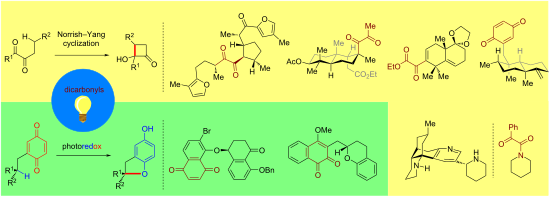
- -diketones, the rigid lattice structure locks molecules into a specific conformation, limiting access to certain γ-hydrogens for abstraction and thus enhancing regioselectivity [42]. Enantiopure 87 was obtained by preparative chiral supercritical fluid chromatography (SFC) resolution of the racemate, while
- epimers. This strategy merges photochemical selectivity with cross-coupling efficiency, avoiding reactive metal incompatibility and enabling precise stereocontrol for chiral nitrogen heterocycles. 3 Antibiotics 3.1 Synthetic study toward γ-rubromycin Since 2017, Suzuki's group has developed a
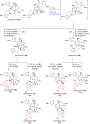
- inhibitor [53][54]. In 2018, Suzuki’s group employed their developed photoredox reaction to carry out a model study on the chiral [5,6]-spiroketal core of γ-rubromycin [50]. 1,2-Naphthoquinone 106 was selected as the model substrate for the photoredox reaction (Scheme 13a). Lawsone (101) underwent reductive




Insoluble methylene-bridged glycoluril dimers as sequestrants for dyes
Beilstein J. Org. Chem. 2025, 21, 2302–2314, doi:10.3762/bjoc.21.176
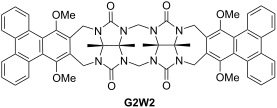
- previously for an anthracene-walled glycoluril tetramer host [43], G2W3 undergoes an end-to-end twist due to splaying of the aromatic sidewalls that results in an overall helical conformation that is chiral. The angle between the mean planes of the naphthalene rings amounts to 42.490°. Most relevant to the



Halogenated butyrolactones from the biomass-derived synthon levoglucosenone
Beilstein J. Org. Chem. 2025, 21, 2297–2301, doi:10.3762/bjoc.21.175
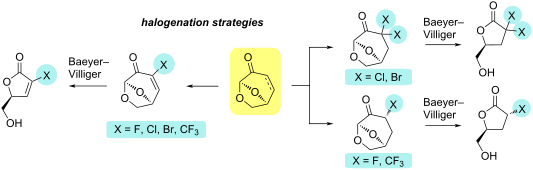
- [14][15]. In recent years, the chiral biomass derivatives levoglucosenone (LGO, 5) and its reduced form Cyrene® (6) have gained increased attention as platforms for drug discovery [16][17][18][19]. The bicyclic ketone 5 is the major product from the pyrolysis of acid-treated cellulose [20], while its
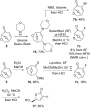
- ready availability of enamine 9a; however, direct double halogenation of 6 may also be possible using an excess of halogenation agent in DMSO [31]. The Baeyer–Villiger oxidation using H2O2 in MeCN gave the desired chiral lactones 11a and 11b in moderate to good yield following an acidic workup to cleave
- chiral halogenated lactones, which could be useful in the enantioselective synthesis of valuable drug precursors. The syntheses feature the use of readily available and cheap starting materials, and we have also demonstrated some of these transformations on a gram scale. Halogen-containing butyrolactone



Enantioselective radical chemistry: a bright future ahead
Beilstein J. Org. Chem. 2025, 21, 2283–2296, doi:10.3762/bjoc.21.174
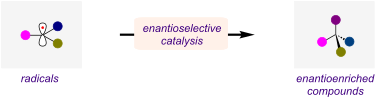
- describes several important catalytic asymmetric strategies applied to enantioselective radical reactions, including chiral Lewis acid catalysis, organocatalysis, photoredox catalysis, chiral transition-metal catalysis and photoenzymatic catalysis. The application of electrochemistry to asymmetric radical
- transformations is also discussed. Keywords: chiral Lewis acid; electrochemistry; enantioselective radical reaction; organocatalysis; photoenzymatic catalysis; photoredox; Introduction Asymmetric catalysis plays an integral role in the enantioselective synthesis of organic compounds. A wide variety of
- enantioenriched catalysts ranging from chiral organometallic complexes to organocatalysts (small organic molecules) have been designed, synthesized, and successfully used in several organic transformations [1][2][3]. Despite these advances, catalytic methods involving radical intermediates were very rare until


A chiral LC–MS strategy for stereochemical assignment of natural products sharing a 3-methylpent-4-en-2-ol moiety in their terminal structures
Beilstein J. Org. Chem. 2025, 21, 2243–2249, doi:10.3762/bjoc.21.171
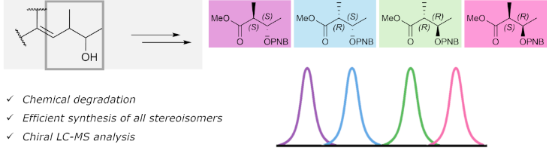
- all compounds. In this study, we developed a method to determine the absolute configuration of the terminal MPO moiety with high accuracy and sensitivity by a combination of chemical degradation, chemical synthesis, and chiral LC–MS analysis. The applicability of this method was demonstrated through
- the stereochemical assignment of (+)-capsulactone (1). Keywords: chemical degradation; chiral LC–MS analysis; methyl 3-hydroxy-2-methylbutanoate; 3-methylpent-4-en-2-ol moiety; p-nitrobenzoyl ester; Introduction Configurational elucidation of natural products is essential for progress in diverse
- derivatization. Several derivatization methods using chiral anisotropic reagents, including α-methoxy-α-trifluoromethylphenylacetic acid (MTPA), phenylglycine methyl ester (PGME), and Marfey’s reagents, are widely used [8][9][10], although their applicability is restricted by the presence of specific functional


A m-quaterphenyl probe for absolute configurational assignments of primary and secondary amines
Beilstein J. Org. Chem. 2025, 21, 2211–2219, doi:10.3762/bjoc.21.168
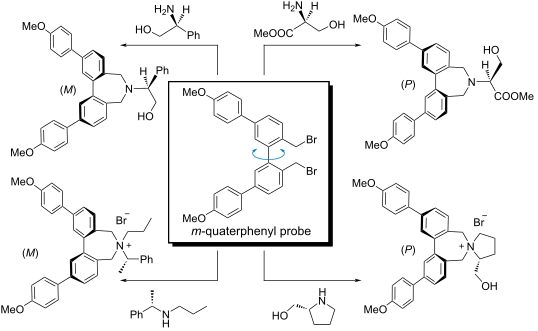
- Shibazono, Narashino, Chiba 275-0023, Japan Research Center for Materials with Integrated Properties, Toho University, 2-2-1 Miyama, Funabashi, Chiba 274-8510, Japan 10.3762/bjoc.21.168 Abstract We report a method for determining the absolute configurations of chiral amino alcohols, amino acid esters, and
- secondary amines through the combined use of a m-quaterphenyl probe 1 and theoretical calculations. The probe 1 is covalently attached to chiral amines to form conjugates that exhibit exciton-coupled circular dichroism (ECCD) in the m-quaterphenyl chromophores. The calculated ratios of the P and M
- conformers, obtained via DFT calculations, show a correlation with both the sign and intensity of the experimentally observed CD spectra. Keywords: absolute configuration; chiral amine; chiral quaternary ammonium salt; circular dichroism; DFT calculation; Introduction Determining the absolute





