Search results
Search for "diameter" in Full Text gives 372 result(s) in Beilstein Journal of Organic Chemistry. Showing first 200.
Diameter-selective extraction of single-walled carbon nanotubes by interlocking with Cu-tethered square nanobrackets
Beilstein J. Org. Chem. 2024, 20, 1298–1307, doi:10.3762/bjoc.20.113
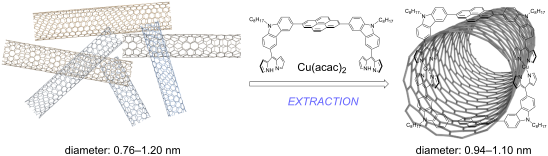
- square nanobrackets, is designed, synthesized and applied to single-walled carbon nanotubes (SWNTs) for their diameter-based separation. The complexation between copper ions and dipyrrin moieties of the nanobracket gives Cu-tethered square nanobrackets, which is confirmed by absorption, Raman and MALDI
- recovered through demetalation of the interlocked ones along with the nanobracket. Raman and absorption spectroscopies of the extracted SWNTs reveals the diameter enrichment of only several kinds of SWNTs in the diameter range from 0.94 to 1.10 nm among ≈20 kinds of SWNTs from 0.76 to 1.20 nm in their
- diameter range. The diameter selectivity is supported by the theoretical calculations with the GFN2-xTB method, indicating that the most preferred SWNT diameter for the square Cu-nanobrackets is 1.04 nm. Keywords: complexation; diameter; extraction; interlock; nanobracket; single-walled carbon nanotubes




Spin and charge interactions between nanographene host and ferrocene
Beilstein J. Org. Chem. 2024, 20, 1011–1019, doi:10.3762/bjoc.20.89
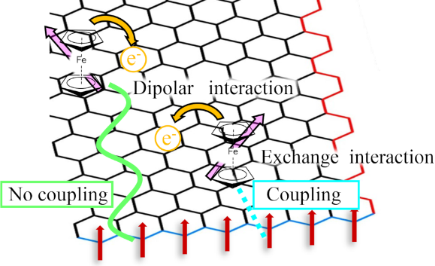
- three-dimensional disordered network of nanographite domains, each of which is a loose stack of 3–4 nanographene sheets with a mean in-plane size of 2–3 nm. ACFs have huge specific surface areas (about 2000 m2/g [24][25]) due to the presence of nanopores of ca. 1 nm in diameter between the nanographite


Synthesis and characterization of water-soluble C60–peptide conjugates
Beilstein J. Org. Chem. 2024, 20, 777–786, doi:10.3762/bjoc.20.71
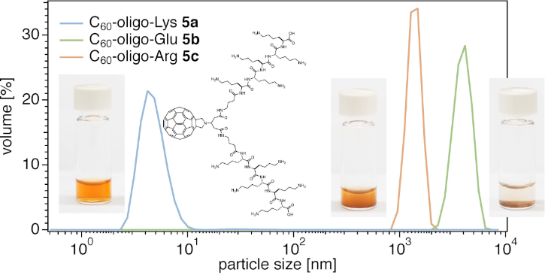
- aggregations in aqueous solution, as observed by dynamic light scattering (DLS), cryoTEM, and concentration-dependent surface tension measurements [40]. Despite the small size (≈10 nm in hydrodynamic diameter), the aggregation of these fullerene moieties was not ideal for biological applications as
- ) revealed an extremely small hydrodynamic diameter (<10 nm) by DLS, 5b (green line) and 5c (purple line) revealed the presence of larger aggregates in water (pH 7.0), with a hydrodynamic diameters larger than 1 µm (Figure 3). In buffer at a higher pH value (e.g., pH 9, TRIS buffer), C60–oligo-Glu (5b
- very small hydrodynamic diameter in a neutral aqueous medium, as shown by DLS analysis. Visible-light-induced 1O2 generation by C60–oligo-Lys (5a) was confirmed by ESR spin trapping. This suggests the high potential of 5a as a basis for a fullerene-derived PS in biological applications. Experimental




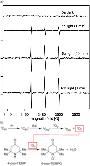
Comparison of glycosyl donors: a supramer approach
Beilstein J. Org. Chem. 2024, 20, 181–192, doi:10.3762/bjoc.20.18
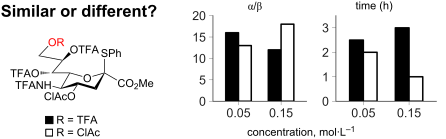
- triturated with anhydrous benzene (5 mL), and the extract was filtered through a PTFE microfilter (0.45 μm, 13 mm diameter, Iso-Disk, Supelco). The filtrate was concentrated under reduced pressure and the residue was dried in vacuo to give 2 as a colorless solid (118.8 mg, 73%). [α]D19 −87.4 (c 4.3, CHCl3



Electron-beam-promoted fullerene dimerization in nanotubes: insights from DFT computations
Beilstein J. Org. Chem. 2024, 20, 92–100, doi:10.3762/bjoc.20.10
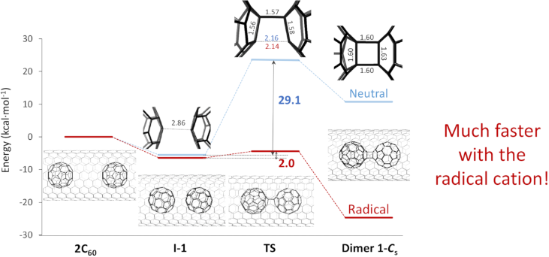
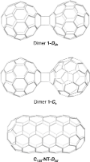
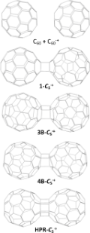
- a hexagon fused with a pentagon) with respect to the nine C atoms (hexagon-pentagon) on the other C60 molecule (see Supporting Information File 1 for details). The armchair-type single-wall carbon nanotube (SWCNT) (10,10) with a length of 22.14 Å and a diameter of 13.65 Å was employed in the
- pseudopotentials [16] while valence electron density was expanded in plane waves with a maximum kinetic energy of 400 eV. The model of SWCNT was 29.61 Å long and with a diameter of 13.65 Å, embedded in a box of 30 × 30 Å of vacuum in the plane perpendicular to the nanotube axis. The gas-phase structures were in a




Optimizing reaction conditions for the light-driven hydrogen evolution in a loop photoreactor
Beilstein J. Org. Chem. 2024, 20, 74–91, doi:10.3762/bjoc.20.9
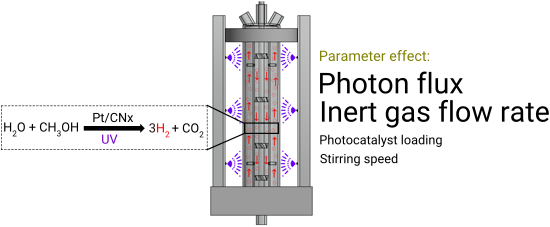
- paths, where consequently the requirements for the application of the Beer–Lambert law are not fulfilled anymore. Considering the inner diameter of the loop reactor of 5 cm, a catalyst loading of 0.11 g L−1 is sufficient to absorb more than 95% of the photons. Photocatalytic hydrogen evolution Long-term
- active materials. Experimental Reactor design The design parameters for the loop photoreactor are based on the optimal design parameters suggested by Blenke et al. [44]. The draft tube diameter is adjusted to achieve maximal mass transfer in the reactor [45][46][47][48]. The design parameters used in
- this work are defined by Equations 6–9: where DR is the inner diameter of the reactor, DD is the inner diameter of the draft tube, LD is the draft tube length, LT is the distance of the draft tube to the reactor top, LB is the distance of the reactor bottom to the draft tube. The reactor is


Multi-redox indenofluorene chromophores incorporating dithiafulvene donor and ene/enediyne acceptor units
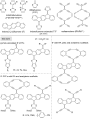
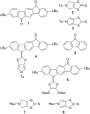
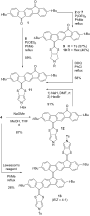
Beilstein J. Org. Chem. 2024, 20, 59–73, doi:10.3762/bjoc.20.8
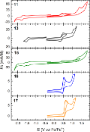
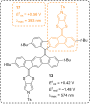
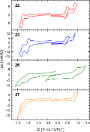
- platinum disk (diameter = 1.6 mm) or a glassy carbon disk (3 mm) was used as the working electrode. The reference electrode was separated from the solution containing the substrate by a ceramic frit. Measured potentials were referenced to ferrocene/ferrocenium (Fc/Fc+) redox couple, measured before and





Preparing a liquid crystalline dispersion of carbon nanotubes with high aspect ratio
Beilstein J. Org. Chem. 2024, 20, 52–58, doi:10.3762/bjoc.20.7
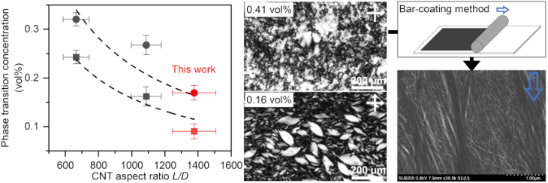
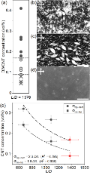
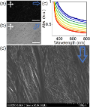
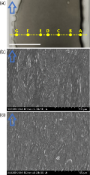
- microscopy (AFM) (see Supporting Information File 1, Figure S2). In both images, rod-like DWCNTs were observed, while spaghetti-like agglomerates were hardly observed. The average length (L) and diameter (D) of the DWCNT samples were ≈2.9 μm and ≈2.1 nm, respectively. The L/D of the DWCNTs was 1378, which
- was larger than the value reported in previous research (L/D = 1088) [23]. Based on the transmission electron microscope (TEM) images, the average diameter of DWCNTs was ≈1.8 nm (Supporting Information File 1, Figure S1a). Since the observed DWCNT diameter based on the SEM images is ≈2.1 nm, the
- similar to the previously reported SWCNTs in sodium deoxycholate (SDOC) and sodium taurodeoxycholate (TDOC) aqueous dispersions [23]. The average diameter of DWCNTs in the present study was 2.1 nm, which was almost the same as that of SWCNTs in SDOC and TDOC [23]. Thus, the effect of stiffness of DWCNTs


Facile access to pyridinium-based bent aromatic amphiphiles: nonionic surface modification of nanocarbons in water
Beilstein J. Org. Chem. 2024, 20, 32–40, doi:10.3762/bjoc.20.5
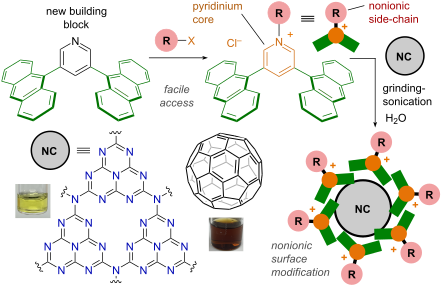
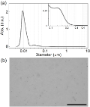
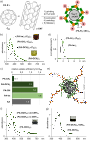
- ; Figure S36 in Supporting Information File 1). The formation of spherical particles with narrow size distribution and an average diameter of ≈2 nm was confirmed by DLS and DOSY NMR measurements (Figure 3e and Figure S27 in Supporting Information File 1). Based on molecular modeling, these data suggested
- )m was roughly estimated to be 0.1 mg mL−1. The DLS measurement of (PA-Im)n·(C60)m displayed an average particle diameter of ≈2 nm, which, in combination with molecular modeling, indicated a noncovalent surface functionalization of a single C60 molecule by five PA-Im amphiphiles (Figure 4d,e




Aromatic systems with two and three pyridine-2,6-dicarbazolyl-3,5-dicarbonitrile fragments as electron-transporting organic semiconductors exhibiting long-lived emissions
Beilstein J. Org. Chem. 2023, 19, 1867–1880, doi:10.3762/bjoc.19.139
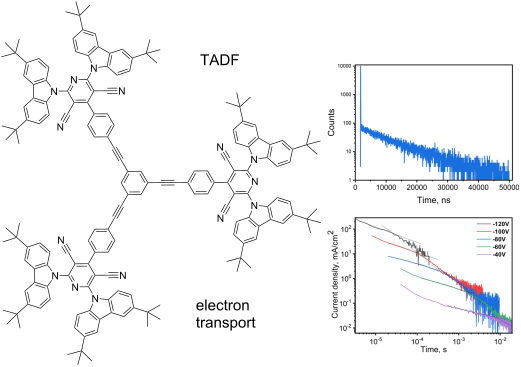
- nm, further allowing us to analyze the luminescence dynamics in detail. To determine photoluminescence quantum yields (PLQY), a dedicated integrated sphere with an inner diameter of 120 mm was used in conjunction with the Edinburgh Instruments FLS980 spectrometer. This specialized setup enabled


Secondary metabolites of Diaporthe cameroonensis, isolated from the Cameroonian medicinal plant Trema guineensis
Beilstein J. Org. Chem. 2023, 19, 1555–1561, doi:10.3762/bjoc.19.112
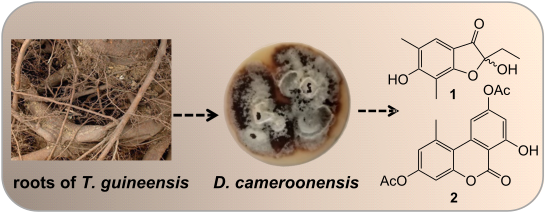
- . Experimental General experimental procedures Column chromatography (60.4 cm length × 5.5 cm inner diameter) was carried out on silica gel 230–400 mesh (Merck). Analytical TLC was performed on Merck pre-coated silica gel 60 F254 plates, and spots were detected using ceric sulfate spray reagent and/or diluted


Organic thermally activated delayed fluorescence material with strained benzoguanidine donor
Beilstein J. Org. Chem. 2023, 19, 1289–1298, doi:10.3762/bjoc.19.95
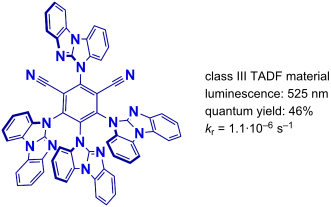
- (CV) was performed using a three-electrode configuration consisting of a glassy carbon macrodisk working electrode (GCE) (diameter of 3 mm; BASi, Indiana, U.S.A.) combined with a Pt wire counter electrode (99.99%; GoodFellow, Cambridge, U.K.) and an Ag wire pseudoreference electrode (99.99


CO2 complexation with cyclodextrins
Beilstein J. Org. Chem. 2023, 19, 1021–1027, doi:10.3762/bjoc.19.78
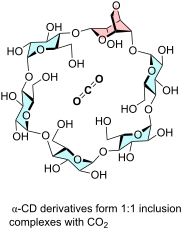
- small value, which means that even at a partial pressure of 5 bar less than 1/2 the CD cavity is filled. The rationale for the poor binding is probably the large discrepancy between the size of CO2 and the CD cavity. 1 has a cavity of 174 Å3 while CO2 is a very small molecule with kinetic diameter of
- and 6 containing 3,6-anhydrides in the α-cyclodextrin structure were chosen because they have a smaller cavity according to modelling. In models the diameter of 5 was measured and it was 5.0 Å and that of 6 was 4.6 Å with an α-CD height of 7.9 Å to give the cavity volumes given in Table 2. These


Honeycomb reactor: a promising device for streamlining aerobic oxidation under continuous-flow conditions
Beilstein J. Org. Chem. 2023, 19, 752–763, doi:10.3762/bjoc.19.55
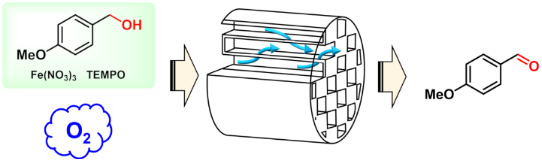
- [23] or a static mixer [24]. Slug-flow is a simple method for passive mixing, but the formation of slug-flow depends on the tube diameter [23], and the reaction rate decreases as the tube diameter increases [25][26]. The gas–liquid biphasic reaction also displays the same characteristic, and a static
- with a static mixer, the reaction rate did not depend on the flow rate although the reaction conversion was higher than that in the standard tube reactor (Table 3, entries 3 and 4). The tube reactor with a static mixer had a large inner diameter and the linear velocity became correspondingly low. The


C3-Alkylation of furfural derivatives by continuous flow homogeneous catalysis
Beilstein J. Org. Chem. 2023, 19, 582–592, doi:10.3762/bjoc.19.43
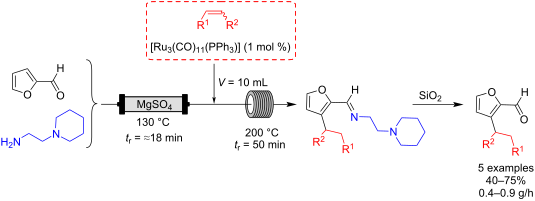
- File 1, p. S8). All the content of the loop is thus sent into the reactor. This system is coupled to a gas chromatography oven, in which the stainless-steel tubular reactor (length: 4.6 m, internal diameter of 0.8 millimeter, corresponding to a volume of 2.31 mL) is placed. The system pressure is
- degradation under longer heating. In addition, we found that the comp1 [Ru3(CO)11(L1)] was more efficient when the reaction mixture was preheated before being introduced into the reactor at 200 °C. The setup was thus modified (Scheme 3) to include a 0.8-millimeter-diameter stainless-steel preheating loop


Mechanochemical solid state synthesis of copper(I)/NHC complexes with K3PO4
Beilstein J. Org. Chem. 2023, 19, 440–447, doi:10.3762/bjoc.19.34
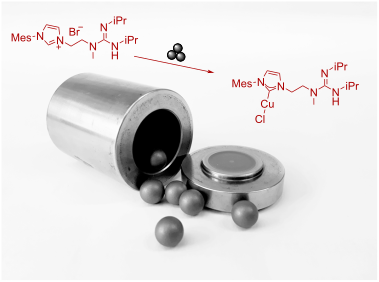
- -methylguanidino)ethyl)-3-mesityl-1H-imidazol-3-ium bromide (3, 75 mg, 0.16 mmol, 1.0 equiv), CuCl (17 mg, 0.16 mmol, 1.0 equiv) and K3PO4 (53 mg, 0.25 mmol, 1.5 equiv) were filled into a 12 mL steel vessel equipped with six steel balls (1 cm diameter). The beaker was sealed in an argon-filled glovebox. Milling
- procedure: steel vessel (12 mL), 6 steel balls (1 cm diameter), 450 rpm, 4 h). (dimer = [(NHC)2Cu+]Cl−). Supporting Information Supporting Information File 36: General procedures, experimental details, analytical data and copies of NMR spectra. Acknowledgements Prof. Dr. Martin Oestreich (TU Berlin) is


Insight into oral amphiphilic cyclodextrin nanoparticles for colorectal cancer: comprehensive mathematical model of drug release kinetic studies and antitumoral efficacy in 3D spheroid colon tumors
Beilstein J. Org. Chem. 2023, 19, 139–157, doi:10.3762/bjoc.19.14
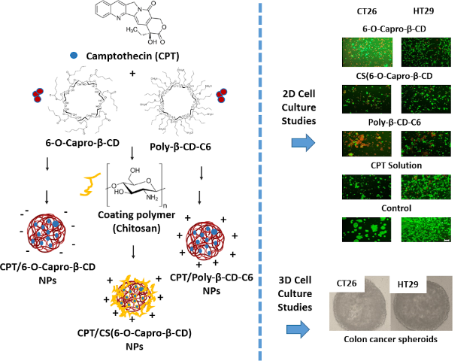
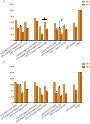
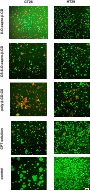
- middle of the wells after centrifugation. Within 3 days, cells that interacted maximally with each other formed highly spherical tumors measuring about 200 μm in diameter (Figure 7). According to the results of the anticancer activity analysis performed in the 3D cell culture studies, at the end of the




Nostochopcerol, a new antibacterial monoacylglycerol from the edible cyanobacterium Nostochopsis lobatus
Beilstein J. Org. Chem. 2023, 19, 133–138, doi:10.3762/bjoc.19.13
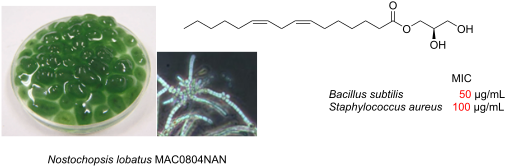
- lobatus is a freshwater species distributed in every climate zone but polar regions [8]. It grows on riverbed rocks or cobbles in shallow streams and forms spherical to irregularly lobed, hollow, gelatinous colonies, with sizes reaching up to 5.5 cm in diameter [9]. Although cosmopolitic, its occurrence
- According to a procedure described in [6], the antimicrobial potency of chromatographic fractions was evaluated by a paper disk-agar diffusion method. Fractions at each purification stage were diluted to the same concentration with MeOH, and 10 μL aliquots were impregnated into 6 mm-diameter paper disks


Modern flow chemistry – prospect and advantage
Beilstein J. Org. Chem. 2023, 19, 33–35, doi:10.3762/bjoc.19.3
- diameter can both accelerate the transformations as well as lead to significantly less side products by continuously removing the products from the irradiation source. As an example, Noël and co-workers performed efficient irradiation in flow for the C(sp3)–H functionalization of gaseous hydrocarbons [8
Mechanochemical synthesis of unsymmetrical salens for the preparation of Co–salen complexes and their evaluation as catalysts for the synthesis of α-aryloxy alcohols via asymmetric phenolic kinetic resolution of terminal epoxides
Beilstein J. Org. Chem. 2022, 18, 1416–1423, doi:10.3762/bjoc.18.147
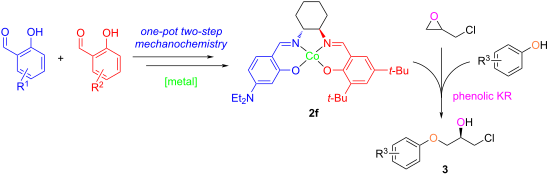
- alumina composite balls (3.20 mm and 2.16 mm in diameter, respectively). Considering the safety in the synthesis of unsymmetrical salens, the working speed was set to be 700 rev/min. Similarly to the above reaction conditions, amounts of chemicals and workup, the first reaction step between amino


From amines to (form)amides: a simple and successful mechanochemical approach
Beilstein J. Org. Chem. 2022, 18, 1210–1216, doi:10.3762/bjoc.18.126
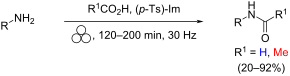
- that milling balls of larger diameter led to more rapid transformations [59][60]. On the other side, previously reported procedures revealed a beneficial effect on the reaction rate when the volume fraction occupied by balls inside the reactor increases. In addition, it was found that in some certain
Thermally activated delayed fluorescence (TADF) emitters: sensing and boosting spin-flipping by aggregation
Beilstein J. Org. Chem. 2022, 18, 1177–1187, doi:10.3762/bjoc.18.122
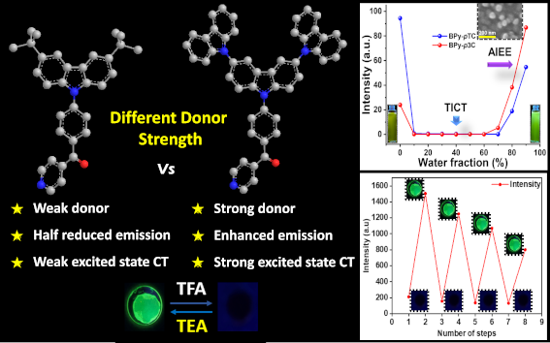
- % water/THF) of BPy-pTC were characterized using scanning electron microscopy (SEM). The SEM image showed the spherical nanoaggregates of BPy-pTC, with 95 nm diameter (Figure 3f). The BPy-p3C compound emitted in the green region at λem = 530 nm in THF, with a PLQY of 3.6% (Figure 3a). Similar to BPy-pTC


Heterogeneous metallaphotoredox catalysis in a continuous-flow packed-bed reactor
Beilstein J. Org. Chem. 2022, 18, 1123–1130, doi:10.3762/bjoc.18.115
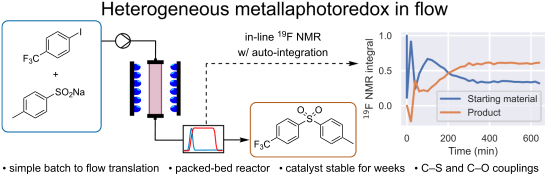
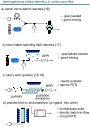
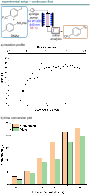
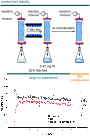
- low flow rate (10 μL/min) [43][44]. An alternative approach to obtain a narrower RTD is the reduction of the reactor diameter, as this would decrease the axial dispersion [45]. Replacing the glass column (i.d. 6.6 mm) with a PTFE capillary with a smaller inner diameter (i.d. 5/32”, 3.9 mm) resulted in





Electroreductive coupling of 2-acylbenzoates with α,β-unsaturated carbonyl compounds: density functional theory study on product selectivity
Beilstein J. Org. Chem. 2022, 18, 956–962, doi:10.3762/bjoc.18.95

- ) was placed in the cathodic chamber of a divided cell (40 mL beaker, 3 cm diameter, 6 cm height) equipped with a platinum cathode (5 × 5 cm2), a platinum anode (2 × 1 cm2), and a ceramic cylindrical diaphragm (1.5 cm diameter). A 0.3 M solution of Bu4NClO4 in DMF (4 mL) was placed in the anodic chamber


Palladium-catalyzed solid-state borylation of aryl halides using mechanochemistry
Beilstein J. Org. Chem. 2022, 18, 855–862, doi:10.3762/bjoc.18.86
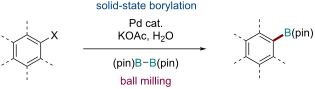
- ). The reactions were conducted in a Retch MM400 ball mill in a stainless-steel milling jar (1.5 mL) at 30 Hz using one stainless-steel ball (diameter: 5 mm) for 10 min. We used a commercially available temperature-controllable heat gun that was placed directly above the ball-milling jar to control the
- scale (Scheme 5). We carried out the reaction of 1a at 5 mmol in the presence of the optimized catalytic system using a 25 mL stainless-steel jar and four stainless-steel balls (diameter: 10 mm) at 25 Hz and a preset heat-gun temperature of 150 °C. The gram-scale borylation proceeded efficiently and
- mixture of 1 (0.30 mmol), 2 (0.36 mmol), KOAc (0.9 mmol), Pd(OAc)2 (0.006 mmol), t-Bu3·HBF4 (0.009 mmol), and H2O (60 μL) was milled in a 1.5 mL stainless-steel jar at 30 Hz using one stainless-steel ball that was 5 mm in diameter. The isolated yields are shown. The NMR yields are shown in parentheses