Search results
Search for "diazomethane" in Full Text gives 63 result(s) in Beilstein Journal of Organic Chemistry.
Synthesis and biological activity of methylated derivatives of the Pseudomonas metabolites HHQ, HQNO and PQS
Beilstein J. Org. Chem. 2019, 15, 187–193, doi:10.3762/bjoc.15.18
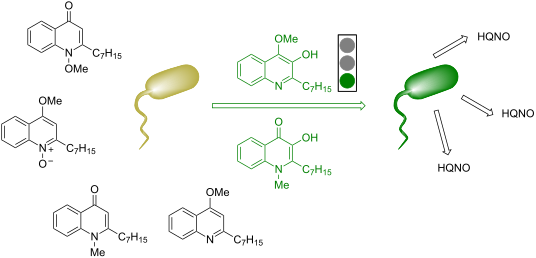
- dimethyl sulfate mainly N-methylation was observed accompanied by a small amount of the N,O-dimethylquinolonium ion. Pure NMe-HHQ (2) was obtained in moderate yield of 51% by column chromatography (Scheme 1). Selective O-methylation of an AQ has been reported using diazomethane [1]. To avoid explosive
- diazomethane, methylation of HHQ with trimethylsilyldiazomethane (TMS-DA) in methanol was carried out, which indeed provided selectively OMe-HHQ (3). However, even using a large excess of TMS-DA low conversion and yields of less than 20% OMe-HHQ (3) were observed. Addition of HBF4 did improve the reactivity




Assembly of fully substituted triazolochromenes via a novel multicomponent reaction or mechanochemical synthesis
Beilstein J. Org. Chem. 2018, 14, 2689–2697, doi:10.3762/bjoc.14.246
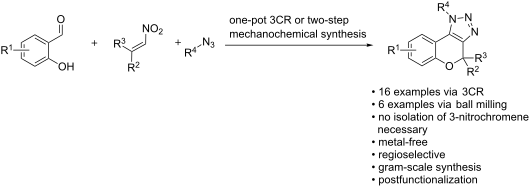
- ], via intramolecular cyclization of a diazomethane group and a nitrile [23], or via our recently reported NH-triazole synthesis starting from 6-methoxyflavanone [24]. Furthermore, 1,4,5-trisubstituted 1,2,3-triazole annulated chromenes have been reported via an intramolecular arylation reaction of 1,2,3




One hundred years of benzotropone chemistry
Beilstein J. Org. Chem. 2018, 14, 1120–1180, doi:10.3762/bjoc.14.98
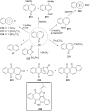
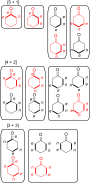
- tropone unit: In 1975, Franck-Neumann and Martina reported the reaction of dimethyl diazomethane with tropone and benzotropones [83]. This reaction gave benzo-4,5-dimethyl-8,8-cyclooctatrienone (94, 30% isolable yield) as an insertion product via a carbonyl group and pyrazoline 95 as 1,3-dipolar addition
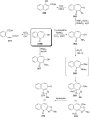
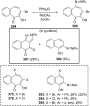
- unit: The ring-expansion product 188, which is a net insertion of a diazomethane unit into the tropone, was prepared from the reaction of 2,3-benzotropone (12) with dimethyl diazomethane (Figure 7) [83]. Benzohomoazocines 191–193 and benzomethoxyazocines 195–197 were prepared using a similar protocol
- depicted in Scheme 38 (Scheme 45) [161]. Sato’s group reported the synthesis of 7-hydroxy-2,3-benzotropone (241) via the ring expansion pathway of β-naphthoquinone (280) with diazomethane under various conditions and hydrolysis steps (Scheme 46) [169]. The boron trifluoride etherate-promoted ring expansion








Hydrolysis, polarity, and conformational impact of C-terminal partially fluorinated ethyl esters in peptide models
Beilstein J. Org. Chem. 2017, 13, 2442–2457, doi:10.3762/bjoc.13.241
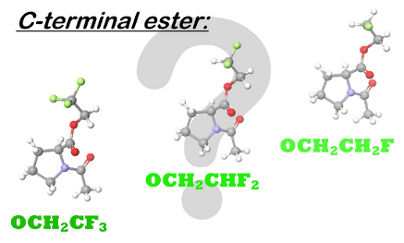
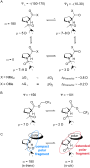
- fluorination of peptide scaffolds. One of these methods involves esterification of the C-terminus of peptides using a diazomethane species. Here, we provide an investigation of the physicochemical consequences of peptide esterification with partially fluorinated ethyl groups. Derivatives of N-acetylproline are
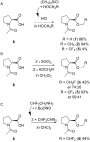
- . Although the yield increased, it remained low (20%). The poor yields in the aqueous medium are explained by the high reactivity of the diazomethane species, which favors nonspecific reactions in water [52]. Very recently, more specific diazomethane reagents for water-tolerant esterification have also been
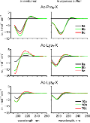
- polyproline-II stability. This effect contrasts with the effects of other terminal modifications, such as aromatic amino acids, which reduce the polyproline-II fold stability [86]. We then prepared hexaproline peptide 8a, which was subsequently esterified with the diazomethane reagent to give 8b. Methyl ester








Dialkyl dicyanofumarates and dicyanomaleates as versatile building blocks for synthetic organic chemistry and mechanistic studies
Beilstein J. Org. Chem. 2017, 13, 2235–2251, doi:10.3762/bjoc.13.221
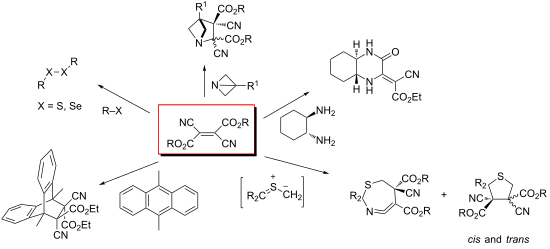
- reactions with diazomethane albeit in very low yields [29]. [2 + 2]-Cycloadditions The electron-deficient dicyanofumarates E-1 react with electron-rich ethenes, yielding cyclobutane derivatives as product of [2 + 2]-cycloadditions. Depending on the reaction conditions and on the type of the electron-rich
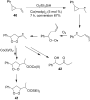
- cyclopropane derivatives. The treatment of methyl 3-methyl-2-oxodithiobutanoate with diazomethane at −80 °C in hexane/CH2Cl2 afforded the expected 2-sulfanyl-2-isobutanoyl-2,5-dihydro-1,3,4-thiadiazole. After the addition of E-1a and warming of the mixture to room temperature, the corresponding thiolane as the
- this series the experimental results were confirmed by computational methods. In the reaction of diazomethane with E-1b in THF at room temperature 4,5-dihydro-3H-pyrazole 35 was detected as the initial [3 + 2]-cycloadduct by 1H NMR spectroscopy [29] (Scheme 11). Fast tautomerization led to the


A novel application of 2-silylated 1,3-dithiolanes for the synthesis of aryl/hetaryl-substituted ethenes and dibenzofulvenes
Beilstein J. Org. Chem. 2017, 13, 1900–1906, doi:10.3762/bjoc.13.185
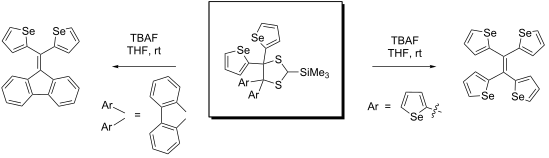
- on [3 + 2]-cycloadditions with thioketones and diazo compounds, we turned our attention to hetaryl thioketones [18]. It turned out that the presence of the hetaryl groups strongly influences the reactivity of these dipolarophiles in reactions with diazomethane (CH2N2, Schönberg reaction) [19][20][21
- -trimethylsilyl-4,4,5,5-tetraaryl-1,3-dithiolanes, readily available by treatment of hetaryl thioketones with trimethylsilyl diazomethane (TMS-CHN2), are superior substrates for the preparation of tetraarylethenes. Another group of 2-trimethylsilylated 1,3-dithiolanes, obtained through the [3 + 2]-cycloaddition
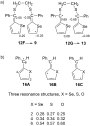
- analysis in CDCl3 solution. The crude products were purified by column chromatography (petroleum ether/CH2Cl2, increasing polarity to CH2Cl2). Reactions of diphenyl and phenyl selenophen-2-yl thioketones with diazomethane (CH2N2; Sel = selenophen-2-yl). Reaction of diaryl thioketones with


A novel approach to oxoisoaporphine alkaloids via regioselective metalation of alkoxy isoquinolines
Beilstein J. Org. Chem. 2017, 13, 1564–1571, doi:10.3762/bjoc.13.156
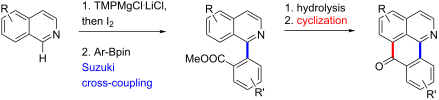
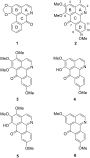
- methylation protocol, we explored diazomethane, but no conversion was observed at all. Finally, all of the synthesized alkaloids were tested for their cytotoxic potential in a MTT assay on the HL-60 cell line. Except for menisporphine (2) and bianfugecine (6, both IC50 values > 50 µM), all of the described



Dimerization reactions of aryl selenophen-2-yl-substituted thiocarbonyl S-methanides as diradical processes: a computational study
Beilstein J. Org. Chem. 2017, 13, 410–416, doi:10.3762/bjoc.13.44

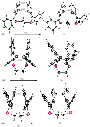
- , Winterthurerstrasse 190, CH-8057 Zurich, Switzerland 10.3762/bjoc.13.44 Abstract An intriguing stepwise diradical mechanism of the dimerization of the reactive intermediate (thiocarbonyl S-methanide) appearing in the reaction of phenyl selenophen-2-yl thioketone with diazomethane was studied by means of
- convenient access comprises the treatment of a C=S substrate with diazomethane or its derivatives. Depending on the substitution pattern, 2,5-dihydro-1,3,4-thiadiazoles 2 display different thermal stability. Whereas sterically bulky aliphatic substituents increase the temperature required for the
- pathway was excluded. Results and Discussion In a recent publication, reactions of hetaryl phenyl and dihetaryl thioketones with diazomethane have been described, and the formation of 1,3-dithiolanes as well as unexpected, hitherto unknown, dimers of the intermediate thiocarbonyl S-methanide was observed


A new paradigm for designing ring construction strategies for green organic synthesis: implications for the discovery of multicomponent reactions to build molecules containing a single ring
Beilstein J. Org. Chem. 2016, 12, 2420–2442, doi:10.3762/bjoc.12.236
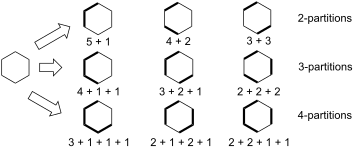
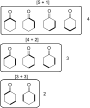
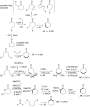
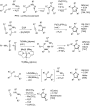
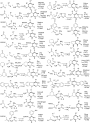
- -membered heterocycle containing two adjacent nitrogen atoms. Pyrazole Pyrazole is a well-studied 5-membered heterocycle that has been traditionally synthesized either via the Knorr [151] (1,3-diketone and hydrazine) or von Pechmann [152] (olefin and diazomethane followed by oxidation) strategies. Figure 7








A new and expeditious synthesis of all enantiomerically pure stereoisomers of rosaprostol, an antiulcer drug
Beilstein J. Org. Chem. 2016, 12, 2234–2239, doi:10.3762/bjoc.12.215
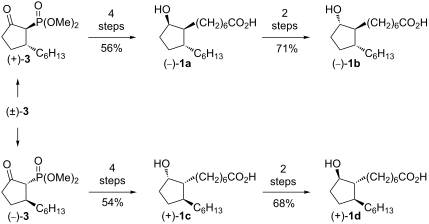
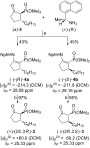
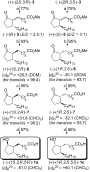
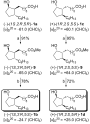
- at C-5. In fact, 1a and 1c were obtained through a two-step sequence starting with the methylation of (−)-1a and (+)-1c followed by a one-pot Mitsunobu esterification–hydrolysis as shown in Scheme 6. In detail, treatment of rosaprostols (−)-1a and (+)-1c with diazomethane gave the corresponding



Palladium-catalyzed ring-opening reactions of cyclopropanated 7-oxabenzonorbornadiene with alcohols
Beilstein J. Org. Chem. 2016, 12, 2189–2196, doi:10.3762/bjoc.12.209

- . Oxabenzonorbornadiene 1 and its derivatives are first cyclopropanated with diazomethane under palladium catalysis to afford 8 in good to excellent yields [29]. Cyclopropanated 8 has been predicted to undergo three distinct ring-opening mechanisms (Scheme 3). The first ring-opening type (type 1) involves the attack of


Synthesis of the C8’-epimeric thymine pyranosyl amino acid core of amipurimycin
Beilstein J. Org. Chem. 2016, 12, 1765–1771, doi:10.3762/bjoc.12.165
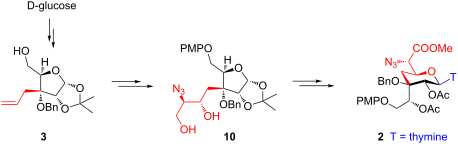
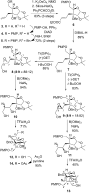
- generated stereocenters, we continued our synthesis with anhydrosugar 12 as its configurations are matching with that of target compound. Thus, TEMPO-mediated selective oxidation of the primary hydroxy group in 12 to acid functionality followed by esterification using diazomethane afforded azido methyl






Synthesis of ferrocenyl-substituted 1,3-dithiolanes via [3 + 2]-cycloadditions of ferrocenyl hetaryl thioketones with thiocarbonyl S-methanides
Beilstein J. Org. Chem. 2016, 12, 1421–1427, doi:10.3762/bjoc.12.136
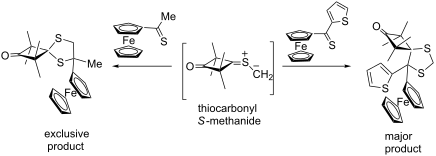
- (4b), respectively, and diazomethane at –60 °C in THF solution [6] (Scheme 1). After addition of an equimolar amount of a ferrocenyl hetaryl thioketone 1, the reaction mixture was slowly warmed to room temperature. The crude mixture was examined by 1H NMR spectroscopy, and in all cases only one single
- -Tetramethyl-8-thia-5,6-diazaspiro[3.4]oct-5-en-2-one (3c) [20] and spiro[1,3,4-thiadiazole-2(5H),2’-tricyclo[3.3.1.13,7]decane] (3d) [21] were obtained by known methods according to the literature protocols. Diazomethane was prepared in a 5 mmol scale either from N-nitroso-N-methylurea or from N
- commercially available. Preparation of diaryl-substituted 1,3-dithiolanes (5a–g) – General procedure: A solution of thioketone 4a or 4b (1 mmol) in THF (3 mL) was cooled to –75 °C (acetone/dry ice). Then, the mixture was treated with small portions of ethereal diazomethane solution, until the disappearance of


Diradical reaction mechanisms in [3 + 2]-cycloadditions of hetaryl thioketones with alkyl- or trimethylsilyl-substituted diazomethanes
Beilstein J. Org. Chem. 2016, 12, 716–724, doi:10.3762/bjoc.12.71
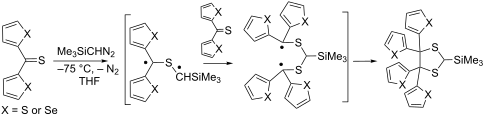
- dihetaryl and aryl/hetaryl thioketones with 2-diazopropane, diazoethane, and (trimethylsilyl)diazomethane were studied at variable temperature. The experiments showed that reactions with 2-diazopropane carried out at –75 °C occur mainly via the initially formed, relatively stable 1,3,4-thiadiazolines as
- (trimethylsilyl)diazomethane occur smoothly at −75 °C leading to the corresponding 4,4,5,5-tetrahetaryl-1,3-dithiolanes as the exclusive [3 + 2]-cycloadducts formed via a cascade of postulated diradicals. The presence of S or Se atoms in the hetaryl rings is of importance for stabilizing diradical intermediates
- assumption that they occur via diradical intermediates [13][14][15]. Reactions of aromatic thioketones with diazomethane are well established. For example, in the case of thiobenzophenone (1a), the reaction performed at –65 ºC occurs without evolution of N2 and the in situ formed 2,2-diphenyl-1,3,4


Synthesis and reactivity of aliphatic sulfur pentafluorides from substituted (pentafluorosulfanyl)benzenes
Beilstein J. Org. Chem. 2016, 12, 110–116, doi:10.3762/bjoc.12.12
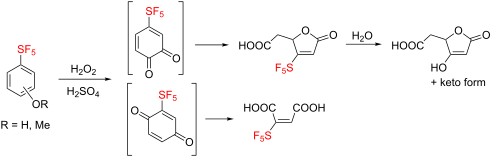
- exo products in an 8:1 ratio (Scheme 8). In comparison, it is known that maleic anhydride in analogous reactions affords exclusively the endo adduct [29]. Attempts to facilitate the isolation of very polar maleic acid 4 from the reaction mixture by derivatization to dimethyl ester using diazomethane
- were not successful. The dimethyl maleate derivative was formed but was accompanied by the [3 + 2] cycloaddition product 22. With excess of diazomethane, clean and efficient formation of 22 was observed (Scheme 9). Acid 4 was stable in water, methanol, isopropylalcohol, boiling benzene, or boiling
- . Synthesis of maleic anhydride 20 and Diels–Alder adducts 21. Reaction of maleic acid 4 with diazomethane. Decarboxylation of maleic acid 4 to acrylic acid 23 in DMSO and the preparation of deuterium labelled 23. Calculated reaction coordinates of Diels–Alder reaction of 12 with cyclopentadiene.a Supporting


Pyridinoacridine alkaloids of marine origin: NMR and MS spectral data, synthesis, biosynthesis and biological activity
Beilstein J. Org. Chem. 2015, 11, 1667–1699, doi:10.3762/bjoc.11.183
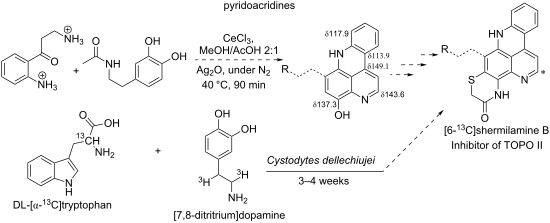
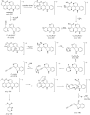
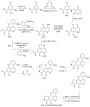
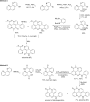
- pyrroloquinone [60]. The halogen presumably increased the electron delocalization in the diene allowing the overlap of molecular orbitals. Synthesis of neoamphimedine (12) Method A: To prepare neoamphimedine, 4-methoxy-2,6-dinitrophenol was methylated with diazomethane and the product was partially reduced to








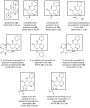


Application of cyclic phosphonamide reagents in the total synthesis of natural products and biologically active molecules
Beilstein J. Org. Chem. 2014, 10, 1848–1877, doi:10.3762/bjoc.10.195
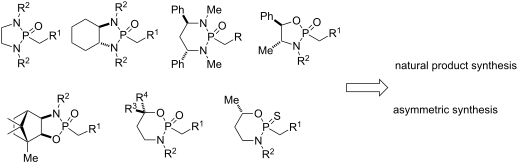
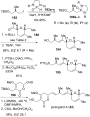
- -workers led to a reassignment of its structure and that of the parent molecules, such as polyoxin A (69) [24][25][26]. The synthesis of the E-isomer of polyoximic acid started from protected D-serine 70, which was converted into diazoketone 71 by reacting a mixed anhydride with diazomethane (Scheme 10
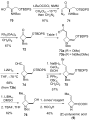
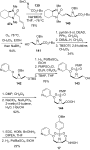
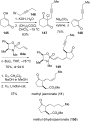
- provided intermediate 165. Removal of the chiral auxiliary and generation of the second carboxy moiety was then achieved by ozonolysis of 165 and ensuing esterification with diazomethane to give diacid ester 166. Treatment of the latter with TBAF cleaved the TBDMS ether and gave a lactone intermediate








C–H-Functionalization logic guides the synthesis of a carbacyclopamine analog
Beilstein J. Org. Chem. 2014, 10, 1564–1569, doi:10.3762/bjoc.10.161
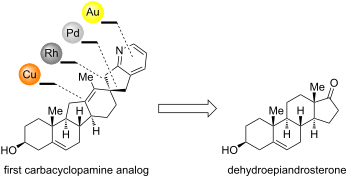
- the corresponding acid chloride (oxalyl chloride, CH2Cl2, 25 °C; then diazomethane, THF, 25 °C, 85% yield for the two steps) [33]. The anticipated C–H insertion then proceeded uneventfully under oxygen-free conditions (cat. Rh2(OAc)4, CH2Cl2, 41 °C) [34][35] to give cyclopentanone 11 in 52% yield as a


Stereocontrolled synthesis of 5-azaspiro[2.3]hexane derivatives as conformationally “frozen” analogues of L-glutamic acid
Beilstein J. Org. Chem. 2014, 10, 1114–1120, doi:10.3762/bjoc.10.110
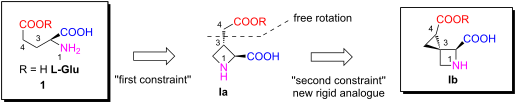
- optimized by replacing step c) CH2N2 (diazomethane) with TMSCHN2 (trimethylsilyl diazomethane). This intermediate was transformed into intermediate 17 by a Horner–Wadsworth–Emmons reaction [23][24], thereby obtaining 17 as the single E-isomer in 68% yield after purification by flash chromatography (Scheme 3


Phosphinate-containing heterocycles: A mini-review
Beilstein J. Org. Chem. 2014, 10, 732–740, doi:10.3762/bjoc.10.67
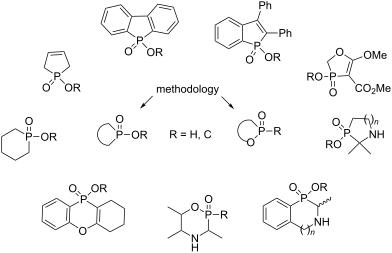
- reaction between bis(trimethylsiloxy)phosphine and the dibromide 50 followed by the esterification of the phosphinic acid using diazomethane (Scheme 21) [32]. The heterocyclization step followed methodology initially introduced by Frost et al [33]. Compound 51 was subsequently converted into the


Recent applications of the divinylcyclopropane–cycloheptadiene rearrangement in organic synthesis
Beilstein J. Org. Chem. 2014, 10, 163–193, doi:10.3762/bjoc.10.14
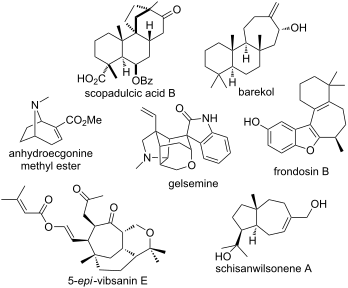
- tetracycle 283. The carboxylic acid was converted into the corresponding acyl chloride, followed by addition of diazomethane and subsequent Arndt–Eistert homologation [215] to obtain methyl ester 284. Claisen condensation furnished the intermediate β-cyano-ketone, which was subjected to diazotransfer




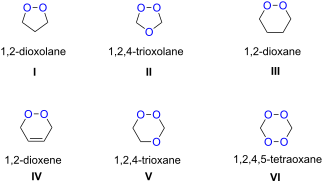
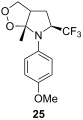
Synthesis of five- and six-membered cyclic organic peroxides: Key transformations into peroxide ring-retaining products
Beilstein J. Org. Chem. 2014, 10, 34–114, doi:10.3762/bjoc.10.6






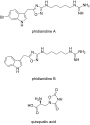
The myxocoumarins A and B from Stigmatella aurantiaca strain MYX-030
Beilstein J. Org. Chem. 2013, 9, 2579–2585, doi:10.3762/bjoc.9.293

- natural product. To unambiguously prove the substitution pattern at the aromatic ring system, the phenolic OH-group was selectively methylated using diazomethane. The resulting methyl ether was irradiated in a 1D NOE experiment, which resulted in the expected strong increase of the proton bound to C-6


Synthesis and characterization of novel bioactive 1,2,4-oxadiazole natural product analogs bearing the N-phenylmaleimide and N-phenylsuccinimide moieties
Beilstein J. Org. Chem. 2013, 9, 2202–2215, doi:10.3762/bjoc.9.259
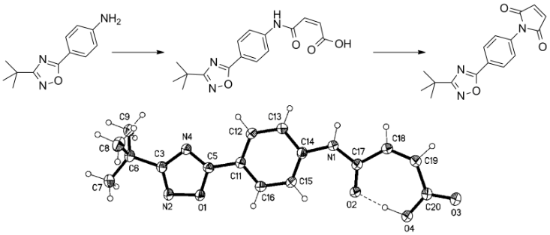
- dichloromethane (Scheme 4). Compound 3 was obtained with a short reaction time and a high yield (91%). The ester derivative methyl 4-(4-(3-tert-butyl-1,2,4-oxadiazol-5-yl)phenylamino)-4-oxobutanoate (5) was prepared by the addition of a diethyl ether solution of diazomethane to a suspension of amide 3. The ester
- -oxobutanoate (5) A suspension of 0.3 g (0.94 mmol) of 4-(4-(3-tert-butyl-1,2,4-oxadiazol-5-yl)phenylamino)-4-oxobutanoic acid (3) in 10 mL of diethyl ether was cooled in an ice bath, and a solution of diazomethane in diethyl ether 2.5 N was added dropwise until the white solid disappeared, and the gas



Flexible synthesis of anthracycline aglycone mimics via domino carbopalladation reactions
Beilstein J. Org. Chem. 2013, 9, 2194–2201, doi:10.3762/bjoc.9.258
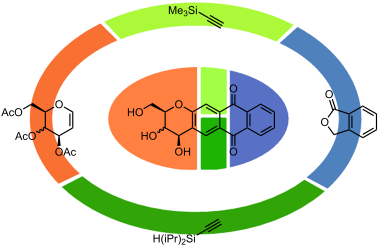
- procedure starting from isochromanone and trimethylsilyl-diazomethane [33]. The initially formed alcohols 23 were again converted into the respective iodides 24 as described before and subsequently substituted with diisopropylsilylacetylene 25 [34] providing five different dialkynes 16, each of them with a