


Search results
Search for "electrostatic interactions" in Full Text gives 120 result(s) in Beilstein Journal of Organic Chemistry.
Cryogels: recent applications in 3D-bioprinting, injectable cryogels, drug delivery, and wound healing
Beilstein J. Org. Chem. 2021, 17, 2553–2569, doi:10.3762/bjoc.17.171
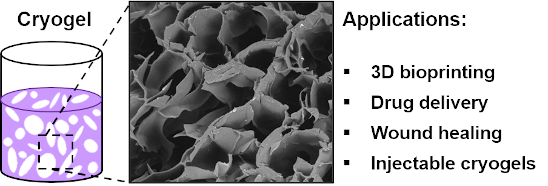
- 2 weeks. However, this could result in a sustained release over longer time periods which would require further investigation. Doxorubicin release from heparin-containing cryogel microcarriers was investigated by Newland et al. [100]. Highly sulphated heparin was used to exploit electrostatic
- interactions between anionic sulphate groups and the primary amine group present in doxorubicin which confers a positive charge under physiological conditions. This interaction was confirmed by in silico modelling. While the carriers did not show any cytotoxicity, cell viability was reduced in the presence of






Constrained thermoresponsive polymers – new insights into fundamentals and applications
Beilstein J. Org. Chem. 2021, 17, 2123–2163, doi:10.3762/bjoc.17.138
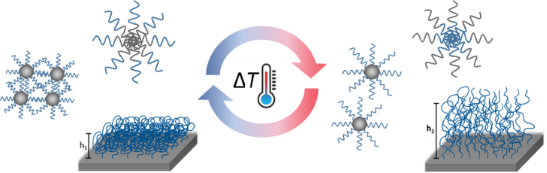
- thermoresponsive behavior of polymers is governed by oriented polymer–polymer interactions, such as hydrogen bonding or electrostatic interactions. As a function of temperature, these attractive interactions are formed and contribute to phase separation (T < UCST) or are increasingly destabilized and allow
- , UCST type behavior is generally governed either by strong hydrogen bonding or by attractive electrostatic interactions [51][52][55]. UCST resulting from strong hydrogen bonding interactions. Increasing interest is focussed on nonionic polymers in water, whose UCST behavior is based on hydrogen bonding
- under physiologically relevant pH and salt conditions via the hydrophilicity of the co-monomers and their molar ratio [52][55][279]. UCST resulting from attractive electrostatic interactions. The thermoresponsive behavior of zwitterionic polymers, in contrast to the previously mentioned UCST type


Cationic oligonucleotide derivatives and conjugates: A favorable approach for enhanced DNA and RNA targeting oligonucleotides
Beilstein J. Org. Chem. 2021, 17, 1828–1848, doi:10.3762/bjoc.17.125
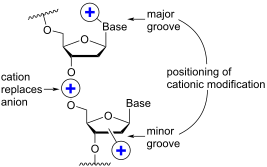
- better hybridization properties than LNA-thymidine; however, only modification 22 gave significant increases in Tm relative to modification 19 used as control. This finding was ascribed to both the extended π-conjugation of the alkynyl-functionalized nucleobase and stabilizing electrostatic interactions


Antiviral therapy in shrimp through plant virus VLP containing VP28 dsRNA against WSSV
Beilstein J. Org. Chem. 2021, 17, 1360–1373, doi:10.3762/bjoc.17.95
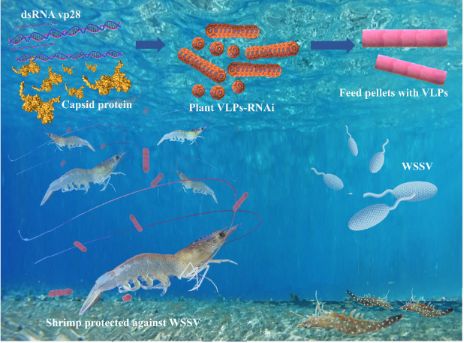
- formation and CP-dsRNAi complexes (Figure 2A, images a and b). The Gaussian fit size distribution of the spherical procapsids gave an average diameter of 21.2 nm and corresponded to capsids with triangulation number T = 2. The sample’s dialysis at pH 7.2 favors the electrostatic interactions between CCMV CP


Biochemistry of fluoroprolines: the prospect of making fluorine a bioelement
Beilstein J. Org. Chem. 2021, 17, 439–460, doi:10.3762/bjoc.17.40
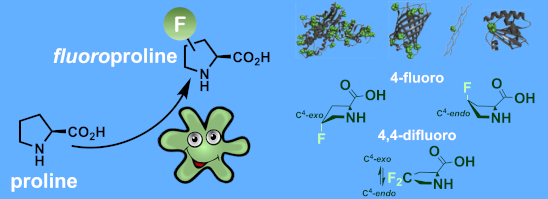
- extensive documentation of the electrostatic interactions within the molecules and the observed conformational biases [145


Multiswitchable photoacid–hydroxyflavylium–polyelectrolyte nano-assemblies
Beilstein J. Org. Chem. 2021, 17, 166–185, doi:10.3762/bjoc.17.17
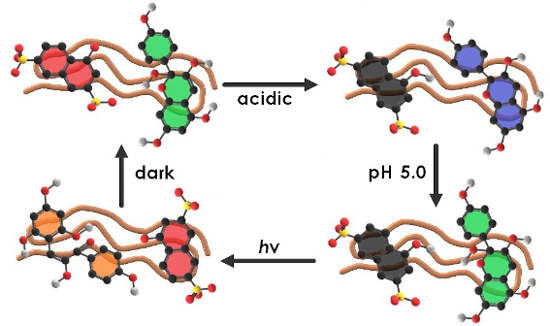
- not rely on specific binding motifs. Here, electrostatic self-assembly was shown to yield a variety of supramolecular nanostructures [4][26][27][28][29][30][31][32][33]. We have built the nanoscale assemblies from polyelectrolytes and multiply oppositely charged molecules based on electrostatic
- interactions and secondary interactions such as π–π stacking [34][35][36][37][38][39][40]. The size and shape could be tuned through the free energy and the enthalpy/entropy interplay in the assembly process, which again are encoded in the molecular building block structure [31][37]. Supramolecular structures




Insight into functionalized-macrocycles-guided supramolecular photocatalysis
Beilstein J. Org. Chem. 2021, 17, 139–155, doi:10.3762/bjoc.17.15
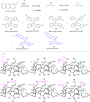
- selectively obtained over the conventional 9,10:9',10'-cyclodimers by the supramolecular photocyclodimerization of 2-anthracenecarboxylate (AC) with the aid of β-CD-functionalized cationic derivatives as chiral catalysts (Figure 7) [25]. Due to the electrostatic interactions between cationic CD and anionic AC






Molecular basis for protein–protein interactions
Beilstein J. Org. Chem. 2021, 17, 1–10, doi:10.3762/bjoc.17.1
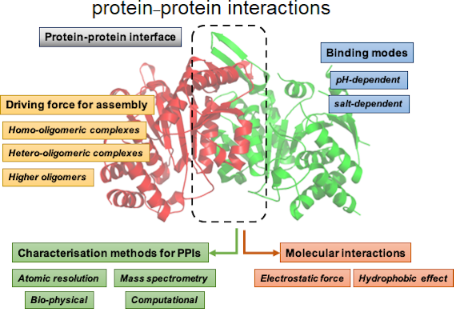
- an electrostatic interaction between two molecules at 10 Å is around 1 kJ/mol, which is much higher than any other force at such a distance [47]. Long-range electrostatic interactions are affected by the net charges of the protein, i.e., proteins with a different net charge are electrostatically
- , it has been shown that the CCMV capsid formation is driven by electrostatic interactions governed by the pH value and the ionic strength [93]. Here, the positive N terminus of the assembly unit interacts with the negatively charged scaffold and drives the self-assembly process [94]. The advent of


Chiral anion recognition using calix[4]arene-based ureido receptors in a 1,3-alternate conformation
Beilstein J. Org. Chem. 2020, 16, 2999–3007, doi:10.3762/bjoc.16.249
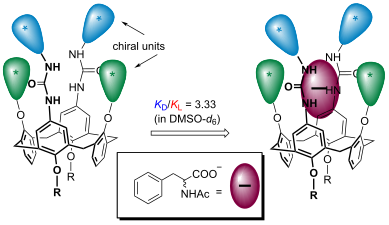
- anions is becoming more and more significant [12][13][14]. There are many strategies aiming at anion recognition in the literature. Most of the receptors, however, rely on electrostatic interactions. These systems are represented by positively charged molecules, such as quaternary N-, S-, and P




Using multiple self-sorting for switching functions in discrete multicomponent systems
Beilstein J. Org. Chem. 2020, 16, 2831–2853, doi:10.3762/bjoc.16.233
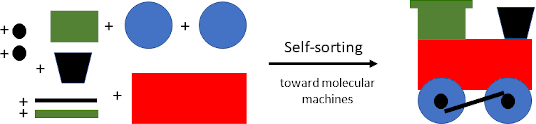
- undemanding building blocks. The plethora of self-sorting systems depends on either the geometric fit of their global shapes and/or matching of their local interactions. Various noncovalent interactions, such as H‐bonding [8][9], metal–ligand coordination [10][11][12][13], electrostatic interactions [14], π







Selective recognition of ATP by multivalent nano-assemblies of bisimidazolium amphiphiles through “turn-on” fluorescence response
Beilstein J. Org. Chem. 2020, 16, 2728–2738, doi:10.3762/bjoc.16.223
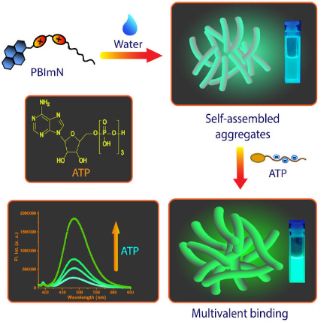
- . One of the challenges in the bio-anion detection is that the sensory probes have to be effective under physiological conditions. The highly polar nature of the aqueous media considerably weakens supramolecular interactions such as H-bonding and electrostatic interactions and as a result, it is in
- the nucleotides occurring through multivalent electrostatic interactions in the cavity/cleft created by the spatial orientation of the imidazolium groups. We herein consider a self-assembly based approach in which amphiphilic monomers with bisimidazolium moieties are utilized to create multivalent
- ) and ADP (50 µM), these values were 4.8 and 1.87, respectively (Figure 4b). Practically no increments were observed for AMP (50 µM) and Pi (50 µM) (Supporting Information File 1, Figure S11a and Figure 4b). As the multivalent binding is predominantly through electrostatic interactions, it was not


Thermodynamic and electrochemical study of tailor-made crown ethers for redox-switchable (pseudo)rotaxanes
Beilstein J. Org. Chem. 2020, 16, 2576–2588, doi:10.3762/bjoc.16.209

- strong electrostatic interactions to ammonium ions and act as strong, competitive hydrogen-bond acceptors [57]. The high anodic shifts indicate strong attractive interactions between the wheels and axles, which compete with the coordination of the crown ether moiety. Thus, the secondary ammonium axles




NMR Spectroscopy of supramolecular chemistry on protein surfaces
Beilstein J. Org. Chem. 2020, 16, 2505–2522, doi:10.3762/bjoc.16.203
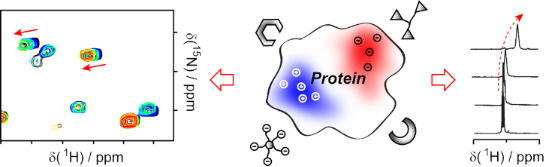
- ligands as well, thus altering their electrostatic interactions. Around the isoelectric point, where a molecule is neutral, hydrophobic interactions become more pronounced, which can lead to formation of soluble aggregates or even precipitation. Co-solvents such as DMSO-d6 are popular as solvents for more
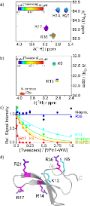
- docking that the Cyt c/porphyrin complexes exist as a dynamic ensemble where multiple surface patches can transiently interact with the ligand through a combination of hydrophobic interactions with the porphyrin core and electrostatic interactions with the carboxylate substituents. Cucurbit[7]uril and



Design and synthesis of a bis-macrocyclic host and guests as building blocks for small molecular knots
Beilstein J. Org. Chem. 2020, 16, 2314–2321, doi:10.3762/bjoc.16.192
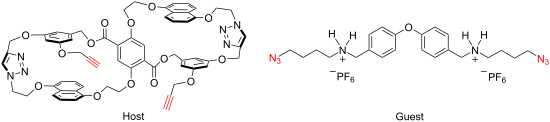
- molecular knots. The modular second-generation approach to small trefoil knots described herein involves electrostatic interactions between an electron-rich bis-macrocyclic host compound and electron-deficient guests in the threading step. The bis-macrocyclic host was synthesized in eight steps and 6.6


Naphthalene diimide bis-guanidinio-carbonyl-pyrrole as a pH-switchable threading DNA intercalator
Beilstein J. Org. Chem. 2020, 16, 2201–2211, doi:10.3762/bjoc.16.185
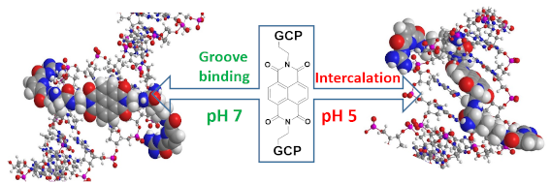
- pronounced aggregation, which could be attributed to the electrostatic interactions of the highly positively charged molecules along the negatively charged DNA/RNA backbone aided by the strong hydrophobic effect of the central NDI core. This effect yielded a marked ds-DNA condensation ability of compound 4



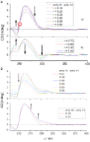


pH- and concentration-dependent supramolecular self-assembly of a naturally occurring octapeptide
Beilstein J. Org. Chem. 2020, 16, 2017–2025, doi:10.3762/bjoc.16.168
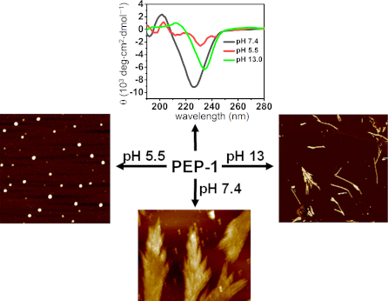
- secondary structures, which lead to nanostructured materials [16][17]. Noncovalent interactions, such as hydrogen bonding, van der Waals interactions, hydrophobic interactions, electrostatic interactions, and π–π interactions [18][19][20][21][22] are common driving forces in peptide self-assembly. These


Heterogeneous photocatalysis in flow chemical reactors
Beilstein J. Org. Chem. 2020, 16, 1495–1549, doi:10.3762/bjoc.16.125
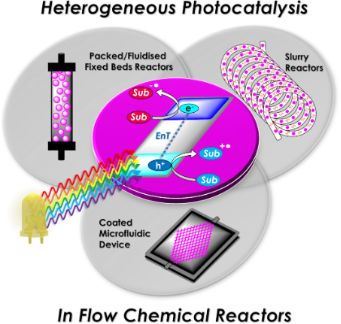
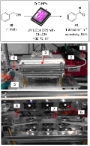
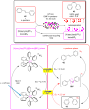
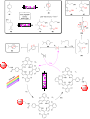
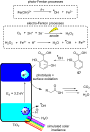
- heterogeneous photocatalysis is immobilising a molecular photocatalyst to a solid support. Most materials have inherent surface functionalities or can be modified to act as supports through covalent or electrostatic interactions, presenting a plethora of strategies to immobilise any photocatalyst with a










Bacterial terpene biosynthesis: challenges and opportunities for pathway engineering
Beilstein J. Org. Chem. 2019, 15, 2889–2906, doi:10.3762/bjoc.15.283
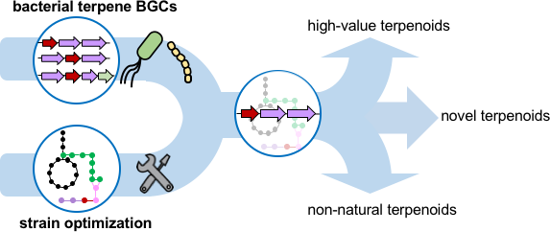
- electrostatic interactions [54]. Moreover, TCs also assist intramolecular atom transfer and rearrangements including hydride or proton transfer and carbon shifts [10]. Eventually, the carbocation is quenched by deprotonation (E1-like) or nucleophilic attack (SN1-like) of water [45]. In contrast to


A combinatorial approach to improving the performance of azoarene photoswitches
Beilstein J. Org. Chem. 2019, 15, 2753–2764, doi:10.3762/bjoc.15.266
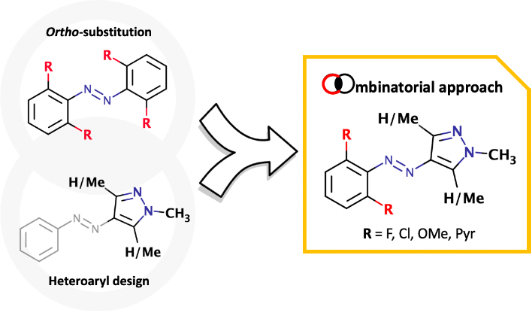
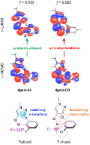
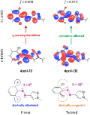
- noncovalent forces are also predicted in the twisted Z-isomers of the 4pzMe-X family, for which θ remains approximately constant. Furthermore, the atomic charge of fluorine is calculated to be ca. −0.30e, which allows for electrostatic interactions with positively charged C atoms (ca. +0.40e) of the pyrazole
- ring in both 4pzH-X and 4pzMe-X families (Figure S7, Supporting Information File 1). These favorable dispersion and electrostatic interactions stabilize the Z-isomer ground state compared to the corresponding transition state, which in part explains the increase in energy barriers and in turn half




Anion-driven encapsulation of cationic guests inside pyridine[4]arene dimers
Beilstein J. Org. Chem. 2019, 15, 2486–2492, doi:10.3762/bjoc.15.241
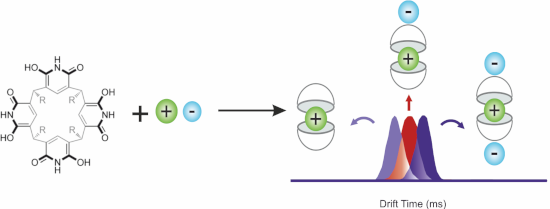
- "through-wall" electrostatic interactions. Results and Discussion We have previously shown that tetraisobutylpyridine[4]arene forms hydrogen-bonded dimers with eight intermolecular N–H···O(amide) hydrogen bonds in the solid state, in solution and in the gas phase [11]. Resorcinarene capsules of similar
- anion driven at least to some extent. The reduced electron density in the pyridine rings is compensated by favorable "through-wall" electrostatic interactions between the exo-anion(s) and the endo-cation. In solution, by 1H NMR, complexation of Me4N+ cation was observed with 2, but not with 1 (Figures




Small anion-assisted electrochemical potential splitting in a new series of bistriarylamine derivatives: organic mixed valency across a urea bridge and zwitterionization
Beilstein J. Org. Chem. 2019, 15, 2277–2286, doi:10.3762/bjoc.15.220
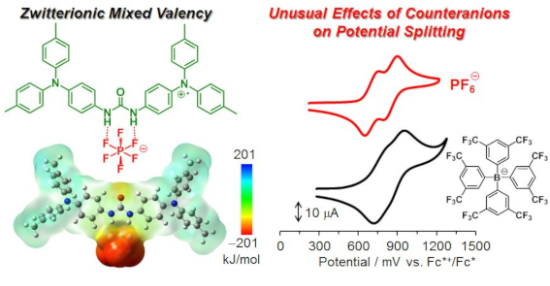
- effects were previously reported for bis(NAr3) derivatives having π-conjugated bridges [8][9]. Judging from the long N···N distances (e.g., 13.16 Å for 1b+) in the DFT-optimized structure (Figure S5 in Supporting Information File 1), the through-space electrostatic interactions between the NAr3 units
- of larger counteranions increase because they do not form strong ion-pairs with charged species, enhancing electrostatic interactions between redox components [46][47][48][49][50][51][52]. Thus, a different mechanism is proposed to explain the present effects of the supporting electrolytes in terms
- maps of 1b+ (Figure 3, bottom). From these regions, 1b+ can form electrostatic interactions with negatively charged species. Indeed, an optimized structure of a complex of 1b+ and PF6− was obtained and featured an intermolecular H-bonding between the N–H proton and the F atom of hexafluorophosphate


1,2,3-Triazolium macrocycles in supramolecular chemistry
Beilstein J. Org. Chem. 2019, 15, 2142–2155, doi:10.3762/bjoc.15.211
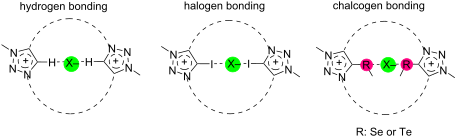
- interactions such as hydrogen bonding, π–π stacking, electrostatic interactions, van der Waals forces, hydrophobic/solvatophobic effects and coordination bonds [2][3]. Advances in supramolecules from molecular to macroscopic size with pre-structured or functionalized receptors and multivalent binding positions
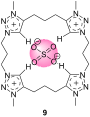
- analysis which gives information about solution anion binding trends, the authors found that the cavity size of macrocycle, solvent effects and strength of electrostatic interactions notably affect the observed anion recognition processes [52]. 2.6.1. 1,2,3-Triazolium macrocycles with additional H-bond
- fundamental hydrogen bonding and electrostatic interactions related to the individual recognition motifs [53]. Another cyclophane macrocycle containing two 1,2,3-triazolium moieties was synthesized by Alcalde and co-workers in a moderate yield [54]. The anion-binding behavior of receptor 11 (Figure 10) was




Complexation of chiral amines by resorcin[4]arene sulfonic acids in polar media – circular dichroism and diffusion studies of chirality transfer and solvent dependence
Beilstein J. Org. Chem. 2019, 15, 1913–1924, doi:10.3762/bjoc.15.187
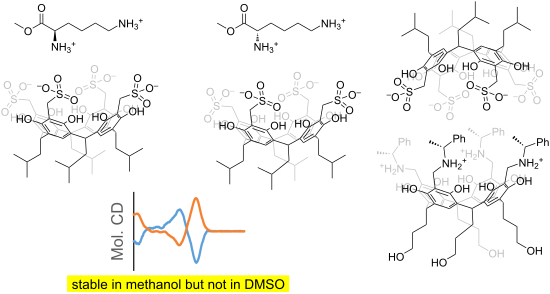
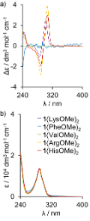
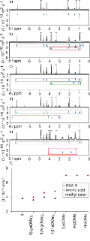
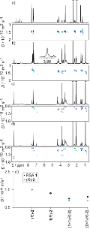
- chemistry. In the present study we demonstrate that resorcin[4]arene sulfonic acid (RSA) interacts with chiral amines (amino acid derivatives and aminocavitands) to form inclusion complexes and capsules based on electrostatic interactions. The complexes were characterized by circular dichroism and DOSY NMR
- chiral multidentate amino compounds (Figure 1) in polar media (DMSO, methanol, aqueous media). RSA 1 features a hydrophobic cavity and a polar rim of sulfonic acid groups capable of forming electrostatic interactions. We will put a particular emphasis on ordering during complex formation that is
- capable of forming electrostatic interactions. However, in CSAs polar groups are positioned directly on a macrocyclic scaffold, while for RSAs at conformationally labile methylene linkers. Therefore, we think that RSAs are more adaptable than CSAs and are able to enclose guest molecules more tightly (by




2,3-Dibutoxynaphthalene-based tetralactam macrocycles for recognizing precious metal chloride complexes
Beilstein J. Org. Chem. 2019, 15, 1460–1467, doi:10.3762/bjoc.15.146
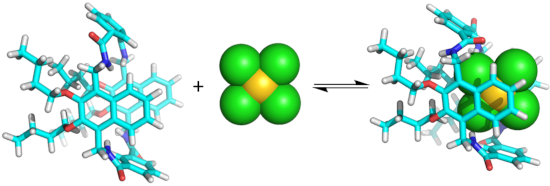
- the shrunken cavity caused by intramolecular hydrogen bonds in the latter tetralactam macrocycle. The binding of the isophthalamide-based macrocycle is mainly driven by hydrogen bonds and electrostatic interactions. This naphthalene-based macrocycle has similar binding affinities to all the three
- conformers are possible. As shown in Figure 5a, AuCl4− can be well accommodated in the cavity of 1. AuCl4− is sandwiched by the two 2,3-dibutoxynaphthalene moieties, and the electron-poor gold centre of AuCl4− may interact with the electron-rich naphthalenes through electrostatic interactions. In addition
- with 2,6-pyridine dicarboxamide bridging units cannot. This may be due to the shrunken cavity caused by intramolecular hydrogen bonds in the latter tetralactam macrocycle. The binding driving forces of the isophthalamide-based macrocycle are mainly from hydrogen bonds and electrostatic interactions


Polyaminoazide mixtures for the synthesis of pH-responsive calixarene nanosponges
Beilstein J. Org. Chem. 2019, 15, 633–641, doi:10.3762/bjoc.15.59
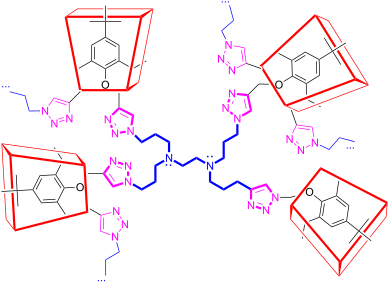
- importance of electrostatic interactions in the sequestration process. In fact, anions 11–14 are sequestered nearly quantitatively from solution. By contrast, cationic 15 is absorbed much less effectively and, as expected, binding is favored under the most alkaline pH conditions. Conclusion In the present





