Search results
Search for "fluoride" in Full Text gives 362 result(s) in Beilstein Journal of Organic Chemistry. Showing first 200.
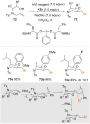
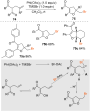
Asymmetric synthesis of fluorinated derivatives of aromatic and γ-branched amino acids via a chiral Ni(II) complex
Beilstein J. Org. Chem. 2025, 21, 659–669, doi:10.3762/bjoc.21.52
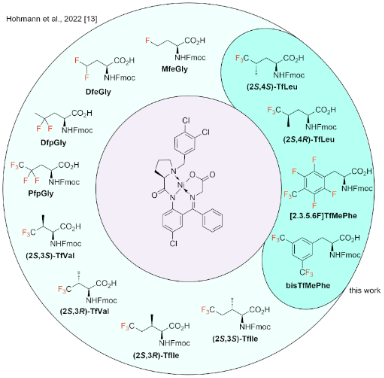
- ) complex 1 was synthesized according the procedure described by Romoff et al. [16]. Sodium hydride was used as a 60% dispersion in mineral oil. Triethylamine was dried over CaH2 and distilled freshly before use. Perfluorobutanesulfonyl fluoride was dried over CaCl2 and freshly distilled before use. Other


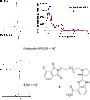
Identification and removal of a cryptic impurity in pomalidomide-PEG based PROTAC
Beilstein J. Org. Chem. 2025, 21, 407–411, doi:10.3762/bjoc.21.28
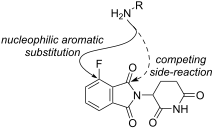
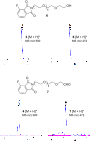
- pomalidomide or its close analogs, indicating that a side reaction unrelated to the SNAr of the fluoride has occurred. 1H NMR and MS analyses suggested that phthalimide 5 was the byproduct formed through this series of transformations. Supporting this hypothesis, analysis of the reaction intermediates




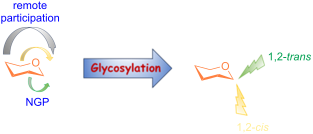
The effect of neighbouring group participation and possible long range remote group participation in O-glycosylation
Beilstein J. Org. Chem. 2025, 21, 369–406, doi:10.3762/bjoc.21.27
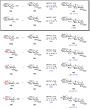
- -butyldimethylsilyloxy)-2,2-dimethylbutanoyl protecting group 33 [102] possessing the steric advantage of the pivaloyl group with the added advantage of it being cleaved with the help of fluoride anions implementing the affinity of the fluoride ion towards the Si atom [103]. Considering the versatility of the pivaloyl




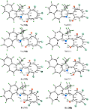
Synthesis, structure, ionochromic and cytotoxic properties of new 2-(indolin-2-yl)-1,3-tropolones
Beilstein J. Org. Chem. 2025, 21, 358–368, doi:10.3762/bjoc.21.26
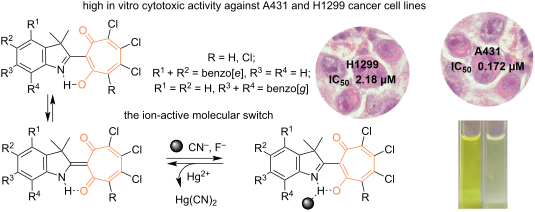
- -n-butylammonium salts (TBAX: F, Cl, Br, I, CN). Exclusively cyanide and fluoride anions lead to a naked-eye effect due to a change of the solution’s colour from yellow-orange to pale yellow (Figure 5). At the same time, a new fluorescence band appears at 420–440 nm. The Stokes shifts of fluorescence




Dioxazolones as electrophilic amide sources in copper-catalyzed and -mediated transformations
Beilstein J. Org. Chem. 2025, 21, 200–216, doi:10.3762/bjoc.21.12
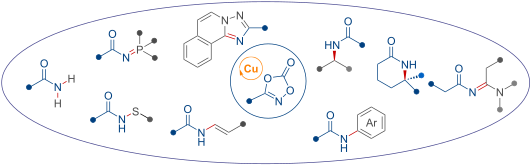
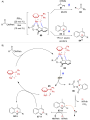
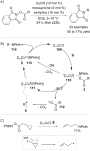
- desired N-arylamide 13 is yielded through protodemetalation. In this process, copper does not undergo further catalytic turnover, presumably due to the formation of inactive copper fluoride or copper hydroxide species. 1.5 N-Phosphorylation of dioxazolones Recently, Son and Kuniyil reported the N


Quantifying the ability of the CF2H group as a hydrogen bond donor
Beilstein J. Org. Chem. 2025, 21, 189–199, doi:10.3762/bjoc.21.11
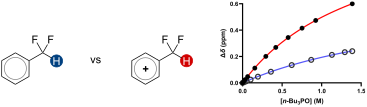
- counterions, such as the bromide and fluoride anions [50], on HB interactions, all ionic compounds were synthesized with tetrafluoroborate, a classical weakly coordinating anion. Results and Discussion We first assessed the hydrogen bond acidity, A, of these CF2H-containing compounds using an established



Nickel-catalyzed cross-coupling of 2-fluorobenzofurans with arylboronic acids via aromatic C–F bond activation
Beilstein J. Org. Chem. 2025, 21, 146–154, doi:10.3762/bjoc.21.8
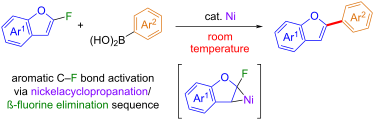
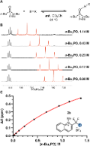
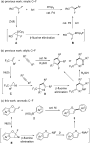
- singlet peaks at 32.0–33.4 ppm and 38.6–40.5 ppm, appearing in a 1:1 ratio. These new peaks were attributed to nickelacyclopropane Eb, which was formed in 19% yield. No peaks corresponding to benzofuranylnickel(II) fluoride Fb, which would arise from the oxidative addition of 1b to nickel(0), were



Hypervalent iodine-mediated intramolecular alkene halocyclisation
Beilstein J. Org. Chem. 2024, 20, 3113–3133, doi:10.3762/bjoc.20.258
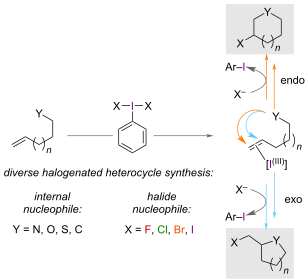
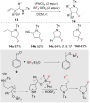
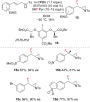
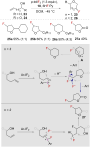
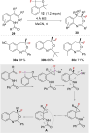
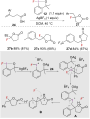
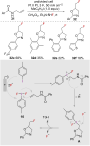
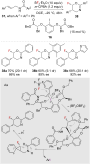
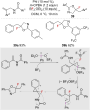
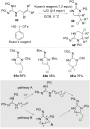
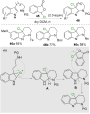
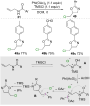
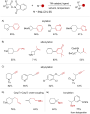
- fluoride and BF3·OEt2 as activator. A range of unsaturated amines 5 were cyclised to racemic β-fluorinated piperidines 6. Good yields were reported for all compounds except those with substituents present on the alkene. Homologation of the carbon chain from 5 to 6 carbons gave both 6- and 7-membered rings
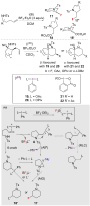
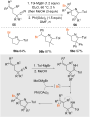
- fluoride ion to displace PhI. In pathway B (bottom), the nitrogen is oxidised by the iodane, generating an electrophilic intermediate B. Nucleophilic attack by the double bond subsequently forms the 6-membered ring intermediate C, which is either immediately attacked by fluoride to form both cis and trans
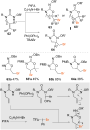
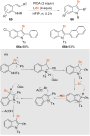
- proposed by the authors (Scheme 3). Activation of the HVI reagent by H-bonding leads to ligand exchange to give an aminofluoro iodonium intermediate A. Cyclisation occurs via nitrogen attack on the alkene to then give aziridinium intermediate B. Subsequent nucleophilic attack by fluoride on the more



















Mechanochemical difluoromethylations of ketones
Beilstein J. Org. Chem. 2024, 20, 2799–2805, doi:10.3762/bjoc.20.235
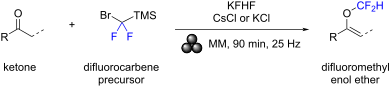
- sodium fluoride catalyst, with simple ketones, which resulted in the formation of difluoromethyl 2,2-difluorocyclopropyl ethers (Scheme 1B). Although the reactions worked well, it is also noteworthy that the use of TFDA as reagent, liberated fluoro(trimethyl)silane (TMSF), carbon dioxide, and ozone


Computational design for enantioselective CO2 capture: asymmetric frustrated Lewis pairs in epoxide transformations
Beilstein J. Org. Chem. 2024, 20, 2668–2681, doi:10.3762/bjoc.20.224
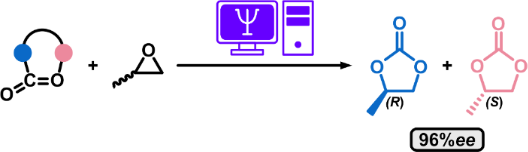
- (keff). The definition given by Williams will be used (Equation 3, [42]): The proton affinity (PA) [43] of the LB and the fluoride ion affinity (FIA) [44] of the LA of a given FLP are generally used to rationalise the FLP reactivity observed [45][46]. Thus, PA and FIA of the different scaffolds
- considered were calculated using Equation 4 and Equation 5, respectively, where H(A) stands for the enthalpy of the FLP, H(H+) for the enthalpy of the proton, H(F−) for the enthalpy of the fluoride ion, and H([A-H+]) and H([A-F−]) for the enthalpies of the complexes formed between the FLP and a proton and a
- fluoride ion, respectively. Volcanic 1.3.3, a Python package for the NaviCat platform, was used to generate 3D volcano plots, facilitating the identification of the most appropriate catalyst for the coupling reaction being considered [27]. Volcano plots Volcano plots are a visualisation of the Sabatier


gem-Difluorination of carbon–carbon triple bonds using Brønsted acid/Bu4NBF4 or electrogenerated acid
Beilstein J. Org. Chem. 2024, 20, 2261–2269, doi:10.3762/bjoc.20.194
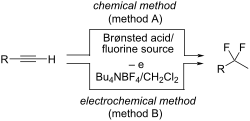
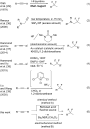
- the use of HF or its complexes as a reagent. These reactions seem to proceed via the formation of the vinyl fluoride as the intermediate [25][26][27][28]. In the first example, Olah and co-workers reported the reaction of terminal alkynes with HF/pyridine (Olah reagent) (Figure 1, reaction 1) [29][30



Factors influencing the performance of organocatalysts immobilised on solid supports: A review
Beilstein J. Org. Chem. 2024, 20, 2129–2142, doi:10.3762/bjoc.20.183
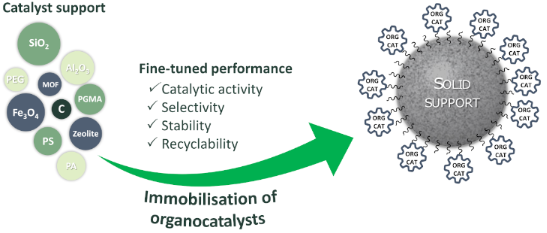
- generated by altering the reaction conditions during synthesis [52][53][54][55][56][57] or by using potassium chloride or ammonium fluoride salts as additives [58][59][60]. In a comprehensive study [61], the catalytic properties of three types (rope, rod and fibre) of mesoporous silica Santa Barbara


1,2-Difluoroethylene (HFO-1132): synthesis and chemistry
Beilstein J. Org. Chem. 2024, 20, 1955–1966, doi:10.3762/bjoc.20.171

- catalyst (Pd, Pd, Pt, Rh, Ru, Ir, Ni/Cu, Ag, Au, Zn, Cr, Co, Scheme 5) [62][63]. Further, 1,2-Dichloroethylene was reacted with hydrogen fluoride in the presence of metal fluorides or transition metals (Cr, Al, Co, Mn, Ni, Fe) to form 1,2-difluoroethylene (Scheme 6) [56][58]. In patents [59][60], an exotic
- (trifluoromethyl)amine easily reacted with (Z)-1,2-difluoroethylene to form the addition product in high yield (Scheme 11) [89]. However, the stereochemistry of this reaction has not been reported. A similar reaction of (Z)-1,2-difluoroethylene with N-chloroimidobis(sulfonyl fluoride) (Scheme 12) [90] was shown to
- silane that was obtained was pyrolyzed to form vinyl fluoride. It was shown that SF5Br easily reacted with the E- and Z-isomer, respectively, of 1,2-difluoroethylene in the presence or absence of light, yielding a mixture of erythro- and threo-isomeric addition products in both cases (Scheme 14) [92


Novel oxidative routes to N-arylpyridoindazolium salts
Beilstein J. Org. Chem. 2024, 20, 1906–1913, doi:10.3762/bjoc.20.166
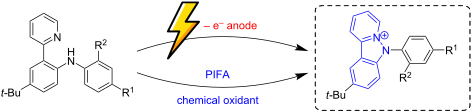
- reported as substrates for nucleophilic substitutions using potassium fluoride [22]. The study is in progress now. Voltammetry characterization of the N-arylpyridoindazolium salts S1–S3 and their precursors, diarylamines A1–A3 The electrochemical investigation of the new salts was performed at a Pt


Oxidative fluorination with Selectfluor: A convenient procedure for preparing hypervalent iodine(V) fluorides
Beilstein J. Org. Chem. 2024, 20, 1785–1793, doi:10.3762/bjoc.20.157
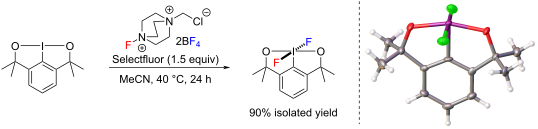
- them easily because they normally require harsh fluorinating reagents. The synthesis of hypervalent iodine(V) fluoride 3 was reported by Amey and Martin in 1979 using the highly toxic gas, trifluoromethyl hypofluorite (Scheme 2A), and they later prepared bicyclic hypervalent iodine(V) fluoride 4 using
- bromine trifluoride (Scheme 2B) [21][22]. They also showed that hypervalent iodine(V) fluoride 3 fluorinated phenylmagnesium bromide in Freon-113 to form fluorobenzene in 90% yield (Scheme 2A) and so, it is very surprising that this reagent has not been investigated further. Since then, Gruber [23
- such as 5 (Scheme 2D) using large excesses of trichloroisocyanuric acid (TCCA) and potassium fluoride [24]. The iodine(V) fluorides were formed in good spectroscopic yields (79–94%), but only one product, tetrafluoro(4-fluorophenyl)-λ5-iodane 5, was isolated from the reaction mixture by performing


Benzylic C(sp3)–H fluorination
Beilstein J. Org. Chem. 2024, 20, 1527–1547, doi:10.3762/bjoc.20.137

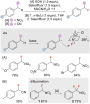
- subsequently attack electrophilic Selectfluor to afford the benzyl fluoride (Figure 2) [34]. The methodology was demonstrated on eight para-substituted benzylic substrates. The authors noted that resubjecting the monofluorinated compound 1 to the same reaction conditions afforded the difluorinated compound 2
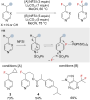
- excess NFSI, the heterobenzyl fluoride is obtained. In the case of product 3, the authors suggested that the absence of radical clock rearrangement products supported a polar mechanism. Conveniently, when both benzylic and heterobenzylic C–H bonds were present in a substrate, the reaction was selective
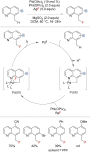
- authors displayed the stability of the secondary benzyl fluoride 9 to various SNAr conditions. While these methods demonstrate excellent application of palladium catalysts to perform benzylic fluorinations, the need to install a directing group can limit substrate scope. Therefore, methods that can








Auxiliary strategy for the general and practical synthesis of diaryliodonium(III) salts with diverse organocarboxylate counterions
Beilstein J. Org. Chem. 2024, 20, 1020–1028, doi:10.3762/bjoc.20.90
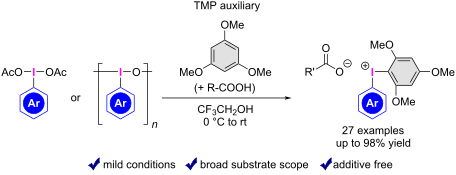
- modifying their physical properties, and stability and controlling the reactivity of arylation processes, as demonstrated in various studies [9][10]. For instance, the Gaunt group reported that the use of a fluoride counterion in diaryliodonium(III) salt can trigger phenol O-arylation by activating the
- phenolic O–H group with a fluoride anion [11]. Additionally, Muñiz et al. found that the acetate counterion was more effective than chloride, hexafluorophosphate, and trifluoromethane sulfonate for the borylation of diaryliodonium(III) salts [12]. Recently, our group has developed a new method for phenol O


Direct synthesis of acyl fluorides from carboxylic acids using benzothiazolium reagents
Beilstein J. Org. Chem. 2024, 20, 921–930, doi:10.3762/bjoc.20.82
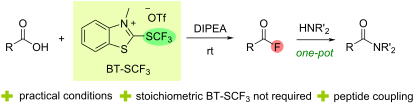
- . Keywords: acyl fluorides; amides; benzothiazolium salts; carboxylic acids; deoxygenative reactions; Introduction Acyl fluorides are attracting much attention as versatile reagents for different applications in organic synthesis. In addition to their use as sources of fluoride ions, they are most commonly
- studied due to the easy accessibility of fluoride ions with many methods directly employing the parent carboxylic acid as substrate. These processes avoid an additional pre-functionalisation step and have been reported using a range of deoxyfluorinating reagents including (diethylamino)sulfur trifluoride
- (DAST) [16][17][18], bis(2-methoxyethyl)aminosulfur trifluoride (Deoxo-Fluor®) [10][19][20], (diethylamino)difluorosulfonium tetrafluoroborate (XtalFluor-E®) [21][22][23][24], (Me4N)SCF3 [9][25], pentafluoropyridine (PFP) [26] and cyanuric fluoride [27][28] among others [15]. Since 2019, our group has



Skeletal rearrangement of 6,8-dioxabicyclo[3.2.1]octan-4-ols promoted by thionyl chloride or Appel conditions
Beilstein J. Org. Chem. 2024, 20, 823–829, doi:10.3762/bjoc.20.74
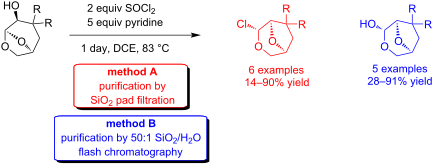
- ]octane, while O6 migrated when the C4–OH was axial leading to 2,4-dioxabicyclo[2.2.2]octanes. The formation of both anomers from the non-selective addition of fluoride suggested intermediates with oxocarbenium character. This work has recently been extended by Banwell and co-workers to include a set of


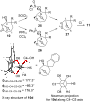
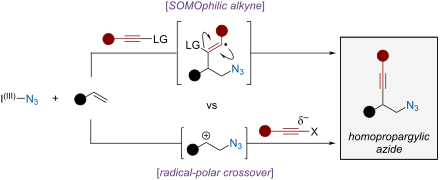
SOMOphilic alkyne vs radical-polar crossover approaches: The full story of the azido-alkynylation of alkenes
Beilstein J. Org. Chem. 2024, 20, 701–713, doi:10.3762/bjoc.20.64
- increase the yield of different transformations. Using fluoride scavenger such as TMSCl, TFAA or TMS2(O) led to similar or lower yields (Table 7, entries 3–5). We were pleased to see that in the presence of BF3·Et2O, 4a was obtained in 75% yield (Table 7, entry 6). Addition of a less acidic boron Lewis


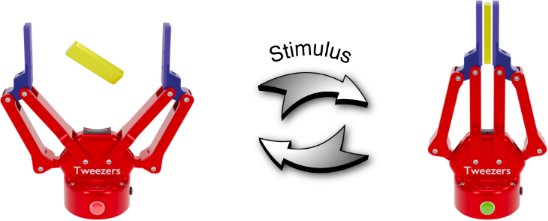
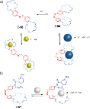
Switchable molecular tweezers: design and applications
Beilstein J. Org. Chem. 2024, 20, 504–539, doi:10.3762/bjoc.20.45




Synthesis of 2,2-difluoro-1,3-diketone and 2,2-difluoro-1,3-ketoester derivatives using fluorine gas
Beilstein J. Org. Chem. 2024, 20, 460–469, doi:10.3762/bjoc.20.41
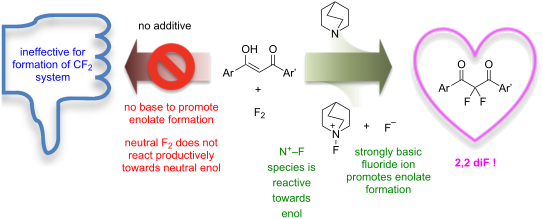
- generate a fluoride ion that facilitates limiting enolization processes, and an electrophilic N–F fluorinating agent that is reactive towards neutral enol species. Keywords: difluorination; difluoromethylene; direct fluorination; electrophilic fluorination; organofluorine; Introduction Fluorine is
- of gem-dihalo groups to corresponding CF2 derivatives using silver tetrafluoroborate [5] or mercury(II) fluoride [6], deoxyfluorination of carbonyl derivatives using diethylaminosulfur trifluoride (DAST) or related Deoxo-Fluor and Xtalfluor reagents [7][8]. Alternatively, oxidative
- fluorodesulfurizations of carbonyl derivatives using a combination of sources of halonium and fluoride ions such as 1,3-dibromo-5,5-dimethylhydantoin (DBH) and tetrabutylammonium dihydrogen trifluoride have been achieved [9][10][11]. The transformation of methylene to difluoromethylene using electrophilic fluorinating


(E,Z)-1,1,1,4,4,4-Hexafluorobut-2-enes: hydrofluoroolefins halogenation/dehydrohalogenation cascade to reach new fluorinated allene
Beilstein J. Org. Chem. 2024, 20, 452–459, doi:10.3762/bjoc.20.40
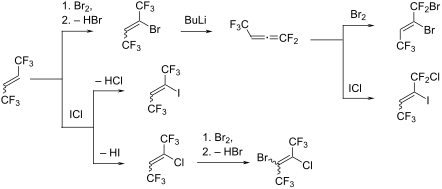
- reactivity we performed the reaction with iodine. All experiments were carried out in THF, N-methylpyrrolidone and sulfolane with iodine in the presence of a source of fluoride ion. The best result was observed when the reaction was carried out in dry sulfolane with a two-fold excess of iodine and 1.5-fold
- continues to be relevant. One of the methods for the synthesis of allenes was based on the interaction of bromoolefins with organolithium compounds, followed by the elimination of lithium fluoride [29][30][31]. It was logical to assume that in our case a similar reaction of the Grignard reagent 12 with


Mechanisms for radical reactions initiating from N-hydroxyphthalimide esters
Beilstein J. Org. Chem. 2024, 20, 346–378, doi:10.3762/bjoc.20.35
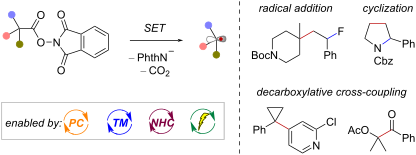
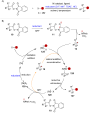
- Z-monofluoroalkene product 136 is achieved through anticoplanar elimination of fluoride. Shuhua Li and co-workers reported the generation of alkyl radicals from NHPI esters, mediated by a pyridine-boryl radical reductant species in the context of alkene hydroalkylation [104] and cross








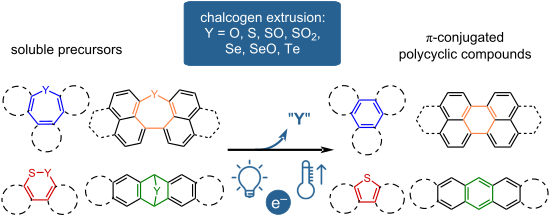
Synthesis of π-conjugated polycyclic compounds by late-stage extrusion of chalcogen fragments
Beilstein J. Org. Chem. 2024, 20, 287–305, doi:10.3762/bjoc.20.30
- -naphthodiyne, generated in situ from bistriflate 55 in the presence of cesium fluoride. Diepoxide 56 was obtained in 40% yield as a syn/anti mixture in a 1:1.7 ratio. Diepoxide 56 (as a diastereoisomeric mixture) was deposited on a Cu(111) surface by sublimation under UHV conditions and the molecular species
- –Alder reaction of naphthodiyne precursor 55 with isobenzofuran 61 to give monoepoxide 62 as a mixture of regioisomers. Further treatment of the latter with one equivalent of cesium fluoride allowed the regioselective Diels–Alder with the previous diene 61, to afford 63 as another mixture of position
- isomers. Finally, reaction of this bisaryne precursor with an excess cesium fluoride and bare isobenzofuran gave rise to the end-capped soluble precursor 59 via a double cycloaddition process. All polyepoxides 58–60 were deposited by sublimation on a Au(111) surface, triggering in some cases partial