Search results
Search for "preparation" in Full Text gives 2118 result(s) in Beilstein Journal of Organic Chemistry. Showing first 200.
Cone p-aminocalix[4]arenes enriched with ‘clickable’ alkyne or azide functionalities
Beilstein J. Org. Chem. 2026, 22, 399–415, doi:10.3762/bjoc.22.28
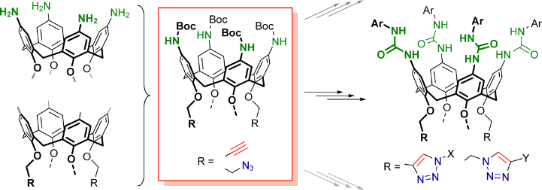
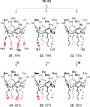
- -aminocalix[4]arenes enriched with alkyne or azide functionalities can be readily used as multifunctional platforms to obtain even higher functionalized macrocycles. As an example, they can be used for the preparation of sophisticated supramolecular assemblies with homo- or heterodimeric calixarene cores and
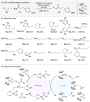
- developed for the preparation of the targeted multifunctionalized calixarenes. Propargylated p-aminocalix[4]arenes Following the published example [9], for the preparation of propargylated p-aminocalix[4]arenes a three-step synthesis strategy was selected, which involved protection of the calixarene
- substitution patterns were selected as the starting materials to enable further preparation of the respective mono-, di- and tetrapropargylated calix[4]arene tetraamines and their derivatives. The silylation of propargyl ethers 1–5 was first attempted using tert-butyldimethylsilyl chloride (TBSCl) and the






Dialkylaminoalkylation of β-ketosulfones via ring-opening of 3-sulfonylpyrrolidines
Beilstein J. Org. Chem. 2026, 22, 383–389, doi:10.3762/bjoc.22.26
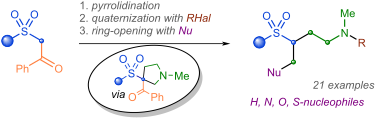
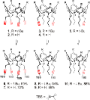
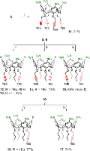
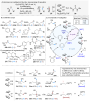
- ] cycloaddition of azomethine ylides at various vinyl sulfones were well studied [38][39][40][41], a method for the preparation of 3-sulfonylpyrrolidines from β-ketosulfones was previously unknown. We synthesized a number of pyrrolidines 2a–f in 83–97% yield, which were purified by an acid-base extraction (Scheme
- promote Hofmann elimination. To enhance the leaving ability of the nitrogen atom we prepared ammonium salts 3 of the obtained pyrrolidines via treatment with alkyl halides. Since the preparation of quaternary ammonium salts of pyrrolidines is straightforward, we employed a one-pot method for its synthesis




Recent advances in the cleavage of non-activated amides
Beilstein J. Org. Chem. 2026, 22, 352–369, doi:10.3762/bjoc.22.23
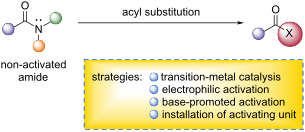
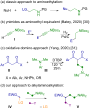
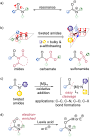
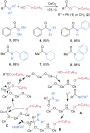
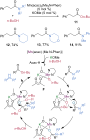
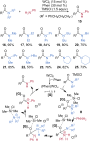
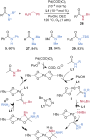
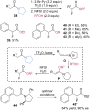
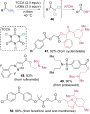
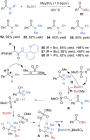
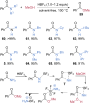
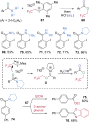
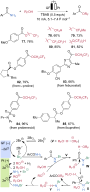
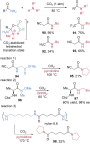
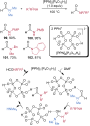
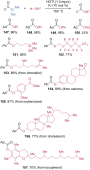
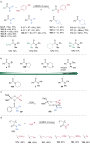
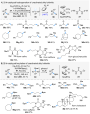
- twisted amides have revolutionized amide-bond activation, their preparation often requires multistep synthesis or the installation of strongly electron-withdrawing groups, thereby limiting their broad applicability. Thus, the selective activation and transformation of non-twisted, non-activated amides










Synthesis of tricyclic fused pyrrolidine nitroxides from 2-alkynylpyrrolidine-1-oxyls
Beilstein J. Org. Chem. 2026, 22, 344–351, doi:10.3762/bjoc.22.22

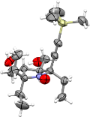
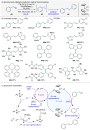
- sulfonate group, respectively [24]. The 1H NMR spectra of 3a,b,d–f (Zn/CF3COOH system in CD3OD) showed appearance of a singlet of methanesulfonate hydrogens in the region from 2.78 to 3.17 ppm. The NMR spectra were not recorded for 3c because of heavy resinification upon the sample preparation. The




Spirobarbiturates with a pyrrolizidine moiety: synthesis, structure and biological evaluation
Beilstein J. Org. Chem. 2026, 22, 274–288, doi:10.3762/bjoc.22.20
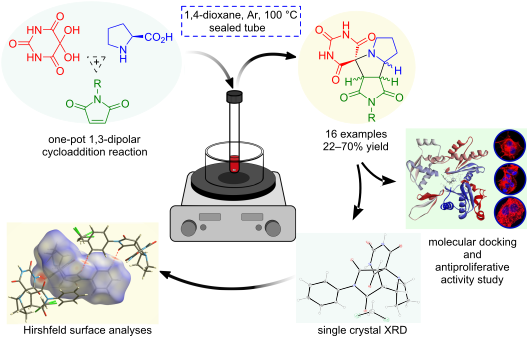
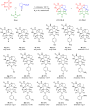
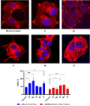
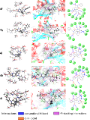
- ]. Advances in this area of organic synthesis include the preparation of barbiturates containing spiro-fused cyclohexane, cyclopentane, tetrahydrooxepine, and tetrahydroquinoline moieties via [3 + 2], [4 + 2], and [5 + 2] annulation reactions involving arylidene and alkylidene barbiturates [20][21][22][23




Arene activation via π-bond localization: concepts and opportunities
Beilstein J. Org. Chem. 2026, 22, 257–273, doi:10.3762/bjoc.22.19
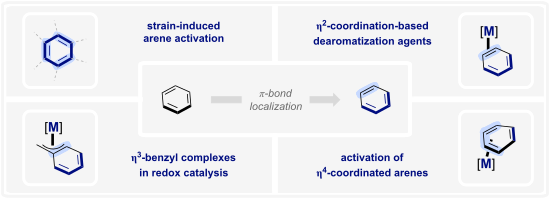
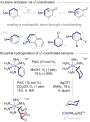
- ) systems [56][57][58]. Beyond the conceptual advance, the Mo(0) manifold offers practical benefits in terms of scalability and recyclability [59]. However, the preparation of enantioenriched η2-arene complexes presented unique challenges. In contrast to the Re(I) and W(0) analogues, where resolution of the
- utilization of strained arenes; NICS: nucleus independent chemical shifts [26][27][28]. Bonding and reactivity of η2-coordinated aromatic systems [44][46]. Illustrative selection of η2-coordinating dearomatization agents; MeIm: N-methylimidazole, NHE: normal hydrogen electrode. Preparation, lability and most




A mild and atom-efficient four-component cascade strategy for the construction of biologically relevant 4-hydroxyquinolin-2(1H)-one derivatives
Beilstein J. Org. Chem. 2026, 22, 244–256, doi:10.3762/bjoc.22.18
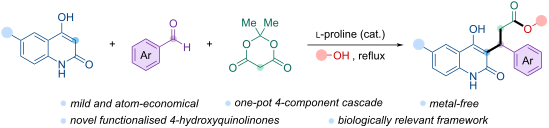
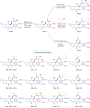
- (Scheme 3) involved the optimization of a two-step procedure reported previously for their preparation from corresponding anilines and malonic ester [40][41][42][43]. The intermediate N1,N3-bis(4-halogenophenyl)malonamides 1a–c were synthesized from 4-halogen-substituted anilines and diethyl malonate in
- pyranoquinoline and in the open-chain ester (see Scheme 6). Supporting Information Supporting Information File 36: Experimental procedures and analytical characterization of all synthesized compounds. Acknowledgements The authors are grateful to Maria E. Filkina for assistance with the design and preparation of


Synthesis of diaryl phosphates using phytic acid as a phosphorus source
Beilstein J. Org. Chem. 2026, 22, 213–223, doi:10.3762/bjoc.22.15
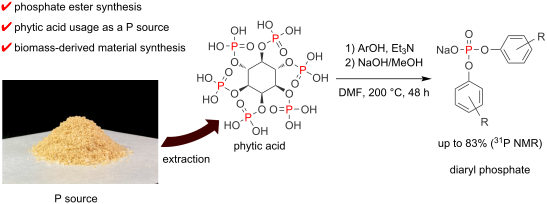
- soil. It can potentially serve as a phosphorus source in the syntheses of organic phosphates; however, this approach has not been utilized for the preparation of phosphate esters. In this study, we report the first successful synthesis of phosphate esters using phytic acid as a phosphorus source. Crude
- esterification with alcohols using sustainable biomass-derived phytic acid as a phosphorus source (Figure 2E). This approach can facilitate the development of environmentally friendly phosphate ester production as well as phosphorus recovery and recycling techniques. To date, the preparation of phosphate esters
- A total P analysis was performed according to a test method for industrial wastewater standardized in the Japanese Industrial Standards (JIS K 0102 46.3). Step 1 (preparation of a coloring agent): Hexaammonium heptamolybdate tetrahydrate (300 mg) and antimony potassium tartrate trihydrate (12 mg




Screwing the helical chirality through terminal peri-functionalization
Beilstein J. Org. Chem. 2026, 22, 205–212, doi:10.3762/bjoc.22.14
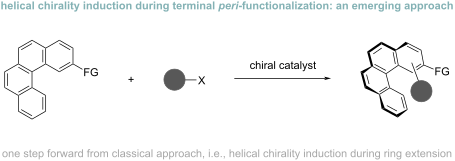
- -functionalization, where a bulkier handle provides the required enantiomerization barrier to screw helical chirality (Figure 1C and D). A straight forward preparation of various carbohelicenes via an organocatalytic enantioselective hydroamination reaction of polyaromatic phenols with diazodicarboxamide derivatives


Base-promoted deacylation of 2-acetyl-2,5-dihydrothiophenes and their oxygen-mediated hydroxylation
Beilstein J. Org. Chem. 2026, 22, 192–204, doi:10.3762/bjoc.22.13
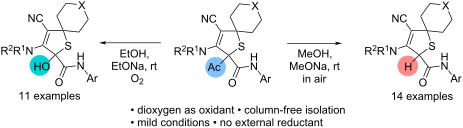
- convenient tool for the preparation of phenols from aromatic ketones, several specific approaches have been developed for the synthesis of hydroxylated heterocycles [30][31][32][33][34]. The deacylation of ketones is also another important direction of their transformation [35][36][37][38]. Dihydrothiophenes




Improved synthesis and physicochemical characterization of the selective serotonin 2A receptor agonist 25CN-NBOH
Beilstein J. Org. Chem. 2026, 22, 175–184, doi:10.3762/bjoc.22.11
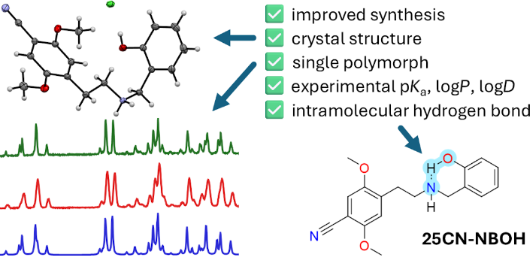
- ) and water at 25 ± 0.5 °C. The solutions comprising 0.2 mg/mL of 1·HCl were kept in a temperature-controlled incubator, and samples were measured by HPLC immediately after sample preparation as well as after one and four weeks for the experiments in phosphate buffer and after four weeks for experiments


A new synthesis of Tyrian purple (6,6’-dibromoindigo) and its corresponding sulfonate salts
Beilstein J. Org. Chem. 2026, 22, 167–174, doi:10.3762/bjoc.22.10
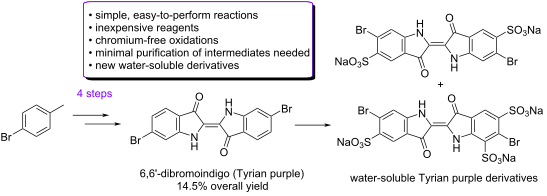
- at different pH values. A) Generalized synthetic scheme for several previous syntheses of 6,6’-dibromoindigo. B) The synthetic scheme for 6,6’-dibromoindigo described in this work. Synthetic scheme for the preparation of 6,6’-dibromoindigo from p-bromotoluene (5). Nitration of p-bromotoluene (5


Circumventing Mukaiyama oxidation: selective S–O bond formation via sulfenamide–alcohol coupling
Beilstein J. Org. Chem. 2026, 22, 158–166, doi:10.3762/bjoc.22.9
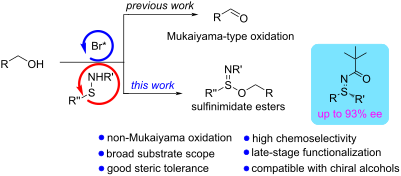
- preparation of sulfinimidate esters remain scarce. For instance, Degennaro and Luisi reported a direct amination strategy using N,N’-disubstituted sulfenamides in alcoholic solvents; however, this method suffered from limited substrate scope [13]. Subsequently, Malacria and co-workers reported an oxidative


Design and synthesis of an axially chiral platinum(II) complex and its CPL properties in PMMA matrix
Beilstein J. Org. Chem. 2026, 22, 143–150, doi:10.3762/bjoc.22.7
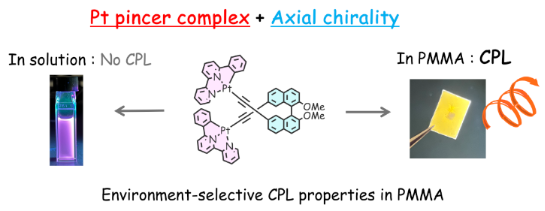
- reaction of S/R-1 with trimethtylsilylacetylene in toluene (Scheme 1). Subsequent deprotection of the trimethylsilyl (TMS) groups with tetrabutylammonium fluoride (TBAF) afforded the desired ligand S/R-3. The preparation of the target platinum(II) complex was performed by using a similar procedure of other


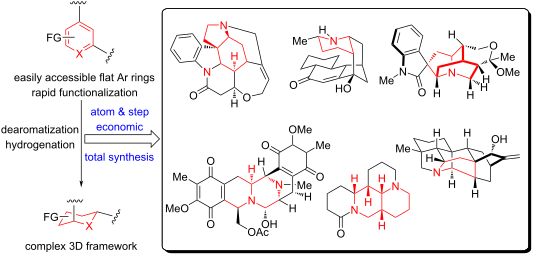
Total synthesis of natural products based on hydrogenation of aromatic rings
Beilstein J. Org. Chem. 2026, 22, 88–122, doi:10.3762/bjoc.22.4
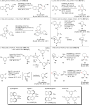
- 18, 20 to piperidine compounds using [CpRhCl2]2 as a metal catalyst and formic acid as a hydrogen source (Scheme 3) [45]. Different with other previous studies, this method allows for substituents at the 3-position of pyridine, enabling the rapid preparation of chiral piperidine compounds. It should
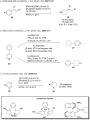
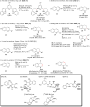
- hydrogenation feasible, it also increased the complexity of the synthetic route, limiting its suitability for large-scale preparation of 157. Consequently, the authors redirected their efforts toward homogeneous catalytic hydrogenation, a field that has seen rapid progress in recent years. Upon converting 161











Advances in Zr-mediated radical transformations and applications to total synthesis
Beilstein J. Org. Chem. 2026, 22, 71–87, doi:10.3762/bjoc.22.3
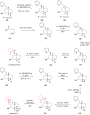
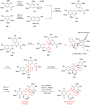
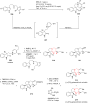
- A (72). Notably, this strategy enabled the preparation of tetratryptomycin A (72) on a multigram scale, providing a total of 21 g of tetratryptomycin A (72). The synthesized tetratryptomycin A (72) was then employed in the total synthesis of cyctetryptomycins (76 and 77). Under chemical oxidation







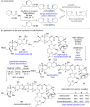
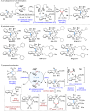

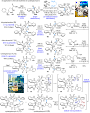
Synthesis and applications of alkenyl chlorides (vinyl chlorides): a review
Beilstein J. Org. Chem. 2026, 22, 1–63, doi:10.3762/bjoc.22.1
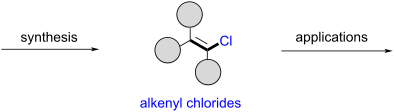
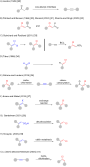
- Synthesis of Acetylenes” [29] which discusses the preparation of alkenyl chlorides via ketone chlorination using PCl5 (Figure 3A). The synthesis of β-chlorovinyl ketones was later reviewed by Poland and Benson in 1966 (Figure 3B) [30]. More recently, Morandi and co-workers summarized transition-metal
- – including iodides, bromides, and chlorides – this review is limited to studies that report at least two distinct examples of alkenyl chloride formation. The preparation of 1,1-dichloroalkenes has been comprehensively reviewed by Chelucci and will not be revisited here [44]. Conversely, 1,2-dichloroalkene
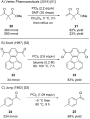
- HIV-1 non-nucleoside reverse transcriptase inhibitor, they aimed to improve the preparation of compound 19, whose yield had previously been limited to 22% following a similar route. They noticed that in situ-generated species such as POCl3 or HCl triggered ring opening of dichloride 15 to produce a























One-pot synthesis of ethylmaltol from maltol
Beilstein J. Org. Chem. 2025, 21, 2755–2760, doi:10.3762/bjoc.21.212

- helpful discussions during the preparation of this manuscript. Furthermore, we are thankful to Christoph Kreutz (University of Innsbruck) and Thomas Müller (University of Innsbruck) for support with NMR and HRMS studies. Funding T.M. acknowledges the Austrian Academy of Sciences (OeAW) and the Center for


Sustainable electrochemical synthesis of aliphatic nitro-NNO-azoxy compounds employing ammonium dinitramide and their in vitro evaluation as potential nitric oxide donors and fungicides
Beilstein J. Org. Chem. 2025, 21, 2739–2754, doi:10.3762/bjoc.21.211
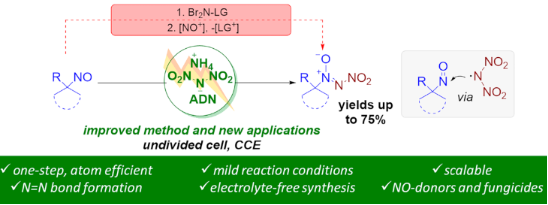
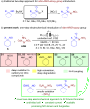
- approaches focus mainly on intramolecular radical cyclizations [42][54][55][56][57][58][59][60][61][62][63], while intermolecular [1][64][65][66][67][68] N–N coupling remains a poorly studied area. In addition to the preparation of azo compounds [69][70], intermolecular N–N coupling reactions are of
- leaving group X. The second step is substitutive nitration of the latter with nitronium salts (NO2BF4, (NO2)2SiF6) or N2O5). The main limitations of this approach are the use of hazardous and expensive nitrating reagents and its inapplicability for preparation of nitro-NNO-azoxy compounds containing
- single step. The synthesized products demonstrated marked in vitro NO-donor ability and fungicidal activity against a broad range of phytopathogenic fungi. Experimental Although we have encountered no difficulties during preparation and handling of compounds described and used in this paper, they are





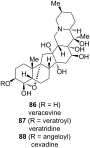
Recent advancements in the synthesis of Veratrum alkaloids
Beilstein J. Org. Chem. 2025, 21, 2657–2693, doi:10.3762/bjoc.21.206
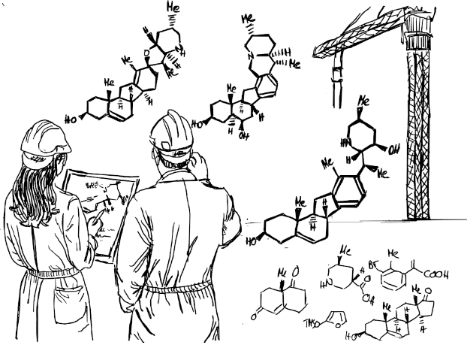
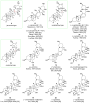
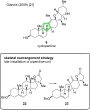
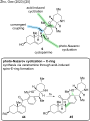
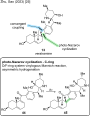
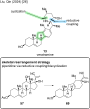
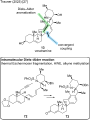
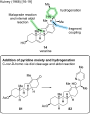
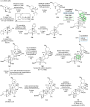
- the C4/C9 oxo bridge installed (see Scheme 31). Notably, the asymmetric preparation of 100 has also been described (9 steps LLS from commercial substances) [50][51]. The introduction of C7–OH and reduction of double bonds was achieved following a nine-step sequence of redox manipulations to arrive at
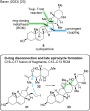
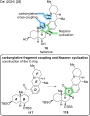
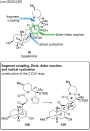
- interconversions were employed to install the propargyl bromide moiety and conclude the synthesis of diyne fragment 112 containing the A,B-rings. The preparation of alkyne fragment 116 started with an Evans syn-aldol reaction between propionic acid Evans auxiliary 113 and aldehyde 114 (prepared in two steps from δ
















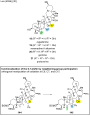
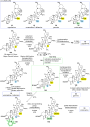
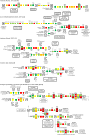
Chemoenzymatic synthesis of the cardenolide rhodexin A and its aglycone sarmentogenin
Beilstein J. Org. Chem. 2025, 21, 2637–2644, doi:10.3762/bjoc.21.204
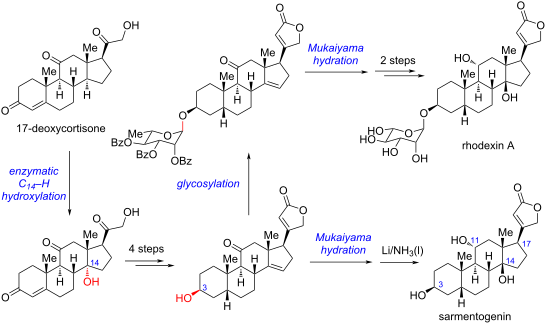
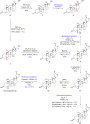
- only causes damage to the environment, but also greatly restricts further research for their pharmaceutical applications. Therefore, substantial synthetic efforts have been devoted towards the preparation of these valuable targets recently [8][9][10][11][12][13][14][15][16][17]. Rhodexin A was firstly



Efficient solid-phase synthesis and structural characterization of segetalins A–H, J and K
Beilstein J. Org. Chem. 2025, 21, 2612–2617, doi:10.3762/bjoc.21.202
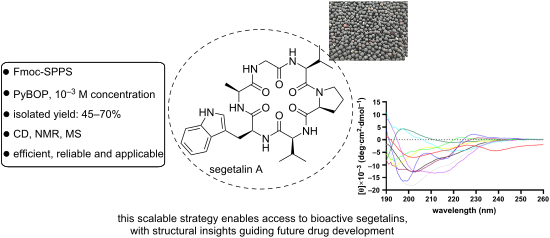
- against Gram-positive bacteria), will be conducted in our laboratory. Cyclization reactions to segetalins A–H, J and K. The CD spectra of segetalins A–H, J and K. Preparation of segetalins A–H, J and K. Preparation of linear peptides for segetalins A–H, J and K. Supporting Information Supporting



Silica gel with covalently attached bambusuril macrocycle for dicyanoaurate sorption from water
Beilstein J. Org. Chem. 2025, 21, 2604–2611, doi:10.3762/bjoc.21.201
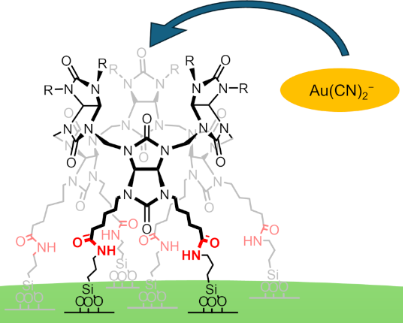
- remains a major challenge due to the strong hydration of anions. Here, we report the preparation of silica gel functionalized with covalently anchored bambusuril macrocycles. In aqueous solution, this material efficiently sorbs dicyanoaurate(I), the key anion in gold mining, even in the presence of
- carried out in nitrogen atmosphere. The dicyanoaurate concentration in solution was determined according to UV–vis spectra recorded with a CARY 60 spectrophotometer (Agilent Technologies). NMR spectra were recorded on a Bruker Avance III 300 spectrometer (300.15 Hz, 298.15 K). Preparation of SG-NHCO-BU1
- was filtered and thoroughly washed with DMF, water and methanol in order to remove byproducts and unreacted BU1. After air-drying, SG-NHCO-BU1 was obtained. Preparation of SG-BU1 For the preparation of SG-BU1 with electrostatically bound BU1 on the surface of silica gel, a-SG (0.9 g) was suspended in


Visible-light-driven NHC and organophotoredox dual catalysis for the synthesis of carbonyl compounds
Beilstein J. Org. Chem. 2025, 21, 2584–2603, doi:10.3762/bjoc.21.200
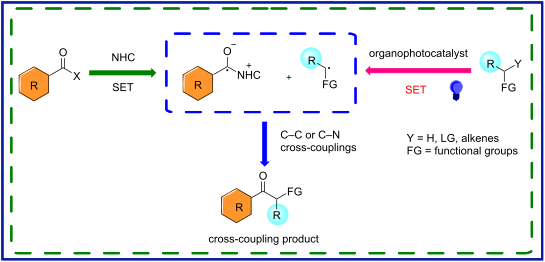
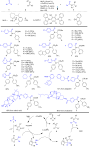
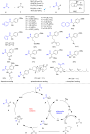
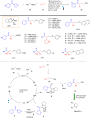
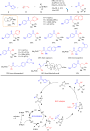
- , particularly the synergistic combination of N-heterocyclic carbenes (NHCs) with organic photocatalysts, has opened new avenues in molecular construction, particularly for the novel, practical preparation of carbonyl group-containing compounds [13][14][15][16]. These ubiquitous ketone, ester, and amide
- , and advanced optical and energy materials. Review Visible-light-driven NHC/4CzIPN-catalyzed reactions Recently, Shu and co-workers developed a direct and innovative preparation of highly functionalized aryl amide derivatives 3 from aryl aldehydes 1 and substituted imines 2 under mild conditions in the
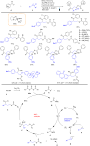
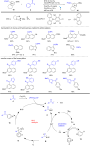
- existing metal-catalyzed C–H bond functionalization methods (Scheme 3) [53]. Recently, Scheidt et al. discovered an NHC/organic photoredox-catalyzed three-component coupling reaction for the efficient and novel preparation of γ-aryloxy ketone scaffolds 12. This transformation builds on the emerging field





Total syntheses of highly oxidative Ryania diterpenoids facilitated by innovations in synthetic strategies
Beilstein J. Org. Chem. 2025, 21, 2553–2570, doi:10.3762/bjoc.21.198
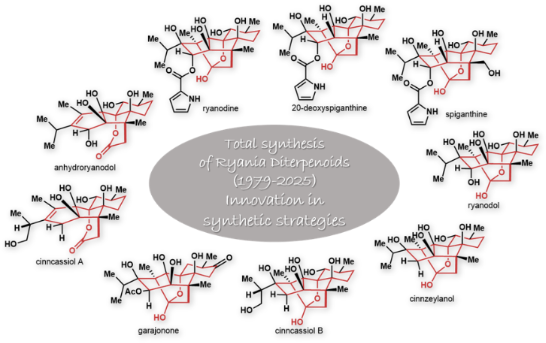
- polyhydroxylated molecular framework has posed a significant synthetic challenge, impeding the preparation of derivatives for SAR exploration. In 2017, the Reisman group addressed this issue by drawing upon an analysis of Deslongchamps’s prior synthetic work [45] (Scheme 8). They hypothesized that utilizing an
- ). The synthesis commenced with the preparation of key cyclization precursor 98 via Barbier coupling and Babler–Dauben oxidative rearrangement. A pivotal palladium-catalyzed Heck/carbonylative cyclization then efficiently furnished the ABC tricyclic core 99. Notably, adding N-formylsaccharin under a CO