Search results
Search for "reduction" in Full Text gives 1660 result(s) in Beilstein Journal of Organic Chemistry. Showing first 200.
Cone p-aminocalix[4]arenes enriched with ‘clickable’ alkyne or azide functionalities
Beilstein J. Org. Chem. 2026, 22, 399–415, doi:10.3762/bjoc.22.28
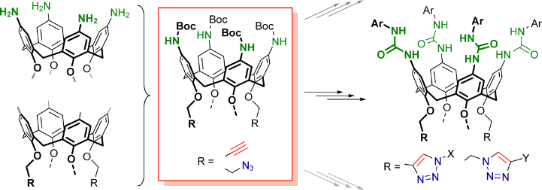
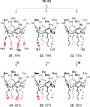
- were ipso-nitrated followed by reduction of the nitro groups. To prepare 2-azidoethylated macrocycles, the ipso-nitration/reduction sequence was applied to p-tert-butylcalix[4]arenes containing 2-tosyloxyethyl groups at the narrow rims followed by replacement of the tosyloxy groups with azide ones. In
- important functionalities which can be introduced into calix[4]arene structures either through a wide-rim exhaustive nitration followed by reduction of the nitro groups [5][6][7][8][9][10][11][12][13], or through azo coupling followed by cleavage of the calixarene azo compounds thus formed [14][15][16][17
- into various multifunctional structures and sophisticated supramolecular systems. Results and Discussion In the majority of cases, the introduction of four amino groups into the calix[4]arene wide rim requires exhaustive (ipso-)nitration of the core followed by reduction of the resulting p-nitrocalix[4






Dialkylaminoalkylation of β-ketosulfones via ring-opening of 3-sulfonylpyrrolidines
Beilstein J. Org. Chem. 2026, 22, 383–389, doi:10.3762/bjoc.22.26
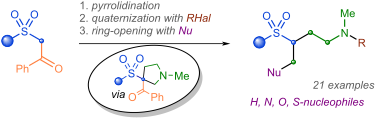
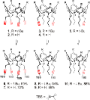
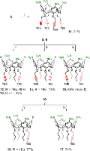
- of the quaternary ammonium salt in the presence of a O-, S- or N-nucleophile with cesium carbonate leads to a retro-Claisen reaction, ring-opening and Michael addition. The resulting novel 4-Nu-3-sulfonylbutan-1-amines are isolated in moderate to excellent overall yields. The reduction of the
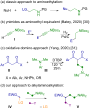
- the fast increase of the molecular complexity, remains significant. Unlike the classical aminoethylation of nucleophilic compounds [28][29], Batey et al. recently developed a two-step approach consisted in addition of terminal ynimides I to various electrophiles with subsequent reduction of the C≡C
- reaction media to form 4-Nu-3-(sulfonyl)butan-1-amines 4. An attempt to obtain 3,4-bis(phenylthio)butan-1-amine via reduction of the sulfonyl group [43][44] of the product 4r with LiAlH4 gave an unexpected reductive elimination of the thiophenol moiety furnishing N,N-dimethyl-3-(phenylsulfonyl)butan-1




Synthesis of tricyclic fused pyrrolidine nitroxides from 2-alkynylpyrrolidine-1-oxyls
Beilstein J. Org. Chem. 2026, 22, 344–351, doi:10.3762/bjoc.22.22

- -alkynyl-substituted pyrrolidine nitroxides was studied. These nitroxides have been prepared via intramolecular Huisgen cycloaddition or intramolecular alkylation in 2-pyrazolyl derivatives prepared by Michael addition–cyclocondensation of the corresponding alkynones with hydrazine. The reduction kinetics
- by ascorbate showed that the formation of the rigid tricyclic framework does not lead to a significant increase in stability of the radical center to chemical reduction. Keywords: annulated tricyclic system; nitroxide; pyrazole; pyrrolidine; triazole; Introduction Stable nitroxides are functional
- acetoxy groups and reduction of the nitroxyl fragment to the corresponding hydroxylamine. Primary products were stirred with a solution of NaOH in methanol under aerobic conditions to achieve complete hydrolysis and regeneration of the nitroxide group. Pyrazole 9a was isolated with an overall yield of 33




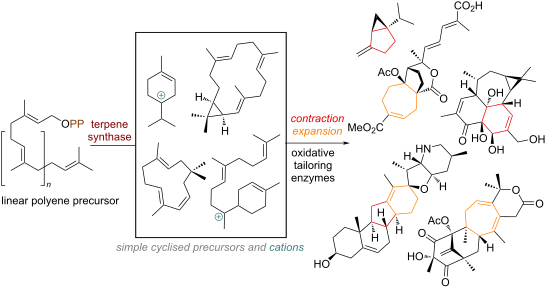
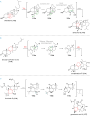
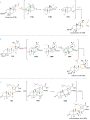
Ring contraction and ring expansion reactions in terpenoid biosynthesis and their application to total synthesis
Beilstein J. Org. Chem. 2026, 22, 289–343, doi:10.3762/bjoc.22.21






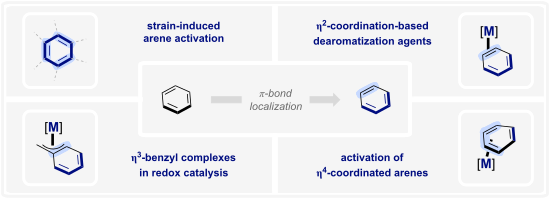
Arene activation via π-bond localization: concepts and opportunities
Beilstein J. Org. Chem. 2026, 22, 257–273, doi:10.3762/bjoc.22.19
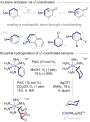
- -arene complexes illustrates this perfectly (Figure 8B): Os(II) coordination partially localizes the π-system of the arene while protecting the coordinated double bond, enabling selective hydrogenation of the diene portion even under ambient conditions [53][54]. Reduction in the presence of a simple Pd/C
- Mo(I) species, followed by reduction in trifluorotoluene, afforded the enantioenriched trifluorotoluene complex with essentially complete retention at the metal stereocenter (er = 99:1). However, control of the metal stereocenter alone is insufficient: a defined interaction with the prochiral
- canonical illustration is provided by the two-electron reduction of the symmetric sandwich complex [Ru(η6-C6Me6)2]2+, which furnishes the neutral [Ru(η6-C6Me6)(η4-C6Me6)] species upon haptotropic rearrangement, in accordance with the 18-electron rule (Figure 11A) [96][97]. Through partial coordination, the




Conformational analysis of difluoromethylornithine: factors influencing its gas-phase and bioactive conformations
Beilstein J. Org. Chem. 2026, 22, 237–243, doi:10.3762/bjoc.22.17
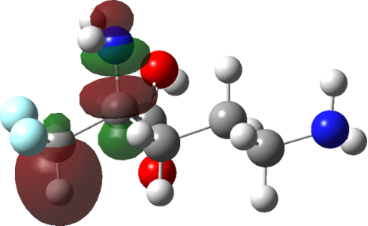
- difluoromethyl moiety is significantly less repulsive in structure 4. In addition, the zigzag conformation of the N-alkyl chain reduces σCN/σCC repulsions. Structure 5 (type II) displays a comparatively low steric penalty (294.0 kcal mol−1), much smaller than those of structures 1–3. This reduction arises in


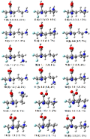


Configuration–packing synergy enabling integrated crystalline-state RTP and amorphous-state TADF
Beilstein J. Org. Chem. 2026, 22, 224–236, doi:10.3762/bjoc.22.16
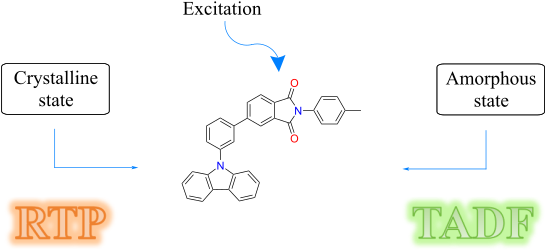
- polymer hosts. In contrast, TADF relies on the reduction of the singlet–triplet energy gap (ΔEST), facilitating thermally activated reverse intersystem crossing (RISC) from the triplet state to the singlet excited state, where the excitation energy is released via delayed fluorescence [29]. Common
- triplet state. To further investigate the emission dynamics, temperature-dependent lifetime measurements were conducted, which revealed a clear and significant reduction in the emission lifetime as the temperature increased (Figure 4d). This observation supports the hypothesis that the delayed emission is


Base-promoted deacylation of 2-acetyl-2,5-dihydrothiophenes and their oxygen-mediated hydroxylation
Beilstein J. Org. Chem. 2026, 22, 192–204, doi:10.3762/bjoc.22.13
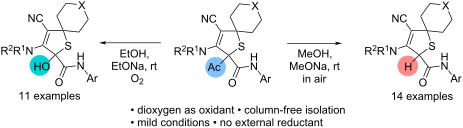
- (retention time 6.905‒6.961). One of these peaks can be assigned to the product 2a, while the other peak showed that the deacylated product 3a is formed during the transformation with subsequent oxidation by sulfur in the oxidation/reduction step to form 2,5-dihydrothiophene 1-oxide 2a′ (Figure 1, a and b
- and Scheme 6). The analysis also suggests the formation of product 2a before water and acid were added. This also indicates that the reaction proceeded through an oxidation/reduction step. UV absorption measurements of the same reaction mixture (a) and pure product 2a (b) dissolved in methanol are
- as a proton source) formed hydroperoxide D. On the other hand, competitive reversible proton movement [53] from ethanol to anion B formed deacetylated product 3a. The subsequent reduction of hydroperoxide D by the deacetylated product 3a results in the formation of hydroxy-substituted


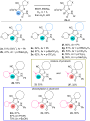


Improved synthesis and physicochemical characterization of the selective serotonin 2A receptor agonist 25CN-NBOH
Beilstein J. Org. Chem. 2026, 22, 175–184, doi:10.3762/bjoc.22.11
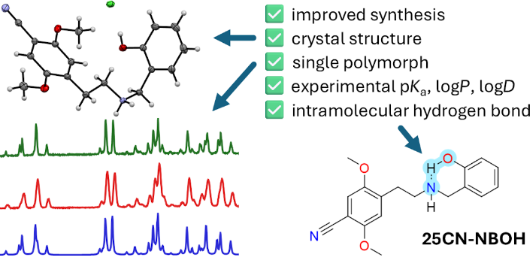
- of the required imine intermediate that upon reduction yields the desired product. The free base 1 was purified on normal-phase flash column chromatography, and 1·HCl was subsequently precipitated, providing a white crystalline solid (vide infra). Characterization of 25CN-NBOH·HCl (1·HCl) in the
- . Data processing (reduction, merging, and integration) using SAINT and multiscan correction for absorption using SADABS-2016-2 were performed within the Apex4 Suite [25][26][27]. Mercury 4.0 was used to prepare Figure 2a [28]. The crystal data, data collection, and data processing results are given in


Total synthesis of natural products based on hydrogenation of aromatic rings
Beilstein J. Org. Chem. 2026, 22, 88–122, doi:10.3762/bjoc.22.4
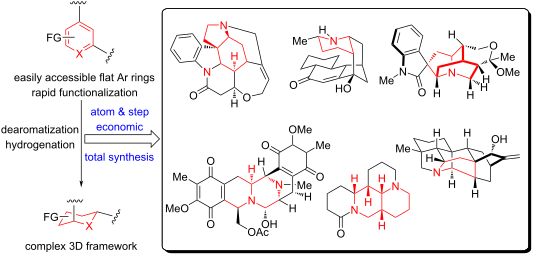
- by substrate class (monocyclic vs fused; heterocycle vs carbocycle), all catalytic systems must still address the fundamental selectivity challenges inherent to arene reduction – chemo-, regio-, and stereoselectivity. Chemoselectivity becomes particularly demanding when reducible groups such as
- olefins or carbonyls are present, often requiring fine-tuning of the reaction conditions to prevent overreduction. Disruption of aromaticity also creates multiple potential reduction sites, and subtle electronic or substituent differences can lead to regioisomers, especially in polysubstituted or fused
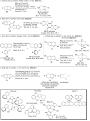
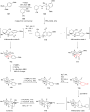
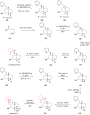
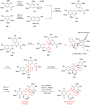
- homogeneous and heterogeneous phases to achieve asymmetric complete hydrogenation of vinyl aromatics – a long-standing challenge in arene reduction (Scheme 4) [46]. By tuning the ratio of phosphine ligand to rhodium precursor, they controlled the formation of distinct catalytic species, which remained










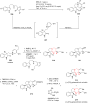

Advances in Zr-mediated radical transformations and applications to total synthesis
Beilstein J. Org. Chem. 2026, 22, 71–87, doi:10.3762/bjoc.22.3
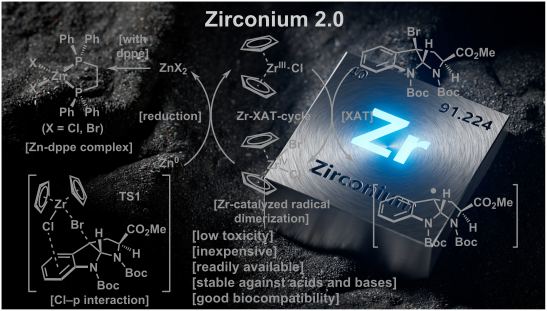
- functionalization of α-fluorocarbonyl compounds via halogen atom transfer (XAT) (Scheme 9A) [27]. Conventional defluorination reactions had largely been limited to trifluoromethyl groups, which possess relatively positive reduction potentials [28][29][30][31][32][33][34]. On the other hand, reductive
- transformations of monofluoroalkyl groups have been considered difficult due to their negative reduction potentials. In contrast, the authors focused on the comparatively small bond dissociation energy (BDE) of C(sp³)–F bonds. Based on the hypothesis that this property could enable C–F bond functionalization via
- -workers and used for ketone reduction to alcohols [36]. The reaction was applicable to a range of benzyl alcohols and ethers 49a–e, delivering the desired alkanes in moderate yields. Furthermore, when substrates containing multiple C–O bonds 49d were employed, the reaction proceeded selectively at the








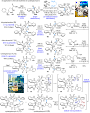
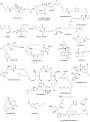
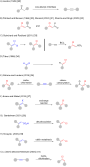
Synthesis and applications of alkenyl chlorides (vinyl chlorides): a review
Beilstein J. Org. Chem. 2026, 22, 1–63, doi:10.3762/bjoc.22.1
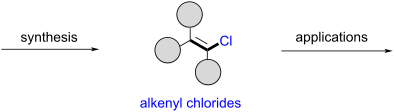
- described a ruthenium-catalyzed conversion of alkenyl triflates to alkenyl chlorides (Scheme 22C) [80]. A subsequent study from the same group demonstrated that [Cp*Ru(MeCN)3]OTf could serve as an alternative catalyst, thereby avoiding the need for in situ reduction of Ru(III) to Ru(II) by organometallic









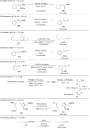


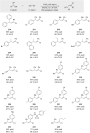


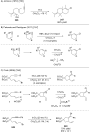


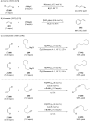


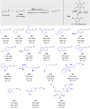
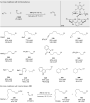
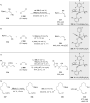


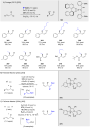




One-pot synthesis of ethylmaltol from maltol
Beilstein J. Org. Chem. 2025, 21, 2755–2760, doi:10.3762/bjoc.21.212

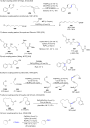
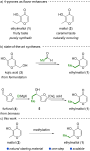
- reduction of the newly introduced secondary hydroxy group affords ethylmaltol (1) in four steps overall [1][4]. Different modifications of this approach have been developed, including performing the aldol addition before decarboxylation [5] or using different feedstock chemicals such as furfuryl alcohol


Sustainable electrochemical synthesis of aliphatic nitro-NNO-azoxy compounds employing ammonium dinitramide and their in vitro evaluation as potential nitric oxide donors and fungicides
Beilstein J. Org. Chem. 2025, 21, 2739–2754, doi:10.3762/bjoc.21.211
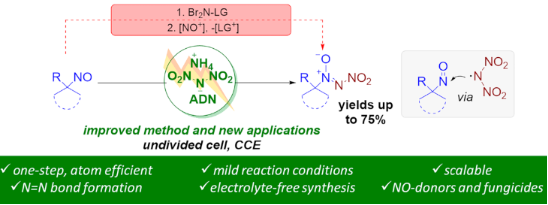
- electrochemical cell distinguishes electroorganic synthesis from traditional organic chemistry methods. Particular attention is paid to the generation of radical intermediates via the oxidation or reduction of radical precursors [40][41][42][43][44][45][46][47][48][49]. In this regard, the anodic oxidation of





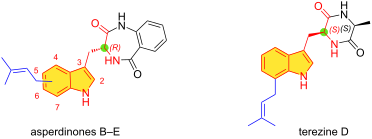
Total synthesis of asperdinones B, C, D, E and terezine D
Beilstein J. Org. Chem. 2025, 21, 2730–2738, doi:10.3762/bjoc.21.210
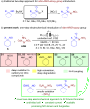
- presence of the allyl or propenyl group at different positions does not appear to affect the yields (Scheme 6). Importantly, it was observed that reduction and β-elimination of the organozinc reagent prepared from 29 took place during the cross-coupling reaction, thereby affecting the yield (Scheme 7) [60
- in the presence of the Pd catalyst. It follows that elimination and reduction must occur after Pd insertion and formation of a pallado–zinc intermediate which undergoes β-elimination and proton transfer. Seminal studies by Jackson [61] have reported related results with iodozinc N-Boc-ʟ-alanine


Recent advancements in the synthesis of Veratrum alkaloids
Beilstein J. Org. Chem. 2025, 21, 2657–2693, doi:10.3762/bjoc.21.206
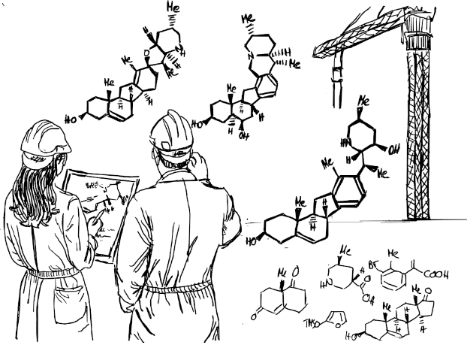
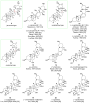
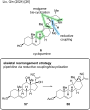
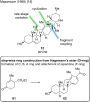
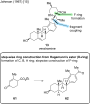
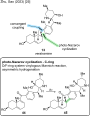
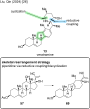
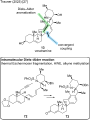
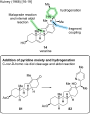
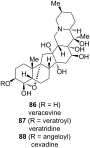
- installed another exo-methylene (in the future F-ring), which would later be reduced to the methyl group at C25. Staudinger reduction and two protecting group manipulations set the stage for the formation of the piperidine (F-ring) through a Mitsunobu reaction. Hydrogenation employing Wilkinson’s catalyst
- manipulations were carried out, the double bond isomerized to position C5–C6, and a reduction was performed, all in an optimized three-step, scalable sequence. Alkylation with phosphonate reagent 36 and subsequent Horner–Wadsworth–Emmons (HWE) reaction formed ring C, followed by an enolate alkylation to forge
- substituted cyclopentenone motif 37. The authors report the reaction to favor the desired diastereomer and could further enrich the desired isomer by recrystallization. Final steps for this fragment included a 1,4-reduction of the enone motif via a copper hydride species, a Wittig reaction to install the exo
















Synthesis of new tetra- and pentacyclic, methylenedioxy- and ethylenedioxy-substituted derivatives of the dibenzo[c,f][1,2]thiazepine ring system
Beilstein J. Org. Chem. 2025, 21, 2645–2656, doi:10.3762/bjoc.21.205
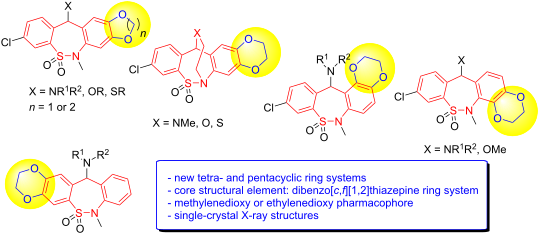
- substitution reactions of benzo-1,3-dioxoles and benzo-1,4-dioxanes [20]. Reduction of ketones 6 and 7 with NaBH4 gave alcohols 16 and 17, which were chlorinated with SOCl2 to result in compounds 18 and 19. Treatment of the latter with the appropriate amines gave amino derivatives 20a, 20c–e, and 21a, 21c–p
- of compound 28 with 1,2-dibromoethane (29), reduction with NaBH4 (30), chlorination with SOCl2 (31) and subsequent treatment with methylamine afforded pentacyclic product 25. Reaction of bromoalkyl derivative 30 with potassium thioacetate gave acetylthio derivative 32, which was cyclized after
- removal of the acetyl group by intramolecular dehydrative thioetherification [3] to the bridged molecule 26. As regards the synthesis of compound 27, reduction of ketone 28 with NaBH4 (33), chlorination with SOCl2 (34) and treatment with 2-bromoethanol afforded 2-bromoethoxy derivative 35, which was


Chemoenzymatic synthesis of the cardenolide rhodexin A and its aglycone sarmentogenin
Beilstein J. Org. Chem. 2025, 21, 2637–2644, doi:10.3762/bjoc.21.204
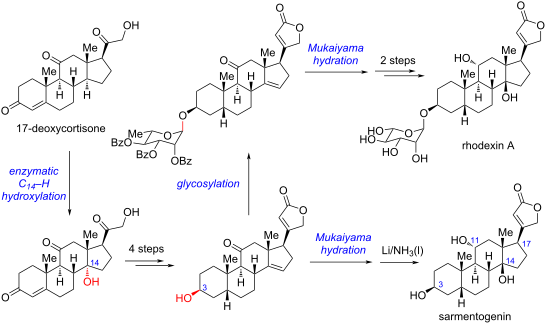
- aglycone sarmentogenin in 7 steps from 17-deoxycortisone. The synthesis features a scalable enzymatic C14–H α-hydroxylation, a Bestmann ylide-enabled one-step construction of the butenolide motif, a late stage Mukaiyama hydration, and a stereoselective C11 carbonyl reduction. Keywords: cardiac glycosides
- reactive C17 side chain including an α-hydroxycarbonyl group, a set of side reactions (e.g., reduction of the C20 carbonyl, hydrogenation of Δ4 and Δ14 double bonds, etc.) occurred under the Mukaiyama hydration conditions [30][31]. Therefore, it was necessary to alter the side chain before installing the
- . Therefore, we decided to perform the Mukaiyama hydration on advanced intermediates. Next, a K-selectride-promoted chemo- and stereoselective reduction of the C3 carbonyl of 9 was realized to solely deliver 11 in 85% yield [33]. Then, 11 was subjected to Mukaiyama hydration conditions. Under the Fe(acac)3



Visible-light-driven NHC and organophotoredox dual catalysis for the synthesis of carbonyl compounds
Beilstein J. Org. Chem. 2025, 21, 2584–2603, doi:10.3762/bjoc.21.200
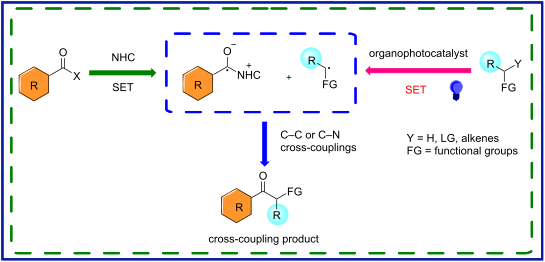
- presence of NHC (10 mol %) and 4CzIPN (2 mol %) and Na2HPO4 in DMSO at rt for 10–24 h. The key to success lies in the photocatalytic dual system, which combines two organocatalysts (NHC/4CzIPN) and visible light irradiation to permit a novel umpolung single-electron reduction of respective imino ester 2
- substrate 7, generating the aryl radical cation C along with the formation of corresponding radical anion of the photocatalyst (PC•–). The reduction potentials are (E1/2(P/P•–) = –1.37V vs SCE for [Ir(dF(CF₃)ppy)₂(dtbbpy)]PF₆ and –1.21V vs SCE for 4CzIPN as an organophotocatalyst. This method permits the C
- is the reduction of acylazolium C to generate a stable benzylic radical D is formed, and this extends the lifetime of the radical, allowing for radical–radical coupling reaction to afford the desired γ-aryloxy ketones 12 in good yields. The utility of this sustainable method was further demonstrated





Recent advances in total synthesis of illisimonin A
Beilstein J. Org. Chem. 2025, 21, 2571–2583, doi:10.3762/bjoc.21.199
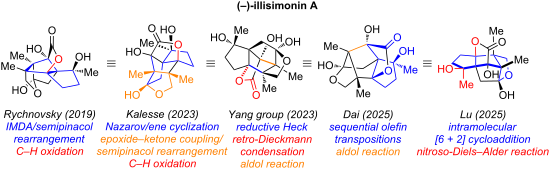
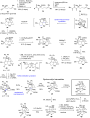
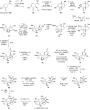
- , which was subsequently subjected to a one-pot desilylation to afford 24. Reduction of both the ester and ketone functionalities in 24, followed by selective protection of the primary alcohol and re-oxidation of the secondary alcohol to ketone, furnished compound 25 in three steps. The ketone in 25 was
- then converted to vinyl iodide 26 via hydrazine formation followed by iodination using Barton’s method. Subsequent Bouvealt aldehyde synthesis and in situ reduction delivered allylic alcohol 27. Epoxidation of 27 with m-CPBA afforded the rearrangement precursor 28. Protonic acid-promoted semipinacol
- enantioenriched compound 33, a nickel-catalyzed hydrocyanation of the terminal alkyne was performed. Subsequent protection of the tertiary alcohol with TESOTf and reduction of the resulting cyanide to an aldehyde afforded compound 34 (Scheme 4). Addition of isopropenyllithium to aldehyde 34, followed by TES






Total syntheses of highly oxidative Ryania diterpenoids facilitated by innovations in synthetic strategies
Beilstein J. Org. Chem. 2025, 21, 2553–2570, doi:10.3762/bjoc.21.198
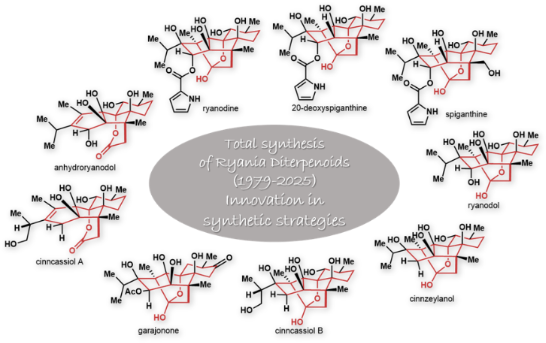
- anhydroryanodine (not shown) to the corresponding hemiacetal. However, common reducing agents proved ineffective for lactone reduction. Leveraging previous findings, the authors implemented an alternative strategy involving two sequential intramolecular reductive cyclizations to invert the configuration of the C3
- introduction of diverse substituents at the C2 position and precise modulation of oxidation states at other sites, including C3. The synthesis of 3-epi-ryanodol (5) commenced with compound 44. After the protection of the C10 secondary hydroxy group, a sterically controlled, face-selective reduction of the C3
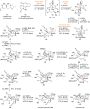
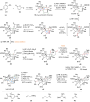
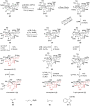
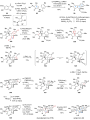
- natural product. Similarly, starting from 57, installation of an allyl group at C2, followed by oxidative cleavage, reduction, and deprotection, provided cinncassiol B (7). Subjecting this compound to an acid-promoted fragmentation reaction then completed the total synthesis of cinncassiol A (9







Ni-promoted reductive cyclization cascade enables a total synthesis of (+)-aglacin B
Beilstein J. Org. Chem. 2025, 21, 2548–2552, doi:10.3762/bjoc.21.197
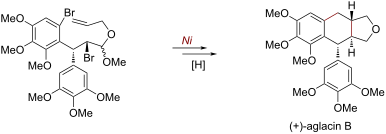
- cyclization, and a subsequent acetal reduction under acidic conditions then can complete the total synthesis of this molecule. The cyclization precursor 5 could be prepared from the primary alcohol 6 through transforming functional groups of the alkyl chain and installing an allyl group. It was envisioned
- diastereocontrol for 12 (dr = 20:1), and could easily proceed on a scale of ten grams (Supporting Information File 1). For the reduction of the chiral auxiliary in 12, NaBH4 in THF/H2O proved to be the optimal conditions, giving the primary alcohol 6 in 80% yield. Subsequently, oxidation of this alcohol by IBX


Rapid access to the core of malayamycin A by intramolecular dipolar cycloaddition
Beilstein J. Org. Chem. 2025, 21, 2542–2547, doi:10.3762/bjoc.21.196
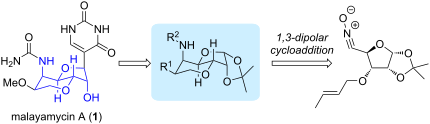
- formyloxy group on the N atom in the unstable intermediate 13 serves as electron-withdrawing group to facilitate fragmentation when removal of the acidic proton at C2 was initiated. Although the reduction of enone 14 could provide the requisite stereoisomer, the rigid conformation of such bicyclic [4.3.0
- nitrile oxide. At this stage, it is not clear that the diastereomeric ratio (dr 4:1) may share with the same configuration at the C2 or C2’ position. The mixture of 18 was subjected to reduction of the imine motif by NaBH3CN in AcOH–MeOH and immediately protected with the Boc group. The isolated yield of




Isoorotamide-based peptide nucleic acid nucleobases with extended linkers aimed at distal base recognition of adenosine in double helical RNA
Beilstein J. Org. Chem. 2025, 21, 2513–2523, doi:10.3762/bjoc.21.193
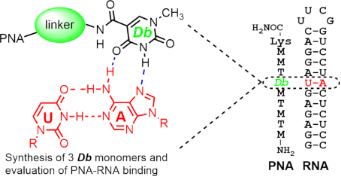
- corresponding aniline with iron metal. Notably, the use of HCl as a proton source in the reduction led to significant removal of the Boc group necessitating the use of ammonium chloride as the proton source. The crude aniline was coupled to N-methylisoorotic acid 6 [37] to afford 7 in 50% yield. Surprisingly 10
- % of the final desired monomer 8 was also isolated in the coupling step, presumably due to hydrolysis of the allyl ester in the iron reduction step. The remaining allyl ester 7 was deallylated via Pd(PPh3)4 to afford the monomer 8 in 51% yield. Db2 Synthesis Db2 was prepared through a convergent
- -nitroaniline into benzyl acrylate to afford compound 17 in 57% yield (Scheme 3). Aniline 17 then was subjected to a three-step Boc protection, nitro reduction, and coupling with isoorotic acid derivative 6 that afforded 18 in 39% yield over 3 steps. The benzyl ester was then cleaved under hydrogenolysis


Assembly strategy for thieno[3,2-b]thiophenes via a disulfide intermediate derived from 3-nitrothiophene-2,5-dicarboxylate
Beilstein J. Org. Chem. 2025, 21, 2489–2497, doi:10.3762/bjoc.21.191
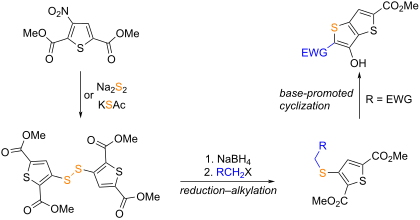
- -dicarboxylates by its one-pot reduction–alkylation using NaBH4 in DMF followed by an alkylating agent. Base-promoted cyclization of electron-deficient 3-alkylthio derivatives furnished 2-aryl-, 2-aroyl-, and 2-cyano-substituted thieno[3,2-b]thiophenes, bearing a 3-hydroxy group. This protocol broadens access to
- 3) was used as solvent, the reduction of disulfide 3 with NaBH4 proceeded more efficiently at reflux for 2 h. The reaction mixture was then treated with K2CO3 and the alkylating agent at room temperature. The product was identified as the desired 3-benzylthio-substituted thiophene-2,5-dicarboxylate
- cleavage of the S–S bond and the subsequent S-alkylation reaction were successful. To suppress the side reaction and improve reduction efficiency, we next employed DMF as a polar aprotic solvent. In Table 2, entry 4, reduction of disulfide 3 in DMF at 75 °C with NaBH4 was complete within 15 min. The excess