Search results
Search for "renewable" in Full Text gives 109 result(s) in Beilstein Journal of Organic Chemistry.
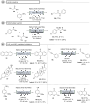
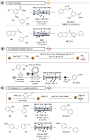
Enabling artificial photosynthesis systems with molecular recycling: A review of photo- and electrochemical methods for regenerating organic sacrificial electron donors
Beilstein J. Org. Chem. 2023, 19, 1198–1215, doi:10.3762/bjoc.19.88
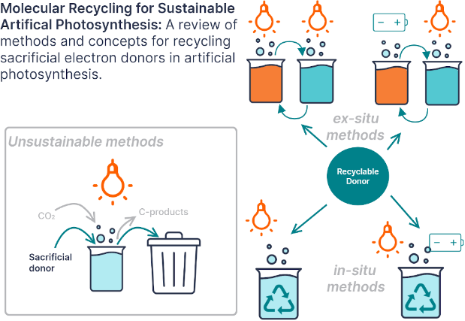
- small organic molecules that can be used as sacrificial donors in photochemical carbon dioxide reduction. A large scale decoupled, or macro, model of photosynthesis is electrochemical carbon dioxide reduction powered by renewable energy sources. Electrochemical carbon dioxide reduction has been
- national electricity grid. In countries like the UK, the competition to install new batteries and renewable energy sources appears to have created an increase in demand and waiting times for installing grid connections [11][12]. This is potentially a large barrier to fast adoption and scaling of purely
- photochemical recycling in-situ. However, electrochemical in-situ recycling could be achieved in 2 ways: 1. The driving force for recycling an oxidized donor at an electrode could be supplied by a photosensitizer. 2. The driving force for donor re-reduction could be an applied voltage from renewable energy


Cyclodextrins as building blocks for new materials
Beilstein J. Org. Chem. 2023, 19, 889–891, doi:10.3762/bjoc.19.66
- use of CDs and further stimulate their market. The exploration of the potential of inclusion complexation is not limited to the biomedical field. CDs are renewable and biodegradable materials that enable green and environmental biotechnologies for all applications [11]. The ability of CDs to act as
C3-Alkylation of furfural derivatives by continuous flow homogeneous catalysis
Beilstein J. Org. Chem. 2023, 19, 582–592, doi:10.3762/bjoc.19.43
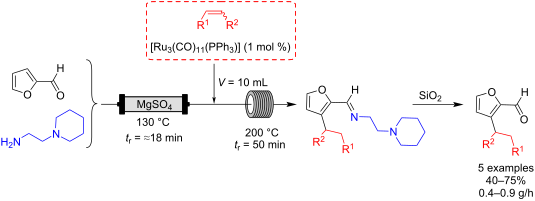
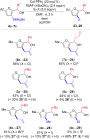
- of the development of a sustainable chemical industry [1][2][3][4]. Furfurals, which are versatile platform molecules derived from renewable lignocellulose present in agricultural wastes [5][6][7][8], have proven to be of great importance for the preparation of value-added chemicals, biofuels, as


Total synthesis of insect sex pheromones: recent improvements based on iron-mediated cross-coupling chemistry
Beilstein J. Org. Chem. 2023, 19, 158–166, doi:10.3762/bjoc.19.15
- and NHCs was also described by Duong for the aryl–aryl cross coupling [29]. Alkoxide salts appear as good alternatives to NMP or phosphate-based additives, since several classic alcohol sources display low toxicities and can also come from renewable resources [30]. In this context, Cahiez and Lefèvre
- -coupling systems involving this reagent are thus particularly scarce, and few examples are reported, using for some of them Ni-based catalysts [33]. 1-Bromopenta-1,3-diene used in the synthesis of 4 (Scheme 6) is not an exception. The expected (E,E) isomer was easily obtained from sorbic acid, a renewable


Modular synthesis of 2-furyl carbinols from 3-benzyldimethylsilylfurfural platforms relying on oxygen-assisted C–Si bond functionalization
Beilstein J. Org. Chem. 2022, 18, 1256–1263, doi:10.3762/bjoc.18.131
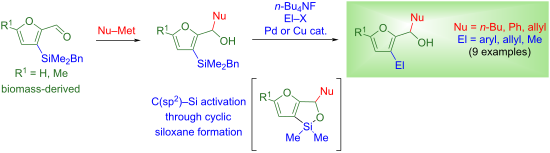
- carbinols from renewable feedstock. Keywords: biomass; copper; cyclic siloxanes; 2-furyl carbinols; silicon; Introduction Progress towards the use of nonedible renewable feedstock to replace fossil resources as starting material for high-value chemicals is an important endeavor of modern synthesis [1][2


Inductive heating and flow chemistry – a perfect synergy of emerging enabling technologies
Beilstein J. Org. Chem. 2022, 18, 688–706, doi:10.3762/bjoc.18.70
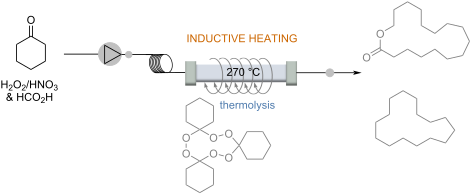
- ) controller, which regulates the temperature. This feedback loop allowed the temperature of the catalyst bed to be fine-tuned and adjusted in real time to suit the conditions. 2.7 Biofuel production The increasing demand for renewable energy sources goes hand in hand with the sustainable and efficient use of
- is not new, but has become one of the most important topics being discussed today. Due to the energy of hydrogen–hydrogen bonding, water electrolysis enables chemical storage of renewable electricity. Chatenet, Carrey and co-workers showed that the electrocatalytic reaction of hydrogen formation from




Synthesis of 5-unsubstituted dihydropyrimidinone-4-carboxylates from deep eutectic mixtures
Beilstein J. Org. Chem. 2022, 18, 331–336, doi:10.3762/bjoc.18.37
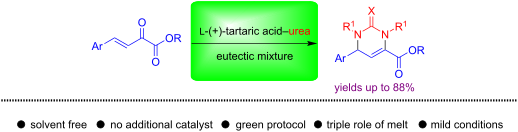
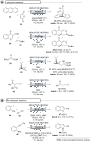
- ] based on carbohydrates, urea, and inorganic salts as an alternative to conventional solvents for carrying out a variety of organic transformations [32]. The stable melts are environmentally friendly as they are readily available from bulk renewable resources. Their simple production allows the


Visible-light-mediated copper photocatalysis for organic syntheses
Beilstein J. Org. Chem. 2021, 17, 2520–2542, doi:10.3762/bjoc.17.169
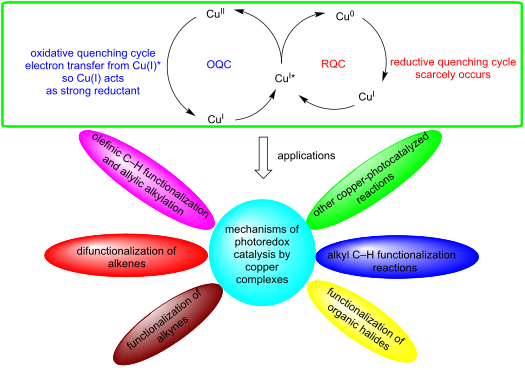
- renewable energy and green chemistry for many years. Ruthenium and iridium, which can be used as photoredox catalysts, are expensive and scarce in nature. Thus, the further development of catalysts based on these transition metals is discouraged. Alternative photocatalysts based on copper complexes are






[2 + 1] Cycloaddition reactions of fullerene C60 based on diazo compounds
Beilstein J. Org. Chem. 2021, 17, 630–670, doi:10.3762/bjoc.17.55
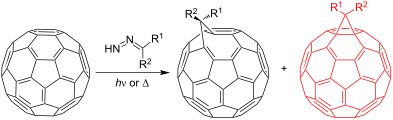
- solar cells [49][50]. In view of the globalization of energy problems, the issues of switching to alternative energy sources are becoming increasingly relevant. Solar energy, like the majority of renewable energy sources, is environmentally friendly and has almost no negative impact on the environment
Valorisation of plastic waste via metal-catalysed depolymerisation
Beilstein J. Org. Chem. 2021, 17, 589–621, doi:10.3762/bjoc.17.53
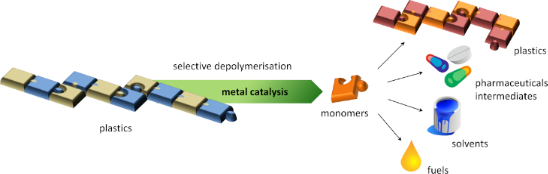
- monobutyltin oxide, using substoichiometric amounts of isosorbide and succinic acid and no solvent at 230 °C reaction temperature. Isosorbide is a safe chemical [246] that is obtainable on the large scale from renewable glucose [247][248]. Because of this and due to the inherent rigid structure, conferring the
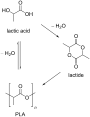
- bioderived plastic [252] that is manufactured on a 190 kton scale directly from lactic acid by condensation or from lactide by ring-opening polymerisation (Scheme 8) [253][254]. The main renewable raw material for lactic acid is starch, e.g., from corn, cassava, sugarcane or beet pulp [255]. Owing to the






A sustainable strategy for the straightforward preparation of 2H-azirines and highly functionalized NH-aziridines from vinyl azides using a single solvent flow-batch approach
Beilstein J. Org. Chem. 2021, 17, 203–209, doi:10.3762/bjoc.17.20

- to access aziridines with great structural variability [21]. The reaction of azirines with Grignard and organolithium reagents has been poorly investigated, and only without using green and renewable solvents [22][23]. In turn, 2H-azirines can be smoothly obtained through intramolecular cyclization


Dirhamnolipid ester – formation of reverse wormlike micelles in a binary (primerless) system
Beilstein J. Org. Chem. 2020, 16, 2820–2830, doi:10.3762/bjoc.16.232
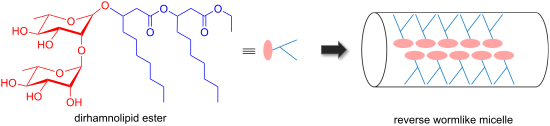
- described by Leisinger et al. [9]. Rhamnolipids possess some advantages, that make them interesting candidates as cleaning agents or additives for care applications in the consumer goods industry. They can be produced in a fermentation process from renewable nontropic material [10][11]. RL are also


A proposed sustainability index for synthesis plans based on input provenance and output fate: application to academic and industrial synthesis plans for vanillin as a case study
Beilstein J. Org. Chem. 2020, 16, 2346–2362, doi:10.3762/bjoc.16.196
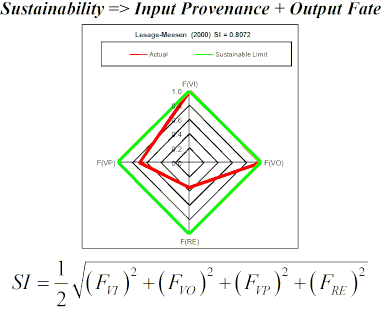
- from renewable energy sources (FRE). Valorized input materials originate from renewable, recycled, or reclaimed sources. Valorized output materials are destined for recycling or reclaiming so that they may be used in the same or other chemical processes. Valorized target product refers to that portion
- of the target product that is actually used for its intended purpose. Renewable energy sources are defined as originating from hydroelectric, wind, solar, geothermal, and biomass sources. The computation of SI is illustrated for 22 synthesis plans of the high commodity flavour ingredient vanillin
- fossil-fuel derived and renewable sources. Dutch and Belgian chemical engineers proposed an extended thermodynamic analysis considering exergy and lost work to address the sustainability potential of the chemical process industry [2][3][4]. Horvath and co-workers put forth the following sustainability


Photosensitized direct C–H fluorination and trifluoromethylation in organic synthesis
Beilstein J. Org. Chem. 2020, 16, 2151–2192, doi:10.3762/bjoc.16.183
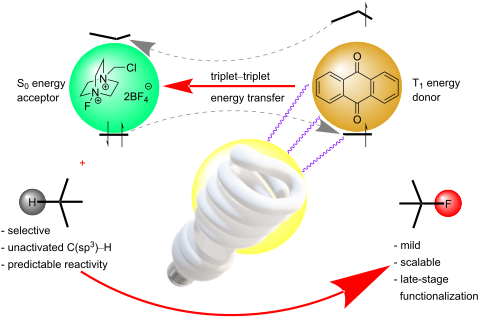
- , light is inexpensive, nontoxic, noncontaminating, ample (or “limitless” in the case of sunlight) and a renewable source of energy for environmentally-friendly and “green” chemical synthesis. As a consequence of comprehending the detrimental impact of human industry on the environment, new methods to




Three new O-isocrotonyl-3-hydroxybutyric acid congeners produced by a sea anemone-derived marine bacterium of the genus Vibrio
Beilstein J. Org. Chem. 2020, 16, 1869–1874, doi:10.3762/bjoc.16.154
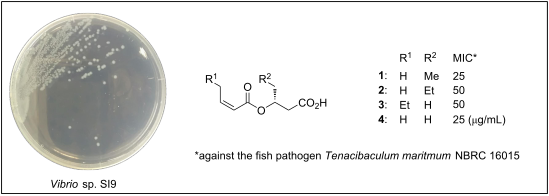
- nature biodegradable, can be produced from renewable bioresources, and have material properties close to the conventional petroleum-derived plastics, the commercial production and market development are actively pursued by several companies amid the growing plastic waste crisis [14][15]. Vibrio are


Heterogeneous photocatalysis in flow chemical reactors
Beilstein J. Org. Chem. 2020, 16, 1495–1549, doi:10.3762/bjoc.16.125
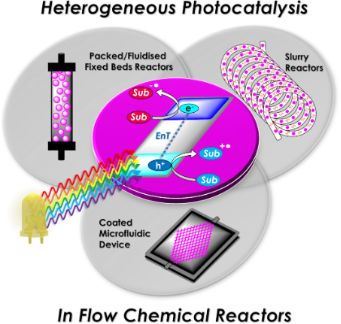
- emissions and subsequent environmental damage, much of the scientific community has shifted its focus to the development of sustainable methodologies, particularly in synthetic chemistry. The prospect of utilising light as a renewable source of energy to drive chemical reactions is an appealing solution to










Activated carbon as catalyst support: precursors, preparation, modification and characterization
Beilstein J. Org. Chem. 2020, 16, 1188–1202, doi:10.3762/bjoc.16.104
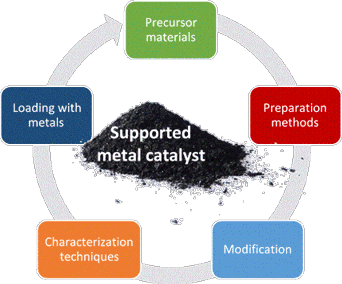
- the production of activated carbon [4]. Fossil and renewable sources for the preparation of activated carbon are discussed in this part of the review, as well as special precursor solutions or ionic liquids and deep eutectic solvents as non-conventional precursor materials. The properties of the


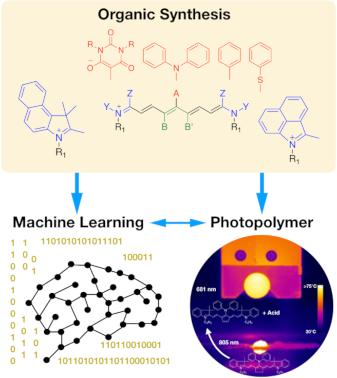
Photophysics and photochemistry of NIR absorbers derived from cyanines: key to new technologies based on chemistry 4.0
Beilstein J. Org. Chem. 2020, 16, 415–444, doi:10.3762/bjoc.16.40


Oligomeric ricinoleic acid preparation promoted by an efficient and recoverable Brønsted acidic ionic liquid
Beilstein J. Org. Chem. 2020, 16, 351–361, doi:10.3762/bjoc.16.34
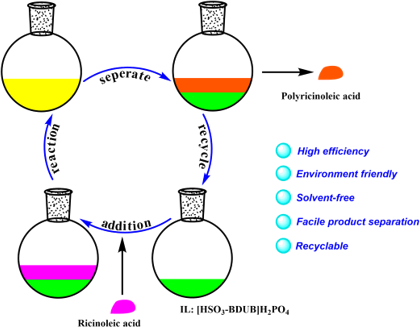
- . Globally, around one million tons of castor seeds are produced every year and the leading producing areas are India, China, and Brazil [8]. The castor oil has long been used as purgative or laxative to counter constipation and nowadays it is used commercially as a highly renewable resource for the chemical


Recent developments in photoredox-catalyzed remote ortho and para C–H bond functionalizations
Beilstein J. Org. Chem. 2020, 16, 248–280, doi:10.3762/bjoc.16.26
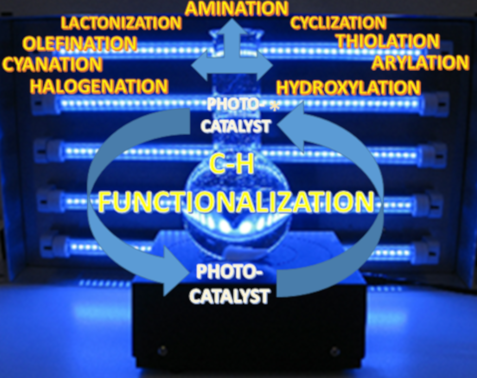
- issue to the scientific community. In this context, visible light-induced photoredox catalysis, which is thought to be an abundant, inexpensive, renewable, and nonpolluting chemical transformation, has attracted increasing attention during the past years due to the extraordinary competence and










Why do thioureas and squaramides slow down the Ireland–Claisen rearrangement?
Beilstein J. Org. Chem. 2019, 15, 2948–2957, doi:10.3762/bjoc.15.290
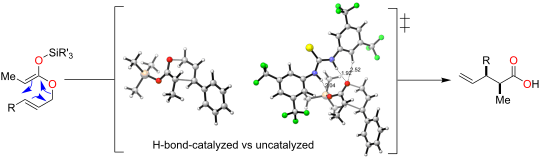
- other solvents, emphasizing green solvents, which have not been evaluated in Ireland–Claisen rearrangements before. 2-Methyltetrahydrofuran (2-MeTHF) is derived from renewable resources and has a higher boiling point (80 °C) and lower heat of vaporization compared to THF. The Ireland–Claisen


A green, economical synthesis of β-ketonitriles and trifunctionalized building blocks from esters and lactones
Beilstein J. Org. Chem. 2019, 15, 2930–2935, doi:10.3762/bjoc.15.287
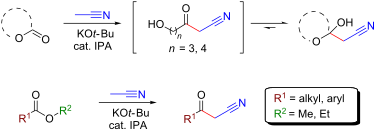
- cyclohexyl 15 (68%) analogues. We were pleased to obtain the highly versatile and synthetically useful cinnamoylacetonitrile 17 [20] from renewable ethyl cinnamate in 64% yield, as this yield was comparable to more expensive and hazardous lithiation protocols [7]. Finally, we attempted method optimization


Palladium-catalyzed Sonogashira coupling reactions in γ-valerolactone-based ionic liquids
Beilstein J. Org. Chem. 2019, 15, 2907–2913, doi:10.3762/bjoc.15.284
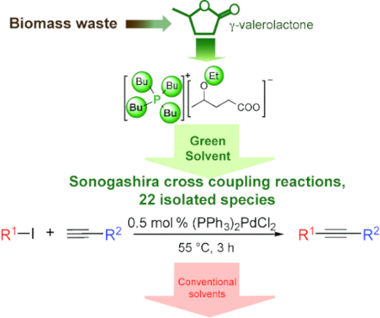
- Ullmann-type N–C coupling reactions could be performed in tetrabutylphosphonium 4-alkoxyvalerate-type ionic liquids, which can easily be synthesized from the renewable platform chemical γ-valerolactone and have negligible vapor pressures even at high temperatures [34]. In order to extend the applicability


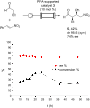
Ugi reaction-derived prolyl peptide catalysts grafted on the renewable polymer polyfurfuryl alcohol for applications in heterogeneous enamine catalysis
Beilstein J. Org. Chem. 2019, 15, 1210–1216, doi:10.3762/bjoc.15.118
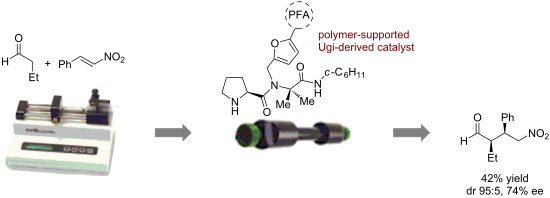
- high reaction yields and reduction of waste – aspects recognized as compatible with the principles of green chemistry [1][2][3][4][5].. However, almost all polymers used in the development of supported organocatalysts are made from non-renewable sources and composed of non-biodegradable materials (e.g
- ., polystyrene) [1][2][3]. When aiming at implementing large-scale catalytic processes with supported organocatalysts, a relevant “green” premise is the use of renewable and readily available solid supports [1][2][3][4][5]. Accordingly, we envisioned the utilization of the polymer polyfurfuryl alcohol (PFA
- ) – derived from a renewable resource like sugar cane biomass – for the incorporation of chiral pyrrolidine-based motifs capable to catalyze relevant asymmetric reactions. The incorporation of an organocatalyst into a polymer support requires either conjugation to the polymer or functionalization with a


Synthesis of a novel category of pseudo-peptides using an Ugi three-component reaction of levulinic acid as bifunctional substrate, amines, and amino acid-based isocyanides
Beilstein J. Org. Chem. 2019, 15, 852–857, doi:10.3762/bjoc.15.82
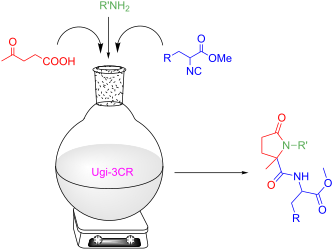
- by acid catalysis from renewable resources, such as sugars, lignocellulosic biomass and waste materials [18]. It can be used as a bifunctional precursor for the synthesis of pharmaceuticals, plasticizers, and different additives [19]. Furthermore, it is recognized as an excellent starting material