


Search results
Search for "Al2O3" in Full Text gives 71 result(s) in Beilstein Journal of Organic Chemistry.
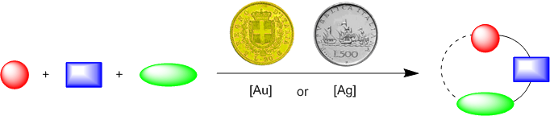
Silver and gold-catalyzed multicomponent reactions
- Giorgio Abbiati and
- Elisabetta Rossi
Beilstein J. Org. Chem. 2014, 10, 481–513, doi:10.3762/bjoc.10.46
- , 25 °C for aldimine formation (first step) in the MM K-10 containing packed-bed capillary reactor (PBCR), and 80 °C for the reaction with phenylacetylene (second step) in Au NP@Al2O3 containing PBCR. The system, tested with some different aryl/heteroaryl/alkylaldehydes and cyclic/acyclic secondary

Graphical Abstract

Scheme 1: General reaction mechanism for Ag(I)-catalyzed A3-coupling reactions.

Scheme 2: A3-coupling reaction catalyzed by polystyrene-supported NHC–silver halides.

Figure 1: Various NHC–Ag(I) complexes used as catalysts for A3-coupling.

Scheme 3: Proposed reaction mechanism for NHC–AgCl catalyzed A3-coupling reactions.

Scheme 4: Liu’s synthesis of pyrrole-2-carboxaldehydes 4.

Scheme 5: Proposed reaction mechanism for Liu’s synthesis of pyrrole-2-carboxaldehydes 4.

Scheme 6: Gold-catalyzed synthesis of propargylamines 1.

Scheme 7: A3-coupling catalyzed by phosphinamidic Au(III) metallacycle 6.

Scheme 8: Gold-catalyzed KA2-coupling.

Scheme 9: A3-coupling applied to aldehyde-containing oligosaccharides 8.

Scheme 10: A3-MCR for the preparation of propargylamine-substituted indoles 9.

Scheme 11: A3-coupling interceded synthesis of furans 12.

Scheme 12: A3/KA2-coupling mediated synthesis of functionalized dihydropyrazoles 13 and polycyclic dihydropyra...

Scheme 13: Au(I)-catalyzed entry to cyclic carbamimidates 17 via an A3-coupling-type approach.

Scheme 14: Proposed reaction mechanism for the Au(I)-catalyzed synthesis of cyclic carbamimidates 17.

Figure 2: Chiral trans-1-diphenylphosphino-2-aminocyclohexane–Au(I) complex 20.

Scheme 15: A3-coupling-type synthesis of oxazoles 21 catalyzed by Au(III)–salen complex.

Scheme 16: Proposed reaction mechanism for the synthesis of oxazoles 21.

Scheme 17: Synthesis of propargyl ethyl ethers 24 by an A3-coupling-type reaction.

Scheme 18: General mechanism of Ag(I)-catalyzed MCRs of 2-alkynylbenzaldehydes, amines and nucleophiles.

Scheme 19: General synthetic pathway to 1,3-disubstituted-1,2-dihydroisoquinolines.

Scheme 20: Synthesis of 1,3-disubstituted-1,2-dihydroisoquinolines 29.

Scheme 21: Synthesis of 1,3-disubstituted-1,2-dihydroisoquinolines 35 and 36.

Scheme 22: Rh(II)/Ag(I) co-catalyzed synthesis of 1,3-disubstituted-1,2-dihydroisoquinolines 40.

Scheme 23: General synthetic pathway to 2-amino-1,2-dihydroquinolines.

Scheme 24: Synthesis of 2-amino-1,2-dihydroquinolines 47.

Scheme 25: Synthesis of tricyclic H-pyrazolo[5,1-a]isoquinoline 48.

Scheme 26: Synthesis of tricyclic H-pyrazolo[5,1-a]isoquinolines 48.

Scheme 27: Cu(II)/Ag(I) catalyzed synthesis of H-pyrazolo[5,1-a]isoquinolines 48.

Scheme 28: Synthesis of 2-aminopyrazolo[5,1-a]isoquinolines 53.

Scheme 29: Synthesis of 1-(isoquinolin-1-yl)guanidines 55.

Scheme 30: Ag(I)/Cu(I) catalyzed synthesis of 2-amino-H-pyrazolo[5,1-a]isoquinolines 58.

Scheme 31: Ag(I)/Ni(II) co-catalyzed synthesis of 3,4-dihydro-1H-pyridazino[6,1-a]isoquinoline-1,1-dicarboxyla...

Scheme 32: Ag(I) promoted activation of the α-carbon atom of the isocyanide group.

Scheme 33: Synthesis of dihydroimidazoles 65.

Scheme 34: Synthesis of oxazoles 68.

Scheme 35: Stereoselective synthesis of chiral butenolides 71.

Scheme 36: Proposed reaction mechanism for the synthesis of butenolides 71.

Scheme 37: Stereoselective three-component approach to pirrolidines 77 by means of a chiral auxiliary.

Scheme 38: Stereoselective three-component approach to pyrrolidines 81 and 82 by means of a chiral catalyst.

Scheme 39: Synthesis of substituted five-membered carbocyles 86.

Scheme 40: Synthesis of regioisomeric arylnaphthalene lactones.

Scheme 41: Enantioselective synthesis of spiroacetals 96 by Fañanás and Rodríguez [105].

Scheme 42: Enantioselective synthesis of spiroacetals 101 by Gong [106].

Scheme 43: Synthesis of polyfunctionalized fused bicyclic ketals 103 and bridged tricyclic ketals 104.

Scheme 44: Proposed reaction mechanism for the synthesis of ketals 103 and 104.

Scheme 45: Synthesis of β-alkoxyketones 108.

Scheme 46: Synthesis of N-methyl-1,4-dihydropyridines 112.

Scheme 47: Synthesis of tetrahydrocarbazoles 115–117.

Scheme 48: Plausible reaction mechanism for the synthesis of tetrahydrocarbazoles 115–117.

Scheme 49: Carboamination, carboalkoxylation and carbolactonization of terminal alkenes.

Scheme 50: Oxyarylation of alkenes with arylboronic acids and Selectfluor as reoxidant.

Scheme 51: Proposed reaction mechanism for oxyarylation of alkenes.

Scheme 52: Oxyarylation of alkenes with arylsilanes and Selectfluor as reoxidant.

Scheme 53: Oxyarylation of alkenes with arylsilanes and IBA as reoxidant.
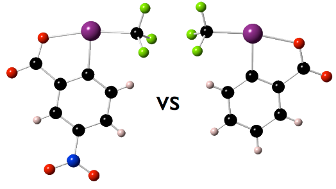
Synthesis, characterization and initial evaluation of 5-nitro-1-(trifluoromethyl)-3H-1λ3,2-benziodaoxol-3-one
- Nico Santschi,
- Roman C. Sarott,
- Elisabeth Otth,
- Reinhard Kissner and
- Antonio Togni
Beilstein J. Org. Chem. 2014, 10, 1–6, doi:10.3762/bjoc.10.1
- . Consequently in light of these results, DSC measurements of 2 and 3 were carried out in order to assess the thermal stability of the new derivative. These measurements were performed in punctured Al2O3 pans with a heating rate of 10 K/min. For reagent 2, a decomposition energy of 138 kJ/mol (438 J/g, slightly

Graphical Abstract

Figure 1: Electrophilic trifluoromethylating agents 1 and 2.

Scheme 1: Synthesis of 5-nitro-1-(trifluoromethyl)-3H-1λ3,2-benziodaoxol-3-one (3).

Figure 2: UV–vis spectra of reagents 2 (green) and 3 (blue) in DMSO/H2O 1:1.

Figure 3: ORTEP representation of X-ray structures 6 and 3. Thermal ellipsoids set to 30% probability. Hydrog...

Figure 4: DSC traces obtained for 2 (green) and 3 (blue).

Figure 5: Cyclic voltammetry of 3 (1 mM, black) and of a mixture of 3 (1 mM) and methyl 2-iodo-5-nitrobenzoat...
Figure 6: Sample kinetic traces for the decomposition of 2 (green) and 3 (blue) to 4 and 5, respectively, upo...
Investigating the continuous synthesis of a nicotinonitrile precursor to nevirapine
- Ashley R. Longstreet,
- Suzanne M. Opalka,
- Brian S. Campbell,
- B. Frank Gupton and
- D. Tyler McQuade
Beilstein J. Org. Chem. 2013, 9, 2570–2578, doi:10.3762/bjoc.9.292
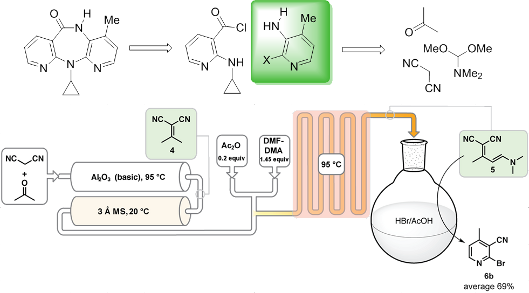
- included two columns: a packed-bed of Al2O3 to catalyze the reaction and a packed bed of 3 Å molecular sieves to absorb water before the addition of DMF-DMA (Scheme 4). The mass of each solid used (2.00 g of Al2O3 and 1.50 g molecular sieves) was chosen based on the size of the available columns. Assuming
- that the Knoevenagel condensation occurred primarily in the Al2O3 column, we only varied the temperature of the Al2O3 column. The Al2O3 column temperature was initially set to 25 °C which yielded 91% of 5 from acetone and malononitrile (Table 2, entry 2). We observed that the Al2O3 column reactor
- are combined the system stability can become an issue. To measure the stability, we ran the reaction under the optimized conditions and monitored the product distribution. When the aforementioned optimized column temperatures were used (20 °C Al2O3 column, 25 °C 3 Å MS column), the alumina column

Graphical Abstract

Figure 1: The estimated demand of for nevirapine until 2015 [6].

Scheme 1: Commercial building blocks to nevirapine.

Scheme 2: a) Current commercial process to CAPIC and b) newly developed batch synthesis to CAPIC and its brom...

Scheme 3: Proposed synthesis to 2-bromo-4-methylnicotinonitrile using a continuous approach with the consider...

Figure 2: a) Flow scheme to produce the enamine intermediate 5 from isopropylidenemalononitrile (4) (see Supporting Information File 1 for...

Scheme 4: Flow scheme to produce the enamine 5 starting from acetone and malononitrile (See Supporting Information File 1 for details).

Figure 3: Comparing the long-term stability of the Al2O3 and 3 Å MS columns when the Al2O3 column temperature...

Scheme 5: Several byproducts were observed when producing 5 starting from acetone and malononitrile. 7 is for...

Scheme 6: Flow scheme to produce 2-bromo-4-methylnicotinonitrile (6b) in 81% yield from 4 with a 1 M concentr...

Scheme 7: Reactor scheme for the continuous synthesis of 2-bromo-4-methylnicotinonitrile (6b) with an average...
Asymmetric synthesis of a highly functionalized bicyclo[3.2.2]nonene derivative
- Toshiki Tabuchi,
- Daisuke Urabe and
- Masayuki Inoue
Beilstein J. Org. Chem. 2013, 9, 655–663, doi:10.3762/bjoc.9.74
- column of Al2O3 with Et2O. The filtrate was concentrated. The residue was purified by flash column chromatography (silica gel 120 g, pentane/Et2O 10:1 to 5:1) to afford diene 14 (1.5 g, 11 mmol) in 69% yield: yellow oil; IR (neat) νmax: 2949, 1656, 1595, 1431, 1377 cm−1; 1H NMR (500 MHz, CDCl3) δ 1.92

Graphical Abstract

Scheme 1: Structure of ryanodine and the Diels–Alder reactions for construction of the potential intermediate...

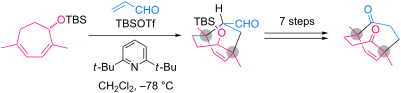
Scheme 2: Asymmetric synthesis of 7 and determination of the absolute configuration at C4 of 15 by the modifi...

Scheme 3: Generation of 17 through the 6π-electrocyclic reaction and the Diels–Alder reaction.

Scheme 4: Rationale of the stereoselectivity of the Diels–Alder reaction.

Scheme 5: Synthesis of C2-symmetric 1.
Reactions of salicylaldehyde and enolates or their equivalents: versatile synthetic routes to chromane derivatives
- Ishmael B. Masesane and
- Zelalem Yibralign Desta
Beilstein J. Org. Chem. 2012, 8, 2166–2175, doi:10.3762/bjoc.8.244

- of salicylaldehyde (5) with dimedone (18) in the presence of a catalytic amount of KF/Al2O3 (Scheme 6) [21]. The reaction is thought to proceed through a Knoevenagel condensation, a Michael addition and an intramolecular cyclization. The reaction was repeated with chloro-, bromo-, dichloro-, dibromo
- prepared in good yields by employing nitro-, methoxy-, and chloro-substituted salicylaldehydes instead of 38. Other solid catalysts such as 4 Å molecular sieves, 5 Å molecular sieves and Al2O3 were found to be effective in catalyzing the reaction but resulted in lower yields (50–63%) of product 39 [32

Graphical Abstract

Scheme 1: Retrosynthetic analysis of chromane 1.

Scheme 2: General reaction of salicylaldehyde (5) and acetophenone (7) in the synthesis of flavan 10 and flav...

Scheme 3: Synthesis of flavan 16 by Xue and co-workers.

Scheme 4: Synthesis of flavans of type 10 by Mazimba and co-workers.

Scheme 5: Sashidhara and co-workers synthesis of flavone (11).

Scheme 6: Synthesis of chromane derivative 19 by Yu-Ling and co-workers.

Scheme 7: Synthesis of 2-iminochromene 21 by Costa and co-workers.

Scheme 8: Synthesis of 2-aminochromene 22 by Costa and co-workers.

Scheme 9: Costa and co-workers used Et3N in the synthesis of 2-aminochromene 24.

Scheme 10: Synthesis of 2-aminochromene 27 by Shanthi and co-workers.

Scheme 11: Enantioselective synthesis of 2-aminochromenes 32–34 by Yang and co-workers.

Scheme 12: Synthesis of 2-iminochromene derivatives of type 36 by Kovalenko and co-workers.

Scheme 13: Synthesis of 2-aminochromenes 22 and 37 by Ghorbani-Vaghei and co-workers.

Scheme 14: Synthesis of 2-aminochromene 39 by Yu and co-workers.

Scheme 15: Synthesis of 2-iminochromene 21 by Heravi and co-workers.

Scheme 16: Tandem reaction of salicylaldehyde and α,β-unsaturated compounds.

Scheme 17: Kawase and co-workers synthesis of 2,2-dimethylchromene 45.

Scheme 18: Synthesis of 2,3-disubstituted chromene 47 by Stukan and co-workers.

Scheme 19: Ravichandrans synthesis of 3-substituted chromenes 52–55.

Scheme 20: Synthesis of 3-substituted chromene 58 coumarin 59 by Paye and co-workers.

Scheme 21: Govender and co-workers asymmetric synthesis of 2-phenylchromenes 62 and 63.

Scheme 22: Asymmetric synthesis of 2-phenylchromene 62 by Li and co-workers.
The chemistry of bisallenes
- Henning Hopf and
- Georgios Markopoulos
Beilstein J. Org. Chem. 2012, 8, 1936–1998, doi:10.3762/bjoc.8.225
- furnished the tetrabromide 207, which on hydrolysis (H2O, Al2O3) provided the dibromo diol 208 [138]. A careful study of the oxidation of several conjugated bisallenes with different oxidants has been carried out by Pasto and co-workers [139]. As summarized in Scheme 50, the tetramethylbisallene 24 yields

Graphical Abstract

Figure 1: Loschmidt’s structure proposal for benzene (1) (Scheme 181 from [3]) and the corresponding modern stru...

Figure 2: The first isolated bisallenes.

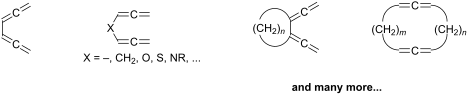
Figure 3: Carbon skeletons of selected bisallenes discussed in this review.

Scheme 1: The preparation of 1,2,4,5-hexatetraene (2).

Scheme 2: The preparation of a conjugated bisallene by the DMS-protocol.

Scheme 3: Preparation of the 3-deuterio- and 3,4-dideuterio derivatives of 24.

Scheme 4: A versatile method to prepare alkylated conjugated bisallenes and other allenes.

Scheme 5: A preparation of 3,4-dimethyl-1,2,4,5-hexatetraene (38).

Scheme 6: A (C6 + 0)-approach to 1,2,4,5-hexatetraene (2).

Scheme 7: The preparation of a fully alkylated bisallenes from a 2,4-hexadiyne-1,6-diol diacetate.

Scheme 8: The preparation of the first phenyl-substituted conjugated bisallenes 3 and 4.

Scheme 9: Selective hydrogenation of [5]cumulenes to conjugated bisallenes: another (C6 + 0)-route.

Scheme 10: Aryl-substituted conjugated bisallenes by a (C3 + C3)-approach.

Scheme 11: Hexaphenyl-1,2,4,5-hexatetraene (59) by a (C3 + C3)-approach.

Scheme 12: An allenation route to conjugated bisallenes.

Scheme 13: The preparation of 3,4-difunctionalized conjugated bisallenes.

Scheme 14: Problems during the preparation of sulfur-substituted conjugated bisallenes.

Scheme 15: The preparation of 3,4-dibromo bisallenes.

Scheme 16: Generation of allenolates by an oxy-Cope rearrangement.

Scheme 17: A linear trimerization of alkynes to conjugated bisallenes: a (C2 + C2 + C2)-protocol.

Scheme 18: Preparation of a TMS-substituted conjugated bisallene by a C3-dimerization route.

Scheme 19: A bis(trimethylsilyl)bisallene by a C3-coupling protocol.

Scheme 20: The rearrangement of highly substituted benzene derivatives into their conjugated bisallenic isomer...

Scheme 21: From fully substituted benzene derivatives to fully substituted bisallenes.

Scheme 22: From a bicyclopropenyl to a conjugated bisallene derivative.

Scheme 23: The conversion of a bismethylenecyclobutene into a conjugated bisallene.

Scheme 24: The preparation of monofunctionalized bisallenes.

Scheme 25: Preparation of bisallene diols and their cyclization to dihydrofurans.

Scheme 26: A 3,4-difunctionalized conjugated bisallene by a C3-coupling process.

Scheme 27: Preparation of a bisallenic diketone by a coupling reaction.

Scheme 28: Sulfur and selenium-substituted bisallenes by a [2.3]sigmatropic rearrangement.

Scheme 29: The biallenylation of azetidinones.

Scheme 30: The preparation of a fully ferrocenylated conjugated bisallene.

Scheme 31: The first isomerization of a 1,5-hexadiyne to a 1,2,4,5-hexatetraene.

Scheme 32: The preparation of alkynyl-substituted bisallenes by a C3-dimerization protocol.

Scheme 33: Preparation of another completely ferrocenylated bisallene.

Scheme 34: The cyclization of 1,5-hexadiyne (129) to 3,4-bismethylenecyclobutene (130) via 1,2,4,5-hexatetraen...
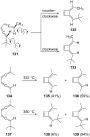
Scheme 35: Stereochemistry of the thermal cyclization of bisallenes to bismethylenecyclobutenes.

Scheme 36: Bisallene→bismethylenecyclobutene ring closures in the solid state.

Scheme 37: A bisallene cyclization/dimerization reaction.

Scheme 38: A selection of Diels–Alder additions of 1,2,4,5-hexatetraene with various double-bond dienophiles.

Scheme 39: The stereochemistry of the [2 + 4] cycloaddition to conjugated bisallenes.

Scheme 40: Preparation of azetidinone derivatives from conjugated bisallenes.

Scheme 41: Cycloaddition of heterodienophiles to a conjugated bisallene.

Scheme 42: Addition of triple-bond dienophiles to conjugated bisallenes.

Scheme 43: Sulfur dioxide addition to conjugated bisallenes.

Scheme 44: The addition of a germylene to a conjugated bisallene.

Scheme 45: Trapping of conjugated bisallenes with phosphinidenes.

Scheme 46: The cyclopropanantion of 1,2,4,5-hexatetraene (2).

Scheme 47: Photochemical reactions involving conjugated bisallenes.

Scheme 48: Base-catalyzed isomerizations of conjugated bisallenes.

Scheme 49: Ionic additions to a conjugated bisallene.

Scheme 50: Oxidation reactions of a conjugated bisallene.
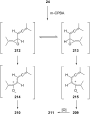
Scheme 51: The mechanism of oxidation of the bisallene 24.

Scheme 52: CuCl-catalyzed cyclization of 1,2,4,5-hexatetraene (2).

Scheme 53: The conversion of conjugated bisallenes into cyclopentenones.

Scheme 54: Oligomerization of a conjugated bisallene by nickel catalysts.
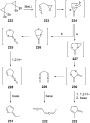
Scheme 55: Generation of 1,2,5,6-heptatetraene (229) as a reaction intermediate.

Scheme 56: The preparation of a stable derivative of 1,2,5,6-heptatetraene.

Scheme 57: A bisallene with a carbonyl group as a spacer element.

Scheme 58: The first preparation of 1,2,6,7-octatetraene (242).

Scheme 59: Preparation of 1,2,6,7-octatetraenes by (C4 + C4)-coupling of enynes.

Scheme 60: Preparation of 1,2,6,7-octatetraenes by (C4 + C4)-coupling of homoallenyl bromides.

Scheme 61: Preparation of 1,2,6,7-octatetraenes by alkylation of propargylic substrates.

Scheme 62: Preparation of two highly functionalized 1,2,6,7-octatetraenes.

Scheme 63: Preparation of several higher α,ω-bisallenes.

Scheme 64: Preparation of different alkyl derivatives of α,ω-bisallenes.

Scheme 65: The preparation of functionalized 1,2,7,8-nonatetraene derivatives.

Scheme 66: Preparation of functionalized α,ω-bisallenes.

Scheme 67: The preparation of an α,ω-bisallene by direct homologation of an α,ω-bisalkyne.

Scheme 68: The gas-phase pyrolysis of 4,4-dimethyl-1,2,5,6-heptatetraene (237).
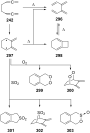
Scheme 69: Gas-phase pyrolysis of 1,2,6,7-octatetraene (242).

Scheme 70: The cyclopropanation of 1,2,6,7-octatetraene (242).

Scheme 71: Intramolecular cyclization of 1,2,6,7-octatetraene derivatives.

Scheme 72: The gas-phase pyrolysis of 1,2,7,8-nonatetraene (265) and 1,2,8,9-decatetraene (266).

Scheme 73: Rh-catalyzed cyclization of a functionalized 1,2,7,8-nonatetraene.

Scheme 74: A triple cyclization involving two different allenic substrates.

Scheme 75: Bicyclization of keto derivatives of 1,2,7,8-nonatetraene.

Scheme 76: The preparation of complex organic compounds from functionalized bisallenes.

Scheme 77: Cycloisomerization of an α,ω-bisallene containing a C9 tether.

Scheme 78: Organoborane polymers from α,ω-bisallenes.

Scheme 79: Preparation of trans- (337) and cis-1,2,4,6,7-octapentaene (341).

Scheme 80: The preparation of 4-methylene-1,2,5,6-heptatetraene (349).

Scheme 81: The preparation of acetylenic bisallenes.

Scheme 82: The preparation of derivatives of hydrocarbon 351.

Scheme 83: The construction of macrocyclic alleno-acetylenes.

Scheme 84: Preparation and reactions of 4,5-bismethylene-1,2,6,7-octatetraene (365).

Scheme 85: Preparation of 1,2-bis(propadienyl)benzene (370).

Scheme 86: The preparation of 1,4-bis(propadienyl)benzene (376).

Scheme 87: The preparation of aromatic and heteroaromatic bisallenes by metal-mediated coupling reactions.

Scheme 88: Double cyclization of an aromatic bisallene.

Scheme 89: Preparation of an allenic [15]paracyclophane by a ring-closing metathesis reaction of an aromatic α...

Scheme 90: Preparation of a macrocyclic ring system containing 1,4-bis(propadienyl)benzene units.

Scheme 91: Preparation of copolymers from 1,4-bis(propadienyl)benzene (376).

Scheme 92: A boration/copolymerization sequence of an aromatic bisallene and an aromatic bisacetylene.

Scheme 93: Formation of a layered aromatic bisallene.

Figure 4: The first members of the semicyclic bisallene series.

Scheme 94: Preparation of the first bis(vinylidene)cyclobutane derivative.
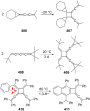
Scheme 95: Dimerization of strain-activated cumulenes to bis(vinylidene)cyclobutanes.

Scheme 96: Photodimerization of two fully substituted butatrienes in the solid state.

Scheme 97: Preparation of the two parent bis(vinylidene)cyclobutanes.

Scheme 98: The preparation of 1,3-bis(vinylidene)cyclopentane and its thermal isomerization.

Scheme 99: The preparation of the isomeric bis(vinylidene)cyclohexanes.

Scheme 100: Bi- and tricyclic conjugated bisallenes.
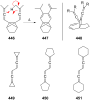
Scheme 101: A selection of polycyclic bisallenes.

Scheme 102: The first endocyclic bisallenes.

Figure 5: The stereochemistry of 1,2,6,7-cyclodecatetraene.

Scheme 103: The preparation of several endocyclic bisallenes.

Scheme 104: Synthesis of diastereomeric derivatives of 1,2,6,7-cyclodecatetraene.

Scheme 105: Preparation of a derivative of 1,2,8,9-cyclotetradecatetraene.

Scheme 106: The preparation of keto derivatives of cyclic bisallenes.

Scheme 107: The preparation of cyclic biscumulenic ring systems.

Scheme 108: Cyclic bisallenes in natural- and non-natural-product chemistry.

Scheme 109: The preparation of iron carbonyl complexes from cyclic bisallenes.

Figure 6: A selection of unknown exocyclic bisallenes that should have interesting chemical properties.

Scheme 110: The thermal isomerization of 1,2-diethynylcyclopropanes and -cyclobutanes.

Scheme 111: Intermediate generation of a cyclooctapentaene.

Scheme 112: Attempted preparation of a cyclodecahexaene.

Scheme 113: The thermal isomerization of 1,5,9-cyclododecatriyne (511) into [6]radialene (514).

Scheme 114: An isomerization involving a diketone derived from a conjugated bisallene.

Scheme 115: Typical reaction modes of heteroorganic bisallenes.

Scheme 116: Generation and thermal behavior of acyclic hetero-organic bisallenes.

Scheme 117: Generation of bis(propadienyl)thioether.

Scheme 118: The preparation of a bisallenic sulfone and its thermal isomerization.

Scheme 119: Bromination of the bisallenic sulfone 535.

Scheme 120: Metalation/hydrolysis of the bisallenic sulfone 535.

Scheme 121: Aromatic compounds from hetero bisallenes.

Scheme 122: Isomerization/cyclization of bispropargylic ethers.

Scheme 123: The preparation of novel aromatic systems by base-catalyzed isomerization of bispropargyl ethers.

Scheme 124: The isomerization of bisacetylenic thioethers to bicyclic thiophenes.

Scheme 125: Aromatization of macrocyclic bispropargylic sulfides.

Scheme 126: Preparation of ansa-compounds from macrocyclic bispropargyl thioethers.

Scheme 127: Alternate route for cyclization of a heterorganic bisallene.
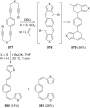
Scheme 128: Multiple isomerization/cyclization of “double” bispropargylic thioethers.

Scheme 129: Preparation of a bisallenyl disulfide and its subsequent bicyclization.

Scheme 130: Thermal cyclization of a bisallenyl thiosulfonate.

Scheme 131: Some reactions of heteroorganic bisallenes with two sulfur atoms.

Scheme 132: Further methods for the preparation of heteroorganic bisallenes.

Scheme 133: Cyclization reactions of heteroorganic bisallenes.

Scheme 134: Thermal cycloadditions of bisallenic tertiary amines.

Scheme 135: Cyclization of a bisallenic tertiary amine in the presence of a transition-metal catalyst.

Scheme 136: A Pauson–Khand reaction of a bisallenic ether.

Scheme 137: Formation of a 2:1adduct from two allenic substrates.

Scheme 138: A ring-forming silastannylation of a bisallenic tertiary amine.

Scheme 139: A three-component cyclization involving a heterorganic bisallene.

Scheme 140: Atom-economic construction of a complex organic framework from a heterorganic α,ω-bisallene.
Approaches to α-amino acids via rearrangement to electron-deficient nitrogen: Beckmann and Hofmann rearrangements of appropriate carboxyl-protected substrates
- Sosale Chandrasekhar and
- V. Mohana Rao
Beilstein J. Org. Chem. 2012, 8, 1393–1399, doi:10.3762/bjoc.8.161

- ), their carboxyl groups being masked as a 2,4,10-trioxaadamantane unit (an orthoacetate). The oxime mesylates have been rearranged with basic Al2O3 in refluxing CHCl3, and the malonamic acids with phenyliodoso acetate and KOH/MeOH. Both routes are characterized by excellent overall yields. Structure
- rearrangement of 3 to the N-benzoyl derivative 5 is accomplished (generally) in high overall yields via a two-step sequence: Methanesulfonylation to compounds 4, which are heated under reflux in CHCl3 in the presence of basic Al2O3 (Table 1) [17]. The formation of the desired N-benzoyl
- bubbled in over 0.5 h. The mixture was stirred at room temperature for 6 h and the volatiles removed in vacuo. The residue was treated with water and worked up with CH2Cl2, etc., the crude products being purified by neutral Al2O3 (grade 1) column chromatography. Hofmann rearrangement of 9 to final

Graphical Abstract

Scheme 1: The transformation of the phenacyltrioxaadamantane 1 to the N-benzoyltrioxaadamantylmethylamine 5 v...

Figure 1: Crystallographic ORTEP diagram at 30% ellipsoidal probability of oxime 3a (left) and amide 5a (righ...

Scheme 2: The transformation of the ethyl (trioxaadamantyl)acetate 6 to the N-(methoxycarbonyl)trioxaadamanty...

Figure 2: Crystallographic ORTEP diagrams at 30% ellipsoidal probability of carbamates 10a (left) and 10b (ri...
Synthesis of new pyrrole–pyridine-based ligands using an in situ Suzuki coupling method
- Matthias Böttger,
- Björn Wiegmann,
- Steffen Schaumburg,
- Peter G. Jones,
- Wolfgang Kowalsky and
- Hans-Hermann Johannes
Beilstein J. Org. Chem. 2012, 8, 1037–1047, doi:10.3762/bjoc.8.116
- solvent was removed. The raw product was preadsorbed onto aluminium oxide, activity III. Column chromatography (Al2O3, activity III, dichloromethane/ethyl acetate/hexane 1:1:2 → dichloromethane/ethyl acetate 1:1, Rf (Al2O3, dichloromethane/ethyl acetate/hexane 1:1:2) = 0.27) gave 2 as a pale yellow solid

Graphical Abstract

Scheme 1: β-diketonate complexes (left), homoleptic complexes (middle) and planned homoleptic complexes of eu...

Scheme 2: Pyrrole–pyridine-based structures synthesized in this study.

Scheme 3: Retrosynthetic approach for structures 1–3.

Scheme 4: Synthesis of the heteroaryl bromides used in the coupling reaction.

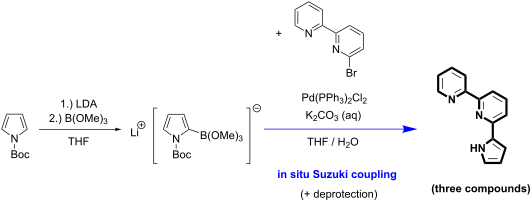
Scheme 5: Generation of the borate intermediate 21/22.

Scheme 6: In situ Suzuki coupling reactions of the heteroaryl bromides 8–10.

Figure 1: The structure of compound 1 in the crystal. Ellipsoids correspond to 50% probability levels.

Figure 2: Packing diagram of compound 1, viewed parallel to the y-axis in the range y ≈ 1/4. Hydrogen bonds a...

Figure 3: The structure of compound 2·CH3OH in the crystal. Ellipsoids correspond to 50% probability levels. ...

Figure 4: Packing diagram of compound 2·CH3OH showing the formation of inversion-symmetric "stacked" dimers. ...

Figure 5: The structure of compound 3·C2H5OH in the crystal. Ellipsoids correspond to 50% probability levels....

Figure 6: Packing diagram of compound 3·C2H5OH. Hydrogen bonds are shown as thick dashed lines. Hydrogen atom...
Catalyst-free and solvent-free Michael addition of 1,3-dicarbonyl compounds to nitroalkenes by a grinding method
- Zong-Bo Xie,
- Na Wang,
- Ming-Yu Wu,
- Ting He,
- Zhang-Gao Le and
- Xiao-Qi Yu
Beilstein J. Org. Chem. 2012, 8, 534–538, doi:10.3762/bjoc.8.61
- . Surprisingly, a great quantity of Michael product 3a was obtained after 5 min of grinding. Then a number of powdered substances were screened, such as KBr, quartz sand, Al2O3, kieselguhr, active carbon, and so on. From Figure 1, it was found that all tested grinding aids could promote the reaction to different

Graphical Abstract

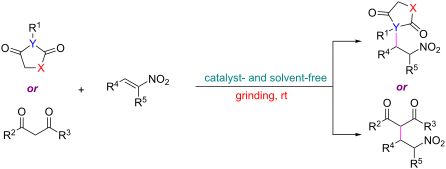
Scheme 1: Michael addition under catalyst- and solvent-free conditions.

Figure 1: The grinding effect of different grinding aids. Conditions: β-nitrostyrene (14.9 mg, 0.1 mmol), 1,3...

Figure 2: Yields of the model reaction in different solvents. Conditions: β-nitrostyrene (14.9 mg, 0.1 mmol),...

Figure 3: The effect of the amount of quartz sand on the yield. Conditions: β-nitrostyrene (14.9 mg, 0.1 mmol...
Dioxane dibromide mediated bromination of substituted coumarins under solvent-free conditions
- Subrata Kumar Chaudhuri,
- Sanchita Roy and
- Sanjay Bhar
Beilstein J. Org. Chem. 2012, 8, 323–329, doi:10.3762/bjoc.8.35

- diseases [4]. Halocoumarins also exhibit insecticidal and fungicidal properties [5]. A few methods have been documented for regioselective bromination of coumarins, which include CuBr2/Al2O3 in bromobenzene under reflux [5], Br2 in glacial AcOH [6], Br2/Al2O3 under microwave irradiation [7], NBS in CHCl3

Graphical Abstract

Scheme 1: Dioxane dibromide-mediated solvent-free bromination of substituted coumarins.

Scheme 2: Failure of DD to react with coumarins substituted with an electron-withdrawing group.
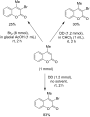
Scheme 3: Efficacy of the solvent-free bromination protocol with DD.

Figure 1: Mechanism for bromination of the heterocyclic ring.

Figure 2: Mechanism for bromination of the carbocyclic ring.
Efficient and selective chemical transformations under flow conditions: The combination of supported catalysts and supercritical fluids
- M. Isabel Burguete,
- Eduardo García-Verdugo and
- Santiago V. Luis
Beilstein J. Org. Chem. 2011, 7, 1347–1359, doi:10.3762/bjoc.7.159
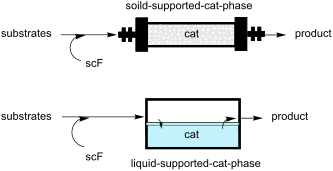
- , enhanced selectivity. Some classical examples are provided by the work of Baiker [38][39]. Thus, initial studies focused on the enantioselective hydrogenation of ethyl pyruvate to (R)-ethyl lactate over cinchonidine (CD) modified Pt/Al2O3. The results obtained showed that a dramatic increase in both
- provided by the group of Poliakoff [40][41]. In this case, the reaction studied was the hydrogenation of dimethyl itaconate over a chiral Rh catalyst on an inorganic support (Al2O3) with a phosphotungsten acid linker (Scheme 2). It is important to take into consideration a direct comparison with the work
- reported by Poliakoff and Sheldon involving two sequential reactions (Scheme 8) [94]. In that case, the first step was the continuous hydrogenation of acetophenone to afford the racemic phenylethanol with Pd supported on SiO2/Al2O3 as the catalyst and scCO2 as the reaction medium (150–200 °C, 10 MPa, 1.1

Graphical Abstract

Scheme 1: Hydrogenation of ethyl pyruvate.

Scheme 2: Hydrogenation of dimethyl itaconate.

Scheme 3: a) Enantioselective hydrogenation of N-(1-phenylethylidene)aniline in IL–CO2; b) Enantioselective h...

Scheme 4: Selective hydroformylation with a silica supported Rh catalyst.

Scheme 5: Enantioselective hydroformylation of styrene.

Scheme 6: Enantioselective hydrovinylation of styrene.

Scheme 7: Enantioselective cyclopropanation of styrene catalyzed by supported Cu–BOX, Cu–PyOX and Rh–PyBOX ca...

Scheme 8: Continuous hydrogenation of acetophenone coupled with the kinetic resolution of the product.

Scheme 9: Kinetic resolution of phenylethanol using CALB immobilized in ILs and supported ILs.
Functionalization of anthracene: A selective route to brominated 1,4-anthraquinones
- Kiymet Berkil Akar,
- Osman Cakmak,
- Orhan Büyükgüngör and
- Ertan Sahin
Beilstein J. Org. Chem. 2011, 7, 1036–1045, doi:10.3762/bjoc.7.118

- anhydrous sodium sulfate and concentrated under reduced pressure. After the residue was passed through a short Al2O3 (neutral, 15 g) column, 2,9,10-tribromo-1,4-dihydroanthracene-1,4-diol (27) was recrystallized from methylene chloride/hexane (20:5 mL), yield 276 mg (69%). The reaction was repeated with two

Graphical Abstract

Scheme 1: Synthesis of anthracene oxides.
Scheme 2: Synthesis of methoxyanthracenes 10 and 11.

Figure 1: Molecular structure of compound 7. Displacement ellipsoids are shown at 40% probability level.

Scheme 3: The reaction mechanism for the formation of methoxyanthracenes 10 and 11.

Scheme 4: The formation mechanism for dihydroxy 17.

Figure 2: a) X-ray ORTEP plot of compound 17. Displacement ellipsoids are shown at 40% probability level. b) ...

Scheme 5: Base-promoted reaction of the dihydroxides and formation of the epoxides.

Scheme 6: Synthesis of compounds 27 and 28.
The role of silver additives in gold-mediated C–H functionalisation
- Scott R. Patrick,
- Ine I. F. Boogaerts,
- Sylvain Gaillard,
- Alexandra M. Z. Slawin and
- Steven P. Nolan
Beilstein J. Org. Chem. 2011, 7, 892–896, doi:10.3762/bjoc.7.102
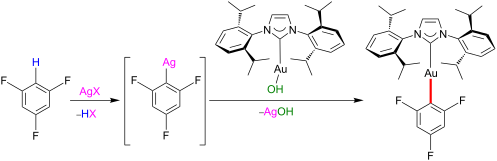
- factors must also be considered to rationalise the anomalous activity of AgI. The Lewis acidity of the silver salts may contribute to initiate the reaction [22], but unsuccessful reactions using Al2O3, AlCl3, Cu2O or ZnBr2 proved otherwise. The existence of a transient anion exchange between the gold (AuX

Graphical Abstract

Scheme 1: Silver-free C–H functionalisation using [Au(OH)(IPr)].

Scheme 2: C–H functionalisation of 2 using gold-phosphine complexes and a silver additive.

Figure 1: X-ray structure of [Au(OPiv)(IPr)] 3. Thermal ellipsoids are shown at the 50% probability level. H ...

Scheme 3: Carboxylation of 2 using 1 and Ag2O.
Continuous flow hydrogenation using polysilane-supported palladium/alumina hybrid catalysts
- Hidekazu Oyamada,
- Takeshi Naito and
- Shū Kobayashi
Beilstein J. Org. Chem. 2011, 7, 735–739, doi:10.3762/bjoc.7.83
- palladium/alumina (Pd/(PSi–Al2O3)) hybrid catalysts were developed. Our original Pd/(PSi–Al2O3) catalysts were used successfully in these systems and the hydrogenation of unsaturated C–C bonds and a nitro group, deprotection of a carbobenzyloxy (Cbz) group, and a dehalogenation reaction proceeded smoothly
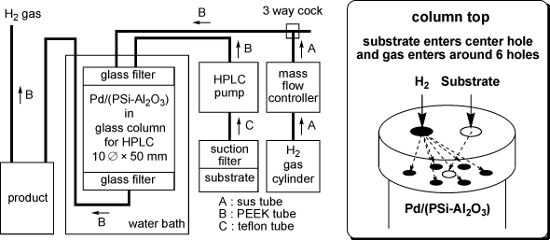
- swell in any solvent, and were predicted to be applicable to continuous flow reactors. In this study, we investigated hydrogenation reactions of C–C double and triple bonds as well as various other functional groups using continuous flow systems with Pd/(PSi–Al2O3) catalysts. A schematic diagram of the
- continuous flow reactor and an image of the top of the column are shown in Figure 1. A high performance liquid chromatography (HPLC) pump was used to feed the substrate into the central hole in the top of the column, which was filled with the Pd/(PSi–Al2O3) catalyst. Hydrogen gas was introduced into the six

Graphical Abstract

Figure 1: Schematic diagram of the continuous flow reactor (left) and the column top (right).

Scheme 1: Hydrogenation of ethyl cinnamate.

Scheme 2: Hydrogenation of trans-stilbene and trans-chalcone.

Scheme 3: Hydrogenation of nitrobenzene and deprotection of the Cbz group.

Scheme 4: Hydrogenation in water.
An overview of the key routes to the best selling 5-membered ring heterocyclic pharmaceuticals
- Marcus Baumann,
- Ian R. Baxendale,
- Steven V. Ley and
- Nikzad Nikbin
Beilstein J. Org. Chem. 2011, 7, 442–495, doi:10.3762/bjoc.7.57
- (Scheme 37). Also, a condensation reaction between ethylenediamine and acetic acid catalysed by γ-Al2O3 at high temperatures gives 2-methylimidazole (187) in approximately 90% yield [56]. Elz and Heil [57] prepared the 1,2,3,9-tetrahydro-4H-carbazol-4-one (140) by the reaction of phenylhydrazine (138

Graphical Abstract
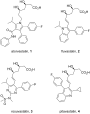
Figure 1: Structures of atorvastatin and other commercial statins.

Figure 2: Structure of compactin.

Scheme 1: Synthesis of pentasubstituted pyrroles.

Scheme 2: [3 + 2] Cycloaddition to prepare 5-isopropylpyrroles.

Scheme 3: Regiospecific [3 + 2] cycloaddition to prepare the pyrrole scaffold.

Scheme 4: Formation of the pyrrole core of atorvastatin via [3 + 2] cycloaddition.

Scheme 5: Formation of pyrrole 33 via the Paal–Knorr reaction.

Scheme 6: Convergent synthesis towards atorvastatin.

Figure 3: Binding pocket of sunitinib in the TRK KIT.

Scheme 7: Synthesis of sunitinib.

Scheme 8: Alternative synthesis of sunitinib.

Scheme 9: Key steps in the syntheses of sumatriptan and zolmitriptan.

Scheme 10: Introduction of the N,N-dimethylaminoethyl side chain.

Scheme 11: Japp–Klingemann reaction in the synthesis of sumatriptan.

Scheme 12: Synthesis of the intermediate sulfonyl chlorides 62 and 63.

Scheme 13: Alternative introduction of the sulfonamide.

Scheme 14: Negishi-type coupling to benzylic sulfonamides.

Scheme 15: Heck reaction used to introduce the sulfonamide side chain of naratriptan.

Scheme 16: Synthesis of the oxazolinone appendage of zolmitriptan.

Scheme 17: Grandberg indole synthesis used in the preparation of rizatriptan.

Scheme 18: Improved synthesis of rizatriptan.

Scheme 19: Larock-type synthesis of rizatriptan.

Scheme 20: Synthesis of eletriptan.

Scheme 21: Heck coupling for the indole system in eletriptan.

Scheme 22: Attempted Fischer indole synthesis of elatriptan.

Scheme 23: Successful Fischer indole synthesis for eletriptan.

Scheme 24: Mechanistic rationale for the Bischler–Möhlau reaction.

Scheme 25: Bischler-type indole synthesis used in the fluvastatin sodium synthesis.

Scheme 26: Palladium-mediated synthesis of ondansetron.

Scheme 27: Fischer indole synthesis of ondansetron.

Scheme 28: Optimised Pictet–Spengler reaction towards tadalafil.

Figure 4: Structures of carvedilol 136 and propranolol 137.

Scheme 29: Synthesis of the carbazole core of carvedilol.

Scheme 30: Alternative syntheses of 4-hydroxy-9H-carbazole.

Scheme 31: Convergent synthesis of etodolac.

Scheme 32: Alternative synthesis of etodolac.

Figure 5: Structures of imidazole-containing drugs.

Scheme 33: Synthesis of functionalised imidazoles towards losartan.

Scheme 34: Direct synthesis of the chlorinated imidazole in losartan.

Scheme 35: Synthesis of trisubstituted imidazoles.

Scheme 36: Preparation of the imidazole ring in olmesartan.

Scheme 37: Synthesis of ondansetron.

Scheme 38: Alternative route to ondansetron and its analogues.

Scheme 39: Proton pump inhibitors and synthesis of esomeprazole.

Scheme 40: Synthesis of benzimidazole core pantoprazole.

Figure 6: Structure of rabeprazole 194.

Scheme 41: Synthesis of candesartan.

Scheme 42: Alternative access to the candesartan key intermediate 216.

Scheme 43: .Medicinal chemistry route to telmisartan.

Scheme 44: Improved synthesis of telmisartan.

Scheme 45: Synthesis of zolpidem.

Scheme 46: Copper-catalysed 3-component coupling towards zolpidem.

Figure 7: Structure of celecoxib.

Scheme 47: Preparation of celecoxib.

Scheme 48: Alternative synthesis of celecoxib.

Scheme 49: Regioselective access to celecoxib.

Scheme 50: Synthesis of pazopanib.

Scheme 51: Syntheses of anastrozole, rizatriptan and letrozole.

Scheme 52: Regioselective synthesis of anastrozole.

Scheme 53: Triazine-mediated triazole formation towards anastrozole.

Scheme 54: Alternative routes to 1,2,4-triazoles.

Scheme 55: Initial synthetic route to sitagliptin.

Figure 8: Binding of sitagliptin within DPP-IV.

Scheme 56: The process route to sitagliptin key intermediate 280.

Scheme 57: Synthesis of maraviroc.

Scheme 58: Synthesis of alprazolam.

Scheme 59: The use of N-nitrosoamidine derivatives in the preparation of fused benzodiazepines.

Figure 9: Structures of itraconazole, ravuconazole and voriconazole.

Scheme 60: Synthesis of itraconazole.

Scheme 61: Synthesis of rufinamide.

Scheme 62: Representative tetrazole formation in valsartan.

Figure 10: Structure of tetrazole containing olmesartan, candesartan and irbesartan.

Scheme 63: Early stage introduction of the tetrazole in losartan.

Scheme 64: Synthesis of cilostazol.

Figure 11: Structure of cefdinir.

Scheme 65: Semi-synthesis of cefdinir.

Scheme 66: Thiazole syntheses towards ritonavir.

Scheme 67: Synthesis towards pramipexole.

Scheme 68: Alternative route to pramipexole.

Scheme 69: Synthesis of famotidine.

Scheme 70: Efficient synthesis of the hyperuricemic febuxostat.

Scheme 71: Synthesis of ziprasidone.

Figure 12: Structure of mometasone.

Scheme 72: Industrial access to 2-furoic acid present in mometasone.

Scheme 73: Synthesis of ranitidine from furfuryl alcohol.

Scheme 74: Synthesis of nitrofurantoin.

Scheme 75: Synthesis of benzofuran.

Scheme 76: Synthesis of amiodarone.

Scheme 77: Synthesis of raloxifene.

Scheme 78: Alternative access to the benzo[b]thiophene core of raloxifene.

Scheme 79: Gewald reaction in the synthesis of olanzapine.

Scheme 80: Alternative synthesis of olanzapine.
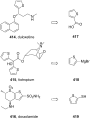
Figure 13: Access to simple thiophene-containing drugs.

Scheme 81: Synthesis of clopidogrel.

Scheme 82: Pictet–Spengler reaction in the preparation of tetrahydrothieno[3,2-c]pyridine (422).

Scheme 83: Alternative synthesis of key intermediate 422.

Figure 14: Co-crystal structures of timolol (left) and carazolol (right) in the β-adrenergic receptor.

Scheme 84: Synthesis of timolol.

Scheme 85: Synthesis of tizanidine 440.

Scheme 86: Synthesis of leflunomide.

Scheme 87: Synthesis of sulfamethoxazole.

Scheme 88: Synthesis of risperidone.

Figure 15: Relative abundance of selected transformations.

Figure 16: The abundance of heterocycles within top 200 drugs (5-membered rings).
Michael-type addition of azoles of broad-scale acidity to methyl acrylate
- Sławomir Boncel,
- Kinga Saletra,
- Barbara Hefczyc and
- Krzysztof Z. Walczak
Beilstein J. Org. Chem. 2011, 7, 173–178, doi:10.3762/bjoc.7.24
- protocol and a simple work-up. In the Michael-type additions of azole N–H acids, numerous catalysts such as KF/Al2O3 [8], CeCl3∙7 H2O/NaI [9], NaH or ZnCl2 [10], K2CO3 [11], anhydrous K3PO4 [12], (NH4)2Ce(NO3)6 (CAN) [22] or ionic liquids, e.g., Cu(acac)2 immobilised in [bmim][BF4] [15] have been used

Graphical Abstract

Figure 1: Examples of azole derivatives as important therapeutic agents.

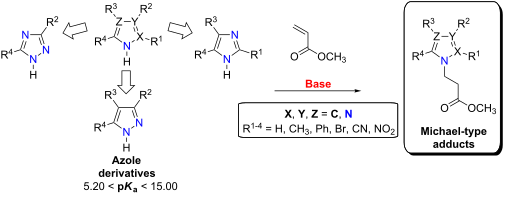
Scheme 1: Michael-type addition of azoles of broad-scale acidity 1a–h to methyl acrylate (2) under basic cond...

Scheme 2: Chemical evidence for a regioselective Michael-type addition of 4(5)-nitroimidazole (1c) to methyl ...
Stereoselectivity of supported alkene metathesis catalysts: a goal and a tool to characterize active sites
- Christophe Copéret
Beilstein J. Org. Chem. 2011, 7, 13–21, doi:10.3762/bjoc.7.3
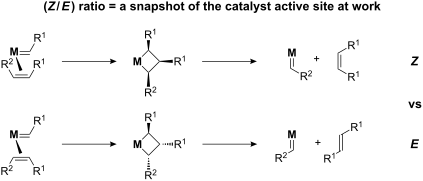
- conversions as low as 2% (vs ca. 30% thermodynamic plateau). For MeReO3/Al2O3, where the active sites is [AlSCH2ReO3] (Scheme 3a) [35][36], decreasing the conversion to well below 0.1% allows the measurement of a kinetic (E/Z) ratio of 0.4 thus showing that this catalyst is slightly Z-selective (70
- was also obtained for Re2O7/Al2O3 [40][41], which infers similar structural features for the active sites [42]. Finally, this shows that modifying the surface adsorption properties can favour the formation of primary products by slowing down secondary processes such as isomerisation, but that

Graphical Abstract

Scheme 1: Alkene metathesis mechanism.
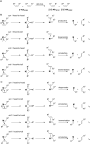
Scheme 2: Metathesis possibilities.

Scheme 3: Metathesis with Re-based alumina supported catalysts.

Figure 1: (E/Z) ratio as a function of conversion. a) MeReO3 supported on alumina and b) MeReO3 supported on ...

Scheme 4: Alkene selectivity of metathesis reactions.

Scheme 5: Hybrid organic–inorganic catalyst containing a Ru–NHC unit.
Aromatic and heterocyclic perfluoroalkyl sulfides. Methods of preparation
- Vladimir N. Boiko
Beilstein J. Org. Chem. 2010, 6, 880–921, doi:10.3762/bjoc.6.88
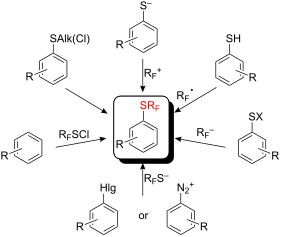
- , Clark et al. have used CuSCF3 adsorbed onto Al2O3 [100], whilst Munavalli et al. have employed the acetonitrile adduct CF3SCu·CH3CN [103] for the reaction with m-iodobenzoic acid and its methyl ester [104]. Bulky perfluoroalkylthiocopper reagents, derived from 2,2,4,4-tetrakis(CF3)-1,3-dithietane

Graphical Abstract

Figure 1: Examples of industrial fluorine-containing bio-active molecules.

Figure 2: CF3(S)- and CF3(O)-containing pharmacologically active compounds.

Figure 3: Hypotensive candidates with SRF and SO2RF groups – analogues of Losartan and Nifedipin.

Figure 4: The variety of the pharmacological activity of RFS-substituted compounds.

Figure 5: Recent examples of compounds containing RFS(O)n-groups [12-18].

Scheme 1: Fluorination of ArSCCl3 to corresponding ArSCF3 derivatives. For references see: a[38-43]; b[41,42]; c[43]; d[44]; e[38-43,45-47]; f[38-43,48,49]; g...

Scheme 2: Preparation of aryl pentafluoroethyl sulfides.

Scheme 3: Mild fluorination of the aryl SCF2Br derivatives.

Scheme 4: HF fluorinations of aryl α,α,β-trichloroisobutyl sulfide at various conditions.

Scheme 5: Monofluorination of α,α-dichloromethylene group.

Scheme 6: Electrophilic substitution of phenols with CF3SCl [69].

Scheme 7: Introduction of SCF3 groups into activated phenols [71-74].

Scheme 8: Preparation of tetrakis(SCF3)-4-methoxyphenol [72].

Scheme 9: The interactions of resorcinol and phloroglucinol derivatives with RFSCl.

Scheme 10: Reactions of anilines with CF3SCl.

Scheme 11: Trifluoromethylsulfanylation of anilines with electron-donating groups in the meta position [74].

Scheme 12: Reaction of benzene with CF3SCl/CF3SO3H [77].

Scheme 13: Reactions of trifluoromethyl sulfenyl chloride with aryl magnesium and -mercury substrates.

Scheme 14: Reactions of pyrroles with CF3SCl.

Scheme 15: Trifluoromethylsulfanylation of indole and indolizines.

Scheme 16: Reactions of N-methylpyrrole with CF3SCl [80,82].

Scheme 17: Reactions of furan, thiophene and selenophene with CF3SCl.

Scheme 18: Trifluoromethylsulfanylation of imidazole and thiazole derivatives [83].

Scheme 19: Trifluoromethylsulfanylation of pyridine requires initial hydride reduction.

Scheme 20: Introduction of additional RFS-groups into heterocyclic compounds in the presence of CF3SO3H.

Scheme 21: Introduction of additional RFS-groups into pyrroles [82,87].

Scheme 22: By-products in reactions of pyrroles with CF3SCl [82].

Scheme 23: Reaction of aromatic iodides with CuSCF3 [93,95].

Scheme 24: Reaction of aromatic iodides with RFZCu (Z = S, Se), RF = CF3, C6F5 [93,95,96].

Scheme 25: Side reactions during trifluoromethylsulfanylation of aromatic iodides with CF3SCu [98].

Scheme 26: Reactions with in situ generated CuSCF3.

Scheme 27: Perfluoroalkylthiolation of aryl iodides with bulky RFSCu [105].

Scheme 28: In situ formation and reaction of RFZCu with aryl iodides.

Figure 6: Examples of compounds obtained using in situ generated RFZCu methodology [94].

Scheme 29: Introduction of SCF3 group into aromatics via difluorocarbene.

Scheme 30: Tetrakis(dimethylamino)ethylene dication trifluoromethyl thiolate as a stable reagent for substitut...

Scheme 31: The use of CF2=S/CsF or (CF3S)2C=S/CsF for the introduction of CF3S groups into fluorinated heteroc...

Scheme 32: One-pot synthesis of ArSCF3 from ArX, CCl2=S and KF.

Scheme 33: Reaction of aromatics with CF3S− Kat+ [115].

Scheme 34: Reactions of activated aromatic chlorides with AgSCF3/KI.

Scheme 35: Comparative CuSCF3/KI and Hg(SCF3)2/KI reactions.

Scheme 36: Me3SnTeCF3 – a reagent for the introduction of the TeCF3 group.

Scheme 37: Sandmeyer reactions with CuSCF3.

Scheme 38: Reactions of perfluoroalkyl iodides with alkali and organolithium reagents.

Scheme 39: Perfluoroalkylation with preliminary breaking of the disulfide bond.

Scheme 40: Preparation of RFS-substituted anilines from dinitrodiphenyl disulfides.

Scheme 41: Photochemical trifluoromethylation of 2,4,6-trimercaptochlorobenzene [163].

Scheme 42: Putative process for the formation of B, C and D.

Scheme 43: Trifluoromethylation of 2-mercapto-4-hydroxy-6-trifluoromethylyrimidine [145].

Scheme 44: Deactivation of 2-mercapto-4-hydroxypyrimidines S-centered radicals.

Scheme 45: Perfluoroalkylation of thiolates with CF3Br under UV irradiation.

Scheme 46: Catalytic effect of methylviologen for RF• generation.

Scheme 47: SO2−• catalyzed trifluoromethylation.

Scheme 48: Electrochemical reduction of CF3Br in the presence of SO2 [199,200].

Scheme 49: Participation of SO2 in the oxidation of ArSCF3−•.

Scheme 50: Electron transfer cascade involving SO2 and MV.

Scheme 51: Four stages of the SRN1 mechanism for thiol perfluoroalkylation.

Scheme 52: A double role of MV in the catalysis of RFI reactions with aryl thiols.

Scheme 53: Photochemical reaction of pentafluoroiodobenzene with trifluoromethyl disulfide.

Scheme 54: N- Trifluoromethyl-N-nitrosobenzene sulfonamide – a source of CF3• radicals [212,213].

Scheme 55: Radical trifluoromethylation of organic disulfides with ArSO2N=NCF3.

Scheme 56: Barton’s S-perfluoroalkylation reactions [216].

Scheme 57: Decarboxylation of thiohydroxamic esters in the presence of C6F13I.

Scheme 58: Reactions of thioesters of trifluoroacetic and trifluoromethanesulfonic acids in the presence of ar...

Scheme 59: Perfluoroalkylation of polychloropyridine thiols with xenon perfluorocarboxylates or XeF2 [222,223].

Scheme 60: Interaction of Xe(OCORF)2 with nitroaryl disulfide [227].

Scheme 61: Bi(CF3)3/Cu(OCOCH3)2 trifluoromethylation of thiophenolate [230].

Scheme 62: Reaction of fluorinated carbanions with aryl sulfenyl chlorides.

Scheme 63: Reaction of methyl perfluoromethacrylate with PhSCl in the presence of fluoride.

Scheme 64: Reactions of ArSCN with potassium and magnesium perfluorocarbanions [237].

Scheme 65: Reactions of RFI with TDAE and organic disulfides [239,240].

Scheme 66: Decarboxylation of perfluorocarboxylates in the presence of disulfides [245].

Scheme 67: Organization of a stable form of “CF3−” anion in the DMF.

Scheme 68: Silylated amines in the presence of fluoride can deprotonate fluoroform for reaction with disulfide...

Figure 7: Other examples of aminomethanols [264].

Scheme 69: Trifluoromethylation of diphenyl disulfide with PhSO2CF3/t-BuOK.

Scheme 70: Amides of trifluoromethane sulfinic acid are sources of CF3− anion.

Scheme 71: Trifluoromethylation of various thiols using “hyper-valent” iodine (III) reagent [279].

Scheme 72: Trifluoromethylation of p-nitrothiophenolate with diaryl CF3 sulfonium salts [280].

Scheme 73: Trifluoromethyl transfer from dibenzo (CF3)S-, (CF3)Se- and (CF3)Te-phenium salts to thiolates [283].

Scheme 74: Multi-stage paths for synthesis of dibenzo-CF3-thiophenium salts [61].
Solvent-free and time-efficient Suzuki–Miyaura reaction in a ball mill: the solid reagent system KF–Al2O3 under inspection
- Franziska Bernhardt,
- Ronald Trotzki,
- Tony Szuppa,
- Achim Stolle and
- Bernd Ondruschka
Beilstein J. Org. Chem. 2010, 6, No. 7, doi:10.3762/bjoc.6.7
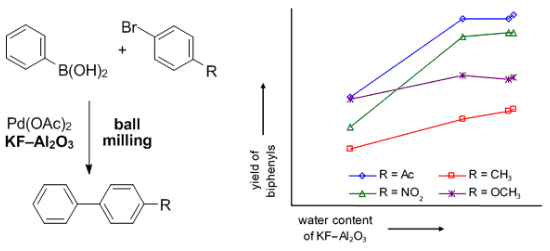
- the above mentioned parameters on the results of coupling reactions. The results from ball milling experiments led to the conclusion that self-prepared and commercially available KF–Al2O3 differ in water content. The higher the residual water content, the higher are the product yields. Keywords: ball
- milling; C–C coupling; KF–Al2O3; palladium; solid reagent system; Introduction Over the last two decades, a major trend in the field of organic chemistry has been evident: environmentally friendly processes using safer reagents, generating fewer side products and requiring less use of solvents are in
- vogue [1][2]. This trend has led to an explosive growth in the fields of solvent-free synthesis [3][4][5][6][7][8][9][10][11][12][13] and solid-supported reagents [14][15][16][17][18] such as potassium fluoride on alumina (KF–Al2O3) [19][20]. This versatile reagent was originally introduced in 1979 by

Graphical Abstract

Scheme 1: Suzuki–Miyaura reaction of phenylboronic acid (1) with aryl bromides 2 yielding substituted biaryls ...

Figure 1: Results of the Suzuki–Miyaura reaction of phenylboronic acid (1) with p-bromoacetophenone (2a; cf. Scheme 1...

Figure 2: Results of the Suzuki–Miyaura reaction according to Scheme 1 assisted by pure aluminas [5 g SRS1–3: cf. Table 2; b...

Figure 3: Influence of Pd(OAc)2 concentration on the results of the Suzuki–Miyaura reaction of phenylboronic ...

Figure 4: Results of the Suzuki–Miyaura reaction according to Scheme 1 assisted by KF-loaded aluminas [5 g SRS1a–4a, ...

Figure 5: Dependence of the yield of Suzuki–Miyaura cross-coupling product (Scheme 1) from water content (Karl-Fische...
Asymmetric reactions in continuous flow
- Xiao Yin Mak,
- Paola Laurino and
- Peter H. Seeberger
Beilstein J. Org. Chem. 2009, 5, No. 19, doi:10.3762/bjoc.5.19
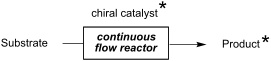
- was reduced using a cinchonidine-modified Pt/Al2O3 catalyst in a fixed bed reactor in both supercritical carbon dioxide and ethane [47]. Poliakoff and co-workers have investigated the continuous asymmetric hydrogenation of dimethyl itaconate in scCO2 [48][49]. By using the catalyst [Rh(COD)2(nbd

Graphical Abstract

Scheme 1: Enantioselective addition of trimethylsilyl cyanide to benzaldehyde.

Scheme 2: Asymmetric catalytic hydrogenation in a falling-film microreactor.

Scheme 3: Aldol reaction catalyzed by 5-(pyrrolidine-2-yl)tetrazole.

Scheme 4: Enantioselective addition of diethylzinc to aryl aldehydes.

Scheme 5: Glyoxylate-ene reaction in flow.

Scheme 6: Asymmetric synthesis of ß-lactams.

Scheme 7: α-Chlorination of acid chlorides in flow.

Scheme 8: Asymmetric Michael reaction in continuous flow.

Scheme 9: Enantioselective addition of Et2Zn to benzaldehyde using monolithic chiral amino alcohol.

Scheme 10: Continuous-flow hydrolytic dynamic kinetic resolution of epibromohydrin (32).

Scheme 11: Continuous-flow asymmetric cyclopropanation.

Scheme 12: Continuous asymmetric hydrogenation of dimethyl itaconate in scCO2.

Scheme 13: Continuous asymmetric transfer hydrogenation of acetophenone.

Scheme 14: Asymmetric epoxidation using a continuous flow membrane reactor.

Scheme 15: Enzymatic cyanohydrin formation in a microreactor.

Scheme 16: Resolution of (R/S)- 54 with immobilized lipase in a continuous scCO2- flow reactor.

Scheme 17: Enantioselective separation of Acetyl-D-Phe in a continuous flow reactor.
Hydrogenation of aromatic ketones, aldehydes, and epoxides with hydrogen and Pd(0)EnCat™ 30NP
- Steven V. Ley,
- Angus J. P. Stewart-Liddon,
- David Pears,
- Remedios H. Perni and
- Kevin Treacher
Beilstein J. Org. Chem. 2006, 2, No. 15, doi:10.1186/1860-5397-2-15
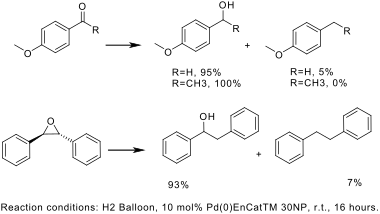
- -methoxyacetophenone are summarized in Table 1. In the first case, when Pd/C was used the over-reduced product was quantitatively obtained (entries 7 and 8). Using palladium on different supports with lower surface area than carbon, such as CaCO3 or Al2O3 (entries 4 and 5) a mixture of benzylic alcohol and over
- or Pd/Al2O3. Pd(0)EnCat™ 30NP-catalyzed hydrogenation of 4-mathoxybenzaldehyde and 4-methoxyacetophenone. Comparison with other Pd catalysts. Pd(0)EnCat™30NP-catalyzed hydrogenation of aryl ketones and aldehydes. Pd(0)EnCat™ 30NP-Catalyzed Hydrogenolysis of trans-stilbene oxide. Comparison with other




