


Search results
Search for "acetylenes" in Full Text gives 90 result(s) in Beilstein Journal of Organic Chemistry.
Practical synthetic strategies towards lipophilic 6-iodotetrahydroquinolines and -dihydroquinolines
- David R. Chisholm,
- Garr-Layy Zhou,
- Ehmke Pohl,
- Roy Valentine and
- Andrew Whiting
Beilstein J. Org. Chem. 2016, 12, 1851–1862, doi:10.3762/bjoc.12.174
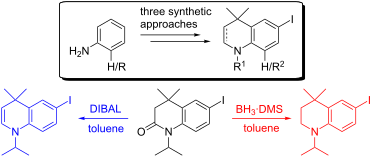
- , phosphine additives and strong heating or microwave conditions in order to effect coupling with most acetylenes. Accordingly, it was anticipated that the aryl iodides would be more versatile due to their greater propensity to undergo oxidative additions. Therefore, in this paper we report herein the

Graphical Abstract

Figure 1: Tetrahydroquinoline (THQ) and dihydroquinoline (DHQ) scaffolds to be synthesised.

Scheme 1: Proposed retrosynthesis scheme to access N-isopropyl-THQ 2.

Scheme 2: Synthesis of THQ 3 by initial N-alkylations, followed by PPA-mediated cyclisation.

Scheme 3: Bromination of 3 and attempted halogen exchange of the intermediate 7.

Scheme 4: Synthesis of THQ 10, by initial aza-Michael addition, followed by formation of the tertiary alcohol ...

Scheme 5: Synthesis of THQ 14 by initial acylation, cyclisation with H2SO4 and reduction with borane·dimethyl...

Scheme 6: N-Alkylation of 13 and 14.

Scheme 7: Facile route for the synthesis of 20a.

Scheme 8: Synthesis of THQ 21 and DHQ 22 using borane·dimethyl sulphide complex or DIBAL, respectively.

Figure 2: Simulated structure of 22 indicates a flattened quinoline-like structure. Hartree–Fock calculations...

Scheme 9: Postulated mechanism for the formation of 22 using DIBAL.

Figure 3: Combined, normalised absorption and emission spectra of 28 in chloroform. Absorption spectrum was r...

Scheme 10: Miyaura borylation of 21 and 22 to give crystalline boronic esters 29 and 30.

Figure 4: Comparison of the crystal structures of 29 (left) and 30 (right) as viewed along the plane of the a...

Figure 5: Combined, normalised absorption and emission spectra of 30 in diethyl ether. Absorption spectrum wa...
Multicomponent reactions: A simple and efficient route to heterocyclic phosphonates
- Mohammad Haji
Beilstein J. Org. Chem. 2016, 12, 1269–1301, doi:10.3762/bjoc.12.121
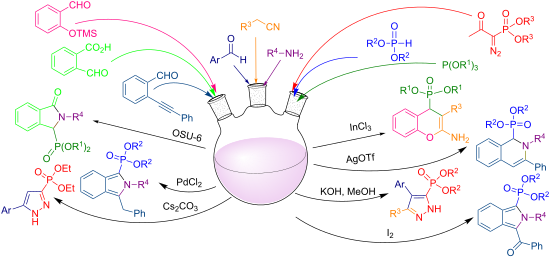
- aldehydes 224 generated terminal acetylenes 226 which cyclized with the second molecule of phosphonate 225 in the presence of Cu(I) to afford (5-methyl-1H-pyrazol-3-yl)phosphonates 230 in 46–81% yields (Scheme 46) [84]. Also, a domino reaction based on the dual reactivity of BOR as a homologation reagent as
- 1,2-dihydropyridine-3-phosphonate 259. Yavari et al. have described the phosphorylation of benzothiazole (263) and isoquinoline (246) through a one-pot three-component reaction with activated acetylenes 260 and diphenyl phosphonate (261) under solvent-free conditions at room temperature (Scheme 54

Graphical Abstract

Scheme 1: The Biginelli condensation.

Scheme 2: The Biginelli reaction of β-ketophosphonates catalyzed by ytterbium triflate.

Scheme 3: Trimethylchlorosilane-mediated Biginelli reaction of diethyl (3,3,3-trifluoropropyl-2-oxo)phosphona...

Scheme 4: Biginelli reaction of dialkyl (3,3,3-trifluoropropyl-2-oxo)phosphonate with trialkyl orthoformates ...

Scheme 5: p-Toluenesulfonic acid-promoted Biginelli reaction of β-ketophosphonates, aryl aldehydes and urea.

Scheme 6: General Kabachnik–Fields reaction for the synthesis of α-aminophosphonates.

Scheme 7: Phthalocyanine–AlCl catalyzed Kabachnik–Fields reaction of N-Boc-piperidin-4-one with diethyl phosp...

Scheme 8: Kabachnik–Fields reaction of isatin with diethyl phosphite and benzylamine.

Scheme 9: Magnetic Fe3O4 nanoparticle-supported phosphotungstic acid-catalyzed Kabachnik–Fields reaction of i...

Scheme 10: The Mg(ClO4)2-catalyzed Kabachnik–Fields reaction of 1-tosylpiperidine-4-one.

Scheme 11: An asymmetric version of the Kabachnik–Fields reaction for the synthesis of α-amino-3-piperidinylph...

Scheme 12: A classical Kabachnik–Fields reaction followed by an intramolecular ring-closing reaction for the s...

Scheme 13: Synthesis of (S)-piperidin-2-phosphonic acid through an asymmetric Kabachnik–Fields reaction.

Scheme 14: A modified diastereoselective Kabachnik–Fields reaction for the synthesis of isoindolin-1-one-3-pho...

Scheme 15: A microwave-assisted Kabachnik–Fields reaction toward isoindolin-1-ones.

Scheme 16: The synthesis of 3-arylmethyleneisoindolin-1-ones through a Horner–Wadsworth–Emmons reaction of Kab...

Scheme 17: An efficient one-pot method for the synthesis of ethyl (2-alkyl- and 2-aryl-3-oxoisoindolin-1-yl)ph...

Scheme 18: FeCl3 and PdCl2 co-catalyzed three-component reaction of 2-alkynylbenzaldehydes, anilines, and diet...

Scheme 19: Three-component reaction of 6-methyl-3-formylchromone (75) with hydrazine derivatives or hydroxylam...

Scheme 20: Three-component reaction of 6-methyl-3-formylchromone (75) with thiourea, guanidinium carbonate or ...

Scheme 21: Three-component reaction of 6-methyl-3-formylchromone (75) with 1,4-bi-nucleophiles in the presence...

Scheme 22: One-pot three-component reaction of 2-alkynylbenzaldehydes, amines, and diethyl phosphonate.

Scheme 23: Lewis acid–surfactant combined catalysts for the one-pot three-component reaction of 2-alkynylbenza...

Scheme 24: Lewis acid catalyzed cyclization of different Kabachnik–Fields adducts.

Scheme 25: Three-component synthesis of N-arylisoquinolone-1-phosphonates 119.

Scheme 26: CuI-catalyzed three-component tandem reaction of 2-(2-formylphenyl)ethanones with aromatic amines a...

Scheme 27: Synthesis of 1,5-benzodiazepin-2-ylphosphonates via ytterbium chloride-catalyzed three-component re...

Scheme 28: FeCl3-catalyzed four-component reaction for the synthesis of 1,5-benzodiazepin-2-ylphosphonates.

Scheme 29: Synthesis of indole bisphosphonates through a modified Kabachnik–Fields reaction.

Scheme 30: Synthesis of heterocyclic bisphosphonates via Kabachnik–Fields reaction of triethyl orthoformate.

Scheme 31: A domino Knoevenagel/phospha-Michael process for the synthesis of 2-oxoindolin-3-ylphosphonates.

Scheme 32: Intramolecular cyclization of phospha-Michael adducts to give dihydropyridinylphosphonates.

Scheme 33: Synthesis of fused phosphonylpyrans via intramolecular cyclization of phospha-Michael adducts.

Scheme 34: InCl3-catalyzed three-component synthesis of (2-amino-3-cyano-4H-chromen-4-yl)phosphonates.

Scheme 35: Synthesis of phosphonodihydropyrans via a domino Knoevenagel/hetero-Diels–Alder process.

Scheme 36: Multicomponent synthesis of phosphonodihydrothiopyrans via a domino Knoevenagel/hetero-Diels–Alder ...

Scheme 37: One-pot four-component synthesis of 1,2-dihydroisoquinolin-1-ylphosphonates under multicatalytic co...

Scheme 38: CuI-catalyzed four-component reactions of methyleneaziridines towards alkylphosphonates.

Scheme 39: Ruthenium–porphyrin complex-catalyzed three-component synthesis of aziridinylphosphonates and its p...

Scheme 40: Copper(I)-catalyzed three-component reaction towards 1,2,3-triazolyl-5-phosphonates.

Scheme 41: Three-component reaction of acylphosphonates, isocyanides and dialkyl acetylenedicarboxylate to aff...

Scheme 42: Synthesis of (4-imino-3,4-dihydroquinazolin-2-yl)phosphonates via an isocyanide-based three-compone...

Scheme 43: Silver-catalyzed three-component synthesis of (2-imidazolin-4-yl)phosphonates.

Scheme 44: Three-component synthesis of phosphonylpyrazoles.

Scheme 45: One-pot three-component synthesis of 3-carbo-5-phosphonylpyrazoles.

Scheme 46: A one-pot two-step method for the synthesis of phosphonylpyrazoles.

Scheme 47: A one-pot method for the synthesis of (5-vinylpyrazolyl)phosphonates.

Scheme 48: Synthesis of 1H-pyrrol-2-ylphosphonates via the [3 + 2] cycloaddition of phosphonate azomethine yli...

Scheme 49: Three-component synthesis of 1H-pyrrol-2-ylphosphonates.

Scheme 50: The classical Reissert reaction.

Scheme 51: One-pot three-component synthesis of N-phosphorylated isoquinolines.

Scheme 52: One-pot three-component synthesis of 1-acyl-1,2-dihydroquinoline-2-phosphonates and 2-acyl-1,2-dihy...

Scheme 53: Three-component reaction of pyridine derivatives with ethyl propiolate and dialkyl phosphonates.

Scheme 54: Three-component reactions for the phosphorylation of benzothiazole and isoquinoline.

Scheme 55: Three-component synthesis of diphenyl [2-(aminocarbonyl)- or [2-(aminothioxomethyl)-1,2-dihydroisoq...

Scheme 56: Three-component stereoselective synthesis of 1,2-dihydroquinolin-2-ylphosphonates and 1,2-dihydrois...

Scheme 57: Diphosphorylation of diazaheterocyclic compounds via a tandem 1,4–1,2 addition of dimethyl trimethy...

Scheme 58: Multicomponent reaction of alkanedials, acetamide and acetyl chloride in the presence of PCl3 and a...

Scheme 59: An oxidative domino three-component synthesis of polyfunctionalized pyridines.

Scheme 60: A sequential one-pot three-component synthesis of polysubstituted pyrroles.

Scheme 61: Three-component decarboxylative coupling of proline with aldehydes and dialkyl phosphites for the s...

Scheme 62: Three-component domino aza-Wittig/phospha-Mannich sequence for the phosphorylation of isatin deriva...

Scheme 63: Stereoselective synthesis of phosphorylated trans-1,5-benzodiazepines via a one-pot three-component...

Scheme 64: One-pot three-component synthesis of phosphorylated 2,6-dioxohexahydropyrimidines.
Enantioselective additions of copper acetylides to cyclic iminium and oxocarbenium ions
- Jixin Liu,
- Srimoyee Dasgupta and
- Mary P. Watson
Beilstein J. Org. Chem. 2015, 11, 2696–2706, doi:10.3762/bjoc.11.290
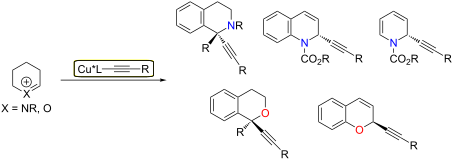
- solvent also affect the enantioselectivity, with iPr2N(n-Pr) and CH2Cl2 proving best. Notably, only 1,2-addition was observed. With respect to the alkyne, activated terminal acetylenes, such as ynones and propriolates, are best for this reaction. Unactivated alkynes give products in reasonable yields (63
- –77%), but poor enantioselectivities (1–11% ee). However, the use of activated acetylenes provides a functional group handle for elaboration, which the authors demonstrate in the preparation of indolizidine 223AB. Building on their initial discovery of a non-asymmetric, copper-catalyzed, three

Graphical Abstract
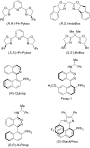
Figure 1: Chiral ligands utilized in copper-catalyzed alkynylations of cyclic iminium and oxocarbenium ions.

Scheme 1: Li’s alkynylation of acyclic N-arylimines.

Scheme 2: Knochel’s alkynylation of acyclic N-alkylenamines.

Scheme 3: Li’s CDC of tetrahydroisoquinolines and alkynes.

Scheme 4: Li’s alkynylation of N-aryldihydroisoquinolinium ions.

Scheme 5: Schreiber’s alkynylation of N-alkylisoquinolinium ions.

Scheme 6: Ma’s alkynylation of pyridium ions.

Scheme 7: Arndtsen’s alkynylation of cyclic iminium ions.

Scheme 8: Maruoka’s alkynylation of azomethine imines.

Scheme 9: Su’s CDC of tetrahydroisoquinolines and alkynes under ball milling conditions.

Scheme 10: Ma’s A3-coupling.

Scheme 11: Li’s CDC reaction using photoredox catalysis.
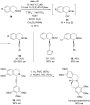
Scheme 12: Liu’s CDC reaction of N-carbamoyltetrahydroisoquinolines. T+BF4– = 2,2,6,6-tetramethylpiperidine N-...

Scheme 13: Aponick’s alkynylation of N-carbomoylquinolinium ions using StackPhos as ligand.

Scheme 14: Carreira’s enantioselective, catalytic alkynylation of aldehydes.

Scheme 15: Watson’s alkynylation of isochroman oxocarbenium ions.

Scheme 16: Watson’s alkynylation of chromene oxocarbenium ions.

Scheme 17: Watson’s alkynylation to set diaryl tetrasubstituted stereocenters.
Hetero-Diels–Alder reactions of hetaryl and aryl thioketones with acetylenic dienophiles
- Grzegorz Mlostoń,
- Paulina Grzelak,
- Maciej Mikina,
- Anthony Linden and
- Heinz Heimgartner
Beilstein J. Org. Chem. 2015, 11, 576–582, doi:10.3762/bjoc.11.63

- acetylenic dienophiles, other easily available acetylenes were used in the reaction with 1a. In all reactions attempted with phenylacetylene, (pyridin-2-yl)acetylene, and (tert-butyl)acetylene, no conversion of 1a was observed as evidenced by the blue color of the reaction mixture even after 24 h

Graphical Abstract

Scheme 1: Hetero-Diels–Alder reaction of thiobenzophenone (1a) with dimethyl acetylenedicarboxylate (2a) [10].

Scheme 2: Synthesis of polycyclic thiopyrans via the hetero-Diels–Alder reaction/1,3-hydrogen shift sequence.
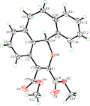
Figure 1: ORTEP Plot [19] of the molecular structure of 4b, drawn using 50% probability displacement ellipsoids.

Scheme 3: Reactions of aryl/hetaryl thioketones with methyl propiolate (Table 1).

Scheme 4: Oxidation of selected thiopyrans 4 and 5 to give the corresponding sulfones.

Figure 2: ORTEP Plot [19] of the molecular structure of one of the symmetry-independent molecules of 6d, drawn us...
Synthesis and chemosensing properties of cinnoline-containing poly(arylene ethynylene)s
- Natalia A. Danilkina,
- Petr S. Vlasov,
- Semen M. Vodianik,
- Andrey A. Kruchinin,
- Yuri G. Vlasov and
- Irina A. Balova
Beilstein J. Org. Chem. 2015, 11, 373–384, doi:10.3762/bjoc.11.43
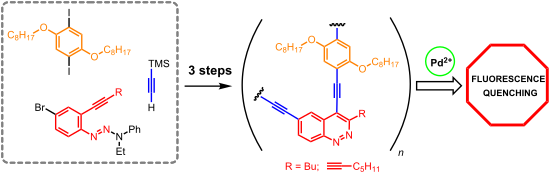
- significantly. We chose the Sonogashira coupling of diethynylcinnolines and alkylated diiodohydroquinone as a method for the formation of PAE’s backbone. It also should be mentioned that despite the fact that sila-Sonogashira coupling have been widely applied for the synthesis of different acetylenes with aryl

Graphical Abstract

Figure 1: Recent examples of PAEs and their application for the detection of Hg2+ (a) [11], Ni2+ (b) [12], explosives...

Figure 2: Target structures of PAEs.

Scheme 1: Synthesis of cinnoline-containing PAEs 10a,b.

Figure 3: 1H NMR spectra of PAEs 10a,b solutions in CDCl3.

Figure 4: 13C NMR spectra of PAEs 10a,b solutions in CDCl3.

Figure 5: Irregular chain structure (nonequivalent structural units are marked in different colors).

Figure 6: Optical absorption spectra of PAEs 10a,b in THF solutions.

Figure 7: Emission spectra of PAEs 10a,b in THF solutions.

Figure 8: Optical absorption spectra of PAE 10a in THF before and after the addition of metal analytes.

Figure 9: Optical absorption spectra of PAE 10b in THF before and after the addition of metal analytes.

Figure 10: Emission spectra of PAE 10a in THF before and after the addition of metal ions.

Figure 11: Emission spectra of PAE 10b in THF before and after the addition of metal ions.

Figure 12: Optical absorption spectra of PAE 10a in THF before and after the addition of HCl (10 equiv).

Figure 13: Emission spectra of PAE 10a in THF before and after the addition of HCl (10 equiv).

Figure 14: Optical absorption spectra of PAE 10b in THF before after the addition of methanol solution of PdCl2...

Figure 15: Emission spectra of PAE 10b in THF before and after the addition of methanol solution of PdCl2.

Figure 16: Optical absorption spectra of cinnoline 4a in THF before and after the addition of aqueous solution...

Figure 17: Emission spectra of cinnoline 4a in THF before and after the addition of aqueous solution of PdCl2.
Synthesis of antibacterial 1,3-diyne-linked peptoids from an Ugi-4CR/Glaser coupling approach
- Martin C. N. Brauer,
- Ricardo A. W. Neves Filho,
- Bernhard Westermann,
- Ramona Heinke and
- Ludger A. Wessjohann
Beilstein J. Org. Chem. 2015, 11, 25–30, doi:10.3762/bjoc.11.4
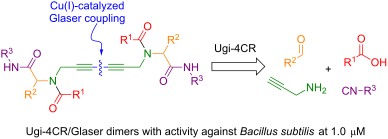
- 11) produced by a combinatorial Glaser coupling of three different monomers (see Scheme 1). Growth inhibition of Bacillus subtilis by compounds 8a–j at 1 µM (15 h), and standard erythromycin at 1 µM (15 h). Combinatorial Glaser coupling involving acetylenes 7f, 7j and 7h. Synthesis of compounds 7a–j

Graphical Abstract

Figure 1: Apoptosis inducer C2-symmetric 1,3-diyne-linked peptide 1 and its inactive monomer 2.

Scheme 1: Combinatorial Glaser coupling involving acetylenes 7f, 7j and 7h.

Figure 2: Expanded region of the ESI-MS spectrum (positive mode) and the HPLC chromatogram of the crude mixed...

Figure 3: Growth inhibition of Bacillus subtilis by compounds 8a–j at 1 µM (15 h), and standard erythromycin ...
Mono- and multilayers of molecular spoked carbazole wheels on graphite
- Stefan-S. Jester,
- A. Vikas Aggarwal,
- Daniel Kalle and
- Sigurd Höger
Beilstein J. Org. Chem. 2014, 10, 2783–2788, doi:10.3762/bjoc.10.295
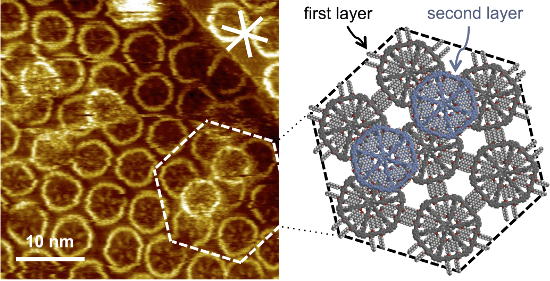
- ). Moreover, the six kinks that are seen in the STM images (one of which is marked by the white circle in Figure 2c and d) correspond (not to the carbazole units but) to the intersections of the terminal acetylenes of the rim segments. According to the space-filling model, only three of the four pseudo

Graphical Abstract

Figure 1: Chemical structures of precursor 1 and MSW 2. Hub, spokes, and rim units are shown in green, red, a...

Figure 2: (a)–(d) STM images, a molecular, and a supramolecular model of 1 at the OA/HOPG interface. (a) STM ...

Figure 3: (a)–(f) STM images, mesh, polygon, and supramolecular models of MSW 2 at the OA/HOPG interface. (a)...

Figure 4: (a)–(c) STM images and a supramolecular model of MSW 2 at the OA/HOPG interface. (a) Overview STM i...
A general metal-free approach for the stereoselective synthesis of C-glycals from unactivated alkynes
- Shekaraiah Devari,
- Manjeet Kumar,
- Ramesh Deshidi,
- Masood Rizvi and
- Bhahwal Ali Shah
Beilstein J. Org. Chem. 2014, 10, 2649–2653, doi:10.3762/bjoc.10.277
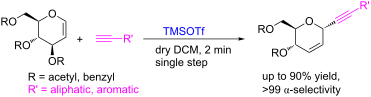
- single step from a variety of acetylenes , i.e., arylacetylenes and most importantly aliphatic alkynes. Keywords: α-selective; C-alkynylation; glycal; metal free; TMSOTf; Introduction C-Glycosides represent an important class of carbohydrate mimics, owing to their presence in a large number of

Graphical Abstract

Scheme 1: C-alkynylation of glycals.
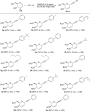
Scheme 2: Substrate scope of the reaction process under optimized reaction conditions.

Scheme 3: Plausible mechanism of the Ferrier rearrangement.
Selenium halide-induced bridge formation in [2.2]paracyclophanes
- Laura G. Sarbu,
- Henning Hopf,
- Peter G. Jones and
- Lucian M. Birsa
Beilstein J. Org. Chem. 2014, 10, 2550–2555, doi:10.3762/bjoc.10.266
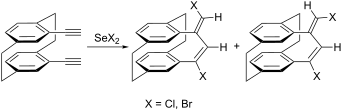
- substructure. The reactions have been found to be sensitive to the substitution of the ethynyl group. The formation of dienes with a zig-zag configuration is related to that observed for non-conjugated cyclic diynes of medium ring size. Keywords: acetylenes; dienes; [2.2]paracyclophane; selenium halides
- investigations on the intramolecular interaction of chemically disturbed functional groups in pseudo-geminally substituted [2.2]paracyclophanes, we report here the results of the addition reactions of selenium halides to pseudo-geminal bis(acetylenes). Results and Discussion Following our interest in the

Graphical Abstract

Scheme 1: Reactions of selenium dichloride and selenium dibromide with pseudo-geminal bis(acetylene) 1.

Scheme 2: Reaction of phenylselenyl chloride with pseudo-geminal bis(acetylene) 1.

Scheme 3: Plausible reaction mechanism for the addition of phenylselenyl chloride to pseudo-geminal bis(acety...

Scheme 4: Reactions of selenium dichloride and selenium dibromide with 4,13-bis(propyn-1-yl)[2.2]paracyclopha...

Figure 1: Molecular structure of compound 13. Ellipsoids represent 50% probability levels. Selected molecular...
A tandem Mannich addition–palladium catalyzed ring-closing route toward 4-substituted-3(2H)-furanones
- Jubi John,
- Eliza Târcoveanu,
- Peter G. Jones and
- Henning Hopf
Beilstein J. Org. Chem. 2014, 10, 1462–1470, doi:10.3762/bjoc.10.150
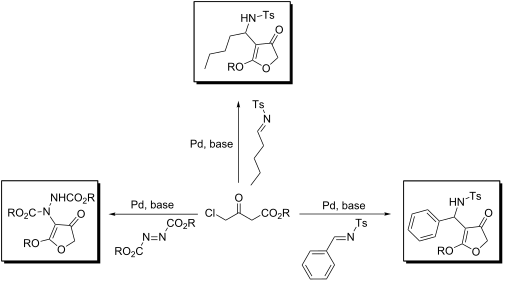
- analogue. The synthesized molecules are currently being screened for biological activities. We have also extended the reaction to triple-bonded electrophiles such as acetylenes, benzyne and nitriles; the results will be reported in due course. Studies are in progress to develop a stereoselective version of

Graphical Abstract

Figure 1: Bioactive molecules I [19], II [26], III & IV [21,22] with 3(2H)-furanone moiety.

Scheme 1: Pd-catalyzed synthesis of 3(2H)-furanones from activated alkenes [40].

Scheme 2: Pd-catalyzed synthesis of 3(2H)-furanone from tosylimine 1a.

Figure 2: Generalisation with aromatic and aliphatic imines (reaction conditions: 1 (1.0 equiv), 2 (1.1 equiv...
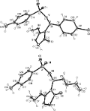
Figure 3: Thermal ellipsoid diagrams (50% probability levels) of 4-substituted-3(2H)-furanones 7 (above) and ...

Scheme 3: Mechanism of formation of the 3(2H)-furanone derivative from an imine.

Scheme 4: Pd-catalyzed synthesis of 3(2H)-furanone from diazoester 19a.

Figure 4: Generalisation with diazo esters (reaction conditions: 19 (1.0 equiv), 2 (1.1 equiv), Pd(PPh3)4 (5 ...

Scheme 5: Synthesis of aza-prostaglandin analogue.
A complete series of 6-deoxy-monosubstituted tetraalkylammonium derivatives of α-, β-, and γ-cyclodextrin with 1, 2, and 3 permanent positive charges
- Martin Popr,
- Simona Hybelbauerová and
- Jindřich Jindřich
Beilstein J. Org. Chem. 2014, 10, 1390–1396, doi:10.3762/bjoc.10.142
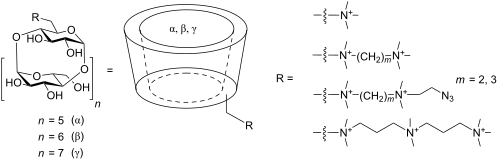
- function Analogues of PEMEDA and PEMPDA-β-CD with an azidoethane function attached to the terminal quaternary ammonium nitrogen were prepared as a basis for further derivatization. The azide functional group is reactive and can be used, for example, for the attachment of various substituted acetylenes by a

Graphical Abstract

Figure 1: Schematic representation of the prepared sets of permanently charged CD derivatives.

Scheme 1: Synthesis of monotrimethylammonio-CD derivatives.

Scheme 2: Preparation of diamines 7 and 8 as reagents for further synthesis [29].

Scheme 3: Synthesis of PEMEDA-CD derivatives.

Scheme 4: Synthesis of PEMPDA-CD derivatives.

Scheme 5: Synthesis of 1-azido-2-iodoethane.

Scheme 6: Synthesis of azidoethane-containing derivatives of PEMEDA and PEMPDA-β-CD.

Scheme 7: Synthesis of CD derivatives monosubstituted with a quaternary triamine moiety.
The influence of intraannular templates on the liquid crystallinity of shape-persistent macrocycles
- Joscha Vollmeyer,
- Ute Baumeister and
- Sigurd Höger
Beilstein J. Org. Chem. 2014, 10, 910–920, doi:10.3762/bjoc.10.89
- detected in the GPC analysis. The template has therefore two effects in the cyclization: (1) The terminal acetylenes are hold in proximity, thus, an intramolecular reaction is favored over an intermolecular reaction. (2) If an intermolecular coupling has occurred, the template leads to easily separable
- longer intraannular alkyl bridge of 1b prevents a close packing of the rings and leads in this case even to the absence of the lc phase. Conclusion In summary, shape-persistent macrocycles with intraannular bridges were synthesized by oxidative Glaser-coupling of the appropriate acetylenes. The bridges

Graphical Abstract

Figure 1: Shape-persistent macrocycles with different peripheral side groups and intraannular templates.

Scheme 1: Synthesis of macrocycle 1a with an intraannular undecanedioxy bridge. a: Pd(PPh3)2Cl2, PPh3, CuI, p...

Figure 2: GPC elugrams of the crude product of the cyclization reaction of 1a (—) and 1d (- - -), respectivel...

Scheme 2: Synthesis of the template free macrocycle 1d. a: Pd(PPh3)2Cl2, PPh3, CuI, piperidine, 98%; b: TBAF,...

Figure 3: (a) Melting points (Tm) and clearing points (Tcl) of macrocycles with different interior. [a]First ...

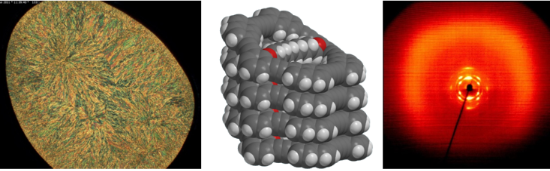
Figure 4: POM images of (a) 1a (20×, 133 °C, upon cooling); (b) 1d (20×, 84 °C, upon heating).

Figure 5: 2D X-ray patterns for 1d: (a) isotropic liquid at 160 °C, (b) partially aligned liquid crystalline ...

Figure 6: 2D X-ray patterns for 1a: (a) isotropic liquid at 150 °C, (b) columnar mesophase at 100 °C, surface...

Figure 7: Model of the molecular packing in the columnar mesophase of 1a: (a) 2D packing scheme for the colum...
Dimerisation, rhodium complex formation and rearrangements of N-heterocyclic carbenes of indazoles
- Zong Guan,
- Jan C. Namyslo,
- Martin H. H. Drafz,
- Martin Nieger and
- Andreas Schmidt
Beilstein J. Org. Chem. 2014, 10, 832–840, doi:10.3762/bjoc.10.79
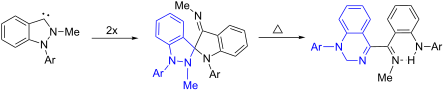
- -ylidene with acetylenes. Indazol-3-ylidenes which possess an aryl ring at N1 rearrange to give substituted acridines by a ring-cleavage/pericyclic ring-closure reaction sequence (2→A→B→11) (Scheme 3). It proved to be advantageous to start these rearrangements from indazolium salts which are readily

Graphical Abstract

Scheme 1: Generation of indazol-3-ylidenes.
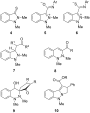
Scheme 2: Reaction products of indazol-3-ylidenes in heterocycle synthesis.

Scheme 3: Syntheses of acridines from indazol-3-ylidenes.

Scheme 4: Dimerisation of indazol-3-ylidenes to spiro compounds.

Figure 1: Diagnostic 1H and 13C NMR chemical shifts of the Z and E configuration isomer in CDCl3.

Figure 2: Molecular structure of 14c, displacement parameters are drawn at 50% probability level.

Scheme 5: Rhodium complex formation.
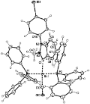
Figure 3: Structure of the cation of 15e, displacement parameters are drawn at 50% probability level.

Scheme 6: Rearrangement of the spiro compounds on heating.

Figure 4: Molecular structure of 16b, displacement parameters are drawn at 50% probability level.
Isocyanide-based multicomponent reactions towards cyclic constrained peptidomimetics
- Gijs Koopmanschap,
- Eelco Ruijter and
- Romano V.A. Orru
Beilstein J. Org. Chem. 2014, 10, 544–598, doi:10.3762/bjoc.10.50

- ]. Multicomponent reactions towards amide isosteres often involve an Ugi reaction followed by a Click reaction, in which two of the Ugi-inputs either contain an alkyne or an azide moiety. A well-known example of the latter reaction is the Copper(I) catalyzed azide–alkyne cycloaddition (CuAAC) between acetylenes and

Graphical Abstract

Scheme 1: The proposed mechanism of the Passerini reaction.

Scheme 2: The PADAM-strategy to α-hydroxy-β-amino amide derivatives 7. An additional oxidation provides α-ket...

Scheme 3: The general accepted Ugi-mechanism.

Scheme 4: Three commonly applied Ugi/cyclization approaches. a) UDC-process, b) UAC-sequence, c) UDAC-combina...

Scheme 5: Ugi reaction that involves the condensation of Armstrong’s convertible isocyanide.

Scheme 6: Mechanism of the U-4C-3CR towards bicyclic β-lactams.

Scheme 7: The Ugi 4C-3CR towards oxabicyclo β-lactams.

Scheme 8: Ugi MCR between an enantiopure monoterpene based β-amino acid, aldehyde and isocyanide resulting in...

Scheme 9: General MCR for β-lactams in water.

Scheme 10: a) Ugi reaction for β-lactam-linked peptidomimetics. b) Varying the β-amino acid resulted in β-lact...

Scheme 11: Ugi-4CR followed by a Pd-catalyzed Sn2 cyclization.

Scheme 12: Ugi-3CR of dipeptide mimics from 2-substituted pyrrolines.

Scheme 13: Joullié–Ugi reaction towards 2,5-disubstituted pyrrolidines.

Scheme 14: Further elaboration of the Ugi-scaffold towards bicyclic systems.

Scheme 15: Dihydroxyproline derivatives from an Ugi reaction.

Scheme 16: Diastereoselective Ugi reaction described by Banfi and co-workers.

Scheme 17: Similar Ugi reaction as in Scheme 16 but with different acids and two chiral isocyanides.

Scheme 18: Highly diastereoselective synthesis of pyrrolidine-dipeptoids via a MAO-N/MCR-procedure.

Scheme 19: MAO-N/MCR-approach towards the hepatitis C drug telaprevir.

Scheme 20: Enantioselective MAO-U-3CR procedure starting from chiral pyrroline 64.

Scheme 21: Synthesis of γ-lactams via an UDC-sequence.

Scheme 22: Utilizing bifunctional groups to provide bicyclic γ-lactam-ketopiperazines.

Scheme 23: The Ugi reaction provided both γ- as δ-lactams depending on which inputs were used.

Scheme 24: The sequential Ugi/RCM with olefinic substrates provided bicyclic lactams.

Scheme 25: a) The structural and dipole similarities of the triazole unit with the amide bond. b) The copper-c...

Scheme 26: The Ugi/Click sequence provided triazole based peptidomimetics.

Scheme 27: The Ugi/Click reaction as described by Nanajdenko.

Scheme 28: The Ugi/Click-approach by Pramitha and Bahulayan.

Scheme 29: The Ugi/Click-combination by Niu et al.

Scheme 30: Triazole linked peptidomimetics obtained from two separate MCRs and a sequential Click reaction.

Scheme 31: Copper-free synthesis of triazoles via two MCRs in one-pot.

Scheme 32: The sequential Ugi/Paal–Knorr reaction to afford pyrazoles.

Scheme 33: An intramolecular Paal–Knorr condensation provided under basic conditions pyrazolones.

Scheme 34: Similar cyclization performed under acidic conditions provided pyrazolones without the trifluoroace...

Scheme 35: The Ugi-4CR towards 2,4-disubstituted thiazoles.

Scheme 36: Solid phase approach towards thiazoles.

Scheme 37: Reaction mechanism of formation of thiazole peptidomimetics containing an additional β-lactam moiet...

Scheme 38: The synthesis of the trisubstituted thiazoles could be either performed via an Ugi reaction with pr...

Scheme 39: Performing the Ugi reaction with DMB-protected isocyanide gave access to either oxazoles or thiazol...

Scheme 40: Ugi/cyclization-approach towards 2,5-disubstituted thiazoles. The Ugi reaction was performed with d...

Scheme 41: Further derivatization of the thiazole scaffold.

Scheme 42: Three-step procedure towards the natural product bacillamide C.

Scheme 43: Ugi-4CR to oxazoles reported by Zhu and co-workers.

Scheme 44: Ugi-based synthesis of oxazole-containing peptidomimetics.

Scheme 45: TMNS3 based Ugi reaction for peptidomimics containing a tetrazole.

Scheme 46: Catalytic cycle of the enantioselective Passerini reaction towards tetrazole-based peptidomimetics.

Scheme 47: Tetrazole-based peptidomimetics via an Ugi reaction and a subsequent sigmatropic rearrangement.

Scheme 48: Resin-bound Ugi-approach towards tetrazole-based peptidomimetics.

Scheme 49: Ugi/cyclization approach towards γ/δ/ε-lactam tetrazoles.

Scheme 50: Ugi-3CR to pipecolic acid-based peptidomimetics.

Scheme 51: Staudinger–Aza-Wittig/Ugi-approach towards pipecolic acid peptidomimetics.

Figure 1: The three structural isomers of diketopiperazines. The 2,5-DKP isomer is most common.

Scheme 52: UDC-approach to obtain 2,5-DKPs, either using Armstrong’s isocyanide or via ethylglyoxalate.

Scheme 53: a) Ugi reaction in water gave either 2,5-DKP structures or spiro compounds. b) The Ugi reaction in ...

Scheme 54: Solid-phase approach towards diketopiperazines.

Scheme 55: UDAC-approach towards DKPs.

Scheme 56: The intermediate amide is activated as leaving group by acid and microwave assisted organic synthes...

Scheme 57: UDC-procedure towards active oxytocin inhibitors.

Scheme 58: An improved stereoselective MCR-approach towards the oxytocin inhibitor.

Scheme 59: The less common Ugi reaction towards DKPs, involving a Sn2-substitution.

Figure 2: Spatial similarities between a natural β-turn conformation and a DKP based β-turn mimetic [158].

Scheme 60: Ugi-based syntheses of bicyclic DKPs. The amine component is derived from a coupling between (R)-N-...

Scheme 61: Ugi-based synthesis of β-turn and γ-turn mimetics.

Figure 3: Isocyanide substituted 3,4-dihydropyridin-2-ones, dihydropyridines and the Freidinger lactams. Bio-...

Scheme 62: The mechanism of the 4-CR towards 3,4-dihydropyridine-2-ones 212.

Scheme 63: a) Multiple MCR-approach to provide DHP-peptidomimetic in two-steps. b) A one-pot 6-CR providing th...

Scheme 64: The MCR–alkylation–MCR procedure to obtain either tetrapeptoids or depsipeptides.

Scheme 65: U-3CR/cyclization employing semicarbazone as imine component gave triazine based peptidomimetics.

Scheme 66: 4CR towards triazinane-diones.

Scheme 67: The MCR–alkylation–IMCR-sequence described by our group towards triazinane dione-based peptidomimet...

Scheme 68: Ugi-4CR approaches followed by a cyclization to thiomorpholin-ones (a) and pyrrolidines (b).

Scheme 69: UDC-approach for benzodiazepinones.

Scheme 70: Ugi/Mitsunobu sequence to BDPs.

Scheme 71: A UDAC-approach to BDPs with convertible isocyanides. The corresponding amide is cleaved by microwa...

Scheme 72: microwave assisted post condensation Ugi reaction.

Scheme 73: Benzodiazepinones synthesized via the post-condensation Ugi/ Staudinger–Aza-Wittig cyclization.

Scheme 74: Two Ugi/cyclization approaches utilizing chiral carboxylic acids. Reaction (a) provided the product...

Scheme 75: The mechanism of the Gewald-3CR includes three base-catalysed steps involving first a Knoevnagel–Co...

Scheme 76: Two structural 1,4-thienodiazepine-2,5-dione isomers by U-4CR/cyclization.

Scheme 77: Tetrazole-based diazepinones by UDC-procedure.

Scheme 78: Tetrazole-based BDPs via a sequential Ugi/hydrolysis/coupling.

Scheme 79: MCR synthesis of three different tricyclic BPDs.

Scheme 80: Two similar approaches both involving an Ugi reaction and a Mitsunobu cyclization.

Scheme 81: Mitsunobu–Ugi-approach towards dihydro-1,4-benzoxazepines.

Scheme 82: Ugi reaction towards hetero-aryl fused 5-oxo-1,4-oxazepines.

Scheme 83: a) Ugi/RCM-approach towards nine-membered peptidomimetics b) Sequential peptide-coupling, deprotect...

Scheme 84: Ugi-based synthesis towards cyclic RGD-pentapeptides.

Scheme 85: Ugi/MCR-approach towards 12–15 membered macrocycles.

Scheme 86: Stereoselective Ugi/RCM approach towards 16-membered macrocycles.

Scheme 87: Passerini/RCM-sequence to 22-membered macrocycles.

Scheme 88: UDAC-approach towards 12–18-membered depsipeptides.

Figure 4: Enopeptin A with its more active derivative ADEP-4.

Scheme 89: a) The Joullié–Ugi-approach towards ADEP-4 derivatives b) Ugi-approach for the α,α-dimethylated der...

Scheme 90: Ugi–Click-strategy for 15-membered macrocyclic glyco-peptidomimetics.

Scheme 91: Ugi/Click combinations provided macrocycles containing both a triazole and an oxazole moiety.

Scheme 92: a) A solution-phase procedure towards macrocycles. b) Alternative solid-phase synthesis as was repo...

Scheme 93: Ugi/cyclization towards cyclophane based macrocycles.

Scheme 94: PADAM-strategy towards eurystatin A.

Scheme 95: PADAM-approach for cyclotheanamide.

Scheme 96: A triple MCR-approach affording RGD-pentapeptoids.

Scheme 97: Ugi-MiBs-approach towards peptoid macrocycles.

Scheme 98: Passerini-based MiB approaches towards macrocycles 345 and 346.

Scheme 99: Macrocyclic peptide formation by the use of amphoteric aziridine-based aldehydes.
Silver and gold-catalyzed multicomponent reactions
- Giorgio Abbiati and
- Elisabetta Rossi
Beilstein J. Org. Chem. 2014, 10, 481–513, doi:10.3762/bjoc.10.46
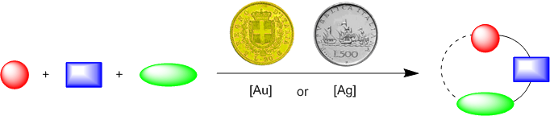
- related cascade multicomponent processes of interest, which involve gold acetylides and imines. Among them, a new Au(I)-catalyzed entry to cyclic carbamimidates 17 starting from acetylenes, imines and p-toluenesulfonylisocyanate (18) was reported by Toste and Campbell [43]. The reaction gave mainly the 5

Graphical Abstract

Scheme 1: General reaction mechanism for Ag(I)-catalyzed A3-coupling reactions.

Scheme 2: A3-coupling reaction catalyzed by polystyrene-supported NHC–silver halides.

Figure 1: Various NHC–Ag(I) complexes used as catalysts for A3-coupling.

Scheme 3: Proposed reaction mechanism for NHC–AgCl catalyzed A3-coupling reactions.

Scheme 4: Liu’s synthesis of pyrrole-2-carboxaldehydes 4.

Scheme 5: Proposed reaction mechanism for Liu’s synthesis of pyrrole-2-carboxaldehydes 4.

Scheme 6: Gold-catalyzed synthesis of propargylamines 1.

Scheme 7: A3-coupling catalyzed by phosphinamidic Au(III) metallacycle 6.

Scheme 8: Gold-catalyzed KA2-coupling.

Scheme 9: A3-coupling applied to aldehyde-containing oligosaccharides 8.

Scheme 10: A3-MCR for the preparation of propargylamine-substituted indoles 9.

Scheme 11: A3-coupling interceded synthesis of furans 12.

Scheme 12: A3/KA2-coupling mediated synthesis of functionalized dihydropyrazoles 13 and polycyclic dihydropyra...

Scheme 13: Au(I)-catalyzed entry to cyclic carbamimidates 17 via an A3-coupling-type approach.

Scheme 14: Proposed reaction mechanism for the Au(I)-catalyzed synthesis of cyclic carbamimidates 17.

Figure 2: Chiral trans-1-diphenylphosphino-2-aminocyclohexane–Au(I) complex 20.

Scheme 15: A3-coupling-type synthesis of oxazoles 21 catalyzed by Au(III)–salen complex.

Scheme 16: Proposed reaction mechanism for the synthesis of oxazoles 21.

Scheme 17: Synthesis of propargyl ethyl ethers 24 by an A3-coupling-type reaction.

Scheme 18: General mechanism of Ag(I)-catalyzed MCRs of 2-alkynylbenzaldehydes, amines and nucleophiles.

Scheme 19: General synthetic pathway to 1,3-disubstituted-1,2-dihydroisoquinolines.

Scheme 20: Synthesis of 1,3-disubstituted-1,2-dihydroisoquinolines 29.

Scheme 21: Synthesis of 1,3-disubstituted-1,2-dihydroisoquinolines 35 and 36.

Scheme 22: Rh(II)/Ag(I) co-catalyzed synthesis of 1,3-disubstituted-1,2-dihydroisoquinolines 40.

Scheme 23: General synthetic pathway to 2-amino-1,2-dihydroquinolines.

Scheme 24: Synthesis of 2-amino-1,2-dihydroquinolines 47.

Scheme 25: Synthesis of tricyclic H-pyrazolo[5,1-a]isoquinoline 48.

Scheme 26: Synthesis of tricyclic H-pyrazolo[5,1-a]isoquinolines 48.

Scheme 27: Cu(II)/Ag(I) catalyzed synthesis of H-pyrazolo[5,1-a]isoquinolines 48.

Scheme 28: Synthesis of 2-aminopyrazolo[5,1-a]isoquinolines 53.

Scheme 29: Synthesis of 1-(isoquinolin-1-yl)guanidines 55.

Scheme 30: Ag(I)/Cu(I) catalyzed synthesis of 2-amino-H-pyrazolo[5,1-a]isoquinolines 58.

Scheme 31: Ag(I)/Ni(II) co-catalyzed synthesis of 3,4-dihydro-1H-pyridazino[6,1-a]isoquinoline-1,1-dicarboxyla...

Scheme 32: Ag(I) promoted activation of the α-carbon atom of the isocyanide group.

Scheme 33: Synthesis of dihydroimidazoles 65.

Scheme 34: Synthesis of oxazoles 68.

Scheme 35: Stereoselective synthesis of chiral butenolides 71.

Scheme 36: Proposed reaction mechanism for the synthesis of butenolides 71.

Scheme 37: Stereoselective three-component approach to pirrolidines 77 by means of a chiral auxiliary.

Scheme 38: Stereoselective three-component approach to pyrrolidines 81 and 82 by means of a chiral catalyst.

Scheme 39: Synthesis of substituted five-membered carbocyles 86.

Scheme 40: Synthesis of regioisomeric arylnaphthalene lactones.

Scheme 41: Enantioselective synthesis of spiroacetals 96 by Fañanás and Rodríguez [105].

Scheme 42: Enantioselective synthesis of spiroacetals 101 by Gong [106].

Scheme 43: Synthesis of polyfunctionalized fused bicyclic ketals 103 and bridged tricyclic ketals 104.

Scheme 44: Proposed reaction mechanism for the synthesis of ketals 103 and 104.

Scheme 45: Synthesis of β-alkoxyketones 108.

Scheme 46: Synthesis of N-methyl-1,4-dihydropyridines 112.

Scheme 47: Synthesis of tetrahydrocarbazoles 115–117.

Scheme 48: Plausible reaction mechanism for the synthesis of tetrahydrocarbazoles 115–117.

Scheme 49: Carboamination, carboalkoxylation and carbolactonization of terminal alkenes.

Scheme 50: Oxyarylation of alkenes with arylboronic acids and Selectfluor as reoxidant.

Scheme 51: Proposed reaction mechanism for oxyarylation of alkenes.

Scheme 52: Oxyarylation of alkenes with arylsilanes and Selectfluor as reoxidant.

Scheme 53: Oxyarylation of alkenes with arylsilanes and IBA as reoxidant.
Practical synthesis of aryl-2-methyl-3-butyn-2-ols from aryl bromides via conventional and decarboxylative copper-free Sonogashira coupling reactions
- Andrea Caporale,
- Stefano Tartaggia,
- Andrea Castellin and
- Ottorino De Lucchi
Beilstein J. Org. Chem. 2014, 10, 384–393, doi:10.3762/bjoc.10.36
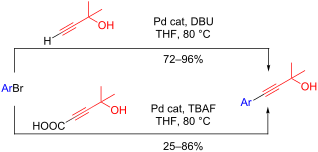
- -pentynoic acid with aryl bromides, using a catalyst containing Pd(OAc)2 in combination with SPhos or XPhos in the presence of tetra-n-butylammonium fluoride (TBAF) as the base and THF as the solvent. Therefore, new efficient approaches to the synthesis of terminal acetylenes from widely available aryl
- terminal acetylenes is the most straightforward method for the preparation of substituted alkynes [1][2][3][4][5][6], which are extensively used as building blocks in a great number of applications including the synthesis of pharmaceuticals [7][8][9], natural products and organic functional materials [10
- presence of a Cu/Pd bimetallic catalyst, followed by the basic cleavage of the protecting group [42][43][44][45][46]. Terminal alkynes are often used as starting materials for the synthesis of disubstituted acetylenes through a second coupling process with another aryl halide. Decarboxylative couplings

Graphical Abstract

Scheme 1: Conventional (from the left) and decarboxylative (from the right) Pd-catalyzed Sonogashira coupling...

Scheme 2: Protection of propiolic acid with acetone.
Advancements in the mechanistic understanding of the copper-catalyzed azide–alkyne cycloaddition
- Regina Berg and
- Bernd F. Straub
Beilstein J. Org. Chem. 2013, 9, 2715–2750, doi:10.3762/bjoc.9.308
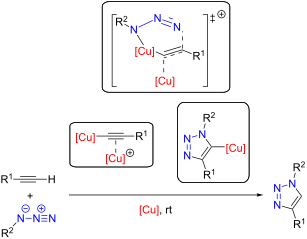
- molecules in the rate-determining step, respectively. Alternatively, there could be only one pathway including two acetylenes in the rate-determining step, which is inhibited by higher concentrations of the alkyne. The latter proposition is supported by the fact that commercially available copper acetylides

Graphical Abstract

Scheme 1: Exemplary 1,3-dipolar cycloaddition of phenylacetylene with phenyl azide [6].

Scheme 2: CuAAC reaction of benzyl azide with (prop-2-yn-1-yloxy)benzene [12].

Scheme 3: Bioconjugation reaction of capsid-bound azide groups with alkynyl-functionalized dye molecules (cow...

Figure 1: Tris(triazolylmethyl)amine ligands for CuAAC applications in bioorganic chemistry: TBTA = tris[(1-b...

Figure 2: Derivatives of 2,2’-bipyridine and 1,10-phenanthroline, commonly used ligands in CuAAC reactions un...

Scheme 4: CuAAC reaction with copper(II) precursor salt and rate-accelerating monodentate phosphoramidite lig...

Scheme 5: Synthesis of 1-(adamant-1-yl)-1H-1,2,3-triazol-4-ylcarbonyl-Phe-Gly-OH by solid-supported Click cat...

Scheme 6: CuAAC reaction with re-usable copper(I)-tren catalyst [129].

Scheme 7: CuAAC test reaction with chlorido[tris(1-benzyl-1H-1,2,3-triazol-4-yl)methanol-κ3N3]copper(I) and a...

Scheme 8: CuAAC model reaction with [Cu2(μ-TBTA-κ4N2,N3,N3’,N3’’)2][BF4]2 [131].

Scheme 9: Application of a (2-aminoarenethiolato)copper(I) complex as homogeneous catalyst for the CuAAC test...

Scheme 10: Application of [CuBr(PPh3)3] as homogeneous catalyst for the CuAAC test reaction of benzyl azide wi...

Figure 3: Phosphinite and phosphonite copper(I) complexes presented by Díez-González [144].

Scheme 11: Effect of additives on the CuAAC test reaction with [(SIMes)CuCl] [149].

Scheme 12: Initiation of the catalytic cycle by formation of the copper acetylide intermediate from [(ICy)2Cu]...

Scheme 13: Early mechanistic proposal by Sharpless [12,42].

Scheme 14: Chemoselective synthesis of a 5-iodo-1,4-disubstituted 1,2,3-triazole [156].

Scheme 15: Mechanistic proposals for the copper-catalyzed azide–iodoalkyne cycloaddition [156].

Scheme 16: 1,3-Dipolar cycloaddition of 3-hexyne catalyzed by [(SIMes)CuBr] [146].

Scheme 17: Mechanistic picture for the cycloaddition of internal alkynes catalyzed by NHC-copper(I) complexes ...

Scheme 18: Catalytic cycle of the CuAAC reaction on the basis of the proposed mechanistic scheme by Fokin and ...

Figure 4: Schematic representation of the single crystal X-ray structures of copper(I) acetylide complexes [Cu...

Figure 5: Acetylide-bridged dicopper complexes with tris(heteroarylmethyl)amine ligand(s) as key intermediate...

Scheme 19: Off-cycle equilibrium between unreactive polymeric copper(I) acetylide species (right) and reactive...
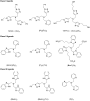
Figure 6: Categories of tris(heteroarylmethyl)amine ligands regarding their binding ability to copper(I) ions ...

Scheme 20: Mechanistic scheme for ligand-accelerated catalysis with tripodal tris(heteroarylmethyl)amine ligan...

Scheme 21: Synthesis of supposed intermediates in the CuAAC’s catalytic cycle [164,187].

Figure 7: Tetranuclear copper acetylide complexes as reported by Weiss (left) [176] and Tasker (middle) [185] and model...

Figure 8: Gibbs free energy diagram for the computed mechanistic pathway of the CuAAC reaction starting from ...

Figure 9: Energy diagram by Ahlquist and Fokin [125].

Scheme 22: Mechanistic proposal for the CuAAC reaction based on DFT calculations by Fokin [125] and our group [186] ([Cu...

Figure 10: ORTEP plot [202,203] of the X-ray powder diffraction crystal structure of (phenylethynyl)copper(I) [(PhC≡CCu)...

Scheme 23: Synthesis of [(PhC≡CCu)2]n as co-product in the Glaser coupling of phenylacetylene in the presence ...

Scheme 24: Mechanistic explanation for the isotopic enrichment in the product triazolide in the presence of th...

Scheme 25: Homogeneous CuAAC catalysis with a bistriazolylidene dicopper complex (0.5 mol %) and comparison wi...
Zinc–gold cooperative catalysis for the direct alkynylation of benzofurans
- Yifan Li and
- Jérôme Waser
Beilstein J. Org. Chem. 2013, 9, 1763–1767, doi:10.3762/bjoc.9.204
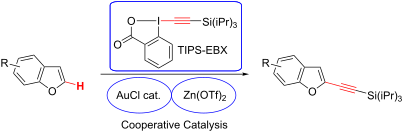
- allowing the direct and regioselective C–H functionalization of benzofurans [12]. In this context, the introduction of an alkyne would be particularly useful, as acetylenes are important building blocks in synthetic chemistry, chemical biology and materials science [13]. Nevertheless, to the best of our

Graphical Abstract

Figure 1: Benzofurans in bioactive compounds and materials.

Scheme 1: Zinc–gold catalyzed C2-alkynylation of benzofurans.

Scheme 2: Scope of the reaction.

Scheme 3: Alkynylation of 7-methoxybenzofuran (7j) [31].

Scheme 4: Alkynylation of 8-methoxypsoralen (2).
Efficient continuous-flow synthesis of novel 1,2,3-triazole-substituted β-aminocyclohexanecarboxylic acid derivatives with gram-scale production
- Sándor B. Ötvös,
- Ádám Georgiádes,
- István M. Mándity,
- Lóránd Kiss and
- Ferenc Fülöp
Beilstein J. Org. Chem. 2013, 9, 1508–1516, doi:10.3762/bjoc.9.172
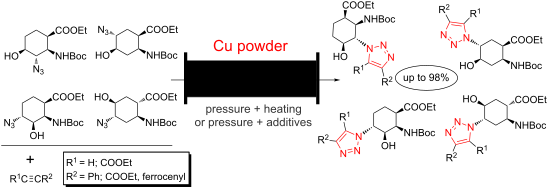
- acetylenes [16]. The classical Huisgen reaction, thermally induced, gives an approximate 1:1 mixture of 1,4- and 1,5-disubstituted 1,2,3-triazole isomers (Scheme 1) [17]. However, when Cu(I) catalysis is applied, the reaction becomes regioselective, exclusively yielding the 1,4-regioisomer within a

Graphical Abstract
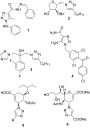
Figure 1: Examples of 1,2,3-triazoles with various biological activities.

Scheme 1: 1,3-Dipolar azide–alkyne cycloadditions.

Figure 2: Selected bioactive alicyclic β-amino acids.

Figure 3: Experimental setup for the CF reactions.

Scheme 2: Gramm-scale CF synthesis of triazole 22 under conditions B.
Practical synthesis of indoles and benzofurans in water using a heterogeneous bimetallic catalyst
- Cybille Rossy,
- Eric Fouquet and
- François-Xavier Felpin
Beilstein J. Org. Chem. 2013, 9, 1426–1431, doi:10.3762/bjoc.9.160
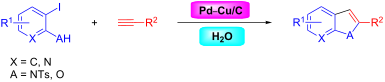
- with aryl acetylenes suggesting a strong halide effect and a sensitivity of the Pd–X bond under our reaction conditions. Indeed, the coupling of aryl acetylenes with bromo-anilines and bromo-phenols showed lower conversion compared to the iodo-congeners. We further evaluated the potential of our Pd–Cu
- /C catalyst for the alkynylation–cyclization of 2-iodophenols in view of preparing benzofurans. As already observed with the synthesis of indoles, aliphatic alkynes gave slightly lower yields than aryl acetylenes. A remarkable tolerance toward reactive functions such as ketones and alcohols

Graphical Abstract

Scheme 1: Sonogashira alkynylation–cyclization sequence for indole and benzofuran syntheses.

Scheme 2: Optimization of the nitrogen protecting group. aReaction conditions: 2-iodoaniline (0.5 mmol), phen...

Scheme 3: Preparation of N-protected 2-iodoanilines.

Scheme 4: Preparation of N-protected 3-iodo-2-aminopyridines.
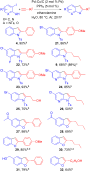
Scheme 5: Preparation of indoles, azaindoles and benzofurans. aReaction conditions: 2-iodoaniline (0.5 mmol),...
Design and synthesis of tag-free photoprobes for the identification of the molecular target for CCG-1423, a novel inhibitor of the Rho/MKL1/SRF signaling pathway
- Jessica L. Bell,
- Andrew J. Haak,
- Susan M. Wade,
- Yihan Sun,
- Richard R. Neubig and
- Scott D. Larsen
Beilstein J. Org. Chem. 2013, 9, 966–973, doi:10.3762/bjoc.9.111
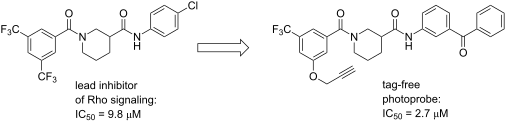
- of the model probes retained good activity relative to the lead compound 2 with little to no cytotoxicity. Based on these results we decided to install acetylenes in our final probes through ether linkages at the positions of the methoxy groups of the most active models 8a, 8c and 14. Preparation of

Graphical Abstract

Figure 1: Structures of lead Rho/MKL1/SRF inhibitor 1 and conformationally restricted analogue 2.
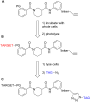
Figure 2: Strategy for tag-free photolabeling in whole cells (PG = photoactivatable group, TAG = fluorescent ...

Scheme 1: General synthesis of model benzophenone probes.

Scheme 2: Synthesis of aryl azide model probe 14.

Scheme 3: Synthesis of benzophenone photoaffinity probe 19.

Scheme 4: Synthesis of benzophenone photoaffinity probe 24.

Scheme 5: Synthesis of aryl azide photoaffinity probes.

Figure 3: Photoprobe 24 (CCG-206559) retains biological activity to block prostate cancer migration. A. Cellu...

Figure 4: Structure of the competitor used in the photolabeling experiment.

Figure 5: SDS-PAGE gel of photolabeling experiment in whole PC-3 cells. Lane 1 contains 0.3 µM 24 after 30 mi...
Regio- and stereoselective carbometallation reactions of N-alkynylamides and sulfonamides
- Yury Minko,
- Morgane Pasco,
- Helena Chechik and
- Ilan Marek
Beilstein J. Org. Chem. 2013, 9, 526–532, doi:10.3762/bjoc.9.57

- carbamate moiety. Molecular structure of 9f (hydrogen atoms except of H9 and H10 are omitted for clarity). Possible regioisomers obtained in the carbocupration reaction of α-heterosubstituted acetylenes 1. Regioselective carbometallation of N-alkynylsulfonamide 2. Regioselective carbometallation of ynamide

Graphical Abstract

Scheme 1: Possible regioisomers obtained in the carbocupration reaction of α-heterosubstituted acetylenes 1.

Scheme 2: Regioselective carbometallation of N-alkynylsulfonamide 2.

Scheme 3: Regioselective carbometallation of ynamide 4.

Scheme 4: Regioselective carbometallation of cyclic N-alkynylcarbamate 7.

Figure 1: Molecular structure of 9f (hydrogen atoms except of H9 and H10 are omitted for clarity).
Recent advances in transition-metal-catalyzed intermolecular carbomagnesiation and carbozincation
- Kei Murakami and
- Hideki Yorimitsu
Beilstein J. Org. Chem. 2013, 9, 278–302, doi:10.3762/bjoc.9.34
- the reactions of simple dialkylacetylenes, benzylzinc bromide was effective (Scheme 36, top). On the other hand, dibenzylzinc reagent was effective for the reactions of aryl(alkyl)acetylenes (Scheme 36, bottom). They applied the reaction toward the synthesis of an estrogen-receptor antagonist (Scheme
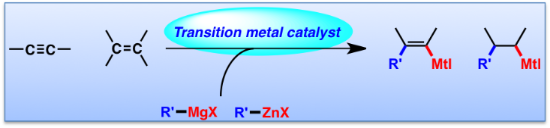
- -catalyzed carbozincation of arylacetylenes and its application to the synthesis of tamoxifen. Bristol-Myers Squibb’s nickel-catalyzed phenylzincation. Iron/NHC-catalyzed arylmagnesiation of aryl(alkyl)acetylene. Iron/copper-cocatalyzed alkylmagnesiation of aryl(alkyl)acetylenes. Iron-catalyzed
- and aryl(alkyl)acetylenes. Synthesis of estrogen receptor antagonist. Cobalt-catalyzed allylzincation of aryl-substituted alkynes. Silver-catalyzed alkylmagnesiation of terminal alkyne. Proposed mechanism of silver-catalyzed alkylmagnesiation. Zirconium-catalyzed ethylzincation of terminal alkenes

Graphical Abstract

Scheme 1: Variation of substrates for carbomagnesiation and carbozincation in this article.

Scheme 2: Copper-catalyzed arylmagnesiation and allylmagnesiation of alkynyl sulfone.

Scheme 3: Copper-catalyzed four-component reaction of alkynyl sulfoxide with alkylzinc reagent, diiodomethane...

Scheme 4: Rhodium-catalyzed reaction of aryl alkynyl ketones with arylzinc reagents.

Scheme 5: Allylmagnesiation of propargyl alcohol, which provides the anti-addition product.

Scheme 6: Negishi’s total synthesis of (Z)-γ-bisabolene by allylmagnesiation.

Scheme 7: Iron-catalyzed syn-carbomagnesiation of propargylic or homopropargylic alcohol.

Scheme 8: Mechanism of iron-catalyzed carbomagnesiation.

Scheme 9: Regio- and stereoselective manganese-catalyzed allylmagnesiation.

Scheme 10: Vinylation and alkylation of arylacetylene-bearing hydroxy group.

Scheme 11: Arylmagnesiation of (2-pyridyl)silyl-substituted alkynes.

Scheme 12: Synthesis of tamoxifen from 2g.

Scheme 13: Controlling regioselectivity of carbocupration by attaching directing groups.

Scheme 14: Rhodium-catalyzed carbozincation of ynamides.

Scheme 15: Synthesis of 4-pentenenitriles through carbometalation followed by aza-Claisen rearrangement.

Scheme 16: Uncatalyzed carbomagnesiation of cyclopropenes.

Scheme 17: Iron-catalyzed carbometalation of cyclopropenes.

Scheme 18: Enantioselective carbozincation of cyclopropenes.

Scheme 19: Copper-catalyzed facially selective carbomagnesiation.

Scheme 20: Arylmagnesiation of cyclopropenes.

Scheme 21: Enantioselective methylmagnesiation of cyclopropenes without catalyst.

Scheme 22: Copper-catalyzed carbozincation.

Scheme 23: Enantioselective ethylzincation of cyclopropenes.

Scheme 24: Nickel-catalyzed ring-opening aryl- and alkenylmagnesiation of a methylenecyclopropane.

Scheme 25: Reaction mechanism.

Scheme 26: Nickel-catalyzed carbomagnesiation of arylacetylene and dialkylacetylene.

Scheme 27: Nickel-catalyzed carbozincation of arylacetylenes and its application to the synthesis of tamoxifen....

Scheme 28: Bristol-Myers Squibb’s nickel-catalyzed phenylzincation.

Scheme 29: Iron/NHC-catalyzed arylmagnesiation of aryl(alkyl)acetylene.

Scheme 30: Iron/copper-cocatalyzed alkylmagnesiation of aryl(alkyl)acetylenes.

Scheme 31: Iron-catalyzed hydrometalation.

Scheme 32: Iron/copper-cocatalyzed arylmagnesiation of dialkylacetylenes.

Scheme 33: Chromium-catalyzed arylmagnesiation of alkynes.

Scheme 34: Cobalt-catalyzed arylzincation of alkynes.

Scheme 35: Cobalt-catalyzed formation of arylzinc reagents and subsequent arylzincation of alkynes.

Scheme 36: Cobalt-catalyzed benzylzincation of dialkylacetylene and aryl(alkyl)acetylenes.

Scheme 37: Synthesis of estrogen receptor antagonist.

Scheme 38: Cobalt-catalyzed allylzincation of aryl-substituted alkynes.

Scheme 39: Silver-catalyzed alkylmagnesiation of terminal alkyne.

Scheme 40: Proposed mechanism of silver-catalyzed alkylmagnesiation.

Scheme 41: Zirconium-catalyzed ethylzincation of terminal alkenes.

Scheme 42: Zirconium-catalyzed alkylmagnesiation.

Scheme 43: Titanium-catalyzed carbomagnesiation.

Scheme 44: Three-component coupling reaction.

Scheme 45: Iron-catalyzed arylzincation reaction of oxabicyclic alkenes.

Scheme 46: Reaction of allenyl ketones with organomagnesium reagent.

Scheme 47: Regio- and stereoselective reaction of a 2,3-allenoate.

Scheme 48: Three-component coupling reaction of 1,2-allenoate, organozinc reagent, and ketone.

Scheme 49: Proposed mechanism for a rhodium-catalyzed arylzincation of allenes.

Scheme 50: Synthesis of skipped polyenes by iterative arylzincation/allenylation reaction.

Scheme 51: Synthesis of 1,4-diorganomagnesium compound from 1,2-dienes.

Scheme 52: Synthesis of tricyclic compounds.

Scheme 53: Manganese-catalyzed allylmagnesiation of allenes.

Scheme 54: Copper-catalyzed alkylmagnesiation of 1,3-dienes and 1,3-enynes.

Scheme 55: Chromium-catalyzed methallylmagnesiation of 1,6-diynes.

Scheme 56: Chromium-catalyzed allylmagnesiation of 1,6-enynes.

Scheme 57: Proposed mechanism of the chromium-catalyzed methallylmagnesiation.
Stereoselective synthesis of tetrasubstituted alkenes via a sequential carbocupration and a new sulfur–lithium exchange
- Andreas Unsinn,
- Cora Dunst and
- Paul Knochel
Beilstein J. Org. Chem. 2012, 8, 2202–2206, doi:10.3762/bjoc.8.248
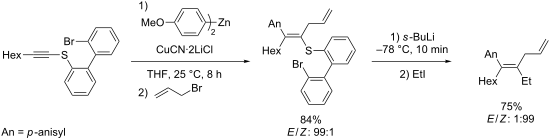
- ][9]. The Normant carbocupration of terminal acetylenes allows the stereoselective preparation of trisubstituted alkenes with excellent E/Z ratio [10][11][12]. However, in order to obtain tetrasubstituted alkenes, a carbometalation of an internal alkene is required. This reaction is usually difficult

Graphical Abstract

Scheme 1: Synthesis of tetrasubstituted olefins by a successive carbocupration and S–Li exchange.

Scheme 2: Proposed mechanism of the sulfur–lithium exchange starting with the alkenyl thioether 4.

Scheme 3: Synthesis of the precursor 1a.

Scheme 4: Carbocupration of the thioether 1a leading to the tetrasubstituted alkene 4a.

Scheme 5: Synthesis of the alkenyllithium reagent 7a by an S–Li exchange.

Scheme 6: Quenching of the alkynyllithium 7a. (Product ratios and diastereoselectivities were determined by 1...

Scheme 7: Synthesis and quenching of Z-styryllithium.
The chemistry of bisallenes
- Henning Hopf and
- Georgios Markopoulos
Beilstein J. Org. Chem. 2012, 8, 1936–1998, doi:10.3762/bjoc.8.225
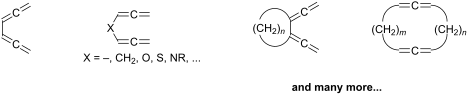
- substituents has been prepared recently by a Zr-promoted linear coupling of different aryl and hetaryl acetylenes in high yield (Scheme 17) [66]. Treating, e.g., phenylacetylene (78) first with n-butyllithium and subsequently with bis(cyclopentadienyl)zirconium dichloride generates the trimeric metal complex

Graphical Abstract

Figure 1: Loschmidt’s structure proposal for benzene (1) (Scheme 181 from [3]) and the corresponding modern stru...

Figure 2: The first isolated bisallenes.

Figure 3: Carbon skeletons of selected bisallenes discussed in this review.

Scheme 1: The preparation of 1,2,4,5-hexatetraene (2).

Scheme 2: The preparation of a conjugated bisallene by the DMS-protocol.

Scheme 3: Preparation of the 3-deuterio- and 3,4-dideuterio derivatives of 24.

Scheme 4: A versatile method to prepare alkylated conjugated bisallenes and other allenes.

Scheme 5: A preparation of 3,4-dimethyl-1,2,4,5-hexatetraene (38).

Scheme 6: A (C6 + 0)-approach to 1,2,4,5-hexatetraene (2).

Scheme 7: The preparation of a fully alkylated bisallenes from a 2,4-hexadiyne-1,6-diol diacetate.

Scheme 8: The preparation of the first phenyl-substituted conjugated bisallenes 3 and 4.

Scheme 9: Selective hydrogenation of [5]cumulenes to conjugated bisallenes: another (C6 + 0)-route.

Scheme 10: Aryl-substituted conjugated bisallenes by a (C3 + C3)-approach.

Scheme 11: Hexaphenyl-1,2,4,5-hexatetraene (59) by a (C3 + C3)-approach.

Scheme 12: An allenation route to conjugated bisallenes.

Scheme 13: The preparation of 3,4-difunctionalized conjugated bisallenes.

Scheme 14: Problems during the preparation of sulfur-substituted conjugated bisallenes.

Scheme 15: The preparation of 3,4-dibromo bisallenes.

Scheme 16: Generation of allenolates by an oxy-Cope rearrangement.

Scheme 17: A linear trimerization of alkynes to conjugated bisallenes: a (C2 + C2 + C2)-protocol.

Scheme 18: Preparation of a TMS-substituted conjugated bisallene by a C3-dimerization route.

Scheme 19: A bis(trimethylsilyl)bisallene by a C3-coupling protocol.

Scheme 20: The rearrangement of highly substituted benzene derivatives into their conjugated bisallenic isomer...

Scheme 21: From fully substituted benzene derivatives to fully substituted bisallenes.

Scheme 22: From a bicyclopropenyl to a conjugated bisallene derivative.

Scheme 23: The conversion of a bismethylenecyclobutene into a conjugated bisallene.

Scheme 24: The preparation of monofunctionalized bisallenes.

Scheme 25: Preparation of bisallene diols and their cyclization to dihydrofurans.

Scheme 26: A 3,4-difunctionalized conjugated bisallene by a C3-coupling process.

Scheme 27: Preparation of a bisallenic diketone by a coupling reaction.

Scheme 28: Sulfur and selenium-substituted bisallenes by a [2.3]sigmatropic rearrangement.

Scheme 29: The biallenylation of azetidinones.

Scheme 30: The preparation of a fully ferrocenylated conjugated bisallene.

Scheme 31: The first isomerization of a 1,5-hexadiyne to a 1,2,4,5-hexatetraene.

Scheme 32: The preparation of alkynyl-substituted bisallenes by a C3-dimerization protocol.

Scheme 33: Preparation of another completely ferrocenylated bisallene.

Scheme 34: The cyclization of 1,5-hexadiyne (129) to 3,4-bismethylenecyclobutene (130) via 1,2,4,5-hexatetraen...
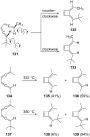
Scheme 35: Stereochemistry of the thermal cyclization of bisallenes to bismethylenecyclobutenes.

Scheme 36: Bisallene→bismethylenecyclobutene ring closures in the solid state.

Scheme 37: A bisallene cyclization/dimerization reaction.

Scheme 38: A selection of Diels–Alder additions of 1,2,4,5-hexatetraene with various double-bond dienophiles.

Scheme 39: The stereochemistry of the [2 + 4] cycloaddition to conjugated bisallenes.

Scheme 40: Preparation of azetidinone derivatives from conjugated bisallenes.

Scheme 41: Cycloaddition of heterodienophiles to a conjugated bisallene.

Scheme 42: Addition of triple-bond dienophiles to conjugated bisallenes.

Scheme 43: Sulfur dioxide addition to conjugated bisallenes.

Scheme 44: The addition of a germylene to a conjugated bisallene.

Scheme 45: Trapping of conjugated bisallenes with phosphinidenes.

Scheme 46: The cyclopropanantion of 1,2,4,5-hexatetraene (2).

Scheme 47: Photochemical reactions involving conjugated bisallenes.

Scheme 48: Base-catalyzed isomerizations of conjugated bisallenes.

Scheme 49: Ionic additions to a conjugated bisallene.

Scheme 50: Oxidation reactions of a conjugated bisallene.
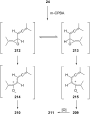
Scheme 51: The mechanism of oxidation of the bisallene 24.

Scheme 52: CuCl-catalyzed cyclization of 1,2,4,5-hexatetraene (2).

Scheme 53: The conversion of conjugated bisallenes into cyclopentenones.

Scheme 54: Oligomerization of a conjugated bisallene by nickel catalysts.
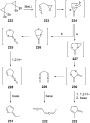
Scheme 55: Generation of 1,2,5,6-heptatetraene (229) as a reaction intermediate.

Scheme 56: The preparation of a stable derivative of 1,2,5,6-heptatetraene.

Scheme 57: A bisallene with a carbonyl group as a spacer element.

Scheme 58: The first preparation of 1,2,6,7-octatetraene (242).

Scheme 59: Preparation of 1,2,6,7-octatetraenes by (C4 + C4)-coupling of enynes.

Scheme 60: Preparation of 1,2,6,7-octatetraenes by (C4 + C4)-coupling of homoallenyl bromides.

Scheme 61: Preparation of 1,2,6,7-octatetraenes by alkylation of propargylic substrates.

Scheme 62: Preparation of two highly functionalized 1,2,6,7-octatetraenes.

Scheme 63: Preparation of several higher α,ω-bisallenes.

Scheme 64: Preparation of different alkyl derivatives of α,ω-bisallenes.

Scheme 65: The preparation of functionalized 1,2,7,8-nonatetraene derivatives.

Scheme 66: Preparation of functionalized α,ω-bisallenes.

Scheme 67: The preparation of an α,ω-bisallene by direct homologation of an α,ω-bisalkyne.

Scheme 68: The gas-phase pyrolysis of 4,4-dimethyl-1,2,5,6-heptatetraene (237).
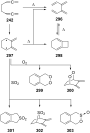
Scheme 69: Gas-phase pyrolysis of 1,2,6,7-octatetraene (242).

Scheme 70: The cyclopropanation of 1,2,6,7-octatetraene (242).

Scheme 71: Intramolecular cyclization of 1,2,6,7-octatetraene derivatives.

Scheme 72: The gas-phase pyrolysis of 1,2,7,8-nonatetraene (265) and 1,2,8,9-decatetraene (266).

Scheme 73: Rh-catalyzed cyclization of a functionalized 1,2,7,8-nonatetraene.

Scheme 74: A triple cyclization involving two different allenic substrates.

Scheme 75: Bicyclization of keto derivatives of 1,2,7,8-nonatetraene.

Scheme 76: The preparation of complex organic compounds from functionalized bisallenes.

Scheme 77: Cycloisomerization of an α,ω-bisallene containing a C9 tether.

Scheme 78: Organoborane polymers from α,ω-bisallenes.

Scheme 79: Preparation of trans- (337) and cis-1,2,4,6,7-octapentaene (341).

Scheme 80: The preparation of 4-methylene-1,2,5,6-heptatetraene (349).

Scheme 81: The preparation of acetylenic bisallenes.

Scheme 82: The preparation of derivatives of hydrocarbon 351.

Scheme 83: The construction of macrocyclic alleno-acetylenes.

Scheme 84: Preparation and reactions of 4,5-bismethylene-1,2,6,7-octatetraene (365).

Scheme 85: Preparation of 1,2-bis(propadienyl)benzene (370).

Scheme 86: The preparation of 1,4-bis(propadienyl)benzene (376).

Scheme 87: The preparation of aromatic and heteroaromatic bisallenes by metal-mediated coupling reactions.

Scheme 88: Double cyclization of an aromatic bisallene.

Scheme 89: Preparation of an allenic [15]paracyclophane by a ring-closing metathesis reaction of an aromatic α...

Scheme 90: Preparation of a macrocyclic ring system containing 1,4-bis(propadienyl)benzene units.

Scheme 91: Preparation of copolymers from 1,4-bis(propadienyl)benzene (376).

Scheme 92: A boration/copolymerization sequence of an aromatic bisallene and an aromatic bisacetylene.

Scheme 93: Formation of a layered aromatic bisallene.

Figure 4: The first members of the semicyclic bisallene series.

Scheme 94: Preparation of the first bis(vinylidene)cyclobutane derivative.
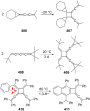
Scheme 95: Dimerization of strain-activated cumulenes to bis(vinylidene)cyclobutanes.

Scheme 96: Photodimerization of two fully substituted butatrienes in the solid state.

Scheme 97: Preparation of the two parent bis(vinylidene)cyclobutanes.

Scheme 98: The preparation of 1,3-bis(vinylidene)cyclopentane and its thermal isomerization.

Scheme 99: The preparation of the isomeric bis(vinylidene)cyclohexanes.

Scheme 100: Bi- and tricyclic conjugated bisallenes.
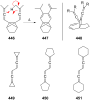
Scheme 101: A selection of polycyclic bisallenes.

Scheme 102: The first endocyclic bisallenes.

Figure 5: The stereochemistry of 1,2,6,7-cyclodecatetraene.

Scheme 103: The preparation of several endocyclic bisallenes.

Scheme 104: Synthesis of diastereomeric derivatives of 1,2,6,7-cyclodecatetraene.

Scheme 105: Preparation of a derivative of 1,2,8,9-cyclotetradecatetraene.

Scheme 106: The preparation of keto derivatives of cyclic bisallenes.

Scheme 107: The preparation of cyclic biscumulenic ring systems.

Scheme 108: Cyclic bisallenes in natural- and non-natural-product chemistry.

Scheme 109: The preparation of iron carbonyl complexes from cyclic bisallenes.

Figure 6: A selection of unknown exocyclic bisallenes that should have interesting chemical properties.

Scheme 110: The thermal isomerization of 1,2-diethynylcyclopropanes and -cyclobutanes.

Scheme 111: Intermediate generation of a cyclooctapentaene.

Scheme 112: Attempted preparation of a cyclodecahexaene.

Scheme 113: The thermal isomerization of 1,5,9-cyclododecatriyne (511) into [6]radialene (514).

Scheme 114: An isomerization involving a diketone derived from a conjugated bisallene.

Scheme 115: Typical reaction modes of heteroorganic bisallenes.

Scheme 116: Generation and thermal behavior of acyclic hetero-organic bisallenes.

Scheme 117: Generation of bis(propadienyl)thioether.

Scheme 118: The preparation of a bisallenic sulfone and its thermal isomerization.

Scheme 119: Bromination of the bisallenic sulfone 535.

Scheme 120: Metalation/hydrolysis of the bisallenic sulfone 535.

Scheme 121: Aromatic compounds from hetero bisallenes.

Scheme 122: Isomerization/cyclization of bispropargylic ethers.

Scheme 123: The preparation of novel aromatic systems by base-catalyzed isomerization of bispropargyl ethers.

Scheme 124: The isomerization of bisacetylenic thioethers to bicyclic thiophenes.

Scheme 125: Aromatization of macrocyclic bispropargylic sulfides.

Scheme 126: Preparation of ansa-compounds from macrocyclic bispropargyl thioethers.

Scheme 127: Alternate route for cyclization of a heterorganic bisallene.
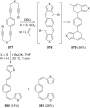
Scheme 128: Multiple isomerization/cyclization of “double” bispropargylic thioethers.

Scheme 129: Preparation of a bisallenyl disulfide and its subsequent bicyclization.

Scheme 130: Thermal cyclization of a bisallenyl thiosulfonate.

Scheme 131: Some reactions of heteroorganic bisallenes with two sulfur atoms.

Scheme 132: Further methods for the preparation of heteroorganic bisallenes.

Scheme 133: Cyclization reactions of heteroorganic bisallenes.

Scheme 134: Thermal cycloadditions of bisallenic tertiary amines.

Scheme 135: Cyclization of a bisallenic tertiary amine in the presence of a transition-metal catalyst.

Scheme 136: A Pauson–Khand reaction of a bisallenic ether.

Scheme 137: Formation of a 2:1adduct from two allenic substrates.

Scheme 138: A ring-forming silastannylation of a bisallenic tertiary amine.

Scheme 139: A three-component cyclization involving a heterorganic bisallene.

Scheme 140: Atom-economic construction of a complex organic framework from a heterorganic α,ω-bisallene.



