


Search results
Search for "azobenzene" in Full Text gives 109 result(s) in Beilstein Journal of Organic Chemistry.
Fluorinated azobenzenes as supramolecular halogen-bonding building blocks
Beilstein J. Org. Chem. 2019, 15, 2013–2019, doi:10.3762/bjoc.15.197
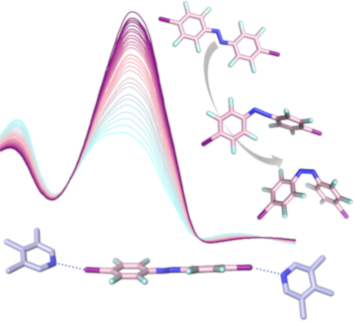
- building blocks both in solution and in the solid state in combination with neutral halogen bonding acceptors, such as lutidines. Therefore, we investigate the photochemistry of a series of azobenzene photoswitches. Upon introduction of iodoethynyl groups, the halogen bonding donor properties are
- azobenzenes with different halogen bonding donor properties are discussed in relation to their changing photophysical properties, rationalized by DFT calculations. Keywords: azobenzene; DFT calculations; fluorine chemistry; halogen bonding; photochemistry; Introduction The halogen bond is an attractive
- ) and E-4,4’-di(iodoethynyl)perfluoroazobenzene (A3) halogen bond donors can be combined with rigid u-shaped anthracene building blocks, bearing two 3,5-lutidine acceptors in 1 and 8 positions, to form self-assembled boxes of 25–30 Å length in solution and in the solid state [35]. We chose azobenzene


Morphology-tunable and pH-responsive supramolecular self-assemblies based on AB2-type host–guest-conjugated amphiphilic molecules for controlled drug delivery
Beilstein J. Org. Chem. 2019, 15, 1925–1932, doi:10.3762/bjoc.15.188
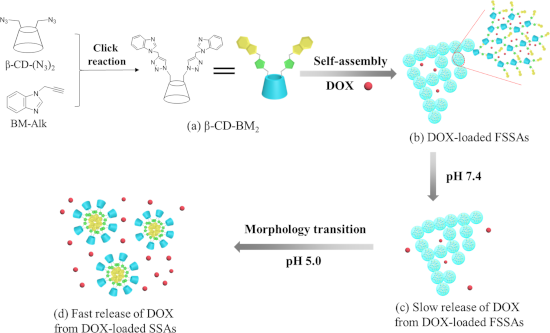
- utilized as host units to construct these stimuli-responsive supramolecular self-assemblies [21][22][23][24][25][26][27]. For example, β-CD can form inclusion complexes with guests such as azobenzene [28][29], ferrocene [30][31] and benzimidazole [32][33][34] to construct light-, redox-, and pH-responsive




Nanopatterns of arylene–alkynylene squares on graphite: self-sorting and intercalation
Beilstein J. Org. Chem. 2019, 15, 1848–1855, doi:10.3762/bjoc.15.180
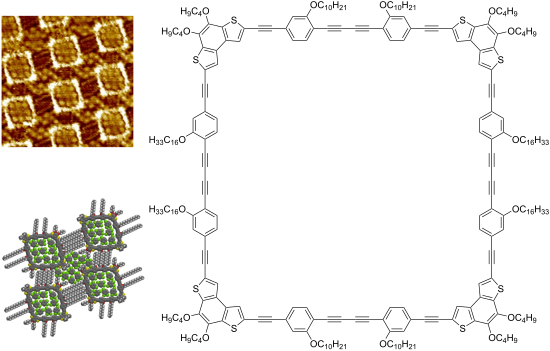
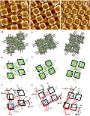
- solvent molecules are sometimes resolved as intercalation adducts in STM of self-assembled monolayers. On the other hand, reports on intercalated TCB molecules are rather rare. Two exceptions are the observations of TCB in monolayers of arylene–alkynylene pentagons as well as triphenylene/azobenzene-based




Synthesis of a [6]rotaxane with singly threaded γ-cyclodextrins as a single stereoisomer
Beilstein J. Org. Chem. 2019, 15, 1829–1837, doi:10.3762/bjoc.15.177
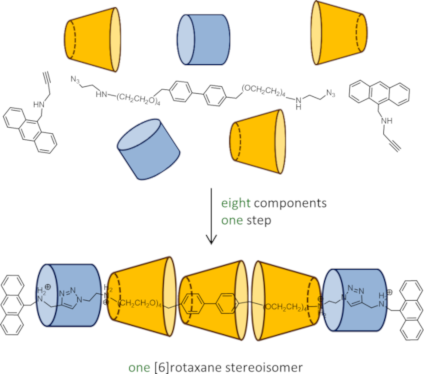
- , cyanine and azobenzene have also been reported [18][19][20][21][22][23][24]. High order oligorotaxanes with a multiple number of α- or β-CDs threaded through polymer chains have also been prepared [25][26][27][28]. The interlocked CDs have been shown to provide an interesting insulating effect to π





Norbornadiene-functionalized triazatriangulenium and trioxatriangulenium platforms
Beilstein J. Org. Chem. 2019, 15, 1815–1821, doi:10.3762/bjoc.15.175
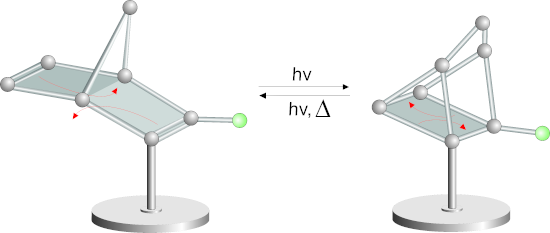
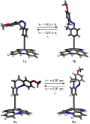
- , while the functional groups are protruding upright and freestanding from the central carbon atoms. Azobenzene derivatized TATA’s are known to exhibit extremely fast cis→trans isomerization on metal surfaces, via a peculiar non-adiabatic singlet→triplet→singlet mechanism. We now prepared norbornadienes
- rate of isomerization by three orders of magnitude [2][3][4]. To keep the reacting azobenzene molecule at a distance of about 14 Å from the surface, it is not directly absorbed onto the surface but mounted on a carefully designed molecular framework. This approach was named the platform approach [5
- parameter controlling the cis–trans rate acceleration of azobenzenes and not the length of the spacer [1]. A full conjugation path from the azobenzene on top through the ethynyl spacer and the platform to a bulk gold surface shortens the half-life of the metastable cis-isomer from days to seconds even


An azobenzene container showing a definite folding – synthesis and structural investigation
Beilstein J. Org. Chem. 2019, 15, 1534–1544, doi:10.3762/bjoc.15.156
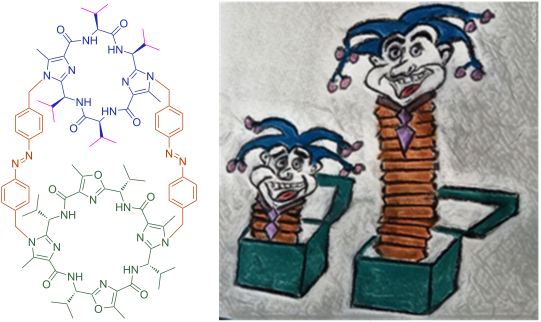
- chemistry. Here, we present the synthesis of a foldable container consisting of two different types of Lissoclinum macrocyclic peptides which are connected via two azobenzene units. The container is controllable by light: irradiation with UV light causes a switching process to the compact cis,cis-isomer
- the high dispersion energy in the compact cis,cis-isomer. Keywords: azobenzene; macrocycles; molecular switch; Introduction In supramolecular chemistry rigid scaffolds are required to arrange different recognition units in predefined distances and spatial orientation to each other [1]. One example
- molecules which can be reversibly changed between two isomers of different structures [26][27][28][29]. One prominent switching unit is azobenzene and its derivatives [30][31][32][33][34][35][36][37][38][39][40][41]. The trans-isomer features a stretched and the cis-isomer has a compact geometry. In general


Diazocine-functionalized TATA platforms
Beilstein J. Org. Chem. 2019, 15, 1485–1490, doi:10.3762/bjoc.15.150
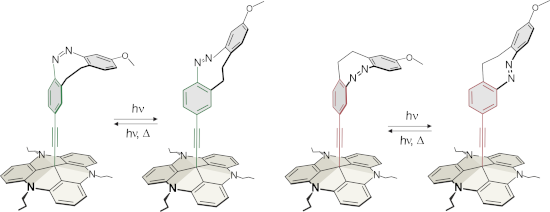
- platform (triazatriangulenium (TATA)) which adsorbs on the gold surface, with an acetylene spacer standing upright, like a post in the middle of the platform and the azobenzene unit mounted on top. The rate acceleration is due to a very peculiar thermal singlet–triplet–singlet mechanism mediated by bulk
- coupling to a bulk gold surface via a conjugated linker over 11 bonds and 14 Å [11]. Thermal cis→trans isomerizations of azobenzenes are usually slow with half-lives of the trans-isomer within the range of hours to days at room temperature (parent azobenzene: 4–5 d at 25 °C) [12]. Rotation around the N=N
- ” (triazatriangulenium) platforms which adsorb on Au(111) surfaces. A spacer, such as an ethynyl group is connected to the central carbon atom like a post and the azobenzene is mounted on top of the spacer. After preparation of an ordered self-assembled monolayer on gold, the azobenzene units are freestanding upright on



Reversible end-to-end assembly of selectively functionalized gold nanorods by light-responsive arylazopyrazole–cyclodextrin interaction
Beilstein J. Org. Chem. 2019, 15, 1407–1415, doi:10.3762/bjoc.15.140
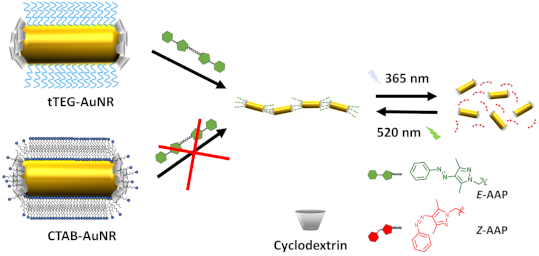
- was only achieved when the CD ligand and the divalent azobenzene linker were premixed to generate the host–guest complex. This solution was then added to the AuNR leading to a ligand exchange preferentially at the ends and therefore to the linear arrangement of AuNR. If the AuNR were first end
- -functionalized with the CD, no assembly could be observed after addition of the divalent azobenzene linker. Moreover, the assemblies could only once be disassembled by the combination of UV irradiation and physical forces by sonication. The light-induced back-isomerization of azobenzenes did not form similar end
- -to-end aggregates. Ma et al. suggested that the host–guest interaction is not strong enough to assemble the particles if not preformed. Yet, this is not consistent with publications that report photoswitchable azobenzene–CD interaction on surfaces [28], in hydrogels [29], the assembly of CD vesicles


Mechanochemistry of supramolecules
Beilstein J. Org. Chem. 2019, 15, 881–900, doi:10.3762/bjoc.15.86
- azobenzene [58]. The cyclopalladation process was proved to be a highly regioselective process and the observed palladation rate was faster compared to the conventional solution-phase method. An equimolar amount of 4'-(N,N-dimethylamino)-4-nitroazobenzene and Pd(OAc)2 in the presence of 25 μL of glacial
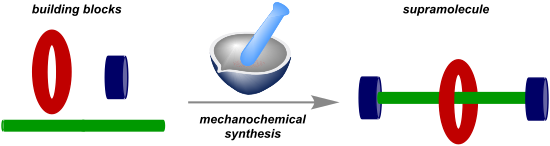
- of unsymmetrically substituted azobenzene [58]. a) Schematic representation for the construction of a [2]rotaxane. b) Chiu’s ball-milling approach for the synthesis of [2]rotaxanes. Mechanochemical synthesis of the smallest [2]rotaxane. Solvent-free mechanochemical synthesis of pillar[5]arene


Coordination chemistry and photoswitching of dinuclear macrocyclic cadmium-, nickel-, and zinc complexes containing azobenzene carboxylato co-ligands
Beilstein J. Org. Chem. 2019, 15, 840–851, doi:10.3762/bjoc.15.81
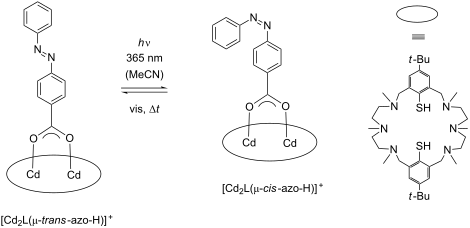
- represents a 24-membered macrocyclic hexaaza-dithiophenolate ligand, L' is an azobenzene carboxylate co-ligand, and M = Cd(II), Ni(II) or Zn(II), is reported. A series of new complexes were synthesized, namely [M2L(μ-L')]+ (L' = azo-H, M = Cd (1), Ni (2); L' = azo-OH, M = Zn (3), Ni (4); L' = azo-NMe2, M
- 5–8 display an isostructural series of compounds with bridging azobenzene carboxylates in the trans form. The paramagnetic Ni complexes 2, 4 and 7 reveal a weak ferromagnetic exchange interaction with magnetic exchange coupling constant values between 21 and 23 cm−1 (H = −2JS1S2). Irradiation of 1
- with λ = 365 nm reveals a photoisomerization of the co-ligand from the trans to the cis form. Keywords: azobenzene carboxylates; cadmium; complexes; macrocyclic ligands; nickel; zinc; Introduction The macrocyclic N6S2 donor ligand H2L is an effective dinucleating ligand that supports a large number





Azologization of serotonin 5-HT3 receptor antagonists
Beilstein J. Org. Chem. 2019, 15, 780–788, doi:10.3762/bjoc.15.74
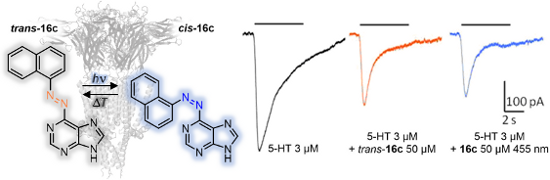
- detailed receptor examination. In the presented work, we summarize the synthesis, photochromic properties and in vitro characterization of azobenzene-based photochromic derivatives of published 5-HT3R antagonists. Despite reported proof of principle of direct azologization, only one of the investigated
- derivatives showed antagonistic activity lacking isomer specificity. Keywords: azobenzene; 5-HT3R; ion currents; photopharmacology; serotonin; Introduction 5-Hydroxytryptamine (5-HT), commonly known as serotonin [1][2] or enteramine [3][4], is a monoamine neurotransmitter and hormone which is produced in
- photo-induced trans–cis isomerization representing the time of birth of the azobenzene photoswitch. Benefiting of their accessible synthesis, large change in polarity and geometry upon switching, excellent photochromic properties and tuneability, azobenzenes are amongst the most widely used photochromic


Synthesis of functionalized diazocines for application as building blocks in photo- and mechanoresponsive materials
Beilstein J. Org. Chem. 2019, 15, 727–732, doi:10.3762/bjoc.15.68
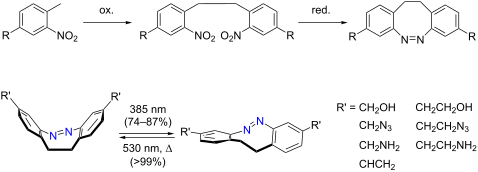
- molecular switches in photo and mechanoresponsive macromolecules and other smart materials. Keywords: bridged azobenzene; diazocine; mechanophor; oxidative C–C coupling; photochrome; reductive azo cyclization; Introduction The field of photoresponsive materials is of growing interest [1][2][3]. Several
- mechanophores such as azobenzene [4][5][6][7][8], diarylethene [9][10][11][12][13] and spiropyrans [14][15][16][17][18] have been investigated as photoswitchable building blocks. Bridged azobenzenes also known as diazocines exhibit excellent photochemical properties but applications are limited and suitably
- photostationary states (PSS (385 nm): 25–30% trans). The electronic decoupling of the azobenzene unit and the oxygen and nitrogen containing functional groups (OH, OR, N3, NH2) was achieved by insertion of one or two CH2 groups. Thereby, the switching efficiencies were increased by about a factor of two (PSS (385


Olefin metathesis in multiblock copolymer synthesis
Beilstein J. Org. Chem. 2019, 15, 218–235, doi:10.3762/bjoc.15.21

- multiple click reactions of the diazido-telechelic PBD with a dialkynyl-containing azobenzene chromophore. The newly formed triazole moieties can tune and improve the photoresponsive properties of PBD. α,ω-Functional telechelic polymers also can be synthesized by acyclic diene metathesis (ADMET




Fabrication of supramolecular cyclodextrin–fullerene nonwovens by electrospinning
Beilstein J. Org. Chem. 2019, 15, 89–95, doi:10.3762/bjoc.15.10
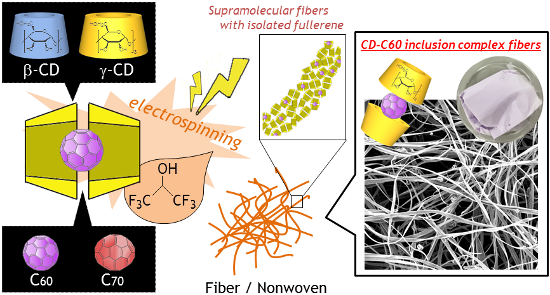
- functionalize such fibers is to use host–guest inclusion complexes in CD electrospinning. To date, Uyar and Celebioglu have reported electrospinning of two different inclusion complexes: hydroxypropyl-β-CD (HP-β-CD)–tricosan [16] and HP-β-CD–azobenzene inclusion complexes [17]. Although such complexes are


Lectins of Mycobacterium tuberculosis – rarely studied proteins
Beilstein J. Org. Chem. 2019, 15, 1–15, doi:10.3762/bjoc.15.1
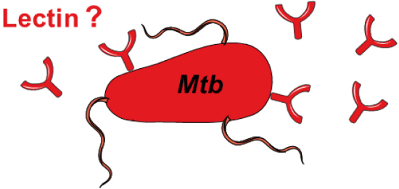
- was originally published in the thesis of K. Kolbe [12] and has been slightly modified for this article). Structure of FimH CRD with a docked azobenzene mannobioside showing the aromatic aglycon and the tyrosine residues, Y48 and Y137, of the protein in close proximity. The figure is a slightly


Oxidative and reductive cyclization in stiff dithienylethenes
Beilstein J. Org. Chem. 2018, 14, 2812–2821, doi:10.3762/bjoc.14.259
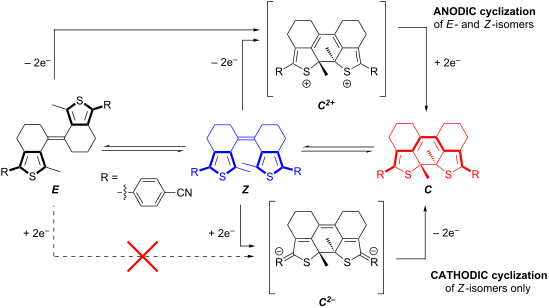
- ), a phenomenon that we have recently also observed for reductively and oxidatively induced azobenzene Z→E isomerization [44][45]. Mechanism of the electrochemical isomerization In the literature, either mono- [7][18][22][23][46] or bis-oxidized [9][10][11] open DAEs have been reported and discussed [8


Synthesis of mono-functionalized S-diazocines via intramolecular Baeyer–Mills reactions
Beilstein J. Org. Chem. 2018, 14, 2799–2804, doi:10.3762/bjoc.14.257

- synthesis of diazocines opens a novel and convenient access to unsymmetrically substituted diazocines. Keywords: Baeyer–Mills reaction; bridged azobenzene; diazocine; reductive azo condensation; unsymmetrically functionalized S-diazocines; Introduction Photopharmacology is a promising, rapidly evolving
- derivatives [18][19]. Towards the synthesis of S-diazocines (Figure 1), two general approaches could be derived from the well investigated azobenzene preparation methods: a) Reductive coupling of two nitro groups or b) oxidative coupling of two amino groups [20]. To cleanly form N=N bonds by reduction of


Hydroarylations by cobalt-catalyzed C–H activation
Beilstein J. Org. Chem. 2018, 14, 2266–2288, doi:10.3762/bjoc.14.202
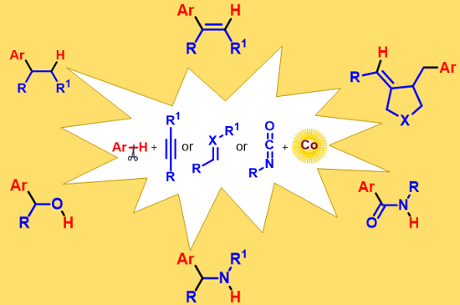
- activation. In 1941, Kharasch and Fields applied a cobalt salt as the catalyst for the homocoupling of Grignard reagents [28]. After 15 years, Murahashi discovered a cobalt-catalyzed chelation-assisted ortho C–H carbonylation of azobenzene and imines as the preliminary example of directing group assisted C–H








Tetrathiafulvalene – a redox-switchable building block to control motion in mechanically interlocked molecules
Beilstein J. Org. Chem. 2018, 14, 2163–2185, doi:10.3762/bjoc.14.190
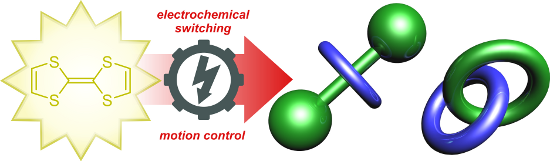
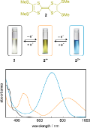
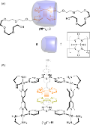
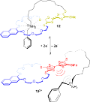
- reported (Figure 16) [85]. However, the axle bears a central azobenzene photoswitch, who’s E/Z-transitions can be controlled by light. The redox-switchable shuttle works as previously described and the position of the wheel can be controlled by oxidation or reduction. However, the configuration of the
- azobenzene strongly influences the life time of each redox-switching state. In the (E)-form, the wheel can easily move between the TTF and dihydroxynaphthalene station. In the Z-form, this movement is sterically hindered and slowed down. The wheel cannot shuttle to its energetically preferred station. This











A self-assembled photoresponsive gel consisting of chiral nanofibers
Beilstein J. Org. Chem. 2018, 14, 1994–2001, doi:10.3762/bjoc.14.174
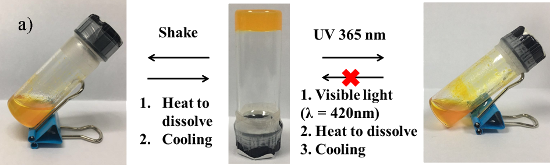
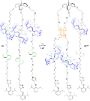
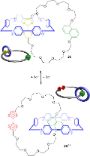
- glutamic acid skeleton, containing azobenzene as a photoresponsive group and ureidopyrimidinone (UPy) as a connection site, was designed and synthesized. The monomer is capable of forming an organogel in nonpolar organic solvents and different types of nanostructures in other solvents. The state of the gel
- and co-workers [20][21][22][23][24][25][26][27][28][29][30][31] have built a multifunctional controllable gel system, which utilized L-glutamic lipid to construct nanofibers, nanotwists, and nanotubes with the property of chirality. Azobenzene, which is structurally photosensitive, is widely chosen to
- construct optically controlled systems [17][30][32][33][34][35]. This moiety is also frequently employed as a building block because of its strong π–π stacking in nonpolar solvents. Herein, a novel compound 3 containing both chiral L-glutamic lipid and azobenzene was designed and synthesized (Scheme 1). It


An amphiphilic pseudo[1]catenane: neutral guest-induced clouding point change
Beilstein J. Org. Chem. 2018, 14, 1937–1943, doi:10.3762/bjoc.14.167
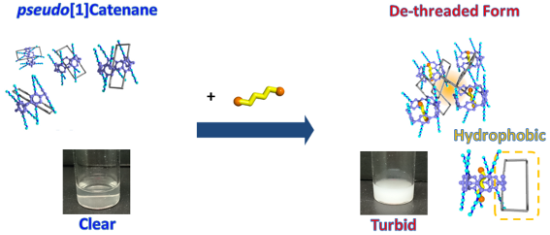
- complex system between amphiphilic pillar[6]arene 2 and a photoresponsive cationic azobenzene guest [6]. However, neutral guest molecules could not induce a clear LCST change because encapsulation of the neutral guest in the hydrophobic pillar[n]arene core did not significantly change the hydrophobic


Design, synthesis and structure of novel G-2 melamine-based dendrimers incorporating 4-(n-octyloxy)aniline as a peripheral unit
Beilstein J. Org. Chem. 2018, 14, 1704–1722, doi:10.3762/bjoc.14.145
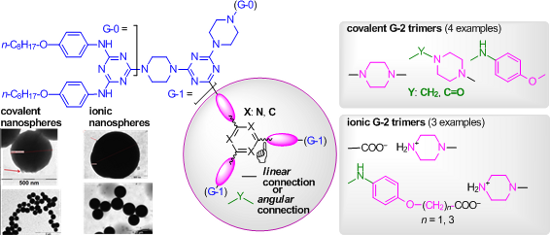
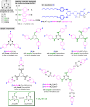
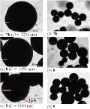
- Background: 4-(n-Octyloxy)aniline is a known component in the elaboration of organic materials with mesogenic properties such as N-substituted Schiff bases, perylene bisimide assemblies with a number of 2-amino-4,6-bis[4-(n-octyloxy)phenylamino]-s-triazines, amphiphilic azobenzene-containing linear-dendritic
- block copolymers and G-0 monomeric or dimeric dendritic liquid crystals with photochromic azobenzene mesogens. The present ab initio study explores a previously unknown use of 4-(n-octyloxy)aniline in the synthesis, structure and supramolecular behaviour of new dendritic melamines. Results: Starting
- (ethynyl)-s-triazine and various icosanyloxyphenylazides) with liquid crystalline and luminescent properties [22]. On the other hand, mesogenic supramolecular perylene bisimide assemblies with a number of 2-amino-4,6-bis[(4-alkoxy)phenylamino]-s-triazines [23], amphiphilic azobenzene-containing linear




Anomeric modification of carbohydrates using the Mitsunobu reaction
Beilstein J. Org. Chem. 2018, 14, 1619–1636, doi:10.3762/bjoc.14.138
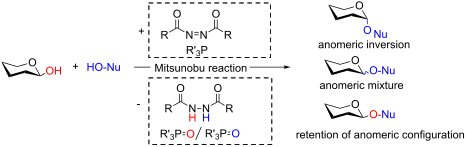
- photoswitchable azobenzene α-D-mannoside 47 (Scheme 9) [46]. Notably, in this reaction, traces of an anomeric mixture of the respective furanoside 48 were detected. The Mitsunobu synthesis of aryl glycosides was also applied to p-nitrophenol [47], naphthols [48][49], or multifunctional phenols [27][50]. Such
- ]. Synthesis of phenyl glycosides 44 and 45 from unprotected sugars [24]. Synthesis of azobenzene mannosides 47 and 48 without protecting group chemistry [46]. Synthesis of various aryl sialosides using Mitsunobu glycosylation [25]. Mitsunobu synthesis of different jadomycins [54][55]. BOM: benzyloxymethyl


London dispersion as important factor for the stabilization of (Z)-azobenzenes in the presence of hydrogen bonding
Beilstein J. Org. Chem. 2018, 14, 1238–1243, doi:10.3762/bjoc.14.106
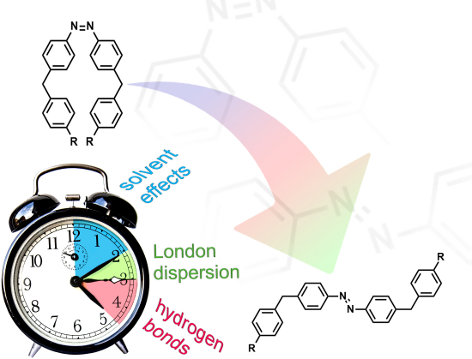
- dispersion forces to be a significant factor, even in the presence of hydrogen bonds. Keywords: azobenzene; hydrogen bonding; London dispersion; molecular switches; Introduction The photo-controlled E→Z isomerization of azobenzene has been known for decades [1] and has originated a wide field of
- [12] and show reversible isomerization from the thermally stable E- to the Z-isomer upon irradiation with UV light. The metastable Z-azobenzene re-isomerizes to the E-conformer either thermally or upon irradiation with visible light [13][14]. Interestingly, the thermal stability of azobenzene isomers
- can be reversed by the incorporation of azobenzene units in macrocyclic arrangements [15]. For example, the groups of Tamaoki [16] and Herges [17] reported azobenzophanes that isomerize thermally to their energetically lower Z-conformations from their corresponding higher energy E-isomers. Moreover


Mechanochemistry of nucleosides, nucleotides and related materials
Beilstein J. Org. Chem. 2018, 14, 955–970, doi:10.3762/bjoc.14.81
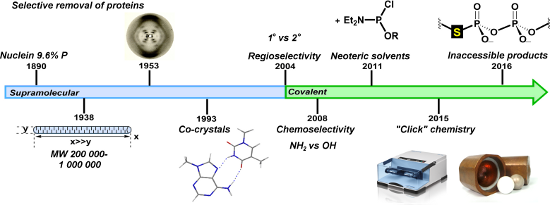
- (Scheme 5) [42]. In the absence of light, azobenzene derivatives were isolated as the pure E-isomers. In their original report, Sharpless and co-workers described the use of copper turnings to promote a regioselective azide–alkyne [3 + 2]-cycloaddition ("click") reaction over 24 hours [43]. High-speed
- copper salts was found. In an attempt to expedite the LAG reaction, millimol-scale reactions between the p-azobenzene-appended alkyne and 5′-azido-5′-deoxythymidine were attempted in a more capacious copper vessel with a 15 mm diameter zirconia ball (Figure 3). Clean and complete click reactions were





