


Search results
Search for "carbonyls" in Full Text gives 96 result(s) in Beilstein Journal of Organic Chemistry.
Hydroarylations by cobalt-catalyzed C–H activation
- Rajagopal Santhoshkumar and
- Chien-Hong Cheng
Beilstein J. Org. Chem. 2018, 14, 2266–2288, doi:10.3762/bjoc.14.202
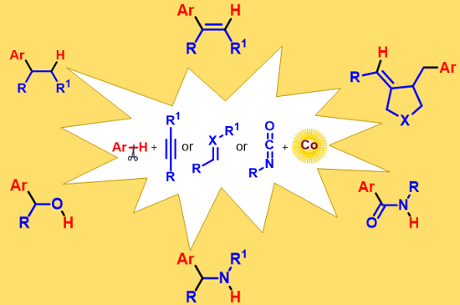
- -catalyzed hydroarylation of C=X bonds Transition-metal-catalyzed addition of C–H bond to polar π bonds such as imines, isocyanates and carbonyls is one of the efficient methods to incorporate heteroatoms in organic molecules [45]. Yoshikai et al. developed an addition reaction of arylpyridines 3 to imines

Graphical Abstract

Scheme 1: Cobalt-catalyzed C–H carbonylation.

Scheme 2: Hydroarylation by C–H activation.

Scheme 3: Pathways for cobalt-catalyzed hydroarylations.

Scheme 4: Co-catalyzed hydroarylation of alkynes with azobenzenes.

Scheme 5: Co-catalyzed hydroarylation of alkynes with 2-arylpyridines.

Scheme 6: Co-catalyzed addition of azoles to alkynes.

Scheme 7: Co-catalyzed addition of indoles to alkynes.

Scheme 8: Co-catalyzed hydroarylation of alkynes with imines.

Scheme 9: A plausible pathway for Co-catalyzed hydroarylation of alkynes.

Scheme 10: Co-catalyzed anti-selective C–H addition to alkynes.

Scheme 11: Co(III)-catalyzed hydroarylation of alkynes with indoles.

Scheme 12: Co(III)-catalyzed branch-selective hydroarylation of alkynes.

Scheme 13: Co(III)-catalyzed hydroarylation of terminal alkynes with arenes.

Scheme 14: Co(III)-catalyzed hydroarylation of alkynes with amides.

Scheme 15: Co(III)-catalyzed C–H alkenylation of arenes.

Scheme 16: Co-catalyzed alkylation of substituted benzamides with alkenes.

Scheme 17: Co-catalyzed switchable hydroarylation of styrenes with 2-aryl pyridines.
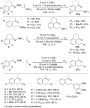
Scheme 18: Co-catalyzed linear-selective hydroarylation of alkenes with imines.

Scheme 19: Co-catalyzed linearly-selective hydroarylation of alkenes with N–H imines.

Scheme 20: Co-catalyzed branched-selective hydroarylation of alkenes with imines.

Scheme 21: Mechanism of Co-catalyzed hydroarylation of alkenes.

Scheme 22: Co-catalyzed intramolecular hydroarylation of indoles.

Scheme 23: Co-catalyzed asymmetric hydroarylation of alkenes with indoles.

Scheme 24: Co-catalyzed hydroarylation of alkenes with heteroarenes.

Scheme 25: Co(III)-catalyzed hydroarylation of activated alkenes with 2-phenyl pyridines.

Scheme 26: Co(III)-catalyzed C–H alkylation of arenes.

Scheme 27: Co(III)-catalyzed C2-alkylation of indoles.

Scheme 28: Co(III)-catalyzed switchable hydroarylation of alkyl alkenes with indoles.
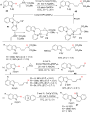
Scheme 29: Co(III)-catalyzed C2-allylation of indoles.

Scheme 30: Co(III)-catalyzed ortho C–H alkylation of arenes with maleimides.

Scheme 31: Co(III)-catalyzed hydroarylation of maleimides with arenes.
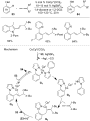
Scheme 32: Co(III)-catalyzed hydroarylation of allenes with arenes.

Scheme 33: Co-catalyzed hydroarylative cyclization of enynes with carbonyl compounds.

Scheme 34: Mechanism for the Co-catalyzed hydroarylative cyclization of enynes with carbonyl compounds.

Scheme 35: Co-catalyzed addition of 2-arylpyridines to aromatic aldimines.

Scheme 36: Co-catalyzed addition of 2-arylpyridines to aziridines.

Scheme 37: Co(III)-catalyzed hydroarylation of imines with arenes.

Scheme 38: Co(III)-catalyzed addition of arenes to ketenimines.

Scheme 39: Co(III)-catalyzed three-component coupling.

Scheme 40: Co(III)-catalyzed hydroarylation of aldehydes.

Scheme 41: Co(III)-catalyzed addition of arenes to isocyanates.
Bi-mediated allylation of aldehydes in [bmim][Br]: a mechanistic investigation
- Mrunesh Koli,
- Sucheta Chatterjee,
- Subrata Chattopadhyay and
- Dibakar Goswami
Beilstein J. Org. Chem. 2018, 14, 2198–2203, doi:10.3762/bjoc.14.193
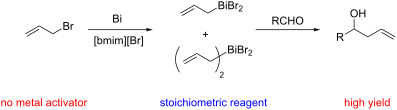
- Barbier-type allylations of carbonyls have been reported in organic solvents [28][29][30], water [31] or under solvent-free conditions [32][33]. The solvent free synthetic procedure required a large excess (4–8 equiv) of Bi metal [33] whereas, the reactions in water or in organic solvents required either
- with reducing metals, e.g., Mg-BiCl3 [36], Fe-BiCl3 or Zn-BiCl3 [30], and Al-BiCl3 [37] have been used. Aqueous NH4Cl was also employed as an additive in the Al/BiCl3 mediated allylation of carbonyls in aqueous THF [38]. Results and Discussion Initially, we screened different solvents and metal

Graphical Abstract

Scheme 1: Bi-mediated allylation of aldehydes.
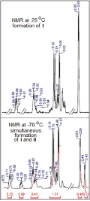
Figure 1: Partial 1H NMR spectra (recorded at two temperatures) of the reaction mixture of allyl bromide and ...

Figure 2: Structures of all the possible allylbismuth species.

Scheme 2: Probable reaction mechanism.
Applications of organocatalysed visible-light photoredox reactions for medicinal chemistry
- Michael K. Bogdos,
- Emmanuel Pinard and
- John A. Murphy
Beilstein J. Org. Chem. 2018, 14, 2035–2064, doi:10.3762/bjoc.14.179
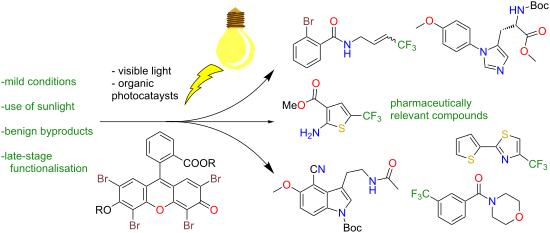
- oxidants are employed. For example, the oxidation of alcohols to carbonyls traditionally requires strong oxidants (Cr(VI) species, IBX, DMP), whereas similar reactions using photochemical methods can utilise oxygen (O2) as the oxidising agent. The oxidising agent can accept electrons either from the
- potential to be of interest if explored further. The good physical chemical properties of thiazoles, as well as their ability to act as isosteres to thiophenes, carbonyls and pyrazoles [49][50] make this scaffold an intriguing novel motif. 2.3 C(sp2)–X bond formation The obvious extension after considering
- . Aliphatic and heteroaromatic substituents on the 2H-azirine were not tolerated. The aldehyde substituents are much more diverse, with a variety of substituted benzenes, heteroaromatics, carbonyls and aliphatic side chains undergoing the cycloaddition. Overall, these two methods provide much more mild

Graphical Abstract

Figure 1: Depiction of the energy levels of a typical organic molecule and the photophysical processes it can...

Figure 2: General catalytic cycle of a photocatalyst in a photoredox organocatalysed reaction. [cat] – photoc...

Figure 3: Structures and names of the most common photocatalysts encountered in the reviewed literature.

Figure 4: General example of a reductive quenching catalytic cycle. [cat] – photocatalyst, [cat]* – photocata...

Figure 5: General example of an oxidative quenching catalytic cycle. [cat] – photocatalyst, [cat]* – photocat...

Scheme 1: Oxidative coupling of aldehydes and amines to amides using acridinium salt photocatalysis.

Figure 6: Biologically active molecules containing a benzamide linkage.

Scheme 2: The photocatalytic reduction of amino acids to produce the corresponding free or protected amines.

Scheme 3: The organocatalysed photoredox base-mediated oxidation of thiols to disulfides.

Scheme 4: C-Terminal modification of peptides and proteins using organophotoredox catalysis.

Scheme 5: The reduction and aryl coupling of aryl halides using a doubly excited photocatalyst (PDI).

Figure 7: Mechanism for the coupling of aryl halides using PDI, which is excited sequentially by two photons.

Scheme 6: The arylation of five-membered heteroarenes using arenediazonium salts under organophotoredox condi...

Scheme 7: The C–H (hetero)arylation of five-membered heterocycles under Eosin Y photocatalysis.

Scheme 8: The C–H sulfurisation of imidazoheterocycles using Eosin B-catalyzed photochemical methods.

Scheme 9: The introduction of the thiocyanate group using Eosin Y photocatalysis.

Scheme 10: Sulfonamidation of pyrroles using oxygen as the terminal oxidant.

Scheme 11: DDQ-catalysed C–H amination of arenes and heteroarenes.

Scheme 12: Photoredox-promoted radical Michael addition reactions of allylic or benzylic carbons.

Figure 8: Proposed mechanistic rationale for the observed chemoselectivities.

Scheme 13: The photocatalytic manipulation of C–H bonds adjacent to amine groups.

Scheme 14: The perylene-catalysed organophotoredox tandem difluoromethylation–acetamidation of styrene-type al...

Figure 9: Examples of biologically active molecules containing highly functionalised five membered heterocycl...

Scheme 15: The [3 + 2]-cycloaddition leading to the formation of pyrroles, through the reaction of 2H-azirines...

Figure 10: Proposed intermediate that determines the regioselectivity of the reaction.

Figure 11: Comparison of possible pathways of reaction and various intermediates involved.

Scheme 16: The acridinium salt-catalysed formation of oxazoles from aldehydes and 2H-azirines.

Scheme 17: The synthesis of oxazolines and thiazolines from amides and thioamides using organocatalysed photor...

Figure 12: Biologically active molecules on the market containing 1,3,4-oxadiazole moieties.

Scheme 18: The synthesis of 1,3,4-oxadiazoles from aldehyde semicarbazones using Eosin Y organophotocatalysis.

Scheme 19: The dimerization of primary thioamides to 1,2,4-thiadiazoles catalysed by the presence of Eosin Y a...

Scheme 20: The radical cycloaddition of o-methylthioarenediazonium salts and substituted alkynes towards the f...

Scheme 21: The dehydrogenative cascade reaction for the synthesis of 5,6-benzofused heterocyclic systems.

Figure 13: Trifluoromethylated version of compounds which have known biological activities.

Scheme 22: Eosin Y-catalysed photoredox formation of 3-substituted benzimidazoles.

Scheme 23: Oxidation of dihydropyrimidines by atmospheric oxygen using photoredox catalysis.

Scheme 24: Photoredox-organocatalysed transformation of 2-substituted phenolic imines to benzoxazoles.

Scheme 25: Visible light-driven oxidative annulation of arylamidines.

Scheme 26: Methylene blue-photocatalysed direct C–H trifluoromethylation of heterocycles.

Scheme 27: Photoredox hydrotrifluoromethylation of terminal alkenes and alkynes.

Scheme 28: Trifluoromethylation and perfluoroalkylation of aromatics and heteroaromatics.

Scheme 29: The cooperative asymmetric and photoredox catalysis towards the functionalisation of α-amino sp3 C–...

Scheme 30: Organophotoredox-catalysed direct C–H amidation of aromatics.

Scheme 31: Direct C–H alkylation of heterocycles using BF3K salts. CFL – compact fluorescent lamp.

Figure 14: The modification of camptothecin, demonstrating the use of the Molander protocol in LSF.

Scheme 32: Direct C–H amination of aromatics using acridinium salts.

Scheme 33: Photoredox-catalysed nucleophilic aromatic substitution of nucleophiles onto methoxybenzene derivat...

Scheme 34: The direct C–H cyanation of aromatics with a focus on its use for LSF.
A survey of chiral hypervalent iodine reagents in asymmetric synthesis
- Soumen Ghosh,
- Suman Pradhan and
- Indranil Chatterjee
Beilstein J. Org. Chem. 2018, 14, 1244–1262, doi:10.3762/bjoc.14.107
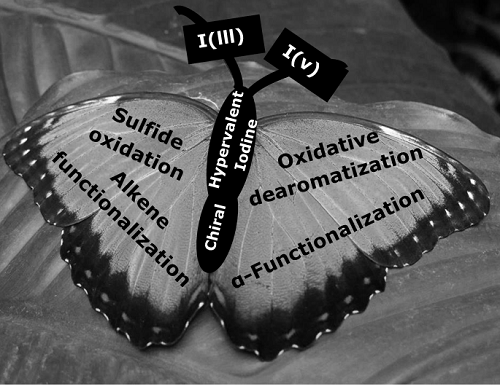
- electrophilicity and appreciable oxidizing properties. The transformations associated with asymmetric induction mainly focused on the asymmetric oxidation and oxidative dearomatization chemistry. Asymmetric difunctionalization of alkenes, α-functionalization of carbonyls and also some typical 1,2-aryl
- displacement of the aryl iodide by the CO2R group in 77 leading to chiral lactones of type 78 [56]. Rearrangement strategy Wirth et al. used I(III) reagent 8b for the development of a stereoselective oxidative rearrangement method to synthesize α-arylated carbonyls 81 from α,β-unsaturated carbonyls 80 (Scheme
- reactive organostannane derived Sn–I(III) exchange in the presence of BF3·Et2O was the crucial step in the synthesis of the chiral iodonium salts from 88. In view of developing asymmetric α-arylations of carbonyls, Olofsson et al. has independently synthesized a new class of diaryliodonium salts 14 with

Graphical Abstract
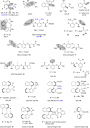
Scheme 1: An overview of different chiral iodine reagents or precursors thereof.

Scheme 2: Asymmetric oxidation of sulfides by chiral hypervalent iodine reagents.

Scheme 3: Oxidative dearomatization of naphthol derivatives by Kita et al.

Scheme 4: [4 + 2] Diels–Alder dimerization reported by Birman et al.

Scheme 5: m-CPBA guided catalytic oxidative naphthol dearomatization.

Scheme 6: Oxidative dearomatization of phenolic derivatives by Ishihara et al.

Scheme 7: Oxidative spirocyclization applying precatalyst 11 developed by Ciufolini et al.

Scheme 8: Asymmetric hydroxylative dearomatization.

Scheme 9: Enantioselective oxylactonization reported by Fujita et al.

Scheme 10: Dioxytosylation of styrene (47) by Wirth et al.

Scheme 11: Oxyarylation and aminoarylation of alkenes.

Scheme 12: Asymmetric diamination of alkenes.

Scheme 13: Stereoselective oxyamination of alkenes reported by Wirth et al.

Scheme 14: Enantioselective and regioselective aminofluorination by Nevado et al.

Scheme 15: Fluorinated difunctionalization reported by Jacobsen et al.

Scheme 16: Aryl rearrangement reported by Wirth et al.

Scheme 17: α-Arylation of β-ketoesters.

Scheme 18: Asymmetric α-oxytosylation of carbonyls.

Scheme 19: Asymmetric α-oxygenation and α-amination of carbonyls reported by Wirth et al.

Scheme 20: Asymmetric α-functionalization of ketophenols using chiral quaternary ammonium (hypo)iodite salt re...

Scheme 21: Oxidative Intramolecular coupling by Gong et al.

Scheme 22: α-Sulfonyl and α-phosphoryl oxylation of ketones reported by Masson et al.

Scheme 23: α-Fluorination of β-keto esters.
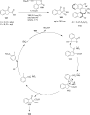
Scheme 24: Alkynylation of β-ketoesters and amides catalyzed by phase-transfer catalyst.
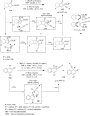
Scheme 25: Alkynylation of β-ketoesters and dearomative alkynylation of phenols.
Addition of dithi(ol)anylium tetrafluoroborates to α,β-unsaturated ketones
- Yu-Chieh Huang,
- An Nguyen,
- Simone Gräßle,
- Sylvia Vanderheiden,
- Nicole Jung and
- Stefan Bräse
Beilstein J. Org. Chem. 2018, 14, 515–522, doi:10.3762/bjoc.14.37
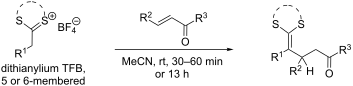
- dithiolanes by addition of an ynone to α-alkyl or aryl-substitued dithiolanylium TFBs. Keywords: addition to α,β-unsaturated carbonyls; dithiane chemistry; dithianylium tetrafluoroborate (TFB); ketene dithiane; Introduction 1,3-Dithioacetals are a common motif in organic chemistry. They are part of

Graphical Abstract

Scheme 1: Previously reported procedure for the addition of ketene dithioacetals to α,β-unsaturated ketones [33] ...

Scheme 2: Addition of dithi(ol)anylium TFBs to α,β-unsaturated non-cyclic ketones.

Scheme 3: Addition of dithi(ol)anylium TFBs to α,β-unsaturated cyclic ketones.

Scheme 4: Single versus double addition of ketones to dithiolanylium TFB 1e. adr was calculated from the 1H N...

Scheme 5: The scope of the presented protocol demonstrated by examples including the use of additional electr...

Scheme 6: Synthesis of diene dithioacetals 18a and 18b by addition of ynone 17 to α-alkyl or aryl-substitued ...
Photocatalytic formation of carbon–sulfur bonds
- Alexander Wimmer and
- Burkhard König
Beilstein J. Org. Chem. 2018, 14, 54–83, doi:10.3762/bjoc.14.4
- of 4 equivalents of the thiol is needed for the reaction. The authors addressed this limitation in a later report (vide infra). Functional groups like alcohols, Boc-protected amines, carbonyls, esters and halides are tolerated. One year later, Yoon and co-workers described a redox mediator concept
- alkynes, bearing electron-donating (methyl, methoxy, amine or hydroxy) and withdrawing substituents (halides, carbonyls or sulfonamides) and also heterocyclic substrates. Various aromatic sulfinic acids could be applied, including methoxy, halogen, trifluoromethyl or acetylamino-substituted benzenes, as

Graphical Abstract

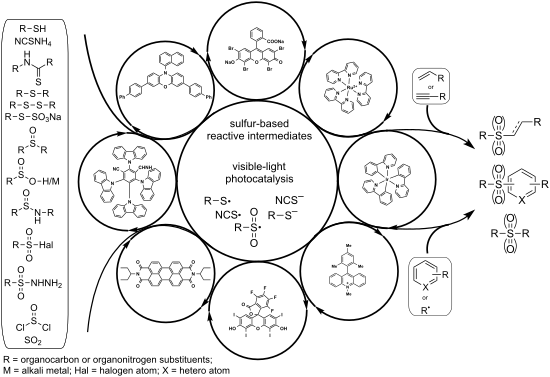
Scheme 1: General overview over the sulfur-based substrates and reactive intermediates that are discussed in ...
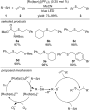
Scheme 2: Photoredox-catalyzed radical thiol–ene reaction, applying [Ru(bpz)3](PF6)2 as photocatalyst.

Scheme 3: Photoredox-catalyzed thiol–ene reaction of aliphatic thiols with alkenes enabled by aniline derivat...
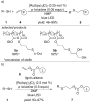
Scheme 4: Photoredox-catalyzed radical thiol–ene reaction for the postfunctionalization of polymers (a) and n...

Scheme 5: Photoredox-catalyzed thiol–ene reaction enabled by bromotrichloromethane as redox additive.
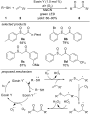
Scheme 6: Photoredox-catalyzed preparation of β-ketosulfoxides with Eosin Y as organic dye as photoredox cata...
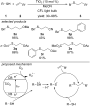
Scheme 7: Greaney’s photocatalytic radical thiol–ene reaction, applying TiO2 nanoparticles as photocatalyst.

Scheme 8: Fadeyi’s photocatalytic radical thiol–ene reaction, applying Bi2O3 as photocatalyst.

Scheme 9: Ananikov’s photocatalytic radical thiol-yne reaction, applying Eosin Y as photocatalyst.
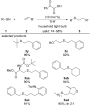
Scheme 10: Organocatalytic visible-light photoinitiated thiol–ene coupling, applying phenylglyoxylic acid as o...

Scheme 11: Xia’s photoredox-catalyzed synthesis of 2,3-disubstituted benzothiophenes, applying 9-mesityl-10-me...
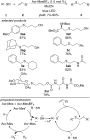
Scheme 12: Wang’s metal-free photoredox-catalyzed radical thiol–ene reaction, applying 9-mesityl-10-methylacri...

Scheme 13: Visible-light benzophenone-catalyzed metal- and oxidant-free radical thiol–ene reaction.
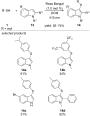
Scheme 14: Visible-light catalyzed C-3 sulfenylation of indole derivatives using Rose Bengal as organic dye.
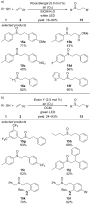
Scheme 15: Photocatalyzed radical thiol–ene reaction and subsequent aerobic sulfide-oxidation with Rose Bengal...
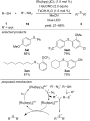
Scheme 16: Photoredox-catalyzed synthesis of diaryl sulfides.

Scheme 17: Photocatalytic cross-coupling of aryl thiols with aryl diazonium salts, using Eosin Y as photoredox...
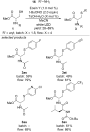
Scheme 18: Photocatalyzed cross-coupling of aryl diazonium salts with cysteines in batch and in a microphotore...
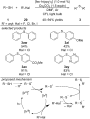
Scheme 19: Fu’s [Ir]-catalyzed photoredox arylation of aryl thiols with aryl halides.

Scheme 20: Fu’s photoredox-catalyzed difluoromethylation of aryl thiols.
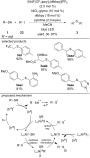
Scheme 21: C–S cross-coupling of thiols with aryl iodides via [Ir]-photoredox and [Ni]-dual-catalysis.
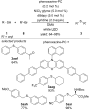
Scheme 22: C–S cross-coupling of thiols with aryl bromides, applying 3,7-bis-(biphenyl-4-yl)-10-(1-naphthyl)ph...
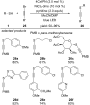
Scheme 23: Collin’s photochemical dual-catalytic cross-coupling of thiols with bromoalkynes.
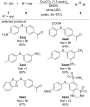
Scheme 24: Visible-light-promoted C–S cross-coupling via intermolecular electron donor–acceptor complex format...
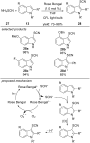
Scheme 25: Li’s visible-light photoredox-catalyzed thiocyanation of indole derivatives with Rose Bengal as pho...
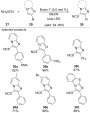
Scheme 26: Hajra’s visible-light photoredox-catalyzed thiocyanation of imidazoheterocycles with Eosin Y as pho...

Scheme 27: Wang’s photoredox-catalyzed thiocyanation reaction of indoles, applying heterogeneous TiO2/MoS2 nan...
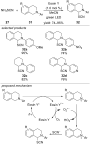
Scheme 28: Yadav’s photoredox-catalyzed α-C(sp3)–H thiocyanation reaction for tertiary amines, applying Eosin ...

Scheme 29: Yadav’s photoredox-catalyzed synthesis of 5-aryl-2-imino-1,3-oxathiolanes.

Scheme 30: Yadav’s photoredox-catalyzed synthesis of 1,3-oxathiolane-2-thiones.
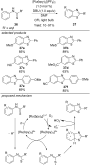
Scheme 31: Li’s photoredox catalysis for the preparation of 2-substituted benzothiazoles, applying [Ru(bpy)3](...
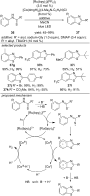
Scheme 32: Lei’s external oxidant-free synthesis of 2-substituted benzothiazoles by merging photoredox and tra...

Scheme 33: Metal-free photocatalyzed synthesis of 2-aminobenzothiazoles, applying Eosin Y as photocatalyst.

Scheme 34: Metal-free photocatalyzed synthesis of 1,3,4-thiadiazoles, using Eosin Y as photocatalyst.
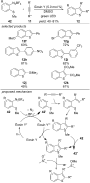
Scheme 35: Visible-light photoredox-catalyzed preparation of benzothiophenes with Eosin Y.

Scheme 36: Visible-light-induced KOH/DMSO superbase-promoted preparation of benzothiophenes.
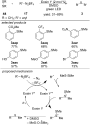
Scheme 37: Jacobi von Wangelin’s photocatalytic approach for the synthesis of aryl sulfides, applying Eosin Y ...

Scheme 38: Visible-light photosensitized α-C(sp3)–H thiolation of aliphatic ethers.

Scheme 39: Visible-light photocatalyzed cross-coupling of alkyl and aryl thiosulfates with aryl diazonium salt...
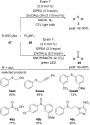
Scheme 40: Visible-light photocatalyzed, controllable sulfenylation and sulfoxidation with organic thiosulfate...

Scheme 41: Rastogi’s photoredox-catalyzed methylsulfoxidation of aryl diazonium salts, using [Ru(bpy)3]Cl2 as ...
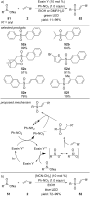
Scheme 42: a) Visible-light metal-free Eosin Y-catalyzed procedure for the preparation of vinyl sulfones from ...
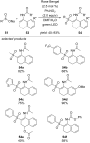
Scheme 43: Visible-light photocatalyzed cross-coupling of sodium sulfinates with secondary enamides.

Scheme 44: Wang’s photocatalyzed oxidative cyclization of phenyl propiolates with sulfinic acids, applying Eos...

Scheme 45: Lei’s sacrificial oxidant-free synthesis of allyl sulfones by merging photoredox and transition met...
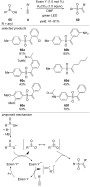
Scheme 46: Photocatalyzed Markovnikov-selective radical/radical cross-coupling of aryl sulfinic acids and term...

Scheme 47: Visible-light Eosin Y induced cross-coupling of aryl sulfinic acids and styrene derivatives, afford...
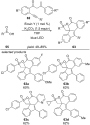
Scheme 48: Photoredox-catalyzed bicyclization of 1,7-enynes with sulfinic acids, applying Eosin Y as photocata...

Scheme 49: Visible-light-accelerated C–H-sulfinylation of arenes and heteroarenes.
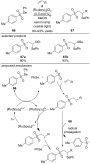
Scheme 50: Visible-light photoredox-catalyzed β-selenosulfonylation of electron-rich olefins, applying [Ru(bpy)...

Scheme 51: Photocatalyzed preparation of β-chlorosulfones from the respective olefins and p-toluenesulfonyl ch...
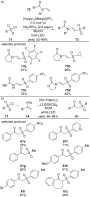
Scheme 52: a) Photocatalyzed preparation of β-amidovinyl sulfones from sulfonyl chlorides. b) Preparation of β...

Scheme 53: Visible-light photocatalyzed sulfonylation of aliphatic tertiary amines, applying [Ru(bpy)3](PF6)2 ...
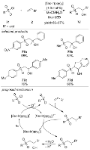
Scheme 54: Reiser’s visible-light photoredox-catalyzed preparation of β-hydroxysulfones from sulfonyl chloride...
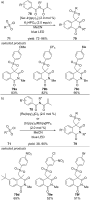
Scheme 55: a) Sun’s visible-light-catalyzed approach for the preparation of isoquinolinonediones, applying [fac...
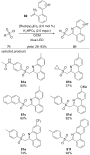
Scheme 56: Visible-light photocatalyzed sulfonylation/cyclization of vinyl azides, applying [Ru(bpy)3]Cl2 as p...

Scheme 57: Visible-light photocatalyzed procedure for the formation of β-ketosulfones from aryl sulfonyl chlor...

Scheme 58: Zheng’s method for the sulfenylation of indole derivatives, applying sulfonyl chlorides via visible...
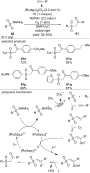
Scheme 59: Cai’s visible-light induced synthesis of β-ketosulfones from sulfonyl hydrazines and alkynes.

Scheme 60: Photoredox-catalyzed approach for the preparation of vinyl sulfones from sulfonyl hydrazines and ci...
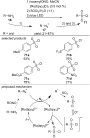
Scheme 61: Jacobi von Wangelin’s visible-light photocatalyzed chlorosulfonylation of anilines.
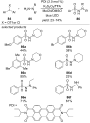
Scheme 62: Three-component photoredox-catalyzed synthesis of N-amino sulfonamides, applying PDI as organic dye....

Scheme 63: Visible-light induced preparation of complex sulfones from oximes, silyl enol ethers and SO2.
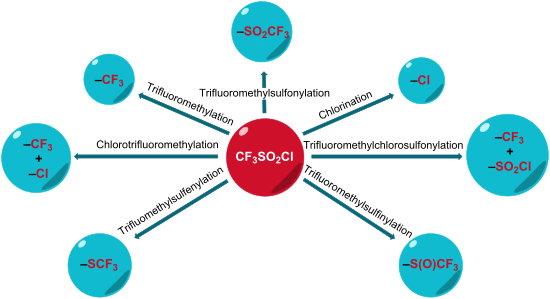
CF3SO2X (X = Na, Cl) as reagents for trifluoromethylation, trifluoromethylsulfenyl-, -sulfinyl- and -sulfonylation and chlorination. Part 2: Use of CF3SO2Cl
- Hélène Chachignon,
- Hélène Guyon and
- Dominique Cahard
Beilstein J. Org. Chem. 2017, 13, 2800–2818, doi:10.3762/bjoc.13.273
- -trifluoromethylated carbonyls in low to moderate yields (Scheme 1) [8]. Nonetheless, important competition between the introduction of the CF3 group or a Cl atom was invariably observed in various ratio depending on the nature of the substrates. As for the mechanism of the reaction, the authors proposed a radical

Graphical Abstract
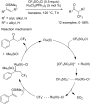
Scheme 1: Trifluoromethylation of silyl enol ethers.

Scheme 2: Continuous flow trifluoromethylation of ketones under photoredox catalysis.
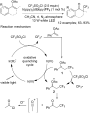
Scheme 3: Trifluoromethylation of enol acetates.

Scheme 4: Photoredox-catalysed tandem trifluoromethylation/cyclisation of N-arylacrylamides: a route to trifl...

Scheme 5: Tandem trifluoromethylation/cyclisation of N-arylacrylamides using BiOBr nanosheets catalysis.

Scheme 6: Photoredox-catalysed trifluoromethylation/desulfonylation/cyclisation of N-tosyl acrylamides (bpy: ...

Scheme 7: Photoredox-catalysed trifluoromethylation/aryl migration/desulfonylation of N-aryl-N-tosylacrylamid...

Scheme 8: Proposed mechanism for the trifluoromethylation/aryl migration/desulfonylation (/cyclisation) of N-...

Scheme 9: Photoredox-catalysed trifluoromethylation/cyclisation of N-methacryloyl-N-methylbenzamide derivativ...

Scheme 10: Photoredox-catalysed trifluoromethylation/cyclisation of N-methylacryloyl-N-methylbenzamide derivat...

Scheme 11: Photoredox-catalysed trifluoromethylation/dearomatising spirocyclisation of a N-benzylacrylamide de...

Scheme 12: Photoredox-catalysed trifluoromethylation/cyclisation of an unactivated alkene.

Scheme 13: Asymmetric radical aminotrifluoromethylation of N-alkenylurea derivatives using a dual CuBr/chiral ...

Scheme 14: Aminotrifluoromethylation of an N-alkenylurea derivative using a dual CuBr/phosphoric acid catalyti...

Scheme 15: 1,2-Formyl- and 1,2-cyanotrifluoromethylation of alkenes under photoredox catalysis.

Scheme 16: First simultaneous introduction of the CF3 moiety and a Cl atom onto alkenes.

Scheme 17: Chlorotrifluoromethylaltion of terminal, 1,1- and 1,2-substituted alkenes.

Scheme 18: Chorotrifluoromethylation of electron-deficient alkenes (DCE = dichloroethane).
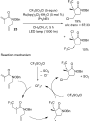
Scheme 19: Cascade trifluoromethylation/cyclisation/chlorination of N-allyl-N-(benzyloxy)methacrylamide.

Scheme 20: Cascade trifluoromethylation/cyclisation (/chlorination) of diethyl 2-allyl-2-(3-methylbut-2-en-1-y...

Scheme 21: Trifluoromethylchlorosulfonylation of allylbenzene derivatives and aliphatic alkenes.

Scheme 22: Access to β-hydroxysulfones from CF3-containing sulfonyl chlorides through a photocatalytic sequenc...
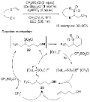
Scheme 23: Cascade trifluoromethylchlorosulfonylation/cyclisation reaction of alkenols: a route to trifluorome...

Scheme 24: First direct C–H trifluoromethylation of arenes and proposed mechanism.

Scheme 25: Direct C–H trifluoromethylation of five- and six-membered (hetero)arenes under photoredox catalysis....

Scheme 26: Alternative pathway for the C–H trifluoromethylation of (hetero)arenes under photoredox catalysis.

Scheme 27: Direct C–H trifluoromethylation of five- and six-membered ring (hetero)arenes using heterogeneous c...

Scheme 28: Trifluoromethylation of terminal olefins.

Scheme 29: Trifluoromethylation of enamides.

Scheme 30: (E)-Selective trifluoromethylation of β-nitroalkenes under photoredox catalysis.

Scheme 31: Photoredox-catalysed trifluoromethylation/cyclisation of an o-azidoarylalkynes.

Scheme 32: Regio- and stereoselective chlorotrifluoromethylation of alkynes.

Scheme 33: PMe3-mediated trifluoromethylsulfenylation by in situ generation of CF3SCl.

Scheme 34: (EtO)2P(O)H-mediated trifluoromethylsulfenylation of (hetero)arenes and thiols.

Scheme 35: PPh3/NaI-mediated trifluoromethylsulfenylation of indole derivatives.

Scheme 36: PPh3/n-Bu4NI mediated trifluoromethylsulfenylation of thiophenol derivatives.

Scheme 37: PPh3/Et3N mediated trifluoromethylsulfinylation of benzylamine.

Scheme 38: PCy3-mediated trifluoromethylsulfinylation of azaarenes, amines and phenols.

Scheme 39: Mono- and dichlorination of carbon acids.

Scheme 40: Monochlorination of (N-aryl-N-hydroxy)acylacetamides.

Scheme 41: Examples of the synthesis of heterocycles fused with β-lactams through a chlorination/cyclisation p...

Scheme 42: Enantioselective chlorination of β-ketoesters and oxindoles.

Scheme 43: Enantioselective chlorination of 3-acyloxazolidin-2-one derivatives (NMM = N-methylmorpholine).
Pyrene–nucleobase conjugates: synthesis, oligonucleotide binding and confocal bioimaging studies
- Artur Jabłoński,
- Yannic Fritz,
- Hans-Achim Wagenknecht,
- Rafał Czerwieniec,
- Tytus Bernaś,
- Damian Trzybiński,
- Krzysztof Woźniak and
- Konrad Kowalski
Beilstein J. Org. Chem. 2017, 13, 2521–2534, doi:10.3762/bjoc.13.249
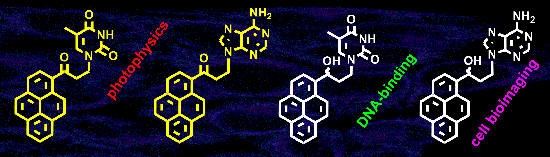
- carbonyls 2 and 3 show distinctly weaker fluorescence than the pyrene alcohols 4 and 5. The quantum yields at ambient temperature are at least 20 times lower than for 4 and 5. The decay times drop to below 2 ns (Table 1). Similar trends were already observed for 1-acetylpyrene [31]. In the latter case, low

Graphical Abstract

Figure 1: Examples of pyrene derivatives with relevance to nucleic acid chemistry and structures of pyrenyl–n...

Scheme 1: Synthesis of pyrene–nucleobase conjugates 2–5.

Figure 2: ORTEP diagram of 2 at 50% probability level. The hydrogen and halogen bonds are represented by dash...

Figure 3: Intermolecular hydrogen bonding (N22–H22···O27 distance = 2.882(2) Å) and halogen bonding (C30–Cl31...
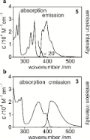
Figure 4: UV–vis absorption and fluorescence spectra of pyrene–adenines 5 (a) and 3 (b) in diluted (c ≈ 10−5 ...

Figure 5: Absorption changes during titration of 2 and 4 (λ = 344 nm) in the presence of (dA)10, and 3 and 5 ...

Figure 6: Cellular distribution of 4 in living HeLa cells. (A) Fluorescence of 4 (green). (B) Fluorescence of...

Figure 7: Cellular distribution of 5 in living HeLa cells. (A) Fluorescence of 5 (green). Arrows are marking ...
Cycloheximide congeners produced by Streptomyces sp. SC0581 and photoinduced interconversion between (E)- and (Z)-2,3-dehydroanhydrocycloheximides
- Li Yang,
- Ping Wu,
- Jinghua Xue,
- Huitong Tan,
- Zheng Zhang and
- Xiaoyi Wei
Beilstein J. Org. Chem. 2017, 13, 1039–1049, doi:10.3762/bjoc.13.103
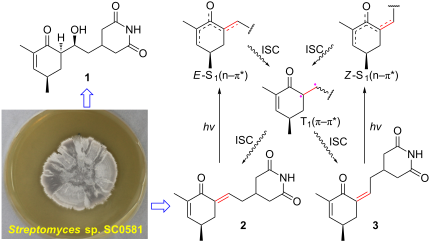
- keto carbonyl (δC 202.6), two amide carbonyls (δC 175.5, 175.7), a trisubstituted olefin (δH 6.65; δC 134.2, 151.9), two methyls (δH 1.72, 1.16; δC 14.5, 20.3), four aliphatic methines with one being oxygenated (δH 4.26; δC 67.3), and four methylenes. Analysis of the 1H,1H-COSY and HMBC spectra, in

Graphical Abstract
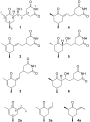
Figure 1: Structures of 1–6 and 2a–4a.
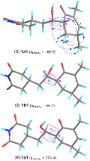
Figure 2: Representatives of the theoretical dominant conformers of (4R,6R,αS)-1 ((S)-1a1 and (S)-1b1) and (4R...

Figure 3: Comparison of the experimental ECD spectrum of 1 with the M11/TZVP calculated spectra of (4R,6R,αS)-...

Figure 4: Comparison of the experimental ECD spectrum with the BH&HLYP/TZVP calculated spectra of the mixture...
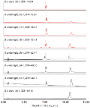
Figure 5: UPLC analysis of photoreaction products of 2 (around tR = 7.5 min) and 3 (around tR = 11.5 min).

Figure 6: Potential energy surfaces of 2a/3a in the S0, S1, and T1 states, geometries of key points in the su...
Contribution of microreactor technology and flow chemistry to the development of green and sustainable synthesis
- Flavio Fanelli,
- Giovanna Parisi,
- Leonardo Degennaro and
- Renzo Luisi
Beilstein J. Org. Chem. 2017, 13, 520–542, doi:10.3762/bjoc.13.51
- in Scheme 16, diazo species 18 could be generated from simple carbonyls 15 and hydrazine (16). Intermediate hydrazones 17 can be converted into the corresponding diazo compounds by oxidation using a recyclable oxidant based on N-iodo-p-toluenesulfonamide potassium salt. The possibility to regenerate

Graphical Abstract

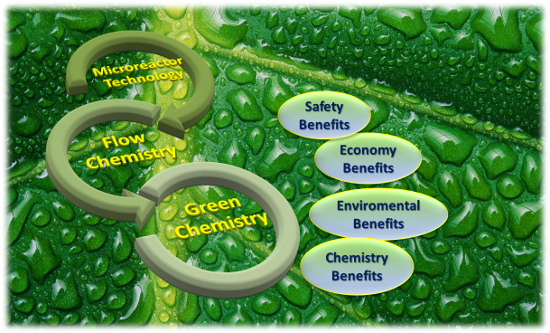
Figure 1: Microreactor technologies and flow chemistry for a sustainable chemistry.

Scheme 1: A flow microreactor system for the generation and trapping of highly unstable carbamoyllithium spec...

Scheme 2: Flow synthesis of functionalized α-ketoamides.

Scheme 3: Reactions of benzyllithiums.

Scheme 4: Trapping of benzyllithiums bearing carbonyl groups enabled by a flow microreactor. (Adapted with pe...

Scheme 5: External trapping of chloromethyllithium in a flow microreactor system.

Scheme 6: Scope for the direct tert-butoxycarbonylation using a flow microreactor system.

Scheme 7: Control of anionic Fries rearrangement reactions by using submillisecond residence time. (Adapted w...

Figure 2: Chip microreactor (CMR) fabricated with six layers of polyimide films. (Reproduced with permission ...

Scheme 8: Flow microreactor system for lithiation, borylation, Suzuki–Miyaura coupling and selected examples ...

Scheme 9: Experimental setup for the flow synthesis of 2-fluorobi(hetero)aryls by directed lithiation, zincat...

Scheme 10: Experimental setup for the coupling of fluoro-substituted pyridines. (Adapted with permission from [53]...

Scheme 11: Continuous flow process setup for the preparation of 11 (Reproduced with permission from [54], copyrigh...
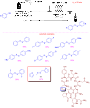
Scheme 12: Continuous-flow photocatalytic oxidation of thiols to disulfides.

Scheme 13: Trifluoromethylation by continuous-flow photoredox catalysis.

Scheme 14: Flow photochemical synthesis of 6(5H)-phenanthridiones from 2-chlorobenzamides.

Scheme 15: Synthesis of biaryls 14a–g under photochemical flow conditions.

Scheme 16: Flow oxidation of hydrazones to diazo compounds.

Scheme 17: Synthetic use of flow-generated diazo compounds.

Scheme 18: Ley’s flow approach for the generation of diazo compounds.
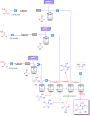
Scheme 19: Iterative strategy for the sequential coupling of diazo compounds.

Scheme 20: Integrated synthesis of Bakuchiol precursor via flow-generated diazo compounds.

Scheme 21: Kappe’s continuous-flow reduction of olefines with diimide.

Scheme 22: Multi-injection setup for the reduction of artemisinic acid.

Scheme 23: Flow reactor system for multistep synthesis of (S)-rolipram. Pumps are labelled a, b, c, d and e; L...

Figure 3: Reconfigurable modules and flowcharts for API synthesis. (Reproduced with permission from [85], copyrig...

Figure 4: Reconfigurable system for continuous production and formulation of APIs. (Reproduced with permissio...
Secondary metabolome and its defensive role in the aeolidoidean Phyllodesmium longicirrum, (Gastropoda, Heterobranchia, Nudibranchia)
- Alexander Bogdanov,
- Cora Hertzer,
- Stefan Kehraus,
- Samuel Nietzer,
- Sven Rohde,
- Peter J. Schupp,
- Heike Wägele and
- Gabriele M. König
Beilstein J. Org. Chem. 2017, 13, 502–519, doi:10.3762/bjoc.13.50
- ) and 136.9 (C-8), 127.0 (C-11) and 135.4 (C-12) pointed towards three carbon–carbon double bonds. Together with two carbonyls (at C-2 and C-18) one RDE accountable to a ring remained, and suggested a cembrane-class diterpene. The proton resonances could be unambiguously assigned to those of directly

Graphical Abstract
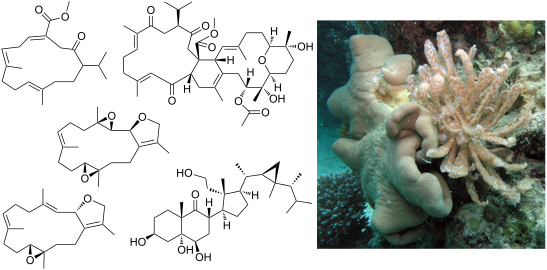
Figure 1: Secondary metabolites isolated in this study from P. longicirrum.

Figure 2: Structures of secondary metabolites from P. longicirrum as described by Coll et al. in 1985 [13].

Figure 3: Significant 1H,1H COSY correlations as found in compound 1.

Figure 4: Secosterols [22,24] related to 3β,5α,6β-trihydroxy-9-oxo-9,11-secogorgostan-11-ol (1) from P. longicirrum.

Figure 5: Conformational structure of 1 (key NOESY correlations are indicated with blue arrows; coupling cons...

Figure 6: Structure of cembranoid 5. 1H,1H spin systems (A, B and C) are indicated in bold, arrows show key H...

Figure 7: Compound 5 and the most closely related cembranoids from soft corals.

Figure 8: Proposed configuration and selected NOE correlations of bisepoxide 12 (key NOE correlations are ind...

Figure 9: Structures of bisglaucumlids A–C (23–25).

Figure 10: Proposed configuration of the eastern part (rings B, C and D) of isobisglaucumlides B and C (14 and ...

Figure 11: Effect of Phyllodesmium metabolites in different concentrations on predation by Canthigaster soland...

Figure 12: Phylogenetic tree of octocorals relevant as putative food sources for Phyllodesmium spp. Phylogram ...
New approaches to organocatalysis based on C–H and C–X bonding for electrophilic substrate activation
- Pavel Nagorny and
- Zhankui Sun
Beilstein J. Org. Chem. 2016, 12, 2834–2848, doi:10.3762/bjoc.12.283
- activation is accomplished through a C–H hydrogen bond with cyclic ester carbonyls. The following study by the Bibal group described the use of catalysts L11 as hydrogen bond donors for the activation of epoxides toward ring-opening aminolysis with amines (Scheme 6) [54]. Significant rate enhancement was
- -workers have re-evaluated the molecular iodine-catalyzed conjugate addition to α,β-unsaturated carbonyls or nitrostyrenes (Scheme 14) [80]. Based on their computational studies, they proposed that iodine activates the enone moiety by forming a halogen bond with the carbonyl and thus forming a more

Graphical Abstract

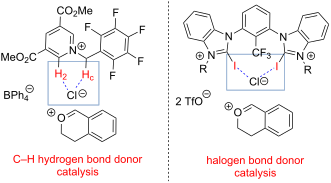
Figure 1: Electrophile Activation by Hydrogen Bond Donors [1-16].

Figure 2: Early examples of C–H hydrogen bonds and their recent use in supramolecular chemistry [18,19,32-34].

Scheme 1: Design of 1,2,3-triazole-based catalysts for trityl group transfer through chloride anion binding b...

Scheme 2: Examples of chiral triazole-based catalysts for anion activation designed by Mancheno and co-worker...

Scheme 3: Application of chiral triazole-based catalysts L3 and L4 for counterion activation of pyridinium, q...

Scheme 4: Ammonium salt anion binding via C–H hydrogen bonds in solid state [40-45,50,51].
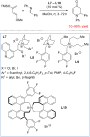
Scheme 5: Early examples of ammonium salts being used for electrophilic activation of imines in aza-Diels–Ald...
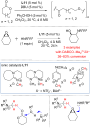
Scheme 6: Ammonium salts as hydrogen bond-donor catalysts by Bibal and co-workers [53,54].

Scheme 7: Tetraalkylammonium catalyst (L6)-catalyzed dearomatization of isoquinolinium salts [50].

Scheme 8: Tetraalkylammonium catalyst L6 complexation to halogen-containing substrates [51].

Scheme 9: Tetraalkylammonium-catalyzed aza-Diels–Alder reaction by Maruoka and co-workers [52].
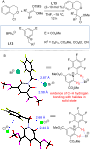
Scheme 10: (A) Alkylpyridinium catalysts L13-catalyzed reaction of 1-isochroman and silyl ketene acetals by Be...
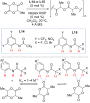
Scheme 11: Mixed N–H/C–H two hydrogen bond donors L14 and L15 as organocatalysts for ROP of lactide by Bibal a...

Scheme 12: Examples of stable complexes based on halogen bonding [68,69].

Scheme 13: Interaction between (−)-sparteine hydrobromide and (S)-1,2-dibromohexafluoropropane in the cocrysta...

Scheme 14: Iodine-catalyzed reactions that are computationally proposed to proceed through halogen bond to car...

Scheme 15: Transfer hydrogenation of phenylquinolines catalyzed by haloperfluoroalkanes by Bolm and co-workers ...

Scheme 16: Halogen bond activation of benzhydryl bromides by Huber and co-workers [82].

Scheme 17: Halogen bond-donor-catalyzed addition to oxocarbenium ions by Huber and co-workers [89].

Scheme 18: Halogen bond-donor activation of α,β-unsaturated carbonyl compounds in the [2 + 4] cycloaddition re...

Scheme 19: Halogen bond donor activation of imines in the [2 + 4] cycloaddition reaction of imine and Danishef...
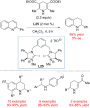
Scheme 20: Transfer hydrogenation catalyzed by a chiral halogen bond donor by Tan and co-workers [91].

Scheme 21: Allylation of benzylic alcohols by Takemoto and co-workers [92].

Scheme 22: NIS induced semipinacol rearrangement via C–X bond cleavage [93].
Sydnone C-4 heteroarylation with an indolizine ring via Chichibabin indolizine synthesis
- Florin Albota,
- Mino R. Caira,
- Constantin Draghici,
- Florea Dumitrascu and
- Denisa E. Dumitrescu
Beilstein J. Org. Chem. 2016, 12, 2503–2510, doi:10.3762/bjoc.12.245
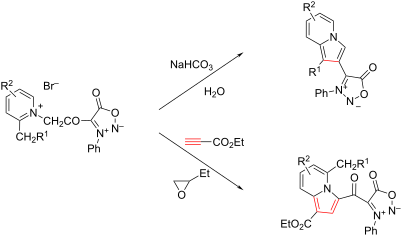
- proposed structures for the hybrid heterocycles 12. The signals for the endocyclic and exocyclic CO groups of the sydnone moiety are strongly deshielded and the chemical shifts are very close, appearing in the range of 165.5–166.1 ppm, whereas the carbonyls of the ester groups are shielded by 2–3 ppm. Both

Graphical Abstract

Figure 1: Sydnone-pyrroloazines hybrids 1, indolizine (2), sydnone 3, indolizines attached directly to C-4 of...

Scheme 1: Synthesis of pyridinium bromides 8 and sydnone-indolizine hybrids 9 through the Chichibabin reactio...

Figure 2: The molecular structure of 9d with thermal ellipsoids drawn at the 50% probability level. (a) Inver...

Figure 3: Centrosymmetric C–H···O hydrogen bonded dimeric motif in the crystal of 9d.

Scheme 2: The synthesis and mechanism of formation of sydnone-indolizines 12.

Figure 4: Molecular structure of 12c with atoms represented as thermal ellipsoids at the 50% probability leve...

Figure 5: Intramolecular distortion in 12c.
An effective one-pot access to polynuclear dispiroheterocyclic structures comprising pyrrolidinyloxindole and imidazothiazolotriazine moieties via a 1,3-dipolar cycloaddition strategy
- Alexei N. Izmest’ev,
- Galina A. Gazieva,
- Natalya V. Sigay,
- Sergei A. Serkov,
- Valentina A. Karnoukhova,
- Vadim V. Kachala,
- Alexander S. Shashkov,
- Igor E. Zanin,
- Angelina N. Kravchenko and
- Nina N. Makhova
Beilstein J. Org. Chem. 2016, 12, 2240–2249, doi:10.3762/bjoc.12.216

- , because the corresponding endo-transition state would require more energy of activation, as it would result in an electrostatic repulsion between the cis carbonyls thus increasing the free energy of activation [46][47]. As expected, the azomethine ylide adds at the double bond of 1a–c from that side in

Graphical Abstract

Figure 1: Bioactive 2,3’-spiropyrrolidinyloxindoles.

Scheme 1: Earlier studied cycloaddition reaction.

Scheme 2: Synthesis of dipolarophiles 1a–c.

Scheme 3: Synthesis of dispirocompounds 4a–o.

Figure 2: Synthesis of dispiro compounds 4a–o. Reaction conditions: heating the mixture of compounds 1 (0.5 m...

Scheme 4: Synthesis of dipolarophiles 1d–f.

Figure 3: Synthesis of dispiro compounds 4p–t. Reaction conditions: heating the solution of compounds 1 (0.5 ...

Figure 4: Key interactions in {1H-13C}HMBC spectrum of 4f.

Figure 5: General view of 4c in the crystal in thermal ellipsoids representation (50% probability). Hydrogen ...

Figure 6: General view of 4e in the crystal in thermal ellipsoids representation (40% probability). Hydrogen ...

Figure 7: General view of 4r in the crystal in thermal ellipsoids representation (50% probability). Hydrogen ...

Figure 8: Modes of approach of azomethine ylide (R = H, Ph).
Biosynthesis of oxygen and nitrogen-containing heterocycles in polyketides
- Franziska Hemmerling and
- Frank Hahn
Beilstein J. Org. Chem. 2016, 12, 1512–1550, doi:10.3762/bjoc.12.148
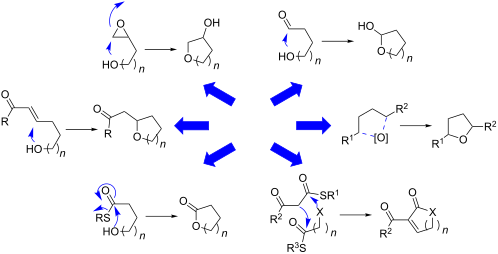
- example epothilone A (119) and oleandomycin (120) (Figure 4) [123][124][125]. Epoxides result from oxidation of olefins by oxidoreductases, mostly cytochrome P450 monooxygenases or FMOs. Alternative mechanisms, such as reactions between carbenes and carbonyls (analogous to the synthetic Corey–Chaykovsky

Graphical Abstract

Scheme 1: Schematic description of the cyclisation reaction catalysed by TE domains. In most cases, the nucle...

Scheme 2: Mechanisms for the formation of oxygen heterocycles. The degree of substitution can differ from tha...

Scheme 3: Pyran-ring formation in pederin (24) biosynthesis. Incubation of recombinant PedPS7 with substrate ...

Scheme 4: The domain AmbDH3 from ambruticin biosynthesis catalyses the dehydration of 25 and subsequent cycli...

Scheme 5: SalBIII catalyses dehydration of 29 and subsequent cyclisation to tetrahydropyran 30 [18].

Figure 1: All pyranonaphtoquinones contain either the naphtha[2,3-c]pyran-5,10-dione (32) or the regioisomeri...

Scheme 6: Pyran-ring formation in actinorhodin (34) biosynthesis. DNPA: 4-dihydro-9-hydroxy-1-methyl-10-oxo-3H...

Scheme 7: Pyran formation in granaticin (36) biosynthesis. DNPA: 4-dihydro-9-hydroxy-1-methyl-10-oxo-3H-napht...

Scheme 8: Pyran formation in alnumycin (37) biosynthesis. Adapted from [21].

Scheme 9: Biosynthesis of pseudomonic acid A (61). The pyran ring is initially formed in 57 after dehydrogena...

Scheme 10: Epoxidation–cyclisation leads to the formation of the tetrahydropyran ring in the western part of t...

Scheme 11: a) Nonactin (70) is formed from heterodimers of (−)(+)-dimeric nonactic acid and (+)(−)-dimeric non...

Figure 2: Pamamycins (73) are macrodiolide antibiotics containing three tetrahydrofuran moieties, which are a...

Scheme 12: A PS domain homolog in oocydin A (76) biosynthesis is proposed to catalyse furan formation via an o...

Scheme 13: Mechanism of oxidation–furan cyclisation by AurH, which converts (+)-deoxyaureothin (77) into (+)-a...

Scheme 14: Leupyrrin A2 (80) and the proposed biosynthesis of its furylidene moiety [69,70].

Scheme 15: Asperfuranone (93) biosynthesis, adapted from [75].
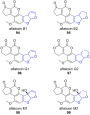
Figure 3: The four major aflatoxins produced by Aspergilli are the types B1, B2, G1 and G2 (94–97). In the di...

Scheme 16: Overview on aflatoxin B1 (94) biosynthesis. HOMST = 11-hydroxy-O-methylsterigmatocystin [78,79,82-106].

Scheme 17: A zipper mechanism leads to the formation of oxygen heterocycles in monensin biosynthesis [109-111].

Scheme 18: Formation of the 2,6-dioxabicyclo[3.2.1]octane (DBO) ring system in aurovertin B (118) biosynthesis ...

Figure 4: Structures of the epoxide-containing polyketides epothilone A (119) and oleandomycin (120) [123-125].

Scheme 19: Structures of phoslactomycin B (121) (a) and jerangolid A (122) (b). The heterocycle-forming steps ...

Scheme 20: a) Structures of rhizoxin (130) and cycloheximide (131). Model for the formation of δ-lactones (b) ...

Scheme 21: EncM catalyses a dual oxidation sequence and following processing of the highly reactive intermedia...

Figure 5: Mesomeric structures of tetronates [138,139].

Figure 6: Structures of tetronates for which gene clusters have been sequenced. The tetronate moiety is shown...

Scheme 22: Conserved steps for formation and processing in several 3-acyl-tetronate biosynthetic pathways were...

Scheme 23: In versipelostatin A (153) biosynthesis, VstJ is a candidate enzyme for catalysing the [4 + 2] cycl...

Scheme 24: a) Structures of some thiotetronate antibiotics. b) Biosynthesis of thiolactomycin (165) as propose...

Scheme 25: Aureusidine synthase (AS) catalyses phenolic oxidation and conjugate addition of chalcones leading ...

Scheme 26: a) Oxidative cyclisation is a key step in the biosynthesis of spirobenzofuranes 189, 192 and 193. b...

Scheme 27: A bicyclisation mechanism forms a β-lactone and a pyrrolidinone and removes the precursor from the ...

Scheme 28: Spontaneous cyclisation leads to off-loading of ebelactone A (201) from the PKS machinery [163].

Scheme 29: Mechanisms for the formation of nitrogen heterocycles.

Scheme 30: Biosynthesis of highly substituted α-pyridinones. a) Feeding experiments confirmed the polyketide o...

Scheme 31: Acridone synthase (ACS) catalyses the formation of 1,3-dihydroxy-N-methylacridone (224) by condensa...

Scheme 32: A Dieckmann condensation leads to the formation of a 3-acyl-4-hydroxypyridin-2-one 227 and removes ...

Scheme 33: a) Biosynthesis of the pyridinone tenellin (234). b) A radical mechanism was proposed for the ring-...

Scheme 34: a) Oxazole-containing PKS–NRPS-derived natural products oxazolomycin (244) and conglobatin (245). b...

Scheme 35: Structure of tetramic acids 251 (a) and major tautomers of 3-acyltetramic acids 252a–d (b). Adapted...

Scheme 36: Equisetin biosynthesis. R*: terminal reductive domain. Adapted from [202].

Scheme 37: a) Polyketides for which a similar biosynthetic logic was suggested. b) Pseurotin A (256) biosynthe...

Figure 7: Representative examples of PTMs with varying ring sizes and oxidation patterns [205,206].

Scheme 38: Ikarugamycin biosynthesis. Adapted from [209-211].

Scheme 39: Tetramate formation in pyrroindomycin aglycone (279) biosynthesis [213-215].

Scheme 40: Dieckmann cyclases catalyse tetramate or 2-pyridone formation in the biosynthesis of, for example, ...
Modular synthesis of the pyrimidine core of the manzacidins by divergent Tsuji–Trost coupling
- Sebastian Bretzke,
- Stephan Scheeff,
- Felicitas Vollmeyer,
- Friederike Eberhagen,
- Frank Rominger and
- Dirk Menche
Beilstein J. Org. Chem. 2016, 12, 1111–1121, doi:10.3762/bjoc.12.107
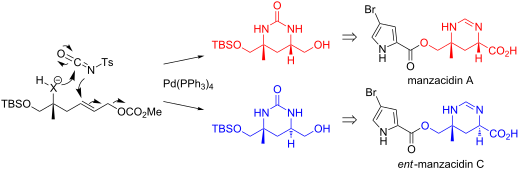
- imines, carbonyls or allene homologs. The resulting homologated nucleophile 8 may then be trapped in an intramolecular fashion by a π-allyl complex, which may concomitantly form from 6 through activation of the homoallylic functionality with a suitable transition metal catalyst. According to this concept

Graphical Abstract

Figure 1: Modular concept for manzacidin synthesis based on a Tsuji–Trost coupling of joint intermediate 5.

Scheme 1: General concept for heterocycles synthesis based on a nucleophilic addition and Tsuji–Trost couplin...

Scheme 2: Synthesis of homoallylic alcohol 12 by multi-component reactions.
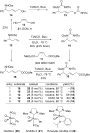
Scheme 3: Preparation of urea-type cyclization precursor 19.

Scheme 4: Stereodivergent synthesis of 1,3-syn- and anti-tetrahydropyrimidinones [31].
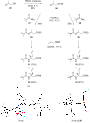
Scheme 5: Stereoselective synthesis of all possible stereoisomers of the manzacidin core amine by asymmetric ...
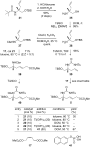
Scheme 6: Synthesis of the authentic cyclization precursor 5.
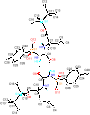
Figure 2: X-ray structure of 39.
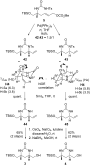
Scheme 7: Divergent Tsuji–Trost coupling and completion of the synthesis of authentic pyrimidinones 3 and 4.
Catalytic asymmetric synthesis of biologically important 3-hydroxyoxindoles: an update
- Bin Yu,
- Hui Xing,
- De-Quan Yu and
- Hong-Min Liu
Beilstein J. Org. Chem. 2016, 12, 1000–1039, doi:10.3762/bjoc.12.98
- proline and its derivatives [31]. Recently, Hoveyda and co-workers designed a novel amino acid amide catalyst (cat. 4) for the asymmetric addition of unsaturated organoboranes to carbonyls and imines, producing the corresponding enantiomerically pure alcohols and amines in excellent yields [32]. As shown

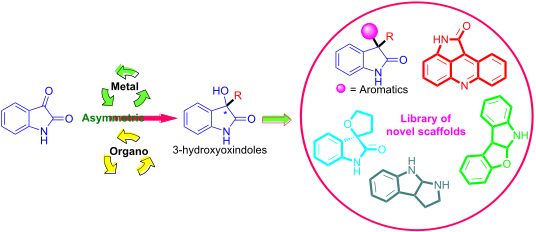
Graphical Abstract

Figure 1: 3-Hydroxyoxindole-containing natural products and biologically active molecules.

Scheme 1: Chiral CNN pincer Pd(II) complex 1 catalyzed asymmetric allylation of isatins.

Scheme 2: Asymmetric allylation of ketimine catalyzed by the chiral CNN pincer Pd(II) complex 2.

Scheme 3: Pd/L1 complex-catalyzed asymmetric allylation of 3-O-Boc-oxindoles.

Scheme 4: Cu(OTf)2-catalyzed asymmetric direct addition of acetonitrile to isatins.

Scheme 5: Chiral tridentate Schiff base/Cu complex catalyzed asymmetric Friedel–Crafts alkylation of isatins ...

Scheme 6: Guanidine/CuI-catalyzed asymmetric alkynylation of isatins with terminal alkynes.

Scheme 7: Asymmetric intramolecular direct hydroarylation of α-ketoamides.

Scheme 8: Plausible catalytic cycle for the direct hydroarylation of α-ketoamides.

Scheme 9: Ir-catalyzed asymmetric arylation of isatins with arylboronic acids.

Scheme 10: Enantioselective decarboxylative addition of β-ketoacids to isatins.

Scheme 11: Ruthenium-catalyzed hydrohydroxyalkylation of olefins and 3-hydroxy-2-oxindoles.

Scheme 12: Proposed catalytic mechanism and stereochemical model.

Scheme 13: In-catalyzed allylation of isatins with stannylated reagents.

Scheme 14: Modified protocol for the synthesis of allylated 3-hydroxyoxindoles.

Scheme 15: Hg-catalyzed asymmetric allylation of isatins with allyltrimethylsilanes.

Scheme 16: Enantioselective additions of organoborons to isatins.

Scheme 17: Asymmetric aldol reaction of isatins with cyclohexanone.

Scheme 18: Enantioselective aldol reactions of aliphatic aldehydes with isatin derivatives and the plausible t...

Scheme 19: Enantioselective aldol reaction of isatins and 2,2-dimethyl-1,3-dioxan-5-one.

Scheme 20: Asymmetric aldol reactions between ketones and isatins.

Scheme 21: Phenylalanine lithium salt-catalyzed asymmetric synthesis of 3-alkyl-3-hydroxyoxindoles.

Scheme 22: Aldolization between isatins and dihydroxyacetone derivatives.

Scheme 23: One-pot asymmetric synthesis of convolutamydine A.

Scheme 24: Asymmetric aldol reactions of cyclohexanone and acetone with isatins.

Scheme 25: Aldol reactions of acetone with isatins.

Scheme 26: Aldol reactions of ketones with isatins.

Scheme 27: Enantioselective allylation of isatins.

Scheme 28: Asymmetric aldol reaction of trifluoromethyl α-fluorinated β-keto gem-diols with isatins.

Scheme 29: Plausible mechanism proposed for the asymmetric aldol reaction.
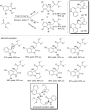
Scheme 30: Asymmetric aldol reaction of 1,1-dimethoxyacetone with isatins.

Scheme 31: Enantioselective Friedel-Crafts reaction of phenols with isatins.

Scheme 32: Enantioselective addition of 1-naphthols with isatins.

Scheme 33: Enantioselective aldol reaction between 3-acetyl-2H-chromen-2-ones and isatins.

Scheme 34: Stereoselective Mukaiyama–aldol reaction of fluorinated silyl enol ethers with isatins.

Scheme 35: Asymmetric vinylogous Mukaiyama–aldol reaction between 2-(trimethylsilyloxy)furan and isatins.

Scheme 36: β-ICD-catalyzed MBH reactions of isatins with maleimides.

Scheme 37: β-ICD-catalyzed MBH reactions of 7-azaisatins with maleimides and activated alkenes.

Scheme 38: Enantioselective aldol reaction of isatins with ketones.

Scheme 39: Direct asymmetric vinylogous aldol reactions of allyl ketones with isatins.

Scheme 40: Enantioselective aldol reactions of ketones with isatins.

Scheme 41: The MBH reaction of isatins with α,β-unsaturated γ-butyrolactam.

Scheme 42: Reactions of tert-butyl hydrazones with isatins followed by oxidation.

Scheme 43: Aldol reactions of isatin derivatives with ketones.

Scheme 44: Enantioselective decarboxylative cyanomethylation of isatins.

Scheme 45: Catalytic kinetic resolution of 3-hydroxy-3-substituted oxindoles.

Scheme 46: Lewis acid catalyzed Friedel–Crafts alkylation of 3-hydroxy-2-oxindoles with electron-rich phenols.

Scheme 47: Lewis acid catalyzed arylation of 3-hydroxyoxindoles with aromatics.

Scheme 48: Synthetic application of 3-arylated disubstituted oxindoles in the construction of core structures ...

Scheme 49: CPA-catalyzed dearomatization and arylation of 3-indolyl-3-hydroxyoxindoles with tryptamines and 3-...

Scheme 50: CPA-catalyzed enantioselective decarboxylative alkylation of β-keto acids with 3-hydroxy-3-indolylo...

Scheme 51: BINOL-derived imidodiphosphoric acid-catalyzed enantioselective Friedel–Crafts reactions of indoles...

Scheme 52: CPA-catalyzed enantioselective allylation of 3-indolylmethanols.

Scheme 53: 3-Indolylmethanol-based substitution and cycloaddition reactions.

Scheme 54: CPA-catalyzed asymmetric [3 + 3] cycloaddtion reactions of 3-indolylmethanols with azomethine ylide...

Scheme 55: CPA-catalyzed three-component cascade Michael/Pictet–Spengler reactions of 3-indolylmethanols and a...

Scheme 56: Acid-promoted chemodivergent and stereoselective synthesis of diverse indole derivatives.

Scheme 57: CPA-catalyzed asymmetric formal [3 + 2] cycloadditions.

Scheme 58: CPA-catalyzed enantioselective cascade reactions for the synthesis of C7-functionlized indoles.

Scheme 59: Lewis acid-promoted Prins cyclization of 3-allyl-3-hydroxyoxindoles with aldehydes.

Scheme 60: Ga(OTf)3-catalyzed reactions of allenols and phenols.

Scheme 61: I2-catalyzed construction of pyrrolo[2.3.4-kl]acridines from enaminones and 3-indolyl-3-hydroxyoxin...

Scheme 62: CPA-catalyzed asymmetric aza-ene reaction of 3-indolylmethanols with cyclic enaminones.

Scheme 63: Asymmetric α-alkylation of aldehydes with 3-indolyl-3-hydroxyoxindoles.

Scheme 64: Organocatalytic asymmetric α-alkylation of enolizable aldehydes with 3-indolyl-3-hydroxyoxindoles a...
Enantioselective additions of copper acetylides to cyclic iminium and oxocarbenium ions
- Jixin Liu,
- Srimoyee Dasgupta and
- Mary P. Watson
Beilstein J. Org. Chem. 2015, 11, 2696–2706, doi:10.3762/bjoc.11.290
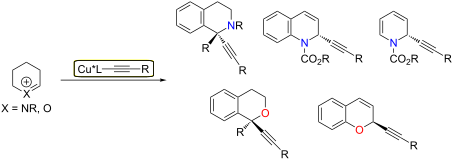
- ; enantioselectivity; iminium ion; oxocarbenium ion; Introduction Nitrogen and oxygen heterocycles with α-stereogenic centers represent important classes of biologicially active compounds [1][2][3][4][5][6][7]. Enantioselective addition of chiral nucleophiles to imines, iminium ions, carbonyls, or oxocarbenium ions

Graphical Abstract
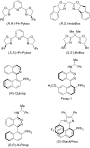
Figure 1: Chiral ligands utilized in copper-catalyzed alkynylations of cyclic iminium and oxocarbenium ions.

Scheme 1: Li’s alkynylation of acyclic N-arylimines.

Scheme 2: Knochel’s alkynylation of acyclic N-alkylenamines.

Scheme 3: Li’s CDC of tetrahydroisoquinolines and alkynes.

Scheme 4: Li’s alkynylation of N-aryldihydroisoquinolinium ions.

Scheme 5: Schreiber’s alkynylation of N-alkylisoquinolinium ions.

Scheme 6: Ma’s alkynylation of pyridium ions.

Scheme 7: Arndtsen’s alkynylation of cyclic iminium ions.

Scheme 8: Maruoka’s alkynylation of azomethine imines.

Scheme 9: Su’s CDC of tetrahydroisoquinolines and alkynes under ball milling conditions.

Scheme 10: Ma’s A3-coupling.

Scheme 11: Li’s CDC reaction using photoredox catalysis.
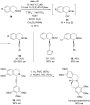
Scheme 12: Liu’s CDC reaction of N-carbamoyltetrahydroisoquinolines. T+BF4– = 2,2,6,6-tetramethylpiperidine N-...

Scheme 13: Aponick’s alkynylation of N-carbomoylquinolinium ions using StackPhos as ligand.

Scheme 14: Carreira’s enantioselective, catalytic alkynylation of aldehydes.

Scheme 15: Watson’s alkynylation of isochroman oxocarbenium ions.

Scheme 16: Watson’s alkynylation of chromene oxocarbenium ions.

Scheme 17: Watson’s alkynylation to set diaryl tetrasubstituted stereocenters.
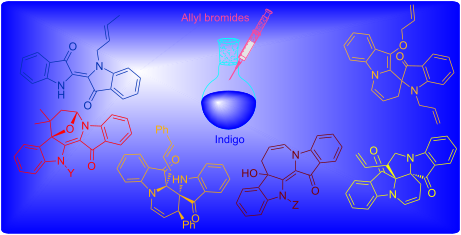
Further exploration of the heterocyclic diversity accessible from the allylation chemistry of indigo
- Alireza Shakoori,
- John B. Bremner,
- Mohammed K. Abdel-Hamid,
- Anthony C. Willis,
- Rachada Haritakun and
- Paul A. Keller
Beilstein J. Org. Chem. 2015, 11, 481–492, doi:10.3762/bjoc.11.54
- 3.55–3.58 ppm corresponding to H1, while gCOSY was consistent with the presence of a vinyl substituent group. HSQC spectral evidence supported three CH2 groups, while the 13C NMR spectrum confirmed the presence of two free carbonyls with signals at 197.9 and 201.0 ppm. From the HMBC spectrum, a strong

Graphical Abstract

Scheme 1: The synthesis of N-monoallylated indigo derivatives.

Scheme 2: The synthesis of 8a-hydroxyazepinodiindolones.

Figure 1: The structure and X-ray crystal structure (ball and stick representation) of azepinodiindolone 7. T...

Figure 2: Dihydroazepino[1,2-a:3,4-b']diindolones from Nb-acyl-L-tryptophanamides [5].

Scheme 3: The optimal synthesis of spiro heterocycles 12–16, and spiro/polyfused ring heterocycles 17 and 18 ...

Scheme 4: The synthesis of the oxa-bridged azepinodiindolone 22 from indigo and 1-bromo-3-methylbut-2-ene.

Figure 3: Modelled structure (Spartan 10, v1.1.0, Wavefunction Inc) of bridged indigo-tetrahydrofuran product ...

Scheme 5: The reaction of indigo with cinnamyl bromide yielding two spiro-based derivatives.

Figure 4: Structural analysis of compound 23. Left: modelled structure showing the cisoid configuration of th...
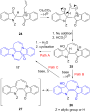
Scheme 6: Proposed mechanism for the synthesis of the red diindolone heterocycles and the azepinodiindolones.

Scheme 7: Proposed mechanism for the formation of 22. The order of protonation and allylation is undetermined....

Scheme 8: Proposed mechanism for the formation of 23 from intermediate 29.

Scheme 9: Proposed key branch points and mechanistic sinks in the base-catalysed cascade allylation reactions...

Scheme 10: Reaction of the spiro heterocycle 12 with Grubbs' II catalyst, and X-ray crystal structure of the n...
Copper-catalyzed cascade reactions of α,β-unsaturated esters with keto esters
- Zhengning Li,
- Chongnian Wang and
- Zengchang Li
Beilstein J. Org. Chem. 2015, 11, 213–218, doi:10.3762/bjoc.11.23

- mainly based on the lactonization of γ-hydroxy esters, which were obtained through either addition of substituted succinate-derived enolates to carbonyls [3][4][5][6][7], or direct reduction of the corresponding γ-keto esters [8]. Usually they were carried out under acidic or basic conditions, which are

Graphical Abstract

Figure 1: Mechanism of reductive aldol–lactonization reaction of maleate with a carbonyl and silane under cop...

Figure 2: Possible copper-catalyzed reductive aldol–lactonization reaction of acrylate with a keto ester and ...

Figure 3: The elimination reactions of lactones.
A convenient enantioselective decarboxylative aldol reaction to access chiral α-hydroxy esters using β-keto acids
- Zhiqiang Duan,
- Jianlin Han,
- Ping Qian,
- Zirui Zhang,
- Yi Wang and
- Yi Pan
Beilstein J. Org. Chem. 2014, 10, 969–974, doi:10.3762/bjoc.10.95
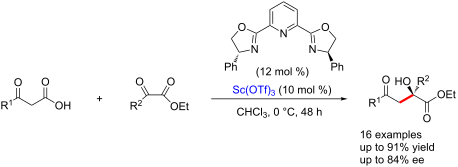
- and aliphatic α-keto esters. The possible mechanism is rationalized. Keywords: enantioselective synthesis; hydroxy esters; scandium; Introduction The catalytic enantioselective construction of tertiary carbon centres is a major challenge in organic chemistry. The nucleophilic attack of carbonyls

Graphical Abstract

Figure 1: Decarboxylative aldol reactions of β-keto acids with aldehydes.

Figure 2: Nucleophilic reaction of α-keto esters to generate tertiary alcohols.

Figure 3: Decarboxylative aldol reactions of β-keto acids with α-keto esters.

Scheme 1: Asymmetric decarboxylative aldol reaction of various β-keto acids with α-keto esters under optimise...

Scheme 2: Proposed mechanism of decarboxylative aldol reaction.
Isocyanide-based multicomponent reactions towards cyclic constrained peptidomimetics
- Gijs Koopmanschap,
- Eelco Ruijter and
- Romano V.A. Orru
Beilstein J. Org. Chem. 2014, 10, 544–598, doi:10.3762/bjoc.10.50


Graphical Abstract

Scheme 1: The proposed mechanism of the Passerini reaction.

Scheme 2: The PADAM-strategy to α-hydroxy-β-amino amide derivatives 7. An additional oxidation provides α-ket...

Scheme 3: The general accepted Ugi-mechanism.

Scheme 4: Three commonly applied Ugi/cyclization approaches. a) UDC-process, b) UAC-sequence, c) UDAC-combina...

Scheme 5: Ugi reaction that involves the condensation of Armstrong’s convertible isocyanide.

Scheme 6: Mechanism of the U-4C-3CR towards bicyclic β-lactams.

Scheme 7: The Ugi 4C-3CR towards oxabicyclo β-lactams.

Scheme 8: Ugi MCR between an enantiopure monoterpene based β-amino acid, aldehyde and isocyanide resulting in...

Scheme 9: General MCR for β-lactams in water.

Scheme 10: a) Ugi reaction for β-lactam-linked peptidomimetics. b) Varying the β-amino acid resulted in β-lact...

Scheme 11: Ugi-4CR followed by a Pd-catalyzed Sn2 cyclization.

Scheme 12: Ugi-3CR of dipeptide mimics from 2-substituted pyrrolines.

Scheme 13: Joullié–Ugi reaction towards 2,5-disubstituted pyrrolidines.

Scheme 14: Further elaboration of the Ugi-scaffold towards bicyclic systems.

Scheme 15: Dihydroxyproline derivatives from an Ugi reaction.

Scheme 16: Diastereoselective Ugi reaction described by Banfi and co-workers.

Scheme 17: Similar Ugi reaction as in Scheme 16 but with different acids and two chiral isocyanides.

Scheme 18: Highly diastereoselective synthesis of pyrrolidine-dipeptoids via a MAO-N/MCR-procedure.

Scheme 19: MAO-N/MCR-approach towards the hepatitis C drug telaprevir.

Scheme 20: Enantioselective MAO-U-3CR procedure starting from chiral pyrroline 64.

Scheme 21: Synthesis of γ-lactams via an UDC-sequence.

Scheme 22: Utilizing bifunctional groups to provide bicyclic γ-lactam-ketopiperazines.

Scheme 23: The Ugi reaction provided both γ- as δ-lactams depending on which inputs were used.

Scheme 24: The sequential Ugi/RCM with olefinic substrates provided bicyclic lactams.

Scheme 25: a) The structural and dipole similarities of the triazole unit with the amide bond. b) The copper-c...

Scheme 26: The Ugi/Click sequence provided triazole based peptidomimetics.

Scheme 27: The Ugi/Click reaction as described by Nanajdenko.

Scheme 28: The Ugi/Click-approach by Pramitha and Bahulayan.

Scheme 29: The Ugi/Click-combination by Niu et al.

Scheme 30: Triazole linked peptidomimetics obtained from two separate MCRs and a sequential Click reaction.

Scheme 31: Copper-free synthesis of triazoles via two MCRs in one-pot.

Scheme 32: The sequential Ugi/Paal–Knorr reaction to afford pyrazoles.

Scheme 33: An intramolecular Paal–Knorr condensation provided under basic conditions pyrazolones.

Scheme 34: Similar cyclization performed under acidic conditions provided pyrazolones without the trifluoroace...

Scheme 35: The Ugi-4CR towards 2,4-disubstituted thiazoles.

Scheme 36: Solid phase approach towards thiazoles.

Scheme 37: Reaction mechanism of formation of thiazole peptidomimetics containing an additional β-lactam moiet...

Scheme 38: The synthesis of the trisubstituted thiazoles could be either performed via an Ugi reaction with pr...

Scheme 39: Performing the Ugi reaction with DMB-protected isocyanide gave access to either oxazoles or thiazol...

Scheme 40: Ugi/cyclization-approach towards 2,5-disubstituted thiazoles. The Ugi reaction was performed with d...

Scheme 41: Further derivatization of the thiazole scaffold.

Scheme 42: Three-step procedure towards the natural product bacillamide C.

Scheme 43: Ugi-4CR to oxazoles reported by Zhu and co-workers.

Scheme 44: Ugi-based synthesis of oxazole-containing peptidomimetics.

Scheme 45: TMNS3 based Ugi reaction for peptidomimics containing a tetrazole.

Scheme 46: Catalytic cycle of the enantioselective Passerini reaction towards tetrazole-based peptidomimetics.

Scheme 47: Tetrazole-based peptidomimetics via an Ugi reaction and a subsequent sigmatropic rearrangement.

Scheme 48: Resin-bound Ugi-approach towards tetrazole-based peptidomimetics.

Scheme 49: Ugi/cyclization approach towards γ/δ/ε-lactam tetrazoles.

Scheme 50: Ugi-3CR to pipecolic acid-based peptidomimetics.

Scheme 51: Staudinger–Aza-Wittig/Ugi-approach towards pipecolic acid peptidomimetics.

Figure 1: The three structural isomers of diketopiperazines. The 2,5-DKP isomer is most common.

Scheme 52: UDC-approach to obtain 2,5-DKPs, either using Armstrong’s isocyanide or via ethylglyoxalate.

Scheme 53: a) Ugi reaction in water gave either 2,5-DKP structures or spiro compounds. b) The Ugi reaction in ...

Scheme 54: Solid-phase approach towards diketopiperazines.

Scheme 55: UDAC-approach towards DKPs.

Scheme 56: The intermediate amide is activated as leaving group by acid and microwave assisted organic synthes...

Scheme 57: UDC-procedure towards active oxytocin inhibitors.

Scheme 58: An improved stereoselective MCR-approach towards the oxytocin inhibitor.

Scheme 59: The less common Ugi reaction towards DKPs, involving a Sn2-substitution.

Figure 2: Spatial similarities between a natural β-turn conformation and a DKP based β-turn mimetic [158].

Scheme 60: Ugi-based syntheses of bicyclic DKPs. The amine component is derived from a coupling between (R)-N-...

Scheme 61: Ugi-based synthesis of β-turn and γ-turn mimetics.

Figure 3: Isocyanide substituted 3,4-dihydropyridin-2-ones, dihydropyridines and the Freidinger lactams. Bio-...

Scheme 62: The mechanism of the 4-CR towards 3,4-dihydropyridine-2-ones 212.

Scheme 63: a) Multiple MCR-approach to provide DHP-peptidomimetic in two-steps. b) A one-pot 6-CR providing th...

Scheme 64: The MCR–alkylation–MCR procedure to obtain either tetrapeptoids or depsipeptides.

Scheme 65: U-3CR/cyclization employing semicarbazone as imine component gave triazine based peptidomimetics.

Scheme 66: 4CR towards triazinane-diones.

Scheme 67: The MCR–alkylation–IMCR-sequence described by our group towards triazinane dione-based peptidomimet...

Scheme 68: Ugi-4CR approaches followed by a cyclization to thiomorpholin-ones (a) and pyrrolidines (b).

Scheme 69: UDC-approach for benzodiazepinones.

Scheme 70: Ugi/Mitsunobu sequence to BDPs.

Scheme 71: A UDAC-approach to BDPs with convertible isocyanides. The corresponding amide is cleaved by microwa...

Scheme 72: microwave assisted post condensation Ugi reaction.

Scheme 73: Benzodiazepinones synthesized via the post-condensation Ugi/ Staudinger–Aza-Wittig cyclization.

Scheme 74: Two Ugi/cyclization approaches utilizing chiral carboxylic acids. Reaction (a) provided the product...

Scheme 75: The mechanism of the Gewald-3CR includes three base-catalysed steps involving first a Knoevnagel–Co...

Scheme 76: Two structural 1,4-thienodiazepine-2,5-dione isomers by U-4CR/cyclization.

Scheme 77: Tetrazole-based diazepinones by UDC-procedure.

Scheme 78: Tetrazole-based BDPs via a sequential Ugi/hydrolysis/coupling.

Scheme 79: MCR synthesis of three different tricyclic BPDs.

Scheme 80: Two similar approaches both involving an Ugi reaction and a Mitsunobu cyclization.

Scheme 81: Mitsunobu–Ugi-approach towards dihydro-1,4-benzoxazepines.

Scheme 82: Ugi reaction towards hetero-aryl fused 5-oxo-1,4-oxazepines.

Scheme 83: a) Ugi/RCM-approach towards nine-membered peptidomimetics b) Sequential peptide-coupling, deprotect...

Scheme 84: Ugi-based synthesis towards cyclic RGD-pentapeptides.

Scheme 85: Ugi/MCR-approach towards 12–15 membered macrocycles.

Scheme 86: Stereoselective Ugi/RCM approach towards 16-membered macrocycles.

Scheme 87: Passerini/RCM-sequence to 22-membered macrocycles.

Scheme 88: UDAC-approach towards 12–18-membered depsipeptides.

Figure 4: Enopeptin A with its more active derivative ADEP-4.

Scheme 89: a) The Joullié–Ugi-approach towards ADEP-4 derivatives b) Ugi-approach for the α,α-dimethylated der...

Scheme 90: Ugi–Click-strategy for 15-membered macrocyclic glyco-peptidomimetics.

Scheme 91: Ugi/Click combinations provided macrocycles containing both a triazole and an oxazole moiety.

Scheme 92: a) A solution-phase procedure towards macrocycles. b) Alternative solid-phase synthesis as was repo...

Scheme 93: Ugi/cyclization towards cyclophane based macrocycles.

Scheme 94: PADAM-strategy towards eurystatin A.

Scheme 95: PADAM-approach for cyclotheanamide.

Scheme 96: A triple MCR-approach affording RGD-pentapeptoids.

Scheme 97: Ugi-MiBs-approach towards peptoid macrocycles.

Scheme 98: Passerini-based MiB approaches towards macrocycles 345 and 346.

Scheme 99: Macrocyclic peptide formation by the use of amphoteric aziridine-based aldehydes.
Simple two-step synthesis of 2,4-disubstituted pyrroles and 3,5-disubstituted pyrrole-2-carbonitriles from enones
- Murat Kucukdisli,
- Dorota Ferenc,
- Marcel Heinz,
- Christine Wiebe and
- Till Opatz
Beilstein J. Org. Chem. 2014, 10, 466–470, doi:10.3762/bjoc.10.44
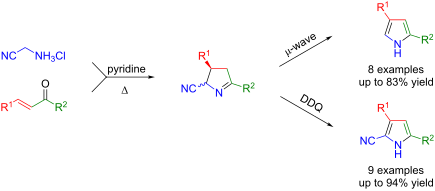
- -induced dehydrocyanation of compounds 6 does not produce appreciable yields of pyrroles 7 since the abstraction of the most acidic proton leads to a stable anion reluctant to undergo α-elimination of cyanide. Instead, the anions 8 can be added in vinylogous fashion to α,β-unsaturated carbonyls producing

Graphical Abstract

Scheme 1: Synthesis and conversion of 3,4-dihydro-2H-pyrrole-2-carbonitriles 6.
Garner’s aldehyde as a versatile intermediate in the synthesis of enantiopure natural products
- Mikko Passiniemi and
- Ari M.P. Koskinen
Beilstein J. Org. Chem. 2013, 9, 2641–2659, doi:10.3762/bjoc.9.300
- density from the reaction center toward nitrogen. In cases where syn-selectivity is observed, the Cram’s chelation control model provides an explanation [56][57]. Chelating metal coordinates between the two carbonyls (the aldehyde and the carbamate), thus forcing the nucleophile to attack from the si-side

Graphical Abstract

Figure 1: Structures of limonene, carvone and thalidomide.

Figure 2: Structure of Garner’s aldehyde.

Scheme 1: (a) i) Boc2O, 1.0 N NaOH (pH >10), dioxane, +5 °C → rt; ii) MeI, K2CO3, DMF, 0 °C → rt (86% over tw...

Scheme 2: (a) AcCl, MeOH, 0 °C → reflux (99%); (b) i) (Boc)2O, Et3N, THF, 0 °C → rt → 50 °C (89%); ii) Me2C(O...

Scheme 3: (a) LiAlH4, THF, rt (93–96%); (b) (COCl)2, DMSO, iPr2NEt, CH2Cl2, −78 °C → −55 °C (99%).

Scheme 4: The Koskinen procedure for the preparation of Garner’s aldehyde. (a) i) AcCl, MeOH, 0 °C → 50 °C (9...

Scheme 5: Burke’s synthesis of Garner’s aldehyde. BDP - bis(diazaphospholane).

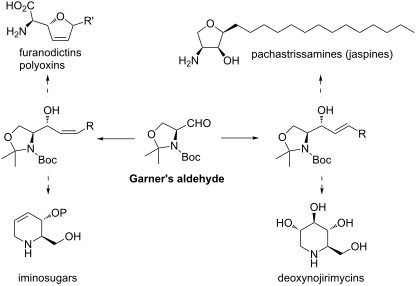
Figure 3: Structures of some iminosugars (7, 9), peptide antibiotics (8) and sphingosine (10) and pachastriss...

Scheme 6: Use of Garner’s aldehyde 1 in multistep synthesis.

Scheme 7: Explanation of the anti- and syn-selectivity in the nucleophilic addition reaction.

Scheme 8: Herold’s method: (a) Lithium 1-pentadecyne, HMPT, THF, −78 °C (71%); (b) Lithium 1-pentadecyne, ZnBr...

Scheme 9: (a) Ethyl lithiumpropiolate, HMPT, THF, −78 °C; (b) (S)- or (R)-MTPA, DCC, DMAP, THF, rt (18, 81%) ...

Scheme 10: Coleman’s selectivity studies and their transition state model for the co-ordinated delivery of the...

Scheme 11: (a) PhMgBr, THF, −78 °C → 0 °C [62] or (a) PhMgBr, Et2O, 0 °C [63].

Scheme 12: (a) cat. RhCl3·3H2O, cat. 26, NaOMe, Ph-B(OH)2, aq DME, 80 °C (24, 71%); (b) cat. RhCl3·3H2O, cat. ...

Scheme 13: Lithiated dithiane (3 equiv), CuI (0.3 equiv), BF3·Et2O (6 equiv), THF, −50 °C, 12 h (70%).

Scheme 14: Addition reaction reported by Lam et al. (a) 1-Hexyne, n-BuLi, THF, −15 °C or −40 °C.

Scheme 15: (a) n-BuLi, HMPT, toluene, −78 °C → rt (85%); (b) n-BuLi, ZnCl2, toluene/Et2O, −78 °C → rt (65%).

Scheme 16: (a) n-BuLi, 34, THF, −40 °C [69]; (b) n-BuLi, 35, THF, −78 °C → rt (80%) [70]; (c) n-BuLi, 35, HMPT, THF, −...

Scheme 17: (a) cat. Rh(acac)(CO)2, 42, THF, 40 °C (74%).
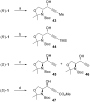
Scheme 18: (a) 1-PropynylMgBr, CuI, THF, Me2S, −78 °C (95%); (b) Ethynyltrimethylsilane, EtMgBr, CuI, THF, Me2...

Scheme 19: (a) cat. 50, toluene, 0 °C (52%); (b) cat. 51, toluene, 0 °C (51%); (c) cat. 52, toluene, 0 °C (50%...

Scheme 20: (a) (iPr)3SiH, cat. Ni(COD)2, dimesityleneimidazolium·HCl, t-BuOK, THF, rt.

Scheme 21: (a) Cp2Zr(H)Cl, cat. AgAsF6, CH2Cl2, rt; (b) Cp2Zr(H)Cl, 1-pentadecyne, cat. ZnBr2 in THF for anti-...

Scheme 22: (a) i) 31, n-BuLi, THF, −78 °C; ii) (S)-1, THF, −78 °C; (b) Red-Al, THF, 0 °C.

Scheme 23: (a) 61, n-BuLi, DMPU, toluene, −78 °C, then (S)-1, toluene, −95 °C (57%); (b) 61, n-BuLi, ZnCl2, to...

Scheme 24: Olefin A as an intermediate in natural product synthesis.

Scheme 25: (a) Ph3(Me)PBr, KH, benzene (66%, rac-64) or (b) AlMe3, Zn, CH2I2, THF (76%) [101]; (c) Ph3(Me)PBr, n-Bu...

Scheme 26: (a) Benzene, rt (82%) [108]; (b) K2CO3, MeOH (85%) [89]; (c) iPrOH, [Ir(COD)Cl]2, PPh3, THF, rt (81%) [114].

Scheme 27: Mechanism of the Still–Gennari modification of the HWE reaction leading to both olefin isomers.
Synthesis of the reported structure of piperazirum using a nitro-Mannich reaction as the key stereochemical determining step
- James C. Anderson,
- Andreas S. Kalogirou,
- Michael J. Porter and
- Graham J. Tizzard
Beilstein J. Org. Chem. 2013, 9, 1737–1744, doi:10.3762/bjoc.9.200
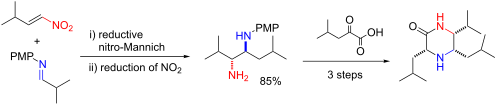
- ]. They have been used to synthesise many nitrogen-containing functional groups including α-amino carbonyls [2][3], peptidomimetics [4], natural products [5][6][7][8][9][10] and many heterocyclic small molecules [11][12][13][14][15][16][17][18][19][20][21][22][23][24] of importance to drug discovery

Graphical Abstract

Scheme 1: Schematic nitro-Mannich reaction.

Scheme 2: Retrosynthetic analysis of piperazirum.

Scheme 3: (a) iBuMgCl, Et2O, −78 °C; (b) KOH, EtOH/H2O, 100 °C; (c) (COCl)2.

Scheme 4: (a) Li(Et3BH), THF, rt then 14, CF3CO2H, −78 °C, dr 70:30; (b) (CF3CO)2O, Py, CH2Cl2, 0 °C to rt; (...

Scheme 5: (a) Li(Et3BH), CH2Cl2, rt then 19, CF3CO2H, −78 °C, dr >95:5; (b) Zn, 6 M HCl, EtOAc/EtOH, rt, sing...

Scheme 6: (a) (COCl)2, DMF, CH2Cl2, rt; (b) 21, Py, DMAP, CH2Cl2, rt; (c) EDC, HOBt, THF/CH2Cl2, rt; (d) H2 (...

Figure 1: X-ray crystal structure of 2·HCl.



