Search results
Search for "chemical reactions" in Full Text gives 157 result(s) in Beilstein Journal of Organic Chemistry.
Photophysics and photochemistry of NIR absorbers derived from cyanines: key to new technologies based on chemistry 4.0
Beilstein J. Org. Chem. 2020, 16, 415–444, doi:10.3762/bjoc.16.40
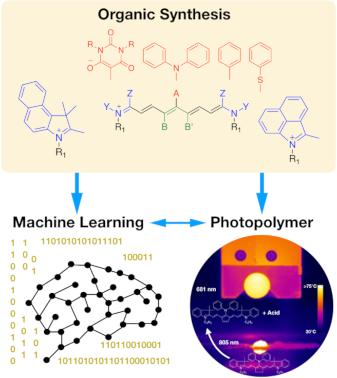
- charge typically distributes over the entire conjugated system. There are much more valence patterns possible to draw. For a sake of simplicity, we operate with one feasible structure. The availability of these precursors bases on easy pursuable chemical reactions resulting in huge libraries of cyanines


Chemical tuning of photoswitchable azobenzenes: a photopharmacological case study using nicotinic transmission
Beilstein J. Org. Chem. 2019, 15, 2812–2821, doi:10.3762/bjoc.15.274
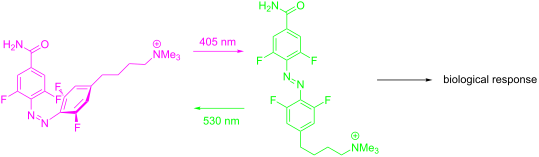
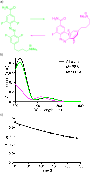
- ) UPLC chromatograms of chemical reactions shown in (a). Elution 0.75 to 1 mL/min, 2–100% acetonitrile in water for 4 min. Testing photo-antagonism of 1 with genetically tagged nicotinic acetylcholine receptors. Currents from HEK293 cells were measured using the whole-cell patch-clamp method. Cell were




Arylisoquinoline-derived organoboron dyes with a triaryl skeleton show dual fluorescence
Beilstein J. Org. Chem. 2019, 15, 2612–2622, doi:10.3762/bjoc.15.254
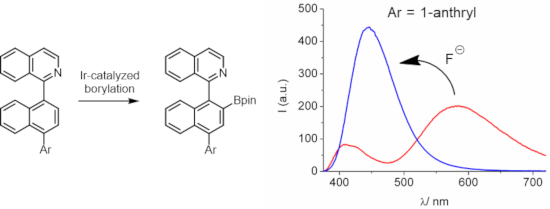
- reference. 11B NMR spectra were recorded with complete proton decoupling at 160 MHz, using BF3·Et2O (0.00 ppm for 11B NMR) as standard. All chemical reactions were carried out in oven-dried Schlenk tubes under an argon atmosphere. Toluene, 1,4-dioxane, and methanol were purchased from Carlo Erba and were



Reversible switching of arylazopyrazole within a metal–organic cage
Beilstein J. Org. Chem. 2019, 15, 2398–2407, doi:10.3762/bjoc.15.232
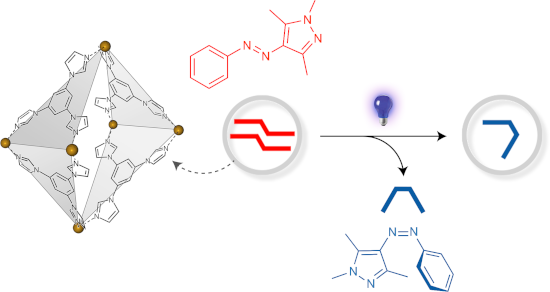
- ; photochromism; Introduction The importance of confinement for chemical reactivity is becoming increasingly appreciated. Confining reactive species to small volumes can greatly increase their effective molarity and consequently, promote chemical reactions. Such reaction acceleration has been demonstrated at
- interfaces [1][2][3], in self-assembled cages [4][5][6][7], on DNA chains [8], and on the surfaces of inorganic nanoparticles [9][10]. Additionally, nanosized cages can induce preorganization of the encapsulated species, thus inducing unusual regioselectivities in various chemical reactions [11][12][13]. The


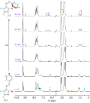
![[Graphic 1]](/bjoc/content/inline/1860-5397-15-232-i3.svg?max-width=637&scale=1.18182) 2 (500 MHz, D2O, 298 K).
2 (500 MHz, D2O, 298 K).




Isolation and characterisation of irinans, androstane-type withanolides from Physalis peruviana L.
Beilstein J. Org. Chem. 2019, 15, 2003–2012, doi:10.3762/bjoc.15.196
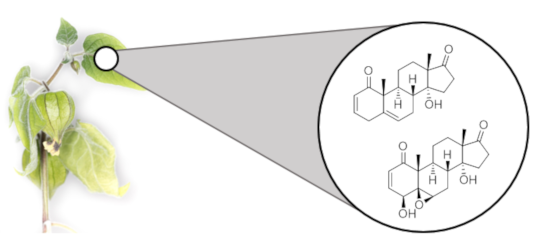
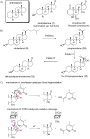
- irinans, from Physalis peruviana with highly unusual truncated backbones that resemble mammalian androstane sex hormones. Based on biomimetic chemical reactions, we propose a model that links these compounds to withanolide biosynthesis. Irinans have potent antiproliferative activities, that are however



Understanding the unexpected effect of frequency on the kinetics of a covalent reaction under ball-milling conditions
Beilstein J. Org. Chem. 2019, 15, 1226–1235, doi:10.3762/bjoc.15.120
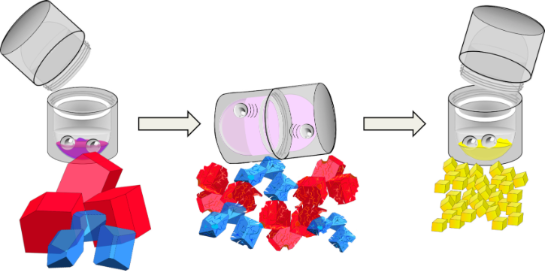
- for a wide range of different syntheses and chemical reactions of inorganic [8][9] and organic [10][11] compounds. Even supramolecular architectures such as co-crystals and metal-organic frameworks [4][12][13][14], cages [15] and rotaxanes [16] could be formed mechanochemically. Crucially, the
- their dependence on the milling frequency. Furthermore, they each exhibit sizeable induction periods, far greater than most reported kinetic profiles of multi-phase mechanochemical non-covalent supramolecular chemical reactions [28][45]. The notable exceptions are similar synthetic reactions, which


Mechanochemical amorphization of chitin: impact of apparatus material on performance and contamination
Beilstein J. Org. Chem. 2019, 15, 1217–1225, doi:10.3762/bjoc.15.119
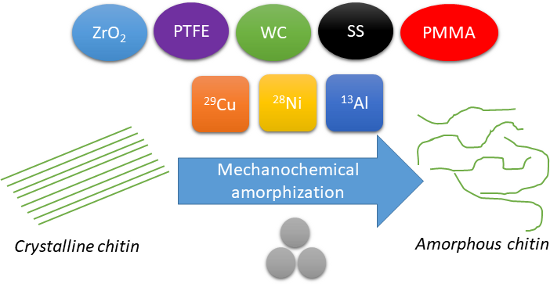
- , with the specific reaction kinetic parameters [33]. There is, however, an interest in investigating these aspects further. In particular, it would be interesting to track the role of parameters such as ball size and mass on the progress of the reaction. In mechanochemistry, it is accepted that chemical
- reactions are induced by the delivery of energy, by collision. The impact force is thus of importance and depends on the weight of the balls and [26] the surface of impact [28]. Also, in the context of the milling of crystalline and/or fairly hard materials, the nature of the milling media composing the


Mechanochemical synthesis of poly(trimethylene carbonate)s: an example of rate acceleration
Beilstein J. Org. Chem. 2019, 15, 963–970, doi:10.3762/bjoc.15.93
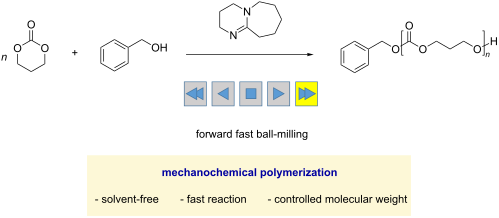
- carbonate); Introduction Nowadays mechanochemical syntheses are widespread in many areas of chemistry [1][2][3][4]. The efficient mixing and energy input induced by mechanical motions have promoted many chemical reactions with superior efficiencies [5]. Sometimes, unexpected outcomes that cannot be


Photochemical generation of the 2,2,6,6-tetramethylpiperidine-1-oxyl (TEMPO) radical from caged nitroxides by near-infrared two-photon irradiation and its cytocidal effect on lung cancer cells
Beilstein J. Org. Chem. 2019, 15, 863–873, doi:10.3762/bjoc.15.84
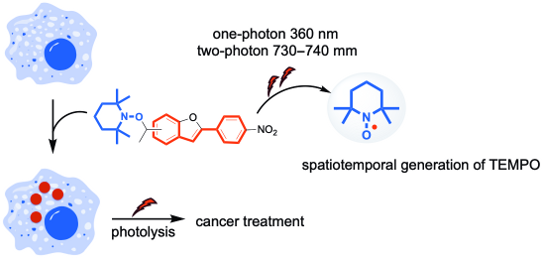
- in life phenomena [47][48][49][50][51][52][53][54] and of promoting site-selective chemical reactions such as polymerization. Very recently, Guillaneuf and co-workers reported the two-photon-induced release of nitroxides in a materials science study [55]. In the last decade, we developed a TP




Low-budget 3D-printed equipment for continuous flow reactions
Beilstein J. Org. Chem. 2019, 15, 558–566, doi:10.3762/bjoc.15.50
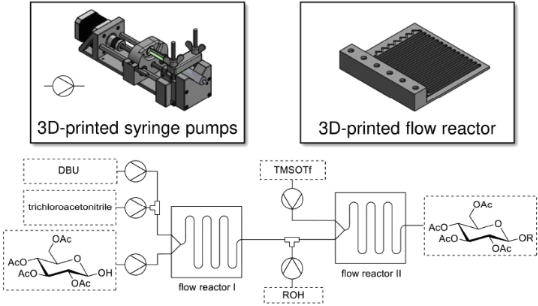
- of the chemical reactions and NMR spectra. Supporting Information File 204: This zip-file includes all 3D-printed parts as stl-files for direct 3D printing, as well as stp-files for editing the 3D models, if necessary. It also contains the Arduino software code as an ino-file for controlling of the


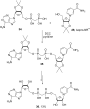
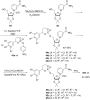
Syntheses and chemical properties of β-nicotinamide riboside and its analogues and derivatives
Beilstein J. Org. Chem. 2019, 15, 401–430, doi:10.3762/bjoc.15.36
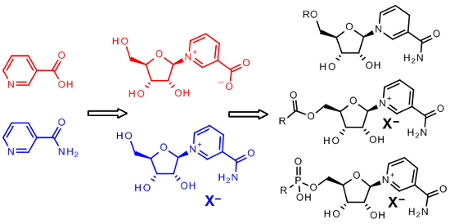
- stable in pyridine even at room temperature suffering transformations into the corresponding quaternary pyridine ribofuranoside [20]. These observations highlight the need for special appreciations for the chemical stability of the glycosidic bond in NR+ when conducting chemical reactions and choosing






Ammonium-tagged ruthenium-based catalysts for olefin metathesis in aqueous media under ultrasound and microwave irradiation
Beilstein J. Org. Chem. 2019, 15, 160–166, doi:10.3762/bjoc.15.16
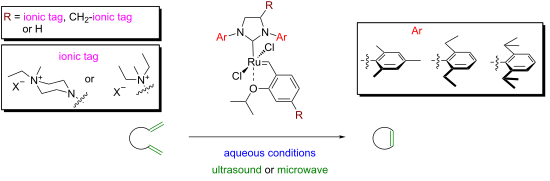
- interesting transformation. Furthermore, in the continuous search for new sustainable protocols for chemical reactions to induce new reactivates or reduce the energetic cost of the processes, the replacement of mechanical mixing and/or heating of the reacting species with microwave (μW) [46][47][48] and


N-Arylphenothiazines as strong donors for photoredox catalysis – pushing the frontiers of nucleophilic addition of alcohols to alkenes
Beilstein J. Org. Chem. 2019, 15, 52–59, doi:10.3762/bjoc.15.5
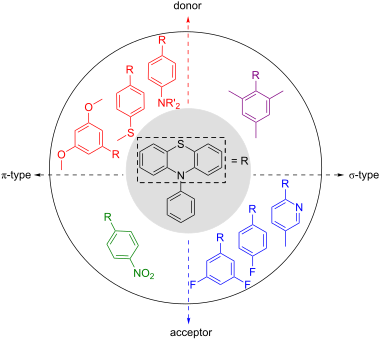
- applications. The access to electronically excited states of organic molecules allows unlocking new and sometimes complementary chemical reactivities that cannot be tackled by using thermally driven chemical reactions [1]. This complementarity allows for the development of so far unknown transformations [2
- processes. Conclusion One of the major current challenges in photoredox catalysis is the design of chromophores suitable for the most reductive chemical reactions, like for instance reductions by alkaline metals, affording reaction conditions that are easier to handle. While solid sodium comes up with a


Dispersion interactions
Beilstein J. Org. Chem. 2018, 14, 3076–3077, doi:10.3762/bjoc.14.286
- ) approaches largely lacked the inclusion of LD. The often very good results of standard DFT implementations in the description of chemical reactions can in part be traced back to the compensating effects of neglecting both dispersion and solvation. This is not to say that dispersion vanishes [7] in solution

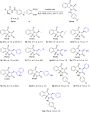
Green synthesis of new chiral 1-(arylamino)imidazo[2,1-a]isoindole-2,5-diones from the corresponding α-amino acid arylhydrazides in aqueous medium
Beilstein J. Org. Chem. 2018, 14, 2923–2930, doi:10.3762/bjoc.14.271
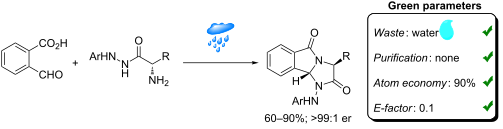
- increasingly turned to it as the greenest solvent of chemical reactions [34]. In order to find the best reaction conditions, a model reaction was chosen using (L)-alanine phenylhydrazide (3a, Scheme 3), and the results of these optimized studies were summarized in Table 2. The best result was obtained when a




An overview on recent advances in the synthesis of sulfonated organic materials, sulfonated silica materials, and sulfonated carbon materials and their catalytic applications in chemical processes
Beilstein J. Org. Chem. 2018, 14, 2745–2770, doi:10.3762/bjoc.14.253
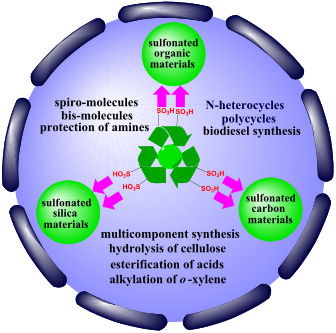
- commercial strong acids with pKa-values of −1.9 and −2.8, respectively, which are regularly used as simplest and more usable catalysts in chemical reactions. MSA is almost completely ionized at a concentration of 0.1 M in an aqueous solution. The oxidative stability of organic compounds and metal ions in MSA
- -flammability, low volatility, and safety. These eco-friendly materials have been applied as a new category of catalysts in some organic reactions as well. Recently, new sulfonated ionic liquids and sulfonated solid salts have been prepared and used as efficient catalysts in various chemical reactions [35][36




Nucleoside macrocycles formed by intramolecular click reaction: efficient cyclization of pyrimidine nucleosides decorated with 5'-azido residues and 5-octadiynyl side chains
Beilstein J. Org. Chem. 2018, 14, 2404–2410, doi:10.3762/bjoc.14.217
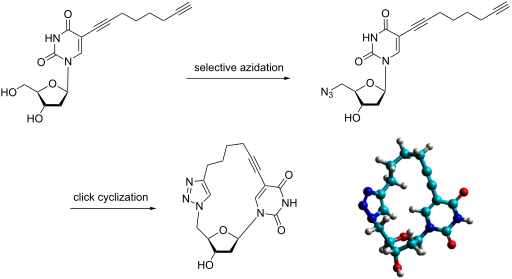
- . Monomeric purine and pyrimidine nucleosides form smaller ring systems known as cyclonucleosides incorporating O, N or S-bridges within the sugar moiety or between the nucleobase and the sugar residue [6]. Macrocycles can be obtained by a variety of chemical reactions [7][8][9][10]. Often, several protection


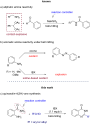
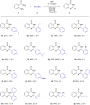
The mechanochemical synthesis of quinazolin-4(3H)-ones by controlling the reactivity of IBX
Beilstein J. Org. Chem. 2018, 14, 2396–2403, doi:10.3762/bjoc.14.216
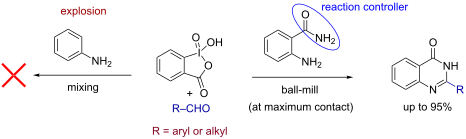
- using several arylamines and hypervalent iodine(V) reagents by direct mixing is unrealistic because of the high exothermic reaction or explosion. Herein we demonstrate, when anilines were substituted with an amide group at the ortho-position, successful chemical reactions could be performed due to


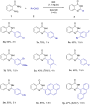


Stereoselective total synthesis and structural revision of the diacetylenic diol natural products strongylodiols H and I
Beilstein J. Org. Chem. 2018, 14, 2313–2320, doi:10.3762/bjoc.14.206
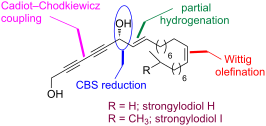
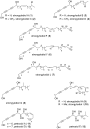
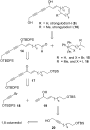
- Okinawan marine sponge of the genus Petrosia (Strongylophora). The structural elucidation was accomplished by spectroscopic analyses and chemical reactions. It was found that these strongylodiols were present as an enantiomeric mixture with different ratios after analysis of their corresponding MNA ((R



Graphitic carbon nitride prepared from urea as a photocatalyst for visible-light carbon dioxide reduction with the aid of a mononuclear ruthenium(II) complex
Beilstein J. Org. Chem. 2018, 14, 1806–1812, doi:10.3762/bjoc.14.153
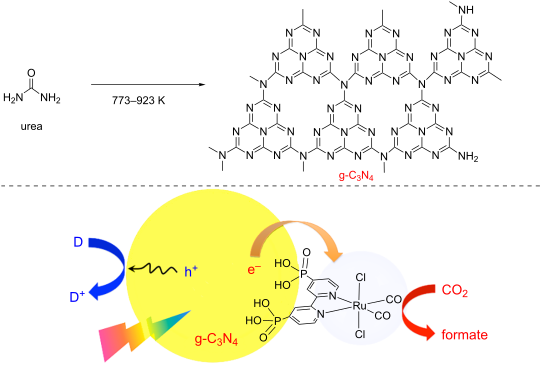
- using cobalt-based metal complexes as reduction cocatalysts [17][18][19][20]. In these systems, structural properties of g-C3N4 such as specific surface area and porosity have a strong impact on activity, because they strongly affect the efficiency of electron/hole utilization to the surface chemical
- reactions [21][22]. Apart from mpg-C3N4 that is usually prepared by a hard-template method with multistep procedures [9][23], g-C3N4 having a relatively higher surface area can be readily prepared by heating urea, which is an inexpensive and readily available precursor, in air [14][24]. In fact, the urea


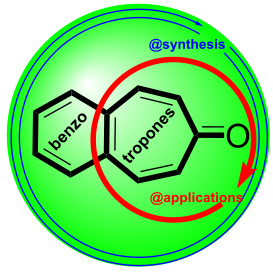
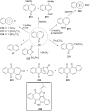
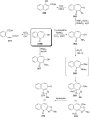
One hundred years of benzotropone chemistry
Beilstein J. Org. Chem. 2018, 14, 1120–1180, doi:10.3762/bjoc.14.98






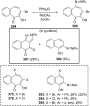


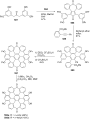
Nanoreactors for green catalysis
Beilstein J. Org. Chem. 2018, 14, 716–733, doi:10.3762/bjoc.14.61
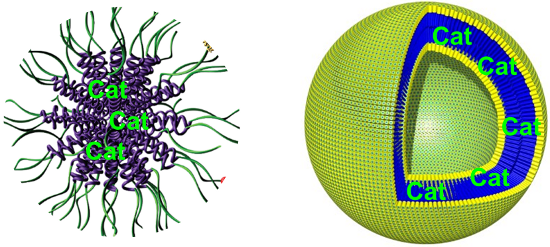
- worm-like micelles, form when 1/3 ≤ p ≤ 1/2. A typical micelle acquires a hydrophobic core that is able to accommodate hydrophobic catalysts, providing thermodynamic and kinetic control over chemical reactions [31]. Moreover, carrying out reactions in such a hydrophobic core leads to a concentration


Synthesis and stability of strongly acidic benzamide derivatives
Beilstein J. Org. Chem. 2018, 14, 523–530, doi:10.3762/bjoc.14.38
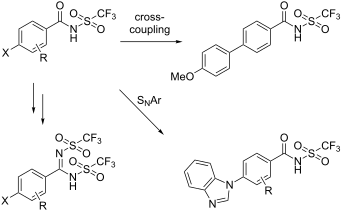
- stability under acidic and basic conditions are also reported. Keywords: benzoic acid; cross-coupling; hydrolysis; SNAr; trifluoromethanesulfonamide; Introduction Very strong organic acids are interesting as catalysts for chemical reactions [1][2] and for facilitation of proton conduction [3]. In order to
- p-toluenesulfonic acid (5) which is commonly used as a soluble organic acid catalyst in chemical reactions. Remarkably, neither the N-triflylbenzamides nor the N,N’-bis(triflyl)benzimidamides have been studied as Brønsted acid catalysts. Their chemical stability including compatibility with


Continuous-flow retro-Diels–Alder reaction: an efficient method for the preparation of pyrimidinone derivatives
Beilstein J. Org. Chem. 2018, 14, 318–324, doi:10.3762/bjoc.14.20
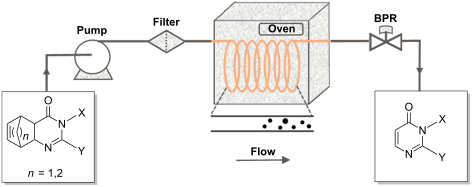
- allow the access to elevated temperatures and pressures accredited to superheating of organic solvents in a controlled and safe fashion [6][14][15][16][17]. The accurate tuning of residence time can further broaden the versatility of CF processes by governing the outcome of chemical reactions


Fluorogenic PNA probes
Beilstein J. Org. Chem. 2018, 14, 253–281, doi:10.3762/bjoc.14.17
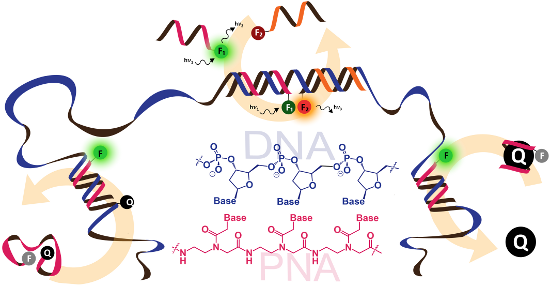
- the unmasking of quenched or caged fluorophores by chemical reactions, such as the Staudinger reaction [98][99][100][101], hydrolysis [102] and group transfer mediated by nucleophilic substitution [103][104]. Optimizing the conditions requires a good balance between the affinity of the probe to the