


Search results
Search for "conformations" in Full Text gives 404 result(s) in Beilstein Journal of Organic Chemistry. Showing first 200.
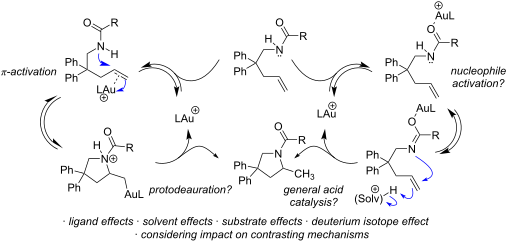
Ligand effects, solvent cooperation, and large kinetic solvent deuterium isotope effects in gold(I)-catalyzed intramolecular alkene hydroamination
Beilstein J. Org. Chem. 2024, 20, 479–496, doi:10.3762/bjoc.20.43
- of complex 7a. Our preliminary hypothesis is that two conformations exist in solution, one of which is symmetrical (presenting as a singlet), one of which is not. A lack of symmetry in one conformation would mean that each phosphorous is magnetically inequivalent, and thus shows splitting to the







Spatial arrangements of cyclodextrin host–guest complexes in solution studied by 13C NMR and molecular modelling
Beilstein J. Org. Chem. 2024, 20, 331–335, doi:10.3762/bjoc.20.33
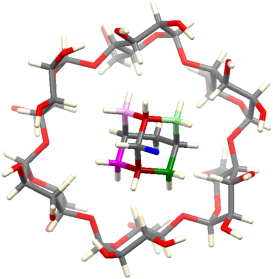
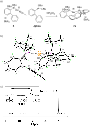
- calorimetry [13]. Single crystals for many host–guest complexes have been prepared, and their structure elucidated by X-ray crystallography [14][15]. Conformations of host–guest complexes in solution have been studied by 2D NMR experiments [11] (NOESY, ROESY) or proposed computationally [16][17] based on
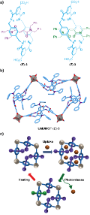
- compound 4, we were thus able to select representative conformations of the guest molecule in all types of cyclodextrins (Figure 5) using the spatial densities gained from classical MD simulations. Compounds 1–8 (as hydrochloride salts or free bases), were attempted to co-crystallize with α-, β- and γ
- to compare the solid-state structure of the guest 2–α-CD host complex with its proposed solution state conformations (Figure 6). Conclusion We have demonstrated that simple 13C NMR analyses of properly chosen Cs symmetric compounds varying in size can be used to estimate the host–guest spatial


Aromatic systems with two and three pyridine-2,6-dicarbazolyl-3,5-dicarbonitrile fragments as electron-transporting organic semiconductors exhibiting long-lived emissions
Beilstein J. Org. Chem. 2023, 19, 1867–1880, doi:10.3762/bjoc.19.139
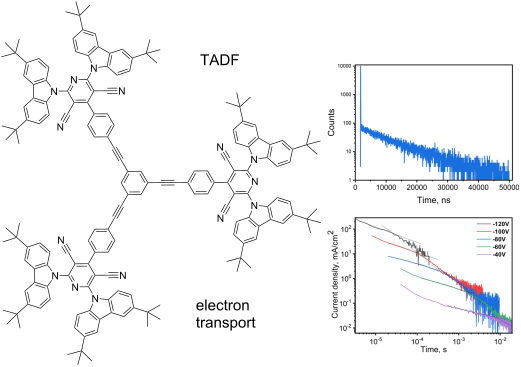
- conformations that contain dimethylacridan substituents [8]. OLEDs based on phenyl-substituted pyridine-3,5-dicarbonitrile showed very high EQEmax of 29.1% due to a high PLQY of 89% ascribed to the rigid acceptor geometry. In addition to the utilization of pyridine-3,5-dicarbonitriles in OLEDs, an example of
- bands and high-intensity low-energy bands. The presence of two distinct fluorescence bands is an indication of the existence of molecular conformations separated by a barrier. This is a characteristic of twisted internal charge transfer (TICT) states. It is worth of noting that the PL intensity of


Effects of the aldehyde-derived ring substituent on the properties of two new bioinspired trimethoxybenzoylhydrazones: methyl vs nitro groups
Beilstein J. Org. Chem. 2023, 19, 1713–1727, doi:10.3762/bjoc.19.125
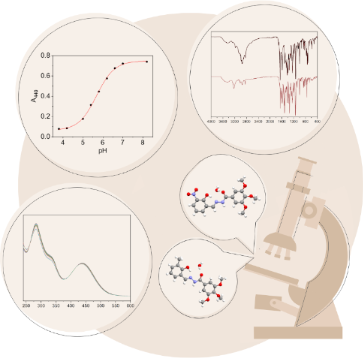
- ability to undergo E/Z isomerization in a stimuli-responsive imine bond is what makes this class useful for applications in the field of molecular electronics, as switchers [5][6]. In addition, these compounds can also adopt syn- or antiperiplanar conformations, due to the constriction of the rotation




Benzoimidazolium-derived dimeric and hydride n-dopants for organic electron-transport materials: impact of substitution on structures, electrochemistry, and reactivity
Beilstein J. Org. Chem. 2023, 19, 1651–1663, doi:10.3762/bjoc.19.121
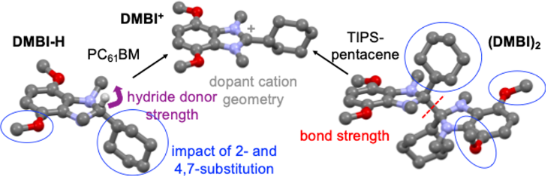
- broadening and then coalescence of some of these peaks on increasing the temperature, consistent with the room-temperature spectrum being affected by restricted rotation; interestingly the crystal structure of 1b2 contains molecules with two very different conformations (see below). The 12 dimers are


Tying a knot between crown ethers and porphyrins
Beilstein J. Org. Chem. 2023, 19, 1630–1650, doi:10.3762/bjoc.19.120
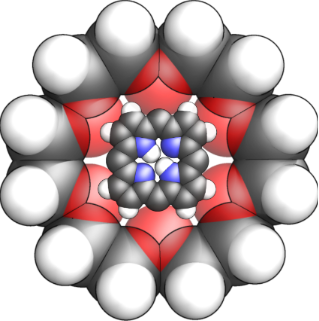
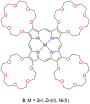
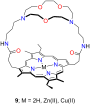
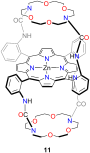
- (II) compounds 16-Pd–19-Pd exhibited conformations with the characteristic Pacman clefts, resembling their postulated solution structures and typical square-planar geometry around the palladium(II) centres. Titanium(III), vanadium(III), and chromium(III) complexes were synthesised through salt







Unraveling the role of prenyl side-chain interactions in stabilizing the secondary carbocation in the biosynthesis of variexenol B
Beilstein J. Org. Chem. 2023, 19, 1503–1510, doi:10.3762/bjoc.19.107
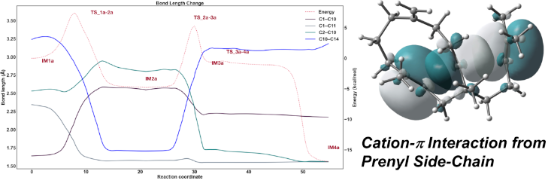
- several terpene compounds with prenyl side chains have been reported, it remains unclear whether these prenyl side chains are located inside or outside the active site during the cyclization process. Therefore, we searched for conformations in which the side chain is closer to the carbocation center and


Exploring the role of halogen bonding in iodonium ylides: insights into unexpected reactivity and reaction control
Beilstein J. Org. Chem. 2023, 19, 1171–1190, doi:10.3762/bjoc.19.86
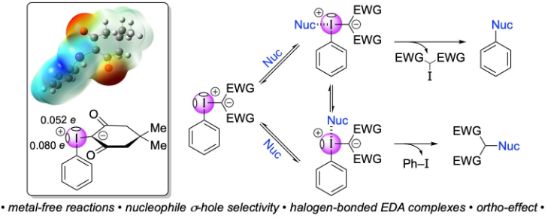
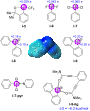
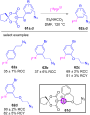
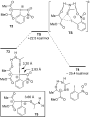
- comparing ylides 31 and 70 in this reductive elimination step, which suggested that the ortho-nitro group of 72 (and 71, by extension) played a role other than lowering the activation energy of this step. Given that other optimized halogen- and hydrogen-bonded conformations were found between thioamide and







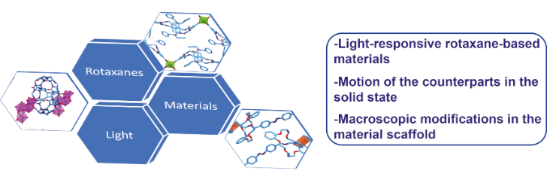
Light-responsive rotaxane-based materials: inducing motion in the solid state
Beilstein J. Org. Chem. 2023, 19, 873–880, doi:10.3762/bjoc.19.64
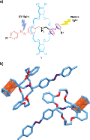
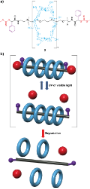
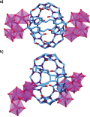
- shows the styrene-based derivatives coordinated in an antiparallel manner through the carboxylic acid group placed at the end of each thread, thus avoiding the dethreading process. Two identical intertwined scaffolds were formed differing in the photoactivities due to different conformations. In the

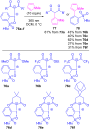
Synthesis of substituted 8H-benzo[h]pyrano[2,3-f]quinazolin-8-ones via photochemical 6π-electrocyclization of pyrimidines containing an allomaltol fragment
Beilstein J. Org. Chem. 2023, 19, 778–788, doi:10.3762/bjoc.19.58
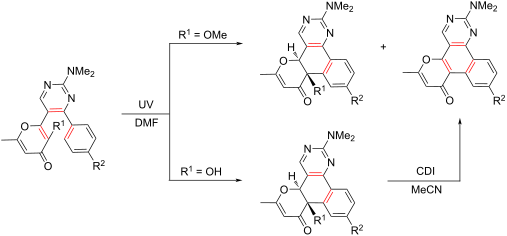
- molecules. One molecule of 11g is shown in Figure 3. The other molecules have very similar conformations, but the methoxy group in some molecules exhibits an opposite orientation. The mechanism of formation of products 11g–j is similar to the presented mechanism above for the methoxy derivatives 11a–f


Construction of hexabenzocoronene-based chiral nanographenes
Beilstein J. Org. Chem. 2023, 19, 736–751, doi:10.3762/bjoc.19.54
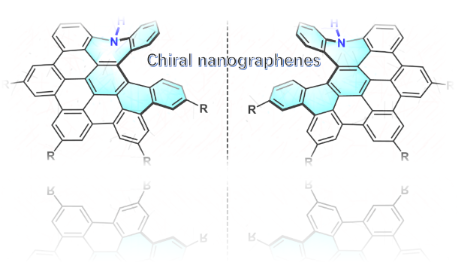
- designed NGs with tailor-made sizes and structures not only show planar conformation as fragments of graphene, but also evolved with a diversity of other shapes, including bowls [10], saddles [11][12][13], helixes [14][15], belts [16], rings [17], and their hybrid conformations such as helical bilayers [18
- , diiodide NG 71 reacted with phenylacetylene 50 through Sonogashira cross-coupling, followed by Diels–Alder reaction with tetracyclone 2 to afford precursor 72 in an overall 22% yield. Then the final helical NG 73, which contains different conformations was obtained through Scholl reaction in the presence
- of DDQ and TfOH in a 29% yield. In careful checking of conformations of each fraction, except for achiral meso isomers (P,P,M,M), a pair of helical enantiomers were confirmed (M,M,M,M and P,P,P,P). Whereas, the nanoribbons 76 and 77, which contain a seven-membered ring in the molecular skeleton


Phenanthridine–pyrene conjugates as fluorescent probes for DNA/RNA and an inactive mutant of dipeptidyl peptidase enzyme
Beilstein J. Org. Chem. 2023, 19, 550–565, doi:10.3762/bjoc.19.40
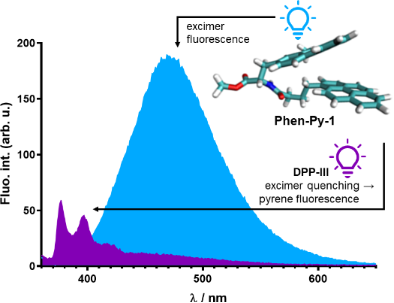
- modelling combined with spectrophotometric experiments revealed that in neutral and acidic buffered water solutions conjugates predominantly exist in intramolecularly stacked conformations because of the π–π stacking interaction between pyrene and phenanthridine moieties. The investigated systems exhibited
- representative geometries that account for most of the population of each system are presented in Figure 2. The results showed that both conjugates, irrespective of their protonation state, prefer stacked conformations, with favorable π–π interactions among aromatic fragments. Interestingly, this also holds even




1,4-Dithianes: attractive C2-building blocks for the synthesis of complex molecular architectures
Beilstein J. Org. Chem. 2023, 19, 115–132, doi:10.3762/bjoc.19.12
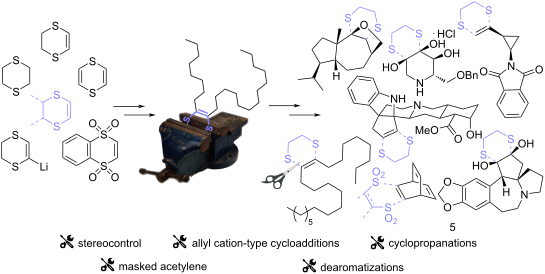
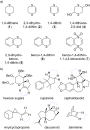
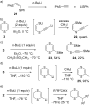
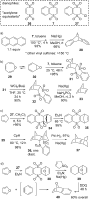
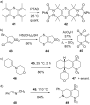
- -type building blocks (see review, original attachment place of 1,4-dithiane ‘scaffolding’ groups shown with dashed purple lines), for references, see text of following chapters. Reactive conformations leading to β-fragmentation for lithiated 1,4-dithianes and 1,4-dithiin. Applications in the total










Organophosphorus chemistry: from model to application
Beilstein J. Org. Chem. 2023, 19, 89–90, doi:10.3762/bjoc.19.8

- studied by single-crystal X-ray diffraction by Khrizanforov et al., and the preferred conformations were substantiated by DFT calculations [6]. Finally, Hersh and Chan presented a method to improve the accuracy of 31P NMR chemical shift calculations by use of scaling methods [7]. György Keglevich Budapest
Improving the accuracy of 31P NMR chemical shift calculations by use of scaling methods
Beilstein J. Org. Chem. 2023, 19, 36–56, doi:10.3762/bjoc.19.4
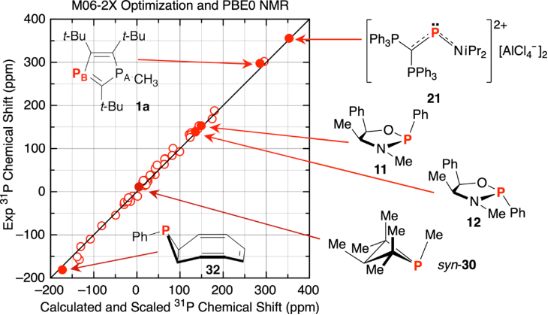
- recommendations by Tantillo and co-workers [3] for cases involving multiple conformations, and in addition here the presence of lone pairs on third-row atoms provides additional reason to use a higher level basis set than the usual 6-31G(d) [3]. As pointed out by van Wüllen [18], the energy-optimized structure
- by Krivdin [24], a partially experimental absolute shielding for 85% H3PO4 in water was used (σ(85% H3PO4) = 351.6 ppm), derived from the experimental chemical shift of PH3 referenced to 85% H3PO4 [53]. The use of this value has the virtue of eliminating all theoretical complications of conformations
- conformations in our hands that especially for (H2P)2PH affected the calculated chemical shifts, and (e) while we did not check all chemical shifts, the citation in reference [37] for CH2=C(H)PF2, the furthest downfield point (and hence a critical value) is wrong, although the value of 219.5 ppm is correct [60




Inclusion complexes of the steroid hormones 17β-estradiol and progesterone with β- and γ-cyclodextrin hosts: syntheses, X-ray structures, thermal analyses and API solubility enhancements
Beilstein J. Org. Chem. 2022, 18, 1749–1762, doi:10.3762/bjoc.18.184
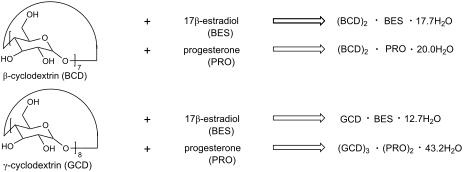
- per cell and again reveal the similarity in the conservation of water molecule sites in the two isostructural complexes. The detailed host conformations are defined by numerous, relevant geometrical parameters that include measures of the angular tilts of the individual glucose rings relative to the



Comparison of crystal structure and DFT calculations of triferrocenyl trithiophosphite’s conformance
Beilstein J. Org. Chem. 2022, 18, 1499–1504, doi:10.3762/bjoc.18.157
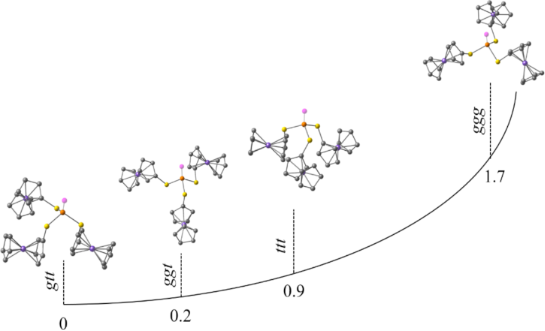
- orientations towards the phosphorus lone electron pair (LEP). A comparison of DFT calculations and X-ray diffraction data is presented, herein we show which conformations are preferred for a given ligand. Keywords: DFT calculations; multi-ferrocenyl compounds; phosphorus thioesters; trithiophosphite; X-ray
- –S bonds, and three Fe–cyclopentadienyl axes. The rotation around the P–S bonds results in a totally unsymmetrical structure with three ferrocenylthio groups exhibiting different orientations towards the phosphorus lone electron pair (Figure 1). Several possible conformations of triferrocenyl
- value is predicted for one of the gauche S–Fc bonds in the tgg conformer (−60°), whereas the second one is almost parallel to LEP (8°). The energy difference between the considered conformations is quite small, suggesting other factors playing a significant role. The highest energy predicted for the ggg


Synthesis and electrochemical properties of 3,4,5-tris(chlorophenyl)-1,2-diphosphaferrocenes
Beilstein J. Org. Chem. 2022, 18, 1338–1345, doi:10.3762/bjoc.18.139
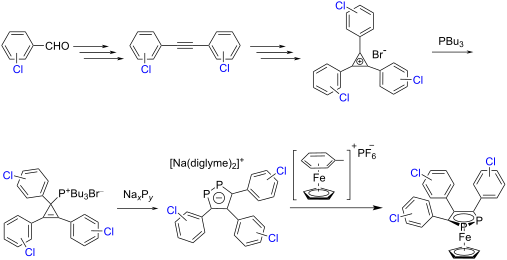
- chemically, two possible conformations of 8b were considered, 8b-I and 8b-II (Figure 2). Similar to a previous report on 8c [37], both 8b-I and 8b-II adopted an almost eclipsed conformation during optimization. Computations predicted slightly lower energy (1 kcal⋅mol−1) for conformation 8b-I, with Cl
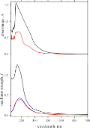
- ), P1–C1 1.837(3) for 6c. Deposition numbers 2176393 for 5c and 2176394 for 6c contain the supplementary crystallographic data for this paper [41]. Considered conformations of 8b-I and 8b-II. Top: experimental UV–vis spectra of 8с (black) and 8b (red). Bottom: broadened calculated UV–vis spectra of 8c




Computational model predicts protein binding sites of a luminescent ligand equipped with guanidiniocarbonyl-pyrrole groups
Beilstein J. Org. Chem. 2022, 18, 1322–1331, doi:10.3762/bjoc.18.137
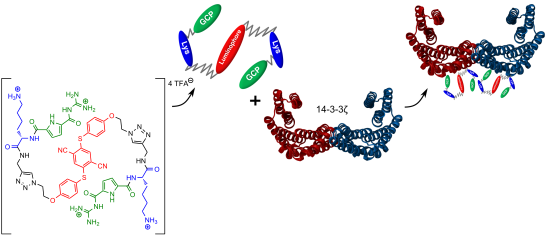
- of the omega in the case without C-Raf; thirdly, above the pore between the two binding grooves of the omega in the presence of C-Raf. Overall, the clustering and the pattern of energies reflect the C2 symmetry of the 14-3-3ζ dimer. Minimum energy conformations Closer inspection of energies reveals
- center of the ω where the AIE moieties hover above the central pore (Figure 6c and d). In these two conformations, at least one of the lysine groups lies at the minimum energy position of the lysine affinity map (more information about the affinity map is given in the “Energy grids” section). Both GCP
- groups locate in the two minimum energy positions of the GCP affinity map as well. In both minimum energy conformations of the ligand, at least one GCP or Lys group is found near one of the phosphorylated serine (pSer) residues of the C-Raf peptides (Figure 6d). This is consistent with a strong





Vicinal ketoesters – key intermediates in the total synthesis of natural products
Beilstein J. Org. Chem. 2022, 18, 1236–1248, doi:10.3762/bjoc.18.129
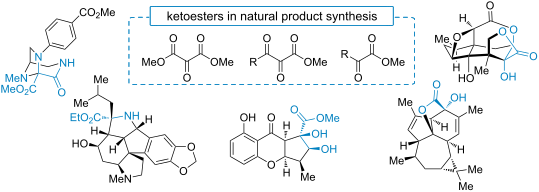
- stabilization of reactive conformations by chelation or dipole control. Keywords: aldol addition; ketoesters; natural products; total synthesis; Introduction Vicinal ketoesters contain a carbonyl group adjacent to an ester group. One keto group results in α-ketoesters 1 and two vicinal keto groups lead to α,β
- bearing an electrophilic keto group as reactive site. The vicinal arrangement of carbonyl groups allows the stabilization of reactive conformations by chelation or dipole control. Suitable key reactions are e.g., aldol additions, carbonyl ene reactions, Mannich reactions, and additions of organometallic


Electrochemical and spectroscopic properties of twisted dibenzo[g,p]chrysene derivatives
Beilstein J. Org. Chem. 2022, 18, 963–971, doi:10.3762/bjoc.18.96
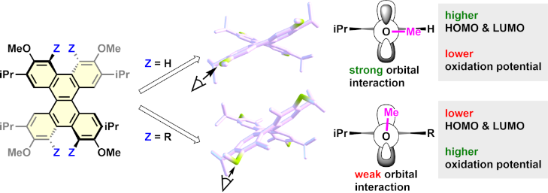
- . Optimizations of DBC-H(56°)-1 and DBC-H(56°)-2 based on DFT calculations were performed by fixing the atoms, as described above [56]. The conformations of the MeO group in DBC-H(56°)-1 and DBC-H(56°)-2 are nearly perpendicular (98.3°) to and parallel (179.8°) to the benzene ring, respectively (Figure 3 and


First series of N-alkylamino peptoid homooligomers: solution phase synthesis and conformational investigation
Beilstein J. Org. Chem. 2022, 18, 845–854, doi:10.3762/bjoc.18.85
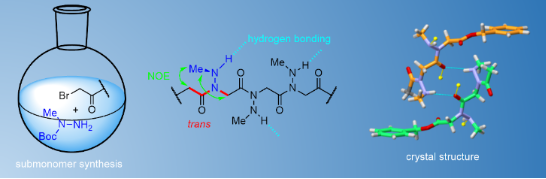
- observed for Xaa–Pro amide bonds and polyproline chains can adopt either the all-trans type II (PPII) or the all-cis type I (PPI) helical conformations, the latter being only observed in alcohol-type solvents [14]. In contrast to the prolyl-amide bond in acyclic peptides (≈5% of cis-Pro) [15], the cis
- form a unique sheet-like secondary structure, whereas molecular modeling showed that N-aryl peptoid oligomers composed of monomers in the same conformation (as observed in the crystal of dimer 2) might adopt right or left-handed helical conformations that resemble the polyproline type II helix. The χ1
- molecule are in the same conformation with either two positive values of the φ angle (conformation B) or two negative values for the mirror image conformation A. These two local conformations could exist at each monomer position, leading to a potential mixture of secondary structures. We therefore


Synthesis and HDAC inhibitory activity of pyrimidine-based hydroxamic acids
Beilstein J. Org. Chem. 2022, 18, 837–844, doi:10.3762/bjoc.18.84
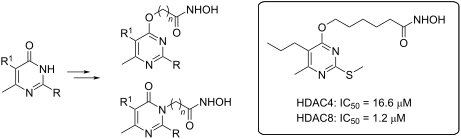
- tend to adopt the more stable keto-E and keto-Z conformations [36]. In the 1H NMR spectra of the synthesized hydroxamic acids 12–18 and 25–31 two sets of proton signals from the NH and OH groups of the hydroxamic acid residue are observed. Following data [36], we assigned the more intense peaks to the


Thiophene/selenophene-based S-shaped double helicenes: regioselective synthesis and structures
Beilstein J. Org. Chem. 2022, 18, 809–817, doi:10.3762/bjoc.18.81
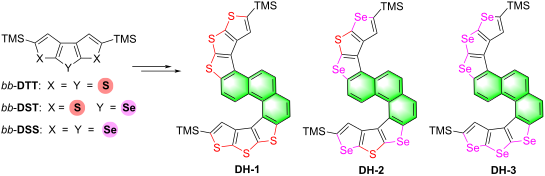
- photocyclization reaction sites of 5 were predicted by the orbital-weighted Fukui function in Multiwfn using Gaussian 09 [31][32] at the B3LYP/6-31G** [33] level of theory to verify the reaction-site selectivity of oxidative photocyclization further. Results showed that the conformations of 5a are varied, but the


Structural basis for endoperoxide-forming oxygenases
Beilstein J. Org. Chem. 2022, 18, 707–721, doi:10.3762/bjoc.18.71
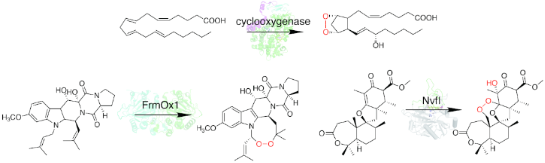
- . Structure of NvfI In the structural analysis of NvfI, three different active site conformations (open, partially closed, and closed) were observed (PDB IDs: 7DE2, 7EMZ, and 7ENB) (Figure 4A–C) [28]. The conformations of the loop regions between Ser122-Gly128 and Trp199-Pro209 were altered by soaking with





