Search results
Search for "cyclization" in Full Text gives 1141 result(s) in Beilstein Journal of Organic Chemistry. Showing first 200.
Enantioselective radical chemistry: a bright future ahead
Beilstein J. Org. Chem. 2025, 21, 2283–2296, doi:10.3762/bjoc.21.174
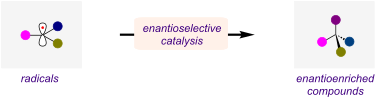
- radical reaction and can occur either intermolecularly or as an intramolecular cyclization reaction. Radical coupling or combination is a possible transformation that is more feasible when one of the radicals is relatively stabilized (a persistent radical). Trapping a radical with a transition metal is
- polycyclic products in a highly diastereo- and enantioselective manner [45]. The polyene substrates were designed to facilitate a radical cyclization process, with alternating electron-poor and electron-rich olefins so as to enable polarity matching of the olefins and radical intermediates. With this design
- , a relatively electrophilic radical could readily add to a nearby electron-rich olefin, and the resulting nucleophilic radical could add to an electron-poor olefin (e.g., substituted with a cyano group). In one example, polyene 15 underwent cyclization to afford hexacyclic product 17 with 93% ee in a


Pathway economy in cyclization of 1,n-enynes
Beilstein J. Org. Chem. 2025, 21, 2260–2282, doi:10.3762/bjoc.21.173
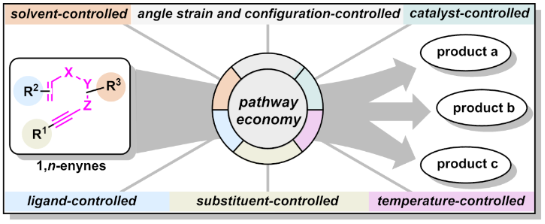
- , P. R. China Institute of Drug Research in Medicine Capital of China, Benxi 117000, P. R. China 10.3762/bjoc.21.173 Abstract This review presents a paradigm-shifting "pathway economy" strategy for 1,n-enyne cyclization, enabling divergent construction of complex molecular architectures from a single
- significant reaction, 1,n-enyne cyclization is capable of constructing a variety of complex small-molecule frameworks, including fused and bridged rings, thereby serving as a potent tool in the syntheses of natural products and pharmaceuticals. Our group has pioneered the concept of "pathway economy" by
- systematically regulating reaction parameters (solvent, substituent, ligand, catalyst) in 1,n-enyne cyclizations, enabling efficient "one-to-many" transformations that drastically reduce synthetic steps and resource consumption. Review Solvent-controlled cyclization of 1,n-enynes Solvents play a multifaceted


Thiadiazino-indole, thiadiazino-carbazole and benzothiadiazino-carbazole dioxides: synthesis, physicochemical and early ADME characterization of representatives of new tri-, tetra- and pentacyclic ring systems and their intermediates
Beilstein J. Org. Chem. 2025, 21, 2220–2233, doi:10.3762/bjoc.21.169
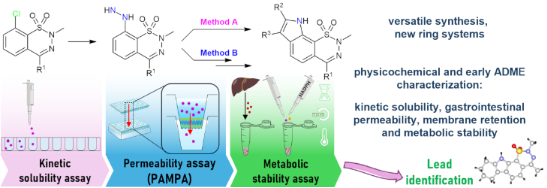
- -dioxides, we aimed at elaborating a synthetic procedure for the preparation of their pyrrole-fused counterparts, 2,9-dihydro[1,2,3]thiadiazino[5,6-g]indole 1,1-dioxide derivatives. The simple and versatile process led, via Fischer indole cyclization of the corresponding hydrazones, to a wide structural
- metabolic stability of the most promising derivatives was also determined using human liver microsomes. Keywords: early ADME characterization; Fischer indole cyclization; heterocycles; indoles; lead-likeness; new ring systems; physicochemical characterization; Introduction Considering the published
- case of 7c and 7h, a substantial amount of (Z)-isomer was also obtained. In view of the expected similar electronic effect of the sulfonamide and the nitro functional groups on the Fischer indole cyclization, first we applied those reaction conditions for the 7a → 3a transformation (Scheme 1) which


Synthesis of triazolo- and tetrazolo-fused 1,4-benzodiazepines via one-pot Ugi–azide and Cu-free click reactions
Beilstein J. Org. Chem. 2025, 21, 2202–2210, doi:10.3762/bjoc.21.167
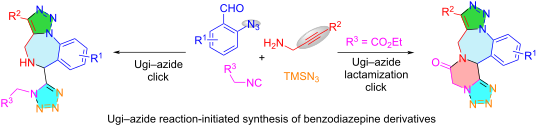
- . After evaporation of the solvent MeOH, the residue was redissolved in 2 mL of MeCN and heated at 130 °C for 2 h in a sealed vial to give product 7a in 90% yield after purification via Cu-free intramolecular click reaction (Scheme 3C) [46]. This Cu-free intramolecular cyclization provides key practical


Electrochemical cyclization of alkynes to construct five-membered nitrogen-heterocyclic rings
Beilstein J. Org. Chem. 2025, 21, 2173–2201, doi:10.3762/bjoc.21.166
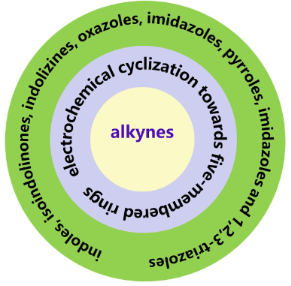
- -involved ureas, annulation of o-arylalkynylanilines, cyclization of 2-ethynylanilines, selenocyclization of diselenides with 2-ethynylanilines as well as C–H indolization of 2-alkynylanilines with 3-functionalized indoles. Isoindolones were synthesized successfully by electrochemical annulation of
- benzamides with terminal alkynes, 5-exo-dig aza-cyclization of 2-alkynylbenzamides as well as reductive cascade annulation of o-alkynylbenzamides. Pyrroles and imidazoles were formed efficiently via electrochemical annulation of alkynes with enamides and tandem Michael addition/azidation/cyclization of
- alkynes, amines and azides, respectively. Imidazopyridines could be obtained by electrochemical [3 + 2] cyclization of heteroarylamines. The electrochemical oxidative [3 + 2] cycloaddition of secondary propargyl alcohols was a simple and efficient access towards 1,2,3-triazoles. In this review









C2 to C6 biobased carbonyl platforms for fine chemistry
Beilstein J. Org. Chem. 2025, 21, 2103–2172, doi:10.3762/bjoc.21.165
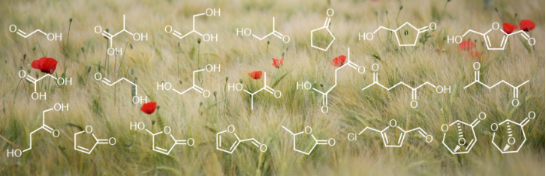
- -synthesis of formamides and formates was achieved in particularly good yield by selective oxidation of DHA using a Cu/Al2O3 catalyst with single active CuII species at room temperature without using a base (Scheme 20). 1-Hydroxypropan-2-one Gu et al. reported the [3 + 2] cyclization reaction of 1
- etherification and aldol reactions [197]. Cyclopentanone (CPN) Cyclopentanone (CPN) can be prepared by catalytic hydrogenation and Piancatelli rearrangement of furfural (Scheme 65). This is a biobased alternative to the fossil-based process relying on the intramolecular decarboxylative cyclization of adipic acid


The application of desymmetric enantioselective reduction of cyclic 1,3-dicarbonyl compounds in the total synthesis of terpenoid and alkaloid natural products
Beilstein J. Org. Chem. 2025, 21, 2085–2102, doi:10.3762/bjoc.21.164
- and aldehyde 37, which was prepared with 9 steps from commercially available (+)-citronellol, underwent a Reformatsky-type radical addition under the conditions of Et3B/air/Bu3SnH to deliver aldol product [16]. Dehydration of the secondary alcohol gave (E)-38. The HAT radical cyclization [17] of 38 in
- group [35][36][37]. This catalytic system efficiently overcame the challenge and furnished the coupling product 46 in high yield. Oxidative cleavage of the double bond in 46 followed by Mg(II)-mediated chelation-controlled Friedel–Crafts cyclization delivered secondary alcohol 47, which was elaborated
- Prins cyclization produced the oxa-bridged product 88. Finally, ozonolysis of 88 followed by Wittig reaction of the resultant ketone and subsequent reduction accomplished the total synthesis of (+)-toxicodenane A (16). The authors eventually confirmed that the absolute configuration of (+)-16 was 4S,5S




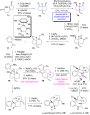

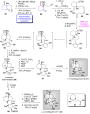


Further elaboration of the stereodivergent approach to chaetominine-type alkaloids: synthesis of the reported structures of aspera chaetominines A and B and revised structure of aspera chaetominine B
Beilstein J. Org. Chem. 2025, 21, 2072–2081, doi:10.3762/bjoc.21.162
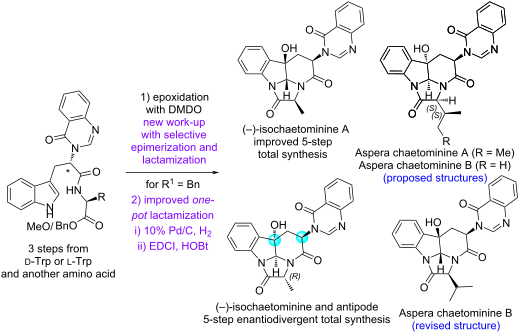
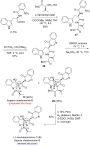
- cyclization of an intermediate derived from ᴅ-tryptophan [60][61]. Subsequently, we developed a five-step total synthesis of (–)-chaetominine (1) and two diastereomers from ʟ-tryptophan [62]. Taking advantages of the high efficiency and flexibility of our strategy [60], we have synthesized several natural and
- epoxidation-triggered double cyclization reaction. In addition, the synthesis of the recently reported natural products aspera chaetominines A and B (12 and 13) [32] was addressed. Herein, we report the full accounts of these investigations, which include: 1) an improved five-step total synthesis of
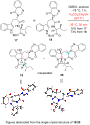
- synthesis of diastereomers of versiquinazoline H: the fourth generation strategy In all our previous syntheses of chaetominine and isochaetominine alkaloids [57][58][60][61][62][63][64][65], the key DMDO-oxidation triggered double cyclization always accompanied with a monocyclization product. It was




Discovery of cytotoxic indolo[1,2-c]quinazoline derivatives through scaffold-based design
Beilstein J. Org. Chem. 2025, 21, 2062–2071, doi:10.3762/bjoc.21.161
- methodologies from traditional acylation/carbamoylation [9] to advanced Pd- or Rh-catalyzed C–H activation [10][11], FeIII–CuII/p-TSA–CuI catalyzed ring expansion/cyclization [12], electrochemical C–H/N–H functionalization [13], RhIII-catalyzed C–H amidation [14], etc. In contrast to chemical studies, a


Bioinspired total syntheses of natural products: a personal adventure
Beilstein J. Org. Chem. 2025, 21, 2048–2061, doi:10.3762/bjoc.21.160
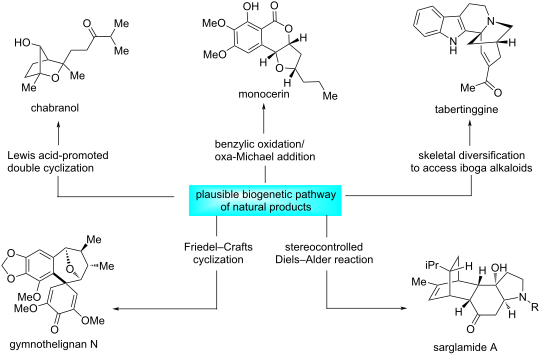
- results than nature. Jia categorized their works into three sections to showcase how they learn from nature, including 1) to mimic the key cyclization steps, 2) to mimic the revised biosynthetic pathway proposed, and 3) to mimic the skeletal diversification process. These three types of bioinspired
- aldehyde 3. This linear aldehyde would be activated by an acid to trigger a key Prins cyclization with the trisubstituted olefin through reaction model 3 and generate a putative tertiary carbocation to be trapped by the chiral alcohol, providing bicycle 4 stereoselectively. Finally, the last olefin would
- be oxidized to ketone, which gives chabranol. According to this biosynthetic proposal, we thought that the Prins-triggered double cyclization would serve as a powerful method to construct the bicycle in one step, and moreover, the proposed Prins-based double cyclization needs further supporting




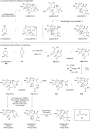
Switchable pathways of multicomponent heterocyclizations of 5-amino-1,2,4-triazoles with salicylaldehydes and pyruvic acid
Beilstein J. Org. Chem. 2025, 21, 2030–2035, doi:10.3762/bjoc.21.158
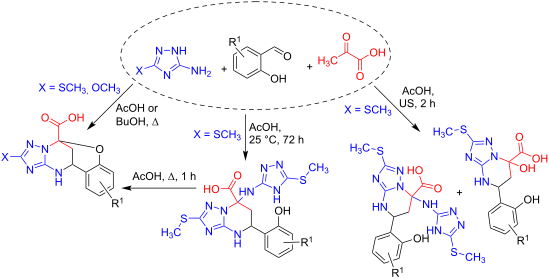
- depending on the conditions, can either be limited to a Biginelli condensation with the formation of hydroxytetrahydropyrimidines or proceed with further post-cyclization to form oxygen-bridged triazolobenzoxadiazocine derivatives. Furthermore, a multicomponent synthesis of oxygen-bridged pyrimidine systems


α-Ketoglutaric acid in Ugi reactions and Ugi/aza-Wittig tandem reactions
Beilstein J. Org. Chem. 2025, 21, 2021–2029, doi:10.3762/bjoc.21.157
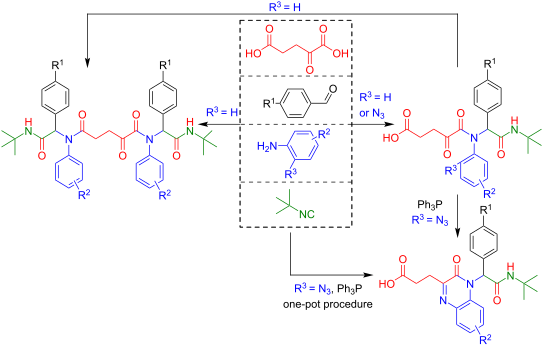
- library of bis- and tetraamides was synthesized by the Ugi reaction with α-ketoglutaric acid, tert-butyl isocyanide, aromatic aldehydes, and aromatic amines. When o-azidoanilines were used, azidated peptidomimetics were obtained, the post-cyclization of which by the aza-Wittig reaction yielded a series of
- ], antibacterial [8][14][15], and anticancer [16][17] activities. The use of the Ugi reaction followed by post-cyclization is an effective strategy that yields diverse heterocycle-containing peptidomimetics and requires a minimal number of steps [18]. For example, Mazur et al. [19] developed an efficient method
- in 33–93% yields (Scheme 3; Table 3). According to the literature [31][53], this reaction proceeds through the formation of an iminophosphorane intermediate (Scheme 3), the product of a Staudinger reaction, which, however, was not isolated because it easily undergoes intramolecular cyclization on a


Measuring the stereogenic remoteness in non-central chirality: a stereocontrol connectivity index for asymmetric reactions
Beilstein J. Org. Chem. 2025, 21, 1995–2006, doi:10.3762/bjoc.21.155
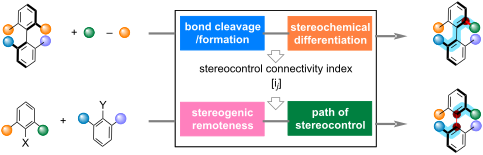
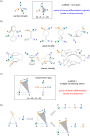
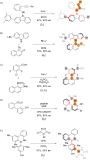
- are assigned following the 3-step procedure for all types of strategies including cyclization, biaryl coupling, and desymmetrization, irrespective of the chemical identity of the newly established chiral axis including C–C [10][11] (Scheme 3C and 3D), C–N [12] (Scheme 3B), N–N [13] (Scheme 3A), and C
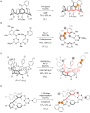
- same procedure as in Scheme 5C. In analogy to Scheme 5B, the direct cyclization forging the planar chirality [24] in Scheme 6B is regarded as [31 10], in which two stereogenic arenes are proximate and the two distal arenes are considered diastereomeric. The desymmetrization cross-coupling of cavitands




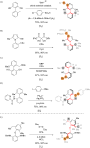

Aryl iodane-induced cascade arylation–1,2-silyl shift–heterocyclization of propargylsilanes under copper catalysis
Beilstein J. Org. Chem. 2025, 21, 1984–1994, doi:10.3762/bjoc.21.154
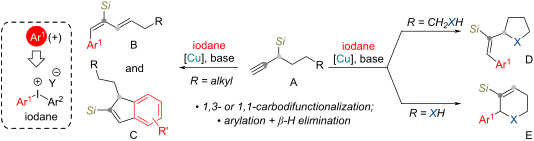
- likely formed via the allylic cation intermediate Int-1 (Scheme 2), from where on two competing mechanistic pathways are possible. Deprotonation of the β-H and reductive elimination affords diene 10. Alternatively, an intramolecular cyclization leads to silylindenes 11. We were interested to see whether
- techniques, indicating that the observed arylation–cyclization cascade reaction is highly stereospecific. With this result in hand, we performed copper catalyst screening (Table 3). We observed that CuCl and the CuOTf benzene complex gave similarly good yields (82–84% by NMR, Table 3, entries 2 and 4), while
- propargylsilane 7d halogenation–cyclization cascade and Suzuki–Miyaura cross-coupling in the second step [22]. Thus, we have developed a faster and palladium-free route towards tetrahydrofurans 8. The latter can still be modified further through silicon–halide exchange followed by cross-coupling chemistry as


Asymmetric total synthesis of tricyclic prostaglandin D2 metabolite methyl ester via oxidative radical cyclization
Beilstein J. Org. Chem. 2025, 21, 1964–1972, doi:10.3762/bjoc.21.152
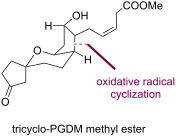
- available has prevented its practical use, and synthesis methods for tricyclic-PGDM methyl ester are required. Based on the utilization of oxidative radical cyclization for the stereoselective construction of the cyclopentanol subunit with three consecutive stereocenters, we describe an asymmetric total
- synthesis of tricyclic-PGDM methyl ester in 9 steps and 8% overall yield. Keywords: asymmetric total synthesis; oxidative radical cyclization; tricyclic prostaglandin D2 metabolite methyl ester; Introduction Prostaglandins (PGs), a family of hormone-like lipid compounds, are ubiquitous natural products
- total synthesis of 4 and is required to explore alternative synthetic strategies for PGs and analogues [17]. Biosynthetically, 4 is proposed to arise via a 5-exo-trig biogenetic radical-mediated cyclization (Scheme 1C) [18][19]. Over the past five decades, the Snider oxidative radical reaction has been



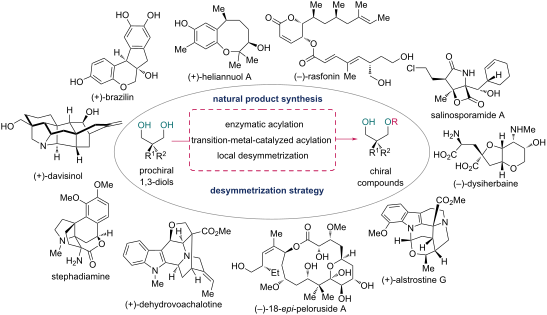
Enantioselective desymmetrization strategy of prochiral 1,3-diols in natural product synthesis
Beilstein J. Org. Chem. 2025, 21, 1932–1963, doi:10.3762/bjoc.21.151
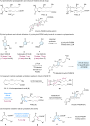
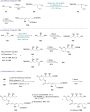
- JohnPhos (6) induced cyclization, yielding bicyclic compound 7 with a 7-membered heterocycle. Final deprotection of the methoxymethyl (MOM) group in 7 afforded (+)-heliannuol D (8). Having successfully applied PPL-catalyzed acetylation to the synthesis of (+)-heliannuol D, the Shishido group subsequently
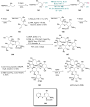
- intramolecular cyclization of 16 generated benzofuran 17 in 83% yield. After protecting the phenolic hydroxy group of 17, cross-metathesis (CM) with allylic alcohol 18 catalyzed by 13 furnished intermediate 19. Desilylation of 19 produced heliannuol G (20) and heliannuol H (21), with the structure of 21
- 62% ee. A two-step conversion of 34 gave diol 35, which underwent Prins/Friedel–Crafts tandem cyclization to construct tetracyclic compound 36. Final deprotection delivered (+)-brazilin (37). Candida antarctica lipase (CAL) CAL is a type of lipase originating from the yeast Candida antarctica and










Synthesis of N-doped chiral macrocycles by regioselective palladium-catalyzed arylation
Beilstein J. Org. Chem. 2025, 21, 1917–1923, doi:10.3762/bjoc.21.149
- ; inherent chirality; N-doped macrocycle; nonplanarity; regioselective cyclization; Introduction Chiral macrocycles have attracted significant research interest owing to their diverse applications in enantioselective recognition [1][2], catalysis [3][4], and circularly polarized luminescence [5][6
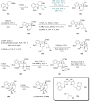
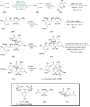
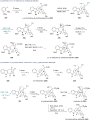
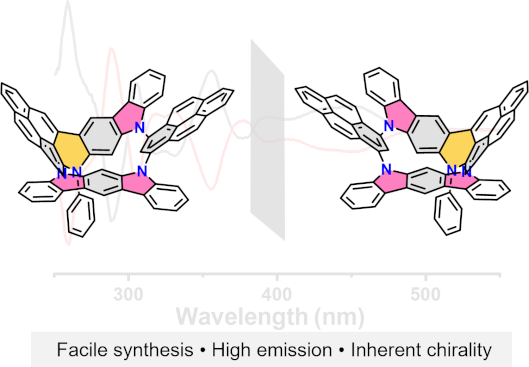
- . Interestingly, for the cyclization of 3b, only compound MC3 was obtained in 85% yield, which is probably attributed to larger steric hindrance deriving from bis(trifluoromethyl)phenyl groups. These macrocycles show good solubility in common solvents, and their chemical structures have been unambiguously




Stereoselective electrochemical intramolecular imino-pinacol reaction: a straightforward entry to enantiopure piperazines
Beilstein J. Org. Chem. 2025, 21, 1897–1908, doi:10.3762/bjoc.21.147
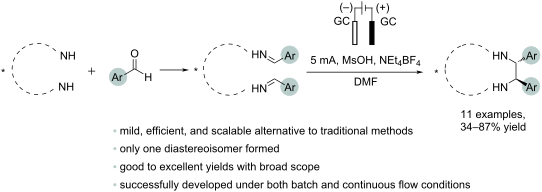
- , and a ceramic diaphragm [44]. This method was found to be effective for synthesizing trans-2,3-diarylpiperazines through the intramolecular reductive coupling of 1,2-diimines and seven- and eight-membered heterocycles which were obtained in moderate to good yields via the cyclization of 1,3- and 1,4
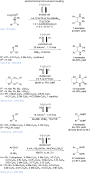
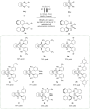
- electrochemical cyclization process. In contrast, more complex and extended heterocyclic electronrich π-systems such as compound 2j was obtained in 35% yield only, presumably as a result of electronic factors affecting the efficiency of the initial radical formation [47]. To further extend the scope of this





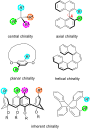
Chiral phosphoric acid-catalyzed asymmetric synthesis of helically chiral, planarly chiral and inherently chiral molecules
Beilstein J. Org. Chem. 2025, 21, 1864–1889, doi:10.3762/bjoc.21.145
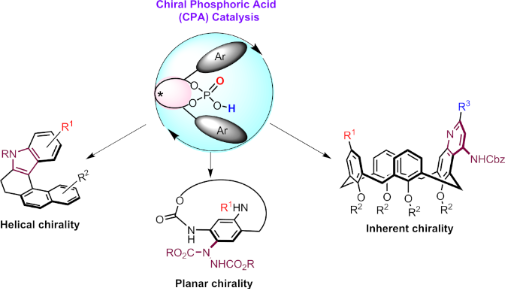
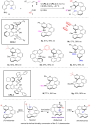
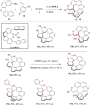
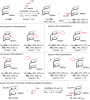
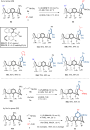
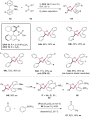
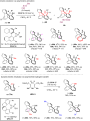
- CPA-catalyzed cyclization of INT-E through the dual hydrogen bonding activation transition state TS-1 afforded the eight-membered heterocycle INT-F with a stereogenic center. Through the elimination of aniline 73, the saddle-shaped dibenzo[1,5]diazocine 72 was produced via a central-to-inherent









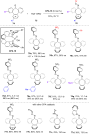
Fe-catalyzed efficient synthesis of 2,4- and 4-substituted quinolines via C(sp2)–C(sp2) bond scission of styrenes
Beilstein J. Org. Chem. 2025, 21, 1799–1807, doi:10.3762/bjoc.21.142
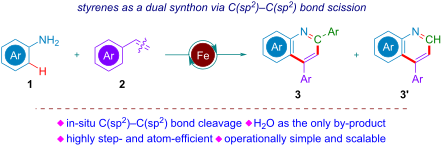
- cycloaddition, tandem annulation, intramolecular cyclization, and cross-coupling reactions are commonly employed under thermal conditions, utilizing metal catalysts based on Pd, Ru, Au, Cu, and Fe to access a wide array of substituted quinoline frameworks [29][30][31][32][33][34][35][36][37][38]. Conversely, in
- cleavage as well as inadequate Lewis acid activation of N-methylaniline (1a′), which hinders its further cyclization into the final product 3a′. The reaction, when conducted in the absence of a catalyst, failed to proceed, thereby highlighting the crucial role of catalytic activation in facilitating the
- formation of intermediates III and III′. Subsequent electrophilic cyclization/C–H annulation of the aromatic amine, followed by aromatization, afford intermediates V and V′. The oxidative dehydrogenation of intermediates V and V′ then results in the formation of products 3a and 3a′ and the regeneration of




Synthesis of chiral cyclohexane-linked bisimidazolines
Beilstein J. Org. Chem. 2025, 21, 1786–1790, doi:10.3762/bjoc.21.140
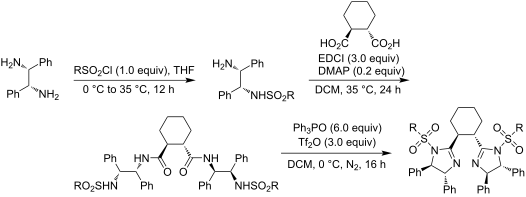
- , condensation of N-sulfonylated 1,2-diphenylethane-1,2-diamines and cyclohexane-1,2-dicarboxylic acid, and the final cyclization with the in situ generated Hendrickson reagent. Keywords: bisimidazoline; cyclohexane; cyclohexane-1,2-dicarboxylic acid; 1,2-diphenylethane-1,2-diamine; Introduction Chiral
- cyclized product 5e in a low yield of 30% due to its poor nucleophilicity. However, 1,2-cyclohexane-1,2-dicarboxamide 4f with two very strong electron-poor trifluoromethyl groups did not undergo cyclization due to its very poor nucleophilicity. The results are collected in Table 1. Following the similar
- )-N1,N2-bis((1R,2R)-2-(tert-butoxycarbonyl)-1,2-diphenylethyl)cyclohexane-1,2-dicarboxamide (4h) in 65% yield through the reaction with (1S,2S)-cyclohexane-1,2-dicarboxylic acid (3). However, compound 4h did not undergo cyclization possibly due to weak nucleophilicity and steric hindrance of the Boc


Research progress on calixarene/pillararene-based controlled drug release systems
Beilstein J. Org. Chem. 2025, 21, 1757–1785, doi:10.3762/bjoc.21.139
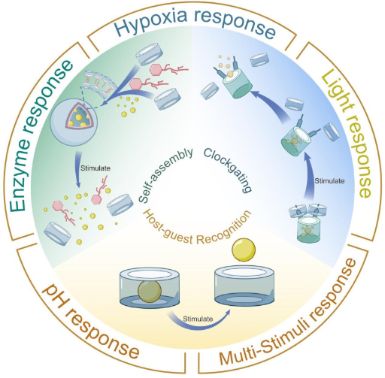
- modifiable ring positions, and many PA derivatives with different functional groups can be obtained through the cyclization reaction of 1,4-dialkoxybenzene monomers or post-synthetic modification reactions [74]. PAs possess a unique internal cavity characterized by an electron-rich and hydrophobic






Preparation of a furfural-derived enantioenriched vinyloxazoline building block and exploring its reactivity
Beilstein J. Org. Chem. 2025, 21, 1737–1741, doi:10.3762/bjoc.21.136

- . Cleavage of the N-Alloc group leading to a mixture of isomers cis-S-5 and trans-S-5. Cleavage of the N-Alloc group with PdCl2(S-BINAP) leading to trans-S-5 and trans-R-5. Cyclization of amides trans-S-5 and trans-R-5 to oxazolines S-6 and R-6. aza-Diels–Alder reaction of vinyloxazoline S-6 with TsNCO. The


3,3'-Linked BINOL macrocycles: optimized synthesis of crown ethers featuring one or two BINOL units
Beilstein J. Org. Chem. 2025, 21, 1719–1729, doi:10.3762/bjoc.21.134
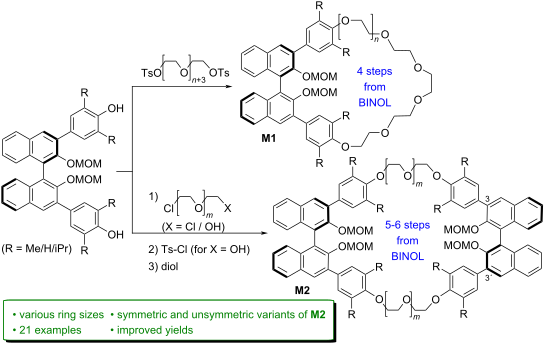
- this is too short to result in a mono-BINOL macrocycle. The corresponding BINOL-based dichlorides Me/H/iPr-62 could be obtained in good yields (59/78/76%) and further reacted with the diols Me/H/iPr-2 in the presence of Cs2CO3 (CH3CN, 80 °C). This cyclization yielded the symmetrically tetrasubstitued


Catalytic asymmetric reactions of isocyanides for constructing non-central chirality
Beilstein J. Org. Chem. 2025, 21, 1648–1660, doi:10.3762/bjoc.21.129
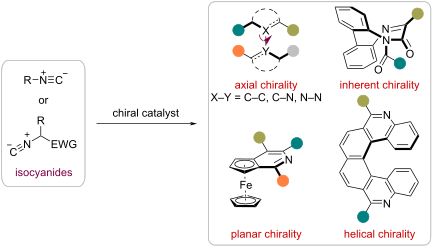
- cycloamidation of N-alkyl-2-isocyanobenzamides 5 with 2,6-disubstituted aryl iodides 6 (Scheme 2a) [28]. Through a coupling–cyclization reaction sequence, axially chiral 2-arylquinazolinones 7 were synthesized in 35–93% yield with 71–95% ee. Interestingly, by using N-(2,4-dimethoxyphenyl)-2-isocyanobenzamide (8
- cyclization of functionalized phenyl isocyanides, guided by DFT calculations (Scheme 2b) [29]. Three types of isocyanides (10–12) were evaluated in reactions with aryl iodides, affording indole-fused N-heteroaryl scaffolds 13–15, featuring either a C–C or C–N stereogenic axis, in moderate-to-high yields with
- double C(sp2)–H imidoylative cyclization with aryl iodides, furnishing symmetrical pyrido[6]helicenes 23 or furan-incorporating pyrido[7]helicenes 24 with stable helical chirality, respectively. Furthermore, pre-cyclized monoisocyanides, such as 25a and 25b, were identified as another class of suitable