


Search results
Search for "cyclopentane" in Full Text gives 84 result(s) in Beilstein Journal of Organic Chemistry.
Rearrangements of organic peroxides and related processes
- Ivan A. Yaremenko,
- Vera A. Vil’,
- Dmitry V. Demchuk and
- Alexander O. Terent’ev
Beilstein J. Org. Chem. 2016, 12, 1647–1748, doi:10.3762/bjoc.12.162
- for the oxidative production of valuable intermediates [264][265][266][267][268][269]. The asymmetric oxidation of 3-substituted cyclopentane-1,2-diones 87a–f is an efficient tool in organic synthesis for the preparation of unsymmetrical γ-lactone acids 88a–f with high optical purity and good yields
- (Table 6). These γ-lactone acids are valuable substrates for the synthesis of compounds with potentially useful pharmacological properties, such as homocitrates, alkyl- and aryl-substituted nucleosides [270][271][272]. The reaction starts with an asymmetric epoxidation of the substituted cyclopentane-1,2

Graphical Abstract
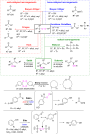
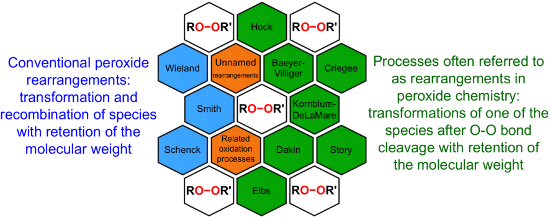
Figure 1: The named transformations considered in this review.

Scheme 1: The Baeyer–Villiger oxidation.

Scheme 2: The general mechanism of the peracid-promoted Baeyer–Villiger oxidation.

Scheme 3: General mechanism of the Lewis acid-catalyzed Baeyer–Villiger rearrangement.

Scheme 4: The theoretically studied mechanism of the BV oxidation reaction promoted by H2O2 and the Lewis aci...

Scheme 5: Proton movements in the transition states of the Baeyer–Villiger oxidation.

Scheme 6: The dependence of the course of the Baeyer–Villiger oxidation on the type of O–O-bond cleavage in t...
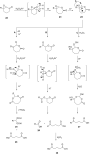
Scheme 7: The acid-catalyzed Baeyer–Villiger oxidation of cyclic epoxy ketones 22.

Scheme 8: Oxidation of isophorone oxide 29.

Scheme 9: Synthesis of acyl phosphate 32 from acyl phosphonate 31.

Scheme 10: Synthesis of aflatoxin B2 (36).

Scheme 11: The Baeyer–Villiger rearrangement of ketones 37 to lactones 38.

Scheme 12: Synthesis of 3,4-dimethoxybenzoic acid (40) via Baeyer–Villiger oxidation.

Scheme 13: Oxone transforms α,β-unsaturated ketones 43 into vinyl acetates 44.

Scheme 14: The Baeyer–Villiger oxidation of ketones 45 using diaryl diselenide and hydrogen peroxide.

Scheme 15: Baeyer–Villiger oxidation of (E)-2-methylenecyclobutanones.

Scheme 16: Oxidation of β-ionone (56) by H2O2/(BnSe)2 with formation of (E)-2-(2,6,6-trimethylcyclohex-1-en-1-...

Scheme 17: The mechanism of oxidation of ketones 58a–f by hydrogen peroxide in the presence of arsonated polys...

Scheme 18: Oxidation of ketone (58b) by H2O2 to 6-methylcaprolactone (59b) catalyzed by Pt complex 66·BF4.

Scheme 19: Oxidation of ketones 67 with H2O2 in the presence of [(dppb}Pt(µ-OH)]22+.

Scheme 20: The mechanism of oxidation of ketones 67 in the presence of [(dppb}Pt(µ-OH)]22+ and H2O2.

Scheme 21: Oxidation of benzaldehydes 69 in the presence of the H2O2/MeReO3 system.

Scheme 22: Oxidation of acetophenones 72 in the presence of the H2O2/MeReO3 system.

Scheme 23: Baeyer–Villiger oxidation of 2-adamantanone (45c) in the presence of Sn-containing mesoporous silic...

Scheme 24: Aerobic Baeyer–Villiger oxidation of ketones 76 using metal-free carbon.

Scheme 25: A regioselective Baeyer-Villiger oxidation of functionalized cyclohexenones 78 into a dihydrooxepin...

Scheme 26: The oxidation of aldehydes and ketones 80 by H2O2 catalyzed by Co4HP2Mo15V3O62.

Scheme 27: The cleavage of ketones 82 with hydrogen peroxide in alkaline solution.

Scheme 28: Oxidation of ketones 85 to esters 86 with H2O2–urea in the presence of KHCO3.

Scheme 29: Mechanism of the asymmetric oxidation of cyclopentane-1,2-dione 87a with the Ti(OiPr)4/(+)DET/t-BuO...

Scheme 30: The oxidation of cis-4-tert-butyl-2-fluorocyclohexanone (93) with m-chloroperbenzoic acid.

Scheme 31: The mechanism of the asymmetric oxidation of 3-substituted cyclobutanone 96a in the presence of chi...

Scheme 32: Enantioselective Baeyer–Villiger oxidation of cyclic ketones 98.

Scheme 33: Regio- and enantioselective Baeyer–Villiger oxidation of cyclic ketones 101.

Scheme 34: The proposed mechanism of the Baeyer–Villiger oxidation of acetal 105f.

Scheme 35: Synthesis of hydroxy-10H-acridin-9-one 117 from tetramethoxyanthracene 114.

Scheme 36: The Baeyer–Villiger oxidation of the fully substituted pyrrole 120.

Scheme 37: The Criegee rearrangement.

Scheme 38: The mechanism of the Criegee reaction of a peracid with a tertiary alcohol 122.

Scheme 39: Criegee rearrangement of decaline ethylperoxoate 127 into ketal 128.

Scheme 40: The ionic cleavage of 2-methoxy-2-propyl perester 129.

Scheme 41: The Criegee rearrangement of α-methoxy hydroperoxide 136.
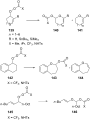
Scheme 42: Synthesis of enol esters and acetals via the Criegee rearrangement.

Scheme 43: Proposed mechanism of the transformation of 1-hydroperoxy-2-oxabicycloalkanones 147a–d.

Scheme 44: Transformation of 3-hydroxy-1,2-dioxolanes 151 into diketone derivatives 152.

Scheme 45: Criegee rearrangement of peroxide 153 with the mono-, di-, and tri-O-insertion.

Scheme 46: The sequential Criegee rearrangements of adamantanes 157a,b.

Scheme 47: Synthesis of diaryl carbonates 160a–d from triarylmethanols 159a–d through successive oxygen insert...

Scheme 48: The synthesis of sesquiterpenes 162 from ketone 161 with a Criegee rearrangement as one key step.

Scheme 49: Synthesis of trans-hydrindan derivatives 164, 165.

Scheme 50: The Hock rearrangement.

Scheme 51: The general scheme of the cumene process.

Scheme 52: The Hock rearrangement of aliphatic hydroperoxides.
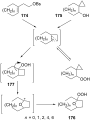
Scheme 53: The mechanism of solvolysis of brosylates 174a–c and spiro cyclopropyl carbinols 175a–c in THF/H2O2....

Scheme 54: The fragmentation mechanism of hydroperoxy acetals 178 to esters 179.

Scheme 55: The acid-catalyzed rearrangement of phenylcyclopentyl hydroperoxide 181.

Scheme 56: The peroxidation of tertiary alcohols in the presence of a catalytic amount of acid.

Scheme 57: The acid-catalyzed reaction of bicyclic secondary alcohols 192 with hydrogen peroxide.

Scheme 58: The photooxidation of 5,6-disubstituted 3,4-dihydro-2H-pyrans 196.

Scheme 59: The oxidation of tertiary alcohols 200a–g, 203a,b, and 206.

Scheme 60: Transformation of functional peroxide 209 leading to 2,3-disubstitued furans 210 in one step.

Scheme 61: The synthesis of carbazoles 213 via peroxide rearrangement.

Scheme 62: The construction of C–N bonds using the Hock rearrangement.

Scheme 63: The synthesis of moiety 218 from 217 which is a structural motif in the antitumor–antibiotic of CC-...

Scheme 64: The in vivo oxidation steps of cholesterol (219) by singlet oxygen.

Scheme 65: The proposed mechanism of the rearrangement of cholesterol-5α-OOH 220.

Scheme 66: Photochemical route to artemisinin via Hock rearrangement of 223.

Scheme 67: The Kornblum–DeLaMare rearrangement.

Scheme 68: Kornblum–DeLaMare transformation of 1-phenylethyl tert-butyl peroxide (225).

Scheme 69: The synthesis 4-hydroxyenones 230 from peroxide 229.

Scheme 70: The Kornblum–DeLaMare rearrangement of peroxide 232.

Scheme 71: The reduction of peroxide 234.

Scheme 72: The Kornblum–DeLaMare rearrangement of endoperoxide 236.

Scheme 73: The rearrangement of peroxide 238 under Kornblum–DeLaMare conditions.

Scheme 74: The proposed mechanism of rearrangement of peroxide 238.

Scheme 75: The Kornblum–DeLaMare rearrangement of peroxides 242a,b.

Scheme 76: The base-catalyzed rearrangements of bicyclic endoperoxides having electron-withdrawing substituent...

Scheme 77: The base-catalyzed rearrangements of bicyclic endoperoxides 249a,b having electron-donating substit...

Scheme 78: The base-catalyzed rearrangements of bridge-head substituted bicyclic endoperoxides 251a,b.

Scheme 79: The Kornblum–DeLaMare rearrangement of hydroperoxide 253.

Scheme 80: Synthesis of β-hydroxy hydroperoxide 254 from endoperoxide 253.

Scheme 81: The amine-catalyzed rearrangement of bicyclic endoperoxide 263.

Scheme 82: The base-catalyzed rearrangement of meso-endoperoxide 268 into 269.

Scheme 83: The photooxidation of 271 and subsequent Kornblum–DeLaMare reaction.

Scheme 84: The Kornblum–DeLaMare rearrangement as one step in the oxidation reaction of enamines.

Scheme 85: The Kornblum–DeLaMare rearrangement of 3,5-dihydro-1,2-dioxenes 284, 1,2-dioxanes 286, and tert-but...

Scheme 86: The Kornblum–DeLaMare rearrangement of epoxy dioxanes 290a–d.

Scheme 87: Rearrangement of prostaglandin H2 292.

Scheme 88: The synthesis of epicoccin G (297).

Scheme 89: The Kornblum–DeLaMare rearrangement used in the synthesis of phomactin A.

Scheme 90: The Kornblum–DeLaMare rearrangement in the synthesis of 3H-quinazolin-4-one 303.

Scheme 91: The Kornblum–DeLaMare rearrangement in the synthesis of dolabriferol (308).

Scheme 92: Sequential transformation of 3-substituted 2-pyridones 309 into 3-hydroxypyridine-2,6-diones 311 in...

Scheme 93: The Kornblum–DeLaMare rearrangement of peroxide 312 into hydroxy enone 313.

Scheme 94: The Kornblum–DeLaMare rearrangement in the synthesis of polyfunctionalized carbonyl compounds 317.

Scheme 95: The Kornblum–DeLaMare rearrangement in the synthesis of (Z)-β-perfluoroalkylenaminones 320.

Scheme 96: The Kornblum–DeLaMare rearrangement in the synthesis of γ-ketoester 322.

Scheme 97: The Kornblum–DeLaMare rearrangement in the synthesis of diterpenoids 326 and 328.

Scheme 98: The synthesis of natural products hainanolidol (331) and harringtonolide (332) from peroxide 329.

Scheme 99: The synthesis of trans-fused butyrolactones 339 and 340.

Scheme 100: The synthesis of leucosceptroid C (343) and leucosceptroid P (344) via the Kornblum–DeLaMare rearra...

Scheme 101: The Dakin oxidation of arylaldehydes or acetophenones.

Scheme 102: The mechanism of the Dakin oxidation.

Scheme 103: A solvent-free Dakin reaction of aromatic aldehydes 356.

Scheme 104: The organocatalytic Dakin oxidation of electron-rich arylaldehydes 358.

Scheme 105: The Dakin oxidation of electron-rich arylaldehydes 361.

Scheme 106: The Dakin oxidation of arylaldehydes 358 in water extract of banana (WEB).

Scheme 107: A one-pot approach towards indolo[2,1-b]quinazolines 364 from indole-3-carbaldehydes 363 through th...

Scheme 108: The synthesis of phenols 367a–c from benzaldehydes 366a-c via acid-catalyzed Dakin oxidation.

Scheme 109: Possible transformation paths of the highly polarized boric acid coordinated H2O2–aldehyde adduct 3...

Scheme 110: The Elbs oxidation of phenols 375 to hydroquinones.

Scheme 111: The mechanism of the Elbs persulfate oxidation of phenols 375 affording p-hydroquinones 376.

Scheme 112: Oxidation of 2-pyridones 380 under Elbs persulfate oxidation conditions.

Scheme 113: Synthesis of 3-hydroxy-4-pyridone (384) via an Elbs oxidation of 4-pyridone (382).

Scheme 114: The Schenck rearrangement.

Scheme 115: The Smith rearrangement.

Scheme 116: Three main pathways of the Schenck rearrangement.

Scheme 117: The isomerization of hydroperoxides 388 and 389.

Scheme 118: Trapping of dioxacyclopentyl radical 392 by oxygen.

Scheme 119: The hypothetical mechanism of the Schenck rearrangement of peroxide 394.

Scheme 120: The autoxidation of oleic acid (397) with the use of labeled isotope 18O2.

Scheme 121: The rearrangement of 18O-labeled hydroperoxide 400 under an atmosphere of 16O2.

Scheme 122: The rearrangement of the oleate-derived allylic hydroperoxides (S)-421 and (R)-425.

Scheme 123: Mechanisms of Schenck and Smith rearrangements.

Scheme 124: The rearrangement and cyclization of 433.

Scheme 125: The Wieland rearrangement.

Scheme 126: The rearrangement of bis(triphenylsilyl) 439 or bis(triphenylgermyl) 441 peroxides.

Scheme 127: The oxidative transformation of cyclic ketones.

Scheme 128: The hydroxylation of cyclohexene (447) in the presence of tungstic acid.

Scheme 129: The oxidation of cyclohexene (447) under the action of hydrogen peroxide.

Scheme 130: The reaction of butenylacetylacetone 455 with hydrogen peroxide.

Scheme 131: The oxidation of bridged 1,2,4,5-tetraoxanes.

Scheme 132: The proposed mechanism for the oxidation of bridged 1,2,4,5-tetraoxanes.

Scheme 133: The rearrangement of ozonides.

Scheme 134: The acid-catalyzed oxidative rearrangement of malondialdehydes 462 under the action of H2O2.

Scheme 135: Pathways of the Lewis acid-catalyzed cleavage of dialkyl peroxides 465 and ozonides 466.

Scheme 136: The mechanism of the transformation of (tert-butyldioxy)cyclohexanedienones 472.

Scheme 137: The synthesis of Vitamin K3 from 472a.

Scheme 138: Proposed mechanism for the transformation of 478d into silylated endoperoxide 479d.

Scheme 139: The rearrangement of hydroperoxide 485 to form diketone 486.

Scheme 140: The base-catalyzed rearrangement of cyclic peroxides 488a–g.

Scheme 141: Synthesis of chiral epoxides and aldols from peroxy hemiketals 491.

Scheme 142: The multistep transformation of (R)-carvone (494) to endoperoxides 496a–e.

Scheme 143: The decomposition of anthracene endoperoxide 499.

Scheme 144: Synthesis of esters 503 from aldehydes 501 via rearrangement of peroxides 502.

Scheme 145: Two possible paths for the base-promoted decomposition of α-azidoperoxides 502.

Scheme 146: The Story decomposition of cyclic diperoxide 506a.

Scheme 147: The Story decomposition of cyclic triperoxide 506b.

Scheme 148: The thermal rearrangement of endoperoxides A into diepoxides B.

Scheme 149: The transformation of peroxide 510 in the synthesis of stemolide (511).

Scheme 150: The possible mechanism of the rearrangement of endoperoxide 261g.

Scheme 151: The photooxidation of indene 517.

Scheme 152: The isomerization of ascaridole (523).

Scheme 153: The isomerization of peroxide 525.

Scheme 154: The thermal transformation of endoperoxide 355.

Scheme 155: The photooxidation of cyclopentadiene (529) at a temperature higher than 0 °C.

Scheme 156: The thermal rearrangement of endoperoxides 538a,b.

Scheme 157: The transformation of peroxides 541.

Scheme 158: The thermal rearrangements of strained cyclic peroxides.

Scheme 159: The thermal rearrangement of diacyl peroxide 551 in the synthesis of C4-epi-lomaiviticin B core 553....

Scheme 160: The 1O2 oxidation of tryptophan (554) and rearrangement of dioxetane intermediate 555.

Scheme 161: The Fe(II)-promoted cleavage of aryl-substituted bicyclic peroxides.

Scheme 162: The proposed mechanism of the Fe(II)-promoted rearrangement of 557a–c.

Scheme 163: The reaction of dioxolane 563 with Fe(II) sulfate.

Scheme 164: Fe(II)-promoted rearrangement of 1,2-dioxane 565.

Scheme 165: Fe(II) cysteinate-promoted rearrangement of 1,2-dioxolane 568.

Scheme 166: The transformation of 1,2-dioxanes 572a–c under the action of FeCl2.

Scheme 167: Fe(II) cysteinate-promoted transformation of tetraoxane 574.

Scheme 168: The CoTPP-catalyzed transformation of bicyclic endoperoxides 600a–d.

Scheme 169: The CoTPP-catalyzed transformation of epoxy-1,2-dioxanes.

Scheme 170: The Ru(II)-catalyzed reactions of 1,4-endoperoxide 261g.

Scheme 171: The Ru(II)-catalyzed transformation as a key step in the synthesis of elyiapyrone A (610) from 1,4-...

Scheme 172: Peroxides with antimalarial activity.

Scheme 173: The interaction of iron ions with artemisinin (616).

Scheme 174: The interaction of FeCl2 with 1,2-dioxanes 623, 624.

Scheme 175: The mechanism of reaction 623 and 624 with Fe(II)Cl2.

Scheme 176: The reaction of bicyclic natural endoperoxides G3-factors 631–633 with FeSO4.

Scheme 177: The transformation of terpene cardamom peroxide 639.
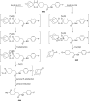
Scheme 178: The different ways of the cleavage of tetraoxane 643.

Scheme 179: The LC–MS analysis of interaction of tetraoxane 646 with iron(II)heme 647.

Scheme 180: The rearrangement of 3,6-epidioxy-1,10-bisaboladiene (EDBD, 649).

Scheme 181: Easily oxidized substrates.

Scheme 182: Biopathway of synthesis of prostaglandins.

Scheme 183: The reduction and rearrangements of isoprostanes.

Scheme 184: The partial mechanism for linoleate 658 oxidation.

Scheme 185: The transformation of lipid hydroperoxide.

Scheme 186: The acid-catalyzed cleavage of the product from free-radical oxidation of cholesterol (667).

Scheme 187: Two pathways of catechols oxidation.

Scheme 188: Criegee-like or Hock-like rearrangement of the intermediate hydroperoxide 675 in dioxygenase enzyme...

Scheme 189: Carotinoides 679 cleavage by carotenoid cleavage dioxygenases.
Synergistic chiral iminium and palladium catalysis: Highly regio- and enantioselective [3 + 2] annulation reaction of 2-vinylcyclopropanes with enals
- Haipan Zhu,
- Peile Du,
- Jianjun Li,
- Ziyang Liao,
- Guohua Liu,
- Hao Li and
- Wei Wang
Beilstein J. Org. Chem. 2016, 12, 1340–1347, doi:10.3762/bjoc.12.127
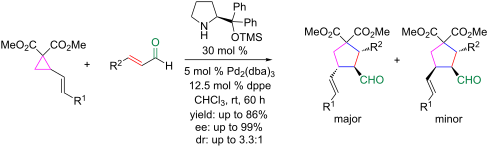
- catalytic regio- and enantioselective [3 + 2] annulation process, which offers a new approach to synthetically important heavily functionalized chiral cyclopentane structures 3, bearing at least 3 stereogenic centers in this one-pot operation [77][78]. To test the feasibility of the designed [3 + 2
- , entry 8). It was found that the reaction took place to afford the desired cyclopentane 3a. Encouraged by this result, we carried out further investigations of the co-catalysts promoted process (Table 2). First, we determined the diastereo- and enantioselectivity of the reaction. The 1H NMR of the

Graphical Abstract

Scheme 1: Catalytic regio- and enantioselective [3 + 2] annulation reactions of 2-vinylcyclopropanes with ena...

Scheme 2: Single X-ray crystal structures of 7h’ and 7h’’.

Scheme 3: The proposed transition states.
Unusual traits of cis and trans-2,3-dibromo-1,1-dimethylindane on the way from 1,1-dimethylindene to 2-bromo-, 3-bromo-, and 2,3-dibromo-1,1-dimethylindene
- Rudolf Knorr,
- David S. Stephenson,
- Ernst Lattke,
- Petra Böhrer and
- Jakob Ruhdorfer
Beilstein J. Org. Chem. 2016, 12, 1178–1184, doi:10.3762/bjoc.12.113
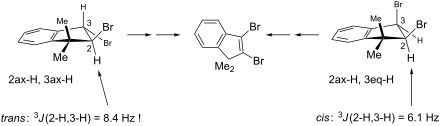
- (no cyclopentane, no benzene), a voluminous precipitate began to emerge slowly at rt within ca. one hour. When this colorless powder of 2-bromo-3-lithio-1,1-dimethylindene (10) had settled after 20 hours at rt, the supernatant was withdrawn by syringe, and the residue was washed with dry pentane (3

Graphical Abstract

Scheme 1: Bromine adducts (trans-1 and cis-1) of 1,1-dimethylindene (2) and their envelope conformations: ax ...
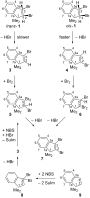
Scheme 2: The ways to 2-bromo- (4), 3-bromo- (3), and 2,3-dibromo-1,1-dimethylindene (7); SuIm = succinimide,...

Scheme 3: Unsolvated 2-bromo-3-lithio-1,1-dimethylindene (10) precipitated from the reaction mixture of 7 wit...
Enantioselective carbenoid insertion into C(sp3)–H bonds
- J. V. Santiago and
- A. H. L. Machado
Beilstein J. Org. Chem. 2016, 12, 882–902, doi:10.3762/bjoc.12.87
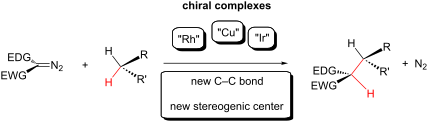
- reagents, also used as solvent, were cyclopentane, cyclohexane and cycloheptane. Two factors are noteworthy in this work. Unlike the carboxamide complexes (R)-18 and (S)-18 previously reported by Doyle and coworkers (Table 2), where the complexation of the chiral ligand to rhodium atoms occurs through the

Graphical Abstract

Figure 1: Singlet carbene, triplet carbene and carbenoids.

Figure 2: Classification of the carbenoid intermediates by the electronic nature of the groups attached to th...

Figure 3: Chiral bis(oxazoline) ligands used in enantioselective copper carbenoid insertion.

Scheme 1: Pioneering work of Peter Yates on the carbenoid insertion reaction into X–H bonds (where X = O, S, ...

Scheme 2: Copper carbenoid insertion into C(sp3)–H bond of a stereogenic center with full retention of the as...

Scheme 3: Carbenoid insertion into a C(sp3)–H bond as the key step of the Taber’s (+)-α-cuparenone (8) synthe...

Scheme 4: First enantioselective carbenoid insertion into C–O bonds catalyzed by chiral metallic complexes.

Figure 4: Chemical structures of complexes (R)-18 and (S)-18.

Scheme 5: Asymmetric carbenoid insertions into C(sp3)–H bonds of cycloalkanes catalyzed by chiral rhodium car...

Scheme 6: First diastereo and enantioselective intermolecular carbenoid insertion into tetrahydrofuran C(sp3)...

Scheme 7: Simplified mechanism of the carbenoid insertion into a C(sp3)–H bond.

Scheme 8: Nakamura’s carbenoid insertion into a C(sp3)–H bond catalytic cycle.

Scheme 9: Investigation of the relationship between the electronic characteristics of the substituent X attac...

Scheme 10: Empirical model to predict the stereoselectivity of the donor/acceptor dirhodium carbenoid insertio...

Scheme 11: Asymmetric insertion of copper carbenoids in C(sp3)–H bonds to prepare trans-γ-lactam.

Figure 5: Iridium catalysts used by Suematsu and Katsuki for carbenoid insertion into C(sp3)–H bonds.

Scheme 12: Chiral porphyrin iridium complex catalyzes the carbenoid insertion into bis-allylic C(sp3)–H bonds.

Scheme 13: Chiral porphyrin iridium complex catalyzes the carbenoid insertion into tetrahydrofuran C(sp3)–H bo...

Scheme 14: Chiral porphyrin–iridium complex catalyzes the intramolecular carbenoid insertion into C(sp3)–H bon...

Scheme 15: Chiral bis(oxazoline)–iridium complex catalyzes the carbenoid insertion into bis-allylic C(sp3)–H b...

Scheme 16: New cyclopropylcarboxylate-based chiral catalyst to enantioselective carbenoid insertion into the e...

Scheme 17: Regio- and enantioselective carbenoid insertion into the C(sp3)–H bond catalyzed by a new bulky cyc...

Scheme 18: Regio and diastereoselective carbenoid insertion into the C(sp3)–H bond catalyzed by a new bulky cy...

Scheme 19: 2,2,2-Trichloroethyl (TCE) aryldiazoacetates to improve the scope, regio- and enantioselective of t...

Scheme 20: Sequential C–H functionalization approach to 2,3-dihydrobenzofurans.

Scheme 21: Enantioselective intramolecular rhodium carbenoid insertion into C(sp3)–H bonds to afford cis-disub...

Scheme 22: Enantioselective intramolecular rhodium carbenoid insertion into C(sp3)–H bonds to afford cis-2-vin...

Scheme 23: First rhodium porphyrin-based catalyst for enantioselective carbenoid insertion into C(sp3)–H bond.

Scheme 24: Rhodium porphyrin-based catalyst for enantioselective carbenoid insertion into benzylic C(sp3)–H bo...
Study on the synthesis of the cyclopenta[f]indole core of raputindole A
- Nils Marsch,
- Mario Kock and
- Thomas Lindel
Beilstein J. Org. Chem. 2016, 12, 334–342, doi:10.3762/bjoc.12.36

- quaternary center was to be formed. Ideally, anellation of a cyclopentane would be possible at an indole with an intact enamine partial structure (B, Scheme 1). Such an approach seemed possible, because we had already cyclized 6-prenoylindole to a mixture of cyclopenta[f]- and -[g]indoles in a Nazarov-type
- assemble the cyclopenta[f]indole section present in the natural product raputindole A (1). As long as the cyclopentane ring would not be installed, it was indeed possible to work with 2,3-unsubstituted, N-Boc-protected indoles. In particular, the Mo/Au-catalyzed Meyer–Schuster rearrangement of
- the use of indolines instead of sensitive indoles. Cyclopentane anellation by SnCl4-induced cyclization of phenylvinylcarbinols became possible, at least for the sterically congested β-cyclocitral adduct 40 of N-TIPS-indoline. The less sterically demanding substrate 44 gave lower yields. Experiments

Graphical Abstract

Figure 1: Bisindole alkaloid raputindole A (1) from the Amazonian tree Raputia simulans.

Scheme 1: Investigated synthetic precursors B–E of the cyclopenta[f]indole moiety (A) of raputindole A (1), a...
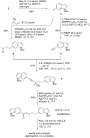
Scheme 2: 6-Iodoindole (2) serves twice as starting material towards indole-6-yl-substituted enone 8, obtaine...

Scheme 3: Assembly of 5-oxygenated bisindolylpentenones. DMB: 3,4-dimethoxybenzyl, DMFDMA: N,N-dimethylformal...

Scheme 4: Benzylic oxidation as side reaction of DMB removal.

Scheme 5: Hydroxyalkylation of N-protected indoles with β-cyclocitral and SnCl4-induced cyclization.

Scheme 6: Behavior of indolines after SnCl4-induced generation of allyl cations.

Scheme 7: Pt(II) and Au(I)-catalyzed cyclizations of propargylacetates 46 and 47 afforded cyclopenta[f]indoli...
Cascade alkylarylation of substituted N-allylbenzamides for the construction of dihydroisoquinolin-1(2H)-ones and isoquinoline-1,3(2H,4H)-diones
- Ping Qian,
- Bingnan Du,
- Wei Jiao,
- Haibo Mei,
- Jianlin Han and
- Yi Pan
Beilstein J. Org. Chem. 2016, 12, 301–308, doi:10.3762/bjoc.12.32
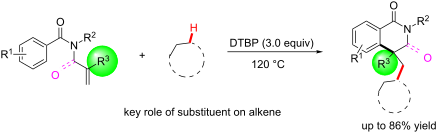
- cycloalkanes 2 and N-methyl-N-(2-methylallyl)benzamide (4a). As indicated in Scheme 3, several cycloalkanes were well-tolerated in this radical reaction resulting in the corresponding product. In the case of cyclopentane (2b), a slightly lower chemical yield was obtained (46%, 5ab), while the reactions of

Graphical Abstract

Scheme 1: Cascade 1,2-difunctionalization and cyclization to construct heterocycles.
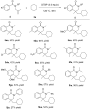
Scheme 2: Cyclization of cyclohexane (2a) with substituted N-(2-methylallyl)benzamide (reaction conditions: 4...

Scheme 3: Cyclization of cycloalkanes with N-methyl-N-(2-methylallyl)benzamide (reaction conditions: 4a (0.2 ...

Scheme 4: Cyclization reaction of 6 with cyclohexane 2a (reaction conditions: 6 (0.2 mmol), cyclohexane 2a (2...

Scheme 5: Control experiments for the mechanism studies. a) Reaction with N-unprotected substrate 8a; b) reac...

Scheme 6: Proposed mechanism.
SmI2-mediated dimerization of indolylbutenones and synthesis of the myxobacterial natural product indiacen B
- Nils Marsch,
- Peter G. Jones and
- Thomas Lindel
Beilstein J. Org. Chem. 2015, 11, 1700–1706, doi:10.3762/bjoc.11.184
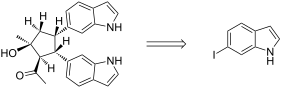
- and Meyer–Schuster rearrangement 6-prenoylindole was synthesized and reductively dimerized to a cyclopentane in a [3 + 2] cycloaddition by treatment with SmI2 in THF. From 4-iodoindole, the natural product indiacen B from the myxobacterium Sandaracinus amylolyticus was synthesized for the first time
- be too distant from each other to show an nOe. In any cyclopentane conformation this would be the case for hydrogen atoms located in 1,3-trans-position. Thus, the presence of a NOESY cross peak would exclude 1,3-trans-orientation of the respective hydrogens. In diastereomers 6, 7, and 8 there were
- , exclusive trans-arrangement of aryl substituents at the cyclopentane ring had been observed [21][22][23][24]. Aryl substituents generally prefer the antiperiplanar arrangement, as observed by Zhou and Zhang, who reductively dimerized chalcone derivatives to trans-diarylated cyclopentanols [23]. Cis isomers

Graphical Abstract

Figure 1: Prenylated indole alkaloids raputindole A from the rutaceous tree Raputia simulans and indiacen B f...
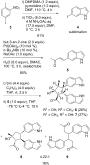
Scheme 1: Synthesis and SmI2-mediated reductive dimerization of natural product 5.

Scheme 2: Model visualizing the stereochemical course of the cyclopentanol formation leading to product 6. Po...
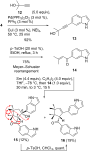
Scheme 3: Meyer–Schuster rearrangement of 13 and SmI2-mediated reductive [3 + 2] cycloaddition, followed by e...

Scheme 4: Nazarov-type cyclization of 14 to cyclopentanones 17 and 18; synthesis of verticillatine B (20).

Scheme 5: Synthesis and X-ray analysis of indiacen B (2, ORTEP drawing with ellipsoides at 50% probability).
Selected synthetic strategies to cyclophanes
- Sambasivarao Kotha,
- Mukesh E. Shirbhate and
- Gopalkrushna T. Waghule
Beilstein J. Org. Chem. 2015, 11, 1274–1331, doi:10.3762/bjoc.11.142
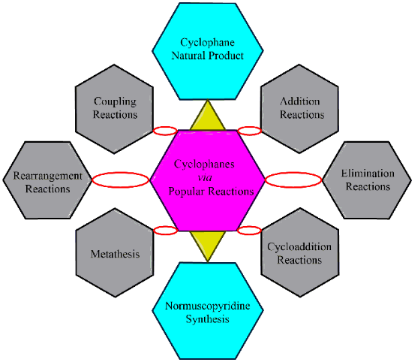

Graphical Abstract

Figure 1: General representation of cyclophanes.

Figure 2: cyclophanes one or more with heteroatom.

Figure 3: Metathesis catalysts 12–17 and C–C coupling catalyst 18.

Figure 4: Natural products containing the cyclophane skeleton.

Figure 5: Turriane family of natural products.

Scheme 1: Synthesis of [3]ferrocenophanes through Mannich reaction. Reagents and conditions: (i) excess HNMe2...

Scheme 2: Synthesis of cyclophanes through Michael addition. Reagents and conditions: (i) xylylene dibromide,...

Scheme 3: Synthesis of normuscopyridine analogue 37 through an oxymercuration–oxidation strategy. Reagents an...

Scheme 4: Synthesis of tribenzocyclotriyne 39 through Castro–Stephens coupling reaction. Reagents and conditi...

Scheme 5: Synthesis of cyclophane 43 through Glaser–Eglinton coupling. Reagents and conditions: (i) 9,10-bis(...

Scheme 6: Synthesis of the macrocyclic C-glycosyl cyclophane through Glaser coupling. Reagents and conditions...

Scheme 7: Synthesis of cyclophane-containing complex 49 through Glaser–Eglinton coupling reaction. Reagents a...

Scheme 8: Synthesis of cyclophane 53 through Glaser–Eglinton coupling. Reagents and conditions: (i) K2CO3, ac...

Figure 6: Cyclophanes 54–56 that have been synthesized through Glaser–Eglinton coupling.

Figure 7: Synthesis of tetrasubstituted [2.2]paracyclophane 57 and chiral cyclophyne 58 through Eglinton coup...

Scheme 9: Synthesis of cyclophane through Glaser–Hay coupling reaction. Reagents and conditions: (i) CuCl2 (1...

Scheme 10: Synthesis of seco-C/D ring analogs of ergot alkaloids through intramolecular Heck reaction. Reagent...

Scheme 11: Synthesis of muscopyridine 73 via Kumada coupling. Reagents and conditions: (i) 72, THF, ether, 20 ...

Scheme 12: Synthesis of the cyclophane 79 via McMurry coupling. Reagents and conditions: (i) 75, decaline, ref...

Scheme 13: Synthesis of stilbenophane 81 via McMurry coupling. Reagents and conditions: (i) TiCl4, Zn, pyridin...

Scheme 14: Synthesis of stilbenophane 85 via McMurry coupling. Reagents and conditions: (i) NBS (2 equiv), ben...
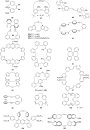
Figure 8: List of cyclophanes prepared via McMurry coupling reaction as a key step.

Scheme 15: Synthesis of paracyclophane by cross coupling involving Pd(0) catalyst. Reagents and conditions: (i...

Scheme 16: Synthesis of the cyclophane 112 via the pinacol coupling and 113 by RCM. Reagents and conditions: (...

Scheme 17: Synthesis of cyclophane derivatives 122a–c via Sonogoshira coupling. Reagents and conditions: (i) C...

Scheme 18: Synthesis of cyclophane 130 via Suzuki–Miyaura reaction as a key step. Reagents and conditions: (i)...

Scheme 19: Synthesis of the mycocyclosin via Suzuki–Miyaura cross coupling. Reagents and conditions: (i) benzy...

Scheme 20: Synthesis of cyclophanes via Wurtz coupling reaction Reagents and conditions: (i) PhLi, Et2O, C6H6,...

Scheme 21: Synthesis of non-natural glycophanes using alkyne metathesis. Reagents and conditions: (i) G-I (12)...

Figure 9: Synthesis of cyclophanes via ring-closing alkyne metathesis.

Scheme 22: Synthesis of crownophanes by cross-enyne metathesis. Reagents and conditions: (i) G-II (13), 5 mol ...

Scheme 23: Synthesis of (−)-cylindrocyclophanes A (156) and (−)-cylindrocyclophanes F (155). Reagents and cond...

Scheme 24: Synthesis of cyclophane 159 derivatives via SM cross-coupling and RCM. Reagents and conditions: (i)...

Scheme 25: Sexithiophene synthesis via cross metathesis. Reagents and conditions: (i) 161, Pd(PPh3)4, K2CO3, T...

Scheme 26: Synthesis of pyrrole-based cyclophane using enyne metathesis. Reagents and conditions: (i) Se, chlo...

Scheme 27: Synthesis of macrocyclic derivatives by RCM. Reagents and conditions: (i) G-I/G-II, CH2Cl2, 0.005 M...

Scheme 28: Synthesis of enantiopure β-lactam-based dienyl bis(dihydrofuran) 179. Reagents and conditions: (i) ...

Scheme 29: Synthesis of a [1.1.6]metaparacyclophane derivative 183 via SM cross coupling. Reagents and conditi...

Scheme 30: Synthesis of a [1.1.6]metaparacyclophane derivative 190 via SM cross coupling. Reagents and conditi...

Scheme 31: Template-promoted synthesis of cyclophanes involving RCM. Reagents and conditions: (i) acenaphthene...

Scheme 32: Synthesis of [3.4]cyclophane derivatives 200 via SM cross coupling and RCM. Reagents and conditions...
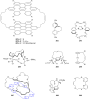
Figure 10: Examples for cyclophanes synthesized by RCM.

Scheme 33: Synthesis of the longithorone C framework assisted by fluorinated auxiliaries. Reagents and conditi...

Scheme 34: Synthesis of the longithorone framework via RCM. Reagents and conditions: (i) 213, NaH, THF, rt, 10...

Scheme 35: Synthesis of floresolide B via RCM as a key step. Reagents and conditions: (i) G-II (13, 0.1 equiv)...

Scheme 36: Synthesis of normuscopyridine (223) by the RCM strategy. Reagents and condition: (i) Mg, THF, hexen...

Scheme 37: Synthesis of muscopyridine (73) via RCM. Reagents and conditions: (i) 225, NaH, THF, 0 °C to rt, 1....

Scheme 38: Synthesis of muscopyridine (73) via RCM strategy. Reagents and conditions: (i) NaH, n-BuLi, 5-bromo...

Scheme 39: Synthesis of pyridinophane derivatives 223 and 245. Reagents and conditions: (i) PhSO2Na, TBAB, CH3...

Scheme 40: Synthesis of metacyclophane derivatives 251 and 253. Reagents and conditions: (i) 240, NaH, THF, rt...

Scheme 41: Synthesis of normuscopyridine and its higher analogues. Reagents and conditions: (i) alkenyl bromid...

Scheme 42: Synthesis of fluorinated ferrocenophane 263 via a [2 + 2] cycloaddition. Reagents and conditions: (...

Scheme 43: Synthesis of [2.n]metacyclophanes 270 via a [2 + 2] cycloaddition. Reagents and conditions: (i) Ac2...

Scheme 44: Synthesis of metacyclophane 273 by a [2 + 2 + 2] co-trimerization. Reagents and conditions: (i) [Rh...

Scheme 45: Synthesis of paracyclophane 276 via a [2 + 2 + 2] cycloaddition reaction. Reagents and conditions: ...

Scheme 46: Synthesis of cyclophane 278 via a [2 + 2 + 2] cycloaddition reaction. Reagents and conditions: (i) ...

Scheme 47: Synthesis of cyclophane 280 via a [2 + 2 + 2] cycloaddition. Reagents and conditions: (i) [(Rh(cod)(...

Scheme 48: Synthesis of taxane framework by a [2 + 2 + 2] cycloaddition. Reagents and conditions: (i) Cp(CO)2 ...

Scheme 49: Synthesis of cyclophane 284 and 285 via a [2 + 2 + 2] cycloaddition reaction. Reagents and conditio...

Scheme 50: Synthesis of pyridinophanes 293a,b and 294a,b via a [2 + 2 + 2] cycloaddition. Reagents and conditi...

Scheme 51: Synthesis of pyridinophanes 296 and 297 via a [2 + 2 + 2] cycloaddition. Reagents and conditions: (...

Scheme 52: Synthesis of triazolophane by a 1,3-dipolar cycloaddition. Reagents and conditions: (i) propargyl b...

Scheme 53: Synthesis of glycotriazolophane 309 by a click reaction. Reagents and conditions: (i) LiOH, H2O, Me...

Figure 11: Cyclophanes 310 and 311 prepared via click chemistry.

Scheme 54: Synthesis of cyclophane via the Dötz benzannulation. Reagents and conditions: (i) THF, 100 °C, 12 h...

Scheme 55: Synthesis of [6,6]metacyclophane by a Dötz benzannulation. Reagents and conditions: (i) THF, 100 °C...

Scheme 56: Synthesis of cyclophanes by a Dötz benzannulation. Reagents and conditions: (i) THF, 65 °C, 3 h; (i...

Scheme 57: Synthesis of muscopyridine (73) via an intramolecular DA reaction of ketene. Reagents and condition...

Scheme 58: Synthesis of bis[10]paracyclophane 336 via Diels–Alder reaction. Reagents and conditions: (i) DMAD,...

Scheme 59: Synthesis of [8]paracyclophane via DA reaction. Reagents and conditions: (i) maleic anhydride, 3–5 ...

Scheme 60: Biomimetic synthesis of (−)-longithorone A. Reagents and conditions: (i) Me2AlCl, CH2Cl2, −20 °C, 7...

Scheme 61: Synthesis of sporolide B (349) via a [4 + 2] cycloaddition reaction. Reagents and conditions: (i) P...

Scheme 62: Synthesis of the framework of (+)-cavicularin (352) via a [4 + 2] cycloaddition. Reagents and condi...

Scheme 63: Synthesis of oxazole-containing cyclophane 354 via Beckmann rearrangement. Reagents and conditions:...

Scheme 64: Synthesis of cyclophanes 360a–c via benzidine rearrangement. Reagents and conditions: (i) 356a–d, K2...

Scheme 65: Synthesis of cyclophanes 365a–c via benzidine rearrangement. Reagents and conditions: (i) BocNHNH2,...

Scheme 66: Synthesis of metacyclophane 367 via Ciamician–Dennstedt rearrangement. Reagents and conditions: (i)...

Scheme 67: Synthesis of cyclophane by tandem Claisen rearrangement and RCM as key steps. Reagents and conditio...

Scheme 68: Synthesis of cyclophane derivative 380. Reagents and conditions: (i) K2CO3, CH3CN, allyl bromide, r...

Scheme 69: Synthesis of metacyclophane via Cope rearrangement. Reagents and conditions: (i) MeOH, NaBH4, rt, 1...

Scheme 70: Synthesis of cyclopropanophane via Favorskii rearrangement. Reagents and conditions: (i) Br2, CH2Cl2...

Scheme 71: Cyclophane 389 synthesis via photo-Fries rearrangement. Reagents and conditions: (i) DMAP, EDCl/CHCl...

Scheme 72: Synthesis of normuscopyridine (223) via Schmidt rearrangement. Reagents and conditions: (i) ethyl s...

Scheme 73: Synthesis of crownophanes by tandem Claisen rearrangement. Reagents and conditions: (i) diamine, Et3...

Scheme 74: Attempted synthesis of cyclophanes via tandem Claisen rearrangement and RCM. Reagents and condition...

Scheme 75: Synthesis of muscopyridine via alkylation with 2,6-dimethylpyridine anion. Reagents and conditions:...

Scheme 76: Synthesis of cyclophane via Friedel–Craft acylation. Reagents and conditions: (i) CS2, AlCl3, 7 d, ...

Scheme 77: Pyridinophane 418 synthesis via Friedel–Craft acylation. Reagents and conditions: (i) 416, AlCl3, CH...

Scheme 78: Cyclophane synthesis involving the Kotha–Schölkopf reagent 421. Reagents and conditions: (i) NBS, A...

Scheme 79: Cyclophane synthesis involving the Kotha–Schölkopf reagent 421. Reagents and conditions: (i) BEMP, ...

Scheme 80: Cyclophane synthesis by coupling with TosMIC. Reagents and conditions: (i) (a) ClCH2OCH3, TiCl4, CS2...

Scheme 81: Synthesis of diaza[32]cyclophanes and triaza[33]cyclophanes. Reagents and conditions: (i) DMF, NaH,...

Scheme 82: Synthesis of cyclophane 439 via acyloin condensation. Reagents and conditions: (i) Na, xylene, 75%;...

Scheme 83: Synthesis of multibridged binuclear cyclophane 442 by aldol condensation. Reagents and conditions: ...

Scheme 84: Synthesis of various macrolactones. Reagents and conditions: (i) iPr2EtN, DMF, 77–83%; (ii) TBDMSCl...

Scheme 85: Synthesis of muscone and muscopyridine via Yamaguchi esterification. Reagents and conditions: (i) 4...

Scheme 86: Synthesis of [5]metacyclophane via a double elimination reaction. Reagents and conditions: (i) LiBr...

Figure 12: Cyclophanes 466–472 synthesized via Hofmann elimination.

Scheme 87: Synthesis of cryptophane via Baylis–Hillman reaction. Reagents and conditions: (i) methyl acrylate,...

Scheme 88: Synthesis of cyclophane 479 via double Chichibabin reaction. Reagents and conditions: (i) excess 478...

Scheme 89: Synthesis of cyclophane 483 via double Chichibabin reaction. Reagents and conditions: (i) 481, OH−;...

Scheme 90: Synthesis of cyclopeptide via an intramolecular SNAr reaction. Reagents and conditions: (i) TBAF, T...

Scheme 91: Synthesis of muscopyridine (73) via C-zip ring enlargement reaction. Reagents and conditions: (i) H...

Figure 13: Mechanism of the formation of compound 494.

Scheme 92: Synthesis of indolophanetetraynes 501a,b using the Nicholas reaction as a key step. Reagents and co...

Scheme 93: Synthesis of cyclophane via radical cyclization. Reagents and conditions: (i) cyclododecanone, phen...

Scheme 94: Synthesis of (−)-cylindrocyclophanes A (156) and (−)-cylindrocyclophanes F (155). Reagents and cond...

Scheme 95: Cyclophane synthesis via Wittig reaction. Reagents and conditions: (i) LiOEt (2.1 equiv), THF, −78 ...

Figure 14: Representative examples of cyclophanes synthesized via Wittig reaction.

Scheme 96: Synthesis of the [6]paracyclophane via isomerization of Dewar benzene. Reagents and conditions: (i)...
Synthesis of novel N-cyclopentenyl-lactams using the Aubé reaction
- Madhuri V. Shinde,
- Rohini S. Ople,
- Ekta Sangtani,
- Rajesh Gonnade and
- D. Srinivasa Reddy
Beilstein J. Org. Chem. 2015, 11, 1060–1067, doi:10.3762/bjoc.11.119

- , based on an allyl–azide rearrangement, we obtained lactams with an 1,2-substituted cyclopentane on the nitrogen instead. These compounds can be useful tools as they are structurally close to nucleosides and may have pharmaceutical relevance. Experimental General procedure for the Aubé reaction using BF3

Graphical Abstract
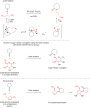
Scheme 1: The Aubé reaction and its selected applications.

Figure 1: Selective carbocyclic nucleoside analogues from the literature and our initial designs.

Scheme 2: Top: synthesis of azido alcohol derivative 3 and bottom: structural elucidation of the minor diaste...

Scheme 3: Aubé reaction of cylopentenyl azido alcohol 3 with cyclohexanone.
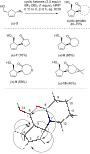
Scheme 4: Substrate scope of the reaction: preparation of cyclopentene-substituted lactams and key NMR correl...
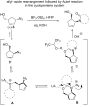
Scheme 5: Proposed mechanism for the Aubé reaction for azido alcohols embedded in a cyclopentene system.
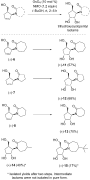
Scheme 6: Hydroxylated cyclopentyl-substituted lactams.

Figure 2: ORTEP plot of triol (±)-12.
Microsolvation and sp2-stereoinversion of monomeric α-(2,6-di-tert-butylphenyl)vinyllithium as measured by NMR
- Rudolf Knorr,
- Monika Knittl and
- Eva C. Rossmann
Beilstein J. Org. Chem. 2014, 10, 2521–2530, doi:10.3762/bjoc.10.263
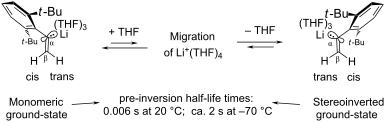
- properties of 4 The Br/Li interchange reaction (Scheme 2) between n-BuLi and the bromoalkene [14] 3 that generates the title compound α-(2,6-di-tert-butylphenyl)vinyllithium (4) in cyclopentane as the solvent was almost finished after 70 min at room temperature (rt), affording 1-bromobutane (n-BuBr), the
- cyclopentane solution of 5 and n-BuLi did not react during several days at rt; on addition of TMEDA (ca. 3–5 equiv), however, merely one quickly recorded 1H NMR spectrum could be taken before crystals of 4&TMEDA began to precipitate. Surplus n-BuLi converted the coproduct n-BuSnMe3 into n-Bu2SnMe2 (and
- until NMR spectra could be measured. In such a colorless solution of 4&TMEDA in THF/cyclopentane (ca. 83:17 by volume), THF had displaced TMEDA from its coordination to 4; at below −50 °C, the olefinic proton resonances of 4 (Table S2, [15]) displayed a well resolved AB spectral system (two doublets

Graphical Abstract

Scheme 1: The sterically congested model systems.

Scheme 2: Preparation and derivatives of the α-arylvinyllithium 4, where Don = ½TMEDA and d = 2 for the purif...
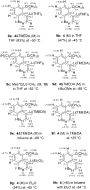
Figure 1: 13C and (in parentheses) 1H NMR lithiation shifts Δδ = δ(R–Li) − δ(R–H) [ppm] of the monomers (“M”) ...

Scheme 3: THF-catalyzed ionization of ground-state 11 (CIP) generates the solvent-separated ion pair 12 (SSIP...

Figure 2: Arrhenius diagram of the natural logarithms of pseudo-first-order rate constants kψ [s−1] of sp2-st...
Regio- and stereoselective synthesis of new diaminocyclopentanols
- Evgeni A. Larin,
- Valeri S. Kochubei and
- Yuri M. Atroshchenko
Beilstein J. Org. Chem. 2014, 10, 2513–2520, doi:10.3762/bjoc.10.262
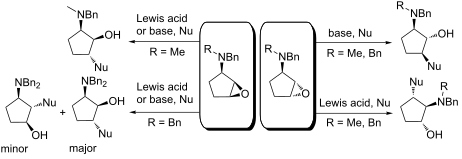
- crucial for the reaction outcome. Thus, treatment of (1RS,2SR,3SR)-1,2-epoxy-3-(N,N-dibenzylamino)cyclopentane (3b) with amines gave a mixture of C1 and C2 regioadducts, while the use of (1RS,2SR,3SR)-1,2-epoxy-3-(N-benzyl-N-methylamino)cyclopentane (3a) led ultimately to C1 adducts. Base-catalyzed
- subsequent oxirane ring opening represent a viable approach for the development of new pharmaceutically relevant scaffolds. As a part of our ongoing research in the development of new aminocyclitols, we exploited cyclopentane derivatives to mimic both the 2-deoxystreptamine ring, a core component in

Graphical Abstract

Scheme 1: Preparation of the starting materials.

Figure 1: Amine-based nucleophiles used in the epoxide ring opening reaction.

Scheme 2: Postulated mechanism for the formation of 14a,b.
Application of cyclic phosphonamide reagents in the total synthesis of natural products and biologically active molecules
- Thilo Focken and
- Stephen Hanessian
Beilstein J. Org. Chem. 2014, 10, 1848–1877, doi:10.3762/bjoc.10.195
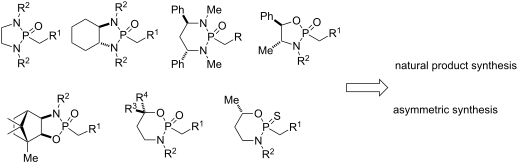
- subunit (Figure 8) [116][117][118]. The first total synthesis of nudiflosides A and D was achieved by Hanessian and co-workers, which aimed at confirming their proposed structural and stereochemical assignment (Scheme 19) [49]. The correct installation of the stereocenters of the cyclopentane subunit 159
- group. Final removal of the TBDPS protecting group gave cyclopentane triol 159, which was esterified with varying equivalents of oleoside monomethyl ester peracetate 160 under Yamaguchi conditions [119][120] to give nudiflosides A (151) and D (13), respectively, thereby completing the synthesis and

Graphical Abstract

Figure 1: Examples of phosphonamide reagents used in stereoselective synthesis.

Figure 2: Natural products and bioactive molecules synthesized using phosphonamide-based chemistry (atoms, bo...

Scheme 1: Olefination with cyclic phosphonamide anions, mechanistic rationale, and selected examples 27a–d [18].

Scheme 2: Asymmetric olefination with chiral phosphonamide anions and selected examples 31a–d [1,22].

Scheme 3: Synthesis of α-substituted phosphonic acids 33a–e by asymmetric alkylation of chiral phosphonamide ...

Scheme 4: Asymmetric conjugate additions of C2-symmetric chiral phosphonamide anions to cyclic enones, lacton...

Scheme 5: Asymmetric conjugate additions of P-chiral phosphonamide anions generated from 40a and 44a to cycli...

Scheme 6: Asymmetric cyclopropanation with chiral chloroallyl phosphonamide 47, mechanistic rationale, and se...

Scheme 7: Asymmetric cyclopropanation with chiral chloromethyl phosphonamide 28d [59].

Scheme 8: Stereoselective synthesis of cis-aziridines 57 from chiral chloroallyl phosphonamide 47a [62].

Scheme 9: Synthesis of phosphonamides by (A) Arbuzov reaction, (B) condensation of diamines with phosphonic a...

Figure 3: Original and revised structure of polyoxin A (69) [24-26].
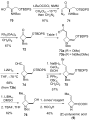
Scheme 10: Synthesis of (E)-polyoximic acid (9) [24-26].

Figure 4: Key assembly strategy of acetoxycrenulide (10) [41,42].

Scheme 11: Total synthesis of (+)-acetoxycrenulide (10) [41,42].

Scheme 12: Synthesis squalene synthase inhibitor 19 by asymmetric sulfuration (A) and asymmetric alkylation (B...

Figure 5: Key assembly strategy of fumonisin B2 (20) and its tricarballylic acid fragment 105 [45,46].

Scheme 13: Final steps of the total synthesis of fumonisin B2 (20) [45,46].

Figure 6: Selected examples of two subclasses of β-lactam antibiotics – carbapenems (111 and 112) and trinems...

Scheme 14: Synthesis of tricyclic β-lactam antibiotic 123 [97].

Scheme 15: Total synthesis of (−)-anthoplalone (8) [56].

Figure 7: Protein tyrosine phosphatase (PTP) inhibitors 130, 131 and model compounds 16, 132 and 133 [68].

Scheme 16: Synthesis of model PTP inhibitors 16a,b [68].
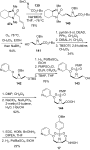
Scheme 17: Synthesis of aziridine hydroxamic acid 17 as MMP inhibitor [63].
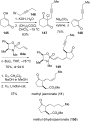
Scheme 18: Synthesis of methyl jasmonate (11) [48].

Figure 8: Structures of nudiflosides A (137) and D (13) [49].

Scheme 19: Total synthesis of the pentasubstituted cyclopentane core 159 of nudiflosides A (151) and D (13) an...

Figure 9: L-glutamic acid (161) and constrained analogues [57,124].

Scheme 20: Stereoselective synthesis of DCG-IV (162) [57].

Scheme 21: Stereoselective synthesis of mGluR agonist 21 [124].

Figure 10: Key assembly strategy of berkelic acid (15) [43].

Scheme 22: Total synthesis of berkelic acid (15) [43].

Figure 11: Key assembly strategy of jerangolid A (22) and ambruticin S (14) [27,28].
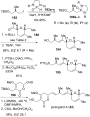
Scheme 23: Final assembly steps in the total synthesis of jerangolid A [27].

Scheme 24: Key assembly steps in the total synthesis of ambruticin S (14) [28].

Figure 12: General steroid construction strategy based on conjugate addition of 212 to cyclopentenone 48, exem...

Scheme 25: Total synthesis of estrone (12) [44].
Structure/affinity studies in the bicyclo-DNA series: Synthesis and properties of oligonucleotides containing bcen-T and iso-tricyclo-T nucleosides
- Branislav Dugovic,
- Michael Wagner and
- Christian J. Leumann
Beilstein J. Org. Chem. 2014, 10, 1840–1847, doi:10.3762/bjoc.10.194
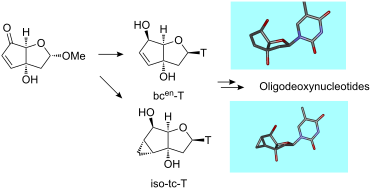
- in both nucleosides the furanose unit appears in an almost perfect 2’-endo conformation giving rise to a trans arrangement of torsion angle δ (O3’–C3’–C4’–C5’). In both structures the cyclopentane ring exists in a shallow envelope conformation with C5’ being slightly out of plane. This leads to a
- the conformation of the bicyclic ring system. A comparison of 8β and 11β with bc-T, having a saturated cyclopentane unit clearly reveals structural differences. The largest deviation is associated with the position of the 5’-OH group which is in a pseudoequatorial orientation in bc-T, giving rise to a

Graphical Abstract
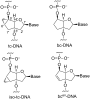
Figure 1: Chemical structures and carbon numbering scheme of tricyclo(tc)-DNA (top, left), bicyclo(bc)-DNA (t...

Scheme 1: Conditions: (a) NaBH4, CeCl3·7H2O, MeOH, −78 °C → rt, 1.5 h, 73% (+9% of C6-epimer); (b) TBS-Cl, im...

Scheme 2: Conditions: (a) thymine, BSA, TMSOTf, TMSCl, CH3CN, rt, 2.5 h; (b) DMTrCl, pyridine, rt, 16 h, 29% ...

Figure 2: X-ray structure of top row: nucleosides 8β (left), 11β (center) and overlay of both structures (rig...

Scheme 3: Pathways for elimination of the modified nucleotides during the oxidation step in oligonucleotide a...
Stereoselective synthesis of carbocyclic analogues of the nucleoside Q precursor (PreQ0)
- Sabin Llona-Minguez and
- Simon P. Mackay
Beilstein J. Org. Chem. 2014, 10, 1333–1338, doi:10.3762/bjoc.10.135
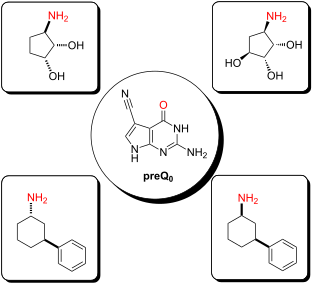
- -substituted analogues with interesting three-dimensional character, including chiral cyclopentane-1,2-diol and -1,2,3-triol derivatives. This unusual substitution pattern provides a useful starting point for the discovery of novel bioactive molecules. Keywords: diol synthesis; nucleoside; PreQ0
- -position of the heterocyclic core (systematic numbering) are scarce in the chemical literature and the methods available generally lack experimental information, making them unsatisfactory [18][19][20][21][22][23][24][25]. Inspired by the cyclopentane-1,2,3-triol motif present in noraristeromycin 5 (Figure

Graphical Abstract

Figure 1: Biosynthetic pathway leading to nucleosides queuosine and archaeosine.
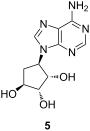
Figure 2: Chemical structure of noraristeromycin.

Figure 3: Synthesis of PreQ0 and chloro-intermediate 9. Reagents and conditions: (a) Methyl formate, NaOMe, P...

Figure 4: Synthesis of 15, a (1RS,2SR,3RS)-3-aminocyclopentane-1,2-diol derivative of PreQ0. Reagents and con...

Figure 5: Synthesis of 16, a (1S,2R,3S,4R)-4-aminocyclopentane-1,2,3-triol derivative of PreQ0. Reagents and ...

Figure 6: Synthesis of 21 and 22, 3-arylcyclohexylamine derivatives of PreQ0. Reagents and conditions: (a) Ph...
Cyclization–endoperoxidation cascade reactions of dienes mediated by a pyrylium photoredox catalyst
- Nathan J. Gesmundo and
- David A. Nicewicz
Beilstein J. Org. Chem. 2014, 10, 1272–1281, doi:10.3762/bjoc.10.128
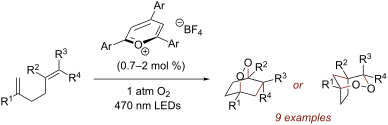
- step is irrelevant, whereas the opposite scenario involving a benzylic radical intermediate would require a stereospecific addition of oxygen to the same face of the cyclopentane system as the isoprenyl cation in order for endoperoxide formation to occur. With optimized conditions identified, we sought

Graphical Abstract

Figure 1: Selected examples of endoperoxide-containing natural products.

Scheme 1: Endoperoxide formation via cation radicals. In both examples, single electron oxidation is followed...

Scheme 2: Diversification strategy for endoperoxide synthesis by single electron transfer. E*red vs SCE [20].

Figure 2: ORTEP of 3a.

Scheme 3: Proposed mechanism for endoperoxide synthesis from tethered dienes.

Scheme 4: Competing formal [3,3] pathway.
Synthesis of complex intermediates for the study of a dehydratase from borrelidin biosynthesis
- Frank Hahn,
- Nadine Kandziora,
- Steffen Friedrich and
- Peter F. Leadlay
Beilstein J. Org. Chem. 2014, 10, 634–640, doi:10.3762/bjoc.10.55
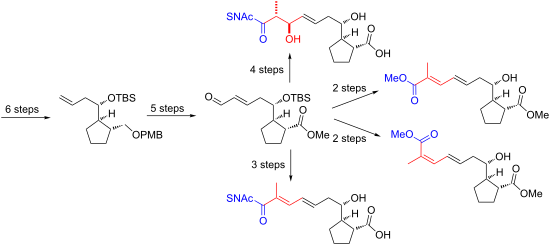
- , anticancer and anti-angiogenesis activities, which are probably caused by the inhibition of threonyl-tRNA synthetase and apoptosis induction by caspase activation [1][2][3][4]. It bears several unusual structural elements like a cyclopentane ring and a carbonitrile (Figure 1a), which are built-up by

Graphical Abstract

Figure 1: a) Structure of borrelidin (1); b) PKS intermediates are attached to an acyl carrier protein domain...

Scheme 1: Retrosynthetic analysis of surrogate substrates for BorDH3 and reference molecules for enzyme assay...

Scheme 2: Synthesis of the common precursor aldehyde 11. Compound 13 was prepared in six steps and with an ov...

Scheme 3: Synthesis of the BorDH3 substrates. a) Thiophenolpropionate, Cy2BCl, Me2EtN, Et2O, −78 °C to −20 °C...

Scheme 4: Synthesis of reference compounds for the BorDH3 assay. a) 24, CH2Cl2, 50 °C, 3 h (88% over two step...
Iron-catalyzed decarboxylative alkenylation of cycloalkanes with arylvinyl carboxylic acids via a radical process
- Jincan Zhao,
- Hong Fang,
- Jianlin Han and
- Yi Pan
Beilstein J. Org. Chem. 2013, 9, 1718–1723, doi:10.3762/bjoc.9.197
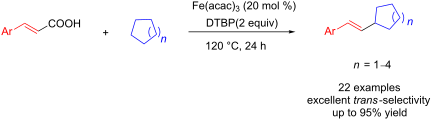
- the product 3p in 89% yield. In general, the stereoselectivity of this reaction was excellent and only trans-isomers were obtained in all cases. Next, other cycloalkanes, including cyclopentane, cycloheptane and cyclooctane, were reacted with different cinnamic acids 1, giving products 4a–f in 83–95

Graphical Abstract

Scheme 1: Fe(acac)3-catalyzed alkenylation of cyclohexane. Catalytic conditions: cinnamic acid (1) (0.3 mmol)...

Scheme 2: Fe(acac)3-catalyzed alkenylation of cyclopentan, cycloheptane and cyclooctane. Catalytic conditions...

Scheme 3: A plausible pathway for the reaction.
The preparation of several 1,2,3,4,5-functionalized cyclopentane derivatives
- André S. Kelch,
- Peter G. Jones,
- Ina Dix and
- Henning Hopf
Beilstein J. Org. Chem. 2013, 9, 1705–1712, doi:10.3762/bjoc.9.195
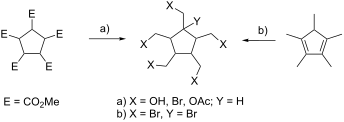
- with various bromination reagents. Whenever possible we confirm the structures of intermediate compounds or byproducts by X-ray structural analysis. Results and Discussion cis,cis,cis,cis-1,2,3,4,5-Pentakis(hydroxymethyl)cyclopentane (16) and derivatives The pentaalcohol 16 is a known compound, having
- the Supporting Information File 1. cis,cis,cis,trans-1,2,3,4,5- (26), cis,cis,trans,cis-1,2,3,4,5-Pentakis(methoxycarbonyl)cyclopentane (27) and several of their derivatives For the other two routes to precursors of [5]radialene (3) discussed here, the ten carbon atoms of the desired final product
- ; ellipsoids represent 30% probability levels. Structure of 32 in the crystal; ellipsoids represent 50% probability levels. The first members of the [n]radialene series and retrosynthesis for [5]radialene (3). Preparation of cis,cis,cis,cis-1,2,3,4,5-pentakis(hydroxymethyl)cyclopentane (16) according to

Graphical Abstract

Scheme 1: The first members of the [n]radialene series and retrosynthesis for [5]radialene (3).

Scheme 2: Preparation of cis,cis,cis,cis-1,2,3,4,5-pentakis(hydroxymethyl)cyclopentane (16) according to Tolb...

Scheme 3: The preparation of derivatives of 16 better suited for nucleophilic substitution and elimination.

Figure 1: Structure of 19 in the crystal; ellipsoids represent 50% probability levels.

Scheme 4: Preparation of the pentaacetate 21 from 16.

Scheme 5: Preparation of the cycloheptadiene octaesters 24/25 according to Diels [11] and Le Goff [13], respectively,...

Figure 2: Structure of 24 in the crystal; ellipsoids represent 30% probability levels.

Figure 3: Structure of 26 in the crystal; ellipsoids represent 30% probability levels.

Scheme 6: Derivatives derived from the pentaester mixture 26/27.
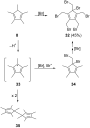
Scheme 7: Bromination of 1,2,3,4,5-pentamethylcyclopenta-1,3-diene (8).

Figure 4: Structure of 32 in the crystal; ellipsoids represent 50% probability levels.
Substituent effect on the energy barrier for σ-bond formation from π-single-bonded species, singlet 2,2-dialkoxycyclopentane-1,3-diyls
- Jianhuai Ye,
- Yoshihisa Fujiwara and
- Manabu Abe
Beilstein J. Org. Chem. 2013, 9, 925–933, doi:10.3762/bjoc.9.106
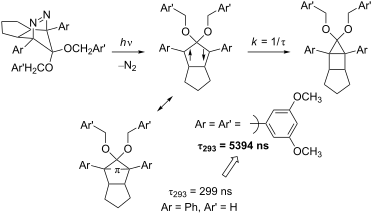
- and cyclopentane-1,3-diyls. Experimental investigation of the chemistry of singlet diradicals has become possible. The present study explores the substituents and the effect of their substitution pattern at the C(1)–C(3) positions on the lifetime of singlet octahydropentalene-1,3-diyls to understand
- -diyls [4][5][6][7][8][9][10][11][12][13][14][15][16][17][18][19][20] and cyclopentane-1,3-diyls [17][21][22][23][24][25][26]. Detailed experimental study of singlet diradical chemistry is thus now possible using the long-lived localized singlet diradicals. So far, we have studied singlet diradical
- , 702; UV (MTHF) λmax 365 (ε 106.7); 1H NMR (500 MHz, C6D6) δ 1.20–1.75 (m, 6H), 3.69 (t, J = 5.13 Hz, 2H), 4.15 (s, 2H), 4.29 (s, 2H), 6.90–8.19 (m, 20H, overlapping with C6H6); 13C NMR (125 MHz, C6D6) δ 25.96 (t, CH2, cyclopentane), 28.16 (t, CH2, cyclopentane), 49.27 (d, CH, cyclopentane), 66.16 (t

Graphical Abstract

Figure 1: Localized singlet diradicals.

Scheme 1: Alkoxy group effect on the lifetime of π-single-bonded species DR.

Scheme 2: Generation of singlet diradicals DRc–g and their reactivity in the photochemical denitrogenation of ...

Scheme 3: Synthesis of azoalkanes AZc–f and AZg.

Figure 2: (a) Absorption spectrum of the singlet diradical DRe in a MTHF matrix at 80 K; (b) transient absorp...
Some aspects of radical chemistry in the assembly of complex molecular architectures
- Béatrice Quiclet-Sire and
- Samir Z. Zard
Beilstein J. Org. Chem. 2013, 9, 557–576, doi:10.3762/bjoc.9.61

- addition to phenyl vinyl sulfone and closure to form the cyclopentane ring in 19, and then by a second intermolecular addition to phenyl vinyl sulfone to furnish radical 20, which finally evolves into the observed product 21 by transfer of the pyridylthiyl group from the starting Barton ester 16. Even

Graphical Abstract

Scheme 1: Key radical step in the total synthesis of (–)-dendrobine.

Scheme 2: Radical cascade in the total synthesis of (±)-13-deoxyserratine (ACCN = 1,1'-azobis(cyclohexanecarb...

Scheme 3: Formation of the complete skeleton of (±)-fortucine.
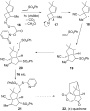
Scheme 4: Model radical sequence for the synthesis of quadrone.

Scheme 5: Radical cascade using the Barton decarboxylation.

Scheme 6: Simplified mechanism for the xanthate addition to alkenes.

Scheme 7: Synthesis of β-lactam derivatives.

Scheme 8: Sequential additions to three different alkenes (PhthN = phthalimido).

Scheme 9: Key cascade in the total synthesis of (±)-matrine (43).

Scheme 10: Synthesis of complex tetralones.

Scheme 11: Synthesis of functionalised azaindoline and indole derivatives.

Scheme 12: Synthesis of thiochromanones.

Scheme 13: Synthesis of complex benzothiepinones. Conditions: 1) CF3COOH; 2) RCHO / AcOH (PMB = p-methoxybenzy...

Scheme 14: Formation and capture of a cyclic nitrone.
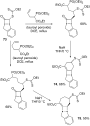
Scheme 15: Synthesis of bicyclic cyclobutane motifs.

Scheme 16: Construction of the CD rings of steroids.

Scheme 17: Rapid assembly of polyquinanes.

Scheme 18: Formation of a polycyclic structure via an allene intermediate.
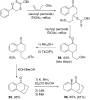
Scheme 19: A polycyclic structure via the alkylative Birch reduction.

Scheme 20: Synthesis of polycyclic pyrimidines and indoline structures.

Scheme 21: Construction of a trans-decalin derivative.
Scheme 22: Multiple uses of a chloroacetonyl xanthate.

Scheme 23: A convergent route to spiroketals.

Scheme 24: A modular approach to 3-arylpiperidines.

Scheme 25: A convergent route to cyclopentanols and to functional allenes.
Scheme 26: Allylation and vinylation of a xanthate and an iodide.
Scheme 27: Vinyl epoxides as allylating agents.

Scheme 28: Radical allylations using allylic alcohol derivatives.

Scheme 29: Synthesis of variously substituted lactams.

Scheme 30: Nickel-mediated synthesis of unsaturated lactams.
Scheme 31: Total synthesis of (±)-3-demethoxy-erythratidinone.

Scheme 32: Generation and capture of an iminyl radical from an oxime ester.
Synthesis of spiro[dihydropyridine-oxindoles] via three-component reaction of arylamine, isatin and cyclopentane-1,3-dione
- Yan Sun,
- Jing Sun and
- Chao-Guo Yan
Beilstein J. Org. Chem. 2013, 9, 8–14, doi:10.3762/bjoc.9.2
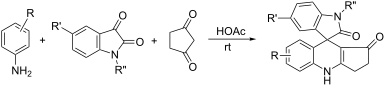
- -component reactions of arylamine, isatin and cyclopentane-1,3-dione in acetic acid at room temperature. On the other hand the condensation of isatin with two equivalents of cyclopentane-1,3-dione gave 3,3-bis(2-hydroxy-5-oxo-cyclopent-1-enyl)oxindole in high yields. The reaction mechanism and substrate
- three-component reaction of arylamine, isatin and cyclopentane-1,3-dione. Results and Discussion Recently we found that the four-component reactions of arylamine, acetylenedicarboxylate, isatin and dimedone in acetic acid resulted in the novel functionalized tetrahydrospiro[indoline-3,2’-quinoline
- -5-methylisatin and cyclopentane-1,3-dione in acetic acid was carried out at room temperature. After workup, we were a little surprised to find that there was no unit of acetylenedicarboxylate in the obtained product (Scheme 1b). In another experiment, the three-component reaction of isatin

Graphical Abstract

Scheme 1: The four-component reactions containing dimedone (a) and cyclopentane-1,3-dione (b).

Figure 1: Molecular structure of spiro[dihydropyridine-oxindole] 1b.

Figure 2: The two kinds of spiro compounds from reactions of isatins with arylamines and cyclic 1,3-diketones....

Figure 3: Molecular structure of spiro[dihydropyridine-oxindole] 2f.

Scheme 2: Condensation reactions of isatins with cyclopentane-1,3-dione.

Figure 4: Molecular structure of compound 3d.

Scheme 3: Proposed reaction mechanism for the three-component reaction.
Features of the behavior of 4-amino-5-carboxamido-1,2,3-triazole in multicomponent heterocyclizations with carbonyl compounds
- Eugene S. Gladkov,
- Katerina A. Gura,
- Svetlana M. Sirko,
- Sergey M. Desenko,
- Ulrich Groth and
- Valentin A. Chebanov
Beilstein J. Org. Chem. 2012, 8, 2100–2105, doi:10.3762/bjoc.8.236
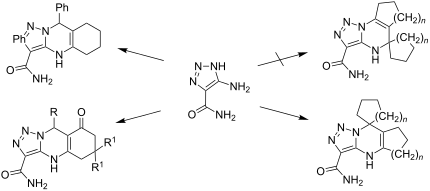
- '-cyclopentane}-3-carboxamide (4a) or 5,6,7,8-tetrahydro-4H-spiro{[1,2,3]triazolo[5,1-b]quinazoline-9,1'-cyclohexane}-3-carboxamide (4b) under all the conditions tested. The best results were observed in the case of microwave-assisted synthesis in methanol at 120 °C. Spirocompound 4c may be obtained by a

Graphical Abstract

Figure 1: Some MCRs of aminoazoles with controlled switching of the direction.

Figure 2: Some possible products of MCRs involving 4-amino-5-carboxamido-1,2,3-triazole and carbonyl compound...

Scheme 1: Multicomponent and sequential reactions of 4-amino-5-carboxamido-1,2,3-triazole with cyclic ketones....

Scheme 2: Multicomponent and sequential reactions of 4-amino-5-carboxamido-1,2,3-triazole with aldehydes and ...
Tricyclic flavonoids with 1,3-dithiolium substructure
- Lucian G. Bahrin,
- Peter G. Jones and
- Henning Hopf
Beilstein J. Org. Chem. 2012, 8, 1999–2003, doi:10.3762/bjoc.8.226
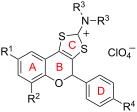
- led to the synthesis of derivative 1, a selective estrogen receptor β agonist (SERBA-1, Figure 1) [5]. Studies that focus on the structure–activity relationship were reported [6][7]. It was shown that a cyclopentane ring at the 3,4-carbon positions (labeled C, Figure 1) leads to a substantial rise in

Graphical Abstract

Figure 1: Polycyclic flavonoids.

Scheme 1: The synthesis of flavonoids 6 and 7.

Figure 2: Diastereoisomers of flavonoids 6.

Figure 3: Molecular structure of flavonoid 6a in the solid state. Ellipsoids represent 50% probability levels...

Figure 4: Molecular structure of flavonoid 6b in the solid state. Ellipsoids represent 50% probability levels...

Figure 5: Molecular structure of flavonoid 7a in the solid state. Ellipsoids represent 50% probability levels....
The chemistry of bisallenes
- Henning Hopf and
- Georgios Markopoulos
Beilstein J. Org. Chem. 2012, 8, 1936–1998, doi:10.3762/bjoc.8.225
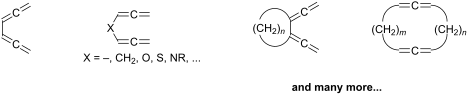

Graphical Abstract

Figure 1: Loschmidt’s structure proposal for benzene (1) (Scheme 181 from [3]) and the corresponding modern stru...

Figure 2: The first isolated bisallenes.

Figure 3: Carbon skeletons of selected bisallenes discussed in this review.

Scheme 1: The preparation of 1,2,4,5-hexatetraene (2).

Scheme 2: The preparation of a conjugated bisallene by the DMS-protocol.

Scheme 3: Preparation of the 3-deuterio- and 3,4-dideuterio derivatives of 24.

Scheme 4: A versatile method to prepare alkylated conjugated bisallenes and other allenes.

Scheme 5: A preparation of 3,4-dimethyl-1,2,4,5-hexatetraene (38).

Scheme 6: A (C6 + 0)-approach to 1,2,4,5-hexatetraene (2).

Scheme 7: The preparation of a fully alkylated bisallenes from a 2,4-hexadiyne-1,6-diol diacetate.

Scheme 8: The preparation of the first phenyl-substituted conjugated bisallenes 3 and 4.

Scheme 9: Selective hydrogenation of [5]cumulenes to conjugated bisallenes: another (C6 + 0)-route.

Scheme 10: Aryl-substituted conjugated bisallenes by a (C3 + C3)-approach.

Scheme 11: Hexaphenyl-1,2,4,5-hexatetraene (59) by a (C3 + C3)-approach.

Scheme 12: An allenation route to conjugated bisallenes.

Scheme 13: The preparation of 3,4-difunctionalized conjugated bisallenes.

Scheme 14: Problems during the preparation of sulfur-substituted conjugated bisallenes.

Scheme 15: The preparation of 3,4-dibromo bisallenes.

Scheme 16: Generation of allenolates by an oxy-Cope rearrangement.

Scheme 17: A linear trimerization of alkynes to conjugated bisallenes: a (C2 + C2 + C2)-protocol.

Scheme 18: Preparation of a TMS-substituted conjugated bisallene by a C3-dimerization route.

Scheme 19: A bis(trimethylsilyl)bisallene by a C3-coupling protocol.

Scheme 20: The rearrangement of highly substituted benzene derivatives into their conjugated bisallenic isomer...

Scheme 21: From fully substituted benzene derivatives to fully substituted bisallenes.

Scheme 22: From a bicyclopropenyl to a conjugated bisallene derivative.

Scheme 23: The conversion of a bismethylenecyclobutene into a conjugated bisallene.

Scheme 24: The preparation of monofunctionalized bisallenes.

Scheme 25: Preparation of bisallene diols and their cyclization to dihydrofurans.

Scheme 26: A 3,4-difunctionalized conjugated bisallene by a C3-coupling process.

Scheme 27: Preparation of a bisallenic diketone by a coupling reaction.

Scheme 28: Sulfur and selenium-substituted bisallenes by a [2.3]sigmatropic rearrangement.

Scheme 29: The biallenylation of azetidinones.

Scheme 30: The preparation of a fully ferrocenylated conjugated bisallene.

Scheme 31: The first isomerization of a 1,5-hexadiyne to a 1,2,4,5-hexatetraene.

Scheme 32: The preparation of alkynyl-substituted bisallenes by a C3-dimerization protocol.

Scheme 33: Preparation of another completely ferrocenylated bisallene.

Scheme 34: The cyclization of 1,5-hexadiyne (129) to 3,4-bismethylenecyclobutene (130) via 1,2,4,5-hexatetraen...
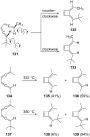
Scheme 35: Stereochemistry of the thermal cyclization of bisallenes to bismethylenecyclobutenes.

Scheme 36: Bisallene→bismethylenecyclobutene ring closures in the solid state.

Scheme 37: A bisallene cyclization/dimerization reaction.

Scheme 38: A selection of Diels–Alder additions of 1,2,4,5-hexatetraene with various double-bond dienophiles.

Scheme 39: The stereochemistry of the [2 + 4] cycloaddition to conjugated bisallenes.

Scheme 40: Preparation of azetidinone derivatives from conjugated bisallenes.

Scheme 41: Cycloaddition of heterodienophiles to a conjugated bisallene.

Scheme 42: Addition of triple-bond dienophiles to conjugated bisallenes.

Scheme 43: Sulfur dioxide addition to conjugated bisallenes.

Scheme 44: The addition of a germylene to a conjugated bisallene.

Scheme 45: Trapping of conjugated bisallenes with phosphinidenes.

Scheme 46: The cyclopropanantion of 1,2,4,5-hexatetraene (2).

Scheme 47: Photochemical reactions involving conjugated bisallenes.

Scheme 48: Base-catalyzed isomerizations of conjugated bisallenes.

Scheme 49: Ionic additions to a conjugated bisallene.

Scheme 50: Oxidation reactions of a conjugated bisallene.
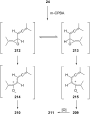
Scheme 51: The mechanism of oxidation of the bisallene 24.

Scheme 52: CuCl-catalyzed cyclization of 1,2,4,5-hexatetraene (2).

Scheme 53: The conversion of conjugated bisallenes into cyclopentenones.

Scheme 54: Oligomerization of a conjugated bisallene by nickel catalysts.
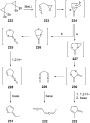
Scheme 55: Generation of 1,2,5,6-heptatetraene (229) as a reaction intermediate.

Scheme 56: The preparation of a stable derivative of 1,2,5,6-heptatetraene.

Scheme 57: A bisallene with a carbonyl group as a spacer element.

Scheme 58: The first preparation of 1,2,6,7-octatetraene (242).

Scheme 59: Preparation of 1,2,6,7-octatetraenes by (C4 + C4)-coupling of enynes.

Scheme 60: Preparation of 1,2,6,7-octatetraenes by (C4 + C4)-coupling of homoallenyl bromides.

Scheme 61: Preparation of 1,2,6,7-octatetraenes by alkylation of propargylic substrates.

Scheme 62: Preparation of two highly functionalized 1,2,6,7-octatetraenes.

Scheme 63: Preparation of several higher α,ω-bisallenes.

Scheme 64: Preparation of different alkyl derivatives of α,ω-bisallenes.

Scheme 65: The preparation of functionalized 1,2,7,8-nonatetraene derivatives.

Scheme 66: Preparation of functionalized α,ω-bisallenes.

Scheme 67: The preparation of an α,ω-bisallene by direct homologation of an α,ω-bisalkyne.

Scheme 68: The gas-phase pyrolysis of 4,4-dimethyl-1,2,5,6-heptatetraene (237).
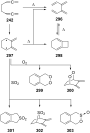
Scheme 69: Gas-phase pyrolysis of 1,2,6,7-octatetraene (242).

Scheme 70: The cyclopropanation of 1,2,6,7-octatetraene (242).

Scheme 71: Intramolecular cyclization of 1,2,6,7-octatetraene derivatives.

Scheme 72: The gas-phase pyrolysis of 1,2,7,8-nonatetraene (265) and 1,2,8,9-decatetraene (266).

Scheme 73: Rh-catalyzed cyclization of a functionalized 1,2,7,8-nonatetraene.

Scheme 74: A triple cyclization involving two different allenic substrates.

Scheme 75: Bicyclization of keto derivatives of 1,2,7,8-nonatetraene.

Scheme 76: The preparation of complex organic compounds from functionalized bisallenes.

Scheme 77: Cycloisomerization of an α,ω-bisallene containing a C9 tether.

Scheme 78: Organoborane polymers from α,ω-bisallenes.

Scheme 79: Preparation of trans- (337) and cis-1,2,4,6,7-octapentaene (341).

Scheme 80: The preparation of 4-methylene-1,2,5,6-heptatetraene (349).

Scheme 81: The preparation of acetylenic bisallenes.

Scheme 82: The preparation of derivatives of hydrocarbon 351.

Scheme 83: The construction of macrocyclic alleno-acetylenes.

Scheme 84: Preparation and reactions of 4,5-bismethylene-1,2,6,7-octatetraene (365).

Scheme 85: Preparation of 1,2-bis(propadienyl)benzene (370).

Scheme 86: The preparation of 1,4-bis(propadienyl)benzene (376).

Scheme 87: The preparation of aromatic and heteroaromatic bisallenes by metal-mediated coupling reactions.

Scheme 88: Double cyclization of an aromatic bisallene.

Scheme 89: Preparation of an allenic [15]paracyclophane by a ring-closing metathesis reaction of an aromatic α...

Scheme 90: Preparation of a macrocyclic ring system containing 1,4-bis(propadienyl)benzene units.

Scheme 91: Preparation of copolymers from 1,4-bis(propadienyl)benzene (376).

Scheme 92: A boration/copolymerization sequence of an aromatic bisallene and an aromatic bisacetylene.

Scheme 93: Formation of a layered aromatic bisallene.

Figure 4: The first members of the semicyclic bisallene series.

Scheme 94: Preparation of the first bis(vinylidene)cyclobutane derivative.
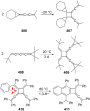
Scheme 95: Dimerization of strain-activated cumulenes to bis(vinylidene)cyclobutanes.

Scheme 96: Photodimerization of two fully substituted butatrienes in the solid state.

Scheme 97: Preparation of the two parent bis(vinylidene)cyclobutanes.

Scheme 98: The preparation of 1,3-bis(vinylidene)cyclopentane and its thermal isomerization.

Scheme 99: The preparation of the isomeric bis(vinylidene)cyclohexanes.

Scheme 100: Bi- and tricyclic conjugated bisallenes.
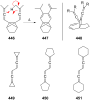
Scheme 101: A selection of polycyclic bisallenes.

Scheme 102: The first endocyclic bisallenes.

Figure 5: The stereochemistry of 1,2,6,7-cyclodecatetraene.

Scheme 103: The preparation of several endocyclic bisallenes.

Scheme 104: Synthesis of diastereomeric derivatives of 1,2,6,7-cyclodecatetraene.

Scheme 105: Preparation of a derivative of 1,2,8,9-cyclotetradecatetraene.

Scheme 106: The preparation of keto derivatives of cyclic bisallenes.

Scheme 107: The preparation of cyclic biscumulenic ring systems.

Scheme 108: Cyclic bisallenes in natural- and non-natural-product chemistry.

Scheme 109: The preparation of iron carbonyl complexes from cyclic bisallenes.

Figure 6: A selection of unknown exocyclic bisallenes that should have interesting chemical properties.

Scheme 110: The thermal isomerization of 1,2-diethynylcyclopropanes and -cyclobutanes.

Scheme 111: Intermediate generation of a cyclooctapentaene.

Scheme 112: Attempted preparation of a cyclodecahexaene.

Scheme 113: The thermal isomerization of 1,5,9-cyclododecatriyne (511) into [6]radialene (514).

Scheme 114: An isomerization involving a diketone derived from a conjugated bisallene.

Scheme 115: Typical reaction modes of heteroorganic bisallenes.

Scheme 116: Generation and thermal behavior of acyclic hetero-organic bisallenes.

Scheme 117: Generation of bis(propadienyl)thioether.

Scheme 118: The preparation of a bisallenic sulfone and its thermal isomerization.

Scheme 119: Bromination of the bisallenic sulfone 535.

Scheme 120: Metalation/hydrolysis of the bisallenic sulfone 535.

Scheme 121: Aromatic compounds from hetero bisallenes.

Scheme 122: Isomerization/cyclization of bispropargylic ethers.

Scheme 123: The preparation of novel aromatic systems by base-catalyzed isomerization of bispropargyl ethers.

Scheme 124: The isomerization of bisacetylenic thioethers to bicyclic thiophenes.

Scheme 125: Aromatization of macrocyclic bispropargylic sulfides.

Scheme 126: Preparation of ansa-compounds from macrocyclic bispropargyl thioethers.

Scheme 127: Alternate route for cyclization of a heterorganic bisallene.
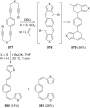
Scheme 128: Multiple isomerization/cyclization of “double” bispropargylic thioethers.

Scheme 129: Preparation of a bisallenyl disulfide and its subsequent bicyclization.

Scheme 130: Thermal cyclization of a bisallenyl thiosulfonate.

Scheme 131: Some reactions of heteroorganic bisallenes with two sulfur atoms.

Scheme 132: Further methods for the preparation of heteroorganic bisallenes.

Scheme 133: Cyclization reactions of heteroorganic bisallenes.

Scheme 134: Thermal cycloadditions of bisallenic tertiary amines.

Scheme 135: Cyclization of a bisallenic tertiary amine in the presence of a transition-metal catalyst.

Scheme 136: A Pauson–Khand reaction of a bisallenic ether.

Scheme 137: Formation of a 2:1adduct from two allenic substrates.

Scheme 138: A ring-forming silastannylation of a bisallenic tertiary amine.

Scheme 139: A three-component cyclization involving a heterorganic bisallene.

Scheme 140: Atom-economic construction of a complex organic framework from a heterorganic α,ω-bisallene.
Stereoselective synthesis of trans-fused iridoid lactones and their identification in the parasitoid wasp Alloxysta victrix, Part I: Dihydronepetalactones
- Nicole Zimmermann,
- Robert Hilgraf,
- Lutz Lehmann,
- Daniel Ibarra and
- Wittko Francke
Beilstein J. Org. Chem. 2012, 8, 1246–1255, doi:10.3762/bjoc.8.140
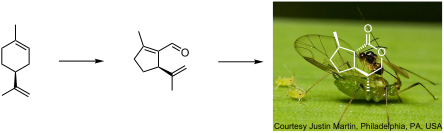
- ]. Similar results of highly stereoselective hydroborations of structurally related chiral cyclopentene derivatives have been reported [20][21]. Synthesis of trans,trans-dihydronepetalactone b To install a trans,trans-configuration between the substituents at C5-C1 and C1-C2 of the cyclopentane backbone
- synthesis of the cis,trans dihydronepetalactone c, a cis,trans-configuration between the substituents at C5-C1 and C1-C2 of the cyclopentane backbone needed to be established. With acetate 16 as the key intermediate, a stereoselective “syn”-addition of hydrogen from the same side as the (R)-configured side

Graphical Abstract

Figure 1: Terpenoids 1–5 present in Alloxysta victrix and cis-fused bicyclic iridoids known from other insect...

Figure 2: 70 eV EI-mass spectrum of the iridoid X, a component of the volatile secretions of the parasitoid w...

Figure 3: Structures and gas chromatographic retention times of trans-fused dihydronepetalactones on a conven...

Scheme 1: Route from (S)-pulegone to the mixture of dihydronepetalactones a and b, consequently following Wol...

Figure 4: Configuration of the dihydronepetalactone a.

Figure 5: Route to stereochemically pure trans-fused dihydronepetalactones a–d from (R)-limonene.

Scheme 2: Synthesis of the key compound 16. Reaction conditions: a) O3, MeOH, −50 °C (86%); b) AcOH, piperidi...

Scheme 3: Synthesis of trans,trans-substituted dihydronepetalactone b. Reaction conditions: a) TBDMSCl, imida...

Figure 6: Configurations of compound 24 and the dihydronepetalactone b.

Scheme 4: Synthesis of cis,trans-substituted dihydronepetalactone c. Reaction conditions: a) Crabtree's catal...

Figure 7: Configurations of compound 26 and the dihydronepetalactone c.

Scheme 5: Synthesis of a 2:3 mixture of dihydronepetalactones c and d. Reaction conditions: a) (COCl)2, DMSO,...

Scheme 6: Formal synthesis of a mixture of dihydronepetalactones a and b from (R)-limonene.



