


Search results
Search for "in vivo" in Full Text gives 302 result(s) in Beilstein Journal of Organic Chemistry. Showing first 200.
A Streptomyces P450 enzyme dimerizes isoflavones from plants
Beilstein J. Org. Chem. 2022, 18, 1107–1115, doi:10.3762/bjoc.18.113
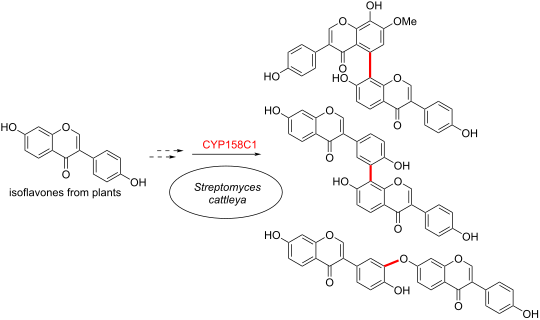
- CYP158C1 is the most likely enzyme for isoflavone dimerization. Interestingly, different from the in vivo extract, in vitro experiments gave a major dimer 5, a 3’,3’ coupled dimer assigned by MS–MS (Figures S8 and S14, Supporting Information File 1). Although dimer 3 was not visible in the HPLC analysis, a
- trace amount of 3 was detected by HRMS analysis (Figure S8, Supporting Information File 1). Redox partners might be responsible for the different regioselectivity between in vivo and in vitro reactions, as it has been reported that different reductases would lead to different diastereomeric dimers of


New azodyrecins identified by a genome mining-directed reactivity-based screening
Beilstein J. Org. Chem. 2022, 18, 1017–1025, doi:10.3762/bjoc.18.102
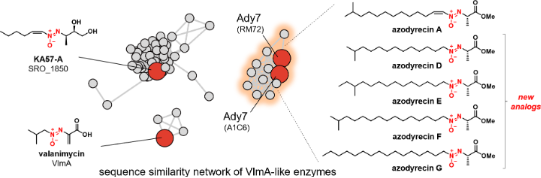
- during the isolation process, trans-azodyrecins were detected in the fresh extracts of the solid cultures from both strains, suggesting that they are also generated in vivo (Figure S2 in Supporting Information File 1). The NMR spectra of compound 7 are similar but distinct from those of the known




Efficient production of clerodane and ent-kaurane diterpenes through truncated artificial pathways in Escherichia coli
Beilstein J. Org. Chem. 2022, 18, 881–888, doi:10.3762/bjoc.18.89
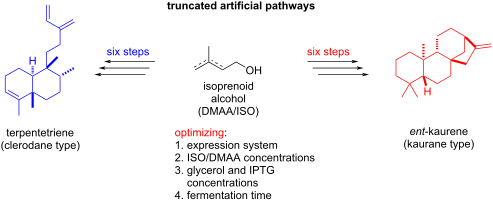
- overexpression in E. coli [19]. Isopentenyl diphosphate isomerase (IDI) from E. coli, which balances IPP and DMAPP in vivo, was also included in our construct. To initially test the efficiency of this two-step artificial pathway, we constructed strains DL10001 (phoN, ipk and idi plus the lycopene-producing genes


Identification of the new prenyltransferase Ubi-297 from marine bacteria and elucidation of its substrate specificity
Beilstein J. Org. Chem. 2022, 18, 722–731, doi:10.3762/bjoc.18.72
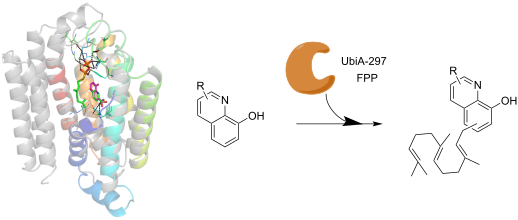
- residue was dissolved in methanol (100 µL), and analyzed by HRMS/MS. Denaturation of proteins was performed at 95 °C for 10 min (negative control). Additionally, E. coli BL21 derived enriched membrane fractions served as negative control. In vivo assays: In vivo assays (100 mL) were performed using E
- performed in a 75 L X-Cube Bioreactor (Braun Biotech International) using 30 L of Terrific Broth medium (Carl Roth GmbH) enriched with 4 mL/L glycerol and 60 mg/L kanamycin. Similar to the in vivo culture assays, the culture was cooled to 16 °C at an OD600 of 1 and heterologous production induced with IPTG


Menadione: a platform and a target to valuable compounds synthesis
Beilstein J. Org. Chem. 2022, 18, 381–419, doi:10.3762/bjoc.18.43
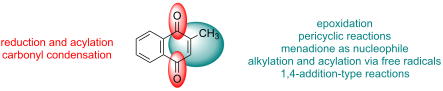
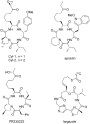
- epoxides are formed through oxidation reactions in vivo, that occur in protein processes dependent on vitamin K [96][97]. Dwyer and co-workers described a procedure using sugar-derived hydroperoxides for the synthesis of epoxides in the presence of 1,8-diazabicyclo[5.4.0]undec-7-ene (DBU) as base [98][99


Synthesis and late stage modifications of Cyl derivatives
Beilstein J. Org. Chem. 2022, 18, 174–181, doi:10.3762/bjoc.18.19
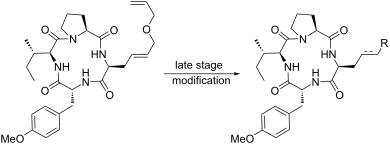
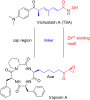
- naturally occurring HDAC inhibitors contain sulfur moieties like, e.g., disulfides or thioesters. They seem to lack a zinc-chelating group at first sight, but the disulfide or thioester acts as a prodrug and are reduced/cleaved in vivo to liberate the free thiol, a strong Zn-binding group [24][25]. Results



1,2-Naphthoquinone-4-sulfonic acid salts in organic synthesis
Beilstein J. Org. Chem. 2022, 18, 53–69, doi:10.3762/bjoc.18.5
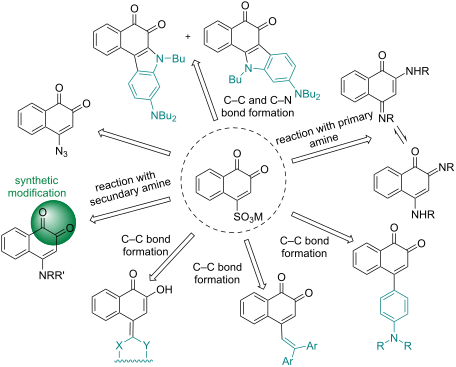
- in vitro and in vivo against Leishmania donovani, which causes visceral and cutaneous leishmaniasis. It has been observed that the prodrugs improved efficacy when compared to buparvaquone. Parvaquone (14) is a naphthoquinone with antitheilerial properties that is commercialized for the treatment of


Synthetic strategies toward 1,3-oxathiolane nucleoside analogues
Beilstein J. Org. Chem. 2021, 17, 2680–2715, doi:10.3762/bjoc.17.182
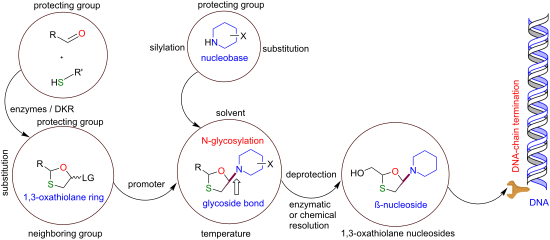
- counterparts during DNA or RNA synthesis, a biological role that is crucial for cellular reproduction [2]. Most of the drugs that are incorporated in the viral DNA upon phosphorylation in vivo block the DNA polymerase enzyme. However, DNA polymerase recognizes 2’,3’-dideoxynucleosides as substrates, which are
- as zidovudine, didanosine, zalcitabine, stavudine, lamivudine (1), and abacavir (a carbanucleoside) for treating HIV infection, along with protease and nonnucleoside reverse transcriptase inhibitors (NNRTIs). Phosphorylation of 1,3-oxathiolane nucleosides, such as 3TC (1) and FTC (2), occurs in vivo
- enantiomer in a chiral environment [32]. Additionally, on the grounds that living systems are, in a sense, themselves chiral, each of the enantiomers of a chiral drug can perform very differently in vivo. Therefore, there is a requirement to synthesize enantiomerically pure nucleosides that are free from


Cryogels: recent applications in 3D-bioprinting, injectable cryogels, drug delivery, and wound healing
Beilstein J. Org. Chem. 2021, 17, 2553–2569, doi:10.3762/bjoc.17.171
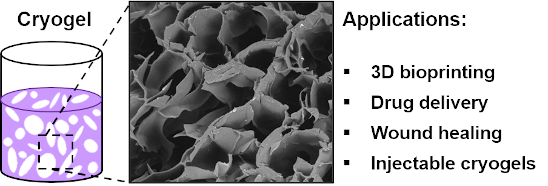
- millimetre-sized defects (common in most in vivo tissue-engineering work in small animal models) [64]. Kim and co-workers reported a method in 2009, whereby a 3D-plotting system was coupled to a cryogenic refrigeration system [65][66]. Using these systems 3D scaffolds were prepared by printing collagen
- ]. They report 3D-printed structures which could be used for minimally invasive cell delivery (see Figure 3). Moreover, hierarchical structures with varying local pore sizes were obtained by tuning the substrate temperature during printing, which led to control over vascularisation density in vivo. Biçen
- does not leak out of the needle bore after being applied. The GelMA can then be implied with minimal intrusion to the patient which decrease the chance of trauma to the patient. Koshy et al. also report that in vitro and in vivo testing showed that cryogelated GelMA is cell and tissue compatible






Strategies for the synthesis of brevipolides
Beilstein J. Org. Chem. 2021, 17, 2399–2416, doi:10.3762/bjoc.17.157
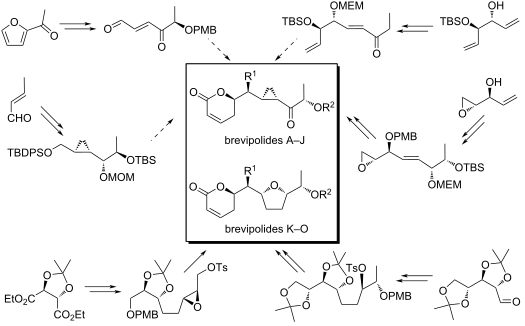
- of 14.0 μM observed for brevipolide I (9) (Table 1 entry 9) [1][12]. Moving forward, cytotoxicity examination against MCF-7 human breast carcinoma cells was done for all the brevipolide members (Table 1, entries 1–15) [1][4][12]. Brevipolides A–H (1–8) were evaluated in vivo (Table 1, entries 1–8


Post-functionalization of drug-loaded nanoparticles prepared by polymerization-induced self-assembly (PISA) with mitochondria targeting ligands
Beilstein J. Org. Chem. 2021, 17, 2302–2314, doi:10.3762/bjoc.17.148
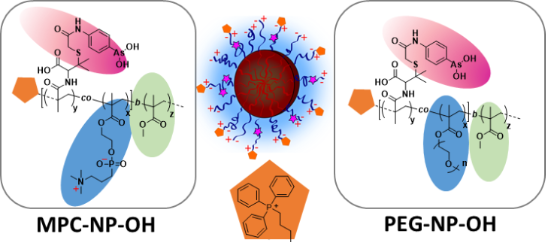
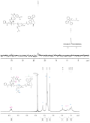
- nanoparticles without TPP have been reported earlier [42]. This figure was adapted with permission from [42], Noy et al., Direct Comparison of Poly(ethylene glycol) and Phosphorylcholine Drug-Loaded Nanoparticles In Vitro and In Vivo, Biomacromolecules 2020, 21, 2320–2333. Copyright 2020 American Chemical
- Nanoparticles In Vitro and In Vivo, Biomacromolecules 2020, 21, 2320–2333. Copyright 2020 American Chemical Society. This content is not subject to CC BY 4.0. Synthesis of TPP-based PISA particles based on zwitterionic 2-methacryloyloxyethyl phosphorylcholine (PPM-NP4-TPP) and poly(oligo ethylene glycol methyl






Constrained thermoresponsive polymers – new insights into fundamentals and applications
Beilstein J. Org. Chem. 2021, 17, 2123–2163, doi:10.3762/bjoc.17.138
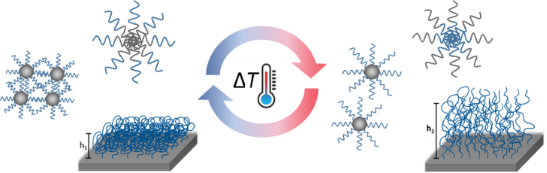
- , the developed GA-polyHMPA initially exhibits UCST responsiveness, but can subsequently be slowly biodegraded to a fully water-soluble polymer (polyHMPA) via hydrolysis. Initial in vivo studies of a sustained release of either a hydrophilic model protein or a hydrophobic dye entrapped within the


Progress and challenges in the synthesis of sequence controlled polysaccharides
Beilstein J. Org. Chem. 2021, 17, 1981–2025, doi:10.3762/bjoc.17.129










Cationic oligonucleotide derivatives and conjugates: A favorable approach for enhanced DNA and RNA targeting oligonucleotides
Beilstein J. Org. Chem. 2021, 17, 1828–1848, doi:10.3762/bjoc.17.125
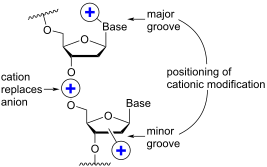
- observed (75). The cationic phosphoramidate variant termed DEED was originally tested for its triplex-forming capabilities. The authors found that ONs containing the DEED modification were more capable at forming triplexes under conditions that approximated the magnesium, pH, and potassium levels found in
- vivo [108]. A later study conducted by Weeks and co-workers reported that a TFO modified with the DEED modification could efficiently inhibit the expression of plasmid DNA injected into Xenopus oocytes [111]. The study demonstrated that a sufficiently long mismatch-free DNA target needed to be present


Natural products in the predatory defence of the filamentous fungal pathogen Aspergillus fumigatus
Beilstein J. Org. Chem. 2021, 17, 1814–1827, doi:10.3762/bjoc.17.124

- ACAT2 and renders it inactive [173]. In vivo, PPPA-mediated ACAT2 inhibition was shown to protect the mice from atherosclerosis, ACAT2 enzyme mediates in lipid metabolism and is localized in the liver and intestines [174]. Furthermore, PPPA was also shown to exhibit insecticidal properties against


Chemical approaches to discover the full potential of peptide nucleic acids in biomedical applications
Beilstein J. Org. Chem. 2021, 17, 1641–1688, doi:10.3762/bjoc.17.116
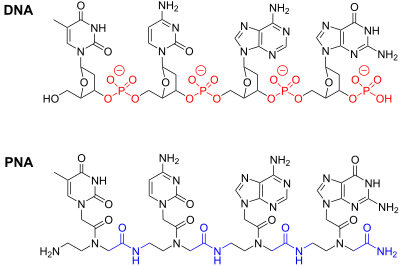
- therapeutics. While many modifications have improved on PNA’s binding affinity and specificity, solubility and other biophysical properties, the original PNA is still most frequently used in diagnostic and other in vitro applications. Development of therapeutics and other in vivo applications of PNA has
- folding in compact structures and aggregation in concentrated solutions [13]. Other bottlenecks for in vivo applications of PNA have been poor cellular uptake and unfavorable pharmacokinetics [14][15][16]. Unmodified PNAs are not taken up by eukaryotic cells in vitro and are cleared rapidly (within 10–30
- extensive studies reviewed below, PNA still needs innovative chemistry to break through in clinic and other in vivo applications. Review PNA binding modes to DNA and RNA PNA was originally designed with an expectation to improve the binding properties of negatively charged triplex-forming oligonucleotides








Recent advances in the application of isoindigo derivatives in materials chemistry
Beilstein J. Org. Chem. 2021, 17, 1533–1564, doi:10.3762/bjoc.17.111
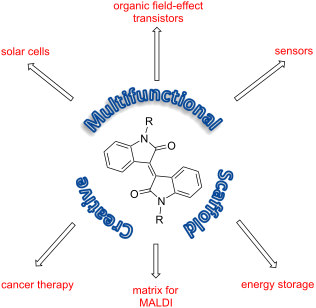
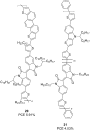
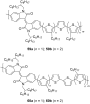
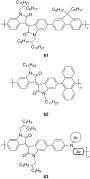
- [120]. At the same time, in vivo experiments have shown the high efficiency of low-molecular-weight isoindigo 71 in oxygen sensitization for cancer therapy [121]. Therein, a high value (84%) of the singlet oxygen quantum yield was obtained. Conclusion To summarize, it can be concluded that isoindigo is














Antiviral therapy in shrimp through plant virus VLP containing VP28 dsRNA against WSSV
Beilstein J. Org. Chem. 2021, 17, 1360–1373, doi:10.3762/bjoc.17.95
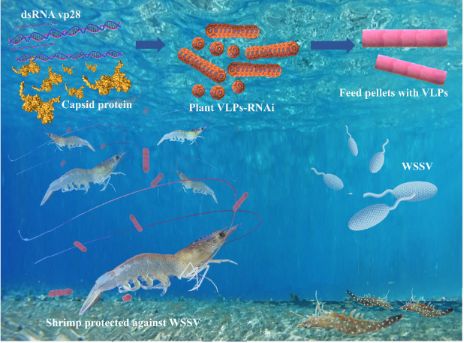
- ) encapsidates the dsRNA of 563 bp, are shown to silence the WSSV glycoprotein VP28 (dsRNAvp28). In experimental challenges in vivo, the VLPs- dsRNAvp28 protect shrimp against WSSV up to 40% by oral administration and 100% by IM. The novel research demonstrates that plant VLPs, which avoid zoonosis, can be
- . Through in vivo bioassays, the antiviral efficacy of VLPs is assessed by intramuscular injection and per os, in Penaeus vannamei infected with WSSV. To our knowledge, this is the first report where an oral VLPs are administered to treat infected shrimp against viruses. This is a novel technique in
- ®, Europe) [47]. This inoculum solution is referred to as the 1:10 dilution. The in vivo experiments were immediately initiated after preparing the inoculums. Simultaneously, uninfected shrimp or free WSSV were parallel-used under the same procedure as a negative control (WSSV-negative). Viral inoculum


Structural effects of meso-halogenation on porphyrins
Beilstein J. Org. Chem. 2021, 17, 1149–1170, doi:10.3762/bjoc.17.88
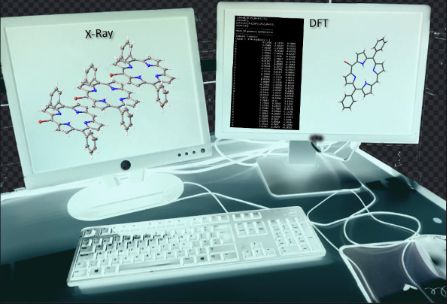
- [18], the conformation of the porphyrin core can play a key role in the binding of small molecules or on its efficiency as an organocatalyst as demonstrated by Roucan et al. [19]. With the continuing interest in nonplanar porphyrins [20] and their relevance for the in vivo functioning of porphyrin


Beyond ribose and phosphate: Selected nucleic acid modifications for structure–function investigations and therapeutic applications
Beilstein J. Org. Chem. 2021, 17, 908–931, doi:10.3762/bjoc.17.76
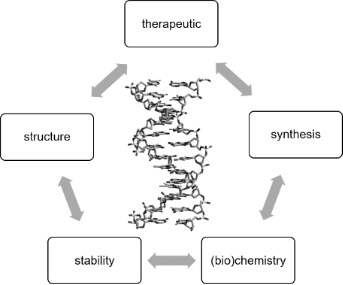
- production of proteins, enzymes and receptors that may be inhibited by small-molecule and antibody therapeutics. However, native RNA oligonucleotides do not possess sufficient metabolic stability for in vivo applications. Therefore, chemical modification is absolutely essential to re-engineer RNA into a
- acyclic nucleic acid backbone is of interest as a prospective evolutionary precursor of RNA [100]. Furthermore, GNA analogues with N2' → P3' phosphoramidate linkages have been studied as a potential alternative genetic system and they have been incorporated into siRNA duplexes to increase in vivo potency




Enhanced target cell specificity and uptake of lipid nanoparticles using RNA aptamers and peptides
Beilstein J. Org. Chem. 2021, 17, 891–907, doi:10.3762/bjoc.17.75
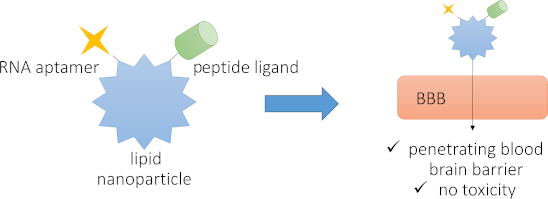
- ) represent an effective platform for delivering small molecules, RNA, or DNA into target cells [1]. LNPs have been successfully deployed via different administration routes in vivo to distribute cargo into target tissues [2][3][4][5][6][7][8]. By changing lipid composition [6] and/or including short peptides
- lipid, 1,2-distearoyl-sn-glycero-3-phosphocholine (DSPC), cholesterol, and PEG-lipid, each with an essential role in the design (Figure 1). These lipids promote the effective distribution of the LNP in vivo as well as aid in effective cargo release from the endosome [1][37]. To this end, we herein
- average sizes of 57.3 nm and 91.9 nm, respectively, as well as a more negative ZP (−11 mV and −9.4 mV, respectively, Table 2). These ZP values indicate that complexation leads from a neutral to anionic LNP product [39], a property that typically confers with low to no cytotoxicity in vivo [40]. Further


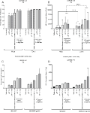
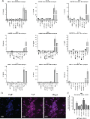

DNA with zwitterionic and negatively charged phosphate modifications: Formation of DNA triplexes, duplexes and cell uptake studies
Beilstein J. Org. Chem. 2021, 17, 749–761, doi:10.3762/bjoc.17.65
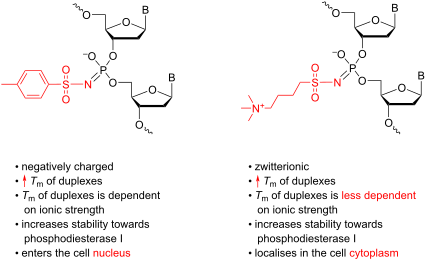
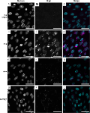
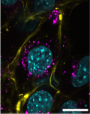
- transfection reagent, whereas, N+ONs remain concentrated in vesicles within the cytoplasm. These results indicate that both N+ and Ts-modified ONs are promising for various in vivo applications. Keywords: cell uptake; charge neutral modification; DNA; modified phosphates; Staudinger reaction; Introduction


Synthesis and properties of oligonucleotides modified with an N-methylguanidine-bridged nucleic acid (GuNA[Me]) bearing adenine, guanine, or 5-methylcytosine nucleobases
Beilstein J. Org. Chem. 2021, 17, 622–629, doi:10.3762/bjoc.17.54
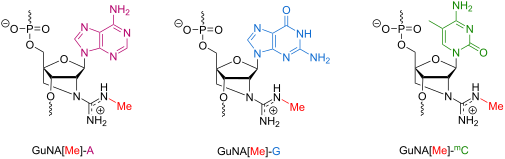
- (ASOs) modified with 2',4'-bridged nucleic acid/locked nucleic acid (2',4'-BNA/LNA; Figure 1) are now widely used for gene regulation in vitro and in vivo because 2',4'-BNA/LNA greatly increases the affinity toward the target RNAs, thus enhancing the efficacy of the modified ASOs [1][2][3][4][5][6
- ]. The S-cEt-modified ASOs displayed a higher nuclease resistance and lower hepatotoxicity in in vivo experiments than the corresponding 2',4'-BNA/LNA-modified ASOs [9]; the reduction in hepatotoxicity might be a sequence-dependent phenomenon. Currently, a number of S-cEt-modified ASOs with low
- hepatotoxicity have been confirmed to be effective for gene regulations in vivo [10][11]. We previously developed amido-bridged nucleic acids (AmNA[R]s) (Figure 1), in which the N-alkyl substituent groups were found to modulate nuclease resistance and hepatic distributions [12]. Wengel’s group reported the
Menthyl esterification allows chiral resolution for the synthesis of artificial glutamate analogs
Beilstein J. Org. Chem. 2021, 17, 540–550, doi:10.3762/bjoc.17.48
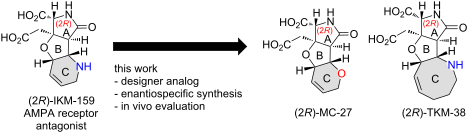
- analysis by NMR, conformational calculation, and X-ray crystallography. A mice in vivo assay showed that (2R)-MC-27, with a six-membered oxacycle, is neuroactive, whereas the (2S)-counterpart is inactive. It was also found that TKM-38, with an eight-membered azacycle, is neuronally inactive, showing that
- intracerebroventricular injection, and the seven-membered oxacycle (2R)-IKM-154 (5) is weakly hypoactive [4]. In 2015, we reported the synthesis and evaluation of the six-membered oxacyclic analog MC-27 in the racemic form, (rac)-4, which was shown to be weakly hypoactive in vivo [5]. In the present study, we synthesized
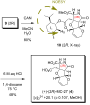
- of the heterotricyclic skeleton of menthyl esters 10 (2R) and 21*/21 would have enabled configurational analysis based on NOESY data and conformational calculations. The mice in vivo assay in the present study showed that, as for MC-27 (4), the (2R)-isomer is the neuroactive enantiomer. It is again








Biochemistry of fluoroprolines: the prospect of making fluorine a bioelement
Beilstein J. Org. Chem. 2021, 17, 439–460, doi:10.3762/bjoc.17.40
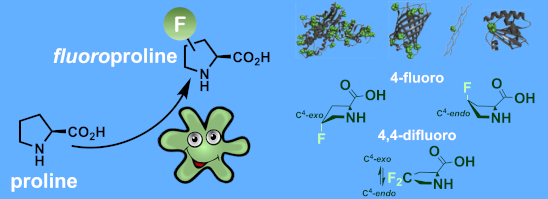
- auxotrophic E. coli in media with hyperosmotic sodium chloride concentrations [75]. To obtain high in vivo concentrations of the proline analogue, they took advantage of the phenomenon that proline and similar solutes actively accumulate in cells in response to the hyperosmotic shock in bacteria [76]. This
- S-Flp may preclude the production of proteins with this substrate as the in vivo expression of enzymes with oligoproline stretches might be completely suppressed with this analogue (vide infra). Chin and co-workers reported the directed evolution on ribosomes that yielded a variant (dubbed as O-d2d8
- diversity of complications that could hinder protein studies with fluoroprolines. On the other hand, in the presence of R-Flp, the folded and fully active PWA enzyme was isolated, clearly demonstrating the ability of this analog to abolish the ribosome stalling issues in vivo. This is in full agreement with





