


Search results
Search for "membrane" in Full Text gives 397 result(s) in Beilstein Journal of Organic Chemistry. Showing first 200.
New variochelins from soil-isolated Variovorax sp. H002
Beilstein J. Org. Chem. 2024, 20, 692–700, doi:10.3762/bjoc.20.63
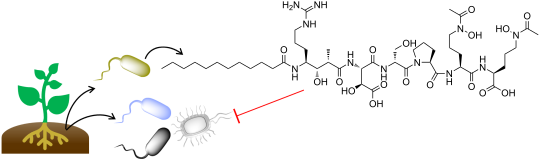
- transporters to form the siderophore Fe(III) complex extracellularly [2][3]. Subsequently, the stable and water soluble siderophore Fe(III) complex is transported across the cell membrane into the cytoplasm, where the iron is released from the complex by reduction, generating free Fe(II) ions that are
- ) resembles those of other amphiphilic marine siderophores such as marinobactins and aquachelins exhibiting the membrane affinity [21] as well as the self-assembling ability to form iron-containing vesicles [22]. This study presents another suite of amphiphilic peptidic siderophores originating in the
- hydrolysates were dissolved in water (160 µL), and treated with saturated NaHCO3 (200 µL) and 1% ʟ-FDLA in acetone (160 µL). The mixtures were heated at 40 °C for 30 minutes, quenched with 1 M HCl (200 µL), and concentrated in vacuo. The residue was dissolved in DMSO (400 µL) and passed through a membrane


Recent developments in the engineered biosynthesis of fungal meroterpenoids
Beilstein J. Org. Chem. 2024, 20, 578–588, doi:10.3762/bjoc.20.50
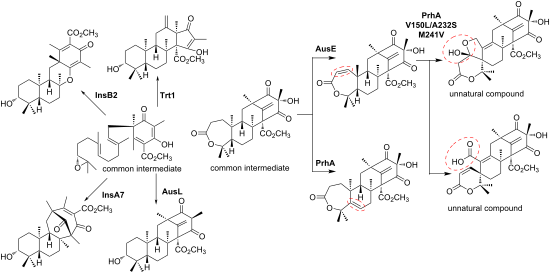
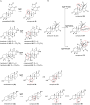
- cyclizations and post-cyclization modifications are especially important in fungal meroterpenoid biosynthesis, contributing to the structural diversity of this class of compounds. Fungal meroterpenoid cyclases (CYCs) are seven-membrane-spanning transporter-like enzymes that regulate the conformations of
- chair–chair stereocontrol, the structure basis of InsA7 should be unique. A structural comparison of InsB2 and InsA7 will help to clarify the differences in their structural bases. Recent advances in artifical intelligence (AI) have even made the structural modeling of membrane-bound proteins possible
- have also expanded the variety of meroterpenoids [41][42]. These untapped membrane enzymes will be applicable for engineered biosynthesis, with structural models providing useful information for mutagenesis, as in the engineering of meroterpenoid cyclases [11] and fungal P450 oxygenases catalyzing






Switchable molecular tweezers: design and applications
Beilstein J. Org. Chem. 2024, 20, 504–539, doi:10.3762/bjoc.20.45

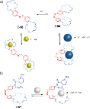
- represents prototypes of molecular machines in which guest binding is regulated by stimuli-induced conformational changes between open and closed states (Figure 1). This feature holds significant promise for applications in sensing, drug delivery, or membrane transport within biological systems. Moreover
- release of siRNA or miRNA encapsulated within them into the solution in vitro and in vivo [21]. The closed conformation of 2 with parallel alkyl chains acts as a building block of the bilayer membrane and is packed together with other lipids. When the surrounding medium becomes acidic, the tweezers adopt
- their open conformation. This causes fluctuations and local defects in the packing of a bilayer (Figure 3), leading to membrane disruption and release of active components from within the vesicles [22]. Such concept makes these tweezers good candidates for controlled drug delivery. The group of F. Wang




Optimizations of lipid II synthesis: an essential glycolipid precursor in bacterial cell wall synthesis and a validated antibiotic target
Beilstein J. Org. Chem. 2024, 20, 220–227, doi:10.3762/bjoc.20.22
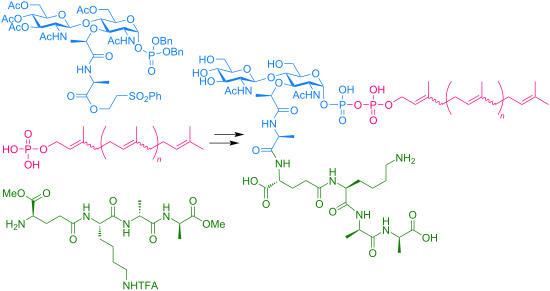
- is synthesized on the inner leaflet of the cytoplasmic membrane, before translocation to the outer leaflet, where it is then used as the monomeric building block of peptidoglycan biosynthesis. Lipid II is a validated antibiotic target for clinically prescribed antibiotics including vancomycin and


Visible-light-induced radical cascade cyclization: a catalyst-free synthetic approach to trifluoromethylated heterocycles
Beilstein J. Org. Chem. 2024, 20, 118–124, doi:10.3762/bjoc.20.12
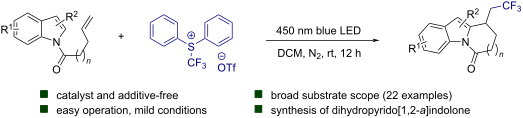
- and at the same time improved cell membrane permeability. Therefore, it became a commonly used strategy to modify medicine candidates [22][23][24]. Based on these advantages, we envisioned a one-step synthesis of dihydropyrido[1,2-a]indolone skeletons utilizing an indole substrate and a




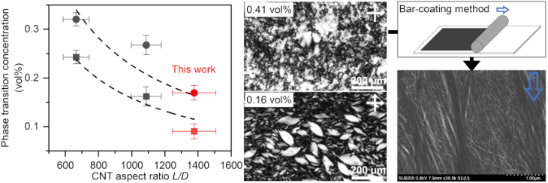
Preparing a liquid crystalline dispersion of carbon nanotubes with high aspect ratio
Beilstein J. Org. Chem. 2024, 20, 52–58, doi:10.3762/bjoc.20.7
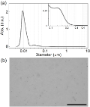
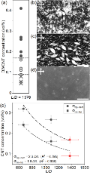
- 200 mL of water, the DWCNT-glycerol mixture was filtered through a 1.0 μm pore size polytetrafluoroethylene (PTFE) membrane (Merck, Omnipore 47mm). To ensure complete removal of glycerol from the DWCNTs, we repeated the washing process until 2 L of water had passed through the membrane, resulting in


Facile access to pyridinium-based bent aromatic amphiphiles: nonionic surface modification of nanocarbons in water
Beilstein J. Org. Chem. 2024, 20, 32–40, doi:10.3762/bjoc.20.5
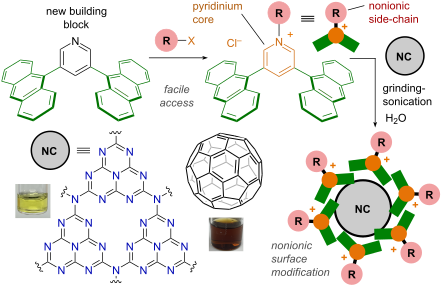
- H2O (2.7 mL), the suspension was sonicated with a probe sonicator (40 kHz, 150 W, 10 min), centrifuged (16,000g, 10 min), and then filtrated (200 nm pore-size membrane filter) to yield a clear brown solution containing host–guest composite (PA-OCH3)n·(C60)m. The UV–visible analysis clearly showed new




Identification of the p-coumaric acid biosynthetic gene cluster in Kutzneria albida: insights into the diazotization-dependent deamination pathway
Beilstein J. Org. Chem. 2024, 20, 1–11, doi:10.3762/bjoc.20.1
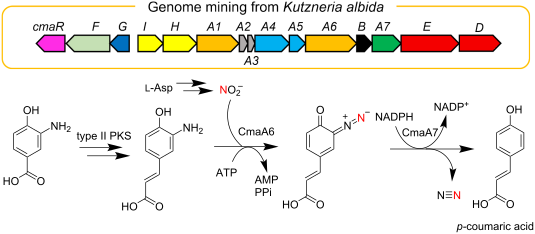
- recent studies [9][10][11][12][13][14]. Most of them belong to the adenylate-forming enzyme superfamily (ANL superfamily) and utilize ATP to activate nitrous acid by AMPylation, with the only exception being AzpL in alazopeptin biosynthesis, which is a membrane protein that catalyzes diazotization


A novel recyclable organocatalyst for the gram-scale enantioselective synthesis of (S)-baclofen
Beilstein J. Org. Chem. 2023, 19, 1811–1824, doi:10.3762/bjoc.19.133

- achieved, for example, by immobilizing the catalysts to a solid support [15], e.g., silica gel [16][17][18], organic polymers [19][20][21], magnetic nanoparticles [22][23], or by membrane separation, e.g., using organic solvent nanofiltration (OSN) [24][25][26], which methods can be easily implemented in


Effects of the aldehyde-derived ring substituent on the properties of two new bioinspired trimethoxybenzoylhydrazones: methyl vs nitro groups
Beilstein J. Org. Chem. 2023, 19, 1713–1727, doi:10.3762/bjoc.19.125
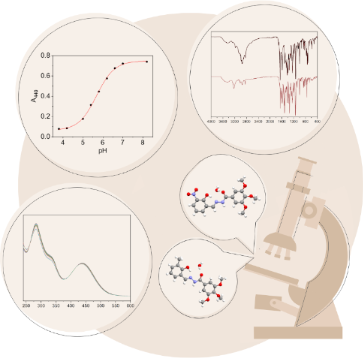
- cell membrane integrity [21]. In the context of cancer therapy development, metal complexes of N-acylhydrazones stand out. For example, Firmino et al. demonstrated that gallium(III) complexes of isoniazid-derived hydrazones exhibit strong cytotoxicity against HL-60 and HCT-116 cancer cell lines [22




Cyclodextrins permeabilize DPPC liposome membranes: a focus on cholesterol content, cyclodextrin type, and concentration
Beilstein J. Org. Chem. 2023, 19, 1570–1579, doi:10.3762/bjoc.19.115
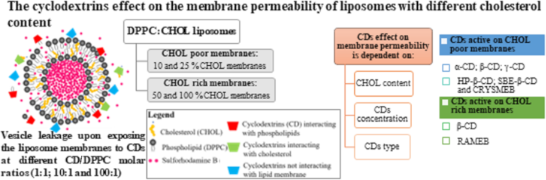
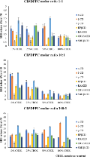
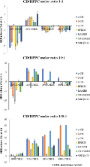
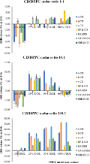
- synthetic and biological membranes and therefore to induce an increase of membrane permeability. However, the effect of cholesterol (CHOL) content in the membrane on the CD permeabilizing effect was not considered yet. Given that an increase in CHOL content reduces the membrane permeability, the aim of this
- work was to reveal how CHOL would modulate the CDs effect on the membrane. Hence, liposomes made of dipalmitoyl phosphatidylcholine (DPPC) and various CHOL contents (DPPC/CHOL 100:10, 100:25, 100:50, and 100:100) encapsulating the hydrophilic fluorophore, sulforhodamine B (SRB), were prepared and
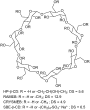
- exposed to the native CDs (α-CD, β-CD, γ-CD) and four β-CD derivatives: the randomly methylated-β-CD (RAMEB), the low methylated-β-CD (CRYSMEB), the hydroxypropyl-β-CD (HP-β-CD) and the sulfobutyl ether-β-CD (SBE-β-CD) at different CD/DPPC molar ratios (1:1, 10:1, and 100:1). The membrane permeability was


Synthesis and biological evaluation of Argemone mexicana-inspired antimicrobials
Beilstein J. Org. Chem. 2023, 19, 1511–1524, doi:10.3762/bjoc.19.108
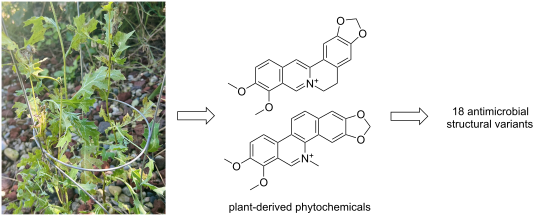
- often attributed to high binding affinity to DNA, interference with protein biosynthesis, induction of membrane leakage, and affecting GTPase activity in bacteria cell division [12][13][14][15]. Recent reports have also pointed to inhibition of the ‘filamenting temperature-sensitive mutant Z’ (FtsZ
- ]. Similar to berberine, results have demonstrated that the antibacterial activity of chelerythrine can be tied to DNA intercalation and disruption to cell membrane permeability [11][24]. One particular mechanism of action noted for chelerythrine’s antitumor bioactivity is through the inhibition of protein


Synthesis of ether lipids: natural compounds and analogues
Beilstein J. Org. Chem. 2023, 19, 1299–1369, doi:10.3762/bjoc.19.96
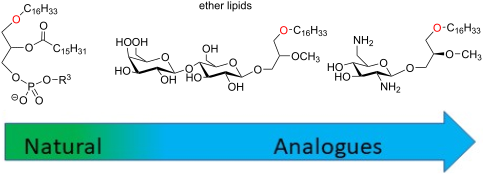
- ) that exhibit promising anticancer properties renew the interest in this class of compounds. Indeed, ether lipid represent a new and promising class of compounds featuring the capacity to modulate selectively the activity of some membrane proteins or, for other compounds, feature antiproliferative
- the endoplasmic reticulum (ER). Then, ELs are spread off in the cell, to the plasma membranes but also in other biomembranes (membrane of mitochondria, ER, nucleus). The occurrence of ELs in tissues was first assessed by Snyder and Woods who reported that neutral ELs and phosphoglycero ELs were
- functions of ether lipids offer an interesting overview of the current knowledge of the effect of plasmalogen and ELs on membrane properties at a molecular scale. Shortly, according to molecular dynamics simulation, PE-plasmalogens form thicker, compressed and rigid bilayers when compared to PE-diacyl






Enabling artificial photosynthesis systems with molecular recycling: A review of photo- and electrochemical methods for regenerating organic sacrificial electron donors
Beilstein J. Org. Chem. 2023, 19, 1198–1215, doi:10.3762/bjoc.19.88
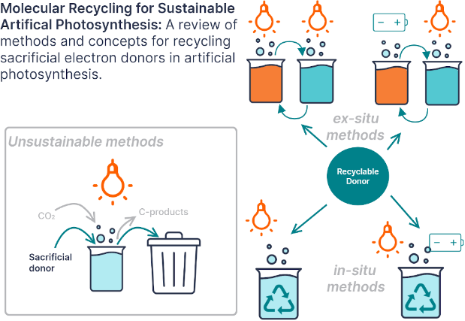
- . Carpenter and co-workers also proposed, but did not test, recycling their amine with electrochemistry and light [32]. They cited a work by Itoh et al. who modified a proton exchange membrane electrolyzer with a Rh–Pt catalyst to generate hydrogen from water to hydrogenate benzene to cyclohexane in one
- of artificial photosynthesis research investigating the compartmentalization of different reactions using liposomes and membranes [38]. Another alternative could be to use redox-active polymers as recyclable donors which would allow microporous membrane separation. Redox-active polymers are a very
- active area of research for aqueous and non-aqueous RFBs [59][60]. This is because often the most expensive component of an RFB is the ion-exchange membrane used to prevent the mixing of charged species and recombination. Microporous membranes are much less expensive, and the particulate size of redox


Intermediates and shunt products of massiliachelin biosynthesis in Massilia sp. NR 4-1
Beilstein J. Org. Chem. 2023, 19, 909–917, doi:10.3762/bjoc.19.69
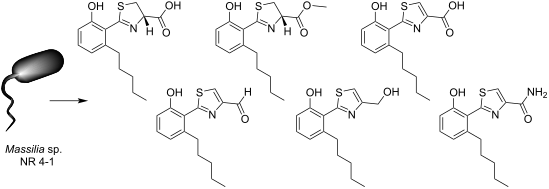
- into the cell through membrane receptors and transporters. Eventually, the bound metal is released through reductive or hydrolytic mechanisms [2]. In the past years, β-proteobacteria have received increasing attention as producers of siderophores with interesting chemical features. For instance


Phenanthridine–pyrene conjugates as fluorescent probes for DNA/RNA and an inactive mutant of dipeptidyl peptidase enzyme
Beilstein J. Org. Chem. 2023, 19, 550–565, doi:10.3762/bjoc.19.40
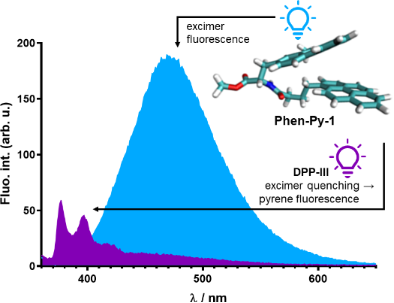
- in the cell membrane. Keywords: dipeptidyl peptidase enzyme; excimer; molecular dynamics simulations; phenanthridine; polynucleotide; pyrene; Introduction The design of small molecules that can selectively bind and discriminate different biomolecular structures (polynucleotides vs proteins, DNA or
- membrane (Figure S26, Supporting Information File 1). The compound showed not to be toxic to the HeLa cells as no visible damage was detected. Interactions of Phen-Py-1 and Phen-Py-2 with ds-polynucleotides and enzyme dipeptidyl peptidase III in an aqueous medium Interactions of Phen-Py-1 and Phen-Py-2




Recommendations for performing measurements of apparent equilibrium constants of enzyme-catalyzed reactions and for reporting the results of these measurements
Beilstein J. Org. Chem. 2023, 19, 303–316, doi:10.3762/bjoc.19.26
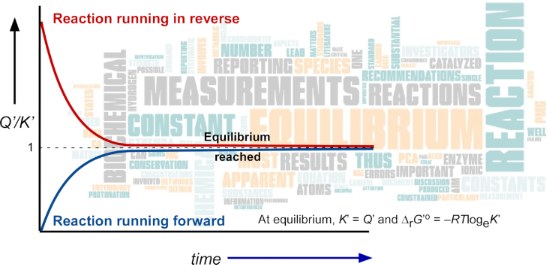
- units used. All important aspects of the reactants, the reaction, and the catalyst should be included in the discussion, e.g., if reactants are bound to a membrane or surface or in equilibrium with a solid. 3.5. Definition of equilibrium constants and specification of standard states Attention to

Insight into oral amphiphilic cyclodextrin nanoparticles for colorectal cancer: comprehensive mathematical model of drug release kinetic studies and antitumoral efficacy in 3D spheroid colon tumors
Beilstein J. Org. Chem. 2023, 19, 139–157, doi:10.3762/bjoc.19.14
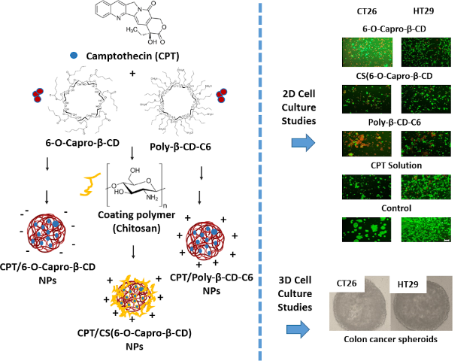
- charge upon chitosan coating enhances this membrane binding ability. However, there was no significant difference in IC50 values against HT29 cells between 6-O-capro-β-CD and CS-(6-O-capro-β-CD) groups. Due to the increased biological membrane interaction, the amount of drug transported into the cell may
- aliphatic groups on the surfaces of CD derivatives play a direct role in the interaction time with the cell and cell membrane components [50]. It is well established that positively charged nanoparticles interact with the cell membrane more favorably than negatively charged ones. However, their passing
- through the cell membrane is challenging because of the agglomeration of positive charge on the cell membrane [51]. This knowledge might explain why the 6-O-capro-β-CD nanoparticle IC50 values are lower at 48 hours than those of the poly-β-CD-C6 nanoparticles. Besides, chitosan coating on nanoparticles




Revisiting the bromination of 3β-hydroxycholest-5-ene with CBr4/PPh3 and the subsequent azidolysis of the resulting bromide, disparity in stereochemical behavior
Beilstein J. Org. Chem. 2023, 19, 91–99, doi:10.3762/bjoc.19.9
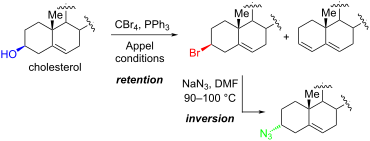
- –517. Keywords: Appel reaction; azidolysis; cholesterol; crystal structure; Walden inversion; Introduction 3β-Hydroxycholest-5-ene (cholesterol) is a structural and physiologic amphipathic steroid in human and animals as well. Cholesterol is an essential component of the plasma membrane, where it
- butter provide the body with its daily needs of cholesterol. In addition, hepatocyctes synthesize cholesterol through the mevalonate pathway. Dietary cholesterol is absorbed into the blood stream through a specific membrane bound protein named Niemann-Pick C1-Like 1 (NPC1L1) on the gastrointestinal tract




Digyalipopeptide A, an antiparasitic cyclic peptide from the Ghanaian Bacillus sp. strain DE2B
Beilstein J. Org. Chem. 2022, 18, 1763–1771, doi:10.3762/bjoc.18.185
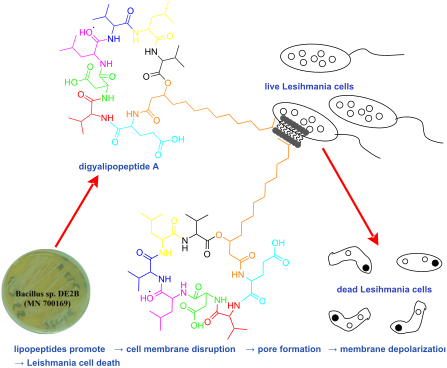
- hydrophilic biological environments. Repeated studies on the bioactivity of lipopeptides have shown that the primary mechanism of action of these peptides involves interactions with the double layer of lipids and proteins that constitute the cell membrane [24][25][26]. This mechanism of action is important


Inline purification in continuous flow synthesis – opportunities and challenges
Beilstein J. Org. Chem. 2022, 18, 1720–1740, doi:10.3762/bjoc.18.182
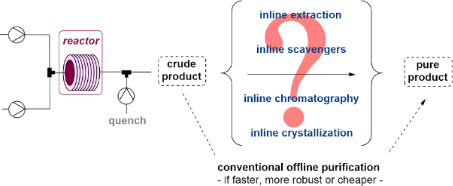
- factors to consider [50]. In addition, these membranes are available in different sizes, and they can operate in series to improve separation. Some examples using them in a counter-current way and their application as solvent swap technology are also discussed below. Though examples of using membrane
- to another step. At this stage it appears that almost all reports use membrane separators at lab scale, which is a limitation of these membranes. Industrial applications often seek to intensify the workup process whereby an aqueous quench might be combined with an extraction, which necessitates
- membrane-based liquid–liquid separators the ability to gradually adjust the pH of the crude material stands out as an option to enable continuous purification. Though this approach does not apply to all substrates, it allows for tuning of parameters and sequential removal of impurities. Thorough




Using UHPLC–MS profiling for the discovery of new sponge-derived metabolites and anthelmintic screening of the NatureBank bromotyrosine library
Beilstein J. Org. Chem. 2022, 18, 1544–1552, doi:10.3762/bjoc.18.164
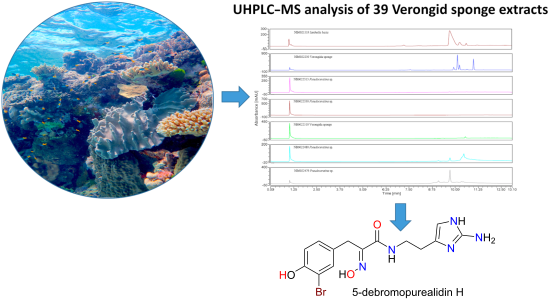
- ][36]. The psammaplysin structure class has also had antimalarial [28], cytotoxicity [37] and antimicrobial data reported, albeit with low to moderate potencies [7]. More recently psammaplysin F and several semi-synthetic analogues have been shown to cause loss of mitochondrial membrane potential


Molecular and macromolecular electrochemistry: synthesis, mechanism, and redox properties
Beilstein J. Org. Chem. 2022, 18, 1505–1506, doi:10.3762/bjoc.18.158
- , polymer electrolyte membrane electrolysis technology, and new methods coupled with photoredox catalysts or transition metal catalysis, resulting in remarkable progress in organic electrosynthetic processes. Theoretical calculations have also led to a better understanding of the electron transfer behavior
Make or break: the thermodynamic equilibrium of polyphosphate kinase-catalysed reactions
Beilstein J. Org. Chem. 2022, 18, 1278–1288, doi:10.3762/bjoc.18.134
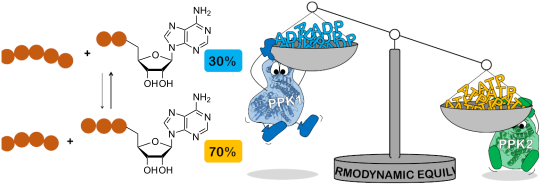
- model enzymes for PPK1 and PPK2 [9][10]. From a structure perspective, PPK1 enzymes form tetramers in solution with a mass of approximately 80 kDa for the monomer (Figure 2b). Although not being an integral membrane protein, the enzyme is described to be membrane-associated [11][12][13]. The phosphate
- , clearly demonstrating the necessity of the residues for catalysis [14]. PPK2-I enzymes are of lower molecular weight than their PPK1 counterparts, with an approximate molecular mass of 40 kDa for a monomer (Figure 2c) [5]. They form dimers or tetramers in solution and are not purified from membrane


Synthesis of tryptophan-dehydrobutyrine diketopiperazine and biological activity of hangtaimycin and its co-metabolites
Beilstein J. Org. Chem. 2022, 18, 1159–1165, doi:10.3762/bjoc.18.120
- growth occurred up to the highest concentration tested (256 µg/mL). In the Gram-negative Escherichia coli, the outer membrane protects the cells from the impact of 1. When the integrity of the outer membrane was compromised by adding the outer-membrane permeabilizing polymyxin B nonapeptide (PMBN, 10 μg
- lowest concentration of an antibacterial agent inhibiting visible bacterial growth (no turbidity detected by the naked eye) after overnight incubation. Only when the outer membrane was permeabilised by polymyxin B nonapeptide (PMBN), 1 inhibited growth of E. coli sufficiently to yield a clear MIC. GC





