


Search results
Search for "preparation" in Full Text gives 2117 result(s) in Beilstein Journal of Organic Chemistry. Showing first 200.
Pentacyclic aromatic heterocycles from Pd-catalyzed annulation of 1,5-diaryl-1,2,3-triazoles
Beilstein J. Org. Chem. 2025, 21, 2524–2534, doi:10.3762/bjoc.21.194
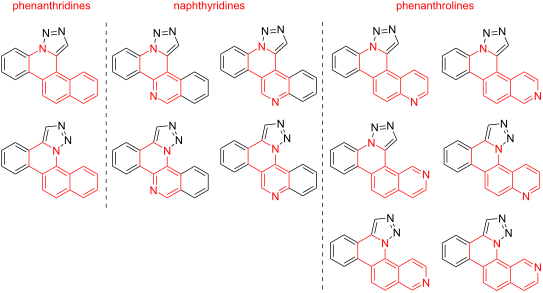
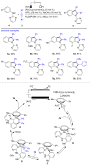
- modification of the base-catalyzed conditions reported by Kwok [53], where a stoichiometric plus additional catalytic amount of tetraethylammonium hydroxide base in DMSO solvent was used to promote tandem trimethylsilyl deprotection and cycloaddition in one preparation (Figure 3). Isolated yields of this


Assembly strategy for thieno[3,2-b]thiophenes via a disulfide intermediate derived from 3-nitrothiophene-2,5-dicarboxylate
Beilstein J. Org. Chem. 2025, 21, 2489–2497, doi:10.3762/bjoc.21.191
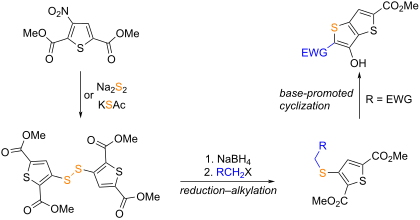
- . Nucleophilic substitution of the nitro group with sulfur nucleophiles, including thioacetate or disulfide anions as well as thioacetamide, yielded bis(thiophen-3-yl)disulfide and sulfide derivatives. The disulfide served as a suitable precursor for the preparation of 3-alkylthio-substituted thiophene-2,5
- cyclization to furnish the TT framework [2][23][24]. Despite the wide structural diversity of TT derivatives, 3-hydroxy-substituted analogues remain rare, with only a few synthetic strategies described for their preparation, as illustrated in Scheme 1. One such route involves sulfur insertion into a thiophen
- tolerated both electron-donating and electron-withdrawing groups on the aromatic ring, and the yields for this series ranged from 76% to 92%. Piperonyl mesylate was successfully used in the synthesis of compound 4g (92% yield), while thiophene-2-ylmethyl mesylate was used for the preparation of compound 4h



Transformation of the cyclohexane ring to the cyclopentane fragment of biologically active compounds
Beilstein J. Org. Chem. 2025, 21, 2416–2446, doi:10.3762/bjoc.21.185
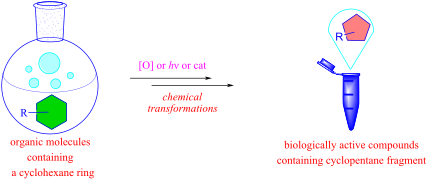
- of LG and 1,3-butadiene (Scheme 3). The ratio of the resulting regioisomers was 5:3 in favor of the 5-methoxycarbonyl derivative 17a. The synthesized cyclopentane derivatives 17a,b, 18, and 19 may be useful for the preparation of iridoids and other biologically active cyclopentanoids. An alternative
- with MeONa or t-BuOK as base led to the formation of diol 29 with a yield of 40%, which is interesting for the synthesis of angeloside (31) [23]. An alternative preparation of diol 29 involved ozonolysis of the double bond in dioxolane 26 at −78 °C in methanol, followed by reduction of the ozonide with
- unprecedentedly highly oxygenated five-membered D-ring. These compounds exhibit potent anti-inflammatory and analgesic activity both in vitro and in vivo [44]. The synthetic method for the preparation of dactylicapnosines A (63) and B (64) was based on the known phenol 65 and involved the ring contraction of p


The high potential of methyl laurate as a recyclable competitor to conventional toxic solvents in [3 + 2] cycloaddition reactions
Beilstein J. Org. Chem. 2025, 21, 2389–2415, doi:10.3762/bjoc.21.184
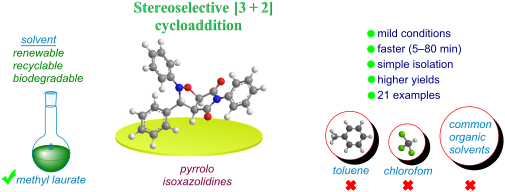
- consisting of a combination of isoxazolidine rings [36][37][38][39][40][41]. It has been demonstrated that such cycloaddition reactions are also employed in the efficient preparation of biologically active molecules, including nucleosides, β-lactam class antibiotics, peptides, and amino acids, as well as
- for the preparation of such cyclic compounds and/or their fused cyclic systems typically necessitate the use of toxic solvents, including chloroform, benzene, toluene etc. [32][53][54][55][56][57][58][59]. Indeed, the selection of conventional organic solvents, including benzene, toluene and
- -based nitrone with some maleimides via a mechanochemical route in a solvent-free medium [67][68]. The development of environmentally friendly green methodologies for the preparation of heterocyclic compounds via such cycloaddition reactions is a significant and ongoing research area that should not be


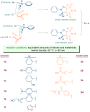


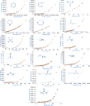


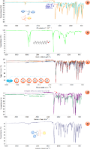
An Fe(II)-catalyzed synthesis of spiro[indoline-3,2'-pyrrolidine] derivatives
Beilstein J. Org. Chem. 2025, 21, 2383–2388, doi:10.3762/bjoc.21.183
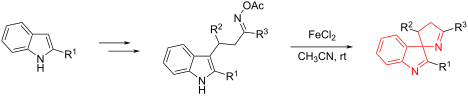
- , The Ural Branch of Russian Academy of Sciences, Goleva St. 13, 614081 Perm, Russian Federation 10.3762/bjoc.21.183 Abstract A synthetic strategy for the preparation of spiro[indoline-3,2'-pyrrolidine] derivatives has been developed, featuring a two-step sequence consisting of the reaction of 2


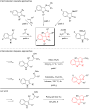


Recent advances in Norrish–Yang cyclization and dicarbonyl photoredox reactions for natural product synthesis
Beilstein J. Org. Chem. 2025, 21, 2315–2333, doi:10.3762/bjoc.21.177
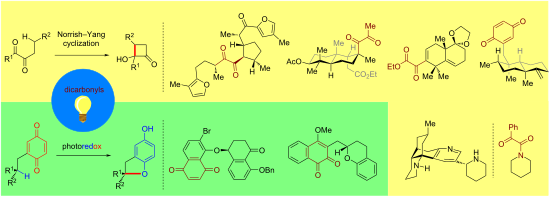
- pyrrolidine-derived phenyl keto amide substrate 91 with blue LEDs produces the pyrrolidine-fused 4-oxazolidinone (N,O-acetal) 92, precluding preparation of the pyrrolidine analog of lycoplatyrine A (94) by this method. Compound 92 is presumably formed via either the radical mechanism [41] or possibly




Insoluble methylene-bridged glycoluril dimers as sequestrants for dyes
Beilstein J. Org. Chem. 2025, 21, 2302–2314, doi:10.3762/bjoc.21.176
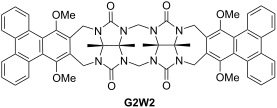
- larger aromatic walls in the form of triphenylene walls. To ensure that the targeted hosts display low aqueous solubility required for solid state sequestrants, we exchanged the O(CH2)3SO3Na groups for OMe groups. Accordingly, we targeted the preparation of W1 and W2 (Scheme 1) which contain large π



Halogenated butyrolactones from the biomass-derived synthon levoglucosenone
Beilstein J. Org. Chem. 2025, 21, 2297–2301, doi:10.3762/bjoc.21.175
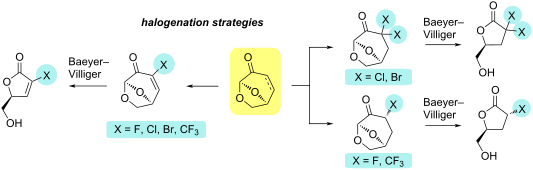
- infections. The preparation of 2-halo-2-deoxy-ᴅ-ribose derivatives can be achieved via the modification of the parent sugar [9][10] or chain-elongation strategies from lower homologues. For example, Castro and co-workers have demonstrated the synthesis of a dichlorinated 2-deoxypentose via the addition of
- -derived bioactives. Preparation of chlorinated and brominated lactones 8a,b and 11a,b. Preparation of fluorinated lactone 14. Fluorination of LGO (5) and conversion to lactone 17. Trifluoromethylation of 9a,b and 15 and subsequent Baeyer–Villiger oxidation. Supporting Information Supporting Information



Enantioselective radical chemistry: a bright future ahead
Beilstein J. Org. Chem. 2025, 21, 2283–2296, doi:10.3762/bjoc.21.174
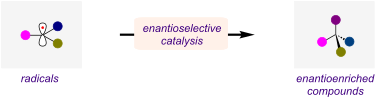
- preparation of chiral β-aminoalcohols [63]. Chiral copper(I) complexes convert imidate radicals, formed transiently through energy-transfer catalysis, to oxazolines. The transformation includes a regioselective and enantioselective HAT process. Upon blue LED irradiation, oxime imidates (derived from alcohols


Pathway economy in cyclization of 1,n-enynes
Beilstein J. Org. Chem. 2025, 21, 2260–2282, doi:10.3762/bjoc.21.173
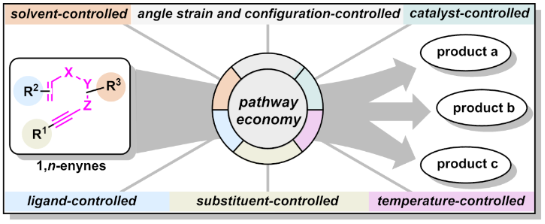
- components such as solvents, catalysts, ligands and so on. Unlike traditional “one-to-one” reactions, pathway-controlled “one-to-many” transformations synthesize multiple products from single intermediates, dramatically reducing preparation time and reagent requirements (Scheme 1b). As an exceptionally


Research towards selective inhibition of the CLK3 kinase
Beilstein J. Org. Chem. 2025, 21, 2250–2259, doi:10.3762/bjoc.21.172
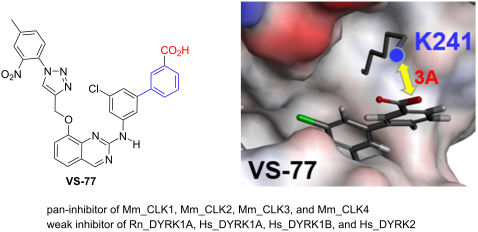
- ]. Results and Discussion Chemical syntheses The synthetic strategy is very similar to the one previously developed for the preparation of DB18 and designed analogues (Scheme 1) [23][24]. It starts from known quinazoline 1 which, on Buchwald–Hartwig-type reaction with 3-bromoaniline (2a), gave


A chiral LC–MS strategy for stereochemical assignment of natural products sharing a 3-methylpent-4-en-2-ol moiety in their terminal structures
Beilstein J. Org. Chem. 2025, 21, 2243–2249, doi:10.3762/bjoc.21.171
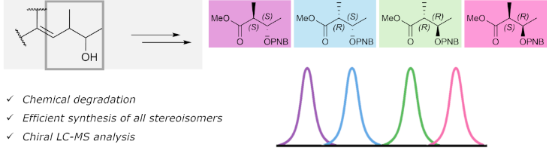
- . (a) Synthetic (2S,3S)-8, (2S,3R)-9, (2R,3R)-10, and (2R,3S)-11 and (b) C9–C12 fragment 7 derived from 1. (A) General strategy for the preparation of the fragment from an MPO-containing natural product. (B) Synthesis of esters 4–6, each as a mixture of four stereoisomers. Preparation of the C9–C12


Pd-catalyzed dehydrogenative arylation of arylhydrazines to access non-symmetric azobenzenes, including tetra-ortho derivatives
Beilstein J. Org. Chem. 2025, 21, 2234–2242, doi:10.3762/bjoc.21.170
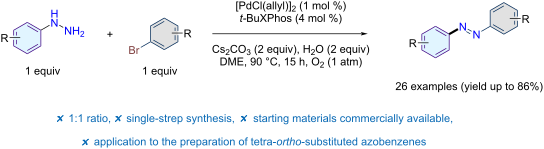
- , most synthetic methods have focused on the preparation of symmetric derivatives [12][13]. Traditional approaches, such as oxidative coupling of anilines [14][15][16][17][18][19], reductive coupling of nitroarenes [20][21][22][23], or cross-coupling between anilines and nitroarenes have proven
- proved to be a suitable coupling partner, enabling the preparation of azoarene 3p in 70% yield. Moreover, starting from 1,4-dibromobenzene and 2 equivalents of 1a, a double reaction occurred, enabling the one-step synthesis of 1,4-bis[(E)-2-phenyldiazenyl]benzene (3q) in high yield. We next investigated
- -products. The presence of oxidants such as O2 mitigates this pathway by promoting oxidative dehydrogenation as the dominant pathway. Conclusion In summary, we have developed robust and efficient conditions for the preparation of azobenzenes via C–N coupling and dehydrogenation, employing [PdCl(C3H5)]2 with


Thiadiazino-indole, thiadiazino-carbazole and benzothiadiazino-carbazole dioxides: synthesis, physicochemical and early ADME characterization of representatives of new tri-, tetra- and pentacyclic ring systems and their intermediates
Beilstein J. Org. Chem. 2025, 21, 2220–2233, doi:10.3762/bjoc.21.169
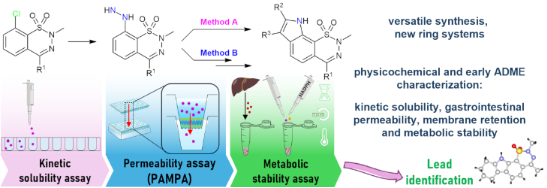
- -dioxides, we aimed at elaborating a synthetic procedure for the preparation of their pyrrole-fused counterparts, 2,9-dihydro[1,2,3]thiadiazino[5,6-g]indole 1,1-dioxide derivatives. The simple and versatile process led, via Fischer indole cyclization of the corresponding hydrazones, to a wide structural
- KGaA, Darmstadt, Germany), adjusting the pH with HCl. Water for buffer and eluent preparation were provided by a Millipore Milli-Q water purification system. Kinetic aqueous solubility assay. All compounds were dissolved in DMSO to make stock solutions at 10 mM concentration. In the case of 7i, 7j, and
- water (5 mL) was added. The mixture was extracted with EtOAc (3 × 5 mL), washed with water (5 mL) and brine (5 mL), dried over MgSO4 and evaporated to give crude products 3 or 10, which were purified by recrystallization from isopropyl alcohol or by flash chromatography. Method B for the preparation of


Electrochemical cyclization of alkynes to construct five-membered nitrogen-heterocyclic rings
Beilstein J. Org. Chem. 2025, 21, 2173–2201, doi:10.3762/bjoc.21.166
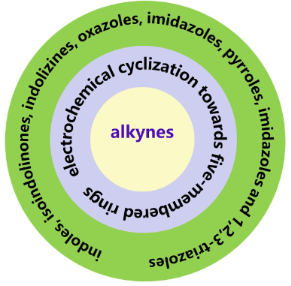
- sustainable strategy for the preparation of 3-selenylindoles. In 2023, Satyanarayana also described a similar electrochemical cascade approach towards 3-selenylindoles from 2-alkynylanilines (Scheme 6) [202]. When graphite was used as anode, platinum as cathode and LiClO4 as electrolyte, the electrochemical
- ][254], this approach exhibited the following advantages like without metal catalysts and external oxidants, atom economy, facile access of starting materials, etc. In 2024, Cho succeeded in the preparation of trifluoromethylated oxazoles through in-situ aminotrifluoromethylation/cyclization of alkynes









C2 to C6 biobased carbonyl platforms for fine chemistry
Beilstein J. Org. Chem. 2025, 21, 2103–2172, doi:10.3762/bjoc.21.165
- the atom economical preparation of dihydroxyacetone (DHA) in good yield from aqueous glyceraldehyde (Scheme 16) [78]. Transformation of 1,3-dihydroxy-2-propanone (dihydroxyacetone, DHA) has been a very popular topic for many years, using a variety of reactions like isomerizations and dehydrations [79
- intermediate furan-derived enones. Subsequent reductive amination was performed in the presence of ammonia or amines and Pd/Al2O3 under H2 pressure, providing the tetrahydrofuran-derived amines [184]. The same catalytic system could allow the one-pot preparation of tetrahydrofuran-derived secondary and
- , pharmaceuticals or high added value chemicals [215][216][217][218][219][220][221][222][223]. Its first commercial production began in the 1940s. Its preparation from biomass involves several different possible pathways. One is the C5 sugar route starting from xylose as an example, relying on acid hydrolysis of


α-Ketoglutaric acid in Ugi reactions and Ugi/aza-Wittig tandem reactions
Beilstein J. Org. Chem. 2025, 21, 2021–2029, doi:10.3762/bjoc.21.157
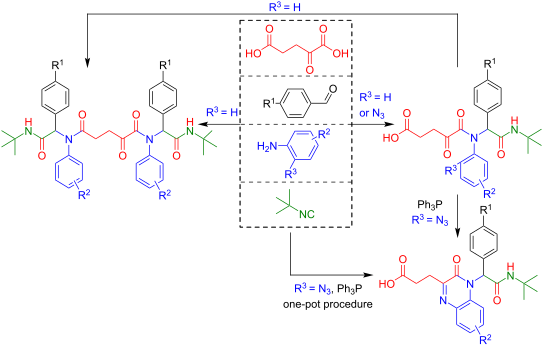
- , unlike conventional linear synthesis strategies, they enable the preparation of libraries of organic compounds in higher yields and with significantly less time, resources, and chemical waste [1][2][3][4][5]. The Ugi reaction, discovered in 1959 by Ivar Karl Ugi [6], is one of the classic multicomponent
- for the preparation of benzodiazepinone derivatives, which showed promising psychotropic effects [20][21][22][23][24], using a tandem combination of Ugi/azide–alkyne cycloaddition reactions. From this point of view, azido amines are promising reagents for use in the Ugi reaction, opening up the
- dedicated to the synthesis of novel peptidomimetics using the four-component Ugi reaction and the study of a tandem Ugi/aza-Wittig combination based on α-ketoglutaric acid for the preparation of earlier unavailable quinoxalinone derivatives. Results and Discussion We began by studying the behavior of α


Asymmetric total synthesis of tricyclic prostaglandin D2 metabolite methyl ester via oxidative radical cyclization
Beilstein J. Org. Chem. 2025, 21, 1964–1972, doi:10.3762/bjoc.21.152
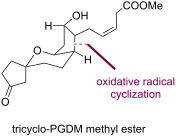
- -keto ester 15 [24]. The β-keto ester 15 was expected to be derived from compounds 16 and 17 via an asymmetric aldol reaction [25]. The first phase of the synthesis required the efficient preparation of compound 14, for which a transition-metal-mediated oxidative radical cyclization of β-keto ester 15



Enantioselective desymmetrization strategy of prochiral 1,3-diols in natural product synthesis
Beilstein J. Org. Chem. 2025, 21, 1932–1963, doi:10.3762/bjoc.21.151
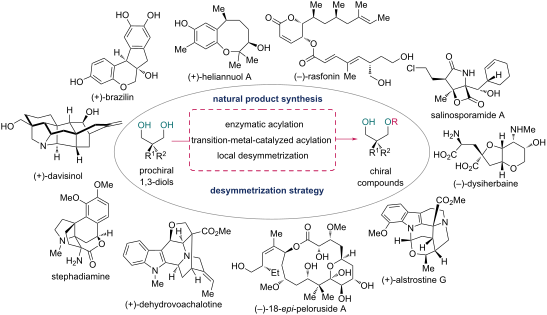
- -worker described the asymmetric synthesis of (−)-rasfonin, harnessing an enantioselective enzymatic desymmetrization with lipase AK and an enzymatic oxidative kinetic resolution to install stereocenters [47]. The synthesis commenced with the preparation of fragment 100 from ethylene glycol (97) (Scheme
- leustroducsin B (96). Nanda’s synthesis of a) fragment 100, b) fragment 106 and c) (−)-rasfonin (109). Davies’ synthesis of (+)-pilocarpine (115) and (+)-isopilocarpine (116). Ōmura’s synthesis of salinosporamide A (125). Kang’s synthesis of ʟ-cladinose (124) and its derivative. Kang’s preparation of fragment










Synthesis, biological and electrochemical evaluation of glycidyl esters of phosphorus acids as potential anticancer drugs
Beilstein J. Org. Chem. 2025, 21, 1909–1916, doi:10.3762/bjoc.21.148
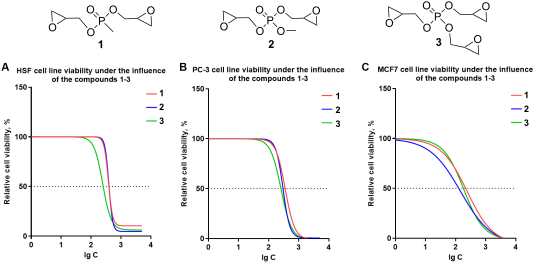
- -well flat-bottom plates at a density of 5 × 10³ cells per well and allowed to adhere for 24 hours under standard culture conditions. Preparation of compound solutions. Stock solutions of diglycidyl methylphosphonate (1), diglycidyl methylphosphate (2), and triglycidyl phosphate (3) were prepared by


Stereoselective electrochemical intramolecular imino-pinacol reaction: a straightforward entry to enantiopure piperazines
Beilstein J. Org. Chem. 2025, 21, 1897–1908, doi:10.3762/bjoc.21.147
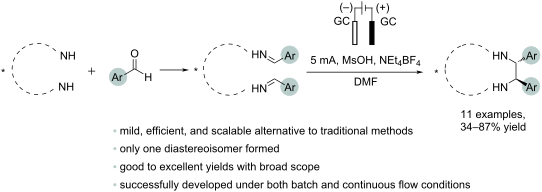
- applications in the preparation of chiral ligands. Keywords: chiral piperazines; electrosynthesis; flow chemistry; green chemistry; imino-pinacol coupling; Introduction Vicinal diamines represent a highly valuable class of compounds that, over the past decades, have found widespread application in natural



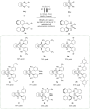


Preparation of spirocyclic oxindoles by cyclisation of an oxime to a nitrone and dipolar cycloaddition
Beilstein J. Org. Chem. 2025, 21, 1890–1896, doi:10.3762/bjoc.21.146
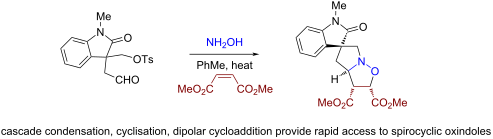
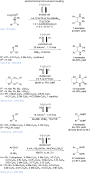
- ; nitrogen – blue; carbon – grey; hydrogen – pale green). Proposed synthetic approach. Preparation of the aldehyde 4. Cycloaddition with N-methylmaleimide. Cycloaddition with N-phenylmaleimide. Cycloaddition with dimethyl fumarate and dimethyl maleate. Supporting Information Supporting Information File 30


Photoswitches beyond azobenzene: a beginner’s guide
Beilstein J. Org. Chem. 2025, 21, 1808–1853, doi:10.3762/bjoc.21.143
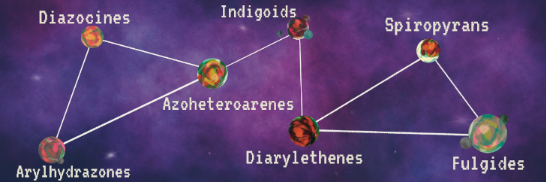
- preparation. Before introducing the different photoswitch classes in this review, we familiarise ourselves with different photophysical properties. A photochromic molecule can switch reversibly between a stable and a metastable state, which are shown in an energetic profile as two local minima (Figure 1




Unique halogen–π association detected in single crystals of C–N atropisomeric N-(2-halophenyl)quinolin-2-one derivatives and the thione analogue
Beilstein J. Org. Chem. 2025, 21, 1748–1756, doi:10.3762/bjoc.21.138
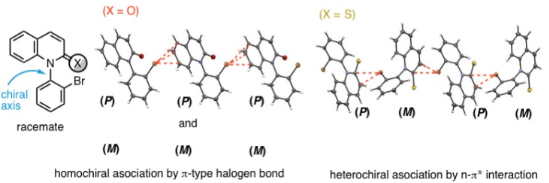
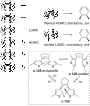
- electron pair on the bromine atom and a π* orbital of the quinoline-thione ring, rather than a π-type halogen bonding. Although we attempted the preparation of single crystals of the optically pure form of 2a, unfortunately, crystals suitable for X-ray measurement could not be obtained (2a is chemically


Preparation of a furfural-derived enantioenriched vinyloxazoline building block and exploring its reactivity
Beilstein J. Org. Chem. 2025, 21, 1737–1741, doi:10.3762/bjoc.21.136

- competent substrate for the aza-Diels–Alder reaction in with TsNCO to give oxazolo[3,2-c]pyrimidine derivative 7 as a single diastereomer. Proposed approach for the preparation of vinyloxazoline 6. Synthesis of furfuryl amino alcohols S-2d and R-2d and their electrochemical oxidation to esters S-3d and R-3d





