


Search results
Search for "promoter" in Full Text gives 132 result(s) in Beilstein Journal of Organic Chemistry.
Non-native autoinducer analogs capable of modulating the SdiA quorum sensing receptor in Salmonella enterica serovar Typhimurium
Beilstein J. Org. Chem. 2018, 14, 2651–2664, doi:10.3762/bjoc.14.243
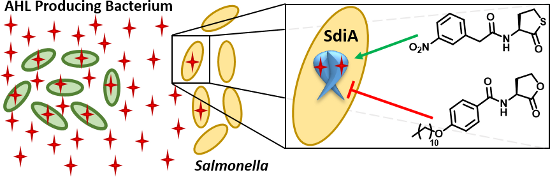
- used the S. Typhimurium-pJNS25 reporter strain constructed by Smith and Ahmer [27] and also used by Janssens et al. [20] to examine SdiA activity. This strain naturally produces SdiA and contains a reporter plasmid with the promoter region for srgE fused to the luxABCDE operon of V. fischeri (see
- different reporter gene output. E. coli JLD271 is the sdiA mutant of K-12 E. coli [60]. This reporter construct uses an arabinose inducible promoter to produce S. Typhimurium SdiA and the promoter region for srgE fused to lacZ to report SdiA activity. SdiA activity is then measured using standard β
- . E. coli JLD271-pJN105SE-pSC11SE was grown in 10 μg/mL gentamicin and 100 μg/mL ampicillin. Construction of E. coli JLD271-pJN105SE-pSC11SE. The same promoter region used by Smith and Ahmer [27] to construct pJNS25 was used for the promoter region in pSC11SE [66]. 477 base pairs of the srgE (STM1554



Graphitic carbon nitride prepared from urea as a photocatalyst for visible-light carbon dioxide reduction with the aid of a mononuclear ruthenium(II) complex
Beilstein J. Org. Chem. 2018, 14, 1806–1812, doi:10.3762/bjoc.14.153
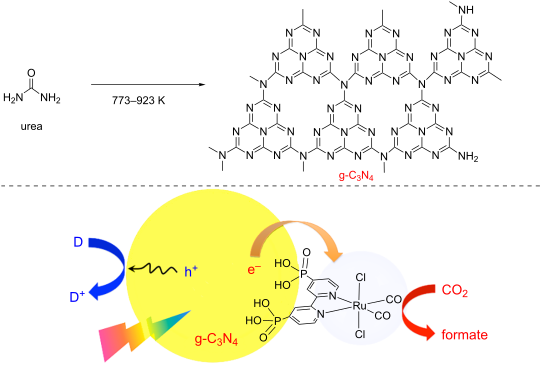
- evolution Using the as-prepared g-C3N4, CO2 reduction was conducted with the aid of RuP cocatalyst and Ag promoter in a N,N-dimethylacetamide (DMA)/TEOA mixed solution under visible light (λ > 400 nm). Here TEOA works as an effective electron donor that scavenges holes generated in the valence band of g
- in this study. Ag nanoparticles loaded on mpg-C3N4 serves as a promoter of electron transfer from mpg-C3N4 to RuP, as discussed in our previous work [13]. TEM observation indicated that the loaded Ag is in the form of nanoparticles of 5–10 nm in size (Figure 5). Without Ag (i.e., RuP/g-C3N4), formate
- production was clearly observable, but the activity was typically 20% that of RuP/Ag/g-C3N4. Hence we employed Ag as an additional promoter in all cases. It should be also noted that no reaction took place using only g-C3N4. As listed in Table 2, the main product during the reaction was formate with 90–95


Natural and redesigned wasp venom peptides with selective antitumoral activity
Beilstein J. Org. Chem. 2018, 14, 1693–1703, doi:10.3762/bjoc.14.144
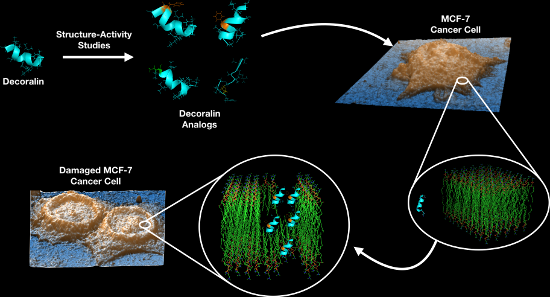
- ). [Phe]6-Des[Thr]11-Dec-NH2 did not present helical tendencies, as analyzed by Torres et al. [10], and was not as hemolytic as the other Phe-substituted analogs (Table 1). [Pro]4-Dec-NH2 was described as an unstructured peptide even in helical promoter media [34][35] by Torres et al. [10] and was


β-Hydroxy sulfides and their syntheses
Beilstein J. Org. Chem. 2018, 14, 1668–1692, doi:10.3762/bjoc.14.143
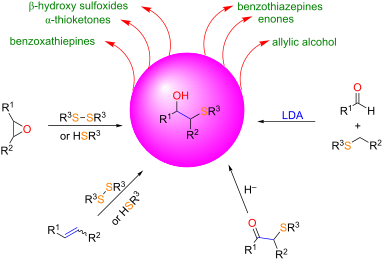
- . Besides the ability of the catalysts to promote the epoxide ring opening with sulfur nucleophiles at room temperature, the attractiveness of the promoter was its capability to effect opening of the epoxide ring with alcohols, selenols and amines to provide the corresponding β-hydroxy analogs. 3.1.1.2
- yield and high regioselectivity. As an alternative to Lewis acids, Cossy and co-workers reported the use of LiNTf2 promoter for the thiolysis of epoxides [29]. The reaction provided better yields under solvent-free conditions than using dichloromethane as a solvent. Although a wide variety of epoxides
- , the added advantage of the protocol is that when LiNTf2 is used instead of Lewis acids, the work-up is easier as no vexatious emulsion was formed. However, the need for 0.5 equiv of the promoter and the sluggishness (20 h) of the reaction make the method less favorable when compared to other Lewis


Glycosylation reactions mediated by hypervalent iodine: application to the synthesis of nucleosides and carbohydrates
Beilstein J. Org. Chem. 2018, 14, 1595–1618, doi:10.3762/bjoc.14.137
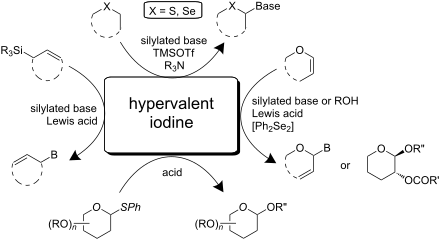
- disaccharide 158 in good yield (Scheme 20). Randolph and Danishefsky reported a glycal assembly strategy to the synthesis of a branched oligosaccharide [82]. Bennett and co-workers reported that phenyl(trifluoroethyl)iodonium triflimide was a stable promoter for glycosylation reactions using thioglycoside
- /acetonitrile/isobutyronitrile/pivalonitrile greatly improved both the chemical yields and stereoselectivity, as shown in Scheme 21. The results suggested that both the solvent system and iodonium salt promoter are required for selectivity. Even though glycals have a π-electron-rich enol ether unit, reports


Synthetic avenues towards a tetrasaccharide related to Streptococcus pneumonia of serotype 6A
Beilstein J. Org. Chem. 2018, 14, 1095–1102, doi:10.3762/bjoc.14.95
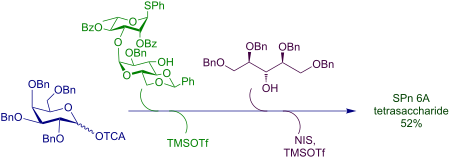
- from NMR). We presume that this near exclusivity in α-selection may be due to the synergistic effect from the 4,6-O-benzylidene group, which is a good promoter for 1,2-cis glycosylation in galactose-based systems [38], as well as the steric crowding caused by the bulky 3-O-naphthylmethyl group at the β


An overview of recent advances in duplex DNA recognition by small molecules
Beilstein J. Org. Chem. 2018, 14, 1051–1086, doi:10.3762/bjoc.14.93
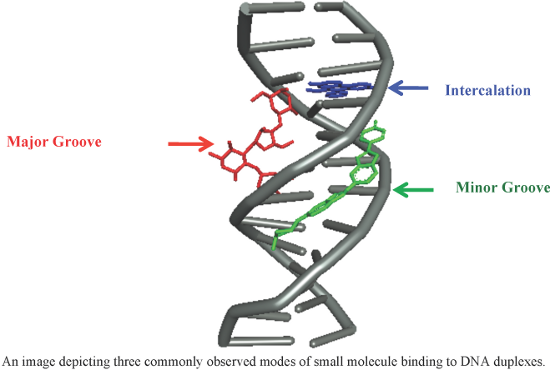
- ]. Gottesfeld et al. synthesized a series of Py/Im HP-polyamide–DNA alkylator (chlorambucil) (HP-Chl) conjugates in order to bind and alkylate within the HIV-1 promoter region, thereby blocking HIV-1 replication and screened them against human colon carcinoma cell lines [74][75]. It has been observed that
- site in the H4c promoter in treated cells, thereby inhibiting tumor growth in mice. Chenoweth and Dervan showed DNA structural distortion induced by an 8-ring cyclic Py/Im polyamide (conjugate 17) bound to the central 6 bp of the sequence d(5'-CCAGGCCTGG-3')2 by using a high resolution X-ray crystal
- structure as shown in Figure 7a [76]. This allosteric perturbation of the DNA helix by small molecules through binding at distinct locations on promoter DNA provides a clear understanding of how transcription factor activity could be disrupted and gene expressions could also be regulated. In order to target


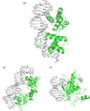


Palladium-catalyzed ortho-halogenations of acetanilides with N-halosuccinimides via direct sp2 C–H bond activation in ball mills
Beilstein J. Org. Chem. 2018, 14, 430–435, doi:10.3762/bjoc.14.31
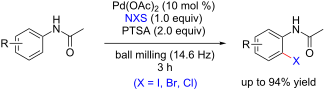
- reaction of 1a with NIS in the absence of Pd(OAc)2, yet still with PTSA as the promoter, and no iodinated product was furnished (Table 1, entry 3). The use of D-camphorsulfonic acid (D-CSA) or mesitylenesulfonic acid dihydrate provided inferior results than that obtained in the presence of PTSA (Table 1


5-Aminopyrazole as precursor in design and synthesis of fused pyrazoloazines
Beilstein J. Org. Chem. 2018, 14, 203–242, doi:10.3762/bjoc.14.15
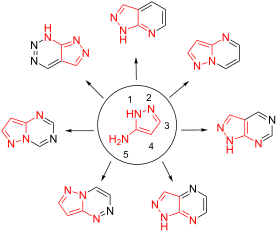
- TFA as promoter at 80 °C to 140 °C. A three-component reaction of 5-aminopyrazole 16, 4-hydroxycoumarin (50) and aldehydes 47 was studied by Liu et al. [55] in various solvents like acetonitrile, dichloromethane, toluene and DMSO in the presence of catalysts like ZrCl4, InCl3, FeCl3, L-proline etc


Progress in copper-catalyzed trifluoromethylation
Beilstein J. Org. Chem. 2018, 14, 155–181, doi:10.3762/bjoc.14.11
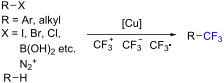
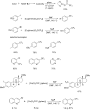
- reported by the group of Li and Duan, with sodium trifluoroacetate as the trifluoromethyl source and using Ag2O as a promoter (Scheme 5) [17]. Subsequently, Beller and co-workers [18] finished a copper-catalyzed trifluoromethylation of aryl iodides with inexpensive methyl trifluoroacetate (MTFA) (Scheme 6
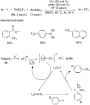
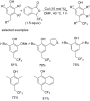
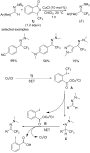
- the ditrifluoromethylation product was formed as well. Recently, Tan and co-workers [55] designed a highly mono-selective ortho-trifluoromethylation of benzamides assisted with an 8-aminoquinoline directing group. This reaction employed simple copper salt CuBr as the promoter and Togni’s reagent II as










Synthetic mRNA capping
Beilstein J. Org. Chem. 2017, 13, 2819–2832, doi:10.3762/bjoc.13.274
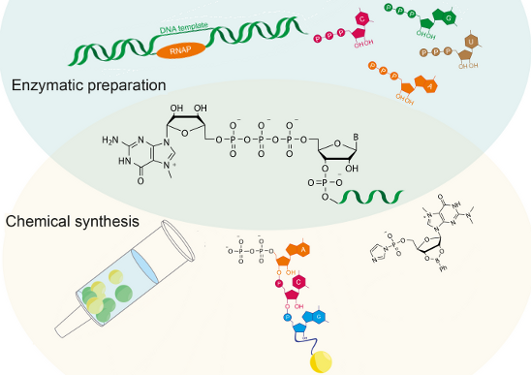
- analogue [50]. The problem of orientation is circumvented when GpppA cap analogues are used in combination with the T7 class II promotor phi2.5 which allows initiating RNA synthesis with ATP. Hence, GpppA- or m7GpppA-capped RNAs can be produced [51]. When the common GTP-initiating T7 class III promoter



Reagent-controlled regiodivergent intermolecular cyclization of 2-aminobenzothiazoles with β-ketoesters and β-ketoamides
Beilstein J. Org. Chem. 2017, 13, 2739–2750, doi:10.3762/bjoc.13.270
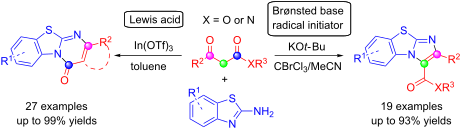
- . coupled various 1,2-dihaloarenes with 2-mercaptobenzimidazole in a nucleophilic aromatic substitution reaction [53]. Zhu’s group used Cu salts as a promoter for the cycloaddition of isocyanides with benzothiazoles [54]. Benzo[d]imidazo[2,1-b]thiazoles have also been synthesized via coupling of 2


Diosgenyl 2-amino-2-deoxy-β-D-galactopyranoside: synthesis, derivatives and antimicrobial activity
Beilstein J. Org. Chem. 2017, 13, 2310–2315, doi:10.3762/bjoc.13.227
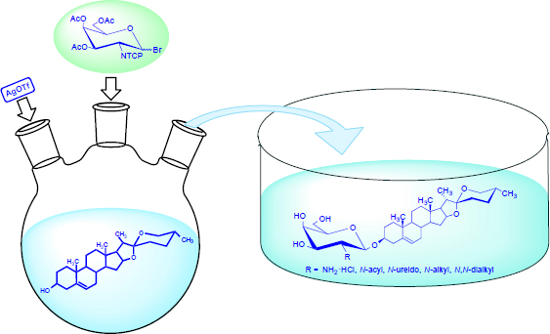
- the β anomer). Glycosylation of diosgenin with 2 was performed in dichloromethane by a “reverse” procedure: The glycosyl donor was added to the solution of diosgenin and the promoter (silver triflate) [31]. This procedure afforded the expected β glycoside 3 in 80% yield. The structure of 3 was


Preactivation-based chemoselective glycosylations: A powerful strategy for oligosaccharide assembly
Beilstein J. Org. Chem. 2017, 13, 2094–2114, doi:10.3762/bjoc.13.207
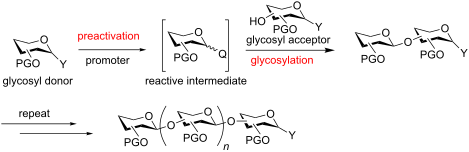
- University, East Lansing, MI 48824, USA 10.3762/bjoc.13.207 Abstract Most glycosylation reactions are performed by mixing the glycosyl donor and acceptor together followed by the addition of a promoter. While many oligosaccharides have been synthesized successfully using this premixed strategy, extensive
- protective group manipulation and aglycon adjustment often need to be performed on oligosaccharide intermediates, which lower the overall synthetic efficiency. Preactivation-based glycosylation refers to strategies where the glycosyl donor is activated by a promoter in the absence of an acceptor. The
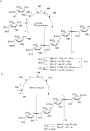
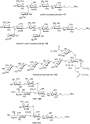
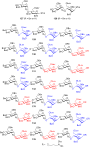
- -reducing end with a glycosyl donor premixed with an acceptor. Upon the addition of a promoter to the reaction mixture, the donor is activated to glycosylate the acceptor yielding a disaccharide, which is subsequently deprotected to expose a free hydroxy group (Scheme 1a). The newly generated acceptor can







Intramolecular glycosylation
Beilstein J. Org. Chem. 2017, 13, 2028–2048, doi:10.3762/bjoc.13.201
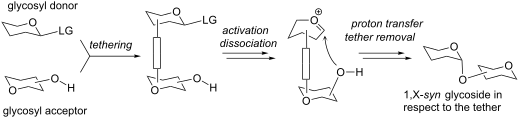
- of stereoselectivity, so further trials were done in the absence of metal or acid reagents. Surprisingly, when IBr was used as a promoter the selectivity reversed resulting in the formation of glycoside 103 in 65% yield and high β-stereoselectivity (α/β = 1:10). The selectivity also reverses when the


1,3-Dibromo-5,5-dimethylhydantoin as promoter for glycosylations using thioglycosides
Beilstein J. Org. Chem. 2017, 13, 1994–1998, doi:10.3762/bjoc.13.195
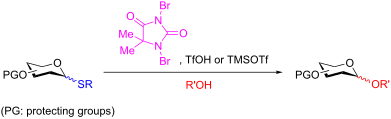
- trimethylsilyl trifluoromethanesulfonate (TMSOTf) were employed as co-promoters in solution or automated glycan assembly on solid phase. Keywords: automated glycan assembly; 1,3-dibromo-5,5-dimethylhydantoin; glycosylation; promoter; thioglycosides; Introduction Thioglycosides are versatile glycosylating
- be freshly prepared prior to use [24][25][26]. Here, we describe a promoter system based on the commercially available, inexpensive 1,3-dibromo-5,5-dimethylhydantoin (DBDMH) for the activation of thioglycosides. DBDMH, a white to pale-brown powder that is readily soluble in most organic solvents
- ]. In synthetic chemistry, DBDMH acts as a thiophilic activator in the conversion of dithioacetals to the corresponding O,O-acetals [28][29][30], as well as in the synthesis of heparin mimetics [31]. We considered DBDMH as a readily available alternative promoter for glycosylations involving


Sustainable synthesis of 3-substituted phthalides via a catalytic one-pot cascade strategy from 2-formylbenzoic acid with β-keto acids in glycerol
Beilstein J. Org. Chem. 2017, 13, 1425–1429, doi:10.3762/bjoc.13.139
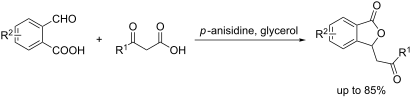
- Discussion To optimize the reaction conditions, 2-formylbenzoic acid (1a) and benzoylacetic acid (2a) were chosen as model substrates. As summarized in Table 1, the reaction did not occur without the use of a base, indicating that a promoter is essential for an effective transformation (Table 1, entry 1). We



From chemical metabolism to life: the origin of the genetic coding process
Beilstein J. Org. Chem. 2017, 13, 1119–1135, doi:10.3762/bjoc.13.111



Automating multistep flow synthesis: approach and challenges in integrating chemistry, machines and logic
Beilstein J. Org. Chem. 2017, 13, 960–987, doi:10.3762/bjoc.13.97
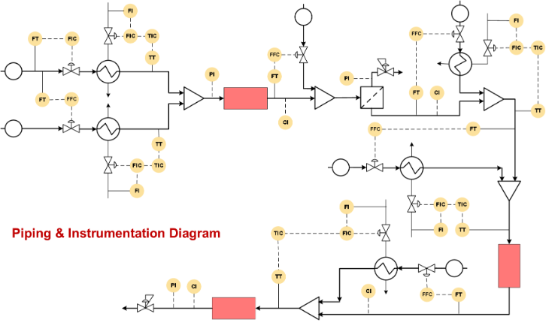
- equiv) in DMF solution and ICI as the promoter (3 equiv) in n-PrOH and was subjected to an oxidative 1,2-aryl migration. The reaction is carried out in a coiled reactor at 90 °C and 1 min residence time. The outlet stream is subjected to an alkaline solution of 2-mercaptoethanol, which quenched the ICI
- to create the desired pressure and facilitate complete separation. Trimethylorthoformate and ICI promoter also need to be preheated to 90 °C and mixed with the process stream containing the aryl ketone intermediate. The reactor can be maintained at the desired temperature using a jacket or tube-in




Opportunities and challenges for the sustainable production of structurally complex diterpenoids in recombinant microbial systems
Beilstein J. Org. Chem. 2017, 13, 845–854, doi:10.3762/bjoc.13.85
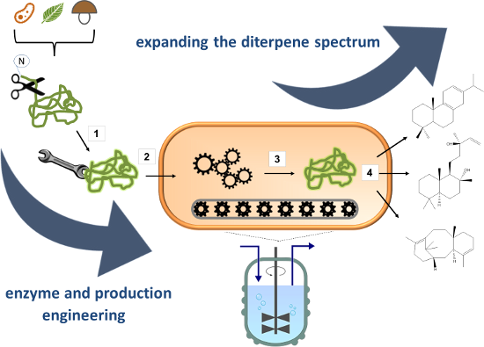
- = geranylgeranyl diphosphate synthase; GGPPSRS = GGPPS from Rhodobacter sphaeroides; KSSR = ent-kaurene synthase from Stevia rebaudiana, CPPSSR = ent-copalyl diphosphate synthase from Stevia rebaudiana, Trc = Trc promoter; T7 = T7 promoter. Mutational engineering of different classes of terpene synthases. Left


Synthesis of D-manno-heptulose via a cascade aldol/hemiketalization reaction
Beilstein J. Org. Chem. 2017, 13, 795–799, doi:10.3762/bjoc.13.79

- ). The reaction of 5 with ethanethiol in the presence of hydrochloric acid followed by selective protection of the 4,5-diol with 2,2-dimethoxypropane using pyridinium p-toluenesulfonate as the promoter gave the 4,5-O-isopropylidene derivative 6 in 71% yield over two steps [40]. Treatment of diol 6 with


Synthesis of 1-indanones with a broad range of biological activity
Beilstein J. Org. Chem. 2017, 13, 451–494, doi:10.3762/bjoc.13.48
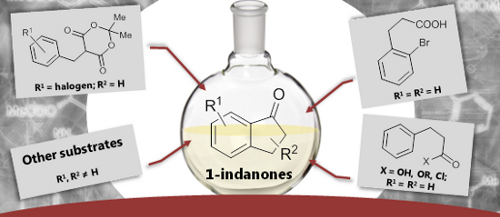
- 116 was isolated in 60% yield and further used in the synthesis of the natural product. Hexamethylenetetramine (HMTA) is a commonly used promoter of aryl alkyl ketones in the Mannich reaction which has been applied in the synthesis of α,β-unsaturated ketones 119 [64]. The HMTA/acetic anhydride
- vinyl β-ketoesters 156 in the presence of AlCl3 as a promoter, in high yields (up to 99%) (Scheme 45). It was further proved that the pattern of substituents at C-2, C-4 and C-5 positions was essential for the reaction efficiency. 1.2 From alcohols An interesting synthesis of optically active 1


Total synthesis of a Streptococcus pneumoniae serotype 12F CPS repeating unit hexasaccharide
Beilstein J. Org. Chem. 2017, 13, 164–173, doi:10.3762/bjoc.13.19
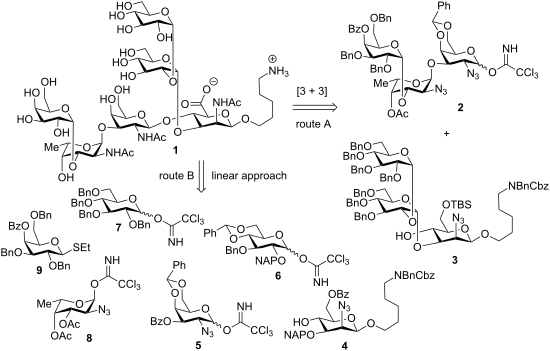
- [25]. Silylation of the C3 hydroxy group furnished thioglycoside 17. Glycosylation of the C5 linker by activation of 17 using NIS/TfOH as the promoter at −20 °C produced mainly β-mannoside 15 (4:1 β:α) [26]. The identity of the β-isomer was confirmed by NMR analysis (1JCH β = 159.0 Hz, see Supporting


Silyl-protective groups influencing the reactivity and selectivity in glycosylations
Beilstein J. Org. Chem. 2017, 13, 93–105, doi:10.3762/bjoc.13.12

- Lewis X trisaccharide: The reaction of 7 with disaccharide 8 promoted by dimethyl disulfide and triflic anhydride gave trisaccharide 9 with high α-selectivity (Scheme 3) [12]. These conditions, using this promoter system, worked fine in a number of similar cases. The less-stable trimethylsilyl group has


First DMAP-mediated direct conversion of Morita–Baylis–Hillman alcohols into γ-ketoallylphosphonates: Synthesis of γ-aminoallylphosphonates
Beilstein J. Org. Chem. 2016, 12, 2906–2915, doi:10.3762/bjoc.12.290
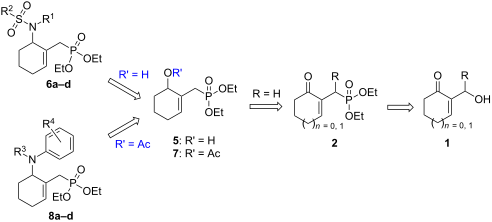
- trialkyl and triaryl phosphites, into γ-ketoallylphosphonates under solvent-free conditions, in the presence or absence of the promoter DMAP. The corresponding products have been further involved in two alternative efficient synthetic routes for γ-amino- and γ-tosylaminophosphonates that were readily





