Search results
Search for "substitution" in Full Text gives 1510 result(s) in Beilstein Journal of Organic Chemistry. Showing first 200.
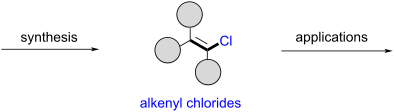
Synthesis and applications of alkenyl chlorides (vinyl chlorides): a review
Beilstein J. Org. Chem. 2026, 22, 1–63, doi:10.3762/bjoc.22.1
- Finkelstein-type halide exchange reaction (Scheme 23). This strategy leverages the decreasing bond-dissociation energies across the halogen series – C–Cl (D298(C−Cl) = 395 kJ mol−1) and C–Br (D298(C–Br) = 318 kJ mol−1) bonds compared to the C–I bond (D298(C–I) = 253 kJ mol−1) to drive the substitution of
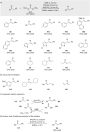
- nucleophilic chloromethylenetitanium species that transforms a ketone into the corresponding alkenyl chlorides (Scheme 63) [199]. 1.10 Allylic substitutions Allylic substitution of readily accessible alkenyl chlorides bearing a suitable leaving group at the allylic position enables efficient introduction of
- the alkenyl chloride motif. Scheme 64, depicts representative examples by Boger [200], Taber [201], and Morken [202]. In 2012, Feringa and co-workers reported the first enantioselective allylic substitution of allylic gem-dichlorides with alkyl Grignard reagents (Scheme 65A) [203]. The reaction























Sustainable electrochemical synthesis of aliphatic nitro-NNO-azoxy compounds employing ammonium dinitramide and their in vitro evaluation as potential nitric oxide donors and fungicides
Beilstein J. Org. Chem. 2025, 21, 2739–2754, doi:10.3762/bjoc.21.211
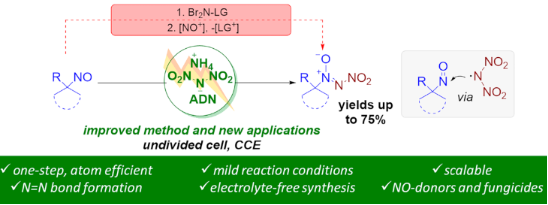
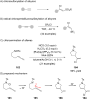
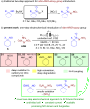
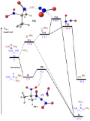
- nucleophilic substitution of –ONO2 groups. To clarify the reaction mechanism, cyclic voltammetry (CV) studies were conducted. CV curves of cyclohexanone oxime (S1), 1-bromo-1-nitrosocyclohexane (S2), 1-chloro-1-nitrosocyclohexane (S3), 1-nitrosocyclohexyl acetate (S4), 1-nitro-1-nitrosocyclohexane (1c), 1





Recent advancements in the synthesis of Veratrum alkaloids
Beilstein J. Org. Chem. 2025, 21, 2657–2693, doi:10.3762/bjoc.21.206
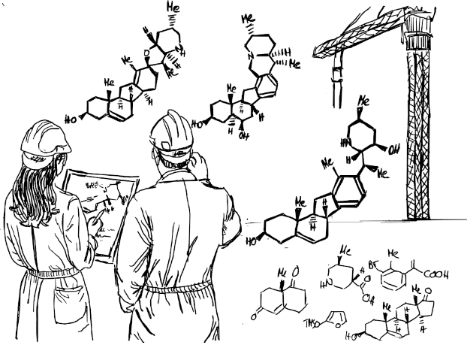
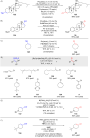
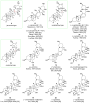
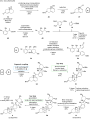
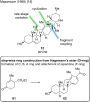
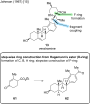
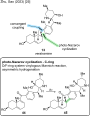
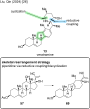
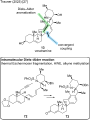
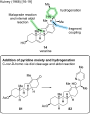
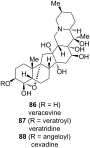
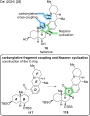
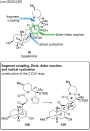
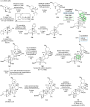
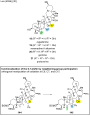
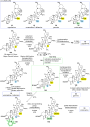
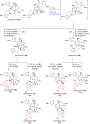
- introduced by addition of 2-lithio-5-methylpyridine (94) to methyl ketone 93, with the major addition product 95 exhibiting the desired configuration at C20. Tosylation of the primary C18–OH in 95 (and secondary C3–OH) was followed by intramolecular nucleophilic substitution through the pyridine nitrogen
















Synthesis of new tetra- and pentacyclic, methylenedioxy- and ethylenedioxy-substituted derivatives of the dibenzo[c,f][1,2]thiazepine ring system
Beilstein J. Org. Chem. 2025, 21, 2645–2656, doi:10.3762/bjoc.21.205
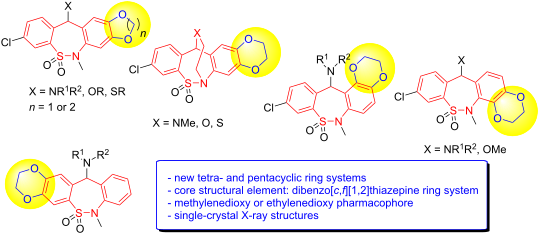
- substitution reactions of benzo-1,3-dioxoles and benzo-1,4-dioxanes [20]. Reduction of ketones 6 and 7 with NaBH4 gave alcohols 16 and 17, which were chlorinated with SOCl2 to result in compounds 18 and 19. Treatment of the latter with the appropriate amines gave amino derivatives 20a, 20c–e, and 21a, 21c–p
- ): reduction of 8 with NaBH4, followed by chlorination of alcohol 36 with SOCl2 and substitution of chloro derivative 37 with various amines resulted in compounds 38a–c. Tianeptine analogue 38d was obtained by hydrolysis of ester 38c. The synthesis of the new regioisomeric tetracyclic compounds containing the


Thiazolidinones: novel insights from microwave synthesis, computational studies, and potentially bioactive hybrids
Beilstein J. Org. Chem. 2025, 21, 2618–2636, doi:10.3762/bjoc.21.203
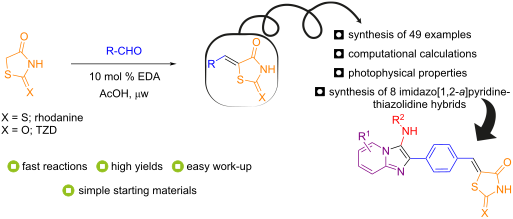
- to replace AcOH by ethanol (Table 1, entry 10), however, the use of ethanol with piperidine was controversial. We found out that, during the reaction with benzaldehyde (1a) and rhodanine (2a), a multicomponent reaction was taking place by a substitution process, leading directly to 2-amino-5






Recent advances in total synthesis of illisimonin A
Beilstein J. Org. Chem. 2025, 21, 2571–2583, doi:10.3762/bjoc.21.199
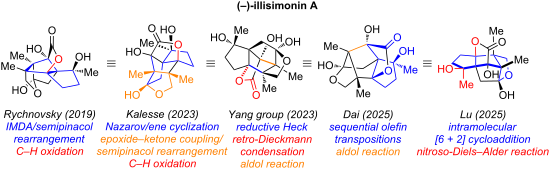
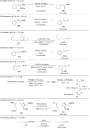
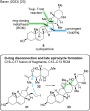
- , deprotonation, and intramolecular addition to ketone. Treatment of the silacycle with MeMgCl cleaved the Si–O bond and subsequent intramolecular nucleophilic substitution of the chloride with the adjacent hydroxy group yielded TMS-epoxide 41. Protonic acid-mediated opening of the TMS-epoxide, accompanied by TES


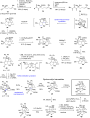


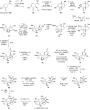


Assembly strategy for thieno[3,2-b]thiophenes via a disulfide intermediate derived from 3-nitrothiophene-2,5-dicarboxylate
Beilstein J. Org. Chem. 2025, 21, 2489–2497, doi:10.3762/bjoc.21.191
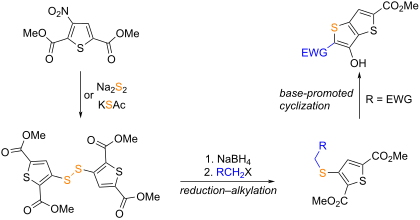
- . Nucleophilic substitution of the nitro group with sulfur nucleophiles, including thioacetate or disulfide anions as well as thioacetamide, yielded bis(thiophen-3-yl)disulfide and sulfide derivatives. The disulfide served as a suitable precursor for the preparation of 3-alkylthio-substituted thiophene-2,5
- functionalized thieno[3,2-b]thiophenes with potential applications in pharmaceutical and materials chemistry. Keywords: aromatic nucleophilic substitution; disulfide derivative; 3-nitrothiophene; organic disulfides; thieno[3,2-b]thiophene; thiophene ring closure; Introduction Thieno[3,2-b]thiophene (TT
- K2CO3 in DMSO to give the desired product [26]. Route III, previously elaborated in our group, utilizes the nucleophilic substitution of the Cl atom in 3-chlorothiophene-2-carboxylates by methyl thioglycolate in the presence of KOt-Bu, followed by KOt-Bu-mediated cyclization to the 3-hydroxy-TTs [27



Palladium-catalyzed regioselective C1-selective nitration of carbazoles
Beilstein J. Org. Chem. 2025, 21, 2479–2488, doi:10.3762/bjoc.21.190
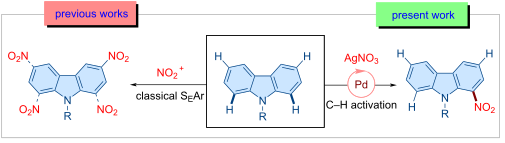
- and functional materials (Scheme 1a) [62][63][64][65][66]. Traditional electrophilic aromatic substitution methods for the nitration of carbazole typically result in a mixture of 1-nitro-, 2-nitro-, and 3-nitro-substituted isomers (Scheme 1b) [67]. Therefore, developing a method for the regioselective
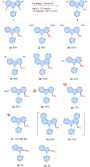
- less hindered site. Halogenated substrates 1q and 1r (3-Cl and 3-Br substitution) delivered products 2q (37%) and 2r (31%) in moderate yield. Notably, the reaction of 1r also furnished 2a (9%), indicating competitive debromination. Finally, benzocarbazole substrate 1s afforded a mixture of regioisomers
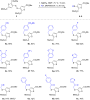
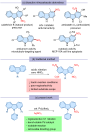
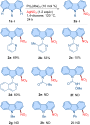
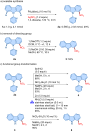
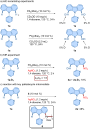
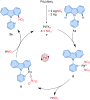
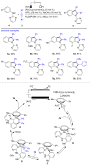
- ). Plausible catalytic cycle. (a) Representative examples of bioactive nitrocarbazoles. (b) Traditional electrophilic aromatic substitution approach for the nitration of carbazole. (c) Present work: palladium-catalyzed directed C1-selective nitration reaction. Effect of directing groups on the nitration of the


Ex-situ generation of gaseous nitriles in two-chamber glassware for facile haloacetimidate synthesis
Beilstein J. Org. Chem. 2025, 21, 2465–2469, doi:10.3762/bjoc.21.188
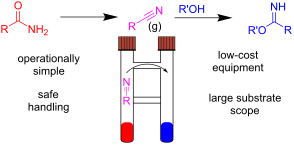
- substitution patterns. We began with carbohydrates, as the products are analogs of the trichloroacetimidates, which constitute the most commonly used class of glycosyl donors for glycoside synthesis [23]. Their trifluoro-analogs have, however, only been scarcely studied due to the difficulties in handling the


Catalytic enantioselective synthesis of selenium-containing atropisomers via C–Se bond formations
Beilstein J. Org. Chem. 2025, 21, 2447–2455, doi:10.3762/bjoc.21.186
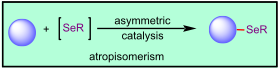
- efficiently constructed by catalytic asymmetric hydroselenation, catalytic asymmetric allyl substitution, catalytic asymmetric electrophilic selenylation/cyclization, etc. The research content of this part has already been covered by relevant reviews [15][16][17], so it is not within the scope of discussion
- formation proceeded through an SN2-type nucleophilic substitution mechanism (Scheme 1). In 2025, Li and co-workers reported a highly efficient rhodium-catalyzed enantioselective C–H selenylation reaction of 1-arylisoquinolines with diselenides, employing 3,5-(CF3)2C6H3CO₂Ag and AgSbF6 as additives [19
- phenyl-substituted benzoisoquinoline derivatives. Two plausible reaction mechanisms were proposed in the study: one involving oxidative addition of Int 4, a five-membered rhodium cyclic intermediate, followed by reductive elimination and the other proceeding via a bimolecular nucleophilic substitution




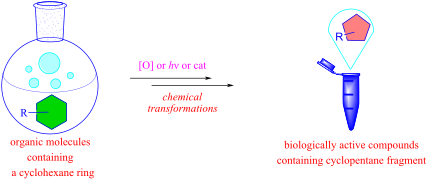
Transformation of the cyclohexane ring to the cyclopentane fragment of biologically active compounds
Beilstein J. Org. Chem. 2025, 21, 2416–2446, doi:10.3762/bjoc.21.185
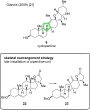
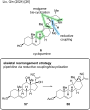
- converted by a series of synthetic transformations to (−)-spirochensilide A (228) with a total yield of 2.2% in 22 steps starting from acetylenic epoxide 229. 4.1 Wagner–Meerwein rearrangement The isomerization of terpenes via cleavage, addition or nucleophilic substitution reactions accompanied by a


Rotaxanes with integrated photoswitches: design principles, functional behavior, and emerging applications
Beilstein J. Org. Chem. 2025, 21, 2345–2366, doi:10.3762/bjoc.21.179

- + macrocycle and promotes its translation away from the acridane toward the secondary site. However, if the rotaxane contains only one recognition site, the macrocycle remains at the unfavorable acridinium station, interacting with the 9-aryl group. Therefore, substitution at this position was employed to tune


Recent advances in Norrish–Yang cyclization and dicarbonyl photoredox reactions for natural product synthesis
Beilstein J. Org. Chem. 2025, 21, 2315–2333, doi:10.3762/bjoc.21.177
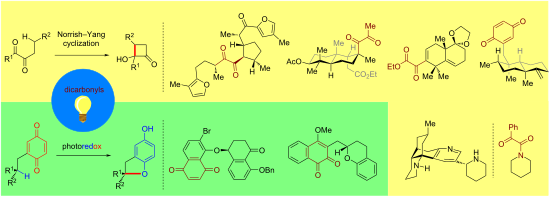
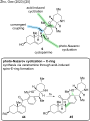
- ; and subsequent conversion of the ketone in 20 to the vinyl iodide in 21 – via hydrazone formation, lithium–halogen exchange, and final nucleophilic substitution – secured the Norrish–Yang cyclization precursor 22. Following systematic optimization of reaction conditions, irradiation of 22 with 100 W
- blue LEDs at room temperature constructed a single diastereoisomer 23 in 90% yield. From 23, the ABCDE pentacyclic skeleton of phainanoids (27) was ultimately established via a Mitsunobu reaction, intramolecular nucleophilic substitution with in situ-generated aryllithium, and protecting group




Insoluble methylene-bridged glycoluril dimers as sequestrants for dyes
Beilstein J. Org. Chem. 2025, 21, 2302–2314, doi:10.3762/bjoc.21.176
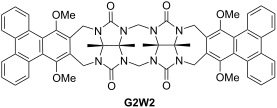
- -surfaces and which are activated for electrophilic aromatic substitution reactions. For the synthesis of W1, we initially prepared tetramethoxybiphenyl 1 (Scheme 1) according to the literature procedure involving the Suzuki coupling between 3,4-dimethoxybromobenzene and 3,4-dimethoxyphenylboronic acid [44
- discern the effect of smaller aromatic sidewalls. The synthesis of acyclic CB[n]-type receptors follows a building block approach involving the reaction of a glycoluril bis(cyclic) ether with an activated aromatic wall by a double electrophilic aromatic substitution process [30]. Scheme 2 shows the



Halogenated butyrolactones from the biomass-derived synthon levoglucosenone
Beilstein J. Org. Chem. 2025, 21, 2297–2301, doi:10.3762/bjoc.21.175
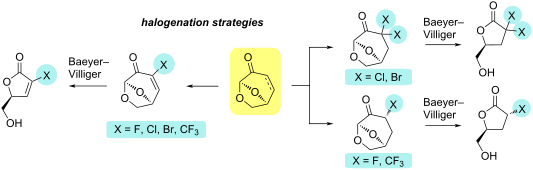
- envisaged that halogenation could be combined with the Baeyer–Villiger oxidation which yields the butyrolactones by excision of C5, a reaction which is tolerant to substitution at C3 and can be carried out on a kilogram scale [30]. The present work was focussed on the development of additional halogenation



Enantioselective radical chemistry: a bright future ahead
Beilstein J. Org. Chem. 2025, 21, 2283–2296, doi:10.3762/bjoc.21.174
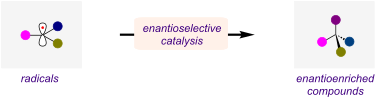
- one way to convert a free radical to a more stable intermediate, which can subsequently undergo coupling with another radical via an SH2 (bimolecular homolytic substitution) mechanism. Lastly, some noteworthy radical processes proceed through a radical–polar crossover pathway, in which one-electron
- diazoester 24 to furnish a Co(III)-bonded α-ester radical (α-Co(III)-ester radical) with extrusion of nitrogen was proposed by the authors. Further steps include (a) 5-exo cyclization by α-Co(III)-ester radical and (b) homolytic substitution at the carbon atom by 3-exo-tet-cyclization to generate bicyclic


Pathway economy in cyclization of 1,n-enynes
Beilstein J. Org. Chem. 2025, 21, 2260–2282, doi:10.3762/bjoc.21.173
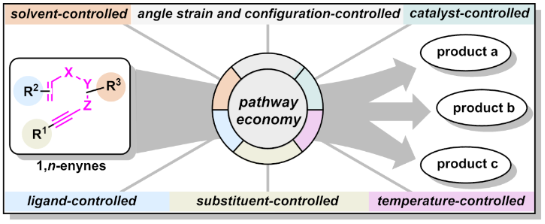
- synthetic value of this method. In 2017, the Liu group established a precise control over cyclization sequences of 1,2-diphenylacetylenes by modulating the nitrogen-substitution patterns, enabling divergent syntheses of benzo[a]carbazole and indeno[1,2-c]quinoline derivatives (Scheme 9) [16]. When the


Pd-catalyzed dehydrogenative arylation of arylhydrazines to access non-symmetric azobenzenes, including tetra-ortho derivatives
Beilstein J. Org. Chem. 2025, 21, 2234–2242, doi:10.3762/bjoc.21.170
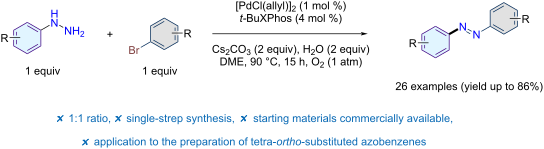
- optimize the reaction conditions, with particular focus on the choice of ligand, especially for non-ortho-substituted aryl bromides as substrates. Notably, the use of bulkier phosphines, such as P(t-Bu)3 and t-BuXPhos, was found to promote the reaction regardless of the substitution pattern of the
- valuable addition to existing methodologies and open further opportunities for applications in molecular probe design, functional materials, and photoresponsive systems, where ortho-substitution is often critical. General overview of azobenzene chemistry. a) Selected examples and photoisomerization of


Thiadiazino-indole, thiadiazino-carbazole and benzothiadiazino-carbazole dioxides: synthesis, physicochemical and early ADME characterization of representatives of new tri-, tetra- and pentacyclic ring systems and their intermediates
Beilstein J. Org. Chem. 2025, 21, 2220–2233, doi:10.3762/bjoc.21.169
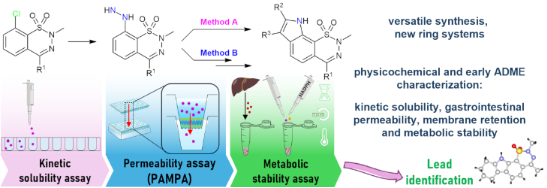
- 7c compared to 7b is likely due to the structural differences, with 7a and 7c having asymmetric substitutions (methyl for 7c, R2 = H, R3 = Me and ethyl, methyl for 7a, R2 = Me, R3 = Me), while 7b having a symmetric diethyl substitution pattern (R2 = Et, R3 = Me). The comparison of the solubility of


Electrochemical cyclization of alkynes to construct five-membered nitrogen-heterocyclic rings
Beilstein J. Org. Chem. 2025, 21, 2173–2201, doi:10.3762/bjoc.21.166
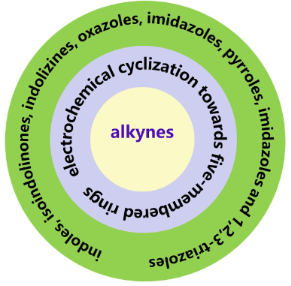
- reversible C–H activation to give the six-membered intermediate C. Substitution of the acetate ligand in C by 3 caused the generation of complex D. The six-membered ruthenacycle E was then obtained by migratory insertion of acetylene into the Ru–C bond. Finally, reductive elimination of E formed the target
- nucleophilic substitution of D afforded target indeno[1,2-c]pyrrole 40a along with eliminating I. Notably, this oxidant-free and catalyst-free approach could be potentially applied in the pharmaceutical manufacture. A Rh-promoted synthesis of pyrroles through annulation of alkynes and enamides was demonstrated









C2 to C6 biobased carbonyl platforms for fine chemistry
Beilstein J. Org. Chem. 2025, 21, 2103–2172, doi:10.3762/bjoc.21.165
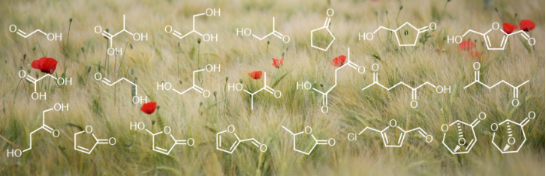
- protonated forms (Scheme 40). HFO can be hydrolyzed to succinic acid, however, it is a slow process in aqueous solution. In NaOH solution at pH 9–10, a complete conversion of HFO to succinic acid is rapidly achieved (Scheme 41) [126]. Substitution and condensation reactions of HFO (crude from furfural


The application of desymmetric enantioselective reduction of cyclic 1,3-dicarbonyl compounds in the total synthesis of terpenoid and alkaloid natural products
Beilstein J. Org. Chem. 2025, 21, 2085–2102, doi:10.3762/bjoc.21.164
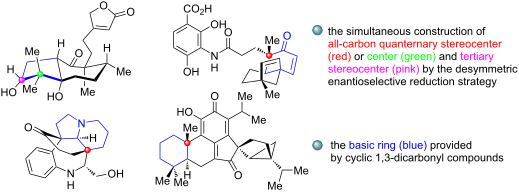
- 77 and subsequent deprotection produced tertiary alcohol 78. Starting from this common intermediate, on the one hand, through successive manipulations by diazotization and in situ azide substitution, AgNO3-mediated aza-Cope/Mannich [62] reaction delivered ketone 79. Subsequently, a three-step
- and in situ allylic substitution with MeOH produced [3.2.1] bridged ring product 117, which was transformed into ketone 118 via nine functional group manipulations. Finally, by employing the same reaction procedures as those utilized in the total synthesis of (−)-platensilin (23), the authors







Discovery of cytotoxic indolo[1,2-c]quinazoline derivatives through scaffold-based design
Beilstein J. Org. Chem. 2025, 21, 2062–2071, doi:10.3762/bjoc.21.161
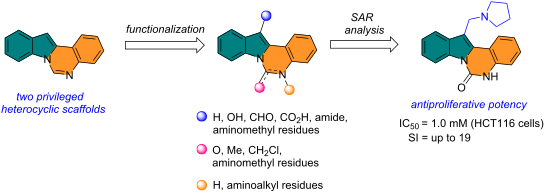
- ]. Given the presence of the indole moiety in indolo[1,2-c]quinazolin-6(5H)-one (1), the design of novel gramine-like analogues via aminomethyl substitution at position 12 is feasible. To evaluate the influence of the urea carbonyl group on biological activity, a modified scaffold, 6-methylindolo[1,2-c
- ]quinazoline (8) [26], was also used in which the carbonyl oxygen at position 6 is replaced by a methyl group. Substitution at position C6 will enable to investigate the influence of electronic and steric changes for target affinity, while retaining the key pharmacophoric features of the indoloquinazolinone
- substitution of the terminal chloride in 11 with various cyclic amines, including pyrrolidine, piperidine, and mono-tert-butoxycarbonyl (Boc)-protected piperazine, provided a set of aminoalkyl derivatives 12а–с (Scheme 4). This strategy enables the expansion of structural diversity within this scaffold and


Understanding the origin of stereoselectivity in the photochemical denitrogenation of 2,3-diazabicyclo[2.2.1]heptene and its derivatives with non-adiabatic molecular dynamics
Beilstein J. Org. Chem. 2025, 21, 2007–2020, doi:10.3762/bjoc.21.156
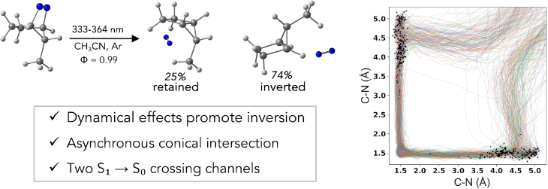
- housane. From the equatorial DZ (eq-DZ in Scheme 3), the inverted housane can be formed through a homolytic substitution (SH2) process or can be formed via a planar DR (pl-DR in Scheme 3) radical which affords retained and inverted housane [82]. In 2020, Rollins and co-workers also investigated the


Measuring the stereogenic remoteness in non-central chirality: a stereocontrol connectivity index for asymmetric reactions
Beilstein J. Org. Chem. 2025, 21, 1995–2006, doi:10.3762/bjoc.21.155
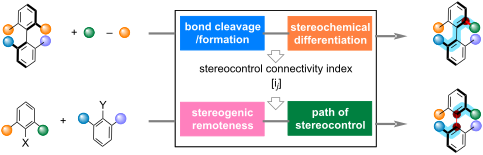
- coupling of biaryls is designated as [30 20]. In addition to biaryls, axially chiral allenes are popular targets for asymmetric synthesis. Three examples of asymmetric reactions that form axially chiral allenes are shown in Scheme 4. For example, the enantioselective nucleophilic substitution to yield