


Search results
Search for "π–π-stacking" in Full Text gives 156 result(s) in Beilstein Journal of Organic Chemistry.
Synthesis and herbicidal activities of aryloxyacetic acid derivatives as HPPD inhibitors
Beilstein J. Org. Chem. 2020, 16, 233–247, doi:10.3762/bjoc.16.25
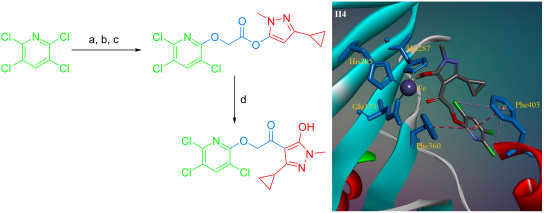
- -dicarbonyl bidentate chelation with the active center metal, and 2) through favorable sandwich π–π stacking interactions between aromatic rings and the Phe360, Phe403 residues of the active site. Thus, 1,3-dicarbonyl and aromatic moieties are indispensable pharmacophores for potent HPPD-inhibiting compounds




Influence of the cis/trans configuration on the supramolecular aggregation of aryltriazoles
Beilstein J. Org. Chem. 2019, 15, 2881–2888, doi:10.3762/bjoc.15.282
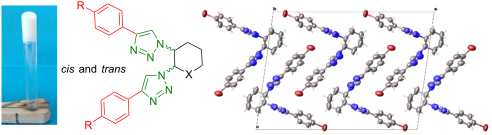
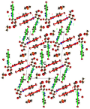
- as between the triazole rings, and therefore the presence of multiple intermolecular π–π stacking and π–bromine [19] interactions. This compound precipitated in the presence of any amount of water and gelled only in DMSO at a low temperature. Compound 10 produced pseudo-crystals in DMSO/H2O (1:1, v/v
- ) and its X-ray analysis was not accurate enough to resolve its structure. However, its crystal packing (Figure 5) deserves discussion. As with compound 12, this packing revealed a number of π–bromine interactions [19], together with a high degree of π–π stacking interactions between the aromatic rings
- configuration through X-ray diffraction studies can be considered good approximations to the supramolecular structure of aryltriazoles in gels. Thus, these compounds showed a high degree of parallelism between the phenyltriazolyl rings, therefore revealing the presence of π–π stacking and π–bromine interactions





Reversible switching of arylazopyrazole within a metal–organic cage
Beilstein J. Org. Chem. 2019, 15, 2398–2407, doi:10.3762/bjoc.15.232
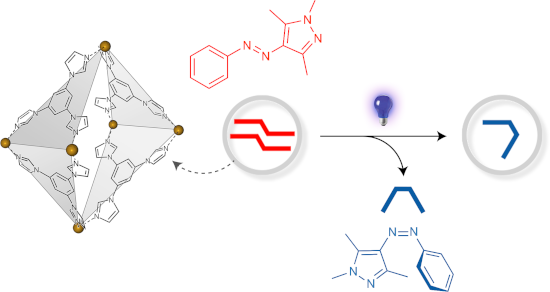
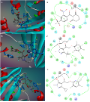
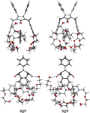
- encapsulated two molecules of E-1 (in agreement with the NMR spectra), arranged in an antiparallel fashion (Figure 3). The binding of E-1 within 2 is driven by a combination of π–π stacking, van der Waals forces, and C–H···π interactions (vide infra); in addition, the encapsulation is likely facilitated by the


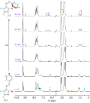
![[Graphic 1]](/bjoc/content/inline/1860-5397-15-232-i3.svg?max-width=637&scale=1.18182) 2 (500 MHz, D2O, 298 K).
2 (500 MHz, D2O, 298 K).




1,2,3-Triazolium macrocycles in supramolecular chemistry
Beilstein J. Org. Chem. 2019, 15, 2142–2155, doi:10.3762/bjoc.15.211
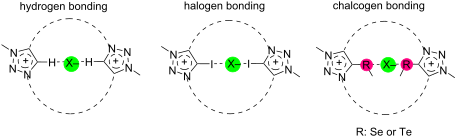
- interactions such as hydrogen bonding, π–π stacking, electrostatic interactions, van der Waals forces, hydrophobic/solvatophobic effects and coordination bonds [2][3]. Advances in supramolecules from molecular to macroscopic size with pre-structured or functionalized receptors and multivalent binding positions
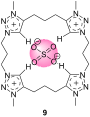
- macrocycle has been reported by Nakamura and his co-workers containing three 1,2,3-triazolium and carbazole moieties 12 (Figure 10). π–π stacking interactions and the self-association ability of the synthesized macrocycle are increased in comparison with its neutral analogue due to the decreased electron




Complexation of 2,6-helic[6]arene and its derivatives with 1,1′-dimethyl-4,4′-bipyridinium salts and protonated 4,4'-bipyridinium salts: an acid–base controllable complexation
Beilstein J. Org. Chem. 2019, 15, 1795–1804, doi:10.3762/bjoc.15.173
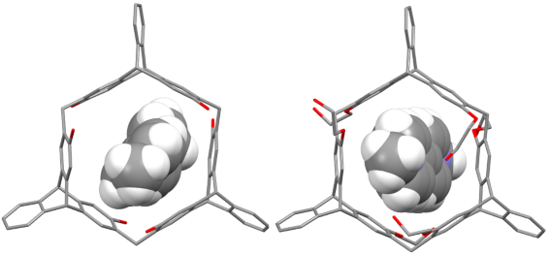
- broadened peaks, which indicated that π–π stacking interactions between the bipyridinium unit of G4 and the benzene ring of the hosts might exist. The signals for protons 2 and 13 of H4 showed a downfield shift with broadened signals due to deshielding effect, while the signals for protons 11 and 12 showed
- protons of G1 and the aromatic rings of H1 with distances of 2.683 for A, 2.845 for B, 2.788 for C, 2.802 for D, and 2.868 Å for E, respectively. There also exist π–π stacking interactions between the pyridinium of G1 and the aromatic ring of H1 with the distance of 3.854 Å for F, a CH···O hydrogen bond


Host–guest interactions in nor-seco-cucurbit[10]uril: novel guest-dependent molecular recognition and stereoisomerism
Beilstein J. Org. Chem. 2019, 15, 1705–1711, doi:10.3762/bjoc.15.166
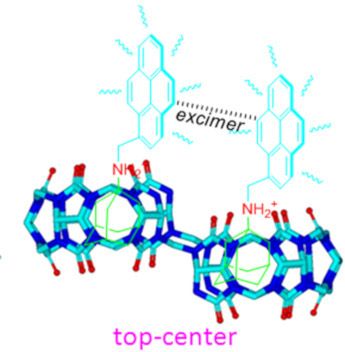
- encapsulation of this moiety. Pyrene group, that are too large for the individual CB[6]–CB[7] sized cavities of ns-CB[10] [23], it is thus believed that the upfield shift of the pyrene protons is attributed the intermolecular π–π stacking between the two pyrenyl moieties as proposed in the plausible inclusion
- , the fluorescence intensity of the G2 monomer emissions gradually decreased, while the maximum emission intensity at around 485 nm (typical excimer emissions of pyrene) increased. The excimer emission band of G2 can be attributed to the interaction of two pyrene units resulting in intermolecular π–π
- stacking, which was due to the two identical cavities of host-1. Consequently, the top–center isomerism of the G2·host-1 ternary complexes was conveniently confirmed from the optical signal after the changes in monomer/excimer fluorescence emissions of the pyrene groups on G2. Surprisingly, the


Synthesis, enantioseparation and photophysical properties of planar-chiral pillar[5]arene derivatives bearing fluorophore fragments
Beilstein J. Org. Chem. 2019, 15, 1601–1611, doi:10.3762/bjoc.15.164
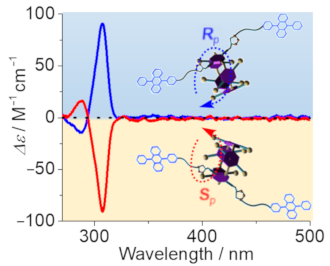
- quantum yield was significantly decreased to 46.4% compared with 78.2% for Py-6. We ascribed the decreased fluorescence of P5A-Py to the π–π stacking of the Py units caused by the high local concentration of perylene. For P5A-DPA, which also bears two DPA units in one macrocyclic host, the fluorescent
- quantum yield was only slightly decreased. This should be mainly due to the steric hindrance of the 9- and 10-phenyl groups, which inhibited the π–π stacking of the anthracene core in DPA. The fluorescent lifetimes of P5A-Py and P5A-DPA were compared with Py-6 and DPA-6. As shown in Figure 2, the lifetime
- of P5A-Py is 3.4 ns which is shorter than that of Py-6 (4.4 ns), demonstrating that grafting two Py units in close proximity in one host, opened a new route for nonradiative decay. This phenomenon further verified the occurrence of π–π stacking of the Py fragments in P5A-Py. The lifetime of P5A-DPA



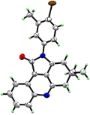
A heteroditopic macrocycle as organocatalytic nanoreactor for pyrroloacridinone synthesis in water
Beilstein J. Org. Chem. 2019, 15, 1505–1514, doi:10.3762/bjoc.15.152
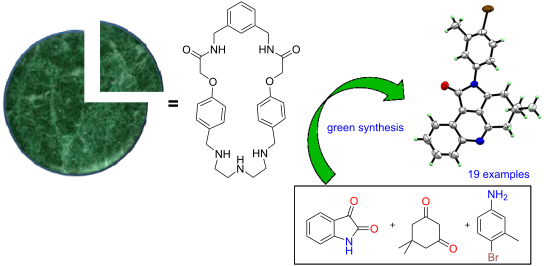
- of macrocycles with multiple functional groups has been employed as alternative templates to induce the organic environment for catalysis via multiple weak interactions viz. π–π stacking, hydrogen bonding, etc. [25][26][27][28][29]. At the same time, several efforts have been made to develop
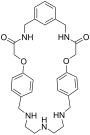
- aggregation tendency. Herein we have extensively explored a multifunctional macrocycle (BATA-MC), comprising bis-amide and tris-amine functionalities as H-bond donor/acceptor moieties, and parallel benzene moieties for aromatic π–π stacking interactions as an organocatalytic nanoreactor for organic





Selective detection of DABCO using a supramolecular interconversion as fluorescence reporter
Beilstein J. Org. Chem. 2019, 15, 1371–1378, doi:10.3762/bjoc.15.137
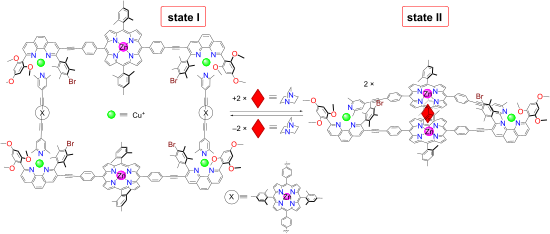
- repulsion. For instance, pyrazine creates notable repulsive interactions of the α-H towards the zinc porphyrin ring in a sandwich complex. Apparently, stability gains through π–π stacking in the sandwich with pyrene, coronene, etc. are not strong enough to compensate for the strain in [Cu2(1)(2)(guest)]2


Self-assembly behaviors of perylene- and naphthalene-crown macrocycle conjugates in aqueous medium
Beilstein J. Org. Chem. 2019, 15, 1203–1209, doi:10.3762/bjoc.15.117
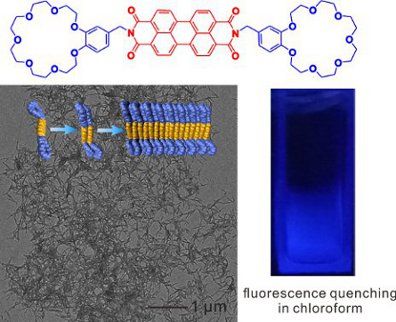
- through hydrogen bonding and metal ion coordination in nonpolar solvents [66][67][68]. Compared with NDI, PDI has more aromatic rings to generate stronger intermolecular π−π stacking, leading to molecular aggregates more easily, and these aggregates or supramolecular assemblies can give rise to desirable
- in the above-tested five solvent systems were also recorded. Because of the relatively weaker π–π stacking effect of the NDI units comparing with PDI units, 2 has a better solubility in the organic solvents. Consequently, the UV–vis absorption bands of 2 in all the organic solvents can be clearly
- were investigated. As shown in Figure 2a, micelle-like assemblies of 1 were observed, while, because of the higher polarity of MeCN, the aggregation of 1 through π–π stacking was considerably enhanced forming linear assemblies (Figure 2b). Interestingly, when imposed to an aqueous medium through adding


Efficient synthesis of pyrazolopyridines containing a chromane backbone through domino reaction
Beilstein J. Org. Chem. 2019, 15, 874–880, doi:10.3762/bjoc.15.85
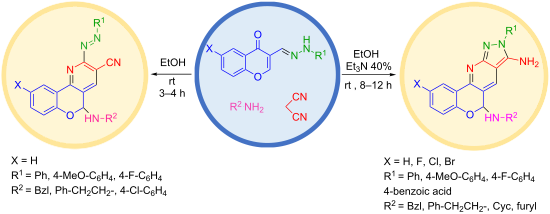
- of the product (Figure 2). Meanwhile, via hydrogen bridges and the solvent molecules (water and ethanol) the molecules build pairs with π–π stacking of the aromatic systems. To examine the scope and generality of our reaction, other (arylhydrazono)methyl-4H-chromen-4-ones were synthesized and their




Coordination chemistry and photoswitching of dinuclear macrocyclic cadmium-, nickel-, and zinc complexes containing azobenzene carboxylato co-ligands
Beilstein J. Org. Chem. 2019, 15, 840–851, doi:10.3762/bjoc.15.81
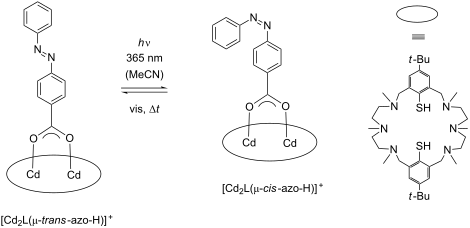
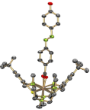
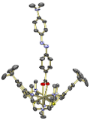
- lengths reveal no anomalies and are similar to those in [Zn2L(μ-OAc)]+. There are no π–π stacking interactions between the azobenzene moieties. However, the [Zn2L(μ-azo-OH)]+ and [Zn2L(μ-azo-O)] complexes are connected by a OH···O hydrogen bond of length 2.46 Å (O3a···O3b, not shown in Figure 4). [Zn2L(μ
- , respectively. These values compare well with those in 3' and other [Zn2L(μ-carboxylato)]+ complexes. The [Zn2L(μ-azo-NMe2)]+ complexes in 5 assemble in pairs (Figure 5) most likely via π···π stacking interactions, as manifested by the distance of 3.34 Å between the planes through the azobenzene moieties. [Cd2L
- radius of Cd2+. The Cd···Cd distance is at 3.399 Å. Virtually the same values are observed in [Cd2L(μ-OAc)]+ [10]. As in 5 π–π stacking of the azo-carboxylato co-ligands occurs (Figure 7). The shortest distance between two carbon atoms of adjacent benzene rings is at 3.41 Å. [Ni2L(μ-Azo-NMe2)]ClO4·xEtOH





Synthesis of functionalized diazocines for application as building blocks in photo- and mechanoresponsive materials
Beilstein J. Org. Chem. 2019, 15, 727–732, doi:10.3762/bjoc.15.68
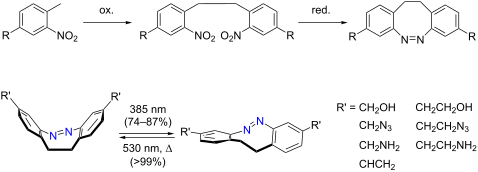
- functionalized compounds are rare [19][20][21][22][23]. In contrary to azobenzenes, diazocines 1 are stable in their cis configuration. The bent cis isomer is less prone to π–π stacking which is known to reduce the switching efficiency (Figure 1a) [19][24]. The reverse stability of the cis and trans isomers in


Evaluation of dispersion type metal···π arene interaction in arylbismuth compounds – an experimental and theoretical study
Beilstein J. Org. Chem. 2018, 14, 2125–2145, doi:10.3762/bjoc.14.187
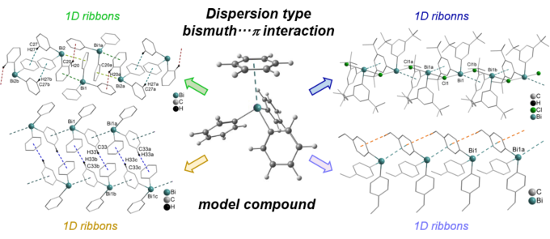
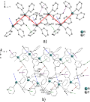
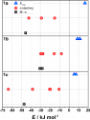
- Grimme [54] and Iverson et al. [55] on the unreflected use of terms such as C–H···π, or π···π stacking previously. In most cases, these interactions rely on London dispersion forces rather than special types of bonding due to the π system. Crystal structures In all of the presented compounds, the




Functionalization of graphene: does the organic chemistry matter?
Beilstein J. Org. Chem. 2018, 14, 2018–2026, doi:10.3762/bjoc.14.177
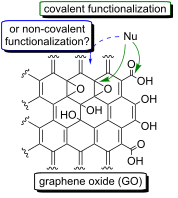
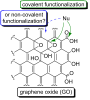
- , was assigned to the stretching vibrations of the alkyl chain (commonly observed at up to 2980 cm−1); this absorption band corresponds to the N–H stretching vibrations of NH3+. The further reaction with amphotericin B, which is a compound containing unsaturated bonds, was most plausibly a result of π–π
- stacking. As mentioned above in the discussion of reaction mechanisms, water molecules significantly lower the reaction rates for the desired nucleophiles. Importantly, water molecules also influence the hydrolysis of the activated carboxyl groups (Figure 2, step d and Figure 3, step f). Water should


A self-assembled photoresponsive gel consisting of chiral nanofibers
Beilstein J. Org. Chem. 2018, 14, 1994–2001, doi:10.3762/bjoc.14.174
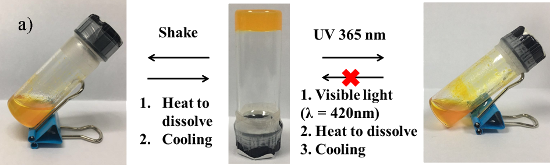
- by three-dimensional networks through self-assembly have drawn significant attention in the past decades. They are normally fabricated by means of noncovalent intermolecular interactions [3], such as π–π stacking, hydrogen bonding, van der Waals forces, hydrophobic, electrostatic, host–guest and
- construct optically controlled systems [17][30][32][33][34][35]. This moiety is also frequently employed as a building block because of its strong π–π stacking in nonpolar solvents. Herein, a novel compound 3 containing both chiral L-glutamic lipid and azobenzene was designed and synthesized (Scheme 1). It
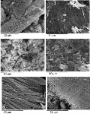
- and π–π stacking in DMSO. However, beautiful acicular fibers could be detected on the surface treated with a chloroform solution, and a dendritic network was observed on the sample made from benzene solution (Figure S9, Supporting Information File 1). The photoresponsiveness of compound 3 was also


Steric “attraction”: not by dispersion alone
Beilstein J. Org. Chem. 2018, 14, 1482–1490, doi:10.3762/bjoc.14.125
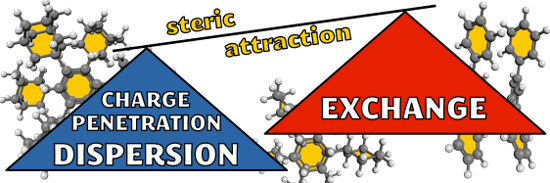
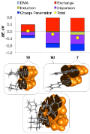
- cages [10]. Intermolecular interactions in hydrocarbons are also subject to significant dispersion contribution. In the unsaturated systems, from benzene dimer to higher acenes and, ultimately, graphenes, dispersion is increasingly the key force behind the π–π stacking interactions [11]. Large and flat
- electrostatic contribution to it [25]. For example, “dispersion dominates and electrostatics commands” is the ‘punch line’ of the 2017 computational study on the σ–σ, σ–π and π–π stacking interactions between benzene, cyclohexane and some of their fluorinated derivatives [26]. The authors show that while



Recent advances in phosphorescent platinum complexes for organic light-emitting diodes
Beilstein J. Org. Chem. 2018, 14, 1459–1481, doi:10.3762/bjoc.14.124
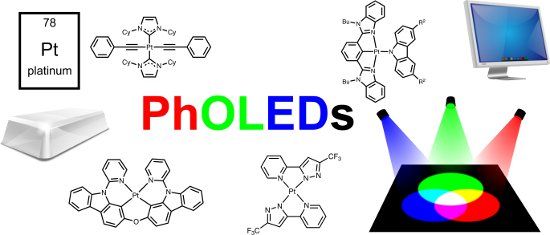
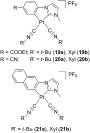
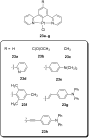
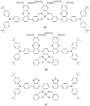
- including formation of metallophilic d8···d8 interactions and/or π–π stacking of the coordinating ligands [67][92] as well as excited-state interactions such as formation of excimers [93][94]. Although they may be usefully employed to shift both absorption and emission spectra






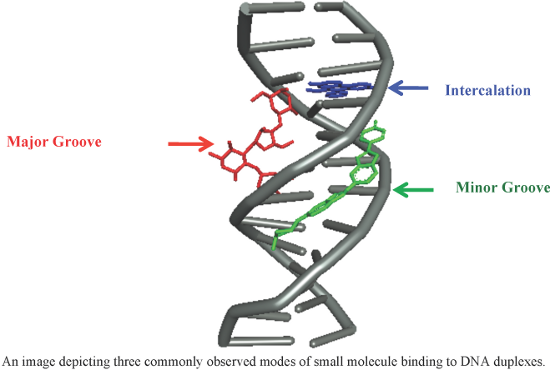
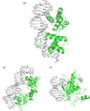
An overview of recent advances in duplex DNA recognition by small molecules
Beilstein J. Org. Chem. 2018, 14, 1051–1086, doi:10.3762/bjoc.14.93




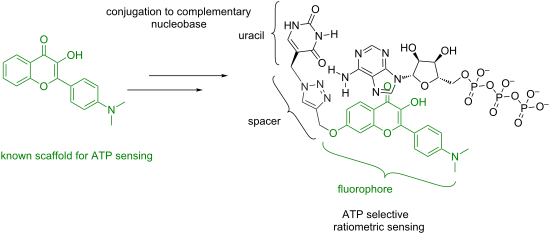
An uracil-linked hydroxyflavone probe for the recognition of ATP
Beilstein J. Org. Chem. 2018, 14, 747–755, doi:10.3762/bjoc.14.63
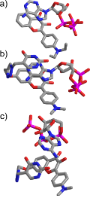
- optimized geometries are presented in Figure 2. The investigation of the DEHF∙ATP 1:1 complex revealed a sandwich structure, which is held together by a π–π stacking- and an H-bond interaction. The triphosphate group is positioned near ring C of the DEHF and the π-stacking occurs between the adenine group




Recent advances on organic blue thermally activated delayed fluorescence (TADF) emitters for organic light-emitting diodes (OLEDs)
Beilstein J. Org. Chem. 2018, 14, 282–308, doi:10.3762/bjoc.14.18
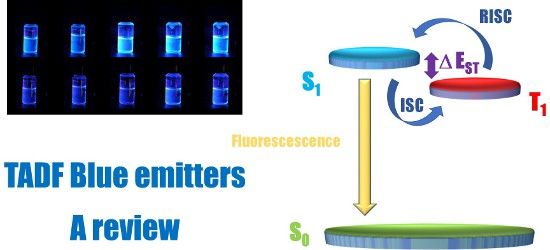
- luminance of 100 cd/m2, slightly red-shifted compared to the emission observed for doped OLEDs. Clearly, the specific design of D6 and its highly twisted structure efficiently weakened the π–π-stacking interactions, providing a general design rule for the elaboration of TADF emitters insensitive to the




Complexation of molecular clips containing fragments of diphenylglycoluril and benzocrown ethers with paraquat and its derivatives
Beilstein J. Org. Chem. 2017, 13, 2056–2067, doi:10.3762/bjoc.13.203
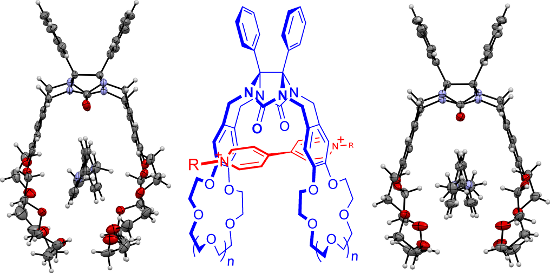
- π–π stacking and C–H∙∙∙X (X = N, O, F ...) interactions. The stability of inclusion complexes based on molecular clips and paraquat derivatives depends on two factors: 1) the value of the positive charge on the dipyridinium fragment of paraquat derivatives, the distribution of which is well
- paraquat, the following moieties may be involved: the glycoluril fragment (hydrogen bonds involving the oxygen atoms of the carbonyl groups), the catechol part of the crown ether fragments (π–π stacking interactions) and the polyether chains of benzocrown ethers (C–H···О interactions). The first two
- complexation constant of the clip 6 with paraquat (7), which was: lgK = 1.46 ± 0.01 (−ΔG = 1.96 ± 0.02 kcal/mol). The complex of clip 6 with paraquat (7) may be stabilized through π–π stacking interactions of the electron-deficient aromatic rings of paraquat and the electron donating veratrol fragments of the




Mechanochemical synthesis of small organic molecules
Beilstein J. Org. Chem. 2017, 13, 1907–1931, doi:10.3762/bjoc.13.186
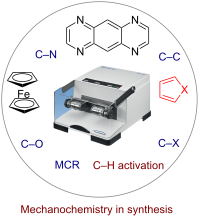
- solvent-free mechanomilling [50]. By varying the electron density on the aromatic aldehydes, it was observed that electron deficient aldehydes provided a better yield with excellent stereo selectivity over electron rich systems. The observed result suggests that a π–π stacking interaction between electron


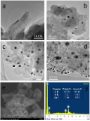
Sugar-based micro/mesoporous hypercross-linked polymers with in situ embedded silver nanoparticles for catalytic reduction
Beilstein J. Org. Chem. 2017, 13, 1212–1221, doi:10.3762/bjoc.13.120
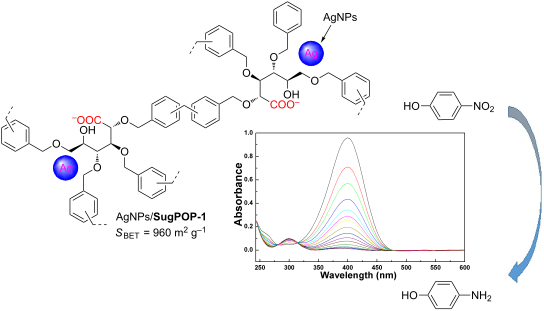
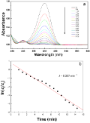
- described as the Langmuir–Freundlich isotherm [47]. The polymer matrix has higher adsorption capacity for 4-NP due to π–π stacking interactions, which can encourage 4-NP molecules to enter the polymer channel to form the adsorbed species [54]. At the same time, the hydrogen atom is introduced onto the




Correlation of surface pressure and hue of planarizable push–pull chromophores at the air/water interface
Beilstein J. Org. Chem. 2017, 13, 1099–1105, doi:10.3762/bjoc.13.109
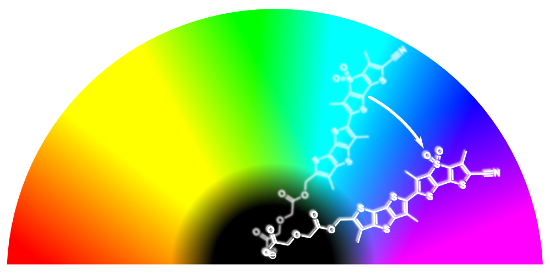
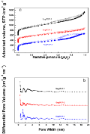
- change is significant and represents the expected red shift. Although contributions from changes in π–π stacking on spectroscopic properties cannot be excluded, the observed red shift in compressed flipper monolayers is consistent with the earlier experiments on the planarization of monomeric flipper





