


Search results
Search for "C-" in Full Text gives 4067 result(s) in Beilstein Journal of Organic Chemistry. Showing first 200.
A new synthesis of Tyrian purple (6,6’-dibromoindigo) and its corresponding sulfonate salts
Beilstein J. Org. Chem. 2026, 22, 167–174, doi:10.3762/bjoc.22.10
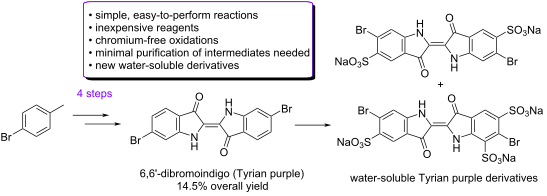
- Holly Helmers Mark Horton Julie Concepcion Jeffrey Bjorklund Nicholas C. Boaz Department of Chemistry, North Central College, 121 S. Loomis Street, Naperville, IL 60540, USA 10.3762/bjoc.22.10 Abstract 6,6’-Dibromoindigo is the major component of a historic pigment, famous since ancient times


Circumventing Mukaiyama oxidation: selective S–O bond formation via sulfenamide–alcohol coupling
Beilstein J. Org. Chem. 2026, 22, 158–166, doi:10.3762/bjoc.22.9
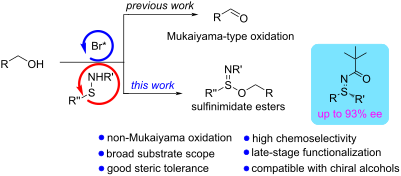
- versatile intermediates for enantioselective S–C bond formation under mild and metal-free conditions. Keywords: asymmetric synthesis; late-stage functionalization; selective oxidation; sulfenamides; sulfinimidate esters; Introduction Sulfur is a privileged heteroatom in organic chemistry, celebrated for
- constructing S–C and S–N bonds, particularly in the synthesis of sulfilimines [19][20][21][22][23][24][25][26][27][28][29][30][31] and sulfinamidines [32][33][34]. Their tunable reactivity and modularity have positioned them as versatile scaffolds for sulfur–nitrogen architecture development. Our group
- 77% yield. The cinnamamide-derived sulfenamide, bearing a C–C double bond, also reacted smoothly under the oxidative conditions without noticeable side reactions, delivering the product 3i’ in 75% yield. Furthermore, carbamate-type sulfenamides were well tolerated under the standard conditions


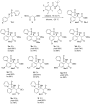
Asymmetric Mannich reaction of aromatic imines with malonates in the presence of multifunctional catalysts
Beilstein J. Org. Chem. 2026, 22, 151–157, doi:10.3762/bjoc.22.8
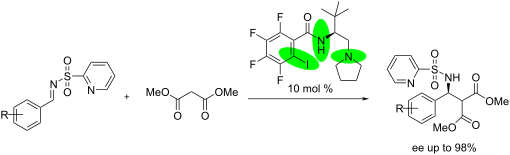
- enolized carbonyl compound to an imine derived from an aldehyde or ketone and an amine, has been known for more than hundred years [1] and it has become an important method for creating C–C bonds [2][3][4]. The obtained Mannich bases exhibit a broad spectrum of biological activities [5][6] and have also
- conversion of the starting imine within 3 hours at rt and in 5 hours at −20 °C. Decrease of the temperature increases the enantiomeric purity of the product (from 27% ee up to 52% ee) (Table 1, entries 1–3). The corresponding H-analogue of catalyst A was less selective (18% ee) (Table 1, entries 4 and 5
- % ee, Table 1, entry 6). Aminoindane-based catalysts C and D were inefficient and stereomeric purity of the products were not determined (Table 1, entries 7 and 8). The next group of catalysts consists of amino acid derivatives. The most selective was tert-leucine-based catalyst E affording the Mannich


Design and synthesis of an axially chiral platinum(II) complex and its CPL properties in PMMA matrix
Beilstein J. Org. Chem. 2026, 22, 143–150, doi:10.3762/bjoc.22.7
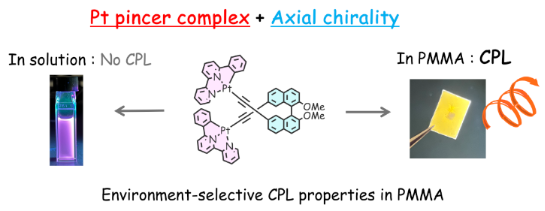
- ethynyl-linked coordination sites. Therefore, we prepared a PMMA polymer matrix containing 1 wt % of S/R-Pt to investigate the emission behavior under conditions where molecular motion was suppressed. The PMMA matrix was obtained by dissolving S/R-Pt and PMMA in chloroform under heating at 40 °C, casting
- and 13C NMR spectra were recorded on a Bruker Avance III 400 or JEOL JNM-ECZ600R spectrometer at 25 °C in chloroform-d1 or DMSO-d6. 1H NMR chemical shifts are expressed in parts per million (δ) relative to trimethylsilane (TMS) as a reference. Mass spectra were obtained with a Thermo Scientific
- P-1030 polarimeter using the sodium D line (λ = 589 nm). All calculations were performed by using the Gaussian 16 rev C.02 program package. Density functional theory (DFT) calculations were performed at the level of CAM-B3LYP/LANL2DZ for Pt atoms. The optimized equilibrium structures were confirmed


Symmetrical D–π–A–π–D indanone dyes: a new design for nonlinear optics and cyanide detection
Beilstein J. Org. Chem. 2026, 22, 131–142, doi:10.3762/bjoc.22.6
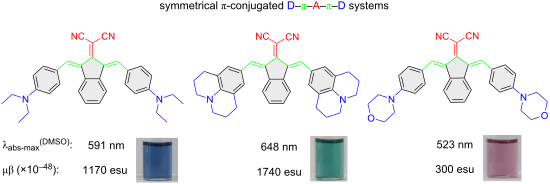
- spectrometry methods (Figures S1–S10 in Supporting Information File 1). Optical properties of dyes Photophysical properties of dyes 2a–c were assessed in four different organic solvents with various polarities (DMSO, acetone, chloroform, and THF) via absorption spectra and DFT calculations (Table 2). Figure 2a
- –c displays the absorption spectra of the dyes and photographs under daylight in organic solvents (Figure S11 in Supporting Information File 1). The dyes exhibited two distinct absorption maxima in the range of 358–446 nm and 493–648 nm. The shorter wavelength absorption maxima are assigned the n–π
- also showed significant color changes with increasing polarity. Color changes of 2a; from purple to blue, 2b; blue to green, and 2c; pale orange to pale pink (Figure 2d). Dyes do not show any significant emission. Chemosensor properties Cyanide selectivity study The dyes 2a–c could have the ability to


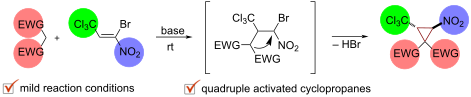
Highly electrophilic, gem- and spiro-activated trichloromethylnitrocyclopropanes: synthesis and structure
Beilstein J. Org. Chem. 2026, 22, 123–130, doi:10.3762/bjoc.22.5
- nitro group upon breaking the C–C bond [16][17]. Substituted nitrocyclopropanes in reactions with various nucleophiles form linear precursors for the synthesis of γ-substituted α-aminobutyric acids [18][19], cyclic nitropyrrolines [20] and isoxazoline N-oxides [18]. The nitrocyclopropane fragment is a
- to the bromonitroalkene afford the intermediate anion II, followed by tautomerization and formation of anion IV, which undergoes intramolecular nucleophilic substitution of the bromide along the C-alkylation pathway [37][38][39] (Scheme 6). The trans-configuration of the methine protons of the
- by BH+ from the side opposite to the –CH(EWG)2. Thus, only diastereomer III is formed. Deprotonation of this intermediate leads to carbanion IV. For further attack by the carbanion center to the carbon atom bonded to bromine, the –C(EWG)2 moiety must hold an anti-periplanar position relative to the


Total synthesis of natural products based on hydrogenation of aromatic rings
Beilstein J. Org. Chem. 2026, 22, 88–122, doi:10.3762/bjoc.22.4
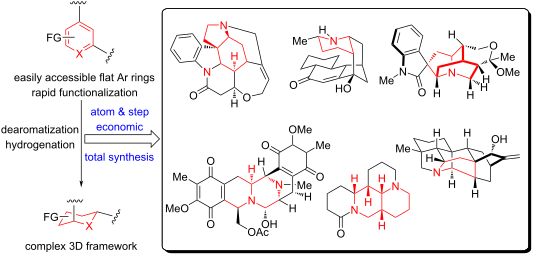
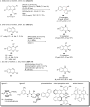
- aromatic rings (Scheme 4) [48]. Using [Rh(nbd)Cl]2 and Pd/C as catalysts, aromatic hydrocarbons with various functional groups can be hydrogenated at room temperature and 1 atmosphere of hydrogen, thus simplifying the reaction operation and cost. Hydrogenation of fused aromatic rings Hydrogenation of the
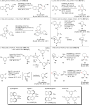
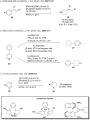
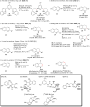
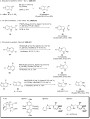
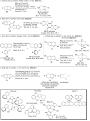
- stereoselective synthesis of 157, which strategically combined a Pd-catalyzed pyridine C–H acylation and an Ir-catalyzed asymmetric hydrogenation of the aromatic core [92]. The synthesis began with the coupling of trisubstituted benzene 158 and 2-substituted pyridine 159, furnishing the bicyclic intermediate 160
- . Three subsequent steps (74% overall yield) then provided the key hydrogenation precursor 161. Hydrogenation of 161 under heterogeneous catalytic conditions (Pd/C, Pt/C, Raney Ni, Rh/C, Ru/C) proved inefficient, giving complex mixtures that included partially or fully hydrogenated pyridines, over-reduced











Advances in Zr-mediated radical transformations and applications to total synthesis
Beilstein J. Org. Chem. 2026, 22, 71–87, doi:10.3762/bjoc.22.3
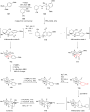
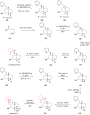
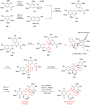
- molecules such as allose (23i) and cholesterol (23k), delivering the desired alcohols in good yields with excellent regioselectivity. The proposed mechanism is shown in Scheme 5C. Homolytic cleavage of the C–O bond in the epoxide generates a strong Zr–O bond, while the resulting alkyl radical abstracts a
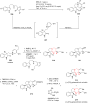
- , affording the corresponding alcohol 28. In contrast, when substrates bearing a benzylic alcohol moiety at the α-position were subjected to the same conditions, the reaction proceeded through radical intermediate 31, which underwent a 1,5-hydrogen atom transfer (1,5-HAT) followed by intramolecular C–O bond
- formation to give the cyclic acetal 33. This transformation was applicable to a range of oxetanes 30a–c bearing benzylic alcohol derivatives, each affording the corresponding cyclic acetals in good yields. In 2023, Ota and Yamaguchi et al. reported the hydrogenation of alkyl chlorides via halogen atom







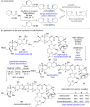
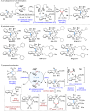

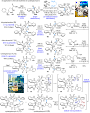
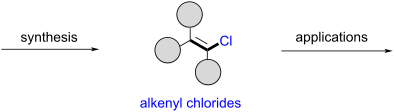
Synthesis and applications of alkenyl chlorides (vinyl chlorides): a review
Beilstein J. Org. Chem. 2026, 22, 1–63, doi:10.3762/bjoc.22.1
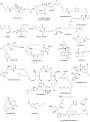
- -catalyzed C–halogen bond formation (Figure 3E) [36]. Exchange reactions were reviewed by Evano and Nitelet in 2018 (Figure 3F) [37]. In 2020, Gandelman and co-workers provided an overview of decarboxylative chlorination reactions of carboxylic acids (Figure 3G) [38]. Hoveyda’s 2023 review highlights
- (Figure 3I). It should be noted that the review by Petrone and Lautens also covers some hydrochlorination chemistry. A concise three-page overview of alkenyl chloride synthesis appeared in 1995 in a book chapter “Comprehensive Organic Functional Group Transformations” by C. J. Urch [42]. Lastly, Cao and
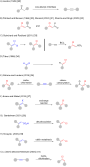
- vary widely across the literature, with solvents ranging from neat conditions to cyclohexane, hexanes, toluene, benzene, carbon tetrachloride, dichloromethane, and diethyl ether. Reaction temperatures span from −10 °C to 100 °C. The first detailed investigation of this transformation was reported by























One-pot synthesis of ethylmaltol from maltol
Beilstein J. Org. Chem. 2025, 21, 2755–2760, doi:10.3762/bjoc.21.212

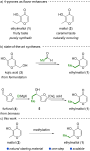
- GmbH, Am Brunnen 1, 5330 Fuschl am See, Austria 10.3762/bjoc.21.212 Abstract A novel route to the flavor enhancer ethylmaltol, a synthetic 4-pyrone, from naturally abundant maltol is disclosed. Two strategies were explored for the required C1 homologation. The most direct approach, C–C bond formation
- esters [25], we initially envisioned the formation of dianion I from maltol (2), which should undergo selective C-methylation with methyl iodide to furnish ethylmaltol (1) (Table 1). Typical deprotonation conditions employed for β-keto esters, i.e., sequential treatment of maltol (2) with equimolar
- hypothesized that decomposition pathways including potential instability of dianion I were responsible for the low overall recovered mass balance. This could be improved by lowering the temperature to −20 °C, which increased the yield of ethylmaltol (1) to 46% along with 1% putative 6 and 10% recovered maltol


Sustainable electrochemical synthesis of aliphatic nitro-NNO-azoxy compounds employing ammonium dinitramide and their in vitro evaluation as potential nitric oxide donors and fungicides
Beilstein J. Org. Chem. 2025, 21, 2739–2754, doi:10.3762/bjoc.21.211
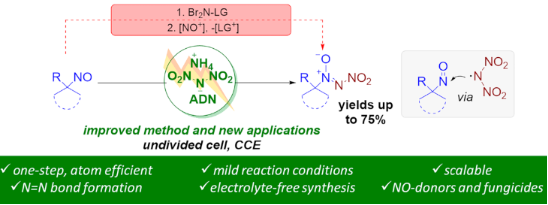
- , structures, and redox properties, effective synthetic strategies for the construction of N–N and N–O systems remain markedly underdeveloped. Unlike traditional methods for constructing C–C and C–Het bonds, the number of methods for selective N–N [1][5][19][20][21][22][23][24][25][26][27][28][29] and N–O [30
- nitrogen compounds leading to the formation of N-centered radicals has proven to be a convenient approach [15][42][47][48] to the formation of C–N [50][51] and N–Het [52][53] bonds. However, the electrochemical construction of N–N and N=N bonds remains very limited. The vast majority of developed
- representatives [88]. The most general two-step approach to the synthesis of nitro-NNO-azoxy compounds is shown in Scheme 1a. The first step includes the reaction of nitroso compounds R–N=O with N,N-dibromoamines Br2NX (X = Ac [73], t-Bu [74], CO2t-Bu [74], C(O)NH2 [74]) leading to azoxy compounds containing a





Total synthesis of asperdinones B, C, D, E and terezine D
Beilstein J. Org. Chem. 2025, 21, 2730–2738, doi:10.3762/bjoc.21.210
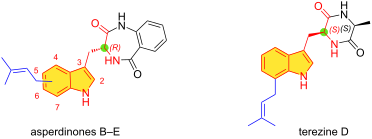
- members of prenylated indole alkaloids exhibiting α-glucosidase activity is described. Asperdinones B, C, D, and E are characterized by the presence of a (3R)-3-indolylmethylbenzodiazepine-2,5-dione unit at C-3 of C4–C7 prenylated indoles. Methods of direct and indirect prenylation of indole and
- tryptophan were explored. Different approaches were adopted for the functionalization of C4–C7 prenylindoles at C-3 using Negishi cross-coupling methods. The asperdinones are among the rare tryptophan-derived indole alkaloids which appear to have undergone epimerization due to genetic alteration of specific
- gene clusters that code for a (3R) configuration. Keywords: C–H activation; indole alkaloid; Negishi reaction; prenylation; Introduction Alkaloids constitute an important family of naturally occurring compounds with a rich history in the annals of bioactive compounds [1]. Among these, the family of


Competitive cyclization of ethyl trifluoroacetoacetate and methyl ketones with 1,3-diamino-2-propanol into hydrogenated oxazolo- and pyrimido-condensed pyridones
Beilstein J. Org. Chem. 2025, 21, 2716–2729, doi:10.3762/bjoc.21.209
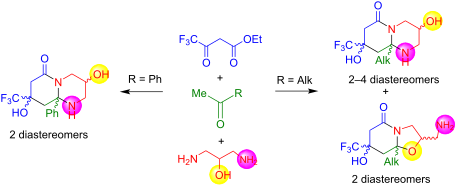
- 5att (δF 79.74 ppm) (Table 1, entries 1–4). The synthesis in 1,4-dioxane resulted in the highest conversion and the least amount of by-products, but the reaction proceeded slowly over four days. To speed up the process, the synthesis in dioxane was carried out by heating at 60 °C (Table 1, entry 5) in
- 1,4-dioxane (diastereomer 5atc, 10%) and 1,4-dioxane with acetic acid at 60 °C (diastereomer 5att, 13%). The attempts were made to increase their proportion further by using the conditions (DCE, 4-DMAP (20%), MW, 60 °C) (Table 1, entry 11); those conditions have proved effective for the synthesis of
- , and hexahydrooxazolo[3,2-a]pyridones 5atc and 5att in a mixture at a ratio of 11:9. To carry out similar reactions of ethyl trifluoroacetoacetate (1) and 1,3-diaminopropan-2-ol (3) with methyl ketones 2b–d, the two most productive conditions were selected: heating at 60 °C in 1,4-dioxane, either


Mechanistic insights into hydroxy(tosyloxy)iodobenzene-mediated ditosyloxylation of chalcones: a DFT study
Beilstein J. Org. Chem. 2025, 21, 2703–2715, doi:10.3762/bjoc.21.208
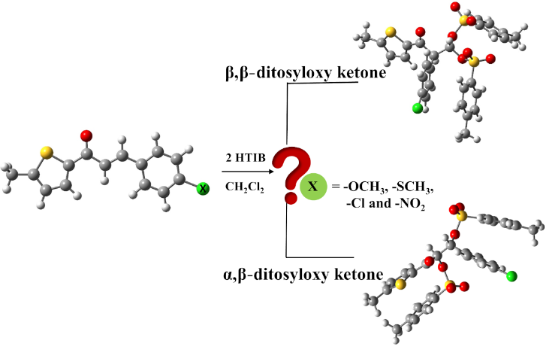
- -substituted carbonyl compound (compound C – vicinal product). By systematically varying the substituent (-X) on para-position of the aryl group, the influence of different electron-donating and electron-withdrawing groups on the reaction mechanism of these modified chalcone compounds is studied
- , the interaction of [PhIOH]+ with C at α-position is weaker and is evident by longer C–I bond lengths in Int1, i.e., 3.06 Å and 3.14 Å for chalcones with X = -Cl, -NO2, respectively (Table 2). In fact, this interaction is much weaker for chalcone with X = -NO2 that the reaction between chalcone and
- -withdrawing group on the phenyl ring, the interaction of [PhIOH]+ with chalcone to form Int1 is weak as evident from comparatively longer C–I bonds in Int1 (see Table 1). Therefore, for X = -NO2 which is a strong electron-withdrawing group, the reaction between chalcone and HTIB leading to the formation of


Tandem hydrothiocyanation/cyclization of CF3-iminopropargyl alcohols with NaSCN in the presence of AcOH
Beilstein J. Org. Chem. 2025, 21, 2694–2702, doi:10.3762/bjoc.21.207
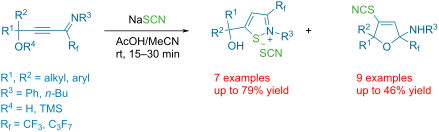
- from chemists as it is one of the most expedient and direct methods for the formation of a new C–S bond [9][10][11]. Thiocyanates represent a valuable class of molecules serving as versatile intermediates [12][13][14][15] in the synthesis of a broad range of organosulfur compounds, including thiols
- hydrothiocyanation of ynones using KSCN in AcOH at 70 °C. They also demonstrated that the adducts of ynones are readily cyclized in situ via a second thiocyanation to form thiazine-2-thiones at a slightly higher temperature and for a longer time. Meanwhile the reaction with ynamides led to decyanative amido
- . Results and Discussion We commenced our investigation using CF3-subsituted iminopropargyl alcohol 1a and NaSCN as model substrates. The completion of the reaction was monitored using IR spectroscopy to observe the disappearance of the band at 2219 cm−1 (–C≡C–). It was found that CF3-iminopropargyl alcohol



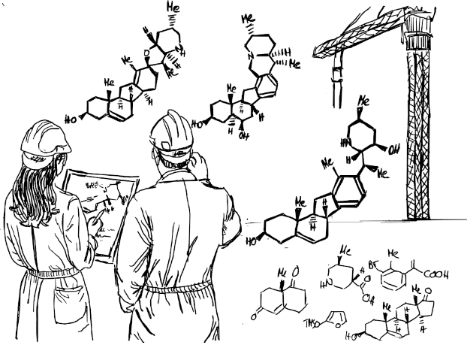
Recent advancements in the synthesis of Veratrum alkaloids
Beilstein J. Org. Chem. 2025, 21, 2657–2693, doi:10.3762/bjoc.21.206
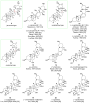
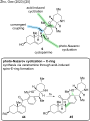
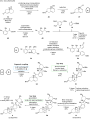
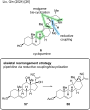
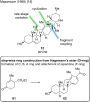
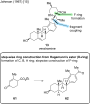
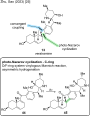
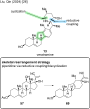
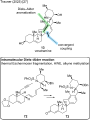
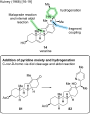
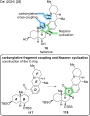
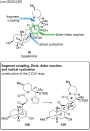
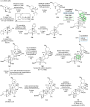
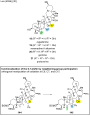
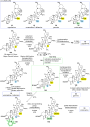
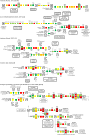
- representatives (Scheme 1), the steroidal C27-cholestane backbone is easily recognizable, except for a rearranged 14(13→12)abeo-cholestane in the Veratrum alkaloids. This C-nor-D-homo-framework represents a unique distinction from the other classes, requiring different and creative approaches for its synthesis
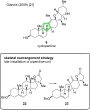
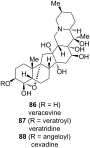
- alkaloid, cyclopamine (6) [7], displays the C-nor-D-homo framework (marked in green). Veratrum alkaloids can be further divided into three subclasses: jervanine, veratramine, and cevanine-type Veratrum alkaloids (Scheme 2) [8]. Main differentiation of these structural motifs involves the connectivity of
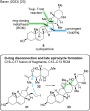
- the C-nor-D-homo skeleton to an EF-ring system; jervanine-type alkaloids consist of a hexacyclic framework with a spirofused tetrahydrofuran E-ring and a fused piperidine F-ring (connectivity I + II, Scheme 2). Veratramine-type Veratrum alkaloids resemble the jervanine-type subclass with respect to
















Synthesis of new tetra- and pentacyclic, methylenedioxy- and ethylenedioxy-substituted derivatives of the dibenzo[c,f][1,2]thiazepine ring system
Beilstein J. Org. Chem. 2025, 21, 2645–2656, doi:10.3762/bjoc.21.205
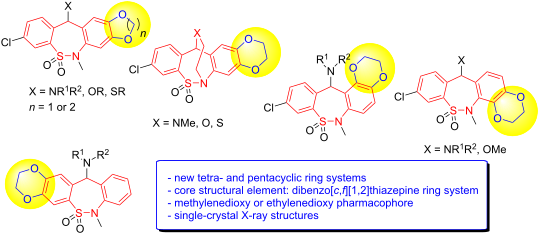
- Group, Magyar tudósok krt. 2, H-1117 Budapest, Hungary 10.3762/bjoc.21.205 Abstract New tetra- and pentacyclic derivatives of the dibenzo[c,f][1,2]thiazepine ring system have been synthesized. The target compounds contain methylenedioxy or ethylenedioxy substituents linked to the benzene ring. The key
- ; Friedel–Crafts reaction; heterocycles; new ring systems; Introduction In our prior report [1] we disclosed the synthesis of new fused ring derivatives of the dibenzo[c,f][1,2]thiazepine skeleton (1, Figure 1) shown by general structure 2. In recent publications we have also reported the synthesis of new
- ring systems containing a two or three-carbon linker between the nitrogen atom of the thiazepine ring and the nitrogen (3), oxygen (4), or sulfur (5) atom linked to the C(11) atom [2][3]. In continuation of our efforts to study new ring systems, we decided to synthesize new tetra- and pentacyclic


Chemoenzymatic synthesis of the cardenolide rhodexin A and its aglycone sarmentogenin
Beilstein J. Org. Chem. 2025, 21, 2637–2644, doi:10.3762/bjoc.21.204
- ; C–H hydroxylation; chemoenzymatic synthesis; Mukaiyama hydration; protecting-group-free synthesis; Introduction Cardiac glycosides (CGs) are widely distributed natural products, generated by plants and amphibians [1]. Structurally, they are composed of an aglycone-steroidal moiety, an unsaturated
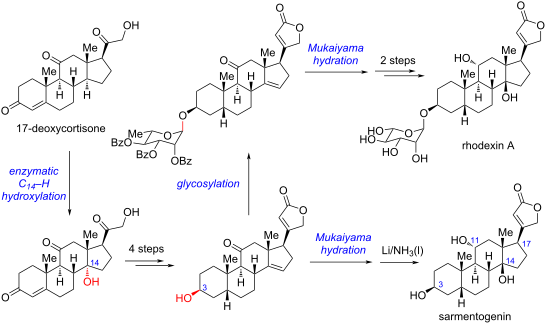
- – sarmentogenin and ʟ-rhamnose connected by the C3–O bond. In the steroidal skeleton, both the A/B and C/D rings are cis fused, which is different from common steroids. Besides, the steroidal skeleton is moderately oxidized at the C3, C11, and C14 positions. The introduction of the hydroxy groups and the
- C14 β-OH group. The revised synthetic route is described in Scheme 2. At first, 4 was subjected to a Pd/C-catalyzed hydrogenation to afford the desired A/B-cis fused intermediate 7 along with its C5 epimer as a 2:1 separable mixture in a quantitative yield. By treating 7 with the Bestmann ylide



Thiazolidinones: novel insights from microwave synthesis, computational studies, and potentially bioactive hybrids
Beilstein J. Org. Chem. 2025, 21, 2618–2636, doi:10.3762/bjoc.21.203
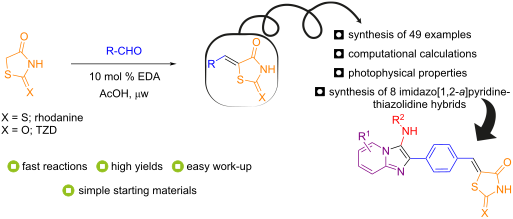
- Luan A. Martinho Victor H. J. G. Praciano Guilherme D. R. Matos Claudia C. Gatto Carlos Kleber Z. Andrade Instituto de Química, Laboratório de Química Metodológica e Orgânica Sintética (LaQMOS), Universidade de Brasília, 70904-970, Brasília, DF, Brazil Instituto de Química, Laboratório de
- ]. Some rhodanine-based derivatives act as inhibitors of hepatitis C virus (HCV) protease [19], UDP-N-acetylmuramate/ʟ-alanine ligase [20], histidine decarboxylase [21], aldose/aldehyde reductase [22], fungal protein mannosyl transferase 1 (PMT1) [23], metallo β-lactamase [24], cathepsin D [25], JNK
- -thiazolidinediones via the Knoevenagel condensation of aromatic aldehydes with 2,4-thiazolidinedione [65]. Nevertheless, the described solvent-free procedure (5 mol % of EDDA, at 80 °C for only 3 minutes) was not effective in our hands. Another similar protocol was reported by Gandini et al. [66] who used 50 mol


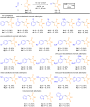


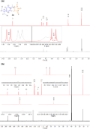


Efficient solid-phase synthesis and structural characterization of segetalins A–H, J and K
Beilstein J. Org. Chem. 2025, 21, 2612–2617, doi:10.3762/bjoc.21.202
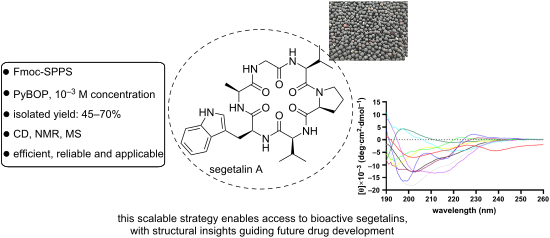
- from the high cost of the specialized resin and large solvent volumes required for dilution, coupled with DPPA's poor efficiency in forming sterically hindered peptide bonds involving residues like Val or Ile. Dahiya and Kaur synthesized segetalin C (3) via a solution-phase fragment coupling strategy
- , culminating in cyclization mediated by N,N'-dicyclohexylcarbodiimide (DCC)/N-methylmorpholine (NMM) at 0 °C for 7 days [18]. This method, however, is lengthy, operationally complex, difficult for product isolation, and carries a significant risk of racemization. Wong and Jolliffe synthesized segetalins B (2
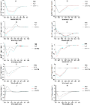
- , demonstrating unequivocal structural identity with the natural isolates. Analytical HPLC confirmed the high purity (>95%) of all synthetic segetalins. However, experimental data for segetalin C revealed the existence of a multi-state conformational equilibrium in solution, which is dependent on solvent polarity


Silica gel with covalently attached bambusuril macrocycle for dicyanoaurate sorption from water
Beilstein J. Org. Chem. 2025, 21, 2604–2611, doi:10.3762/bjoc.21.201
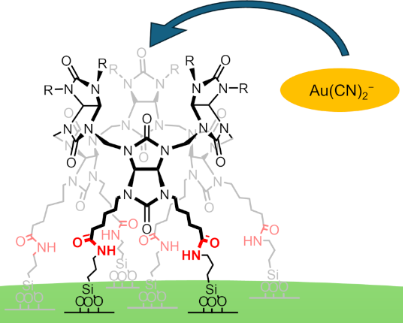
- groups onto the silica gel surface, confirming the formation of a-SG. Upon modification of a-SG with BU1, additional bands characteristic of BU1 appeared. When comparing BU1 with the SG-NHCO-BU1 material, the C=O vibration band shifted from 1703 cm−1 to 1696 cm−1 indicating the formation of an amide bond
- . Additionally, a new absorption band at 1558 cm−1 was observed in the spectra of SG-NHCO-BU1 further confirming covalent attachment of BU1 through an amide bond. In the case of SG-BU1, a C=O vibrational band is observed at 1705 cm−1, which corresponds to the vibration of the C=O of BU1 carboxylic acid groups
- minimal decomposition at temperatures below 800 °C as confirmed by the analysis. In contrast, a-SG, SG-NHCO-BU1, and SG-BU1 exhibited reduced thermal stability due to the presence of organic substituents (Figure 1A and Supporting Information File 1, Figure S1C). A weight loss of 10% for BU1, SG-NHCO-BU1


Visible-light-driven NHC and organophotoredox dual catalysis for the synthesis of carbonyl compounds
Beilstein J. Org. Chem. 2025, 21, 2584–2603, doi:10.3762/bjoc.21.200
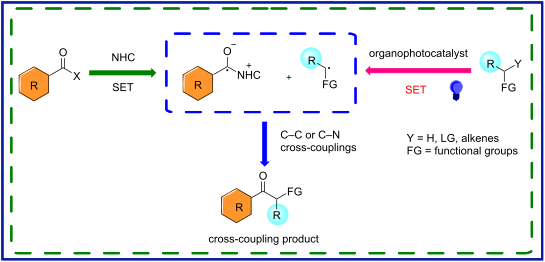
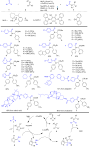
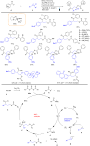
- , Michael additions, cycloadditions, domino reactions, cascade annulations, Diels–Alder reactions, and Michael–Stetter reactions, to name a few [31][32][33][34][35]. Notably, previous reports have demonstrated that the utility of chiral N-heterocyclic carbene (NHC) catalysts permits contracting asymmetric C
- –C, C–HA bond-forming reactions [36][37]. These chiral NHC catalysts, used to access enantiopure alcohol/amine derivatives, particularly 2° and 3° alcohols/amines, are significant structural motifs in numerous drugs and natural products and have found widespread synthetic applications in medicinal
- carbenes (NHCs) with photocatalysts. The review encompasses transition-metal-based photocatalytic reactions for C–C and C–HA cross-coupling reactions involving various acyl fluorides, amides, aldehydes, carboxylic acids, and esters, highlighting their broad applications in organic synthesis and medicinal





Recent advances in total synthesis of illisimonin A
Beilstein J. Org. Chem. 2025, 21, 2571–2583, doi:10.3762/bjoc.21.199
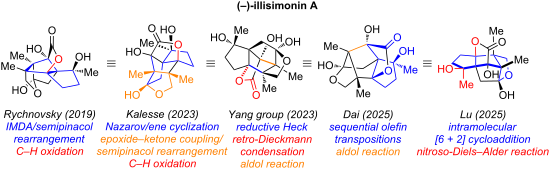
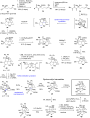
- rearrangement. Finally, a White–Chen C–H oxidation [33][34][35] was employed to install the lactone ring, thereby completing the synthesis. The synthesis began with commercially available compound 19 and known compound 20 (Scheme 2). These were joined via an intermolecular aldol reaction to give adduct 21
- −Chen C–H oxidation [33][34][35] of 30 installed the lactone, completing the synthesis of racemic illisimonin A (1). Noting that the C1 configuration of illisimonin A was opposite to that of other Illicium sesquiterpenes, Rychnovsky’s group sought to confirm the absolute configuration of the natural






Total syntheses of highly oxidative Ryania diterpenoids facilitated by innovations in synthetic strategies
Beilstein J. Org. Chem. 2025, 21, 2553–2570, doi:10.3762/bjoc.21.198
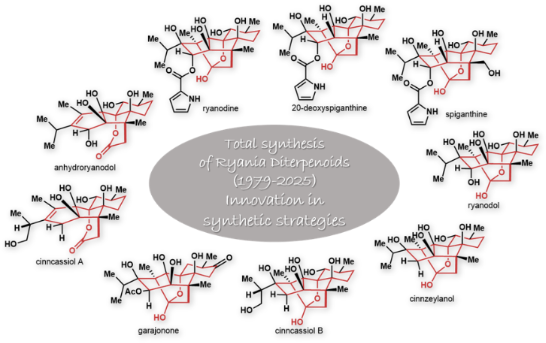
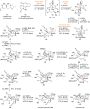
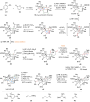
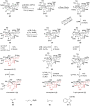
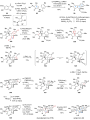
- via multiple C–C and C–O bonds, incorporating a labile hemiketal moiety. Furthermore, the presence of multiple oxygenated quaternary carbons classifies these molecules among the most highly oxidized diterpenoid natural products reported in the literature. In terms of biological activity, ryanodine (1
- bond, and a subsequent transannular aldol reaction efficiently assembles the B and C rings, yielding the ABC tricyclic core 16. Further manipulations included the introduction of a methyl group at C9, adjustments of the oxidation state, and the installation of a mesylate group at C10, leading to
- -alkoxy bridgehead radical addition then installed an allyl fragment, and ring-closing metathesis (RCM) smoothly formed the C ring to complete the core skeleton. The total synthesis was finalized by installing the four remaining stereocenters (C2, C3, C9, and C10). The specific synthetic route is as







Ni-promoted reductive cyclization cascade enables a total synthesis of (+)-aglacin B
Beilstein J. Org. Chem. 2025, 21, 2548–2552, doi:10.3762/bjoc.21.197
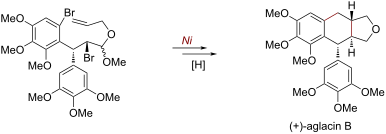
- aryltetralin[2,3-c]furan skeleton embedded in this natural product. Keywords: aryltetralin; conjugate addition; cyclolignan; nickel; reductive coupling; Introduction Proksch and co-workers isolated aglacins A, B, C, and E (1–4, Figure 1) from the methanolic extract of stem bark of Aglaia cordata Hiern from
- (2) and C (3), featuring a visible light-catalyzed radical cation cascade for the formation of the C8–C8′ and C2–C7′ bonds [6]. Subsequently, they improved the reaction conditions to achieve the racemic synthesis of aglacins A (1) and E (4) as well [7]. In 2021, the Gao group described the total
- asymmetric conjugate addition was carried out [20][21]. The in situ generated aryl–copper(I) species was obtained under the action of CuBr·Me2S with Grignard reagent 8, and then added to a THF solution of the α,β-unsaturated acyl oxazolidinone 7 at −48 °C. This reaction demonstrated an excellent





