Search results
Search for "NMR analysis" in Full Text gives 432 result(s) in Beilstein Journal of Organic Chemistry. Showing first 200.
Photoredox catalysis harvesting multiple photon or electrochemical energies
Beilstein J. Org. Chem. 2023, 19, 1055–1145, doi:10.3762/bjoc.19.81
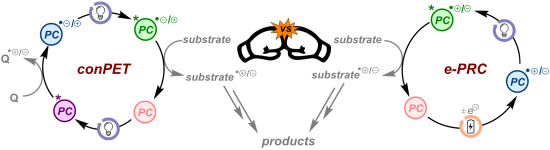
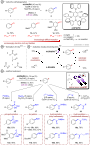
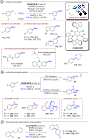
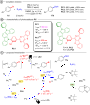
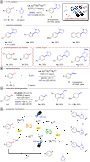
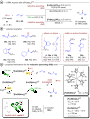
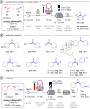
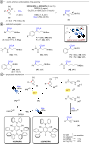
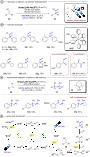
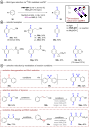
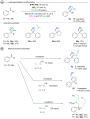
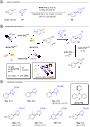
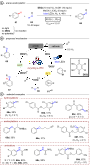
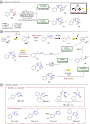
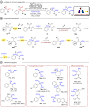
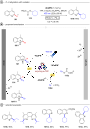
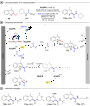
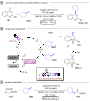
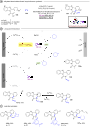
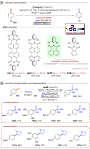
- transformation of the dtbbpy ligand to a monoanionic ligand. Extensive NMR analysis confirmed that upon the formation of [Ir1]0 via SET from Et3N to *[Ir1]+, partial saturation of the dtbbpy ligand generates [Ir2]0 and initiates the second catalytic cycle (Figure 17A). Upon excitation with blue light, *[Ir2]0

























Five new sesquiterpenoids from agarwood of Aquilaria sinensis
Beilstein J. Org. Chem. 2023, 19, 998–1007, doi:10.3762/bjoc.19.75
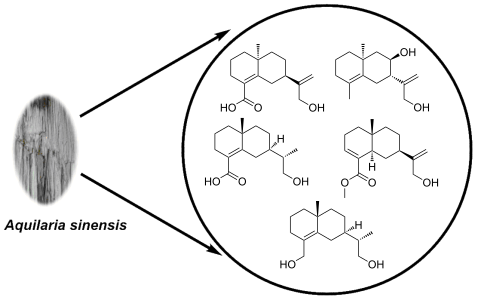
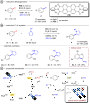
- (Table 1) spectra indicate 15 carbons, including one methyl, eight methylenes (one sp2), one methine, and four nonprotonated carbons (including three sp2 and one sp3). The planar structure of 1 was mainly constructed by 2D NMR analysis. First, the 1H,1H-COSY spectrum (Figure 2) displays the correlations


Synthesis of aliphatic nitriles from cyclobutanone oxime mediated by sulfuryl fluoride (SO2F2)
Beilstein J. Org. Chem. 2023, 19, 901–908, doi:10.3762/bjoc.19.68
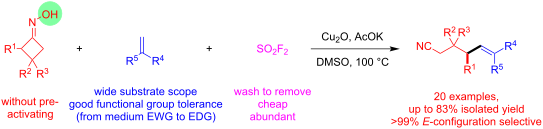
- was not accomplished either by NMR analysis or chromatography. Conclusion In conclusion, we have developed an SO2F2-mediated ring-opening cross-coupling reaction of cyclobutanone oxime derivatives with alkenes for the synthesis of a class of novel elongated nitriles. The newly constructed δ-olefin


C3-Alkylation of furfural derivatives by continuous flow homogeneous catalysis
Beilstein J. Org. Chem. 2023, 19, 582–592, doi:10.3762/bjoc.19.43
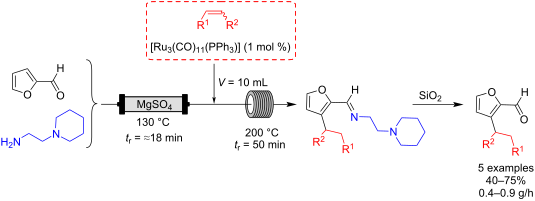
- initiated when the system reaches a steady state, based on the dispersion curves given by the apparatus. After reaching the steady state an aliquot of the product was taken for 1H NMR analysis using p-dinitrobenzene as an internal standard. 3-(2-(Triethoxysilyl)ethyl)furan-2-carbaldehyde (2a) The reaction


Direct C2–H alkylation of indoles driven by the photochemical activity of halogen-bonded complexes
Beilstein J. Org. Chem. 2023, 19, 575–581, doi:10.3762/bjoc.19.42
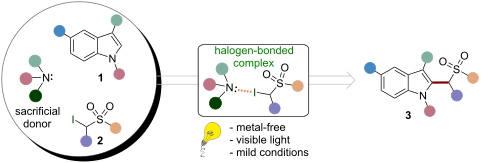
- found to shift to lower ppm values because the Hα nuclei have been affected by higher electron density caused by the formation of the halogen-bonded complex between 2a and DABCO. To confirm that the shift of Hα was indeed produced by a halogen-bonding interaction, 19F NMR analysis of compound 2d, which


Mechanochemical solid state synthesis of copper(I)/NHC complexes with K3PO4
Beilstein J. Org. Chem. 2023, 19, 440–447, doi:10.3762/bjoc.19.34
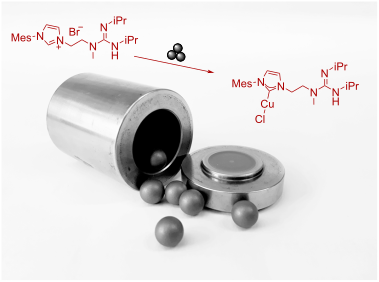
- , entry 10). Instead of small amounts of liquid, here, deprotonation leads to the formation of dihydrogen. Hence, another gastight mill was utilized for this approach. Unfortunately, a successful synthesis of 5 directly from 3 was not possible under these conditions: NMR analysis of the resulting mixture
- total time of four hours. After ball milling, an off-white powder was obtained which gave complex 5 in very good yield of 91% after extraction with CH2Cl2 and filtration. NMR analysis of 5 matched previously reported data [48][49] and showed no side products. It has to be mentioned that complex 5


Asymmetric synthesis of a stereopentade fragment toward latrunculins
Beilstein J. Org. Chem. 2023, 19, 428–433, doi:10.3762/bjoc.19.32
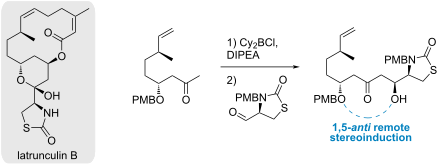
- ]2 (2.5 mol %), (S)-SEGPHOS (5 mol %), 3-nitrobenzoic acid (10 mol %), Cs2CO3 (20 mol %) in THF at 100 °C for 24 hours – we obtained homoallylic alcohol 12 in a good 86% yield, with a diastereomeric ratio (dr) of 93:7 deduced from the NMR analysis of the methyl substituent signals in CD3OD (NMR
- secured by the NMR analysis of Mosher's esters made from (R)-(+)- and (S)-(−)-α-methoxy-α-trifluoromethylphenylacetic acid (MTPA) (see Supporting Information File 1) [23][24][25], confirming the installation of the C-11 stereocenter of latrunculins. The next steps consisted in the functionalization of 12
- relied on the comparative NMR analysis of Mosher's esters [23]. Despite clear 1H NMR spectra, irregular values of ΔδS–R precluded the unambiguous determination of the C-15 stereocenter [24]. These difficulties were attributed to the hindered character of this secondary alcohol, substituted by the




Investigation of cationic ring-opening polymerization of 2-oxazolines in the “green” solvent dihydrolevoglucosenone
Beilstein J. Org. Chem. 2023, 19, 217–230, doi:10.3762/bjoc.19.21
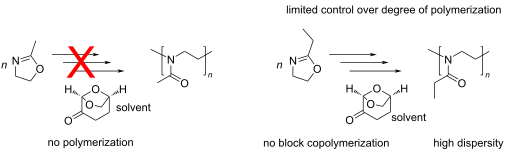
- -oxazolinium triflate (EtOxMeOTf) was synthesized. The 1H NMR analysis showed all expected resonances and in particular the signals at 4.98 ppm and 4.29 ppm, attributed to the typical methylene protons in the oxazolinium ring (Figure S2, Supporting Information File 1). Unfortunately, regarding the
- resulting molar mass after initiation with EtOxMeOTf is closer to what is expected from [M]0/[I]0 ratio (Figure 6b, blue) and Ð remained below 1.2. 1H NMR analysis of the final product after precipitation and freeze-drying confirmed the presence of signals attributed to PEtOx, whereas the additional signals


Identification and determination of the absolute configuration of amorph-4-en-10β-ol, a cadinol-type sesquiterpene from the scent glands of the African reed frog Hyperolius cinnamomeoventris
Beilstein J. Org. Chem. 2023, 19, 167–175, doi:10.3762/bjoc.19.16
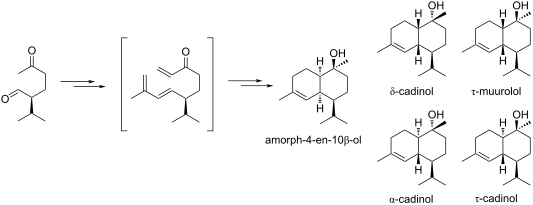
- underwent nucleophilic attack, leading the formation of the three desired compounds. The diastereomer 14 showed the same linear retention index I = 1596 and the same mass spectrum as A. After detailed NMR analysis, the relative configuration of the natural product could be determined. The most stable


A novel spirocyclic scaffold accessed via tandem Claisen rearrangement/intramolecular oxa-Michael addition
Beilstein J. Org. Chem. 2022, 18, 1649–1655, doi:10.3762/bjoc.18.177
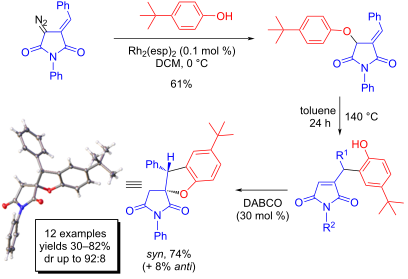
- reactivity and the Claisen rearrangement step was performed at a higher (150 °C) temperature. Notable was our inability to involve o-methoxy- (5n) and (p-methoxy)phenoxy (5m) substrates in the two-step synthesis of the respective spirocycles 7. In both cases, 1H NMR analysis of the reaction mixture indicated



A novel bis-triazole scaffold accessed via two tandem [3 + 2] cycloaddition events including an uncatalyzed, room temperature azide–alkyne click reaction
Beilstein J. Org. Chem. 2022, 18, 1636–1641, doi:10.3762/bjoc.18.175
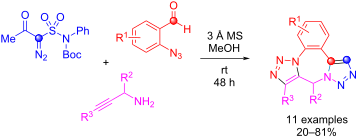
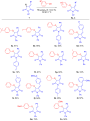
- . Stronger electron-withdrawing cyano group (3i) lowered the product yields to 20% due to low conversion of 3i. Introducing even a stronger electron acceptor, a nitro group (aldehyde 3j), led to only a trace amount of the respective product detected by 1H NMR analysis of the crude reaction mixture. Likewise
- intermediate before the click reaction was established by 1H NMR analysis of the reaction mixture). However, the product of this two-step, one-pot reaction (19) was isolated in respectable 61% yield. The structure of compound 19 was confirmed by the single-crystal X-ray analysis which demonstrated that the


Synthesis of (−)-halichonic acid and (−)-halichonic acid B
Beilstein J. Org. Chem. 2022, 18, 1629–1635, doi:10.3762/bjoc.18.174
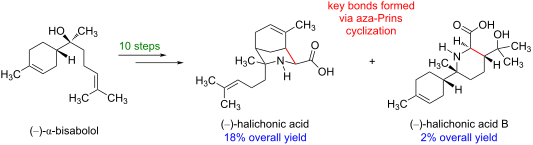
- mobile phase contained approximately 2% triethylamine as a basic additive. However, it is also possible to use crude 7 in the subsequent cyclization step without significantly affecting isolated yields. 1H NMR analysis showed that 7 was formed as a single geometrical isomer; although the imine
- system found in this natural product. However, we were intrigued that a competing cyclization process also formed isomeric lactones 9 and 10 in 8% yield and 11% yield, respectively. 1H NMR analysis confirmed that compounds 9 and 10 were both trans-fused 6/5 bicycles based on the magnitude of the vicinal


Preparation of β-cyclodextrin-based dimers with selectively methylated rims and their use for solubilization of tetracene
Beilstein J. Org. Chem. 2022, 18, 1596–1606, doi:10.3762/bjoc.18.170
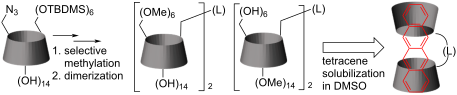
- . Despite this, we have found mass spectrometry and combined NMR analysis to be reliable methods to prove the structure of these compounds. On NMR spectra, we paid particular attention to the H1-region, where most of our products have several doublets, which referred to the signals from each hydrogen-1 in


A study of the DIBAL-promoted selective debenzylation of α-cyclodextrin protected with two different benzyl groups
Beilstein J. Org. Chem. 2022, 18, 1553–1559, doi:10.3762/bjoc.18.165
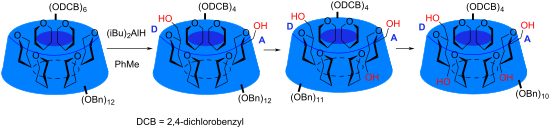
- assignment is not surprisingly very similar [15]. Similar NMR analysis of 10 gave the assignments shown in Table 4. The most significant observations in this structural assignment were 1) MS showed the compound had lost two benzyl groups from the structure of 8 and from NMR it was found to be symmetrical. 2


Characterization of a new fusicoccane-type diterpene synthase and an associated P450 enzyme
Beilstein J. Org. Chem. 2022, 18, 1396–1402, doi:10.3762/bjoc.18.144
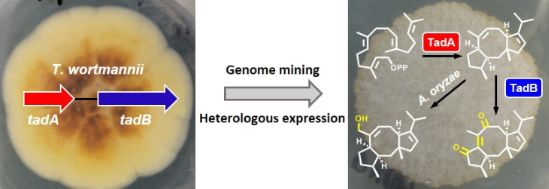
- . Subsequently, the extensive NMR analysis established the planar structure of 1, and its relative configuration was partially assigned as 2S*,3S*,6R*,10R* by the NOESY spectrum (Supporting Information File 1, Table S3 and Figures S3–S8). As to the stereochemistry of C11, quantum chemical calculations of 13C NMR
- spectrum and NMR analysis (Supporting Information File 1, Table S4 and Figures S11–S17), 2 was established as the C19-hydroxylated form of 1. As during heterologous expression in A. oryzae, shunt products could sometimes be generated by endogenous enzymes [29][30], we performed feeding experiments to test
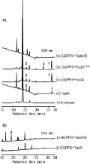
- was switched from 208 nm to 254 nm, additional product 4 was detected (Figure 3B, lines i and ii), which was elucidated to be the highly oxygenated product of 1 through the exhaustive NMR analysis (Supporting Information File 1, Table S5 and Figures S26–S32). Based on NMR data and the fact that 4 is



Preparation of an advanced intermediate for the synthesis of leustroducsins and phoslactomycins by heterocycloaddition
Beilstein J. Org. Chem. 2022, 18, 1385–1395, doi:10.3762/bjoc.18.143
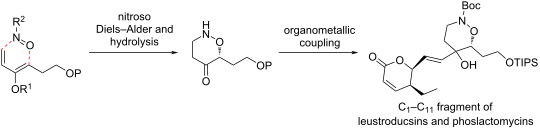
- conditions (1.15 equiv, 15 min) a combined 46% yield could be obtained. Higher equivalents of the oxidizing reagents or longer reaction time considerably lowered the yields. NMR analysis of products 25 and 26 showed these compounds were obtained as single diastereomers, thus indicating the complete


Make or break: the thermodynamic equilibrium of polyphosphate kinase-catalysed reactions
Beilstein J. Org. Chem. 2022, 18, 1278–1288, doi:10.3762/bjoc.18.134
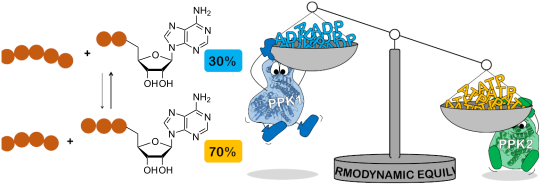
- : Details of materials and methods and additional figures and tables. Acknowledgements We would like to thank Katharina Strack for skilful technical assistance, and Dr. Manfred Keller (University of Freiburg) for help with 31P NMR analysis of polyphosphates. Dr. Torsten Sehl (Research Centre Juelich) and


Ferrocenoyl-adenines: substituent effects on regioselective acylation
Beilstein J. Org. Chem. 2022, 18, 1270–1277, doi:10.3762/bjoc.18.133
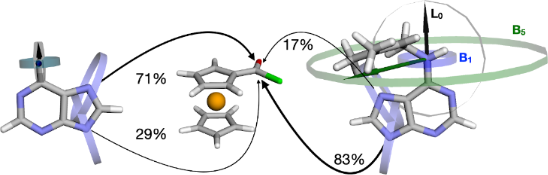
- with different groups (H, Me, Bz, isopentenyl, or Boc). In 1 and 6 the N7 nitrogen atom was calculated the most nucleophilic (Table 1, values in bold), suggesting this site should be acylated predominantly. On the contrary, according to 1H NMR analysis and isolated yields, the N9-isomer was the major



Mechanochemical bottom-up synthesis of phosphorus-linked, heptazine-based carbon nitrides using sodium phosphide
Beilstein J. Org. Chem. 2022, 18, 1203–1209, doi:10.3762/bjoc.18.125
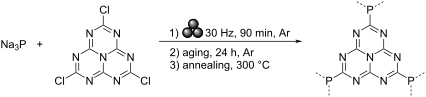
- -based materials showed similar resonances to previous work by our group on phosphorus-linked triazine networks [38]. The 31P MAS NMR of g-h-PCN showed a broad resonance centered around −8.9 ppm, with a sharp residual phosphate resonance at 0.9 ppm (Figure 3a). NMR analysis of similar materials, by our


Reductive opening of a cyclopropane ring in the Ni(II) coordination environment: a route to functionalized dehydroalanine and cysteine derivatives
Beilstein J. Org. Chem. 2022, 18, 1166–1176, doi:10.3762/bjoc.18.121
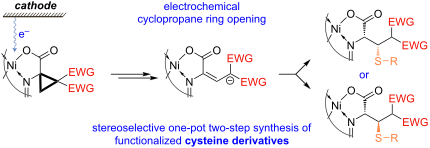
- Ph2N2 additive changed the relative ratio of alkene to hydrogenated derivatives in favor of the former one (see Table 1). As follows from Table 1, the azobenzene additive allows increasing the yield of the alkene complexes up to 85% suppressing formation of the hydrogenated complexes. Spectral NMR
- analysis of the reaction mixture showed that two isomeric alkenes (containing the α-β or β-γ double bond) are formed. In the isomers, two protons of the amino acid side chain create an AB system; in the α-β isomer, both protons show correlations in the HMBC spectrum with the C atoms of the COOMe groups



Radical cation Diels–Alder reactions of arylidene cycloalkanes
Beilstein J. Org. Chem. 2022, 18, 1100–1106, doi:10.3762/bjoc.18.112
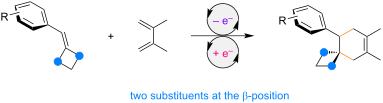
- ). Then, the solution was diluted with water and extracted with EtOAc. The combined organic layers were dried over Na2SO4, filtered, and concentrated in vacuo. Yields were determined by 1H NMR analysis using dibromomethane as an internal standard. Silica gel column chromatography (hexane/ethyl acetate
- electrolyzed at 1.3–1.5 V vs Ag/AgCl using carbon felt electrodes (10 mm × 10 mm) in an undivided cell with stirring. Then, the solution was diluted with water and extracted with EtOAc. The combined organic layers were dried over Na2SO4, filtered, and concentrated in vacuo. Yields were determined by 1H NMR
- analysis using dibromomethane as an internal standard. Silica gel column chromatography (hexane/ethyl acetate) gave the corresponding spiro ring compound. Plausible mechanism of the radical cation Diels–Alder reaction (EDG: electron-donating group). Landscape of the radical cation Diels–Alder reaction


Electrochemical formal homocoupling of sec-alcohols
Beilstein J. Org. Chem. 2022, 18, 1062–1069, doi:10.3762/bjoc.18.108
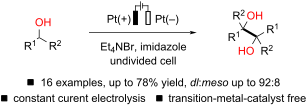
- internal standard. bDetermined by 1H NMR analysis. Proposed mechanism. Optimization of reaction conditions.a Supporting Information Supporting Information File 116: Experimental procedure, characterization data, and copies of NMR spectra of the products. Funding This work was supported by the Japan


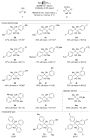


First series of N-alkylamino peptoid homooligomers: solution phase synthesis and conformational investigation
Beilstein J. Org. Chem. 2022, 18, 845–854, doi:10.3762/bjoc.18.85
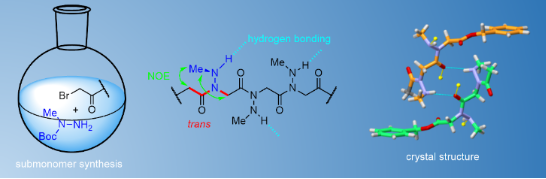
- ]. Conformational analysis and self-assembling properties The 1H NMR analysis of monomer 1 in various solvents including CDCl3, CD3CN, C6D6, CD3OD, D2O, and DMSO-d6 showed two sets of resonances in proportions varying from 75:25 to 90:10 (Table 3). These two sets of signals were characterized as the backbone cis
- evaluated few segment-based coupling methods. The optimizations made with respect to the standard submonomer synthetic conditions will be useful for developing solid-phase synthesis and access longer and more diverse N-(alkylamino)peptoid oligomers in the future. NMR analysis of the synthesized oligomers 1


The stereochemical course of 2-methylisoborneol biosynthesis
Beilstein J. Org. Chem. 2022, 18, 818–824, doi:10.3762/bjoc.18.82
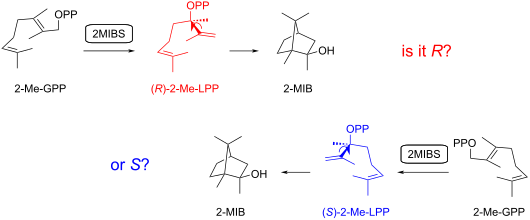
- of both compounds was determined by small scale conversions with (S)-α-methoxy-α-trifluoromethylphenylacetyl chloride (Mosher’s acid chloride) [37] and 1H NMR analysis of the products (Figure S1 in Supporting Information File 1), showing enantiomeric purities of 85% ee for 5a and 75% ee for 5b




Complementarity of solution and solid state mechanochemical reaction conditions demonstrated by 1,2-debromination of tricyclic imides
Beilstein J. Org. Chem. 2022, 18, 746–753, doi:10.3762/bjoc.18.75

- established by 1H NMR analysis and comparison with product 10. The most indicative signals are of N-methyl groups, which are at an almost identical position for the bent isomer 38 (2.36 ppm), as in products 10 and 33 (2.38 and 2.37 ppm, respectively). The chemical shift of the NMe group in linear product 36