Search results
Search for "carbamate" in Full Text gives 206 result(s) in Beilstein Journal of Organic Chemistry. Showing first 200.
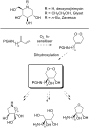
Silanediol versus chlorosilanol: hydrolyses and hydrogen-bonding catalyses with fenchole-based silanes
Beilstein J. Org. Chem. 2019, 15, 167–186, doi:10.3762/bjoc.15.17
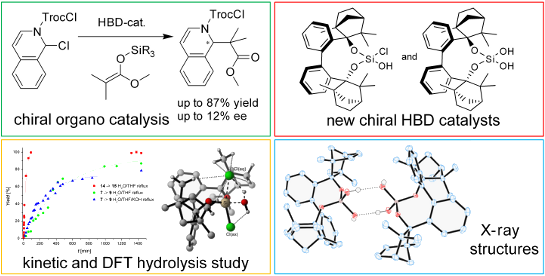
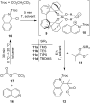
- ion catalyses The N-acyl Mannich reaction of isochinolin (16), which is activated with 2,2,2-trichloroethoxycarbonyl chloride (17, TrocCl) to carbamate 10, and different silyl ketene acetals 11a–d yielding product 12 (Scheme 6) [45][47], is studied. Mattson et al. proposed a mechanism where the








Stereodivergent approach in the protected glycal synthesis of L-vancosamine, L-saccharosamine, L-daunosamine and L-ristosamine involving a ring-closing metathesis step
Beilstein J. Org. Chem. 2018, 14, 2949–2955, doi:10.3762/bjoc.14.274
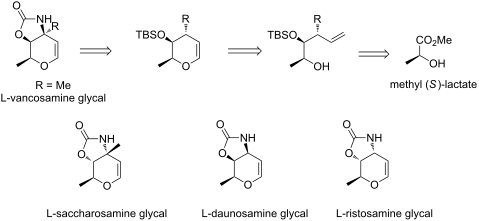
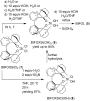
- speculated that the cyclic vinyl ether derivative I, with the prerequisite configuration of all stereogenic centers of the carbamate-protected glycal of L-vancosamine 1, could be obtained from the alcohol derivative II using an O-vinylation–ring-closing metathesis sequence (Figure 3). Afterwards, the
- diastereoisomer, the carbamate-protected 3-aminoglycal of L-saccharosamine 2, employing the (S)-(−)-methyl lactate as common starting material. The efficiency and generality of this methodology was also demonstrated by a new synthesis of C-3 unbranched amino glycals, L-daunosamine 3 and L-ristosamine 4
- synthesis of the carbamate-protected glycal of L-vancosamine 1 and L-saccharosamine 2 were prepared in two steps by treatment of alcohols with the trichloroacetyl isocyanate reagent (TCA-NCO) followed by basic hydrolysis. The spectroscopic properties of carbamates 17 were identical to those reported in the


Ring-opening metathesis of some strained bicyclic systems; stereocontrolled access to diolefinated saturated heterocycles with multiple stereogenic centers
Beilstein J. Org. Chem. 2018, 14, 2698–2707, doi:10.3762/bjoc.14.247
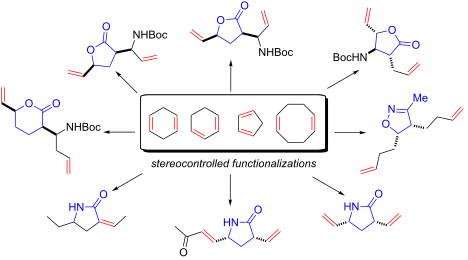
- gel (n-hexane/EtOAc). Characterization of the synthesized substances tert-Butyl ((S*)-1-((3R*,5S*)-2-oxo-5-vinyltetrahydrofuran-3-yl)allyl)carbamate ((±)-5). Yellow oil; yield 25%; Rf 0.70 (n-hexane/EtOAc 2:1); 1H NMR (CDCl3, 400 MHz) δ 1.41 (s, 9H, t-Bu), 1.82–1.88 (m, 1H, CH2), 2.40–2.47 (m, 1H
- C14H21NO4: C, 62.90; H, 7.92; N, 5.24; found, C, 62.55; H, 7.58; N, 4.89. tert-Butyl ((R*)-1-((3R*,5S*)-2-oxo-5-vinyltetrahydrofuran-3-yl)allyl)carbamate ((±)-6). Yellow oil; yield 36%; Rf 0.72 (n-hexane/EtOAc 2:1); 1H NMR (CDCl3, 400 MHz) δ 1.47 (s, 9H, t-Bu), 1.94–1.99 (m, 1H, CH2), 2.46–2.51 (m, 1H, CH2
- ]; anal. calcd for C14H21NO4: C, 62.90; H, 7.92; N, 5.24; found, C, 62.59; H, 8.30; N, 4.87. tert-Butyl ((2S*,3R*,4R*)-4-allyl-5-oxo-2-vinyltetrahydrofuran-3-yl)carbamate ((±)-10). Yellow oil; yield 35%; Rf 0.70 (n-hexane/EtOAc 2:1); 1H NMR (CDCl3, 400 MHz) δ 1.48 (s, 9H, t-Bu), 2.42–2.49 (m, 1H, CH2


Cobalt- and rhodium-catalyzed carboxylation using carbon dioxide as the C1 source
Beilstein J. Org. Chem. 2018, 14, 2435–2460, doi:10.3762/bjoc.14.221
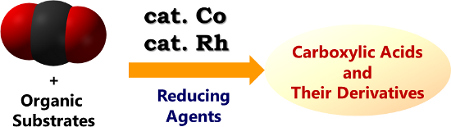
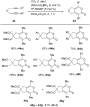
- coumarin derivatives were obtained in moderate-to-good yields. Notably, ketone (24e), ester (24d) moieties were tolerated in the reaction. In addition, 2-quinolones (24f and 24g) were obtained using alkynes bearing a Boc protected carbamate in place of the MOM protected ether. Scheme 23 shows a plausible



Synthesis of 1,4-imino-L-lyxitols modified at C-5 and their evaluation as inhibitors of GH38 α-mannosidases
Beilstein J. Org. Chem. 2018, 14, 2156–2162, doi:10.3762/bjoc.14.189
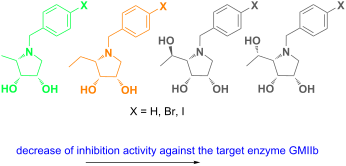
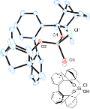
- attempts resulted in either no reaction or formation of an unstable mesylate. For this reason, the inversion of configuration was performed by the activation of the hydroxy group in 18 with triflic anhydride in the presence of pyridine at 0 °C to form carbamate 20 in 72% yield (Scheme 4). The structure and
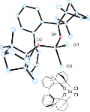
- absolute configuration of carbamate 20 was confirmed by single-crystal X-ray analysis (Figure 2) [36]. Basic hydrolysis of carbamate 20 with 10% NaOH in refluxing EtOH provided aminoalcohol 21 which was subsequently N-benzylated with the corresponding benzyl bromides to yield pyrrolidines 22. Final


Cationic cobalt-catalyzed [1,3]-rearrangement of N-alkoxycarbonyloxyanilines
Beilstein J. Org. Chem. 2018, 14, 1972–1979, doi:10.3762/bjoc.14.172

- recovery of the starting material 1a (Table 2, entries 8–10). A protic solvent, such as methanol, was ineffective (Table 2, entry 11). Slight dilution of the reaction solution (0.25 M) improved the chemical yield (Table 2, entry 12). As mentioned previously [13], carbamate-type groups, such as


An amine protecting group deprotectable under nearly neutral oxidative conditions
Beilstein J. Org. Chem. 2018, 14, 1750–1757, doi:10.3762/bjoc.14.149
- collection of transformations to be carried out on the protected substrates that are unattainable using any known protecting groups. Keywords: amine; carbamate; dM-Dmoc; oxidation; protecting group; Introduction In multistep organic synthesis, amino groups usually have to be protected [1]. Protecting
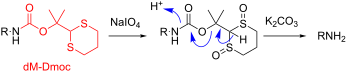
- carbamate and 6-nitroveratryl carbamate) [9][10] and fluoride (e.g., trimethylsilylethyloxycarbonyl (Teoc) group) [11][12]. The 1,3-dithian-2-ylmethoxycarbonyl (Dmoc) group first reported by Kunz and co-workers provides a different dimension of orthogonality of amine protection in terms of deprotection
- experimental section). The compound is stable, which allows easy purification and storage. However, we expected that it could react with amines under suitable conditions. Using benzylamine (3a) as the model substrate, we tested a variety of reaction conditions to form the dM-Dmoc protected carbamate 5a (see


Novel unit B cryptophycin analogues as payloads for targeted therapy
Beilstein J. Org. Chem. 2018, 14, 1281–1286, doi:10.3762/bjoc.14.109
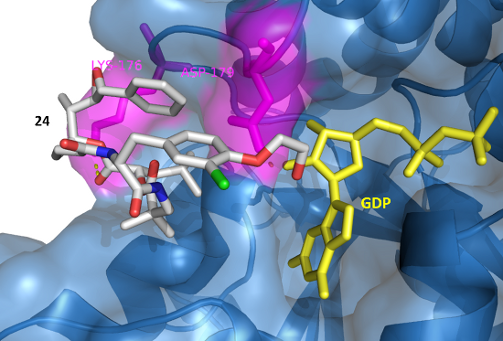
- conjugation of the novel cryptophycin analogues across an appropriate linker to an antibody or peptide. Either a virtually uncleavable triazole (introduced by CuAAC) or scissile ester, carbonate, or carbamate moieties were taken into account. The synthesis of the modified unit B (Scheme 1) started with the


London dispersion as important factor for the stabilization of (Z)-azobenzenes in the presence of hydrogen bonding
Beilstein J. Org. Chem. 2018, 14, 1238–1243, doi:10.3762/bjoc.14.106
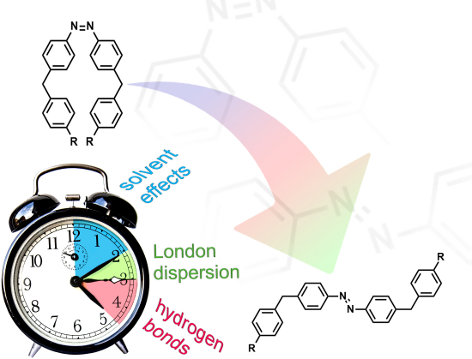
- isomerization rates of several N-substituted 4,4′-bis(4-aminobenzyl)azobenzenes were measured. An intramolecular stabilization was observed and explained by the interplay of intramolecular amide and carbamate hydrogen bonds as well as London dispersion interactions. Whereas in toluene, 1,4-dioxane and tert
- amide [34]. This explains the highest stabilization of the trimethylhexanoylamide 4 (experimentally and computationally), followed by the tert-butylamide 5 and tert-butyl carbamate 6, which are almost equally stabilized. Nevertheless, hydrogen bonds are strongly dependent on the solvent system and


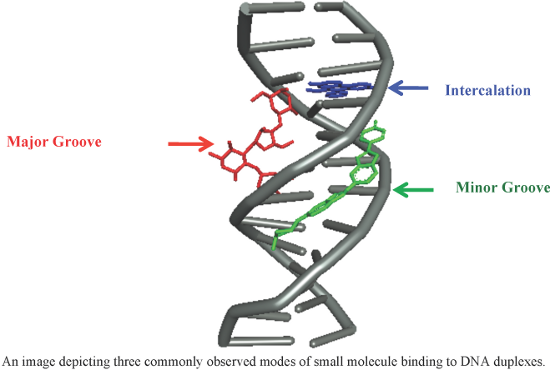
An overview of recent advances in duplex DNA recognition by small molecules
Beilstein J. Org. Chem. 2018, 14, 1051–1086, doi:10.3762/bjoc.14.93




On the design principles of peptide–drug conjugates for targeted drug delivery to the malignant tumor site
Beilstein J. Org. Chem. 2018, 14, 930–954, doi:10.3762/bjoc.14.80
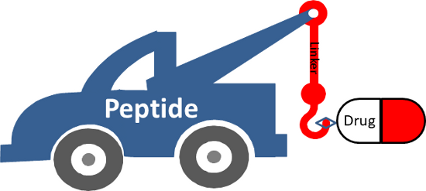
- unit (EHU; colored in green) and to a tumor-targeting element (i.e. tumor homing peptide; colored in black). The alcohol group at the opposite site can be connected via a carbonate ester/carbamate bond to the cytotoxic agent (colored in blue). The EHU is designed so as to be a substrate for proteases


Nanoreactors for green catalysis
Beilstein J. Org. Chem. 2018, 14, 716–733, doi:10.3762/bjoc.14.61
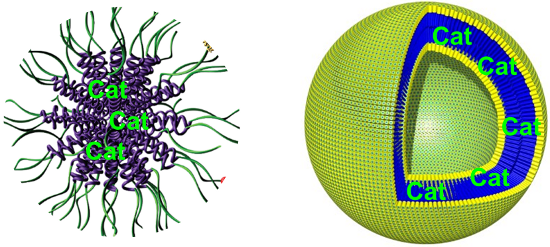
- between heteroaryl bromides, chlorides or iodides and carbamate, sulfonamide or urea derivatives to be successfully realized in water using palladium-loaded TPGS-750-M (dl-α-tocopherol methoxypolyethylene glycol succinate) micelles (Scheme 1). Moreover, this micellar catalytic system allowed for catalyst


Oxidative cycloaddition of hydroxamic acids with dienes or guaiacols mediated by iodine(III) reagents
Beilstein J. Org. Chem. 2018, 14, 531–536, doi:10.3762/bjoc.14.39
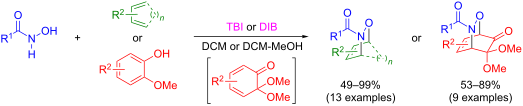
- X-ray analysis [24]. Next, we investigated the oxidative cycloaddition reactions of hydroxamic acids 1a–c with various dienes 2 under the optimal conditions (Table 2). Similarly to the benzoyl derivative 1a, the carbamate analogues 1b (R1 = OBn) and 1c (R1 = Ot-Bu) reacted with 1,3-cyclohexadiene


Stimuli-responsive oligonucleotides in prodrug-based approaches for gene silencing
Beilstein J. Org. Chem. 2018, 14, 436–469, doi:10.3762/bjoc.14.32
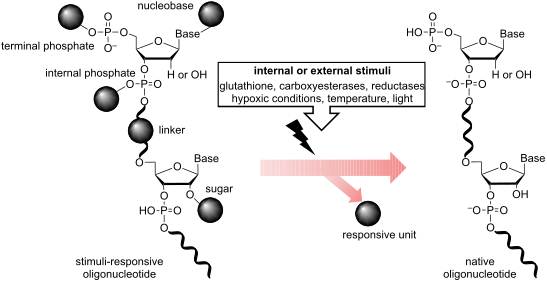
- nucleic acids (PNAs), a lipophilic triphenylphosphonium (TPP) cation was attached to the N-terminal extremity of a PNA through a biodegradable carbamate linker containing a disulfide bridge (Scheme 4B) [20]. It was shown that such PNA conjugates entered cells rapidly and efficiently. Furthermore, a 16-mer


Synthesis and biological evaluation of RGD and isoDGR peptidomimetic-α-amanitin conjugates for tumor-targeting
Beilstein J. Org. Chem. 2018, 14, 407–415, doi:10.3762/bjoc.14.29
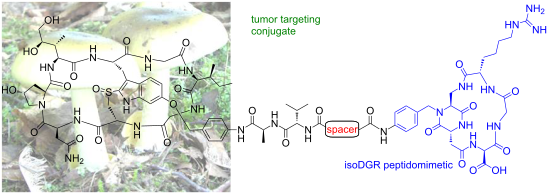
- group (-CH2NH2) as a handle for conjugation to cytotoxic drugs (Figure 2, ligands 2 and 4) [28][29][30]. Conjugates of the functionalized ligands 2 and 4 with paclitaxel (PTX) via a 2’-carbamate with a self-immolative spacer and the lysosomally cleavable Val-Ala linker [31] were synthesized (Figure 2


Aminosugar-based immunomodulator lipid A: synthetic approaches
Beilstein J. Org. Chem. 2018, 14, 25–53, doi:10.3762/bjoc.14.3
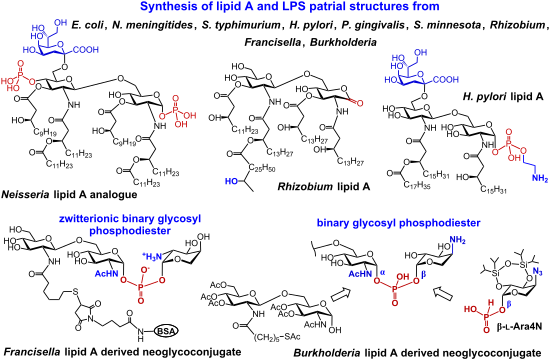
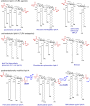
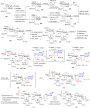
- -diethylaminophosphepane (N,N-diethyl-1,5-dihydro-2,3,4-benzodioxaphosphepin-3-amine) in the presence of 1H-tetrazole followed by in situ oxidation with m-chloroperoxybenzoic acid (m-CPBA) to give fully protected 4’-phosphate 2. The azido group in 2 was reduced, the resulting amine was converted to the N-Fmoc carbamate




From dipivaloylketene to tetraoxaadamantanes
Beilstein J. Org. Chem. 2018, 14, 1–10, doi:10.3762/bjoc.14.1

- tetraoxaadamantanes. Inward-pointing isocyanate, urethane and carbamate groups in bisdioxines. The diisocyanate is obtained by Curtius and Hofmann rearrangements of the diazides and diamides [38][39]. Microwave-assisted tetraoxaadamantane formation. Cyclic bisdioxine ester derivative 34 forming a single mono





The use of 4,4,4-trifluorothreonine to stabilize extended peptide structures and mimic β-strands
Beilstein J. Org. Chem. 2017, 13, 2842–2853, doi:10.3762/bjoc.13.276
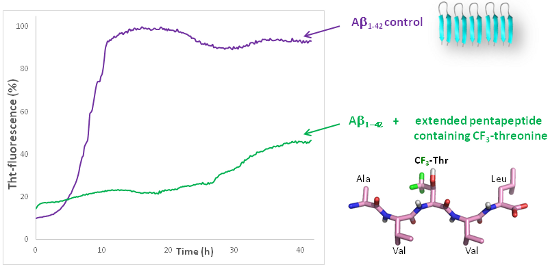
- 271 K (300 ms mixing time), proving that the two forms interconvert in a slow exchange regime on the 1H NMR time scale. This equilibrium was ascribed to the existence of the syn- and anti-rotamers of the carbamate group. The more stable forms (about 85% population at 271 K) were assigned to anti




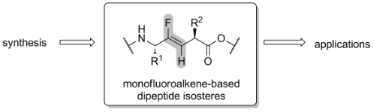
Recent progress in the racemic and enantioselective synthesis of monofluoroalkene-based dipeptide isosteres
Beilstein J. Org. Chem. 2017, 13, 2637–2658, doi:10.3762/bjoc.13.262
- = 75:25). Further modifications (removal of the sulfinyl group and the silyl protecting group in acidic conditions, transformation of the amine in methyl carbamate and oxidation of the primary alcohol into the corresponding carboxylic acid) gave the final isostere 93. In 2013, Pannecoucke and co


Fluorination of some highly functionalized cycloalkanes: chemoselectivity and substrate dependence
Beilstein J. Org. Chem. 2017, 13, 2364–2371, doi:10.3762/bjoc.13.233
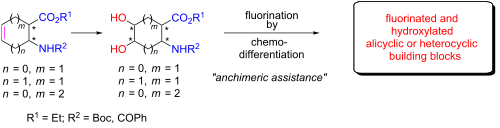
- the carbamate N-atom (Scheme 3). Again, only the selective transformation of the C-3 hydroxy group with the fluorinating agent took place, without the involvement of the C-4 OH group. Unfortunately, all further attempted fluorinations of hydroxylated aziridine (±)-7 under various conditions using for


Mechanochemical synthesis of small organic molecules
Beilstein J. Org. Chem. 2017, 13, 1907–1931, doi:10.3762/bjoc.13.186
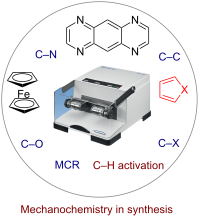
- process to stabilize the carbocation species. This method was proved to be efficient by performing the reaction at 9.7 mmol scale to obtain 84% yield of the product. C–O bond formation reaction Carbon–oxygen (C–O) bonds are widely present in molecules containing ester, carbamate and amino acid, etc. [88
- dialkyl carbonates [90]. Mechanochemical transesterification reaction using basic Al2O3 [91]. Mechanochemical carbamate synthesis [92]. Mechanochemical bromination reaction using NaBr and oxone [96]. Mechanochemical aryl halogenation reactions using NaX and oxone [97]. Mechanochemical halogenation


The chemistry and biology of mycolactones
Beilstein J. Org. Chem. 2017, 13, 1596–1660, doi:10.3762/bjoc.13.159




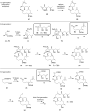


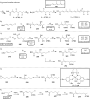


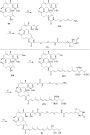

Total syntheses of the archazolids: an emerging class of novel anticancer drugs
Beilstein J. Org. Chem. 2017, 13, 1085–1098, doi:10.3762/bjoc.13.108
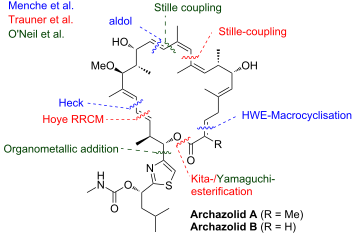
- -intermediate [76]. After conversion to amide 28 and thioamide 29 the thiazole 31 was obtained by condensation with bromoester 30. The carbamate was then introduced by activation of the deprotected hydroxy group with carbonyldiimidazole and treatment with methylamine, before the ester was selectively reduced to
- the both epimers were oxidized to the ketone by DMP followed by reduction with L-selectride. Protection of the free alcohol with acetate and deprotection of the TES group was then required to install the carbamate with CDI and MeNH2. After deprotection, fragment 75 was synthesized in 67% yield over 2


Regioselective (thio)carbamoylation of 2,7-di-tert-butylpyrene at the 1-position with iso(thio)cyanates
Beilstein J. Org. Chem. 2017, 13, 1032–1038, doi:10.3762/bjoc.13.102
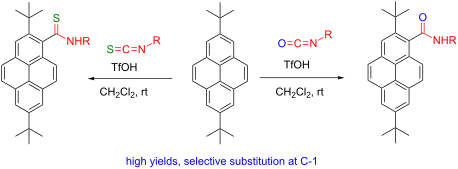
- -butylpyrene-1-carbonothioyl)carbamate (3o). Yellow solid. Mp 97–98 °C; 1H NMR (600 MHz, CDCl3) δ 9.82 (s, 1H), 8.33 (s, 1H), 8.19 (d, J = 13.2 Hz, 2H), 8.05 (s, 2H), 7.99 (m, 2H), 3.92 (q, J = 7.2 Hz, 2H), 1.74 (m, 9H), 1.59 (m, 9H), 0.97 (t, J = 7.2 Hz, 3H); 13C NMR (150 MHz, CDCl3) δ 211.0, 149.0, 148.9
- : C, 75.34; H, 7.18; N, 3.21, S, 7.14. Diethyl (2,7-di-tert-butyl.pyrene-1,8-dicarbonothioyl)carbamate (4). Yellow solid. Mp 240–241 °C; 1H NMR (600 MHz, CDCl3) δ 9.75 (s, 1H), 9.72 (s, 1H), 8.28 (m, 2H), 8.02 (s, 2H), 7.95 (s, 2H), 3.90 (m, 4H), 1.69 (m, 18H), 0.97 (m, 3H), 0.88 (m, 3H). The 13C NMR




Exploring endoperoxides as a new entry for the synthesis of branched azasugars
Beilstein J. Org. Chem. 2017, 13, 644–647, doi:10.3762/bjoc.13.63
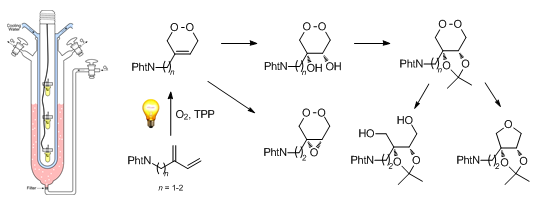
- desired aldehyde 8 was observed. Presumably the problems encountered with compound 4 originates from the ability of the carbamate nitrogen to form a five-membered hydroxypyrrolidine that can undergo further oxidation [19]. Oxidation of alcohol 5 to give aldehyde 9 was accomplished in a low yield using