Search results
Search for "efficiency" in Full Text gives 1250 result(s) in Beilstein Journal of Organic Chemistry. Showing first 200.
Systematic pore lipophilization to enhance the efficiency of an amine-based MOF catalyst in the solvent-free Knoevenagel reaction
Beilstein J. Org. Chem. 2025, 21, 1854–1863, doi:10.3762/bjoc.21.144
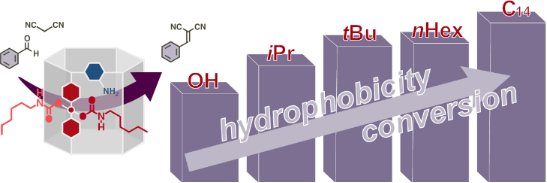
- efficiency. Keywords: metal-organic frameworks; post-synthesis modification; supramolecular catalysis; Introduction Most enzymatic reactions take place in multifunctional cavities in which multiple amino acid residues work cooperatively to orient and activate reactants [1][2][3]. These residues may also
- catalytic performance and/or systematically investigate the influence of a particular chemical or structural property on catalyst efficiency [23]. For examples of tailoring the pore environment in MOF-based catalysts to modulate catalytic performance, we can refer to the elegant work of Telfer and co
- catalysis have focused on lipophilization to prevent water-based catalyst decomposition, with only a few investigating how lipophilic pores surfaces can increase catalyst efficiency [32][33], despite enzymes employing such a strategy. The lipophilicity of enzyme active sites tends to improve reaction rates


Photoswitches beyond azobenzene: a beginner’s guide
Beilstein J. Org. Chem. 2025, 21, 1808–1853, doi:10.3762/bjoc.21.143
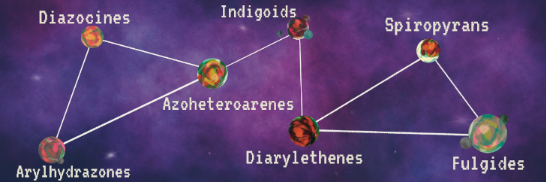
- be easily calculated. According to the thermal half-life, photoswitches are usually classified in P-type (thermally stable, with long half-life) and T-type (thermally unstable) [3]. The quantum yield Φ measures the efficiency of the switching, and it relates the number of photons absorbed nx to the




Fe-catalyzed efficient synthesis of 2,4- and 4-substituted quinolines via C(sp2)–C(sp2) bond scission of styrenes
Beilstein J. Org. Chem. 2025, 21, 1799–1807, doi:10.3762/bjoc.21.142
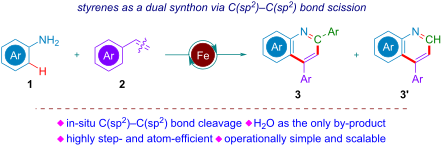
- existing methodologies suffer from poor atom utilization, leading to increased waste and reduced overall efficiency, which can be challenging to manage, especially when scaling up. Building on previous studies, we envisioned a novel reaction system that facilitates the C(sp2)–C(sp2) bond cleavage of
- , FeCl3·6H2O provided the best results (Table 1, entry 2). A further reduction in catalyst loading from 25 mol % to 20 mol % and 10 mol % resulted in a noticeable decrease in both selectivity and conversion efficiency (Table 1, entries 7 and 8). This is likely due to insufficient C(sp2)–C(sp2) bond
- 6-bromo-2,4-diphenylquinoline (3g), both recognized for their antifungal activity [10], were successfully synthesized on a gram scale, showcasing the scalability and efficiency of the process (Scheme 3). After having demonstrated the broad substrate compatibility and the synthetic potential of this




[3 + 2] Cycloaddition of thioformylium methylide with various arylidene-azolones in the synthesis of 7-thia-3-azaspiro[4.4]nonan-4-ones
Beilstein J. Org. Chem. 2025, 21, 1791–1798, doi:10.3762/bjoc.21.141
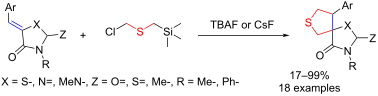
- ) and found that only these two abovementioned approaches are capable to perform desired cycloaddition (Supporting Information File 1, part 2). For various azolones 1–5e, these two methods demonstrated different efficiency – Table 1. Derivative 6e was formed from azolone 1e in approximately equal yield



Synthesis of chiral cyclohexane-linked bisimidazolines
Beilstein J. Org. Chem. 2025, 21, 1786–1790, doi:10.3762/bjoc.21.140
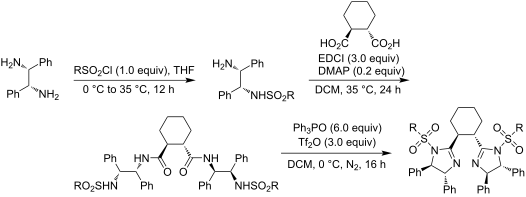
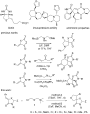
- bisimidazoline ligands 5 on the stereocontrol in catalytic asymmetric reactions (Table 1). To improve the synthetic efficiency, a different strategy for the synthesis of a nonsulfonylated cyclohexane-linked bisimidazoline with subsequent sulfonylation with different sulfonyl chlorides was also considered and


Research progress on calixarene/pillararene-based controlled drug release systems
Beilstein J. Org. Chem. 2025, 21, 1757–1785, doi:10.3762/bjoc.21.139
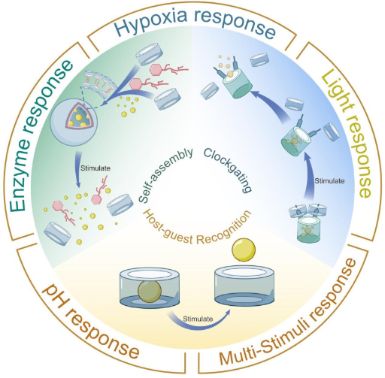
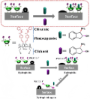
- cyclodextrins in terms of controllable functionalization [61]. In clinical applications, particularly for anticancer drug conjugation, CAs demonstrate remarkable cancer cell selectivity, minimized off-target effects, enhanced delivery efficiency, and reduced systemic toxicity. Additionally, their synthetic
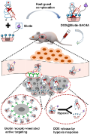
- specific release of DOX, significantly improving the delivery efficiency and tumor targeting of hydrophobic drugs. The release of DOX from PAs also can be regulated by a pH-responsive mechanism. In 2015, Wang and coworkers synthesized a novel supramolecular prodrug nanoparticle exploiting the host–guest
- the active drug form, anthraquinone [116]. The CIA strategy effectively improves the solubility, bioavailability, and light-response efficiency of hydrophobic photo-sensitizing drugs, offering new ideas for light-controlled drug delivery systems. In 2018, Sun and colleagues designed and synthesized a






Approaches to stereoselective 1,1'-glycosylation
Beilstein J. Org. Chem. 2025, 21, 1700–1718, doi:10.3762/bjoc.21.133
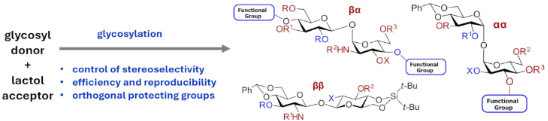
- presence of boron trifluoride etherate as promoter to afford the β,α-1,1'-linked disaccharide 12 in 52% yield (Scheme 2). The electron-withdrawing effect of the 2-azido group in the structurally similar donor 13 led to a significant drop in efficiency and the formation of the desired disaccharide 14 along
- , inseparable mixture of products (Scheme 7) [76]. The use of a torsional disarming 4,6-O-benzylidene acetal protecting group on both the N-phenytrifluoroacetimidate donor 81 and the lactol acceptor 82 led to a moderate improvement in glycosylation efficiency. A significant advancement was observed upon


Continuous-flow-enabled intensification in nitration processes: a review of technological developments and practical applications over the past decade
Beilstein J. Org. Chem. 2025, 21, 1678–1699, doi:10.3762/bjoc.21.132
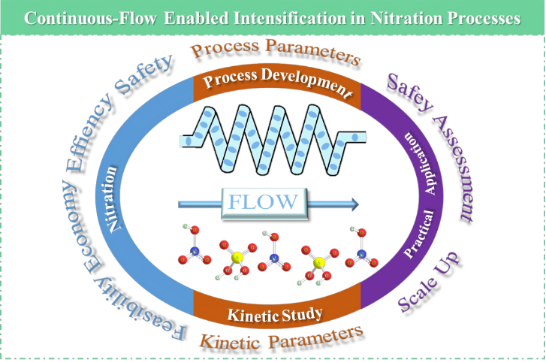
- potential in advancing the green transformation of the chemical industry while enhancing inherent process safety. Safety, cost-effectiveness, and operational efficiency serve as pivotal drivers for advancing flow chemistry in nitration processes. This review provides a comprehensive analysis of the
- -flow configurations demonstrate superior safety and efficiency. While the synthetic significance of nitration is underscored by the broad utility of nitro derivatives, persistent technical challenges including regioselectivity control, over-nitration phenomena, and substrate oxidation side reactions
- , safety, and efficiency concerns, researchers have explored various types of inorganic and organic nitrating reagents to improve reaction performance through innovative chemical approaches. Patra et al. comprehensively reviewed the development and applications of organic nitrating reagents in nitration



Influence of the cation in hypophosphite-mediated catalyst-free reductive amination
Beilstein J. Org. Chem. 2025, 21, 1661–1670, doi:10.3762/bjoc.21.130
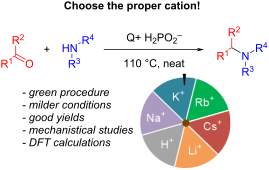
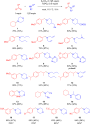
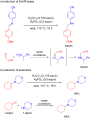
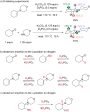
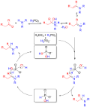
- to fundamentally study the influence of the cations in hypophosphites on this process. In this work, the hypophosphites of Li, K, Rb, and Cs were obtained in situ, the influence of alkali metal cations on the efficiency of reductive amination was assessed and the obtained results were compared with
- investigation of cation influence on the efficiency of reductive amination, a commercially available NaH2PO2, and in situ synthesized LiH2PO2, NaH2PO2, KH2PO2, RbH2PO2, and CsH2PO2 were compared. To account for the reactivity of H3PO2 as is, the reaction outcome both for the neutral XH2PO2 (where X is Li, Na, K
- additional H3PO2 showed lower efficiency at 130 °C, 4 h (3–55%) (Table 1, lines 4–6). However, the reactivity of the mixture of XH2PO2 and H3PO2 (at the same total H2PO2− loading) demonstrated an increased reaction yield. K2CO3 was cheaper and more available base than RbOH and Cs2CO3, hence it was chosen for


On the aromaticity and photophysics of 1-arylbenzo[a]imidazo[5,1,2-cd]indolizines as bicolor fluorescent molecules for barium tagging in the study of double-beta decay of 136Xe
Beilstein J. Org. Chem. 2025, 21, 1627–1638, doi:10.3762/bjoc.21.126
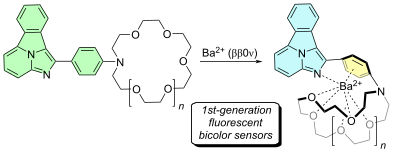
- efficiency of crown ethers as components in cation-selective fluorescent probes has been extensively explored [7][30], to the best of our knowledge no previous computational DFT studies on the selectivity of crown ethers of different sizes with Ba2+ have been reported. Therefore, we explored (Scheme 2A) the


Synthesis of optically active folded cyclic dimers and trimers
Beilstein J. Org. Chem. 2025, 21, 1603–1612, doi:10.3762/bjoc.21.124

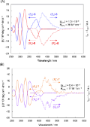
- luminescence (CPL) [22][23][24][25] with high photoluminescence (PL) quantum efficiency (ΦPL) and anisotropy. Additionally, the π-stacked structure of [2.2]paracyclophane can be applied at a crossing point. By folding the π-conjugated system using [2.2]paracyclophane as the chiral crossing unit, optically
- samples were analyzed in CHCl3 at room temperature. Photoluminescence (PL) spectra were recorded on a JASCO FP-8500 spectrofluorometer, and samples were analyzed in CHCl3 at room temperature. Absolute PL quantum efficiency was calculated on a JASCO FP-8500 with an ILF-835 integrating sphere. The PL



3-Aryl-2H-azirines as annulation reagents in the Ni(II)-catalyzed synthesis of 1H-benzo[4,5]thieno[3,2-b]pyrroles
Beilstein J. Org. Chem. 2025, 21, 1595–1602, doi:10.3762/bjoc.21.123
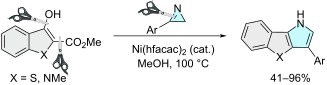
- an ortho-substituent into the benzene ring also has no effect on the synthesis efficiency (compound 3f). A slight decrease in yield was observed only for the naphthyl-substituted annulation product 3k. The plausible mechanism of the reaction involves the nucleophilic addition of the Ni-enolate of 1
- ). Benzothienopyrrole 3b was methylated using the MeI/NaH system into 1-methyl-substituted derivative 6 in 81% yield. With the same efficiency, when compound 3b was treated with di-tert-butyl dicarbonate in the presence of 4-(dimethylamino)pyridine (DMAP), Boc-derivative 7 was obtained. Finally, the formylation of 3b



Facile synthesis of hydantoin/1,2,4-oxadiazoline spiro-compounds via 1,3-dipolar cycloaddition of nitrile oxides to 5-iminohydantoins
Beilstein J. Org. Chem. 2025, 21, 1552–1560, doi:10.3762/bjoc.21.118

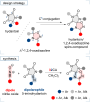
- -oxadiazoline spiro-compounds using a 1,3-dipolar cycloaddition of nitrile oxides to C=N bonds of 5-iminohydantoins. The efficiency of the approach was demonstrated by varying the substituents at four positions of the resulting spirocyclic molecules. Cytotoxicity of the target hydantoin/1,2,4-oxadiazolines was



Azide–alkyne cycloaddition (click) reaction in biomass-derived solvent CyreneTM under one-pot conditions
Beilstein J. Org. Chem. 2025, 21, 1544–1551, doi:10.3762/bjoc.21.117
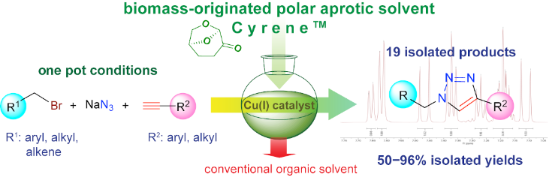
- obtained for Cu sources in different solvent systems [40][41]. Although CuAAC reactions can be efficiently performed in water, the moisture content of the organic reaction environment could have a significant effect on the efficiency of a transition-metal-catalyzed reaction. Because CyreneTM is fully
- formation; thus, keeping water content below 1% is necessary to maintain high reaction efficiency. The negative effect could be due to the decreased solubility of 2a at higher water content [42][43][44]. Hereafter, the readily available CuI was selected as a catalyst precursor to facilitate click reactions


General method for the synthesis of enaminones via photocatalysis
Beilstein J. Org. Chem. 2025, 21, 1535–1543, doi:10.3762/bjoc.21.116
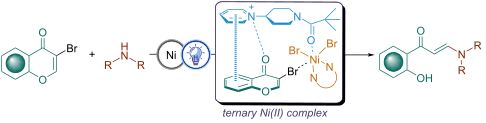
- phenantroline also resulted in a decrease in the efficiency of the process (Table 1, entries 4 and 5). The pyridinium salt has also a significant effect on reactivity; thus, when 1-benzyl-2,4,6-triphenylpyridin-1-ium (PS2) was used, enaminone 9a was isolated in only 34% yield (Table 1, entry 6). Replacing DMF




Calcium waste as a catalyst in the transesterification for demanding esters: scalability perspective
Beilstein J. Org. Chem. 2025, 21, 1520–1527, doi:10.3762/bjoc.21.114
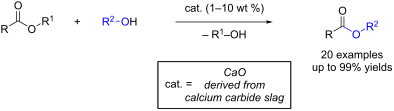
- the alcohols’ nature and catalyst amount (1–10 wt %). The CS600 catalyst demonstrated efficiency in the transesterification of low-molecular-weight esters, medium-chain triglycerides (C9–C12), and lactones, resulting in the corresponding methyl esters in 66–99% yields in the presence of low catalyst


Highly distinguishable isomeric states of a tripodal arylazopyrazole derivative on graphite through electron/hole-induced switching at ambient conditions
Beilstein J. Org. Chem. 2025, 21, 1496–1507, doi:10.3762/bjoc.21.112
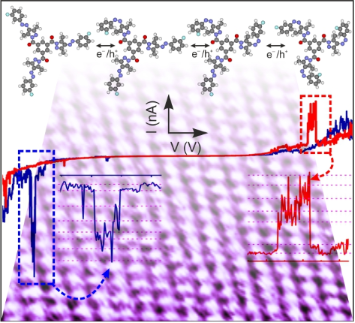
- electronic and optical properties of switchable states. The applicability of molecular switches relies on the efficiency, reversibility, and the half-life associated with different non-equilibrium states. Typically, the half-life of the Z isomer of AB is a few days [17]. Chemical modifications of AB
- switchable probe for light-driven reversible printing and erasing applications [29]. Besides exhibiting excellent photoswitching in solution phase, the tripodal photoswitches exhibit extended half-life of the ZZZ isomer in the solid-state as well [22][29]. The overall efficiency of the molecular switch could
- surface at ambient conditions. The fluorine substitution is chosen in FNAAP for its better photoisomerization efficiency (in solution as well as in solid state) and higher molecular stability [29]. Possible photoisomers of FNAAP, EEE, EEZ, EZZ and ZZZ are shown in Figure 1. FNAAP molecules assemble into



Photoredox-catalyzed arylation of isonitriles by diaryliodonium salts towards benzamides
Beilstein J. Org. Chem. 2025, 21, 1480–1488, doi:10.3762/bjoc.21.110
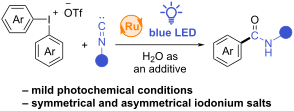
- . Unfortunately, 4CzTPN, 4CzIPN, and 3DPAFIPN did not demonstrate increased efficiency, and the yields of the target product 2aa were slightly lower than for [Ru(bpy)3](PF6)2 (Table 1, entries 4–6). Thus, all further optimization studies were done using [Ru(bpy)3](PF6)2 as a catalyst. After, we moved to the


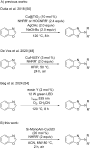
Microwave-enhanced additive-free C–H amination of benzoxazoles catalysed by supported copper
Beilstein J. Org. Chem. 2025, 21, 1462–1476, doi:10.3762/bjoc.21.108
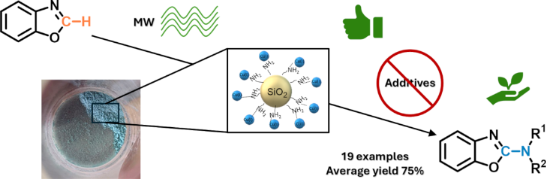
- ][44] and sulfamoyl chlorides [32] can perform the coupling under basic conditions, the need for the activation of the amine as an electrophilic agent generates additional waste. This reduces atom economy and indicates lower reaction efficiency. Acid-catalysed protocols have also been specifically
- . Additionally, using supported metals instead of metal salts can prevent the formation of chelates, which might otherwise impact the efficiency of the procedure. Moreover, this approach can provide bifunctional catalysis as the support itself contributes to the catalyst's reactivity, thus enhancing its overall
- efficiency. In the context of the C2 amination of azoles, to the best of our knowledge, only a few studies [48][50] have explored this approach, suggesting significant opportunities for further development and improvement. Building on our previous experience in the preparation and characterisation of



Advances in nitrogen-containing helicenes: synthesis, chiroptical properties, and optoelectronic applications
Beilstein J. Org. Chem. 2025, 21, 1422–1453, doi:10.3762/bjoc.21.106
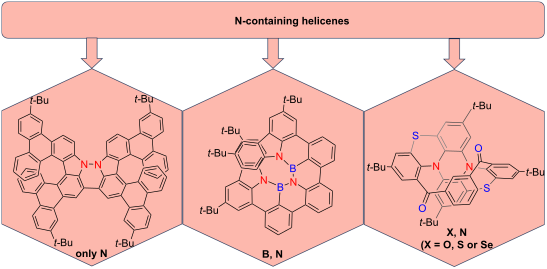
- (FWHM = 36 nm), |glum| = 1.1 × 10⁻³, |gEL| = 1.5 × 10⁻³, and an external quantum efficiency (EQE) of 0.14 – demonstrating promise for CPL-OLED applications [22]. Wanichacheva’s team reported urazole-functionalized aza[5]helicene 10, exhibiting selective Fe(III) sensing, marked solvatochromism, and a
- for high-efficiency chiral optoelectronic and quantum materials. In 2024, Kivala’s group selectively synthesized highly distorted [6]helicenes 29a and 29b incorporating azocine units via a regioselective Beckmann rearrangement from oxime precursor 29c [43] (Table 8). For comparative evaluation, the
- autoclave, achieving a 44% yield [51] (Table 12). In a 1 wt % PMMA-dispersed film, compound 37 exhibited ultra-narrowband emission (FWHM = 16 nm) at 484 nm with an 80% PLQY. OLEDs based on 37 demonstrated excellent external quantum efficiency, current efficiency, and power efficiency. Duan and co-workers

Tautomerism and switching in 7-hydroxy-8-(azophenyl)quinoline and similar compounds
Beilstein J. Org. Chem. 2025, 21, 1404–1421, doi:10.3762/bjoc.21.105
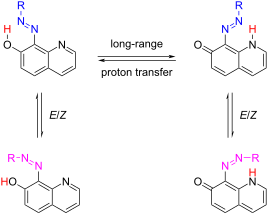
- E/Z isomerization around the C=N bond leads to reduced efficiency of the tautomeric based switching [52]. In this respect, based on the excellent stability of the azo compounds, it is interesting to understand the effect of the competitive proton transfer and E/Z switching by replacement of the
- part is flexible, the excitation of E can lead to E/Z isomerization, which competes with the initial excited-state PT process, reducing its efficiency [52]. The theoretical data, collected in Table 1, can shed light on the potential energy landscape in the ground state for the studied compounds




High-pressure activation for the solvent- and catalyst-free syntheses of heterocycles, pharmaceuticals and esters
Beilstein J. Org. Chem. 2025, 21, 1374–1387, doi:10.3762/bjoc.21.102
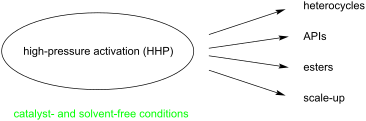
- generation. Using water as pressure transmitting fluid, the reaction vessel is immersed in water minimizing fire hazard during the reactions. Finally, most procedures can be carried out at ambient temperature, improving safety and energy efficiency. Energy efficiency is also supported by the nature of the


Oxetanes: formation, reactivity and total syntheses of natural products
Beilstein J. Org. Chem. 2025, 21, 1324–1373, doi:10.3762/bjoc.21.101
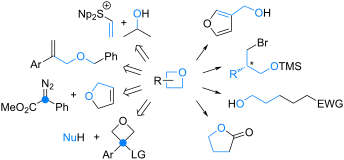
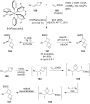
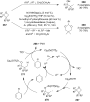
- transfer. In the second protocol, the β-lactone intermediates 7 are reduced to a diol and a subsequent Williamson etherification affords the oxetanes. Since both protocols consist of two steps and give only moderate yields, the overall oxetane yield and synthetic efficiency are rather low. In 2019, Marini








Recent advances in amidyl radical-mediated photocatalytic direct intermolecular hydrogen atom transfer
Beilstein J. Org. Chem. 2025, 21, 1306–1323, doi:10.3762/bjoc.21.100
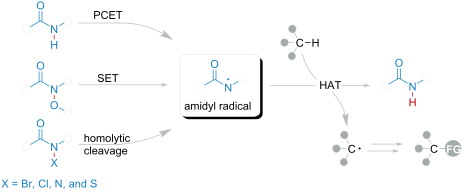
- transfer (HAT) in photocatalytic reactions. These radicals display exceptional selectivity and efficiency in abstracting hydrogen atoms from C–H, Si–H, B–H, and Ge–H, positioning them as invaluable tools in synthetic chemistry. This review summarizes the latest advancements in the photocatalyzed generation
- prefunctionalization through directing group (DG) incorporation, inevitably necessitating covalent DG-metal coordinative anchoring. This prerequisite fundamentally compromises both atomic efficiency and synthetic practicality, thereby imposing fundamental constraints on the catalytic system's intrinsic sustainability
- /mol (Figure 2a) [28][29][30]. Almost 5 kcal/mol difference between two species could spontaneously undergo a HAT process. That also justifies the selectivity and efficiency of amidyl radical serving as HAT reagent. 2) Recent research indicated a critical correlation between electronic effects and






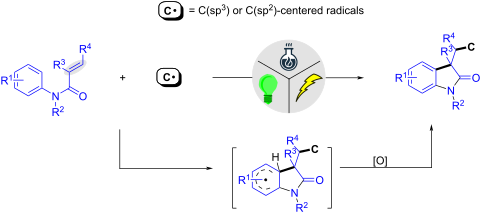
Recent advances in oxidative radical difunctionalization of N-arylacrylamides enabled by carbon radical reagents
Beilstein J. Org. Chem. 2025, 21, 1207–1271, doi:10.3762/bjoc.21.98
- groups on the aromatic ring (40a–d), effectively underwent this transformation. Halogen substituents (40e, 40f) on the substrates also demonstrated excellent reaction efficiency and substrate tolerance, further broadening the potential scope of applications. Regarding the reaction mechanism (Scheme 22
- . The results indicated that the N-protecting group had little impact on the reaction’s efficiency, and various substrates (e.g., methyl, benzyl, isopropyl) were effectively converted to their respective target products 50a–c. Moreover, benzene rings bearing different substituents, whether electron
- reagents, were tested, ranging from electron-donating to electron-withdrawing groups. These substrates consistently achieved moderate to excellent yields, demonstrating high reaction efficiency of the catalytic system under the standard conditions. The reaction mechanism was investigated through controlled