


Search results
Search for "intermediate" in Full Text gives 2228 result(s) in Beilstein Journal of Organic Chemistry. Showing first 200.
Halogenated butyrolactones from the biomass-derived synthon levoglucosenone
Beilstein J. Org. Chem. 2025, 21, 2297–2301, doi:10.3762/bjoc.21.175
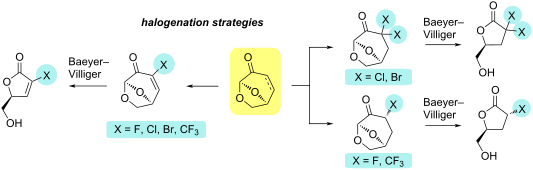
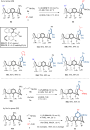
- intermediate in synthesis [1][2]. Several nucleoside analogue drugs are prepared using γ-butyrolactones, that when reduced give pentose sugars that can be used as glycosyl donors [3][4]. A number of these clinically used drugs contain fluorine as a hydroxy bioisostere at C2, most notably gemcitabine (1) and
- dichloro-magnesium enolates to protected ᴅ-glyceraldehyde [11]. In 1988, Hertel et al. from the Lilly laboratories published the first synthesis of the clinically important anticancer agent gemcitabine, using an intermediate γ-butyrolactone constructed using protected ᴅ-glyceraldehyde and ethyl
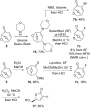
- the intermediate formate ester. Fluorination of enamine 9a with Selectfluor (SF) resulted only in hydrolysis with conditions adapted from Peng and Shreeves work [28]; and likewise, the base-promoted (KOt-Bu, LHMDS) fluorination of ketone 6 with Selectfluor was unsuccessful. However, when ketone 6 was



Enantioselective radical chemistry: a bright future ahead
Beilstein J. Org. Chem. 2025, 21, 2283–2296, doi:10.3762/bjoc.21.174
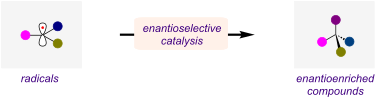
- one way to convert a free radical to a more stable intermediate, which can subsequently undergo coupling with another radical via an SH2 (bimolecular homolytic substitution) mechanism. Lastly, some noteworthy radical processes proceed through a radical–polar crossover pathway, in which one-electron
- oxidation or reduction of the radical yields a cationic or anionic intermediate that participates in a subsequent step through a polar mechanism. An important aspect of many of these radical reactions is that they can result in the formation of new carbon–carbon bonds, a fundamental goal in organic
- mechanism involving single-electron oxidation of an enamine intermediate, addition of the resulting radical to the olefin, single-electron oxidation of the adduct to form a carbocationic intermediate, and intramolecular nucleophilic attack on the carbocation to form the pyrrolidine ring. The reaction


Pathway economy in cyclization of 1,n-enynes
Beilstein J. Org. Chem. 2025, 21, 2260–2282, doi:10.3762/bjoc.21.173
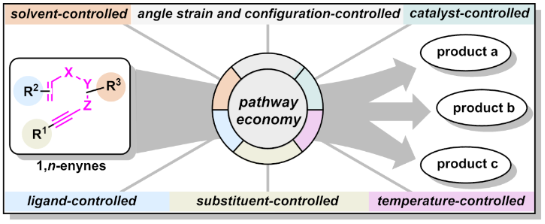
- reaction proceeded via 5-endo-dig cyclization. This pathway involved enol ether attack on the gold-activated alkyne, leading to the formation of oxonium intermediate 2. Subsequently, nucleophilic addition of methanol culminated in the formation of indene motif 5 (Scheme 2, path a). When methanol served
- dual roles as solvent and nucleophile, the gold-catalyzed intermolecular Markovnikov addition of methanol to the gold-activated alkyne proceeded to afford dienol intermediate 4. The intermediate 4 subsequently underwent a regioselective 6-endo-trig cyclization, generating the naphthalene core 7 (Scheme
- 2, path b). In the following years, Liu and co-workers discovered that the protonation of intermediate 2 triggered its conversion to intermediate 3, which subsequently underwent oxidation with oxygen, resulting in the generation of an indenone skeleton 6 [9]. This tunability achieved efficient and


Research towards selective inhibition of the CLK3 kinase
Beilstein J. Org. Chem. 2025, 21, 2250–2259, doi:10.3762/bjoc.21.172
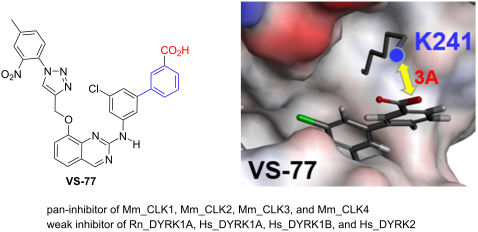
- anilinoquinazoline 3a. Deprotection of the methoxy group by BBr3 gave phenol 4a which was propargylated to intermediate 5a. A final click-type reaction [27][28][29][30][31] with azide 6 gave the first target intermediate 7a. The second key intermediate 7b was prepared in a very similar manner, but starting from 3
- CLK1 (from Mus musculus) and DYRK1A (from Rattus norvegicus). Docking of VS-77 in CLK3. Docking of VS-77 in Hs_DYRK1A (PDB ID: 8T2H [26]). Synthesis of the intermediate anilino-2-quinazolines 7a and 7b. Synthesis of the targeted anilino-2-quinazolines 10 and 13. Structures and in vitro activities of


Pd-catalyzed dehydrogenative arylation of arylhydrazines to access non-symmetric azobenzenes, including tetra-ortho derivatives
Beilstein J. Org. Chem. 2025, 21, 2234–2242, doi:10.3762/bjoc.21.170
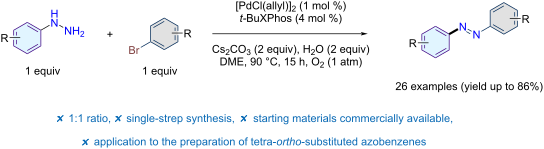
- )–aryl intermediate (B). Subsequently, ligand exchange occurs, generating hydrazido complexes C and C'. When bulky substituents are present on the phosphine ligand and/or (both) coupling partner(s) has ortho-substituent(s), the hydrazido complex C, chelating on the terminal nitrogen, is preferentially
- carbonate, yielding the Pd(II) intermediate G. This intermediate then undergoes β–H elimination to afford the desired azobenzene product, along with a Pd(II) species H. Finally, reductive elimination regenerates Pd(0), completing the catalytic cycle. Then, a general reaction pathway for the formation of


Thiadiazino-indole, thiadiazino-carbazole and benzothiadiazino-carbazole dioxides: synthesis, physicochemical and early ADME characterization of representatives of new tri-, tetra- and pentacyclic ring systems and their intermediates
Beilstein J. Org. Chem. 2025, 21, 2220–2233, doi:10.3762/bjoc.21.169
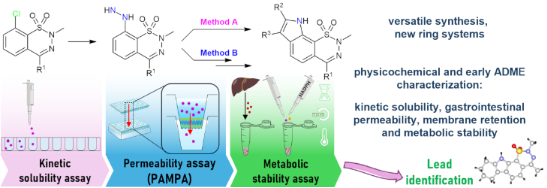
- compounds 3 [22][23]: A suspension of 5 (100 mg), ketone 6 (1.10 equiv), bismuth(III) nitrate pentahydrate (0.22 equiv) and PPA (2.7 equiv) in MeOH (1 mL) was heated at 110 °C in a glass screw cap vial until the starting material and the hydrazone intermediate 7 were consumed. Then the solids were filtered


Synthesis of triazolo- and tetrazolo-fused 1,4-benzodiazepines via one-pot Ugi–azide and Cu-free click reactions
Beilstein J. Org. Chem. 2025, 21, 2202–2210, doi:10.3762/bjoc.21.167
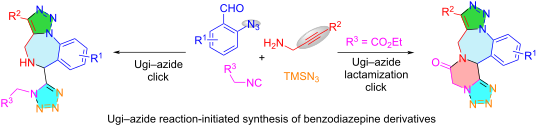
- . However, the reaction of 2-azido-5-bromobenzaldehyde (1d) gave only a trace amount of product 8h. Instead, compound 8h', an intermediate without lactamization, was isolated in 59% yield. It is likely that the bromo group on the phenyl ring interfered with the lactamization process. Two control reactions


Electrochemical cyclization of alkynes to construct five-membered nitrogen-heterocyclic rings
Beilstein J. Org. Chem. 2025, 21, 2173–2201, doi:10.3762/bjoc.21.166
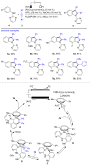
- reversible C–H activation to give the six-membered intermediate C. Substitution of the acetate ligand in C by 3 caused the generation of complex D. The six-membered ruthenacycle E was then obtained by migratory insertion of acetylene into the Ru–C bond. Finally, reductive elimination of E formed the target
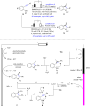
- generation of 12a in Cu rod electrodes, the Cu anode was expected to liberate Cu+ into the reaction mixture. The reaction of this Cu+ with DMSO and I− afforded (DMSO)nCuI, which was coordinated with C≡C to give B. The intermediate C was obtained by cyclization of B and deprotonation. Further protonation of C
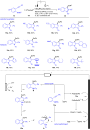
- occurred to give a radical cation PhSeSePh•+ at the anode. The subsequent cleavage of Se–Se bond formed a radical PhSe• and a cation PhSe+. Further additional oxidation of PhSe• yielded another PhSe+, which worked as the major reactive species and quickly added to C≡C in 13a to form intermediate A. Finally









C2 to C6 biobased carbonyl platforms for fine chemistry
Beilstein J. Org. Chem. 2025, 21, 2103–2172, doi:10.3762/bjoc.21.165
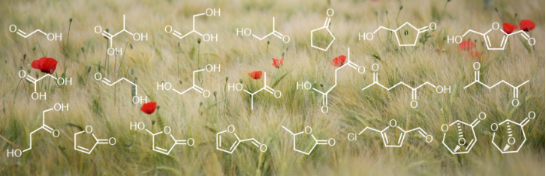
- conversion of a glycolaldehyde acetal (hydroxy acetal). The first step was the reaction of sodium benzyloxide with bromo acetals giving the hydroxy acetals in 75–82% yield. The intermediate ether was converted to the hydroxy acetal with sodium in liquid ammonia in good yield (70%). The hydroxy acetal then
- –Crafts alkylation products were then converted into an intermediate tryptaldehyde that underwent intramolecular olefination to form the targeted product [34]. Glycolic acid (GA) The growing impact of fossil fuel consumption has heightened the need for advancing renewable energy technologies. One
- ) [71]. The Bobleter and Feather groups investigated the reaction mechanism of the conversion of these C3 compounds. The acid-catalyzed equilibrium between 1,3-dihydroxy-2-propane and 2,3-dihydroxypropanal involves an ene-triol intermediate which leads to methylglyoxal by a dehydration reaction at


The application of desymmetric enantioselective reduction of cyclic 1,3-dicarbonyl compounds in the total synthesis of terpenoid and alkaloid natural products
Beilstein J. Org. Chem. 2025, 21, 2085–2102, doi:10.3762/bjoc.21.164
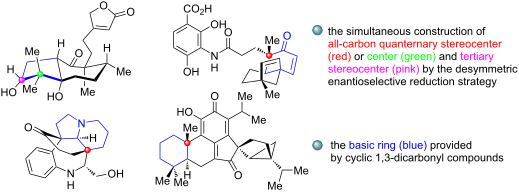
- (Scheme 3) [31][32]. Oxidation state adjustment of 48 led to the ketone 49. Starting from this common intermediate, firstly, base-promoted double bond migration and oxidation at the γ-position gave tertiary alcohol 50. Deprotection of acetyl in 50 followed by selective oxidation delivered (−)-cyrneine B
- , by employing the same procedures for the synthesis of (−)-cyrneine A (7), the synthesis of (+)-allocyathin B2 (8) could also be achieved smoothly from 52 by utilizing diketone 53 as the intermediate. The diverse syntheses of these terpenoids enabled by the desymmetric enantioselective reduction of
- of 57 to phenolic intermediate followed by the construction of the B ring generated tricyclic core 59. Subsequently, dihydroxylation of the doubled bond in the central six-membered ring using OsO4/NMO gave diol, which was then subjected to acetylation of the two hydroxy groups and hydrogenation of C5







Multicomponent reactions IV
Beilstein J. Org. Chem. 2025, 21, 2082–2084, doi:10.3762/bjoc.21.163
- intermediate purification, work-up, or solvent exchange. Domino processes [3] are characterized by the simultaneous presence of all reactants from the outset, whereas sequential reactions permit the controlled addition of components while maintaining the same reaction conditions. Consecutive processes, in turn
Further elaboration of the stereodivergent approach to chaetominine-type alkaloids: synthesis of the reported structures of aspera chaetominines A and B and revised structure of aspera chaetominine B
Beilstein J. Org. Chem. 2025, 21, 2072–2081, doi:10.3762/bjoc.21.162
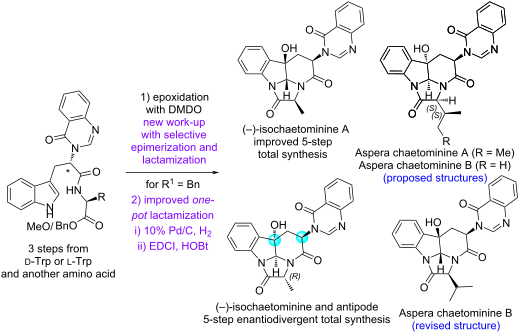
- cyclization of an intermediate derived from ᴅ-tryptophan [60][61]. Subsequently, we developed a five-step total synthesis of (–)-chaetominine (1) and two diastereomers from ʟ-tryptophan [62]. Taking advantages of the high efficiency and flexibility of our strategy [60], we have synthesized several natural and
- compound 14, an intermediate in our synthesis of (–)-isochaetominine A (4) [63]. Indeed, EDCI/HOBt-mediated lactamization of 14 derived amino acid (not shown) via debenzylation increased the yield of (–)-isochaetominine A (4) from 75% to 91% (Scheme 1). Thus, overall yield of the total synthesis of
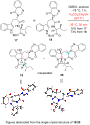
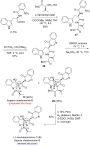
- intermediate 17 [65] yielded the thermodynamically stable C2/C11-trans and C3/C14-trans diastereomers 19 and 20 (dr = ca. 1:1) in a combined yield of 75% (Scheme 2). The 1H NMR spectrum of this diastereomeric mixture shows only one set of resonance signals, but two sets of resonance signals were observed on




Discovery of cytotoxic indolo[1,2-c]quinazoline derivatives through scaffold-based design
Beilstein J. Org. Chem. 2025, 21, 2062–2071, doi:10.3762/bjoc.21.161
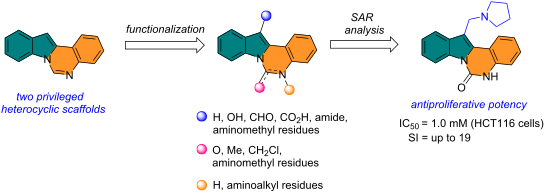
- trifluoroacetic acid affords intermediate compound 6, bearing a trifluoroacetyl group on the indole moiety. Treatment of 6 with the base yielded the acid 3 in high yield (Scheme 2). The carboxyl group of 3 was converted to the corresponding amides via coupling with mono-N-Boc-protected C2–C4 diamines using PyBOP
- NH proton in the urea moiety (position N5) of indolo[1,2-c]quinazolin-6(5H)-one (1) enables efficient N-alkylation. Accordingly, alkylation of 1 with 1-bromo-3-chloropropane afforded intermediate 11, bearing a reactive chloropropyl side chain suitable for further derivatization. Nucleophilic


Bioinspired total syntheses of natural products: a personal adventure
Beilstein J. Org. Chem. 2025, 21, 2048–2061, doi:10.3762/bjoc.21.160
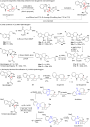
- , derived from phenylthiol and geranyl bromide, coupled with chiral epoxide 6, prepared through Sharpless epoxidation and TBS protection of 2-methylprop-2-en-1-ol, under strong basic conditions to generate intermediate 7 to further reduce the sulfide moiety with sodium, furnishing diol 8 with the loss of
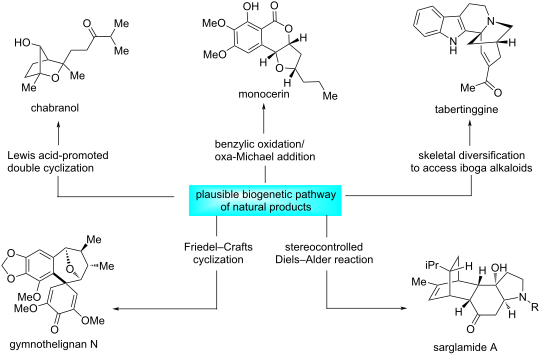
- benzylic oxidation to generate a para-quinone methide (pQM) intermediate. Using fusarentin 6-methyl ether as an example, pQM intermediate 10 would be generated. The C10 alcohol should successively undergo an oxa-Michael addition reaction to close the THF ring, providing 7-O-demethylmonocerin. Similarly
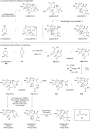
- 4a), Kam proposed that tabertinggine might be biosynthetically generated from an ibogamine precursor keto-ibogamine through an indole oxidation and C21–N bond cleavage process to give intermediate 25, which further undergoes a cyclization to form the C16–N bond and dehydration to generate the enone




α-Ketoglutaric acid in Ugi reactions and Ugi/aza-Wittig tandem reactions
Beilstein J. Org. Chem. 2025, 21, 2021–2029, doi:10.3762/bjoc.21.157
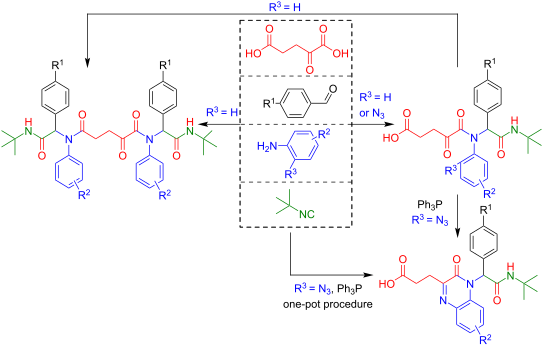
- substituted 3-(3-oxo-3,4-dihydroquinoxalin-2-yl)propanoic acids containing a pharmacophore quinoxalinone moiety. The tandem Ugi/aza-Wittig combination was also carried out in a one-pot procedure without isolation of the intermediate. Keywords: α-ketoglutaric acid; aza-Wittig reaction; multicomponent reaction
- in 33–93% yields (Scheme 3; Table 3). According to the literature [31][53], this reaction proceeds through the formation of an iminophosphorane intermediate (Scheme 3), the product of a Staudinger reaction, which, however, was not isolated because it easily undergoes intramolecular cyclization on a
- this case a carboxyl proton. In order to avoid the step of isolation of the intermediate azide derivatives 8, we also studied a one-pot method for the synthesis of compounds 9. For this KGA 1, aldehydes 2a,b, azidoanilines 7b,c, and tert-butyl isocyanide (4) were stirred in methanol at 45 °C for 24


Understanding the origin of stereoselectivity in the photochemical denitrogenation of 2,3-diazabicyclo[2.2.1]heptene and its derivatives with non-adiabatic molecular dynamics
Beilstein J. Org. Chem. 2025, 21, 2007–2020, doi:10.3762/bjoc.21.156
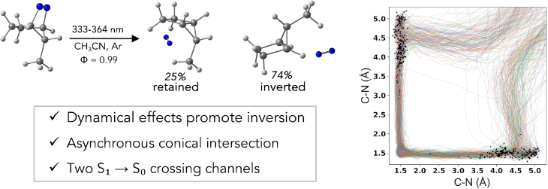
- , and T2, conical intersections, transition structures, and singlet–triplet crossing were computed using CASSCF(10,8)/6-31G(d)//MP2/6-31G(d) [81]. The results suggested a stepwise C–N bond breaking with the formation of the diazenyl diradical intermediate [81]. In 2003, Olivucci and his co-workers
- with experimental observations. They argued that the DZ intermediate reacts before thermal equilibration. The formation of inverted housane occurs via the pseudo-axial-to-equatorial inversion of DZ. From the axial DZ, the puckered-DR (puc-DR in Scheme 3) radical could be formed resulting in retained
- pathways following the S1 to S0 crossing: the reversal to reactant, the inversion product, the retention product, and a diradical intermediate, as shown in Figure 5. Each pathway is shown in a different color, with the products shown at the bottom in their corresponding colors along with the quantum yields


Measuring the stereogenic remoteness in non-central chirality: a stereocontrol connectivity index for asymmetric reactions
Beilstein J. Org. Chem. 2025, 21, 1995–2006, doi:10.3762/bjoc.21.155
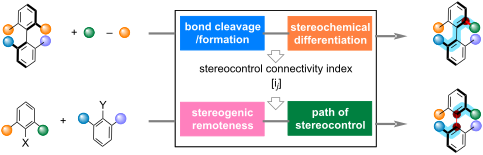
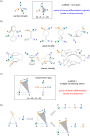
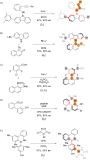
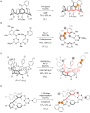
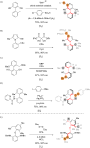
- intermediate, respectively) are neglected to simplify the assignment, considering such information is inexplicit based on the chemical transformations alone and is not available in commonly used chemical databases. Therefore, the index is a denotation of the overall transformation, which is not always
- and restored in the course of the transformations (e.g., Scheme 4A and 4C). Such limitations become obvious in the cases of multistep, multi-intermediate reactions [32][33], particularly in the case of helical chirality where chirality transfer of intermediates is common [34][35][36][37][38][39]. In





Aryl iodane-induced cascade arylation–1,2-silyl shift–heterocyclization of propargylsilanes under copper catalysis
Beilstein J. Org. Chem. 2025, 21, 1984–1994, doi:10.3762/bjoc.21.154
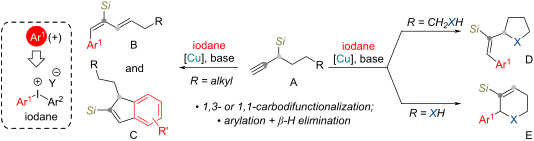
- alkynes undergo 1,2-carbofunctionalization, where the highly electrophilic Ar–M species adds to the alkyne, generating a vinyl cation intermediate [7], which typically reacts with an internal nucleophile to form five- [8][9] or six-membered rings [7][9][10] (Scheme 1A). Thus far the internal nucleophilic
- on intermediate allyl cation (Scheme 1C). The obtained tetrahydrofuran and pyrrolidine derivatives with highly substituted vinyl side-chains are regarded as privileged structures in medical chemistry [23][24]. Moreover, the resulting styryl functionality (Ph-C=C-) is often found in drug molecules as
- likely formed via the allylic cation intermediate Int-1 (Scheme 2), from where on two competing mechanistic pathways are possible. Deprotonation of the β-H and reductive elimination affords diene 10. Alternatively, an intramolecular cyclization leads to silylindenes 11. We were interested to see whether


Photochemical reduction of acylimidazolium salts
Beilstein J. Org. Chem. 2025, 21, 1973–1983, doi:10.3762/bjoc.21.153
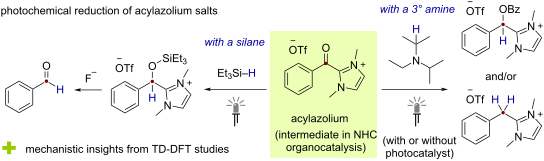
- intermediate A (Figure 1a), in which the formerly electrophilic carbonyl carbon reacts as a nucleophilic center. In this way, the traditional reactivity profile of the carbonyl group is transiently inverted, and unconventional product classes are generated. Alternatively, addition/elimination of the NHC to a
- acid derivative substrates [16]. Over the last few years, a wide range of valuable NHC-catalyzed transformations have also been developed that incorporate redox steps. As an enamine species, single-electron oxidation of a Breslow intermediate is comparatively favored with the resulting open shell
- two reduction steps with an initial reaction with the acylazolium starting material being followed by a presumably more challenging second reduction of a less-activated intermediate species. Using CH2Br2 as an internal reference, a 1H NMR yield of 39% was calculated with further analysis of the crude


Asymmetric total synthesis of tricyclic prostaglandin D2 metabolite methyl ester via oxidative radical cyclization
Beilstein J. Org. Chem. 2025, 21, 1964–1972, doi:10.3762/bjoc.21.152
- intermediate 22 (see Supporting Information File 1 for the details). Reasoning that the preferential coordination of the palladium catalyst with the hydroxy group at C15 and the carbonyl group at C18 in compound 22 may have deactivated the palladium catalyst [34], we protected the hydroxy group. Compound 22
- synthesis of 4 was unsatisfactory because it required nine steps to prepare bicyclic intermediate 25 with an overall yield of just 2.0%. This low efficiency prompted us to develop a more streamlined synthetic route for target compound 4. Second generation asymmetric total synthesis of tricyclic-PGDM methyl
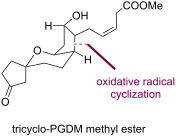
- proposed mechanism to 21 involved the formation of an electron-deficient, resonance-stabilized radical species, followed by intramolecular alkylation of the unactivated alkene to generate radical 29 via a diastereoselective 5-exo-trig cyclization step. Radical intermediate 29 was trapped by 2,4,6



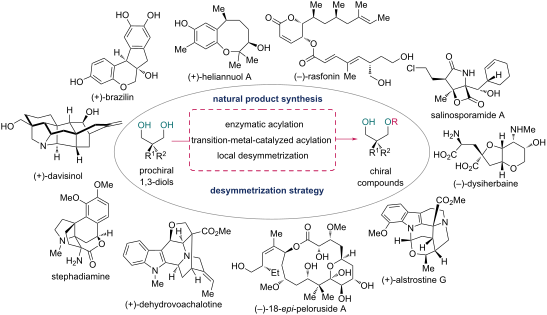
Enantioselective desymmetrization strategy of prochiral 1,3-diols in natural product synthesis
Beilstein J. Org. Chem. 2025, 21, 1932–1963, doi:10.3762/bjoc.21.151
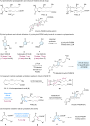
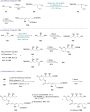
- intramolecular cyclization of 16 generated benzofuran 17 in 83% yield. After protecting the phenolic hydroxy group of 17, cross-metathesis (CM) with allylic alcohol 18 catalyzed by 13 furnished intermediate 19. Desilylation of 19 produced heliannuol G (20) and heliannuol H (21), with the structure of 21
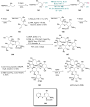
- transformation involving acyl-group migration, [4 + 2] cycloaddition and aromatic Pummerer-type reaction, provided chiral spiro compound 59 with the 6/6/5/5/6/6 scaffold, and this intermediate was further elaborated to 60 in six additional steps. Lipases from Pseudomonas genus Pseudomonas is a genus of Gram
- Takabe and co-workers in their synthesis of (E)-3,7-dimethyl-2-octene-1,8-diol (isolated from Danaus chrysippus) (Scheme 10) [42]. Prepared from geraniol (61) in eight steps, diol 62 was converted to enantioenriched compound 63 in 75% yield with 90% ee in the presence of PSA. This intermediate was










Stereoselective electrochemical intramolecular imino-pinacol reaction: a straightforward entry to enantiopure piperazines
Beilstein J. Org. Chem. 2025, 21, 1897–1908, doi:10.3762/bjoc.21.147
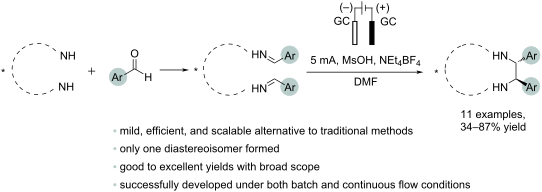
- methanesulfonic acid, which acts as a strong Brønsted acid to selectively protonate the imine nitrogen atoms. This protonation step increases the electrophilicity of the adjacent imine carbons by inductive effect, leading to the formation of a highly reactive diiminium intermediate 4a. When formed, compound 4a is
- electrochemically reduced to give the carbon-centered diradical intermediate 5a and the spatial proximity of these two radical centers allows a rapid intramolecular radical–radical coupling resulting in the formation of the desired piperazine 2a. The feasibility of this mechanism is supported by literature
- initiation of the SET reduction process, which leads to the consumption of the diiminium salt 4a and to the formation of the diradical intermediate 5a. Conclusion In conclusion, we have successfully developed a simple and mild electroreductive, stereoselective intramolecular coupling of aromatic diimines





Preparation of spirocyclic oxindoles by cyclisation of an oxime to a nitrone and dipolar cycloaddition
Beilstein J. Org. Chem. 2025, 21, 1890–1896, doi:10.3762/bjoc.21.146
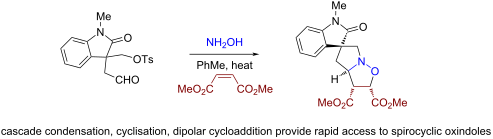
- possibility to access the core of this ring system with the nitrone intermediate shown in Scheme 1A. As a model study, we describe here efforts towards an intermolecular variant with the oxindole shown in Scheme 1B; in this case a leaving group X will be displaced by the oxime to give an intermediate nitrone


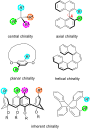
Chiral phosphoric acid-catalyzed asymmetric synthesis of helically chiral, planarly chiral and inherently chiral molecules
Beilstein J. Org. Chem. 2025, 21, 1864–1889, doi:10.3762/bjoc.21.145
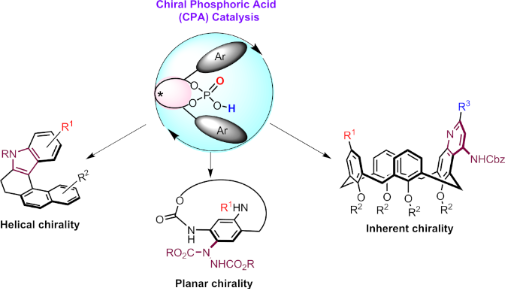
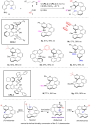
- interactions with the enehydrazine intermediate, which is essential for achieving high levels of stereocontrol. Using the optimal catalyst CPA 1, a series of aza[6]helicenes 3a,b was synthesized with excellent enantioselectivity and high yield. However, this method demonstrated notably reduced efficiency and
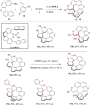
- acid substrates 43 which, upon treatment with ynamide 44, yielded the vinyl acetate intermediate INT-A (Scheme 13). Subsequently, the one-pot CPA-catalyzed intramolecular esterification of this intermediate afforded the planarly chiral macrocycles 45 with good yield and high enantioselectivity
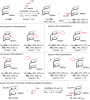
- 71 yielded the cyclic intermediate INT-B, which then underwent addition with aniline co-catalyst 73 to form INT-C. The CPA-enabled release of CO2 from INT-C yielded the imine-containing intermediate INT-D, which underwent iterative addition with INT-B, followed by release of CO2 to afford INT-E. The









Systematic pore lipophilization to enhance the efficiency of an amine-based MOF catalyst in the solvent-free Knoevenagel reaction
Beilstein J. Org. Chem. 2025, 21, 1854–1863, doi:10.3762/bjoc.21.144
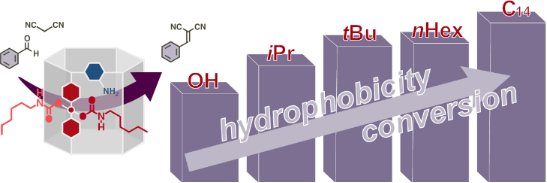
- and the amine catalyst (Scheme 1A) [47][48]. However, there is another possible mechanism where malononitrile is deprotonated by the amine catalyst. Here, the resulting carbanion would attack benzaldehyde to form 2-(hydroxy(phenyl)methyl)malononitrile (HPMM) as an intermediate that then loses a water
- intermediate depending on the lipophilicity of the pores. Under solvent-free conditions, we observed the formation of 2-(hydroxy(phenyl)methyl)malononitrile (HPMM, Figure 5), an intermediate which is subsequently dehydrated to yield the main product (BMN) as the reaction progresses [53]. Looking at the ratio
- of final product to intermediate (BMN:HPMM), we observed that relatively more of the hydroxy intermediate was observed with the unfunctionalized KSU-1 catalyst (Figure 5) when compared to the lipophilicized catalysts, with the amount of HPMM decreasing with increasing aliphatic chain surface area





