


Search results
Search for "palladium" in Full Text gives 715 result(s) in Beilstein Journal of Organic Chemistry. Showing first 200.
Electrochemical radical cation aza-Wacker cyclizations
Beilstein J. Org. Chem. 2024, 20, 1900–1905, doi:10.3762/bjoc.20.165
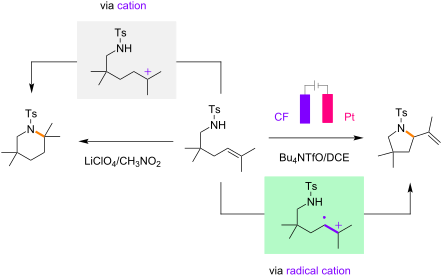
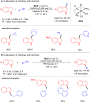
- photochemical reactions under acidic conditions, which were proposed to proceed via radical cations [20]. Since electrochemical and photochemical aza-Wacker cyclizations can offer ring systems that are difficult to construct through state-of-the-art palladium-catalyzed methods, the mechanistic understanding of


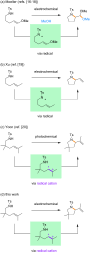


The Groebke–Blackburn–Bienaymé reaction in its maturity: innovation and improvements since its 21st birthday (2019–2023)
Beilstein J. Org. Chem. 2024, 20, 1839–1879, doi:10.3762/bjoc.20.162
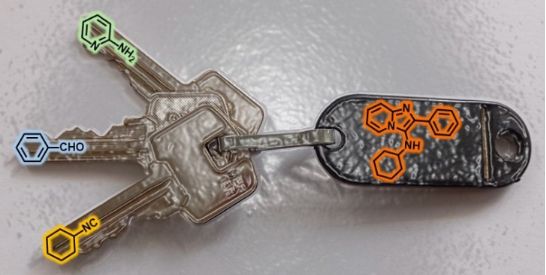
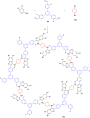
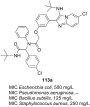
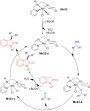
- comprising a GBB-3CR and a palladium-catalyzed azide-isocyanide coupling to generate imidazo[1,2-a]pyridine-fused 1,3-benzodiazepines 85 (Scheme 27). The GBB reaction smoothly proceeded using 2-azidobenzaldehydes 83, 2-aminopyridines and isocyanides as the precursors. The in situ-generated azides 84 were
- then reacted with a different isocyanide (R4–NC) in the presence of a palladium catalyst. The release of nitrogen from intermediates I resulted in nitrenes II, which in turn involved in the intramolecular transfer to yield species III. The carbodiimides IV, which were formed through reductive


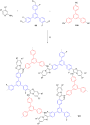




Syntheses and medicinal chemistry of spiro heterocyclic steroids
Beilstein J. Org. Chem. 2024, 20, 1713–1745, doi:10.3762/bjoc.20.152
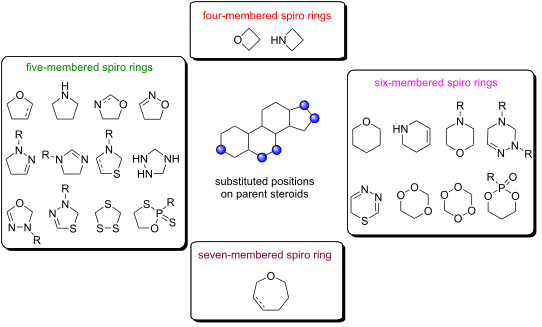
- steroidal 17-ketones were first alkylated in the presence of the lithium derivative of ethyl propiolate. After stereoselective formation of the corresponding adduct, the triple bond was chemoselectively reduced under catalytic hydrogenation using 5% palladium on charcoal. As a final step, a p
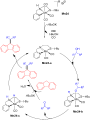
- reaction of mestranol acetate (34) catalysed by a palladium(II) complex, in the presence of p-benzoquinone under carbon monoxide. The authors propose an initial addition of the acetate C=O group onto the triple bond coordinated to palladium, followed by a MeOH attack onto the resulting oxycarbenium, and a


Chemo-enzymatic total synthesis: current approaches toward the integration of chemical and enzymatic transformations
Beilstein J. Org. Chem. 2024, 20, 1693–1712, doi:10.3762/bjoc.20.151
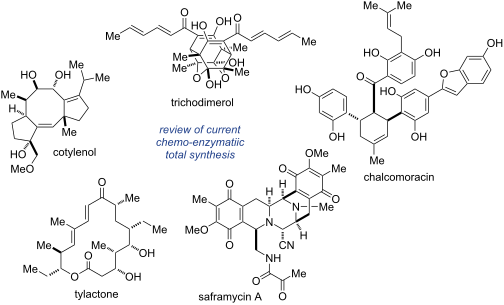
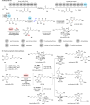
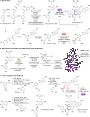
- secondary alcohol of 21, the utilization of another variant, MoBsc9 L110A, Y112R, generated through the directed evolution of MoBsc9, facilitated the optimal conversion in the corresponding oxidative allylic rearrangement to afford brassicicene I (9) in 64% yield. Further palladium-catalyzed allylic




Methyltransferases from RiPP pathways: shaping the landscape of natural product chemistry
Beilstein J. Org. Chem. 2024, 20, 1652–1670, doi:10.3762/bjoc.20.147
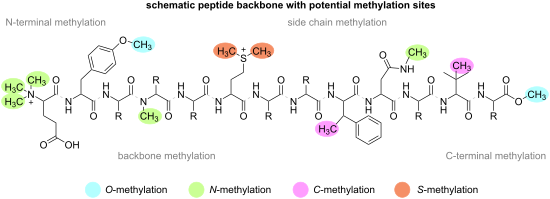
- cyanoborohydride as a mild reducing agent, and paraformaldehyde as a methylating agent [36]. Methanol can be used as the methylating reagent in other methods. Here, a palladium on carbon (Pd/C) catalyst processes the dehydrogenation of the alcohol to form the corresponding aldehyde. The subsequently formed imine




Benzylic C(sp3)–H fluorination
Beilstein J. Org. Chem. 2024, 20, 1527–1547, doi:10.3762/bjoc.20.137

- monofluorination radiolabelling using [18F]NFSI. Electrophilic fluorination of benzylic C–H bonds has been demonstrated as a powerful approach. However, these techniques can be constrained to defined substrate classes and the requirement of using strong bases. Palladium catalysis Palladium-catalysed chemistry is
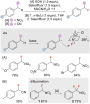
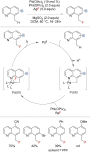
- pioneering report into palladium(II)/(IV)-catalysed C–H fluorination of 8-methylquinolines using N-fluoro-2,4,6-trimethylpyridinium tetrafluoroborate as an electrophilic “F+” source under microwave conditions (Figure 5) [39]. Benzylic fluorination was achieved in good yields on three examples, each bearing
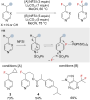
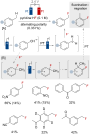
- -(trifluoromethyl)aniline in conjunction with external ligand 5 facilitated the formation of a series of fluorinated α-amino acids. Xu and co-workers also disclosed a palladium-catalysed protocol for the fluorination of simple benzylic substrates bearing a bidentate directing group (Figure 8) [42]. Yields varied








Rhodium-catalyzed homo-coupling reaction of aryl Grignard reagents and its application for the synthesis of an integrin inhibitor
Beilstein J. Org. Chem. 2024, 20, 1341–1347, doi:10.3762/bjoc.20.118
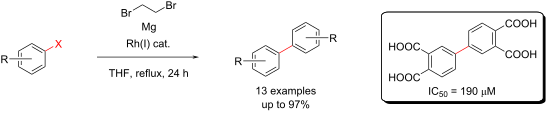
- . Therefore, alternative procedures for homo-coupling reactions using other transition-metal catalysts such as palladium, nickel, manganese, and iron have been developed [5][6][7][8][9][10][11][12][13]. In recent years, transition-metal-free coupling reactions have also been developed for environmentally


Diameter-selective extraction of single-walled carbon nanotubes by interlocking with Cu-tethered square nanobrackets
Beilstein J. Org. Chem. 2024, 20, 1298–1307, doi:10.3762/bjoc.20.113
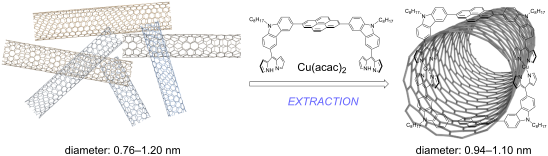
- chromatographic purification due to much lower solubility of 4b compared to 4a. The metal complex of 4b with copper(II) was prepared, because copper(II) exhibited better extraction and separation abilities than cobalt(II) and palladium(II) in the case of Cu-tethered rectangular nanobrackets 1a [11]. Before SWNT




Synthesis and optical properties of bis- and tris-alkynyl-2-trifluoromethylquinolines
Beilstein J. Org. Chem. 2024, 20, 1246–1255, doi:10.3762/bjoc.20.107
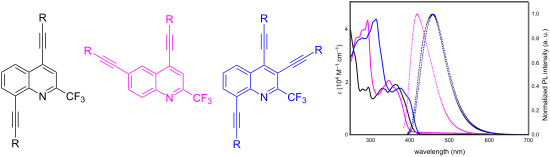
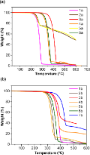
- /bjoc.20.107 Abstract Three bis- or tris-brominated 2-trifluoromethylquinolines have been successfully applied in palladium-catalysed Sonogashira reactions, leading to several examples of alkynylated quinolines in good to excellent yields. Optical properties of selected products have been studied by
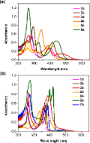
- steady state absorption and fluorescence spectroscopy which give insights of the influence of the substitution pattern and of the type of substituents on the optical properties. Keywords: alkynes; catalysis; fluorescence; heterocycles; palladium; Introduction Quinoline is a well-known core structure
- bromide gave 4. With quinoline 4 in hand, we studied palladium-catalysed Sonogashira reactions with phenylacetylene (5a). Gratifyingly, our initial test reaction, using Pd(OAc)2 as catalyst with XPhos as ligand, gave bis-alkynylated product 6a in quantitative yield. Reducing the catalyst loading from 5 to




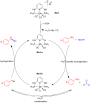
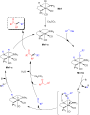
Manganese-catalyzed C–C and C–N bond formation with alcohols via borrowing hydrogen or hydrogen auto-transfer
Beilstein J. Org. Chem. 2024, 20, 1111–1166, doi:10.3762/bjoc.20.98
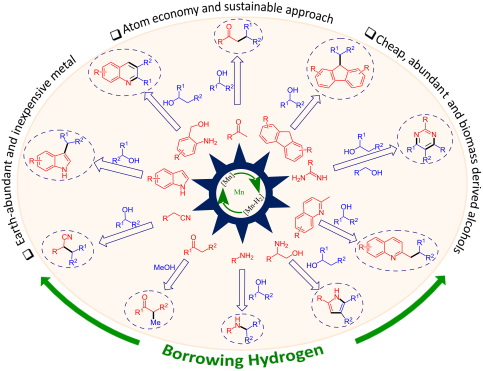
- importance in organic synthesis and is widely used in the pharmaceutical and other chemical industries. Palladium-catalyzed cross-coupling reactions are one of the compelling methods for building C–C and C–N bonds [1][2]. However, using organohalide reagents and harsh reaction conditions in this process























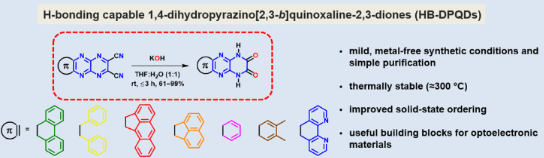
Structure–property relationships in dicyanopyrazinoquinoxalines and their hydrogen-bonding-capable dihydropyrazinoquinoxalinedione derivatives
Beilstein J. Org. Chem. 2024, 20, 1037–1052, doi:10.3762/bjoc.20.92
- . Palladium(II) acetate and anhydrous 1,4-dioxane were purchased from Strem Chemicals or Sigma-Aldrich and used as received. Thin-layer chromatography (TLC) was performed on SiO2-60 F254 aluminum plates with visualization by UV light or staining. Flash column chromatography was performed using Purasil SiO2-60




Carbonylative synthesis and functionalization of indoles
Beilstein J. Org. Chem. 2024, 20, 973–1000, doi:10.3762/bjoc.20.87
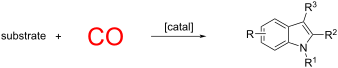
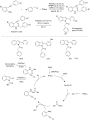
- complexes are important for the synthesis of heterocyclic and non-heterocyclic compounds. In 2009, Arthuis and co-workers developed a new process for the synthesis of 2-aroylindoles and 2-heteroaroylindoles by a one-pot palladium-catalyzed domino reaction that involves an initial C,N-coupling followed by
- indole derivatives were obtained by catalyzing the reaction with 5 mol % of Pd(tfa)2 (palladium(II) trifluoroacetate) and 1.5 equivalents of p-benzoquinone as oxidant in a 1:5 DMSO/MeOH solvent mixture at a temperature between 0 °C and 15 °C and, for a time between 48 and 120 hours depending on the
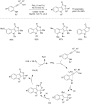
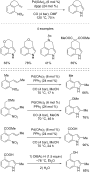
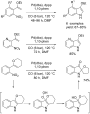
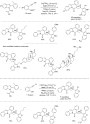
- as ligand, because it was already known that catalysts derived from palladium(II) salts and bidentate nitrogen ligands were highly reactive systems for the reduction of o-nitrostyrenes [28][29][30]. The catalytic system Pd(OAc)2/1,10-phen worked better than Söderberg´s one (Pd(OAc)2/PPh3) under mild












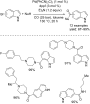
Enantioselective synthesis of β-aryl-γ-lactam derivatives via Heck–Matsuda desymmetrization of N-protected 2,5-dihydro-1H-pyrroles
Beilstein J. Org. Chem. 2024, 20, 940–949, doi:10.3762/bjoc.20.84
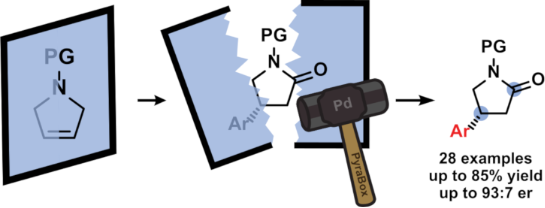
- herein an enantioselective palladium-catalyzed Heck–Matsuda reaction for the desymmetrization of N-protected 2,5-dihydro-1H-pyrroles with aryldiazonium salts, using the chiral N,N-ligand (S)-PyraBox. This strategy has allowed straightforward access to a diversity of 4-aryl-γ-lactams via Heck arylation
- commercial drug baclofen as hydrochloride. Keywords: desymmetrization; enantioselective Heck–Matsuda reaction; lactam synthesis; N,N-ligands; palladium; Introduction Desymmetrization reactions consist in the modification of a molecule with the loss of one or more symmetry elements, such as those which
- complexity in a synthetic route. The palladium-catalyzed coupling of arenediazonium salts with olefins, the Heck–Matsuda reaction, has been instrumental in this strategy involving the desymmetrization of cyclic systems [3], especially five-membered substrates [4][5][6][7]. As we have demonstrated previously


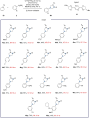


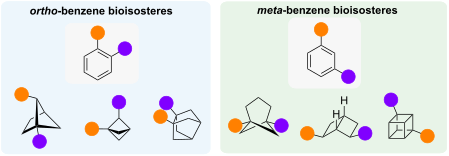
(Bio)isosteres of ortho- and meta-substituted benzenes
Beilstein J. Org. Chem. 2024, 20, 859–890, doi:10.3762/bjoc.20.78
- -workers, and was accessed over 8 steps from diene 161 (Scheme 17A) [51]. Diels–Alder reaction of diene 161 and di-tert-butyl azodicarboxylate (160) followed by palladium-assisted elimination of acetic acid gave diene 162. A sequence of 4π-electrocyclisation and electrophilic transcarbamation (to 163














Ortho-ester-substituted diaryliodonium salts enabled regioselective arylocyclization of naphthols toward 3,4-benzocoumarins
Beilstein J. Org. Chem. 2024, 20, 841–851, doi:10.3762/bjoc.20.76
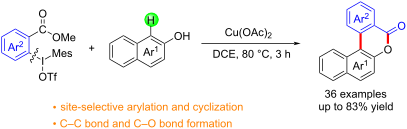
- advantage, facilitating the formation of two or more chemical bonds in a step-economic manner [9][10][11][12][13]. In a prior study, we reported a palladium-catalyzed efficient activation of both C–I bond and the adjacent C–H bond of diaryliodonium salts in the formation of 4,5-benzocoumarin derivatives
- -benzocoumarin skeletons in the presence of palladium catalysts (Scheme 1b). Furthermore, Olofsson and colleagues described an unprecedented reaction pathway using ortho-fluoro-substituted diaryliodonium salts bearing strong electron-withdrawing groups, leading to novel diarylations of N-, O-, and S-nucleophiles


Advancements in hydrochlorination of alkenes
Beilstein J. Org. Chem. 2024, 20, 787–814, doi:10.3762/bjoc.20.72
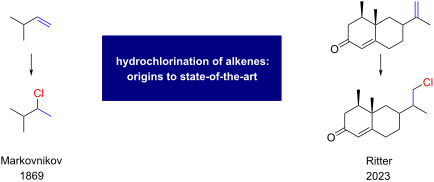
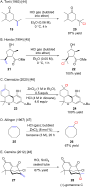
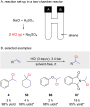
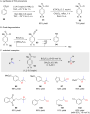
- functional group tolerance. Yang reported a hydrochlorination promoted by visible light over platinum, gold, and palladium supported on zirconia [74]. The reaction demonstrated moderate efficiency, yielding an 85:15 mixture of products 100 and 126 with low conversion (Scheme 20). The use of hydrochloric acid
- necessary [93]. In 2022, Liu reported a palladium-catalyzed chain walking–hydrochlorination reaction [94]. While the concept of chain walking is well-established [95], the subsequent reaction of terminal palladium metal with a chlorine electrophile can be considered innovative. This review specifically
- , requiring four steps, coupled with the expense of the palladium catalyst. Interestingly, when the hydroxy group in L3 was protected, the chemoselectivity of the reaction was poor, resulting in a 1:2 mixture of the desired chloride and the corresponding terminal alkene. Liu and colleagues put forth the






Regioselective quinazoline C2 modifications through the azide–tetrazole tautomeric equilibrium
Beilstein J. Org. Chem. 2024, 20, 675–683, doi:10.3762/bjoc.20.61
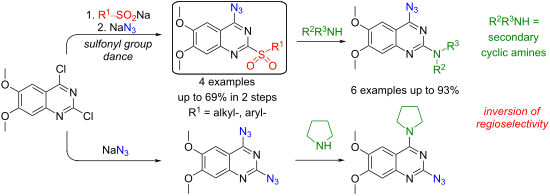
- form can be in either the azide (17e, 17f) or tetrazole form (17a–d). With derivatives 17e,f in hand, the reduction of the azido group in the C4 position was carried out by bubbling hydrogen through the solution in the presence of palladium on charcoal. In the last step, the product was acidified with


Palladium-catalyzed three-component radical-polar crossover carboamination of 1,3-dienes or allenes with diazo esters and amines
Beilstein J. Org. Chem. 2024, 20, 661–671, doi:10.3762/bjoc.20.59
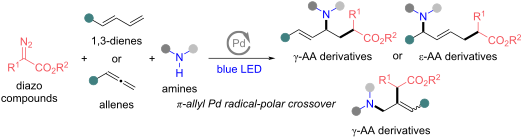
- -light-mediated palladium-catalyzed three-component radical-polar crossover carboamination of 1,3-dienes or allenes with diazo esters and amines, affording unsaturated γ- and ε-amino acid derivatives with diverse structures. In this methodology, the diazo compound readily transforms into a hybrid α-ester
- multicomponent reaction protocol. Keywords: carboamination; diazo chemistry; palladium catalysis; radical-polar crossover; three-component reaction; Introduction Since the discovery of the existence of non-canonical amino acids (AAs) in organisms, such structural motifs have attracted considerable attention
- be difficult to achieve using either radical or polar chemistry alone. In recent years, Gevorgyan, Glorius, Huang and their co-workers reported elegant examples of the carboamination of 1,3-dienes with unactivated alkyl halides and amines under photoinduced palladium catalysis via a radical-polar

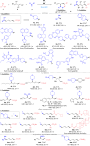


Synthesis and biological profile of 2,3-dihydro[1,3]thiazolo[4,5-b]pyridines, a novel class of acyl-ACP thioesterase inhibitors
Beilstein J. Org. Chem. 2024, 20, 540–551, doi:10.3762/bjoc.20.46
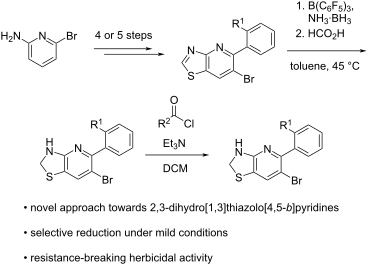
- practicable and robust synthetic route enabling us to carry out a broad SAR study. Initial attempts to prepare 2,3-dihydro[1,3]thiazolo[4,5-b]pyridines 7a and 7b using hydrogen and palladium on charcoal under elevated pressure did not show any conversion of the starting material (Table 1, entries 1 and 2
- -(2-fluorophenyl)[1,3]thiazolo[4,5-b]pyridine (12b, 1.88 g, 4.56 mmol, 1.0 equiv), methylboronic acid (1.13 g, 18.24 mmol, 4.0 equiv), potassium phosphate (1.94 g, 9.12 mmol, 2.0 equiv), palladium(II) acetate (103 mg, 0.46 mmol, 0.1 equiv), and 2-dicyclohexylphosphino-2’,6’-dimethoxybiphenyl (579 mg


Switchable molecular tweezers: design and applications
Beilstein J. Org. Chem. 2024, 20, 504–539, doi:10.3762/bjoc.20.45

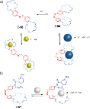
- zinc in the apical position of the porphyrins (Figure 15c). Upon the addition of Pd(II), the two pyridine moieties prefer to coordinate the palladium which leads to a 180° rotation motion and confers a cis-conformation to the system. This motion positions the porphyrin units face-to-face and allows




Ligand effects, solvent cooperation, and large kinetic solvent deuterium isotope effects in gold(I)-catalyzed intramolecular alkene hydroamination
Beilstein J. Org. Chem. 2024, 20, 479–496, doi:10.3762/bjoc.20.43
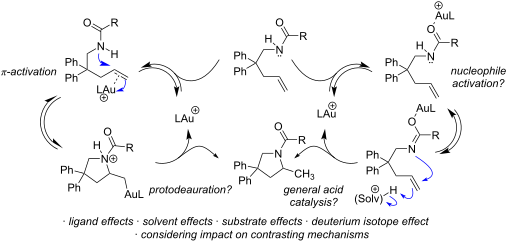
- molecule of amine delivers a proton to the alkylgold intermediate (for protodeauration). In a platinum-catalyzed hydroamination, a protodemetalation pathway is supported by kinetics and reactivity studies on generated platinum alkyl intermediates [46]. In a palladium-catalyzed hydroamination, a
- protodemetalation pathway is also supported by kinetics and reactivity studies on generated palladium alkyl intermediates [47]. Formation of alkylgold intermediates is known to proceed with anti-attack [27] and the stereospecificity observed in deuterium-labeled intermediates was used as an argument for
- involvement in proton transfer at the transition state [78]. In systems where protodemetalation is rate determining, a metal-carbon bonded intermediate is allegedly characterized, as in the case of a related palladium-catalyzed hydroamination [47], and a propargylamide cyclization [44]. In our studies, the







Mono or double Pd-catalyzed C–H bond functionalization for the annulative π-extension of 1,8-dibromonaphthalene: a one pot access to fluoranthene derivatives
Beilstein J. Org. Chem. 2024, 20, 427–435, doi:10.3762/bjoc.20.37
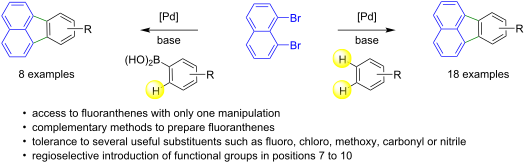
- palladium-catalyzed direct intermolecular arylation, followed by a direct intramolecular arylation step. As the C–H bond activation of several benzene derivatives remains very challenging, the preparation of fluoranthenes from 1,8-dibromonaphthalene via Suzuki coupling followed by intramolecular C–H
- ; palladium; Introduction Substituted polyaromatics such as fluoranthenes (Figure 1) are widely used in materials chemistry due to their physical properties, and the introduction of a suitable functional group on the appropriate positions of fluoranthenes either allows their photophysical properties to be
- using commercially available substrates and allowing the regioselective introduction of functional groups at the desired positions is still needed. By using Pd-catalyzed double C–H bond functionalization of activated arenes, such as (poly)fluoroarenes, or by combining a palladium-catalyzed


Mechanisms for radical reactions initiating from N-hydroxyphthalimide esters
Beilstein J. Org. Chem. 2024, 20, 346–378, doi:10.3762/bjoc.20.35
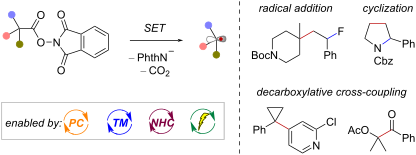
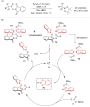
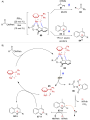
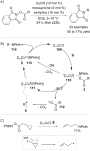
- substrate and participating in the key bond-forming/breaking steps via substrate–TM interactions [73][74]. This paradigm has been employed in the activation of NHPI esters under photoinduced copper (Cu) and palladium (Pd) catalysis. In 2017, Peters and Fu reported a Cu-catalyzed decarboxylative C(sp3)–N








Synthesis of π-conjugated polycyclic compounds by late-stage extrusion of chalcogen fragments
Beilstein J. Org. Chem. 2024, 20, 287–305, doi:10.3762/bjoc.20.30
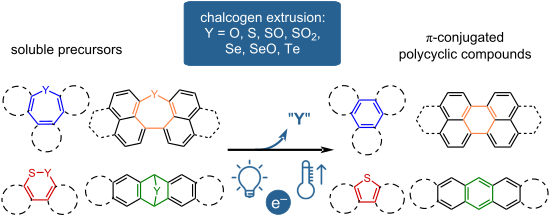
- derivative 21 was synthesized in six steps in 14% overall yield from 3-bromothiophene (17, Scheme 7). In the first step, the sulfur atom embedded in the final thiepine ring was introduced via a palladium-catalyzed S-arylation of 3-bromothiophene in the presence of potassium thioacetate, to afford the




Catalytic multi-step domino and one-pot reactions
Beilstein J. Org. Chem. 2024, 20, 254–256, doi:10.3762/bjoc.20.25
- through concerted or stepwise mechanisms. An enantioselective palladium-catalyzed three-component reaction of glyoxylic acid, sulfonamides, and aryltrifluoroborates toward synthetically useful α-arylglycine compounds is described by the Manolikakes group [11]. Moreover, Šebesta and co-workers report a




