


Search results
Search for "stereoselective synthesis" in Full Text gives 178 result(s) in Beilstein Journal of Organic Chemistry.
Vinylphosphonium and 2-aminovinylphosphonium salts – preparation and applications in organic synthesis
- Anna Kuźnik,
- Roman Mazurkiewicz and
- Beata Fryczkowska
Beilstein J. Org. Chem. 2017, 13, 2710–2738, doi:10.3762/bjoc.13.269

- the stereoselective synthesis thereof. The intermolecular Wittig reaction of these salts 58 with glyoxylic acid esters gave a dextro or levo γ-aminobutyric acid with values of specific rotation +14° and −6°, respectively, depending on the kind of chiral substituent R1 that was used (Scheme 39) [51]. γ
- -pyrrolocarbaldehyde. Stereoselective synthesis of bicyclic 2-pyrrolidinone derivatives in the reaction of vinylphosphonium halides and 5-acetyl-2-pyrrolidinone. Stereoselective synthesis of 3-pyrroline derivatives in the intramolecular Wittig reaction from vinylphosphonium salts and nitrogen nucleophiles. Synthesis
- vinylphosphonium salts with cyclic diketoester. Synthesis of quinoline derivatives in the intramolecular Wittig reaction from 2-(2-acylphenylamino)vinylphosphonium salts. Stereoselective synthesis of γ-aminobutyric acid in the intermolecular Wittig reaction from chiral 2-aminovinylphosphonium bromides and

Graphical Abstract

Scheme 1: Generation of phosphorus ylides from vinylphosphonium salts.

Scheme 2: Intramolecular Wittig reaction with the use of vinylphosphonium salts.

Scheme 3: Alkylation of diphenylvinylphosphine with methyl or benzyl iodide.

Scheme 4: Methylation of isopropenyldiphenylphosphine with methyl iodide.

Scheme 5: Alkylation of phosphines with allyl halide derivatives and subsequent isomerization of intermediate...

Scheme 6: Alkylation of triphenylphosphine with vinyl triflates in the presence of (Ph3P)4Pd.

Scheme 7: Mechanism of alkylation of triphenylphosphine with vinyl triflates in the presence of (Ph3P)4Pd as ...

Scheme 8: β-Elimination of phenol from β-phenoxyethyltriphenylphosphonium bromide.

Scheme 9: β-Elimination of phenol from β-phenoxyethylphosphonium salts in an alkaline environment.

Scheme 10: Synthesis and subsequent dehydrohalogenation of α-bromoethylphosphonium bromide.

Scheme 11: Synthesis of tributylvinylphosphonium iodides via Peterson-type olefination of α-trimethylsilylphos...

Scheme 12: Synthesis of 1-cycloalkenetriphenylphosphonium salts by electrochemical oxidation of triphenylphosp...

Scheme 13: Suggested mechanism for the electrochemical synthesis of 1-cycloalkenetriphenylphosphonium salts.

Scheme 14: Generation of α,β-(dialkoxycarbonyl)vinylphosphonium salts by addition of triphenylphosphine to ace...

Scheme 15: Synthesis of 2-(N-acylamino)vinylphosphonium halides by imidoylation of β-carbonyl ylides with imid...

Scheme 16: Imidoylation of β-carbonyl ylides with imidoyl halides generated in situ.

Scheme 17: Synthesis of 2-benzoyloxyvinylphosphonium bromide from 2-propynyltriphenylphosphonium bromide.

Scheme 18: Synthesis of 2-aminovinylphosphonium salts via nucleophilic addition of amines to 2-propynyltriphen...

Scheme 19: Deacylation of 2-(N-acylamino)vinylphosphonium chlorides to 2-aminovinylphosphonium salts.

Scheme 20: Resonance structures of 2-aminovinylphosphonium salts and tautomeric equilibrium between aminovinyl...

Scheme 21: Synthesis of 2-aminovinylphosphonium salts by reaction of (formylmethyl)triphenylphosphonium chlori...

Scheme 22: Generation of ylides by reaction of vinyltriphenylphosphonium bromide with nucleophiles and their s...

Scheme 23: Intermolecular Wittig reaction with the use of vinylphosphonium bromide and organocopper compounds ...

Scheme 24: Intermolecular Wittig reaction with the use of ylides generated from vinylphosphonium bromides and ...

Scheme 25: Direct transformation of vinylphosphonium salts into ylides in the presence of potassium tert-butox...

Scheme 26: A general method for synthesis of carbo- and heterocyclic systems by the intramolecular Wittig reac...

Scheme 27: Synthesis of 2H-chromene by reaction of vinyltriphenylphosphonium bromide with sodium 2-formylpheno...

Scheme 28: Synthesis of 2,5-dihydro-2,3-dimethylfuran by reaction of vinylphosphonium bromide with 3-hydroxy-2...

Scheme 29: Synthesis of 2H-chromene and 2,5-dihydrofuran derivatives in the intramolecular Wittig reaction wit...

Scheme 30: Enantioselective synthesis of 3,6-dihydropyran derivatives from vinylphosphonium bromide and enanti...

Scheme 31: Synthesis of 2,5-dihydrothiophene derivatives in the intramolecular Wittig reaction from vinylphosp...

Scheme 32: Synthesis of bicyclic pyrrole derivatives in the reaction of vinylphosphonium halides and 2-pyrrolo...

Scheme 33: Stereoselective synthesis of bicyclic 2-pyrrolidinone derivatives in the reaction of vinylphosphoni...

Scheme 34: Stereoselective synthesis of 3-pyrroline derivatives in the intramolecular Wittig reaction from vin...

Scheme 35: Synthesis of cyclic alkenes in the intramolecular Wittig reaction from vinylphosphonium bromide and...

Scheme 36: Synthesis of 1,3-cyclohexadienes by reaction of 1,3-butadienyltriphenylphosphonium bromide with eno...

Scheme 37: Synthesis of bicyclo[3.3.0]octenes by reaction of vinylphosphonium salts with cyclic diketoester.

Scheme 38: Synthesis of quinoline derivatives in the intramolecular Wittig reaction from 2-(2-acylphenylamino)...

Scheme 39: Stereoselective synthesis of γ-aminobutyric acid in the intermolecular Wittig reaction from chiral ...

Scheme 40: Synthesis of allylamines in the intermolecular Wittig reaction from 2-aminovinylphosphonium bromide...

Scheme 41: A general route towards α,β-di(alkoxycarbonyl)vinylphosphonium salts and their subsequent possible ...

Scheme 42: Generation of resonance-stabilized phosphorus ylides via the reaction of triphenylphosphine with di...

Scheme 43: Synthesis of resonance-stabilized phosphorus ylides in the reaction of triphenylphosphine, dialkyl ...

Scheme 44: Synthesis of resonance-stabilized phosphorus ylides via the reaction of triphenylphosphine with dia...

Scheme 45: Generation of resonance-stabilized phosphorus ylides in the reaction of acetylenedicarboxylate, tri...

Scheme 46: Synthesis of resonance-stabilized phosphorus ylides via the reaction of dialkyl acetylenedicarboxyl...

Scheme 47: Synthesis of resonance-stabilized ylides derived from semicarbazones, aromatic amides, and 3-(aryls...

Scheme 48: Synthesis of resonance-stabilized ylides via the reaction of triphenylphosphine with dialkyl acetyl...

Scheme 49: Synthesis of resonance-stabilized ylides in the reaction of triphenylphosphine, dialkyl acetylenedi...

Scheme 50: Synthesis of N-acylated α,β-unsaturated γ-lactams via resonance-stabilized phosphorus ylides derive...

Scheme 51: Synthesis of resonance-stabilized phosphorus ylides derived from 6-amino-N,N'-dimethyluracil and th...

Scheme 52: Generation of resonance-stabilized phosphorus ylides in the reaction of triphenylphosphine, dialkyl...

Scheme 53: Synthesis of resonance-stabilized phosphorus ylides via the reaction of triphenylphosphine with dia...

Scheme 54: Synthesis of 1,3-dienes via intramolecular Wittig reaction with the use of resonance-stabilized yli...

Scheme 55: Synthesis of 1,3-dienes in the intramolecular Wittig reaction from ylides generated from dimethyl a...

Scheme 56: Synthesis of 4-(2-quinolyl)cyclobutene-1,2,3-tricarboxylic acid triesters and isomeric cyclopenteno...

Scheme 57: Synthesis of 4-arylquinolines via resonance-stabilized ylides in the intramolecular Wittig reaction....

Scheme 58: Synthesis of furan derivatives via resonance-stabilized ylides in the intramolecular Wittig reactio...

Scheme 59: Synthesis of 1,3-indanedione derivatives via resonance-stabilized ylides in the intermolecular Witt...

Scheme 60: Synthesis of coumarin derivatives via nucleophilic displacement of the triphenylphosphonium group i...

Scheme 61: Synthesis of 6-formylcoumarin derivatives and their application in the synthesis of dyads.

Scheme 62: Synthesis of di- and tricyclic coumarin derivatives in the reaction of pyrocatechol with two vinylp...

Scheme 63: Synthesis of mono-, di-, and tricyclic derivatives in the reaction of pyrogallol with one or two vi...

Scheme 64: Synthesis of 1,4-benzoxazine derivative by nucleophilic displacement of the triphenylphosphonium gr...

Scheme 65: Synthesis of 7-oxo-7H-pyrido[1,2,3-cd]perimidine derivative via nucleophilic displacement of the tr...

Scheme 66: Application of vinylphosphonium salts in the Diels–Alder reaction with dienes.

Scheme 67: Synthesis of pyrroline derivatives from vinylphosphonium bromide and 5-(4H)-oxazolones.

Scheme 68: Synthesis of pyrrole derivatives in the reactions of vinyltriphenylphosphonium bromide with protona...

Scheme 69: Synthesis of dialkyl 2-(alkylamino)-5-aryl-3,4-furanedicarboxylates via intermediate α,β-di(alkoxyc...

Scheme 70: Synthesis of 1,4-benzoxazine derivatives from acetylenedicarboxylates, phosphines, and 1-nitroso-2-...
Recent progress in the racemic and enantioselective synthesis of monofluoroalkene-based dipeptide isosteres
- Myriam Drouin and
- Jean-François Paquin
Beilstein J. Org. Chem. 2017, 13, 2637–2658, doi:10.3762/bjoc.13.262
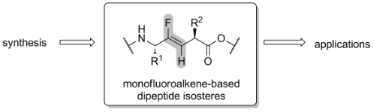
- . This was then converted into a protected amino group employing a Mitsunobu reaction. Finally, removal of the nosyl group, followed by hydrolysis using lithium hydroxide, afforded the targeted isostere 24. Sano and co-workers also worked on the Mg(II)-promoted stereoselective synthesis of (Z
- (Cbz)-ψ[(Z)-CF=CH]-Lys(Cbz) [49] and Fmoc-Orn(Ns)-ψ[(Z)-CF=CH]-Nal were obtained [50]. Fujii and co-workers also worked on the stereoselective synthesis of (E)-monofluoroalkenes (Scheme 17) [51]. To obtain a good selectivity towards the (E)-alkene, they relied on the copper-mediated reduction and the α
- ]-Pro by Sano and co-workers. Synthesis of Cbz-Gly-ψ[(Z)-CF=C]-Pro by Sano and co-workers. Stereoselective synthesis of Fmoc-Gly-ψ[(Z)-CF=CH]-Phe by Pannecoucke and co-workers. Ring-closure metathesis to prepare Gly-ψ[(E)-CF=CH]-Phg by Couve-Bonnaire and co-workers. Stereoselective synthesis of Fmoc-Gly

Graphical Abstract

Figure 1: Selected amide bond isosteres.

Figure 2: Monofluoroalkene as an amide bond isostere.

Scheme 1: Synthesis of Cbz-Gly-ψ[(Z)-CF=CH]-Gly using a HWE olefination by Sano and co-workers.

Scheme 2: Synthesis of Phth-Gly-ψ[CF=CH]-Gly using the Julia–Kocienski olefination by Lequeux and co-workers.

Scheme 3: Synthesis of Boc-Nva-ψ[(Z)-CF=CH]-Gly by Taguchi and co-workers.

Figure 3: Mutant tripeptide containing two different peptide bond isosteres.

Scheme 4: Chromium-mediated synthesis of Boc-Ser(PMB)-ψ[(Z)-CF=CH]-Gly-OMe by Konno and co-workers.

Scheme 5: Synthesis of Cbz-Gly-ψ[(E)-CF=C]-Pro by Sano and co-workers.

Scheme 6: Synthesis of Cbz-Gly-ψ[(Z)-CF=C]-Pro by Sano and co-workers.

Scheme 7: Stereoselective synthesis of Fmoc-Gly-ψ[(Z)-CF=CH]-Phe by Pannecoucke and co-workers.

Scheme 8: Ring-closure metathesis to prepare Gly-ψ[(E)-CF=CH]-Phg by Couve-Bonnaire and co-workers.

Scheme 9: Stereoselective synthesis of Fmoc-Gly-ψ[(Z)-CF=CH]-Phe by Dory and co-workers.

Scheme 10: Diastereoselective addition of Grignard reagents to sulfinylamines derived from α-fluoroenals by Pa...

Scheme 11: NHC-mediated synthesis of monofluoroalkenes by Otaka and co-workers.

Scheme 12: Stereoselective synthesis of Boc-Tyr-ψ[(Z)-CF=CH]-Gly by Altman and co-workers.

Scheme 13: Synthesis of the tripeptide Boc-Asp(OBn)-Pro-ψ[(Z)-CF=CH)-Val-CH2OH by Miller and co-workers.

Scheme 14: Copper-catalyzed synthesis of monofluoralkenes by Taguchi and co-workers.

Scheme 15: One-pot intramolecular redox reaction to access amide-type isosteres by Otaka and co-workers.

Scheme 16: Copper-mediated reduction, transmetalation and asymmetric alkylation by Fujii and co-workers.

Scheme 17: Synthesis of (E)-monofluoroalkene-based dipeptide isostere by Fujii and co-workers.

Scheme 18: Diastereoselective synthesis of MeOCO-Val-ψ[(Z)-CF=C]-Pro isostere by Chang and co-workers.

Scheme 19: Asymmetric synthesis of Fmoc-Ala-ψ[(Z)-CF=C]-Pro by Pannecoucke and co-workers.

Scheme 20: Synthesis of Fmoc-Val-ψ[(E)-CF=C]-Pro by Pannecoucke and co-workers.

Figure 4: BMS-790052 and its fluorinated analogue.

Figure 5: Bioactivities of pentapeptide analogues based on the relative maximum agonistic activity at 10 nM o...

Figure 6: Structures and affinities of the Leu-enkephalin and its fluorinated analogue. The affinity towards ...

Figure 7: Activation of the opioid receptor DOPr by Leu-enkephaline and a fluorinated analogue.
Homologated amino acids with three vicinal fluorines positioned along the backbone: development of a stereoselective synthesis
- Raju Cheerlavancha,
- Ahmed Ahmed,
- Yun Cheuk Leung,
- Aggie Lawer,
- Qing-Quan Liu,
- Marina Cagnes,
- Hee-Chan Jang,
- Xiang-Guo Hu and
- Luke Hunter
Beilstein J. Org. Chem. 2017, 13, 2316–2325, doi:10.3762/bjoc.13.228


Graphical Abstract

Figure 1: Examples of conformationally biased amino acids [1-10]. Compound 6 is a target of this work.

Scheme 1: The first synthetic approach.

Scheme 2: The second synthetic approach.

Scheme 3: The third synthetic approach.

Scheme 4: The fourth synthetic approach (partially reproduced from ref. [17]).

Figure 2: Selected J values and the inferred molecular conformations of 6a and 6b.
Chiral phase-transfer catalysis in the asymmetric α-heterofunctionalization of prochiral nucleophiles
- Johannes Schörgenhumer,
- Maximilian Tiffner and
- Mario Waser
Beilstein J. Org. Chem. 2017, 13, 1753–1769, doi:10.3762/bjoc.13.170
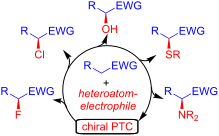
- -Chlorinations The stereoselective synthesis of chiral α-chlorinated carbonyl compounds is an important topic, since these targets can be valuable intermediates for the synthesis of a variety of different biologically active molecules [85][86]. The main interest in these compounds comes from their versatility

Graphical Abstract

Scheme 1: Generally accepted ion-pairing mechanism between the chiral cation Q+ of a PTC and an enolate and s...

Scheme 2: Reported asymmetric α-fluorination of β-ketoesters 1 using different chiral PTCs.

Scheme 3: Asymmetric α-fluorination of benzofuranones 4 with phosphonium salt PTC F1.

Scheme 4: Asymmetric α-fluorination of 1 with chiral phosphate-based catalysts.

Scheme 5: Anionic PTC-catalysed α-fluorination of enamines 7 and ketones 10.

Scheme 6: PTC-catalysed α-chlorination reactions of β-ketoesters 1.

Scheme 7: Shioiri’s seminal report of the asymmetric α-hydroxylation of 15 with chiral ammonium salt PTCs.

Scheme 8: Asymmetric ammonium salt-catalysed α-hydroxylation using oxygen together with a P(III)-based reduct...

Scheme 9: Asymmetric ammonium salt-catalysed α-photooxygenations.

Scheme 10: Asymmetric ammonium salt-catalysed α-hydroxylations using organic oxygen-transfer reagents.

Scheme 11: Asymmetric triazolium salt-catalysed α-hydroxylation with in situ generated peroxy imidic acid 24.

Scheme 12: Phase-transfer-catalysed dearomatization of phenols and naphthols.

Scheme 13: Ishihara’s ammonium salt-catalysed oxidative cycloetherification.

Scheme 14: Chiral phase-transfer-catalysed α-sulfanylation reactions.

Scheme 15: Chiral phase-transfer-catalysed α-trifluoromethylthiolation of β-ketoesters 1.

Scheme 16: Chiral phase-transfer-catalysed α-amination of β-ketoesters 1 using diazocarboxylates 38.

Scheme 17: Asymmetric α-fluorination of benzofuranones 4 using diazocarboxylates 38 in the presence of phospho...

Scheme 18: Anionic phase-transfer-catalysed α-amination of β-ketoesters 1 with aryldiazonium salts 41.

Scheme 19: Triazolium salt L-catalysed α-amination of different prochiral nucleophiles with in situ activated ...

Scheme 20: Phase-transfer-catalysed Neber rearrangement.
The chemistry and biology of mycolactones
- Matthias Gehringer and
- Karl-Heinz Altmann
Beilstein J. Org. Chem. 2017, 13, 1596–1660, doi:10.3762/bjoc.13.159

Graphical Abstract

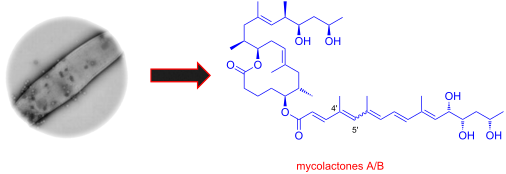
Figure 1: Initial proposal for the core macrolactone structure (left) and the established complete structure ...
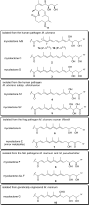
Figure 2: Mycolactone congeners and their origins.

Figure 3: Misassigned mycolactone E structure according to Small et al. [50] (11) and the correct structure (6) f...

Figure 4: Schematic illustration of Kishi’s improved mycolactone TLC detection method exploiting derivatizati...

Figure 5: Fluorescent probes derived from natural mycolactone A/B (1a,b) or its synthetic 8-desmethyl analogs...

Figure 6: Tool compounds used by Pluschke and co-workers for elucidating the molecular targets of mycolactone...

Figure 7: Synthetic strategies towards the extended mycolactone core. A) General strategies. B) Kishi’s appro...

Scheme 1: Kishi’s 1st generation approach towards the extended core structure of mycolactones. Reagents and c...

Scheme 2: Kishi’s 2nd generation approach towards the extended core structure of mycolactones. Reagents and c...

Scheme 3: Kishi’s 3rd generation approach towards the extended core structure of mycolactones. Reagents and c...

Scheme 4: Negishi’s synthesis of the extended core structure of mycolactones. Reagents and conditions: a) (i) ...

Scheme 5: Burkart’s (incomplete) 1st generation approach towards the extended core structure of mycolactones....
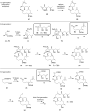
Scheme 6: Burkart’s (incomplete) 1st, 2nd and 3rd generation approach towards the extended mycolactone core s...

Scheme 7: Altmann’s synthesis of alkyl iodide 91. Reagents and conditions: a) (i) PMB-trichloroacetimidate, T...

Scheme 8: Final steps of Altmann’s synthesis of the extended core structure of mycolactones. Reagents and con...

Scheme 9: Basic principles of the Aggarwal lithiation–borylation homologation process [185,186].

Scheme 10: Aggarwal’s synthesis of the C1–C11 fragment of the mycolactone core. Reagents and conditions: a) Cl...

Scheme 11: Aggarwal’s synthesis of the linear C1–C20 fragment of the mycolactone core. Reagents and conditions...

Figure 8: Synthetic strategies towards the mycolactone A/B lower side chain.

Scheme 12: Gurjar and Cherian’s synthesis of the C1’–C8’ fragment of the mycolactone A/B pentaenoate side chai...

Scheme 13: Gurjar and Cherian’s synthesis of the benzyl-protected mycolactone A/B pentaenoate side chain. Reag...

Scheme 14: Kishi’s synthesis of model compounds for elucidating the stereochemistry of the C7’–C16’ fragment o...

Scheme 15: Kishi’s synthesis of the mycolactone A/B pentaenoate side chain. (a) (i) NaH, (EtO)2P(O)CH2CO2Et, T...

Scheme 16: Feringa and Minnaard's incomplete synthesis of mycolactone A/B pentaenoate side chain. Reagents and...

Scheme 17: Altmann’s approach towards the mycolactone A/B pentaenoate side chain. Reagents and conditions: a) ...

Scheme 18: Negishi’s access to the C1’–C7’ fragment of mycolactone A. Reagents and conditions: a) (i) n-BuLi, ...

Scheme 19: Negishi’s approach to the C1’–C7’ fragment of mycolactone B. Reagents and conditions: a) (i) DIBAL-...

Scheme 20: Negishi’s synthesis of the C8’–C16’ fragment of mycolactone A/B. Reagents and conditions: a) 142, BF...

Scheme 21: Negishi’s assembly of the mycolactone A and B pentaenoate side chains. Reagents and conditions: a) ...

Scheme 22: Blanchard’s approach to the mycolactone A/B pentaenoate side chain. a) (i) Ph3P=C(Me)COOEt, CH2Cl2,...

Scheme 23: Kishi’s approach to the mycolactone C pentaenoate side chain exemplified for the 13’R,15’S-isomer 1...

Scheme 24: Altmann’s (unpublished) synthesis of the mycolactone C pentaenoate side chain. Reagents and conditi...

Scheme 25: Blanchard’s synthesis of the mycolactone C pentaenoate side chain. Reagents and conditions: a) (i) ...

Scheme 26: Kishi’s synthesis of the tetraenoate side chain of mycolactone F exemplified by enantiomer 165. Rea...

Scheme 27: Kishi’s synthesis of the mycolactone E tetraenoate side chain. Reagents and conditions: a) (i) CH2=...

Scheme 28: Wang and Dai’s synthesis of the mycolactone E tetraenoate side chain. Reagents and conditions: a) (...

Scheme 29: Kishi’s synthesis of the dithiane-protected tetraenoate side chain of the minor oxo-metabolite of m...

Scheme 30: Kishi’s synthesis of the mycolactone S1 and S2 pentaenoate side chains. Reagents and conditions: a)...

Scheme 31: Kishi’s 1st generation and Altmann’s total synthesis of mycolactone A/B (1a,b) and Negishi’s select...

Scheme 32: Kishi’s 2nd generation total synthesis of mycolactone A/B (1a,b). Reagents and conditions: a) 2,4,6...

Scheme 33: Blanchard’s synthesis of the 8-desmethylmycolactone core. Reagents and conditions: a) (i) TsCl, TEA...

Scheme 34: Altmann’s (partially unpublished) synthesis of the C20-hydroxylated mycolactone core. Reagents and ...

Scheme 35: Altmann’s and Blanchard’s approaches towards the 11-isopropyl-8-desmethylmycolactone core. Reagents...

Scheme 36: Blanchard’s synthesis of the saturated variant of the C11-isopropyl-8-desmethylmycolactone core. Re...

Scheme 37: Structure elucidation of photo-mycolactones generated from tetraenoate 224.

Scheme 38: Kishi’s synthesis of the linear precursor of the photo-mycolactone B1 lower side chain. Reagents an...

Scheme 39: Kishi’s synthesis of the photo-mycolactone B1 lower side chain. Reagents and conditions: a) LiTMP, ...

Scheme 40: Kishi’s synthesis of a stabilized lower mycolactone side chain. Reagents and conditions: a) (i) TBD...
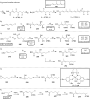
Scheme 41: Blanchard’s variation of the C12’,C13’,C15’ stereocluster. Reagents and conditions: a) (i) DIBAL-H,...

Scheme 42: Blanchard’s synthesis of aromatic mycolactone polyenoate side chain analogs. Reagents and condition...

Scheme 43: Small’s partial synthesis of a BODIPY-labeled mycolactone derivative and Demangel’s partial synthes...

Scheme 44: Blanchard’s synthesis of the BODIPY-labeled 8-desmethylmycolactones. Reagents and conditions: a) (i...
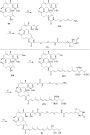
Scheme 45: Altmann’s synthesis of biotinylated mycolactones. Reagents and conditions: a) (i) CDI, THF, rt, 2 d...

Figure 9: Kishi’s elongated n-butyl carbamoyl mycolactone A/B analog.
A concise and practical stereoselective synthesis of ipragliflozin L-proline
- Shuai Ma,
- Zhenren Liu,
- Jing Pan,
- Shunli Zhang and
- Weicheng Zhou
Beilstein J. Org. Chem. 2017, 13, 1064–1070, doi:10.3762/bjoc.13.105
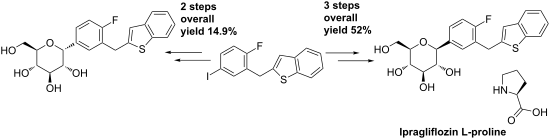
- 10.3762/bjoc.13.105 Abstract A concise and practical stereoselective synthesis of ipragliflozin L-proline was presented starting from 2-[(5-iodo-2-fluorophenyl)methyl]-1-benzothiophene and 2,3,4,6-tetra-O-pivaloyl-α-D-glucopyranosyl bromide without catalyst via iodine–lithium–zinc exchange. The overall
- yield was 52% in three steps and the product purity was excellent. Two key diastereomers were prepared with efficient and direct access to the α-C-arylglucoside. Keywords: arylzinc derivative; β-C-arylglucoside; diastereomer impurity; ipragliflozin L-proline; stereoselective synthesis; Introduction
- canagliflozin. But so far, it has not been found that this method was applied to synthesize 1. In this paper, we report an efficient and practical method for the preparation of 1 through an arylzinc reagent. Results and Discussion Herein, a concise and practical stereoselective synthesis of 1 with three steps

Graphical Abstract

Figure 1: Structure of ipragliflozin L-proline.

Scheme 1: Stereoselective synthesis of C-aryl glycoside by Lemarie.

Scheme 2: Stereoselective synthesis of β-C-arylglucoside 5.

Scheme 3: Synthesis of 1.

Scheme 4: Synthesis of diastereomer 6’ and 5’.
A strategic approach to [6,6]-bicyclic lactones: application towards the CD fragment of DHβE
- Tue Heesgaard Jepsen,
- Emil Glibstrup,
- François Crestey,
- Anders A. Jensen and
- Jesper Langgaard Kristensen
Beilstein J. Org. Chem. 2017, 13, 988–994, doi:10.3762/bjoc.13.98
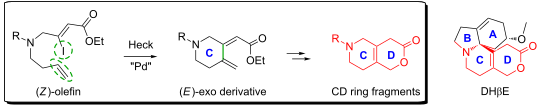
- synthetic procedures are extremely scarce. Herein, we wish to provide different strategies used to synthesize the CD fragment of DHβE as a general and simple method for the construction of [6,6]-bicyclic lactones which includes a stereoselective synthesis of vinyl halides, a regio- and stereoselective
- the C ring by an intramolecular Mizoroki–Heck cross-coupling reaction from a Z-configured olefin which would be crucial to the stereochemical outcome of the Heck cyclization event. We envisioned a Z-stereoselective synthesis of a vinyl halide [17] which should secure the desired E-stereochemistry for

Graphical Abstract

Figure 1: DHβE and related structures. The Ki values of the compounds at the rat α4β2 nAChR subtype determine...

Scheme 1: First strategy towards the CD fragment (Ts-strategy). i) TsCl, TEA, DCM, 0 °C. ii) NaH, DMF, 0 °C, ...

Scheme 2: First strategy towards the CD fragment (Cbz-strategy). i) R-Cl, TEA, CH2Cl2, 0 °C. ii) NaH, DMF, 0 ...

Scheme 3: Second strategy towards the CD fragment. i) 4-Bromobut-1-ene, K2CO3, acetone, 70 °C. ii) n-BuLi, TH...

Figure 2: The binding affinities of compounds 9 and 26 at the rat α4β2 nAChR. a) The AB fragment was evaluate...
Total synthesis of TMG-chitotriomycin based on an automated electrochemical assembly of a disaccharide building block
- Yuta Isoda,
- Norihiko Sasaki,
- Kei Kitamura,
- Shuji Takahashi,
- Sujit Manmode,
- Naoko Takeda-Okuda,
- Jun-ichi Tamura,
- Toshiki Nokami and
- Toshiyuki Itoh
Beilstein J. Org. Chem. 2017, 13, 919–924, doi:10.3762/bjoc.13.93
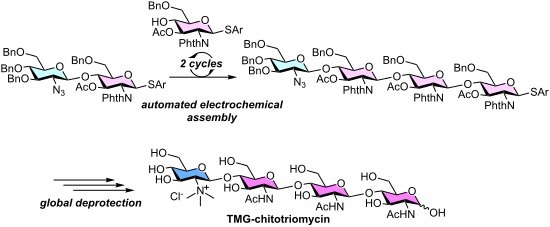
- afforded TMG-chitotriomycin (1) in 21% yield (10 steps from disaccharide 5bβ) [31]. Conclusion In conclusion, we have achieved the stereoselective synthesis of TMG-chitotriomycin (1) based on the automated electrochemical assembly of disaccharide and monosaccharide building blocks. Thus-obtained

Graphical Abstract

Figure 1: Inhibitors of glucosaminidases.

Scheme 1: Synthesis of disaccharide donors.

Figure 2: Proposed mechanism and origin of the selectivity.

Figure 3: Synthesis of TMG-chitotriomycin precursor 7.

Figure 4: Synthess of TMG-chitotriomycin (1).
Opportunities and challenges for the sustainable production of structurally complex diterpenoids in recombinant microbial systems
- Katarina Kemper,
- Max Hirte,
- Markus Reinbold,
- Monika Fuchs and
- Thomas Brück
Beilstein J. Org. Chem. 2017, 13, 845–854, doi:10.3762/bjoc.13.85
- - and workup-intensive metal-organic catalysts [13][14][15][16]. The work of McKerrall et al. on ingenol [17][18] sets an example for the difficulty of stereoselective synthesis of complex diterpenes. Additionally, semi-synthetic approaches are tainted with the equivalent issues of economic efficiency
- stereoselective synthesis of (1R,3E,7E,11S,12S)-3,7,18-dolabellatriene, a bicyclic diterpene (Scheme 2). Dollabellanes derive mostly from marine organisms and display bioactivities such as antiviral and cytotoxic effects [59]. Dolabellatriene from a reprogrammed CotB2 contribute with antimicrobial activity

Graphical Abstract

Scheme 1: Isoprenoid biosynthetic pathways and examples for their engineering in heterologous production syst...

Scheme 2: Mutational engineering of different classes of terpene synthases. Left side: The natural product of...
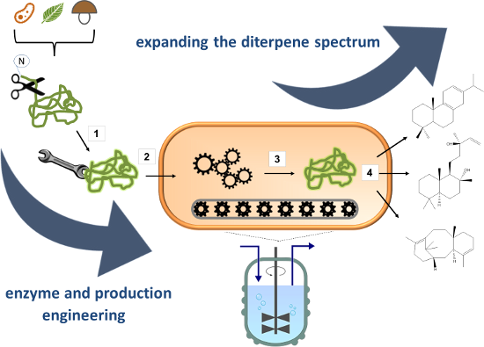
Figure 1: Implementation of a microbial cell factory. 1: Selection of enzymes from different species. P450 an...
Silyl-protective groups influencing the reactivity and selectivity in glycosylations
- Mikael Bols and
- Christian Marcus Pedersen
Beilstein J. Org. Chem. 2017, 13, 93–105, doi:10.3762/bjoc.13.12

- proposed by Woerpel for these types of reactions [49]. Yamada and collaborators were the first to show that this principle could be used for the stereoselective synthesis of O-glycosides [42]. They prepared thioglucosides 60–62 (Scheme 11) having 2,3,4-O-TIPS groups and either TIPS, benzyl or pivaloyl

Graphical Abstract

Figure 1: Silicon-protective groups typically used in carbohydrate chemistry.

Scheme 1: Glycosylation with sulfoxide 1.

Scheme 2: Glycosylation with imidate 4.

Scheme 3: Glycosylation with thioglycoside 7.

Scheme 4: In situ formation of a silylated lactosyl iodide for the synthesis of α-lactosylceramide.

Figure 2: Comparison of the reactivity of glycosyl donors with the pKa of the corresponding piperidinium ions....

Figure 3: Conformational change induced by bulky vicinal protective groups such as TBS, TIPS and TBDPS. The v...

Scheme 5: An example of a “one pot one addition” glycosylation, where 3 glucosyl donors are mixed with 2.1 eq...

Scheme 6: Superarmed-armed glycosylation with thioglycoside 34.

Scheme 7: One-pot double glycosylation with the conformationally armed thioglycoside 37.

Scheme 8: Superarmed-armed glycosylation with thioglycoside 41.

Figure 4: Donors disarmed by the di-tert-butylsilylene protective group.

Figure 5: The influence of a 3,6-O-tethering on anomeric reactivity and glycosylation selectivity. The α-thio...

Scheme 9: Regio- and stereoselective glycosylation using the superarmed thioglycoside donor 20.

Scheme 10: Superarmed donors used for C-arylation and the dependence of the size of the silylethers on the ste...

Scheme 11: β-Selective glucosylation with TIPS-protected glucosyl donors. The α-face is shielded by the bulky ...

Scheme 12: β-Selective rhamnosylation with a conformationally inverted donor.

Scheme 13: α-Selective galactosylation with DTBS-protected galactosyl donors.

Scheme 14: β-Selective arabinofuranosylation with a DTBS-protected donor.

Scheme 15: α-Selective glycosylation with a TIPDS-protected glucal donor.

Scheme 16: Highly β-selective glucuronylation using a 2,4-DTBS-tethered donor.
Strategies in asymmetric catalysis
- Tehshik P. Yoon
Beilstein J. Org. Chem. 2017, 13, 63–64, doi:10.3762/bjoc.13.8
- reactions. Those of us with research interests in stereoselective synthesis lauded this award because it celebrated the creative insights of these pioneers in asymmetric catalysis and because it marked a general recognition that enantioselective catalysis has had a significant practical impact on the
cis-Diastereoselective synthesis of chroman-fused tetralins as B-ring-modified analogues of brazilin
- Dimpee Gogoi,
- Runjun Devi,
- Pallab Pahari,
- Bipul Sarma and
- Sajal Kumar Das
Beilstein J. Org. Chem. 2016, 12, 2816–2822, doi:10.3762/bjoc.12.280
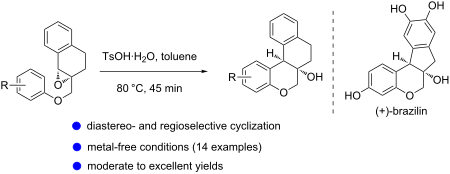
- [2,1-c]chromen-6a-ols 5 (Figure 1) as B-ring-modified analogues of brazilin through the fusion of chroman and tetralin motifs to generate new bioactive molecules. To the best of our knowledge, the stereoselective synthesis of such chroman-fused tetralins has never been reported. Based on the continuous
- convenient Brønsted acid-catalyzed, metal-free, stereoselective synthesis of 6a,7,8,12b-tetrahydro-6H-naphtho[2,1-c]chromen-6a-ols as B-ring-modified analogues of brazilin using starting materials derived from inexpensive 1-tetralone and phenol derivatives. Our worries concerning the formation cis–trans

Graphical Abstract

Figure 1: Chroman-based tetracyclic natural products 1–4 of the brazilin family and our designed, B-ring-modi...

Scheme 1: Retrosynthetic analysis of the designed B-ring-modified analogues of brazilin.

Scheme 2: The synthetic challenge associated with the synthesis of 5 by IFCEA of 6 (above) and recent literat...

Figure 2: Assessment of the IFCEA cyclization on additional substrates (±)-6b–n leading to (±)-5b–n. Reaction...

Figure 3: ORTEP diagram of 5k.

Scheme 3: Stereoselective conversion of (±)-5k into (±)-14.
Useful access to enantiomerically pure protected inositols from carbohydrates: the aldohexos-5-uloses route
- Felicia D’Andrea,
- Giorgio Catelani,
- Lorenzo Guazzelli and
- Venerando Pistarà
Beilstein J. Org. Chem. 2016, 12, 2343–2350, doi:10.3762/bjoc.12.227
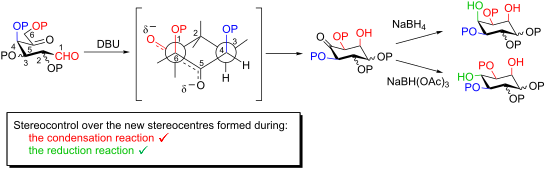
- the stereoselective synthesis of enantiopure inositol derivatives, also the possibility to pick and tag specific positions of the inositol ring, installing the protective groups earlier on the carbohydrate frame through the well-known sugar chemistry, is of extreme interest. Although some attractive

Graphical Abstract

Figure 1: Stereoisomeric inositols.

Scheme 1: Retrosynthetic approach to inositols from aldohexos-5-uloses.

Figure 2: Hypothesis of the preferred transition state.

Figure 3: Stereoselective reduction of inosose intermediate.

Scheme 2: Intramolecular cyclization of an orthogonally protected L-lyxo-aldohexos-5-ulose derivative.
A new and expeditious synthesis of all enantiomerically pure stereoisomers of rosaprostol, an antiulcer drug
- Wiesława Perlikowska,
- Remigiusz Żurawiński and
- Marian Mikołajczyk
Beilstein J. Org. Chem. 2016, 12, 2234–2239, doi:10.3762/bjoc.12.215
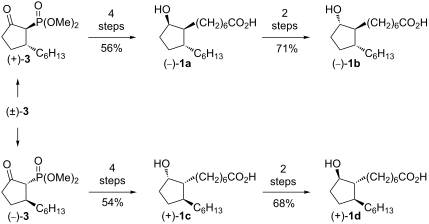
- ; stereoselective synthesis; synthetic design; Introduction Rosaprostol (1) is a trade name for 7-(2-hexyl-5-hydroxycyclopentane)heptanoic acid (Figure 1) which belongs to a series of 19,20-dinorprostanoic acid derivatives. It exhibits gastric antisecretory activity and cytoprotective action without the undesired
- stereoselective synthesis of rosaprostols 1a–d. The resolution of (±)-3 and some experimental details are depicted in Scheme 3. It shows also the absolute configurations of (+)-3 and (−)-3 ascribed to the compounds based on their successful conversion into the known rosaprostols 1a and 1c, respectively. Having

Graphical Abstract

Figure 1: Structure of rosaprostol (1) and numbering system.

Figure 2: The structures of stereoisomers of rosaprostol (1).

Scheme 1: Synthesis of stereoisomeric rosaprostols 1a and 1b from (−)-2a.

Scheme 2: Synthesis of racemic rosaprostol (±-1).
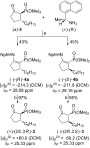
Scheme 3: Resolution of racemic cyclopentanone 3. Reagents and conditions: (a) Al2O3, SiO2, MS 5 Å, DCM, rt, ...
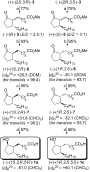
Scheme 4: Synthesis of rosaprostol stereoisomers 1a and 1c. Reagents and conditions: (a) KOH/Al2O3, OHC(CH2)5...

Scheme 5: Conversion of methyl ester (+)-6 into rosaprostol (−)-1a. Reagents and conditions: (a) L-Selectride...
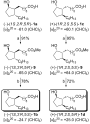
Scheme 6: Synthesis of rosaprostol stereoisomers 1b and 1d. Reagents and conditions: (a) CH2N2, Et2O, −30 °C;...
Stereoselective synthesis of fused tetrahydroquinazolines through one-pot double [3 + 2] dipolar cycloadditions followed by [5 + 1] annulation
- Xiaofeng Zhang,
- Kenny Pham,
- Shuai Liu,
- Marc Legris,
- Alex Muthengi,
- Jerry P. Jasinski and
- Wei Zhang
Beilstein J. Org. Chem. 2016, 12, 2204–2210, doi:10.3762/bjoc.12.211
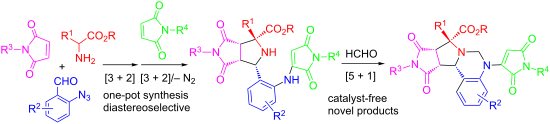
- formaldehyde through [5 + 1] annulation to afford a novel polycyclic scaffold bearing tetrahydroquinazoline, pyrrolidine, pyrrolidinedione, and N-substituted maleimide in stereoselective fashion. Keywords: [5 + 1] annulation; [3 + 2] cycloaddition; one-pot reactions; stereoselective synthesis

Graphical Abstract

Scheme 1: Polycyclic scaffolds derived from [3 + 2] adducts 2.

Figure 1: Heterocyclic fragments in bioactive compounds.

Figure 2: One-pot double [3 + 2] cycloadditions and denitrogenation for product 7 under the optimized reactio...

Figure 3: X-ray structure of 7h.

Scheme 2: Proposed mechanism for the 2nd [3 + 2] cycloaddition and denitrogenation.

Figure 4: [5 + 1] Annulation for tetrahydroquinazolines 1.
The direct oxidative diene cyclization and related reactions in natural product synthesis
- Juliane Adrian,
- Leona J. Gross and
- Christian B. W. Stark
Beilstein J. Org. Chem. 2016, 12, 2104–2123, doi:10.3762/bjoc.12.200
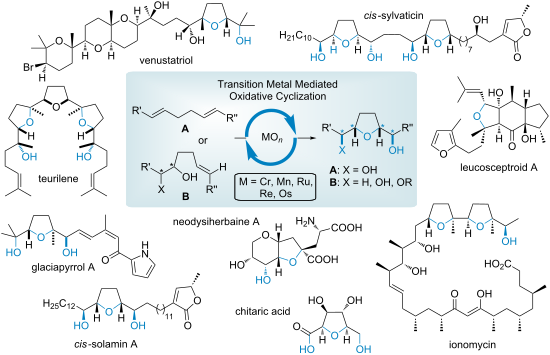
- of this polyketide. At this point it has to be mentioned that in 1987 the group of Weiler also used such a permanganate-promoted oxidative cyclization for the stereoselective synthesis of the THF unit in ionomycin [63]. Similarly, in 1980 Walba et al. reported on the B/C-ring fragment synthesis of
- ) was found to be more potent than rollidecin D (70) with selectivity toward the colon cell line HT-29 [108]. In 2001, the groups of Sinha and Keinan reported on a stereoselective synthesis of rollidecin C (69) and D (70) [109] using the tandem oxidative polycyclization reaction with trifluoro
- ], another triterpene natural product found in Jamaican endemic plant Spathelia glabrescens (Rutaceae) [141]. In 1999, Morimoto and co-workers reported on a stereoselective synthesis of the meso-tris-THF natural product teurilene (82) [142][143] (several previous total syntheses existed [144][145][146][147

Graphical Abstract

Scheme 1: Putative structures of geraniol 1a (R = H) or 1b (R = H) (in 1924), their expected dihydroxylation ...

Scheme 2: Correlation between the substrate double bond geometry and relative stereochemistry of the correspo...

Scheme 3: Mechanisms and classification for the metal-mediated oxidative cyclizations to form 2,5-disubstitut...

Scheme 4: Synthesis of (+)-anhydro-D-glucitol and (+)-D-chitaric acid using an OsO4-mediated oxidative cycliz...

Scheme 5: Total synthesis of neodysiherbaine A via a Ru(VIII)- and an Os(VI)-catalyzed oxidative cyclization,...

Scheme 6: Formal synthesis of ionomycin by Kocienski and co-workers.

Scheme 7: Total synthesis of amphidinolide F by Fürstner and co-workers.

Scheme 8: Brown`s and Donohoe`s oxidative cyclization approach to cis-solamin A.
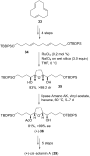
Scheme 9: Total synthesis of cis-solamin A using a Ru(VIII)-catalyzed oxidative cyclization and enzymatic des...
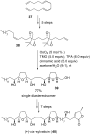
Scheme 10: Donohoe´s double oxidative cyclization approach to cis-sylvaticin.

Scheme 11: Permanganate-mediated approach to cis-sylvaticin by Brown and co-workers.

Scheme 12: Total synthesis of membranacin using a KMnO4-mediated oxidative cyclization.

Scheme 13: Total synthesis of membrarollin and its analogue 21,22-diepi-membrarollin.

Scheme 14: Total synthesis of rollidecin C and D using a late stage Re(VII)-catalyzed oxidative polycyclizatio...

Scheme 15: Co(II)-catalyzed oxidative cyclization in the total synthesis of asimilobin and gigantetrocin A.

Scheme 16: Mn(VII)-catalyzed oxidative cyclization of a 1,5-diene in the synthesis of trans-(+)-linalool oxide....

Scheme 17: Re(VII)-catalyzed oxidative cyclization in the total synthesis of teurilene.
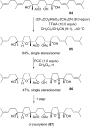
Scheme 18: Total synthesis of (+)-eurylene via Re(VII)- and Cr(VI)-mediated oxidative cyclizations.

Scheme 19: Synthesis of cis- and trans-THF Rings of eurylene via Mn(VII)-mediated oxidative cyclizations.

Scheme 20: Cr(VI)-catalyzed oxidative cyclization in the total synthesis of venustatriol by Corey et al.

Scheme 21: Ru(VIII)-catalyzed oxidative cyclization of a 1,5-diene in the synthesis and evaluation of its ster...

Scheme 22: Ru(VII)-catalyzed oxidative cyclization of a 5,6-dihydroxy alkene in the synthesis of the core stru...
Stereo- and regioselectivity of the hetero-Diels–Alder reaction of nitroso derivatives with conjugated dienes
- Lucie Brulíková,
- Aidan Harrison,
- Marvin J. Miller and
- Jan Hlaváč
Beilstein J. Org. Chem. 2016, 12, 1949–1980, doi:10.3762/bjoc.12.184
- used by Orena in reactions with cyclopentadiene and cyclohexadiene, giving the products with de values of 74 and 86%, respectively [118]. A series of chiral auxiliaries based on mandelic acid showed similar stereoselectivity benefits and have been proposed by Procter for stereoselective synthesis [109

Graphical Abstract

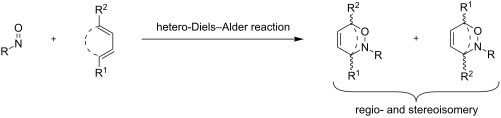
Scheme 1: Nitroso hetero-Diels–Alder reaction.

Scheme 2: The hetero-Diels–Alder reaction between thebaine (4) and an acylnitroso dienophile 5.

Figure 1: Examples of nitroso dienophiles frequently used in hetero-Diels–Alder reaction studies.

Scheme 3: Synthesis of arylnitroso species by substitution of a trifluoroborate group [36].
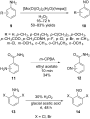
Scheme 4: Synthesis of arylnitroso compounds by amine oxidation.

Scheme 5: Synthesis of arylnitroso compounds by hydroxylamine oxidation.

Scheme 6: Synthesis of chloronitroso compounds by the treatment of a nitronate anion with oxalyl chloride.

Scheme 7: Non-oxidative routes to acylnitroso species.

Figure 2: RB3LYP/6-31G* computed energies (in kcal·mol−1) and bond lengths for exo and endo-transition states...

Scheme 8: Hetero-Diels–Alder cycloadditions of diene 28 and nitroso dienophiles 29.

Figure 3: Relative reactivity (ΔE#) and regioselectivity (Δ) for hetero-Diels–Alder of 28 and nitroso dienoph...

Scheme 9: Reaction of chiral 1-phosphono-1,3-butadiene 31 with nitroso dienophiles 32.

Scheme 10: Hetero-Diels–Alder reactions of hydroxamic acids 35 with various dienes 37.

Scheme 11: General regioselectivity of the nitroso hetero-Diels–Alder reaction observed with unsymmetrical die...

Scheme 12: Effect of the nitroso species on the regioselectivity for weakly directing 2-substituted dienes.

Scheme 13: Regioselectivity of 1,4-disubstituted dienes 51.

Scheme 14: Nitroso hetero-Diels–Alder reaction between Boc-nitroso compound 54 and dienes 55.

Scheme 15: Nitroso hetero-Diels–Alder reaction between Wightman reagent 58 and dienes 59.

Scheme 16: Regioselective reaction of 3-dienyl-2-azetidinones 62 with nitrosobenzene (47).

Scheme 17: The regioselective reaction of 1,3-butadienes 65 with various nitroso heterodienophiles 66.

Scheme 18: Catalysis of the nitroso hetero-Diels–Alder reaction by vanadium in the presence of the oxidant CHP...

Figure 4: 1,2-Oxazines synthesized in solution with moderate to high regioselectivity, showing the favored re...

Figure 5: 1,2-Oxazines synthesized in the solid phase with moderate to high regioselectivity, showing the fav...

Scheme 19: Regioselectivity of solution-phase nitroso hetero-Diels–Alder reaction with acyl and aryl nitroso d...

Scheme 20: Favored regioisomeric outcome for the solution and solid-phase reactions, giving hetero-Diels–Alder...

Figure 6: Favored regioisomers and regioisomeric ratios for 1,2-oxazines synthesized in solid phase (91, 93, ...

Scheme 21: Regiocontrol of the reaction between 3-dienyl-2-azetidinones and nitrosobenzene due to change in a ...

Scheme 22: Regiocontrol of the reaction between diene 111 and 2-methyl-6-nitrosopyridine (112) due to metal co...

Scheme 23: Asymmetric hetero-Diels–Alder reactions reported by Vasella [56].

Scheme 24: Asymmetric hetero-Diels–Alder reaction of cyclohexa-1,3-diene (120) with acylnitroso dienophile 119....

Scheme 25: Asymmetric induction with L-proline derivatives 124–126.

Scheme 26: Asymmetric cycloaddition of the acylnitroso compound 136 to diene 135.

Scheme 27: Asymmetric induction with arylmenthol-based nitroso dienophiles 142.

Scheme 28: Cycloaddition of silyloxycyclohexadiene 145 to the acylnitroso dienophile derived from (+)-camphors...

Scheme 29: Asymmetric reaction of O-isopropylidene-protected cis-cyclohexa-3,5-diene-1,2-diol 147 with mannofu...

Scheme 30: Synthesis of synthon 152 from 2-methoxyphenol 150 and chiral auxiliary 151.

Scheme 31: Asymmetric nitroso hetero-Diels–Alder reaction with Wightman chloronitroso reagent 58.

Scheme 32: Asymmetric 1,2-oxazine synthesis using chiral cyclic diene 157 and the application of this reaction...

Scheme 33: Asymmetric 1,2-oxazine synthesis using a chiral diene reported by Jones et al. [75]. aRegioisomeric rat...

Scheme 34: The nitroso hetero-Diels–Alder reaction of acyclic oxazolidine-substituted diene 170 and chiral 1-s...

Scheme 35: The nitroso hetero-Diels–Alder reaction of acyclic lactam-substituted diene 176 with various acylni...

Scheme 36: The hetero-Diels–Alder reaction of acylnitroso dienophile.

Scheme 37: The hetero-Diels–Alder reaction of arylnitroso dienophiles using Lewis acids.

Scheme 38: Asymmetric hetero-Diels–Alder reactions of chiral alkyl N-dienylpyroglutamates.

Scheme 39: Catalytic asymmetric arylnitroso reaction between mono-substituted 1,3-cyclohexadiene 196 and disub...

Figure 7: Plausible chelate intermediate complexes formed during the hetero-Diels–Alder reaction to give 1,2-...

Scheme 40: Catalytic asymmetric nitroso hetero-Diels–Alder between cyclic dienes and 2-nitrosopyridine.

Scheme 41: The reason for the increased enantioselectivity of stereoisomer 212 compared with stereoisomer 213.

Scheme 42: The copper-catalyzed nitroso hetero-Diels–Alder reaction of 6-methyl-2-nitrosopyridine (199) with p...

Scheme 43: Asymmetric nitroso hetero-Diels–Alder reaction of nitrosoarenes with dienylcarbamates catalyzed by ...

Scheme 44: The enantioselective hetero-Diels–Alder reaction between nitrosobenzene and (E)-2,4-pentadien-1-ol (...

Scheme 45: Asymmetric nitroso hetero-Diels–Alder reaction using tartaric acid ester chelation of the diene and...
Multicomponent reactions: A simple and efficient route to heterocyclic phosphonates
- Mohammad Haji
Beilstein J. Org. Chem. 2016, 12, 1269–1301, doi:10.3762/bjoc.12.121
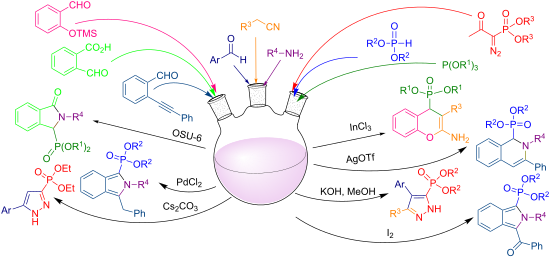
- stereoselective synthesis of 1,2-dihydroquinolin-2-ylphosphonates 271 and 1,2-dihydroisoquinolin-1-ylphosphonates 272 via the three-component reactions of quinoline or isoquinoline, dialkyl acetylenedicarboxylates 269, and dialkyl phosphonates 270 has been described by Shaabani et al. (Scheme 56) [94]. The
- -(aminothioxomethyl)-1,2-dihydroisoquinolin-1-yl]phosphonates. Three-component stereoselective synthesis of 1,2-dihydroquinolin-2-ylphosphonates and 1,2-dihydroisoquinolin-1-ylphosphonates. Diphosphorylation of diazaheterocyclic compounds via a tandem 1,4–1,2 addition of dimethyl trimethylsilyl phosphite
- proline with aldehydes and dialkyl phosphites for the synthesis of pyrrolidinylphosphonates. Three-component domino aza-Wittig/phospha-Mannich sequence for the phosphorylation of isatin derivatives. Stereoselective synthesis of phosphorylated trans-1,5-benzodiazepines via a one-pot three-component

Graphical Abstract

Scheme 1: The Biginelli condensation.

Scheme 2: The Biginelli reaction of β-ketophosphonates catalyzed by ytterbium triflate.

Scheme 3: Trimethylchlorosilane-mediated Biginelli reaction of diethyl (3,3,3-trifluoropropyl-2-oxo)phosphona...

Scheme 4: Biginelli reaction of dialkyl (3,3,3-trifluoropropyl-2-oxo)phosphonate with trialkyl orthoformates ...

Scheme 5: p-Toluenesulfonic acid-promoted Biginelli reaction of β-ketophosphonates, aryl aldehydes and urea.

Scheme 6: General Kabachnik–Fields reaction for the synthesis of α-aminophosphonates.

Scheme 7: Phthalocyanine–AlCl catalyzed Kabachnik–Fields reaction of N-Boc-piperidin-4-one with diethyl phosp...

Scheme 8: Kabachnik–Fields reaction of isatin with diethyl phosphite and benzylamine.

Scheme 9: Magnetic Fe3O4 nanoparticle-supported phosphotungstic acid-catalyzed Kabachnik–Fields reaction of i...

Scheme 10: The Mg(ClO4)2-catalyzed Kabachnik–Fields reaction of 1-tosylpiperidine-4-one.

Scheme 11: An asymmetric version of the Kabachnik–Fields reaction for the synthesis of α-amino-3-piperidinylph...

Scheme 12: A classical Kabachnik–Fields reaction followed by an intramolecular ring-closing reaction for the s...

Scheme 13: Synthesis of (S)-piperidin-2-phosphonic acid through an asymmetric Kabachnik–Fields reaction.

Scheme 14: A modified diastereoselective Kabachnik–Fields reaction for the synthesis of isoindolin-1-one-3-pho...

Scheme 15: A microwave-assisted Kabachnik–Fields reaction toward isoindolin-1-ones.

Scheme 16: The synthesis of 3-arylmethyleneisoindolin-1-ones through a Horner–Wadsworth–Emmons reaction of Kab...

Scheme 17: An efficient one-pot method for the synthesis of ethyl (2-alkyl- and 2-aryl-3-oxoisoindolin-1-yl)ph...

Scheme 18: FeCl3 and PdCl2 co-catalyzed three-component reaction of 2-alkynylbenzaldehydes, anilines, and diet...

Scheme 19: Three-component reaction of 6-methyl-3-formylchromone (75) with hydrazine derivatives or hydroxylam...

Scheme 20: Three-component reaction of 6-methyl-3-formylchromone (75) with thiourea, guanidinium carbonate or ...

Scheme 21: Three-component reaction of 6-methyl-3-formylchromone (75) with 1,4-bi-nucleophiles in the presence...

Scheme 22: One-pot three-component reaction of 2-alkynylbenzaldehydes, amines, and diethyl phosphonate.

Scheme 23: Lewis acid–surfactant combined catalysts for the one-pot three-component reaction of 2-alkynylbenza...

Scheme 24: Lewis acid catalyzed cyclization of different Kabachnik–Fields adducts.

Scheme 25: Three-component synthesis of N-arylisoquinolone-1-phosphonates 119.

Scheme 26: CuI-catalyzed three-component tandem reaction of 2-(2-formylphenyl)ethanones with aromatic amines a...

Scheme 27: Synthesis of 1,5-benzodiazepin-2-ylphosphonates via ytterbium chloride-catalyzed three-component re...

Scheme 28: FeCl3-catalyzed four-component reaction for the synthesis of 1,5-benzodiazepin-2-ylphosphonates.

Scheme 29: Synthesis of indole bisphosphonates through a modified Kabachnik–Fields reaction.

Scheme 30: Synthesis of heterocyclic bisphosphonates via Kabachnik–Fields reaction of triethyl orthoformate.

Scheme 31: A domino Knoevenagel/phospha-Michael process for the synthesis of 2-oxoindolin-3-ylphosphonates.

Scheme 32: Intramolecular cyclization of phospha-Michael adducts to give dihydropyridinylphosphonates.

Scheme 33: Synthesis of fused phosphonylpyrans via intramolecular cyclization of phospha-Michael adducts.

Scheme 34: InCl3-catalyzed three-component synthesis of (2-amino-3-cyano-4H-chromen-4-yl)phosphonates.

Scheme 35: Synthesis of phosphonodihydropyrans via a domino Knoevenagel/hetero-Diels–Alder process.

Scheme 36: Multicomponent synthesis of phosphonodihydrothiopyrans via a domino Knoevenagel/hetero-Diels–Alder ...

Scheme 37: One-pot four-component synthesis of 1,2-dihydroisoquinolin-1-ylphosphonates under multicatalytic co...

Scheme 38: CuI-catalyzed four-component reactions of methyleneaziridines towards alkylphosphonates.

Scheme 39: Ruthenium–porphyrin complex-catalyzed three-component synthesis of aziridinylphosphonates and its p...

Scheme 40: Copper(I)-catalyzed three-component reaction towards 1,2,3-triazolyl-5-phosphonates.

Scheme 41: Three-component reaction of acylphosphonates, isocyanides and dialkyl acetylenedicarboxylate to aff...

Scheme 42: Synthesis of (4-imino-3,4-dihydroquinazolin-2-yl)phosphonates via an isocyanide-based three-compone...

Scheme 43: Silver-catalyzed three-component synthesis of (2-imidazolin-4-yl)phosphonates.

Scheme 44: Three-component synthesis of phosphonylpyrazoles.

Scheme 45: One-pot three-component synthesis of 3-carbo-5-phosphonylpyrazoles.

Scheme 46: A one-pot two-step method for the synthesis of phosphonylpyrazoles.

Scheme 47: A one-pot method for the synthesis of (5-vinylpyrazolyl)phosphonates.

Scheme 48: Synthesis of 1H-pyrrol-2-ylphosphonates via the [3 + 2] cycloaddition of phosphonate azomethine yli...

Scheme 49: Three-component synthesis of 1H-pyrrol-2-ylphosphonates.

Scheme 50: The classical Reissert reaction.

Scheme 51: One-pot three-component synthesis of N-phosphorylated isoquinolines.

Scheme 52: One-pot three-component synthesis of 1-acyl-1,2-dihydroquinoline-2-phosphonates and 2-acyl-1,2-dihy...

Scheme 53: Three-component reaction of pyridine derivatives with ethyl propiolate and dialkyl phosphonates.

Scheme 54: Three-component reactions for the phosphorylation of benzothiazole and isoquinoline.

Scheme 55: Three-component synthesis of diphenyl [2-(aminocarbonyl)- or [2-(aminothioxomethyl)-1,2-dihydroisoq...

Scheme 56: Three-component stereoselective synthesis of 1,2-dihydroquinolin-2-ylphosphonates and 1,2-dihydrois...

Scheme 57: Diphosphorylation of diazaheterocyclic compounds via a tandem 1,4–1,2 addition of dimethyl trimethy...

Scheme 58: Multicomponent reaction of alkanedials, acetamide and acetyl chloride in the presence of PCl3 and a...

Scheme 59: An oxidative domino three-component synthesis of polyfunctionalized pyridines.

Scheme 60: A sequential one-pot three-component synthesis of polysubstituted pyrroles.

Scheme 61: Three-component decarboxylative coupling of proline with aldehydes and dialkyl phosphites for the s...

Scheme 62: Three-component domino aza-Wittig/phospha-Mannich sequence for the phosphorylation of isatin deriva...

Scheme 63: Stereoselective synthesis of phosphorylated trans-1,5-benzodiazepines via a one-pot three-component...

Scheme 64: One-pot three-component synthesis of phosphorylated 2,6-dioxohexahydropyrimidines.
Stereoselective synthesis of tricyclic compounds by intramolecular palladium-catalyzed addition of aryl iodides to carbonyl groups
- Jakub Saadi,
- Christoph Bentz,
- Kai Redies,
- Dieter Lentz,
- Reinhold Zimmer and
- Hans-Ulrich Reissig
Beilstein J. Org. Chem. 2016, 12, 1236–1242, doi:10.3762/bjoc.12.118
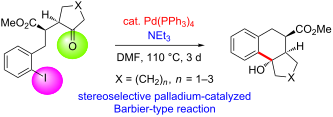

Graphical Abstract

Scheme 1: Planned Heck reaction of A to compound B and serendipitous discovery of the palladium-catalyzed cyc...

Scheme 2: Synthesis of compounds A (1–6) via methyl 2-siloxycyclopropanecarboxylates D, their alkylation to E...

Scheme 3: Palladium-catalyzed reactions of methyl ketone 1 to tetralin derivative 7 and of isopropyl-substitu...

Scheme 4: Palladium-catalyzed cyclization of diastereomeric cyclopentanone derivatives 3a/3b to products 11a ...
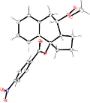
Figure 1: Molecular structure (ORTEP, [14]) of compound 12a (thermal ellipsoids at 50% probability).

Scheme 5: Palladium-catalyzed cyclizations of diastereomeric cyclohexanone derivatives 4a and 4b leading ster...

Figure 2: Molecular structure (ORTEP, [14]) of compound 14a (thermal ellipsoids at 50% probability).

Scheme 6: Palladium-catalyzed cyclizations of cycloheptanone derivatives 5a and 5b leading to products 15a an...

Figure 3: Molecular structure (ORTEP, [14]) of compound 15a (thermal ellipsoids at 50% probability).

Figure 4: Molecular structure (ORTEP [14]) of compound 15b (thermal ellipsoids at 50% probability).

Scheme 7: Palladium-catalyzed cyclization of p-methoxy-substituted aryl iodide 6a/6b to compound 16.

Scheme 8: Typical palladium-catalyzed cyclization of an o-iodoaniline derivative to a tricyclic tertiary alco...

Scheme 9: Proposed transition state (TS) explaining the stereoselective formation of cyclization products.

Scheme 10: Possible mechanism of the reduction of palladium(II) to palladium(0) by triethylamine (additional l...
Conjugate addition–enantioselective protonation reactions
- James P. Phelan and
- Jonathan A. Ellman
Beilstein J. Org. Chem. 2016, 12, 1203–1228, doi:10.3762/bjoc.12.116
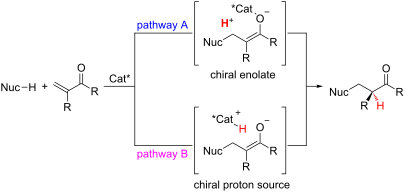
- researchers have developed methods for the stereoselective synthesis of tertiary carbon stereocenters. One aesthetically pleasing approach is the enantioselective protonation of prochiral enolates and enolate equivalents [1][2][3][4][5][6][7][8][9][10]. While an attractive strategy, the enantioselective

Graphical Abstract

Figure 1: Two general pathways for conjugate addition followed by enantioselective protonation.

Scheme 1: Tomioka’s enantioselective addition of arylthiols to α-substituted acrylates.

Scheme 2: Sibi’s enantioselective hydrogen atom transfer reactions.

Scheme 3: Mikami’s addition of perfluorobutyl radical to α-aminoacrylate 11.

Scheme 4: Reisman’s Friedel–Crafts conjugate addition–enantioselective protonation approach toward tryptophan...

Scheme 5: Pracejus’s enantioselective addition of benzylmercaptan to α-aminoacrylate 20.

Scheme 6: Kumar and Dike’s enantioselective addition of thiophenol to α-arylacrylates.

Scheme 7: Tan’s enantioselective addition of aromatic thiols to 2-phthalimidoacrylates.

Scheme 8: Glorius’ enantioselective Stetter reactions with α-substituted acrylates.

Scheme 9: Dixon’s enantioselective addition of thiols to α-substituted acrylates.

Figure 2: Chiral phosphorous ligands.

Scheme 10: Enantioselective addition of arylboronic acids to methyl α-acetamidoacrylate.

Scheme 11: Frost’s enantioselective additions to dimethyl itaconate.

Scheme 12: Darses and Genet’s addition of potassium organotrifluoroborates to α-aminoacrylates.

Scheme 13: Proposed mechanism for enantioselective additions to α-aminoacrylates.

Scheme 14: Sibi’s addition of arylboronic acids to α-methylaminoacrylates.

Scheme 15: Frost’s enantioselective synthesis of α,α-dibenzylacetates 64.

Scheme 16: Rovis’s hydroheteroarylation of α-substituted acrylates with benzoxazoles.

Scheme 17: Proposed mechanism for the hydroheteroarylation of α-substituted acrylates with benzoxazoles.

Scheme 18: Sodeoka’s enantioselective addition of amines to N-benzyloxycarbonyl acrylamides 75 and 77.

Scheme 19: Proposed catalytic cycle for Sodeoka’s enantioselective addition of amines.

Scheme 20: Sibi’s enantioselective Friedel–Crafts addition of pyrroles to imides 84.

Scheme 21: Kobayashi’s enantioselective addition of malonates to α-substituted N-acryloyloxazolidinones.

Scheme 22: Chen and Wu’s enantioselective addition of thiophenol to N-methacryloyl benzamide.

Scheme 23: Tan’s enantioselective addition of secondary phosphine oxides and thiols to N-arylitaconimides.

Scheme 24: Enantioselective addition of thiols to α-substituted N-acryloylamides.

Scheme 25: Kobayashi’s enantioselective addition of thiols to α,β-unsaturated ketones.

Scheme 26: Feng’s enantioselective addition of pyrazoles to α-substituted vinyl ketones.

Scheme 27: Luo and Cheng’s addition of indoles to vinyl ketones by enamine catalysis.

Scheme 28: Curtin–Hammett controlled enantioselective addition of indole.

Scheme 29: Luo and Cheng’s enantioselective additions to α-branched vinyl ketones.

Scheme 30: Lou’s reduction–conjugate addition–enantioselective protonation.

Scheme 31: Luo and Cheng’s primary amine-catalyzed addition of indoles to α-substituted acroleins.

Scheme 32: Luo and Cheng’s proposed mechanism and transition state.

Figure 3: Shibasaki’s chiral lanthanum and samarium tris(BINOL) catalysts.

Scheme 33: Shibasaki’s enantioselective addition of 4-tert-butyl(thiophenol) to α,β-unsaturated thioesters.

Scheme 34: Shibasaki’s application of chiral (S)-SmNa3tris(binaphthoxide) catalyst 144 to the total synthesis ...

Scheme 35: Shibasaki’s cyanation–enantioselective protonation of N-acylpyrroles.

Scheme 36: Tanaka’s hydroacylation of acrylamides with aliphatic aldehydes.

Scheme 37: Ellman’s enantioselective addition of α-substituted Meldrum’s acids to terminally unsubstituted nit...

Scheme 38: Ellman’s enantioselective addition of thioacids to α,β,β-trisubstituted nitroalkenes.

Scheme 39: Hayashi’s enantioselective hydroarylation of diphenylphosphinylallenes.

Scheme 40: Hayashi’s enantioselective hydroarylation of diphenylphosphinylallenes.

Figure 4: Togni’s chiral ferrocenyl tridentate nickel(II) and palladium(II) complexes.

Scheme 41: Togni’s enantioselective hydrophosphination of methacrylonitrile.

Scheme 42: Togni’s enantioselective hydroamination of methacrylonitrile.
Modular synthesis of the pyrimidine core of the manzacidins by divergent Tsuji–Trost coupling
- Sebastian Bretzke,
- Stephan Scheeff,
- Felicitas Vollmeyer,
- Friederike Eberhagen,
- Frank Rominger and
- Dirk Menche
Beilstein J. Org. Chem. 2016, 12, 1111–1121, doi:10.3762/bjoc.12.107
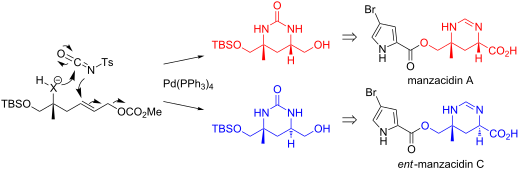
- . Application of the concept for manzacidin core synthesis After proofing the general adaptability of our synthetic concept, we next evaluated the applicability of this procedure for the synthesis of the authentic manzacidin substrate. As shown in Scheme 5, we first focused on the stereoselective synthesis of
- urea-type cyclization precursor 19. Stereodivergent synthesis of 1,3-syn- and anti-tetrahydropyrimidinones [31]. Stereoselective synthesis of all possible stereoisomers of the manzacidin core amine by asymmetric addition to chiral tert-butanesulfinyl ketimines. Synthesis of the authentic cyclization

Graphical Abstract

Figure 1: Modular concept for manzacidin synthesis based on a Tsuji–Trost coupling of joint intermediate 5.

Scheme 1: General concept for heterocycles synthesis based on a nucleophilic addition and Tsuji–Trost couplin...

Scheme 2: Synthesis of homoallylic alcohol 12 by multi-component reactions.
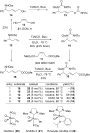
Scheme 3: Preparation of urea-type cyclization precursor 19.

Scheme 4: Stereodivergent synthesis of 1,3-syn- and anti-tetrahydropyrimidinones [31].
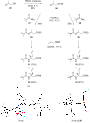
Scheme 5: Stereoselective synthesis of all possible stereoisomers of the manzacidin core amine by asymmetric ...
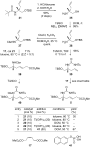
Scheme 6: Synthesis of the authentic cyclization precursor 5.
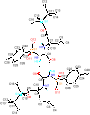
Figure 2: X-ray structure of 39.
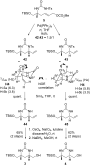
Scheme 7: Divergent Tsuji–Trost coupling and completion of the synthesis of authentic pyrimidinones 3 and 4.
Towards the total synthesis of keramaphidin B
- Pavol Jakubec,
- Alistair J. M. Farley and
- Darren J. Dixon
Beilstein J. Org. Chem. 2016, 12, 1096–1100, doi:10.3762/bjoc.12.104
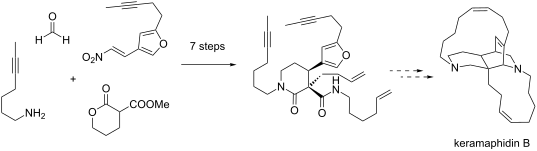
- wish to report our preliminary synthetic efforts towards the stereoselective synthesis of the heavily functionalised piperidine core of keramaphidin B (1). Results and Discussion Our overall synthetic strategy is presented in Figure 2. We envisaged that a late stage alkyne RCM reaction of 2 and cis

Graphical Abstract
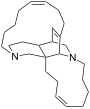
Figure 1: Keramaphidin B (1).

Figure 2: Retrosynthetic analysis of keramaphidin B.

Scheme 1: Enantio- and diastereoselective bifunctional thiourea 12 organocatalysed Michael addition. (a) CO(O...

Scheme 2: Synthesis of bis alkene 5. (a) 12 (20 mol %), toluene, −20 °C, 36 h, 95:5 dr, 92% yield; (b) aq HCH...
Catalytic asymmetric synthesis of biologically important 3-hydroxyoxindoles: an update
- Bin Yu,
- Hui Xing,
- De-Quan Yu and
- Hong-Min Liu
Beilstein J. Org. Chem. 2016, 12, 1000–1039, doi:10.3762/bjoc.12.98
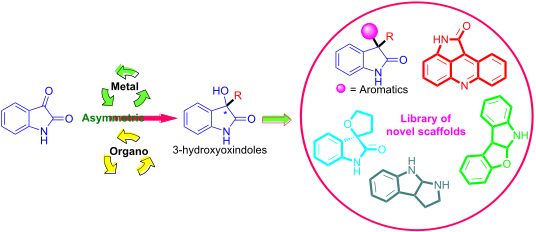

Graphical Abstract

Figure 1: 3-Hydroxyoxindole-containing natural products and biologically active molecules.

Scheme 1: Chiral CNN pincer Pd(II) complex 1 catalyzed asymmetric allylation of isatins.

Scheme 2: Asymmetric allylation of ketimine catalyzed by the chiral CNN pincer Pd(II) complex 2.

Scheme 3: Pd/L1 complex-catalyzed asymmetric allylation of 3-O-Boc-oxindoles.

Scheme 4: Cu(OTf)2-catalyzed asymmetric direct addition of acetonitrile to isatins.

Scheme 5: Chiral tridentate Schiff base/Cu complex catalyzed asymmetric Friedel–Crafts alkylation of isatins ...

Scheme 6: Guanidine/CuI-catalyzed asymmetric alkynylation of isatins with terminal alkynes.

Scheme 7: Asymmetric intramolecular direct hydroarylation of α-ketoamides.

Scheme 8: Plausible catalytic cycle for the direct hydroarylation of α-ketoamides.

Scheme 9: Ir-catalyzed asymmetric arylation of isatins with arylboronic acids.

Scheme 10: Enantioselective decarboxylative addition of β-ketoacids to isatins.

Scheme 11: Ruthenium-catalyzed hydrohydroxyalkylation of olefins and 3-hydroxy-2-oxindoles.

Scheme 12: Proposed catalytic mechanism and stereochemical model.

Scheme 13: In-catalyzed allylation of isatins with stannylated reagents.

Scheme 14: Modified protocol for the synthesis of allylated 3-hydroxyoxindoles.

Scheme 15: Hg-catalyzed asymmetric allylation of isatins with allyltrimethylsilanes.

Scheme 16: Enantioselective additions of organoborons to isatins.

Scheme 17: Asymmetric aldol reaction of isatins with cyclohexanone.

Scheme 18: Enantioselective aldol reactions of aliphatic aldehydes with isatin derivatives and the plausible t...

Scheme 19: Enantioselective aldol reaction of isatins and 2,2-dimethyl-1,3-dioxan-5-one.

Scheme 20: Asymmetric aldol reactions between ketones and isatins.

Scheme 21: Phenylalanine lithium salt-catalyzed asymmetric synthesis of 3-alkyl-3-hydroxyoxindoles.

Scheme 22: Aldolization between isatins and dihydroxyacetone derivatives.

Scheme 23: One-pot asymmetric synthesis of convolutamydine A.

Scheme 24: Asymmetric aldol reactions of cyclohexanone and acetone with isatins.

Scheme 25: Aldol reactions of acetone with isatins.

Scheme 26: Aldol reactions of ketones with isatins.

Scheme 27: Enantioselective allylation of isatins.

Scheme 28: Asymmetric aldol reaction of trifluoromethyl α-fluorinated β-keto gem-diols with isatins.

Scheme 29: Plausible mechanism proposed for the asymmetric aldol reaction.
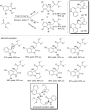
Scheme 30: Asymmetric aldol reaction of 1,1-dimethoxyacetone with isatins.

Scheme 31: Enantioselective Friedel-Crafts reaction of phenols with isatins.

Scheme 32: Enantioselective addition of 1-naphthols with isatins.

Scheme 33: Enantioselective aldol reaction between 3-acetyl-2H-chromen-2-ones and isatins.

Scheme 34: Stereoselective Mukaiyama–aldol reaction of fluorinated silyl enol ethers with isatins.

Scheme 35: Asymmetric vinylogous Mukaiyama–aldol reaction between 2-(trimethylsilyloxy)furan and isatins.

Scheme 36: β-ICD-catalyzed MBH reactions of isatins with maleimides.

Scheme 37: β-ICD-catalyzed MBH reactions of 7-azaisatins with maleimides and activated alkenes.

Scheme 38: Enantioselective aldol reaction of isatins with ketones.

Scheme 39: Direct asymmetric vinylogous aldol reactions of allyl ketones with isatins.

Scheme 40: Enantioselective aldol reactions of ketones with isatins.

Scheme 41: The MBH reaction of isatins with α,β-unsaturated γ-butyrolactam.

Scheme 42: Reactions of tert-butyl hydrazones with isatins followed by oxidation.

Scheme 43: Aldol reactions of isatin derivatives with ketones.

Scheme 44: Enantioselective decarboxylative cyanomethylation of isatins.

Scheme 45: Catalytic kinetic resolution of 3-hydroxy-3-substituted oxindoles.

Scheme 46: Lewis acid catalyzed Friedel–Crafts alkylation of 3-hydroxy-2-oxindoles with electron-rich phenols.

Scheme 47: Lewis acid catalyzed arylation of 3-hydroxyoxindoles with aromatics.

Scheme 48: Synthetic application of 3-arylated disubstituted oxindoles in the construction of core structures ...

Scheme 49: CPA-catalyzed dearomatization and arylation of 3-indolyl-3-hydroxyoxindoles with tryptamines and 3-...

Scheme 50: CPA-catalyzed enantioselective decarboxylative alkylation of β-keto acids with 3-hydroxy-3-indolylo...

Scheme 51: BINOL-derived imidodiphosphoric acid-catalyzed enantioselective Friedel–Crafts reactions of indoles...

Scheme 52: CPA-catalyzed enantioselective allylation of 3-indolylmethanols.

Scheme 53: 3-Indolylmethanol-based substitution and cycloaddition reactions.

Scheme 54: CPA-catalyzed asymmetric [3 + 3] cycloaddtion reactions of 3-indolylmethanols with azomethine ylide...

Scheme 55: CPA-catalyzed three-component cascade Michael/Pictet–Spengler reactions of 3-indolylmethanols and a...

Scheme 56: Acid-promoted chemodivergent and stereoselective synthesis of diverse indole derivatives.

Scheme 57: CPA-catalyzed asymmetric formal [3 + 2] cycloadditions.

Scheme 58: CPA-catalyzed enantioselective cascade reactions for the synthesis of C7-functionlized indoles.

Scheme 59: Lewis acid-promoted Prins cyclization of 3-allyl-3-hydroxyoxindoles with aldehydes.

Scheme 60: Ga(OTf)3-catalyzed reactions of allenols and phenols.

Scheme 61: I2-catalyzed construction of pyrrolo[2.3.4-kl]acridines from enaminones and 3-indolyl-3-hydroxyoxin...

Scheme 62: CPA-catalyzed asymmetric aza-ene reaction of 3-indolylmethanols with cyclic enaminones.

Scheme 63: Asymmetric α-alkylation of aldehydes with 3-indolyl-3-hydroxyoxindoles.

Scheme 64: Organocatalytic asymmetric α-alkylation of enolizable aldehydes with 3-indolyl-3-hydroxyoxindoles a...
A convenient route to symmetrically and unsymmetrically substituted 3,5-diaryl-2,4,6-trimethylpyridines via Suzuki–Miyaura cross-coupling reaction
- Dariusz Błachut,
- Joanna Szawkało and
- Zbigniew Czarnocki
Beilstein J. Org. Chem. 2016, 12, 835–845, doi:10.3762/bjoc.12.82
- approach in the determination of the enantiomeric purity of (+)-crispine [81] and (R)-(+)-harmicine after their stereoselective synthesis [82]. The results of a more detailed study on the stereochemistry of atropisomeric enantiomers will be published elsewhere. Conclusion Herein, we described an easy and

Graphical Abstract

Figure 1: Types of aryl pyridines and pyrimidines already prepared in our group [23-27].
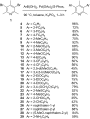
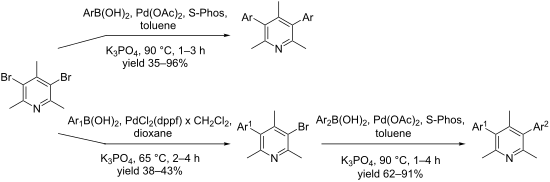
Scheme 1: Synthesis of diarylpyridines 4–29.

Scheme 2: Synthetic routes leading to unsymmetrically substituted arylpyridines.

Scheme 3: Preparation of unsymmetrical 3,5-diaryl-2,4,6-trimethylpyridines 46–56.

Scheme 4: Preparation of unsymmetrical 3,5-diaryl-4-chloro-2,6-dimethylpyridines 68–71.
Opportunities and challenges for direct C–H functionalization of piperazines
- Zhishi Ye,
- Kristen E. Gettys and
- Mingji Dai
Beilstein J. Org. Chem. 2016, 12, 702–715, doi:10.3762/bjoc.12.70
- the diamine switch strategy and α-methylbenzyl chiral auxiliary strategy has been reported to give the best results and produce 51 in 70% yield and 90:10 diastereoselectivity (Figure 11, reaction 3). O’Brien and co-workers also reported a stereoselective synthesis of enantiopure 2,6-trans- and 2,5

Graphical Abstract

Figure 1: Selected piperazine-containing small-molecule pharmaceuticals.

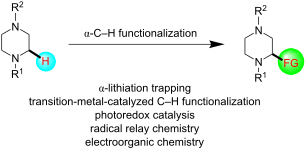
Figure 2: Strategies for the synthesis of carbon-substituted piperazines.

Figure 3: The first α-lithiation of N-Boc-protected piperazines by van Maarseveen et al. in 2005 [37].

Figure 4: α-Lithiation of N-Boc-N’-tert-butyl piperazines by Coldham et al. in 2010 [38].

Figure 5: Diamine-free α-lithiation of N-Boc-piperazines by O’Brien, Campos, et al. in 2010 [40].

Figure 6: The first enantioselective α-lithiation of N-Boc-piperazines by McDermott et al. in 2008 [41].

Figure 7: Dynamic thermodynamic resolution of lithiated of N-Boc-piperazines by Coldham et al. in 2010 [38].

Figure 8: Enantioselective α-lithiation of N-Boc-N’-alkylpiperazines by O’Brien et al. in 2013 and 2016 [42,43].

Figure 9: Asymmetric α-functionalization of N-Boc-piperazines with Ph2CO by O’Brien et al. in 2016 [43].

Figure 10: A “chiral auxiliary” strategy toward enantiopure α-functionalized piperazines by O’Brien et al. 201...

Figure 11: Installation of methyl group at the α-position of piperazines by O’Brien et al. 2016 [43].

Figure 12: α-Lithiation trapping of C-substituted N-Boc-piperazines by O’Brien et al. 2016 [43].
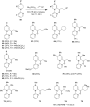
Figure 13: Rh-catalyzed reactions of N-(2-pyridinyl)piperazines by Murai et al. in 1997 [52].

Figure 14: Ta-catalyzed hydroaminoalkylation of piperazines by Schafer et al. in 2013 [55].

Figure 15: Photoredox catalysis for α-C–H functionalization of piperazines by MacMillan et al. in 2011 and 201...

Figure 16: Copper-catalyzed aerobic C–H oxidation of piperazines by Touré, Sames, et al. in 2013 [67].

Figure 17: Free radical approach by Undheim et al. in 1994 [68].

Figure 18: Anodic oxidation approach by Nyberg et al. in 1976 [70].



