


Search results
Search for "analogues" in Full Text gives 929 result(s) in Beilstein Journal of Organic Chemistry. Showing first 200.
Selectfluor and alcohol-mediated synthesis of bicyclic oxyfluorination compounds by Wagner–Meerwein rearrangement
Beilstein J. Org. Chem. 2024, 20, 1462–1467, doi:10.3762/bjoc.20.129
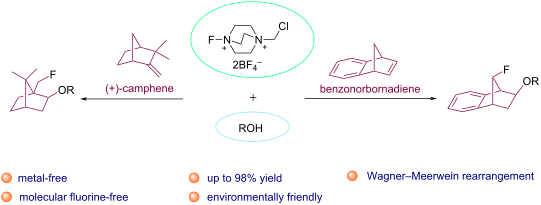
- distinct advantageous such as (i) the methodology does not require the presence of any metal moities, (ii) enables the synthesis of corresponding oxyfluorinated analogues with high yields and selectivity, (iii) allows derivatization of natural chiral molecules, (iv) uses a safe solvent in mild reaction


Cofactor-independent C–C bond cleavage reactions catalyzed by the AlpJ family of oxygenases in atypical angucycline biosynthesis
Beilstein J. Org. Chem. 2024, 20, 1198–1206, doi:10.3762/bjoc.20.102
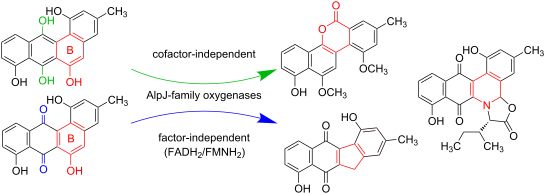
- plausible that the corresponding biosynthesis involves analogous oxidative ring opening and rearrangement steps. On the other side, in JadG-catalyzed reactions, compound 3 reacts with ʟ-isoleucine or other amino acids, leading to the formation of jadomycin A (6) or analogues, respectively [10]. In the




Manganese-catalyzed C–C and C–N bond formation with alcohols via borrowing hydrogen or hydrogen auto-transfer
Beilstein J. Org. Chem. 2024, 20, 1111–1166, doi:10.3762/bjoc.20.98
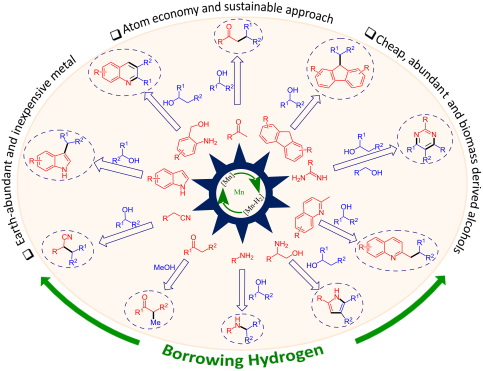
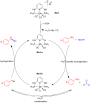
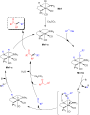
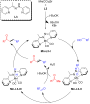
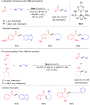
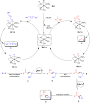
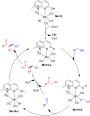
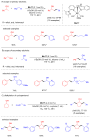
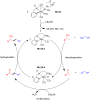
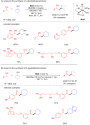
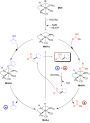
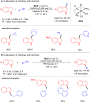
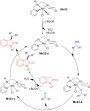
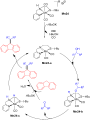
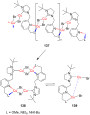
- interrupted BH approach using Mn26 (3 mol %) and t-BuOK (50 mol %) in toluene at 130 °C for 24 h (Scheme 67). Fascinatingly, this process was used to synthesize pharmacologically active compounds like vibrindole A and turbomycin B alkaloids and natural products like gramine and dipterine analogues. Discrete























Synthesis of 1,4-azaphosphinine nucleosides and evaluation as inhibitors of human cytidine deaminase and APOBEC3A
Beilstein J. Org. Chem. 2024, 20, 1088–1098, doi:10.3762/bjoc.20.96
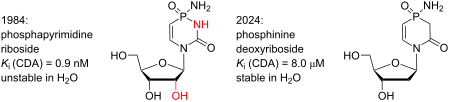
- cytosine deamination involves a nucleophilic attack at the C4 position by a Zn2+-activated water molecule [40][41][42], it was proposed to employ transition state analogues and mimetics of the tetrahedral intermediate formed as inhibitors of these enzymes [43][44][45][46][47]. More than 30 compounds have


Novel analogues of a nonnucleoside SARS-CoV-2 RdRp inhibitor as potential antivirotics
Beilstein J. Org. Chem. 2024, 20, 1029–1036, doi:10.3762/bjoc.20.91
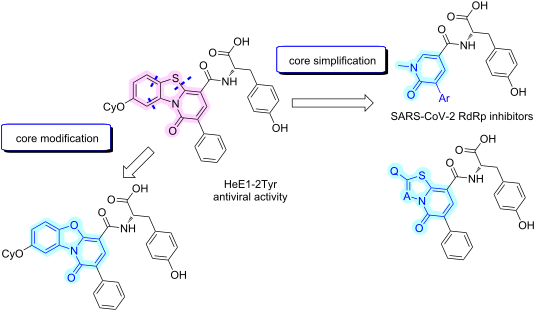
- viral replication in cell-based antiviral assays [24]. That study highlighted the beneficial role of the tyrosine residue and the indispensable role of the C-2 substitution. In this work, we report the synthesis and biological evaluation of further analogues of HeE1-2Tyr (1) against the SARS-CoV-2 RdRp
- . We focused on the modification of the central heterocyclic core and on the simplification and truncation of the relatively large molecule 1 (Figure 1). In this work, replacing the sulfur atom with a (bio)isosteric oxygen atom yielded two novel structural analogues, whilst our effort towards more
- and thiadiazolopyridone derivatives because molecules based on these cores have already shown promising antimicrobial activities [25][26]. Results and Discussion Synthesis of HeE1-2Tyr (1) structural analogues Modification of the core: synthesis of pyridobenzoxazole derivatives The synthesis of the


Enhancing structural diversity of terpenoids by multisubstrate terpene synthases
Beilstein J. Org. Chem. 2024, 20, 959–972, doi:10.3762/bjoc.20.86
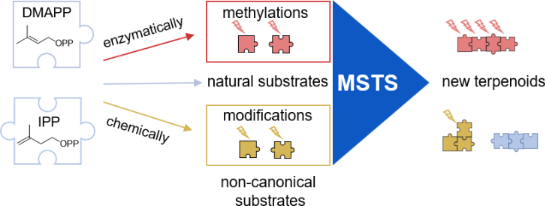
- analogues 80 and 81 with shifted double bonds were synthesized to study the stereochemistry and cyclization mechanism of casbene synthase (CS) from the castor bean (Ricinus communis), which indicated a stereochemical course in accordance with the reported absolute configuration of casbene [41] (Figure 6b
- ). The same GGPP isomers (80, 81) were employed to generate novel diterpene derivatives and revealed the cyclization mechanisms of 12 di-TSs [48]. Similarly, dihydro-GGPP (82) and dihydro-GFPP (83) have been synthesized for biotransformation using several di- and sester-TSs. The conversion of analogues






Three-component N-alkenylation of azoles with alkynes and iodine(III) electrophile: synthesis of multisubstituted N-vinylazoles
Beilstein J. Org. Chem. 2024, 20, 891–897, doi:10.3762/bjoc.20.79
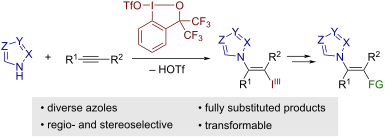
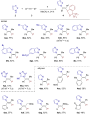
- yield in a ratio of 7:3. Indazole and its 4-bromo and 6-methoxycarbonyl analogues afforded the expected N1-alkenylated products 4ea–4ga in 43–68% yields. 1,2,3-Triazole and benzotriazole both smoothly participated in the reaction to give their respective products 4ha and 4ia in 60% and 81% yields



(Bio)isosteres of ortho- and meta-substituted benzenes
Beilstein J. Org. Chem. 2024, 20, 859–890, doi:10.3762/bjoc.20.78
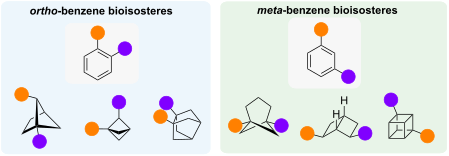
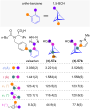
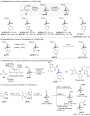
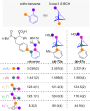
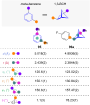
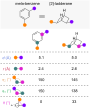
- angle θ of 3-oxa-1,5-BCHs of roughly 80° is even larger than in 1,5-BCHs and is a significant deviation from ortho-benzenes. Like their hydrocarbon 1,5-BCH analogues, 3-oxa-1,5-BCHs (±)-74 can be accessed via an intramolecular [2 + 2] cycloaddition, and saponified to acids (±)-72 (Scheme 6A) [45














Discovery and biosynthesis of bacterial drimane-type sesquiterpenoids from Streptomyces clavuligerus
Beilstein J. Org. Chem. 2024, 20, 815–822, doi:10.3762/bjoc.20.73
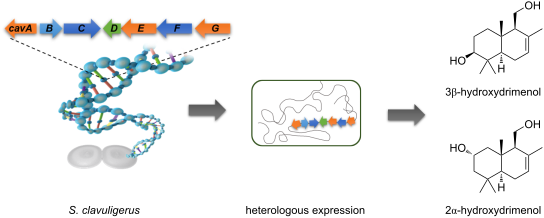
- findings from both the heterologous expression and substrate spectrum analysis indicate the particular affinity of CavA for the C-3 position, which might be used for chemoenzymatic synthesis of C-3 hydroxylated drimanyl meroterpenoids using drimenol and its analogues as substrates. However, it is important


Production of non-natural 5-methylorsellinate-derived meroterpenoids in Aspergillus oryzae
Beilstein J. Org. Chem. 2024, 20, 638–644, doi:10.3762/bjoc.20.56
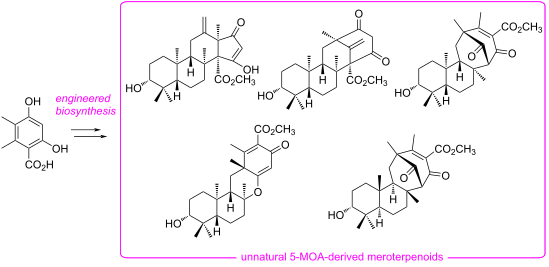
- , demonstrating the effectiveness of our approach in the generation of structural analogues of meroterpenoids. Keywords: biosynthesis; meroterpenoids; natural products; pathway engineering; terpene cyclases; Introduction Meroterpenoids are a class of natural products partially biosynthesized from a terpenoid
- a general understanding of their biosynthesis [7][8]. Polyketide–terpenoid hybrids are among the largest families of meroterpenoids. Orsellinic acid, an aromatic polyketide, and its analogues have been commonly identified as polyketide components in fungal meroterpenoids. Notably, 3,5
- into distinct cyclized products (Figure 1C) [17][18][19]. In addition, a recent study has demonstrated that some of these transmembrane terpene cyclases can accept synthetic substrate analogues to yield several unnatural meroterpenoid molecules [20]. By mimicking nature’s strategy to synthesize diverse



Synthesis and biological profile of 2,3-dihydro[1,3]thiazolo[4,5-b]pyridines, a novel class of acyl-ACP thioesterase inhibitors
Beilstein J. Org. Chem. 2024, 20, 540–551, doi:10.3762/bjoc.20.46
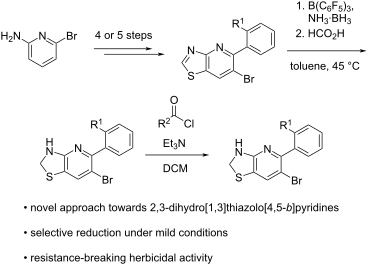
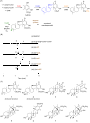
- -crystal structure [12]. Additionally, greenhouse trials have shown that thiazolopyridine 5 and a large number of closely related analogues display excellent control of grass weed species in preemergence applications [13][14]. Independently, researchers at Syngenta have shown that the pyridine unit in the
- 2,3-dihydro[1,3]thiazolo[4,5-b]pyridines, i.e., 13a–c, and 7a–c, the acylated analogues 14a–c and 16a–f, as well as selected aminoboranes 17d and 17e, were tested for target affinity in dedicated in vitro tests, as well as for herbicidal effects in vivo upon preemergence application to plants. Based
- complete control of all tested weeds at an application rate of 320 g/ha, the corresponding 6-bromo analogues 13a–c showed higher sensitivity towards changes in the phenyl moiety. 6-Bromo-5-phenyl-2,3-dihydrothiazolo[4,5-b]pyridine (13a) showed only partial control of ALOMY and LOLRI, combined with moderate


Pseudallenes A and B, new sulfur-containing ovalicin sesquiterpenoid derivatives with antimicrobial activity from the deep-sea cold seep sediment-derived fungus Pseudallescheria boydii CS-793
Beilstein J. Org. Chem. 2024, 20, 470–478, doi:10.3762/bjoc.20.42
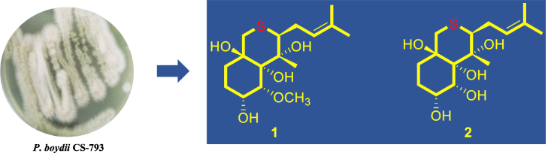
- sulfur-containing ovalicin derivatives, along with three known analogues 3–5, were isolated and identified from the culture extract of Pseudallescheria boydii CS-793, a fungus obtained from the deep-sea cold seep sediments. Their structures were established by detailed interpretation of NMR spectroscopic
- . proliferatum with MIC values of 2, 4, and 4 μg/mL, respectively. Conclusion In conclusion, two new ovalicin sesquiterpenoid derivatives with a thioether bond, namely, pseudallenes A (1) and B (2), together with three known analogues 3–5, were isolated and identified from the cold seep-derived fungus P. boydii


Synthesis of π-conjugated polycyclic compounds by late-stage extrusion of chalcogen fragments
Beilstein J. Org. Chem. 2024, 20, 287–305, doi:10.3762/bjoc.20.30
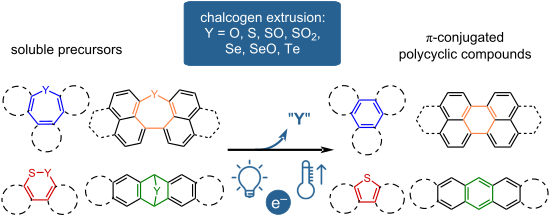
- triggered by thermal activation, photoirradiation and electron exchange as a powerful synthetic strategy to prepare a variety of π-CPCs. Review Contraction of 7-membered rings: chalcogen extrusion from heteropines The family of chalcogen heteropines, i.e., cycloheptatriene analogues incorporating one group
- -16 atom, have attracted attention from the chemists’ community since the 1950s, when the first syntheses of oxepine [37] and thiepine [38] were reported (Scheme 2). Analogues containing heavier atoms such as Se [39] and Te [40] appeared later in the literature. In relationship with its structure
- sulfur extrusion [44]. It appeared that thiepines carrying sterically demanding substituents on the sulfur α-positions as well as annelated analogues show substantially increased lifetimes, owing to steric and electronic effects [45]. With these criteria in mind, a variety of thermally-stable annelated




Catalytic multi-step domino and one-pot reactions
Beilstein J. Org. Chem. 2024, 20, 254–256, doi:10.3762/bjoc.20.25
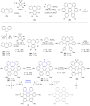
- -aminopyrazoles with azlactones under solvent-free conditions, through subsequent elimination of a benzamide molecule in a superbasic medium, is described by the Fisyuk group [13]. A further facile one-pot process toward a new series of copper(II) benzo[f]chromeno[2,3-h]quinoxalinoporphyrin analogues is described

Optimizations of lipid II synthesis: an essential glycolipid precursor in bacterial cell wall synthesis and a validated antibiotic target
Beilstein J. Org. Chem. 2024, 20, 220–227, doi:10.3762/bjoc.20.22
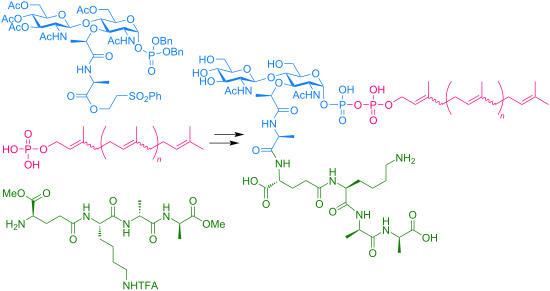
- bacteria. Accessing this valuable cell wall precursor is important both for studying cell wall synthesis and for studying/identifying novel antimicrobial compounds. Herein, we describe optimizations to the modular chemical synthesis of lipid II and unnatural analogues. In particular, the glycosylation step
- analogues through the incorporation of alternative building blocks at different stages of synthesis. Keywords: chemical glycosylation; lipid II; peptidoglycan; polyprenyls; total synthesis; Introduction Lipid II (Figure 1) is an essential bacterial glycolipid involved in peptidoglycan biosynthesis [1]. It
- ramoplanin [2]. It is also the target for a host of other antimicrobials (mostly non-ribosomal peptides), including the tridecaptins [3], nisin [4], teixobactin [5], clovibactin [6], malacidin [7], and cilagicin [8]. Despite significant progress in the chemical synthesis of lipid II and its analogues, the


Tandem Hock and Friedel–Crafts reactions allowing an expedient synthesis of a cyclolignan-type scaffold
Beilstein J. Org. Chem. 2024, 20, 162–169, doi:10.3762/bjoc.20.15
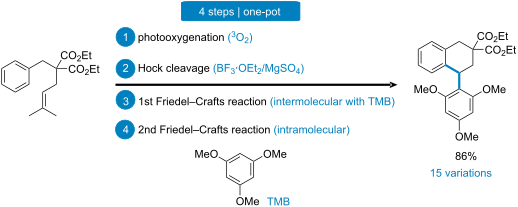
- reaction is possible upon elimination of the resulting benzylic alcohol on D, allowing another arylation forming E [18]. This complex sequence of transformations is herein applied to the synthesis of 1-aryltetralines, analogues of cyclolignan natural products having important medicinal applications [19][20




Biphenylene-containing polycyclic conjugated compounds
Beilstein J. Org. Chem. 2023, 19, 1895–1911, doi:10.3762/bjoc.19.141
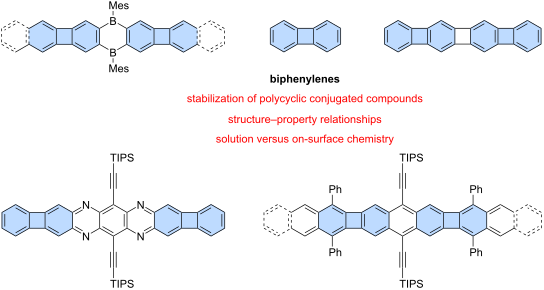
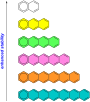
- linear azaacene structures but also non-linear structures as shown in Scheme 13. This versatility allowed for a broader range of conjugated molecules to be successfully prepared. The target azaacene analogues 62–64, featuring 2,6-(CH3)2C6H3 groups were obtained in yields ranging from 50 to 85% through a
- ]naphthylenes. Sequential Pd-catalyzed annulation reactions. Synthesis of biphenylene-containing unsymmetrical azaacenes 54a–c. Synthesis of biphenylene containing symmetrical azaacenes 58a,b. Synthesis of azaacene analogues 62–64. Synthesis of POA-type structure 69. Synthesis of boron-doped POA 73. Synthesis



Synthetic approach to 2-alkyl-4-quinolones and 2-alkyl-4-quinolone-3-carboxamides based on common β-keto amide precursors
Beilstein J. Org. Chem. 2023, 19, 1804–1810, doi:10.3762/bjoc.19.132
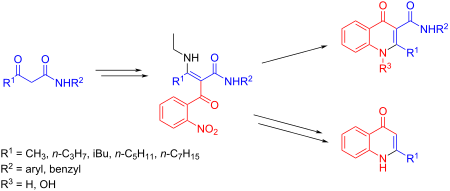
- -3 substitution in analogues of microbial behavioral modulators [54][56], prompted us to investigate a new synthetic approach that could provide a straightforward access to both 2-alkyl-4-quinolones and 2-alkyl-4-quinolone-3-carboxamides. Our approach falls within the broader methodological group of


Trifluoromethylated hydrazones and acylhydrazones as potent nitrogen-containing fluorinated building blocks
Beilstein J. Org. Chem. 2023, 19, 1741–1754, doi:10.3762/bjoc.19.127
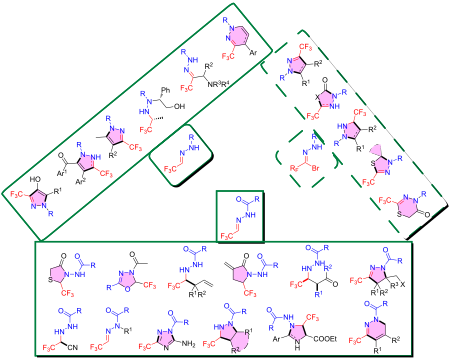
- more in-depth applications of fluoromethylated hydrazones and acylhydrazones to synthesize natural product analogues and fluorinated drugs is highly desirable. These methods should encourage the introduction of these difluoromethylated nitrogen-containing building blocks in future bioactives discovery


Benzoimidazolium-derived dimeric and hydride n-dopants for organic electron-transport materials: impact of substitution on structures, electrochemistry, and reactivity
Beilstein J. Org. Chem. 2023, 19, 1651–1663, doi:10.3762/bjoc.19.121
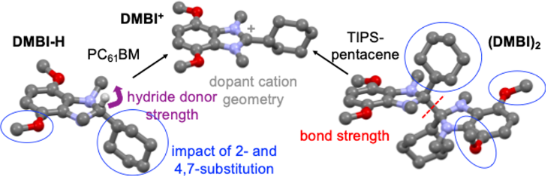
- . Their electrochemistry and reactivity were compared to those derived from 2-(4-(dimethylamino)phenyl)- (1b+) and 2-cyclohexylbenzo[d]imidazolium (1e+) salts. E(1+/1•) values for 2-aryl species are less reducing than for 2-alkyl analogues, i.e., the radicals are stabilized more by aryl groups than the
- , resulting in 1g• and 1h• being more reducing monomers than their non-methoxylated analogues 1b• and 1e•, respectively. Cyclic voltammograms of both 1H and 12 both reveal irreversible oxidations (with the corresponding 1+ reductions seen in subsequent reductive cycles, see Figure 6 for examples). These 1H
- example subsequent to processing. Conclusion In conclusion we have reported a number of new DMBI-H and (DMBI)2 reductants and compared their structures, electrochemistry, and reactivity with those of previously reported analogues. The structures show similar features to other related compounds, notably


C–H bond functionalization: recent discoveries and future directions
Beilstein J. Org. Chem. 2023, 19, 1568–1569, doi:10.3762/bjoc.19.114
- feedstocks, the introduction of functionality at specific positions of molecules without requiring any prefunctionalized precursors, and the conversion of light alkanes to higher-value analogues [1][2]. The nonnecessity of prefunctionalization provides a step-economic alternative to classical reactions as
α-(Aminomethyl)acrylates as acceptors in radical–polar crossover 1,4-additions of dialkylzincs: insights into enolate formation and trapping
Beilstein J. Org. Chem. 2023, 19, 1443–1451, doi:10.3762/bjoc.19.103
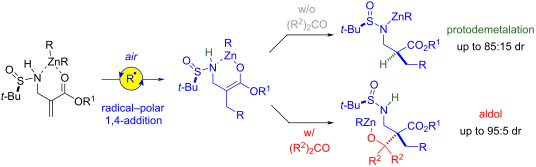
- ZnMe2 (entries 9 and 10). This difference can be ascribed to a less favorable homolytic substitution reaction of ZnMe2 in relation to its higher analogues and is in line with previous literature observations [11]. The configuration of the major diastereomer was determined by chemical correlation (Scheme






Application of N-heterocyclic carbene–Cu(I) complexes as catalysts in organic synthesis: a review
Beilstein J. Org. Chem. 2023, 19, 1408–1442, doi:10.3762/bjoc.19.102
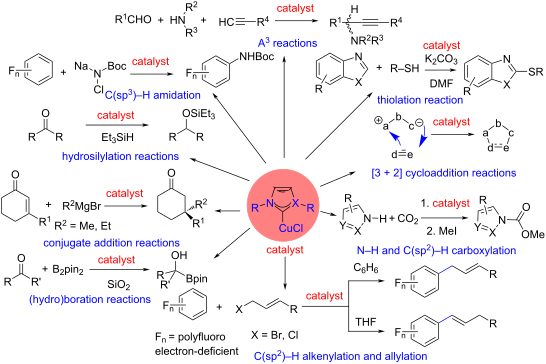
- explored as catalysts for the hydrosilylation of ketones. Besides the type of the ligand in the NHC–Cu(I) complex, the counter anions (BF4 and PF6) also influenced the catalytic activity. Furthermore, the cationic complexes were found to be more efficient than the neutral analogues under similar conditions
- -naphthol moiety 193 afforded the highest yield and enantioselectivity. On protecting the hydroxy group in the ligand as methyl ether, the reaction efficiency decreased remarkably. However, on using NHC ligands without oxygen atom, such as analogues of 193, IMes, and SIMes, no conversion occurred. 2.8 C(sp2








Synthesis of ether lipids: natural compounds and analogues
Beilstein J. Org. Chem. 2023, 19, 1299–1369, doi:10.3762/bjoc.19.96
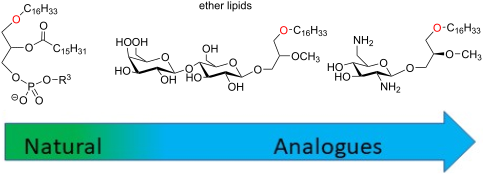
- ELs [37], their quantification [38], their biological functions and their role in physio-pathological situations [39][40] invited the researchers to propose new analogues of ether lipids and to study their effects on biological systems. Most of the time the synthetic analogues of ELs aimed to interact
- the scientific community for different reasons: 1) to have an overview on the methods already available, 2) to invite scientists that are working on synthesis methodology to apply their works to the design of ELs analogues, 3) the methods reported in this review can be useful tools for the scientific
- sections also include some examples of non-phosphorus glycosylated antitumor ether lipids (GAEL) but more details on the biology of these ether lipids can be found elsewhere [49][50][51]. The synthesis of analogues of archaeal ether lipids is not included herein but the reader can refer to other articles






Unravelling a trichloroacetic acid-catalyzed cascade access to benzo[f]chromeno[2,3-h]quinoxalinoporphyrins
Beilstein J. Org. Chem. 2023, 19, 1216–1224, doi:10.3762/bjoc.19.89
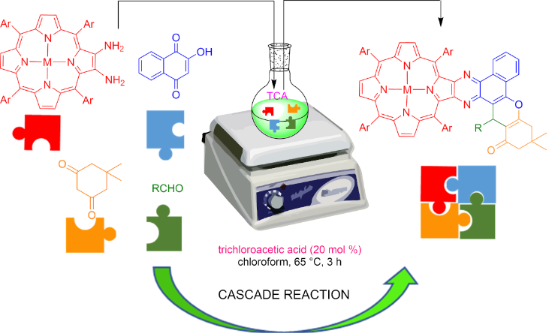
- paramagnetic nature of copper(II) ions [44]. Conclusion In summary, we have successfully synthesized a new series of copper(II) benzo[f]chromeno[2,3-h]quinoxalinoporphyrin analogues in good yields following the one-pot synthetic strategy applying the reaction of copper(II) 2,3-diamino-meso-tetraarylporphyrins





