Search results
Search for "building blocks" in Full Text gives 940 result(s) in Beilstein Journal of Organic Chemistry. Showing first 200.
2-Heteroarylethylamines in medicinal chemistry: a review of 2-phenethylamine satellite chemical space
Beilstein J. Org. Chem. 2024, 20, 1880–1893, doi:10.3762/bjoc.20.163
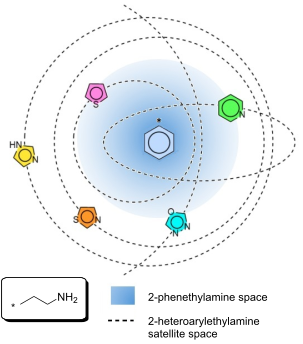
- importance in medicinal chemistry, as it can be employed as a rational to expand bioactive chemical space to tackle lead optimization issues like lack of potency, efficacy, and selectivity or pharmacokinetic/dynamic issues. One of the most important building blocks (in the sense of participating in a vast


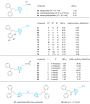


The Groebke–Blackburn–Bienaymé reaction in its maturity: innovation and improvements since its 21st birthday (2019–2023)
Beilstein J. Org. Chem. 2024, 20, 1839–1879, doi:10.3762/bjoc.20.162
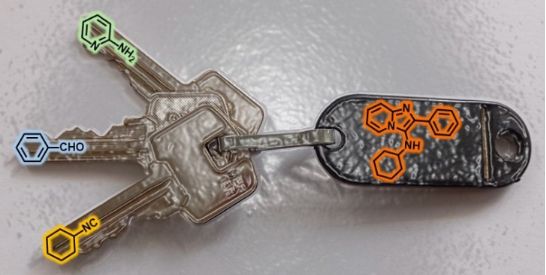
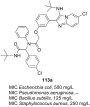
- achieved during the last five years, and classifies them into five categories: synthetic methods, building blocks, scaffolds, biological activities and physical properties. Keywords: Groebke–Blackburn–Bienaymé reaction; multicomponent reactions; heterocycles; imidazo[1,2-a]pyridines; isocyanides
- allow the reaction to take place under the mildest possible conditions. This search goes in parallel with the urge to use increasingly diverse and complex building blocks, up to and including DNA conjugates, which would be degraded under the classical conditions developed by Groebke, Blackburn and
- synthesis (DOS) where a single methodology should generate diverse scaffolds. This comprehensive review focuses on all these aspects, and has been divided into five chapters, describing, respectively: a) efforts to develop new and milder reaction conditions; b) the use of new building blocks; c) the






Hetero-polycyclic aromatic systems: A data-driven investigation of structure–property relationships
Beilstein J. Org. Chem. 2024, 20, 1817–1830, doi:10.3762/bjoc.20.160
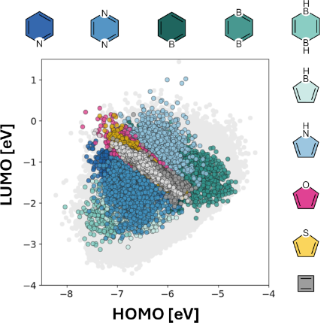
- nature on the molecular properties of PASs. Our goal is to delineate specific structure–property relationships that may shed light on these prevalent, yet still mysterious, compounds and serve as design principles for future PASs. Data The molecules in COMPAS-2 contain 11 cyclic building blocks varying
- in size, composition, and aromatic character: benzene, pyridine, pyrazine, borinine, 1,4-diborinine, 1,4-dihydro-1,4-diborinine, borole, pyrrole, furan, thiophene, and cyclobutadiene (Figure 1A). These building blocks encompass 6-, 5-, and 4-membered rings with aromatic and antiaromatic character
- , and contain nitrogen, boron, oxygen, and sulfur atoms. Using these building blocks, we generated a chemical library of cata-condensed hetero-PASs (cc-hPASs) ranging in size from 3- to 10-ring systems, by combining the rings according to the annulation types shown in Figure 1B. The number, type, and


Chiral bifunctional sulfide-catalyzed enantioselective bromolactonizations of α- and β-substituted 5-hexenoic acids
Beilstein J. Org. Chem. 2024, 20, 1794–1799, doi:10.3762/bjoc.20.158
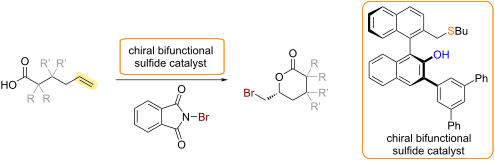
- -substituted 4-pentenoic acids without additional substituents on the carbon–carbon double bond (Scheme 1c) [26][27]. Chiral α-substituted γ-butyrolactone products as important building blocks for pharmaceutical development were obtained in a highly enantioselective manner in our catalytic system using


Ugi bisamides based on pyrrolyl-β-chlorovinylaldehyde and their unusual transformations
Beilstein J. Org. Chem. 2024, 20, 1773–1784, doi:10.3762/bjoc.20.156
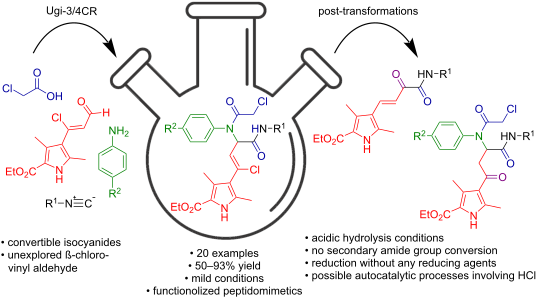
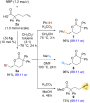
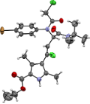
- 1, which contains a chlorine atom in the β-position, with convertible isocyanides 4a–d, para-substituted anilines 2a–e and monochloroacetic acid (3) as the smallest building blocks in a four-component reaction leads to the formation of the Ugi bisamides 5–8 (Table 1). Their structures offer several




Synthesis and characterization of 1,2,3,4-naphthalene and anthracene diimides
Beilstein J. Org. Chem. 2024, 20, 1767–1772, doi:10.3762/bjoc.20.155
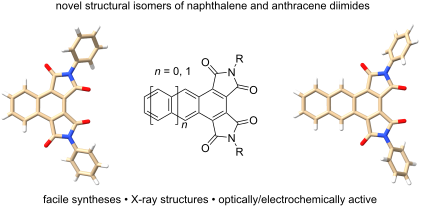
- 1,2,3,4-naphthalene and -anthracene diimide motifs as productive building blocks in imide-based organic materials. a) Structures of previously reported naphthalene and anthracene diimide isomers. b) The novel 1,2,3,4-naphthalene and -anthracene diimides reported here. Superstructures for a) 7-Ph and b) 8


Syntheses and medicinal chemistry of spiro heterocyclic steroids
Beilstein J. Org. Chem. 2024, 20, 1713–1745, doi:10.3762/bjoc.20.152
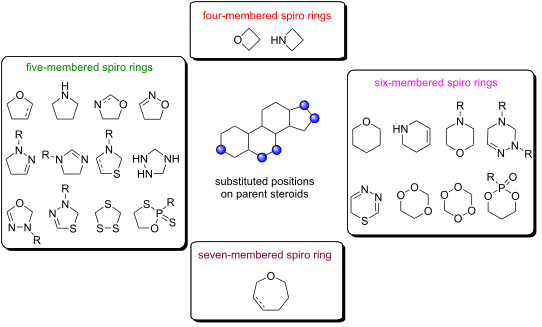
- , albeit less potent than the reference drug. However, many oxazolines showed improved selectivity, with greater separation of antiprogestational and antiglucocorticoid activity (Scheme 19) [38]. 1,2-Aminoalcohols have been extensively utilized as building blocks for synthesizing spiro-1,3-oxazolidin-2


Oxidation of benzylic alcohols to carbonyls using N-heterocyclic stabilized λ3-iodanes
Beilstein J. Org. Chem. 2024, 20, 1677–1683, doi:10.3762/bjoc.20.149
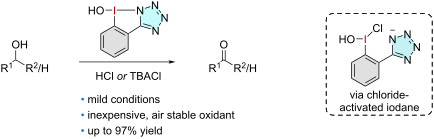
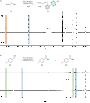
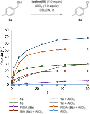
- them group transfer reactions [21] and as building blocks [22][23][24]. The synthetic potential of NHIs has been previously studied in model transformations such as thioanisole oxygenation, oxidative lactonization, or diacetoxylation of alkenes [25][26][27][28]. In this work, we want to apply NHIs in a




Ring opening of photogenerated azetidinols as a strategy for the synthesis of aminodioxolanes
Beilstein J. Org. Chem. 2024, 20, 1671–1676, doi:10.3762/bjoc.20.148
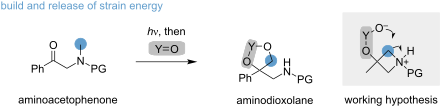
- Henning Maag Daniel J. Lemcke Johannes M. Wahl Department Chemie, Johannes Gutenberg-Universität, Duesbergweg 10–14, 55128 Mainz, Germany 10.3762/bjoc.20.148 Abstract α-Aminoacetophenones are identified as promising building blocks for the synthesis of highly substituted dioxolanes. The presented


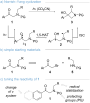

Methyltransferases from RiPP pathways: shaping the landscape of natural product chemistry
Beilstein J. Org. Chem. 2024, 20, 1652–1670, doi:10.3762/bjoc.20.147
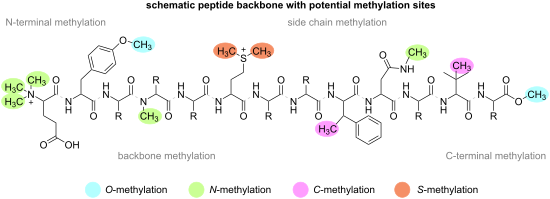
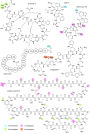
- contrast to ribosomal peptide biosynthesis, many non-proteinogenic amino acids can be incorporated as building blocks. However, RiPP pathways are more flexible and they represent interesting biotechnological production routes. In this review, we will focus on post-translational methylation reactions. A




Polymer degrading marine Microbulbifer bacteria: an un(der)utilized source of chemical and biocatalytic novelty
Beilstein J. Org. Chem. 2024, 20, 1635–1651, doi:10.3762/bjoc.20.146
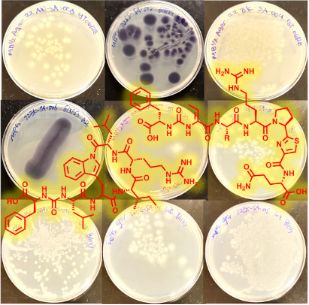
- the characterization of a purified agarase belonging to the family GH-86 from Microbulbifer bacteria. Alginate lyases The polysaccharide alginate is produced by various seaweeds and bacteria [44]. Two building blocks, β-ᴅ-mannuronic acid (M) and α-ʟ-guluronic acid (G), are used to assemble alginate in




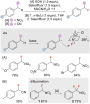
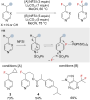
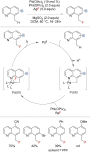
Benzylic C(sp3)–H fluorination
Beilstein J. Org. Chem. 2024, 20, 1527–1547, doi:10.3762/bjoc.20.137

- to overcome this [17]. For this reason, the fluorination of benzylic C(sp3)–H bonds has become particularly important in biologically relevant situations. Benzylic C(sp3)–H bonds are also present in a large portion of commercially available building blocks, highlighting the appeal for benzylic C(sp3








Bioinformatic prediction of the stereoselectivity of modular polyketide synthase: an update of the sequence motifs in ketoreductase domain
Beilstein J. Org. Chem. 2024, 20, 1476–1485, doi:10.3762/bjoc.20.131
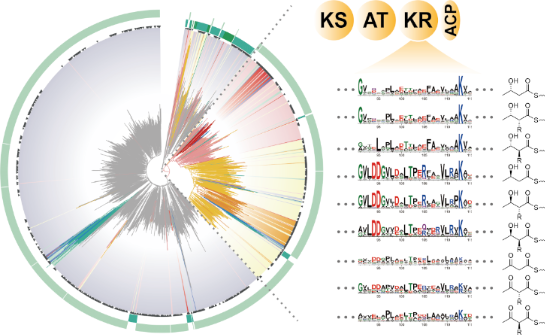
- ) [3][4]. The building blocks for PKS biosynthesis often include malonyl-CoA or methylmalonyl-CoA, which are loaded onto the ACP by the AT domain. Subsequently, the KS domain catalyzes the decarboxylative Claisen condensation between the ACP-tethered extender unit and the KS-tethered growing chain. The


Synthesis of 2-benzyl N-substituted anilines via imine condensation–isoaromatization of (E)-2-arylidene-3-cyclohexenones and primary amines
Beilstein J. Org. Chem. 2024, 20, 1468–1475, doi:10.3762/bjoc.20.130
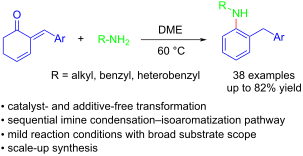
- additives in the petrochemical industry [3]. Besides, 2-benzylanilines also serve as valuable building blocks in synthetic chemistry [4]. The classical route to this kind of aniline derivatives usually starts from parent anilines, which undergo Friedel–Crafts reaction with acyl halides followed by carbonyl


Selectfluor and alcohol-mediated synthesis of bicyclic oxyfluorination compounds by Wagner–Meerwein rearrangement
Beilstein J. Org. Chem. 2024, 20, 1462–1467, doi:10.3762/bjoc.20.129
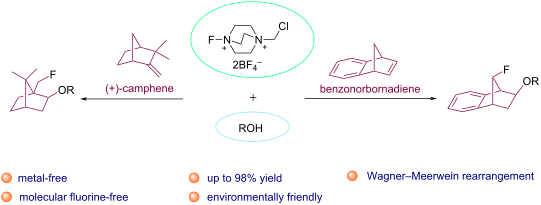
- ] and many more (Figure 1). On the other hand, with unusual geometry and high reactivity norbornadiene and benzonorbornadiene derivative bicyclic compounds attract great attention by researchers with their use as building blocks in different application areas such as polymers, solar energy storage


Rapid construction of tricyclic tetrahydrocyclopenta[4,5]pyrrolo[2,3-b]pyridine via isocyanide-based multicomponent reaction
Beilstein J. Org. Chem. 2024, 20, 1436–1443, doi:10.3762/bjoc.20.126
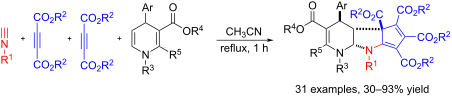
- been known as indispensable building blocks in modern organic chemistry. Many isocyanide-based carbon–carbon and carbon–heteroatom bond forming reactions have been developed in fascinating ways over the past decades [4][5][6]. The famous multicomponent reactions such as Passerini reaction, Ugi reaction


Challenge N- versus O-six-membered annulation: FeCl3-catalyzed synthesis of heterocyclic N,O-aminals
Beilstein J. Org. Chem. 2024, 20, 1412–1420, doi:10.3762/bjoc.20.123
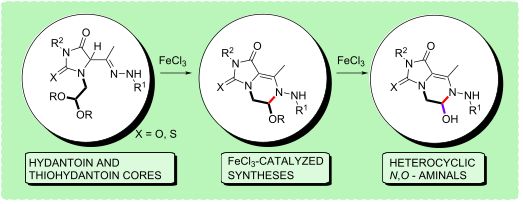
- preparation by using small building blocks and that lead, through appropriate transformations, to a product that becomes a substrate for another complexity-generating reaction, merit investigation [13][14][15]. Herein, we report a 3-CR-based synthesis of new properly decorated (thio)hydantoin framework able
- of diversity-oriented synthesis of N-heterocycles via sequential multicomponent approaches, we envisioned that α-aminoacetals could act as bifunctional building blocks along with 1,2-diaza-1,3-diene (DD) coupling partners [22][23], in obtaining functionalized N-aminohydrazones as key intermediates




Synthesis of substituted triazole–pyrazole hybrids using triazenylpyrazole precursors
Beilstein J. Org. Chem. 2024, 20, 1396–1404, doi:10.3762/bjoc.20.121
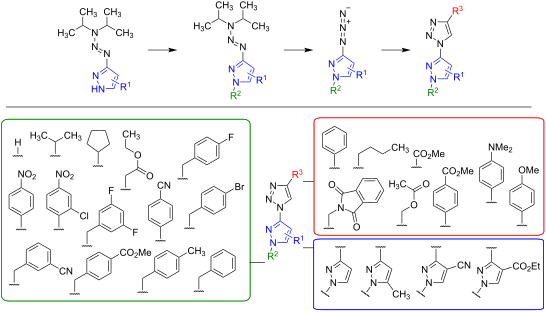
- sources and thus as building blocks for synthesizing pyrazolyltriazoles by CuAAC reactions. To find a feasible approach to pyrazolyltriazoles of type 1 with a highly substituted scaffold, we decided to explore the benefits of a modification of the triazene-protected pyrazole core. In the next step, a
- immobilized building blocks. Biologically active pyrazole–triazole hybrids 1–4: inhibitory effect on cholera bacteria [13], antimicrobial properties [14], P2X7 antagonists (depression) [15] and ERK3 inhibition [12]. Synthesized triazole–pyrazole hybrids 21aa–vg. Literature-reported synthetic routes to


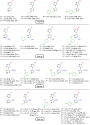


Synthetic applications of the Cannizzaro reaction
Beilstein J. Org. Chem. 2024, 20, 1376–1395, doi:10.3762/bjoc.20.120
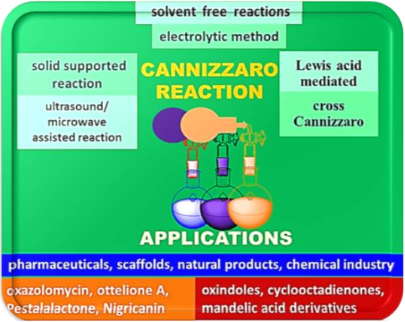
- methodologies, such as Lewis acid catalysis, desymmetrization of symmetrical dialdehydes, synthesis of natural products, and building blocks. These modifications constitute the main highlight of this review. The use of modern technology and newer strategies aiming towards industrial benefit is the goal for the
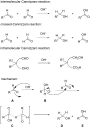
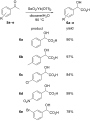
- future [71][72]. Herein, we discuss recent advances in the Cannizzaro reaction, focusing on the synthetic developments of natural products and important building blocks in the last two decades. Applications of the Cannizzaro reaction in organic synthesis The Cannizzaro reaction has been significantly




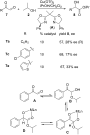
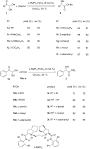


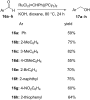


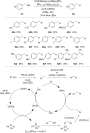
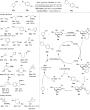
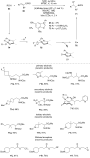
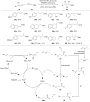
Generation of alkyl and acyl radicals by visible-light photoredox catalysis: direct activation of C–O bonds in organic transformations
Beilstein J. Org. Chem. 2024, 20, 1348–1375, doi:10.3762/bjoc.20.119
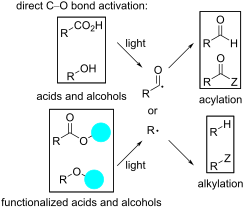
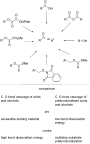
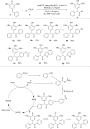
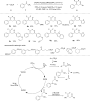
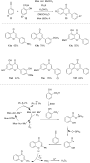
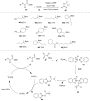
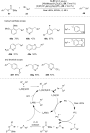
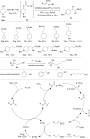
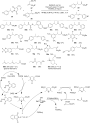
- optimized or slightly modified conditions, cyclic secondary, and tertiary alkyl carboxylic acids were smoothly coupled with 1,1-diphenylethylene to give 3i–m. α,α′-Diarylated ketones serve as crucial building blocks in the construction of both natural and synthetic compounds with significant biological








Transition-metal-catalyst-free electroreductive alkene hydroarylation with aryl halides under visible-light irradiation
Beilstein J. Org. Chem. 2024, 20, 1327–1333, doi:10.3762/bjoc.20.116
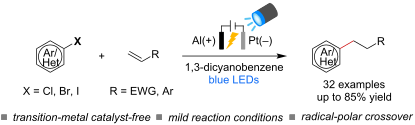
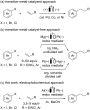
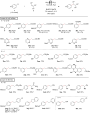
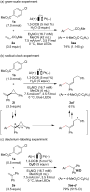
- versatile building blocks in organic syntheses. To achieve this transformation with high efficiency and predictable regioselectivity, numerous efforts have been made to develop transition-metal-catalyzed reactions based on a C–H activation strategy [1][2][3][4] or the reductive coupling of aryl halides with


Oxidative hydrolysis of aliphatic bromoalkenes: scope study and reactivity insights
Beilstein J. Org. Chem. 2024, 20, 1286–1291, doi:10.3762/bjoc.20.111
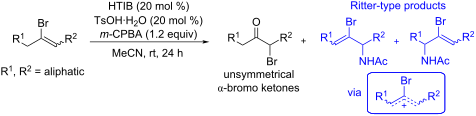
- substituted substrate which resulted in a low yield of the desired product. Also, this method involved using a stoichiometric amount of HTIB for the transformation. α-Haloketones are 1,2-difunctionalized synthons which are very versatile and essential building blocks for their role in the synthesis of
- future for the α-acetamidation of dialkyl bromoalkenes. The present work provides an operationally simple catalytic method to access a diverse range of α-bromoketones, which are versatile building blocks for synthesizing various important hetero aromatics. (a) Oxidative hydrolysis of styrene or stilbene


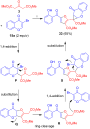
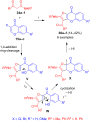
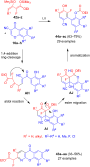
Domino reactions of chromones with activated carbonyl compounds
Beilstein J. Org. Chem. 2024, 20, 1256–1269, doi:10.3762/bjoc.20.108
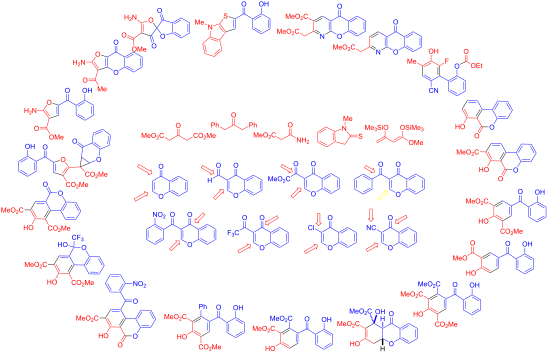
- ) allow for the synthesis of complex products with formation of several bonds in only one step [1][2][3][4][5]. In contrast to non-activated acetone (1a), methylene-active compounds, such as 1,3-dicarbonyl compounds, are of considerable relevance as building blocks in domino reactions (Scheme 1). For
- phosphoranes were less studied in my group. Chromones are oxygen heterocycles which are of pharmacological interest and represent versatile synthetic building blocks which can undergo various types of domino reactions [24][25][26][27][28]. In 2001, Nehad N. R. Saleh in my group developed a new synthesis of
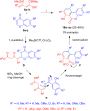
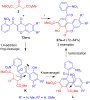
- building blocks is their dense functionalization in combination with their (commercial) availability. On the other hand, highly substituted or functionalized chromones have to be prepared in multi-step syntheses. In general, the substitution pattern of the chromone does not seem to have a great influence









Light on the sustainable preparation of aryl-cored dibromides
Beilstein J. Org. Chem. 2024, 20, 1076–1087, doi:10.3762/bjoc.20.95
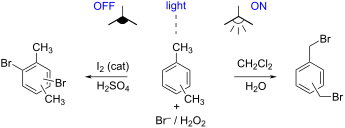
- significant importance as reactive building blocks in polymer and materials chemistry. Their preparation primarily relies on established synthetic methods using molecular bromine or N-bromosuccinimide, known for their reliability and effectiveness. However, from a sustainability perspective, these methods
- ][51]. Based on a SciFinder® survey, we came to realise that a small number of aryl-cored dibromides, which can be derived from xylenes (1, 2, 3) or mesitylene (4, Figure 3), play a predominant role as building blocks for the construction of functional materials and/or polymeric architectures. Some
- building blocks for polymer and materials chemists, offering improved sustainability compared to standard methodologies. Experimental General Solvents and reagents were commercial grade and used as received. 1H NMR spectra were acquired with a Bruker Avance 400 spectrometer (Billerica, MA, USA). The


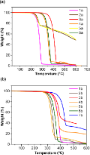
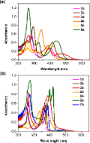
Structure–property relationships in dicyanopyrazinoquinoxalines and their hydrogen-bonding-capable dihydropyrazinoquinoxalinedione derivatives
Beilstein J. Org. Chem. 2024, 20, 1037–1052, doi:10.3762/bjoc.20.92
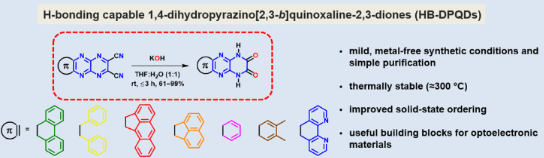
- electronic structures of both families which is related to the optical properties studied in solution. Results and Discussion Synthesis of DCPQs and DPQDs Compounds 12 and 13 are two major building blocks to obtain dicyanopyrazinoquinoxalines (DCPQs) 1a–7a. The synthesis proceeded through highly scalable
- building blocks 1,2-aceanthrylenedione and 12, as detailed in Table S1 (Supporting Information File 1). However, an inseparable unknown impurity was observed along with the desired product 3a in all cases when analyzed by 1H NMR. Under strict temperature and time control (80 °C for 72 hours) using 2.5