Search results
Search for "carbamate" in Full Text gives 206 result(s) in Beilstein Journal of Organic Chemistry. Showing first 200.
Transition-metal-catalyzed synthesis of phenols and aryl thiols
Beilstein J. Org. Chem. 2017, 13, 589–611, doi:10.3762/bjoc.13.58

- directing groups including azo, amide, anilide, carbamate and unsymmetrical urea, could also promote the ortho-hydroxylation of arenes. Remarkably, 1,4-dioxane not only served as the solvent, but also played an indispensable role in the oxidation of the palladium complex by generating hydroxyl radicals
- Ackermann group used another ruthenium catalyst, [RuCl2(p-cymene)]2 and developed a hydroxylation protocol for carbamates [77]. The hydroxylation occurred in DCE in the presence of PhI(OTFA)2 (Scheme 47). In intermolecular competition experiments, among amide, carbamate and ester, amide showed the highest


Solid-phase enrichment and analysis of electrophilic natural products
Beilstein J. Org. Chem. 2017, 13, 405–409, doi:10.3762/bjoc.13.43
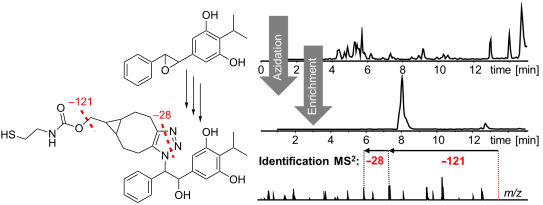
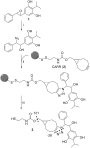
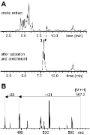
- after azidation and azide enrichment. The tR of 1 is indicated in the crude extract. After enrichment, one distinct peak at 8.1 min corresponding to 3 is visible. (B) The characteristic MS2 fragmentation pattern of the derivatized azide 3 is shown highlighting the neutral loss of carbamate (−121) and


Continuous N-alkylation reactions of amino alcohols using γ-Al2O3 and supercritical CO2: unexpected formation of cyclic ureas and urethanes by reaction with CO2
Beilstein J. Org. Chem. 2017, 13, 329–337, doi:10.3762/bjoc.13.36
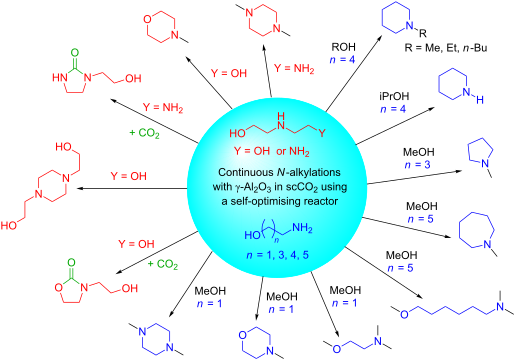
- of CO2 into the product. In this case, incorporation presumably occurs via the formation of a carbamate intermediate. This surprising formation of 13 suggests the incorporation of CO2 into 12 with the dimer formation as a competing reaction. In fact, when further conditions were studied, it became
- CO2 (entries 4–6).a Cyclisation and N-alkylation of 1 with different alcohols.a Reactions of ethanolamine.a Showing the effect of conditions on the reaction of diethanolamine 12 to form carbamate 13 and piperazine 14.a Supporting Information Supporting Information File 62: Experimental data


A new class of organogelators based on triphenylmethyl derivatives of primary alcohols: hydrophobic interactions alone can mediate gelation
Beilstein J. Org. Chem. 2017, 13, 138–149, doi:10.3762/bjoc.13.17
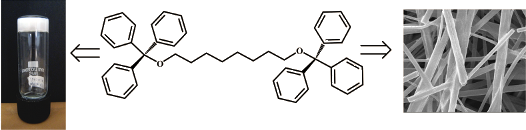
- coordination, ionic, hydrophobic forces, etc.) into the gelator molecular structure and studying their gelation behaviour. H-bonding interaction (present in amide, urea, carbamate linkages, etc) alone or in combination with other interactions is the most extensively used strategy in the design of gelators [23





Solution-phase automated synthesis of an α-amino aldehyde as a versatile intermediate
Beilstein J. Org. Chem. 2017, 13, 106–110, doi:10.3762/bjoc.13.13
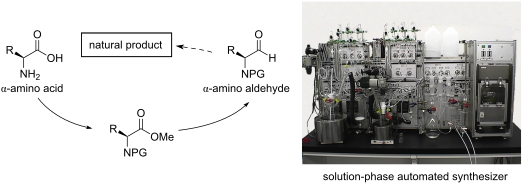
- manually concentrated in vacuo. The obtained residue was purified manually using silica gel column chromatography. Carbamate 2a was obtained in 82% yield. Acetal formation was also demonstrated using ChemKonzert. A solution of substrate 2a in dichloromethane was stirred at 25 °C in the reaction vessel (RF1


Robust C–C bonded porous networks with chemically designed functionalities for improved CO2 capture from flue gas
Beilstein J. Org. Chem. 2016, 12, 2274–2279, doi:10.3762/bjoc.12.220
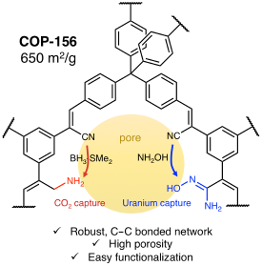
- high regeneration energy and raises the overall cost of the carbon capture operations [12][25]. Dry CO2 uptake is not always meaningful, especially with amine functionalities, as flue gas from power plants contains moisture [26]. When binding to CO2, amines go through either carbamate or carbamic acid


p-Nitrophenyl carbonate promoted ring-opening reactions of DBU and DBN affording lactam carbamates
Beilstein J. Org. Chem. 2016, 12, 2086–2092, doi:10.3762/bjoc.12.197
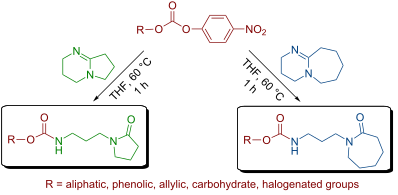
- are highly reactive compounds that are usually treated with alcohols or amines to give either a new carbonate or a carbamate-linked compound depending on the nucleophile. In one of our earlier reports, polycarbamate nucleic acids were synthesized from p-nitrophenyl carbonates with amines of nucleic
- ] and the synthesis of carbamate-linked compounds using p-nitrophenyl carbonates, we herein report our results from nucleophilic ring opening reactions of DBU and DBN using p-nitrophenyl carbonates. Results and Discussion In the course of this study, we observed that in the absence of a nucleophile the
- in the solvent, leading to the ring opening and formation of the corresponding caprolactam carbamates (Scheme 1). The structure of 1b was confirmed by 1H and 13C spectroscopy, which showed the characteristic carbamate NH triplet at 5.80 ppm in the 1H NMR spectrum and the expected peaks at 176.6 and


Stereodynamic tetrahydrobiisoindole “NU-BIPHEP(O)”s: functionalization, rotational barriers and non-covalent interactions
Beilstein J. Org. Chem. 2016, 12, 1453–1458, doi:10.3762/bjoc.12.141
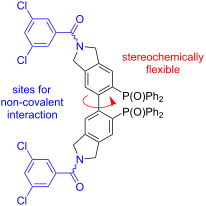
- crucial. In contrast to 1a and 1b, three coexisting isomeric species were observed with NMR spectroscopy in CDCl3 for tetrahydrobiisoindole “NU-BIPHEP(O)” 1c. This behaviour originates from an increased interconversion barrier between the E/Z isomers of the carbamate N–C(O) unit that is derived from a
- carbamate selector units that are soluble in organic solvents [27][28][29][30]. We prepared cellulose derivative 4 which bears 5-fluoro-2-methylphenylcarbamate binding sites [27] and investigated the formation of diastereomeric adducts with 1b and 3 by 31P{1H} NMR spectroscopy in anhydrous CDCl3


Multicomponent reactions: A simple and efficient route to heterocyclic phosphonates
Beilstein J. Org. Chem. 2016, 12, 1269–1301, doi:10.3762/bjoc.12.121
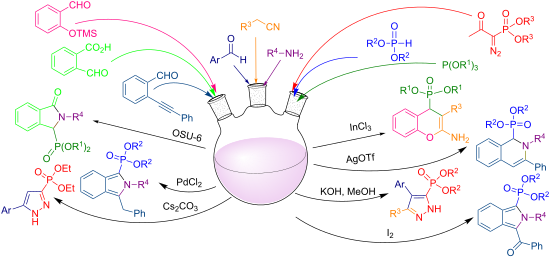
- , carbamate 138, hexahydrobenzothiophene 140 and benzothiophene 142 were converted to the corresponding bisphosphonates 139, 141 and 143, respectively (Scheme 30). The synthesized heterocyclic bisphosphonates showed anti-inflammatory properties. 3 Knoevenagel-induced domino reactions An efficient method into


NeoPHOX – a structurally tunable ligand system for asymmetric catalysis
Beilstein J. Org. Chem. 2016, 12, 1185–1195, doi:10.3762/bjoc.12.114
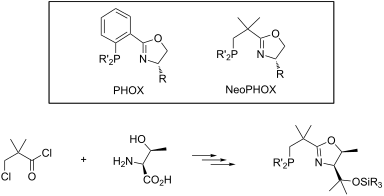
- prepared from 3-chloropivaloyl chloride (3) by amide formation and subsequent cyclization with the Burgess reagent (methyl N-(triethylammoniumsulfonyl)carbamate) using standard procedures (Scheme 2). Subsequent nucleophilic substitution with KPP2 in refluxing THF proved to be much faster than the analogous


Gold-catalyzed direct alkynylation of tryptophan in peptides using TIPS-EBX
Beilstein J. Org. Chem. 2016, 12, 745–749, doi:10.3762/bjoc.12.74
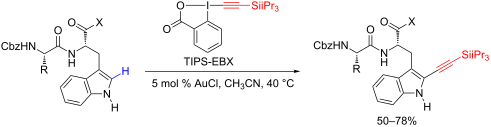
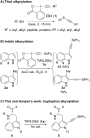
- , a carbamate and an amide protecting group. A promising result was obtained with 5 mol % gold chloride as catalyst at room temperature in acetonitrile (Table 1, entry 1). Although the reaction did not go to completion even after two days, the desired C2 alkynylation product 5a was obtained in 44



Antibiotics from predatory bacteria
Beilstein J. Org. Chem. 2016, 12, 594–607, doi:10.3762/bjoc.12.58
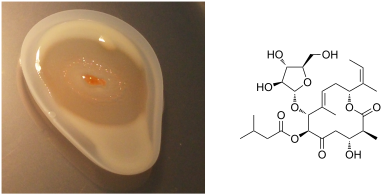
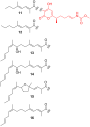
- manifests in the so-called western side chain, which ranges from 10 (myxopyronin A) up to 18 carbon atoms (corallopyronin B). In contrast, the eastern chain is conserved among all members and features a terminal methyl carbamate moiety. Differences in the architectures of the respective biosynthetic




cis–trans-Amide isomerism of the 3,4-dehydroproline residue, the ‘unpuckered’ proline
Beilstein J. Org. Chem. 2016, 12, 589–593, doi:10.3762/bjoc.12.57
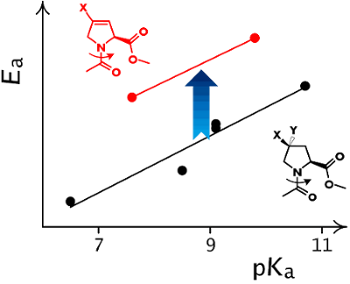
- the carbamate groups as C(=O)–O–H···O=C(–Ot-Bu)–N. The same has been recently reported in particular in the cases of N-Boc-2-methylproline [41] and N-Boc 4,5-difluoromethanoproline [42]. In the crystal structure the ring conformations were found to be: twisted endo-pucker for 5, exo-pucker for 7, and


Cupreines and cupreidines: an established class of bifunctional cinchona organocatalysts
Beilstein J. Org. Chem. 2016, 12, 429–443, doi:10.3762/bjoc.12.46
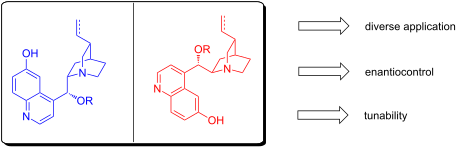
- this work, Shi, Li and co-workers partnered the isatin derived N-Boc ketimines 8 with MVK (6, Scheme 3a) to obtain the corresponding adducts 9 with very good selectivity [22]. Interestingly, replacing the Boc group with an ethyl carbamate decreased the yield and enantioselectivity dramatically, as did


Mycothiol synthesis by an anomerization reaction through endocyclic cleavage
Beilstein J. Org. Chem. 2016, 12, 328–333, doi:10.3762/bjoc.12.35
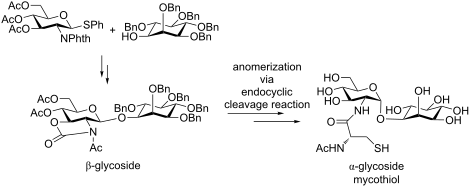
- pyranosides with N-acetyl 2,3-trans-carbamate groups exhibited complete anomerization from β-glycoside to α-glycoside in the presence of a weak Lewis acid through an endocyclic cleavage reaction [29][30][31][32][33]. We showed evidence of the endocyclic cleavage reaction by trapping linear cations through
- reduction, and intramolecular Friedel–Crafts reaction [29][30] (Scheme 2). In particular, the reaction of pyranosides bearing acetyl substituents on the carbamate groups showed complete anomerization [32]. We expected that anomerization via endocyclic cleavage would be useful for mycothiol synthesis
- phthalimide group in the 2-position, was converted to α-glycoside 4, by introducing an N-acetyl 2,3-trans-carbamate group (Scheme 3) and by conducting an anomerization reaction. The glycosylation reaction of phthalimido-protected glucosamine thioglycoside 5 with inositol 6 [24] afforded β-linked pseudo


Amino-functionalized (meth)acryl polymers by use of a solvent-polarity sensitive protecting group (Br-t-BOC)
Beilstein J. Org. Chem. 2016, 12, 245–252, doi:10.3762/bjoc.12.26
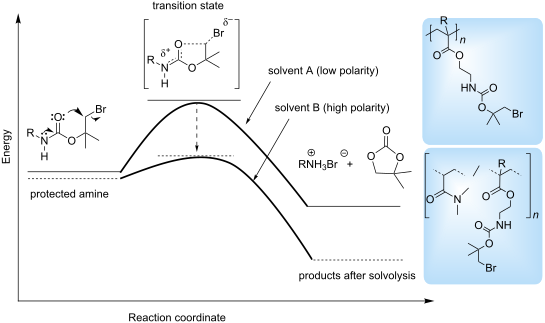
- attempted to replace one methyl group with a phenyl substituent simply by the reaction of 1a with 1-bromo-2-phenylpropan-2-ol (2b). Although spectroscopic examinations gave evidence for the successful formation of the expected carbamate 3c, only the corresponding amine hydrobromide 4a was isolated as main


Asymmetric α-amination of β-keto esters using a guanidine–bisurea bifunctional organocatalyst
Beilstein J. Org. Chem. 2016, 12, 198–203, doi:10.3762/bjoc.12.22
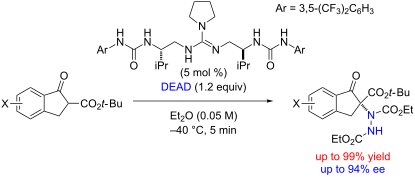
- requirement of bifunctionality in catalyst 1, we performed the α-amination reaction in the presence of carbamate 9 or triurea 10 as a catalyst (Scheme 2). In both cases, the enantioselectivity of the α-amination product 3a was drastically decreased. These results clearly show that the guanidine and urea


Iron complexes of tetramine ligands catalyse allylic hydroxyamination via a nitroso–ene mechanism
Beilstein J. Org. Chem. 2015, 11, 2549–2556, doi:10.3762/bjoc.11.275
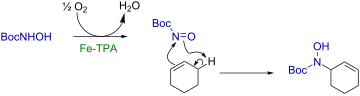
- either FeTPA (1 mol %) or FeBPMEN (10 mol %) converts cyclohexene to the allylic hydroxylamine (tert-butyl cyclohex-2-en-1-yl(hydroxy)carbamate) in moderate yields. Spectroscopic studies and trapping experiments suggest the reaction proceeds via a nitroso–ene mechanism, with involvement of a free N-Boc
- hydroxylamine 9 alongside the Fenton oxidation products alcohol 10 and ketone 11 [53], and a small amount of tert-butyl carbamate (12, Scheme 1). Initial reactions under an argon or air atmosphere returned product mixtures in the ratios shown in Table 1. Under an argon atmosphere, the allylic hydroxylamine 9


Diversity-oriented synthesis of analogues of the novel macrocyclic peptide FR-225497 through late stage functionalization
Beilstein J. Org. Chem. 2015, 11, 2487–2492, doi:10.3762/bjoc.11.270
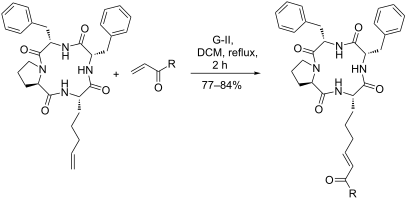
- solution phase peptide coupling between L-Phe-D-Pro-OMe (6) (prepared by hydrogenolysis of the corresponding carbamate 5) and L-Cbz-Phe-OH (7) followed by elaboration of the resulting tripeptide 8 via N-terminus deprotection leading to 9 followed by a second peptide coupling of the latter with the known


Synthesis, antimicrobial and cytotoxicity evaluation of new cholesterol congeners
Beilstein J. Org. Chem. 2015, 11, 1922–1932, doi:10.3762/bjoc.11.208
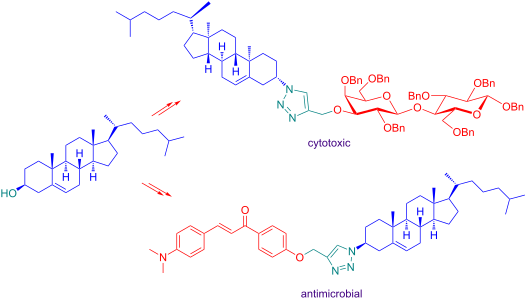
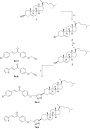
- able to disrupt the cholesterol-rich lipid envelope and inactivate viral invasion [17]. Cholesterol-based hydrazones exhibited insecticidal activity against the larval stage of Mythimna separate (Walker) [18]. Cholesterol–carbamate conjugates, for instance (3β)-cholest-5-en-3-yl (2-aminoethyl)carbamate




Why base-catalyzed isomerization of N-propargyl amides yields mostly allenamides rather than ynamides
Beilstein J. Org. Chem. 2015, 11, 1441–1446, doi:10.3762/bjoc.11.156
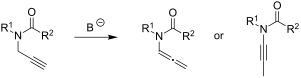
- position. A final and more demanding test is the Hsung observation that whereas only ynamide 12 was observed upon isomerization of the corresponding N-propargylamide, the related carbamate 13 only evolves to the allenamide stage [18]. Furthermore, urea 14 (see page 5069 of [3], we thank one of the referees


Chemoselective O-acylation of hydroxyamino acids and amino alcohols under acidic reaction conditions: History, scope and applications
Beilstein J. Org. Chem. 2015, 11, 446–468, doi:10.3762/bjoc.11.51
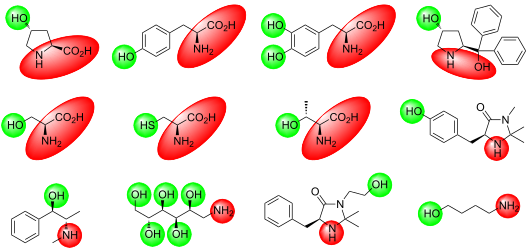
- protective groups at the amino and carboxy termini of the amino acid (resulting in carbamate and/or ester protective groups) [4], as well as for the subsequent side-chain acylation. Relevant examples are too numerous to render possible any exhaustive or useful listing herein, but use of modern computerized




Molecular cleft or tweezer compounds derived from trioxabicyclo[3.3.1]nonadiene diisocyanate and diacid dichloride
Beilstein J. Org. Chem. 2015, 11, 1–8, doi:10.3762/bjoc.11.1
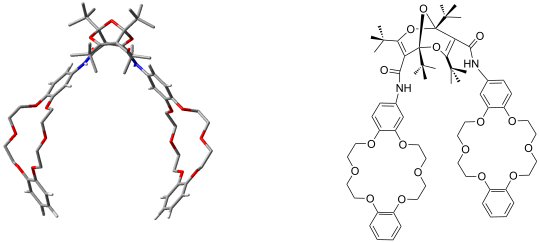
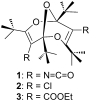
- the diisocyanate 1, viz. the di(hexylurea) 4 and the di(methyl carbamate) 5, as well as the calculated structures of diamide derivatives 7. Results and Discussion Diurea and dicarbamate The di(hexylurea) 4 and the di(methyl carbamate) 5 were synthesized by addition of hexylamine and methanol
- a dashed line (H(N82–O90) = 2.006 Å). Stereoscopic ORTEP plot of the di(methyl carbamate) 5 showing the atomic numbering scheme. The ellipsoids are drawn at the 50% probability level. The H atoms bonded to N are drawn with arbitrary radii; the H atoms of the methyl groups were omitted for reasons of
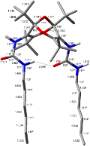
- . Calculated structure of 7b-a (B3LYP/6-31G**). For other conformers (7b-b and 7b-c) and full details, see Supporting Information File 1. Ring opening taking place on attempted optimization of the calculated, putative endo,exo isomer of 1. Synthesis of the di(hexylurea) and di(methyl carbamate) derivatives 4





The Shono-type electroorganic oxidation of unfunctionalised amides. Carbon–carbon bond formation via electrogenerated N-acyliminium ions
Beilstein J. Org. Chem. 2014, 10, 3056–3072, doi:10.3762/bjoc.10.323
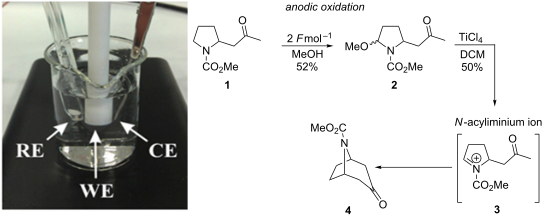
- electrochemical anodic oxidation of an α-methylene group to an amide (or carbamate) to generate a new carbon–carbon bond via an anodic methoxylation step and Lewis acid mediated generation of an N-acyliminium ion reactive intermediate; Scheme 1 overviews such a process [11]. Although the anodic oxidation
- conditions [32][33]. Although the introduction of an electroauxiliary requires an additional synthetic step to prepare, the resulting carbon–tin, carbon–silicon or carbon–sulfur bond has a less positive oxidation potential than an unfunctionalised carbamate. Therefore, exquisite control can be exerted on the
- is attached either to the carbamate or amide (Figure 5) [69][70][71] (using a platinum anode and tungsten cathode electrochemical set-up) [69] or the use of Cu-PyBox chiral ligand systems [72]. The cation pool method can be adapted to a multicomponent reaction (MCR) when an N-acyliminium ion is


Recent advances in the electrochemical construction of heterocycles
Beilstein J. Org. Chem. 2014, 10, 2858–2873, doi:10.3762/bjoc.10.303
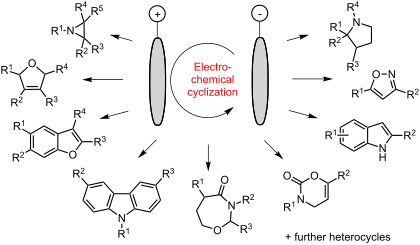
- depicted in Scheme 14 and Scheme 15) [58][59][60]. PhI(OCH2CF3)2 was generated anodically from iodobenzene in a solution of LiClO4 in 2,2,2-trifluoroethanol and served as reagent for the oxidative intramolecular coupling of phenyl rings with amide or carbamate groups. With control experiments the authors
- with different substituents on the aromatic ring and on the alkynyl group were cyclized in good to excellent yields. When N-ethoxycarbonyl-substituted anilines are converted under the conditions described above, the carbamate group is cleaved and unprotected indoles are obtained. An electrochemical
- dienophile is facilitated. Yoshida, Suga and co-workers reported on the use of electrogenerated N-acyliminium ions as heterodienes in [4 + 2] cycloadditions [66]. It was found that these highly reactive species, generated from silylated carbamate 57 at −78 °C (cation pool method), undergo cycloaddition at 0