Search results
Search for "configuration" in Full Text gives 1071 result(s) in Beilstein Journal of Organic Chemistry. Showing first 200.
Recent advances in organocatalytic atroposelective reactions
Beilstein J. Org. Chem. 2025, 21, 55–121, doi:10.3762/bjoc.21.6
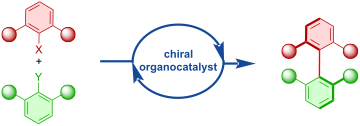
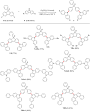
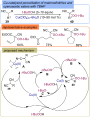
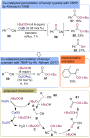
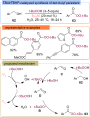
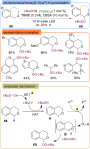
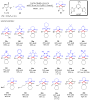
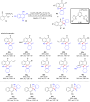
- ring in 159. Based on these findings, a potential reaction pathway was proposed. It starts with a chiral phosphoric acid-supported dehydration of 160 and reaction with the favored configuration of bisindoles 159 to form an allene intermediate Int-38. Proton transfer and subsequent intramolecular
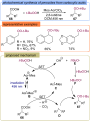
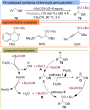
- astounding enantioselectivities. Both, light and organocatalyst proved crucial for the reaction. The photochemical aspect isomerizes the double bond to (Z)-configuration, and CPA stabilizes the structure whilst mediating the cyclization. The wavelength of 405 nm was chosen so that only the starting material






Hot shape transformation: the role of PSar dehydration in stomatocyte morphogenesis
Beilstein J. Org. Chem. 2025, 21, 47–54, doi:10.3762/bjoc.21.5
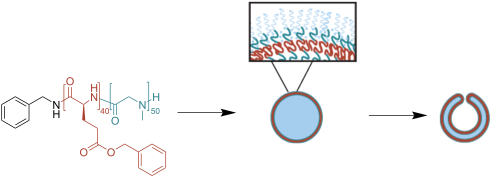
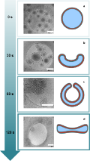
- stomatocyte configuration. Several critical factors contribute to this transformation. Firstly, the application of osmotic pressure which must be sufficiently robust. This control is notably easier with the addition of PEG, as it swiftly creates a substantial osmotic gradient [19]. Secondly, the vesicle's


Emerging trends in the optimization of organic synthesis through high-throughput tools and machine learning
Beilstein J. Org. Chem. 2025, 21, 10–38, doi:10.3762/bjoc.21.3
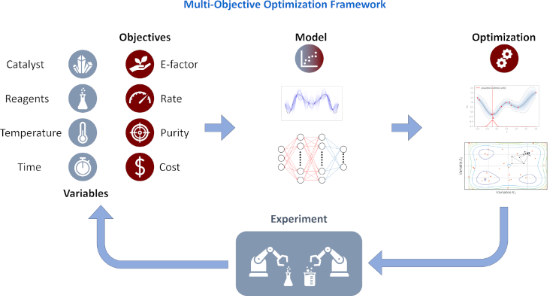
- of five small organic molecules, four oligopeptides, and four oligonucleotides in high purity and impressive yield. Although, in the current configuration, the platform lacks characterization modules and has a lower throughput in comparison to other automated platforms, it does offer a low-cost
- . Using this configuration, the platform can perform a calibration of the reagent and product concentration through a standard addition method. Once the PAT is calibrated, the platform performs dynamic experiments where the concentration of the reagents is ramped to explore the parametric space. Finally


Synthesis, characterization, and photophysical properties of novel 9‑phenyl-9-phosphafluorene oxide derivatives
Beilstein J. Org. Chem. 2024, 20, 3299–3305, doi:10.3762/bjoc.20.274
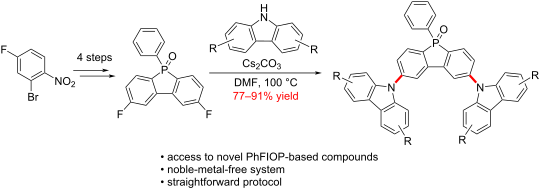
- significantly blueshifted emission maximum at 392 nm, perhaps as a consequence of a more rigid configuration. As for 7-Br, owing to the electron-withdrawing properties of Br, it displays a blueshifted PL maximum at 383 nm. The emission wavelength of 7-Cz-2 has a slight redshift compared to 7-Cz-1, which may be




Non-covalent organocatalyzed enantioselective cyclization reactions of α,β-unsaturated imines
Beilstein J. Org. Chem. 2024, 20, 3221–3255, doi:10.3762/bjoc.20.268
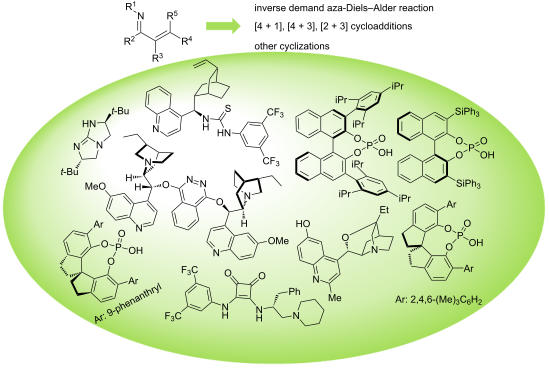
- relative configuration depicted in Scheme 6. Also in 2019, Huang and co-workers reported a bifunctional squaramide-catalyzed [4 + 2] cyclization of benzofuran-derived azadienes 11 and azlactones 15 [29]. This methodology enables the synthesis of benzofuran-fused six-membered heterocycles 20 in yields up to









Ceratinadin G, a new psammaplysin derivative possessing a cyano group from a sponge of the genus Pseudoceratina
Beilstein J. Org. Chem. 2024, 20, 3215–3220, doi:10.3762/bjoc.20.267
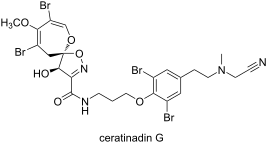
- /bjoc.20.267 Abstract A new psammaplysin derivative, ceratinadin G (1), was obtained from the Okinawan marine sponge Pseudoceratina sp., and the gross structure was clarified through spectroscopic and spectrometric analyses. The absolute configuration of compound 1 was established by comparing its NMR
- derivatives exhibit a range of bioactivities, including antibacterial, anticancer, antimalarial, and antiviral effects. Since the discovery of the first psammaplysin derivative, psammaplysin A [4][5], these alkaloids have been recognized as challenging targets for total synthesis. The absolute configuration
- , the first asymmetric total synthesis of psammaplysin A was accomplished by Smith and Morrow, and the absolute configuration of compound 1 was also confirmed through organic synthesis [7]. In our ongoing research focused on uncovering new bioactive secondary metabolites from Okinawan marine sponges, we


Synthesis of extended fluorinated tripeptides based on the tetrahydropyridazine scaffold
Beilstein J. Org. Chem. 2024, 20, 3174–3181, doi:10.3762/bjoc.20.262
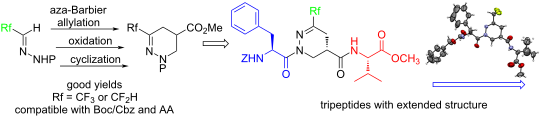
- LiOH, followed by a coupling reaction with ʟ-valine methyl ester hydrochloride, to give the corresponding four enantiomerically pure tripeptides 8 with satisfactory yields over two steps (Scheme 6). The absolute configuration (S,S,S) of the isomer 8f was unambiguously assigned by X-ray crystallographic
- configuration of compounds 7e and 7e’ and consequently of tripeptides 8e and 8e’ (see Supporting Information File 1). Next, some preliminary conformational studies were performed. Firstly, the X-ray crystallographic analysis of compound 8f did not show any hydrogen-bond pattern and the global structure of the


Tunable full-color dual-state (solution and solid) emission of push–pull molecules containing the 1-pyrindane moiety
Beilstein J. Org. Chem. 2024, 20, 3016–3025, doi:10.3762/bjoc.20.251

- configuration of the double bond was confirmed using 1H,1H-NOESY spectroscopy. As shown in Figure 2, a correlation between protons of the allyl moiety and the aryl substituent evidenced their spatial proximity in molecule 1c. The absence of a correlation between allyl and vinyl protons additionally supported
- the E-configuration. Spectral–luminescence properties Compounds 1 form colored crystals, from pale-yellow (i.e., 1a) to almost black (i.e., 1h). They are soluble and luminescent in most common organic solvents. Solvatochromism of stilbazole 1c, containing a para-methoxy group, was studied first (see


Advances in radical peroxidation with hydroperoxides
Beilstein J. Org. Chem. 2024, 20, 2959–3006, doi:10.3762/bjoc.20.249
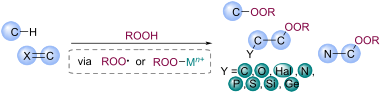
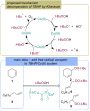
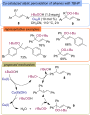
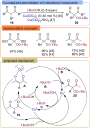
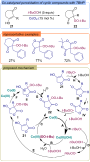
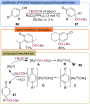
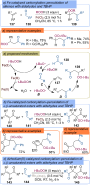
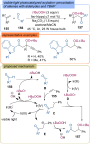
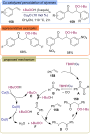
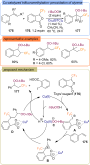
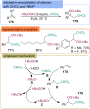
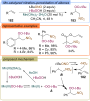
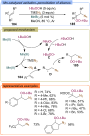
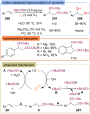
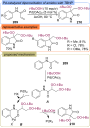
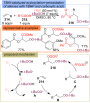
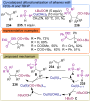
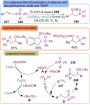
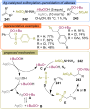
- and 219. The authors also considered the transition configuration with the H2O molecule attacking the α-C atom at the front. TBAI-catalyzed hydroxyperoxidation of 1,3-butadienes 220 with aqueous hydroperoxides was demonstrated (Scheme 69) [138]. According to the proposed reaction pathway, the redox




























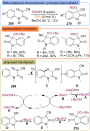


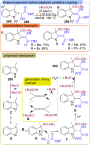

gem-Difluorovinyl and trifluorovinyl Michael acceptors in the synthesis of α,β-unsaturated fluorinated and nonfluorinated amides
Beilstein J. Org. Chem. 2024, 20, 2946–2953, doi:10.3762/bjoc.20.247
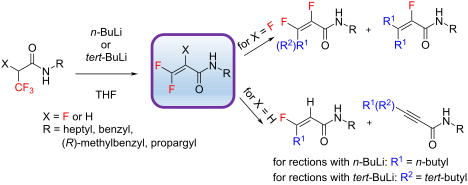
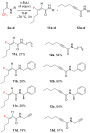
- substituent at nitrogen located in the opposite direction to the carbonyl group, while cisoid (cis 15a’ (16a’)) isomers featured a smaller substituent at nitrogen located in the opposite direction to the carbonyl group. We determined the quantitative ratio as well as the cis/trans configuration of isomers by


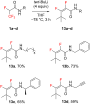


4,6-Diaryl-5,5-difluoro-1,3-dioxanes as chiral dopants for liquid crystal compositions
Beilstein J. Org. Chem. 2024, 20, 2940–2945, doi:10.3762/bjoc.20.246
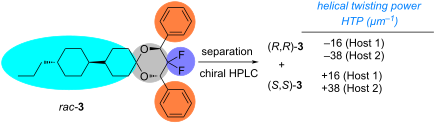
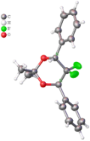
- enantiomers (R,R)-3/(S,S)-3, (R,R)-4/(S,S)-4 were obtained by slow evaporation from n-heptane solution and structures were determined by X-ray diffraction, which allowed the correlation of the chiroptical properties with the configuration (Figure 2 and Figure 3). The HTP of all enantiomers were measured with
- polar mixture Host 2 it is twice as high as for less polar Host 1. Selected examples of chiral dopants with high HTPs in their nematic host LC mixture. Configuration of (R,R)-3 determined by X-ray crystallography. Configuration of (R,R)-4 determined by X-ray crystallography. Structure–property


The charge transport properties of dicyanomethylene-functionalised violanthrone derivatives
Beilstein J. Org. Chem. 2024, 20, 2921–2930, doi:10.3762/bjoc.20.244
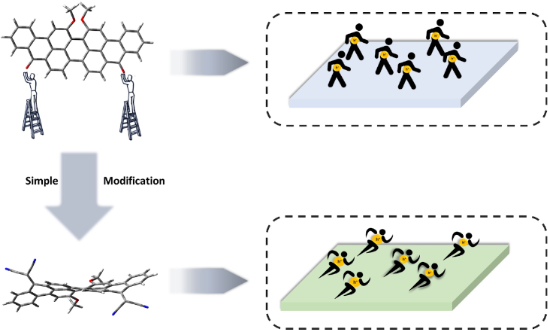
- dramatic increase in μh (1.07 × 10⁻² cm2 V−1s−1) compared to the previously reported 2b (1.76 × 10⁻⁴ cm2 V−1s−1) [30]. On the other hand, the twisted configuration of the material’s backbone upon the introduction of dicyanomethylene groups, along with branched alkyl side chains in 3a, might have


Recent advances in transition-metal-free arylation reactions involving hypervalent iodine salts
Beilstein J. Org. Chem. 2024, 20, 2891–2920, doi:10.3762/bjoc.20.243





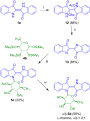
N-Glycosides of indigo, indirubin, and isoindigo: blue, red, and yellow sugars and their cancerostatic activity
Beilstein J. Org. Chem. 2024, 20, 2840–2869, doi:10.3762/bjoc.20.240
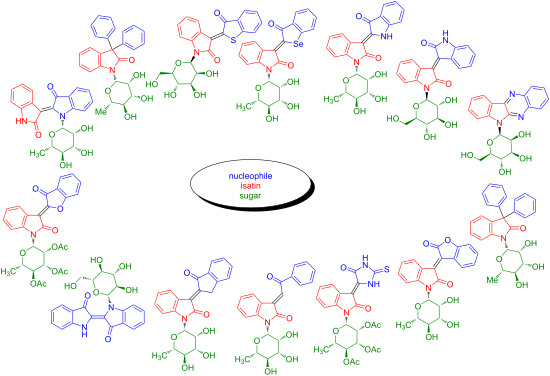
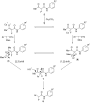
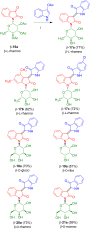
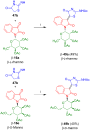
- substituent. The carbohydrate moiety also has an influence on the antiproliferative activity. The best activities were observed for rhamnosides, while the lowest activity was observed for galactoside β-20a. The configuration of the anomeric carbon atom of the rhamnoside did not show a major influence as very
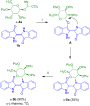
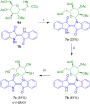
- isatin-N-glycosides derived from β-ᴅ-galactose, β-ᴅ-glucose, and β-ᴅ-xylose which might be due to their 1,2-trans configuration. An identical relative configuration (1,2-trans; 1,3-cis) is observed for the first three carbon atoms of β-ᴅ-galactose, β-ᴅ-glucose, and β-ᴅ-xylose. In contrast, for β-ᴅ
- -mannose and β-ʟ-rhamnose, the first three C-atoms possess a different relative configuration (1,2-cis; 1,3-cis). This difference cannot be explained at the moment. A possible explanation is based on the assumption that, during dimerization, the acetate group of the 1,2-trans-configured sugars interacts










Access to optically active tetrafluoroethylenated amines based on [1,3]-proton shift reaction
Beilstein J. Org. Chem. 2024, 20, 2776–2783, doi:10.3762/bjoc.20.233
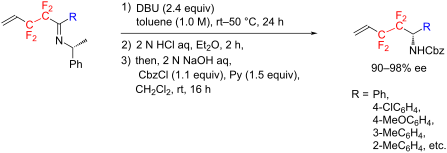
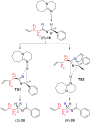
- and the phenyl group. Therefore, the product (S)-20 with S configuration is obtained preferentially. Conclusion In summary, we have succeeded in synthesizing optically active amines having a tetrafluoroethylene group on the asymmetric carbon center by applying the [1,3]-proton shift reaction using



Copper-catalyzed yne-allylic substitutions: concept and recent developments
Beilstein J. Org. Chem. 2024, 20, 2739–2775, doi:10.3762/bjoc.20.232
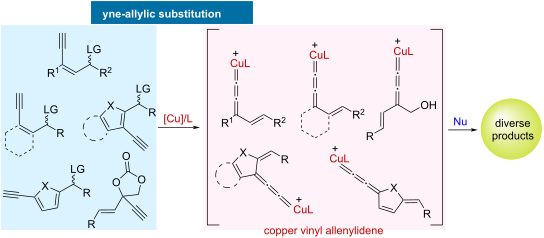
- , followed by a Conia-ene cyclization. The absolute configuration of the products is controlled by the ligand, which further confirms the remote stereocontrol of the copper catalyst. They obtained a single crystal of dinuclear copper and confirmed that the catalytic efficiency of the single crystal is








The scent gland composition of the Mangshan pit viper, Protobothrops mangshanensis
Beilstein J. Org. Chem. 2024, 20, 2644–2654, doi:10.3762/bjoc.20.222
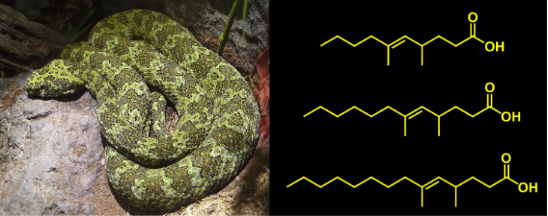
- . The synthesis of methyl 4,6-dimethyldodec-5-enoate allowed the correct assignment of structures and showed the (E)-configuration of the double bond for the major naturally occurring diastereomers. These acids occur in small amounts compared to the major glandular components, cholesterol, and 1-O
- between H-5 (4.82 ppm) and C-6-methyl (1.66 ppm) (Supporting Information File 1, Figure S11) for the minor compound eluting earlier in GC, indicating that both hydrogen atoms are close together and that the double bond has a Z-configuration. The other diastereomer showed no coupling between H-5 (4.84 ppm
- . The major component Dm of the methylated secretion with I 1595 was therefore assigned to have the E configuration. The E/Z ratio Dm/Dm’ in all samples was about 20:1. In all cases the second eluting diastereomer of compounds Am–Fm was present in higher proportions, indicating a preferred E


Deciphering the mechanism of γ-cyclodextrin’s hydrophobic cavity hydration: an integrated experimental and theoretical study
Beilstein J. Org. Chem. 2024, 20, 2635–2643, doi:10.3762/bjoc.20.221

- enlarging the aperture (“open” configuration). In the “open” configuration, the primary hydroxy groups are not involved in the intramolecular hydrogen-bonding interactions with neighboring OH groups. Relatively weak hydrogen bonds are formed between the secondary hydroxy groups at the wider/lower rim of the
- energetically more favorable than the “open” configuration (by 22.3 kcal mol−1), which is why the “head–tail” structure was used in subsequent evaluations. It should be noted that for the two conformers modelled, the “closed” one has the typical truncated cone shape whereas the open one is more like a cylinder


Base-promoted cascade recyclization of allomaltol derivatives containing an amide fragment into substituted 3-(1-hydroxyethylidene)tetronic acids
Beilstein J. Org. Chem. 2024, 20, 2585–2591, doi:10.3762/bjoc.20.217
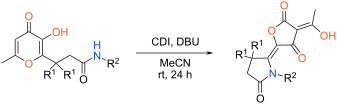
- synthesized products is different from previously described 3-acetyltetronic acids 2 obtained from the corresponding hydrazides 1. As well as in the case of compounds 2 for the amide derivatives 4 the double bond between pyrrolidinone and furanone parts has E-configuration. Only for sterically hindered
- 2 are easily deacetylated under reflux in MeOH for 8 h. At the same time the compounds 4 described in the present communication are more stable and under these conditions the loss of the acetyl group was not observed. It can be supposed that described above difference in configuration of the enol
- refluxing EtOH allowed us to obtain substituted enehydrazine 7 (Scheme 5a). The similar condensation with amine 8 led to enamine derivative 9 (Scheme 5b). Based on the data of X-ray analysis compound 7 has the same configuration of double and hydrogen bonds as in the case of starting tetronic acids 4


Photoredox-catalyzed intramolecular nucleophilic amidation of alkenes with β-lactams
Beilstein J. Org. Chem. 2024, 20, 2461–2468, doi:10.3762/bjoc.20.210
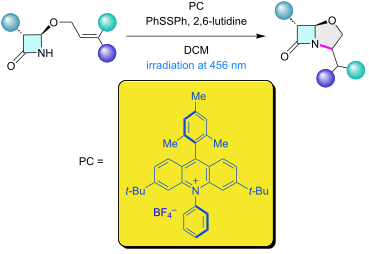
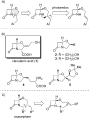
- ][41][42][43]. The inhibitory activity of β-lactamases is exhibited by those congeners with a (3R,5R)-configuration, such as clavulanic acid (1), whereas clavams with other configurations are not lactamase inhibitors, although some of these have antifungal or antibacterial properties [35]. In the
- chemical shifts of these protons in the two isomers could be attributed to the influence of the anisotropy of the neighboring carboxy group of the β-lactam and could be correlated with the configuration at the bridgehead stereocenter [46]. This analysis revealed the preferred formation of the trans- over
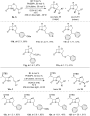
- -diastereoisomer was favored. In this study, enantiopure 3-(1’-(tert-butyldimethylsilyl)ethyl)-β-lactams 10c–f were also tested. Products 12c–f were obtained with moderate to good yield, underscoring the feasibility of the methodology for the C3-substituted β-lactam moiety. The configuration at the newly formed




Synthesis and conformational analysis of pyran inter-halide analogues of ᴅ-talose
Beilstein J. Org. Chem. 2024, 20, 2442–2454, doi:10.3762/bjoc.20.208
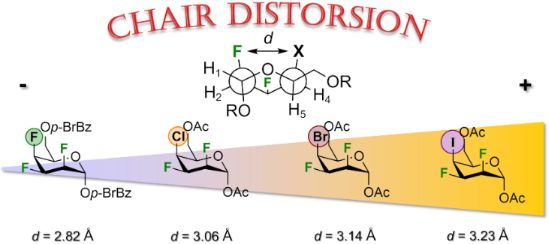
- , therefore we were compelled to proceed directly to the next step. Cleavage of the 1,6-anhydro bridges was achieved under acetolysis conditions providing halogenated talopyranoses 12–15 in good yield over 3 steps as α anomers. Luckily, inter-halides 13–15 were crystalline, allowing the absolute configuration


Asymmetric organocatalytic synthesis of chiral homoallylic amines
Beilstein J. Org. Chem. 2024, 20, 2349–2377, doi:10.3762/bjoc.20.201
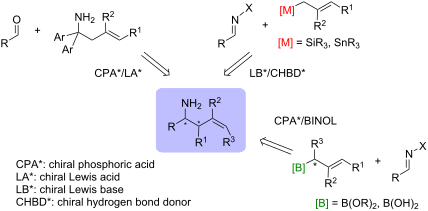
- securing the enantioselectivity of the reaction by locking the catalyst in the more active and enantioselective Z-configuration (Figure 2). Further, the authors found that H-bond donors featuring urea, thiourea, and guanidine motifs were either inactive or provided racemic mixtures. Among 3,5-dichloro
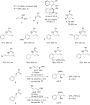
- absolute configurations of homoallylamines 66 were assigned by analogy to 67, the configuration of which was determined after removal of the N-aryl group and comparing the optical rotation with the literature values for the known enantiomer (S)-69 (Scheme 14). The proposed stereochemical model suggests
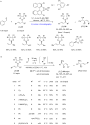
- ’-dibromo-BINOL [25]. aAbsolute configuration was confirmed by a single crystal XRD of the corresponding hydrochloride salt. (R)-3,3’-Di(3,5-di(trifluoromethyl)phenyl-BINOL-catalysed asymmetric geranylation and prenylation of dihydroisoquinolines [25]. aAbsolute configuration was established by single






Stereoselective mechanochemical synthesis of thiomalonate Michael adducts via iminium catalysis by chiral primary amines
Beilstein J. Org. Chem. 2024, 20, 2313–2322, doi:10.3762/bjoc.20.198
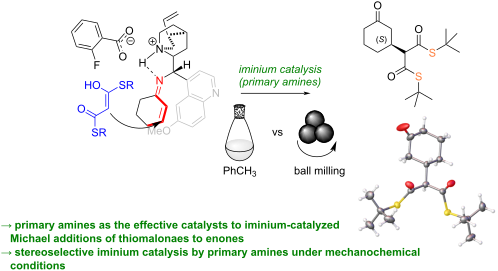
- proved by X-ray studies. Assuming the mechanism of addition is similar in the case of other nucleophiles, the configuration of others was assigned by analogy. More sterically demanding di-tert-butyl thiomalonate (2) reacted in a similar fashion as the dibenzyl thiomalonate (1), leading also to desired


Natural resorcylic lactones derived from alternariol
Beilstein J. Org. Chem. 2024, 20, 2171–2207, doi:10.3762/bjoc.20.187
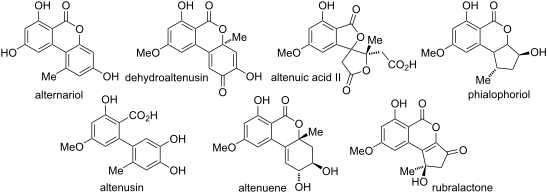
- only due to its structural analogy to the other lysilactones; it is not a resorcylic lactone and has not been mentioned after the initial report [139]. The structures of these compounds were determined by NMR-spectroscopic methods and constitution and configuration of lysilactone A was further
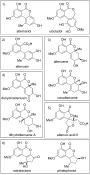
- block (Figure 12). The verrulactones were isolated from Penicillium verruculosum [187][193][221] and verrulactone A and B were further isolated from Alternaria alternata [159][160]. Constitution and relative configuration of these compounds was determined by NMR-spectroscopic methods, where the
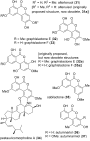
- as in isoaltenuene [251] had to be corrected after total synthesis [249] and comparison of measured and calculated ECD spectra [162]. The revised absolute configuration of (−)-altenuene is given in Figure 14. Altenuene was isolated in various Alternaria spp., i.e., not only in A. alternata, but






Computational toolbox for the analysis of protein–glycan interactions
Beilstein J. Org. Chem. 2024, 20, 2084–2107, doi:10.3762/bjoc.20.180
- , depending on the values adopted by the torsional angles around the glycosidic linkages [10]. The high variability of linkages type, branching, stoichiometry, anomeric configuration (alpha and beta), and conformation contributes to the intricate nature of glycans. The complexity of the glycome is even higher
- able to add branching points and some sugar derivatisation, including methylation and acetylation. The user has also the possibility to choose the ring type and the anomeric configuration of each monosaccharide. Once the structure is complete, it is possible to download not only the generated .pdb