


Search results
Search for "evolution" in Full Text gives 333 result(s) in Beilstein Journal of Organic Chemistry. Showing first 200.
Control over size, shape, and photonics of self-assembled organic nanocrystals
Beilstein J. Org. Chem. 2021, 17, 42–51, doi:10.3762/bjoc.17.5
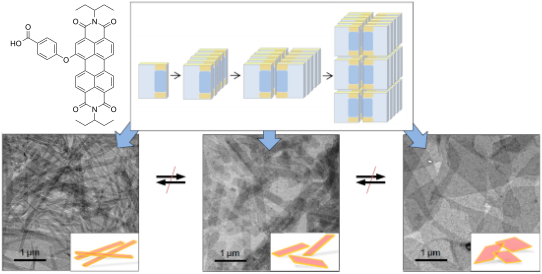
- completed after 5 min (Figure S7, Supporting Information File 1). The observed crystallization pathways are consistent with a gradual order evolution mechanism recently observed by us [34]. Exciton dynamics In order to investigate whether the morphology affects the photonic properties, we studied the
- plunged at t = 1 min was used again at t = 5 min and t = 30 min in order to elucidate the structural evolution of the self-assembled crystals. Femtosecond transient absorption Femtosecond transient absorption spectroscopy was performed by a methodology analogous as described previously [36], using a




Secondary metabolites of Bacillus subtilis impact the assembly of soil-derived semisynthetic bacterial communities
Beilstein J. Org. Chem. 2020, 16, 2983–2998, doi:10.3762/bjoc.16.248
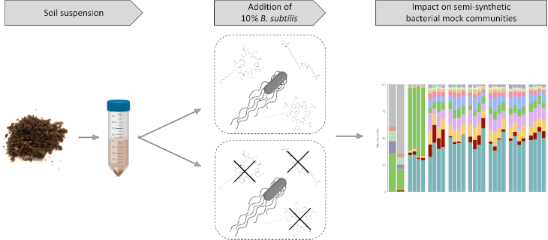
- Heiko T. Kiesewalter Carlos N. Lozano-Andrade Mikael L. Strube Akos T. Kovacs Bacterial Interactions and Evolution Group, DTU Bioengineering, Technical University of Denmark, Kgs. Lyngby, Denmark Bacterial Ecophysiology and Biotechnology Group, DTU Bioengineering, Technical University of Denmark


Controlled decomposition of SF6 by electrochemical reduction
Beilstein J. Org. Chem. 2020, 16, 2948–2953, doi:10.3762/bjoc.16.244
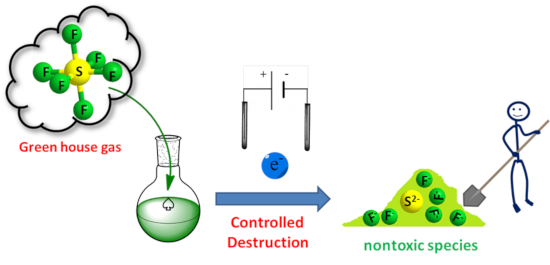
- the electrolysis duration onto a smooth Pt electrode (15 cm2). (b) Decrease of the cathodic current during the electrolysis duration which is detected onto an array of Pt microelectrodes (Ø = 20 µm). 19F NMR evolution of the crude mixture along the time after electrolysis realized at constant


Regioselective synthesis of heterocyclic N-sulfonyl amidines from heteroaromatic thioamides and sulfonyl azides
Beilstein J. Org. Chem. 2020, 16, 2937–2947, doi:10.3762/bjoc.16.243
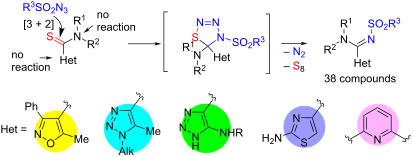
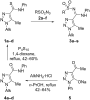
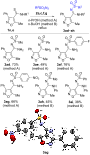
- form can be explained by steric hindrance between the phenyl and the arylsulfonyl groups. Because of the observed evolution of nitrogen and sulfur in every reaction of heterocyclic thioamides and sulfonyl azides it is logic to propose the formation of a thiatriazole ring via [3 + 2] cycloaddition of







Using multiple self-sorting for switching functions in discrete multicomponent systems
Beilstein J. Org. Chem. 2020, 16, 2831–2853, doi:10.3762/bjoc.16.233

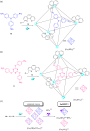
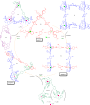
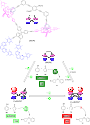
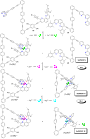
- reversed back to the initial state (Figure 15b). Here, all translocations happen in an off-equilibrium system. Since the kinetic evolution of the lithium pulses was followed by color and luminescence changes of the lithium-sensitive probe 36, the system is suited for a multitude of new applications







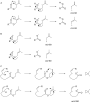
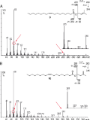
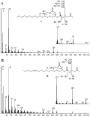
3-Acetoxy-fatty acid isoprenyl esters from androconia of the ithomiine butterfly Ithomia salapia
Beilstein J. Org. Chem. 2020, 16, 2776–2787, doi:10.3762/bjoc.16.228
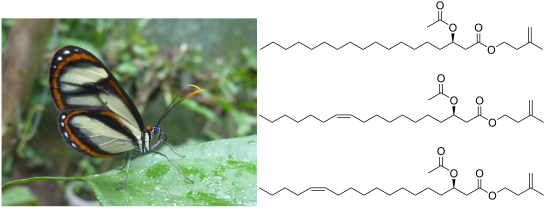
- Florian Mann Daiane Szczerbowski Lisa de Silva Melanie McClure Marianne Elias Stefan Schulz Institute of Organic Chemistry, Technische Universität Braunschweig, Hagenring 30, 38106 Braunschweig, Germany Institut de Systématique Evolution Biodiversité, Centre National de la Recherche Scientifique





Activation of pentafluoropropane isomers at a nanoscopic aluminum chlorofluoride: hydrodefluorination versus dehydrofluorination
Beilstein J. Org. Chem. 2020, 16, 2623–2635, doi:10.3762/bjoc.16.213
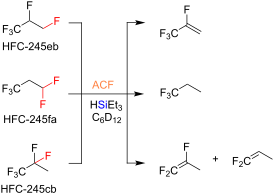
- -tetrafluoropropene (HFO-1234ze) using mesoporous nanoscopic aluminum fluoride-based catalysts [19]. The catalysts were prepared via a sol–gel process in the presence of polyols, allowing for the evolution of a large surface area and improved acidic properties when compared to fluorinated Cr2O3 or traditional β-AlF3


Particle size effect in the mechanically assisted synthesis of β-cyclodextrin mesitylene sulfonate
Beilstein J. Org. Chem. 2020, 16, 2598–2606, doi:10.3762/bjoc.16.211
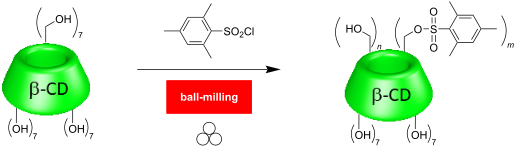
- highlighting the advantages of the mechanically assisted synthesis. Results and Discussion Analysis of ground CDs Scanning electron microscopy (SEM) SEM enables particle size evolution upon grinding to be monitored. The SEM images in Figure 1 show the surface topography changes of polycrystalline β-CD for six




Computational tools for drawing, building and displaying carbohydrates: a visual guide
Beilstein J. Org. Chem. 2020, 16, 2448–2468, doi:10.3762/bjoc.16.199

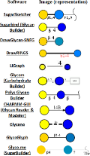
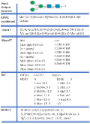
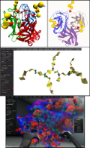
- a continuous development and evolution of the description of monosaccharides [2]. Glycans are puzzles to many chemists, and biologists as well as bioinformaticians. This complexity occurs at different levels (which makes it incremental). Amongst the most recognisable “sugars”, glucose is merely one









A proposed sustainability index for synthesis plans based on input provenance and output fate: application to academic and industrial synthesis plans for vanillin as a case study
Beilstein J. Org. Chem. 2020, 16, 2346–2362, doi:10.3762/bjoc.16.196
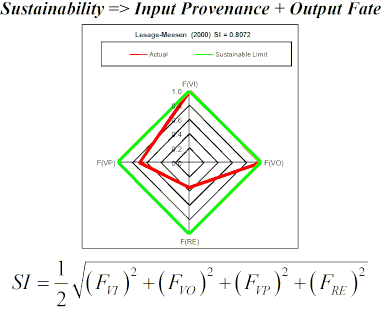
- chemical plant. Hence, any chance of developing a quantitative definition of sustainability that addresses the needs and concerns already pointed out must focus on assessing the performance of synthesis plans according to some set of measurable parameters. This is a very important aspect in the evolution


Automated high-content imaging for cellular uptake, from the Schmuck cation to the latest cyclic oligochalcogenides
Beilstein J. Org. Chem. 2020, 16, 2007–2016, doi:10.3762/bjoc.16.167
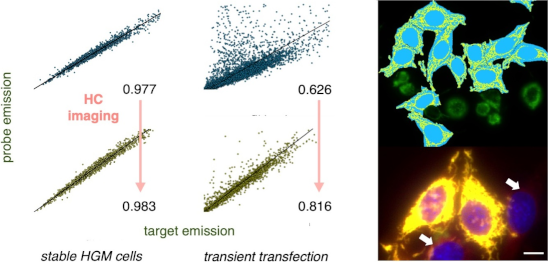
- ), here exemplified by asparagusic acid. A persistent challenge in this evolution is the simultaneous and quantitative detection of cytosolic delivery and cytotoxicity in a high-throughput format. Here, we show that the combination of the HaloTag-based chloroalkane penetration assay (CAPA) with automated
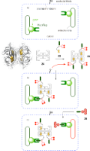
- and cyclic peptides with Schmuck cations for gene transfection. Evolution from CPPs to CPDs and COCs. Structure of a) the trifunctional transporter 23 and c) the HaloTag reporter 26. b) Schematic mechanism of the thiol-mediated uptake of COCs with dynamic covalent disulfide exchange with exofacial




Synergy between supported ionic liquid-like phases and immobilized palladium N-heterocyclic carbene–phosphine complexes for the Negishi reaction under flow conditions
Beilstein J. Org. Chem. 2020, 16, 1924–1935, doi:10.3762/bjoc.16.159
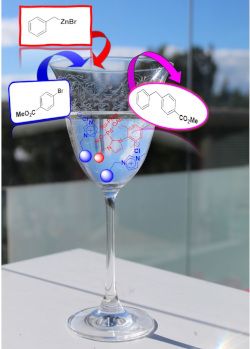
- this leaching process, the role of the ligand and the support on the evolution of the catalytic systems should be carefully considered. It has been shown that the immobilization of Pd-catalysts or precatalysts onto supported ionic liquid-like materials can facilitate the recapture by the support of the





When metal-catalyzed C–H functionalization meets visible-light photocatalysis
Beilstein J. Org. Chem. 2020, 16, 1754–1804, doi:10.3762/bjoc.16.147

- ; sustainable synthesis; synergistic catalysis; Introduction In recent years, the field of synthetic chemistry has witnessed a profound evolution. Indeed, due to the growing environmental awareness, organic chemists face nowadays an urgent need of developing much more sustainable and environmentally benign


Antibacterial scalarane from Doriprismatica stellata nudibranchs (Gastropoda, Nudibranchia), egg ribbons, and their dietary sponge Spongia cf. agaricina (Demospongiae, Dictyoceratida)
Beilstein J. Org. Chem. 2020, 16, 1596–1605, doi:10.3762/bjoc.16.132
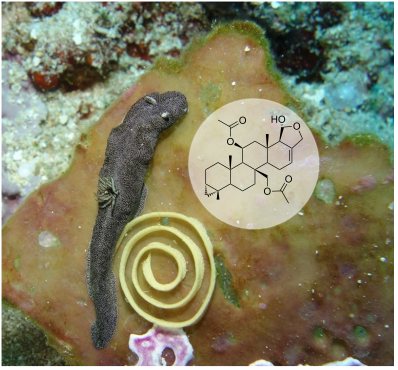
- tempting to argue that the sesterterpene biosynthesis could be performed or mediated by their microbial symbionts. This further indicates a close association, interconnectedness, and probable co-evolution between microorganisms, sponges and nudibranchs [9]. D. stellata was not only found to sequester and




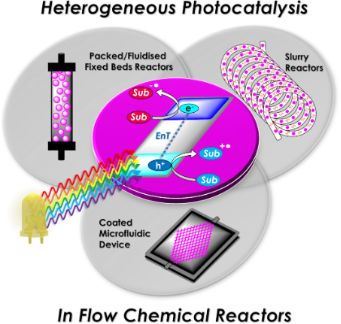
Heterogeneous photocatalysis in flow chemical reactors
Beilstein J. Org. Chem. 2020, 16, 1495–1549, doi:10.3762/bjoc.16.125
- temperature to yield alkyl, halo, and trifluoromethyl products, such as the examples 5 and 6 (Scheme 2). Chen, Wang and co-workers recently studied methods to reduce the exciton binding energy in linear conjugated polymers to enhance the charge separation and subsequent photocatalytic hydrogen evolution
- (Figure 11) [129]. Four conjugated polymers containing dibenzothiophene sulfone (FSO) monomers, linked by either biphenyl (FSO-BP), fluorene (FSO-F), 2,8-dibenzothiophene (FSO-FSz), or 3,7-dibenzothiophene (FSO-FS) monomers were synthesised and applied in the photocatalytic hydrogen evolution reaction
- (HER). The FSO-FS polymer displayed the highest rates of hydrogen evolution (170 μmol⋅h−1), significantly higher than its structural isomer FSO-FSz. The authors studied the charge transfer dynamics of the different polymers through temperature-dependent photoluminescence, photoelectrochemical










Disposable cartridge concept for the on-demand synthesis of turbo Grignards, Knochel–Hauser amides, and magnesium alkoxides
Beilstein J. Org. Chem. 2020, 16, 1343–1356, doi:10.3762/bjoc.16.115
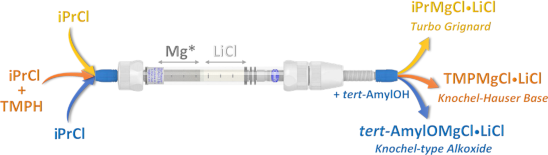
- exothermic Grignard reaction done at 25 ºC was not fully dissipated by the heat exchanger (≈10 ºC increment). To better understand this exothermic process, we decided to measure the temperature evolution during the conversion of EtBr (0.5 M) at a 0.5 mL/min flow rate with no heat controller. Three
- coil reactor placed in the left reactor area. E) Example of a disposable cartridge. Temperature evolution measured with thermocouples along the column outer surface at three different points. Stratified bicomponent column (Diba Omnifit EZ Solvent Plus) composed of magnesium (chips/powder, 1:1) and


Activated carbon as catalyst support: precursors, preparation, modification and characterization
Beilstein J. Org. Chem. 2020, 16, 1188–1202, doi:10.3762/bjoc.16.104
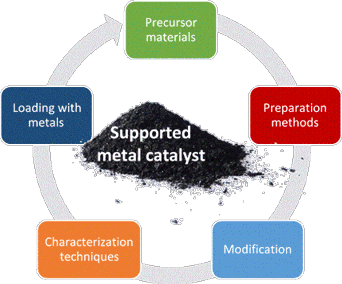
- ammonia due to the evolution of NH3 and HCN. Depending on the modification temperature, nitrogen is incorporated mainly to aromatic rings at higher temperatures, while less temperature-stable amide-like functionalities were formed at lower temperatures [129]. Composition of activated carbon Elemental


A smart deoxyribozyme-based fluorescent sensor for in vitro detection of androgen receptor mRNA
Beilstein J. Org. Chem. 2020, 16, 1135–1141, doi:10.3762/bjoc.16.100
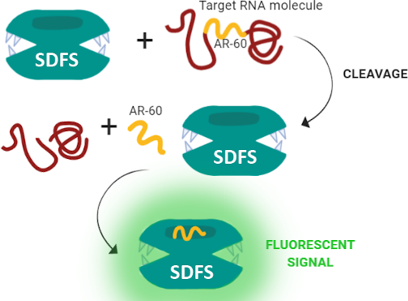
- random sequence molecules, also known as SELEX (systematic evolution of ligands by exponential enrichment), and was a holistic harpin [22]. In further work MGA was separated into two strands, and nucleic acid binding arms were added to each strand, allowing MGA to target a sequence of interest



Synthesis of esters of diaminotruxillic bis-amino acids by Pd-mediated photocycloaddition of analogs of the Kaede protein chromophore
Beilstein J. Org. Chem. 2020, 16, 1111–1123, doi:10.3762/bjoc.16.98
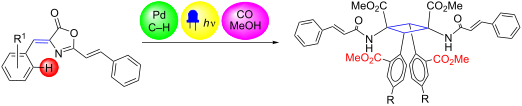
- spectra were measured on a Thermo Scientific Evolution 600BB spectrophotometer. Cinnamoylglycine (1) was prepared by the Schotten–Baumann method [49]. Irradiation setup for batch synthesis The irradiation setup consisted of a flask (100 mL) irradiated by a printed circuit board (PCB) formed by 24 LEDs of


Accelerating fragment-based library generation by coupling high-performance photoreactors with benchtop analysis
Beilstein J. Org. Chem. 2020, 16, 982–988, doi:10.3762/bjoc.16.87
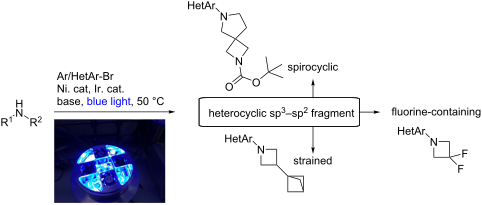
- collections. These are of high value to medicinal chemists to provide defined exit vectors and facilitate rational lead evolution [2][3][4][5][6][7]. Thus, we were interested in developing reliable synthetic methods and technologies to apply metal-catalyzed cross-coupling reactions to such scaffolds, which


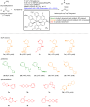

Copper catalysis with redox-active ligands
Beilstein J. Org. Chem. 2020, 16, 858–870, doi:10.3762/bjoc.16.77
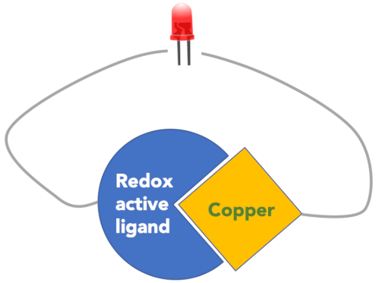
- a different matter. The Arnold group has elegantly shown that through iterative mutagenesis “directed evolution” enzymes can be coaxed to perform unnatural transformations such as C–N bond forming aziridination, which has no biological counterpart [33]. While the exact structure of the mutant


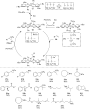

Copper-catalyzed O-alkenylation of phosphonates
Beilstein J. Org. Chem. 2020, 16, 611–615, doi:10.3762/bjoc.16.56

- products. An acetal-protected aldehyde could also be used providing enol phosphonate 3g in 52% yield. In this case, prolonged reaction times led to partial evolution of 3g into enol ether 4. This transformation may be explained by an acid-mediated elimination of ethanol likely caused by trace formation of


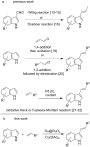
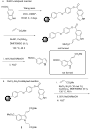
Synthesis of 3-alkenylindoles through regioselective C–H alkenylation of indoles by a ruthenium nanocatalyst
Beilstein J. Org. Chem. 2020, 16, 140–148, doi:10.3762/bjoc.16.16
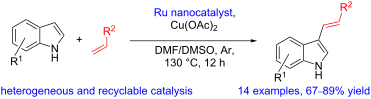
- essentially zerovalent Ru nanoparticles promotes their catalytic ability towards several challenging reactions, such as CO oxidation [67][68] and hydrogen evolution [69]. Interestingly, pristine Ru(0) single crystals have been reported to perform poorly in these reactions when compared to the surface-oxidised




Potent hemithioindigo-based antimitotics photocontrol the microtubule cytoskeleton in cellulo
Beilstein J. Org. Chem. 2020, 16, 125–134, doi:10.3762/bjoc.16.14
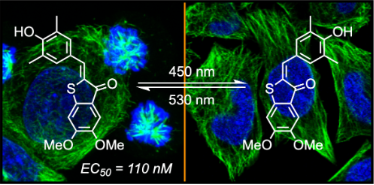
- neurons; the regulation and functioning of these processes is still not satisfactorily understood [1][2][3][4]. The MT cytoskeleton is a finely tuned complex system that is highly conserved through evolution. Direct genetic modifications of tubulin that affect its functions risk causing a diversity of




Bacterial terpene biosynthesis: challenges and opportunities for pathway engineering
Beilstein J. Org. Chem. 2019, 15, 2889–2906, doi:10.3762/bjoc.15.283
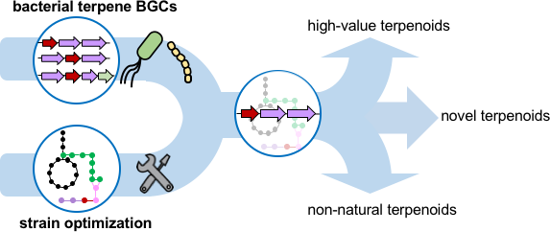
- during evolution. In contrast, the underlying mechanistic logic of terpene biosynthesis is based on repetitive electrophilic and nucleophilic functionalities in each oligomeric substrate, similar to nonmodular type II PKSs, coupled with conformational flexibility for enzyme-mediated juxtaposition of
- nature [39]. Therefore, evolution would likely favor organisms that can generate and retain chemical diversity at a low cost [38]. As a result, producing and “screening” a large number of specialized metabolites for potent TCs that can generate multiple products from simple building blocks is a huge
- reported [40]. In fact, different pathways have evolved in plants, fungi, and bacteria for this fascinating compound family in an extreme case of convergent evolution [41][42]. While the plant and fungal biosynthetic pathways are well studied [42], the bacterial pathway was studied to a lesser degree until





