


Search results
Search for "stabilization" in Full Text gives 444 result(s) in Beilstein Journal of Organic Chemistry. Showing first 200.
Synthesis, optical and electrochemical properties of (D–π)2-type and (D–π)2Ph-type fluorescent dyes
Beilstein J. Org. Chem. 2022, 18, 1047–1054, doi:10.3762/bjoc.18.106
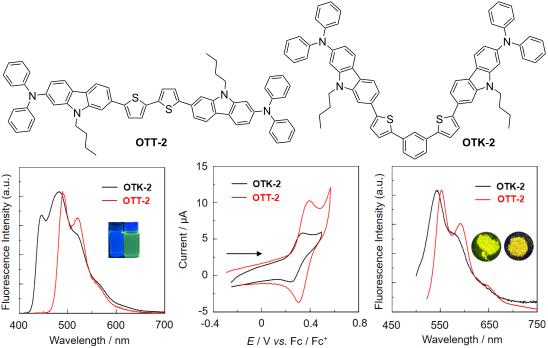
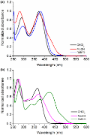
- units (Figure 3). Consequently, the fact reveals that compared to the (D–π)2Ph-type structure, the (D–π)2-type structure can cause not only the stabilization of the LUMO energy level but also the delocalization of the HOMO and LUMO over the whole molecule, leading to a narrower HOMO–LUMO band gap of OTT
- properties both in solution and the solid state, but also can cause delocalization of the HOMO and the LUMO over the whole molecule as well as the stabilization of the LUMO energy level, leading to a narrower HOMO–LUMO band gap of OTT-2 than OTK-2, that is, the bathochromic shift of photoabsorption band from


First series of N-alkylamino peptoid homooligomers: solution phase synthesis and conformational investigation
Beilstein J. Org. Chem. 2022, 18, 845–854, doi:10.3762/bjoc.18.85
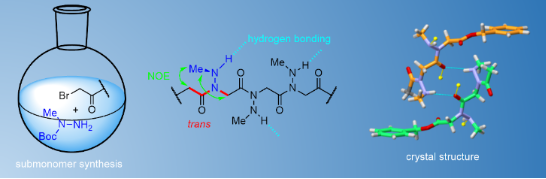
- backbone stabilization through intra-residue hydrogen bonds but also to intermolecular associations. The high capacity of N-(methylamino)peptoids to establish intermolecular hydrogen bonds was notably deduced from pronounced concentration-dependent N–H chemical shift variation in 1H NMR and the


Heteroleptic metallosupramolecular aggregates/complexation for supramolecular catalysis
Beilstein J. Org. Chem. 2022, 18, 597–630, doi:10.3762/bjoc.18.62
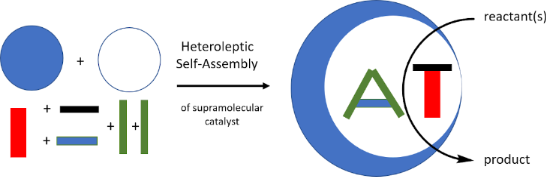
- , thermodynamic stabilization quantitatively drives the reaction to the hetero-assembly 59, simply by mixing the components in the correct stoichiometric ratio (Figure 13). Various nanorotor assemblies are possible by this approach. The dynamics of the four-component rotor 59 = [Cu2(55)(57)(60)]2+ cannot be


Comparative study of thermally activated delayed fluorescent properties of donor–acceptor and donor–acceptor–donor architectures based on phenoxazine and dibenzo[a,j]phenazine
Beilstein J. Org. Chem. 2022, 18, 459–468, doi:10.3762/bjoc.18.48
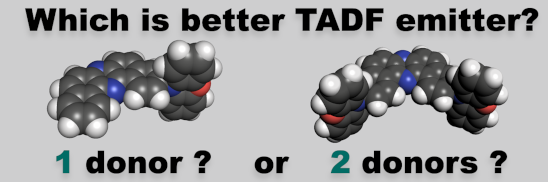
- –A(–D) structures, while an additional donor unit led to a slight red shift in photoluminescence by the stabilization of the charge-transfer singlet excited states (1CT). Most importantly, the additional donor unit not only lowers the 1CT energy but also is bringing the T1 energy to the approximation


A resorcin[4]arene hexameric capsule as a supramolecular catalyst in elimination and isomerization reactions
Beilstein J. Org. Chem. 2022, 18, 337–349, doi:10.3762/bjoc.18.38
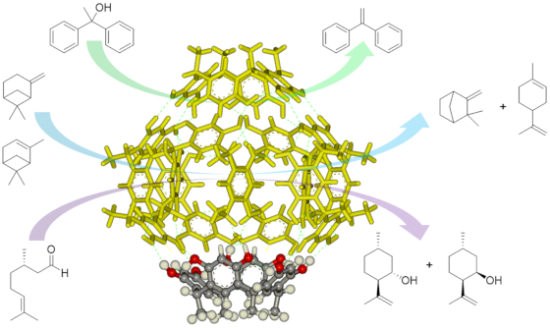
- the active site of the enzyme. Once bound, substrate activation is carried out by specific amino acid side chains that adorn the inner surface of the cavity by means of a combination of covalent and/or weak intermolecular interactions leading to the stabilization of intermediate species and transition
- all these reactions is the combination of its weak Brønsted acidity [42] that, by protonation of the substrate, leads to the formation of cationic species [43] and the stabilization of the latter through cation–π interactions [44] within the electron-rich aromatic cavity of the capsule, thus providing
- excess of tetrabutylammonium bromide (3) as a competitive guest for the capsule, to demonstrate the importance of the presence of an accessible cavity, and iii) acetic acid (4) in order to mimic only the Brønsted acidity of the capsule without providing the stabilization properties related to the


Efficient synthesis of ethyl 2-(oxazolin-2-yl)alkanoates via ethoxycarbonylketene-induced electrophilic ring expansion of aziridines
Beilstein J. Org. Chem. 2022, 18, 70–76, doi:10.3762/bjoc.18.6
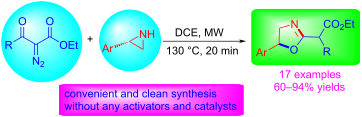
- p–π conjugation. This stabilization is not possible with alkyl groups, explaining why 2-alkylaziridines did not generate the corresponding products. Intermediates C undergo an intramolecular nucleophilic attack to yield ethyl (oxazolidin-2-ylidene)alkanoates D, which further isomerize to more stable




Photophysical, photostability, and ROS generation properties of new trifluoromethylated quinoline-phenol Schiff bases
Beilstein J. Org. Chem. 2021, 17, 2799–2811, doi:10.3762/bjoc.17.191
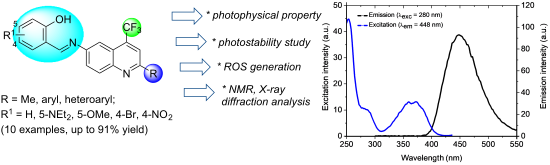
- = Ph, R1 = 4-NO2) were analyzed, a significant difference was observed compared to the other compounds in the series 3. Thus, we can say that these characteristics exist because there is more stabilization of the excited state in a polar environment (DMSO and MeOH), adding to a possible push–pull
- ) and 3bc (R = Ph, R1 = 5-OMe) (Table 1). These values observed according to the solvent may be related to the stabilization of the excited state in each solution. Regarding the Stokes shifts (SS), higher values were observed for derivatives in a more polar solvent (DMSO and MeOH) than in CHCl3 (Table 1
- ) and also depending on the electronic properties of the substituents in the molecules. According to the characteristics and properties described herein, once again, we can attribute these differences to the stabilization of the excited states in more polar solvents combined with the properties of




The PIFA-initiated oxidative cyclization of 2-(3-butenyl)quinazolin-4(3H)-ones – an efficient approach to 1-(hydroxymethyl)-2,3-dihydropyrrolo[1,2-a]quinazolin-5(1H)-ones
Beilstein J. Org. Chem. 2021, 17, 2787–2794, doi:10.3762/bjoc.17.189
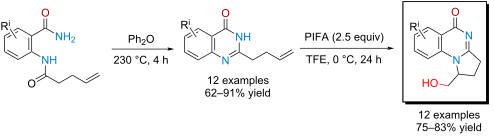
- nitrogen atom to nitrenium intermediates occurred initially; further stabilization of these species resulted in the formation of hydroxylated lactams [44][45][46][47][48], azaspirocycles [49][50][51][52][53], or tricyclic nitrogen-containing heterocycles [44][53]. Our study commenced with the synthesis of


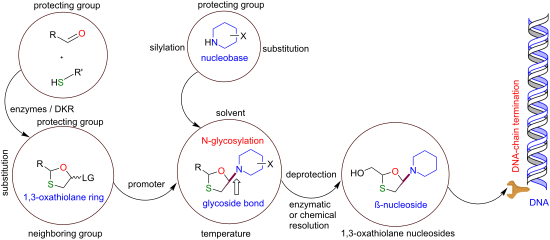
Synthetic strategies toward 1,3-oxathiolane nucleoside analogues
Beilstein J. Org. Chem. 2021, 17, 2680–2715, doi:10.3762/bjoc.17.182


Synthesis of phenanthridines via a novel photochemically-mediated cyclization and application to the synthesis of triphaeridine
Beilstein J. Org. Chem. 2021, 17, 2340–2347, doi:10.3762/bjoc.17.152
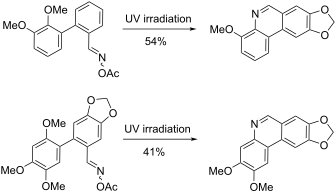
- ) would allow for the stabilization of the radical by the methoxy substituent in the ortho position to the departing substituent. The methoxy substituent then presumably loses a hydrogen radical to form acetic acid and intermediate 17c. Further loss of formaldehyde would restore aromaticity and furnish


Halides as versatile anions in asymmetric anion-binding organocatalysis
Beilstein J. Org. Chem. 2021, 17, 2270–2286, doi:10.3762/bjoc.17.145
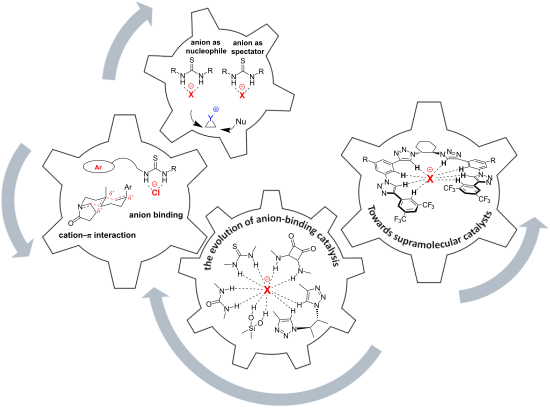
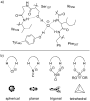
- enantioselective polycylization reaction of 51 (Scheme 11) [69]. Modification of the aromatic ring system on the chiral side of the thiourea catalyst proved to be crucial, as both the reactivity and the enantioselectivity were significantly influenced by the stabilization of the cationic substrate and not by



Chemical syntheses and salient features of azulene-containing homo- and copolymers
Beilstein J. Org. Chem. 2021, 17, 2164–2185, doi:10.3762/bjoc.17.139
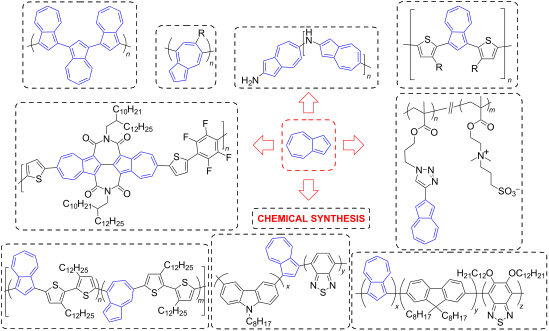
- better stabilization of cation radicals, di-, and polycations by the unique dipolar nature of azulene, and in the case of iodine doping, it was attributed to the strengthened spin–spin interaction arising due to a high radical concentration. Recently, it was also established that the water-dispersible
- protonated 17 (1.32 eV) was also reduced compared to its neutral form (1.49 eV). These polymers, unlike 1,3-polyazulene 5, displayed reversible acid–base chemistry. With the help of absorption spectroscopy and EPR analysis, the authors could establish the fact that effective stabilization of 6 π-electron
- sensitivity could be attributed to the resonance stabilization of the positive charge on the five-membered ring of the azulene by the electron-donating groups at the 2-position. These polymers were quite robust as they underwent several cycles of electro-cycling before degradation. Azulene-fluorene copolymers




Cationic oligonucleotide derivatives and conjugates: A favorable approach for enhanced DNA and RNA targeting oligonucleotides
Beilstein J. Org. Chem. 2021, 17, 1828–1848, doi:10.3762/bjoc.17.125
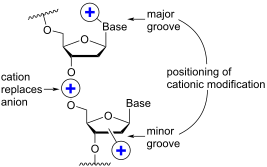
- effects. The best stabilization was obtained for the 2-(aminoethyl)guanidine monomer 45 and tris(2-aminoethyl)amine (monomer 44) variants [80]. Another chemical group utilized for the 2’-modification is 2’-O-carbamoyl [85][86][87]. However, it has proven difficult to stabilize the duplex formed between
- been synthesized [84]. When incorporated centrally in a 2’-OMe-RNA ON, a significant stabilization relative to that of 2′-O-carbamoyluridine was observed against the RNA target. However, relative to the control ON carrying pure 2’-OMe RNA modified ONs, monomer 46 had an affinity-lowering effect [84]. A
- giving the best stabilization (up to 5.7 °C for four incorporations in an 18-mer ON relative to the control), whereas all gave similar and/or decreased thermal stability against RNA relative to the natural control ON [97]. It is noteworthy to mention that all monomers allowed the design of ASOs that were


Sustainable manganese catalysis for late-stage C–H functionalization of bioactive structural motifs
Beilstein J. Org. Chem. 2021, 17, 1733–1751, doi:10.3762/bjoc.17.122

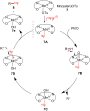
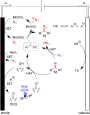
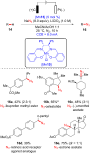
- anticonvulsant drug used to treat epilepsy and anxiety disorders [39], and an analogue of pregabalin was transformed to azidated derivative 11a. It is noteworthy that positional selectivity was observed for the α-position of the carbamate functional group due to the stabilization of the carbon radical by the








Chemical approaches to discover the full potential of peptide nucleic acids in biomedical applications
Beilstein J. Org. Chem. 2021, 17, 1641–1688, doi:10.3762/bjoc.17.116
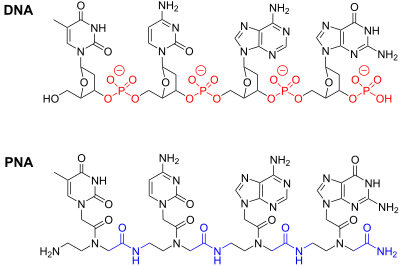
- , most likely because of enhanced stacking of the bicyclic π-system [104][105]. However, beyond the original studies, 7-Cl-bT has not been further explored for either duplex or triplex stabilization. Similar to L, substitution of thymine with 2-thiouracil (s2U) or 5-halouracils (e.g., BrU, Figure 6
- ) strengthens the Hoogsteen recognition of A. The stabilization provided by these nucleobases is most likely due to improved π-stacking, which may be sensitive to sequence context that needs to be further studied [106][107]. MacKay and co-workers designed an extended nucleobase based on isoorotic acid (Io4








Methodologies for the synthesis of quaternary carbon centers via hydroalkylation of unactivated olefins: twenty years of advances
Beilstein J. Org. Chem. 2021, 17, 1565–1590, doi:10.3762/bjoc.17.112
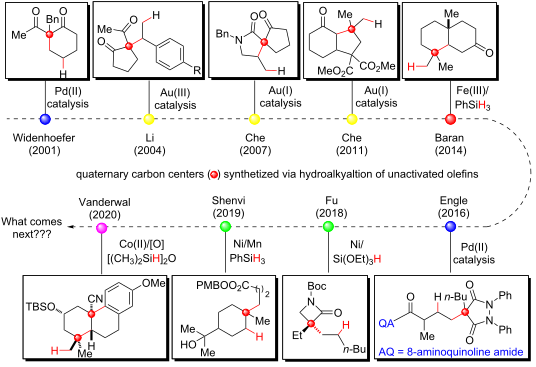
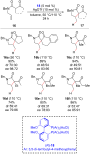
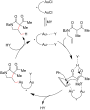
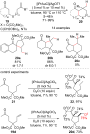
- reaction was observed in its absence. The authors highlighted the role of the solvent hexafluoro-2-propanol (HFIP) in the stabilization of the radical cation induced by PET and its assistance in the hydrogen shift process. Miscellaneous Lewis acid catalysis in olefin hydroalkylation reactions The ability




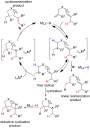
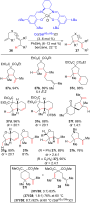
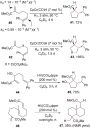


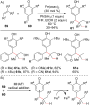
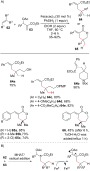
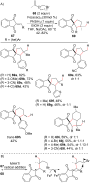
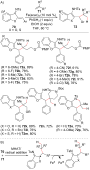


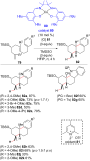

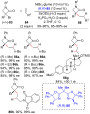


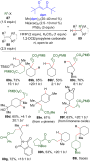


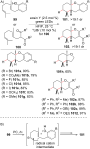
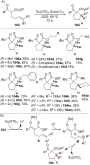
Double-headed nucleosides: Synthesis and applications
Beilstein J. Org. Chem. 2021, 17, 1392–1439, doi:10.3762/bjoc.17.98
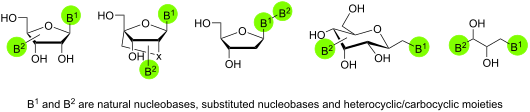
- followed by their duplex formation studies against complimentary oligonucleotide strands had described a very selective zipper-interaction [35], whereas a relative stabilization was observed due to stacking of these additional nucleobases across the minor groove [31]. The biological activity of the acyclic
- duplexes. The introduction of two double-headed nucleosides in two complementary DNA sequences forming a DNA-zipper motif showed a stabilization of the duplex and increased base–base stacking interactions. Nielsen and co-workers [30][31][65] synthesized double-headed nucleosides 5′-(S)-C-(thymine-1-yl
- the second nucleobase thymine through Mitsunobu reaction followed by deprotection steps in the presence of TBAF and methanolic ammonia (Scheme 28) [30][65]. The nucleoside monomer 118 was phosphitylated and then incorporated into oligodeoxynucleotides but stabilization in the secondary structures due





Synthesis of 10-O-aryl-substituted berberine derivatives by Chan–Evans–Lam coupling and investigation of their DNA-binding properties
Beilstein J. Org. Chem. 2021, 17, 991–1000, doi:10.3762/bjoc.17.81
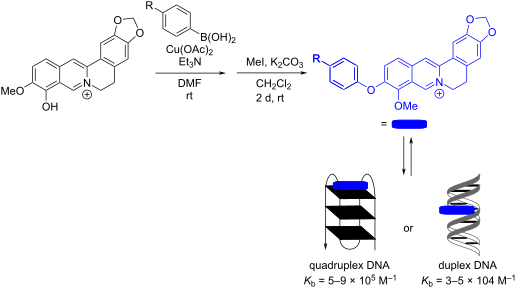
- as CD and LD spectroscopy. Fluorimetric DNA melting analysis with different types of quadruplex DNA revealed a moderate stabilization of the telomeric quadruplex-forming oligonucleotide sequence G3(TTAG3)3. The derivatives showed a moderate affinity towards quadruplex DNA (Kb = 5–9 × 10⁵ M−1) and ct
- forms, the effect of thermally induced unfolding of dye-labeled, quadruplex-forming oligonucleotides in the presence of the ligands was studied. In general, the binding of the ligand to the G4-DNA leads to a stabilization and thus to an increasing melting temperature of the DNA (Table 2). This effect of
- quadruplex structures. Although the ∆Tm values do not necessarily correlate directly with the binding affinity [23], as they only refer to the stabilization at elevated temperatures, the data show that these ligands do not bind extremely strong to G4-DNA. Nevertheless, as these screening experiments revealed


Metal-free glycosylation with glycosyl fluorides in liquid SO2
Beilstein J. Org. Chem. 2021, 17, 964–976, doi:10.3762/bjoc.17.78
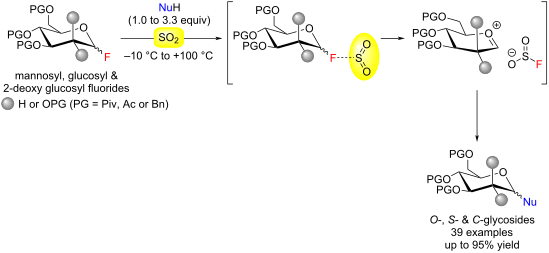
- halosulfites may dissociate. Thus, we proposed that a plausible formation of the fluorosulfite species and stabilization of the oxocarbenium ion intermediate could facilitate the glycosylation with glycosyl fluorides as glycosyl donors in liquid SO2 without the need of external promoter. Results and Discussion
- stabilization of the oxocarbenium ion intermediate in a form of a dioxolenium ion by the remote protecting group in C3 or C6 position could be the reason for such a good α-selectivity in liquid SO2 [75]. Within this study, several experiments were also carried out to test the reactivity of peracylated manno



Prins cyclization-mediated stereoselective synthesis of tetrahydropyrans and dihydropyrans: an inspection of twenty years
Beilstein J. Org. Chem. 2021, 17, 932–963, doi:10.3762/bjoc.17.77
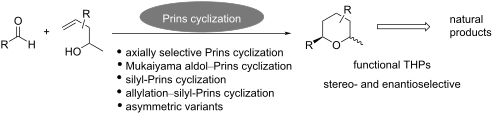
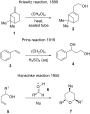
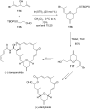
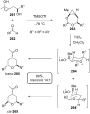
- and co-workers explained the formation of all-cis-2,4,6-trisubstituted THPs with the help of density functional theory (DFT) and stated that in the presence of an external nucleophile, the stabilization of the carbocation intermediate is favored through hyperconjugation [28]. The vacant p-orbital of








Beyond ribose and phosphate: Selected nucleic acid modifications for structure–function investigations and therapeutic applications
Beilstein J. Org. Chem. 2021, 17, 908–931, doi:10.3762/bjoc.17.76
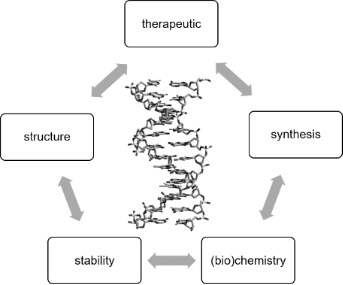
- increased thermal stability when binding to either DNA or RNA complements with Tm increases of +1 to +8 and +2 to +10 °C, respectively [127][128][130][131][132][133][134]. The higher stabilization of RNA can be attributed to the preorganization of LNA nucleosides towards formation of A-form duplexes [128
- revealed that thermal stabilization may be attributed to nonconventional hydrogen bonds in the backbone [195][196][197]. Gene silencing by RNAi has also been explored with siRNA containing FANA residues [198]. These studies have shown that FANA is accommodated in the sense strand and 5'-end and 3'-termini
- modified with 4'-fluoro modifications have more labile glycosidic linkages under similar conditions [203][204]. Rosenberg attributed this contrast to the electronegativity differences between the groups and the effect this would have on the stabilization of the resulting oxocarbenium ion [202]. Oligomers




Synthesis and physicochemical evaluation of fluorinated lipopeptide precursors of ligands for microbubble targeting
Beilstein J. Org. Chem. 2021, 17, 511–518, doi:10.3762/bjoc.17.45
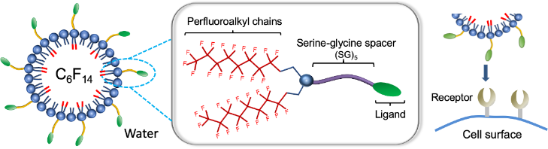
- ]. It is noteworthy that most of the phospholipid-stabilized MBs investigated in research and preclinical development are stabilized by a fluorocarbon (FC) gas [11][31][34]. FCs are known to contribute to MB stabilization through an osmotic effect [31]. In addition, FCs were also found to act as co


The synthesis of chiral β-naphthyl-β-sulfanyl ketones via enantioselective sulfa-Michael reaction in the presence of a bifunctional cinchona/sulfonamide organocatalyst
Beilstein J. Org. Chem. 2021, 17, 494–503, doi:10.3762/bjoc.17.43
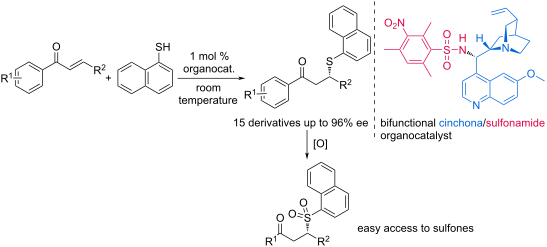
- ). The solvent effects on the SMA of the chalcone derivatives and naphthalene-1-thiol are summarized in Figure 2. This behavior might be related to the better stabilization of the transition state of the substrates containing electron-withdrawing substituents or halogen atoms with THF, or vice versa. In


Biochemistry of fluoroprolines: the prospect of making fluorine a bioelement
Beilstein J. Org. Chem. 2021, 17, 439–460, doi:10.3762/bjoc.17.40
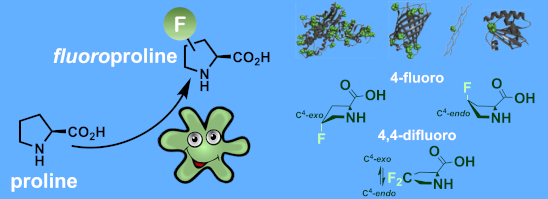
- thermodynamic stabilization of proteins [29][30][31]. The regulation of the proline content in proteins is an evolutionary strategy for environmental adaptation in extremophilic organisms. Proline is of a higher abundance in the proteomes of thermophilic organisms (organisms living at a high temperature) and of
- modifications of proline residues are sparse. The most common among them is hydroxylation at position 4 by molecular oxygen, which is mediated by prolyl-4-hydroxylase [34]. This process has a remarkable relevance in the stabilization of collagen in higher organisms [35]. The experimental expression of the
- the conformations. However, R-Flp stabilizes the C4-exo-pucker, while S-Flp stabilizes the C4-endo system [51]. It is believed that Dfp has no conformational preference akin to proline [52]. The stabilization of the puckers is one of the most prominent features of fluoroprolines that justifies their


Synthesis of trifluoromethyl ketones by nucleophilic trifluoromethylation of esters under a fluoroform/KHMDS/triglyme system
Beilstein J. Org. Chem. 2021, 17, 431–438, doi:10.3762/bjoc.17.39
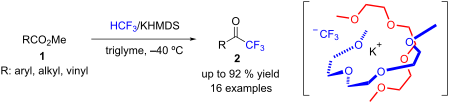
- success of our DMF-free systems lies in the generation of sterically demanding cationic species, [P4-t-Bu]H+ or glyme capsulized K+, resulting in the stabilization of CF3− from HCF3 by ion separation. The sterically demanding [P4-t-Bu]H+ or encapsulation of K+ by glymes effectively inhibits the contact of





