


Search results
Search for "substitution pattern" in Full Text gives 230 result(s) in Beilstein Journal of Organic Chemistry. Showing first 200.
Ring-closing-metathesis-based synthesis of annellated coumarins from 8-allylcoumarins
Beilstein J. Org. Chem. 2018, 14, 2991–2998, doi:10.3762/bjoc.14.278
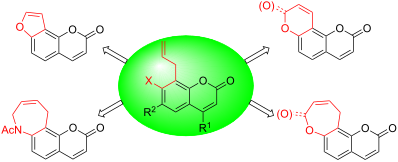
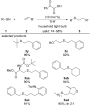
- substitution pattern 15 was investigated starting from acrylate 12d (Scheme 2). The isomerization of the 8-allyl substituent to a prop-1-enyl substituent under the conditions used for the synthesis of precursors 10 (Table 2) stopped at 50% conversion. Higher catalyst loading and an increased reaction


Volatiles from the hypoxylaceous fungi Hypoxylon griseobrunneum and Hypoxylon macrocarpum
Beilstein J. Org. Chem. 2018, 14, 2974–2990, doi:10.3762/bjoc.14.277
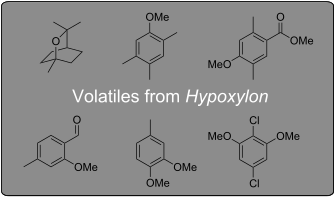
- derivatives. Their structures could only be unambiguously determined by comparison to all isomers with different substitution patterns. The substitution pattern of the main compound from H. griseobrunneum, the new natural product 2,4,5-trimethylanisole, was explainable by a polyketide biosynthesis mechanism
- exhibited the mass spectra shown in Figure 4E and Figure 4F that were similar to database spectra of 2,5-dimethyl-p-anisaldehyde (25) and methyl 2,5-dimethyl-p-anisate (26). The substitution pattern of these compounds is well explained by polyketide biosynthesis logic (Scheme 3). Starting from ACP-bound
- ). The chlorinated compound 2,5-dichloro-1,3-dimethoxybenzene (46) was also rigorously identified by comparison to all possible regioisomers that we had synthesised in a previous study [18]. Interestingly, the substitution pattern for the compound from H. macrocarpum is different to an isomer from the




Stereodivergent approach in the protected glycal synthesis of L-vancosamine, L-saccharosamine, L-daunosamine and L-ristosamine involving a ring-closing metathesis step
Beilstein J. Org. Chem. 2018, 14, 2949–2955, doi:10.3762/bjoc.14.274
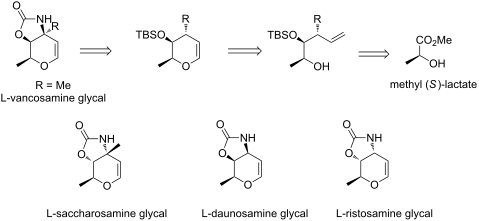
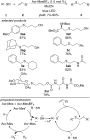
- Hoveyda–Grubbs second-generation (HG-II) catalyst to deliver the corresponding dihydropyrans 16 in excellent yields given that this kind of reaction can be sensitive to the substitution pattern contained in the substrate [11]. After silyl deprotection, the key C–H amination precursors 17a,b for the


Pd-Catalyzed microwave-assisted synthesis of phosphonated 13α-estrones as potential OATP2B1, 17β-HSD1 and/or STS inhibitors
Beilstein J. Org. Chem. 2018, 14, 2838–2845, doi:10.3762/bjoc.14.262
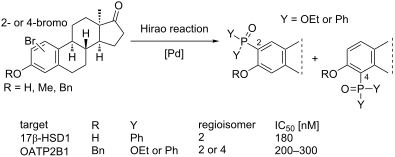
- 2–6, which differ in regioisomerism and/or nature of the C-3 substituent. In order to get certain functionalized 13α-estrone derivatives with a different substitution pattern for biological investigations, not only 2-bromo 1–3, but 4-bromo compounds 4–6 were also coupled with the two reagents 7a and


Assembly of fully substituted triazolochromenes via a novel multicomponent reaction or mechanochemical synthesis
Beilstein J. Org. Chem. 2018, 14, 2689–2697, doi:10.3762/bjoc.14.246
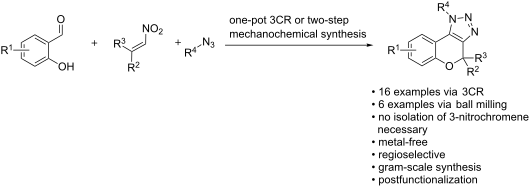
- electron-rich triazolochromenes 5b and 5c, resulting in a drastic loss in yield for the more sterically hindered compound 5c. Furthermore, electron-deficient and halogenated analogs 5d–f were successfully synthesized. In a next series, we examined the substitution pattern on the nitroalkene part. Electron




Microwave-assisted synthesis of biologically relevant steroidal 17-exo-pyrazol-5'-ones from a norpregnene precursor by a side-chain elongation/heterocyclization sequence
Beilstein J. Org. Chem. 2018, 14, 2589–2596, doi:10.3762/bjoc.14.236
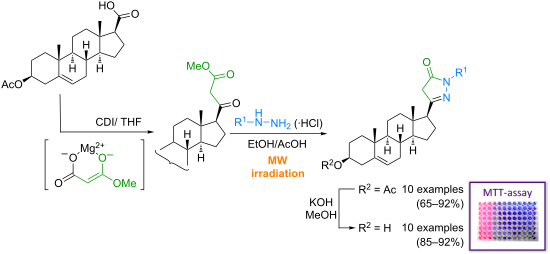
- , keto–enol tautomerism can be challenging and is of special importance in biological systems, chemical reactivity, and molecular recognition [18]. The tautomeric equilibrium in solution is strongly influenced by the substitution pattern of the heterocyclic ring, the polarity and protic nature of the


Design and synthesis of C3-symmetric molecules bearing propellane moieties via cyclotrimerization and a ring-closing metathesis sequence
Beilstein J. Org. Chem. 2018, 14, 2537–2544, doi:10.3762/bjoc.14.230
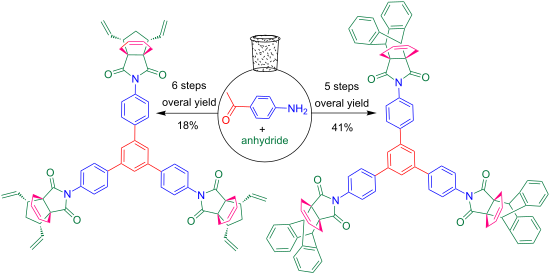
- (−)-aspidophytine (5) differs from 1-acetylaspidoalbidine (4) only in the degree of unsaturation and the substitution pattern on the aromatic ring (Figure 1). The design of propellanes demands unique synthetic methods and these include: manganese or palladium-catalyzed transformations [10], the Diels–Alder (DA


Cobalt bis(acetylacetonate)–tert-butyl hydroperoxide–triethylsilane: a general reagent combination for the Markovnikov-selective hydrofunctionalization of alkenes by hydrogen atom transfer
Beilstein J. Org. Chem. 2018, 14, 2259–2265, doi:10.3762/bjoc.14.201

- , and medicinal chemistry [56][57], we investigated the scope of this transformation (Scheme 3). By varying the alkene substitution pattern, we determined that the coupling of tertiary radicals is more efficient than secondary radicals. For example, methallyl p-methoxybenzoate (3a) and prenyl p


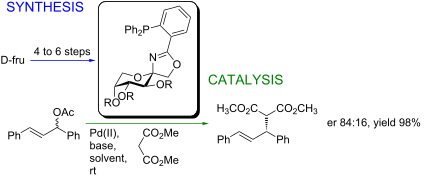
D-Fructose-based spiro-fused PHOX ligands: synthesis and application in enantioselective allylic alkylation
Beilstein J. Org. Chem. 2018, 14, 2082–2089, doi:10.3762/bjoc.14.182
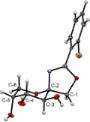
- the Ritter reaction with ether-protected carbohydrates is β as well, 10j was benzylated and 10b was obtained (Scheme 4). This proves the structure of 10b as well. The ratio of the anomers produced by the Ritter reaction depends on the substitution pattern of the pyranoside used and varies from only β
- different substitution pattern at positions 3, 4 and 5. PG: protective group, X: leaving group. Activation of 7 to oxocarbenium ion 9 in the Ritter reaction. Zemplén deacetylation of 10i. Benzylation of 10j to give 10b. Plausible mechanism of the Ritter reaction. For better clarity C-2 is not shown in




Applications of organocatalysed visible-light photoredox reactions for medicinal chemistry
Beilstein J. Org. Chem. 2018, 14, 2035–2064, doi:10.3762/bjoc.14.179
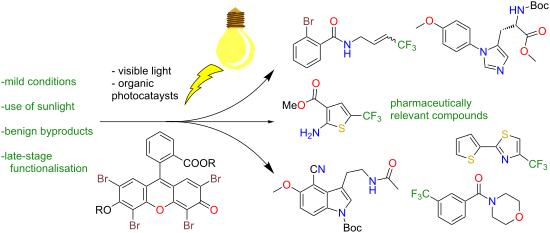
- authors do not justify the selection of the particular substitution pattern with the C6 methyl and the C2 heteroatom methyl, e.g., ease of access to this type of DHPM core. Therefore, it would be interesting to see whether this method is compatible with other DHPM systems. In the same publication, the
- regioselective and follows the same substitution pattern as the electrophilic substitution of electron-rich heterocycles. Although highly elaborated structures are not presented, the mild reaction conditions and general functional group compatibility that the reaction exhibits make it well suited for LSF


Synthesis of 9-arylalkynyl- and 9-aryl-substituted benzo[b]quinolizinium derivatives by Palladium-mediated cross-coupling reactions
Beilstein J. Org. Chem. 2018, 14, 1871–1884, doi:10.3762/bjoc.14.161
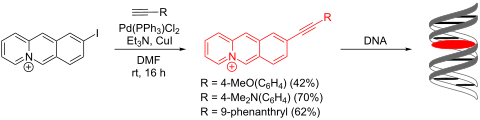
- [14][15][16][17][18] and whose interaction with the nucleic acid may be used for fluorimetric detection of the latter [19][20]. To further exploit the DNA-binding properties of this specific class of cationic hetarenes, synthetic routes to novel derivatives with the desired substitution pattern and


The phenyl vinyl ether–methanol complex: a model system for quantum chemistry benchmarking
Beilstein J. Org. Chem. 2018, 14, 1642–1654, doi:10.3762/bjoc.14.140
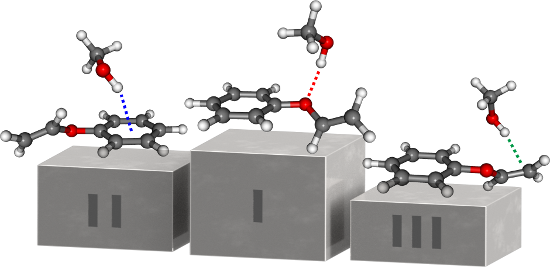
- OH∙∙∙O structure was identified. In a systematic study by the Suhm group on complexes of anisole derivatives with methanol, a balance between OH∙∙∙O and OH∙∙∙π structures being very sensitive to the substitution pattern at the anisole moiety was identified [17][18]. In previous multi-spectroscopic


Direct electrochemical generation of organic carbonates by dehydrogenative coupling
Beilstein J. Org. Chem. 2018, 14, 1578–1582, doi:10.3762/bjoc.14.135
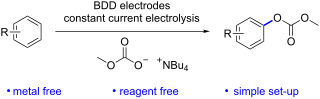
- studies on a potential scope of aromatic compounds, the symmetric 1,3,5-threefold substitution pattern showed best selectivity according to GC–MS measurements. Since the nucleophilic attack is controlled by sterics, non-symmetric substitution patterns gave weak signals and product mixtures. Generally, the
- nucleophilicity of carbonates is limited and therefore, the choice of suitable arenes is crucial. Heterofunctionalizations like fluoro, chloro, and methoxy groups are generally accepted, but it depends on the substitution pattern. The sensitive interplay of inefficient oxidation at highly positive oxidation


Recent advances in phosphorescent platinum complexes for organic light-emitting diodes
Beilstein J. Org. Chem. 2018, 14, 1459–1481, doi:10.3762/bjoc.14.124
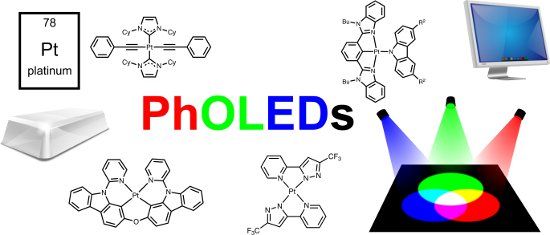
- group of Chi [16] who has recently described a series of neutral platinum(II) complexes bearing isoquinolylpyrazolates, complexes 4–7 in Figure 3 [26]. Control on the intermolecular interactions was exerted through the substitution pattern, yielding solids that exhibited mechano- and solvatochromic






Hypervalent iodine-guided electrophilic substitution: para-selective substitution across aryl iodonium compounds with benzyl groups
Beilstein J. Org. Chem. 2018, 14, 1039–1045, doi:10.3762/bjoc.14.91
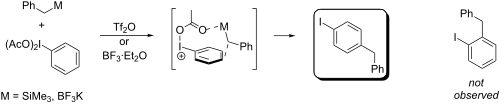
- group. The latter of which would be consistent with the mechanism currently theorized for making alkenyl and alkynyl hypervalent iodine species [18][19][20][21][22]. While investigating the substrate scope it was found that the substitution pattern is dependent upon the substituents on the I(III
- the use of BF3·Et2O seemed to be superior to Tf2O in the case of some I(III) reactants. In all the reactions tested, there were no products formed with the ortho-substitution pattern in contrast to the RICR, however, it is clear that electron-donating groups influence the ring substitution. When
- ). These key features in the substitution pattern of the substrate scope led to experiments where tests were performed to better understand, if the HIGES reaction is a concerted mechanism, like RICR, or a stepwise process. In the article and further in a footnote of Khatri and Zhu’s publication [11


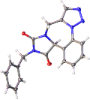
Sequential Ugi reaction/base-induced ring closing/IAAC protocol toward triazolobenzodiazepine-fused diketopiperazines and hydantoins
Beilstein J. Org. Chem. 2018, 14, 626–633, doi:10.3762/bjoc.14.49
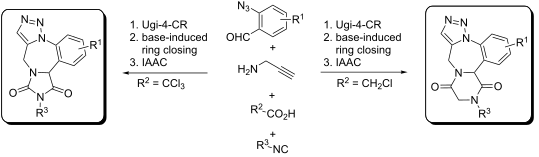
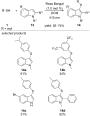
- , we investigated the effect of the substitution pattern on the propargylamine 2. For this, we chose easily available propargylamines 2b and 2c which gave moderate to good yields (60 and 40%, respectively) of diketopiperazine-fused triazolobenzodiazepine 7e and 7f. Furthermore, halogen substituents





Recent advances on organic blue thermally activated delayed fluorescence (TADF) emitters for organic light-emitting diodes (OLEDs)
Beilstein J. Org. Chem. 2018, 14, 282–308, doi:10.3762/bjoc.14.18
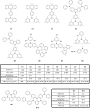
- substitution pattern of the carbazole unit on the photophysical properties. While maintaining the same number of carbazole units on the emitter and by varying the substitution pattern of the carbazole core, only a weak influence on the EL characteristics was evidenced [55]. In fact, performances only varied by




Photocatalytic formation of carbon–sulfur bonds
Beilstein J. Org. Chem. 2018, 14, 54–83, doi:10.3762/bjoc.14.4
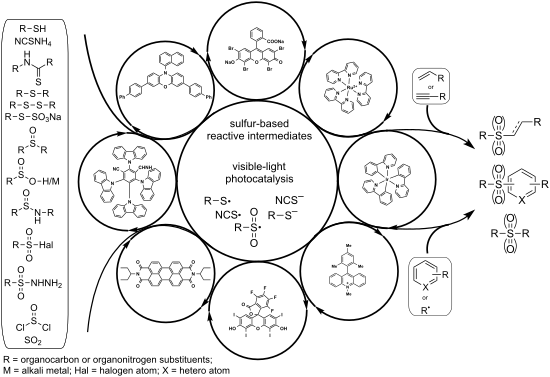
- sulfenylated dienes by dehydration. A series of aryl thiols with different steric and electronic properties give high yields of the thiol–yne products. Noteworthy is the high E-selectivity of the resulting alkene. Dependent on the substitution pattern of the aryl thiol a ratio up to 60:1 was observed due to








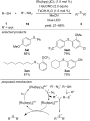

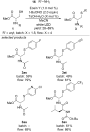
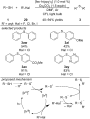

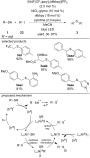

















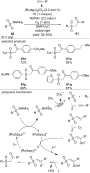

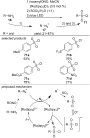
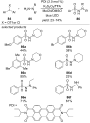

CF3SO2X (X = Na, Cl) as reagents for trifluoromethylation, trifluoromethylsulfenyl-, -sulfinyl- and -sulfonylation and chlorination. Part 2: Use of CF3SO2Cl
Beilstein J. Org. Chem. 2017, 13, 2800–2818, doi:10.3762/bjoc.13.273
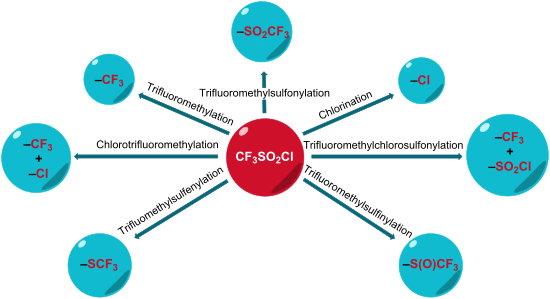
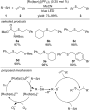
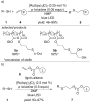
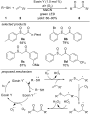
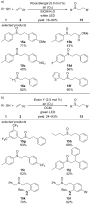
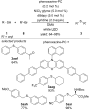
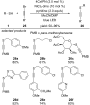
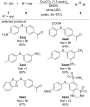
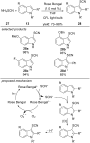
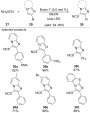
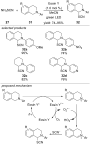
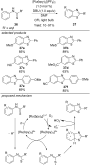
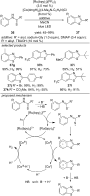
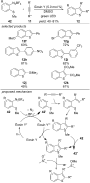
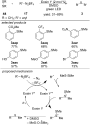
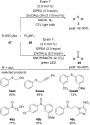
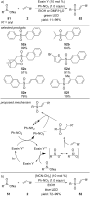
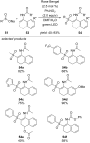
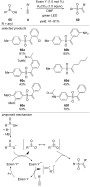
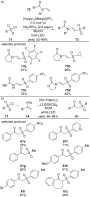
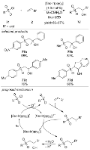
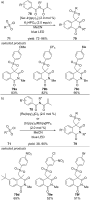
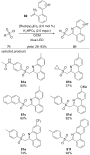
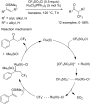
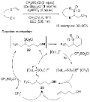
- also suitable to carry out this reaction [12]. The same tendencies in term of reactivity of the substrates depending on their substitution pattern was observed, and similar yields were achieved (Scheme 10). Similarly, Ir(ppy)2(dtbbpy)PF6 was also described as an appropriate catalyst for this cascade
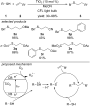
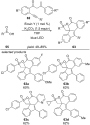
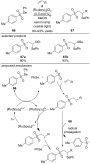
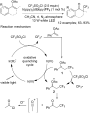
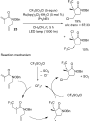
- selectively place from a direction anti to the CF3 group, probably because of electrostatic repulsion. The reaction proceeded smoothly with prop-1-yn-1-ylbenzene derivatives, indifferently to the substitution pattern of the aryl moiety. As for the R group, alkyl, ester or amide moieties were well-tolerated








Synthesis of 1,3-cis-disubstituted sterically encumbered imidazolidinone organocatalysts
Beilstein J. Org. Chem. 2017, 13, 2577–2583, doi:10.3762/bjoc.13.254
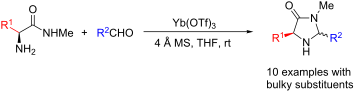
- subtle differences in the substitution pattern a modular approach for their preparation is highly desirable. A simple retrosynthetic cut of the five-membered ring delivers an amino acid methyl amide and a carbaldehyde as starting materials. Chirality is commonly introduced by the use of derivatives of


Syntheses, structures, and stabilities of aliphatic and aromatic fluorous iodine(I) and iodine(III) compounds: the role of iodine Lewis basicity
Beilstein J. Org. Chem. 2017, 13, 2486–2501, doi:10.3762/bjoc.13.246
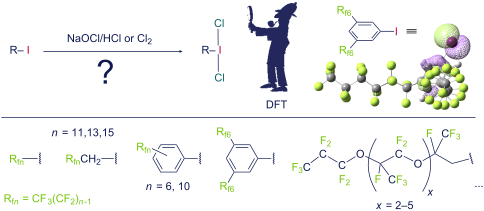
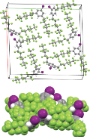
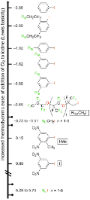
- substitution pattern was evident from the 1H NMR spectrum. When Cl2 gas was sparged through a CF3C6H5 solution of 1,3,5-(Rf6)2C6H3I at −30 °C to −35 °C, the sample turned bright yellow. Two aliquots were removed. The 1H NMR spectrum of one (Figure 1b) showed two downfield shifted signals (cf. Figure 1a), which


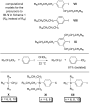

One-pot syntheses of blue-luminescent 4-aryl-1H-benzo[f]isoindole-1,3(2H)-diones by T3P® activation of 3-arylpropiolic acids
Beilstein J. Org. Chem. 2017, 13, 2340–2351, doi:10.3762/bjoc.13.231
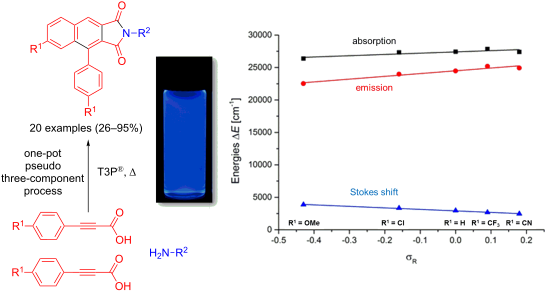
- can be detected and monitored by absorption and emission spectroscopy. Furthermore, the investigation of a substance library of various 2,3- and 1,8-naphthalene imides has shown that the electronic nature of the ground and the excited state is decisively influenced by variation of the substitution
- pattern of the naphthalene scaffold. Even the smallest polarity change in the solvent system effects their absorption and emission behavior [34][40]. Very recent investigations on naphthaleneimide derivatives revealed enormous phosphorescence lifetimes that are particularly interesting for imaging




Dialkyl dicyanofumarates and dicyanomaleates as versatile building blocks for synthetic organic chemistry and mechanistic studies
Beilstein J. Org. Chem. 2017, 13, 2235–2251, doi:10.3762/bjoc.13.221
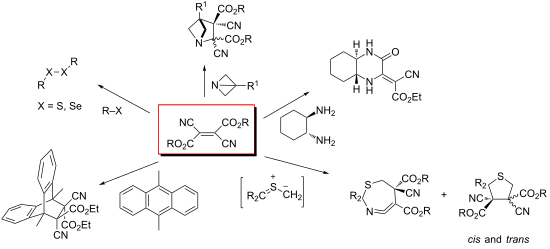
- - and Z-1b, and depending on the substitution pattern of the aziridine ring, the formation of the pyrrolidine derivative 34 occurred either with complete stereoselectivity or mixtures of isomeric products were obtained. The [3 + 2]-cycloaddition of the azomethine ylide E,Z-32a, formed via conrotatory


The chemistry and biology of mycolactones
Beilstein J. Org. Chem. 2017, 13, 1596–1660, doi:10.3762/bjoc.13.159









Base-promoted isomerization of CF3-containing allylic alcohols to the corresponding saturated ketones under metal-free conditions
Beilstein J. Org. Chem. 2017, 13, 1507–1512, doi:10.3762/bjoc.13.149

- intermolecular reprotonation by the solvent. The present interesting proton shift reaction was also computationally simulated [7] by employing (R,E)-6h with the substitution pattern of R1 = Ph and R2 = Me as the model substrate. For simplicity, 1,4-diazabicyclo[2.2.2]octane (DABCO) was employed as the





