


Search results
Search for "synthesis" in Full Text gives 3819 result(s) in Beilstein Journal of Organic Chemistry. Showing first 200.
Synthesis and characterization of a isothiouronium-calix[4]arene derivative: self-assembly and anticancer activity
Beilstein J. Org. Chem. 2025, 21, 2535–2541, doi:10.3762/bjoc.21.195
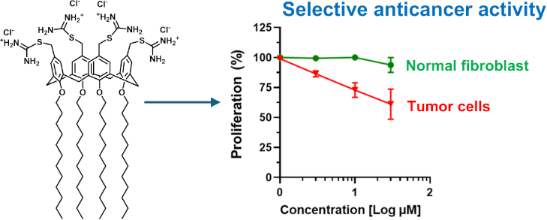
- , and low toxicity make calixarene derivatives valuable drug candidates against cancer. The aim of the present study was the synthesis and characterization of a calix[4]arene derivative in which known anticancer isothiouronium groups were clustered on a calix[4]arene scaffold bearing long C12 alkyl
- anticancer activity. The synthesis and structural characterization of compound 3 were carried out, and its self-assembly behavior in aqueous medium was investigated using dynamic light scattering (DLS) and electrophoretic light scattering (ELS). The anticancer potential of compound 3 was assessed in human
- renal carcinoma cells (786O) and normal human fibroblasts (SW1), and the tumor cells selectivity was evaluated. To elucidate the role of the isothiouronium groups, antiproliferative effects were also estimated on calix[4]arene precursor 1 lacking these functional groups. Results and Discussion Synthesis


Pentacyclic aromatic heterocycles from Pd-catalyzed annulation of 1,5-diaryl-1,2,3-triazoles
Beilstein J. Org. Chem. 2025, 21, 2524–2534, doi:10.3762/bjoc.21.194
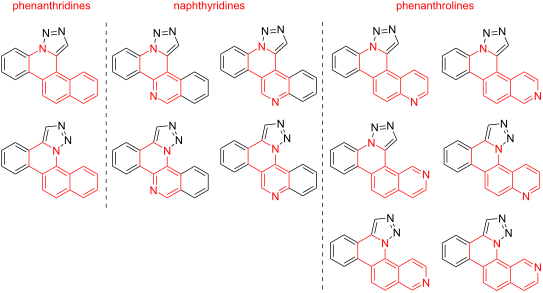
- control compounds 37–42 (blue lines) in acetonitrile solvent. Synthesis of pentacyclic aromatic heterocycles from varying alkynes.a Synthesis of pentacyclic aromatic heterocycles from varying azides.a Summary of UV–vis absorbance/emission signals. Minimum inhibitory concentration assay results.a


Isoorotamide-based peptide nucleic acid nucleobases with extended linkers aimed at distal base recognition of adenosine in double helical RNA
Beilstein J. Org. Chem. 2025, 21, 2513–2523, doi:10.3762/bjoc.21.193
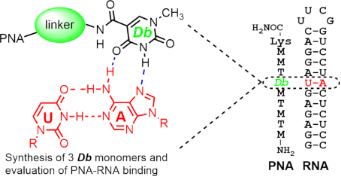
- Department of Chemistry, Ohio Wesleyan University, Delaware, OH, 43015, USA Department of Chemistry, Binghamton University, 4400 Vestal Parkway East, Binghamton, NY 13902, USA Latvian Institute of Organic Synthesis, Aizkraukles 21, Riga, LV-1006, Latvia 10.3762/bjoc.21.193 Abstract Non-coding ribonucleic
- regions of RNA. We herein report the synthesis and binding studies of new isoorotamide-based PNA monomers that target uridine–adenosine base pairs via a distal base recognition strategy. Monomers were designed with an arylisoorotamide core attached to a linker aimed at bypassing the uridine in a U–A pair
- , and it is easily prepared using well established peptide synthesis protocols, allowing for accessible incorporation of synthetic nucleobases [17][18]. With these advantages in mind, Rozners’ lab first demonstrated in 2010 that PNA not only binds favorably and quickly to RNA, but that it binds more


Assembly strategy for thieno[3,2-b]thiophenes via a disulfide intermediate derived from 3-nitrothiophene-2,5-dicarboxylate
Beilstein J. Org. Chem. 2025, 21, 2489–2497, doi:10.3762/bjoc.21.191
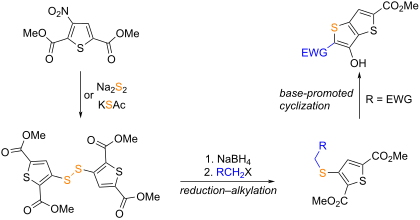
- Roman A. Irgashev Postovsky Institute of Organic Synthesis, Ural Branch of the Russian Academy of Sciences, Ekaterinburg, 620137, Russia 10.3762/bjoc.21.191 Abstract A versatile synthetic route to thieno[3,2-b]thiophenes was elaborated from dimethyl 3-nitrothiophene-2,5-dicarboxylate
- organic synthesis. A widely adopted strategy for building the TT scaffold involves the annulation of a second thiophene ring onto a suitably functionalized thiophene precursor. Most commonly, this approach starts from halogenated thiophenes such as 3-bromo- or 3-chlorothiophenes, which undergo subsequent
- -alkylation and base-promoted cyclization to form the 3-hydroxy-TT molecules (Scheme 2). Results and Discussion We began our study by investigating the reaction of dimethyl 3-nitrothiophene-2,5-dicarboxylate (1) with Na2S, inspired by Beck’s reported synthesis of 2-substituted-3-aminobenzo[b]thiophenes via



Palladium-catalyzed regioselective C1-selective nitration of carbazoles
Beilstein J. Org. Chem. 2025, 21, 2479–2488, doi:10.3762/bjoc.21.190
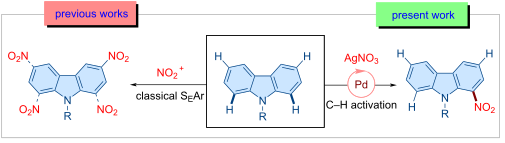
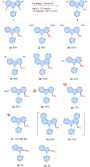
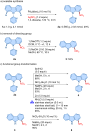
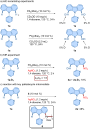
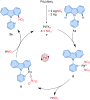
- challenging due to the inherently higher reactivity at the C3/C6 positions. In this study, we report a palladium-catalyzed, directing group-assisted, regioselective C1–H nitration of carbazoles. The protocol features a removable directing group and is amenable to gram-scale synthesis. This strategy provides a
- attention has been devoted to the chemical synthesis of carbazole and its derivatives [9][10][11][12][13][14]. To access substituted carbazole cores for pharmacophores and functional materials, two main synthetic routes are: i) sequential multistep syntheses of selectively substituted carbazoles and ii
- ) functionalization of the carbazole core. Traditional approaches for constructing diversified carbazoles and derivatives are Fischer–Borsche synthesis [15][16], Graebe–Ullmann synthesis [17][18], cyclization of biaryl nitrenes–Cadogan synthesis [19], electrocyclic reactions [20][21], and others [22][23][24]. These


Synthesis of the tetracyclic skeleton of Aspidosperma alkaloids via PET-initiated cationic radical-derived interrupted [2 + 2]/retro-Mannich reaction
Beilstein J. Org. Chem. 2025, 21, 2470–2478, doi:10.3762/bjoc.21.189
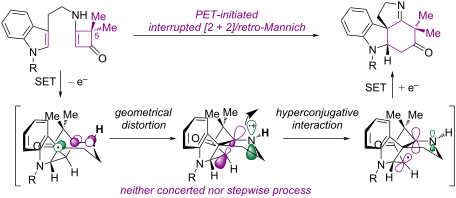
- University, Liaoning Shenyang 110016, China 10.3762/bjoc.21.189 Abstract Natural products with topologically complex architectures are important sources in drug discovery. The pursuit of conciseness and efficiency in the total synthesis of natural products promotes continuous innovation and the development
- considerable attention in recent decades. Numerous approaches to natural product synthesis have been reported in which a photochemical transformation represents a key step [1][2][3]. In this context, the photochemical [2 + 2] cycloaddition and subsequent fragmentation of the resulting cyclobutane provides a
- current interest in the synthesis of complex natural products via photochemical reactions, we decided to achieve such an unusual bond cleavage (Figure 1a, path A) of cyclobutenone by generating a radical cation species via a PET reaction. The synthetic plan is shown in Figure 1c and includes a PET


Ex-situ generation of gaseous nitriles in two-chamber glassware for facile haloacetimidate synthesis
Beilstein J. Org. Chem. 2025, 21, 2465–2469, doi:10.3762/bjoc.21.188
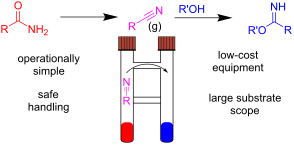
- .21.188 Abstract The synthesis of fluorinated haloacetimidates relies on the access to the corresponding fluoroacetonitriles, which are toxic gaseous molecules difficult to store and handle. In this work we develop a safe two-chamber method for the ex-situ generation of these reagents in one chamber and
- their subsequent reaction with O-nucleophiles in the second chamber. The method is easy to setup, control and gives access to new haloacetimidates under mild conditions, similar to the ones used for the synthesis of the more commonly used trichloroacetimidates. Keywords: gaseous reagents; glycosyl
- donor; haloacetimidates; haloacetonitrile; two-chamber reactor; Introduction Trifluoroacetonitrile is an electrophilic reagent that has seen a variety of uses, mostly for incorporating trifluoromethyl groups into organic compounds [1]. As an example it has been successfully utilized for the synthesis


The intramolecular stabilizing effects of O-benzoyl substituents as a driving force of the acid-promoted pyranoside-into-furanoside rearrangement
Beilstein J. Org. Chem. 2025, 21, 2456–2464, doi:10.3762/bjoc.21.187
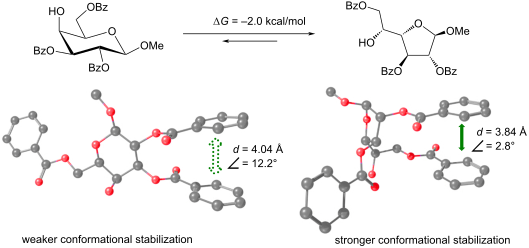
- .21.187 Abstract Furanoside derivatives are broadly present in the antigenic structures of pathogenic microorganisms and play a key role in their recognition by the host immune system. Despite the high demand for vaccine and diagnostic development, their chemical synthesis remains challenging. During the
- development of a new methodology for the synthesis of galactofuranoside building blocks, we encountered an unexpected predominance of the furanoside form in the equilibrium mixture of benzoylated β-galactosides. Since the furanoside form is typically less stable and is usually present only in minor amounts
- ] and vaccines [15][16][17][18]. That is why new efficient and stereoselective methods for the synthesis of both Galf-containing mono- and oligosaccharide derivatives are highly demanded. It is a well-known fact that galactofuranose form constitutes only 5% in water solution of unprotected ᴅ-galactose




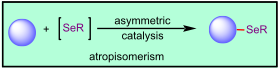
Catalytic enantioselective synthesis of selenium-containing atropisomers via C–Se bond formations
Beilstein J. Org. Chem. 2025, 21, 2447–2455, doi:10.3762/bjoc.21.186
- Qi-Sen Gao Zheng-Wei Wei Zhi-Min Chen State Key Laboratory of Synergistic Chem-Bio Synthesis, School of Chemistry and Chemical Engineering, Shanghai Key Laboratory for Molecular Engineering of Chiral Drugs, Shanghai Jiao Tong University, Shanghai 200240, P. R. China 10.3762/bjoc.21.186 Abstract
- Atropisomers are not only prevalent in biologically active natural products and pharmaceuticals, but they have also garnered increasing attention for their effectiveness as ligands and catalysts in the field of catalytic asymmetric synthesis. Asymmetric catalysis serves as a key strategy for the
- enantioselective synthesis of atropisomers, and significant progress has been made in recent years. However, selenium-containing atropisomers have long remained underexplored as synthetic targets, and only in recent years have they begun to attract increasing attention from the community. Recently, several




Transformation of the cyclohexane ring to the cyclopentane fragment of biologically active compounds
Beilstein J. Org. Chem. 2025, 21, 2416–2446, doi:10.3762/bjoc.21.185
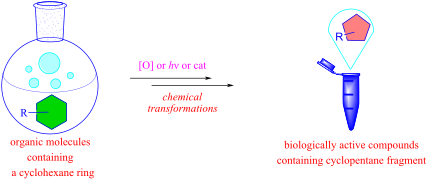
- contraction of six-membered cycles in the synthesis of functionalized cyclopentane/enones, which are biologically active compounds. The main synthetic methods of ring contraction (ozonolysis–aldol condensation, ozonolysis–Dieckmann reaction, Baeyer–Villiger cleavage–Dieckmann reaction) and rearrangements
- information. Keywords: biological activity; cyclopentane/enone; rearrangements; ring/cycle contractions; total synthesis; Introduction The functionalized cyclopentane/enone fragment is part of the structure of a large number of natural and synthetic biologically active compounds, including prostaglandins
- useful strategic transformations for the construction of carbocyclic and heterocyclic cyclopentanes. Six-membered carbocycles are convenient starting compounds for the synthesis of cyclopentanoids due to their widespread occurrence in nature and their synthetic availability. Undoubtedly, the development


The high potential of methyl laurate as a recyclable competitor to conventional toxic solvents in [3 + 2] cycloaddition reactions
Beilstein J. Org. Chem. 2025, 21, 2389–2415, doi:10.3762/bjoc.21.184
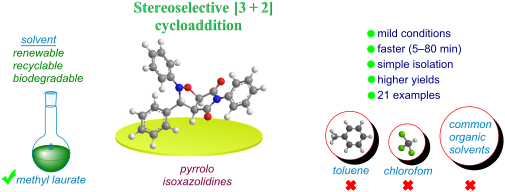
- different sources [4][5]. In order to fulfil this requirement, a considerable number of green solvents of various classes have been developed for a range of applications, including the extraction of natural compounds [6][7][8][9], food analysis [10][11][12], pharmacology [13][14][15], and organic synthesis
- applications must persist. In the modern world, one of the main goals of an increasing number of chemists interested in the design and synthesis of versatile organic molecules is to develop atom-efficient, multicomponent, low-cost, and environmentally benign synthetic strategies for these molecules. In the
- the time- and labor-intensive nature of traditional multistep synthesis strategies. For instance, this methodology has been demonstrated to be highly advantageous in the synthesis of numerous pharmaceutical compounds, biological probes, insecticides, alkaloids, and other intricate natural compounds








An Fe(II)-catalyzed synthesis of spiro[indoline-3,2'-pyrrolidine] derivatives
Beilstein J. Org. Chem. 2025, 21, 2383–2388, doi:10.3762/bjoc.21.183
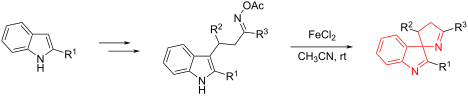
- activities, spiro[indoline-3,2'-pyrrolidines] have attracted substantial interest in medicinal chemistry, prompting the development of diverse synthetic strategies. Several methodologies have been reported for the synthesis of substituted spiro[indoline-3,2'-pyrrolidines] (Scheme 1), which can be broadly
- , a highly diastereoselective method for the synthesis of dihydrospiro[indoline-3,2'-pyrrole]-2-ones has been developed (Scheme 1, path a) [7]. This transformation proceeds via a Lewis acid-mediated conjugate addition of vinyl azides to electron-deficient alkenes, followed by denitrogenative
- e) [12]. The second category of synthetic methods relies on more accessible, non-pre-functionalized starting materials and stepwise assembly of the spirocyclic core. This strategy enables the synthesis of functionalized 3H-indoles, which can be further elaborated into structurally diverse products




Synthetic study toward vibralactone
Beilstein J. Org. Chem. 2025, 21, 2376–2382, doi:10.3762/bjoc.21.182

- vibralactone, a potent inhibitor of pancreatic lipase, is reported. The synthesis of the challenging all-carbon quaternary center within the cyclopentene ring was achieved through intramolecular alkylidene carbene C–H insertion. Keywords: alkylidene carbene; C–H insertion; total synthesis; vibralactone
- ; Introduction β-Lactones have attracted continuous interest and have been widely utilized as key intermediates in the synthesis of natural products and polymers due to their innate ring strain [1][2][3][4][5][6]. Moreover, several natural products and their derivatives containing β-lactone as key structural
- and ClpP2 and it could be utilized as a probe to study the activity and structure of the ClpP1P2 complex from Listeria monocytogenes [25]. Previously, Snider and co-worker reported the first total synthesis of vibralactone (6) employing Birch reductive alkylation, intramolecular aldol reaction and


Conformational effects on iodide binding: a comparative study of flexible and rigid carbazole macrocyclic analogs
Beilstein J. Org. Chem. 2025, 21, 2369–2375, doi:10.3762/bjoc.21.181
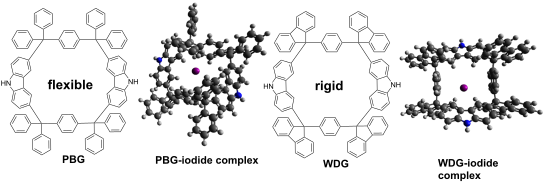
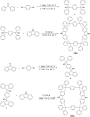
- spectra of WDG (10 μM) in CHCl3, (c) Fluorescence spectra of PBG (10 μM) in CHCl3 (λex: 303 nm), (d) Fluorescence spectra of WDG (10 μM) in CHCl3 (λex: 303 nm). Synthesis routes of PBG and WDG. Supporting Information Supporting Information File 32: Additional experimental data. Funding The project was



Rotaxanes with integrated photoswitches: design principles, functional behavior, and emerging applications
Beilstein J. Org. Chem. 2025, 21, 2345–2366, doi:10.3762/bjoc.21.179

- or upon irradiation with light at 280 nm. Azobenzene Azobenzene is one of the most widely utilized photoresponsive units in the design and synthesis of photoswitchable rotaxanes. These photoswitches undergo trans–cis isomerization and are classified as T-type, due to the thermal reversibility of the
- acridane photoswitch directly into a crown ether macrocycle [82]. However, the synthesis proceeded with very low yield, and the small amount of rotaxane obtained was immediately converted to the acridinium form during purification. Attempts to regenerate the acridane were unsuccessful. Nevertheless, the


Comparative analysis of complanadine A total syntheses
Beilstein J. Org. Chem. 2025, 21, 2334–2344, doi:10.3762/bjoc.21.178
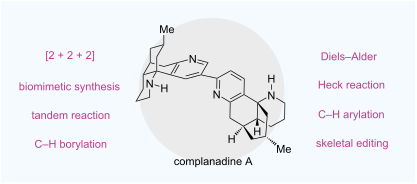
- strategies and creative tactics, reflecting how emerging synthetic capabilities and concepts can positively impact natural product total synthesis. Keywords: biomimetic synthesis; C–H functionalization; complanadine; lycopodium alkaloid; skeletal editing; total synthesis; transition metal catalysis
- efficiency and step-economy of natural product total synthesis. This symbiotic relationship has also helped to accelerate natural product biological evaluation and the subsequent biomedical development [1]. Lycopodium alkaloids are one of the largest families of natural products [2], from which famous
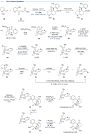
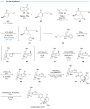
- and co-workers [19]. In this review article, we summarize these four total syntheses, comparatively analyze their strategic novelty and differences, and highlight the impact of enabling methodologies and concepts on the overall efficiency and economy of each total synthesis [20]. Review The Siegel



Recent advances in Norrish–Yang cyclization and dicarbonyl photoredox reactions for natural product synthesis
Beilstein J. Org. Chem. 2025, 21, 2315–2333, doi:10.3762/bjoc.21.177
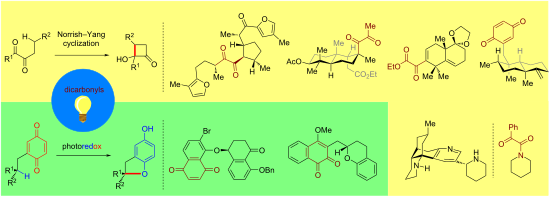
- natural product synthesis. This review summarizes the latest advancements in these reactions for constructing terpenoids, alkaloids, and antibiotics. Through Norrish–Yang cyclization, dicarbonyls (e.g., 1,2-diketones and α-keto amides) can efficiently construct sterically hindered ring structures, which
- can further undergo ring-opening or rearrangement reaction to assemble complex molecular frameworks. Additionally, quinone photoredox reactions involving single-electron transfer (SET) processes provide novel strategies for the stereoselective synthesis of useful structures such as spiroketals. This
- synthesis of natural products but also establish a solid foundation for subsequent pharmaceutical investigations. Keywords: dicarbonyls; natural product; Norrish–Yang cyclization; photoredox; total synthesis; Introduction In the 1930s, Norrish documented the photodecomposition of aldehydes and ketones [1




Insoluble methylene-bridged glycoluril dimers as sequestrants for dyes
Beilstein J. Org. Chem. 2025, 21, 2302–2314, doi:10.3762/bjoc.21.176
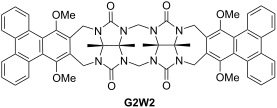
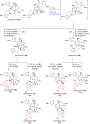
- environmental concern. We report the design, synthesis, and characterization of a series of methylene-bridged glycoluril dimers G2W1–G2W4 that are insoluble in water and that differ in the nature of their aromatic sidewalls (G2W4: benzene, G2W3: naphthalene, G2W1 and G2W2: triphenylene). We tested G2W1–G2W4
- that β-cyclodextrin (Figure 1)-based polymers could remove organic micropollutants from water [15][16]. For example, in 2021, Sessler and co-workers reported the synthesis of a calix[4]pyrrole (Figure 1)-based porous organic polymer, which exhibits the rapid uptake of dyes from water [17]. In addition
- , graphene functionalized with β-cyclodextrins [18], a starch-based β-cyclodextrin polymer [19], and pillar[5]arene-based crosslinked polymers have also been investigated as sequestrants for dyes [20]. The Isaacs group has a longstanding interest in the synthesis and mechanism of formation of macrocyclic



Halogenated butyrolactones from the biomass-derived synthon levoglucosenone
Beilstein J. Org. Chem. 2025, 21, 2297–2301, doi:10.3762/bjoc.21.175
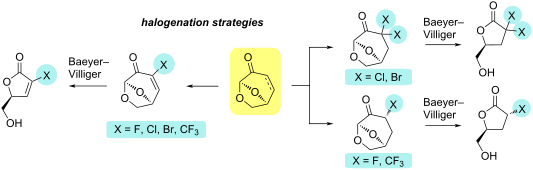
- . Short procedures for their synthesis have been developed starting with levoglucosenone, which can be obtained in a single step from the pyrolysis of acid-treated cellulose. The processes use inexpensive reagents for the stereoselective C3 functionalization of the bicyclic ring system, with a subsequent
- intermediate in synthesis [1][2]. Several nucleoside analogue drugs are prepared using γ-butyrolactones, that when reduced give pentose sugars that can be used as glycosyl donors [3][4]. A number of these clinically used drugs contain fluorine as a hydroxy bioisostere at C2, most notably gemcitabine (1) and
- infections. The preparation of 2-halo-2-deoxy-ᴅ-ribose derivatives can be achieved via the modification of the parent sugar [9][10] or chain-elongation strategies from lower homologues. For example, Castro and co-workers have demonstrated the synthesis of a dichlorinated 2-deoxypentose via the addition of



Enantioselective radical chemistry: a bright future ahead
Beilstein J. Org. Chem. 2025, 21, 2283–2296, doi:10.3762/bjoc.21.174
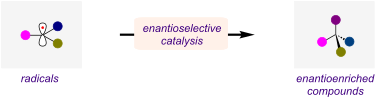
- transformations is also discussed. Keywords: chiral Lewis acid; electrochemistry; enantioselective radical reaction; organocatalysis; photoenzymatic catalysis; photoredox; Introduction Asymmetric catalysis plays an integral role in the enantioselective synthesis of organic compounds. A wide variety of
- synthesis. Strategies for asymmetric radical reactions Stereoselectivity in radical reactions can be challenging to control. Many radicals are highly reactive, and radicals moreover have typically low inversion barriers, resulting in no permanent chirality at the radical center. Stereochemistry in radical
- transformations [43][44][45][46][47][48]. Using SOMO catalysis, MacMillan and co-workers developed a method for the synthesis of substituted pyrrolidines from β-aminoaldehydes and olefins in a formal [3 + 2] cycloaddition (Scheme 2) [44]. The transformation was proposed to proceed via a radical–polar crossover


Pathway economy in cyclization of 1,n-enynes
Beilstein J. Org. Chem. 2025, 21, 2260–2282, doi:10.3762/bjoc.21.173
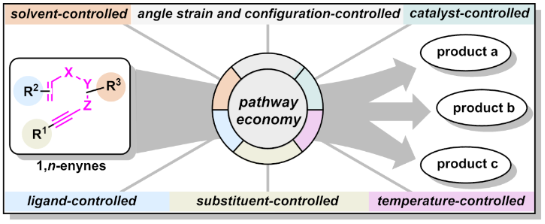
- rapid molecular diversification, offering transformative potential for green chemistry and pharmaceutical applications. By unifying mechanistic insights with practical synthetic design, this review provides valuable guidance for future innovations in precision organic synthesis. Keywords: economical
- synthesis; 1,n-enynes; pathway economy; small-molecule skeletons; Introduction As organic synthesis concepts continue to evolve, economical synthesis remains a foundational principle for synthetic chemists [1][2][3][4][5][6][7]. The essence of economical synthesis lies in the conservation of materials and
- time, thereby facilitating the synthesis of target molecules at lower cost while minimizing environmental pollution through minimized waste generation. In 1991, Trost first introduced the concept of “atom economy”, proposing that an ideal reaction should incorporate all atoms of the reactants, thereby


Research towards selective inhibition of the CLK3 kinase
Beilstein J. Org. Chem. 2025, 21, 2250–2259, doi:10.3762/bjoc.21.172
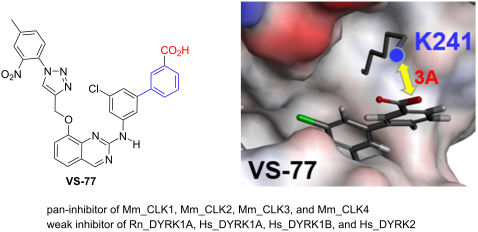
- CLK1 (from Mus musculus) and DYRK1A (from Rattus norvegicus). Docking of VS-77 in CLK3. Docking of VS-77 in Hs_DYRK1A (PDB ID: 8T2H [26]). Synthesis of the intermediate anilino-2-quinazolines 7a and 7b. Synthesis of the targeted anilino-2-quinazolines 10 and 13. Structures and in vitro activities of
- Chemveda Life Sciences for providing laboratory facility for carrying these research experiments. This research has been performed also as part of the Indo-French “Joint Laboratory for Natural Products and Synthesis towards Affordable Health”. We thank CSIR, CNRS and University of Rennes 1 for their


A chiral LC–MS strategy for stereochemical assignment of natural products sharing a 3-methylpent-4-en-2-ol moiety in their terminal structures
Beilstein J. Org. Chem. 2025, 21, 2243–2249, doi:10.3762/bjoc.21.171
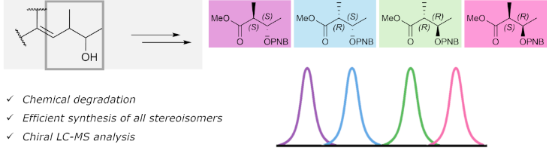
- all compounds. In this study, we developed a method to determine the absolute configuration of the terminal MPO moiety with high accuracy and sensitivity by a combination of chemical degradation, chemical synthesis, and chiral LC–MS analysis. The applicability of this method was demonstrated through
- groups. Total synthesis is a powerful approach for determining absolute configuration through the comparison of specific rotation or chromatographic behavior; however, it requires considerable time and effort. In this context, we have been working on developing effective approaches to determine the
- absolute configuration of scarce natural products, including heptavalinamide A [11] and poecillastrin C [12][13] by a combination of chemical degradation, chemical synthesis, and liquid chromatography–mass spectrometry (LC–MS) analysis. The 3-methylpent-4-en-2-ol (MPO) moiety is commonly found at the


Pd-catalyzed dehydrogenative arylation of arylhydrazines to access non-symmetric azobenzenes, including tetra-ortho derivatives
Beilstein J. Org. Chem. 2025, 21, 2234–2242, doi:10.3762/bjoc.21.170
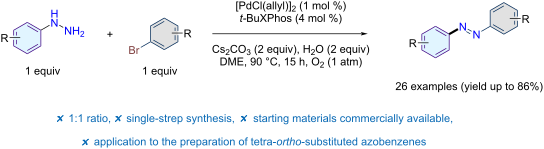
- sterically tuned substrates promotes selective N-arylation at the terminal nitrogen. The protocol tolerates a wide range of functional groups and enables the synthesis of well-decorated azobenzenes, including tetra-ortho-substituted derivatives. Notably, the reaction proceeds under an O2 atmosphere and in
- rely on nitroso-aniline couplings, provide a route for the synthesis of non-symmetric azobenzenes, but their substrate specificity and use of hazardous precursors limit their practical applicability [25][26][27][28]. An alternative approach involves the SEAr reaction, which utilizes potentially
- hazardous diazonium salts and electron-rich arenes (mainly limited to phenols) [29][30][31], including metalated arenes [32][33]. The growing demand for structurally complex compounds across diverse applications has rendered the synthesis of non-symmetrical azoarenes with differently substituted azo bonds


Thiadiazino-indole, thiadiazino-carbazole and benzothiadiazino-carbazole dioxides: synthesis, physicochemical and early ADME characterization of representatives of new tri-, tetra- and pentacyclic ring systems and their intermediates
Beilstein J. Org. Chem. 2025, 21, 2220–2233, doi:10.3762/bjoc.21.169
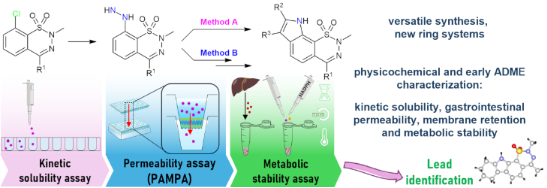
- pharmacological activity of phthalazin-1(2H)-ones 1 (Figure 1) [1][2][3][4][5], we have devoted significant effort to the synthesis and pharmacological investigation of structurally related 1,2,3-benzothiadiazine 1,1-dioxides 2 over the last decade [6][7][8][9][10][11]. As 4-methyl-2H-1,2,3-benzothiadiazine 1,1
- exhibit diverse biological activities and have found application for the treatment of psychiatric disorders and neurodegenerative diseases [13][14][15][16][17]. Therefore, we now report our results in the synthesis and characterization of compounds 3 containing a 2,9-dihydro[1,2,3]thiadiazino[5,6-g]indole
- synthesis [18][19][20][21]. Sudhakara et al. described the advantages of using bismuth nitrate as catalyst in the synthesis of hydrazones and in the one-pot Fischer synthesis of indoles from ketones and hydrazines [22][23]. Adopting this method, hydrazone intermediates 7a–j were obtained by treatment of





