Search results
Search for "template" in Full Text gives 202 result(s) in Beilstein Journal of Organic Chemistry. Showing first 200.
Polarization spectroscopy methods in the determination of interactions of small molecules with nucleic acids – tutorial
Beilstein J. Org. Chem. 2018, 14, 84–105, doi:10.3762/bjoc.14.5
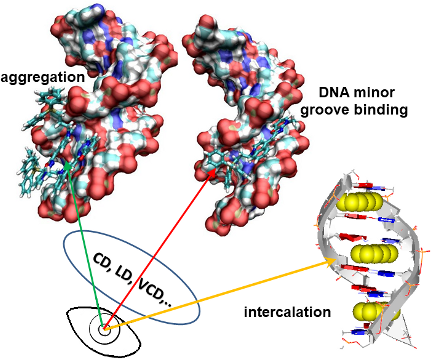
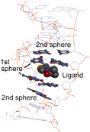
- ligand chromophores form an aggregate, with a well-defined supramolecular chirality. In this case, the ECD can still be said to be “induced” by the polynucleotide because it acts as a chiral template. An unambiguous interpretation of exciton-coupled bisignate ICD bands is not simple due to many different






Synthetic mRNA capping
Beilstein J. Org. Chem. 2017, 13, 2819–2832, doi:10.3762/bjoc.13.274
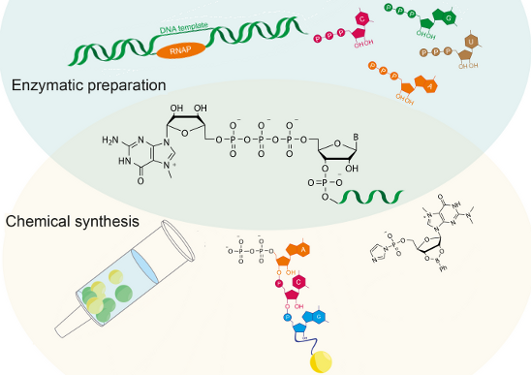
- ], NAD-capped RNAs [23][24], 3'-dephospho-CoA linked RNA [25] or methylphosphate capping [26][27] we refer to the indicated articles. Review Enzymatic preparation of capped mRNA Enzymatic preparation of capped mRNA is based on in vitro transcription (IVT) of a DNA template. While RNA synthesized via
- ] can be used. Primase incorporates cap analogues exclusively in their correct orientation. Normally, gene 4 primase from the T7 phage produces short RNAs with the sequence pppAC from a DNA template. Matsuo et al. observed that GpppA or m7GpppA can be incorporated as efficiently as ATP as the first
- of the replicative DNA polymerase from Thermococcus gorgonarius (Tgo) into a DNA-dependent RNA polymerase (termed TGK) enabled production of up to 1,700 nt long RNAs from a ssDNA template and an RNA primer [119]. The primer-dependent RNA synthesis obviates the need to initiate RNA synthesis with pppG



Pyrene–nucleobase conjugates: synthesis, oligonucleotide binding and confocal bioimaging studies
Beilstein J. Org. Chem. 2017, 13, 2521–2534, doi:10.3762/bjoc.13.249
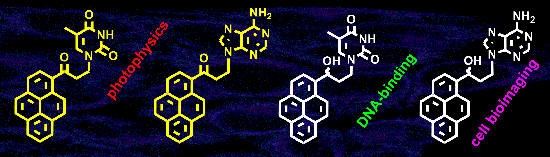
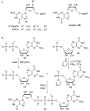
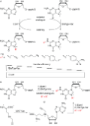
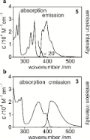
- solution. In respect to the complementary oligothymidine T10 template in water, compounds 3 and 5 both show a self-assembling behavior according to canonical base–base pairing. However, in buffer solution, derivative 5 was much more effective than 3 in binding to the T10 template. Furthermore the adenine
- derivative 5 binds to the double-stranded (dA)10–T10 template with a self-assembly ratio of 112%. Such a high value of a self-assembly ratio can be rationalized by a triple-helix-like binding, intercalation, or a mixture of both. Remarkably, compound 5 also shows dual staining pattern in living HeLa cells
- detecting markers [14], as fluorescent DNA probes [15], non-covalent binders to canonical oligonucleotide templates [16], and antiviral agents [17][18]. Notably, pyrene excimer formation in DNA template assemblies is much less efficient than in normal pyrene conjugates due to the helical twist between




Synthesis of 2-aminosuberic acid derivatives as components of some histone deacetylase inhibiting cyclic tetrapeptides
Beilstein J. Org. Chem. 2017, 13, 2153–2156, doi:10.3762/bjoc.13.214

- of peptidomimetics. A cross-metathesis reaction has been utilized to create the diversification on the template 11 in order to obtain orthogonally protected Asu derivatives. Moreover, the Asu derivative 15a has been demonstrated to be useful in the preparation of a plethora of HDAC inhibitors [34


Intramolecular glycosylation
Beilstein J. Org. Chem. 2017, 13, 2028–2048, doi:10.3762/bjoc.13.201
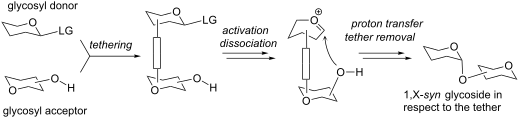
- introduced by Kusumoto et al. [46], however, this term was coined by the same group much later [51]. We adopt this term to generally refer to this concept, which in other applications was also named “intramolecular glycosylation of prearranged glycosides” by Ziegler [52][53], “template-directed cyclo
- category was extensively studied and applied to a variety of sugar series and targets [58][73][74]. Phthaloyl and related tethers Phthaloyl tethering was also introduced by Ziegler [53] and practically concomitantly by Valverde et al. [54] as “template-directed cyclo-glycosylation.” In the latter
- that affected the removal of the template and all benzyl protecting groups followed by acetylation of the resulting hydroxy groups. Peptide tether/template Short peptide chains have also been investigated as templates for glycosylation. The general underpinning idea is to streamline the oligosaccharide


A recursive microfluidic platform to explore the emergence of chemical evolution
Beilstein J. Org. Chem. 2017, 13, 1702–1709, doi:10.3762/bjoc.13.164
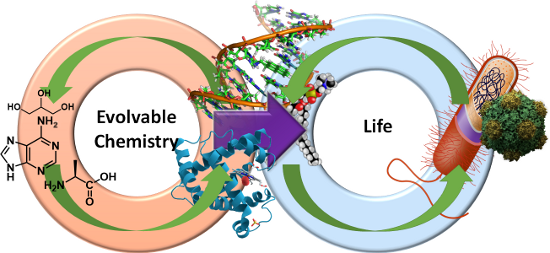
- autocatalytic networks that reproduce, with more or less the same stoichiometry, all functionally active components of their heterogeneous chemical mixtures. Such systems could easily exist outside the boundaries of known biology, and perhaps may not even require a template-driven genetic polymer to reproduce
- conventional, template-directed genetic system. Thus, the first step is to establish a suitable metric for identifying and measuring their capacity for evolution. We propose that, for any given population of discrete living or proto-living units, the average fitness (wi) of the population will be evaluated as
- . Our aim is to design and fabricate a complete device containing a droplet generator, an incubation chamber, a droplet size sorter, a droplet fuser, and a droplet splitter; see Figure 7 for the device template. Microfluidic droplet generators will produce the droplet populations that will then be co




Chemical systems, chemical contiguity and the emergence of life
Beilstein J. Org. Chem. 2017, 13, 1551–1563, doi:10.3762/bjoc.13.155
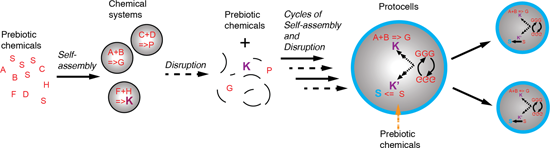
- association with the interface of chemical systems. For instance, the activity of an RNA polymerase ribozyme was improved when the various RNA compounds of the system (the ribozyme, the template/primer) were derivatized with amphiphilic moieties and co-associated within micelle structures [69]. Although no
- protocellular „metabolism“. Inspired by the non-enzymatic, template-directed RNA polymerization in bulk aqueous solutions [7] (the synthesis of a RNA using a primer/template system and magnesium ions as catalysts), the Szostak group [21][82] has demonstrated that RNA could be synthesized within mixed vesicles
- composed of several types of “prebiotic” fatty acids and co-surfactants. That is, the vesicles could have retained the primer/template system while activated monomers crossed the vesicle bilayers by passive diffusion. Similarly, amino acids could be dimerized within vesicles [86]. In related experiments


Mechanochemistry-assisted synthesis of hierarchical porous carbons applied as supercapacitors
Beilstein J. Org. Chem. 2017, 13, 1332–1341, doi:10.3762/bjoc.13.130
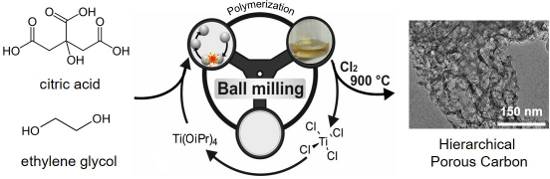
- form the desired template [29][30]. A severe disadvantage of both routes is the need of large amounts of solvents, eventually accumulating as waste during the process. Moreover, these approaches require multiple synthesis steps, including template synthesis, calcination, impregnation, pyrolysis, and
- template removal. Therefore, the preparation of porous carbons with a tailored pore structure by conventional templating processes is often time and cost-intensive and environmentally unfavorable. For a more sustainable carbon production, especially in industrial scale, it is necessary to reduce the number
- and the carbochlorination step, we conducted the synthesis under liquid-assisted conditions while adding ethanol as a solvent to see if there is a difference in the polymerization and investigated an alternative template removal approach based on etching with hydrofluoric acid (HF) as well [54]. The


Biomimetic molecular design tools that learn, evolve, and adapt
Beilstein J. Org. Chem. 2017, 13, 1288–1302, doi:10.3762/bjoc.13.125
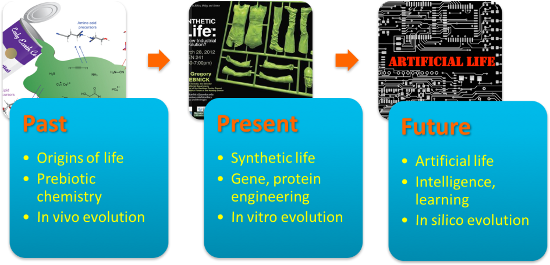
- natural products as drugs, for example (Figure 2). Contemporary research aims to elucidate how molecular machines self-assemble, and to discover the mechanisms by which they operate, thereby providing a template for the rational, intentional design of useful molecular machines at the nanoscale [2





Towards open-ended evolution in self-replicating molecular systems
Beilstein J. Org. Chem. 2017, 13, 1189–1203, doi:10.3762/bjoc.13.118
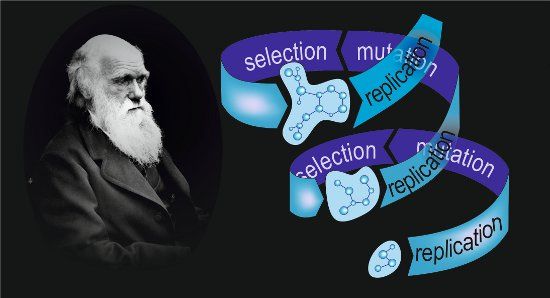
- below. Mutation involves the emergence of a difference between the parent template and its copies. The accuracy of the replication process of DNA is generally safeguarded by sophisticated enzymes, but systems that lack such machinery are more prone to occasional errors during replication. Mutations
- that of DNA. A DNA molecule consists of two strands of nucleotides that are intertwined to form a double helix. During the replication process of DNA, each of these strands can act as a template for the formation of a complementary strand. In this way an exact copy of the original structure of DNA is
- set of basic building blocks. This fundamental form of a self-replicating system is depicted in Figure 2 and is called a minimal self-replicating system. An essential requirement for a minimal replicating system is that molecules A and B are complementary to template T so that they are able to bind to




From chemical metabolism to life: the origin of the genetic coding process
Beilstein J. Org. Chem. 2017, 13, 1119–1135, doi:10.3762/bjoc.13.111
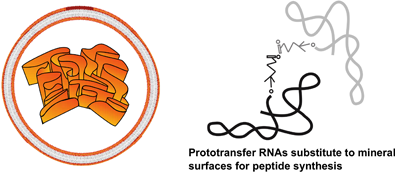
- as a template for the daughter, as in nucleic acids, for example. In fact, the entity that is replicated is not a protein complex but an algorithm of construction. Hence, in this particular instance, replication is not a protein-replication system, nor is it directly associated to nucleic acids used



G-Protein coupled receptors: answers from simulations
Beilstein J. Org. Chem. 2017, 13, 1071–1078, doi:10.3762/bjoc.13.106
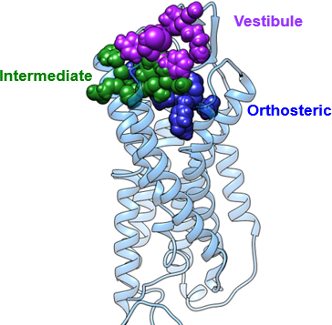
- it has played a major role in the determination of the mechanisms of action of GPCRs [21][22] and was the only structure available, in general, rhodopsin was not considered the ideal template for GPCR drug targets. This was because of both its relatively low similarity to medicinal targets [23] and


How and why kinetics, thermodynamics, and chemistry induce the logic of biological evolution
Beilstein J. Org. Chem. 2017, 13, 665–674, doi:10.3762/bjoc.13.66
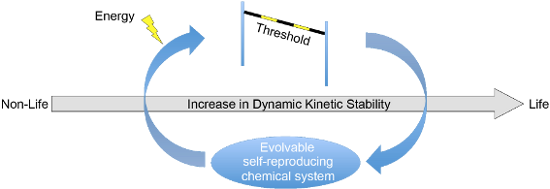
- possibilities for variation are indeed a requirement for systems to undergo open-ended evolution [66]. The storage of genetic information as a sequence in a polymer associated with template replication through base-pairing constitutes an efficient system to ensure evolvability. It is that evolvability which
- allows selection toward life as we know it on Earth. However, as the proximity from equilibrium has been mentioned above as a limitation, the higher affinity of long strands compared to fragments is the source of another limitation (product inhibition). That limitation, discovered for template



Pd- and Cu-catalyzed approaches in the syntheses of new cholane aminoanthraquinone pincer-like ligands
Beilstein J. Org. Chem. 2017, 13, 564–570, doi:10.3762/bjoc.13.55
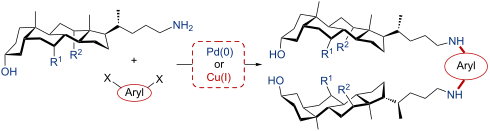
- template for design of complex molecules has become increasingly popular in pharmacology, supramolecular chemistry and nanoscience over recent years [4][5]. Many macrocyclic dimeric derivatives of bile acid were described [6][7][8]. As a rule, a route to the majority of macrocyclic structures requires


Synthesis of spiro[isoindole-1,5’-isoxazolidin]-3(2H)-ones as potential inhibitors of the MDM2-p53 interaction
Beilstein J. Org. Chem. 2016, 12, 2793–2807, doi:10.3762/bjoc.12.278
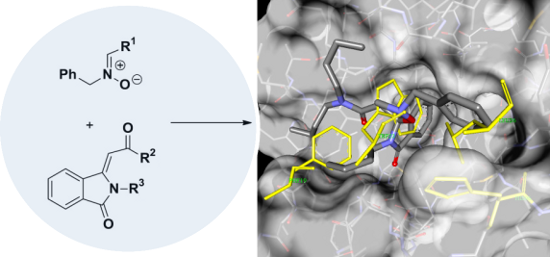
- -ethynylbenzamides 1 [35]. The rationale of our choice is based on molecular docking data. Using the published structure of the MDM2–p53 binding site, we have employed computational methods and focused library synthesis based on the isoindolinone template, to develop compounds with inhibitory activity. These studies


Computational methods in drug discovery
Beilstein J. Org. Chem. 2016, 12, 2694–2718, doi:10.3762/bjoc.12.267
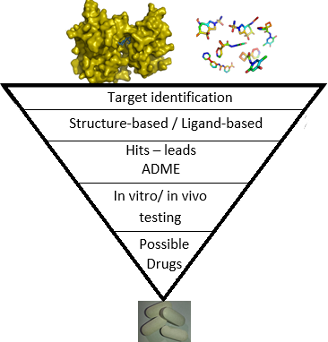
- generates sequence–template alignments for a query sequence and identifies best structure matches from the PDB [53]. In addition to sequence profile alignments, it also uses multiple structure information as well. DescFold is another webserver which employs SVM-based machine learning algorithms in protein
- fold recognition [54]. Ab initio (de novo) modeling Ab initio or de novo modeling is employed when there is no sufficiently homologous structure to use comparative modeling. De novo protein modeling does not rely on a template structure. It models the target structure solely based on the sequence. Ab
- template free modeling category outperforming the Rosetta server though Rosetta remains to be one of the most popular methods of ab initio structure prediction. Many other ab initio structure prediction software packages have been developed in the last three decades and some of the popular ones are listed



A new paradigm for designing ring construction strategies for green organic synthesis: implications for the discovery of multicomponent reactions to build molecules containing a single ring
Beilstein J. Org. Chem. 2016, 12, 2420–2442, doi:10.3762/bjoc.12.236
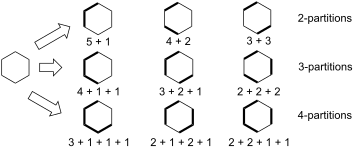
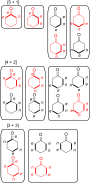
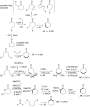
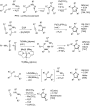
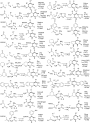
- other monocyclic heterocycles The methodology presented in this work can in principle be extended to any monocyclic heterocyclic ring system without restriction. In order to motivate synthetic chemists to further explore opportunities to discover new 3-component coupling reactions, an atlas of template








A detailed view on 1,8-cineol biosynthesis by Streptomyces clavuligerus
Beilstein J. Org. Chem. 2016, 12, 2317–2324, doi:10.3762/bjoc.12.225
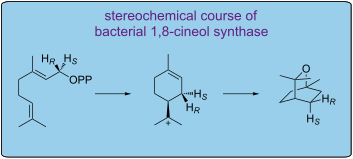
- hydrophobic cavity from which water is excluded to enable carbocation chemistry in an aqueous environment. Furthermore, the hydrophobic cavity provides a template that arranges the substrate in a certain conformation to determine the formation of a specific product. Single residues such as phenylalanines are


Diels–Alder reactions in confined spaces: the influence of catalyst structure and the nature of active sites for the retro-Diels–Alder reaction
Beilstein J. Org. Chem. 2016, 12, 2181–2188, doi:10.3762/bjoc.12.208

- )] were prepared according to [31][32][33], using tetraethylammonium hydroxide as template, tetraethyl orthosilicate (TEOS) as silica source and Ti(IV) ethoxide, SnCl4·5H2O and metal Al as sources of heteroatoms. SSZ-53 and SSZ-59 were synthesized according to the procedures described in the literature


DNA functionalization by dynamic chemistry
Beilstein J. Org. Chem. 2016, 12, 2136–2144, doi:10.3762/bjoc.12.203
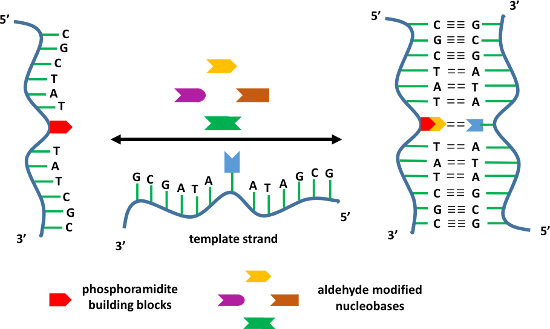
- template-directed selection of one nucleobase from the reaction mixture with the amine or thiol functional group was investigated [44][45][46][47]. In our studies, dynamic chemistry is applied for post-synthetic functionalization of the threoninol based modified oligonucleotides in a reversible manner
- , we generated the libraries of reversibly interconverting building blocks – dynamic combinatorial libraries (DCL) (Figure 1). The abasic strand and its complementary template strand are spontaneously assembled into a double helix through Watson–Crick base-pairing and the incoming nucleobase monomer
- benefits from the hydrogen bonding recognition by the respective nucleobase in the template strand. The reversible attachment generates a dynamic system that enables the combinatorial screening of the best bound nucleobase by allowing a rapid and continuous exchange between the threoninol site and the set


Bridgehead vicinal diallylation of norbornene derivatives and extension to propellane derivatives via ring-closing metathesis
Beilstein J. Org. Chem. 2016, 12, 1877–1883, doi:10.3762/bjoc.12.177
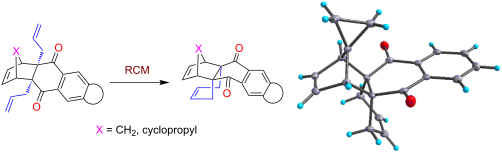
- diallylation; Introduction The norbornene moiety is a useful template and also a versatile synthon in organic synthesis [1]. The double bond present in the norbornene frame is strained and therefore participates in cycloaddition sequences as a C2-synthon [2][3]. It was reported that the norbornene system is


From supramolecular chemistry to the nucleosome: studies in biomolecular recognition
Beilstein J. Org. Chem. 2016, 12, 1863–1869, doi:10.3762/bjoc.12.175
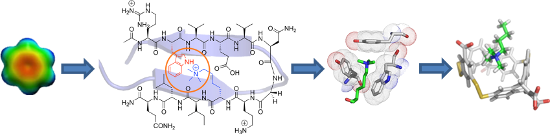
- work of Jeremy Sanders and co-workers on dynamic combinatorial chemistry (DCC) while being a graduate student and postdoc (Figure 7) [42][43]. Like folded peptides that self-assemble into their functional state, DCC allows molecules to self-assemble in the presence of a template. Moreover, DCC is


Rearrangements of organic peroxides and related processes
Beilstein J. Org. Chem. 2016, 12, 1647–1748, doi:10.3762/bjoc.12.162
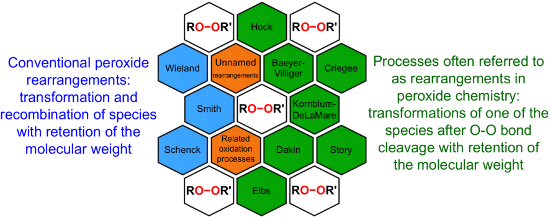
- good 92% yield by using Et3N (Scheme 91) [371]. A sequence consisting of a template-mediated photooxygenation and an acid-catalyzed Kornblum−DeLaMare rearrangement of the intermediate endo-peroxides 310 was used in a one-pot transformation of 3-substituted 2-pyridones











Organic chemistry meets polymers, nanoscience, therapeutics and diagnostics
Beilstein J. Org. Chem. 2016, 12, 1638–1646, doi:10.3762/bjoc.12.161
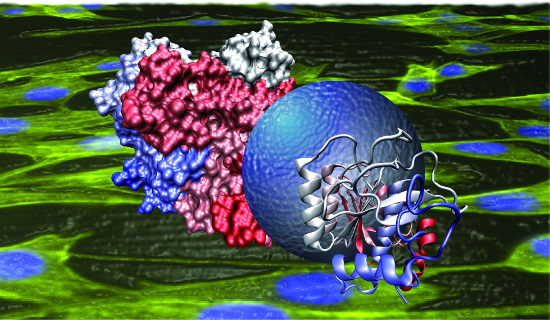
- one step further, we created a nanoparticle with a mixed monolayer consisting of hydrogen bonding and aromatic staking sidechains. When we incubated this NP with flavin we observed an increase in binding over time, i.e., we were able to template the particle to the guest [22]. We have since




Experimental and theoretical insights in the alkene–arene intramolecular π-stacking interaction
Beilstein J. Org. Chem. 2016, 12, 1616–1623, doi:10.3762/bjoc.12.158
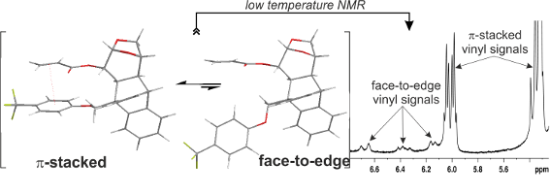
- all noncovalent interactions, π-stacking is perhaps the less well understood, although its application in materials sciences, enzyme design and template-directed synthesis have had a dramatic growth, mainly for arene–arene interactions [1][2][3][4][5][6][7][8]. In particular, the use of π–π overlap as